
Understanding Cells
Cells
•Living organismsaremadeup of oneor morecells.
•Cellsarethemost basic unit of organismswhich can
function on their own. Cellscarry out lifeprocessessuch
asrespiration, division, excretion and growth.
•Cellsarethebuilding blocksof an organism.
•Cellswork together to keep an organism alive.
•Cellsof living thingsexist in many sizesand shapes.
They can beround, oval, long, short, with tail and so on.
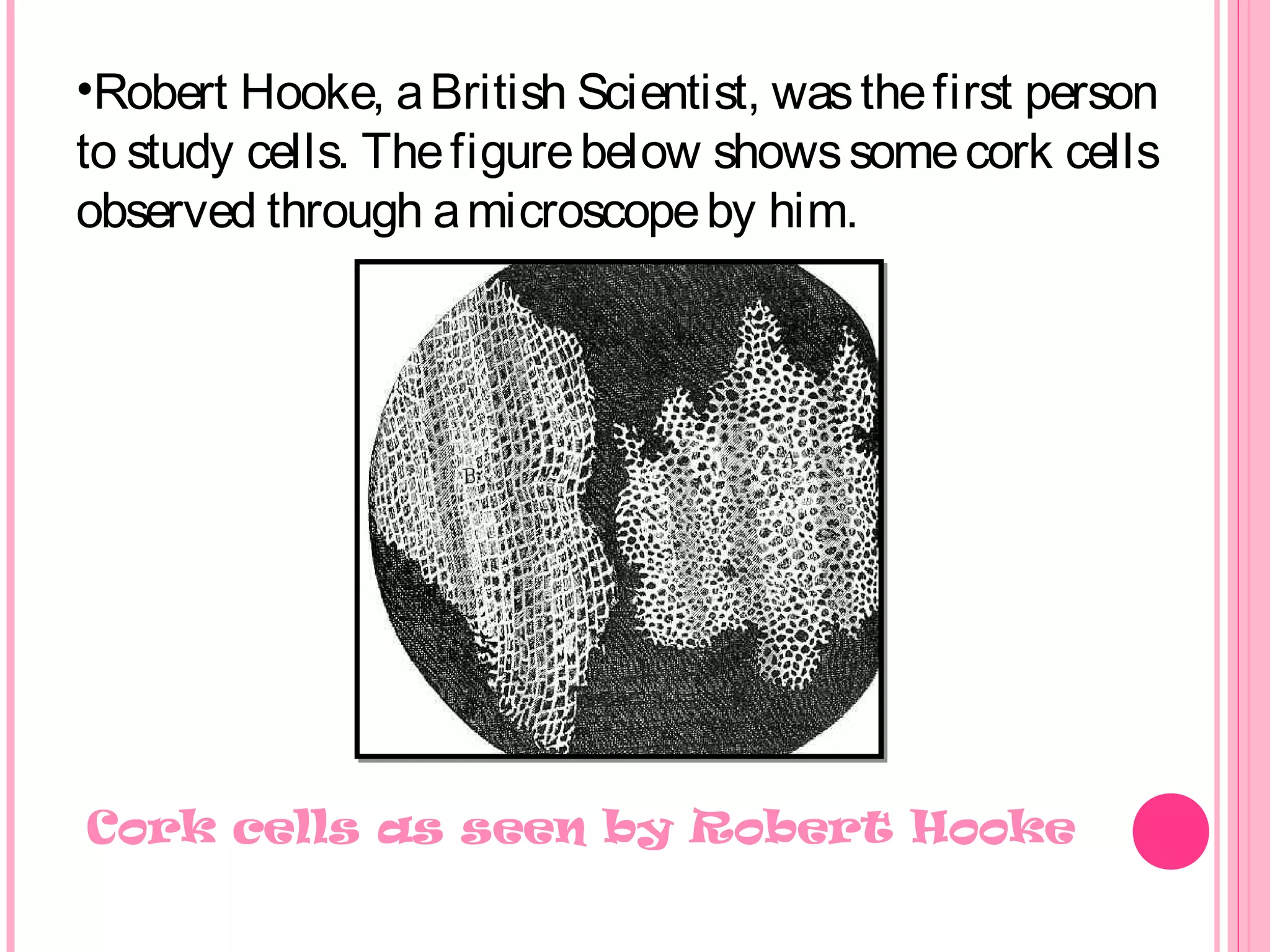
•Robert Hooke, aBritish Scientist, wasthefirst person
to study cells. Thefigurebelow showssomecork cells
observed through amicroscopeby him.
Cork cells as seen by Robert Hooke
Using a microscope
•Cellsarevery tiny
and cannot beseen
with thenaked eye.
•Cellsof living
organismscan be
observed using a
microscope.
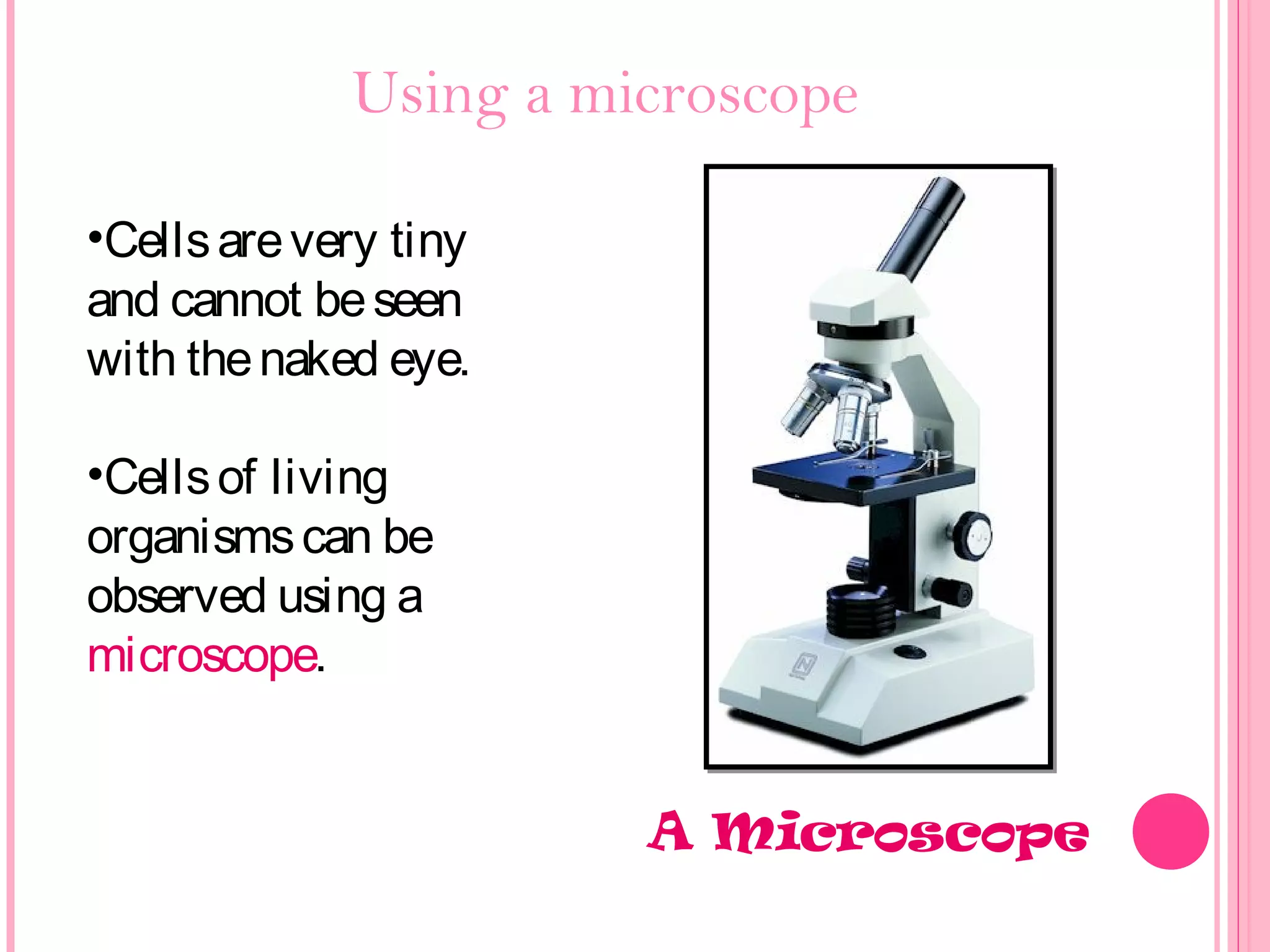
A Microscope
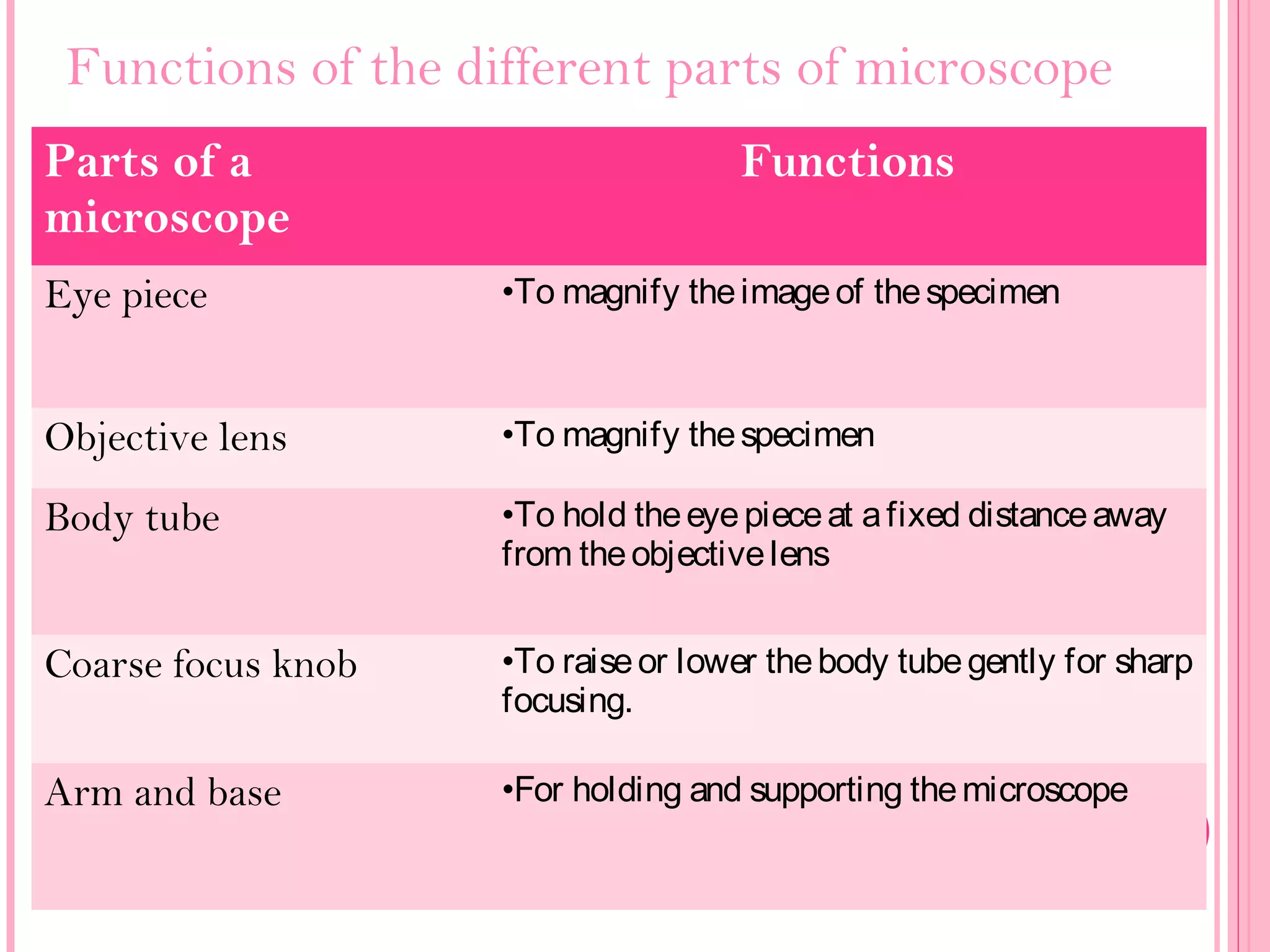
Functions of the different parts of microscope
Parts of a
microscope
Functions
Eye piece •To magnify theimageof thespecimen
Objective lens •To magnify thespecimen
Body tube •To hold theeyepieceat afixed distanceaway
from theobjectivelens
Coarse focus knob •To raiseor lower thebody tubegently for sharp
focusing.
Arm and base •For holding and supporting themicroscope
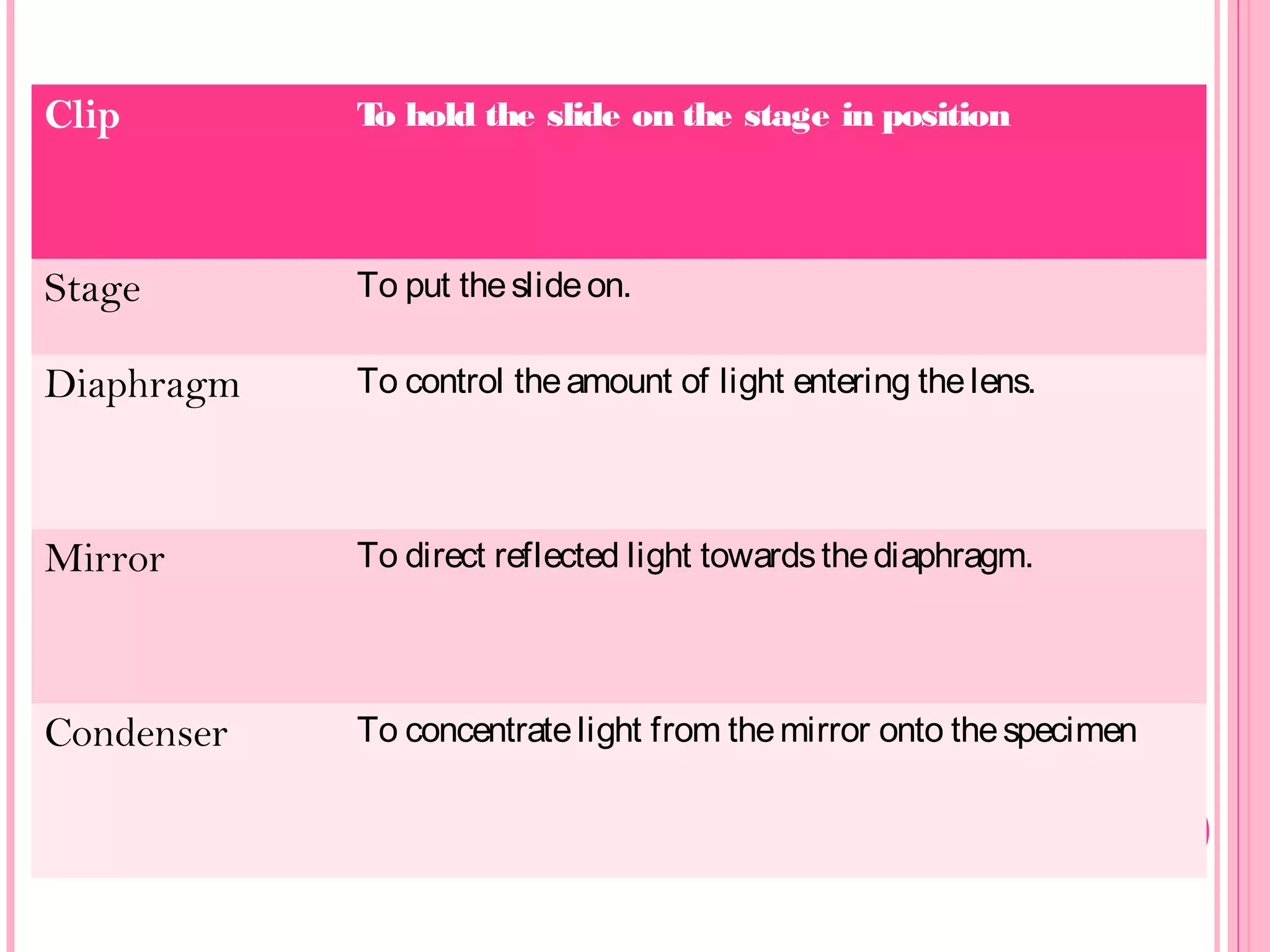
Clip To hold the slide on the stage in position
Stage To put theslideon.
Diaphragm To control theamount of light entering thelens.
Mirror To direct reflected light towardsthediaphragm.
Condenser To concentratelight from themirror onto thespecimen
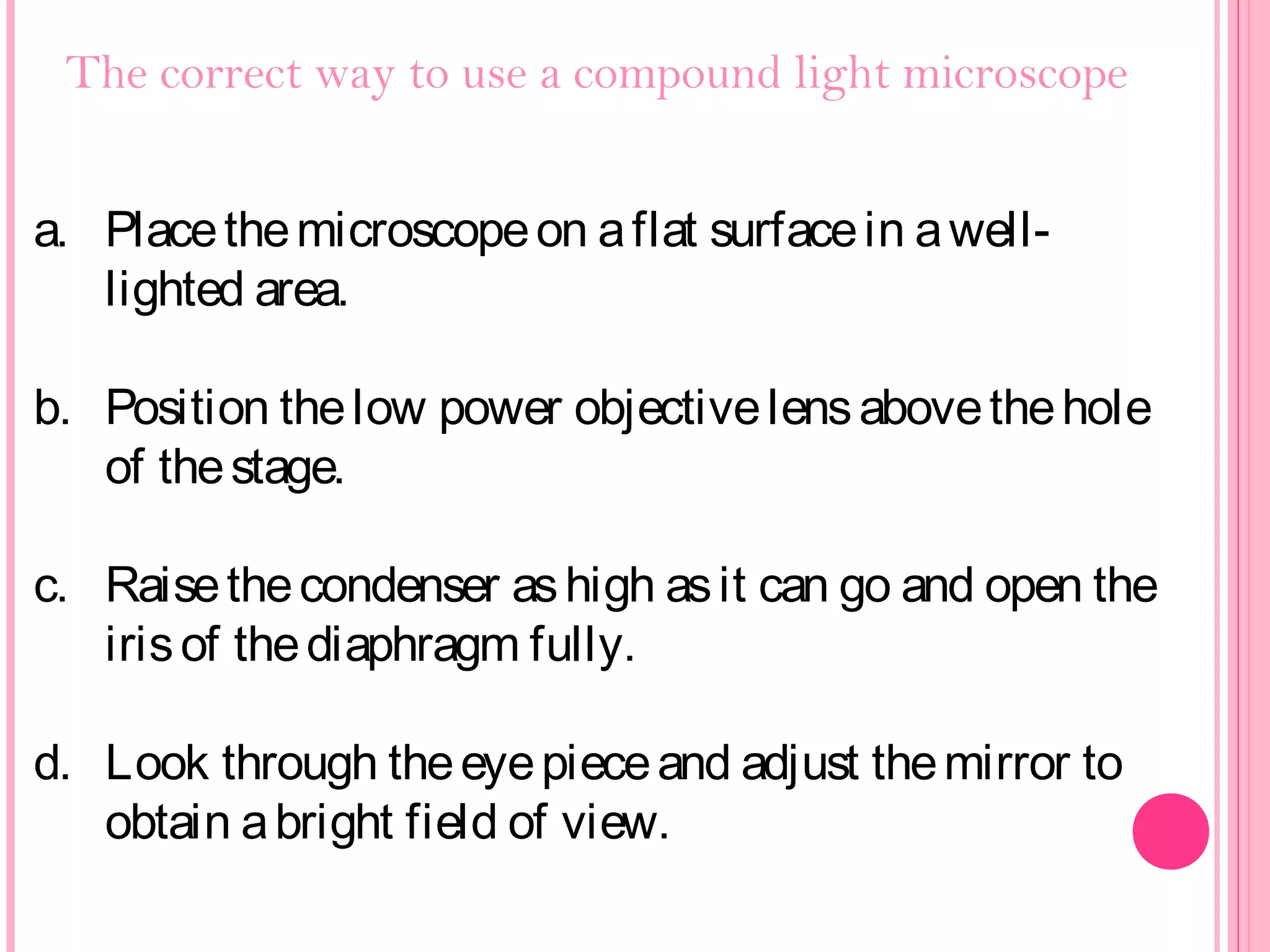
The correct way to use a compound light microscope
a. Placethemicroscopeon aflat surfacein awell-
lighted area.
b. Position thelow power objectivelensabovethehole
of thestage.
c. Raisethecondenser ashigh asit can go and open the
irisof thediaphragm fully.
d. Look through theeyepieceand adjust themirror to
obtain abright field of view.
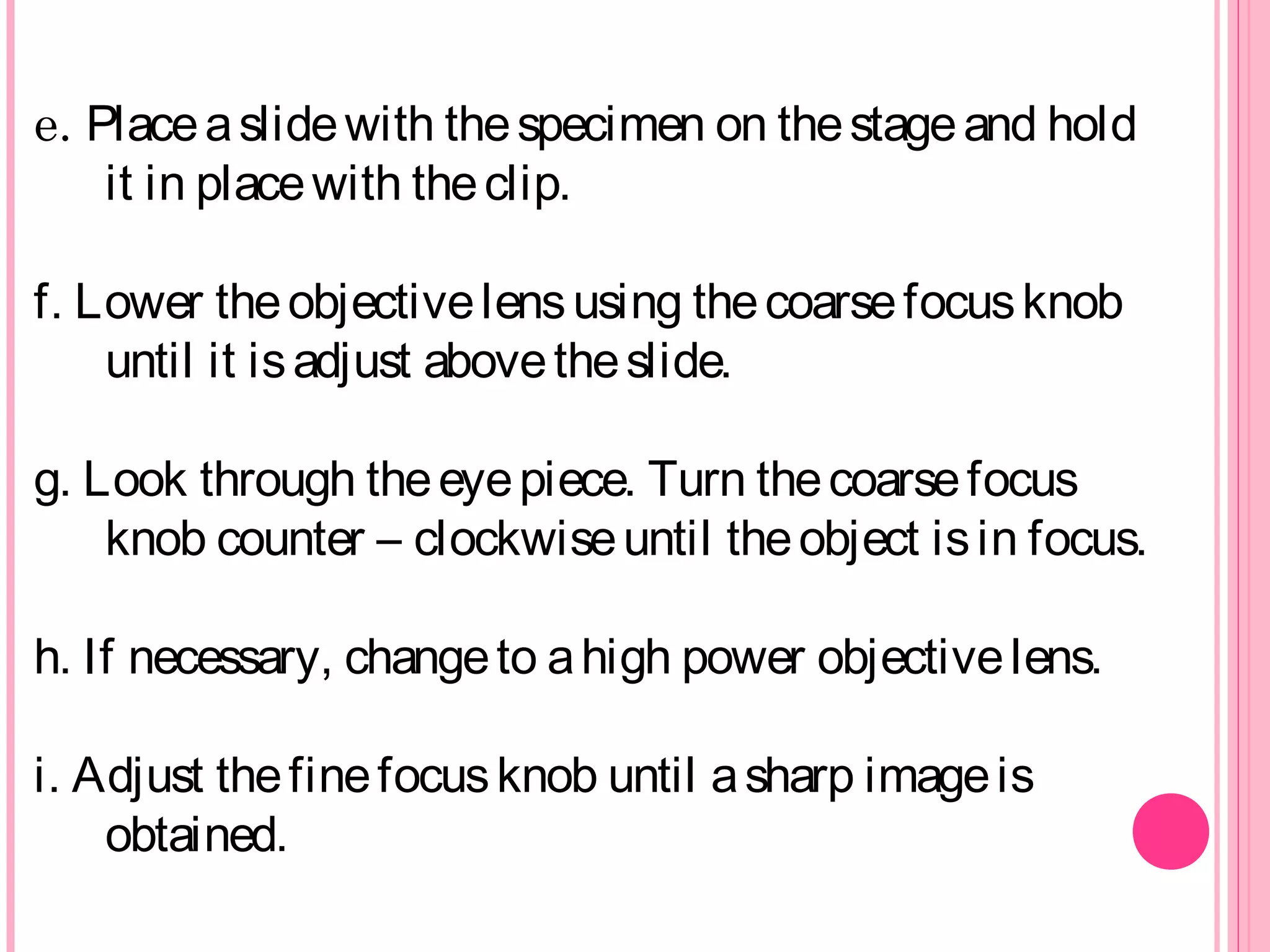
e. Placeaslidewith thespecimen on thestageand hold
it in placewith theclip.
f. Lower theobjectivelensusing thecoarsefocusknob
until it isadjust abovetheslide.
g. Look through theeyepiece. Turn thecoarsefocus
knob counter – clockwiseuntil theobject isin focus.
h. If necessary, changeto ahigh power objectivelens.
i. Adjust thefinefocusknob until asharp imageis
obtained.
General structure of a cell
•A typical cell ismadeup of cell membranewhich
containsaliving substancecalled protoplasm.
a.Protoplasm consistsof anucleusand cytoplasm.
b.Thenucleusisaspherical in shapeand surrounded by a
nucleusmembrane.
c.Cytoplasm isacolourlessjelly – likematerial
surrounded by cell membrane.
d.Thecell membraneisathin film which ispartially
permeableto thesurrounding substances.
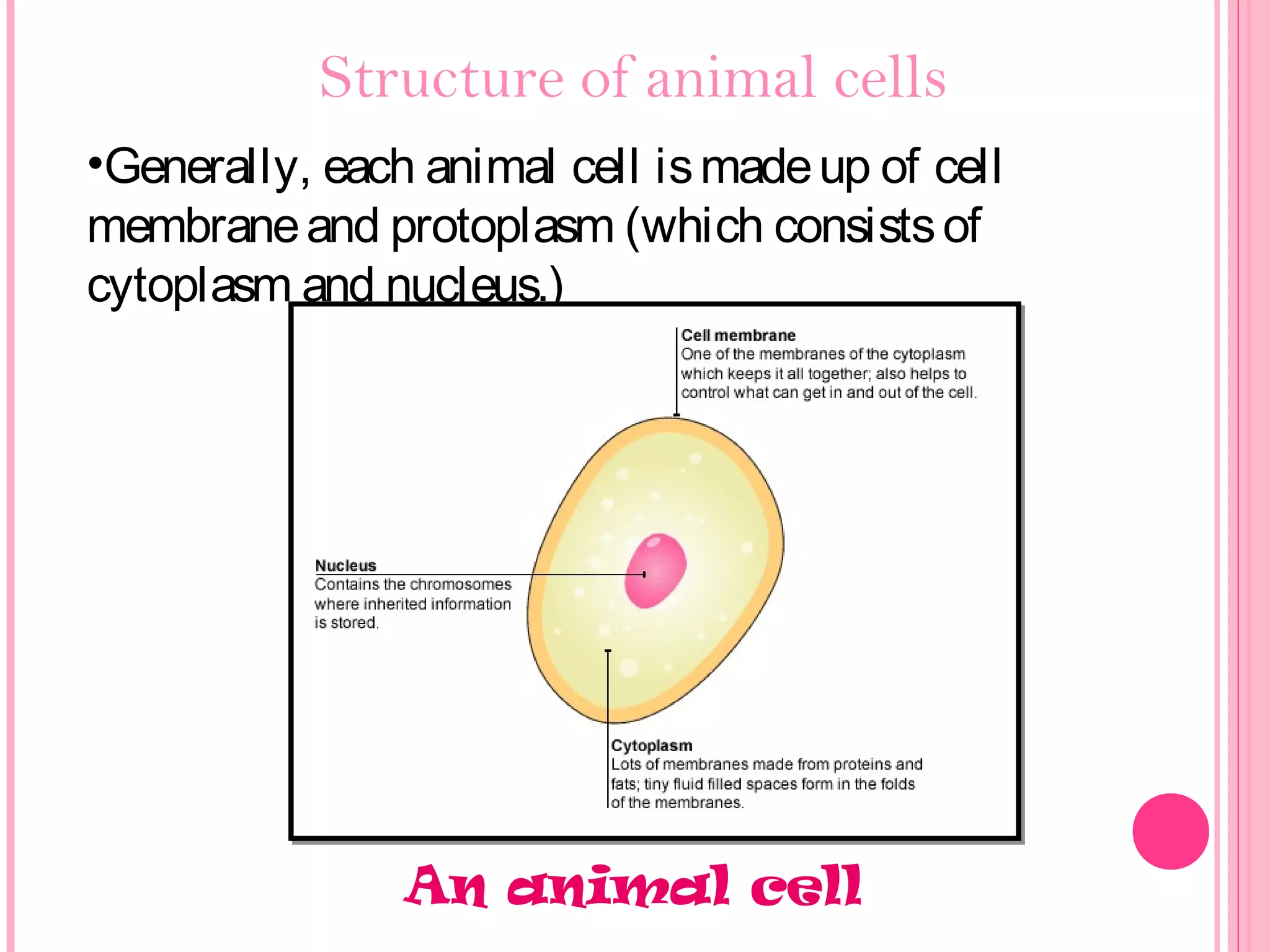
Structure of animal cells
•Generally, each animal cell ismadeup of cell
membraneand protoplasm (which consistsof
cytoplasm and nucleus.)
An animal cell
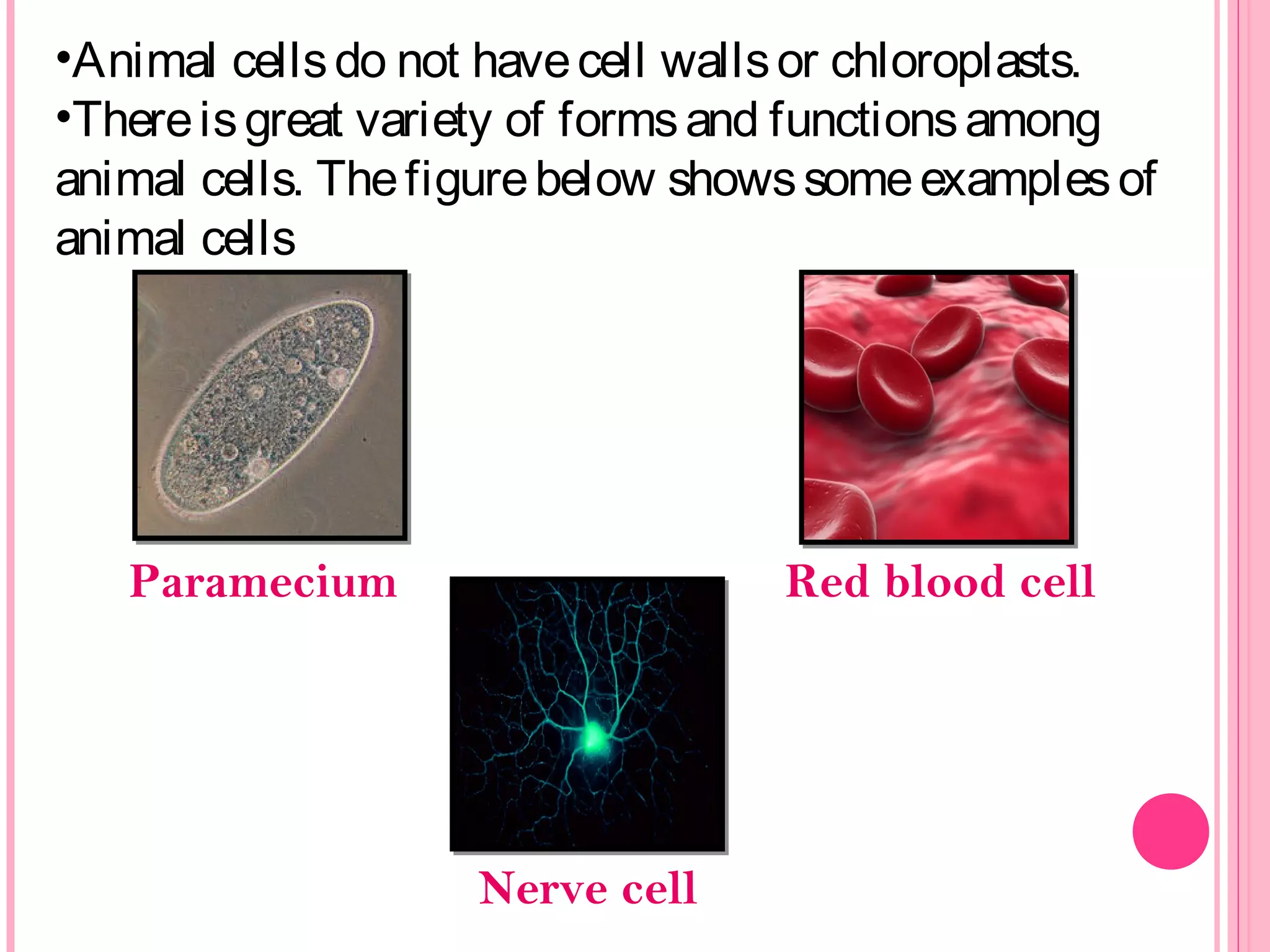
•Animal cellsdo not havecell wallsor chloroplasts.
•Thereisgreat variety of formsand functionsamong
animal cells. Thefigurebelow showssomeexamplesof
animal cells
Paramecium Red blood cell
Nerve cell
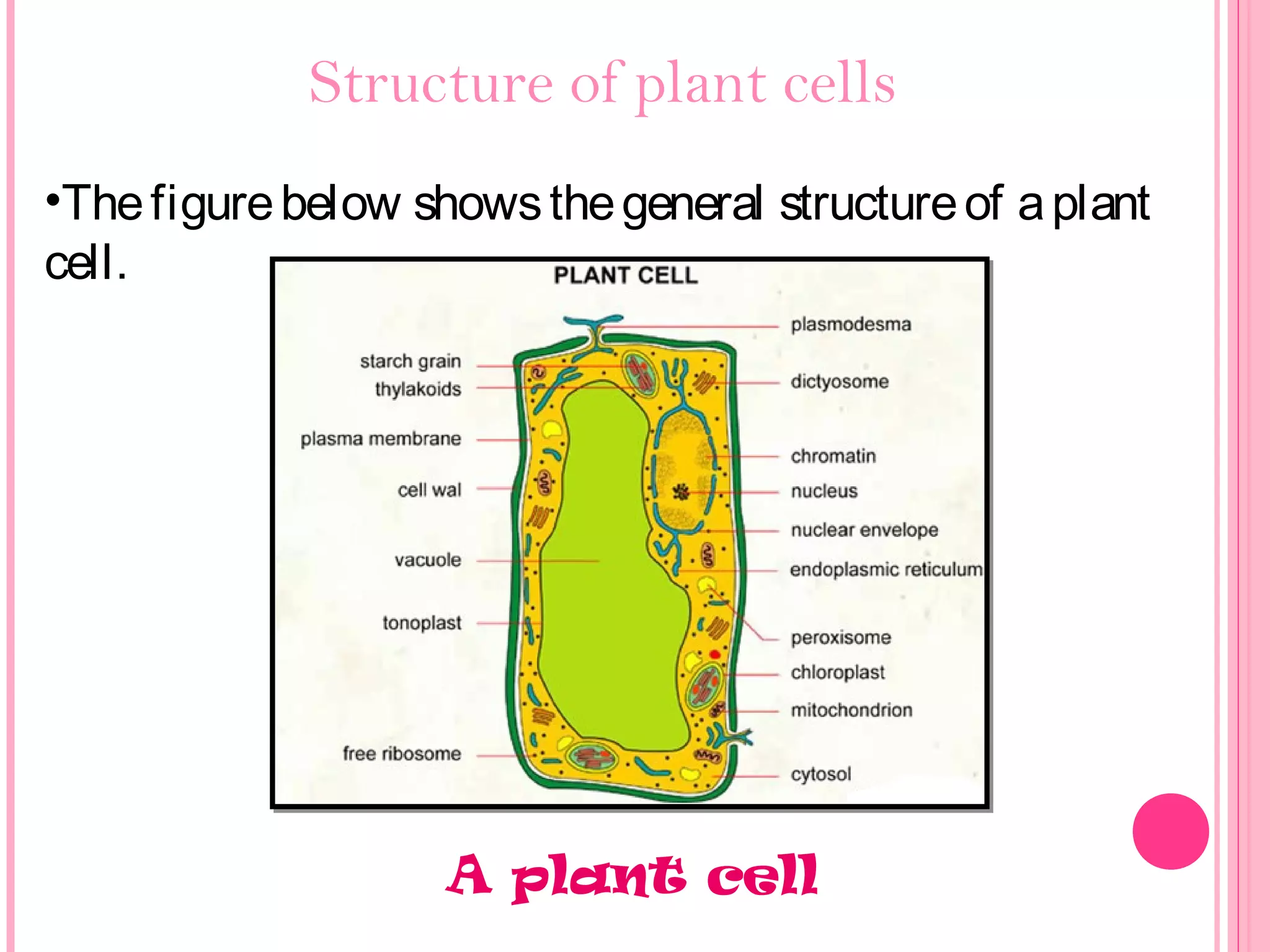
Structure of plant cells
•Thefigurebelow showsthegeneral structureof aplant
cell.
A plant cell
•Thebasic structureof plant cellsissimilar to that of
animal cellsin having acell membrane, cytoplasm and a
nucleus.
•All plant cellshaveacell wall which givesthem an
almost fixed shape.
•Plant cellsoften haveonelargevacuole, whereas
animal cellsusually havemany small ones.
•Most plant cellsthat areunder thelight contain
chloroplastswhich aregreen in colour.
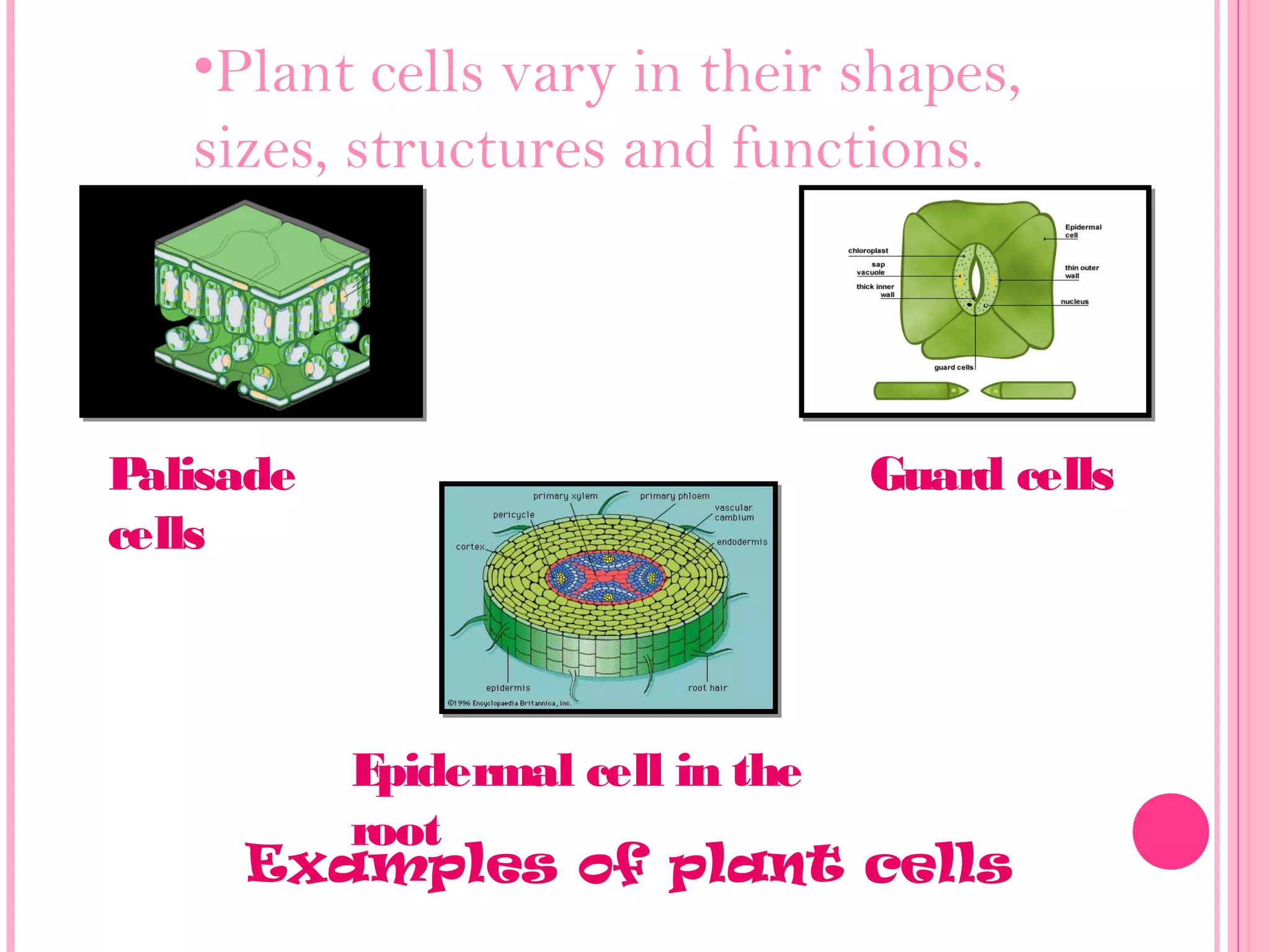
•Plant cells vary in their shapes,
sizes, structures and functions.
Epidermal cell in the
root
Palisade
cells
Guard cells
Examples of plant cells
The function of cell structures
Structure Present in Function
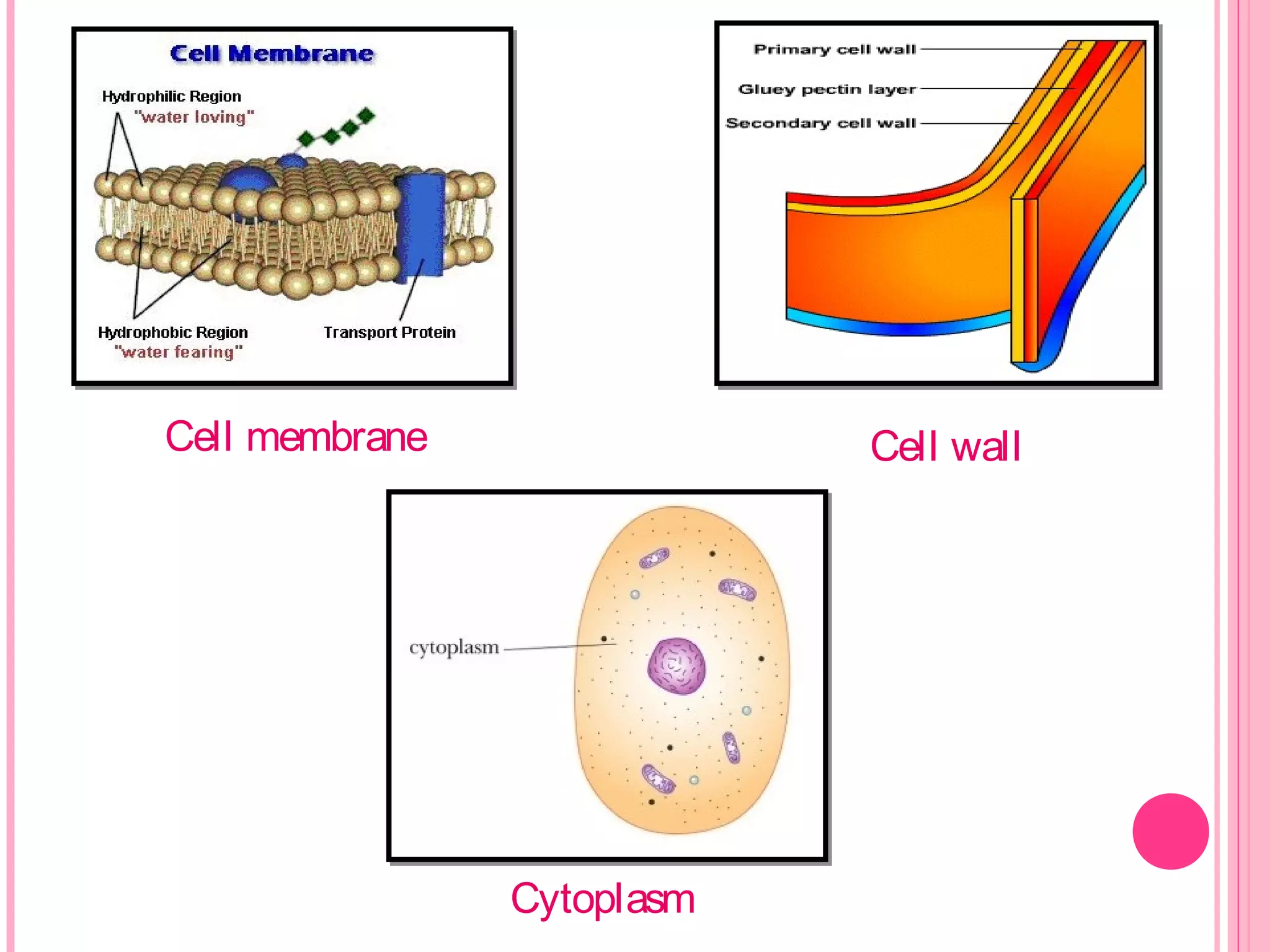
Cell membrane All cells •Enclosethecytoplasm.
•Controlsthemovement of
materialsin and out of cells.
Cell wall ( anon –
living layer of
cellulose)
Plant cell only •Supportsand giveshapeto the
cells
Cytoplasm ( jelly – like
substance)
All cells •Thisiswherechemical reactions
takeplaceinsidethecell.
•Storesdissolved material
Cell membrane Cell wall
Cytoplasm
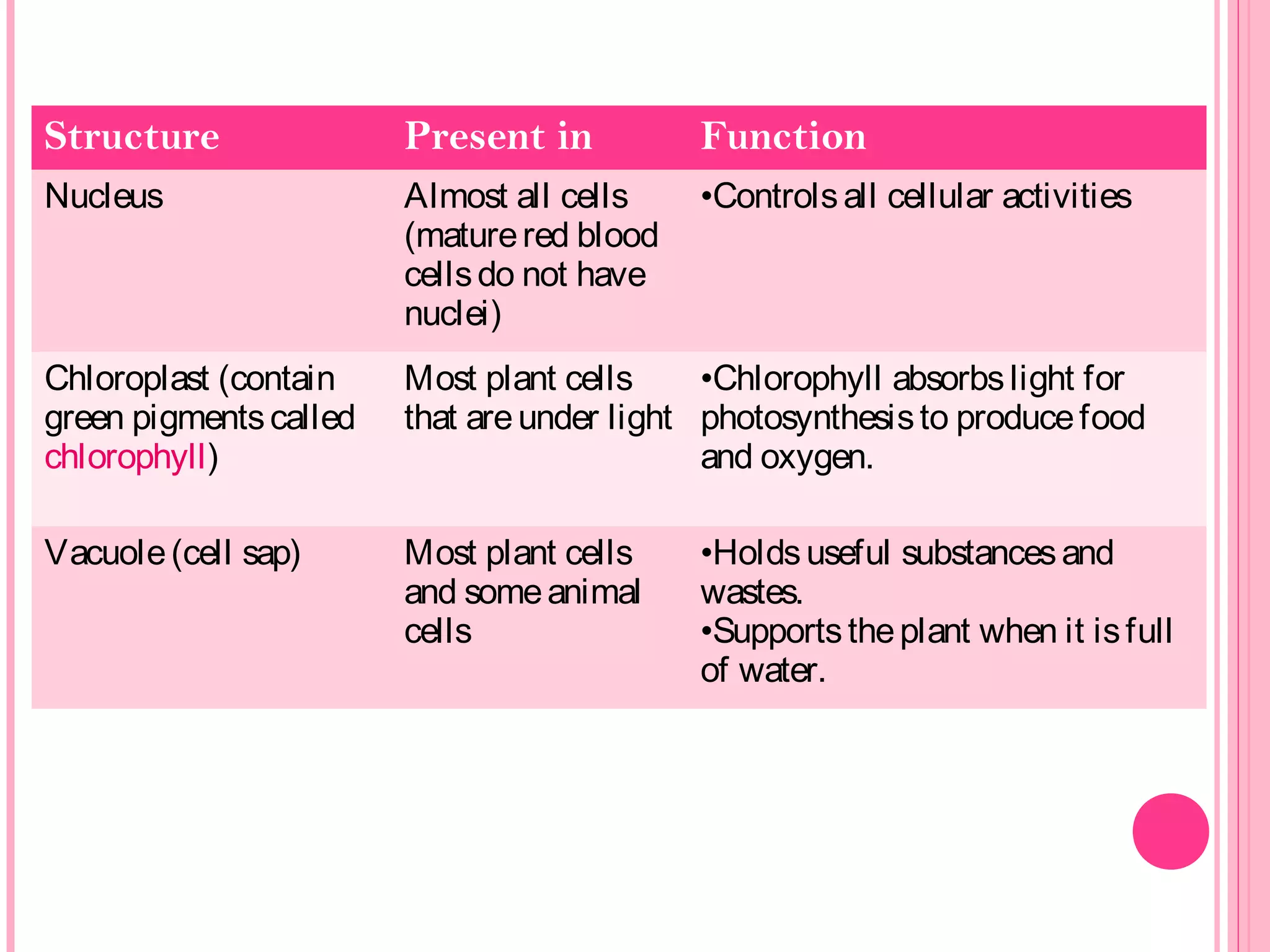
Structure Present in Function
Nucleus Almost all cells
(maturered blood
cellsdo not have
nuclei)
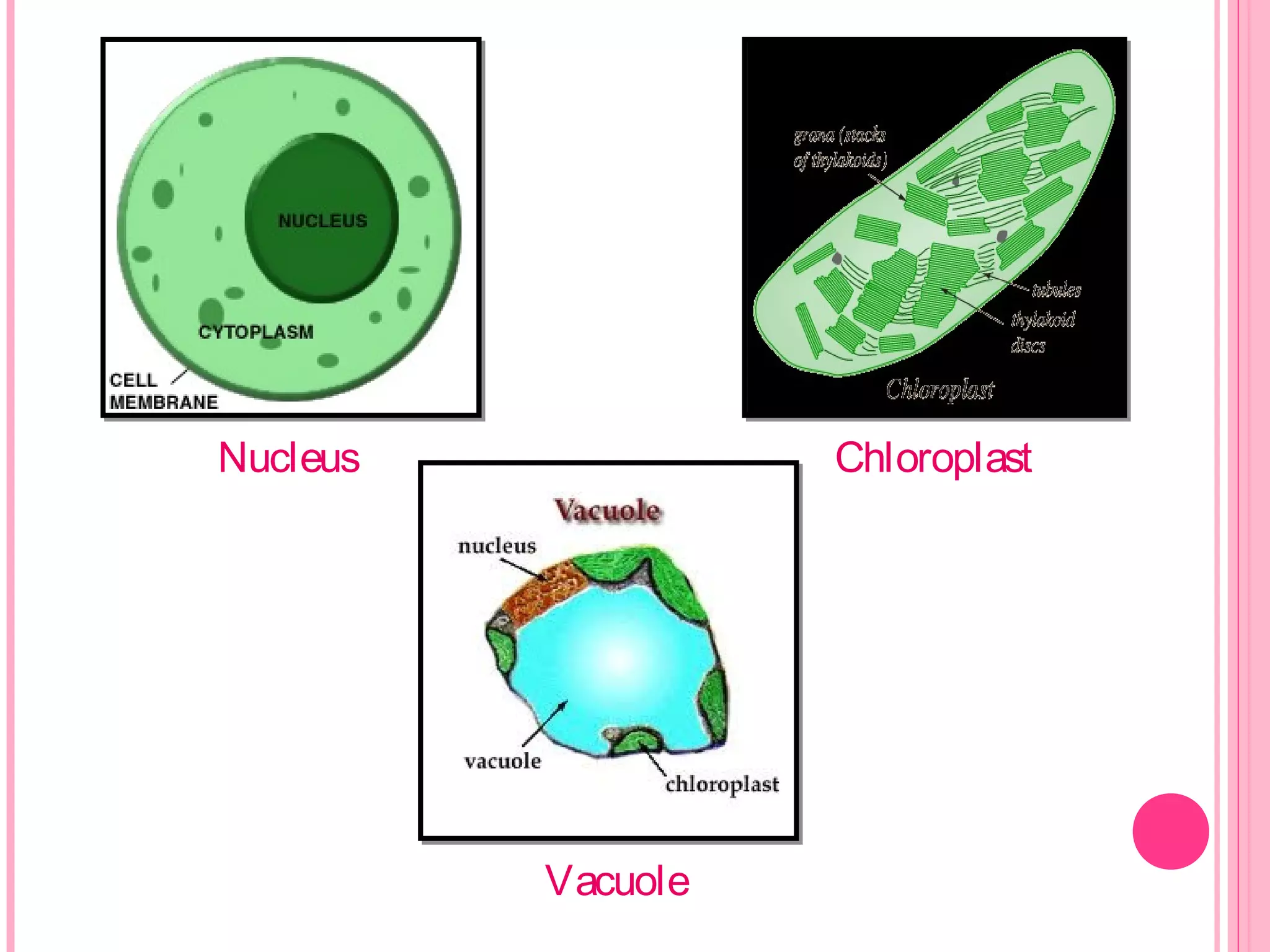
•Controlsall cellular activities
Chloroplast (contain
green pigmentscalled
chlorophyll)
Most plant cells
that areunder light
•Chlorophyll absorbslight for
photosynthesisto producefood
and oxygen.
Vacuole(cell sap) Most plant cells
and someanimal
cells
•Holdsuseful substancesand
wastes.
•Supportstheplant when it isfull
of water.
Nucleus Chloroplast
Vacuole
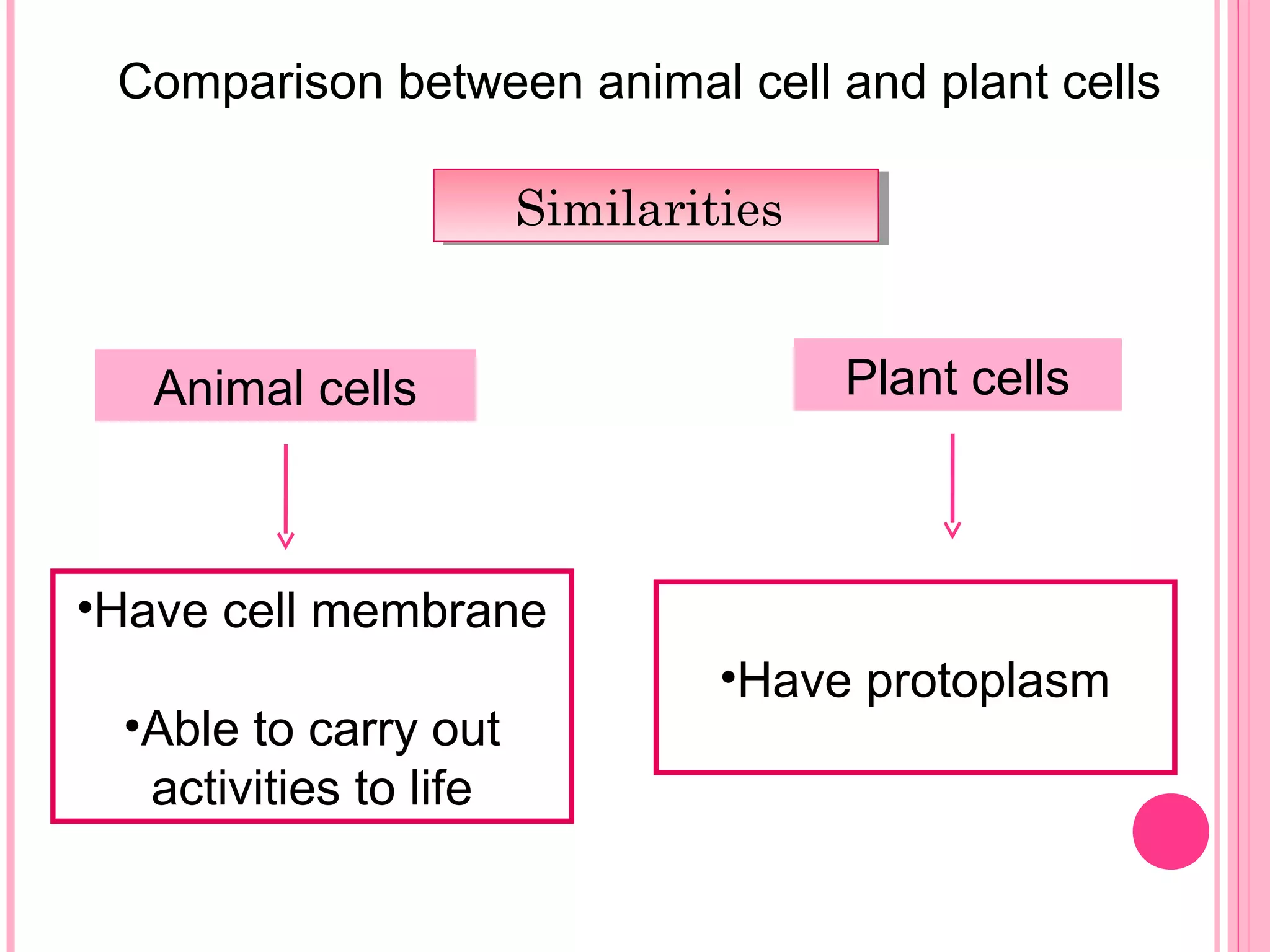
Comparison between animal cell and plant cells
SimilaritiesSimilarities
Animal cells Plant cells
•Have cell membrane
•Able to carry out
activities to life
•Have protoplasm
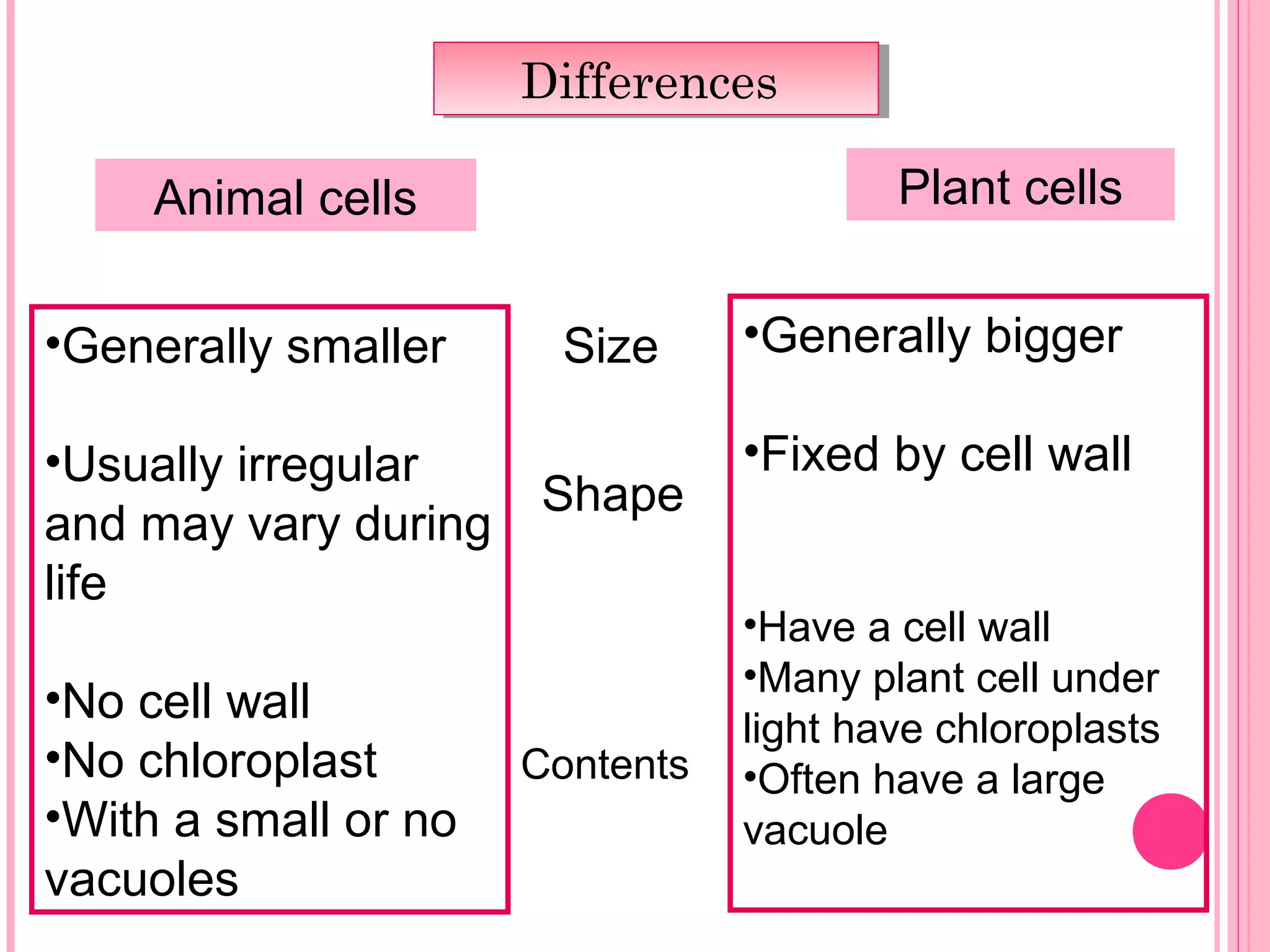
DifferencesDifferences
Animal cells Plant cells
•Generally smaller
•Usually irregular
and may vary during
life
•No cell wall
•No chloroplast
•With a small or no
vacuoles
•Generally bigger
•Fixed by cell wall
•Have a cell wall
•Many plant cell under
light have chloroplasts
•Often have a large
vacuole
Size
Shape
Contents
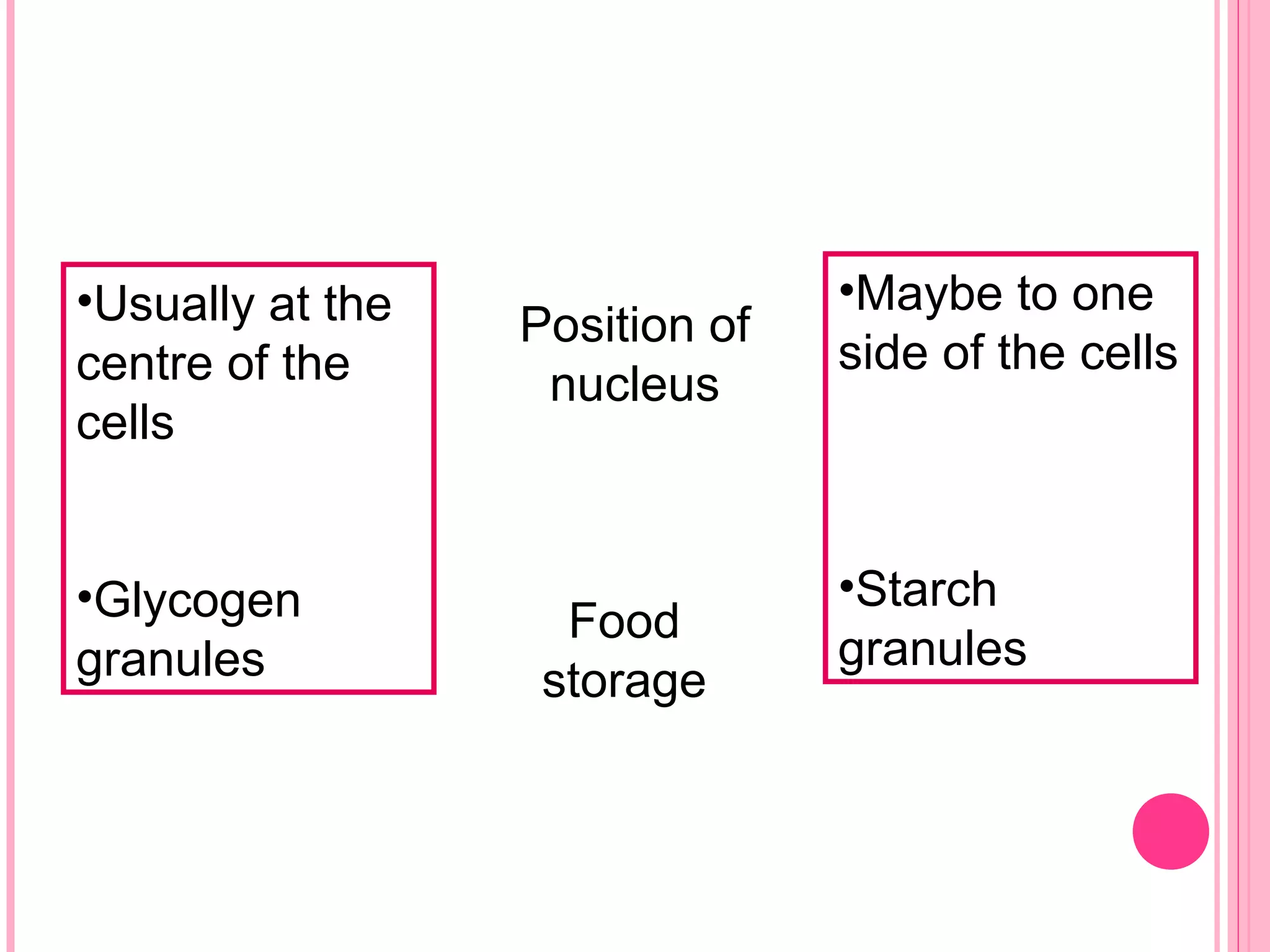
•Usually at the
centre of the
cells
•Glycogen
granules
•Maybe to one
side of the cells
•Starch
granules
Position of
nucleus
Food
storage
Understanding cells 2.1 101 1

Understanding cells 2.1 101 1

  • 2.
    Understanding Cells Cells •Living organismsaremadeupof oneor morecells. •Cellsarethemost basic unit of organismswhich can function on their own. Cellscarry out lifeprocessessuch asrespiration, division, excretion and growth. •Cellsarethebuilding blocksof an organism. •Cellswork together to keep an organism alive. •Cellsof living thingsexist in many sizesand shapes. They can beround, oval, long, short, with tail and so on.
  • 3.
    •Robert Hooke, aBritishScientist, wasthefirst person to study cells. Thefigurebelow showssomecork cells observed through amicroscopeby him. Cork cells as seen by Robert Hooke
  • 4.
    Using a microscope •Cellsareverytiny and cannot beseen with thenaked eye. •Cellsof living organismscan be observed using a microscope. A Microscope
  • 5.
    Functions of thedifferent parts of microscope Parts of a microscope Functions Eye piece •To magnify theimageof thespecimen Objective lens •To magnify thespecimen Body tube •To hold theeyepieceat afixed distanceaway from theobjectivelens Coarse focus knob •To raiseor lower thebody tubegently for sharp focusing. Arm and base •For holding and supporting themicroscope
  • 6.
    Clip To holdthe slide on the stage in position Stage To put theslideon. Diaphragm To control theamount of light entering thelens. Mirror To direct reflected light towardsthediaphragm. Condenser To concentratelight from themirror onto thespecimen
  • 7.
    The correct wayto use a compound light microscope a. Placethemicroscopeon aflat surfacein awell- lighted area. b. Position thelow power objectivelensabovethehole of thestage. c. Raisethecondenser ashigh asit can go and open the irisof thediaphragm fully. d. Look through theeyepieceand adjust themirror to obtain abright field of view.
  • 8.
    e. Placeaslidewith thespecimenon thestageand hold it in placewith theclip. f. Lower theobjectivelensusing thecoarsefocusknob until it isadjust abovetheslide. g. Look through theeyepiece. Turn thecoarsefocus knob counter – clockwiseuntil theobject isin focus. h. If necessary, changeto ahigh power objectivelens. i. Adjust thefinefocusknob until asharp imageis obtained.
  • 9.
    General structure ofa cell •A typical cell ismadeup of cell membranewhich containsaliving substancecalled protoplasm. a.Protoplasm consistsof anucleusand cytoplasm. b.Thenucleusisaspherical in shapeand surrounded by a nucleusmembrane. c.Cytoplasm isacolourlessjelly – likematerial surrounded by cell membrane. d.Thecell membraneisathin film which ispartially permeableto thesurrounding substances.
  • 10.
    Structure of animalcells •Generally, each animal cell ismadeup of cell membraneand protoplasm (which consistsof cytoplasm and nucleus.) An animal cell
  • 11.
    •Animal cellsdo nothavecell wallsor chloroplasts. •Thereisgreat variety of formsand functionsamong animal cells. Thefigurebelow showssomeexamplesof animal cells Paramecium Red blood cell Nerve cell
  • 12.
    Structure of plantcells •Thefigurebelow showsthegeneral structureof aplant cell. A plant cell
  • 13.
    •Thebasic structureof plantcellsissimilar to that of animal cellsin having acell membrane, cytoplasm and a nucleus. •All plant cellshaveacell wall which givesthem an almost fixed shape. •Plant cellsoften haveonelargevacuole, whereas animal cellsusually havemany small ones. •Most plant cellsthat areunder thelight contain chloroplastswhich aregreen in colour.
  • 14.
    •Plant cells varyin their shapes, sizes, structures and functions. Epidermal cell in the root Palisade cells Guard cells Examples of plant cells
  • 15.
    The function ofcell structures Structure Present in Function Cell membrane All cells •Enclosethecytoplasm. •Controlsthemovement of materialsin and out of cells. Cell wall ( anon – living layer of cellulose) Plant cell only •Supportsand giveshapeto the cells Cytoplasm ( jelly – like substance) All cells •Thisiswherechemical reactions takeplaceinsidethecell. •Storesdissolved material
  • 16.
    Cell membrane Cellwall Cytoplasm
  • 17.
    Structure Present inFunction Nucleus Almost all cells (maturered blood cellsdo not have nuclei) •Controlsall cellular activities Chloroplast (contain green pigmentscalled chlorophyll) Most plant cells that areunder light •Chlorophyll absorbslight for photosynthesisto producefood and oxygen. Vacuole(cell sap) Most plant cells and someanimal cells •Holdsuseful substancesand wastes. •Supportstheplant when it isfull of water.
  • 18.
  • 19.
    Comparison between animalcell and plant cells SimilaritiesSimilarities Animal cells Plant cells •Have cell membrane •Able to carry out activities to life •Have protoplasm
  • 20.
    DifferencesDifferences Animal cells Plantcells •Generally smaller •Usually irregular and may vary during life •No cell wall •No chloroplast •With a small or no vacuoles •Generally bigger •Fixed by cell wall •Have a cell wall •Many plant cell under light have chloroplasts •Often have a large vacuole Size Shape Contents
  • 21.
    •Usually at the centreof the cells •Glycogen granules •Maybe to one side of the cells •Starch granules Position of nucleus Food storage