Cells & Scopes, Baby! Ch 4
• You’re made of them so don’t you think
  you need to know allllllll about them!

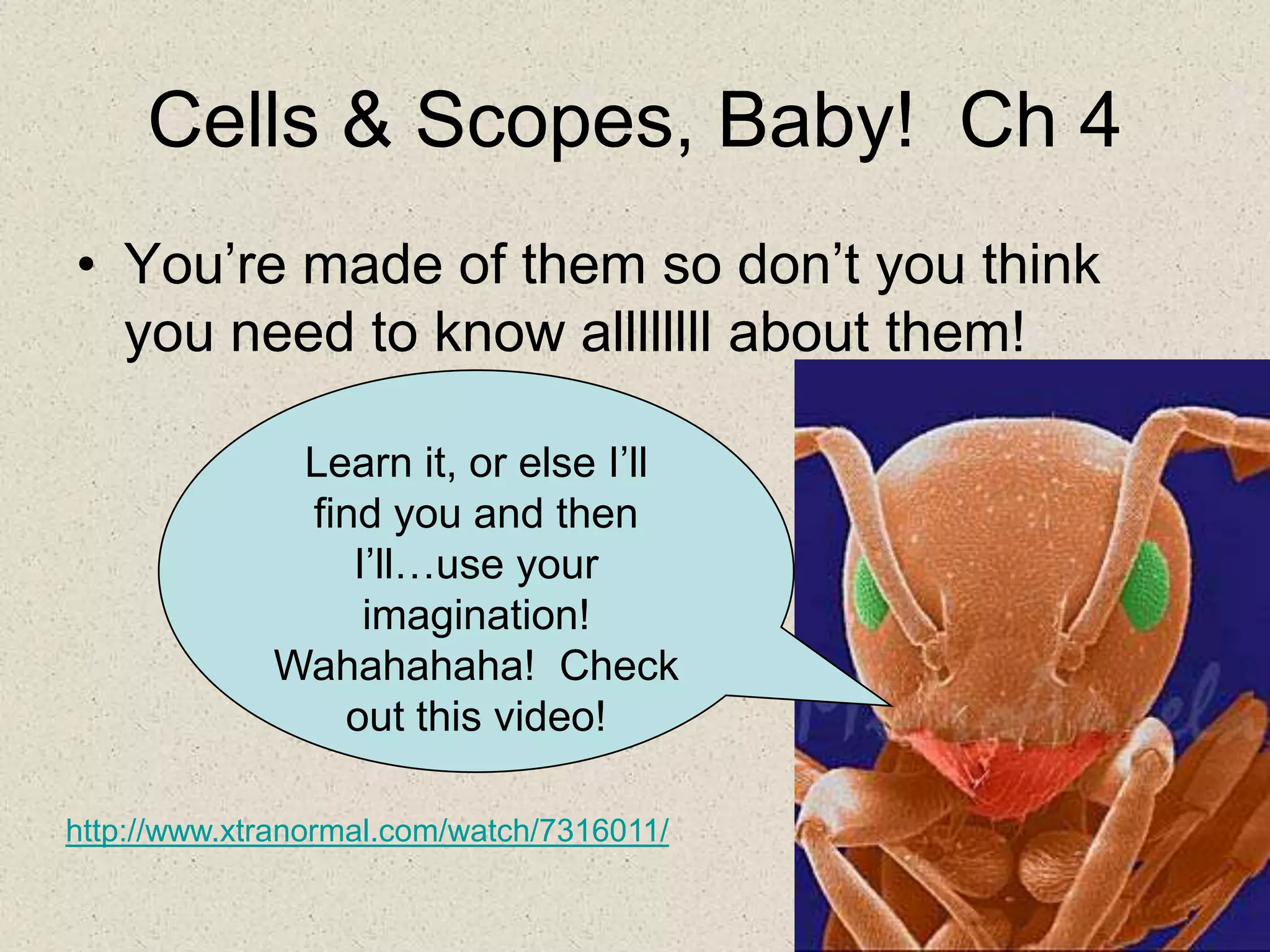
              Learn it, or else I’ll
              find you and then
                 I’ll…use your
                  imagination!
             Wahahahaha! Check
                out this video!

http://www.xtranormal.com/watch/7316011/
AP Bio            Ch 4 A Tour of the Cell
Goals
• Describe the difference between the light microscope, transmission electron
   microscope & scanning electron microscope.
• List one benefit of using the light microscope over either of the two electron
   microscopes.
• State what part of a cell can be viewed by a TEM & SEM.
• Distinguish between prokaryotic & eukaryotic cells.
• Explain why cells can’t be too large or too small.
• Explain the importance of compartmentalization in eukaryotic cells.
• Describe the structure & function of the following cellular parts:
• Cytoplasm (aka cytosol), cell membrane (aka plasma membrane), nucleus,
   nucleolus, nuclear envelope, chromatin & chromosome, ribosome, endoplasmic
   reticulum (smooth & rough), transport vesicles, Golgi bodies, vacuoles,
   peroxisome, mitochondria, chloroplast, cytoskeleton, centrioles, flagella & cilia,
   cell wall, extracellular matrix, plasmodesmata, gap junctions, tight junctions.
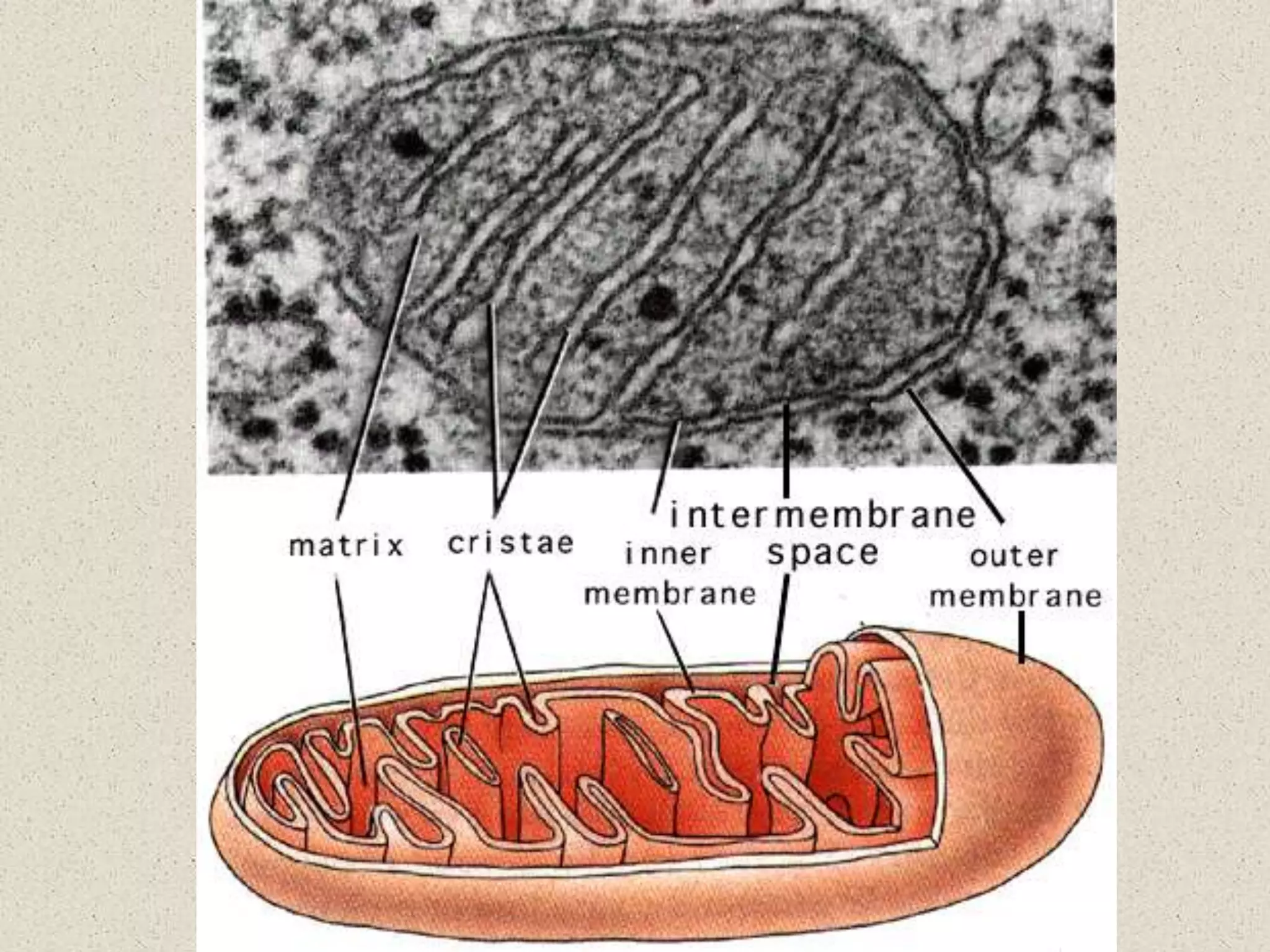
• Describe & identify the parts of a mitochondria & chloroplast.
• Be able to label a plant & animal cell with the above parts.
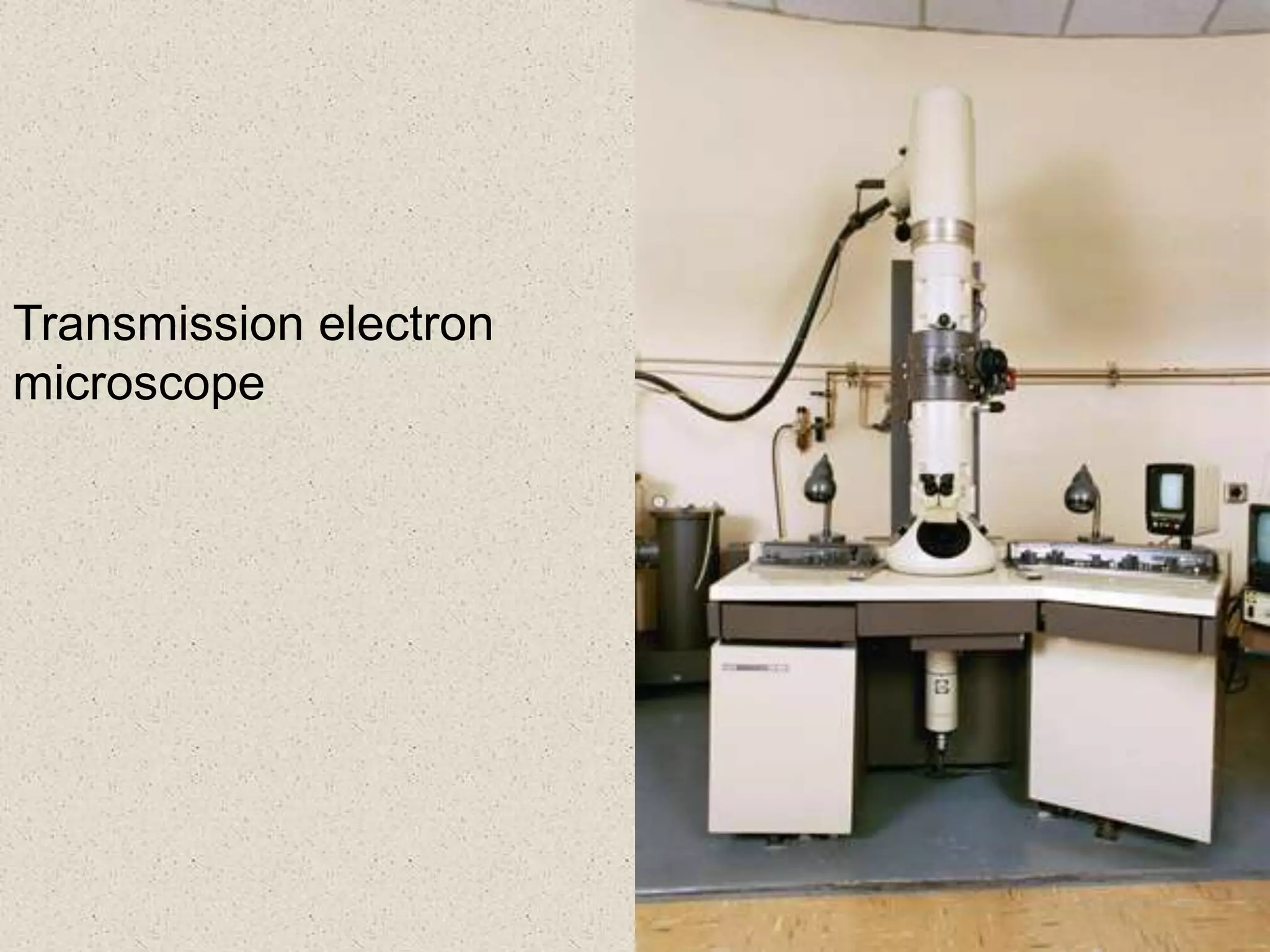
Transmission electron
microscope
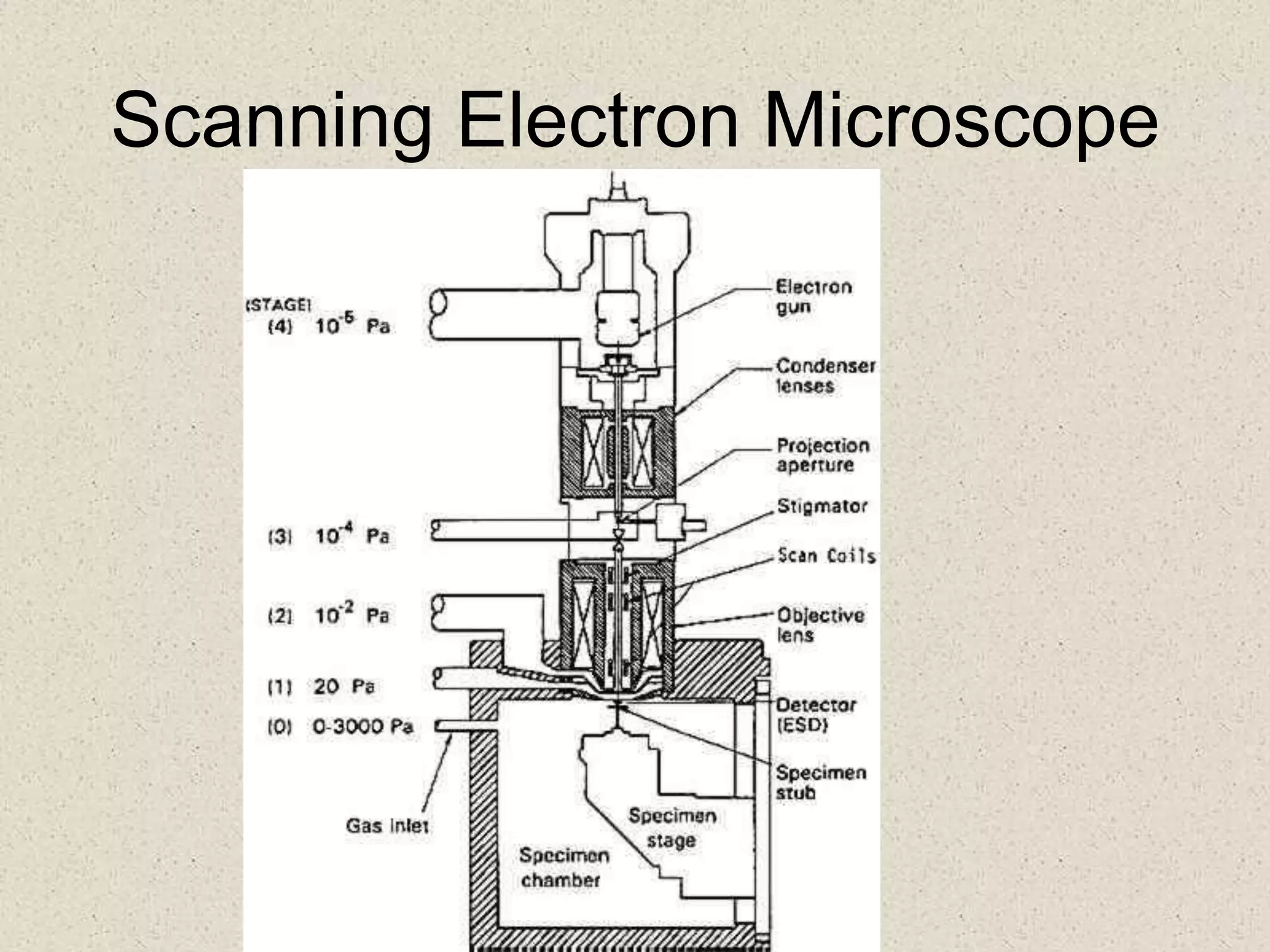
Scanning Electron Microscope
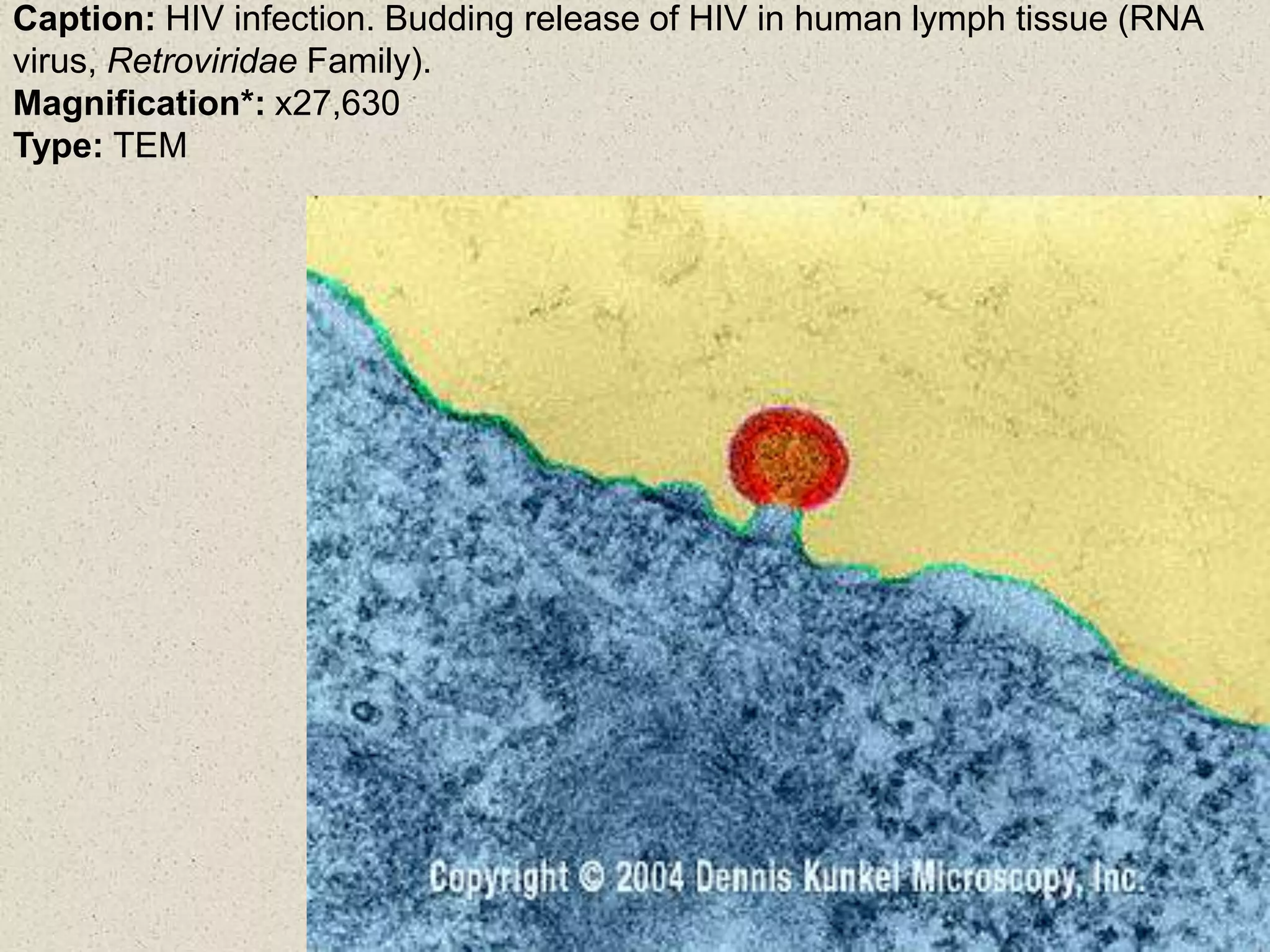
Caption: HIV infection. Budding release of HIV in human lymph tissue (RNA
virus, Retroviridae Family).
Magnification*: x27,630
Type: TEM
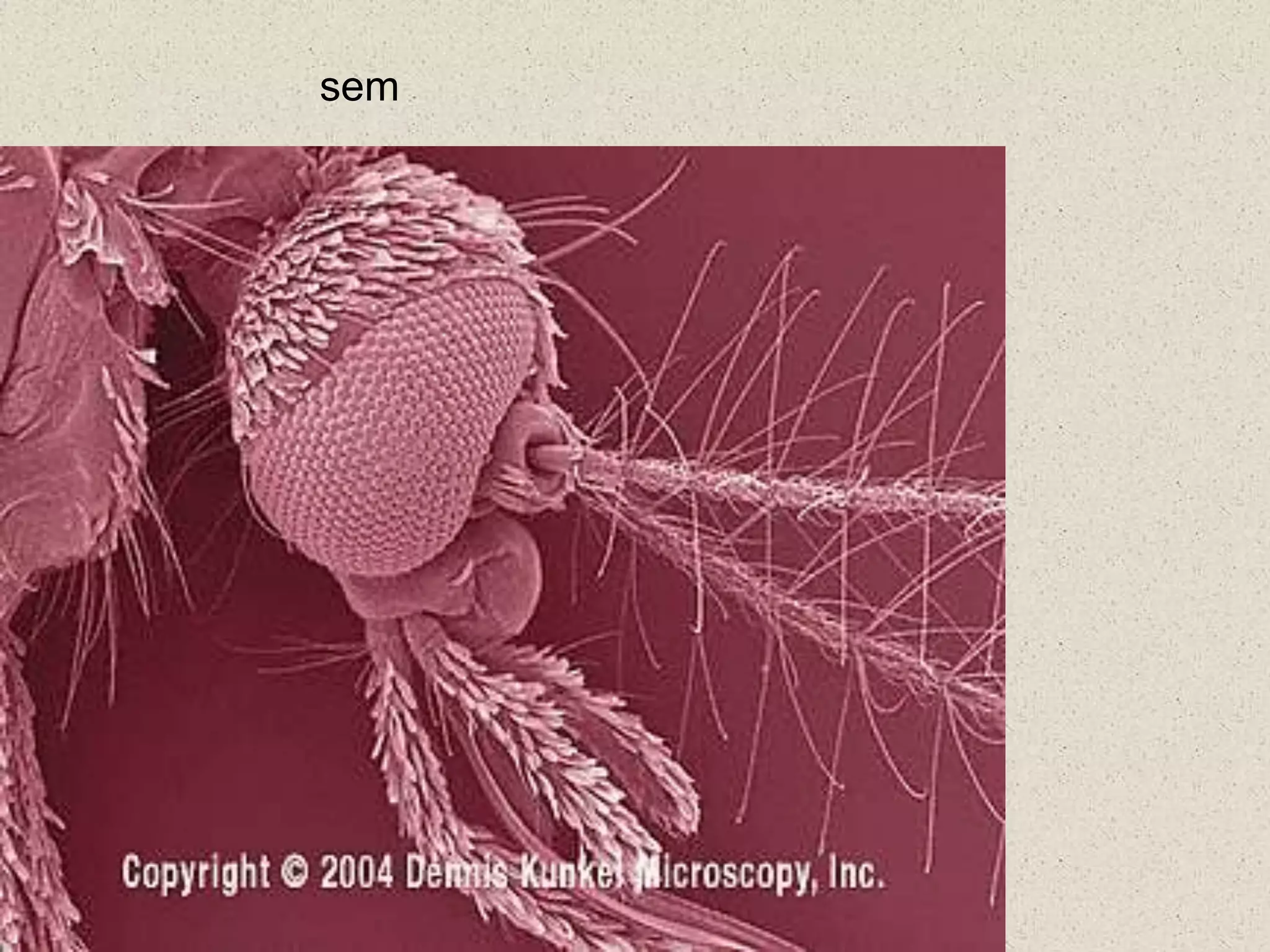
sem
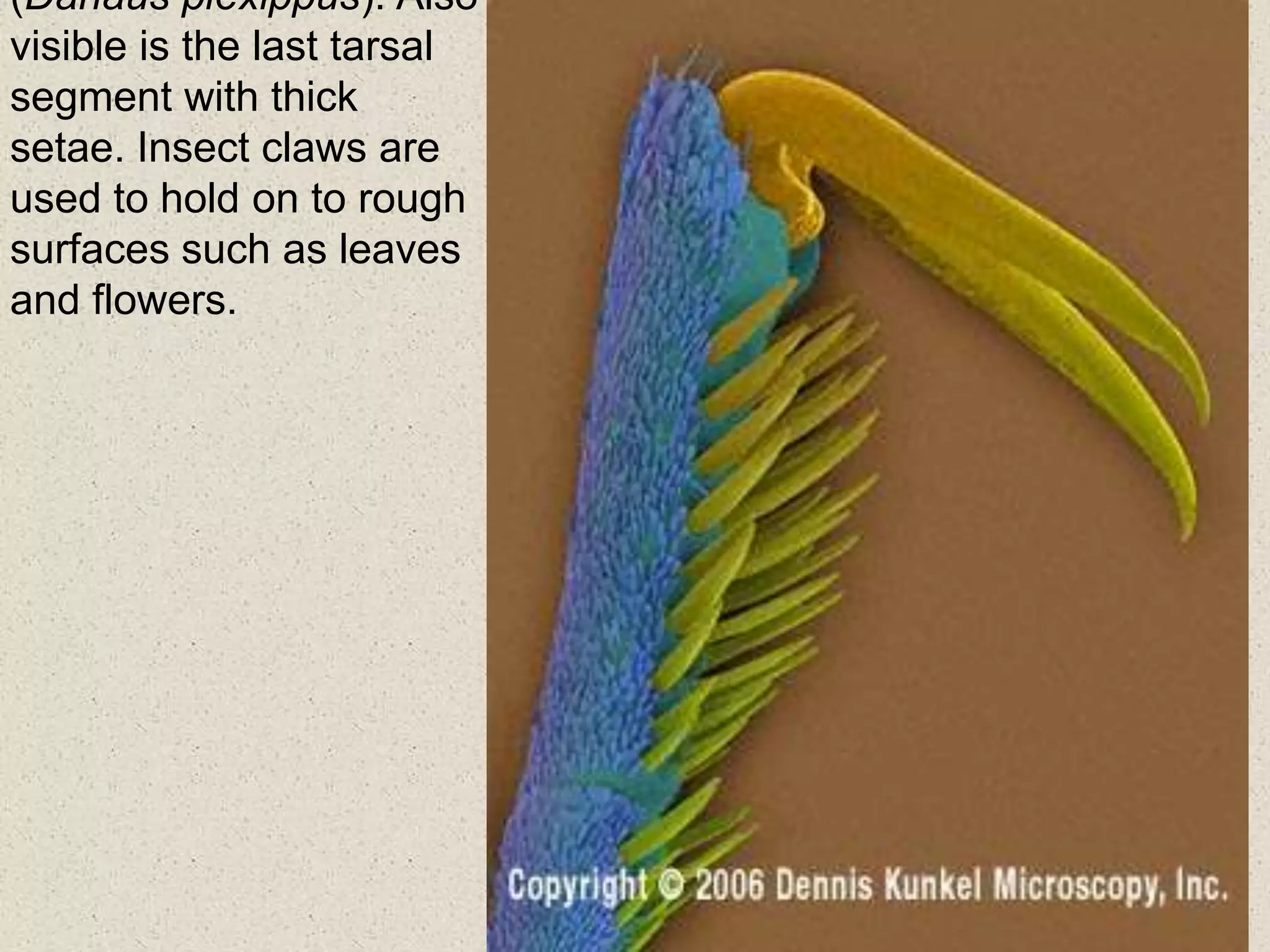
(Danaus plexippus). Also
visible is the last tarsal
segment with thick
setae. Insect claws are
used to hold on to rough
surfaces such as leaves
and flowers.
http://www5.pbrc.hawaii.edu/microangela/morebugs.htm
Link to insect images taken w/ SEM
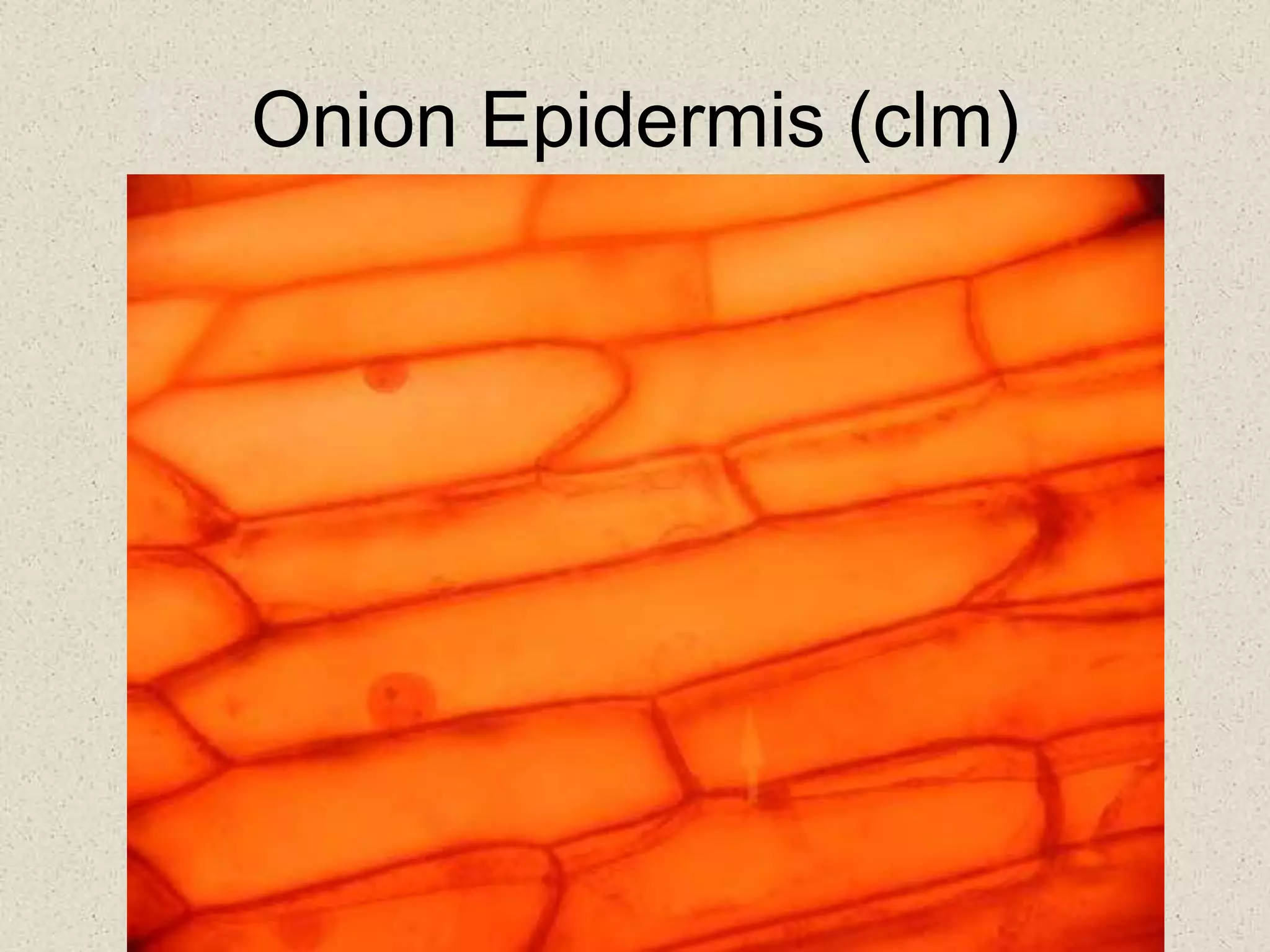
Onion Epidermis (clm)
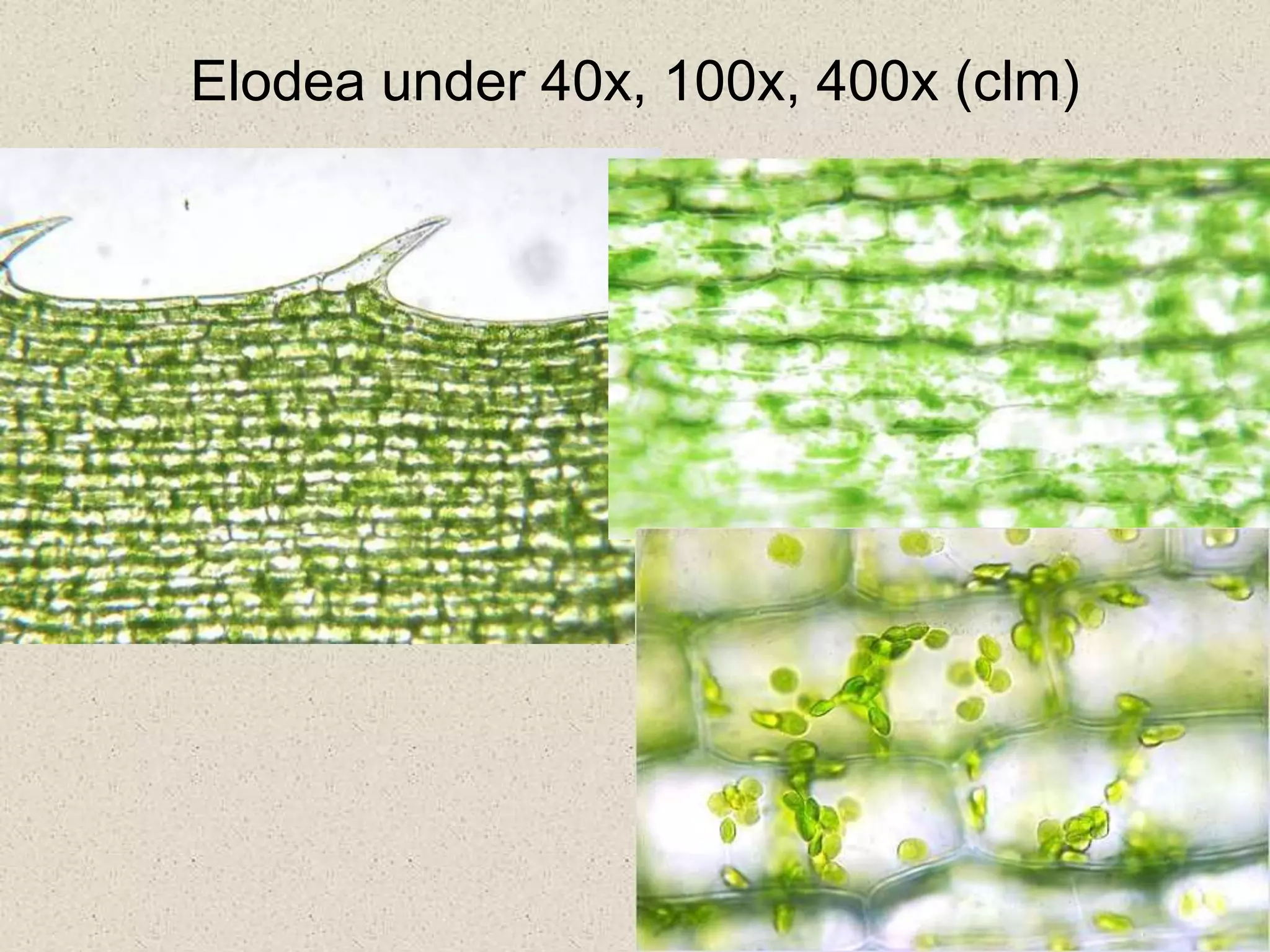
Elodea under 40x, 100x, 400x (clm)
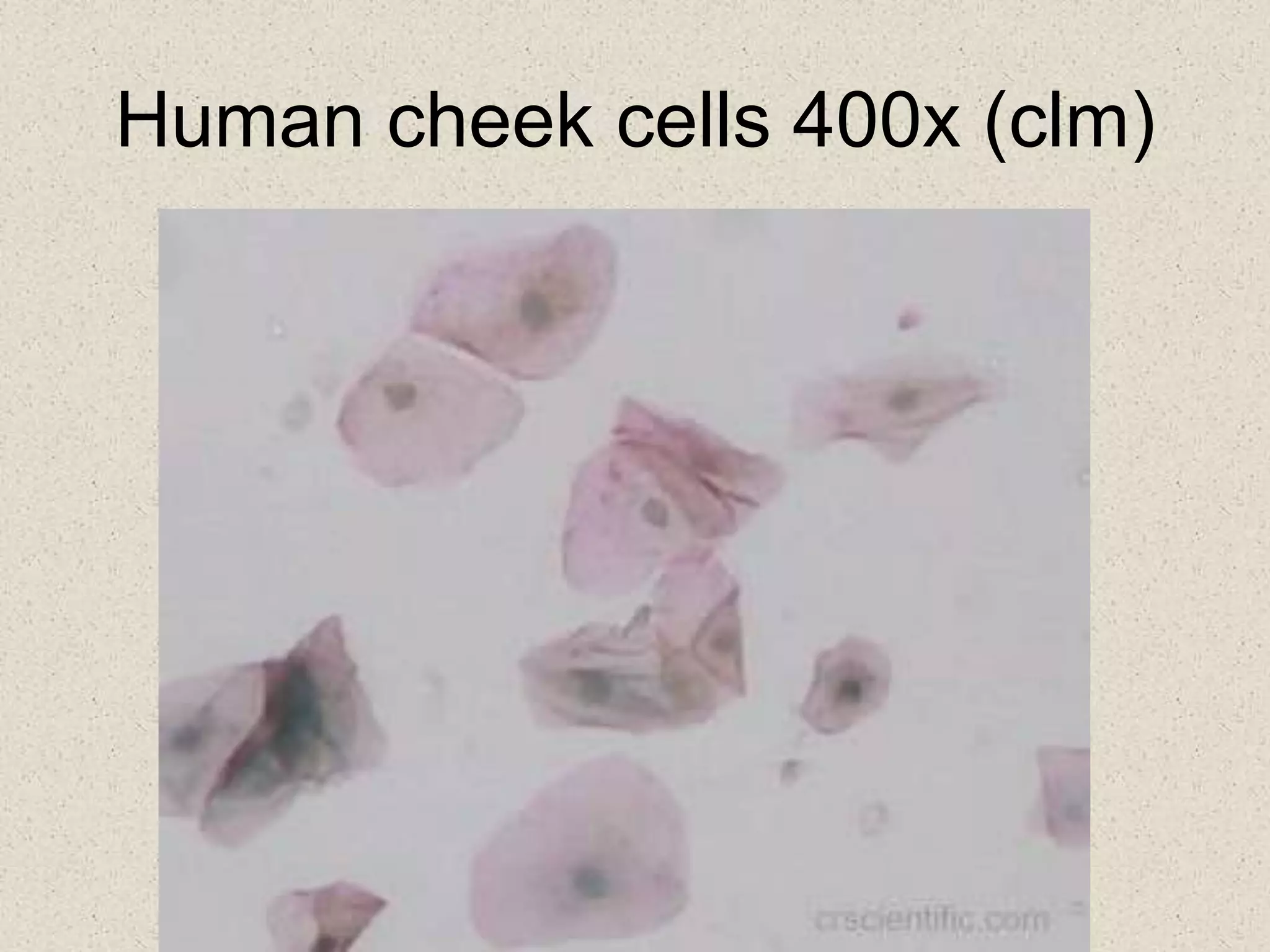
Human cheek cells 400x (clm)
Benefits of light scope over
       electron… vice versa
• Light – living specimens, lower mag
• Electron – dead
  specimens, artifacts, higher mag
Cells
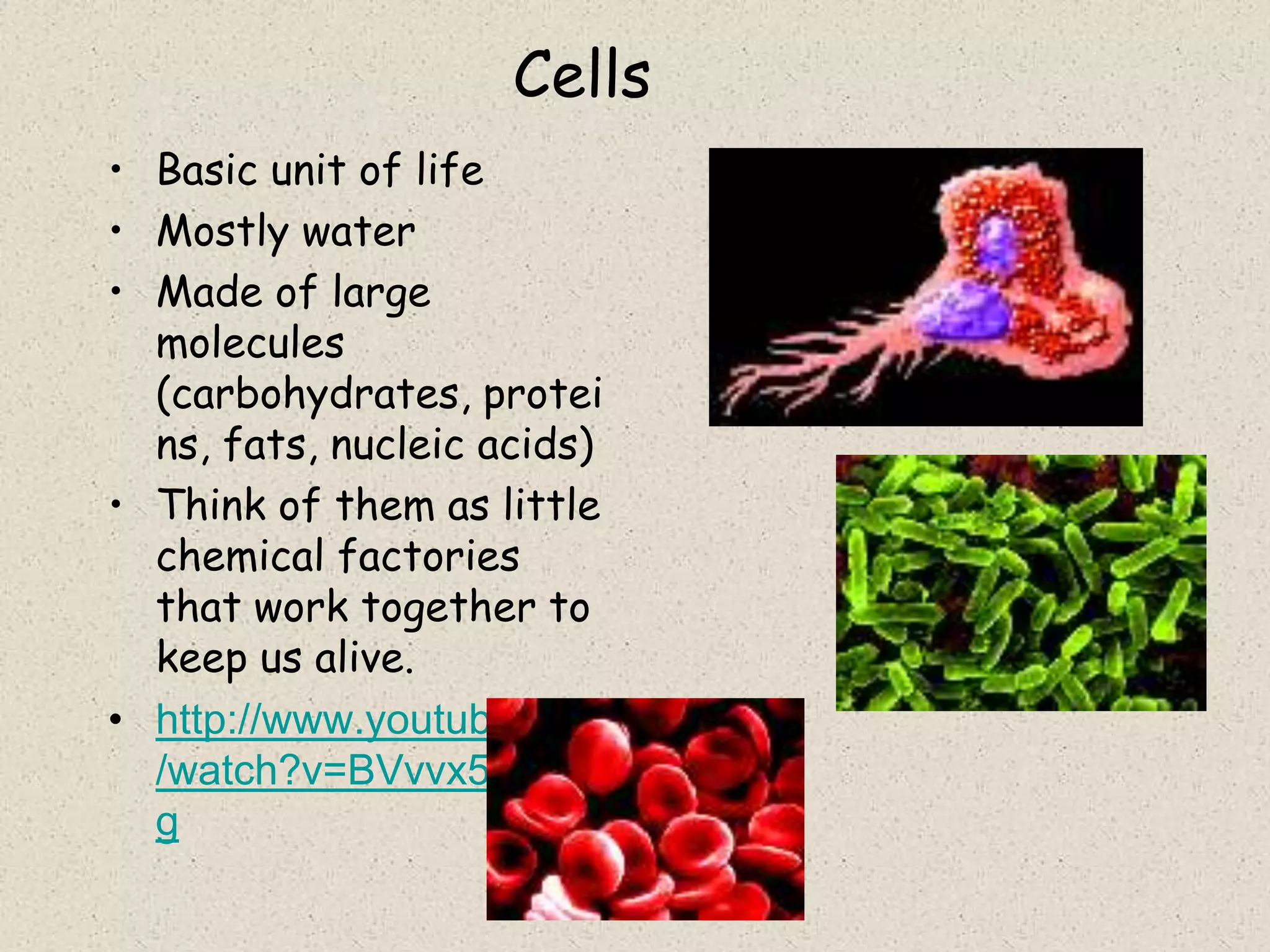
• Basic unit of life
• Mostly water
• Made of large
  molecules
  (carbohydrates, protei
  ns, fats, nucleic acids)
• Think of them as little
  chemical factories
  that work together to
  keep us alive.
• http://www.youtube.com
  /watch?v=BVvvx5HGpL
  g
I love
cells!
Cell Fractionation
Cell Size
http://www.cellsalive.com/howbig.htm
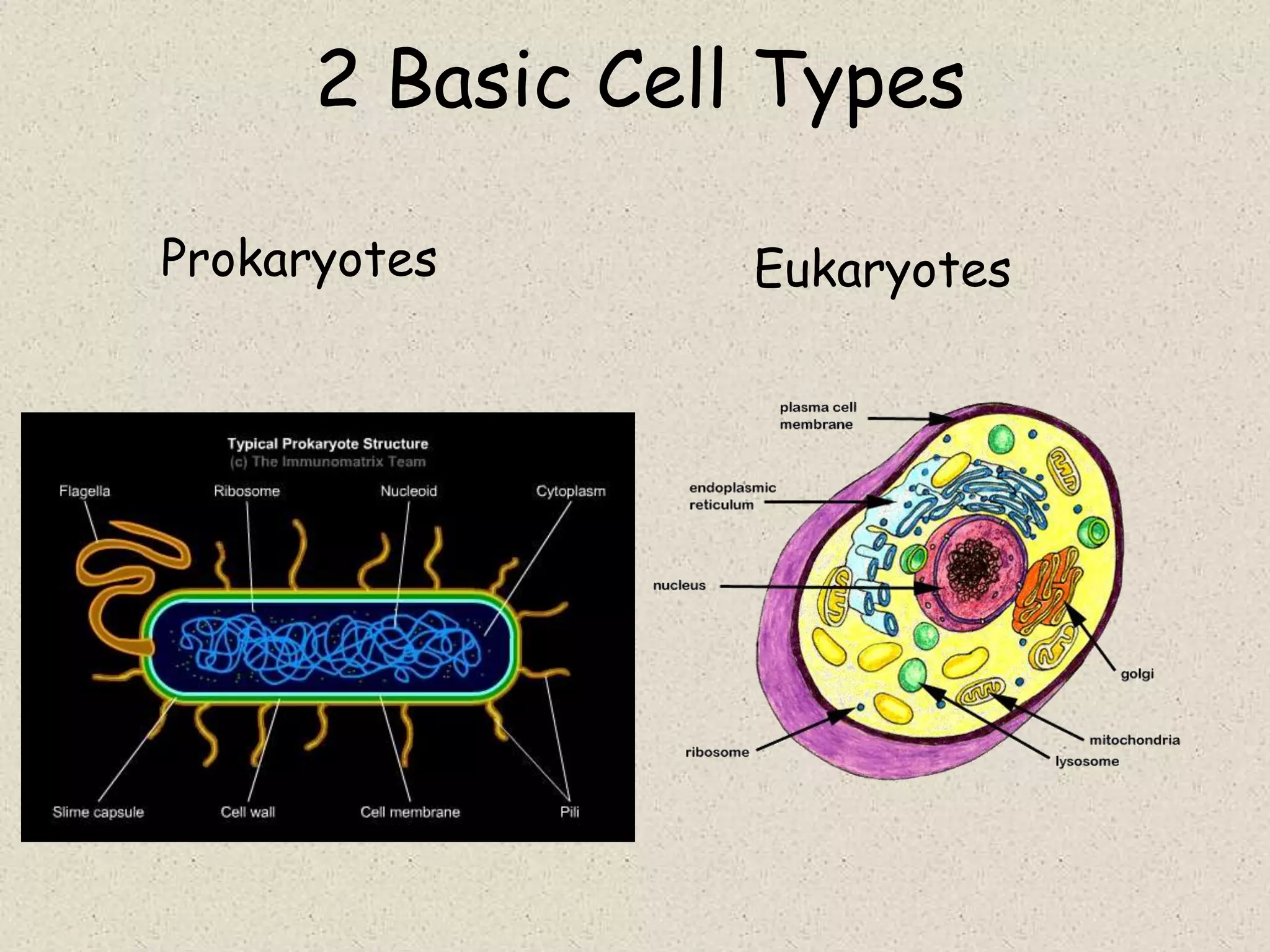
2 Basic Cell Types

Prokaryotes       Eukaryotes
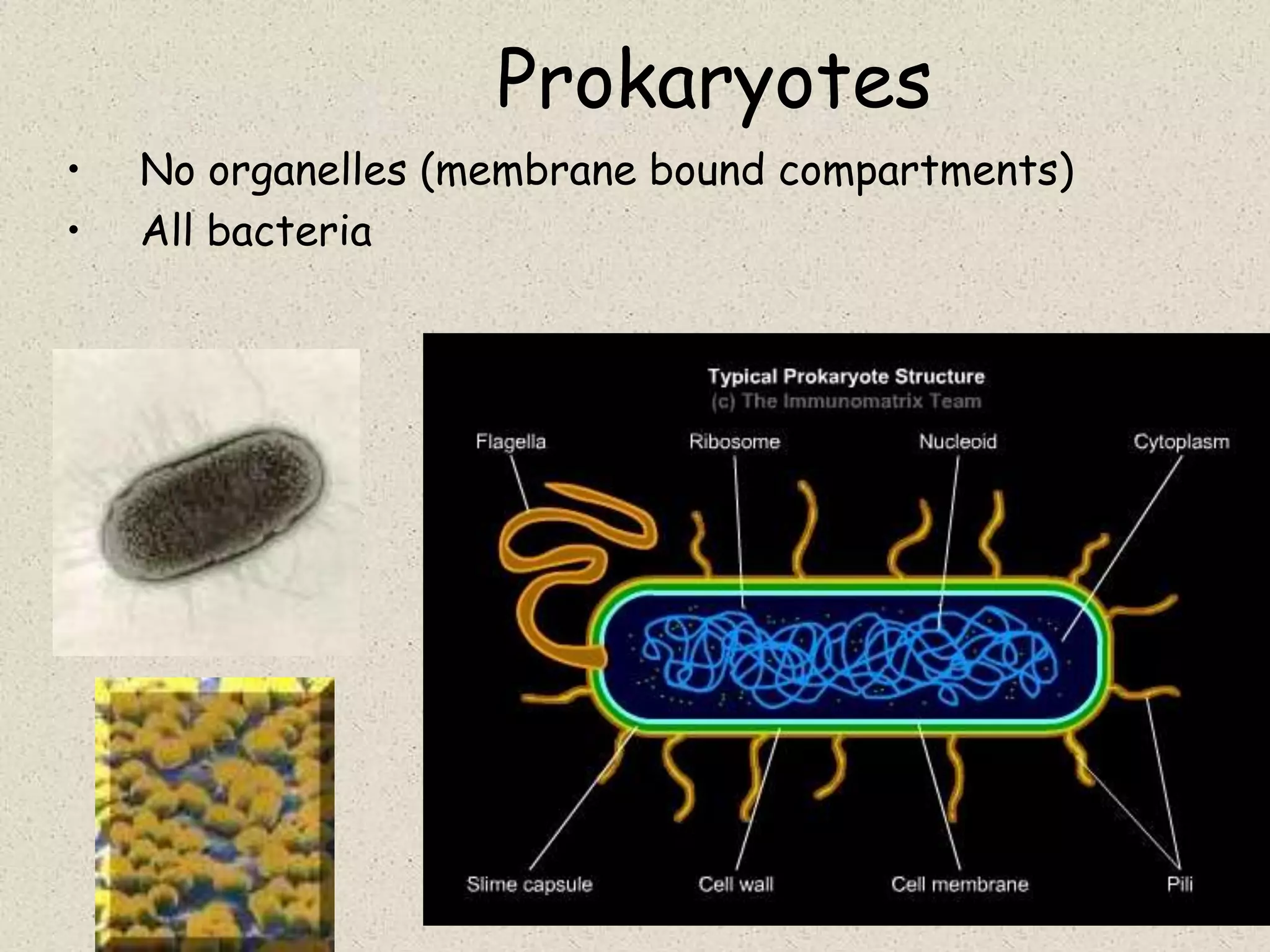
Prokaryotes
•   No organelles (membrane bound compartments)
•   All bacteria
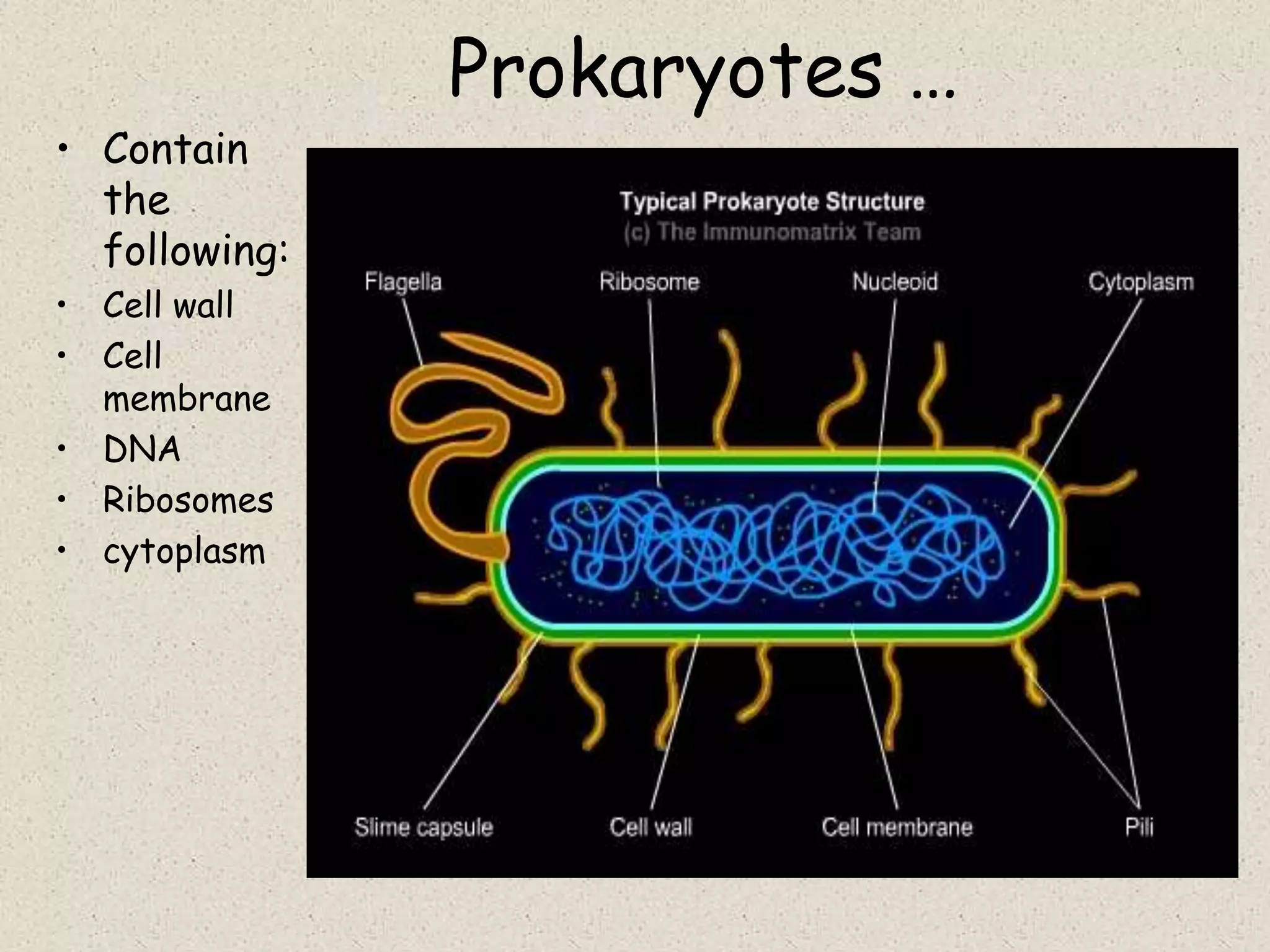
Prokaryotes …
• Contain
  the
  following:
• Cell wall
• Cell
  membrane
• DNA
• Ribosomes
• cytoplasm
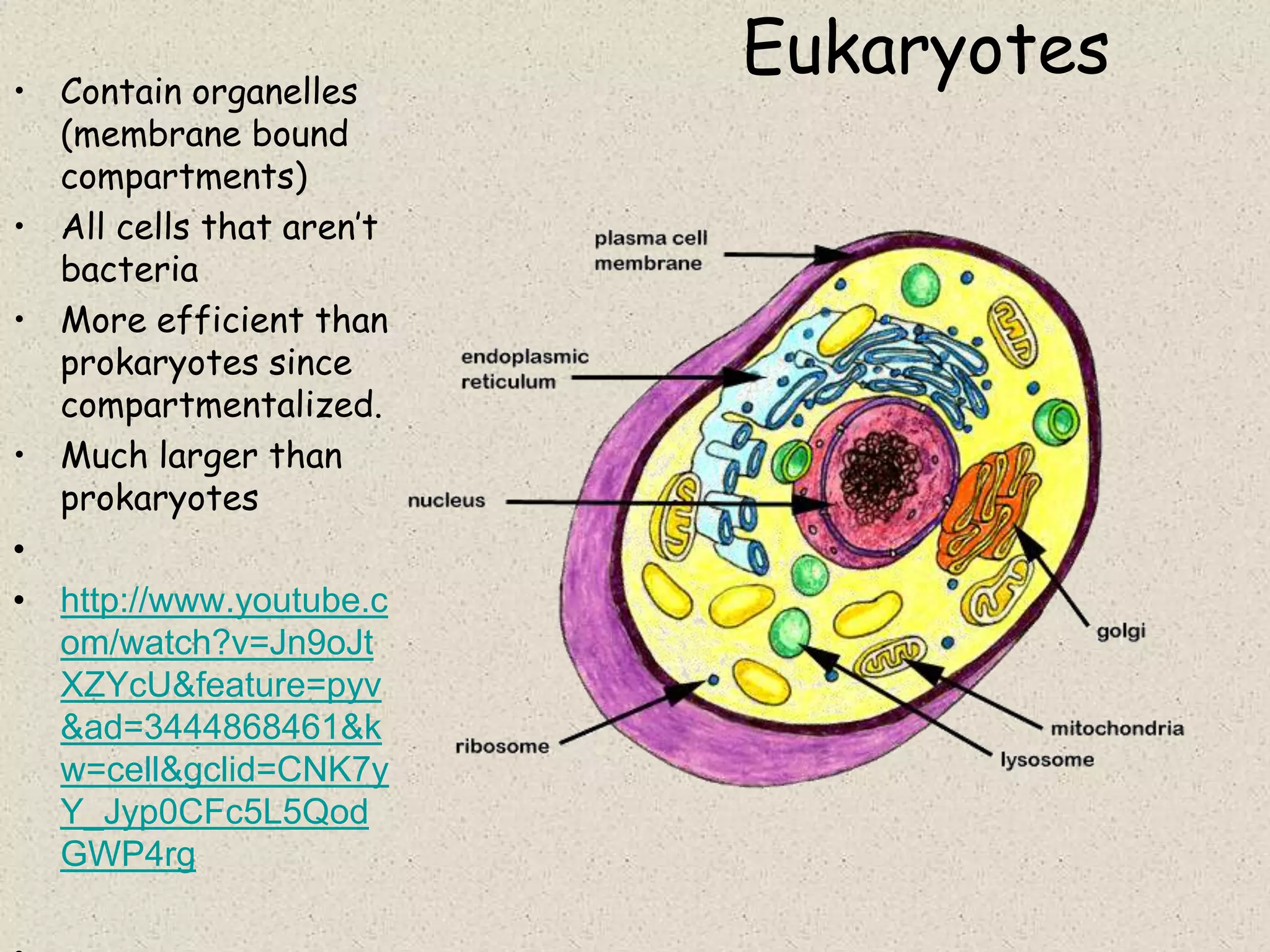
• Contain organelles
                          Eukaryotes
  (membrane bound
  compartments)
• All cells that aren’t
  bacteria
• More efficient than
  prokaryotes since
  compartmentalized.
• Much larger than
  prokaryotes
•
• http://www.youtube.c
  om/watch?v=Jn9oJt
  XZYcU&feature=pyv
  &ad=3444868461&k
  w=cell&gclid=CNK7y
  Y_Jyp0CFc5L5Qod
  GWP4rg
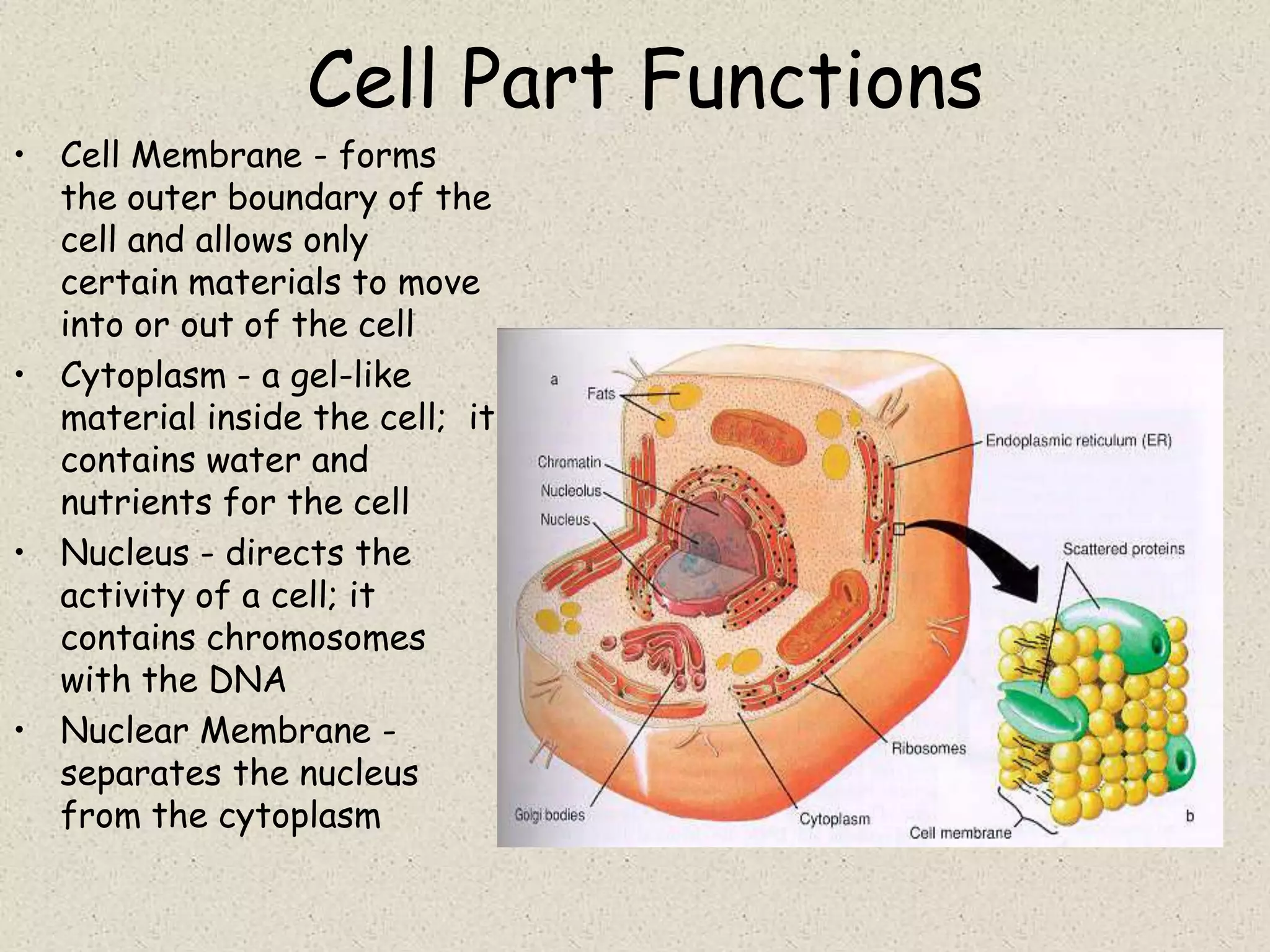
Cell Part Functions
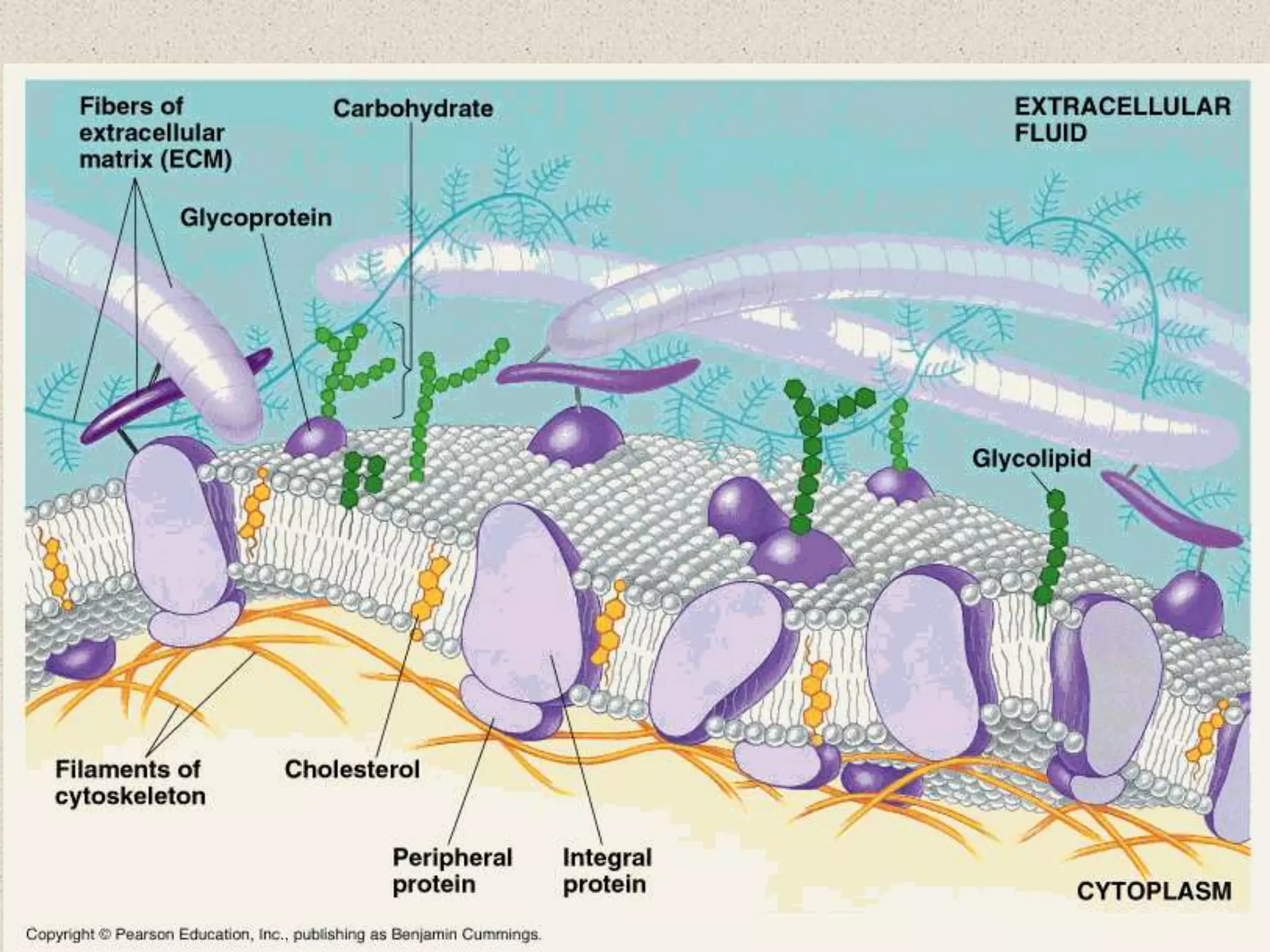
• Cell Membrane - forms
  the outer boundary of the
  cell and allows only
  certain materials to move
  into or out of the cell
• Cytoplasm - a gel-like
  material inside the cell; it
  contains water and
  nutrients for the cell
• Nucleus - directs the
  activity of a cell; it
  contains chromosomes
  with the DNA
• Nuclear Membrane -
  separates the nucleus
  from the cytoplasm
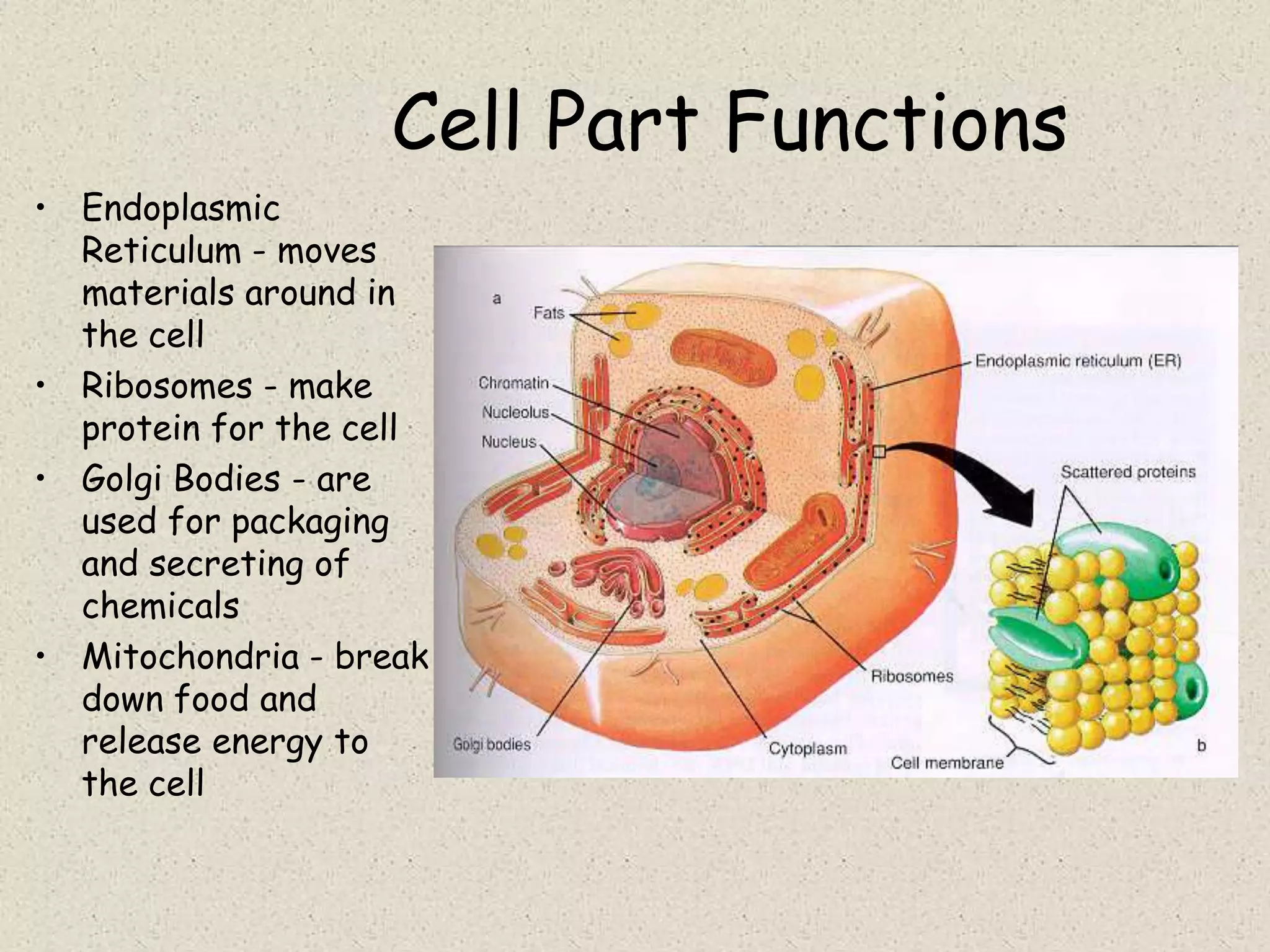
Cell Part Functions
• Endoplasmic
  Reticulum - moves
  materials around in
  the cell
• Ribosomes - make
  protein for the cell
• Golgi Bodies - are
  used for packaging
  and secreting of
  chemicals
• Mitochondria - break
  down food and
  release energy to
  the cell
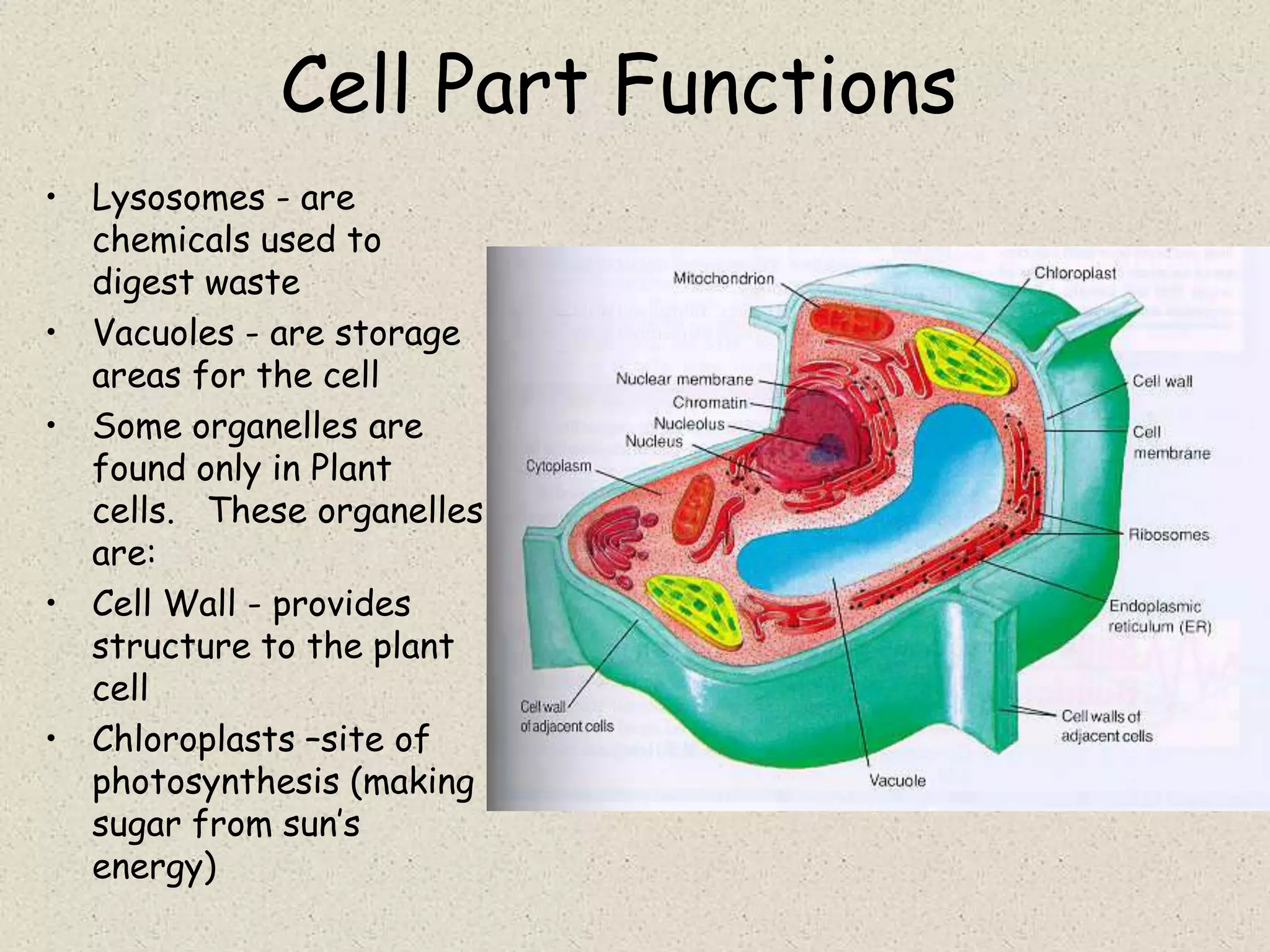
Cell Part Functions
• Lysosomes - are
  chemicals used to
  digest waste
• Vacuoles - are storage
  areas for the cell
• Some organelles are
  found only in Plant
  cells. These organelles
  are:
• Cell Wall - provides
  structure to the plant
  cell
• Chloroplasts –site of
  photosynthesis (making
  sugar from sun’s
  energy)
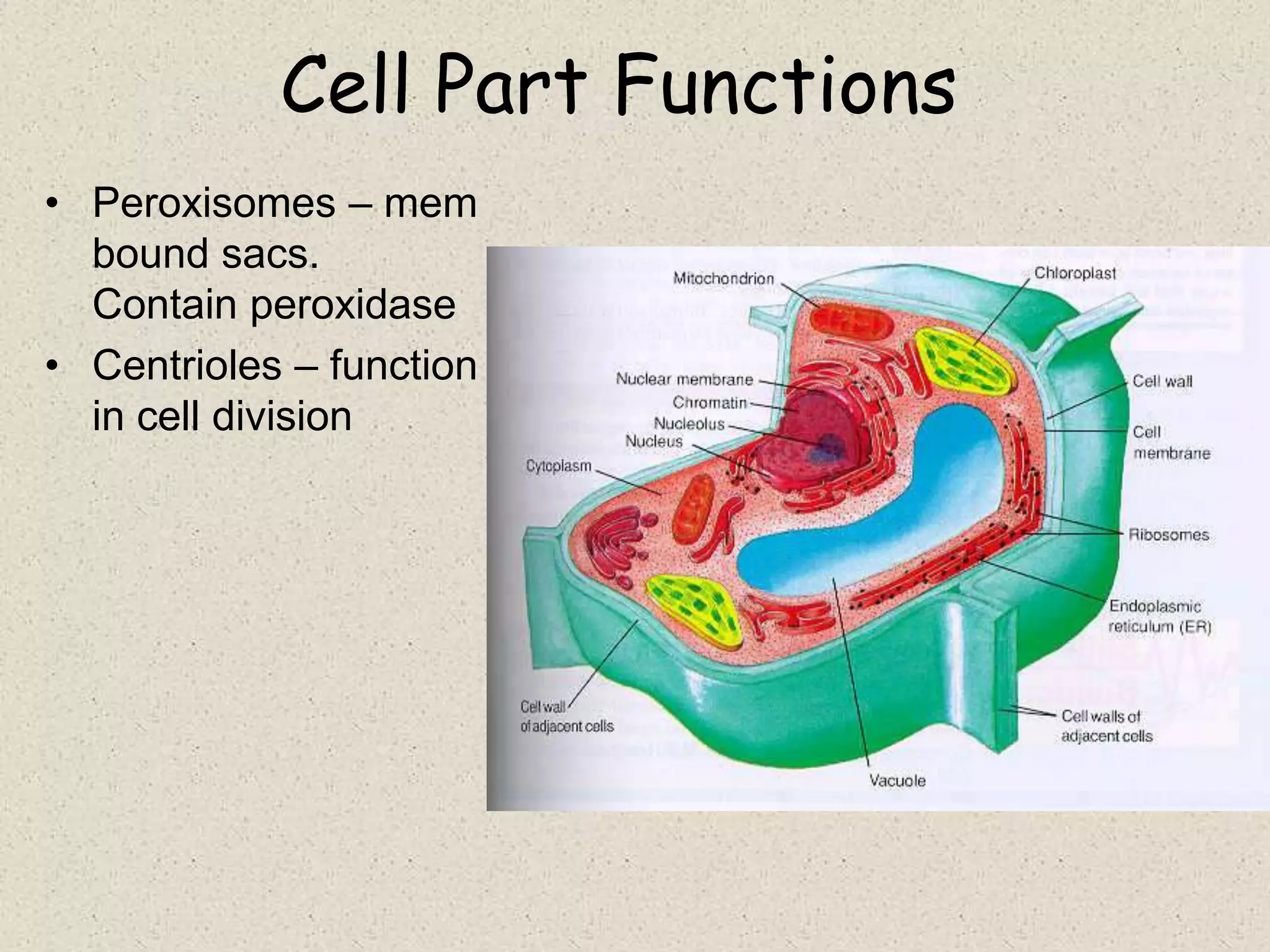
Cell Part Functions
• Peroxisomes – mem
  bound sacs.
  Contain peroxidase
• Centrioles – function
  in cell division
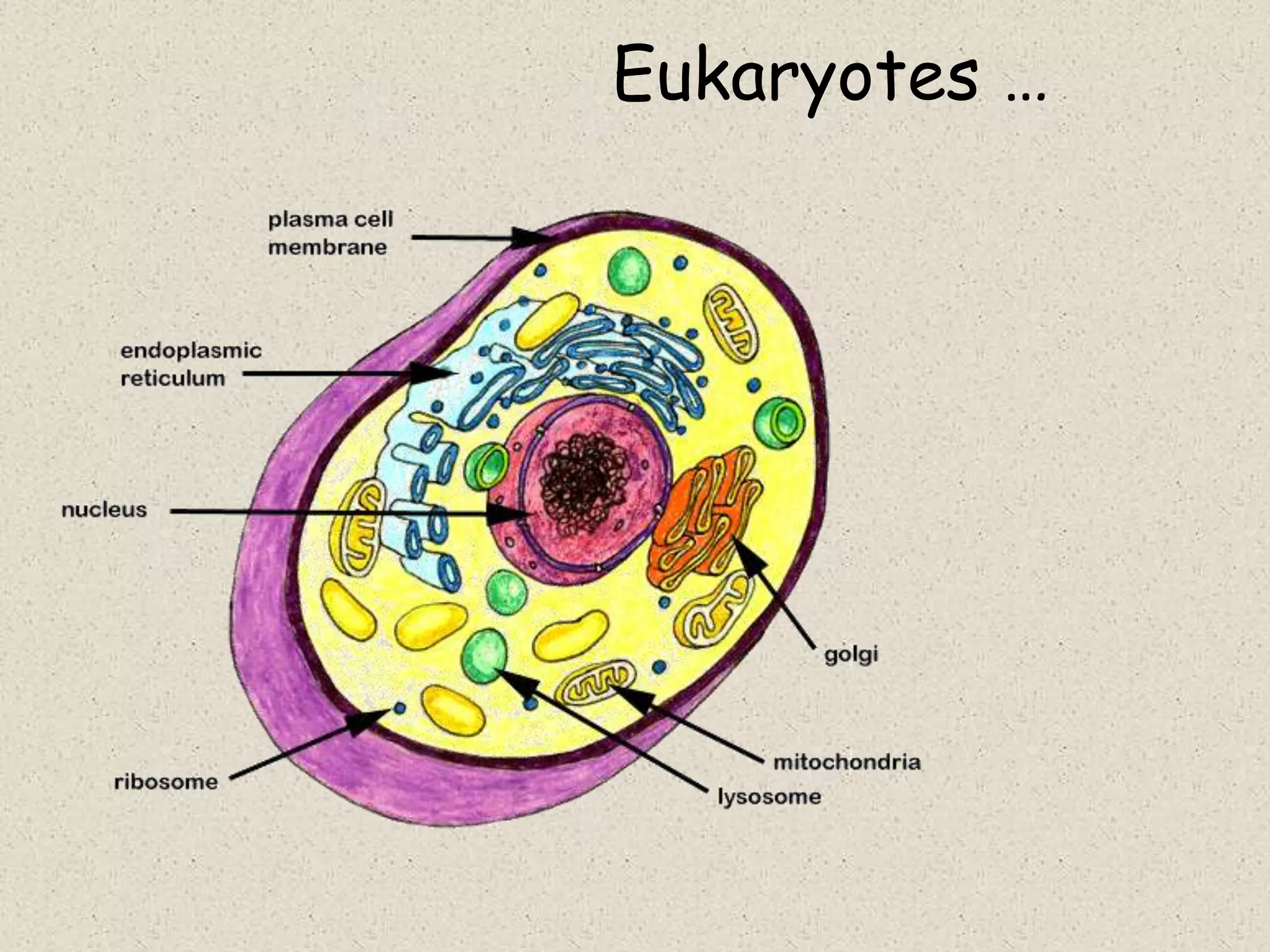
Eukaryotes …
Ap bio ch 4  Scope & Cells

Ap bio ch 4 Scope & Cells

  • 1.
    Cells & Scopes,Baby! Ch 4 • You’re made of them so don’t you think you need to know allllllll about them! Learn it, or else I’ll find you and then I’ll…use your imagination! Wahahahaha! Check out this video! http://www.xtranormal.com/watch/7316011/
  • 2.
    AP Bio Ch 4 A Tour of the Cell Goals • Describe the difference between the light microscope, transmission electron microscope & scanning electron microscope. • List one benefit of using the light microscope over either of the two electron microscopes. • State what part of a cell can be viewed by a TEM & SEM. • Distinguish between prokaryotic & eukaryotic cells. • Explain why cells can’t be too large or too small. • Explain the importance of compartmentalization in eukaryotic cells. • Describe the structure & function of the following cellular parts: • Cytoplasm (aka cytosol), cell membrane (aka plasma membrane), nucleus, nucleolus, nuclear envelope, chromatin & chromosome, ribosome, endoplasmic reticulum (smooth & rough), transport vesicles, Golgi bodies, vacuoles, peroxisome, mitochondria, chloroplast, cytoskeleton, centrioles, flagella & cilia, cell wall, extracellular matrix, plasmodesmata, gap junctions, tight junctions. • Describe & identify the parts of a mitochondria & chloroplast. • Be able to label a plant & animal cell with the above parts.
  • 5.
  • 6.
  • 7.
    Caption: HIV infection.Budding release of HIV in human lymph tissue (RNA virus, Retroviridae Family). Magnification*: x27,630 Type: TEM
  • 8.
  • 9.
    (Danaus plexippus). Also visibleis the last tarsal segment with thick setae. Insect claws are used to hold on to rough surfaces such as leaves and flowers.
  • 11.
  • 13.
  • 14.
    Elodea under 40x,100x, 400x (clm)
  • 15.
  • 16.
    Benefits of lightscope over electron… vice versa • Light – living specimens, lower mag • Electron – dead specimens, artifacts, higher mag
  • 17.
    Cells • Basic unitof life • Mostly water • Made of large molecules (carbohydrates, protei ns, fats, nucleic acids) • Think of them as little chemical factories that work together to keep us alive. • http://www.youtube.com /watch?v=BVvvx5HGpL g
  • 18.
  • 19.
  • 20.
  • 21.
    2 Basic CellTypes Prokaryotes Eukaryotes
  • 22.
    Prokaryotes • No organelles (membrane bound compartments) • All bacteria
  • 23.
    Prokaryotes … • Contain the following: • Cell wall • Cell membrane • DNA • Ribosomes • cytoplasm
  • 24.
    • Contain organelles Eukaryotes (membrane bound compartments) • All cells that aren’t bacteria • More efficient than prokaryotes since compartmentalized. • Much larger than prokaryotes • • http://www.youtube.c om/watch?v=Jn9oJt XZYcU&feature=pyv &ad=3444868461&k w=cell&gclid=CNK7y Y_Jyp0CFc5L5Qod GWP4rg
  • 25.
    Cell Part Functions •Cell Membrane - forms the outer boundary of the cell and allows only certain materials to move into or out of the cell • Cytoplasm - a gel-like material inside the cell; it contains water and nutrients for the cell • Nucleus - directs the activity of a cell; it contains chromosomes with the DNA • Nuclear Membrane - separates the nucleus from the cytoplasm
  • 26.
    Cell Part Functions •Endoplasmic Reticulum - moves materials around in the cell • Ribosomes - make protein for the cell • Golgi Bodies - are used for packaging and secreting of chemicals • Mitochondria - break down food and release energy to the cell
  • 27.
    Cell Part Functions •Lysosomes - are chemicals used to digest waste • Vacuoles - are storage areas for the cell • Some organelles are found only in Plant cells. These organelles are: • Cell Wall - provides structure to the plant cell • Chloroplasts –site of photosynthesis (making sugar from sun’s energy)
  • 28.
    Cell Part Functions •Peroxisomes – mem bound sacs. Contain peroxidase • Centrioles – function in cell division
  • 29.