Understand
how Docker works
⼩小拿@果壳
2015.10.28
1
Outline
• Virtualization
• Hypervisor
• chroot, namespaces, cgroups, AuFS
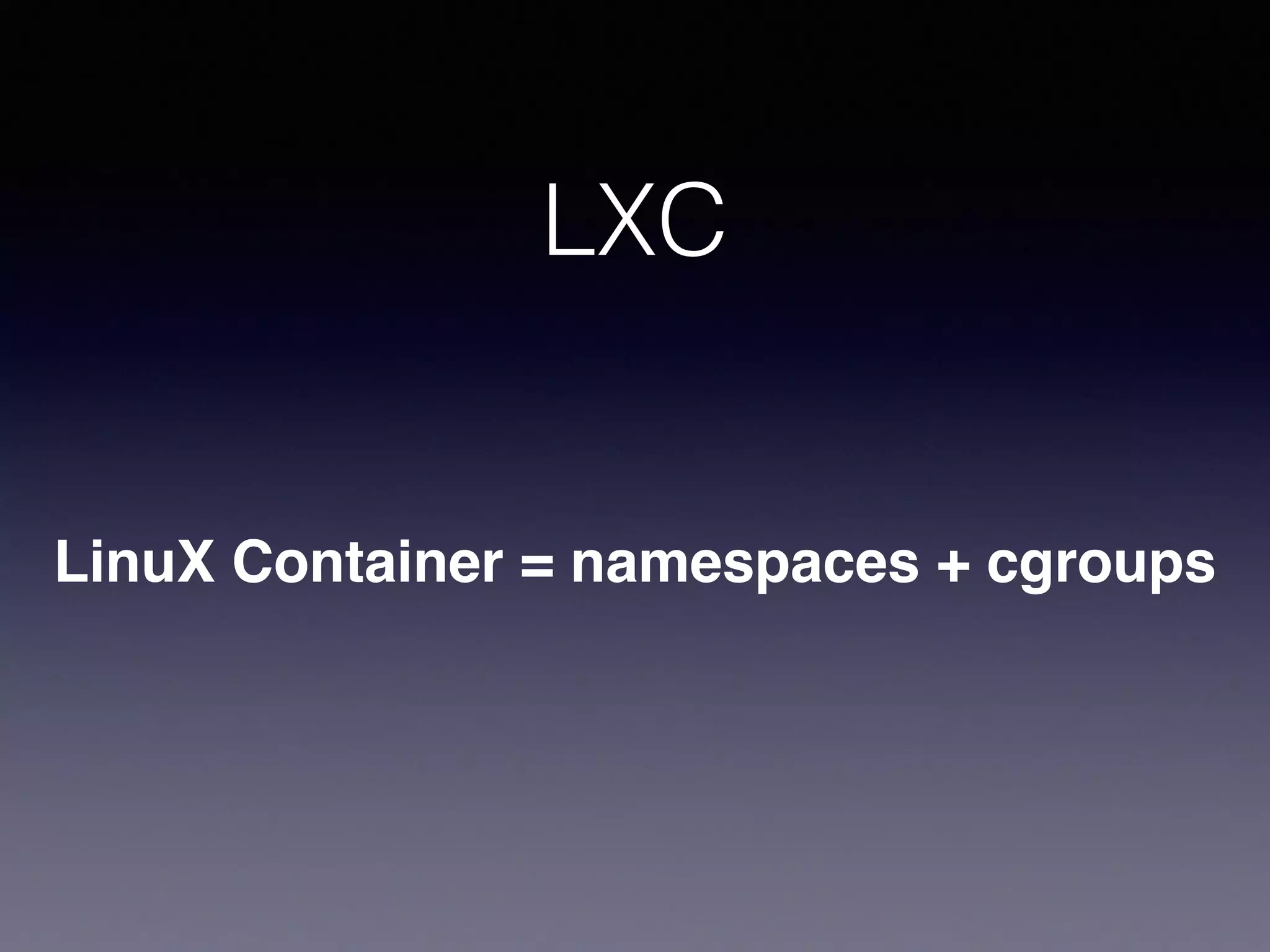
• LXC
• Container
• Docker
Virtualization
Virtualization is a proven software technology that
makes it possible to run multiple operating systems
and applications on the same server at the same time.
Features
• transform hardware to software
• run multiple operating systems as virtual
machines
Intuitive Idea
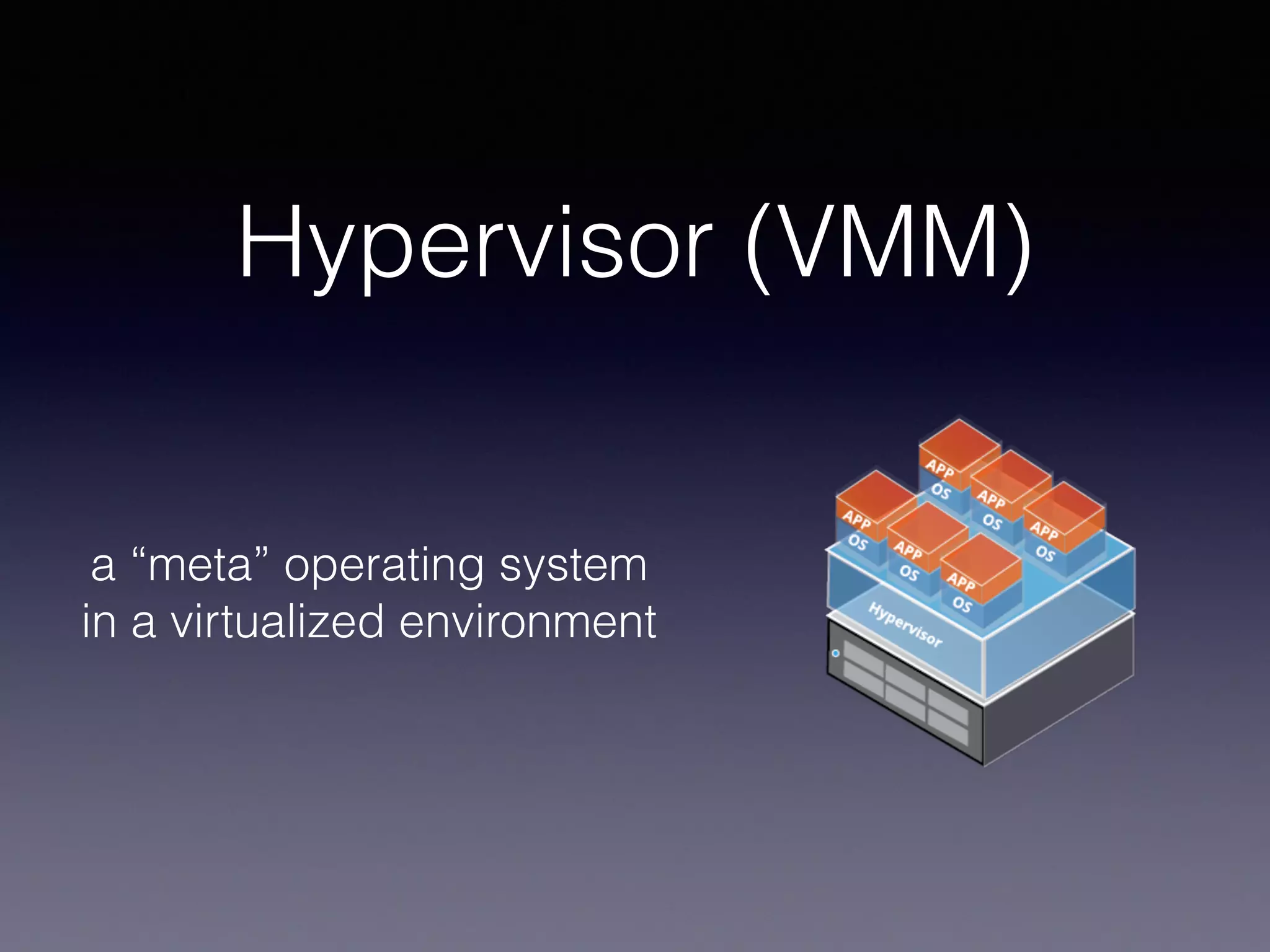
Hypervisor (VMM)
a “meta” operating system
in a virtualized environment
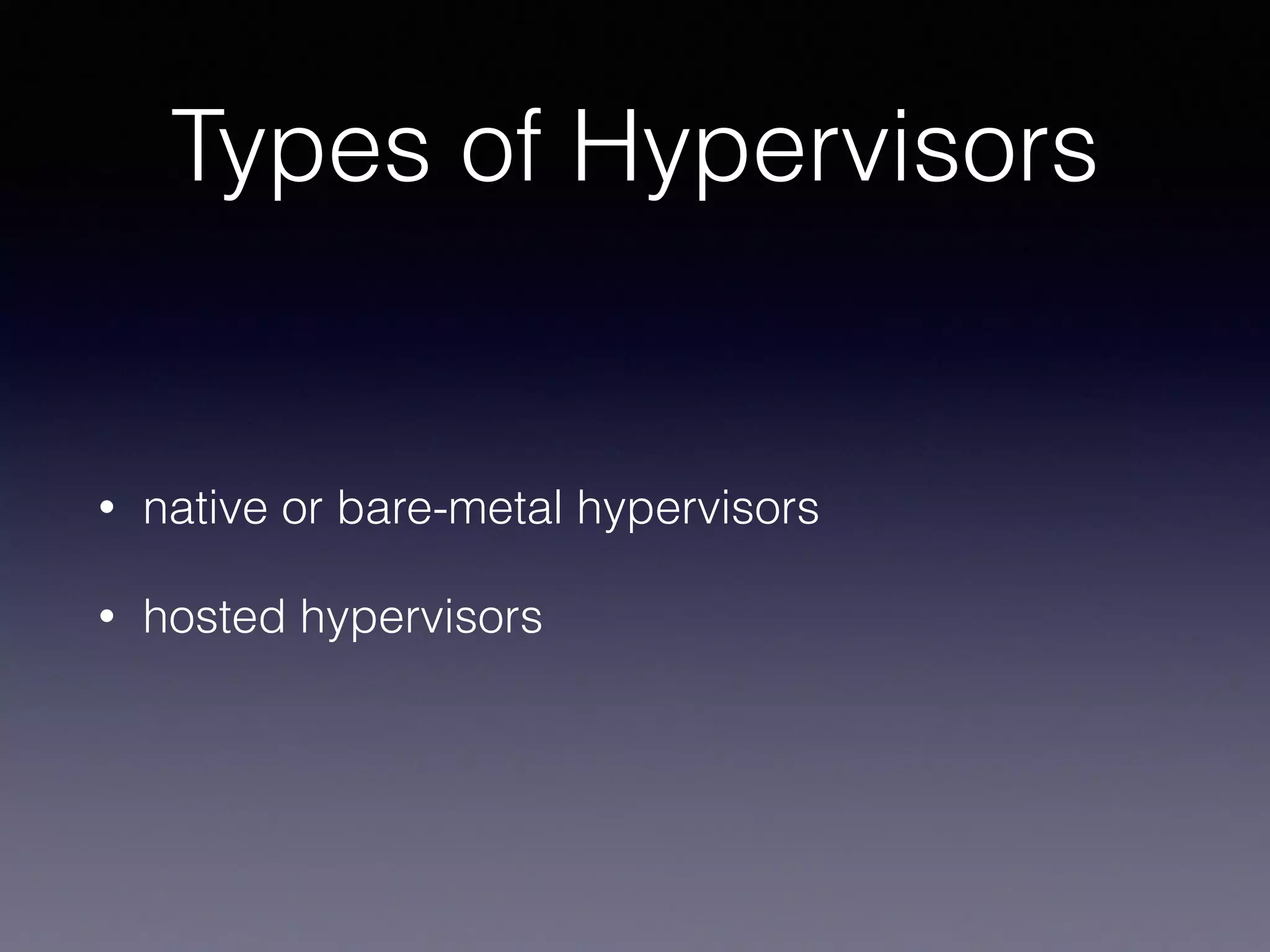
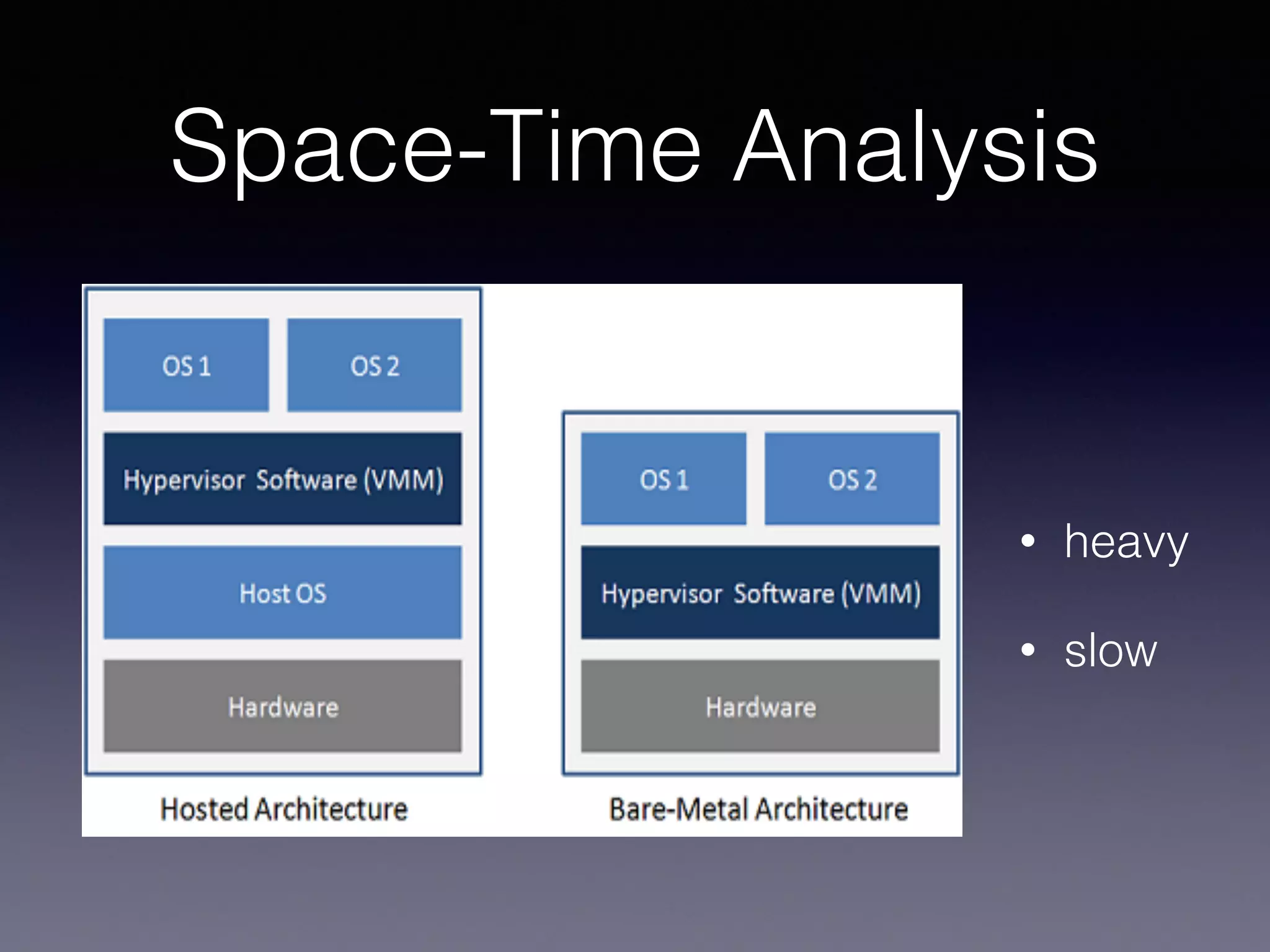
Types of Hypervisors
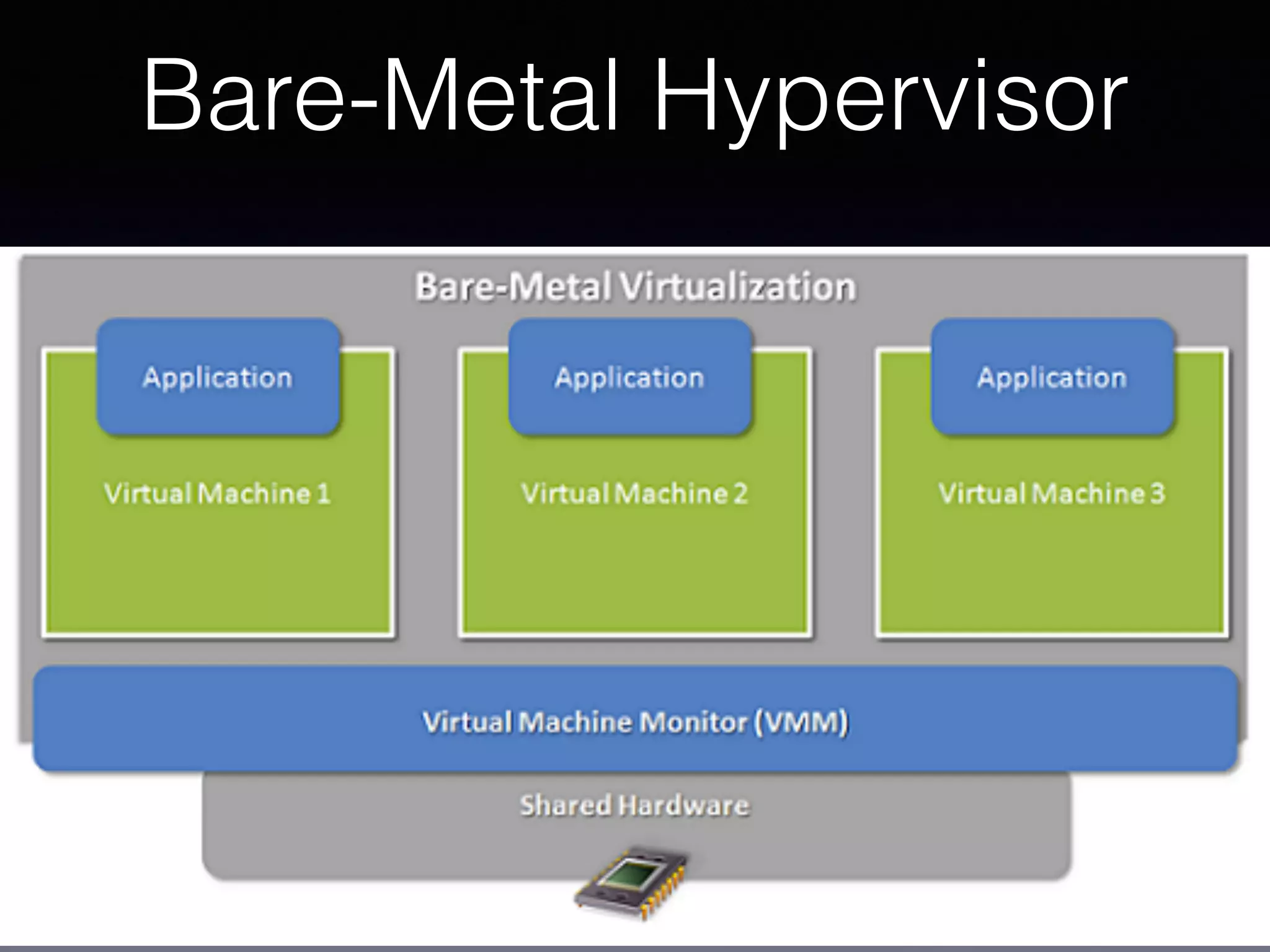
• native or bare-metal hypervisors
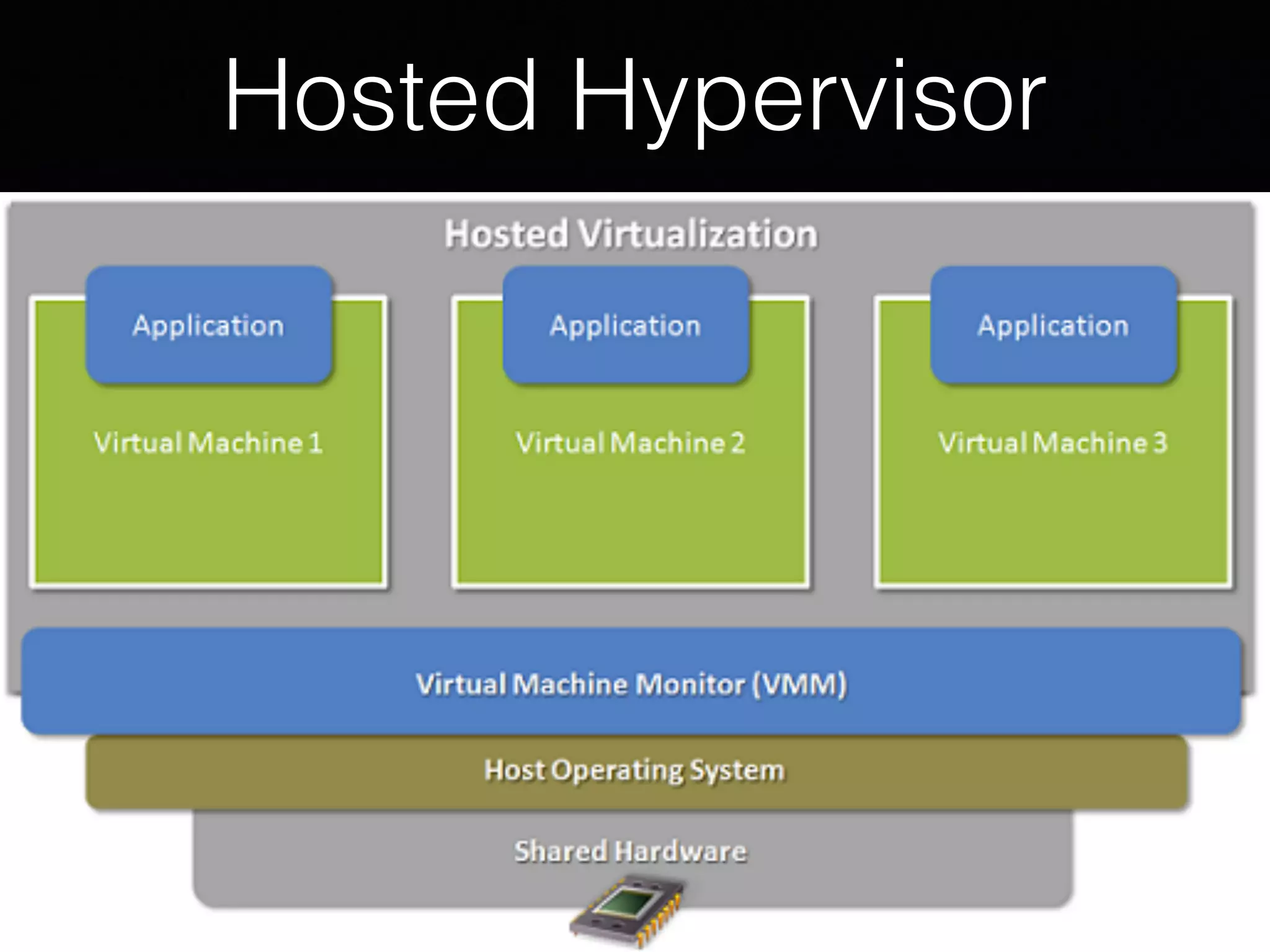
• hosted hypervisors
Bare-Metal Hypervisor
Hosted Hypervisor
Space-Time Analysis
• heavy
• slow
docker is a lightweight
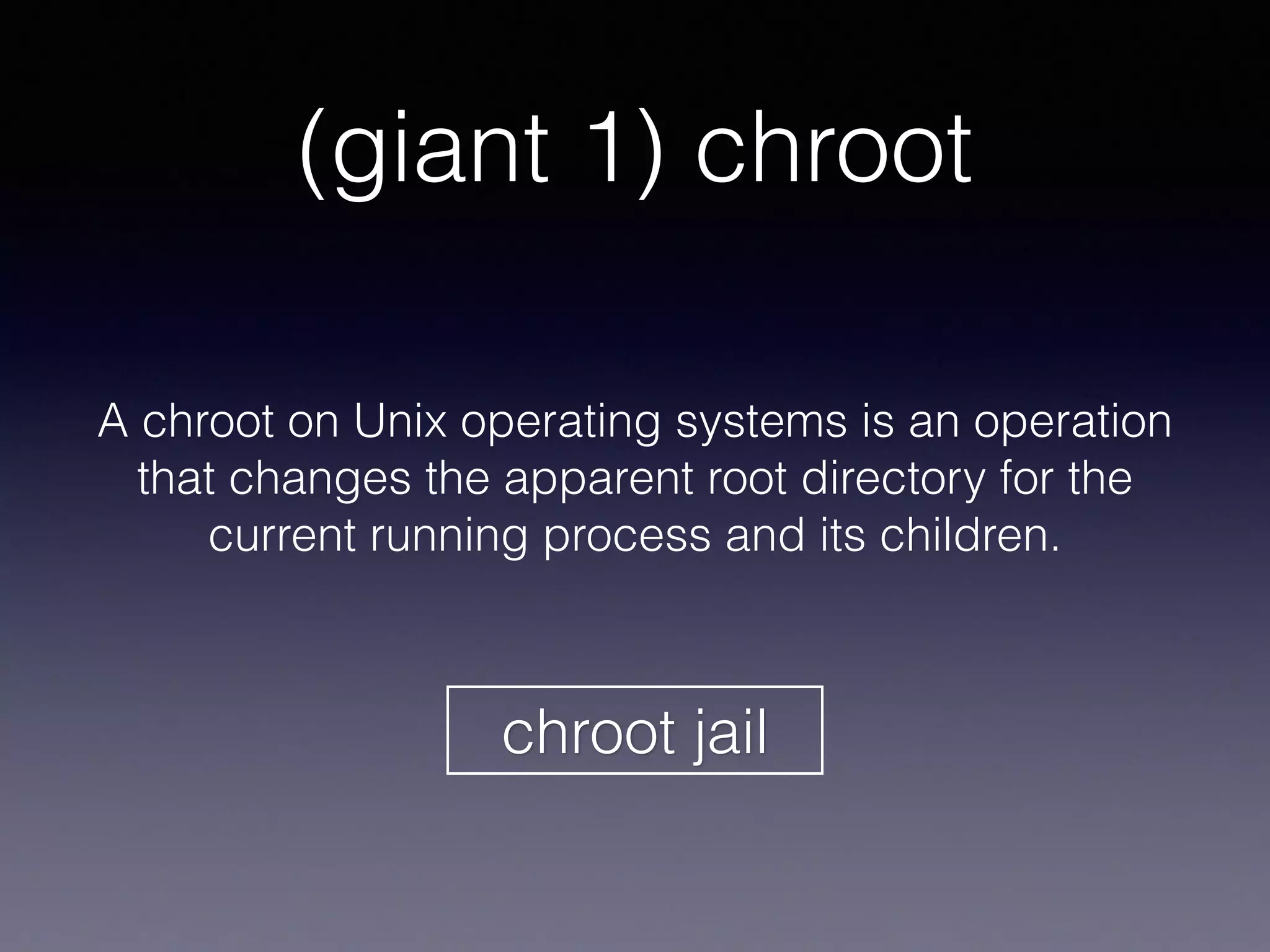
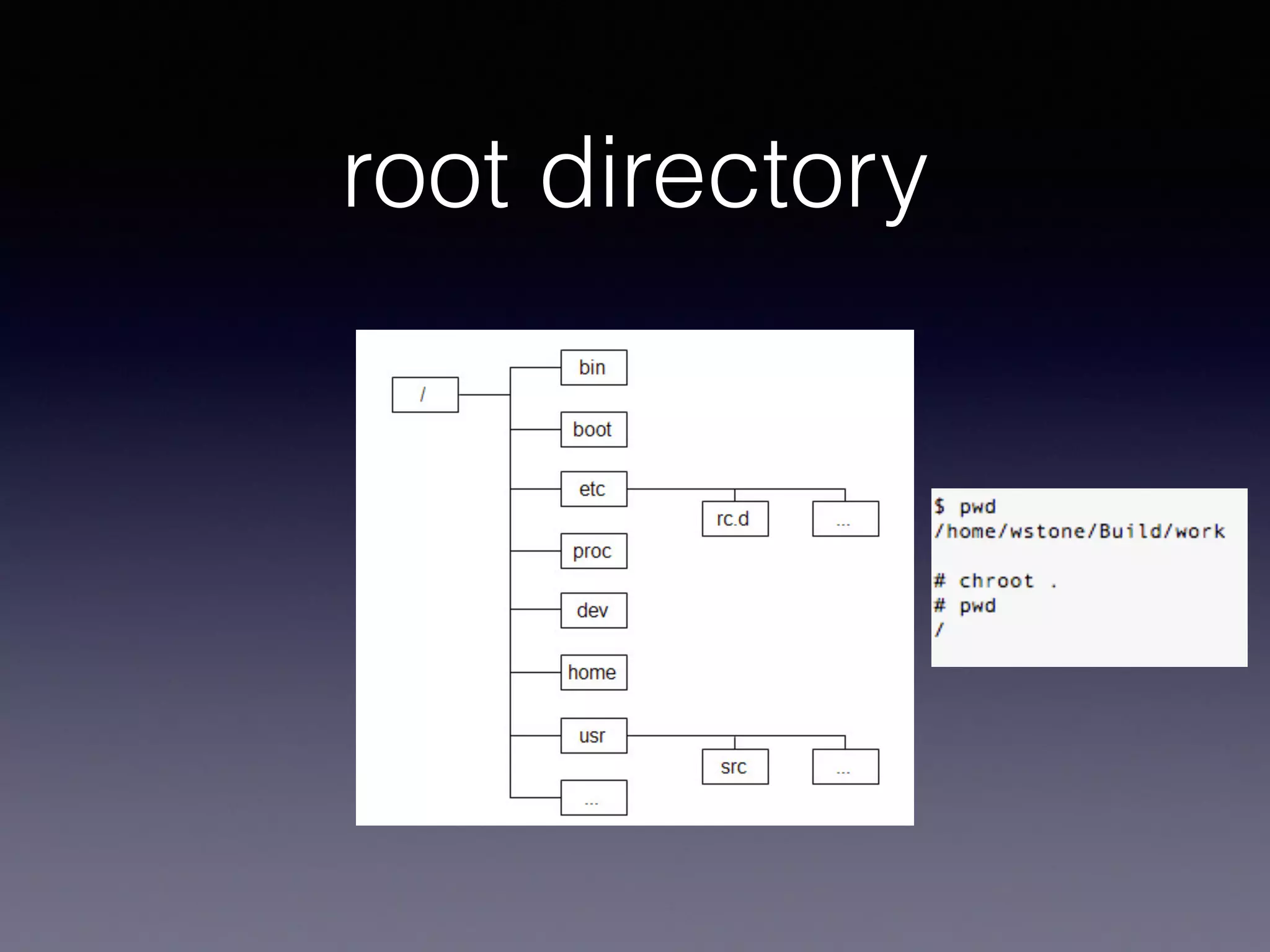
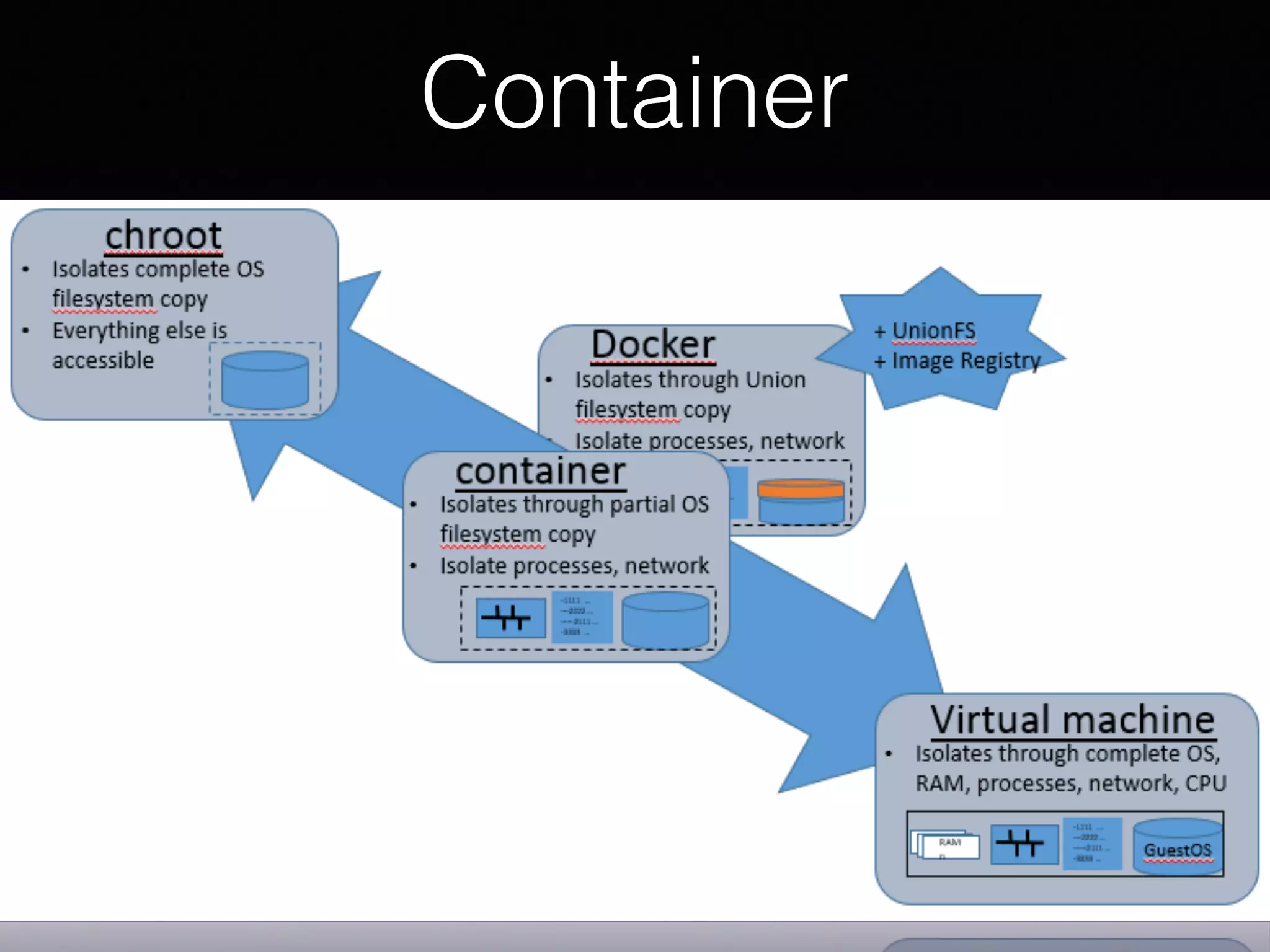
(giant 1) chroot
A chroot on Unix operating systems is an operation
that changes the apparent root directory for the
current running process and its children.
chroot jail
root directory
two Linux process resource
management solutions
• namespaces (what you have)
• cgroups (what you can do)
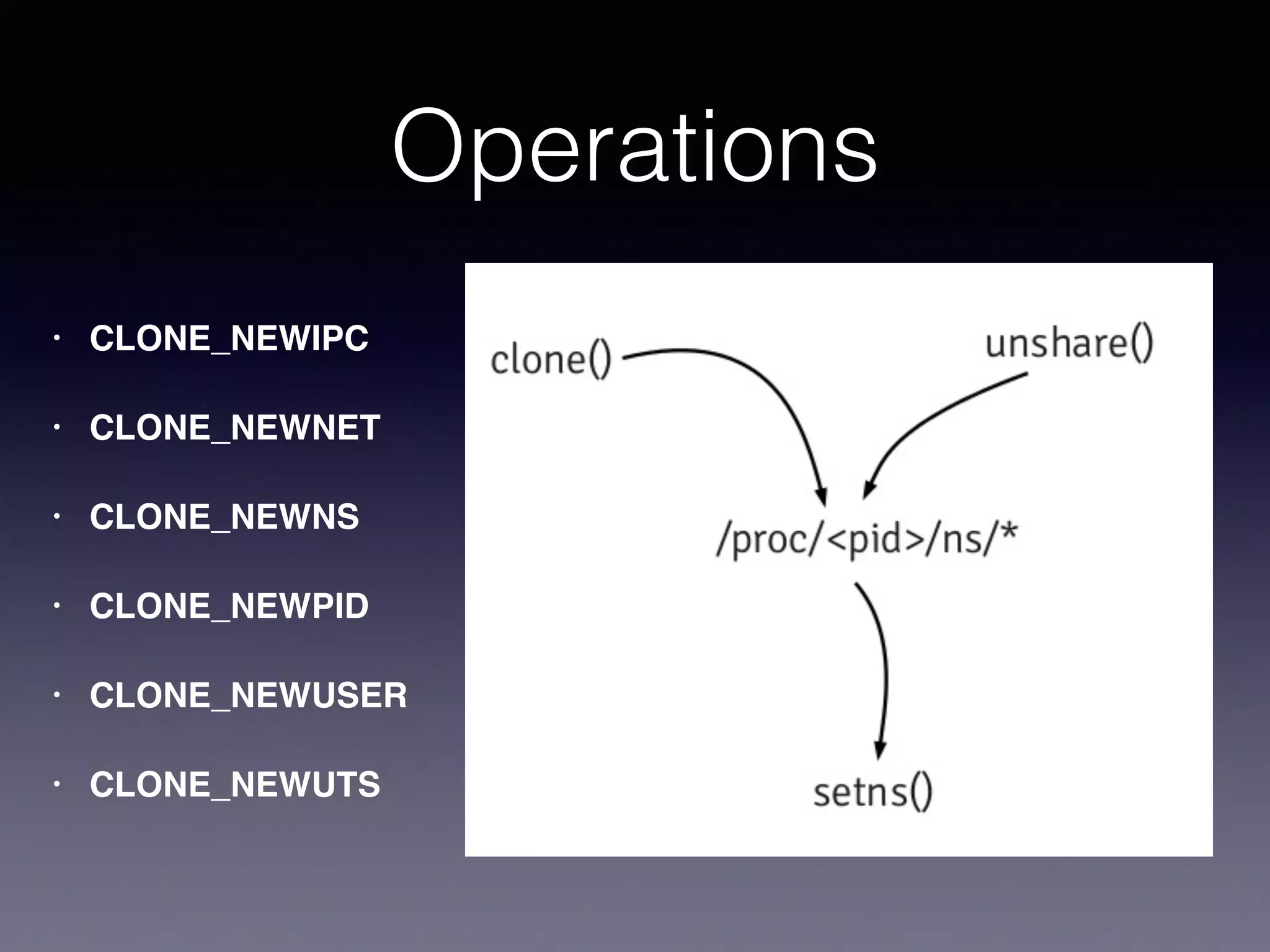
(giant 2) Linux Namespace
• A lightweight process virtualization
• Isolation: Enable a process to have different
views of the system than other processes.
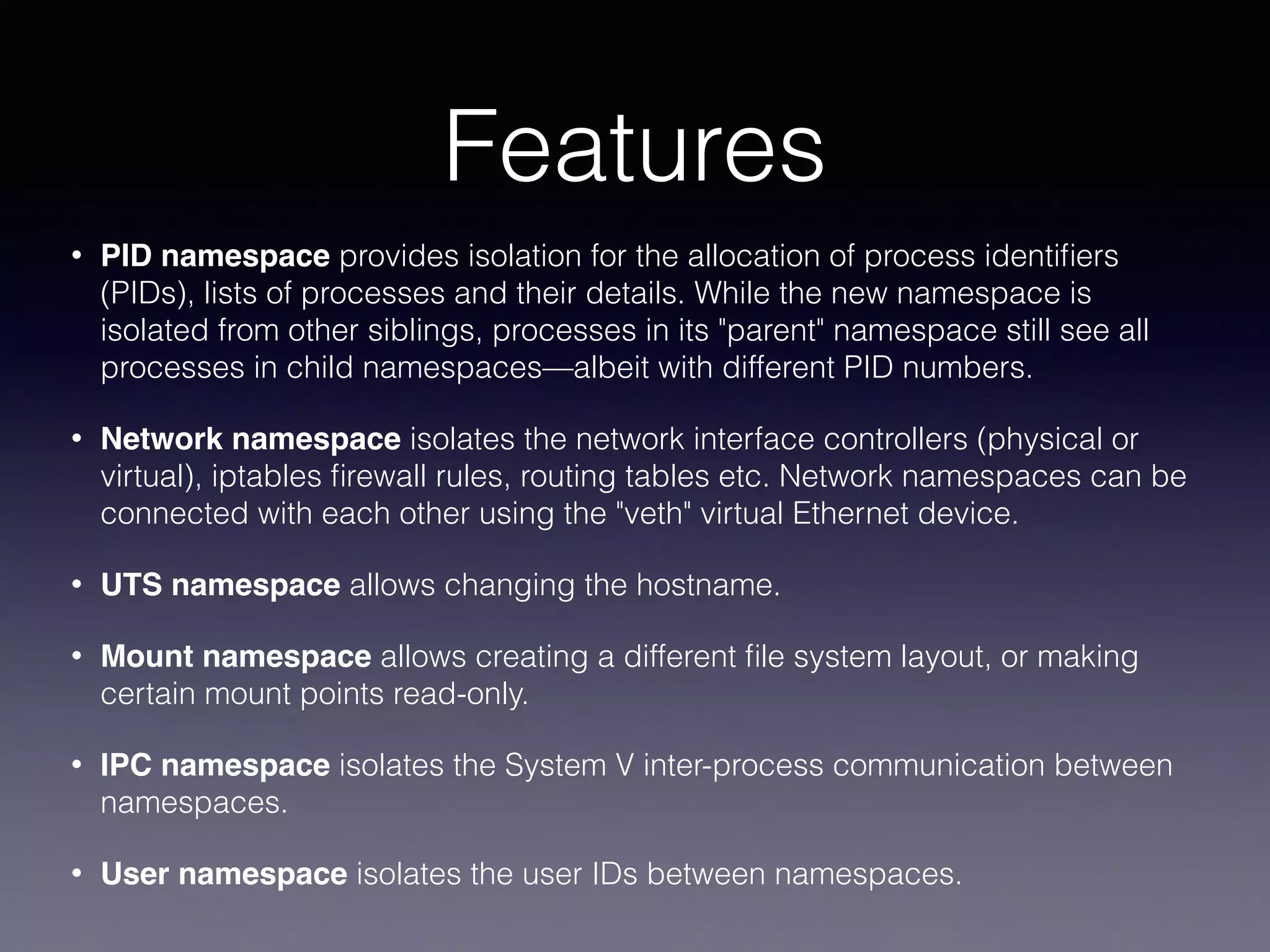
Features
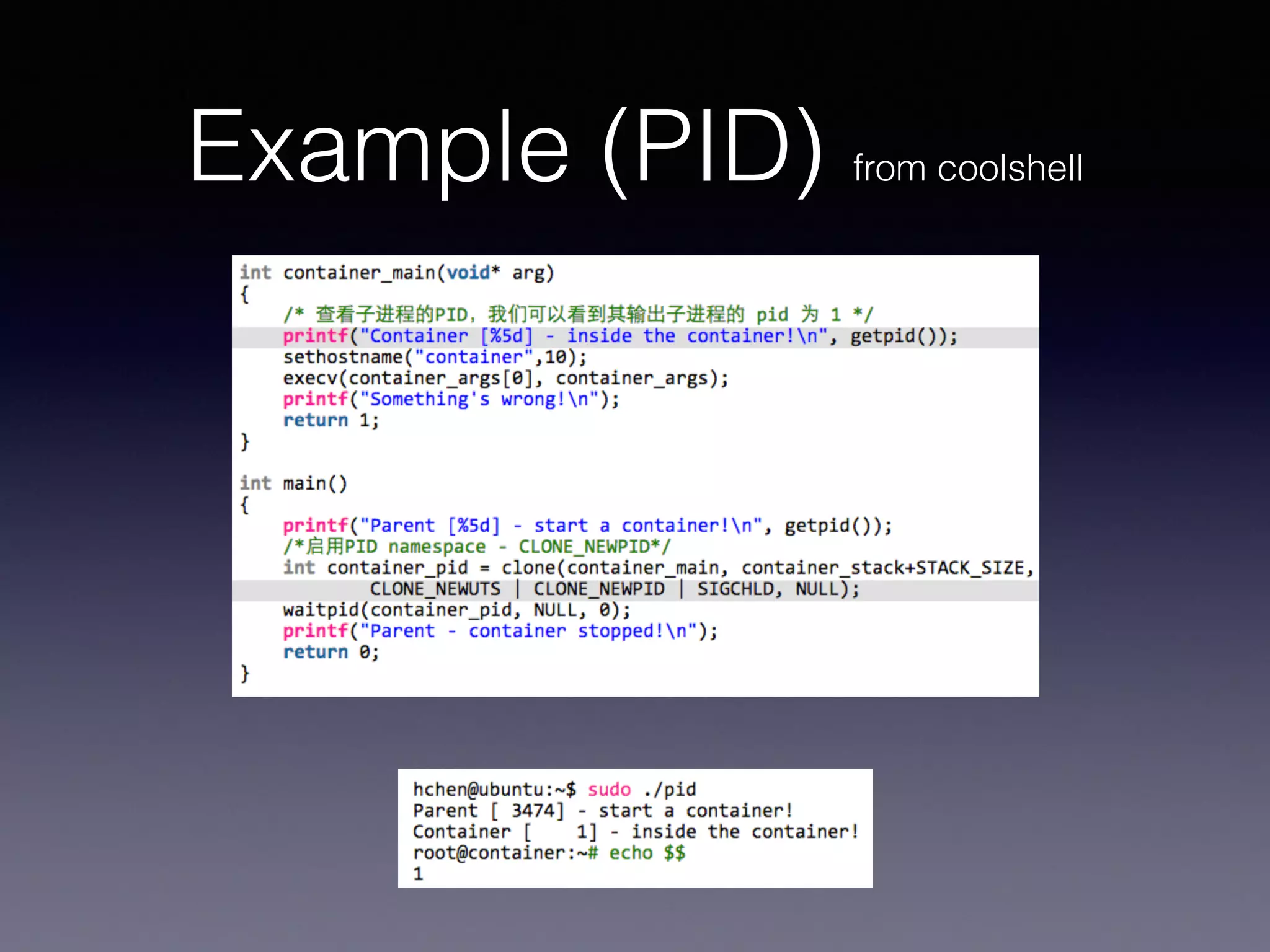
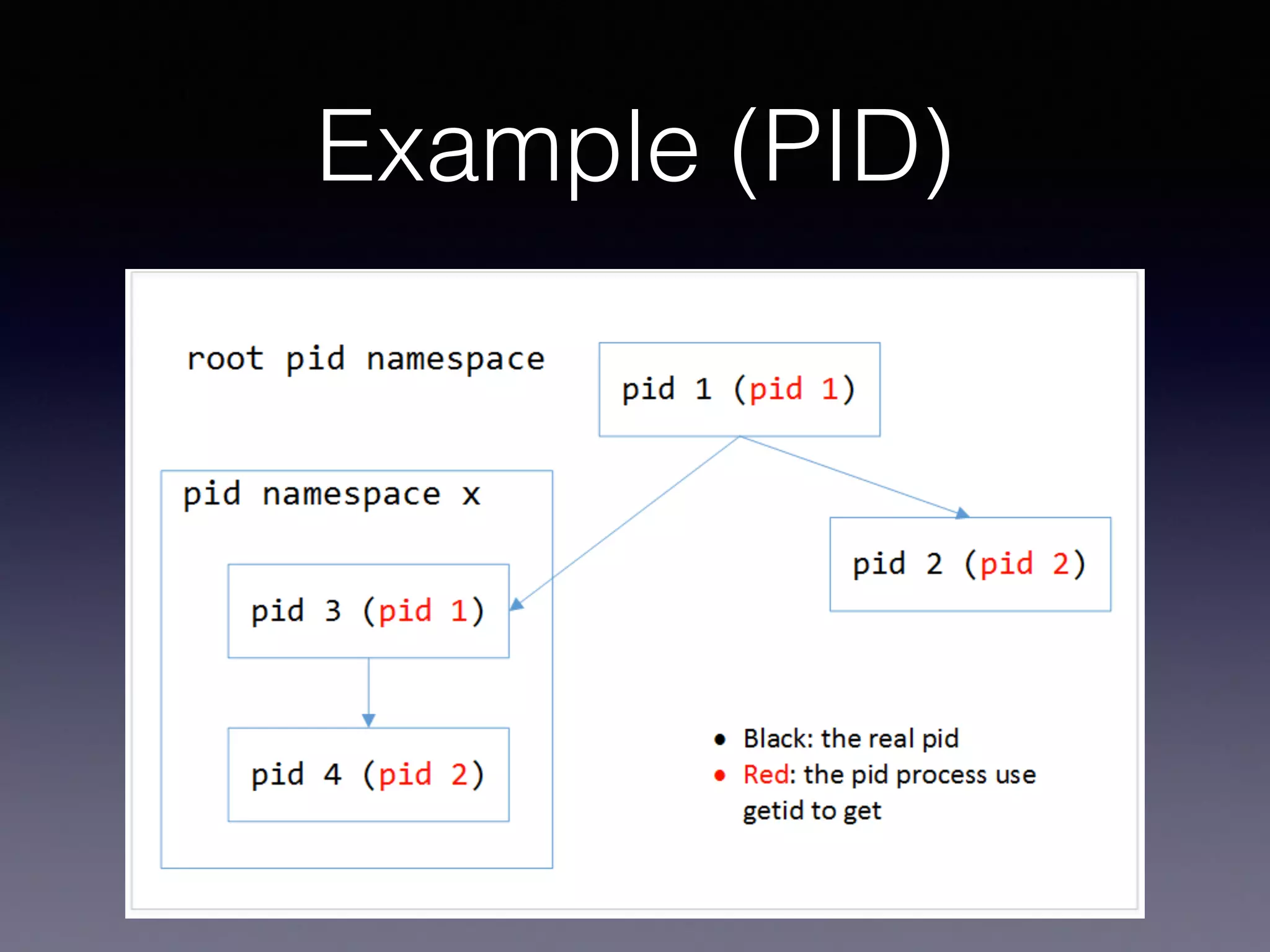
• PID namespace provides isolation for the allocation of process identifiers
(PIDs), lists of processes and their details. While the new namespace is
isolated from other siblings, processes in its "parent" namespace still see all
processes in child namespaces—albeit with different PID numbers.
• Network namespace isolates the network interface controllers (physical or
virtual), iptables firewall rules, routing tables etc. Network namespaces can be
connected with each other using the "veth" virtual Ethernet device.
• UTS namespace allows changing the hostname.
• Mount namespace allows creating a different file system layout, or making
certain mount points read-only.
• IPC namespace isolates the System V inter-process communication between
namespaces.
• User namespace isolates the user IDs between namespaces.
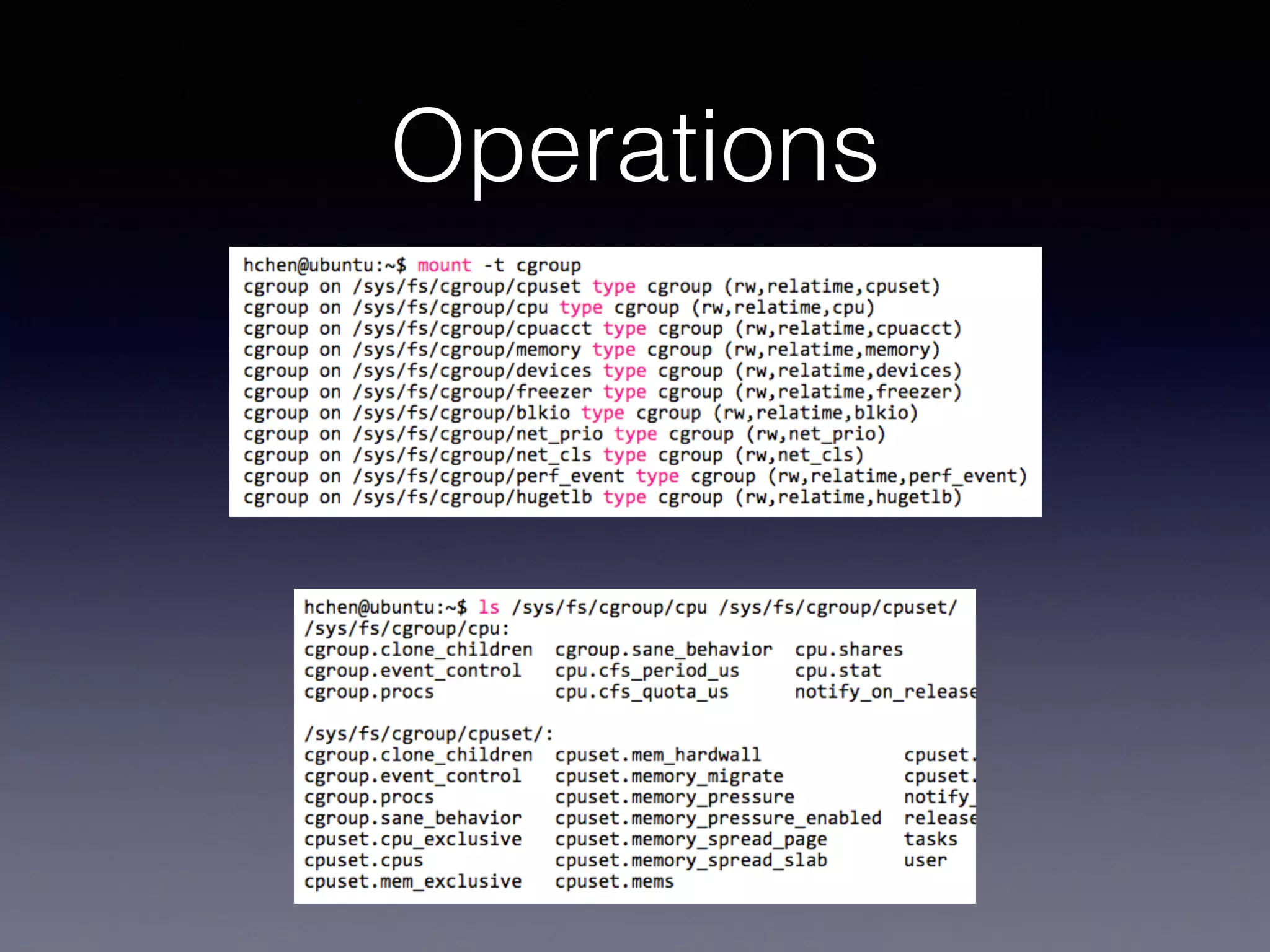
Operations
• CLONE_NEWIPC
• CLONE_NEWNET
• CLONE_NEWNS
• CLONE_NEWPID
• CLONE_NEWUSER
• CLONE_NEWUTS
Example (PID) from coolshell
Example (PID)
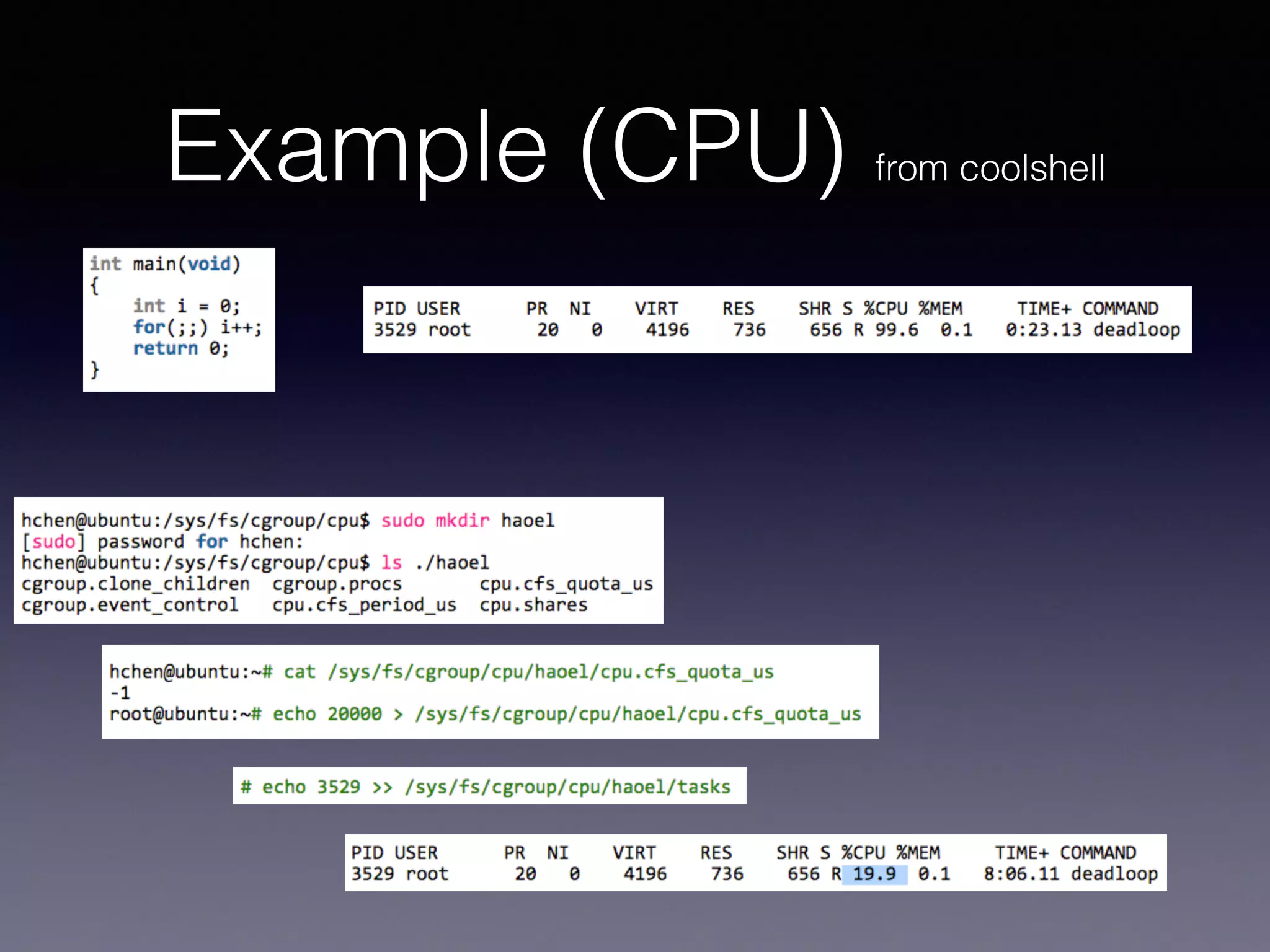
(giant 3) cgroups
cgroups is a Linux kernel feature that limits, accounts
for, and isolates the resource usage (CPU, memory,
disk I/O, network, etc.) of a collection of processes.
Features
• Resource limitation: groups can be set to not exceed a
configured memory limit, which also includes the file
system cache
• Prioritization: some groups may get a larger share of
CPU utilization[8] or disk I/O throughput
• Accounting: measures how much resources certain
systems use, which may be used, for example, for billing
purposes
• Control: freezing the groups of processes, their
checkpointing and restarting
Operations
Example (CPU) from coolshell
LXC
LinuX Container = namespaces + cgroups
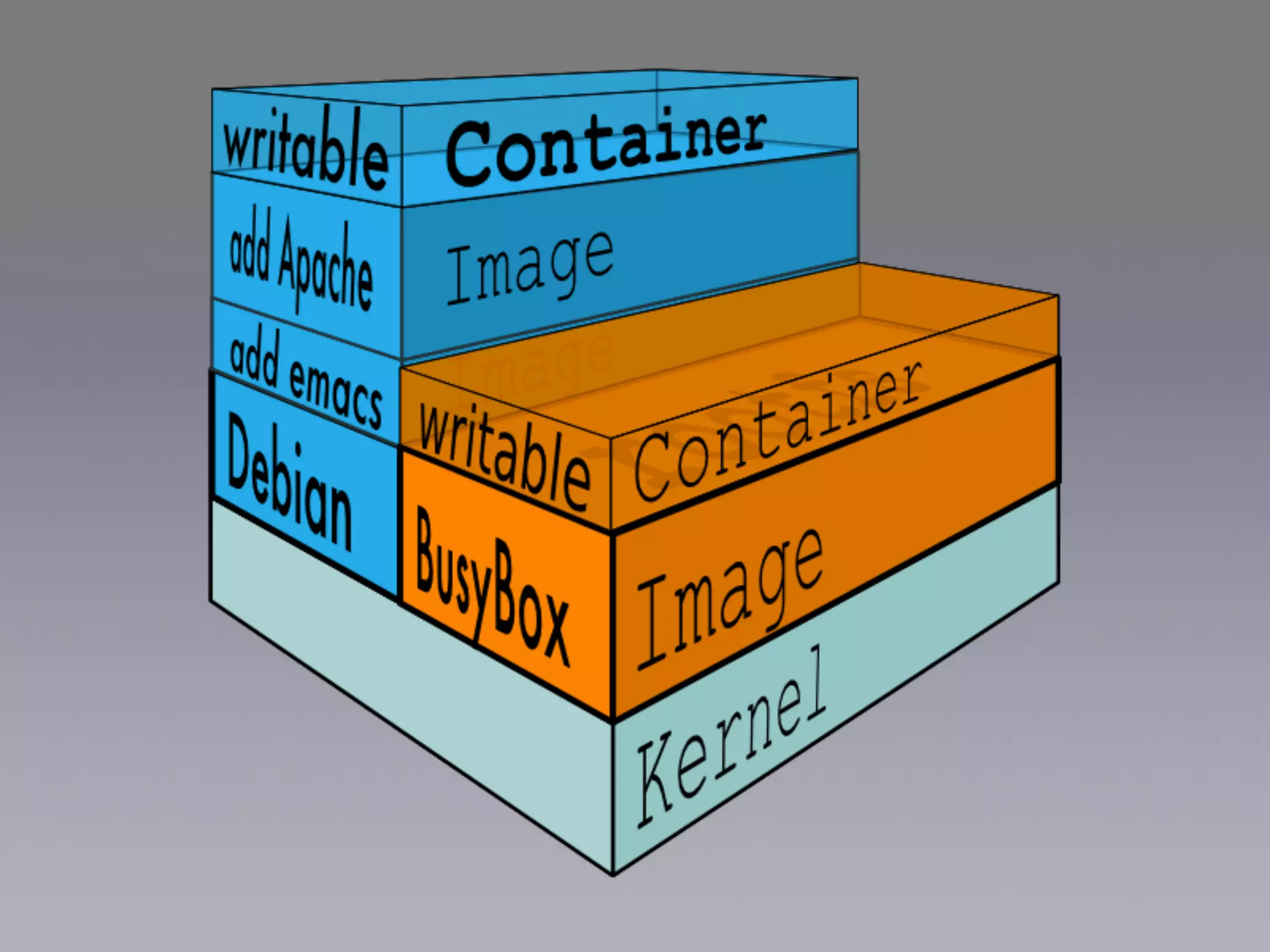
(giant 4) AuFS
AuFS (Advanced multi layered Unification FileSystem)
implements a union mount for Linux file systems.
“When I see a bird that walks like a duck and
swims like a duck and quacks like a duck,
I call that bird a duck.”
Duck Typing
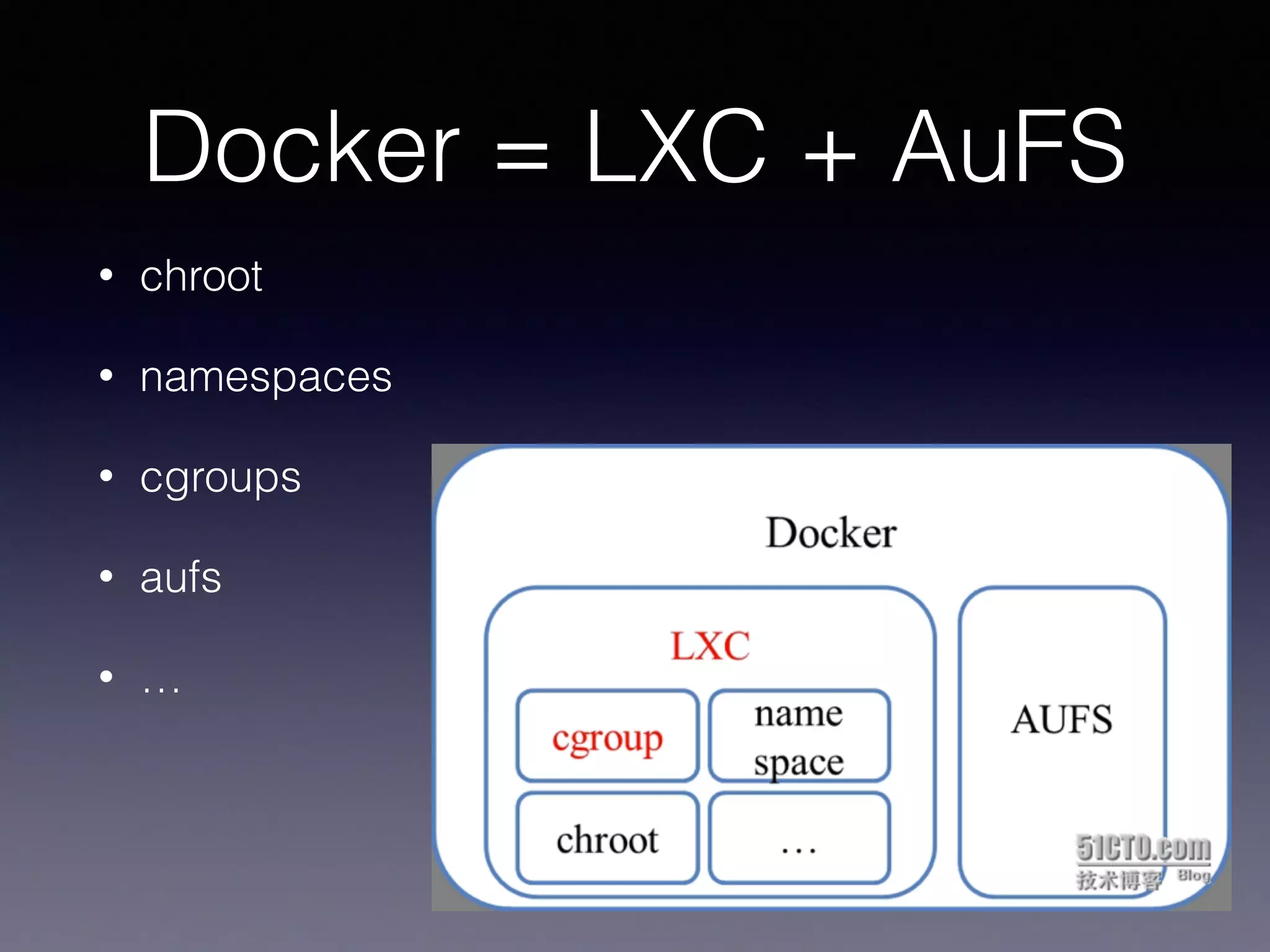
Docker = LXC + AuFS
• chroot
• namespaces
• cgroups
• aufs
• …
Container
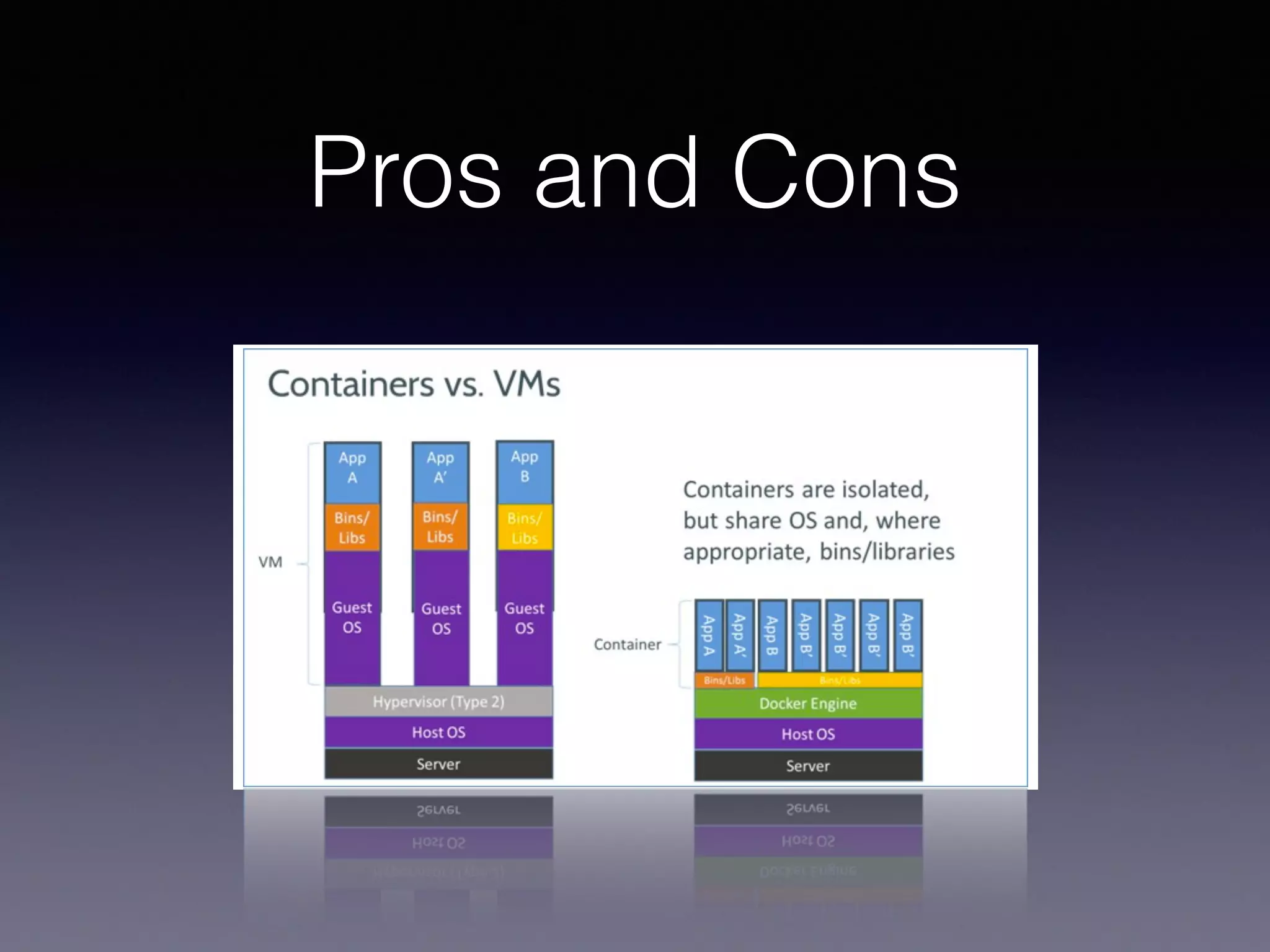
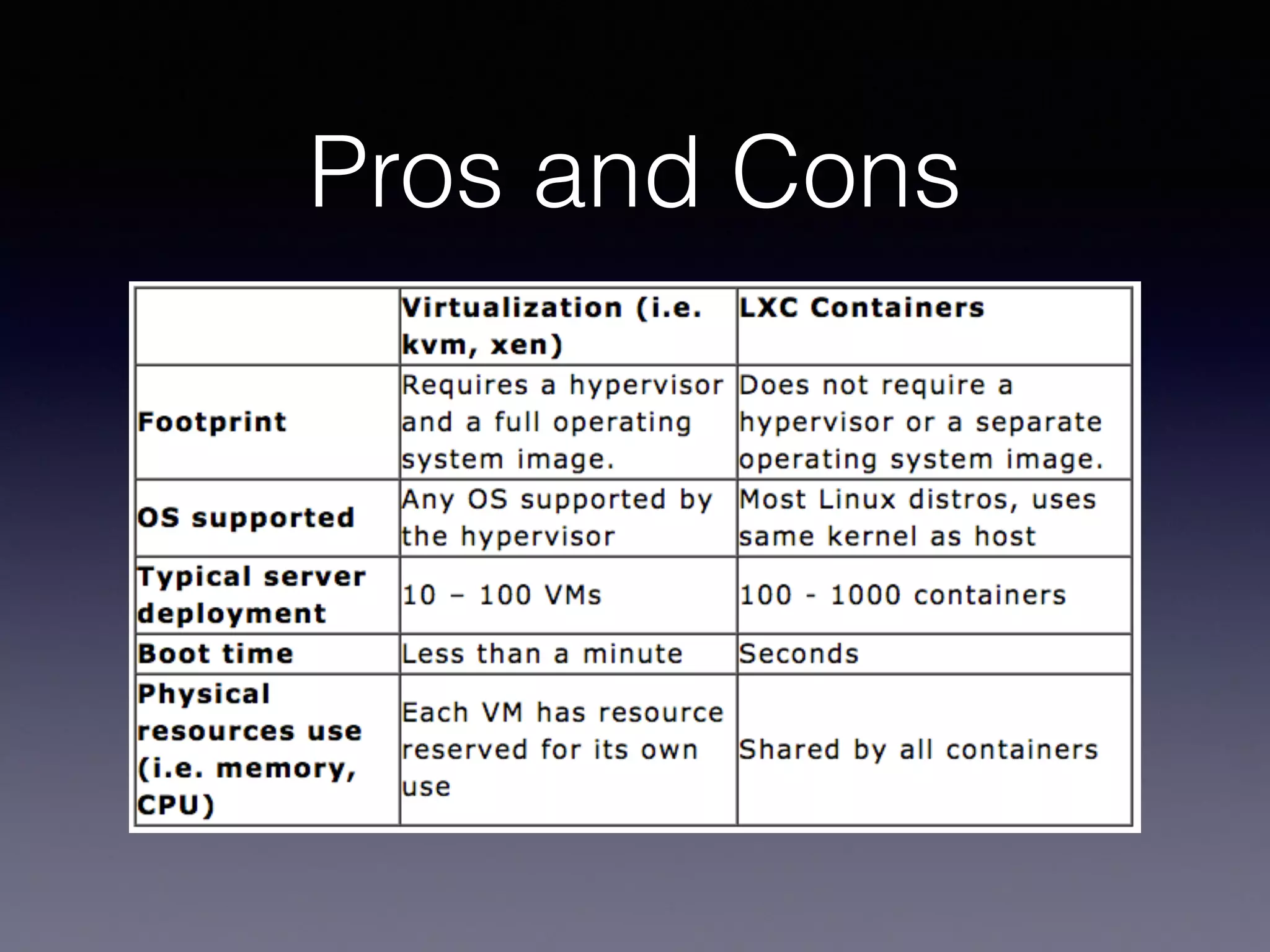
Pros and Cons
Pros and Cons
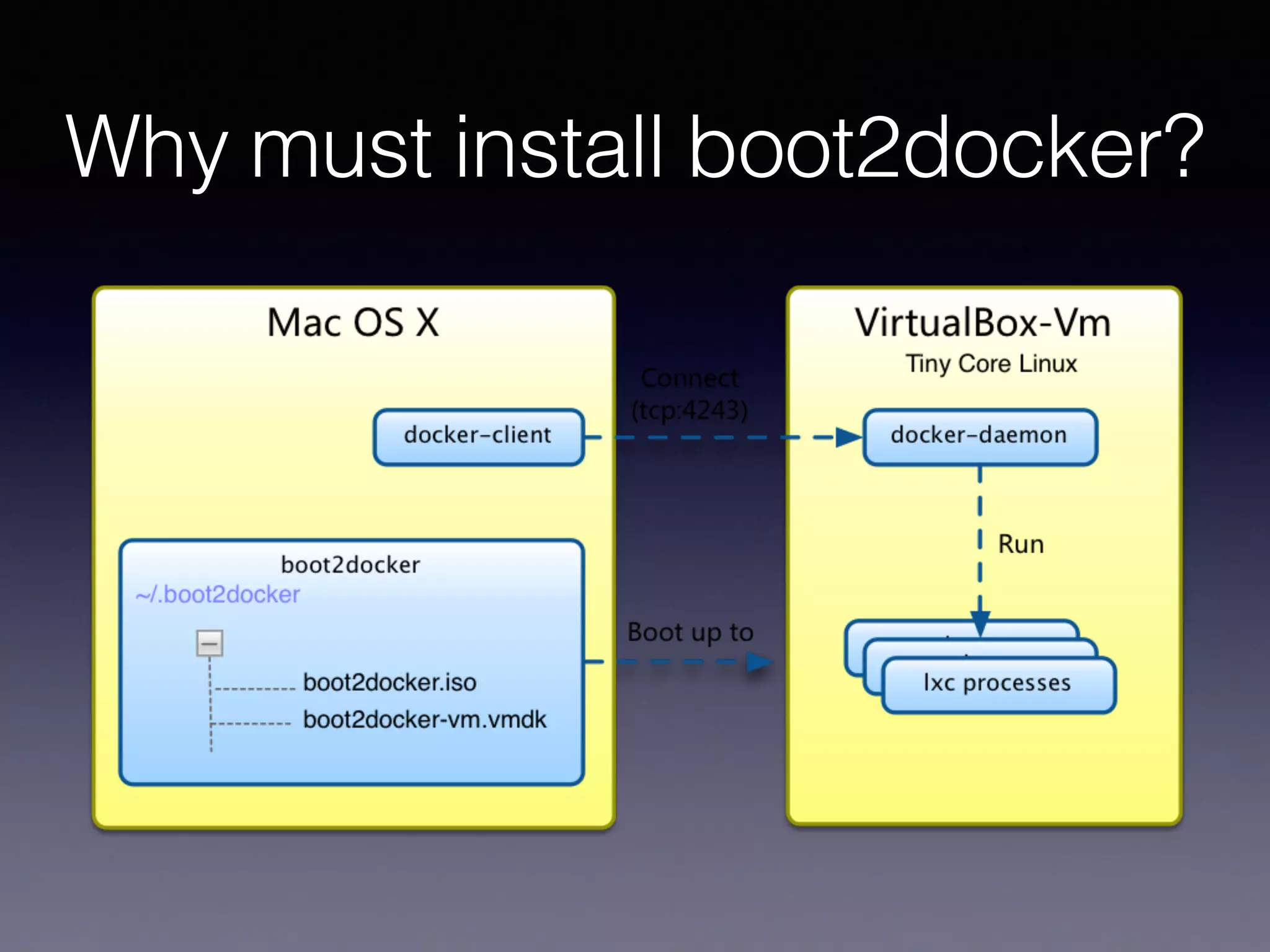
Why must install boot2docker?
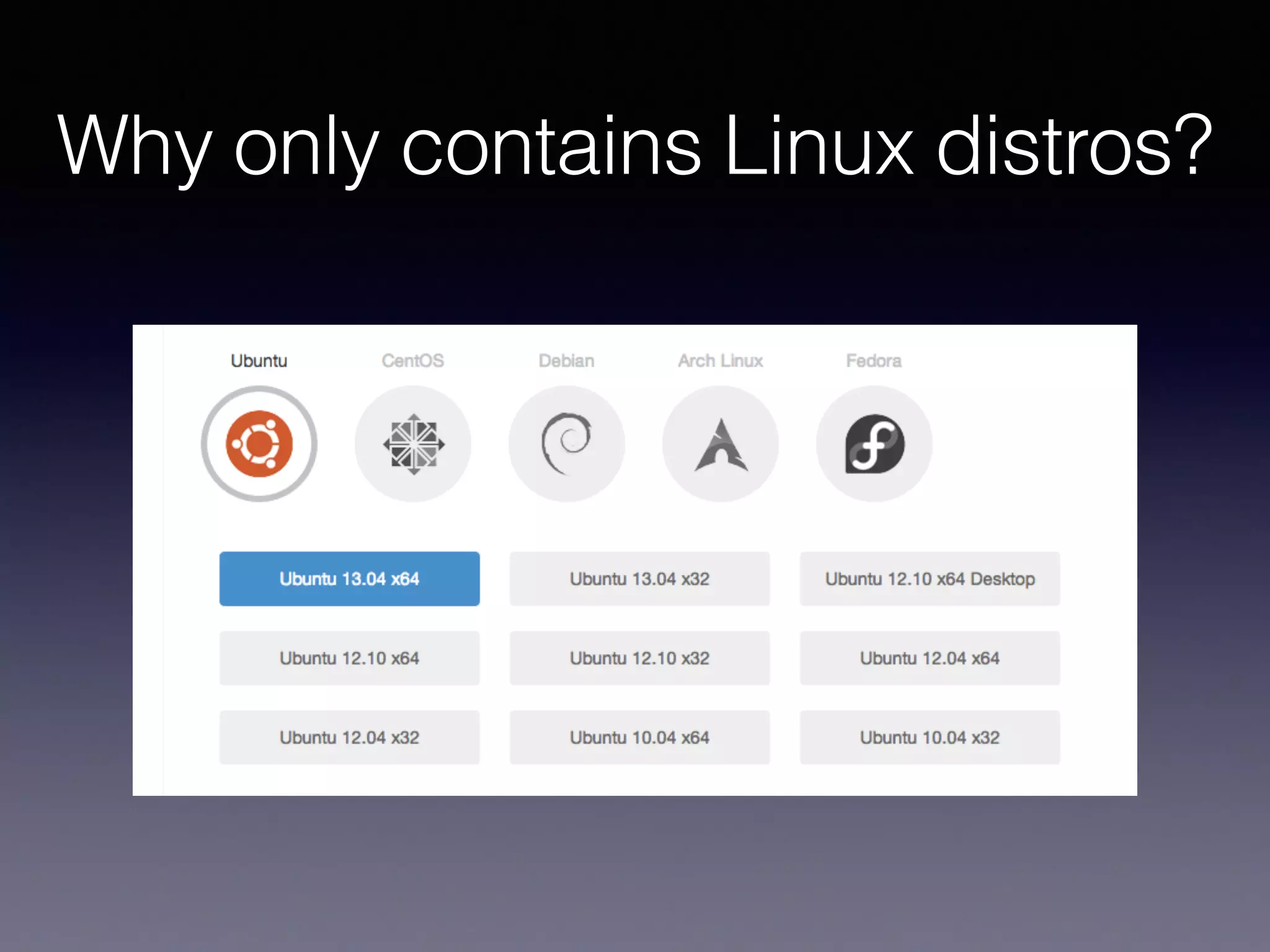
Why only contains Linux distros?
End
justinli.ljt@gmail.com

Understand how docker works