1
U2F Case Study
Examining the U2F paradox
3
What is Universal 2nd
Factor (U2F)?
4
Simple, Secure, Scalable 2FA
5
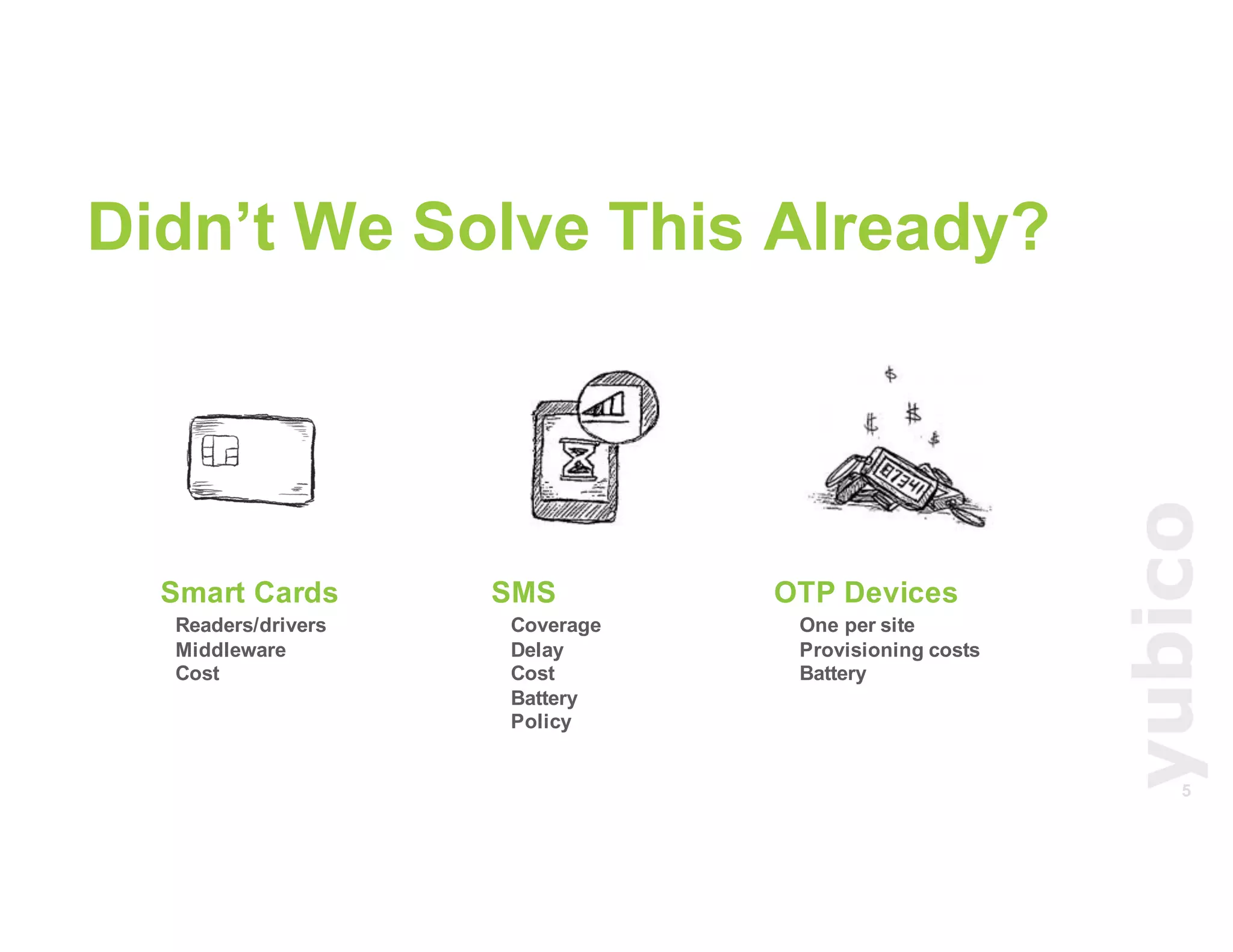
Didn’t We Solve This Already?
SMS OTP Devices
Coverage
Delay
Cost
Battery
Policy
One per site
Provisioning costs
Battery
Smart Cards
Readers/drivers
Middleware
Cost
6
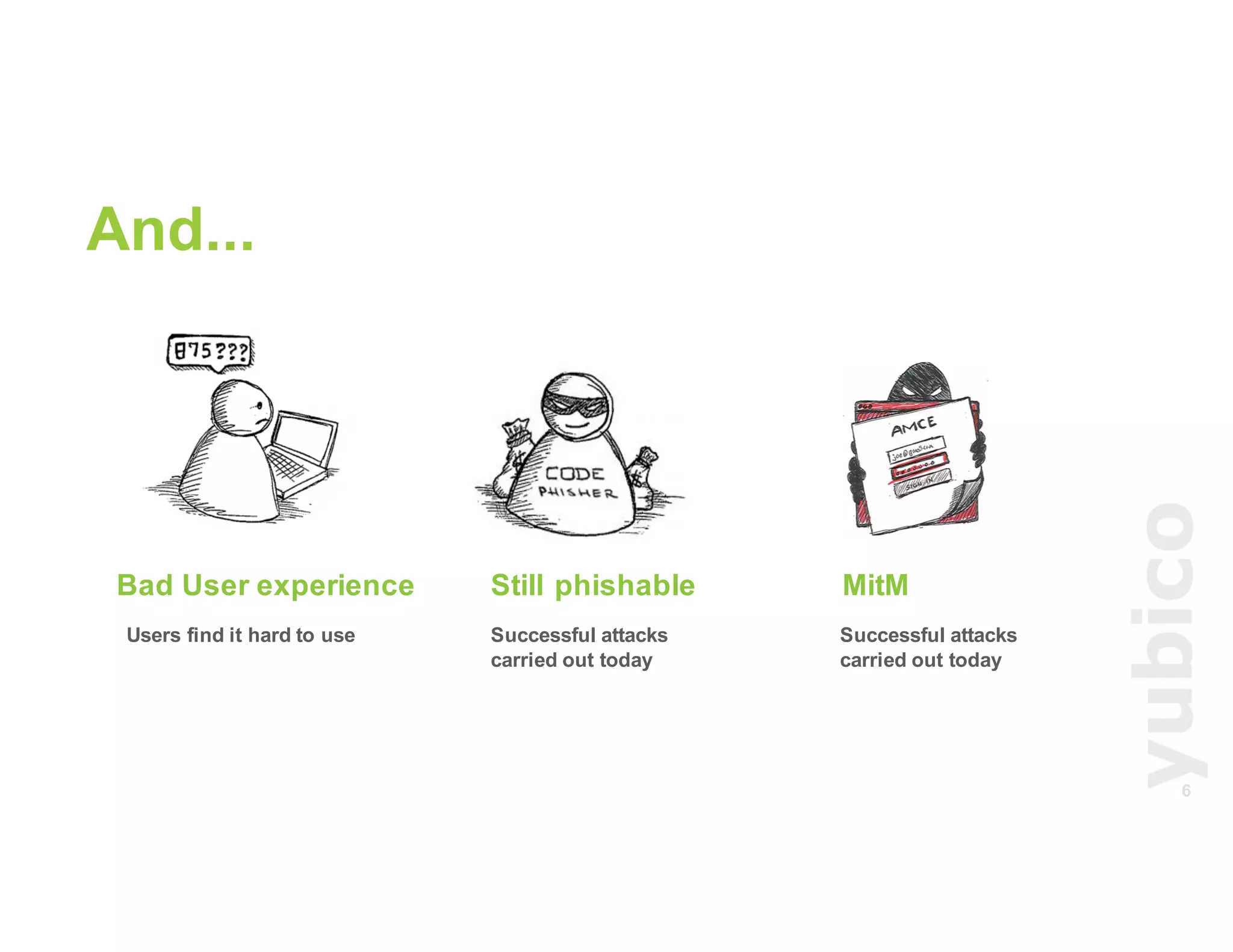
Bad User experience Still phishable
Users find it hard to use Successful attacks
carried out today
MitM
Successful attacks
carried out today
And...
7
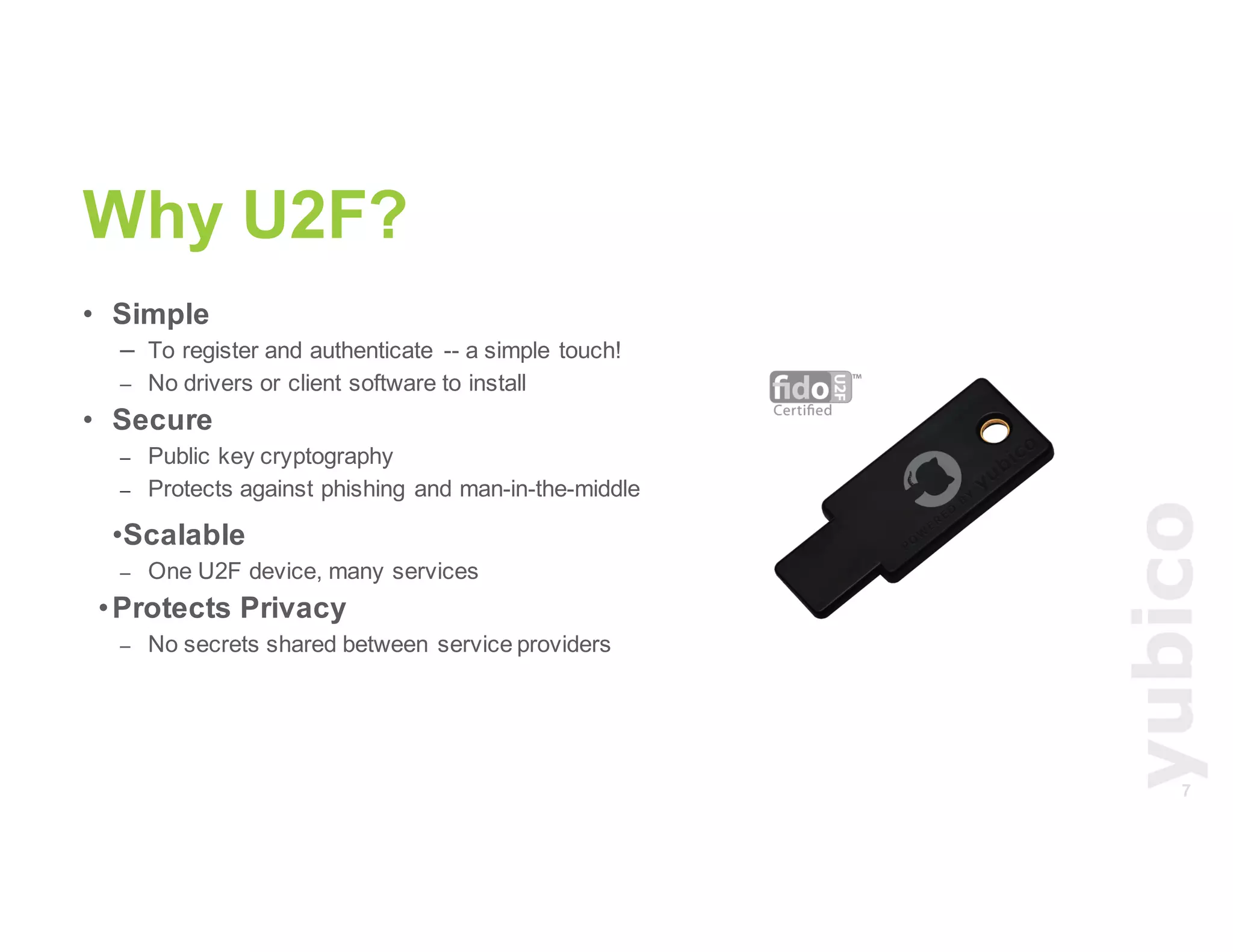
Why U2F?
• Simple
– To register and authenticate -- a simple touch!
– No drivers or client software to install
• Secure
– Public key cryptography
– Protects against phishing and man-in-the-middle
•Scalable
– One U2F device, many services
•Protects Privacy
– No secrets shared between service providers
8
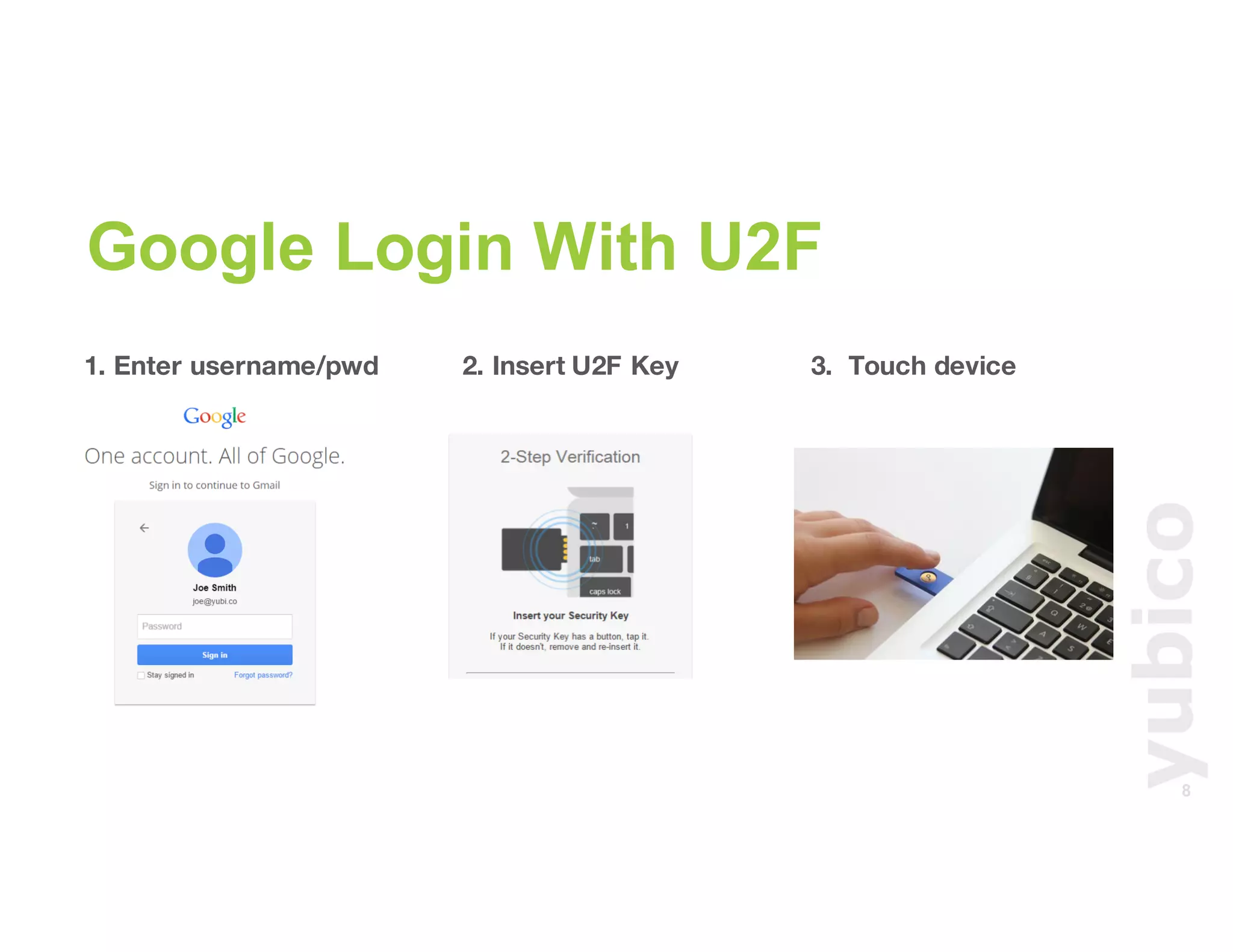
1. Enter username/pwd 2. Insert U2F Key 3. Touch device
Google Login With U2F
9
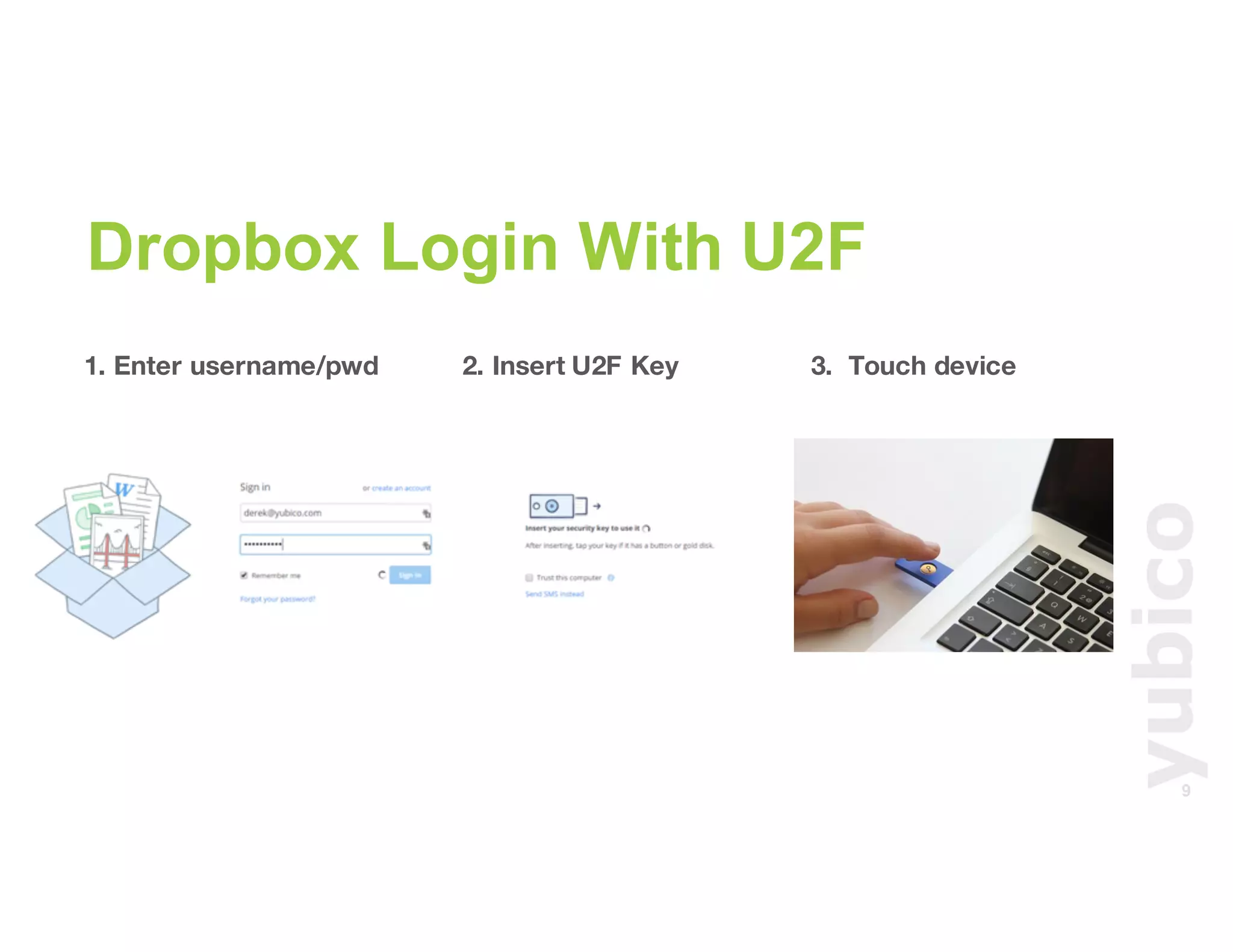
1. Enter username/pwd 2. Insert U2F Key 3. Touch device
Dropbox Login With U2F
10
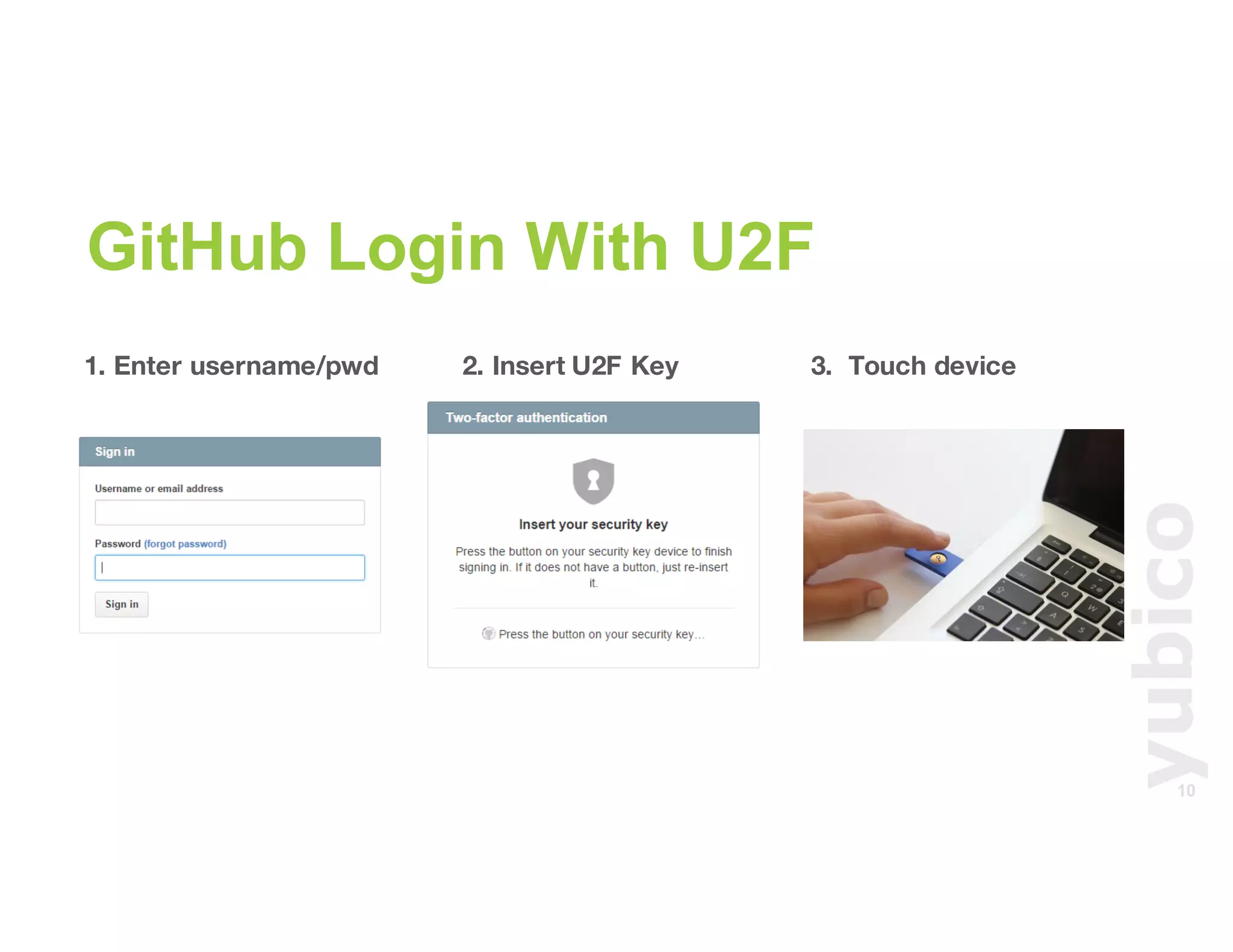
1. Enter username/pwd 2. Insert U2F Key 3. Touch device
GitHub Login With U2F
11
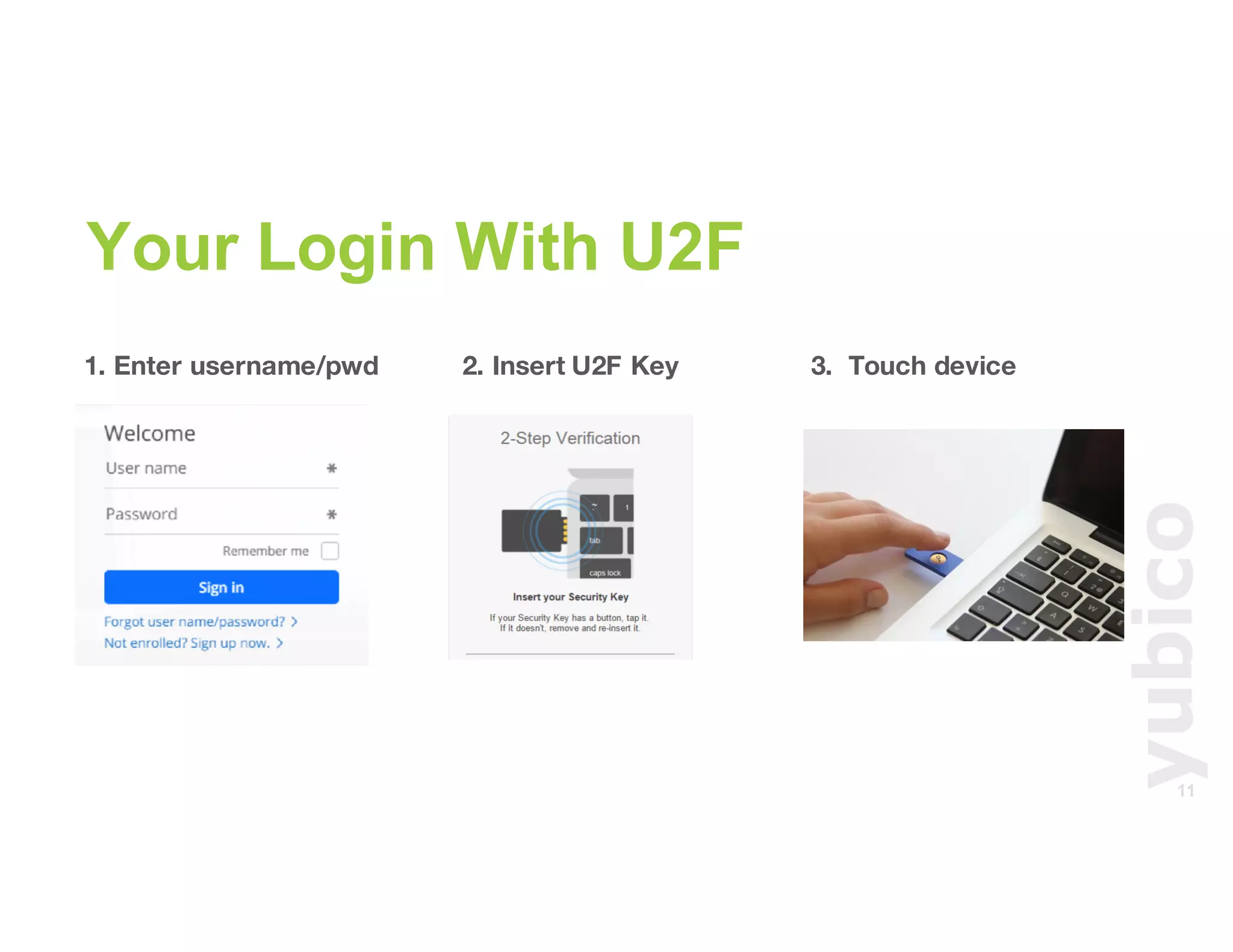
1. Enter username/pwd 2. Insert U2F Key 3. Touch device
Your Login With U2F
12
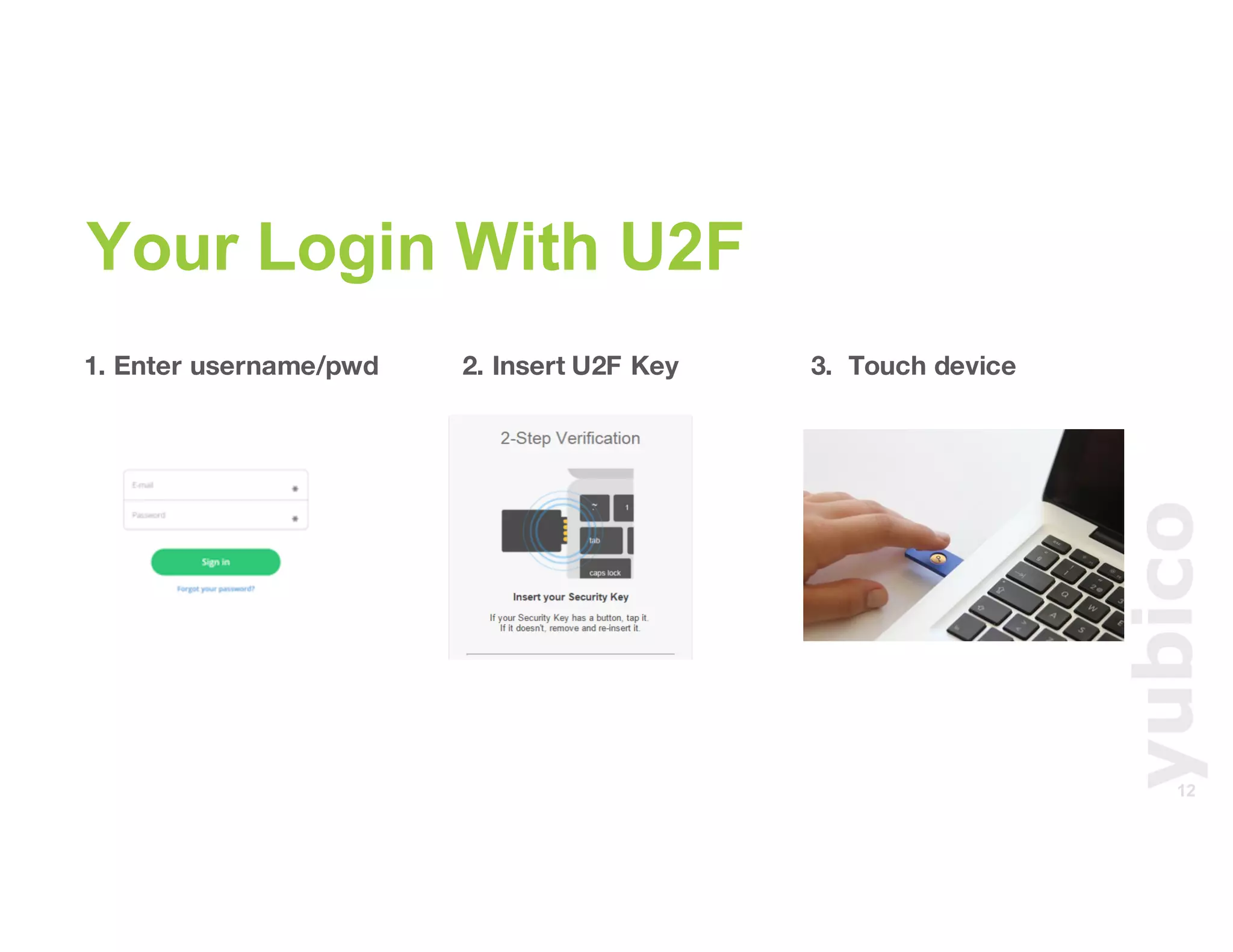
1. Enter username/pwd 2. Insert U2F Key 3. Touch device
Your Login With U2F
13
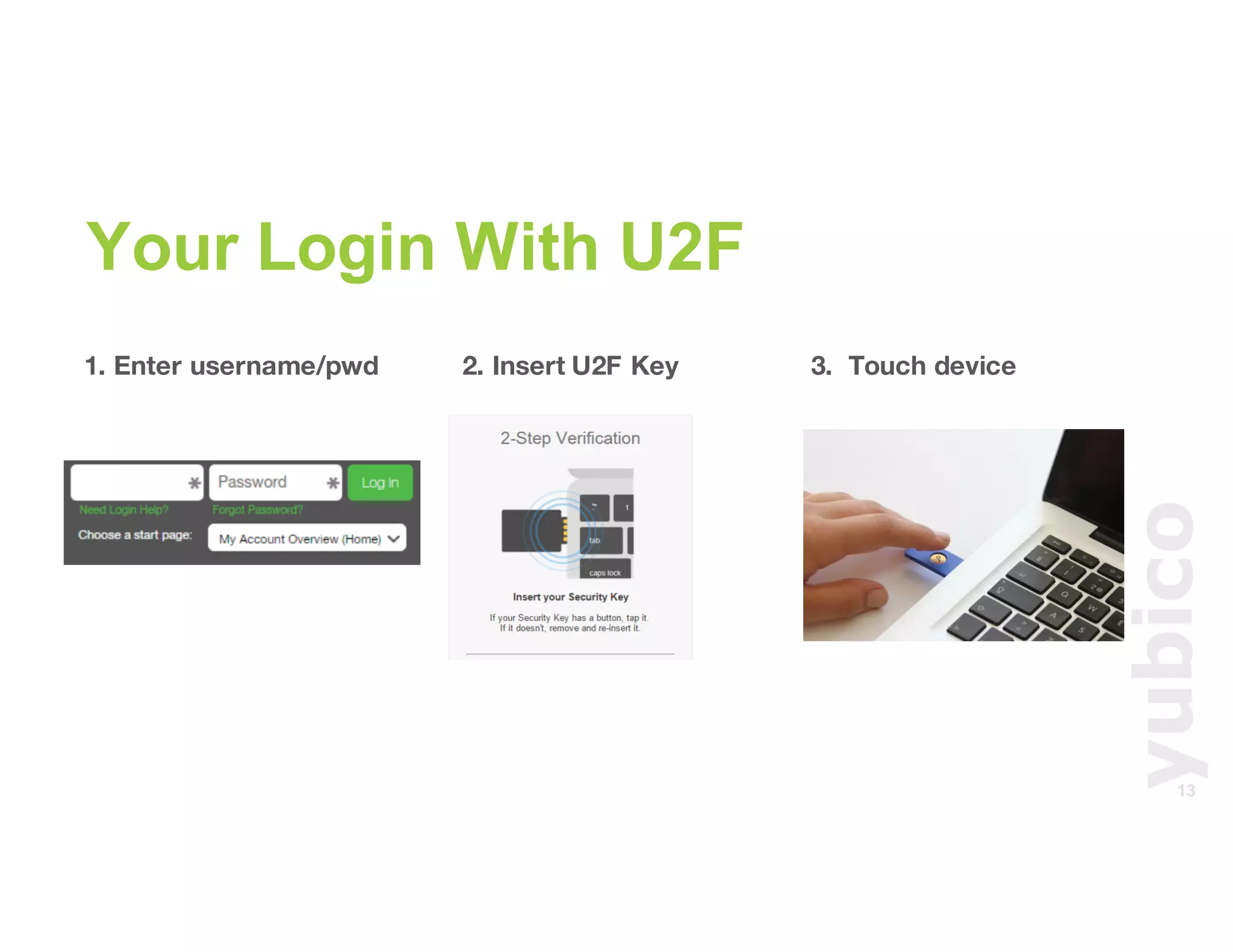
1. Enter username/pwd 2. Insert U2F Key 3. Touch device
Your Login With U2F
14
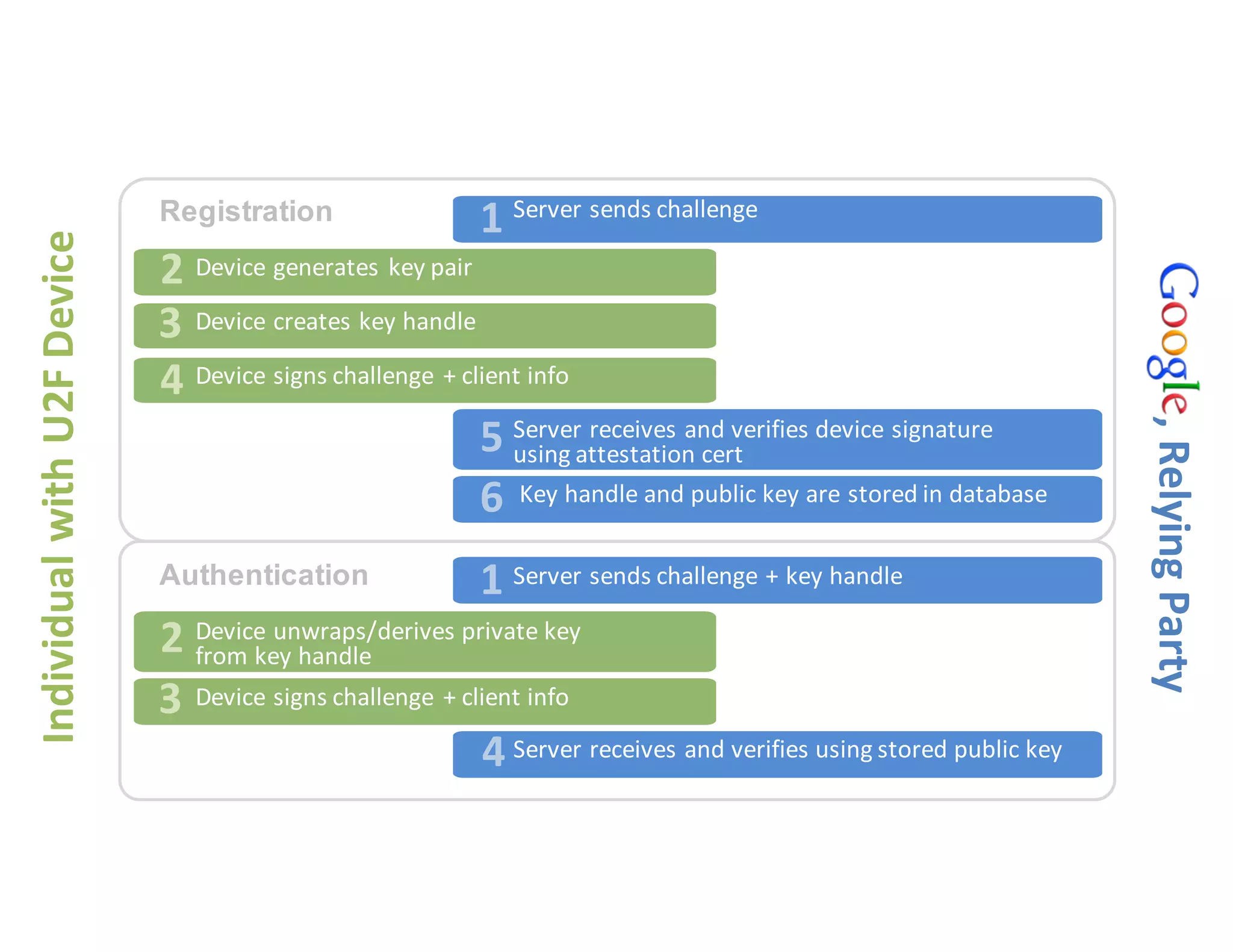
Protocol Overview
Server	sends	challenge
1
Server	receives	and	verifies	device	signature	
using	attestation	cert5
Key	handle	and	public	key	are	stored	in	database6
Device	generates	key	pair2
Device	creates	key	handle3
Device	signs	challenge	+	client	info4
Registration
Server	sends	challenge	+	key	handle	1
Server	receives	and	verifies	using	stored	public	key	4
Device	unwraps/derives	private	key	
from	key	handle	2
Device	signs	challenge	+	client	info	3
Authentication
Individual	with	U2F	Device
,	Relying	Party
16
Protocol Design
Step-By-Step
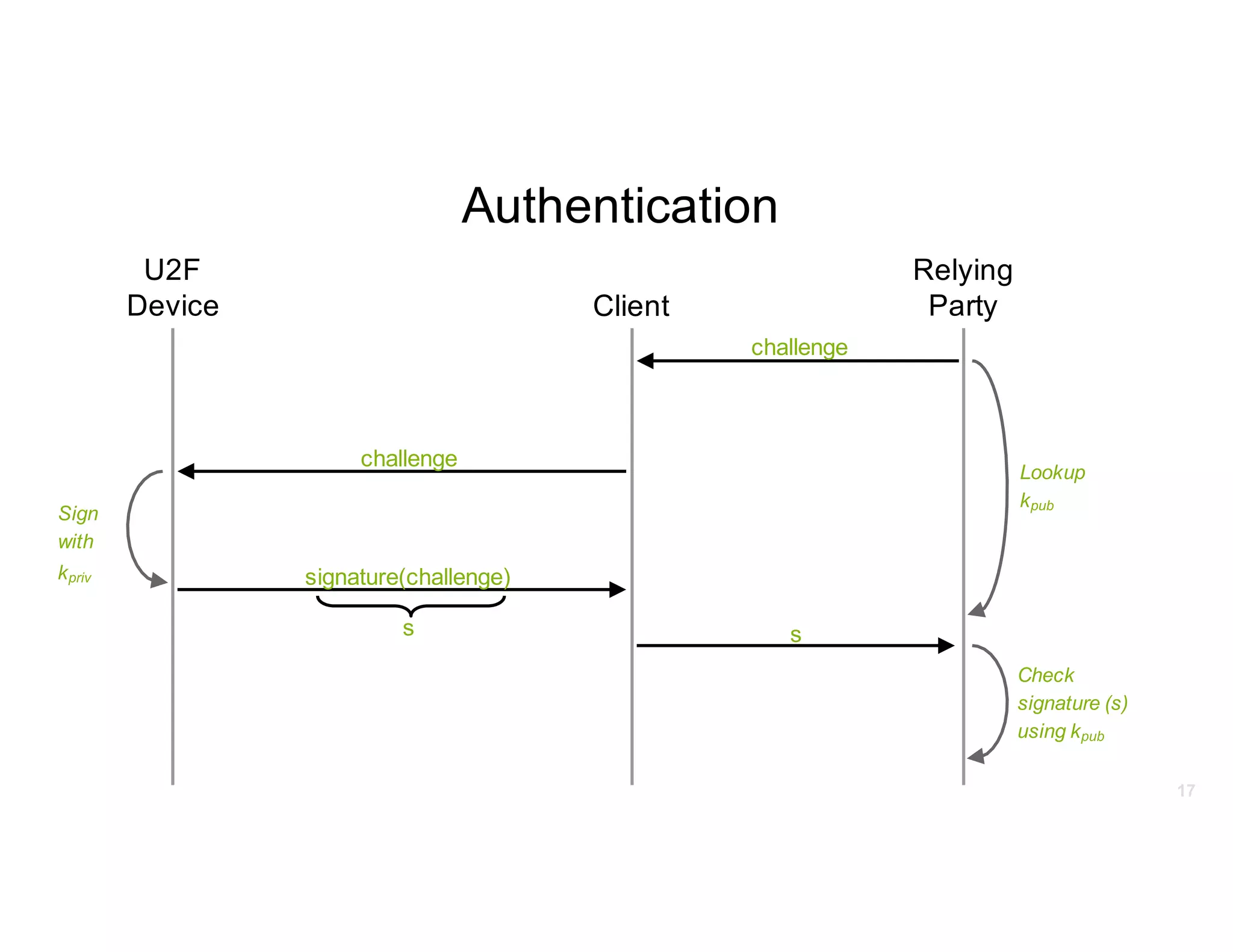
17
U2F
Device Client
Relying
Party
challenge
challenge
Sign
with
kpriv signature(challenge)
s
Check
signature (s)
using kpub
s
Lookup
kpub
Authentication
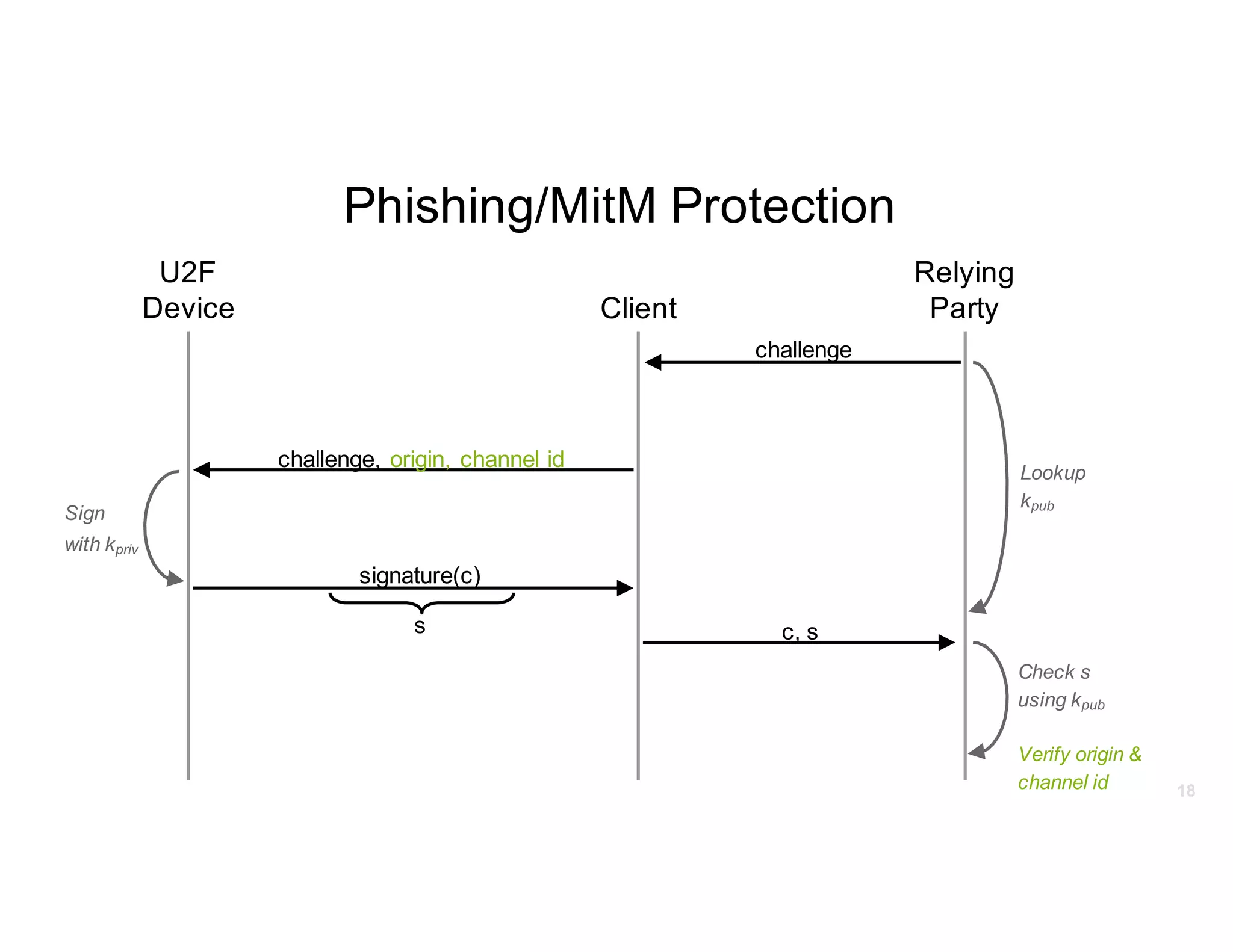
18
U2F
Device Client
Relying
Party
challenge
challenge, origin, channel id
Sign
with kpriv
signature(c)
c, s
Check s
using kpub
Verify origin &
channel id
s
Lookup
kpub
Phishing/MitM Protection
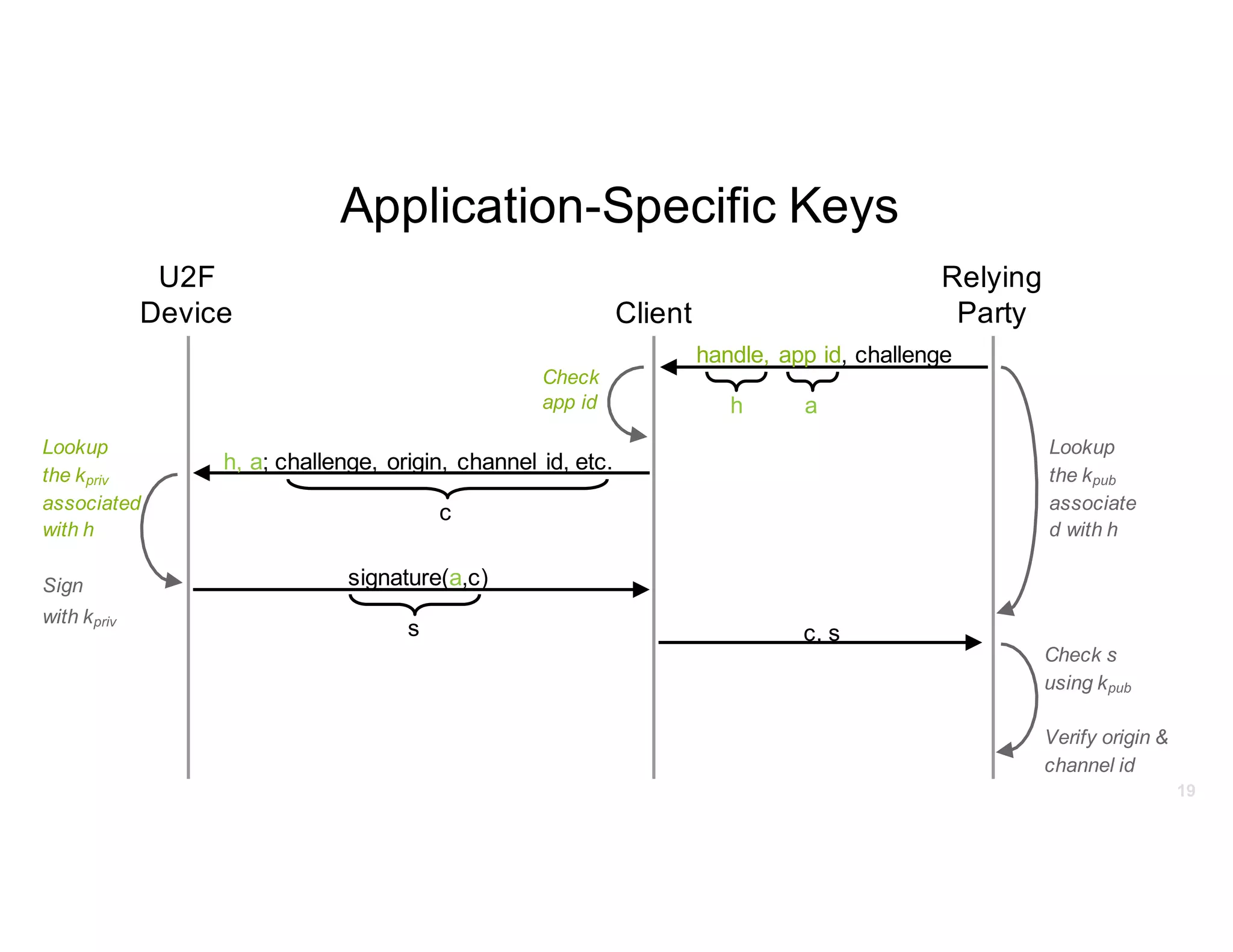
19
U2F
Device Client
Relying
Party
handle, app id, challenge
h, a; challenge, origin, channel id, etc.
c
a
Check
app id
Lookup
the kpriv
associated
with h
Sign
with kpriv
signature(a,c)
c, s
Check s
using kpub
Verify origin &
channel id
s
h
Lookup
the kpub
associate
d with h
Application-Specific Keys
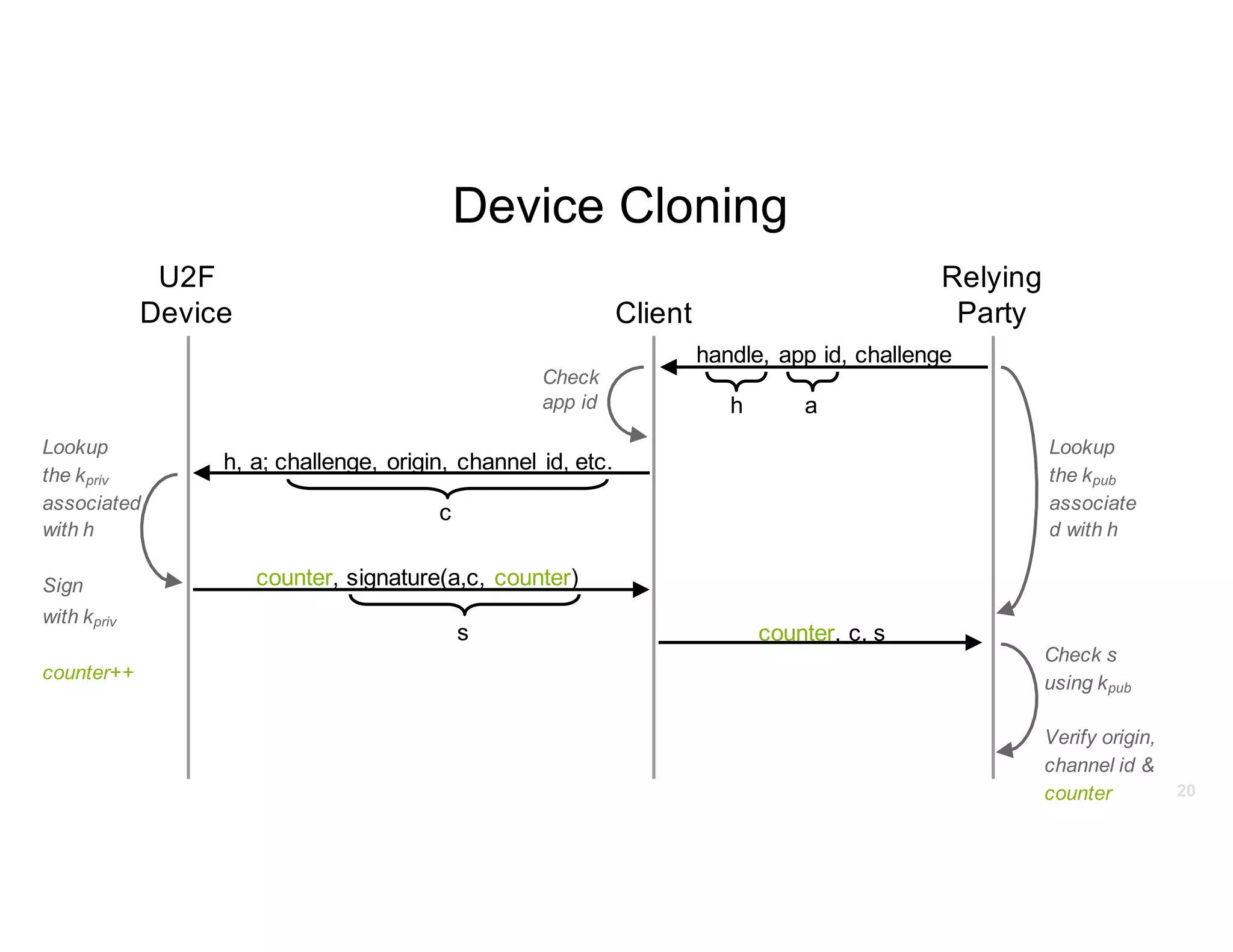
20
U2F
Device Client
Relying
Party
handle, app id, challenge
h, a; challenge, origin, channel id, etc.
c
a
Check
app id
Lookup
the kpriv
associated
with h
Sign
with kpriv
counter++
counter, signature(a,c, counter)
counter, c, s
Check s
using kpub
Verify origin,
channel id &
counter
s
h
Lookup
the kpub
associate
d with h
Device Cloning
21
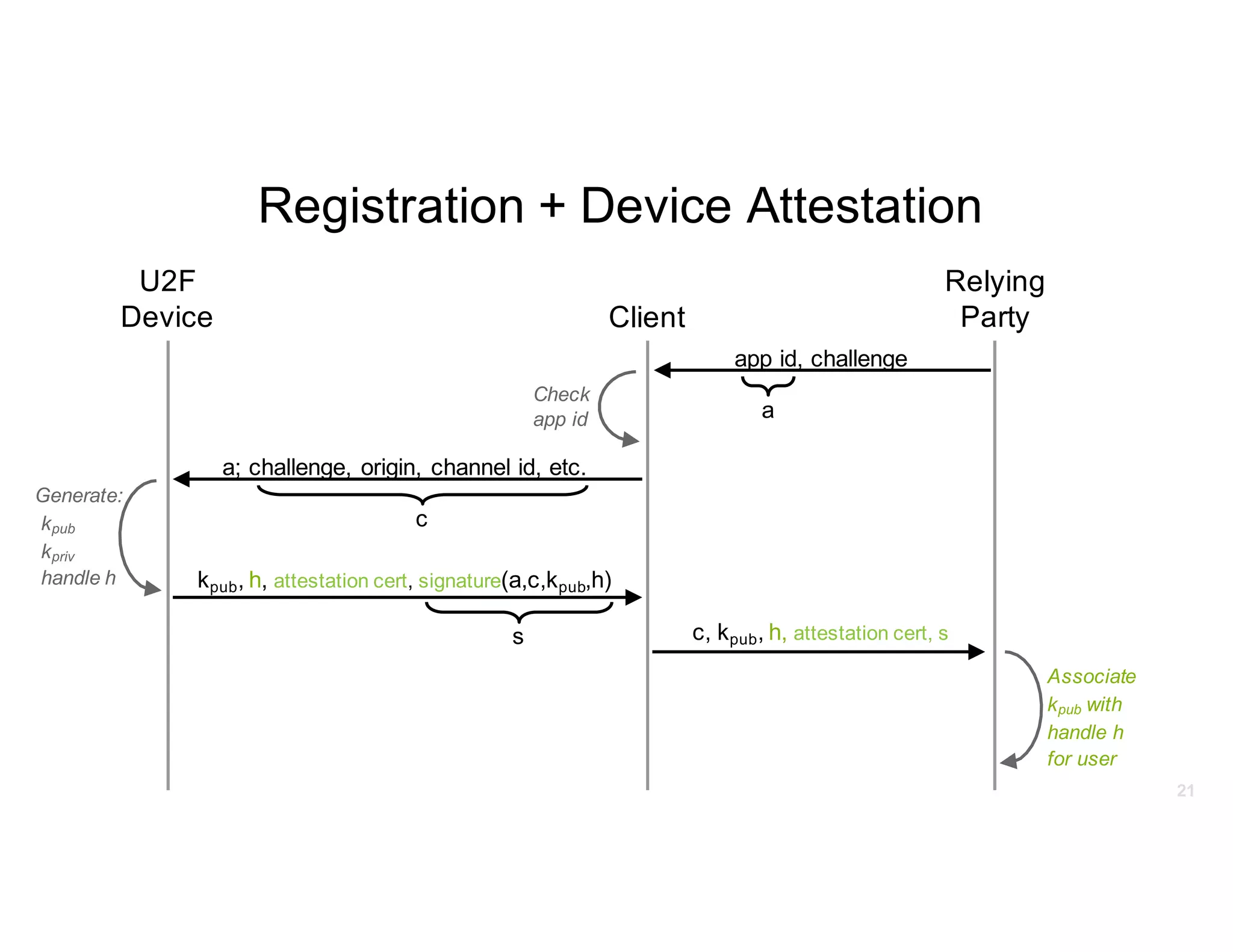
U2F
Device Client
Relying
Party
app id, challenge
a; challenge, origin, channel id, etc.
c
a
Check
app id
Generate:
kpub
kpriv
handle h kpub, h, attestation cert, signature(a,c,kpub,h)
c, kpub, h, attestation cert, s
Associate
kpub with
handle h
for user
s
Registration + Device Attestation
22
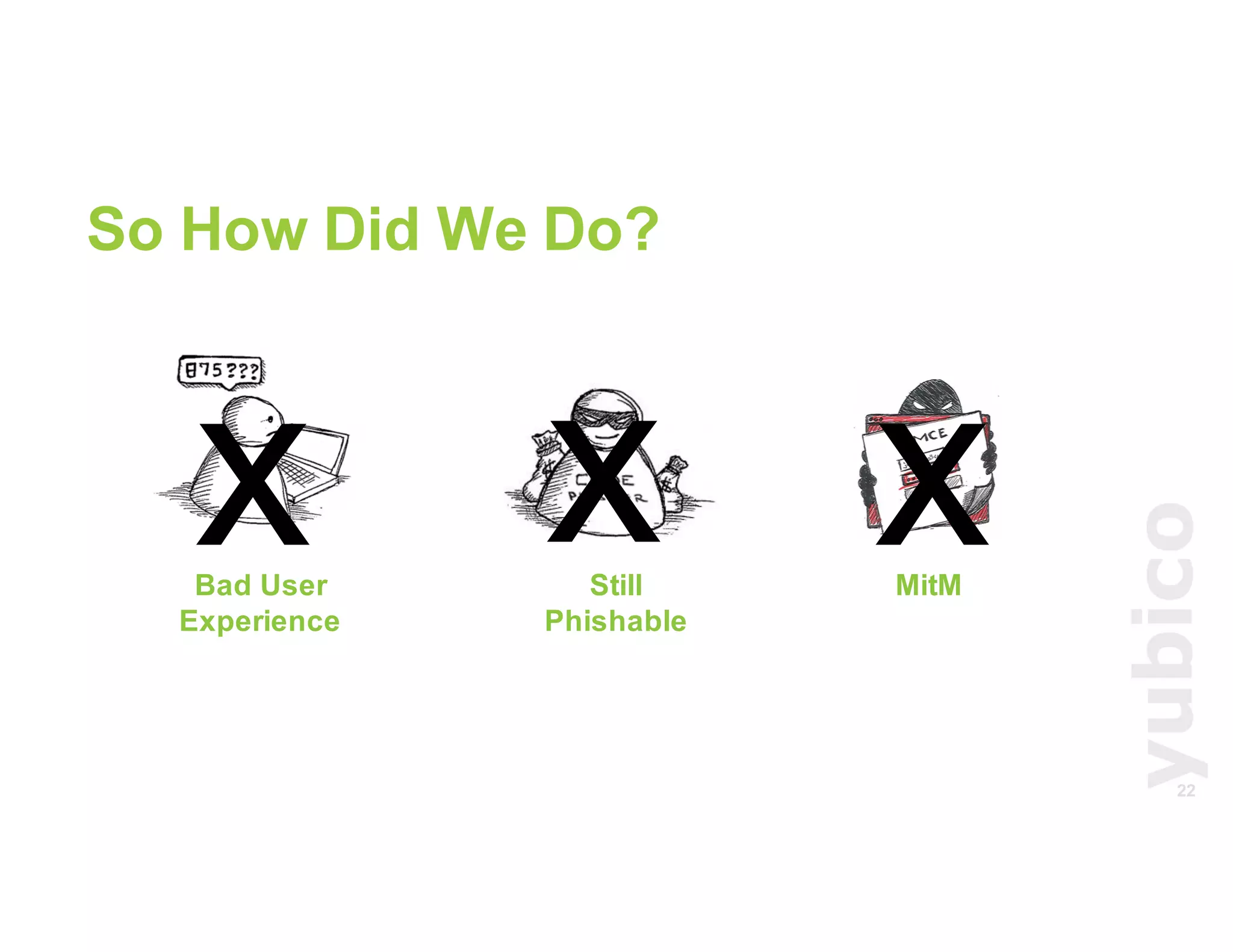
Bad User
Experience
Still
Phishable
MitM
x xx
So How Did We Do?
23
Resources
Strengthen 2 step verification with Security Key
Yubico Security Key
Yubico Libraries, Plugins, Sample Code,
Documentation
FIDO U2F Protocol Specification
Yubico Demo Server - Test U2F
Yubico Demo Server - Test Yubico OTP
Google security blog
yubico.com/security-key
developers.yubico.com
fidoalliance.org/specifications
demo.yubico.com/u2f
demo.yubico.com
24
Questions, Comments
Derek Hanson
derek@yubico.com
@derekhanson
@yubico
U2F Case Study: Examining the U2F Paradox

U2F Case Study: Examining the U2F Paradox