PR Campaigns  J4-554January 7, 2010, Margy Parker
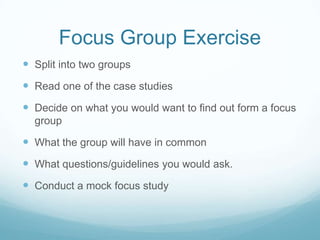
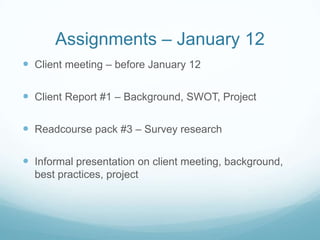
Today’s class timeIntroduction – your instructorTypes of PR Research, how it applies to the “Plan”Qualitative Research –Mock Focus GroupsAssignments – January 12
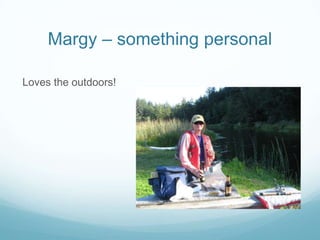
Margy – something personalLoves the outdoors!
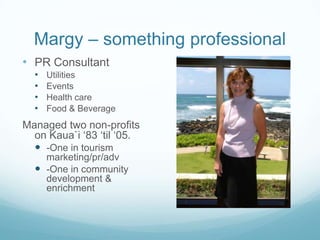
Margy – something professionalPR Consultant
Utilities
Events
Health care
Food & BeverageManaged two non-profits on Kaua`i ‘83 ‘til ‘05.-One in tourism marketing/pr/adv
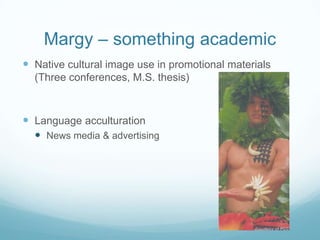
-One in community development & enrichmentMargy – something academicNative cultural image use in promotional materials (Three conferences, M.S. thesis)Language acculturationNews media & advertising
Margy – some backgroundMarried, one daughterLive in Florence, and on Kaua`iMoved to Hawai`i 1980, Raised in northern California. Bachelor of Arts - French/SpanishGraduate Certificate – TelecommunicationsMaster of Science - Communication
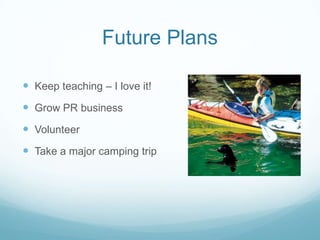
Future PlansKeep teaching – I love it!Grow PR business  VolunteerTake a major camping trip
Favorite TV/Movie/NewsBig Bang Theory60 Minutes“Crash”New York TimesSmall town newspapers
Margy - Extra detailsReturns emails w/in 24 hours (M-F)Returns calls w/in 24 hours (M-F)Weekends OK – major deadlines, emergencies, issuesApproach is to guide and advise – academic & professionalExpect honesty and integrity,
Types & Uses of PR Research
Research – Foundation for PR PlanningResearch = What you know.Analysis & Judgment = How you think. CEOs & Managers look for “proof” and support for PR concepts based on research and analysis.  Research supports creativity in PR
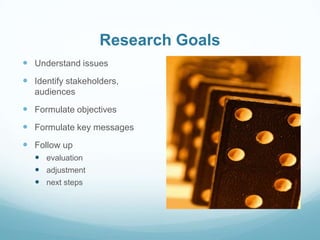
Research GoalsUnderstand issues
Identify stakeholders, audiences
Formulate objectives
Formulate key messages
Follow up
evaluation
adjustment
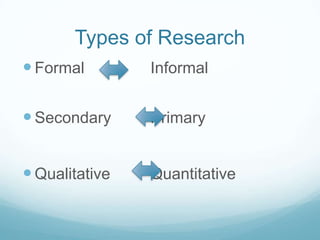
next stepsTypes of ResearchFormal 		InformalSecondary		PrimaryQualitative		Quantitative
Secondary Research - InternalCommunications AuditEnvironmental MonitoringIntegrated Research
Secondary Research – External*Organizational publications
Online - factoids
Trade organizations, government agencies
Media clips
Media sources

Types & Uses of PR Research

Editor's Notes

  • #15 COMMUNICATIONS AUDITCheck on internal messaging, whether organization is sticking to its mission, branding, engagement and feedback, organizational standing among Board, employees, management staffENVIRONMENTAL MONITORINGChecking the “mood” and attitudes of employees, customers, investors, suppliers and other publicsINTEGRATED RESEARCHSpans internal & externalHelps improve organizational “talking” Keeps management “in touch”
  • #16 Organizational publications (print and online) – lots of background, but be aware of bias Internet / Library – census, including demographics, psychographics as some had longer questionnaires, industry reports, market analysis, External Organizations – trade associations, gov’t agencies, - keep purpose in mind, and check their sources and methodologies Media Sources – (mediamap.com, burrells.com) – editors, reporters, type of coverage, how to submit, demographic info on audiences (viewer, listener or reader profiles) Media clips – Broad range of news items related to organization or industry. Nexus Lexis, Articles First, Google. Best Practices – How other organizations or entities have tackled a similar challenge or opportunity.
  • #25 Choices not restricted (a,b,c, scales)Research listens for both content and emotions, contratictions, tensionResearcher listens for meaningProduces ideas about how people think
  • #26 This is a group interview.Perspectives are combinedResearcher sees how it all fits togetherBut, does not produce an individual point of view.Groups should have common interests. If they’re too diverse, cannot find trends. Results are too diverse.Invite 20-25 to reach a group of 10-12. Refreshments, good room.But, select several groups of different characteristics
  • #27 Focus groups strive to produce good conversation with an ebb and flow.People tell stories, earlier questions are re-visited, there are disruptions. People disagree. Openness is encouragedModerator wants natural features, but must strive to go according to guidelines.Go from general to specificRecord – via audio, video or transcribe
  • #28 Report will featurePatterns of words and phrasesThemes found through perspectivesNever numbers (x% said this or x% said thatIt is never a numerical analysis, it’s a conceptual analysis