 Electricity requires an electric path to flow and
there are many conducting materials used for this
purpose.
 There are many semi conducting materials which
are used to reduce the voltage and also drop the
current flow.
 There are non-conducting materials which are
used as insulation during working on live-lines.
In this unit we will study how the
household or industrial wiring is done
and what materials are essential for
household or industrial wiring.
We will also study the different types of
wiring and how they is done.
• A process of connecting various accessories
for distribution of electrical energy from
supplier’s meter board to home appliances
such as lamps, fans and other domestic
appliances is known as ElectricalWiring.
• The wiring system selected will depend to a
large extent on the types of servicerequired.
1. Durability
2. Safety
3. Appearance
4. Cost
5. Accessibility
6. Maintenance Cost
Wiring materials : Electrical wire is
made of materials like copper,
aluminium and silver.
As silver is expensive, mostly copper
and aluminium are used in wiring.
Conducting materials
Insulating materials
Semiconductor materials
(a) Copper It is a good conductor of electricity.
 It is used in wiring materials in cables.
 Its has low resistance and is used for conduction of
electricity at high, medium and low voltage.
 It is used in wiring and cable making.
(b) Aluminium It is light weight and cheaper in
comparison to copper.
 Therefore, this type of conducting material is mostly
used in electrical wiring.
 It is silvery–white in colour and it has a soft texture.
It is often used in wiring and making cable.
Domestic Wiring.
Commercial Wiring.
Industrial Wiring.
• Cleat wiring
• Casing and capping wiring
• Batten wiring
a) CTSor TRSor PVCsheath wiring
b) Lead sheathed or metal sheathed wiring
• Conduit wiring
a) Surface or open Conduit type
b) Concealed or underground type Conduit
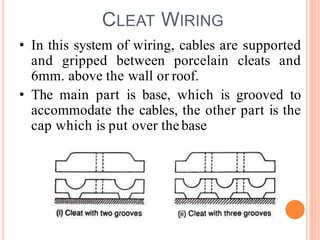
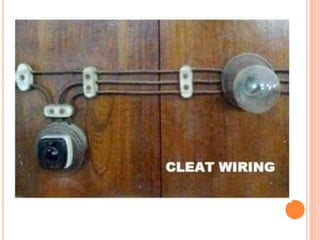
CLEAT WIRING
• In this system of wiring, cables are supported
and gripped between porcelain cleats and
6mm. above the wall or roof.
• The main part is base, which is grooved to
accommodate the cables, the other part is the
cap which is put over the base
• Cleats are placed above the wall or roof at an
interval of 30 to 60 cm.
• The cables recommended for this type of
wiring are VIR or PVC cables and any other
approved insulated cables.
Advantages
1. It is the cheapest system.
2. Installation and dismantling iseasy.
3. Lessskilled persons are required.
4. Inspection is easy.
5. Alterations and additions are easy.
Disadvantages
1. It is purely temporary wiring system.
2. Appearance is not good.
3. Cables are exposed to atmosphere and there
is a possibility of mechanical injury.
4. This system should not be used in damp
places other wise insulation gets damaged.
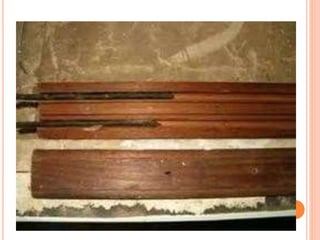
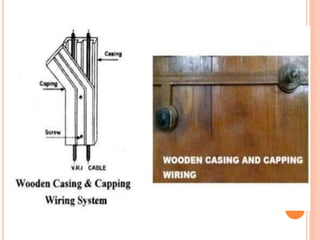
• It consists of rectangular blocks made from
seasoned and knots free wood (preferably teak-
wood).
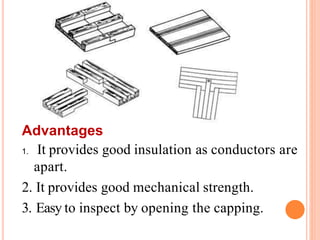
• The casing has usually two (or three) ‘U’ shaped
grooves, into which the VIR or PVC cables are
laid in such a way that the opposite polarity
cables are laid in different grooves.
• The casing is covered by means of a rectangular
strip of the same width as that of casing known
as capping and is screwed to it.
• This system of wiring is suitable for low voltage
installations.
Advantages
1. It provides good insulation as conductors are
apart.
2. It provides good mechanical strength.
3. Easy to inspect by opening the capping.
Disadvantages
1. It is costly system now – a – days because it
needs seasoned, knot free wood.
2. There is every risk of fire.
3. The labor cost is more because it requires
skilled carpenters.
4. This system can not be used in damp places.
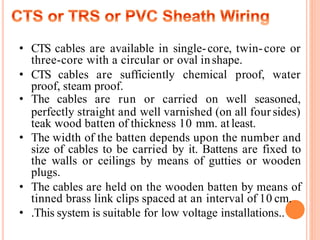
• CTS cables are available in single-core, twin-core or
three-core with a circular or oval inshape.
• CTS cables are sufficiently chemical proof, water
proof, steam proof.
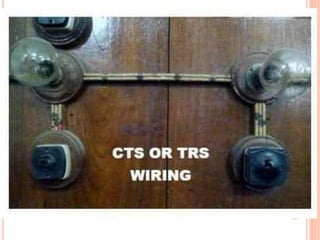
• The cables are run or carried on well seasoned,
perfectly straight and well varnished (on all four sides)
teak wood batten of thickness 10 mm. at least.
• The width of the batten depends upon the number and
size of cables to be carried by it. Battens are fixed to
the walls or ceilings by means of gutties or wooden
plugs.
• The cables are held on the wooden batten by means of
tinned brass link clips spaced at an interval of 10 cm.
• .This system is suitable for low voltage installations..
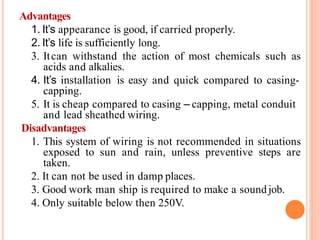
Advantages
1. It’s appearance is good, if carried properly.
2. It’s life is sufficiently long.
3. Itcan withstand the action of most chemicals such as
acids and alkalies.
4. It’s installation is easy and quick compared to casing-
capping.
5. It is cheap compared to casing – capping, metal conduit
and lead sheathed wiring.
Disadvantages
1. This system of wiring is not recommended in situations
exposed to sun and rain, unless preventive steps are
taken.
2. It can not be used in damp places.
3. Good work man ship is required to make a sound job.
4. Only suitable below then 250V.
 Wiring material is of three types __________,
____________ and ____________.
 Silver is a bad conductor of electricity.(TRUE/FLASE)
 PVC casing and capping are used for covering the wires.
(TRUE/FLASE)
types of wiring.pptx

types of wiring.pptx

  • 2.
     Electricity requiresan electric path to flow and there are many conducting materials used for this purpose.  There are many semi conducting materials which are used to reduce the voltage and also drop the current flow.  There are non-conducting materials which are used as insulation during working on live-lines.
  • 3.
    In this unitwe will study how the household or industrial wiring is done and what materials are essential for household or industrial wiring. We will also study the different types of wiring and how they is done.
  • 4.
    • A processof connecting various accessories for distribution of electrical energy from supplier’s meter board to home appliances such as lamps, fans and other domestic appliances is known as ElectricalWiring. • The wiring system selected will depend to a large extent on the types of servicerequired.
  • 5.
    1. Durability 2. Safety 3.Appearance 4. Cost 5. Accessibility 6. Maintenance Cost
  • 6.
    Wiring materials :Electrical wire is made of materials like copper, aluminium and silver. As silver is expensive, mostly copper and aluminium are used in wiring.
  • 7.
  • 8.
    (a) Copper Itis a good conductor of electricity.  It is used in wiring materials in cables.  Its has low resistance and is used for conduction of electricity at high, medium and low voltage.  It is used in wiring and cable making. (b) Aluminium It is light weight and cheaper in comparison to copper.  Therefore, this type of conducting material is mostly used in electrical wiring.  It is silvery–white in colour and it has a soft texture. It is often used in wiring and making cable.
  • 9.
  • 10.
    • Cleat wiring •Casing and capping wiring • Batten wiring a) CTSor TRSor PVCsheath wiring b) Lead sheathed or metal sheathed wiring • Conduit wiring a) Surface or open Conduit type b) Concealed or underground type Conduit
  • 11.
    CLEAT WIRING • Inthis system of wiring, cables are supported and gripped between porcelain cleats and 6mm. above the wall or roof. • The main part is base, which is grooved to accommodate the cables, the other part is the cap which is put over the base
  • 13.
    • Cleats areplaced above the wall or roof at an interval of 30 to 60 cm. • The cables recommended for this type of wiring are VIR or PVC cables and any other approved insulated cables. Advantages 1. It is the cheapest system. 2. Installation and dismantling iseasy. 3. Lessskilled persons are required. 4. Inspection is easy. 5. Alterations and additions are easy.
  • 14.
    Disadvantages 1. It ispurely temporary wiring system. 2. Appearance is not good. 3. Cables are exposed to atmosphere and there is a possibility of mechanical injury. 4. This system should not be used in damp places other wise insulation gets damaged.
  • 15.
    • It consistsof rectangular blocks made from seasoned and knots free wood (preferably teak- wood). • The casing has usually two (or three) ‘U’ shaped grooves, into which the VIR or PVC cables are laid in such a way that the opposite polarity cables are laid in different grooves. • The casing is covered by means of a rectangular strip of the same width as that of casing known as capping and is screwed to it. • This system of wiring is suitable for low voltage installations.
  • 18.
    Advantages 1. It providesgood insulation as conductors are apart. 2. It provides good mechanical strength. 3. Easy to inspect by opening the capping.
  • 19.
    Disadvantages 1. It iscostly system now – a – days because it needs seasoned, knot free wood. 2. There is every risk of fire. 3. The labor cost is more because it requires skilled carpenters. 4. This system can not be used in damp places.
  • 21.
    • CTS cablesare available in single-core, twin-core or three-core with a circular or oval inshape. • CTS cables are sufficiently chemical proof, water proof, steam proof. • The cables are run or carried on well seasoned, perfectly straight and well varnished (on all four sides) teak wood batten of thickness 10 mm. at least. • The width of the batten depends upon the number and size of cables to be carried by it. Battens are fixed to the walls or ceilings by means of gutties or wooden plugs. • The cables are held on the wooden batten by means of tinned brass link clips spaced at an interval of 10 cm. • .This system is suitable for low voltage installations..
  • 23.
    Advantages 1. It’s appearanceis good, if carried properly. 2. It’s life is sufficiently long. 3. Itcan withstand the action of most chemicals such as acids and alkalies. 4. It’s installation is easy and quick compared to casing- capping. 5. It is cheap compared to casing – capping, metal conduit and lead sheathed wiring. Disadvantages 1. This system of wiring is not recommended in situations exposed to sun and rain, unless preventive steps are taken. 2. It can not be used in damp places. 3. Good work man ship is required to make a sound job. 4. Only suitable below then 250V.
  • 24.
     Wiring materialis of three types __________, ____________ and ____________.  Silver is a bad conductor of electricity.(TRUE/FLASE)  PVC casing and capping are used for covering the wires. (TRUE/FLASE)