CONDUITS
EIM NCII
OBJECTIVE
By the end of the lesson, you will be
able to identify the different types of
conduits and their purposes.
WHAT IS CONDUIT?
Electrical conduit is a tube-like structure that
protects and houses electrical wiring in
buildings and other structures. It can be rigid or
flexible, and is made from a variety of materials,
including metal, plastic, and fired clay.
WHAT IS CONDUIT USED
FOR?
• Protecting wires from damage
• Reducing interference
• Cleaning up the area
TYPES OF CONDUITS
Metallic Conduit
• EMT – Electrical Metallic Tubing
• RSC – Rigid Steel Conduit
• IMC – Intermediate Metal Conduit
• RMC – Rigid Metal Conduit
• FMC – Flexible Metal Conduit
Non- Metallic Conduit
• PVC - Polyvinyl Chloride
• Moldflex / Flexible Hose
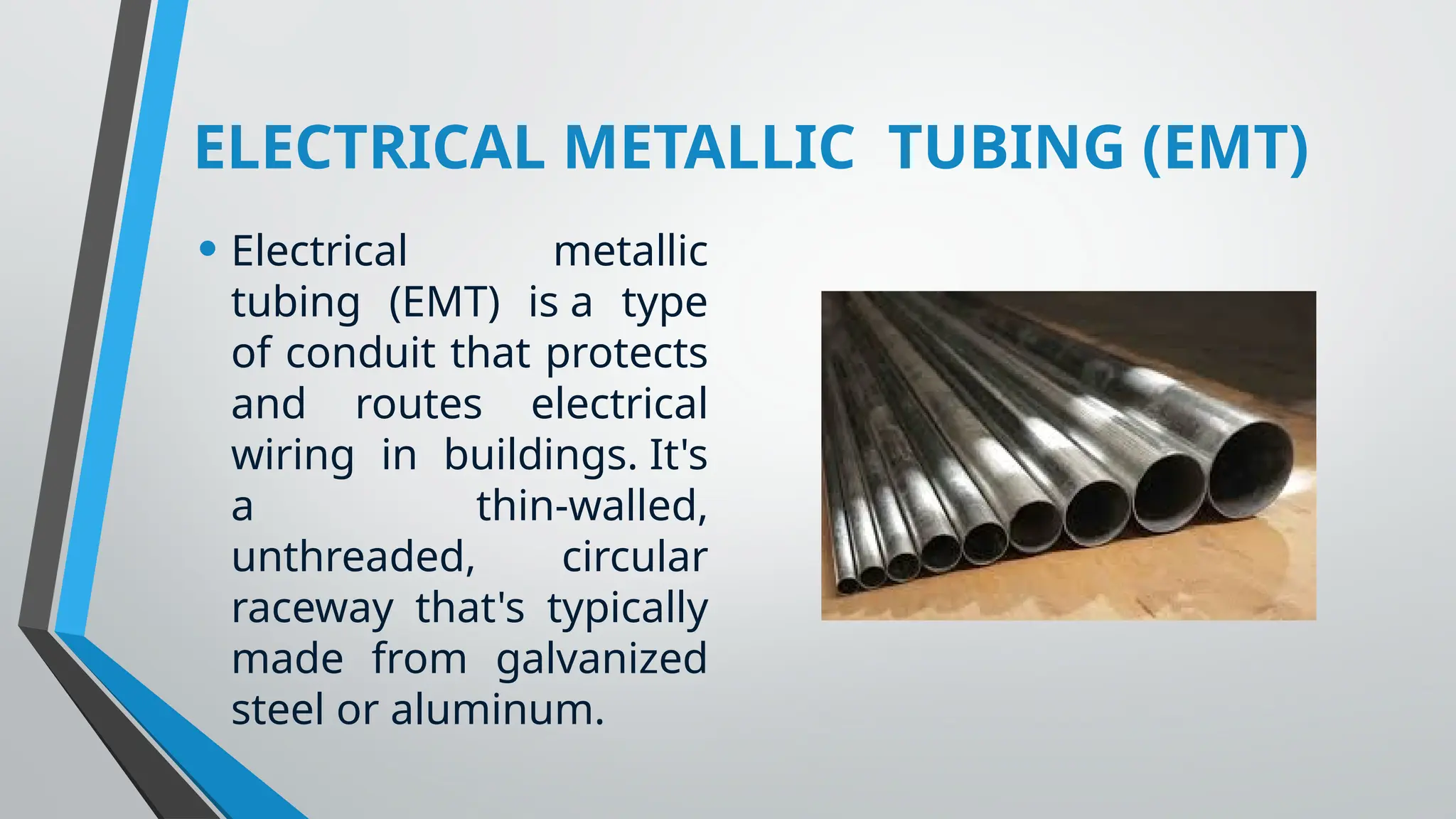
ELECTRICAL METALLIC TUBING (EMT)
• Electrical metallic
tubing (EMT) is a type
of conduit that protects
and routes electrical
wiring in buildings. It's
a thin-walled,
unthreaded, circular
raceway that's typically
made from galvanized
steel or aluminum.
RIGID STEEL CONDUIT (RSC)
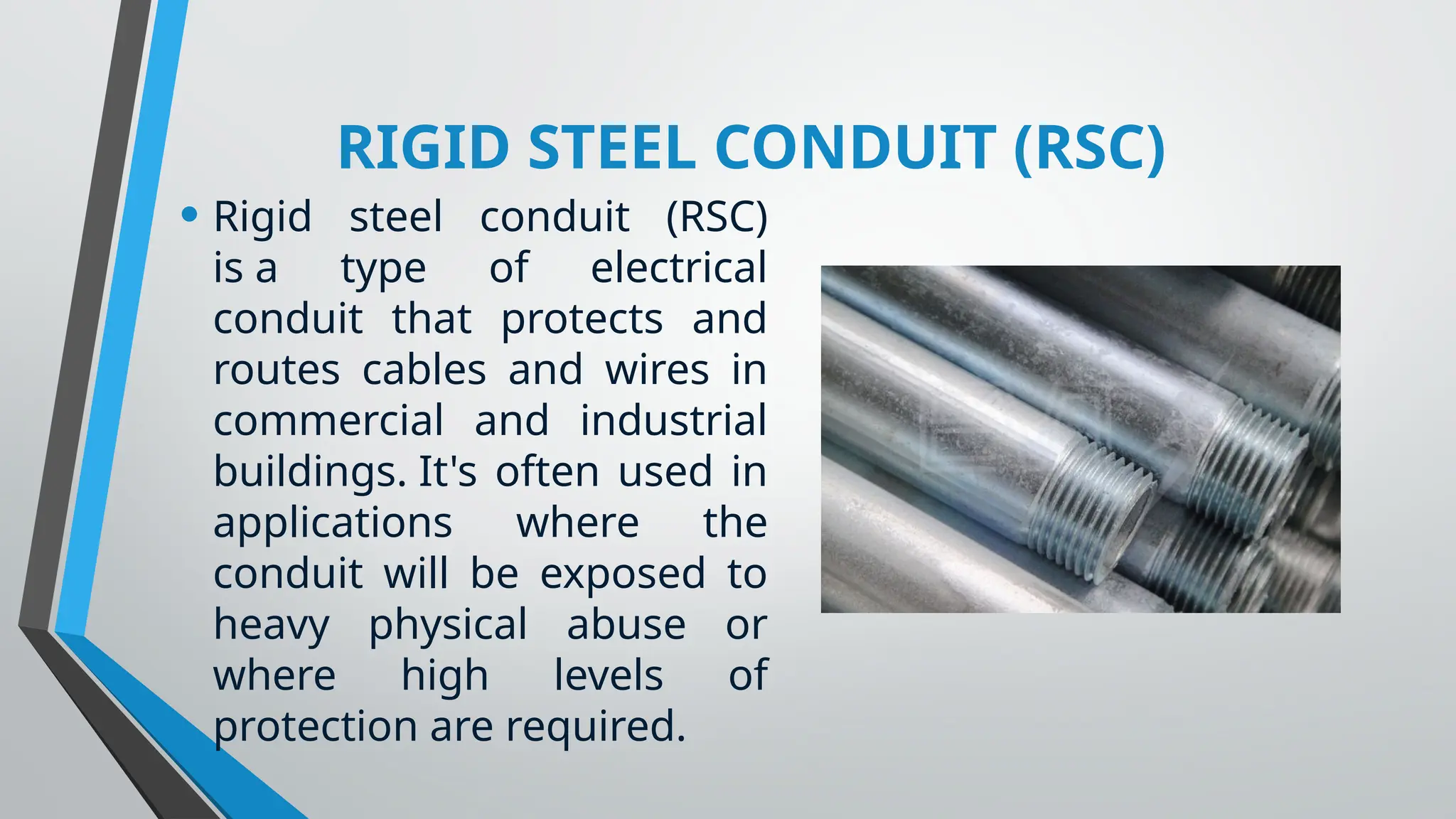
• Rigid steel conduit (RSC)
is a type of electrical
conduit that protects and
routes cables and wires in
commercial and industrial
buildings. It's often used in
applications where the
conduit will be exposed to
heavy physical abuse or
where high levels of
protection are required.
INTERMEDIATE METAL CONDUIT (IMC)
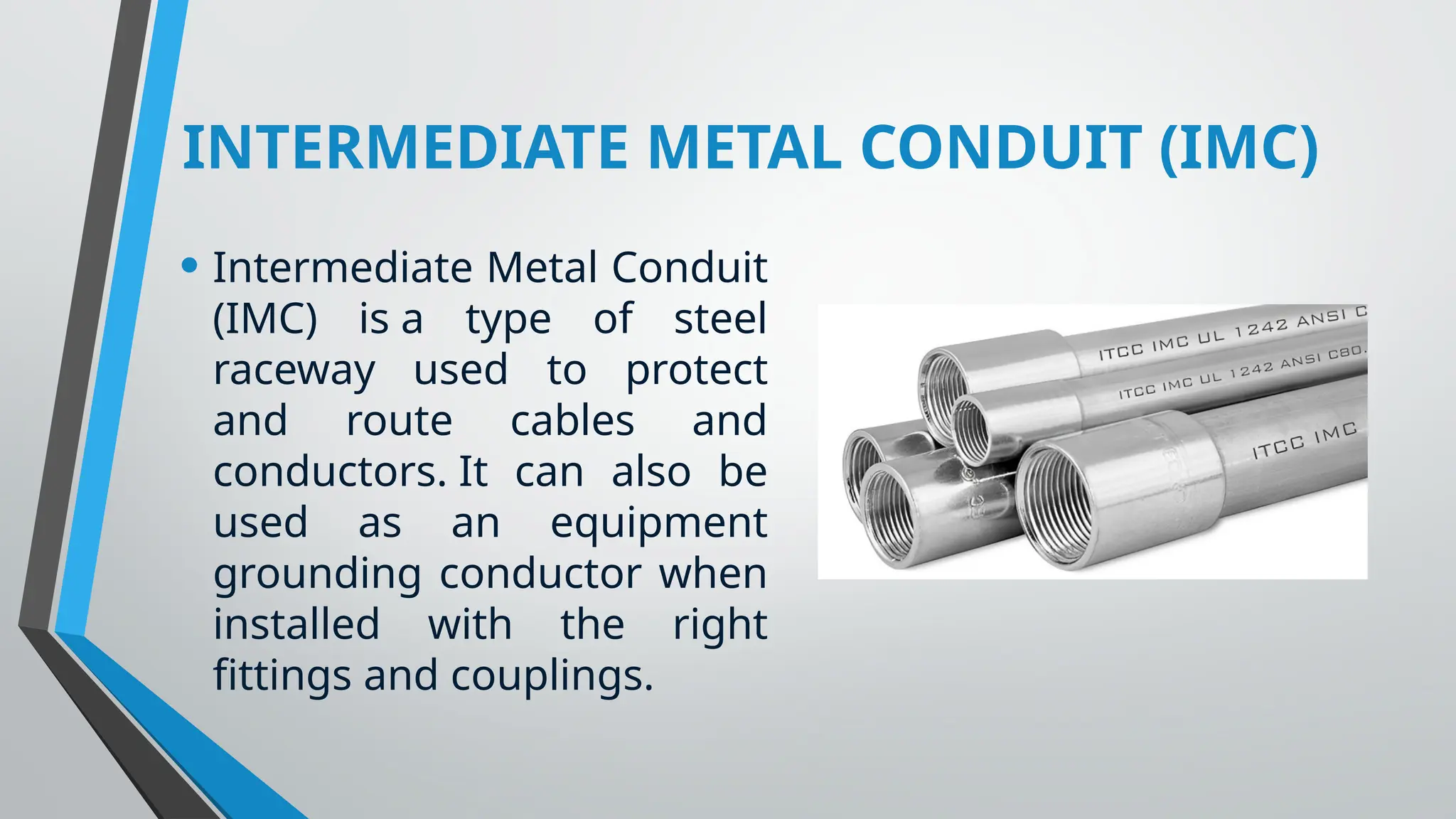
• Intermediate Metal Conduit
(IMC) is a type of steel
raceway used to protect
and route cables and
conductors. It can also be
used as an equipment
grounding conductor when
installed with the right
fittings and couplings.
RIGID METAL CONDUIT (RMC)
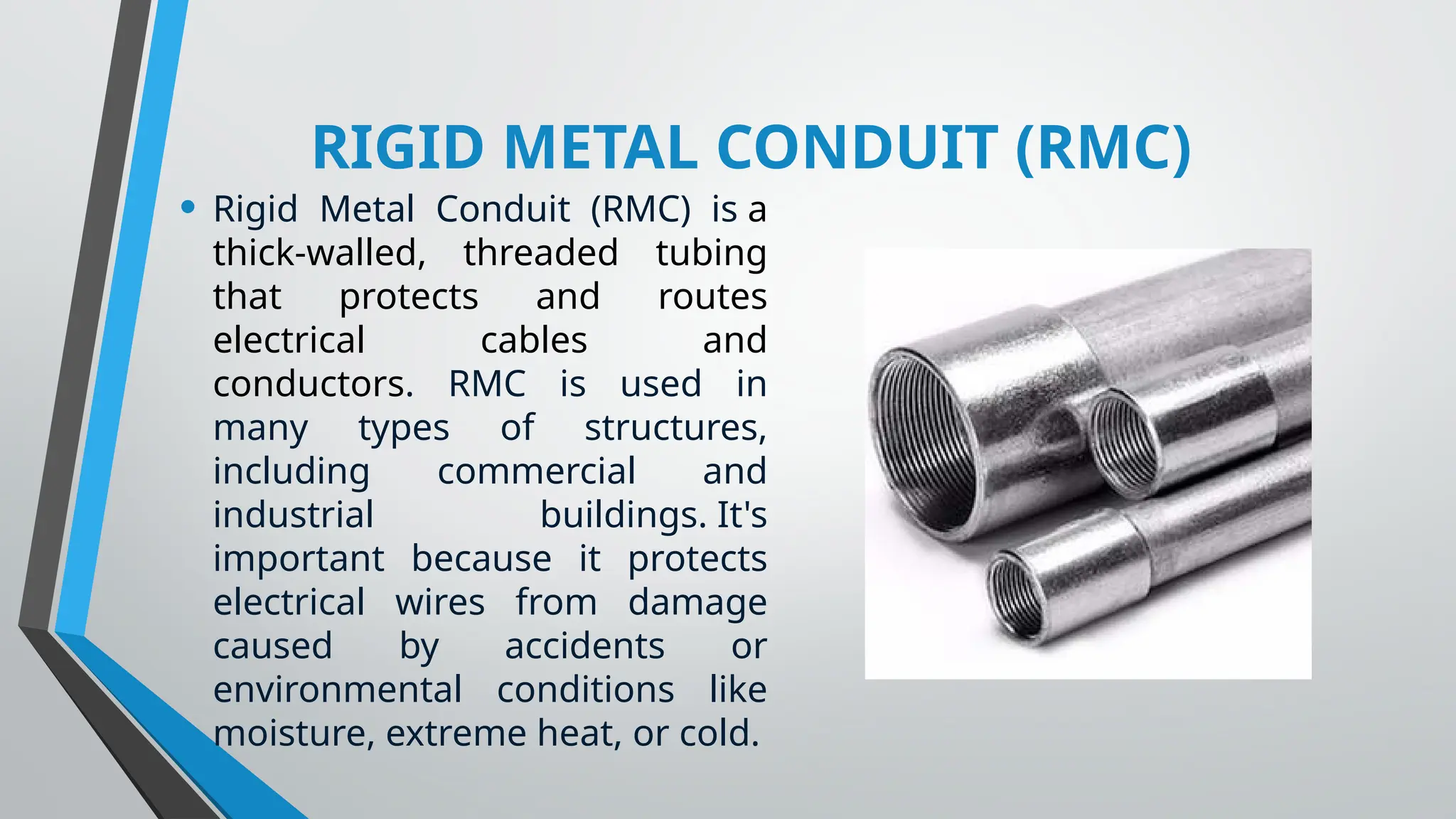
• Rigid Metal Conduit (RMC) is a
thick-walled, threaded tubing
that protects and routes
electrical cables and
conductors. RMC is used in
many types of structures,
including commercial and
industrial buildings. It's
important because it protects
electrical wires from damage
caused by accidents or
environmental conditions like
moisture, extreme heat, or cold.
FLEXIBLE METAL CONDUIT (FMC)
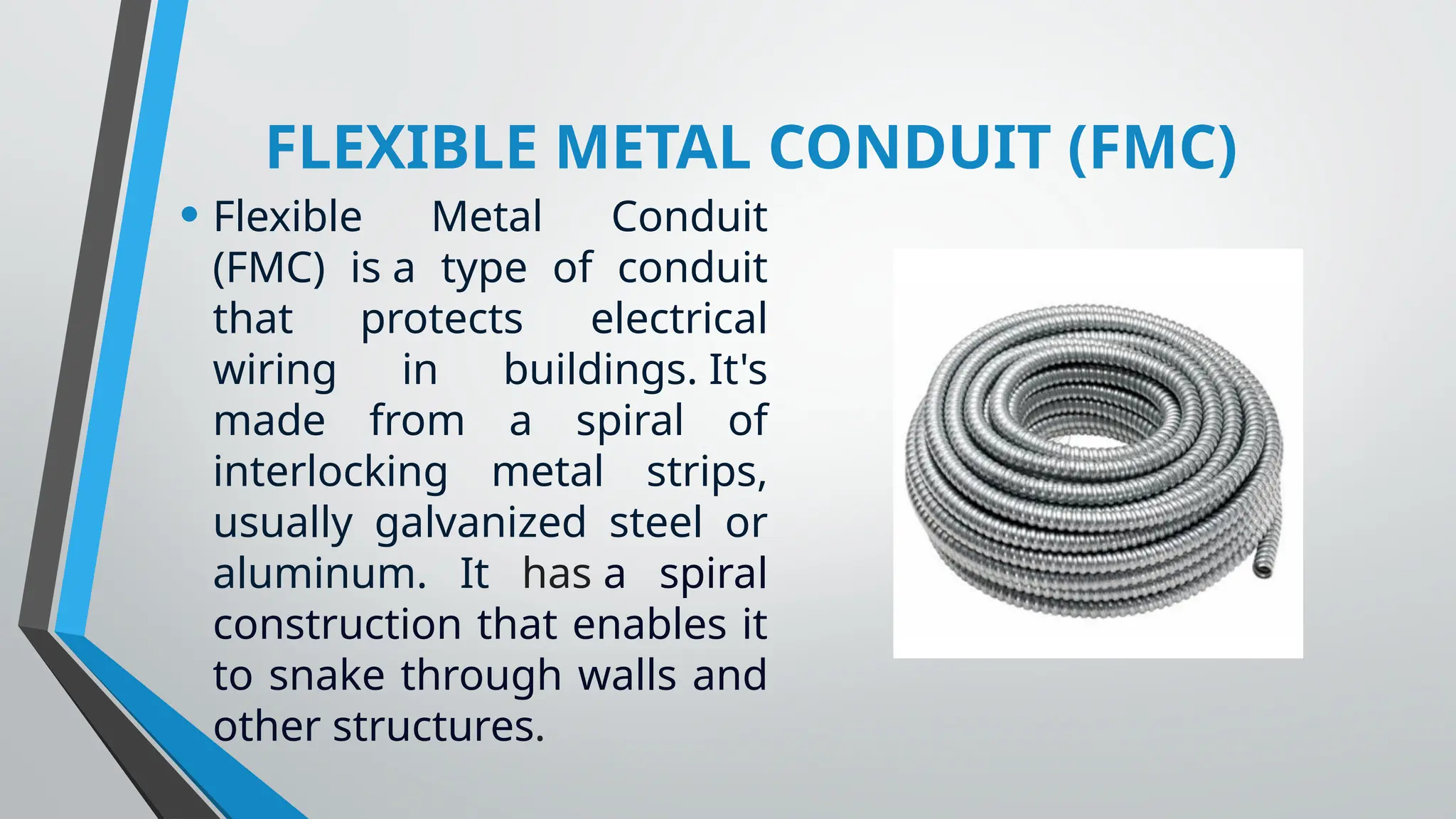
• Flexible Metal Conduit
(FMC) is a type of conduit
that protects electrical
wiring in buildings. It's
made from a spiral of
interlocking metal strips,
usually galvanized steel or
aluminum. It has a spiral
construction that enables it
to snake through walls and
other structures.
PVC (POLYVINYL CHLORIDE)
• Polyvinyl chloride (PVC)
conduit is a type of conduit
made from a synthetic
polymer that is commonly
used in electrical
installations. It is used to
protect power,
telecommunications, and
other types of cabling and
conductors.
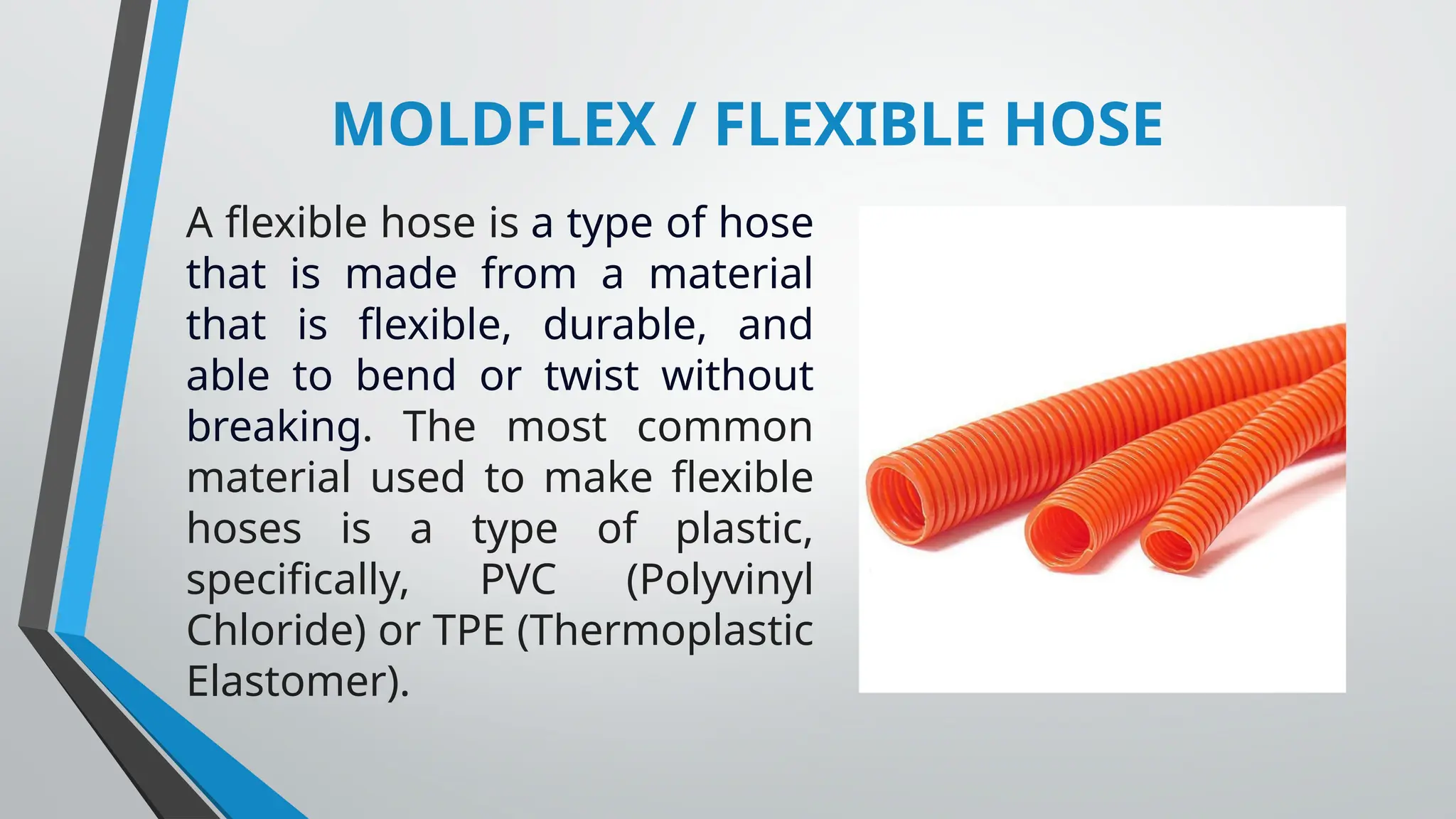
MOLDFLEX / FLEXIBLE HOSE
A flexible hose is a type of hose
that is made from a material
that is flexible, durable, and
able to bend or twist without
breaking. The most common
material used to make flexible
hoses is a type of plastic,
specifically, PVC (Polyvinyl
Chloride) or TPE (Thermoplastic
Elastomer).
THANK YOU

CONDUITS (METALLIC AND NON-METALLIC CONDUITS.pptx

  • 1.
  • 2.
    OBJECTIVE By the endof the lesson, you will be able to identify the different types of conduits and their purposes.
  • 3.
    WHAT IS CONDUIT? Electricalconduit is a tube-like structure that protects and houses electrical wiring in buildings and other structures. It can be rigid or flexible, and is made from a variety of materials, including metal, plastic, and fired clay.
  • 4.
    WHAT IS CONDUITUSED FOR? • Protecting wires from damage • Reducing interference • Cleaning up the area
  • 5.
    TYPES OF CONDUITS MetallicConduit • EMT – Electrical Metallic Tubing • RSC – Rigid Steel Conduit • IMC – Intermediate Metal Conduit • RMC – Rigid Metal Conduit • FMC – Flexible Metal Conduit Non- Metallic Conduit • PVC - Polyvinyl Chloride • Moldflex / Flexible Hose
  • 6.
    ELECTRICAL METALLIC TUBING(EMT) • Electrical metallic tubing (EMT) is a type of conduit that protects and routes electrical wiring in buildings. It's a thin-walled, unthreaded, circular raceway that's typically made from galvanized steel or aluminum.
  • 7.
    RIGID STEEL CONDUIT(RSC) • Rigid steel conduit (RSC) is a type of electrical conduit that protects and routes cables and wires in commercial and industrial buildings. It's often used in applications where the conduit will be exposed to heavy physical abuse or where high levels of protection are required.
  • 8.
    INTERMEDIATE METAL CONDUIT(IMC) • Intermediate Metal Conduit (IMC) is a type of steel raceway used to protect and route cables and conductors. It can also be used as an equipment grounding conductor when installed with the right fittings and couplings.
  • 9.
    RIGID METAL CONDUIT(RMC) • Rigid Metal Conduit (RMC) is a thick-walled, threaded tubing that protects and routes electrical cables and conductors. RMC is used in many types of structures, including commercial and industrial buildings. It's important because it protects electrical wires from damage caused by accidents or environmental conditions like moisture, extreme heat, or cold.
  • 10.
    FLEXIBLE METAL CONDUIT(FMC) • Flexible Metal Conduit (FMC) is a type of conduit that protects electrical wiring in buildings. It's made from a spiral of interlocking metal strips, usually galvanized steel or aluminum. It has a spiral construction that enables it to snake through walls and other structures.
  • 11.
    PVC (POLYVINYL CHLORIDE) •Polyvinyl chloride (PVC) conduit is a type of conduit made from a synthetic polymer that is commonly used in electrical installations. It is used to protect power, telecommunications, and other types of cabling and conductors.
  • 12.
    MOLDFLEX / FLEXIBLEHOSE A flexible hose is a type of hose that is made from a material that is flexible, durable, and able to bend or twist without breaking. The most common material used to make flexible hoses is a type of plastic, specifically, PVC (Polyvinyl Chloride) or TPE (Thermoplastic Elastomer).
  • 13.