OTIC PREPARATIONS
COMPOUNDING & MANUFACTURING
              II
       Presentation of
       Luisabel Novelo
Otic Preparation
• From Greek ōtikos;
• Of, relating to, or located near the ear;
  auricular.
• Otic preparations are pharmaceutical products
  (drugs) that are used inside, outsides, or
  around the ears to exert therapeutic effect.
• In general, otic preparation are products
  applied to or in the ear to treat conditions of
  the external and middle ear.
Ear Physiology
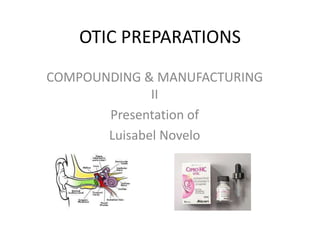
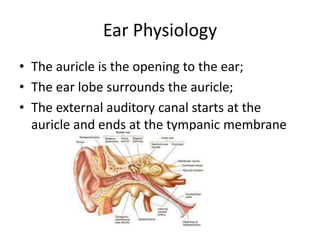
• The auricle is the opening to the ear;
• The ear lobe surrounds the auricle;
• The external auditory canal starts at the
  auricle and ends at the tympanic membrane
Ear Wax
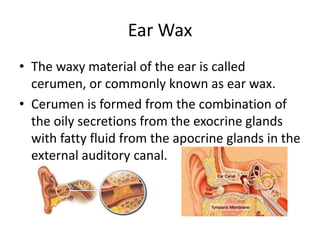
• The waxy material of the ear is called
  cerumen, or commonly known as ear wax.
• Cerumen is formed from the combination of
  the oily secretions from the exocrine glands
  with fatty fluid from the apocrine glands in the
  external auditory canal.
• Cerumen contains lysosomes, and enzyme
  that inhibits bacterial growth.
• The cerumen helps in the
  lubrication of the ear canal.
• Cerumen traps dust and other
  materials from reaching the inner ear.
• Cerumen can also decreasing auditory sounds,
  thus requiring removal.
Otic Preparations
• Otic preparations are used to treat conditions
  of the external and inner ear.
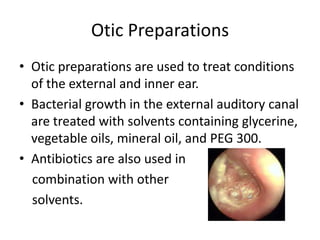
• Bacterial growth in the external auditory canal
  are treated with solvents containing glycerine,
  vegetable oils, mineral oil, and PEG 300.
• Antibiotics are also used in
  combination with other
  solvents.
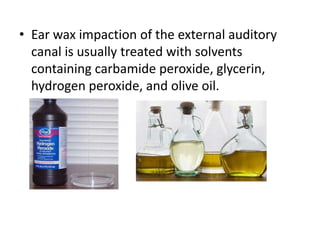
• Ear wax impaction of the external auditory
  canal is usually treated with solvents
  containing carbamide peroxide, glycerin,
  hydrogen peroxide, and olive oil.
• Swimmer’s ear is a condition whereby water
  has become trapped between the cerumen
  impaction and the tympanic membrane.
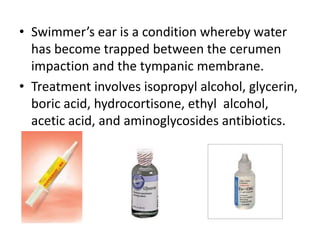
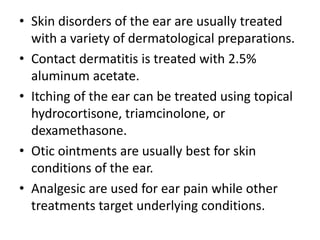
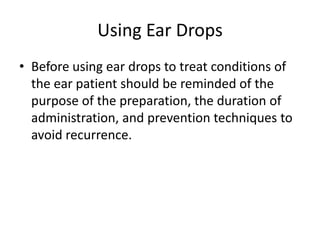
• Treatment involves isopropyl alcohol, glycerin,
  boric acid, hydrocortisone, ethyl alcohol,
  acetic acid, and aminoglycosides antibiotics.
• Skin disorders of the ear are usually treated
  with a variety of dermatological preparations.
• Contact dermatitis is treated with 2.5%
  aluminum acetate.
• Itching of the ear can be treated using topical
  hydrocortisone, triamcinolone, or
  dexamethasone.
• Otic ointments are usually best for skin
  conditions of the ear.
• Analgesic are used for ear pain while other
  treatments target underlying conditions.
Using Ear Drops
• Before using ear drops to treat conditions of
  the ear patient should be reminded of the
  purpose of the preparation, the duration of
  administration, and prevention techniques to
  avoid recurrence.

Types of Otic Preparations

  • 1.
    OTIC PREPARATIONS COMPOUNDING &MANUFACTURING II Presentation of Luisabel Novelo
  • 2.
    Otic Preparation • FromGreek ōtikos; • Of, relating to, or located near the ear; auricular. • Otic preparations are pharmaceutical products (drugs) that are used inside, outsides, or around the ears to exert therapeutic effect. • In general, otic preparation are products applied to or in the ear to treat conditions of the external and middle ear.
  • 3.
    Ear Physiology • Theauricle is the opening to the ear; • The ear lobe surrounds the auricle; • The external auditory canal starts at the auricle and ends at the tympanic membrane
  • 4.
    Ear Wax • Thewaxy material of the ear is called cerumen, or commonly known as ear wax. • Cerumen is formed from the combination of the oily secretions from the exocrine glands with fatty fluid from the apocrine glands in the external auditory canal.
  • 5.
    • Cerumen containslysosomes, and enzyme that inhibits bacterial growth. • The cerumen helps in the lubrication of the ear canal. • Cerumen traps dust and other materials from reaching the inner ear. • Cerumen can also decreasing auditory sounds, thus requiring removal.
  • 6.
    Otic Preparations • Oticpreparations are used to treat conditions of the external and inner ear. • Bacterial growth in the external auditory canal are treated with solvents containing glycerine, vegetable oils, mineral oil, and PEG 300. • Antibiotics are also used in combination with other solvents.
  • 7.
    • Ear waximpaction of the external auditory canal is usually treated with solvents containing carbamide peroxide, glycerin, hydrogen peroxide, and olive oil.
  • 8.
    • Swimmer’s earis a condition whereby water has become trapped between the cerumen impaction and the tympanic membrane. • Treatment involves isopropyl alcohol, glycerin, boric acid, hydrocortisone, ethyl alcohol, acetic acid, and aminoglycosides antibiotics.
  • 9.
    • Skin disordersof the ear are usually treated with a variety of dermatological preparations. • Contact dermatitis is treated with 2.5% aluminum acetate. • Itching of the ear can be treated using topical hydrocortisone, triamcinolone, or dexamethasone. • Otic ointments are usually best for skin conditions of the ear. • Analgesic are used for ear pain while other treatments target underlying conditions.
  • 10.
    Using Ear Drops •Before using ear drops to treat conditions of the ear patient should be reminded of the purpose of the preparation, the duration of administration, and prevention techniques to avoid recurrence.