Training for strength - types of resistance training  (isometric, isotonic, isokinetic)
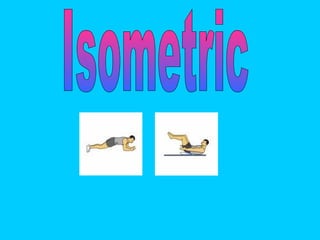
Isometric
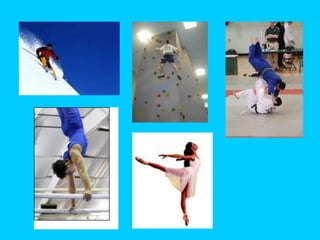
Isometric  resistance  training involves contracting a muscle against a resistance that does not move Isometric muscle  contractions  result in a force being developed in the muscle but the muscle fibres do not change in length Because there is no change in  muscle length , isometric contractions are specific to particular joint angles Therefore coaches need to select  angles  that are specific to the sport for which the person is training  This type of training is particularly useful for sports that require isometric contractions – such as  downhill skiing, judo, gymnastics, dancing , rock climbing and any other sports that require the same position to be held for some time  Isometric
 
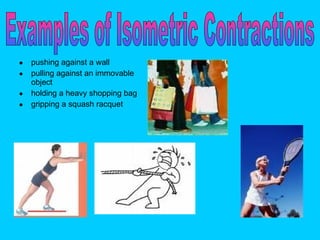
pushing against a wall pulling against an immovable object holding a heavy shopping bag  gripping a squash racquet  Examples of Isometric Contractions
Cheap Uses no expensive equipment Specific muscle weaknesses can be developed (you can focus on weak muscles)  Relatively few injuries occur using this method  Is useful for developing strength in specific areas Advantages of Isometric Contractions
Isometric contractions develop strength at one angle only, so it is fairly time consuming to develop strength at a number of angles in the one joint  Disadvantages of Isometric Contractions
Isotonic
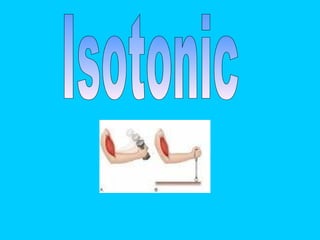
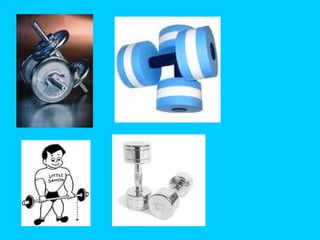
Isotonic resistant training occurs when the  weight  remains constant throughout the range of movement  In Isotonic Contractions the muscle length changes as the weight is taken through the full  range of movement  and tension is developed within the muscle  Isotonic Contractions are also known as  dynamic  contractions  An isotonic contraction revolves around the use of repetition maximum which is the maximum  load  a muscle can lift a given number of times before becoming fatigued  During an isotonic contraction the weight does not change as it is moved through a range of motion, only the  tension  of the muscle changes  This is the most  common  form of strength training which uses free weights such as barbells, dumbbells Isotonic Contractions can be  eccentric  or concentric   Isotonic Isotonic
 
Eccentric Contractions occur when tension is developed in the muscle as the muscle lengthens during contraction  An example would be if you are moving in the same direction as the weight or resistance and you slow its passage so that it moves slower than it would naturally with gravity.  Eccentric Contractions
Contractions occur when tension is developed within the muscle as the muscle shortens during contraction   An example is if you are moving against the weight or resistance. E.g. the weight wants to fall to the floor but you are lifting it up.   Concentric Contractions
easy to do cheap can imitate movements specific to a sport so overload is easy to administer  the Repetition Maximum can be altered along with the number of repetitions and speed of lift to develop different types of strength   Advantages of Isotonic Contractions
During an isotonic contraction the muscle doesn’t work through a full range of motion poor technique can lead to injury  Disadvantages of Isotonic Contractions
Isokinetic
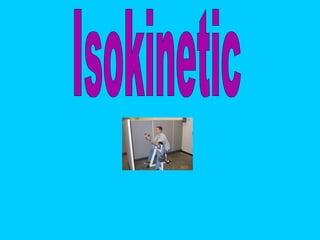
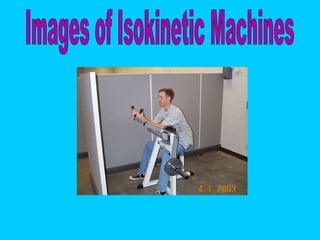
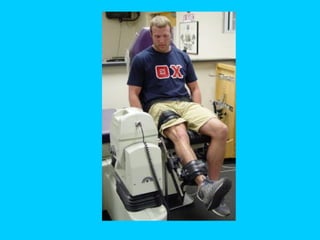
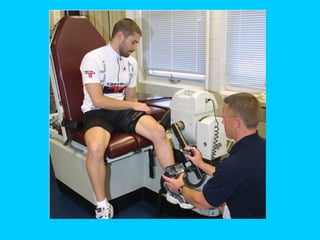
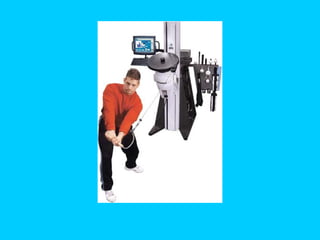
Isokinetic  resistance  training allows a person to work at a constant speed against a resistance or weight that changes as the muscular force changes throughout the movement range  This method of strength training uses  machines  such as nautilus designed to develop strength through a full range of motion These machines ensure that the muscles are worked  evenly  at all stages of the movement  Isokinetic
Isokinetic Contractions develop strength through a full range of motion The machines can vary the level of resistance and control the speed of movement so as to move closer to the actions required in a particular sport  strength is developed relatively safely commonly used in rehabilitation Advantages of Isokinetic Contractions
machines are expensive does not develop ligament and tendon strength as much as isotonic training because the machines provide the stability of the resistance  Disadvantages of Isokinetic Contractions
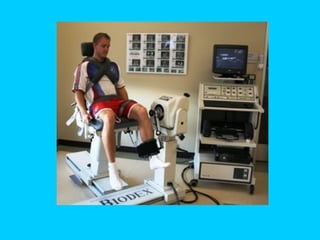
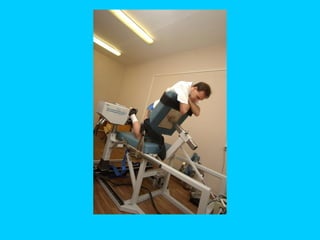
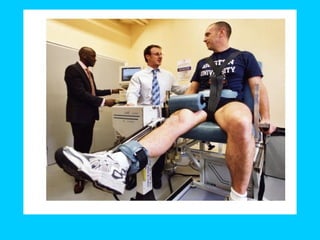
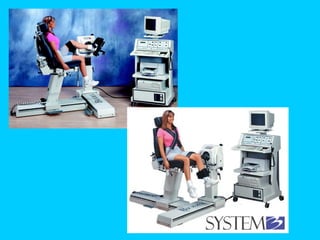
Images of Isokinetic Machines


http://www.btetech.com/primusrs.htm

strength PDHPE

  • 1.
    Training for strength- types of resistance training (isometric, isotonic, isokinetic)
  • 2.
  • 3.
    Isometric resistance training involves contracting a muscle against a resistance that does not move Isometric muscle contractions result in a force being developed in the muscle but the muscle fibres do not change in length Because there is no change in muscle length , isometric contractions are specific to particular joint angles Therefore coaches need to select angles that are specific to the sport for which the person is training This type of training is particularly useful for sports that require isometric contractions – such as downhill skiing, judo, gymnastics, dancing , rock climbing and any other sports that require the same position to be held for some time Isometric
  • 4.
  • 5.
    pushing against awall pulling against an immovable object holding a heavy shopping bag gripping a squash racquet Examples of Isometric Contractions
  • 6.
    Cheap Uses noexpensive equipment Specific muscle weaknesses can be developed (you can focus on weak muscles) Relatively few injuries occur using this method Is useful for developing strength in specific areas Advantages of Isometric Contractions
  • 7.
    Isometric contractions developstrength at one angle only, so it is fairly time consuming to develop strength at a number of angles in the one joint Disadvantages of Isometric Contractions
  • 8.
  • 9.
    Isotonic resistant trainingoccurs when the weight remains constant throughout the range of movement In Isotonic Contractions the muscle length changes as the weight is taken through the full range of movement and tension is developed within the muscle Isotonic Contractions are also known as dynamic contractions An isotonic contraction revolves around the use of repetition maximum which is the maximum load a muscle can lift a given number of times before becoming fatigued During an isotonic contraction the weight does not change as it is moved through a range of motion, only the tension of the muscle changes This is the most common form of strength training which uses free weights such as barbells, dumbbells Isotonic Contractions can be eccentric or concentric Isotonic Isotonic
  • 10.
  • 11.
    Eccentric Contractions occurwhen tension is developed in the muscle as the muscle lengthens during contraction An example would be if you are moving in the same direction as the weight or resistance and you slow its passage so that it moves slower than it would naturally with gravity. Eccentric Contractions
  • 12.
    Contractions occur whentension is developed within the muscle as the muscle shortens during contraction An example is if you are moving against the weight or resistance. E.g. the weight wants to fall to the floor but you are lifting it up. Concentric Contractions
  • 13.
    easy to docheap can imitate movements specific to a sport so overload is easy to administer the Repetition Maximum can be altered along with the number of repetitions and speed of lift to develop different types of strength Advantages of Isotonic Contractions
  • 14.
    During an isotoniccontraction the muscle doesn’t work through a full range of motion poor technique can lead to injury Disadvantages of Isotonic Contractions
  • 15.
  • 16.
    Isokinetic resistance training allows a person to work at a constant speed against a resistance or weight that changes as the muscular force changes throughout the movement range This method of strength training uses machines such as nautilus designed to develop strength through a full range of motion These machines ensure that the muscles are worked evenly at all stages of the movement Isokinetic
  • 17.
    Isokinetic Contractions developstrength through a full range of motion The machines can vary the level of resistance and control the speed of movement so as to move closer to the actions required in a particular sport strength is developed relatively safely commonly used in rehabilitation Advantages of Isokinetic Contractions
  • 18.
    machines are expensivedoes not develop ligament and tendon strength as much as isotonic training because the machines provide the stability of the resistance Disadvantages of Isokinetic Contractions
  • 19.
  • 20.
  • 21.
  • 22.
  • 23.
  • 24.
  • 25.
  • 26.
  • 27.
  • 28.