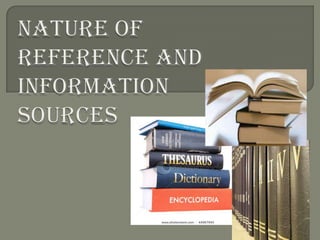
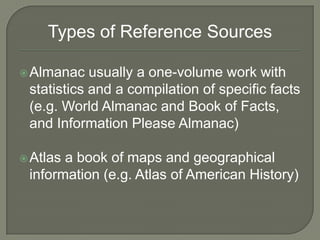
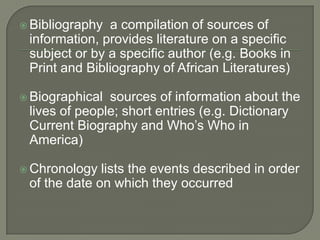
An  information source is a source
 of information for somebody, anything
 that might inform a person about
 something or provide knowledge to
 somebody. Information sources may
 be observations, people, speeches,
 documents, pictures, organizations.
Types of Reference Sources

 Almanac   usually a one-volume work with
 statistics and a compilation of specific facts
 (e.g. World Almanac and Book of Facts,
 and Information Please Almanac)

 Atlasa book of maps and geographical
 information (e.g. Atlas of American History)
 Bibliography a compilation of sources of
 information, provides literature on a specific
 subject or by a specific author (e.g. Books in
 Print and Bibliography of African Literatures)

 Biographical sources of information about the
 lives of people; short entries (e.g. Dictionary
 Current Biography and Who’s Who in
 America)

 Chronology  lists the events described in order
 of the date on which they occurred
 Concordance   an alphabetical listing of
 keywords or phrases found the in work of
 an author or work in a collection of writings
 (e.g. Topical Bible Concordance)

 Dictionary defines words and terms;
  confirms spelling, definition, and
  pronunciation; used to find out how words
  are used; helps to locate synonyms and
(e.g. Webster’s Dictionary)
 Encyclopedia covers knowledge or branches of
 knowledge in a comprehensive, but summary
 fashion; useful for providing facts and giving a
 broad survey of a topic; written by specialists
 (e.g. World Book Encyclopedia)

 Gazetteer a dictionary of geographical places
 (no maps) (e.g. Webster’s New Geographical
 Dictionary)

 Guidebook  provides detailed descriptions of
 places; intended primarily for the traveler;
 geographical facts plus maps (e.g. Great Lakes
 Guidebook)
 Handbook     treats one broad subject in
  brief, or gives a brief survey of a subject
  (e.g.and book of American Popular
  Culture)
 Index lists citations to periodical articles,
  book, and proceedings, and tells wheret
  hey can be found (e.g. Readers’ Guide to
  Periodical Literature and New York Times
  Index)
 Manuala specific work that tells how to do
 something, such as how something
 operates; descriptions of the inner
 workings of an organization (e.g. MLA
 Handbook, and Broadcast News Manual of
 Style)

 Yearbook  covers the trends and events of
 the previous year; may be general in
 coverage, limited to one subject, or
 restricted to one geographical area (e.g.
 State of America’s Children Yearbook)
 Directory lists names and addresses of
 individuals, companies, organizations, and
 institutions (e.g. Encyclopedia of
 Associations)
Primary  source is a term used in a
 number of disciplines to describe
 source material that is closest to the
 person, information, period, or idea
 being studied.
Secondary         Sources
A    secondary source is information about
    primary, or original, information, which
    usually has been modified, selected, or
    rearranged for a specific purpose or
    audience.

    Examples include biographies, histories,
    monographs, review articles, textbooks,
    and any index or bibliography used to
    locate primary sources.
Tertiary   Sources

 These   consist of information, which is a
 distillation and collection of primary and
 secondary sources. Twice removed from
 the original, they include
 encyclopedias, fact books and
 almanacs, guides and handbooks. Some
 secondary sources such as indexing and
 abstracting tools can also be considered
 tertiary sources.

Reference sources

  • 2.
    An informationsource is a source of information for somebody, anything that might inform a person about something or provide knowledge to somebody. Information sources may be observations, people, speeches, documents, pictures, organizations.
  • 3.
    Types of ReferenceSources  Almanac usually a one-volume work with statistics and a compilation of specific facts (e.g. World Almanac and Book of Facts, and Information Please Almanac)  Atlasa book of maps and geographical information (e.g. Atlas of American History)
  • 4.
     Bibliography acompilation of sources of information, provides literature on a specific subject or by a specific author (e.g. Books in Print and Bibliography of African Literatures)  Biographical sources of information about the lives of people; short entries (e.g. Dictionary Current Biography and Who’s Who in America)  Chronology lists the events described in order of the date on which they occurred
  • 5.
     Concordance an alphabetical listing of keywords or phrases found the in work of an author or work in a collection of writings (e.g. Topical Bible Concordance)  Dictionary defines words and terms; confirms spelling, definition, and pronunciation; used to find out how words are used; helps to locate synonyms and (e.g. Webster’s Dictionary)
  • 6.
     Encyclopedia coversknowledge or branches of knowledge in a comprehensive, but summary fashion; useful for providing facts and giving a broad survey of a topic; written by specialists (e.g. World Book Encyclopedia)  Gazetteer a dictionary of geographical places (no maps) (e.g. Webster’s New Geographical Dictionary)  Guidebook provides detailed descriptions of places; intended primarily for the traveler; geographical facts plus maps (e.g. Great Lakes Guidebook)
  • 7.
     Handbook treats one broad subject in brief, or gives a brief survey of a subject (e.g.and book of American Popular Culture)  Index lists citations to periodical articles, book, and proceedings, and tells wheret hey can be found (e.g. Readers’ Guide to Periodical Literature and New York Times Index)
  • 8.
     Manuala specificwork that tells how to do something, such as how something operates; descriptions of the inner workings of an organization (e.g. MLA Handbook, and Broadcast News Manual of Style)  Yearbook covers the trends and events of the previous year; may be general in coverage, limited to one subject, or restricted to one geographical area (e.g. State of America’s Children Yearbook)
  • 9.
     Directory listsnames and addresses of individuals, companies, organizations, and institutions (e.g. Encyclopedia of Associations)
  • 10.
    Primary sourceis a term used in a number of disciplines to describe source material that is closest to the person, information, period, or idea being studied.
  • 11.
    Secondary Sources A secondary source is information about primary, or original, information, which usually has been modified, selected, or rearranged for a specific purpose or audience.  Examples include biographies, histories, monographs, review articles, textbooks, and any index or bibliography used to locate primary sources.
  • 12.
    Tertiary Sources  These consist of information, which is a distillation and collection of primary and secondary sources. Twice removed from the original, they include encyclopedias, fact books and almanacs, guides and handbooks. Some secondary sources such as indexing and abstracting tools can also be considered tertiary sources.