1
Soil
 Major part of the natural environment,
 Vital to the existence of life on the planet.
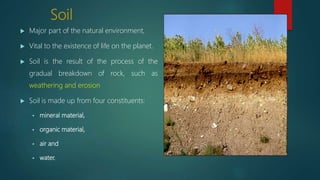
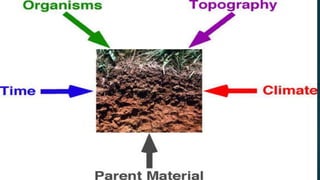
 Soil is the result of the process of the
gradual breakdown of rock, such as
weathering and erosion
 Soil is made up from four constituents:
 mineral material,
 organic material,
 air and
 water.
2
Soil Profile
 The soil profile is one of the most important concepts in soil science.
 Soil profile is the term used for the vertical section of mature soil generally up to the depth of 2 meter
or up to the parent material to show the different layers or horizons of soil for study of soil in its
undisturbed state.
 It is made up of a succession of horizontal layer or Horizons.
 Each of which varies in
• Thickness
• Structure
• Consistency
• Porosity
• Acidity
• composition
3
4
Soil
Structure
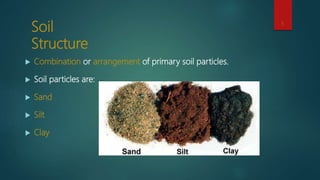
 Combination or arrangement of primary soil particles.
 Soil particles are:
 Sand
 Silt
 Clay
5
Soil
Composition
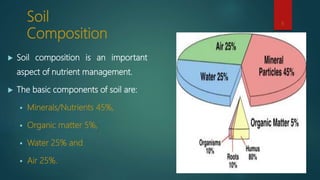
 Soil composition is an important
aspect of nutrient management.
 The basic components of soil are:
 Minerals/Nutrients 45%,
 Organic matter 5%,
 Water 25% and
 Air 25%.
6
7
Soil Colour
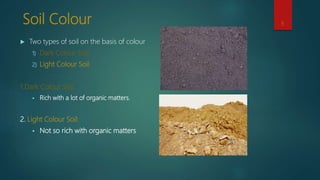
 Two types of soil on the basis of colour
1) Dark Colour Soil
2) Light Colour Soil
1.Dark Colour Soil:
 Rich with a lot of organic matters.
2. Light Colour Soil:
 Not so rich with organic matters
8
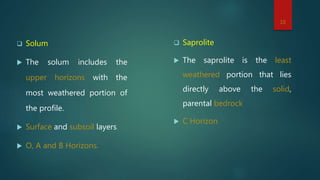
Components of the Soil Profile
 A soil horizon makes up a distinct layer of soil.
 The soil profile extends from the soil surface to the parent
rock material.
 The regolith includes all of the weathered material within
the profile. The regolith has two components:
Solum
Saprolite / regolith
9
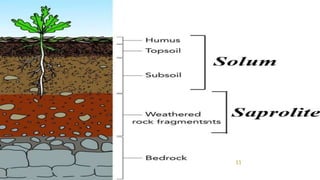
 Solum
 The solum includes the
upper horizons with the
most weathered portion of
the profile.
 Surface and subsoil layers.
 O, A and B Horizons.
 Saprolite
 The saprolite is the least
weathered portion that lies
directly above the solid,
parental bedrock
 C Horizon
10
11
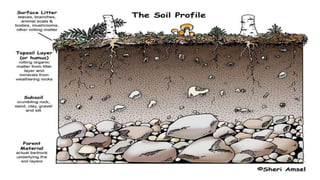
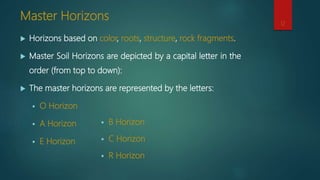
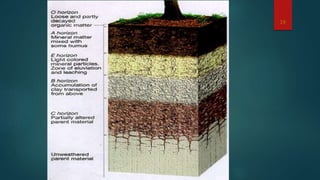
Master Horizons
 Horizons based on color, roots, structure, rock fragments.
 Master Soil Horizons are depicted by a capital letter in the
order (from top to down):
 The master horizons are represented by the letters:
 O Horizon
 A Horizon
 E Horizon
 B Horizon
 C Horizon
 R Horizon
12
O Horizon
 Surface horizon that is comprised of organic material at
various stages of decomposition.
 Surface-layer, at depths of 0-5 cm.
 Dark in color, soft in texture.
 Leaf litter – leaves, needles, twigs, moss, lichens that are
not decomposing.
 Humus - rich organic material of plant and animal origin
in a stage of decomposition
13
A Horizon
 “Topsoil” or “Biomantle” Horizon.
 largely consists of minerals (sand, silt, and clay)
 Topmost layer of mineral soil, at depths of 5-10 cm.
 Some humus present, darker in color than layers below.
 Biomantle - most biological productive layer; earthworms,
fungi, and bacteria live this layer.
 Smallest and finest soil particles.
14
E Horizon
 The “Leaching Layer” Horizon
 Small layer between A & B horizons
 At depths of 10-15 cm
 Light in color, mainly sand & silt
 Poor mineral and clay content due to leaching – the loss of water-retaining plant
nutrients to the water table
 Soil particles larger than in A horizon but smaller than in B horizon.
 Also known as Zone of “eluviation”
15
B Horizon
 The “Subsoil” Horizon.
 At depths of 10-30 cm.
 Rich in clay and minerals like Fe & Al.
 Some organic material may reach here through leaching.
 Plant roots can extend into this layer
 Red/brown in color due to oxides of Fe & clay.
 Also known as Zone of “illuviation”
16
C Horizon
 The “Saprolite” Horizon or regolith.
 At depths of 30-48 cm.
 Made up of large rocks or lumps of partially broken
bedrock.
 Least affected by weathering and have changed the least
since their origin.
 Devoid of organic matter due to it being so far down in
the soil profile.
17
R Horizon
 The “Bedrock” Horizon.
 At depths of 48+ cm.
 Deepest soil horizon in the soil profile.
 Continuous mass of bedrock.
 Colors are those of the original rock of the area.
18
19

Soil profile

  • 1.
  • 2.
    Soil  Major partof the natural environment,  Vital to the existence of life on the planet.  Soil is the result of the process of the gradual breakdown of rock, such as weathering and erosion  Soil is made up from four constituents:  mineral material,  organic material,  air and  water. 2
  • 3.
    Soil Profile  Thesoil profile is one of the most important concepts in soil science.  Soil profile is the term used for the vertical section of mature soil generally up to the depth of 2 meter or up to the parent material to show the different layers or horizons of soil for study of soil in its undisturbed state.  It is made up of a succession of horizontal layer or Horizons.  Each of which varies in • Thickness • Structure • Consistency • Porosity • Acidity • composition 3
  • 4.
  • 5.
    Soil Structure  Combination orarrangement of primary soil particles.  Soil particles are:  Sand  Silt  Clay 5
  • 6.
    Soil Composition  Soil compositionis an important aspect of nutrient management.  The basic components of soil are:  Minerals/Nutrients 45%,  Organic matter 5%,  Water 25% and  Air 25%. 6
  • 7.
  • 8.
    Soil Colour  Twotypes of soil on the basis of colour 1) Dark Colour Soil 2) Light Colour Soil 1.Dark Colour Soil:  Rich with a lot of organic matters. 2. Light Colour Soil:  Not so rich with organic matters 8
  • 9.
    Components of theSoil Profile  A soil horizon makes up a distinct layer of soil.  The soil profile extends from the soil surface to the parent rock material.  The regolith includes all of the weathered material within the profile. The regolith has two components: Solum Saprolite / regolith 9
  • 10.
     Solum  Thesolum includes the upper horizons with the most weathered portion of the profile.  Surface and subsoil layers.  O, A and B Horizons.  Saprolite  The saprolite is the least weathered portion that lies directly above the solid, parental bedrock  C Horizon 10
  • 11.
  • 12.
    Master Horizons  Horizonsbased on color, roots, structure, rock fragments.  Master Soil Horizons are depicted by a capital letter in the order (from top to down):  The master horizons are represented by the letters:  O Horizon  A Horizon  E Horizon  B Horizon  C Horizon  R Horizon 12
  • 13.
    O Horizon  Surfacehorizon that is comprised of organic material at various stages of decomposition.  Surface-layer, at depths of 0-5 cm.  Dark in color, soft in texture.  Leaf litter – leaves, needles, twigs, moss, lichens that are not decomposing.  Humus - rich organic material of plant and animal origin in a stage of decomposition 13
  • 14.
    A Horizon  “Topsoil”or “Biomantle” Horizon.  largely consists of minerals (sand, silt, and clay)  Topmost layer of mineral soil, at depths of 5-10 cm.  Some humus present, darker in color than layers below.  Biomantle - most biological productive layer; earthworms, fungi, and bacteria live this layer.  Smallest and finest soil particles. 14
  • 15.
    E Horizon  The“Leaching Layer” Horizon  Small layer between A & B horizons  At depths of 10-15 cm  Light in color, mainly sand & silt  Poor mineral and clay content due to leaching – the loss of water-retaining plant nutrients to the water table  Soil particles larger than in A horizon but smaller than in B horizon.  Also known as Zone of “eluviation” 15
  • 16.
    B Horizon  The“Subsoil” Horizon.  At depths of 10-30 cm.  Rich in clay and minerals like Fe & Al.  Some organic material may reach here through leaching.  Plant roots can extend into this layer  Red/brown in color due to oxides of Fe & clay.  Also known as Zone of “illuviation” 16
  • 17.
    C Horizon  The“Saprolite” Horizon or regolith.  At depths of 30-48 cm.  Made up of large rocks or lumps of partially broken bedrock.  Least affected by weathering and have changed the least since their origin.  Devoid of organic matter due to it being so far down in the soil profile. 17
  • 18.
    R Horizon  The“Bedrock” Horizon.  At depths of 48+ cm.  Deepest soil horizon in the soil profile.  Continuous mass of bedrock.  Colors are those of the original rock of the area. 18
  • 19.