2014 Fall Faculty Conference 
Authors: Brian Bullock 
Gail Matthews-DeNatale 
Twitter as a Tool for Engagement 
Background 
Relevance Across Disciplines 
Details 
In Summer 2013, Technology as a 
Medium for Learning (EDU6323) 
piloted the use of Twitter as a vehicle 
to increase student engagement and 
connection-making. 
Abstract 
Goals/Objectives 
References Outcomes 
Acknowledgements 
• Connected Learning: Real-time book group 
discussion with international students to share 
cross-institution, cross-cultural perspectives 
• Personal Learning Network: Identify, “follow,” and 
interact with nationally-recognized innovators 
• Persistent Engagement: Pool ideas, resources, 
and connections in real time throughout the 
course, extending beyond threaded discussion 
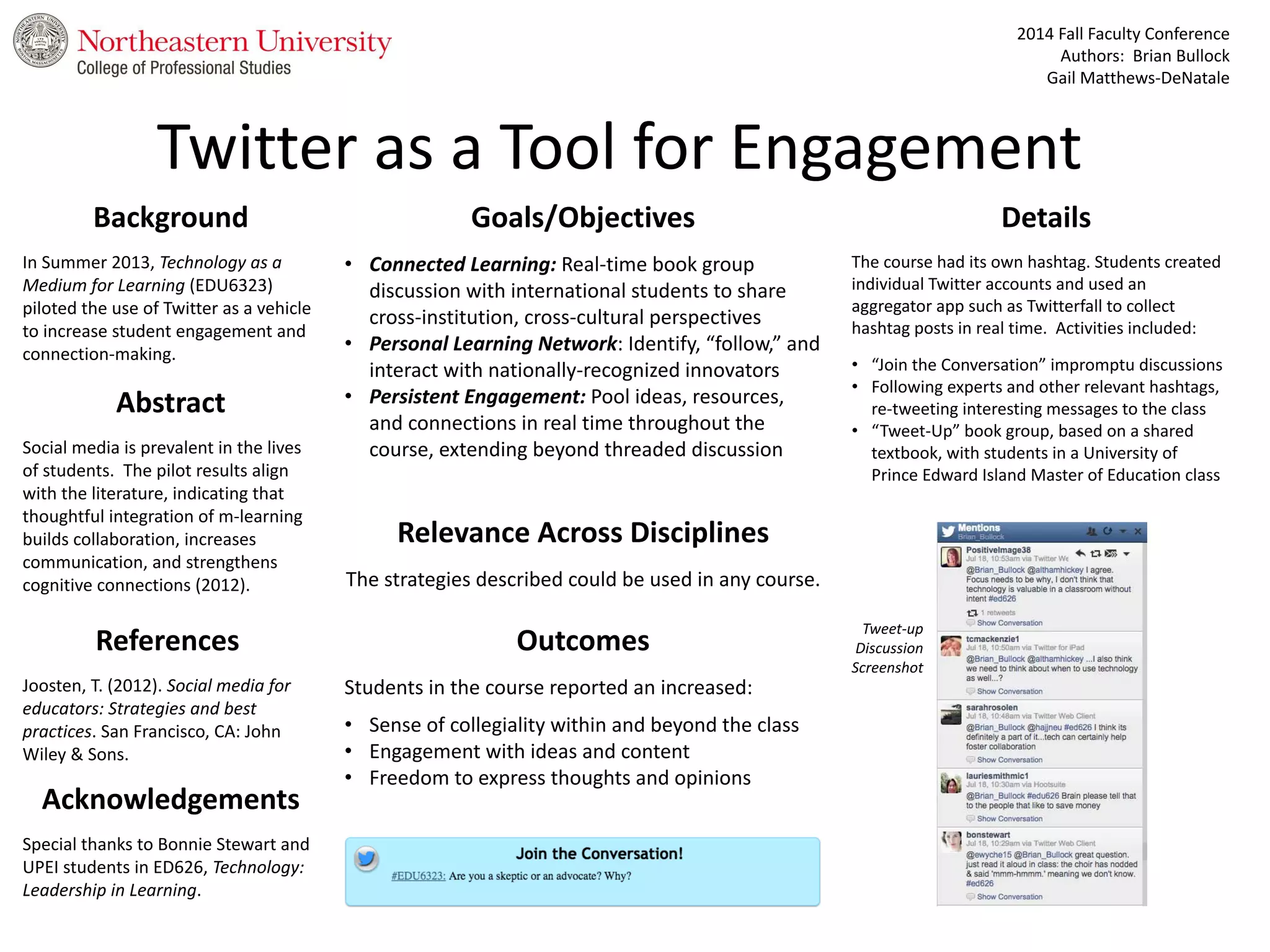
The course had its own hashtag. Students created 
individual Twitter accounts and used an 
aggregator app such as Twitterfall to collect 
hashtag posts in real time. Activities included: 
• “Join the Conversation” impromptu discussions 
• Following experts and other relevant hashtags, 
re-tweeting interesting messages to the class 
• “Tweet-Up” book group, based on a shared 
textbook, with students in a University of 
Prince Edward Island Master of Education class 
Social media is prevalent in the lives 
of students. The pilot results align 
with the literature, indicating that 
thoughtful integration of m-learning 
builds collaboration, increases 
communication, and strengthens 
cognitive connections (2012). 
Joosten, T. (2012). Social media for 
educators: Strategies and best 
practices. San Francisco, CA: John 
Wiley & Sons. 
Special thanks to Bonnie Stewart and 
UPEI students in ED626, Technology: 
Leadership in Learning. 
The strategies described could be used in any course. 
Students in the course reported an increased: 
• Sense of collegiality within and beyond the class 
• Engagement with ideas and content 
• Freedom to express thoughts and opinions 
Tweet-up 
Discussion 
Screenshot

Twitter as a tool for engagement

  • 1.
    2014 Fall FacultyConference Authors: Brian Bullock Gail Matthews-DeNatale Twitter as a Tool for Engagement Background Relevance Across Disciplines Details In Summer 2013, Technology as a Medium for Learning (EDU6323) piloted the use of Twitter as a vehicle to increase student engagement and connection-making. Abstract Goals/Objectives References Outcomes Acknowledgements • Connected Learning: Real-time book group discussion with international students to share cross-institution, cross-cultural perspectives • Personal Learning Network: Identify, “follow,” and interact with nationally-recognized innovators • Persistent Engagement: Pool ideas, resources, and connections in real time throughout the course, extending beyond threaded discussion The course had its own hashtag. Students created individual Twitter accounts and used an aggregator app such as Twitterfall to collect hashtag posts in real time. Activities included: • “Join the Conversation” impromptu discussions • Following experts and other relevant hashtags, re-tweeting interesting messages to the class • “Tweet-Up” book group, based on a shared textbook, with students in a University of Prince Edward Island Master of Education class Social media is prevalent in the lives of students. The pilot results align with the literature, indicating that thoughtful integration of m-learning builds collaboration, increases communication, and strengthens cognitive connections (2012). Joosten, T. (2012). Social media for educators: Strategies and best practices. San Francisco, CA: John Wiley & Sons. Special thanks to Bonnie Stewart and UPEI students in ED626, Technology: Leadership in Learning. The strategies described could be used in any course. Students in the course reported an increased: • Sense of collegiality within and beyond the class • Engagement with ideas and content • Freedom to express thoughts and opinions Tweet-up Discussion Screenshot