Using Social Networking
       to Inspire
Teaching with Technology

     Sonya Ortiz Castro
      Lamar University
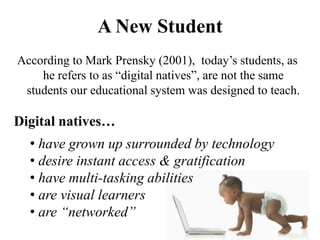
A New Student
According to Mark Prensky (2001), today’s students, as
    he refers to as “digital natives”, are not the same
 students our educational system was designed to teach.

Digital natives…
  • have grown up surrounded by technology
  • desire instant access & gratification
  • have multi-tasking abilities
  • are visual learners
  • are “networked”
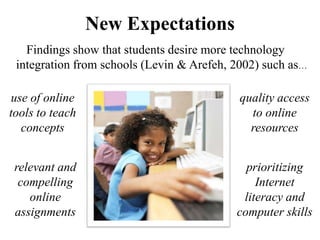
New Expectations
   Findings show that students desire more technology
 integration from schools (Levin & Arefeh, 2002) such as…

use of online                               quality access
tools to teach                                to online
  concepts                                    resources


 relevant and                                prioritizing
  compelling                                   Internet
    online                                  literacy and
 assignments                               computer skills
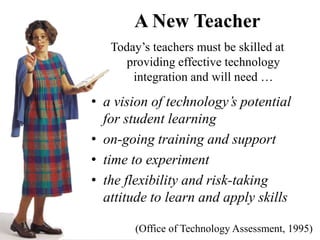
A New Teacher
   Today’s teachers must be skilled at
      providing effective technology
       integration and will need …

• a vision of technology’s potential
  for student learning
• on-going training and support
• time to experiment
• the flexibility and risk-taking
  attitude to learn and apply skills

       (Office of Technology Assessment, 1995)
Continuing Education
 “People learn best through active involvement and
through thinking about and becoming articulate about
     what they have learned.” (Lieberman, 1995)

Teachers need…
  •   support
  •   a personal commitment
  •   continuous feedback
  •   opportunities to share
  •   practice
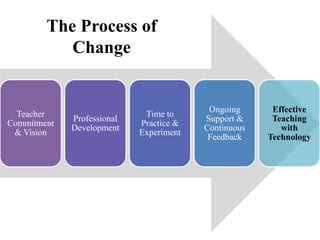
The Process of
           Change


                                          Ongoing      Effective
  Teacher                    Time to
             Professional                Support &     Teaching
Commitment                  Practice &
             Development                 Continuous      with
 & Vision                   Experiment
                                          Feedback    Technology
Expanding Teacher Support

The Internet has made
 it easy for teachers to
      connect with
     colleagues from
    around the world
         through
social networking.
Impact of Social Networking


Social networking, the online connection between a vast
   group of people from around the world, has opened a
  gateway for teachers to access and pursue professional
     development opportunities to help them meet the
             changing needs of their students.
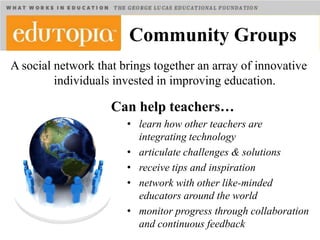
Community Groups
A social network that brings together an array of innovative
         individuals invested in improving education.

                    Can help teachers…
                       • learn how other teachers are
                         integrating technology
                       • articulate challenges & solutions
                       • receive tips and inspiration
                       • network with other like-minded
                         educators around the world
                       • monitor progress through collaboration
                         and continuous feedback
Classroom 2.0
   A social network, hosted by Ning, that provides an
    environment for educators to explore Web 2.0 and
      collaborative technologies to improve learning.
                  Allows teachers to…
  view live webcasts                 articulate ideas in
                                          a forum
attend virtual
 conferences                            learn about new
                                          technologies
  network with
educators around                      share and view
   the world                          member videos
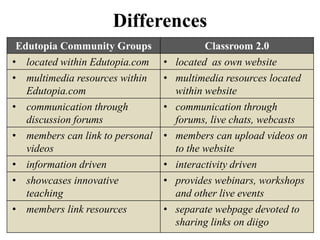
Differences
 Edutopia Community Groups                  Classroom 2.0
• located within Edutopia.com    •   located as own website
• multimedia resources within    •   multimedia resources located
   Edutopia.com                      within website
• communication through          •   communication through
   discussion forums                 forums, live chats, webcasts
• members can link to personal   •   members can upload videos on
   videos                            to the website
• information driven             •   interactivity driven
• showcases innovative           •   provides webinars, workshops
   teaching                          and other live events
• members link resources         • separate webpage devoted to
                                   sharing links on diigo
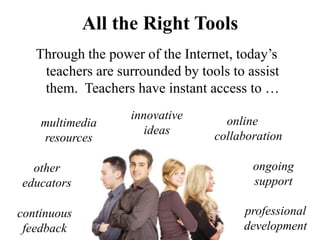
All the Right Tools
   Through the power of the Internet, today’s
    teachers are surrounded by tools to assist
    them. Teachers have instant access to …
                   innovative       online
    multimedia
                      ideas       collaboration
    resources

  other                                  ongoing
educators                                support

continuous                             professional
 feedback                              development
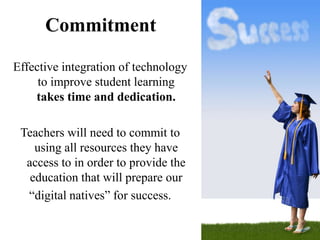
Commitment

Effective integration of technology
     to improve student learning
    takes time and dedication.

 Teachers will need to commit to
    using all resources they have
  access to in order to provide the
   education that will prepare our
  “digital natives” for success.
References
George Lucas Educational Foundation. (2011). Edutopia
     Community Groups. Edutopia. Retrieved from
     http://edutopia.org/groups
Hargadon, S. (2007). Classroom 2.0. Retrieved from
     http://www.classroom20.com/
Levin, D. & Arafeh, S. (2002). The digital disconnect. The
     widening gap between internet-savvy students and their
     schools. Pew Internet and Life Project. Retrieved from
     http://pewinternet.org/~/media/Files/Reports/2002/PIP_Sch
     ools_Internet_Report.pdf.pdf.
Lieberman, A. (1995). Practices that support teacher
     development. Phi Delta Kappan, 76, 591-596.
References continued…
Office of Technology Assessment. (1995). Teachers and
     technology: Making the connection. Washington, D.C.: U.S.
     Government Printing Office.
Prensky, M., (2001). Digital native, digital immigrants. On the
     Horizon. 9 (5), 1-6.

Social networking and technology edld 5362 week 2

  • 1.
    Using Social Networking to Inspire Teaching with Technology Sonya Ortiz Castro Lamar University
  • 2.
    A New Student Accordingto Mark Prensky (2001), today’s students, as he refers to as “digital natives”, are not the same students our educational system was designed to teach. Digital natives… • have grown up surrounded by technology • desire instant access & gratification • have multi-tasking abilities • are visual learners • are “networked”
  • 3.
    New Expectations Findings show that students desire more technology integration from schools (Levin & Arefeh, 2002) such as… use of online quality access tools to teach to online concepts resources relevant and prioritizing compelling Internet online literacy and assignments computer skills
  • 4.
    A New Teacher Today’s teachers must be skilled at providing effective technology integration and will need … • a vision of technology’s potential for student learning • on-going training and support • time to experiment • the flexibility and risk-taking attitude to learn and apply skills (Office of Technology Assessment, 1995)
  • 5.
    Continuing Education “Peoplelearn best through active involvement and through thinking about and becoming articulate about what they have learned.” (Lieberman, 1995) Teachers need… • support • a personal commitment • continuous feedback • opportunities to share • practice
  • 6.
    The Process of Change Ongoing Effective Teacher Time to Professional Support & Teaching Commitment Practice & Development Continuous with & Vision Experiment Feedback Technology
  • 7.
    Expanding Teacher Support TheInternet has made it easy for teachers to connect with colleagues from around the world through social networking.
  • 8.
    Impact of SocialNetworking Social networking, the online connection between a vast group of people from around the world, has opened a gateway for teachers to access and pursue professional development opportunities to help them meet the changing needs of their students.
  • 9.
    Community Groups A socialnetwork that brings together an array of innovative individuals invested in improving education. Can help teachers… • learn how other teachers are integrating technology • articulate challenges & solutions • receive tips and inspiration • network with other like-minded educators around the world • monitor progress through collaboration and continuous feedback
  • 10.
    Classroom 2.0 A social network, hosted by Ning, that provides an environment for educators to explore Web 2.0 and collaborative technologies to improve learning. Allows teachers to… view live webcasts articulate ideas in a forum attend virtual conferences learn about new technologies network with educators around share and view the world member videos
  • 11.
    Differences Edutopia CommunityGroups Classroom 2.0 • located within Edutopia.com • located as own website • multimedia resources within • multimedia resources located Edutopia.com within website • communication through • communication through discussion forums forums, live chats, webcasts • members can link to personal • members can upload videos on videos to the website • information driven • interactivity driven • showcases innovative • provides webinars, workshops teaching and other live events • members link resources • separate webpage devoted to sharing links on diigo
  • 12.
    All the RightTools Through the power of the Internet, today’s teachers are surrounded by tools to assist them. Teachers have instant access to … innovative online multimedia ideas collaboration resources other ongoing educators support continuous professional feedback development
  • 13.
    Commitment Effective integration oftechnology to improve student learning takes time and dedication. Teachers will need to commit to using all resources they have access to in order to provide the education that will prepare our “digital natives” for success.
  • 14.
    References George Lucas EducationalFoundation. (2011). Edutopia Community Groups. Edutopia. Retrieved from http://edutopia.org/groups Hargadon, S. (2007). Classroom 2.0. Retrieved from http://www.classroom20.com/ Levin, D. & Arafeh, S. (2002). The digital disconnect. The widening gap between internet-savvy students and their schools. Pew Internet and Life Project. Retrieved from http://pewinternet.org/~/media/Files/Reports/2002/PIP_Sch ools_Internet_Report.pdf.pdf. Lieberman, A. (1995). Practices that support teacher development. Phi Delta Kappan, 76, 591-596.
  • 15.
    References continued… Office ofTechnology Assessment. (1995). Teachers and technology: Making the connection. Washington, D.C.: U.S. Government Printing Office. Prensky, M., (2001). Digital native, digital immigrants. On the Horizon. 9 (5), 1-6.