
Learning with Emerging Technology


Web 2.0 and
Beyond


Gail Matthews-
DeNatale
Northeastern
University
Scope and Agenda


Learning across the span of life
 What impact does technology have on perception?
 What do we mean by learning with technology?
 Why is this important? What’s the imperative?
 What do we need to understand to do this well?
 What does it look like in action?
Ironies and Contradictions

Vast
Ubiquitous
Media-Rich
Globally Connected
Ironies and Contradictions

Vast
Ubiquitous
Media-Rich
Globally Connected
                     Fake
                     Hacked
                     Superficial
                     Overwhelming
We shape our tools and then
    our tools shape us.

      Marshal McLuhan
This is the imperative of
information literacy and
   technology fluency.
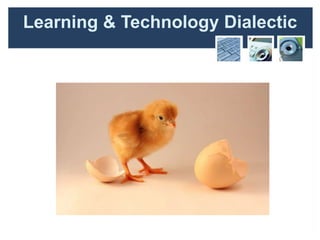
Learning & Technology Dialectic
What do these have in common?
Crowdsourcing
Citizen Journalism
Trans Media, Self-Documentation
Connections as Currency
What do we want for our learners?


  Intellectual Capabilities
    Personal
    Interpersonal
    Professional
    Societal
  Concepts
  Skills
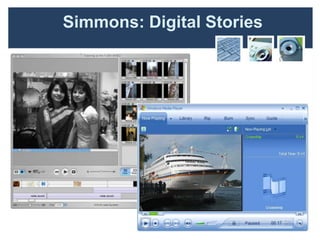
Simmons College Example

Think critically, solve problems, and test
solutions (with and about technology)

Understand and evaluate the opportunities,
threats, limitations, and impact associated with
emerging technologies

To learn, communicate, and collaborate
effectively using technology in many different
settings
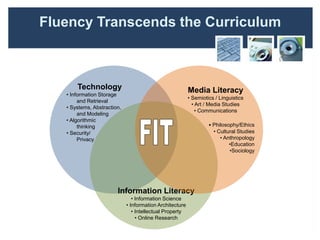
Fluency Transcends the Curriculum


       Technology                                         Media Literacy
   • Information Storage
                                                          • Semiotics / Linguistics
        and Retrieval
                                                            • Art / Media Studies
   • Systems, Abstraction,
                                                              • Communications
        and Modeling
   • Algorithmic
        thinking                                                   • Philosophy/Ethics
   • Security/                                                       • Cultural Studies
        Privacy                                                         • Anthropology
                                                                            •Education
                                                                            •Sociology


                        Information Literacy
                                • Information Science
                             • Information Architecture
                                • Intellectual Property
                                  • Online Research
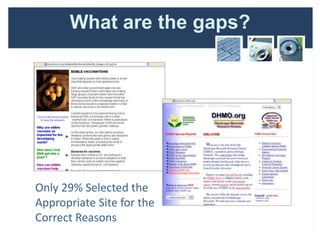
What are the gaps?


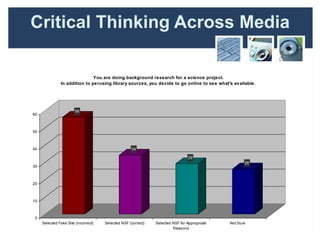
Only 29% Selected the
Appropriate Site for the
Correct Reasons
Critical Thinking Across Media

                               You are doing background research for a science project.
               In addition to perusing library sources, you decide to go online to see what's available.


                        56
60


50


40                                                  34

                                                                                29
                                                                                                     26
30


20


10


 0
     Selected Fake Site (incorrect)   Selected NSF (correct)   Selected NSF for Appropriate   Not Sure
                                                                        Reasons
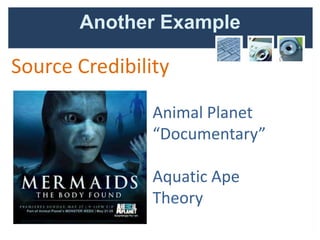
Another Example

Source Credibility

                Animal Planet
                “Documentary”

                Aquatic Ape
                Theory
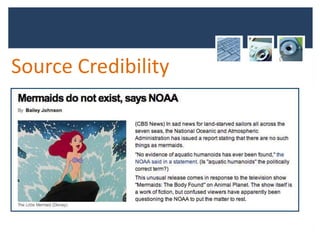
Source Credibility
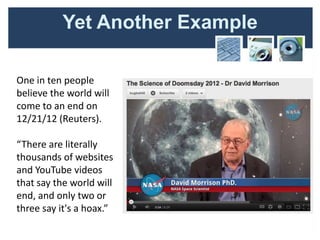
Yet Another Example

One in ten people
believe the world will
come to an end on
12/21/12 (Reuters).

“There are literally
thousands of websites
and YouTube videos
that say the world will
end, and only two or
three say it's a hoax.”
Some of them are very clever
about it. They take my
videos that begin with the
NASA logo, chop that off, and
put it at the beginning of
their video with the headline
"NASA confirms the end of
the world."
                  - David Morrison
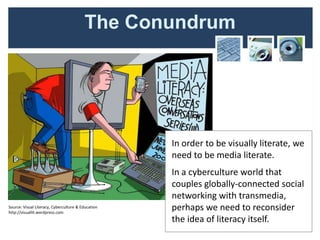
The Conundrum


                                                    In order to be visually literate, we
                                                    need to be media literate.
                                                    In a cyberculture world that
                                                    couples globally-connected social
                                                    networking with transmedia,
Source: Visual Literacy, Cyberculture & Education
http://visuallit.wordpress.com
                                                    perhaps we need to reconsider
                                                    the idea of literacy itself.
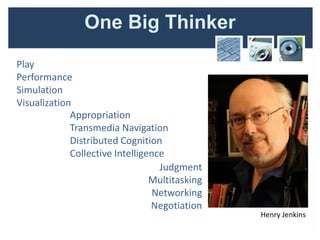
One Big Thinker
Play
Performance
Simulation
Visualization
             Appropriation
             Transmedia Navigation
             Distributed Cognition
             Collective Intelligence
                                   Judgment
                                 Multitasking
                                  Networking
                                 Negotiation
                                                Henry Jenkins
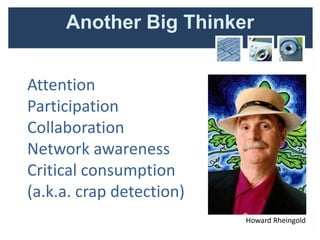
Another Big Thinker


Attention
Participation
Collaboration
Network awareness
Critical consumption
(a.k.a. crap detection)
                          Howard Rheingold
You serve on the Learning,
Technology, and Curriculum
  Advisory Group of your
         institution
What would you want to see happen?
Middle/High School Science
College: First Year Seminar, MBA
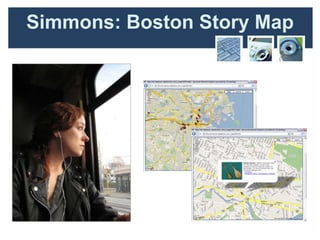
College: Ethnography
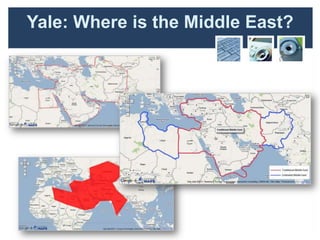
College: Middle Eastern Studies
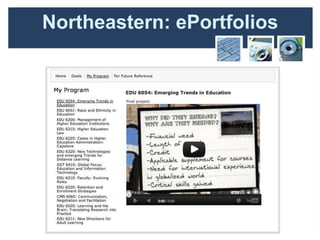
Graduate School: ePortfolios
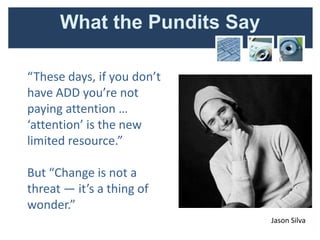
What the Pundits Say

“These days, if you don’t
have ADD you’re not
paying attention …
‘attention’ is the new
limited resource.”

But “Change is not a
threat — it’s a thing of
wonder.”
                             Jason Silva
Image Credits

Chicken or the Egg http://www.flickr.com/photos/the-wanderers-eye/4494147652

Emerging technology logos downloaded from http://images.google.com

Henry Jenkins http://newsroom.ucla.edu/portal/ucla/artwork/5/4/8/2/5/154825/HenryJenkins-USC-IMG_0026-prv.jpg

Howard Rheingold http://www.isepp.org/Media/Speaker%20Images/09-
10%20Images/SpeakerPageGraphics/220pxrheingold_howard.jpg

Whoosh Bottle http://www.flickr.com/photos/fastlizard4/5575889627/in/photostream

Dry Ice Experiment http://www.flickr.com/photos/g_kat26/4004115079

Screenshots of ethnographic maps, digital stories, Middle East maps, and ePortfolio taken by Gail Matthews-DeNatale.
Dry Ice Experiment was digitally altered to simulate the view within a mobile device.

Jason Silva http://b.vimeocdn.com/ps/323/365/3233659_300.jpg

Learning with Emerging Technology

  • 1.
    Learning with EmergingTechnology Web 2.0 and Beyond Gail Matthews- DeNatale Northeastern University
  • 2.
    Scope and Agenda Learningacross the span of life  What impact does technology have on perception?  What do we mean by learning with technology?  Why is this important? What’s the imperative?  What do we need to understand to do this well?  What does it look like in action?
  • 3.
  • 4.
    Ironies and Contradictions Vast Ubiquitous Media-Rich GloballyConnected Fake Hacked Superficial Overwhelming
  • 5.
    We shape ourtools and then our tools shape us. Marshal McLuhan
  • 6.
    This is theimperative of information literacy and technology fluency.
  • 7.
  • 8.
    What do thesehave in common?
  • 9.
  • 10.
  • 11.
  • 12.
  • 13.
    What do wewant for our learners?  Intellectual Capabilities  Personal  Interpersonal  Professional  Societal  Concepts  Skills
  • 14.
    Simmons College Example Thinkcritically, solve problems, and test solutions (with and about technology) Understand and evaluate the opportunities, threats, limitations, and impact associated with emerging technologies To learn, communicate, and collaborate effectively using technology in many different settings
  • 15.
    Fluency Transcends theCurriculum Technology Media Literacy • Information Storage • Semiotics / Linguistics and Retrieval • Art / Media Studies • Systems, Abstraction, • Communications and Modeling • Algorithmic thinking • Philosophy/Ethics • Security/ • Cultural Studies Privacy • Anthropology •Education •Sociology Information Literacy • Information Science • Information Architecture • Intellectual Property • Online Research
  • 16.
    What are thegaps? Only 29% Selected the Appropriate Site for the Correct Reasons
  • 17.
    Critical Thinking AcrossMedia You are doing background research for a science project. In addition to perusing library sources, you decide to go online to see what's available. 56 60 50 40 34 29 26 30 20 10 0 Selected Fake Site (incorrect) Selected NSF (correct) Selected NSF for Appropriate Not Sure Reasons
  • 18.
    Another Example Source Credibility Animal Planet “Documentary” Aquatic Ape Theory
  • 19.
  • 20.
    Yet Another Example Onein ten people believe the world will come to an end on 12/21/12 (Reuters). “There are literally thousands of websites and YouTube videos that say the world will end, and only two or three say it's a hoax.”
  • 21.
    Some of themare very clever about it. They take my videos that begin with the NASA logo, chop that off, and put it at the beginning of their video with the headline "NASA confirms the end of the world." - David Morrison
  • 22.
    The Conundrum In order to be visually literate, we need to be media literate. In a cyberculture world that couples globally-connected social networking with transmedia, Source: Visual Literacy, Cyberculture & Education http://visuallit.wordpress.com perhaps we need to reconsider the idea of literacy itself.
  • 23.
    One Big Thinker Play Performance Simulation Visualization Appropriation Transmedia Navigation Distributed Cognition Collective Intelligence Judgment Multitasking Networking Negotiation Henry Jenkins
  • 24.
    Another Big Thinker Attention Participation Collaboration Networkawareness Critical consumption (a.k.a. crap detection) Howard Rheingold
  • 25.
    You serve onthe Learning, Technology, and Curriculum Advisory Group of your institution What would you want to see happen?
  • 26.
  • 27.
    College: First YearSeminar, MBA
  • 28.
  • 29.
  • 30.
  • 31.
    What the PunditsSay “These days, if you don’t have ADD you’re not paying attention … ‘attention’ is the new limited resource.” But “Change is not a threat — it’s a thing of wonder.” Jason Silva
  • 32.
    Image Credits Chicken orthe Egg http://www.flickr.com/photos/the-wanderers-eye/4494147652 Emerging technology logos downloaded from http://images.google.com Henry Jenkins http://newsroom.ucla.edu/portal/ucla/artwork/5/4/8/2/5/154825/HenryJenkins-USC-IMG_0026-prv.jpg Howard Rheingold http://www.isepp.org/Media/Speaker%20Images/09- 10%20Images/SpeakerPageGraphics/220pxrheingold_howard.jpg Whoosh Bottle http://www.flickr.com/photos/fastlizard4/5575889627/in/photostream Dry Ice Experiment http://www.flickr.com/photos/g_kat26/4004115079 Screenshots of ethnographic maps, digital stories, Middle East maps, and ePortfolio taken by Gail Matthews-DeNatale. Dry Ice Experiment was digitally altered to simulate the view within a mobile device. Jason Silva http://b.vimeocdn.com/ps/323/365/3233659_300.jpg