Blended Learning
in Elementary Reading
Instructional Context
• PK
• 4th and 5th Grade
Learning Community
• 2 Year Curriculum
• Mixed Grade Level
• One-to-One
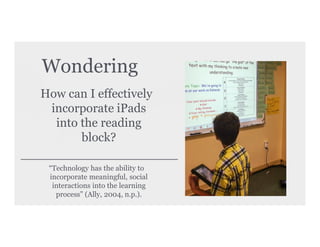
Wondering
How can I effectively
incorporate iPads
into the reading
block?
“Technology has the ability to
incorporate meaningful, social
interactions into the learning
process” (Ally, 2004, n.p.).
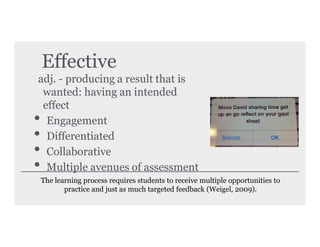
Effective
adj. - producing a result that is
wanted: having an intended
effect
• Engagement
• Differentiated
• Collaborative
• Multiple avenues of assessment
The learning process requires students to receive multiple opportunities to
practice and just as much targeted feedback (Weigel, 2009).
The Plan
Students
• Access materials
• PDF Notes and Diigo
• ePortfolio
• Online discussions
Pedagogical objectives and activities
should drive the approaches that
faculty use in instruction (Picciano,
2009).
Teacher
• Manage online
discussions
• Anecdotal records
• Student examples
In a blended model, teachers actually
have the time and opportunity to work
one-on-one with students and achieve
real differentiated instruction (Watson,
n.d.).
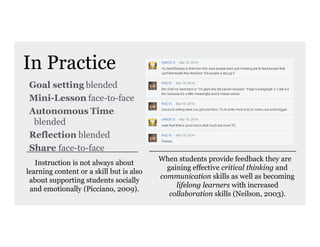
Goal setting blended
Mini-Lesson face-to-face
Autonomous Time
blended
Reflection blended
Share face-to-face
When students provide feedback they are
gaining effective critical thinking and
communication skills as well as becoming
lifelong learners with increased
collaboration skills (Neilson, 2003).
In Practice
Instruction is not always about
learning content or a skill but is also
about supporting students socially
and emotionally (Picciano, 2009).
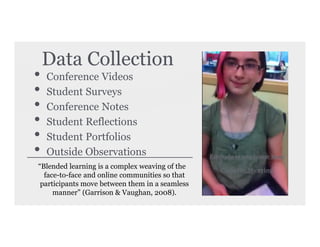
Data Collection
• Conference Videos
• Student Surveys
• Conference Notes
• Student Reflections
• Student Portfolios
• Outside Observations
“Blended learning is a complex weaving of the
face-to-face and online communities so that
participants move between them in a seamless
manner” (Garrison & Vaughan, 2008).
Edmodo is our home base
Complex Weaving
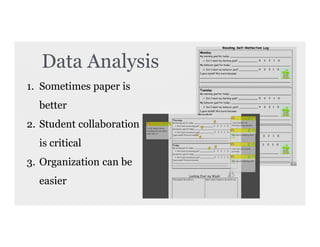
Data Analysis
1. Sometimes paper is
better
2. Student collaboration
is critical
3. Organization can be
easier
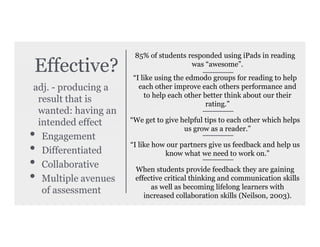
Effective?
adj. - producing a
result that is
wanted: having an
intended effect
• Engagement
• Differentiated
• Collaborative
• Multiple avenues
of assessment
85% of students responded using iPads in reading
was “awesome”.
“I like using the edmodo groups for reading to help
each other improve each others performance and
to help each other better think about our their
rating.”
“We get to give helpful tips to each other which helps
us grow as a reader.”
“I like how our partners give us feedback and help us
know what we need to work on.”
When students provide feedback they are gaining
effective critical thinking and communication skills
as well as becoming lifelong learners with
increased collaboration skills (Neilson, 2003).
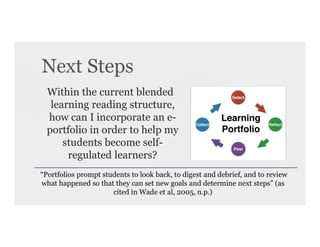
Next Steps
Within the current blended
learning reading structure,
how can I incorporate an e-
portfolio in order to help my
students become self-
regulated learners?
“Portfolios prompt students to look back, to digest and debrief, and to review
what happened so that they can set new goals and determine next steps” (as
cited in Wade et al, 2005, n.p.)
References
Ally, M. (2004.) Foundations of Educational Theory for
Online Learning. Theory and Practice of Online
Learning. Athabasca University Press: CA.
Bartolomé, A., & Steffens, K. (2011). Self-regulated
learning in technology enhanced learning
environments. Technology Enhanced Learning, 6, 21-
31.
Garrison, D.R. & Vaughan, N.D. (2008). Blended
Learning in Higher Education: Framework,
Principles, and Guidelines. San Francisco: Jossey-
Bass.
Milne, A.J. (2006). Designing Blended Learning Spaces.
In D. Oblinger (Ed.) Learning Spaces. Educause.
Neilson, L. B. (2003). Importance of student peer
feedback. College Teaching. Retrieved from
Sheskey, B. (2010). Creating learning connections
with today’s tech-savvy student. In Jacobs, H. H.
(Ed.), Curriculum 21: Essential education for a
changing world. Alexandria, VA: ASCD.
Watson (n.d.). Blended learning: The convergence of
online and Fface-to-face learning. NACOL.
Weigel, M., James, C., & Gardner, H. (2009).
Learning: Peering backward and looking forward in
the digital era. International Journal of Learning
and Media, 1(1), 1-18.
West, D. (2011). Using Technology to Personalize
Learning and Assess Students in Real-Time.
Retrieved from
http://www.brookings.edu/research/papers/2011/1
0/06-personalize-learning-west.
http://tinyurl.com/odcz3ac
Picciano, A. (2009). Blending with Purpose: The
Multimodal Model. Journal of Asynchronous
Learning Networks, 13(1), 7-18.

iPad Inquiry

  • 1.
  • 2.
    Instructional Context • PK •4th and 5th Grade Learning Community • 2 Year Curriculum • Mixed Grade Level • One-to-One
  • 3.
    Wondering How can Ieffectively incorporate iPads into the reading block? “Technology has the ability to incorporate meaningful, social interactions into the learning process” (Ally, 2004, n.p.).
  • 4.
    Effective adj. - producinga result that is wanted: having an intended effect • Engagement • Differentiated • Collaborative • Multiple avenues of assessment The learning process requires students to receive multiple opportunities to practice and just as much targeted feedback (Weigel, 2009).
  • 5.
    The Plan Students • Accessmaterials • PDF Notes and Diigo • ePortfolio • Online discussions Pedagogical objectives and activities should drive the approaches that faculty use in instruction (Picciano, 2009). Teacher • Manage online discussions • Anecdotal records • Student examples In a blended model, teachers actually have the time and opportunity to work one-on-one with students and achieve real differentiated instruction (Watson, n.d.).
  • 6.
    Goal setting blended Mini-Lessonface-to-face Autonomous Time blended Reflection blended Share face-to-face When students provide feedback they are gaining effective critical thinking and communication skills as well as becoming lifelong learners with increased collaboration skills (Neilson, 2003). In Practice Instruction is not always about learning content or a skill but is also about supporting students socially and emotionally (Picciano, 2009).
  • 7.
    Data Collection • ConferenceVideos • Student Surveys • Conference Notes • Student Reflections • Student Portfolios • Outside Observations “Blended learning is a complex weaving of the face-to-face and online communities so that participants move between them in a seamless manner” (Garrison & Vaughan, 2008). Edmodo is our home base Complex Weaving
  • 8.
    Data Analysis 1. Sometimespaper is better 2. Student collaboration is critical 3. Organization can be easier
  • 9.
    Effective? adj. - producinga result that is wanted: having an intended effect • Engagement • Differentiated • Collaborative • Multiple avenues of assessment 85% of students responded using iPads in reading was “awesome”. “I like using the edmodo groups for reading to help each other improve each others performance and to help each other better think about our their rating.” “We get to give helpful tips to each other which helps us grow as a reader.” “I like how our partners give us feedback and help us know what we need to work on.” When students provide feedback they are gaining effective critical thinking and communication skills as well as becoming lifelong learners with increased collaboration skills (Neilson, 2003).
  • 10.
    Next Steps Within thecurrent blended learning reading structure, how can I incorporate an e- portfolio in order to help my students become self- regulated learners? “Portfolios prompt students to look back, to digest and debrief, and to review what happened so that they can set new goals and determine next steps” (as cited in Wade et al, 2005, n.p.)
  • 11.
    References Ally, M. (2004.)Foundations of Educational Theory for Online Learning. Theory and Practice of Online Learning. Athabasca University Press: CA. Bartolomé, A., & Steffens, K. (2011). Self-regulated learning in technology enhanced learning environments. Technology Enhanced Learning, 6, 21- 31. Garrison, D.R. & Vaughan, N.D. (2008). Blended Learning in Higher Education: Framework, Principles, and Guidelines. San Francisco: Jossey- Bass. Milne, A.J. (2006). Designing Blended Learning Spaces. In D. Oblinger (Ed.) Learning Spaces. Educause. Neilson, L. B. (2003). Importance of student peer feedback. College Teaching. Retrieved from Sheskey, B. (2010). Creating learning connections with today’s tech-savvy student. In Jacobs, H. H. (Ed.), Curriculum 21: Essential education for a changing world. Alexandria, VA: ASCD. Watson (n.d.). Blended learning: The convergence of online and Fface-to-face learning. NACOL. Weigel, M., James, C., & Gardner, H. (2009). Learning: Peering backward and looking forward in the digital era. International Journal of Learning and Media, 1(1), 1-18. West, D. (2011). Using Technology to Personalize Learning and Assess Students in Real-Time. Retrieved from http://www.brookings.edu/research/papers/2011/1 0/06-personalize-learning-west. http://tinyurl.com/odcz3ac Picciano, A. (2009). Blending with Purpose: The Multimodal Model. Journal of Asynchronous Learning Networks, 13(1), 7-18.