Turkey’s Economy
Brief View
Content
Turkey’s Economic History
Sectors
Key Statistics
Economic History
Economic History
• During 1913-1915 the Ottoman Empire;
• No industrialization,
• Huge economic debt,
• Capitulations,
• Half-mandated,
• Transportation was terrible,
• WW1 blocked Trade.
Economic History
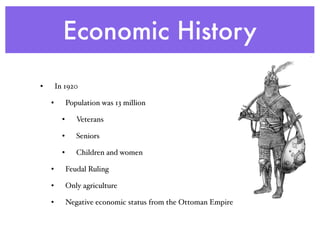
• In 1920
• Population was 13 million
• Veterans
• Seniors
• Children and women
• Feudal Ruling
• Only agriculture
• Negative economic status from the Ottoman Empire
Economic History
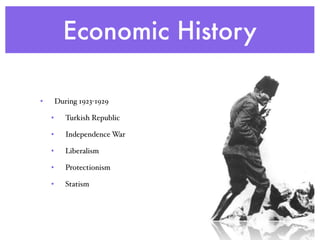
• During 1923-1929
• Turkish Republic
• Independence War
• Liberalism
• Protectionism
• Statism
Economic History
• During 1923-1929
• Cost of WW1 85 million
Golden Liras
• Lausanne Treaty
• Subsidies
• Agriculture
• During 1923-1929
• Main Goals;
• Developing Economy
• No luxury
• Foreign investment
• Tax system
• Subsidies
• New Banks
• Cabotage
• Syndicates
• Worker Act
Economic History
• During 1930 - 1939
• Statism
• Planned industrialization
• Raw materials
• State-owned factories
• Sectors;
• Textile
• Metallurgy
• Paper
• Chemicals
• Land Related
Economic History
• Statism;
• Private enterprises
• State aid
• Promotion
• Encourage
• If enterprises are weak government will do it!
Economic History
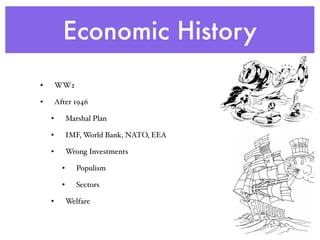
• WW2
• After 1946
• Marshal Plan
• IMF, World Bank, NATO, EEA
• Wrong Investments
• Populism
• Sectors
• Welfare
Economic History
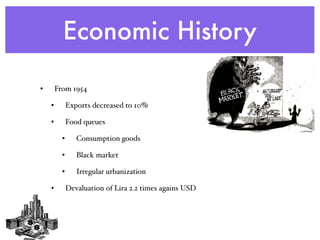
• From 1954
• Exports decreased to 10%
• Food queues
• Consumption goods
• Black market
• Irregular urbanization
• Devaluation of Lira 2.2 times agains USD
Economic History
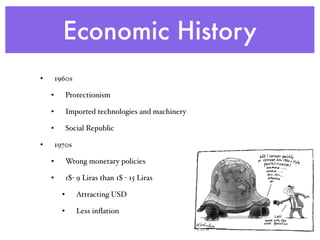
• 1960s
• Protectionism
• Imported technologies and machinery
• Social Republic
• 1970s
• Wrong monetary policies
• 1$- 9 Liras than 1$ - 15 Liras
• Attracting USD
• Less inflation
Economic History
• 1980s
• Bad investments
• Political Power
• Liberalization of Economy
• Floating Exchange Rate
• 1990s
• Customs Union
• Russian Crisis, 2 devastating earthquakes
• IMF Aids
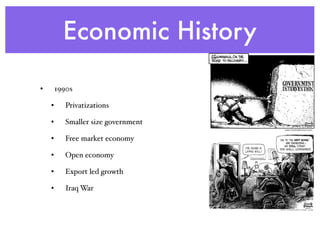
Economic History
• 1990s
• Privatizations
• Smaller size government
• Free market economy
• Open economy
• Export led growth
• Iraq War
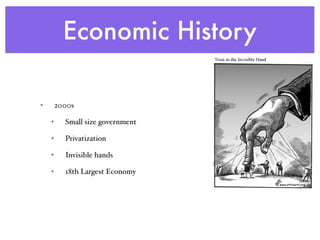
Economic History
• 2000s
• Small size government
• Privatization
• Invisible hands
• 18th Largest Economy
Sectors
Agriculture
Sectors
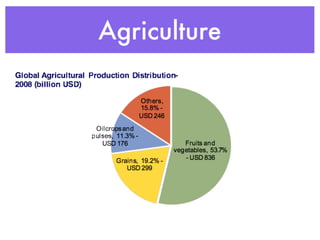
• An estimated USD 1,557 billion in 2008
• Agriculture has always been one of the leading sectors in the Turkish
economy, largely for natural reasons: the rich soil sources, biological
diversity, good climate and geographical conditions.
• Agriculture
• 27% of GDP
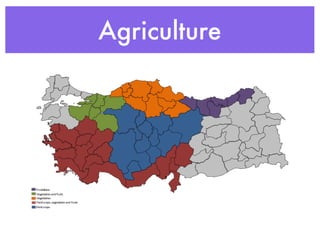
• Agriculture; wheat, barley, corn, rice, rye, lentils, beans, chickpea
• Industrial plants; tobacco, sugar beat, cotton, tea, poppy, kevlar
• Oil Crops; sunflower, olive, soybean, peanut, sesame
• Fruits; grape, apple, fig, hazelnut, citrus, banana, pistachio,
banana, apricots, almonds
• Vegetables
Agriculture
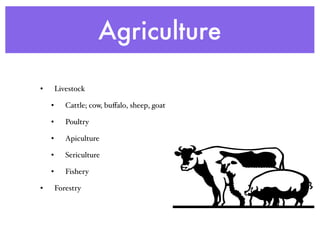
• Livestock
• Cattle; cow, buffalo, sheep, goat
• Poultry
• Apiculture
• Sericulture
• Fishery
• Forestry
Agriculture
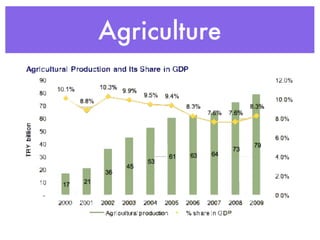
• The  share  of  agricultural  production  in  Turkey’s  GDP  was
 8.3 percent in 2009
• Total land utilized for agriculture in Turkey is 39,122 thousand hectares,
16,460 thousand hectares of which is sown.
• The average area occupied by a Turkish farm is 61 decares.
• Turkey is the top producer of hazelnuts, figs, apricots and cherries by far;
second in melons, leeks and sour cherries and third in 14 other products
such as spices, chillies and peppers, strawberries, chestnuts, chick peas,
pistachios, walnuts, vetches, lentils, green beans, cucumbers, watermelons
and natural honey.
• Turkey’s  agricultural  imports  in  2009, excluding processed food,
amounted to USD 4.6 billion (3.3 percent of the total imports) and
exports were USD 4.5 billion (4.4 percent of the total exports).
Agriculture
Agriculture
Agriculture
Automative Industry
Automative Industry
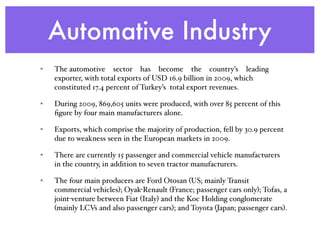
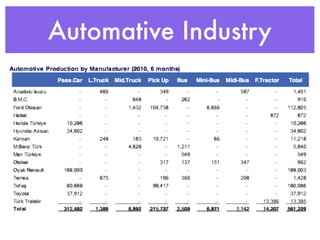
• The automotive  sector  has  become  the  country’s  leading
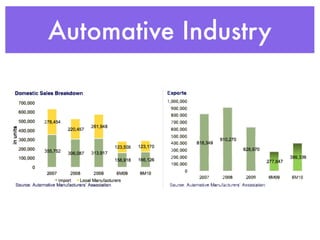
exporter, with total exports of USD 16.9 billion in 2009, which
constituted 17.4 percent of Turkey’s total export revenues.
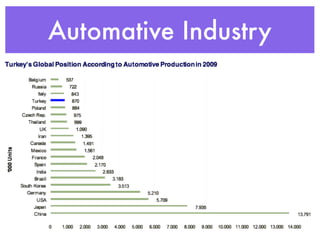
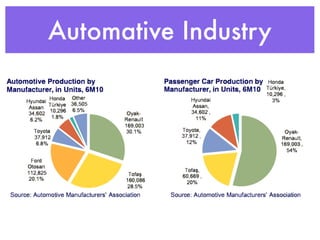
• During 2009, 869,605 units were produced, with over 85 percent of this
figure by four main manufacturers alone.
• Exports, which comprise the majority of production, fell by 30.9 percent
due to weakness seen in the European markets in 2009.
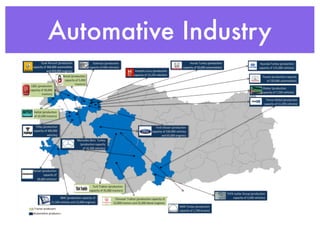
• There are currently 15 passenger and commercial vehicle manufacturers
in the country, in addition to seven tractor manufacturers.
• The four main producers are Ford Otosan (US; mainly Transit
commercial vehicles); Oyak-Renault (France; passenger cars only); Tofas, a
joint-venture between Fiat (Italy) and the Koc Holding conglomerate
(mainly LCVs and also passenger cars); and Toyota (Japan; passenger cars).
Automative Industry
Automative Industry
Automative Industry
Automative Industry
Automative Industry
Automative Industry
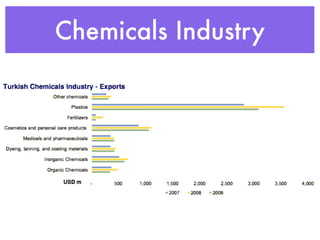
Chemicals Industry
Chemicals Industry
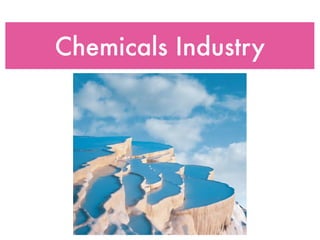
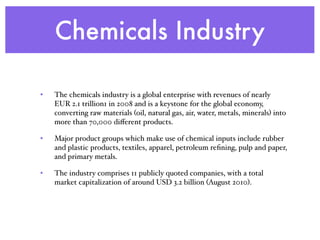
• The chemicals industry is a global enterprise with revenues of nearly
EUR 2.1 trillion1 in 2008 and is a keystone for the global economy,
converting raw materials (oil, natural gas, air, water, metals, minerals) into
more than 70,000 different products.
• Major product groups which make use of chemical inputs include rubber
and plastic products, textiles, apparel, petroleum refining, pulp and paper,
and primary metals.
• The industry comprises 11 publicly quoted companies, with a total
market capitalization of around USD 3.2 billion (August 2010).
Chemicals Industry
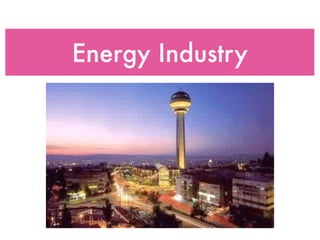
Energy Industry
Energy Industry
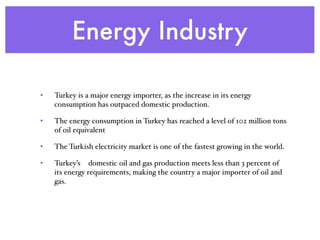
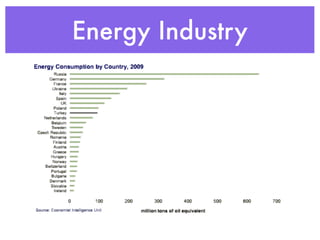
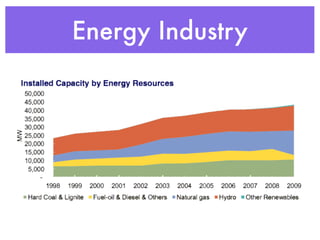
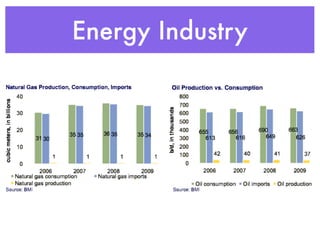
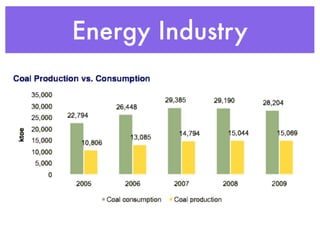
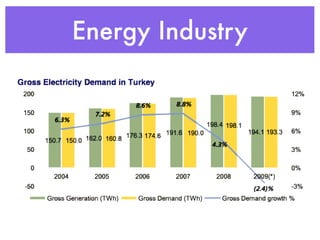
• Turkey is a major energy importer, as the increase in its energy
consumption has outpaced domestic production.
• The energy consumption in Turkey has reached a level of 102 million tons
of oil equivalent
• The Turkish electricity market is one of the fastest growing in the world.
• Turkey’s  domestic oil and gas production meets less than 3 percent of
its energy requirements, making the country a major importer of oil and
gas.
Energy Industry
Energy Industry
Energy Industry
Energy Industry
Energy Industry
Environmental Techs
Environmental Techs
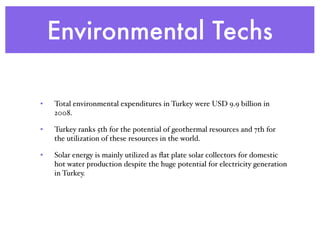
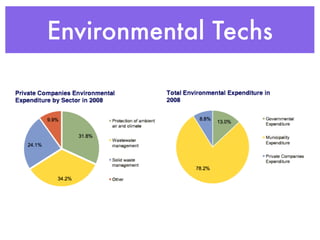
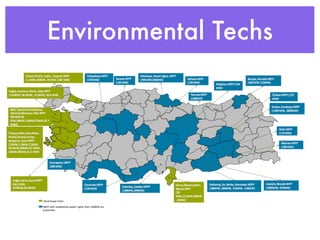
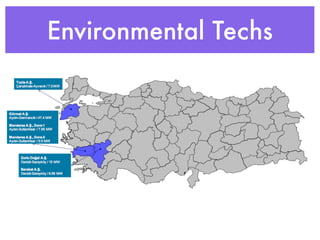
• Total environmental expenditures in Turkey were USD 9.9 billion in
2008.
• Turkey ranks 5th for the potential of geothermal resources and 7th for
the utilization of these resources in the world.
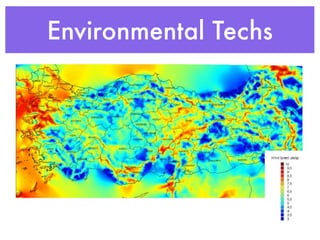
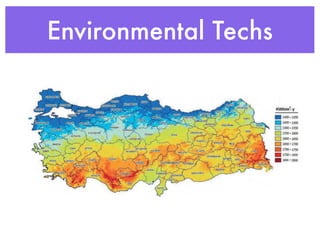
• Solar energy is mainly utilized as flat plate solar collectors for domestic
hot water production despite the huge potential for electricity generation
in Turkey.
Environmental Techs
Environmental Techs
Environmental Techs
Environmental Techs
Environmental Techs
Financial Services Industry
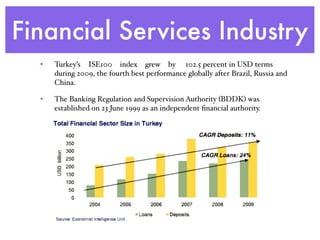
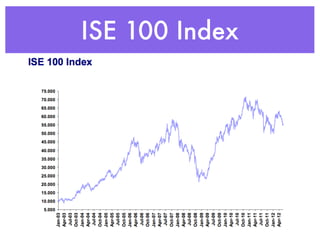
• Turkey’s  ISE100  index  grew  by   102.5 percent in USD terms
during 2009, the fourth best performance globally after Brazil, Russia and
China.
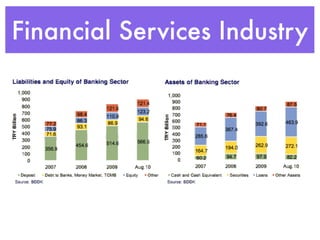
• The Banking Regulation and Supervision Authority (BDDK) was
established on 23 June 1999 as an independent financial authority.
Financial Services Industry
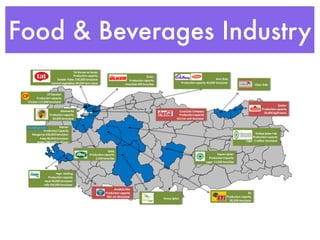
Food & Beverages Industry
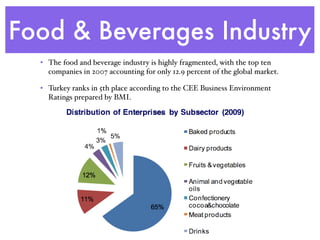
• The food and beverage industry is highly fragmented, with the top ten
companies in 2007 accounting for only 12.9 percent of the global market.
• Turkey ranks in 5th place according to the CEE Business Environment
Ratings prepared by BMI.
Food & Beverages Industry
Healthcare Industry
Healthcare Industry
• Global healthcare spending in 2009 was USD 5,460 billion, representing
a 3 percent decline compared to the previous year, and it is estimated to
recover to USD 5,788 billion in 2010. In the same year, 2009, healthcare
spending represented 10.1 percent of global GDP
• Turkey ranks as the 16th largest pharmaceutical manufacturer worldwide
and the 6th largest pharmaceutical market in Europe, after Germany,
France, the UK, Italy and Spain.
• The Turkish medical devices market, a promising component of the
healthcare industry, is ranked within the top 30 largest markets in the
world. In 2010, the Turkish medical equipment and supplies market is
calculated to be worth USD 2.1 billion.
Food & Beverages Industry
Home Appliances Industry
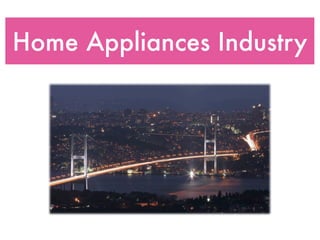
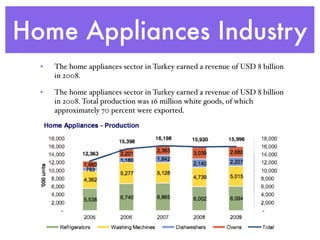
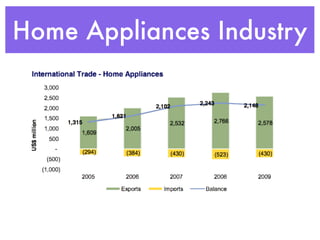
• The home appliances sector in Turkey earned a revenue of USD 8 billion
in 2008.
• The home appliances sector in Turkey earned a revenue of USD 8 billion
in 2008. Total production was 16 million white goods, of which
approximately 70 percent were exported.
Home Appliances Industry
ICT Industry
ICT Industry
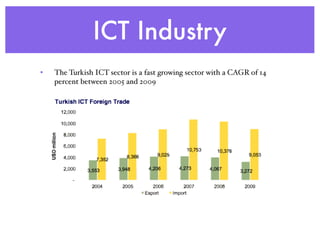
• The Turkish ICT sector is a fast growing sector with a CAGR of 14
percent between 2005 and 2009
Metal Industry
Metal Industry
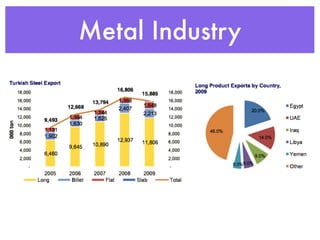
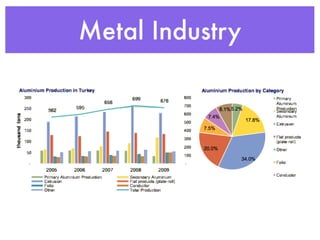
• Turkey performed impressively with a 87 percent increase in production,
reaching 26.7 million tons in 2008.
• Turkey has moved up to 10th place in the world’s  largest  steel
 producing countries as of May 2010
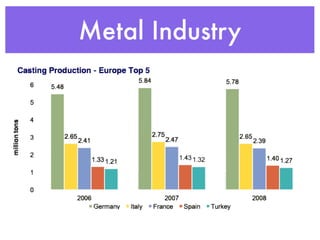
• Turkey ranks 14th in the world and 5th in Europe in regards of casting
production, and has 1.4 percent market share in total global production.
Metal Industry
Metal Industry
Metal Industry
Metal Industry
Real Estate Industry
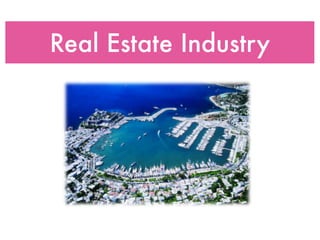
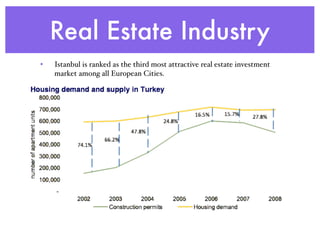
• Istanbul is ranked as the third most attractive real estate investment
market among all European Cities.
Tourism
Tourism
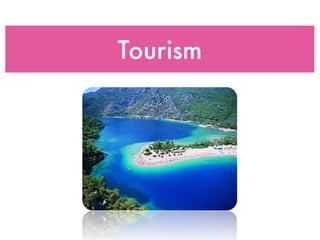
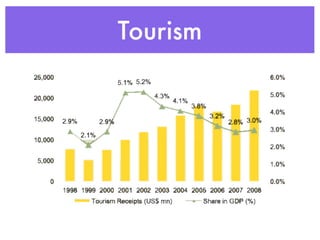
• Turkish tourism sector has been one of the most important drivers
behind Turkey’s economic development over recent decades.
• In 2009, combined with the travel sector, the industry generated TL 95.3
billion of economic activity (approximately 10.2% of Turkey’s GDP) with
an employment of approximately 1.7 million people (7.2% of total
employment).
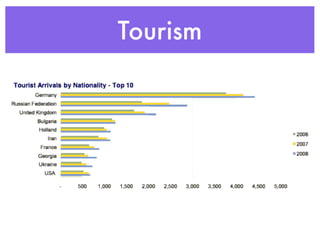
• Germany, the United Kingdom and the Russian Federation are the top
sources of tourists to Turkey, together comprising approximately 36% of
all international arrivals.
Tourism
Tourism
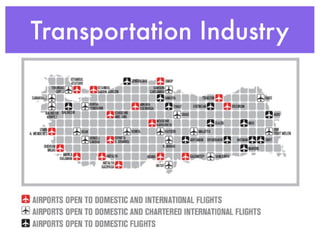
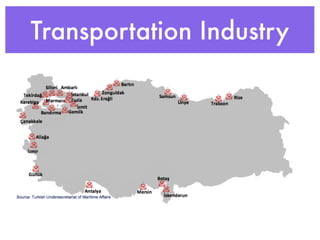
Transportation Industry
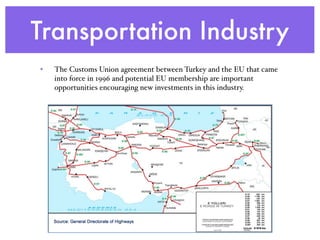
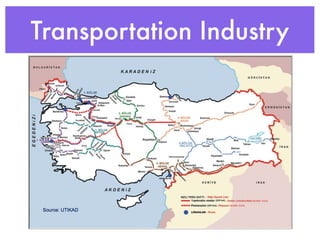
• The Customs Union agreement between Turkey and the EU that came
into force in 1996 and potential EU membership are important
opportunities encouraging new investments in this industry.
Transportation Industry
Key Statistics
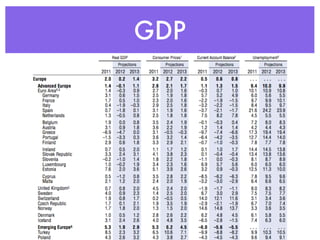
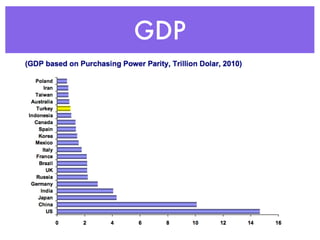
GDP
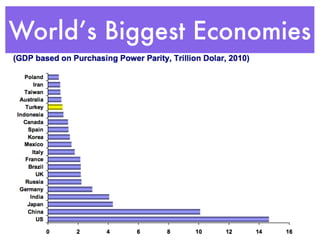
World’s Biggest Economies
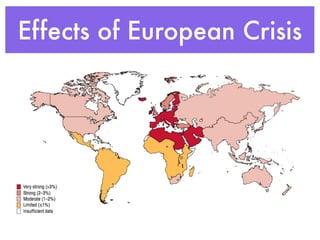
Effects of European Crisis
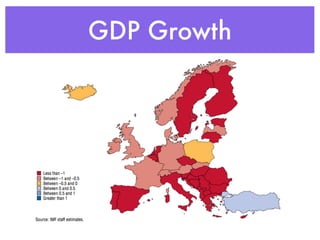
GDP Growth
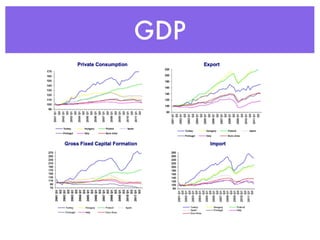
GDP
GDP
GDP
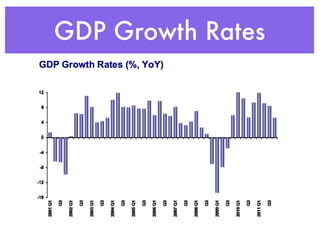
GDP Growth Rates
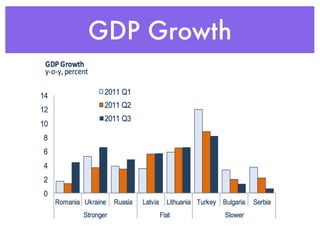
GDP Growth
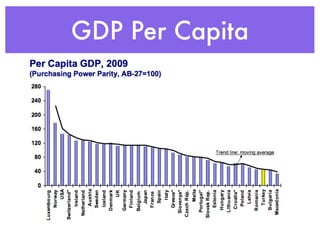
GDP Per Capita
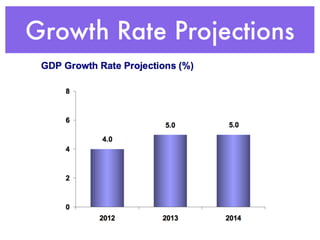
Growth Rate Projections
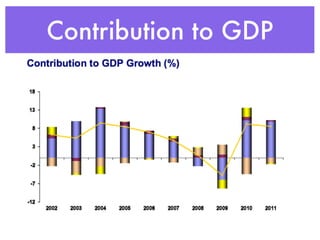
Contribution to GDP
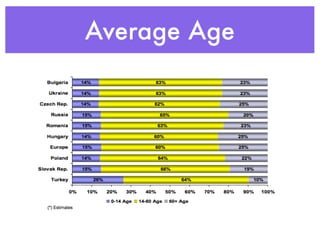
Average Age
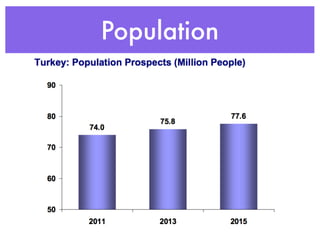
Population
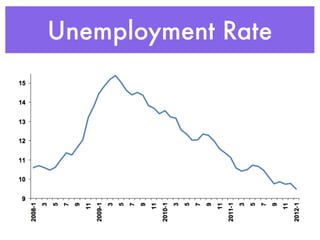
Unemployment Rate
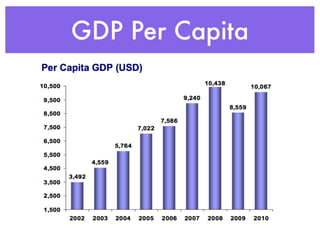
GDP Per Capita
GDP
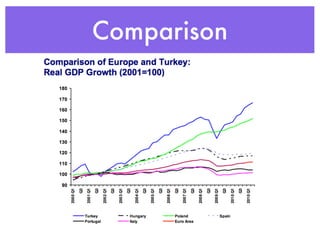
Comparison
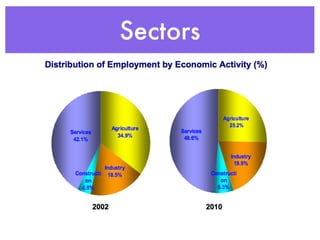
Sectors
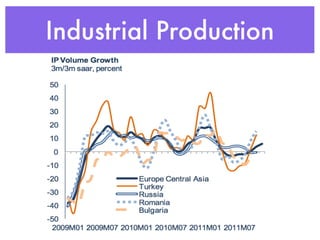
Industrial Production
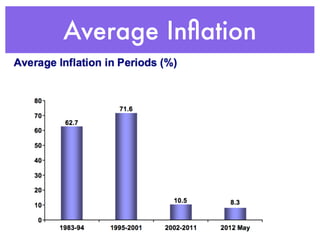
Average Inflation
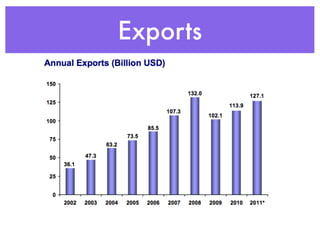
Exports
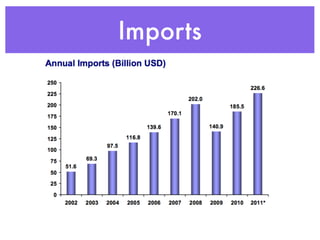
Imports
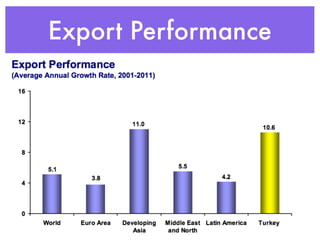
Export Performance
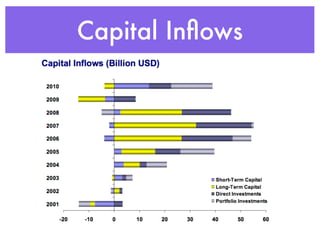
Capital Inflows
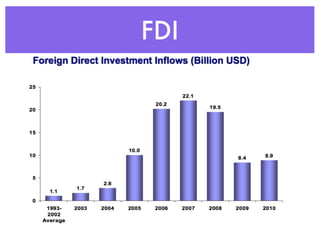
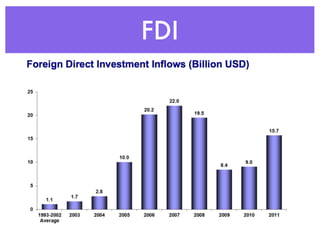
FDI
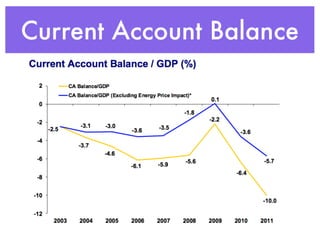
Current Account Balance
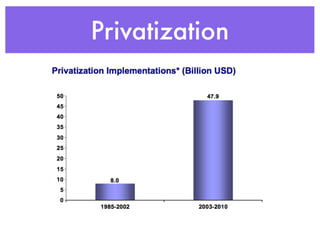
Privatization
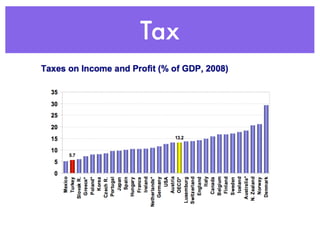
Tax
FDI
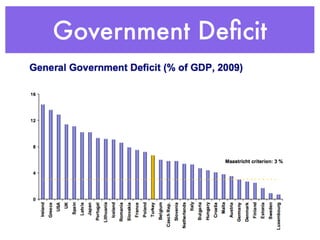
Government Deficit
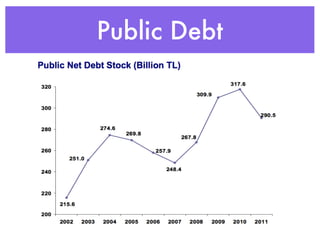
Public Debt
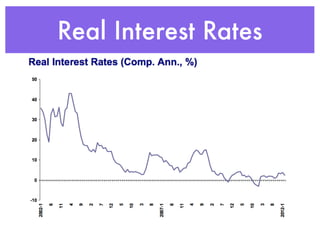
Real Interest Rates
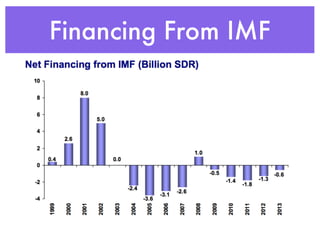
Financing From IMF
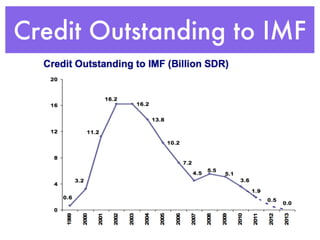
Credit Outstanding to IMF
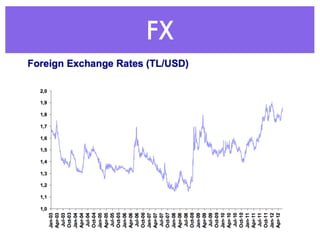
FX
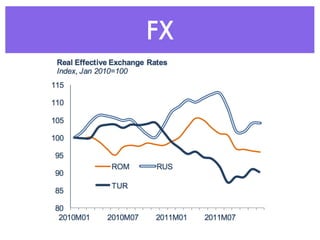
FX
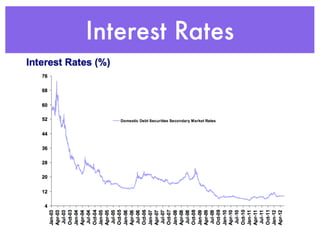
Interest Rates
ISE 100 Index
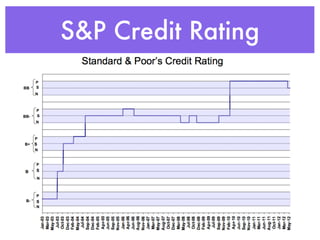
S&P Credit Rating
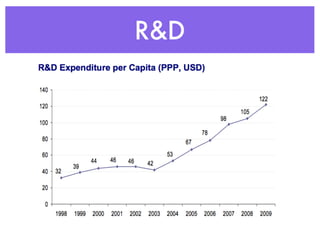
R&D
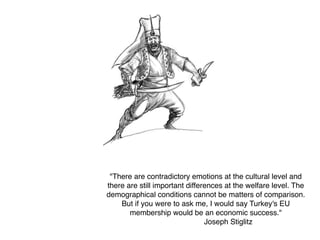
"There are contradictory emotions at the cultural level and
there are still important differences at the welfare level. The
demographical conditions cannot be matters of comparison.
But if you were to ask me, I would say Turkey's EU
membership would be an economic success." 
Joseph Stiglitz

Turkey's Economic History