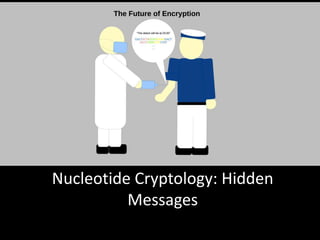
Nucleotide Cryptology: Hidden
          Messages
Slides By: Kelsey Knox, Dylan
Goodrich, Janet Page, Spenser Davis,
 Hayk Barseghyan, John Madrigal,
      and Mariam Barseghyan
Concept
We were inspired by Alan Turing’s coding and
 decoding work he did for the military. We have
 developed an idea to create a code out of human
 DNA, insert that DNA into a cell and then insert
 the cell into a individual, creating a secure way to
 transfer information. The message is doubly
 protected by its encryption and then by its ability
 to be indistinguishable from the individual’s
 normal cells. We are using Nucleotide Cryptology
 to send hidden messages.
Encrypting with DNA

            By: Janet Page
   In the spirit of Alan Turing, we would like to offer a
    new method in which to encode messages.
   Unlike other codes, our code will be biological, and
    will be encrypted in DNA itself.
    Our method involves encoding a message using
    some sort of encryption with nucleotide sequences
    and implanting this sequence into the body of the
    messenger.
   The receiving end will know where to look for this
    particular message.
How can we convert English into
        nucleotide sequences?
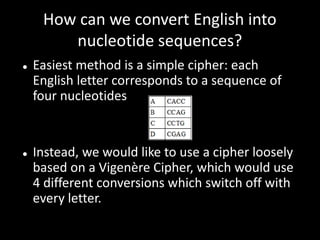
   Easiest method is a simple cipher: each
    English letter corresponds to a sequence of
    four nucleotides


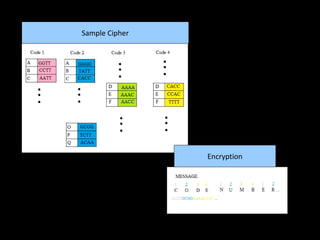
   Instead, we would like to use a cipher loosely
    based on a Vigenère Cipher, which would use
    4 different conversions which switch off with
    every letter.
Sample Cipher


                Encryption
The Coding

By: Dylan Goodrich
Layers of Protection
Code Existence
– Awareness of the code is likely to take a while due
  to the novelty of the idea
Identifying “carriers”
– Will be difficult to determine who has the code on
  their person. Could pretend to give people code
  so they do not know whether or not they have it.
  Reduces likelihood of betrayal or accidents
Layers of Protection
Location on the body
– Will be difficult to isolate location of the injected
  cell colony. Could pretend to inject a carrier
  multiple times to prevent them from giving away
  relative location.
Primer sequence
– As discussed before the primer sequence is
  needed to isolate the area of DNA that contains
  the message. Can be made highly variable and
  complex
Human Protection
Tumor Prevention
– Potential DNA code sequences will need to be
  tested to make sure that it does not induce
  uncontrolled proliferation within the carrier, thus
  putting him at risk.
– DNA still needs to be able to allow for moderate
  cell replication to ensure safety of the cells
  containing the code
Human Protection
“Self Destruct”
– Carrier cells will need to be highly sensitive to
  biological changes. If a person carrying a code
  dies then the cells with the code must be
  destroyed to prevent a prolonged search for them
– If the enemy knows this then this will prevent
  them from killing carriers. Abuse or
  malnourishment may also stress the cells into
  dying, preventing these tactics against the carriers
  as well.
The Chemistry

By: Spenser Davis
The Chemistry Behind
          Nucleotide Cryptology
• Before the injection of code, the data must be
  implemented into the genetic code of the
  messenger/storage person. DNA is extracted
  through a blood sample and an appropriate
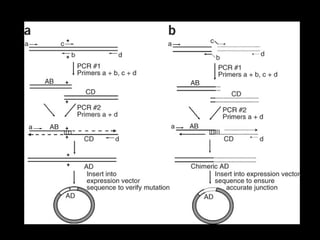
  locus is determined for code insertion. It is
  important to choose a locus that does not
  code for any vital proteins, etc. Once chosen,
  the code will be inserted via PCR based site-
  directed mutagenesis (picture shown below).
The Chemistry Behind
            Nucleotide Cryptology
• The basic procedure requires the synthesis of a short
  DNA primer. This synthetic primer contains the desired
  mutation and is complementary to the template DNA
  around the mutation site so it can hybridize with the
  DNA in the gene of interest. The mutation may be a

  single base change (a point mutation), multiple base
  changes, deletion or insertion. The single-stranded
  primer is then extended using a DNA Polymerase,
  which copies the rest of the gene. The gene thus
  copied contains the mutated site, and is then
  introduced into a host cell as a vector and cloned.
  Finally, mutants are selected.
The Chemistry Behind
               Nucleotide Cryptology
• The original method using single-primer extension is inefficient due
  to a lower yield of mutants. The resulting mixture may contain both
  the original unmutated template as well as the mutant strand,
  producing a mix population of mutant and non-mutant progenies.
  The mutants may also be counter-selected due to presence of
  mismatch repair system which favors the methylated template
  DNA. Many approaches have since been developed to improve the
  efficiency of mutagenesis. The mutagenesis therefore would involve
  two sets of mutated primers flanking the desired region. And the
  selection method we could employ would be to include a simple
  antibiotic resistance gene in our mutation, then screen and select
  for mutants by plating on antibiotic+ plates and selecting surviving
  plaques. The DNA selected from the plaques would then be
  injected into the code carrier person.
The Chemistry Behind
               Nucleotide Cryptology
• The code decrypter would need to know the relative location of the
  cells in the body for extraction. Death will causes cell mitosis to fail
  and will thus ensure safe code delivery. Upon extraction of the
  code, the decrypter also needs to know either the primer sequence
  or the locus of interest to amplify via PCR then discover the
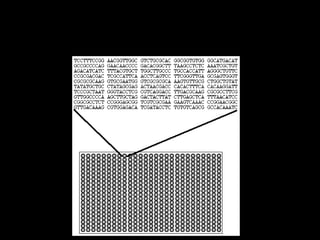
  sequence using gene probing microarrays. The way this works is as
  follows: pretend my code is AGTCGTC. This will only adhere to its
  complement TCAGCAG (let's ignore sticky ends and partial
  adherence for now). Microarray wells will contain randomized gene
  sequences such as: AGCTAGCA, AGTCTCGA, GCTAGCT, etc. However,
  only the true complement will bind to the coded sequence. It is in
  this way that the decrypter can uncover the true code. With a
  decryption key (cipher) already predetermined, the decrypter can
  decipher the message.
Biological Computing

    By John Madrigal
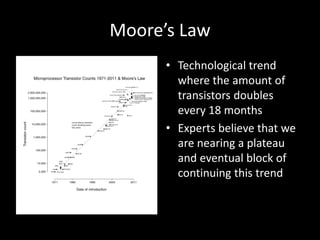
Moore’s Law
      • Technological trend
        where the amount of
        transistors doubles
        every 18 months
      • Experts believe that we
        are nearing a plateau
        and eventual block of
        continuing this trend
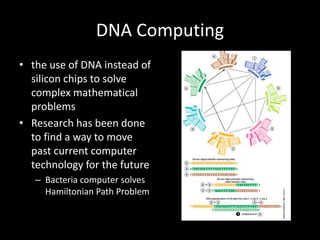
DNA Computing
• the use of DNA instead of
  silicon chips to solve
  complex mathematical
  problems
• Research has been done
  to find a way to move
  past current computer
  technology for the future
   – Bacteria computer solves
     Hamiltonian Path Problem
From Hidden Messages to
Memories: Alternative uses for
   Nucleotide Cryptology

      By: Hyak Barseghyan
Memories Stored In DNA
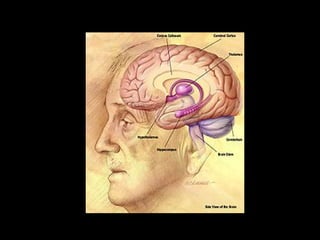
The human brain has the ability to store and
transmit memories using images. There is a
specialized area in the brain called the
Hippocampus that is involved in the storage and
generation of memories. The way memories are
stored is still not quite understood. However, it is
speculated that visual or any other stimuli that a
person perceives is accompanied by the production
of proteins in the brain that are involved in
generation of new neuronal connections.
It is possible to design a gene by genetic
engineering and insert it into human cells using
ballistics. A special air pressurized gun will shoot
millions of copies of the desired gene into cells.
Some of the engineered sequence will incorporate
into the cell's genome. The inserted recombinant
DNA in the cells will be transcribed and translated
into a protein which will later be carried out from
the cell into the bloodstream and taken into the
brain, and will become involved in memory
generation and retrieval.
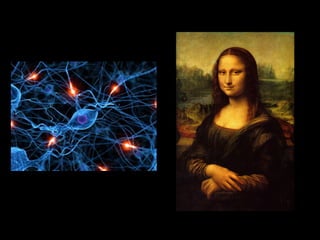
Depending on the design of the gene and its
product the person will see different images
appear in his/her imagination, starting from
known pieces of art to any other custom
generated memories. This technology will be
crucial in using human genetic programming in
information storage. Retrieval of the information
can be performed using any human subject
since the mechanism is the same from person to
person.
Amplified Natural Intelligence: More
 Applications for Biological Coding

        By: Miriam Barseghyan
• In our modern society technological advances
  are not shocking anymore. It is expected for
  various electronics to be further developed in
  order to achieve better device capabilities.
  However, while on the path creating Artificial
  Intelligence, we tend to neglect our own
  intellectual development.
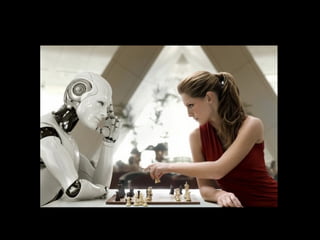
• Behavioral modifications, particularly
  education, do tend to improve the level of
  human intelligence. However, this process is
  slow and requires constant work. As the new
  generations of computers that come out with
  improved functionality, it would be possible to
  create human beings with improved analytical
  and logical power.
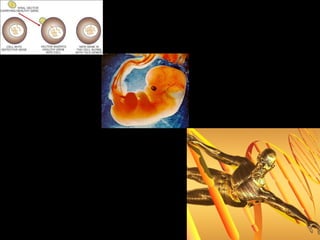
• In the core of the model of creation of humans with
  Amplified Natural Intelligence (ANI) lies the concept of
  decoding a given code (by Alan Turing) and those of
  physiology and molecular biology. To achieve the
  proposed goal Human Genetic Engineering (HGE) is
  necessary. Genes need to be modified at an embryonic
  level in order to produce functional cells postnatally.
  Retroviral transfecton would be the core technique
  utilized in procedure. Through this technique, extra
  genes coding for Nerve Growth Factors (NGF) and
  molecules guiding axonal patterning, such as molecules
  from the Ephrin family, as well as genetic information
  coding for molecules that increase neuronal synaptic
  connectivity will be inserted into the embryonic
  genome during the early stages of embryonic
  development.
• The inserted code will be decoded by the
  natural mechanisms of the organism to
  produce exogenous molecules. These
  molecules will further amplify the effects of
  the endogenous molecules involved in
  nervous system development. Thus,
  neurogenesis along with axonal and synaptic
  efficient patterning will contribute to creation
  of ANI.
The Ethics

By: Kelsey Knox
“Genethics”: the idea that problems for humanity and the world
posed by the new genetic technology are novel and consequently a new kind
of ethics is needed (1)

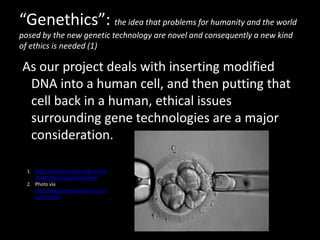
As our project deals with inserting modified
 DNA into a human cell, and then putting that
 cell back in a human, ethical issues
 surrounding gene technologies are a major
 consideration.

  1. http://bioinformatics.istge.it/bcd
     /ForAll/Ethics/welcome.html
  2. Photo via
     http://thetechnologicalcitizen.co
     m/?p=1022
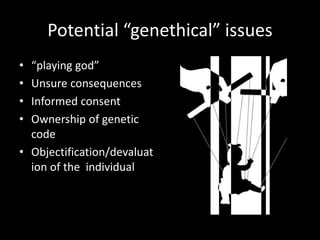
Potential “genethical” issues
• “playing god”
• Unsure consequences
• Informed consent
• Ownership of genetic
  code
• Objectification/devaluat
  ion of the individual

Turing nucleotidecryptology

  • 1.
  • 2.
    Slides By: KelseyKnox, Dylan Goodrich, Janet Page, Spenser Davis, Hayk Barseghyan, John Madrigal, and Mariam Barseghyan
  • 3.
    Concept We were inspiredby Alan Turing’s coding and decoding work he did for the military. We have developed an idea to create a code out of human DNA, insert that DNA into a cell and then insert the cell into a individual, creating a secure way to transfer information. The message is doubly protected by its encryption and then by its ability to be indistinguishable from the individual’s normal cells. We are using Nucleotide Cryptology to send hidden messages.
  • 4.
    Encrypting with DNA By: Janet Page
  • 5.
    In the spirit of Alan Turing, we would like to offer a new method in which to encode messages.  Unlike other codes, our code will be biological, and will be encrypted in DNA itself.  Our method involves encoding a message using some sort of encryption with nucleotide sequences and implanting this sequence into the body of the messenger.  The receiving end will know where to look for this particular message.
  • 6.
    How can weconvert English into nucleotide sequences?  Easiest method is a simple cipher: each English letter corresponds to a sequence of four nucleotides  Instead, we would like to use a cipher loosely based on a Vigenère Cipher, which would use 4 different conversions which switch off with every letter.
  • 7.
    Sample Cipher Encryption
  • 8.
  • 9.
    Layers of Protection CodeExistence – Awareness of the code is likely to take a while due to the novelty of the idea Identifying “carriers” – Will be difficult to determine who has the code on their person. Could pretend to give people code so they do not know whether or not they have it. Reduces likelihood of betrayal or accidents
  • 10.
    Layers of Protection Locationon the body – Will be difficult to isolate location of the injected cell colony. Could pretend to inject a carrier multiple times to prevent them from giving away relative location. Primer sequence – As discussed before the primer sequence is needed to isolate the area of DNA that contains the message. Can be made highly variable and complex
  • 11.
    Human Protection Tumor Prevention –Potential DNA code sequences will need to be tested to make sure that it does not induce uncontrolled proliferation within the carrier, thus putting him at risk. – DNA still needs to be able to allow for moderate cell replication to ensure safety of the cells containing the code
  • 12.
    Human Protection “Self Destruct” –Carrier cells will need to be highly sensitive to biological changes. If a person carrying a code dies then the cells with the code must be destroyed to prevent a prolonged search for them – If the enemy knows this then this will prevent them from killing carriers. Abuse or malnourishment may also stress the cells into dying, preventing these tactics against the carriers as well.
  • 13.
  • 14.
    The Chemistry Behind Nucleotide Cryptology • Before the injection of code, the data must be implemented into the genetic code of the messenger/storage person. DNA is extracted through a blood sample and an appropriate locus is determined for code insertion. It is important to choose a locus that does not code for any vital proteins, etc. Once chosen, the code will be inserted via PCR based site- directed mutagenesis (picture shown below).
  • 16.
    The Chemistry Behind Nucleotide Cryptology • The basic procedure requires the synthesis of a short DNA primer. This synthetic primer contains the desired mutation and is complementary to the template DNA around the mutation site so it can hybridize with the DNA in the gene of interest. The mutation may be a single base change (a point mutation), multiple base changes, deletion or insertion. The single-stranded primer is then extended using a DNA Polymerase, which copies the rest of the gene. The gene thus copied contains the mutated site, and is then introduced into a host cell as a vector and cloned. Finally, mutants are selected.
  • 18.
    The Chemistry Behind Nucleotide Cryptology • The original method using single-primer extension is inefficient due to a lower yield of mutants. The resulting mixture may contain both the original unmutated template as well as the mutant strand, producing a mix population of mutant and non-mutant progenies. The mutants may also be counter-selected due to presence of mismatch repair system which favors the methylated template DNA. Many approaches have since been developed to improve the efficiency of mutagenesis. The mutagenesis therefore would involve two sets of mutated primers flanking the desired region. And the selection method we could employ would be to include a simple antibiotic resistance gene in our mutation, then screen and select for mutants by plating on antibiotic+ plates and selecting surviving plaques. The DNA selected from the plaques would then be injected into the code carrier person.
  • 19.
    The Chemistry Behind Nucleotide Cryptology • The code decrypter would need to know the relative location of the cells in the body for extraction. Death will causes cell mitosis to fail and will thus ensure safe code delivery. Upon extraction of the code, the decrypter also needs to know either the primer sequence or the locus of interest to amplify via PCR then discover the sequence using gene probing microarrays. The way this works is as follows: pretend my code is AGTCGTC. This will only adhere to its complement TCAGCAG (let's ignore sticky ends and partial adherence for now). Microarray wells will contain randomized gene sequences such as: AGCTAGCA, AGTCTCGA, GCTAGCT, etc. However, only the true complement will bind to the coded sequence. It is in this way that the decrypter can uncover the true code. With a decryption key (cipher) already predetermined, the decrypter can decipher the message.
  • 21.
    Biological Computing By John Madrigal
  • 22.
    Moore’s Law • Technological trend where the amount of transistors doubles every 18 months • Experts believe that we are nearing a plateau and eventual block of continuing this trend
  • 23.
    DNA Computing • theuse of DNA instead of silicon chips to solve complex mathematical problems • Research has been done to find a way to move past current computer technology for the future – Bacteria computer solves Hamiltonian Path Problem
  • 24.
    From Hidden Messagesto Memories: Alternative uses for Nucleotide Cryptology By: Hyak Barseghyan
  • 25.
    Memories Stored InDNA The human brain has the ability to store and transmit memories using images. There is a specialized area in the brain called the Hippocampus that is involved in the storage and generation of memories. The way memories are stored is still not quite understood. However, it is speculated that visual or any other stimuli that a person perceives is accompanied by the production of proteins in the brain that are involved in generation of new neuronal connections.
  • 27.
    It is possibleto design a gene by genetic engineering and insert it into human cells using ballistics. A special air pressurized gun will shoot millions of copies of the desired gene into cells. Some of the engineered sequence will incorporate into the cell's genome. The inserted recombinant DNA in the cells will be transcribed and translated into a protein which will later be carried out from the cell into the bloodstream and taken into the brain, and will become involved in memory generation and retrieval.
  • 29.
    Depending on thedesign of the gene and its product the person will see different images appear in his/her imagination, starting from known pieces of art to any other custom generated memories. This technology will be crucial in using human genetic programming in information storage. Retrieval of the information can be performed using any human subject since the mechanism is the same from person to person.
  • 31.
    Amplified Natural Intelligence:More Applications for Biological Coding By: Miriam Barseghyan
  • 32.
    • In ourmodern society technological advances are not shocking anymore. It is expected for various electronics to be further developed in order to achieve better device capabilities. However, while on the path creating Artificial Intelligence, we tend to neglect our own intellectual development.
  • 33.
    • Behavioral modifications,particularly education, do tend to improve the level of human intelligence. However, this process is slow and requires constant work. As the new generations of computers that come out with improved functionality, it would be possible to create human beings with improved analytical and logical power.
  • 35.
    • In thecore of the model of creation of humans with Amplified Natural Intelligence (ANI) lies the concept of decoding a given code (by Alan Turing) and those of physiology and molecular biology. To achieve the proposed goal Human Genetic Engineering (HGE) is necessary. Genes need to be modified at an embryonic level in order to produce functional cells postnatally. Retroviral transfecton would be the core technique utilized in procedure. Through this technique, extra genes coding for Nerve Growth Factors (NGF) and molecules guiding axonal patterning, such as molecules from the Ephrin family, as well as genetic information coding for molecules that increase neuronal synaptic connectivity will be inserted into the embryonic genome during the early stages of embryonic development.
  • 37.
    • The insertedcode will be decoded by the natural mechanisms of the organism to produce exogenous molecules. These molecules will further amplify the effects of the endogenous molecules involved in nervous system development. Thus, neurogenesis along with axonal and synaptic efficient patterning will contribute to creation of ANI.
  • 38.
  • 39.
    “Genethics”: the ideathat problems for humanity and the world posed by the new genetic technology are novel and consequently a new kind of ethics is needed (1) As our project deals with inserting modified DNA into a human cell, and then putting that cell back in a human, ethical issues surrounding gene technologies are a major consideration. 1. http://bioinformatics.istge.it/bcd /ForAll/Ethics/welcome.html 2. Photo via http://thetechnologicalcitizen.co m/?p=1022
  • 40.
    Potential “genethical” issues •“playing god” • Unsure consequences • Informed consent • Ownership of genetic code • Objectification/devaluat ion of the individual