 Main motivators for travel
 Lifeblood of the Tourism
  Industry
 Main reasons why tourists
  travel all around the
  world.
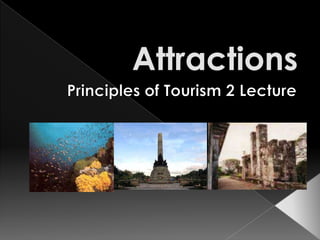
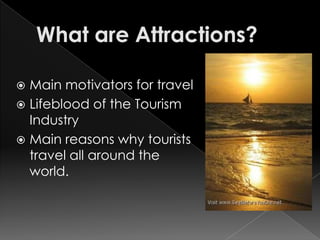
There are 2 classifications of Attractions:

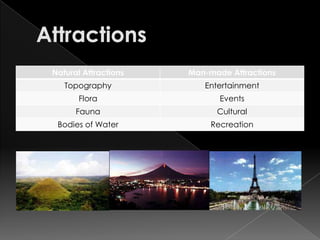
       Natural Attractions           Man-made Attractions
• The unique terrain and         •These are man-made projects
characteristics of a location.   and intangible man-made
                                 events.
Natural Attractions   Man-made Attractions
   Topography            Entertainment
       Flora                 Events
      Fauna                 Cultural
 Bodies of Water           Recreation
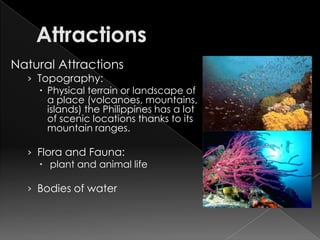
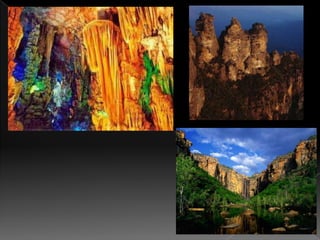
Natural Attractions
  › Topography:
     Physical terrain or landscape of
      a place (volcanoes, mountains,
      islands) the Philippines has a lot
      of scenic locations thanks to its
      mountain ranges.

  › Flora and Fauna:
     plant and animal life

  › Bodies of water
Man-made Attractions
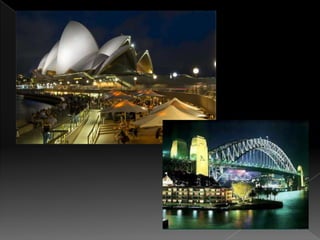
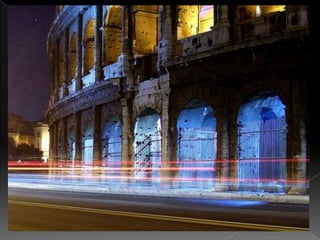
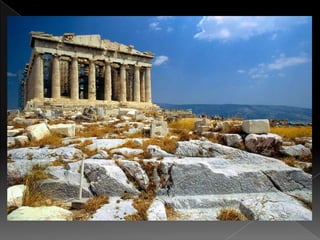
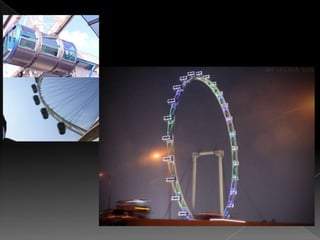
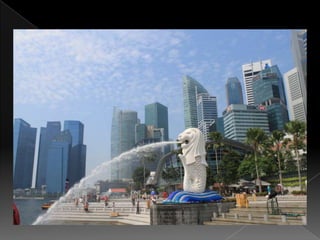
  › Monuments and other man-made
   landmarks
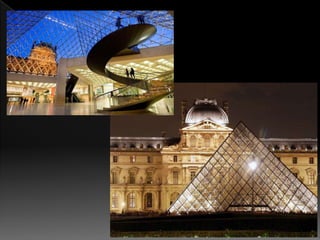
› Museums
   Defined as: “building or institution which
    houses and cares for a collection of artifacts
    and other objects of scientific, artistic or
    historical importance and makes them
    available for public viewing through exhibits
    that may be permanent or temporary”
    (Alexander & Alexander, 2009
Man-made Attractions
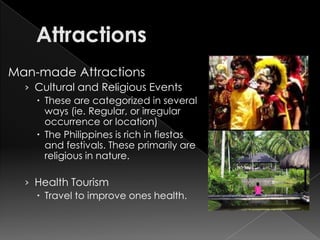
  › Cultural and Religious Events
     These are categorized in several
      ways (ie. Regular, or irregular
      occurrence or location)
     The Philippines is rich in fiestas
      and festivals. These primarily are
      religious in nature.

  › Health Tourism
     Travel to improve ones health.
Man-made Attractions
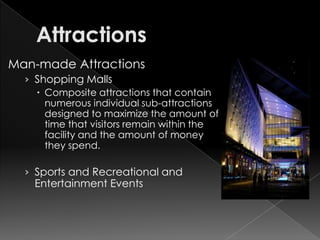
  › Shopping Malls
     Composite attractions that contain
      numerous individual sub-attractions
      designed to maximize the amount of
      time that visitors remain within the
      facility and the amount of money
      they spend.

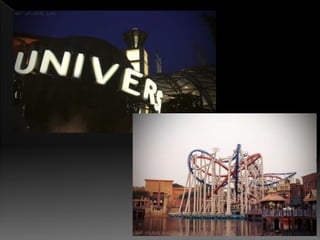
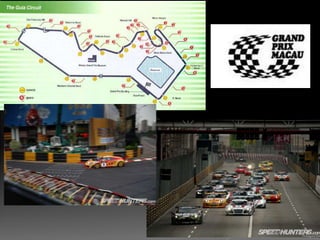
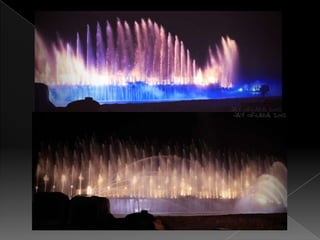
  › Sports and Recreational and
    Entertainment Events
UNESCO World Heritage Sites
  › United Nations Educational, Scientific, and
    Cultural Organization.
  › Designated sites to be preserved or
    conserved.
  › Protection of the natural and cultural
    heritage of that particular place.
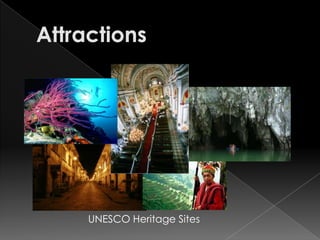
UNESCO Heritage Sites in the Philippines:

  › Baroque Churches of the Philippines
  › Tubbattaha Reef Marine Park
  › Rice Terraces of the Philippine Cordilleras
  › Vigan
  › Puerto Princesa Subterranean River National
    Park
UNESCO Heritage Sites

TSM 102- Attractions lecture

  • 2.
     Main motivatorsfor travel  Lifeblood of the Tourism Industry  Main reasons why tourists travel all around the world.
  • 3.
    There are 2classifications of Attractions: Natural Attractions Man-made Attractions • The unique terrain and •These are man-made projects characteristics of a location. and intangible man-made events.
  • 4.
    Natural Attractions Man-made Attractions Topography Entertainment Flora Events Fauna Cultural Bodies of Water Recreation
  • 5.
    Natural Attractions › Topography:  Physical terrain or landscape of a place (volcanoes, mountains, islands) the Philippines has a lot of scenic locations thanks to its mountain ranges. › Flora and Fauna:  plant and animal life › Bodies of water
  • 7.
    Man-made Attractions › Monuments and other man-made landmarks
  • 13.
    › Museums  Defined as: “building or institution which houses and cares for a collection of artifacts and other objects of scientific, artistic or historical importance and makes them available for public viewing through exhibits that may be permanent or temporary” (Alexander & Alexander, 2009
  • 15.
    Man-made Attractions › Cultural and Religious Events  These are categorized in several ways (ie. Regular, or irregular occurrence or location)  The Philippines is rich in fiestas and festivals. These primarily are religious in nature. › Health Tourism  Travel to improve ones health.
  • 16.
    Man-made Attractions › Shopping Malls  Composite attractions that contain numerous individual sub-attractions designed to maximize the amount of time that visitors remain within the facility and the amount of money they spend. › Sports and Recreational and Entertainment Events
  • 20.
    UNESCO World HeritageSites › United Nations Educational, Scientific, and Cultural Organization. › Designated sites to be preserved or conserved. › Protection of the natural and cultural heritage of that particular place.
  • 21.
    UNESCO Heritage Sitesin the Philippines: › Baroque Churches of the Philippines › Tubbattaha Reef Marine Park › Rice Terraces of the Philippine Cordilleras › Vigan › Puerto Princesa Subterranean River National Park
  • 22.

Editor's Notes

  • #3 Without attractions, the rest of the value chain will be rendered useless.