The triaxial compression test is used to measure the shear strength of soils. [1] It involves placing a saturated soil specimen in a rubber membrane inside a triaxial cell. Cell pressure is applied to saturate the sample while maintaining drainage conditions. [2] Axial stress is then applied through a piston to induce shear failure while cell pressure is kept constant. There are three main types of triaxial tests based on drainage conditions during shear: consolidated-drained (CD), consolidated-undrained (CU), and unconsolidated-undrained (UU). [3] The test allows accurate measurement of stress-strain behavior and pore pressure changes in soil specimens under controlled laboratory conditions.
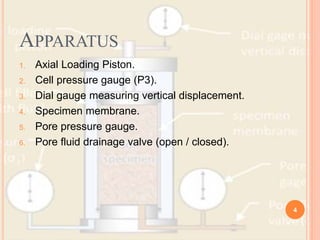
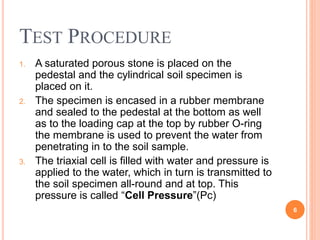
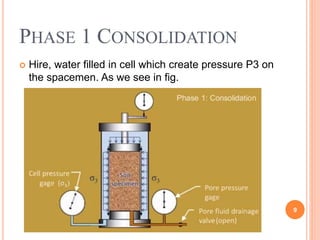
![Apparatus diagram
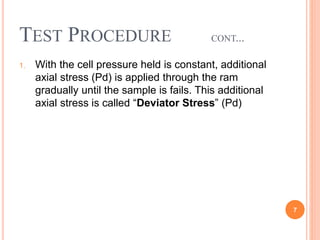
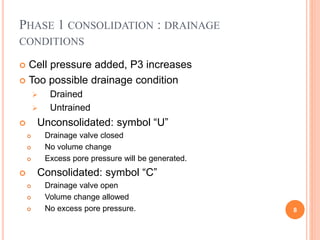
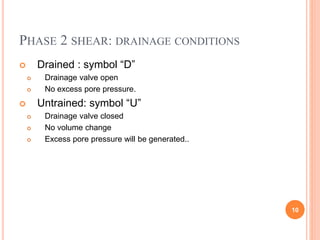
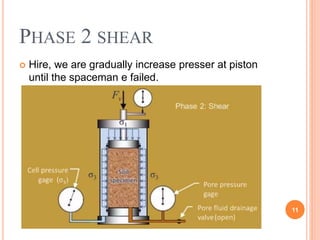
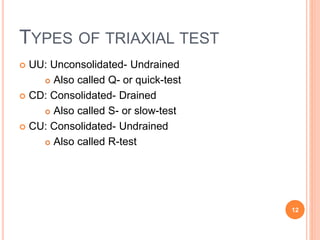
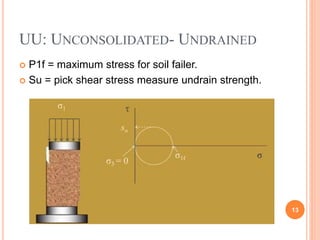
5
[1]](https://image.slidesharecdn.com/trixialtrest-170324073440/85/Trixial-test-5-320.jpg)



![Geotechnical Engineering-II [Lec #5: Triaxial Compression Test]](https://cdn.slidesharecdn.com/ss_thumbnails/5-180930132716-thumbnail.jpg?width=640&height=640&fit=bounds)


