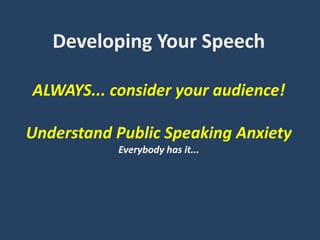
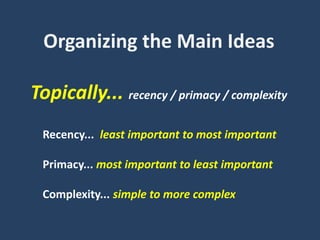
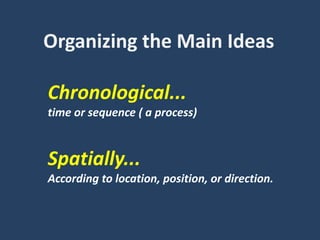
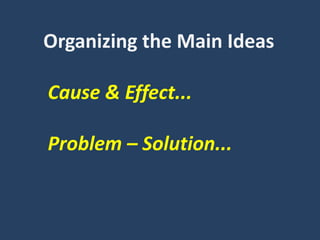
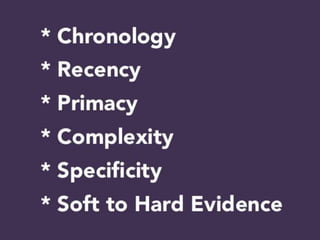
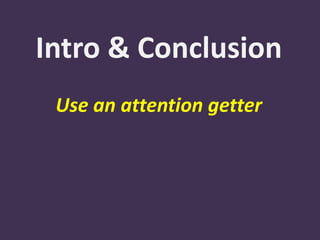
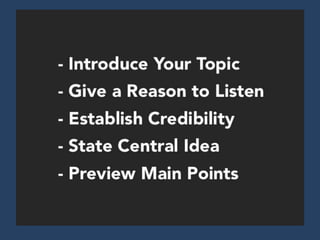
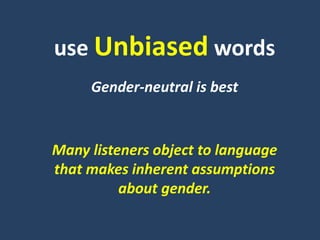
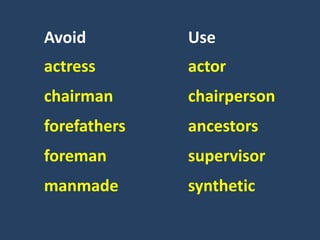
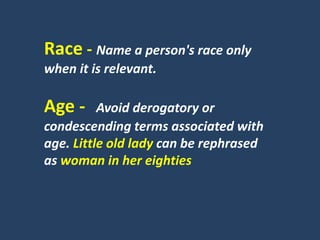
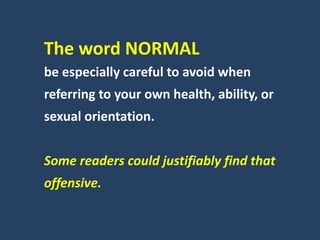
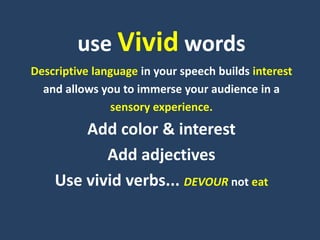
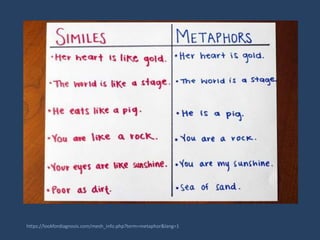
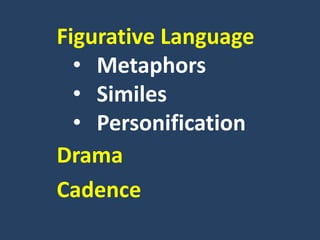
This document provides guidance on developing an effective informative speech. It emphasizes that informative speeches should just present facts to allow the audience to draw their own conclusions, rather than being persuasive. It offers tips for organizing the main ideas through various structures like chronological, spatial, cause-and-effect, and problem-solution. It also stresses the importance of signposting to guide the audience, using specific language, avoiding biased terms, and employing figurative language techniques. Effective verbal delivery and a strong introduction are also highlighted as essential elements of a successful informative speech.


























































![CHAPTER 5 [Autosaved].pptx](https://cdn.slidesharecdn.com/ss_thumbnails/chapter5autosaved-230218034729-cee31ba9-thumbnail.jpg?width=640&height=640&fit=bounds)


