TRANSFORMER 
Group no. – 13 
First year bridge course 
By :- 
RISHI MERVANA 14BEEEG025 
NISARG AMIN 14BEEEG012 
URVISH PATEL 14BEEEM032 
DARSHAN MAHAVAR 14BEEEG029 
Guide Teacher :- S.M.Pujara
Introduction: 
The alternating current has 
several advantages over direct 
current is that, 
Alternating Current can be easily 
transferable from low to high 
voltage 
Alternating voltage can be raised 
or lowered as per requirement by a 
static device called 
TRANSFORMER
What is a transformer? 
 A static piece of apparatus by means of 
which an electrical power is transferred 
from one alternating current circuit to 
another electrical circuit 
 There is no electrical contact between 
them. 
 The desire change in voltage or current, 
without any change in frequency. 
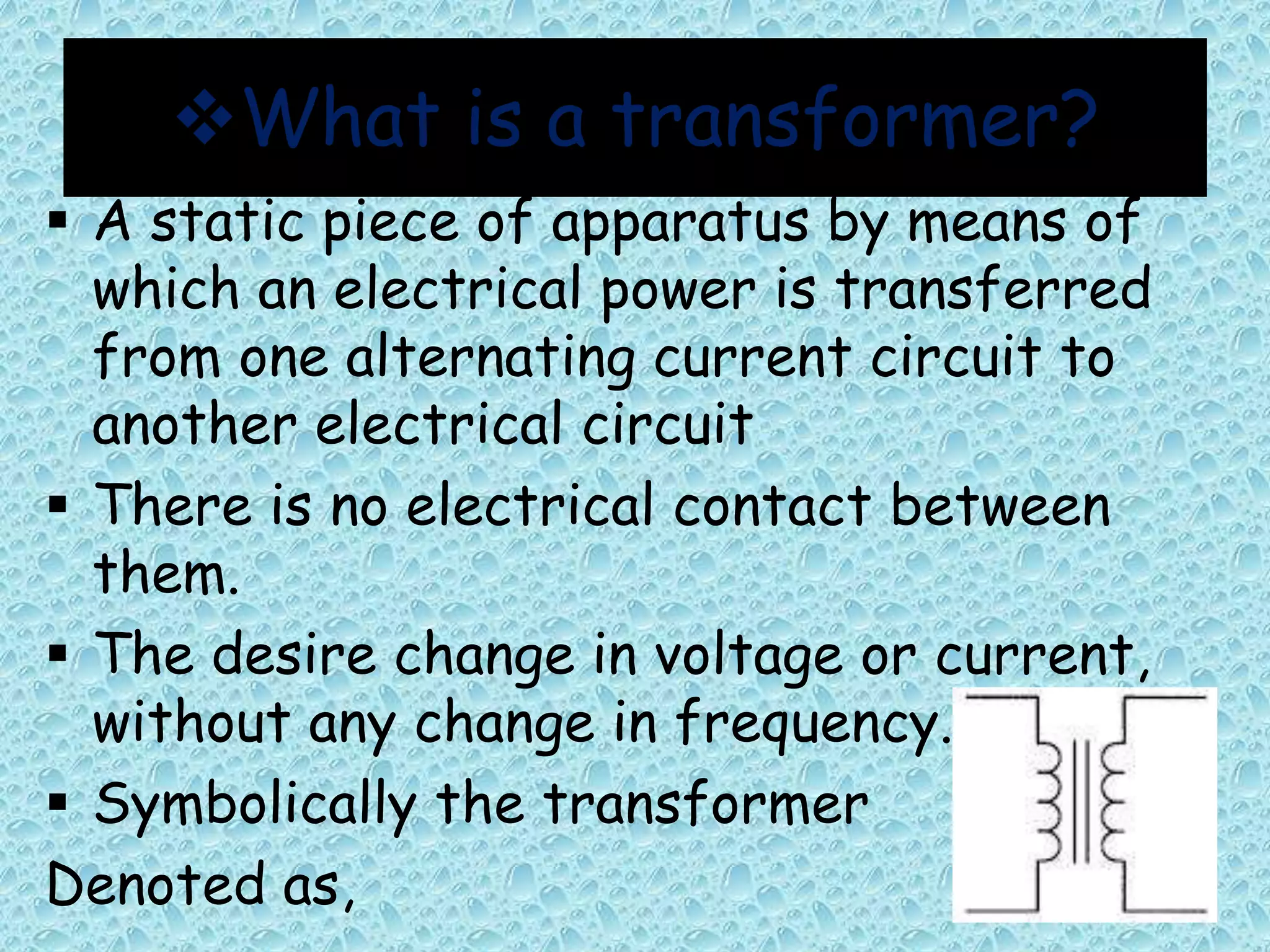
 Symbolically the transformer 
Denoted as,
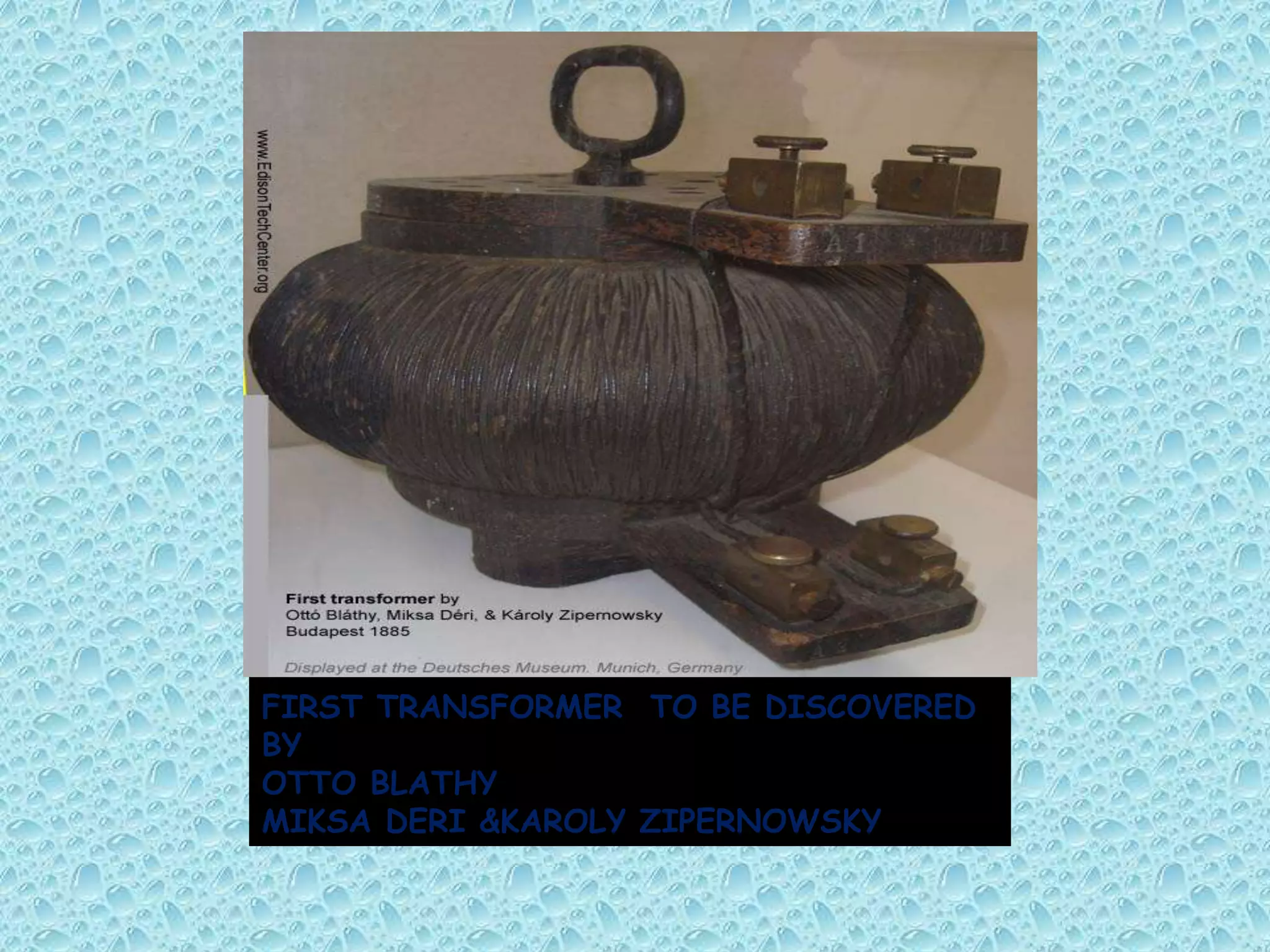
FIRST TRANSFORMER TO BE DISCOVERED 
BY 
OTTO BLATHY 
MIKSA DERI &KAROLY ZIPERNOWSKY
Structure of Transformer: 
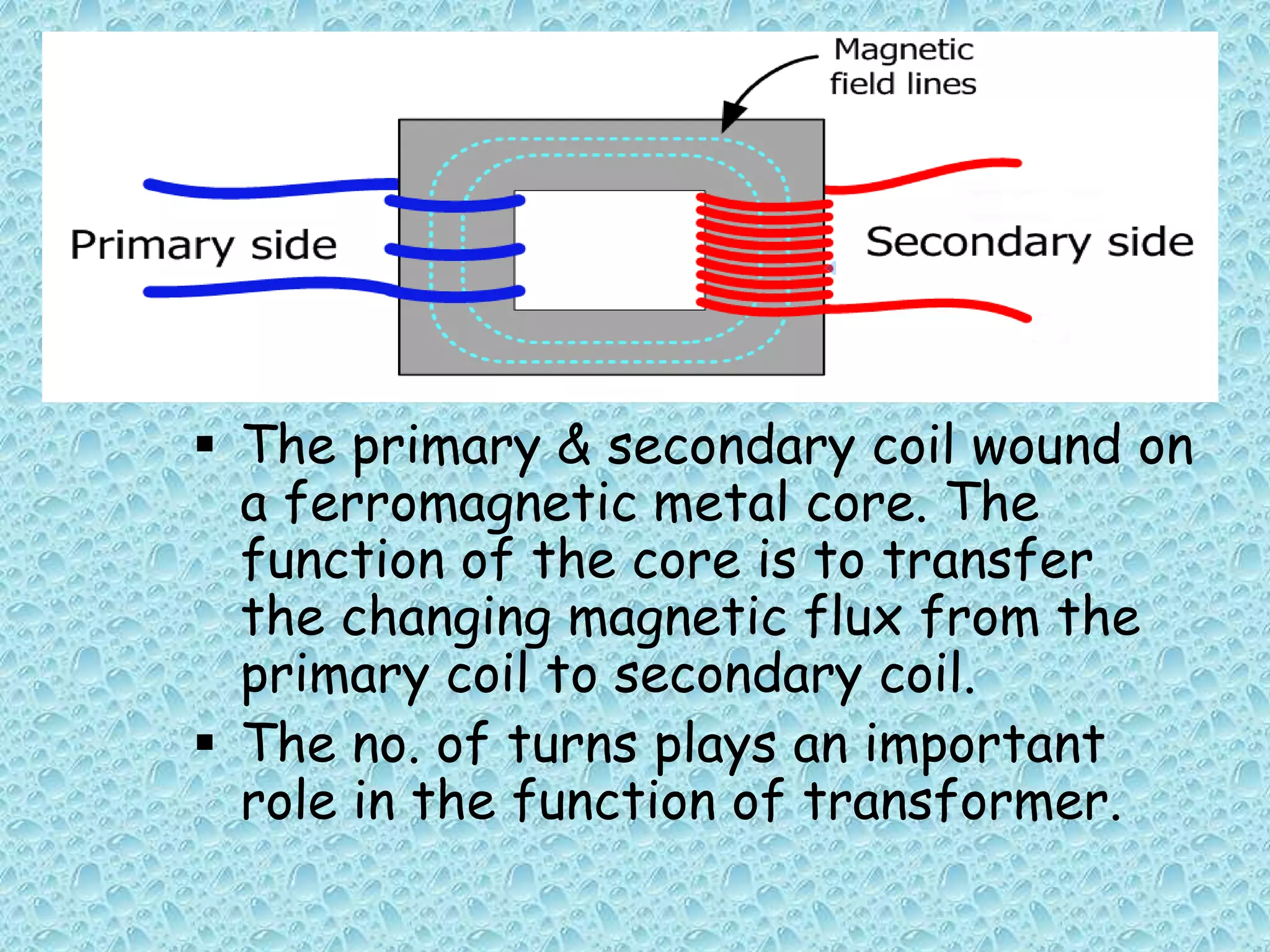
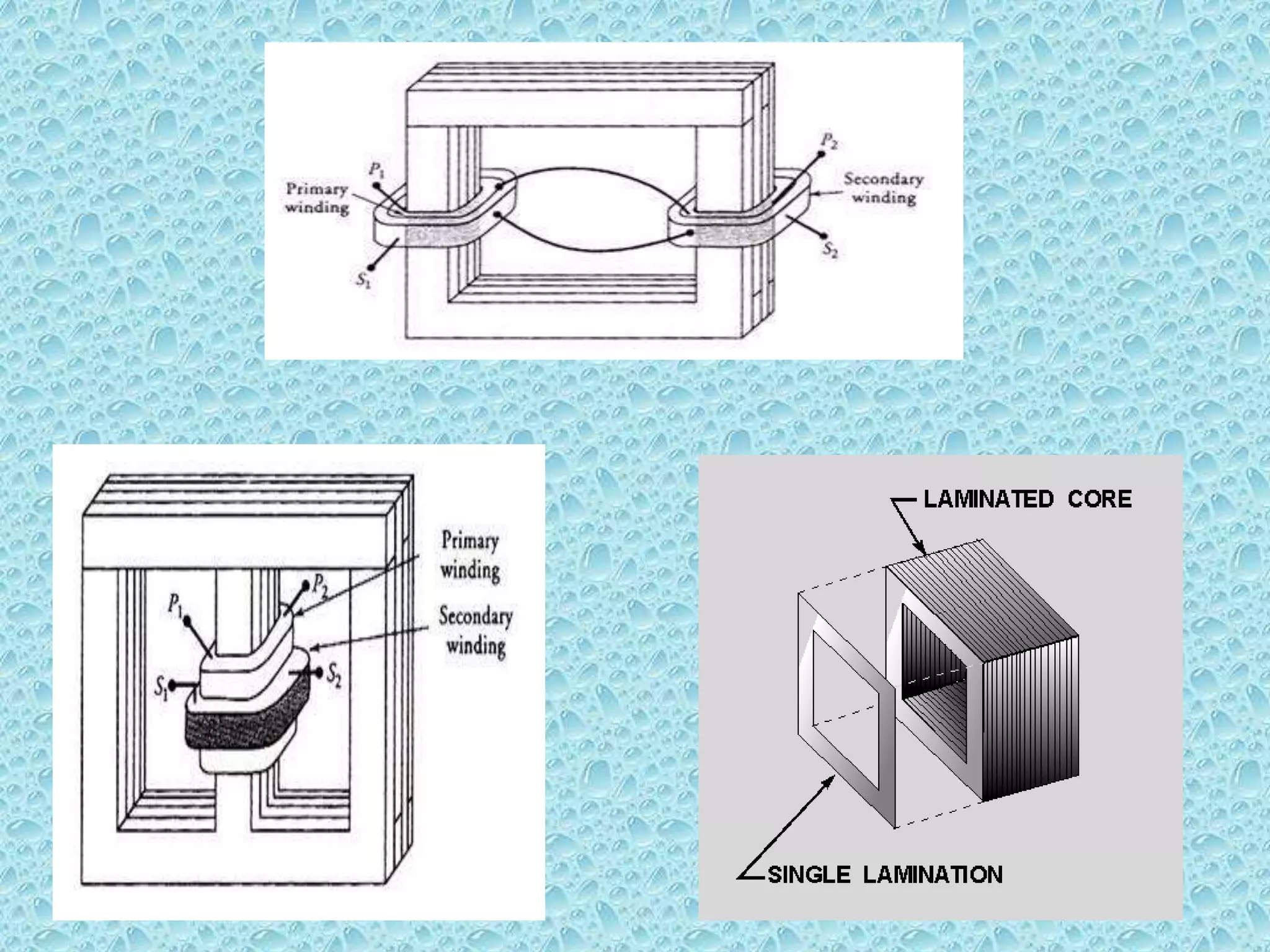
 The transformer consists of 2 inductive coils, 
they are electrically separated but linked 
through a common magnetic circuit. They have 
high mutual induction 
 One of them is connected to a source of 
alternating voltage. This coil in which electrical 
energy is fed with the help of source called 
primary winding(P). 
 The other winding is connected to a load. The 
electrical energy is transformed to this winding 
drawn out to the load. This winding is called 
secondary winding(S).
 The primary & secondary coil wound on 
a ferromagnetic metal core. The 
function of the core is to transfer 
the changing magnetic flux from the 
primary coil to secondary coil. 
 The no. of turns plays an important 
role in the function of transformer.
Working Principle: 
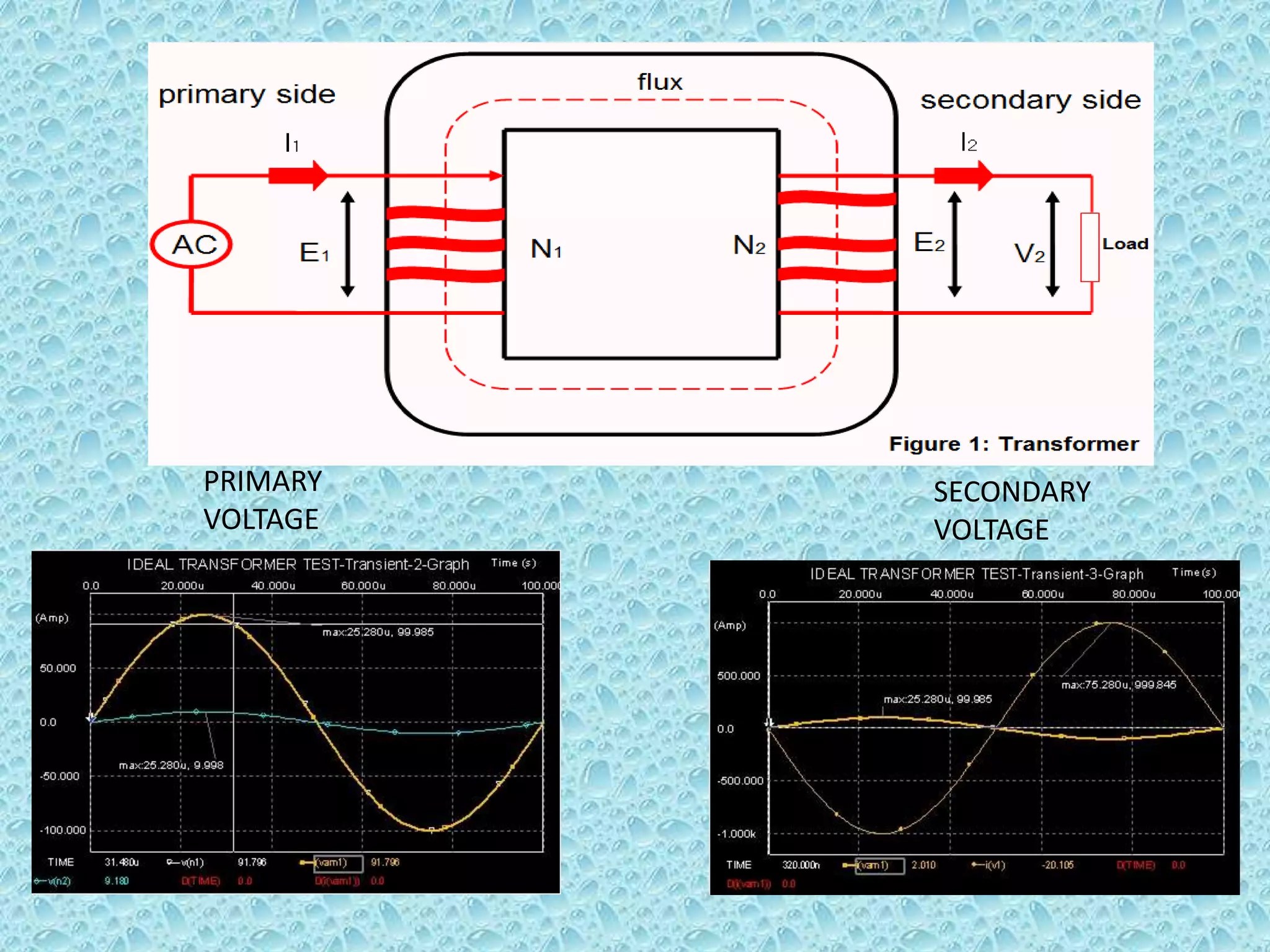
 The transformer works in the principal of 
mutual induction. 
 “ The principle of mutual induction states 
that when 2 coils are inductively coupled 
and if the current in coil change uniformly 
then the e.m.f induced in the other coil. 
This e.m.f can drive a current when a 
closed path is provided to it.” 
 When an Alternating current flows in 
Primary coil, a changing magnetic flux is 
generated around the primary coil.
 The changing magnetic flux is transferred to 
the secondary coil through the iron core. 
 The changing magnetic flux is cut by the 
secondary coil, hence induces e.m.f. in the 
secondary coil. 
 Now if load is connected to a secondary 
winding, this e.m.f. drives a current through it. 
 The magnitude of the output voltage can be 
controlled by the ratio of the no. of primary 
coil & secondary coil. 
 “The frequency of mutually induced e.m.f as 
same that of the alternating source which 
supplying energy to the primary winding”
PRIMARY 
VOLTAGE 
SECONDARY 
VOLTAGE
Construction: 
 There are 2 basics of transformer contraction. 
1. Magnetic Core 
2. Windings or coils 
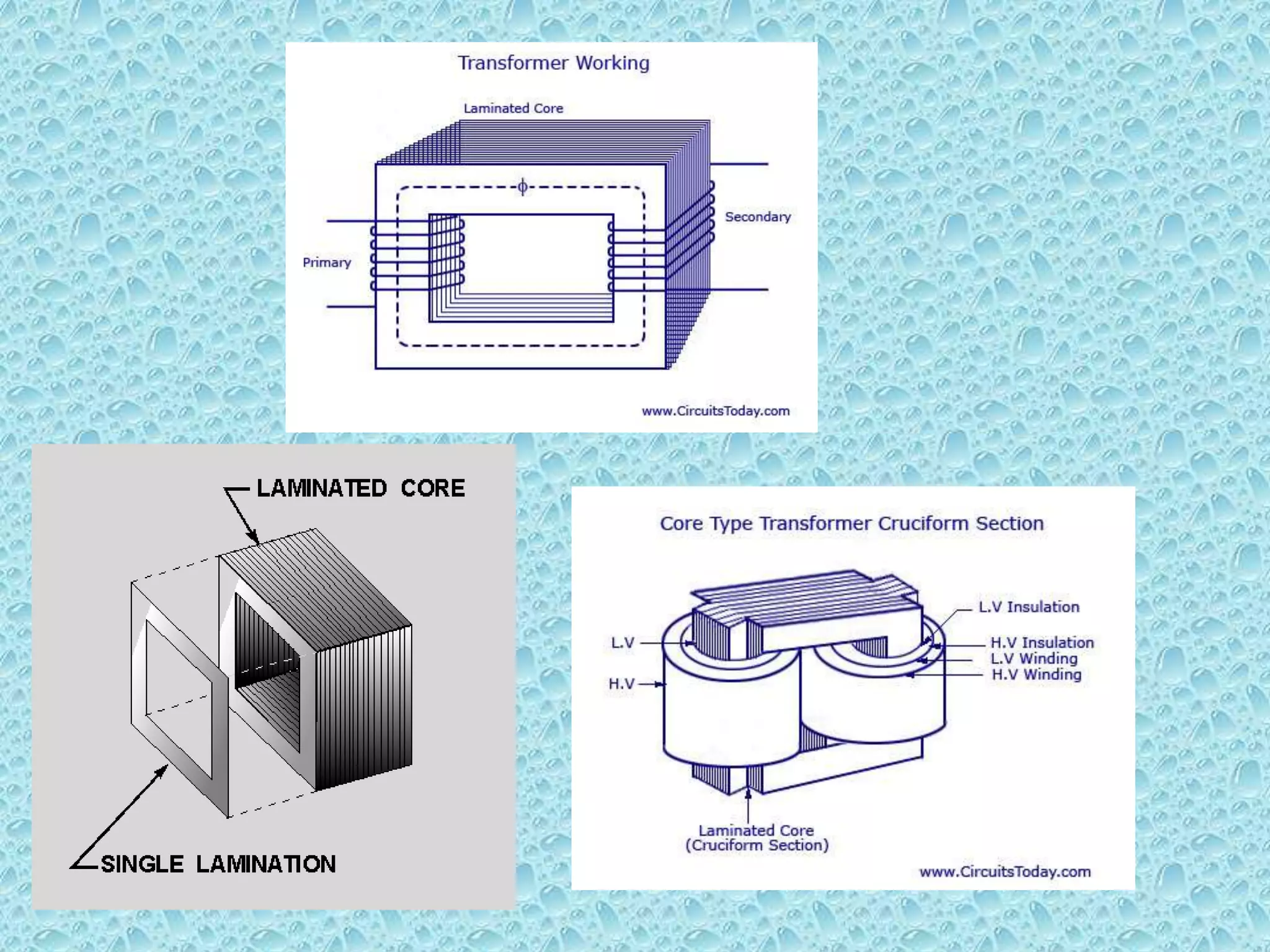
 MAGNETIC CORE: 
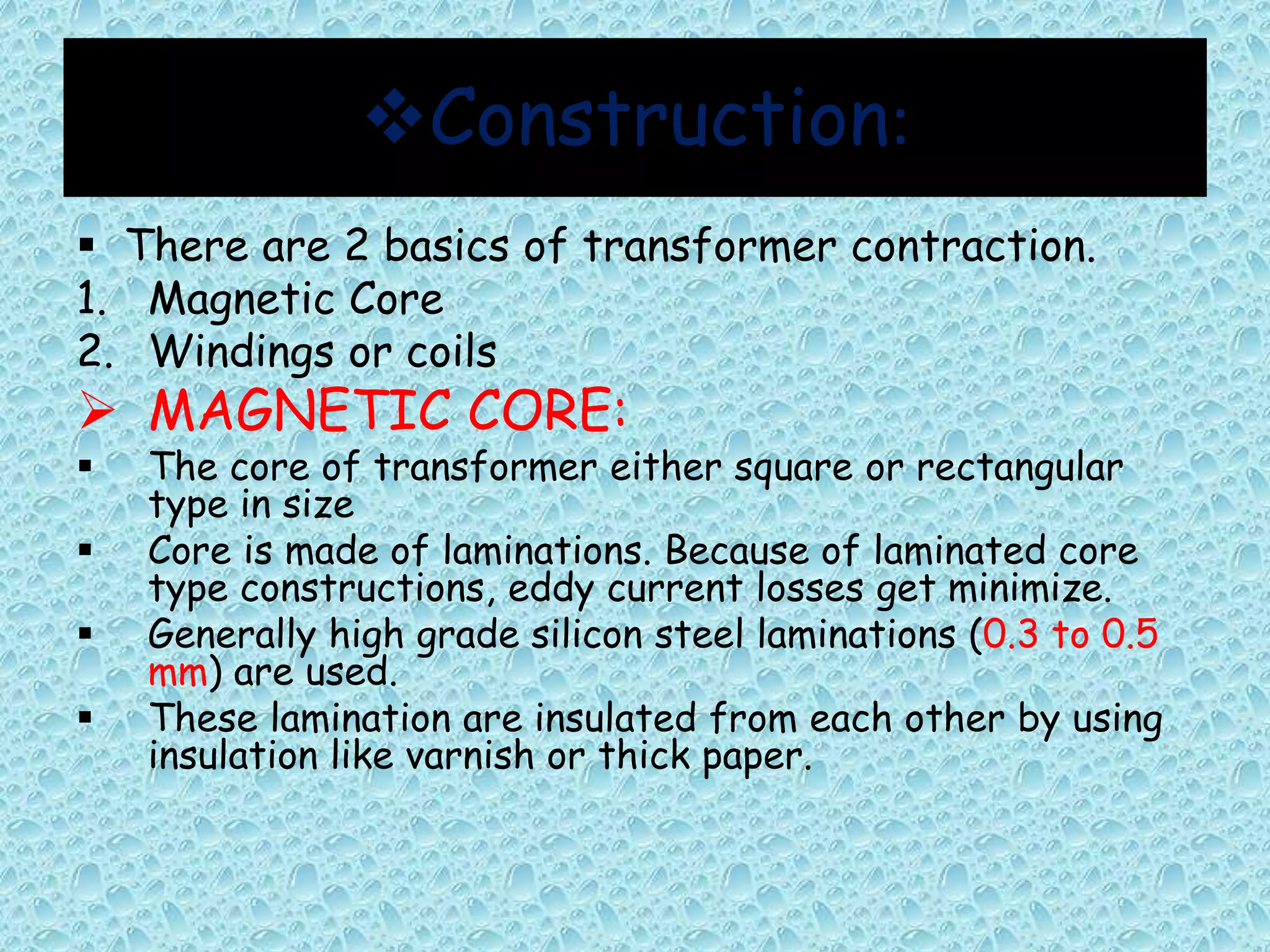
 The core of transformer either square or rectangular 
type in size 
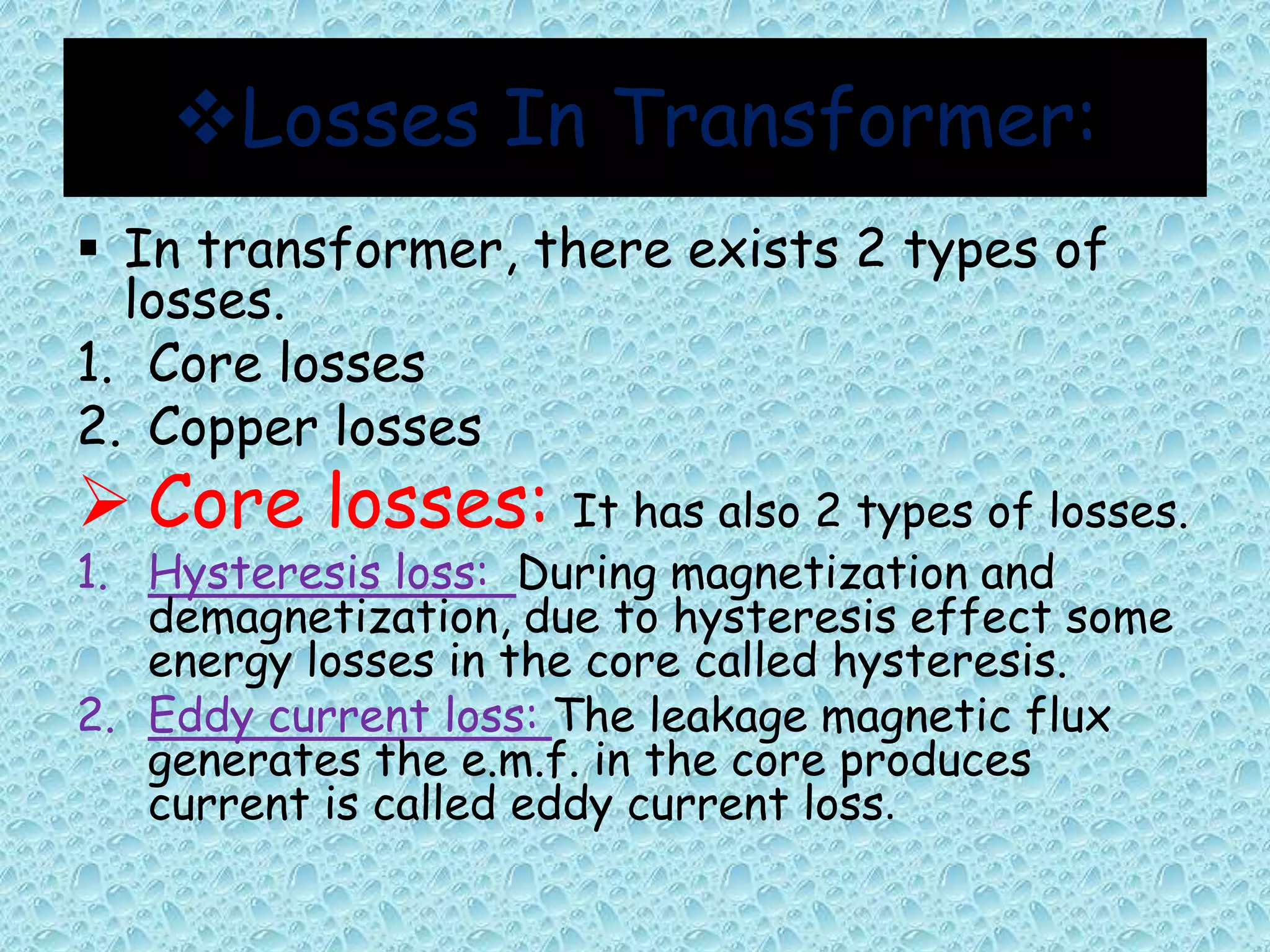
 Core is made of laminations. Because of laminated core 
type constructions, eddy current losses get minimize. 
 Generally high grade silicon steel laminations (0.3 to 0.5 
mm) are used. 
 These lamination are insulated from each other by using 
insulation like varnish or thick paper.
Windings: 
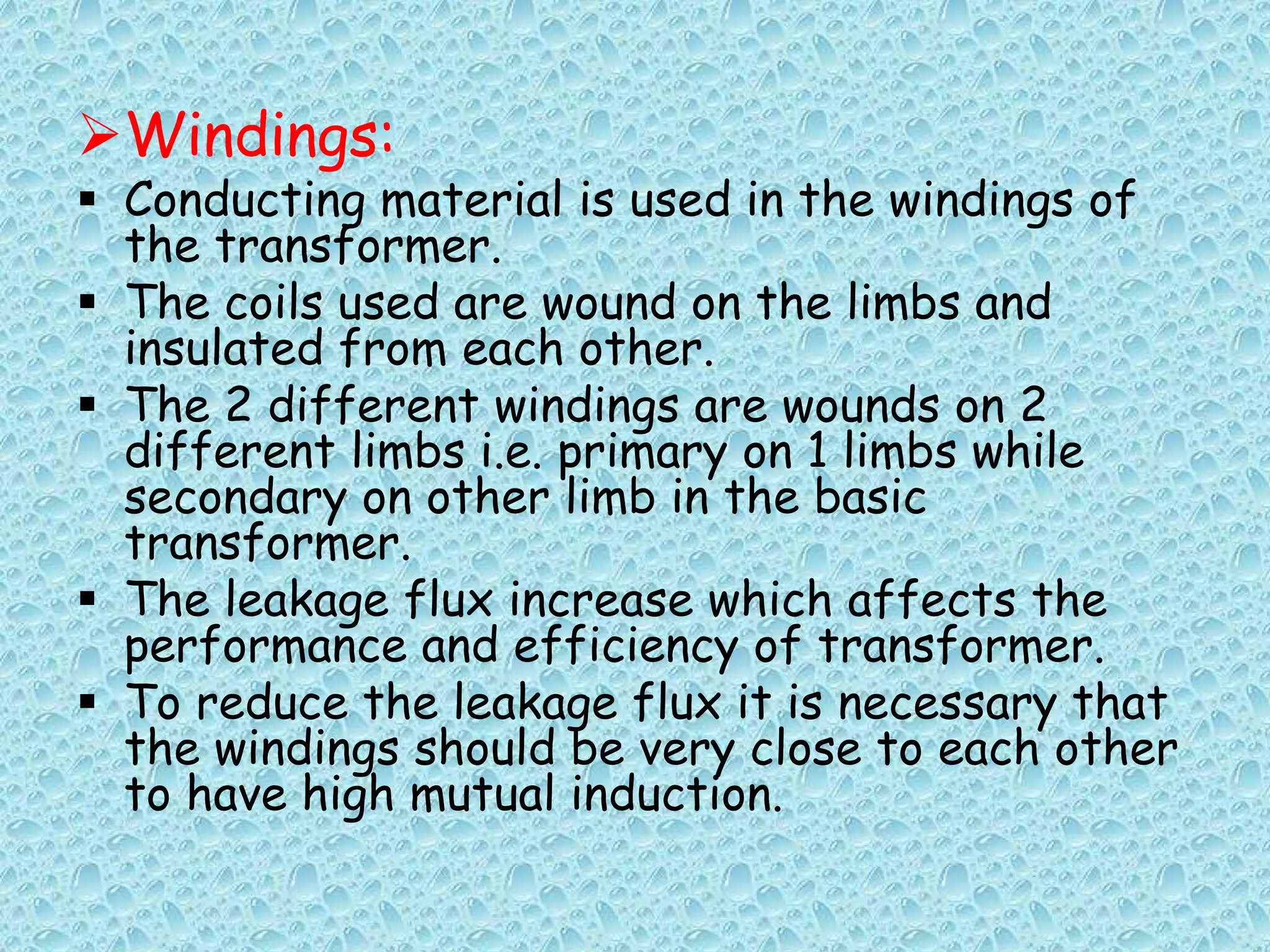
 Conducting material is used in the windings of 
the transformer. 
 The coils used are wound on the limbs and 
insulated from each other. 
 The 2 different windings are wounds on 2 
different limbs i.e. primary on 1 limbs while 
secondary on other limb in the basic 
transformer. 
 The leakage flux increase which affects the 
performance and efficiency of transformer. 
 To reduce the leakage flux it is necessary that 
the windings should be very close to each other 
to have high mutual induction.
Core type Construction: 
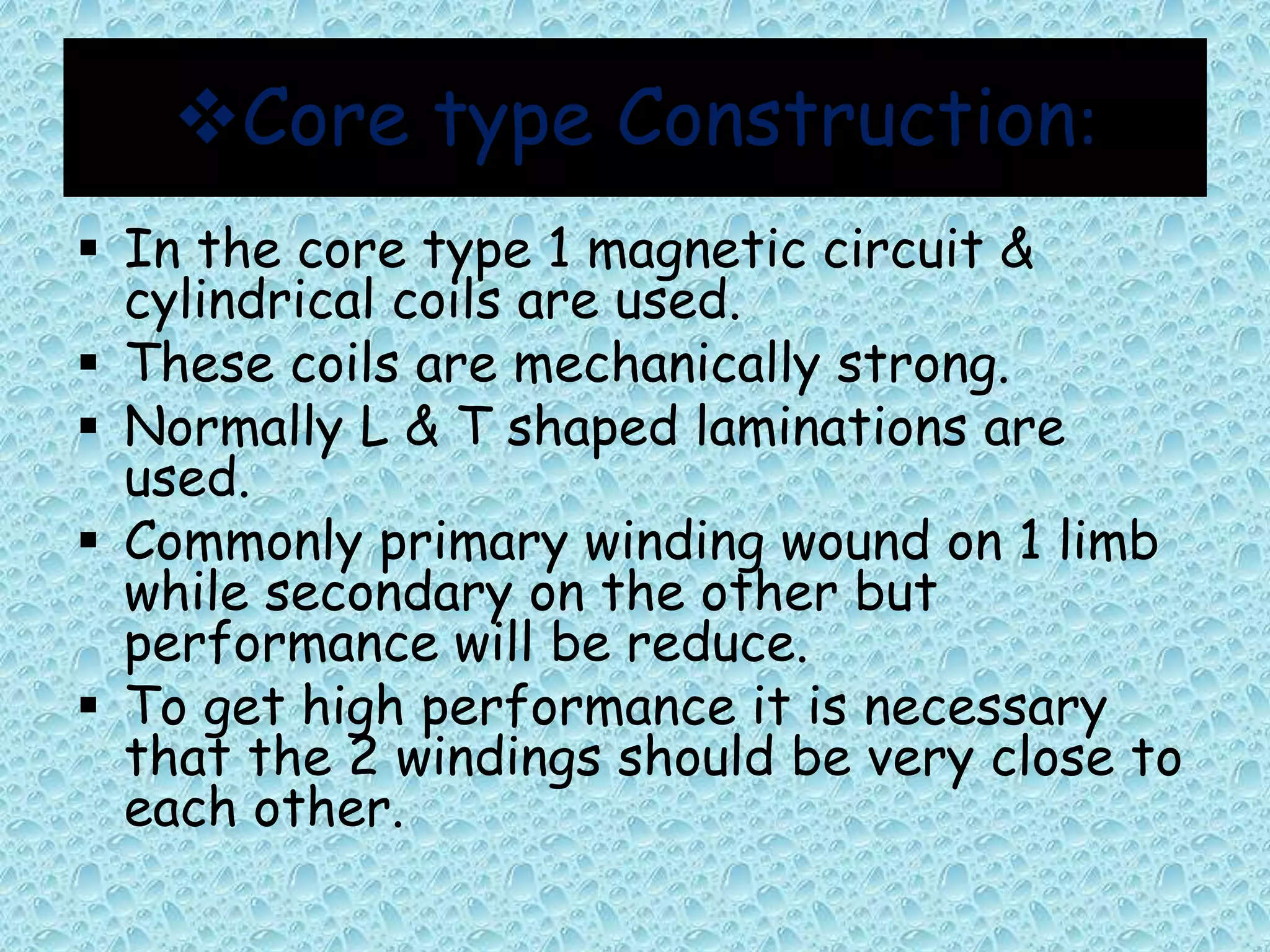
 In the core type 1 magnetic circuit & 
cylindrical coils are used. 
 These coils are mechanically strong. 
 Normally L & T shaped laminations are 
used. 
 Commonly primary winding wound on 1 limb 
while secondary on the other but 
performance will be reduce. 
 To get high performance it is necessary 
that the 2 windings should be very close to 
each other.
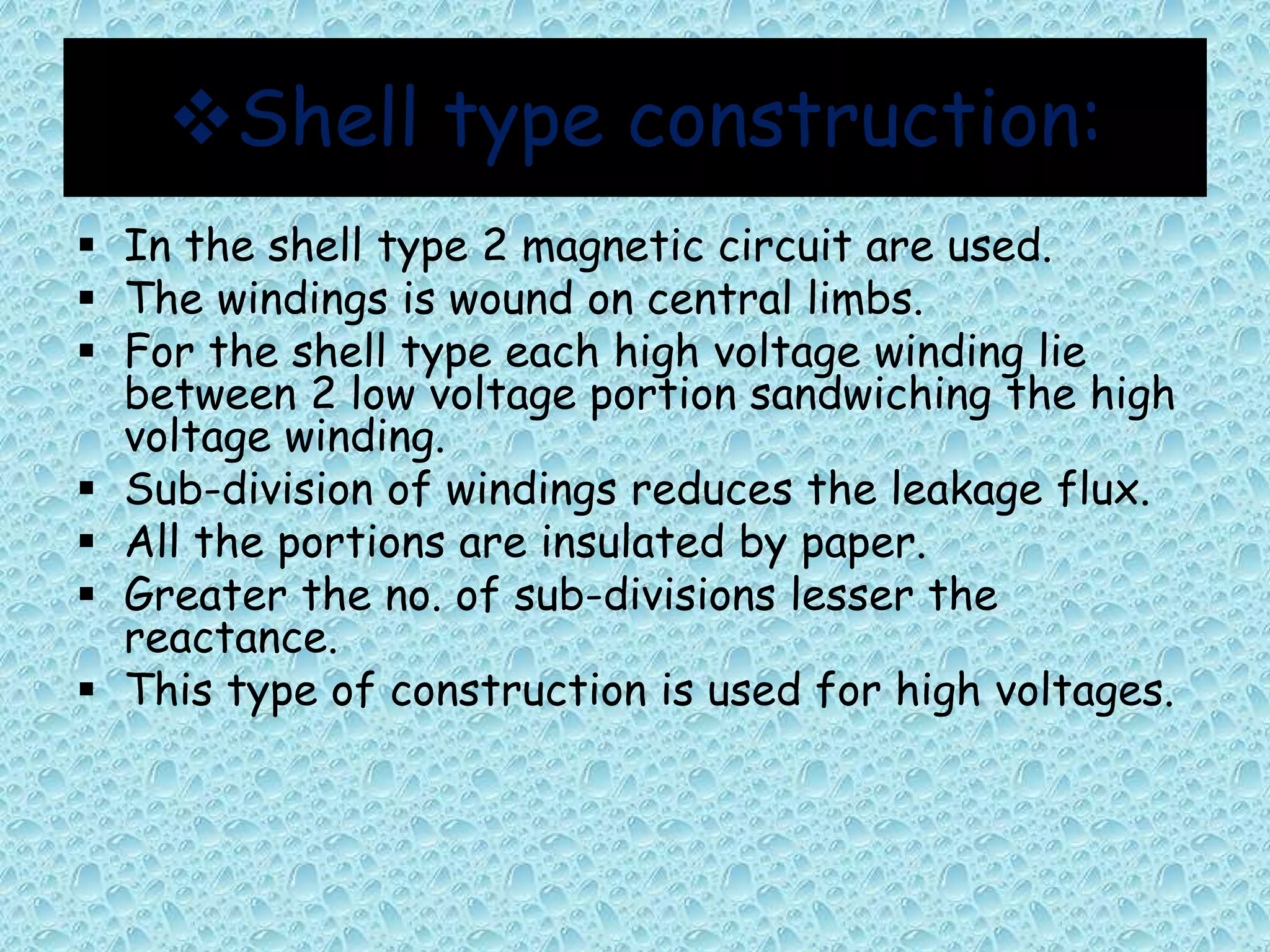
Shell type construction: 
 In the shell type 2 magnetic circuit are used. 
 The windings is wound on central limbs. 
 For the shell type each high voltage winding lie 
between 2 low voltage portion sandwiching the high 
voltage winding. 
 Sub-division of windings reduces the leakage flux. 
 All the portions are insulated by paper. 
 Greater the no. of sub-divisions lesser the 
reactance. 
 This type of construction is used for high voltages.
Losses In Transformer: 
 In transformer, there exists 2 types of 
losses. 
1. Core losses 
2. Copper losses 
 Core losses: It has also 2 types of losses. 
1. Hysteresis loss: During magnetization and 
demagnetization, due to hysteresis effect some 
energy losses in the core called hysteresis. 
2. Eddy current loss: The leakage magnetic flux 
generates the e.m.f. in the core produces 
current is called eddy current loss.
Copper losses 
 The copper losses is due to power wasted 
in the form of I2r due to resistance of 
primary and secondary. The magnitude of 
copper losses depend upon the current 
flowing through these coils. 
“The iron losses depend on the supply voltage 
while the copper losses depend upon the 
current. The losses are not dependent on 
the phase angle between the voltage and 
current.”
Types of transformer: 
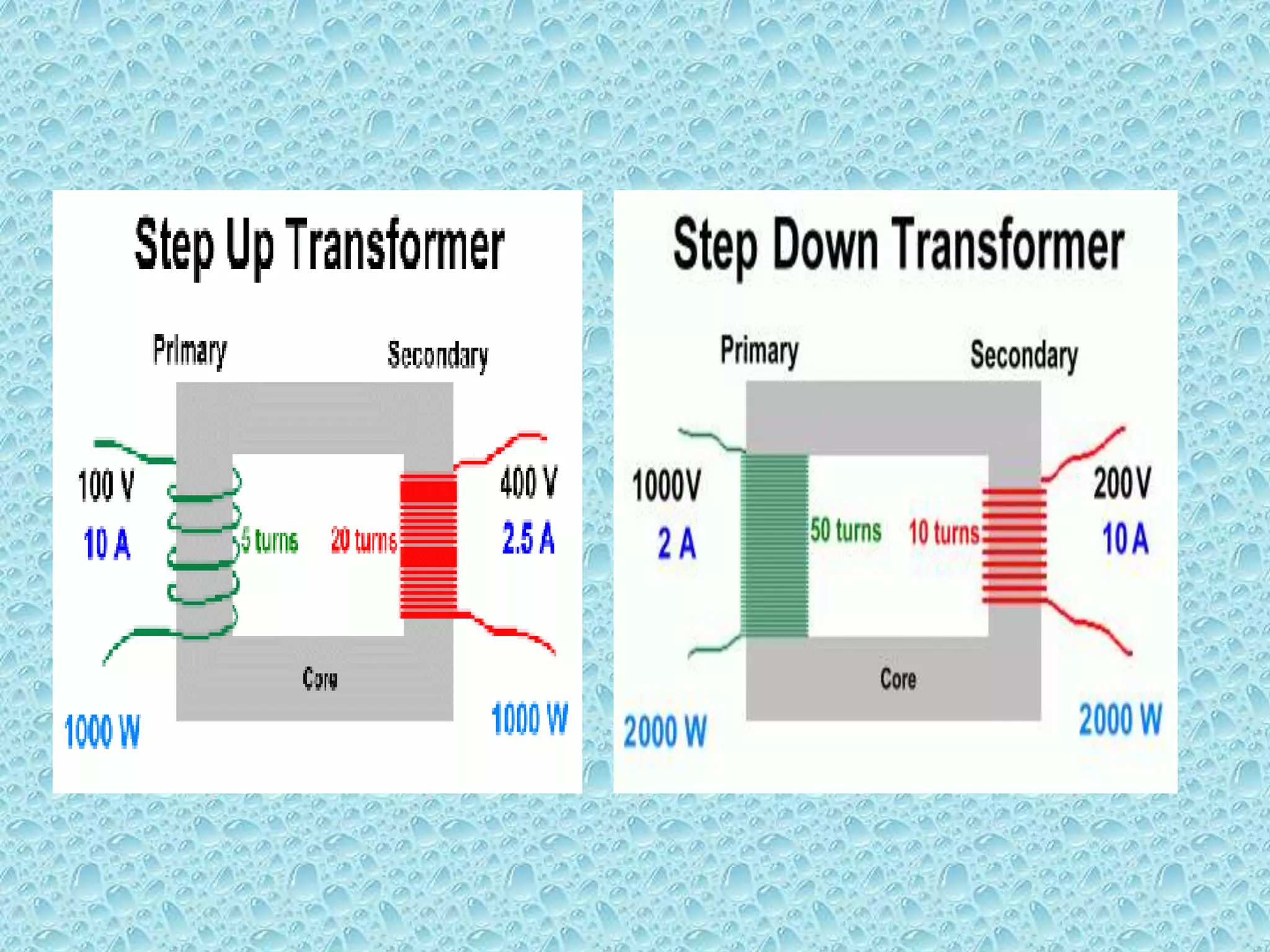
Step up transformer 
 No. of secondary 
windings are greater 
than the no. of primary 
windings(Ns> Np). 
 It converts low 
alternate voltage to 
high alternate voltage. 
 This type of 
transformer is called 
step up transformer. 
Step down transformer 
 No. of primary windings 
are greater than the no. 
of secondary windings 
(Np> Ns). 
 It converts high 
alternate voltage to low 
alternate voltage. 
 This type of 
transformer is called 
step down transformer.
Ideal V/S Practice 
Transformer: 
A transformer is said to be ideal if it satisfies 
the following properties, but no transformer is 
ideal in practice. 
 It has no losses 
 Windings resistance are zero 
 There is no flux leakage 
 Small current is required to produce the 
magnetic field 
While the practical transformer has winding 
resistance, some leakage flux and has little bit 
losses.
Can a transformer step up or step down 
the DC current or voltage? 
 The DC supply cannot be used for 
transformer. 
 Because the transformer works on the 
principle of mutual induction, for which the 
current in the coil changes uniformly. If 
DC supply is applied the current does not 
change uniformly due to constant supply 
and transformer will not work. 
“The DC supply may cause the transformer 
to damage permanently”
Applications & Uses: 
 The transformer is used in Television and 
photocopy machines. 
 The transformer(ballast transformer) are also 
installed in fluorescent tube lights. 
 The transmission & distribution of alternating 
power is possible by transformer. 
 Simple camera flash uses fly back transformer. 
 Signals and audio transformer are used couple 
in amplifier. 
“Today transformer has become an essential part 
of electronics engineering”
THANKS ALL!!!

Transformer

  • 1.
    TRANSFORMER Group no.– 13 First year bridge course By :- RISHI MERVANA 14BEEEG025 NISARG AMIN 14BEEEG012 URVISH PATEL 14BEEEM032 DARSHAN MAHAVAR 14BEEEG029 Guide Teacher :- S.M.Pujara
  • 2.
    Introduction: The alternatingcurrent has several advantages over direct current is that, Alternating Current can be easily transferable from low to high voltage Alternating voltage can be raised or lowered as per requirement by a static device called TRANSFORMER
  • 3.
    What is atransformer?  A static piece of apparatus by means of which an electrical power is transferred from one alternating current circuit to another electrical circuit  There is no electrical contact between them.  The desire change in voltage or current, without any change in frequency.  Symbolically the transformer Denoted as,
  • 4.
    FIRST TRANSFORMER TOBE DISCOVERED BY OTTO BLATHY MIKSA DERI &KAROLY ZIPERNOWSKY
  • 5.
    Structure of Transformer:  The transformer consists of 2 inductive coils, they are electrically separated but linked through a common magnetic circuit. They have high mutual induction  One of them is connected to a source of alternating voltage. This coil in which electrical energy is fed with the help of source called primary winding(P).  The other winding is connected to a load. The electrical energy is transformed to this winding drawn out to the load. This winding is called secondary winding(S).
  • 6.
     The primary& secondary coil wound on a ferromagnetic metal core. The function of the core is to transfer the changing magnetic flux from the primary coil to secondary coil.  The no. of turns plays an important role in the function of transformer.
  • 7.
    Working Principle: The transformer works in the principal of mutual induction.  “ The principle of mutual induction states that when 2 coils are inductively coupled and if the current in coil change uniformly then the e.m.f induced in the other coil. This e.m.f can drive a current when a closed path is provided to it.”  When an Alternating current flows in Primary coil, a changing magnetic flux is generated around the primary coil.
  • 8.
     The changingmagnetic flux is transferred to the secondary coil through the iron core.  The changing magnetic flux is cut by the secondary coil, hence induces e.m.f. in the secondary coil.  Now if load is connected to a secondary winding, this e.m.f. drives a current through it.  The magnitude of the output voltage can be controlled by the ratio of the no. of primary coil & secondary coil.  “The frequency of mutually induced e.m.f as same that of the alternating source which supplying energy to the primary winding”
  • 9.
  • 10.
    Construction:  Thereare 2 basics of transformer contraction. 1. Magnetic Core 2. Windings or coils  MAGNETIC CORE:  The core of transformer either square or rectangular type in size  Core is made of laminations. Because of laminated core type constructions, eddy current losses get minimize.  Generally high grade silicon steel laminations (0.3 to 0.5 mm) are used.  These lamination are insulated from each other by using insulation like varnish or thick paper.
  • 11.
    Windings:  Conductingmaterial is used in the windings of the transformer.  The coils used are wound on the limbs and insulated from each other.  The 2 different windings are wounds on 2 different limbs i.e. primary on 1 limbs while secondary on other limb in the basic transformer.  The leakage flux increase which affects the performance and efficiency of transformer.  To reduce the leakage flux it is necessary that the windings should be very close to each other to have high mutual induction.
  • 12.
    Core type Construction:  In the core type 1 magnetic circuit & cylindrical coils are used.  These coils are mechanically strong.  Normally L & T shaped laminations are used.  Commonly primary winding wound on 1 limb while secondary on the other but performance will be reduce.  To get high performance it is necessary that the 2 windings should be very close to each other.
  • 14.
    Shell type construction:  In the shell type 2 magnetic circuit are used.  The windings is wound on central limbs.  For the shell type each high voltage winding lie between 2 low voltage portion sandwiching the high voltage winding.  Sub-division of windings reduces the leakage flux.  All the portions are insulated by paper.  Greater the no. of sub-divisions lesser the reactance.  This type of construction is used for high voltages.
  • 16.
    Losses In Transformer:  In transformer, there exists 2 types of losses. 1. Core losses 2. Copper losses  Core losses: It has also 2 types of losses. 1. Hysteresis loss: During magnetization and demagnetization, due to hysteresis effect some energy losses in the core called hysteresis. 2. Eddy current loss: The leakage magnetic flux generates the e.m.f. in the core produces current is called eddy current loss.
  • 17.
    Copper losses The copper losses is due to power wasted in the form of I2r due to resistance of primary and secondary. The magnitude of copper losses depend upon the current flowing through these coils. “The iron losses depend on the supply voltage while the copper losses depend upon the current. The losses are not dependent on the phase angle between the voltage and current.”
  • 18.
    Types of transformer: Step up transformer  No. of secondary windings are greater than the no. of primary windings(Ns> Np).  It converts low alternate voltage to high alternate voltage.  This type of transformer is called step up transformer. Step down transformer  No. of primary windings are greater than the no. of secondary windings (Np> Ns).  It converts high alternate voltage to low alternate voltage.  This type of transformer is called step down transformer.
  • 20.
    Ideal V/S Practice Transformer: A transformer is said to be ideal if it satisfies the following properties, but no transformer is ideal in practice.  It has no losses  Windings resistance are zero  There is no flux leakage  Small current is required to produce the magnetic field While the practical transformer has winding resistance, some leakage flux and has little bit losses.
  • 21.
    Can a transformerstep up or step down the DC current or voltage?  The DC supply cannot be used for transformer.  Because the transformer works on the principle of mutual induction, for which the current in the coil changes uniformly. If DC supply is applied the current does not change uniformly due to constant supply and transformer will not work. “The DC supply may cause the transformer to damage permanently”
  • 22.
    Applications & Uses:  The transformer is used in Television and photocopy machines.  The transformer(ballast transformer) are also installed in fluorescent tube lights.  The transmission & distribution of alternating power is possible by transformer.  Simple camera flash uses fly back transformer.  Signals and audio transformer are used couple in amplifier. “Today transformer has become an essential part of electronics engineering”
  • 23.