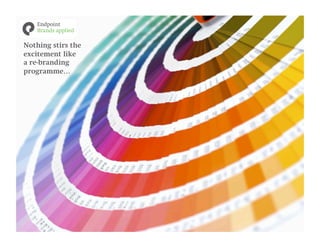
Nothing stirs the
excitement like
a re-branding
programme…
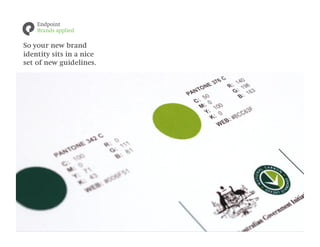
So your new brand
identity sits in a nice
set of new guidelines.
Actual impact is only created through physical application.
Often, organisations wait too long to ask...


•    How are we going to rollout the new ID?
•    How much will it cost?
•    What do we do first and how long will the process take?
•    How do we implement with maximum impact and minimal costs?
•    How do we ensure that all changes take place at the right time?
•    How do we communicate with stakeholders and keep control of the process?
•    What internal resources do we have, and how will we organise them for success?
•    Do we need outside help?


     The implementation can become fragmented with
     control moving away from the brand guardian.
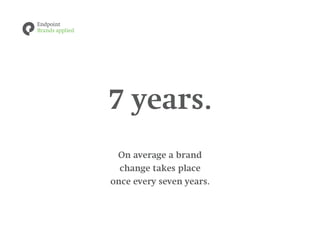
7 years.
 On average a brand
  change takes place
once every seven years.
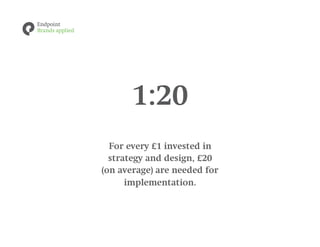
1:20
  For every £1 invested in
  strategy and design, £20
(on average) are needed for
      implementation.
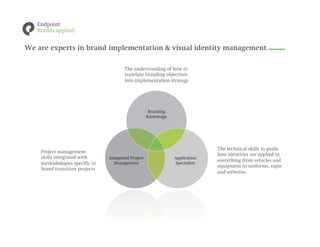
We are experts in brand implementation & visual identity management.

                                    The understanding of how to
                                    translate branding objectives
                                    into implementation strategy.	


                                                                        The technical skills to guide
    Project management
                                                                        how identities are applied to
    skills integrated with
                                                                        everything from vehicles and
    methodologies specific to
                                                                        equipment to uniforms, signs
    brand transition projects	
  
                                                                        and websites.	
  
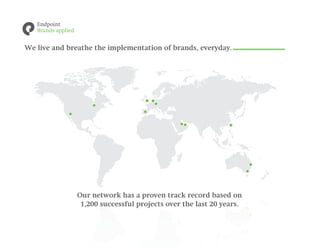
We live and breathe the implementation of brands, everyday.


              Our network has a proven track record based on
               1,200 successful projects over the last 20 years.
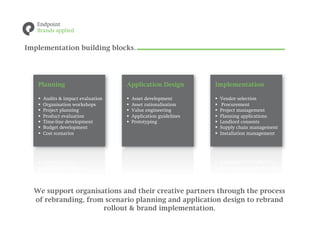
Implementation building blocks.


   Planning                          Application Design            Implementation

       Audits & impact evaluation       Asset development            Vendor selection
       Organisation workshops           Asset rationalisation         Procurement
       Project planning                 Value engineering            Project management
       Product evaluation               Application guidelines       Planning applications
       Time-line development            Prototyping	
                Landlord consents
       Budget development                                             Supply chain management
       Cost scenarios	
                                               Installation management	


  We support organisations and their creative partners through the process
  of rebranding, from scenario planning and application design to rebrand
                     rollout & brand implementation.
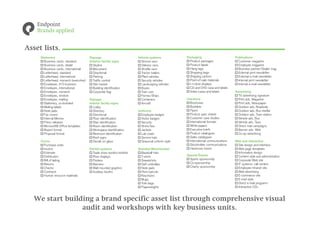
Asset lists.


   We start building a brand specific asset list through comprehensive visual
                 audit and workshops with key business units.
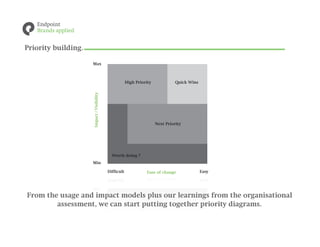
Priority building.


From the usage and impact models plus our learnings from the organisational
        assessment, we can start putting together priority diagrams.
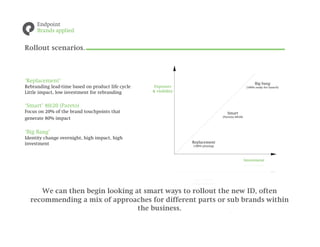
Rollout scenarios.


    We can then begin looking at smart ways to rollout the new ID, often
 recommending a mix of approaches for different parts or sub brands within
                               the business.
Thank You.

Transform: implementation, Tony lorenz

  • 2.
    Nothing stirs the excitementlike a re-branding programme…
  • 3.
    So your newbrand identity sits in a nice set of new guidelines.
  • 4.
    Actual impact isonly created through physical application.
  • 6.
    Often, organisations waittoo long to ask... •  How are we going to rollout the new ID? •  How much will it cost? •  What do we do first and how long will the process take? •  How do we implement with maximum impact and minimal costs? •  How do we ensure that all changes take place at the right time? •  How do we communicate with stakeholders and keep control of the process? •  What internal resources do we have, and how will we organise them for success? •  Do we need outside help? The implementation can become fragmented with control moving away from the brand guardian.
  • 7.
    7 years. Onaverage a brand change takes place once every seven years.
  • 8.
    1:20 Forevery £1 invested in strategy and design, £20 (on average) are needed for implementation.
  • 9.
    We are expertsin brand implementation & visual identity management. The understanding of how to translate branding objectives into implementation strategy.   The technical skills to guide Project management how identities are applied to skills integrated with everything from vehicles and methodologies specific to equipment to uniforms, signs brand transition projects   and websites.  
  • 10.
    We live andbreathe the implementation of brands, everyday. Our network has a proven track record based on 1,200 successful projects over the last 20 years.
  • 11.
    Implementation building blocks. Planning Application Design Implementation   Audits & impact evaluation   Asset development   Vendor selection   Organisation workshops   Asset rationalisation   Procurement   Project planning   Value engineering   Project management   Product evaluation   Application guidelines   Planning applications   Time-line development   Prototyping     Landlord consents   Budget development   Supply chain management   Cost scenarios     Installation management   We support organisations and their creative partners through the process of rebranding, from scenario planning and application design to rebrand rollout & brand implementation.
  • 12.
    Asset lists. We start building a brand specific asset list through comprehensive visual audit and workshops with key business units.
  • 13.
    Priority building. From theusage and impact models plus our learnings from the organisational assessment, we can start putting together priority diagrams.
  • 14.
    Rollout scenarios. We can then begin looking at smart ways to rollout the new ID, often recommending a mix of approaches for different parts or sub brands within the business.
  • 18.