GAME-BASED LEARNING
INTERVENTIONS FOR CHILDREN
Dr Sylvester Arnab
http://sylvesterarnab.com
BLOCK 1
INPUT-SESSION
30 min
GAME-BASED DESIGN PROCESS
No fixed formula
• Lack of standard methodologies or formulaic frameworks that
guarantee success and efficacy
• There are empirical studies that can serve as benchmarks for
establishing scientific validity for the efficacy of using games
to motivate learning and achieve learning outcomes.
• The development does not normally follow a specific set of
guidelines or process
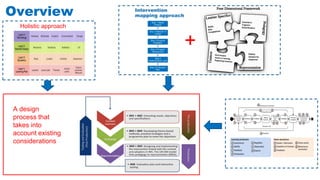
Overview
+
A design
process that
takes into
account existing
considerations
Holistic approach
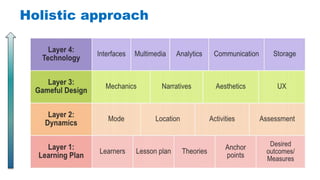
Holistic approach
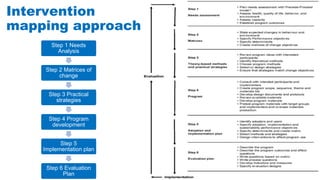
Intervention
mapping approach
Step 1 Needs
Analysis
Step 2 Matrices of
change
Step 3 Practical
strategies
Step 4 Program
development
Step 5
Implementation plan
Step 6 Evaluation
Plan
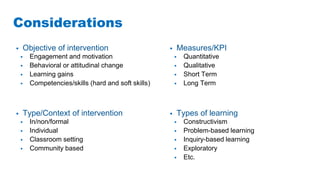
Considerations
• Objective of intervention
• Engagement and motivation
• Behavioral or attitudinal change
• Learning gains
• Competencies/skills (hard and soft skills)
• Type/Context of intervention
• In/non/formal
• Individual
• Classroom setting
• Community based
• Measures/KPI
• Quantitative
• Qualitative
• Short Term
• Long Term
• Types of learning
• Constructivism
• Problem-based learning
• Inquiry-based learning
• Exploratory
• Etc.
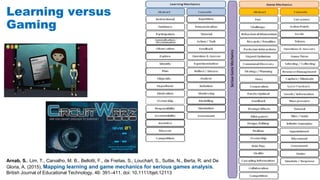
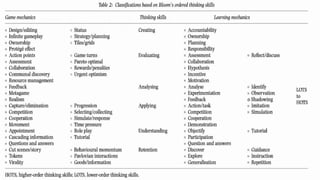
Learning versus
Gaming
Arnab, S., Lim, T., Carvalho, M. B., Bellotti, F., de Freitas, S., Louchart, S., Suttie, N., Berta, R. and De
Gloria, A. (2015), Mapping learning and game mechanics for serious games analysis.
British Journal of Educational Technology, 46: 391–411. doi: 10.1111/bjet.12113
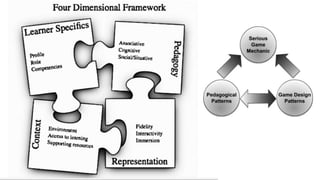
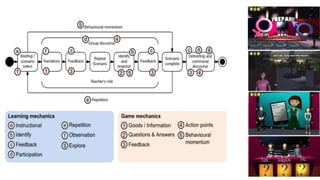
LM-GM mapping
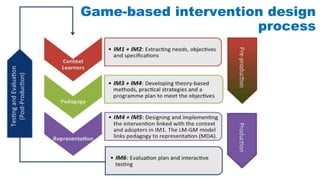
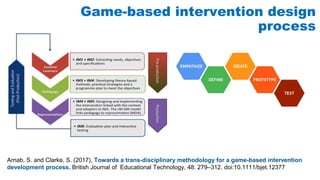
Game-based intervention design
process
Game-based intervention design
process
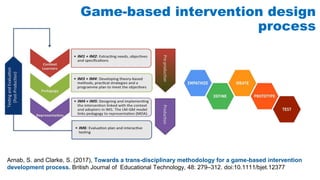
Arnab, S. and Clarke, S. (2017), Towards a trans-disciplinary methodology for a game-based intervention
development process. British Journal of Educational Technology, 48: 279–312. doi:10.1111/bjet.12377
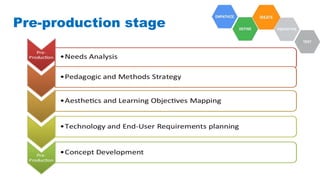
Pre-production stage
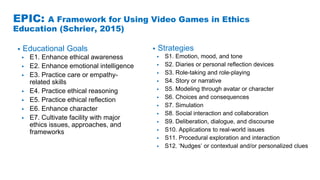
EPIC: A Framework for Using Video Games in Ethics
Education (Schrier, 2015)
• Strategies
• S1. Emotion, mood, and tone
• S2. Diaries or personal reflection devices
• S3. Role-taking and role-playing
• S4. Story or narrative
• S5. Modeling through avatar or character
• S6. Choices and consequences
• S7. Simulation
• S8. Social interaction and collaboration
• S9. Deliberation, dialogue, and discourse
• S10. Applications to real-world issues
• S11. Procedural exploration and interaction
• S12. ‘Nudges’ or contextual and/or personalized clues
• Educational Goals
• E1. Enhance ethical awareness
• E2. Enhance emotional intelligence
• E3. Practice care or empathy-
related skills
• E4. Practice ethical reasoning
• E5. Practice ethical reflection
• E6. Enhance character
• E7. Cultivate facility with major
ethics issues, approaches, and
frameworks
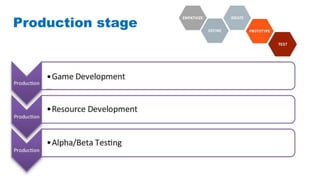
Production stage
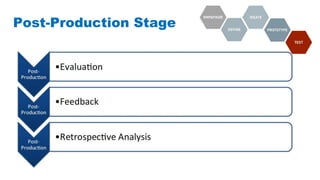
Post-Production Stage
Game-based intervention design
process
Arnab, S. and Clarke, S. (2017), Towards a trans-disciplinary methodology for a game-based intervention
development process. British Journal of Educational Technology, 48: 279–312. doi:10.1111/bjet.12377
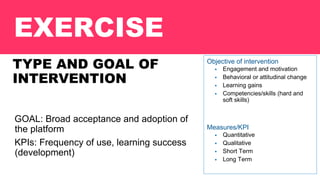
EXERCISE
GOAL: Broad acceptance and adoption of
the platform
KPIs: Frequency of use, learning success
(development)
TYPE AND GOAL OF
INTERVENTION
Objective of intervention
• Engagement and motivation
• Behavioral or attitudinal change
• Learning gains
• Competencies/skills (hard and
soft skills)
Measures/KPI
• Quantitative
• Qualitative
• Short Term
• Long Term

Transdisciplinary game based intervention design

  • 1.
    GAME-BASED LEARNING INTERVENTIONS FORCHILDREN Dr Sylvester Arnab http://sylvesterarnab.com BLOCK 1
  • 2.
  • 3.
    No fixed formula •Lack of standard methodologies or formulaic frameworks that guarantee success and efficacy • There are empirical studies that can serve as benchmarks for establishing scientific validity for the efficacy of using games to motivate learning and achieve learning outcomes. • The development does not normally follow a specific set of guidelines or process
  • 4.
    Overview + A design process that takesinto account existing considerations Holistic approach
  • 5.
  • 6.
    Intervention mapping approach Step 1Needs Analysis Step 2 Matrices of change Step 3 Practical strategies Step 4 Program development Step 5 Implementation plan Step 6 Evaluation Plan
  • 7.
    Considerations • Objective ofintervention • Engagement and motivation • Behavioral or attitudinal change • Learning gains • Competencies/skills (hard and soft skills) • Type/Context of intervention • In/non/formal • Individual • Classroom setting • Community based • Measures/KPI • Quantitative • Qualitative • Short Term • Long Term • Types of learning • Constructivism • Problem-based learning • Inquiry-based learning • Exploratory • Etc.
  • 9.
    Learning versus Gaming Arnab, S.,Lim, T., Carvalho, M. B., Bellotti, F., de Freitas, S., Louchart, S., Suttie, N., Berta, R. and De Gloria, A. (2015), Mapping learning and game mechanics for serious games analysis. British Journal of Educational Technology, 46: 391–411. doi: 10.1111/bjet.12113
  • 10.
  • 12.
  • 13.
    Game-based intervention design process Arnab,S. and Clarke, S. (2017), Towards a trans-disciplinary methodology for a game-based intervention development process. British Journal of Educational Technology, 48: 279–312. doi:10.1111/bjet.12377
  • 14.
  • 15.
    EPIC: A Frameworkfor Using Video Games in Ethics Education (Schrier, 2015) • Strategies • S1. Emotion, mood, and tone • S2. Diaries or personal reflection devices • S3. Role-taking and role-playing • S4. Story or narrative • S5. Modeling through avatar or character • S6. Choices and consequences • S7. Simulation • S8. Social interaction and collaboration • S9. Deliberation, dialogue, and discourse • S10. Applications to real-world issues • S11. Procedural exploration and interaction • S12. ‘Nudges’ or contextual and/or personalized clues • Educational Goals • E1. Enhance ethical awareness • E2. Enhance emotional intelligence • E3. Practice care or empathy- related skills • E4. Practice ethical reasoning • E5. Practice ethical reflection • E6. Enhance character • E7. Cultivate facility with major ethics issues, approaches, and frameworks
  • 16.
  • 17.
  • 18.
    Game-based intervention design process Arnab,S. and Clarke, S. (2017), Towards a trans-disciplinary methodology for a game-based intervention development process. British Journal of Educational Technology, 48: 279–312. doi:10.1111/bjet.12377
  • 19.
    EXERCISE GOAL: Broad acceptanceand adoption of the platform KPIs: Frequency of use, learning success (development) TYPE AND GOAL OF INTERVENTION Objective of intervention • Engagement and motivation • Behavioral or attitudinal change • Learning gains • Competencies/skills (hard and soft skills) Measures/KPI • Quantitative • Qualitative • Short Term • Long Term