Downloaded 186 times



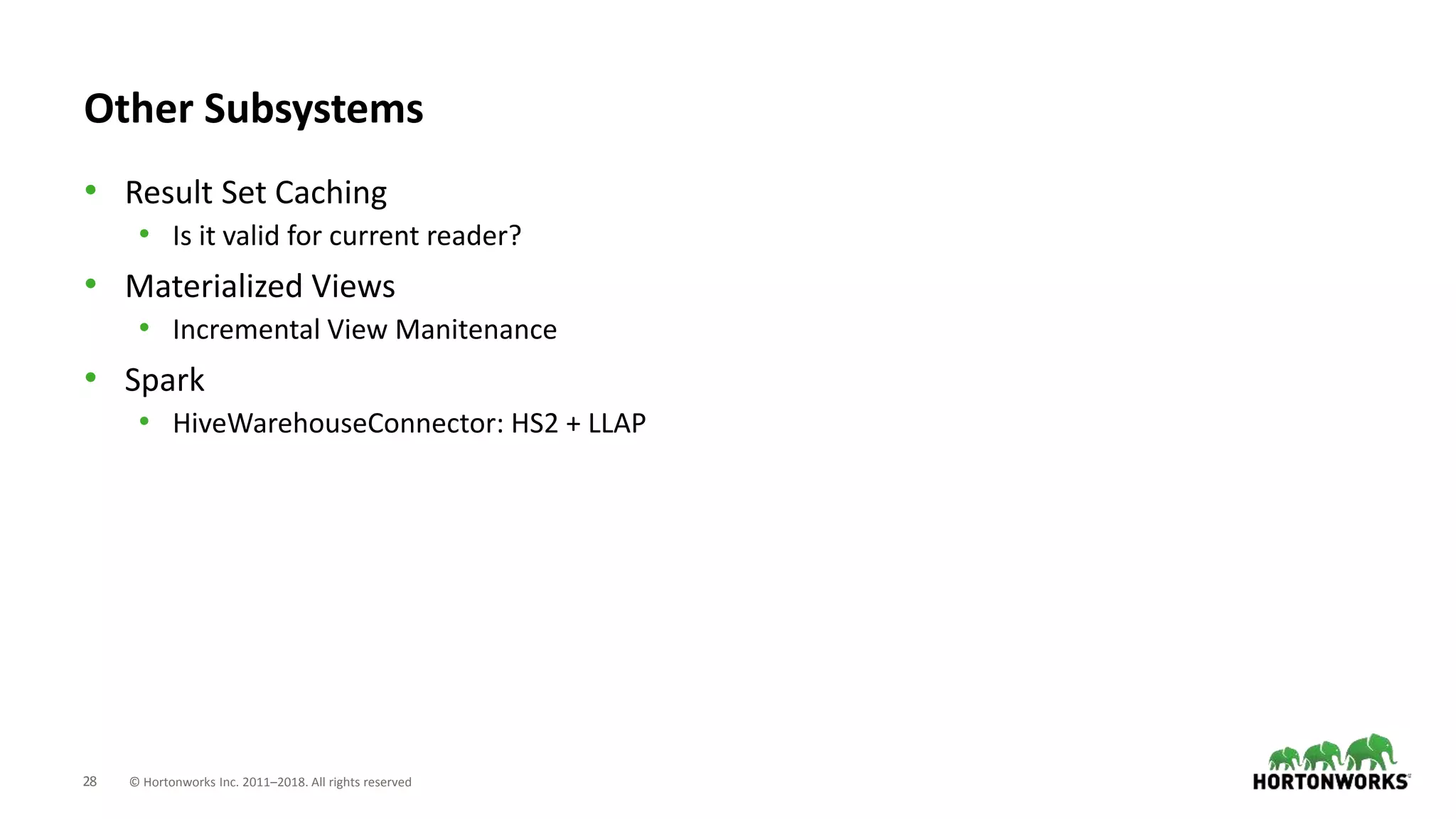





The document discusses transactional operations in Apache Hive, focusing on its ACID properties, including support for SQL update, delete, and merge. It outlines the features of Hive 3, which include support for transactional tables, compaction processes, and concurrency management, as well as future plans for enhancements. The presentation emphasizes the design challenges and functionalities that facilitate efficient data management in Hive without replacing traditional OLTP systems.
Introduction to Apache Hive and the presentation's agenda, including history, current functionalities, design, and future plans.
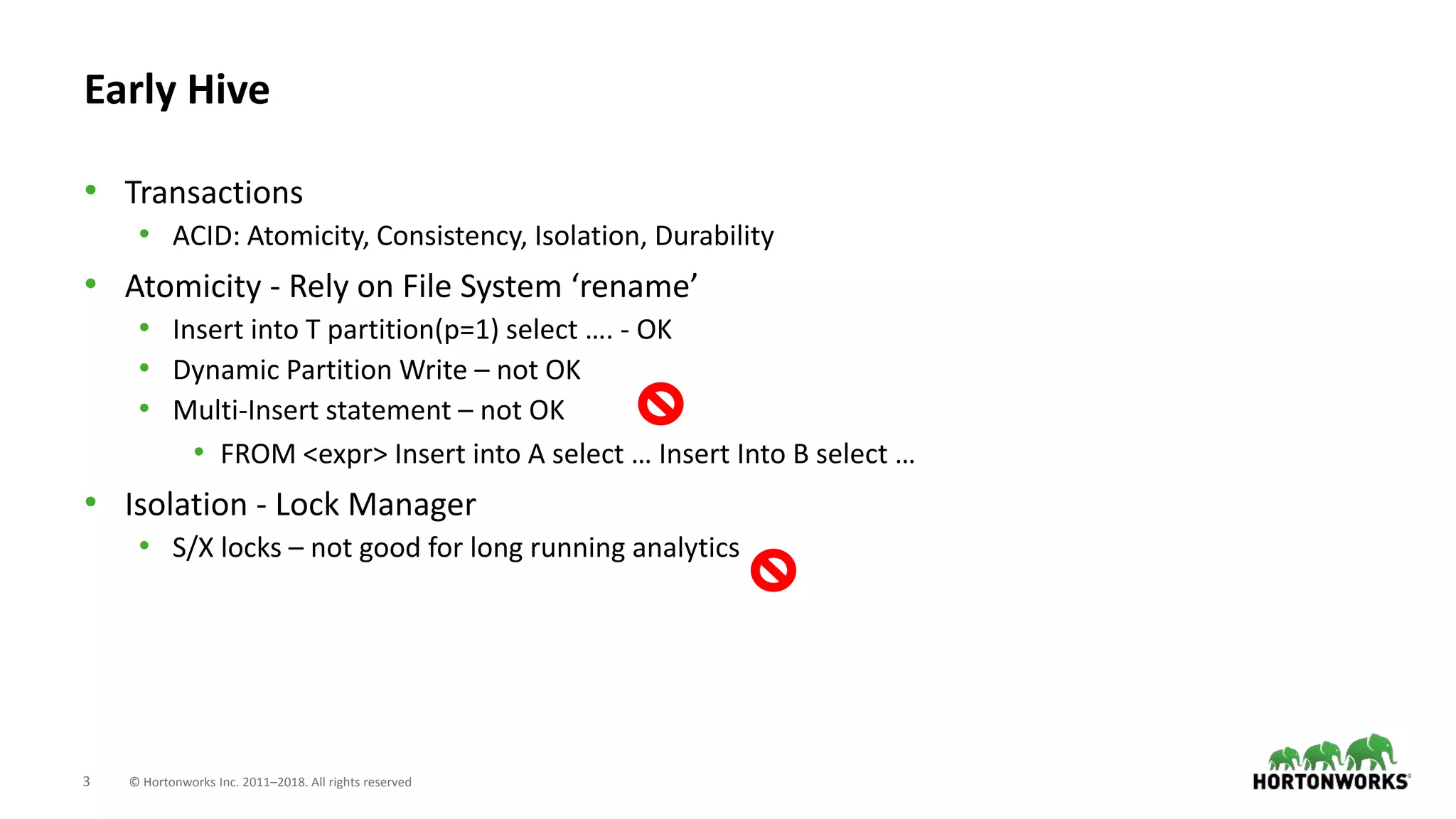
Discussion on early transactional capabilities including ACID properties, limitations of data operations like Dynamic Partition Write and efficiency concerns with drop and insert operations.
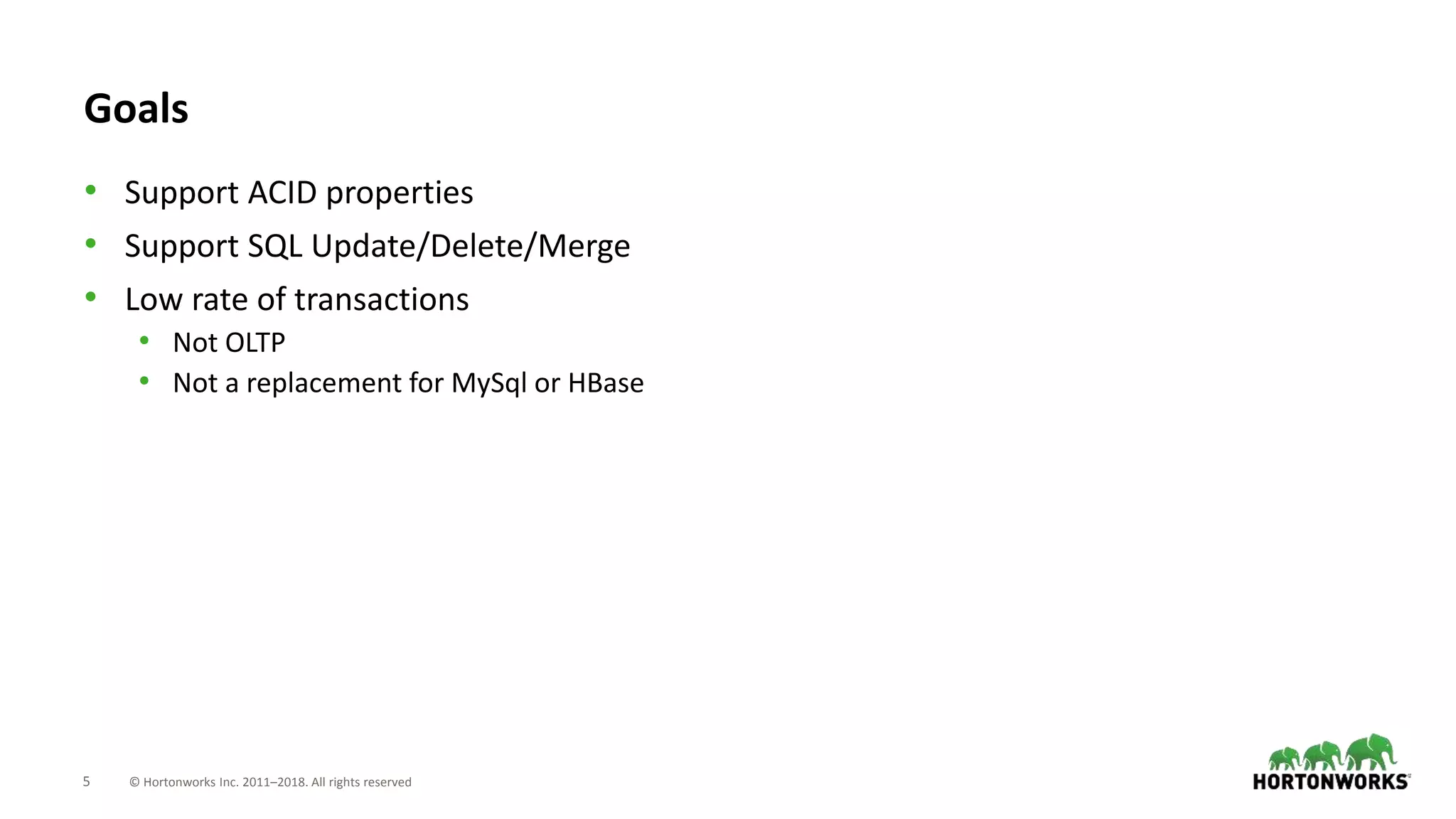
Objectives for Hive to support ACID properties like updates and deletes, while not functioning as an OLTP replacement.
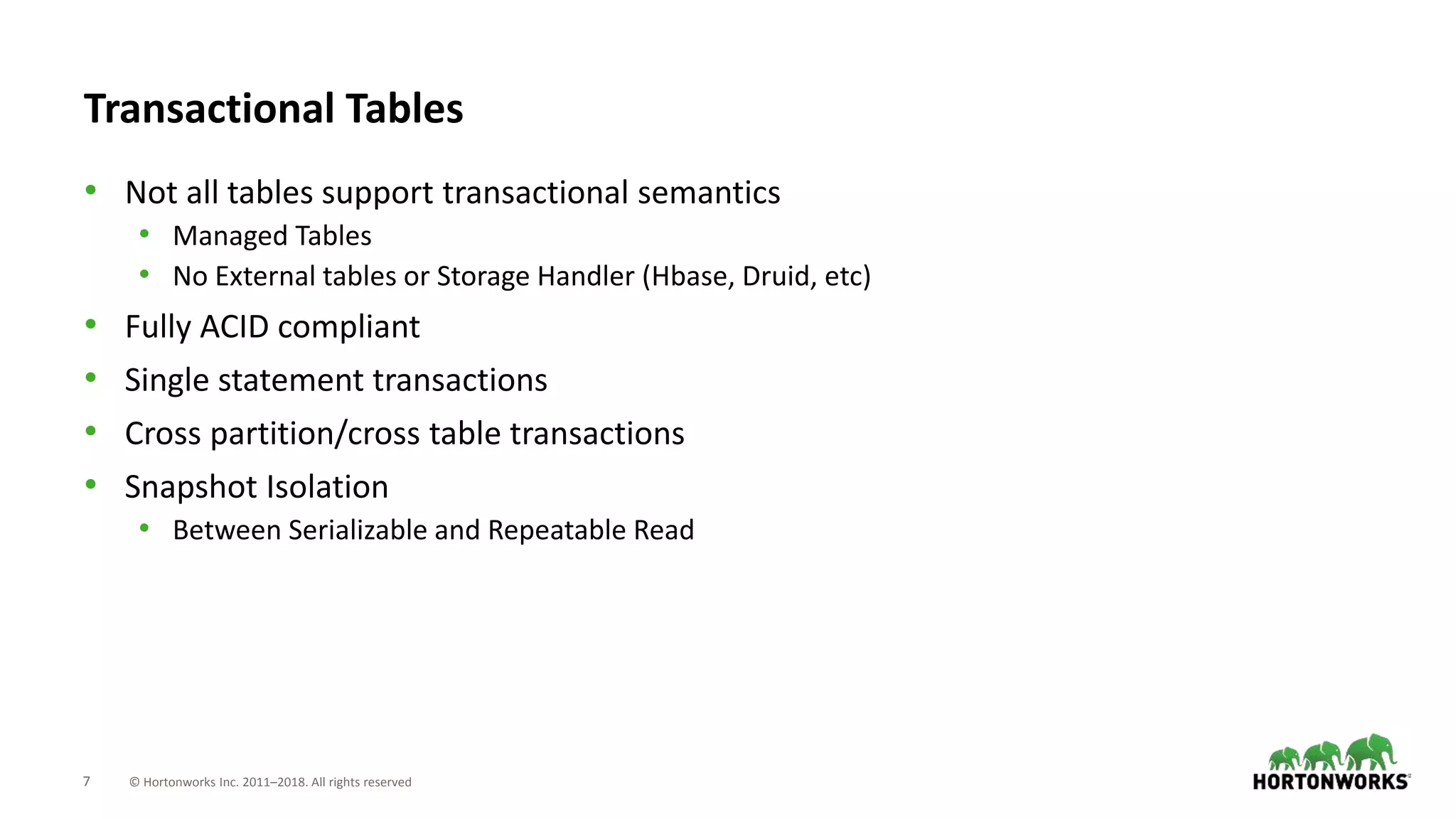
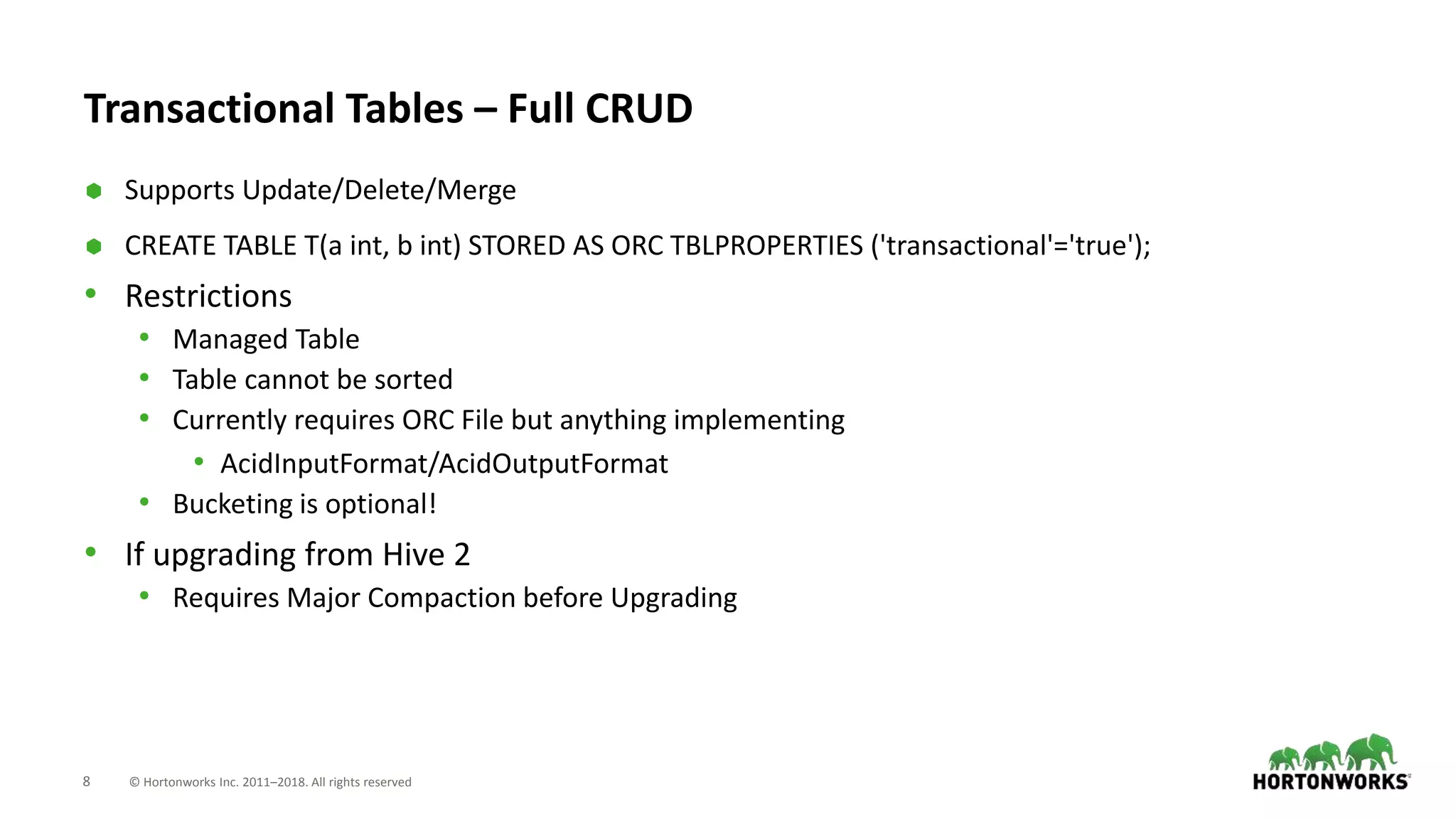
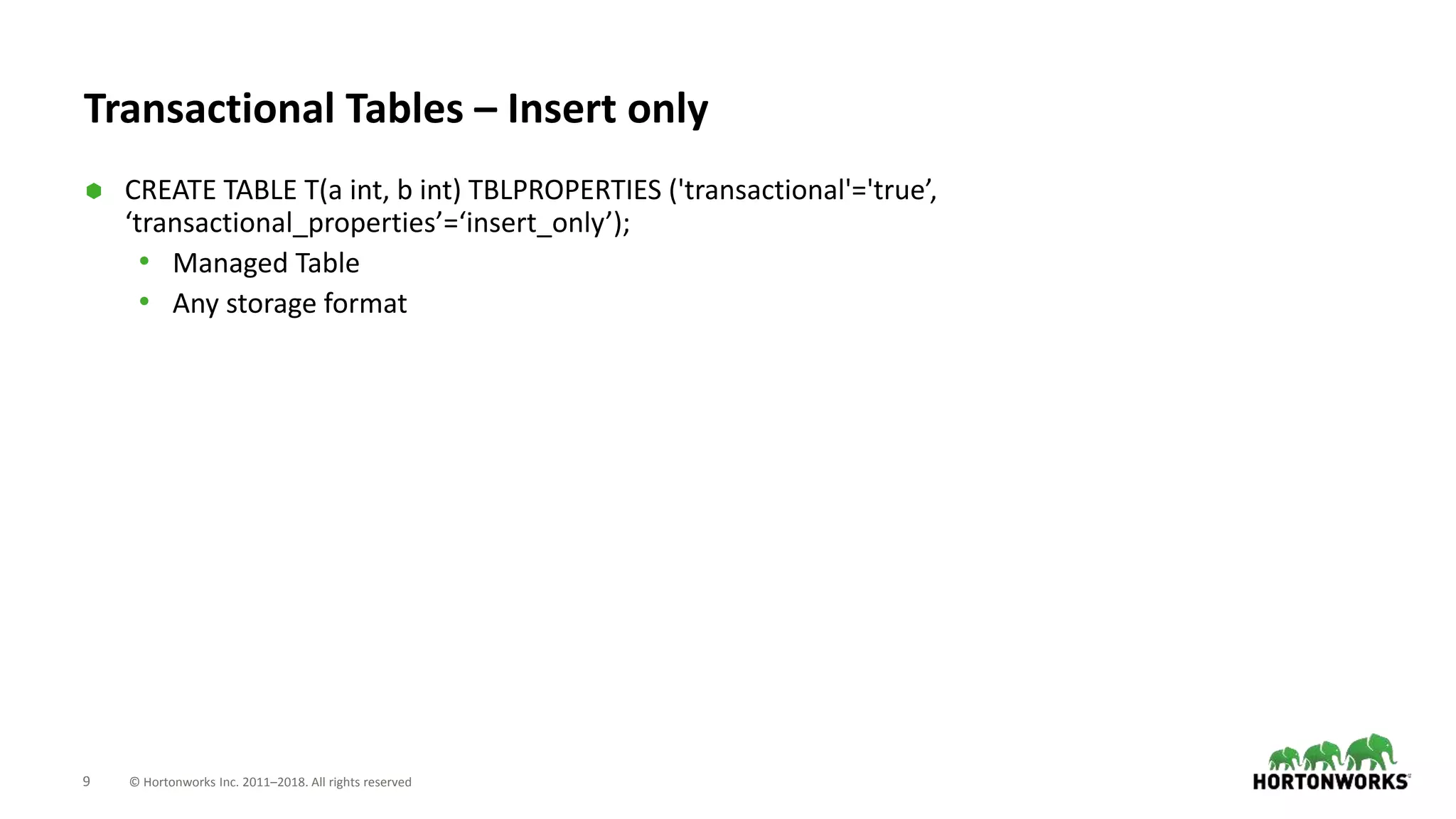
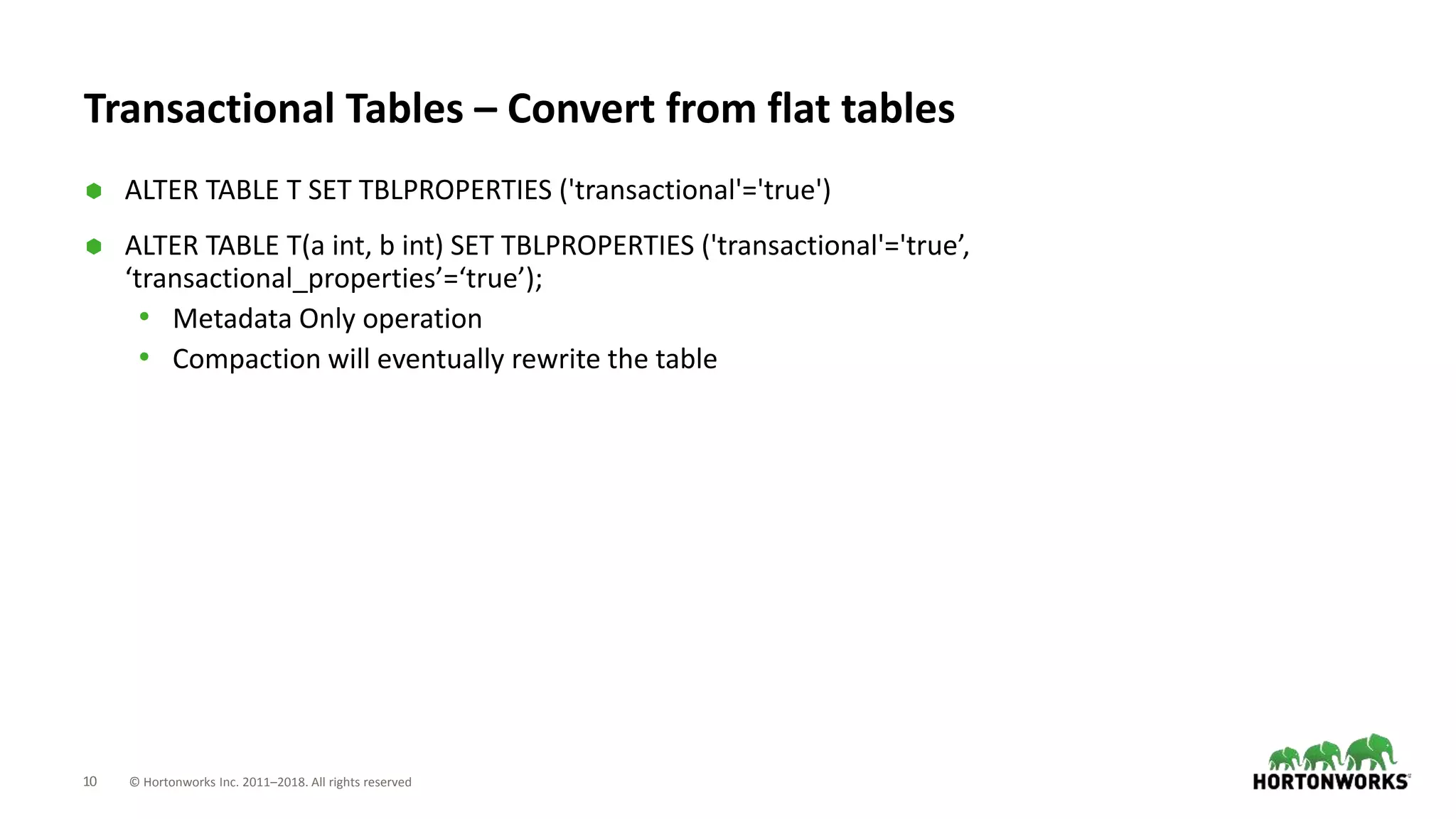
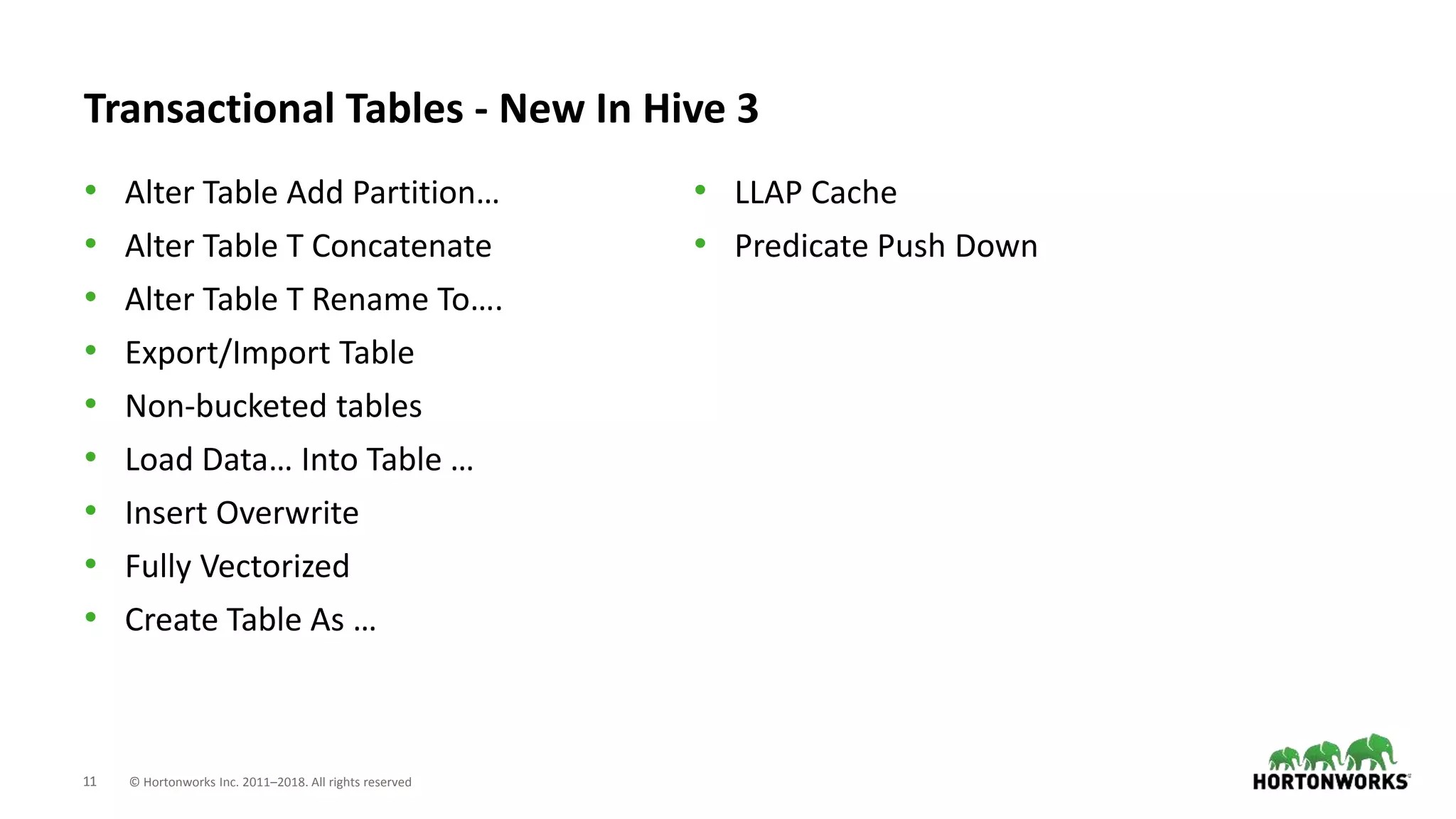
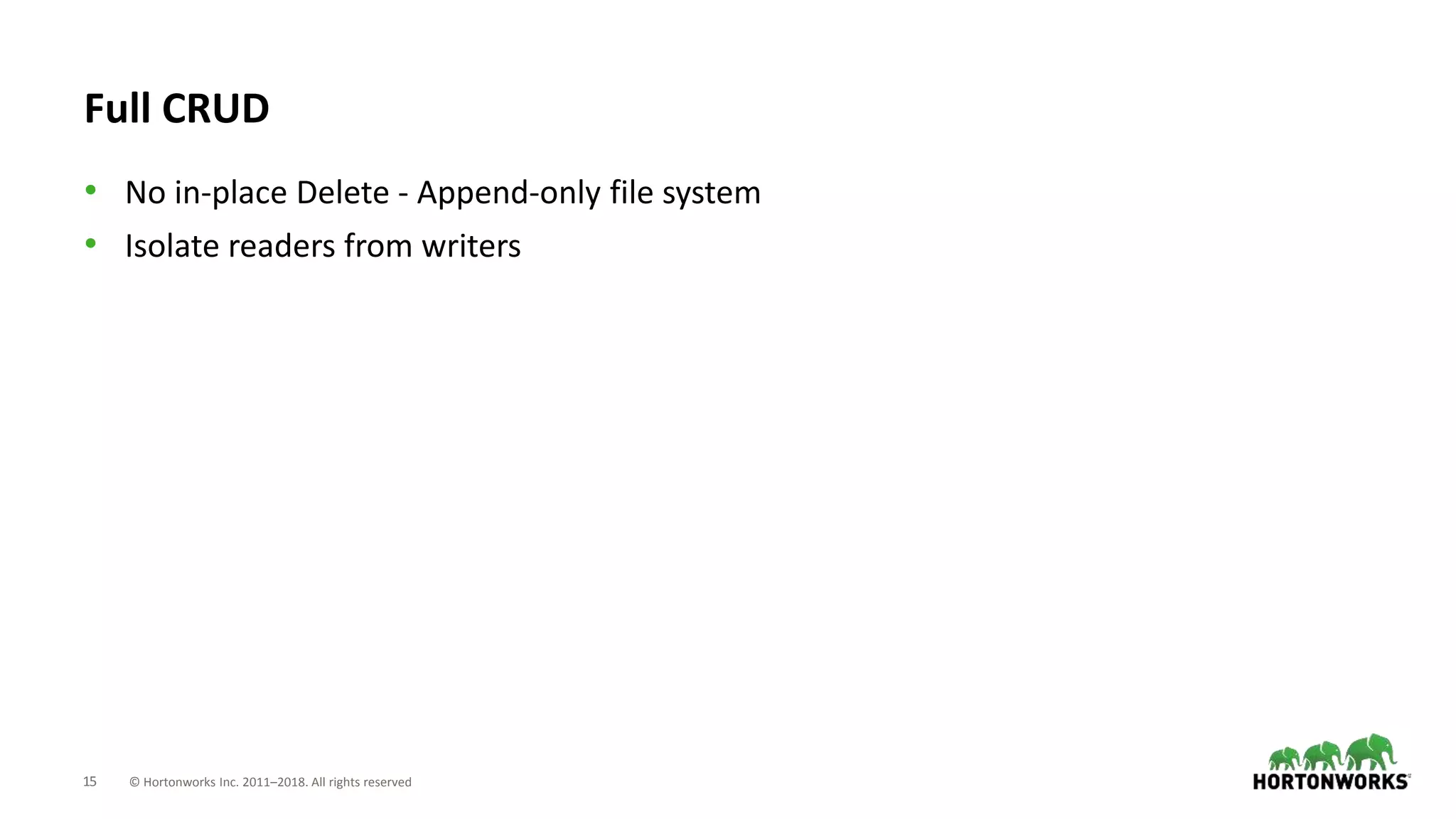
Key features of Hive 3 inclusive of transactional tables, full CRUD operations, and changes for managed tables with outlined restrictions.
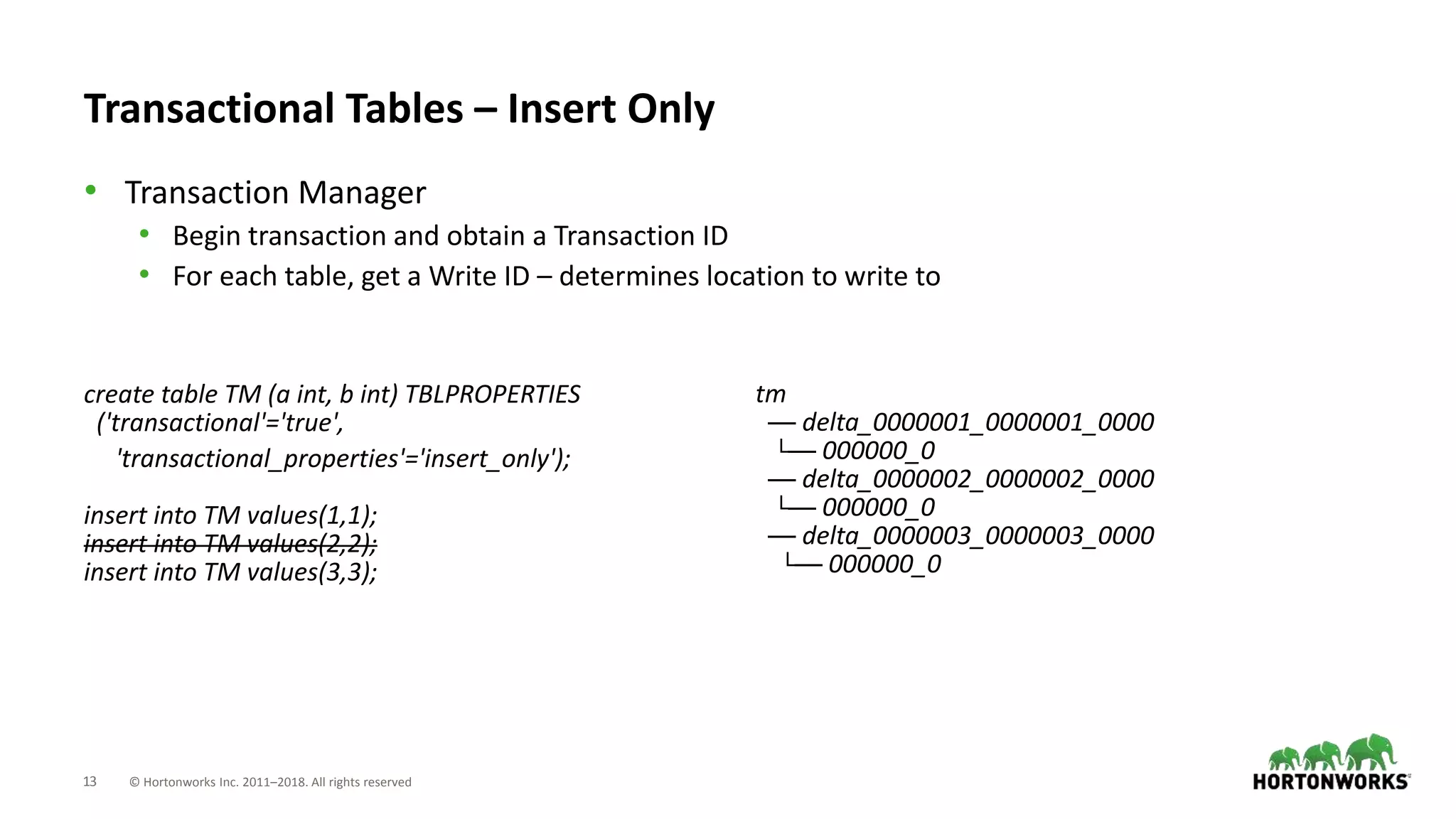
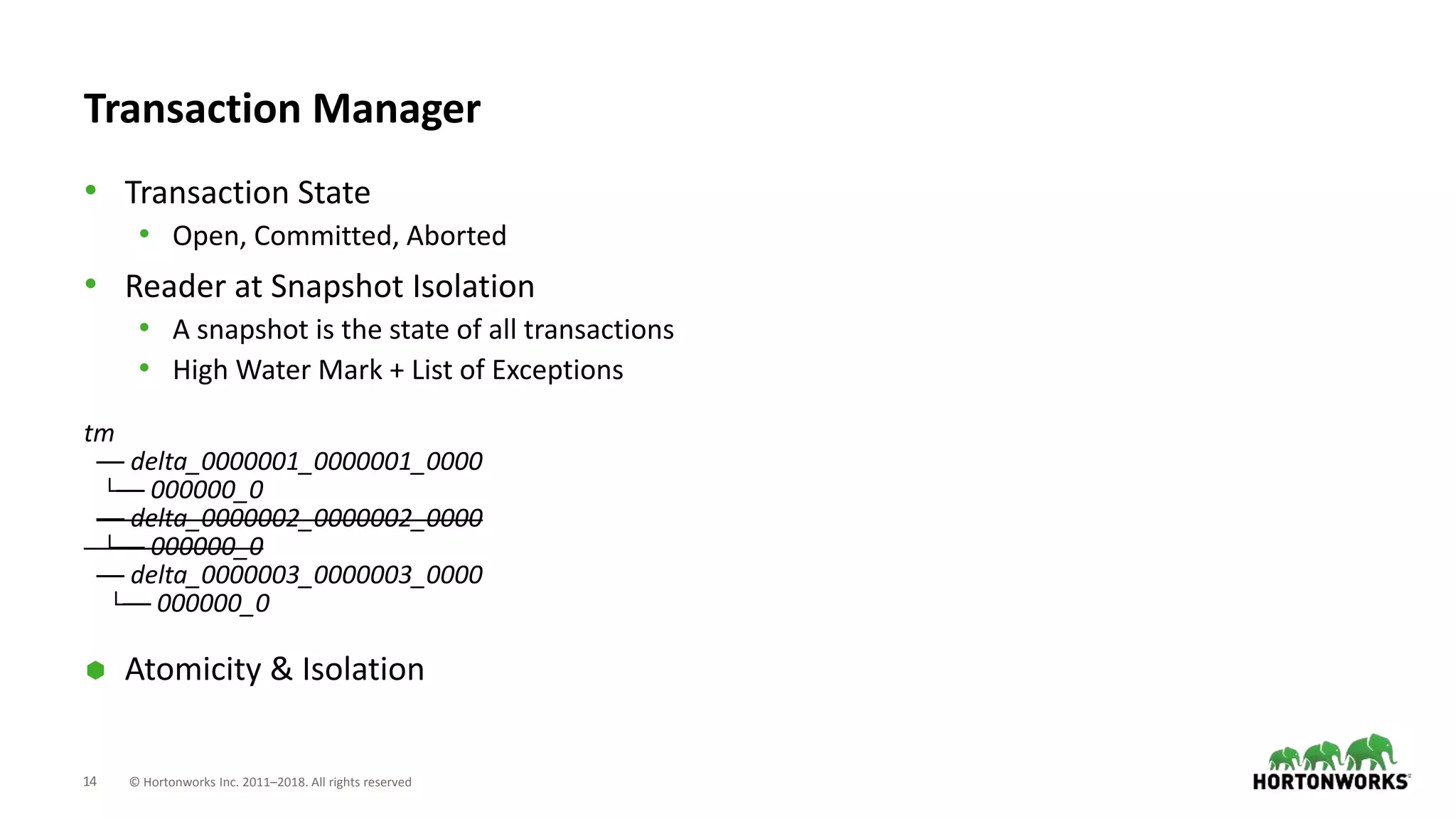
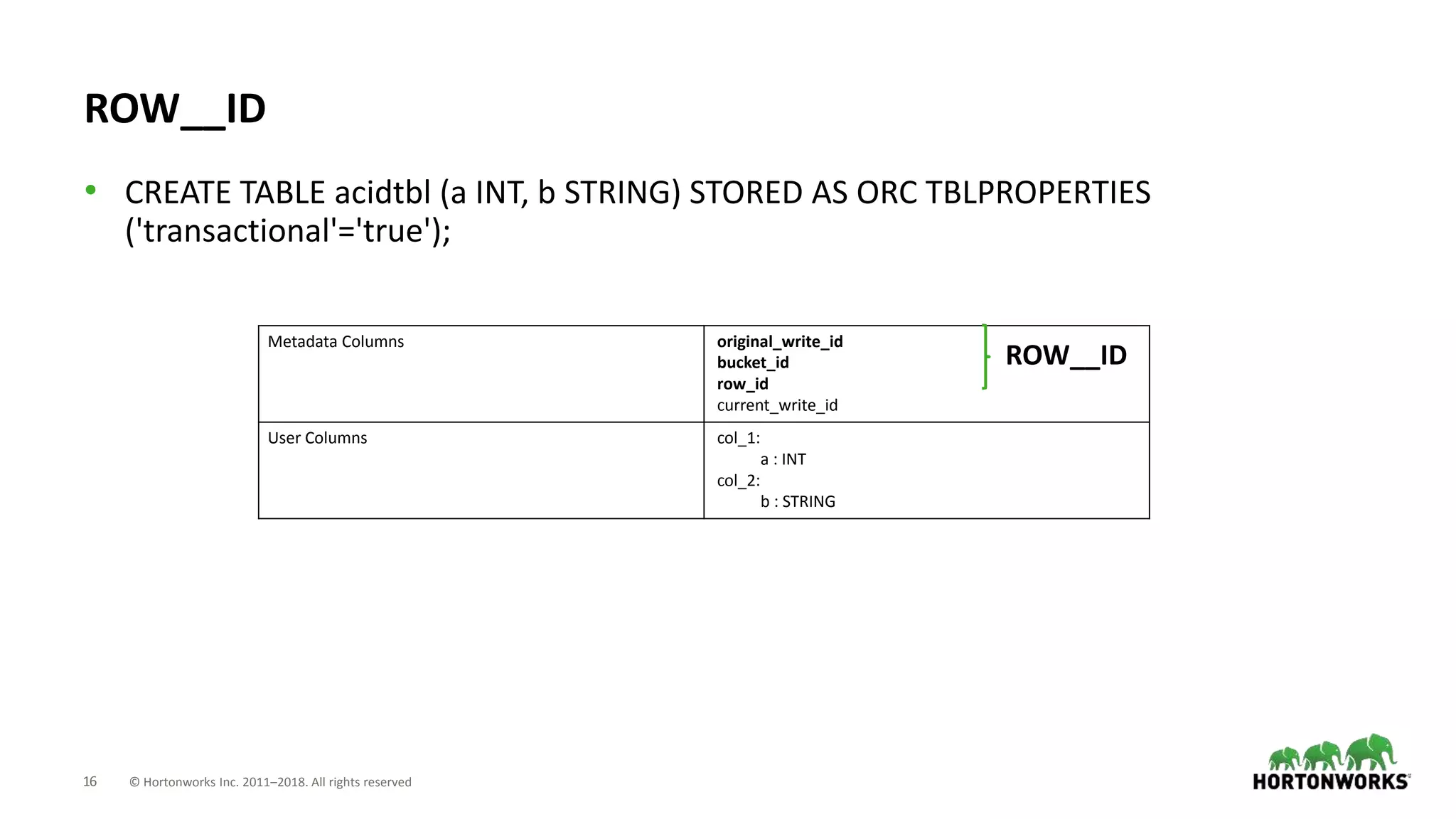
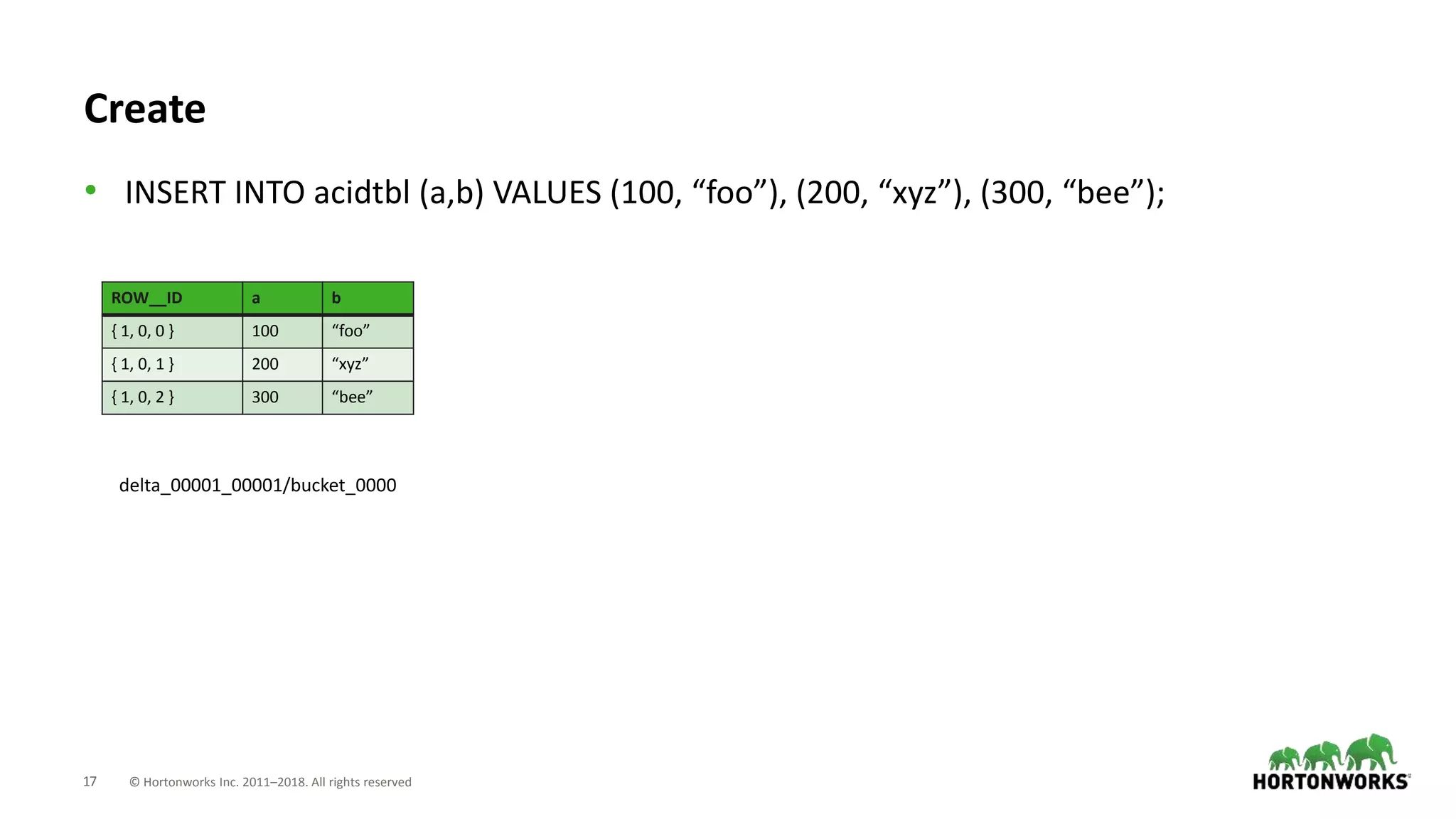
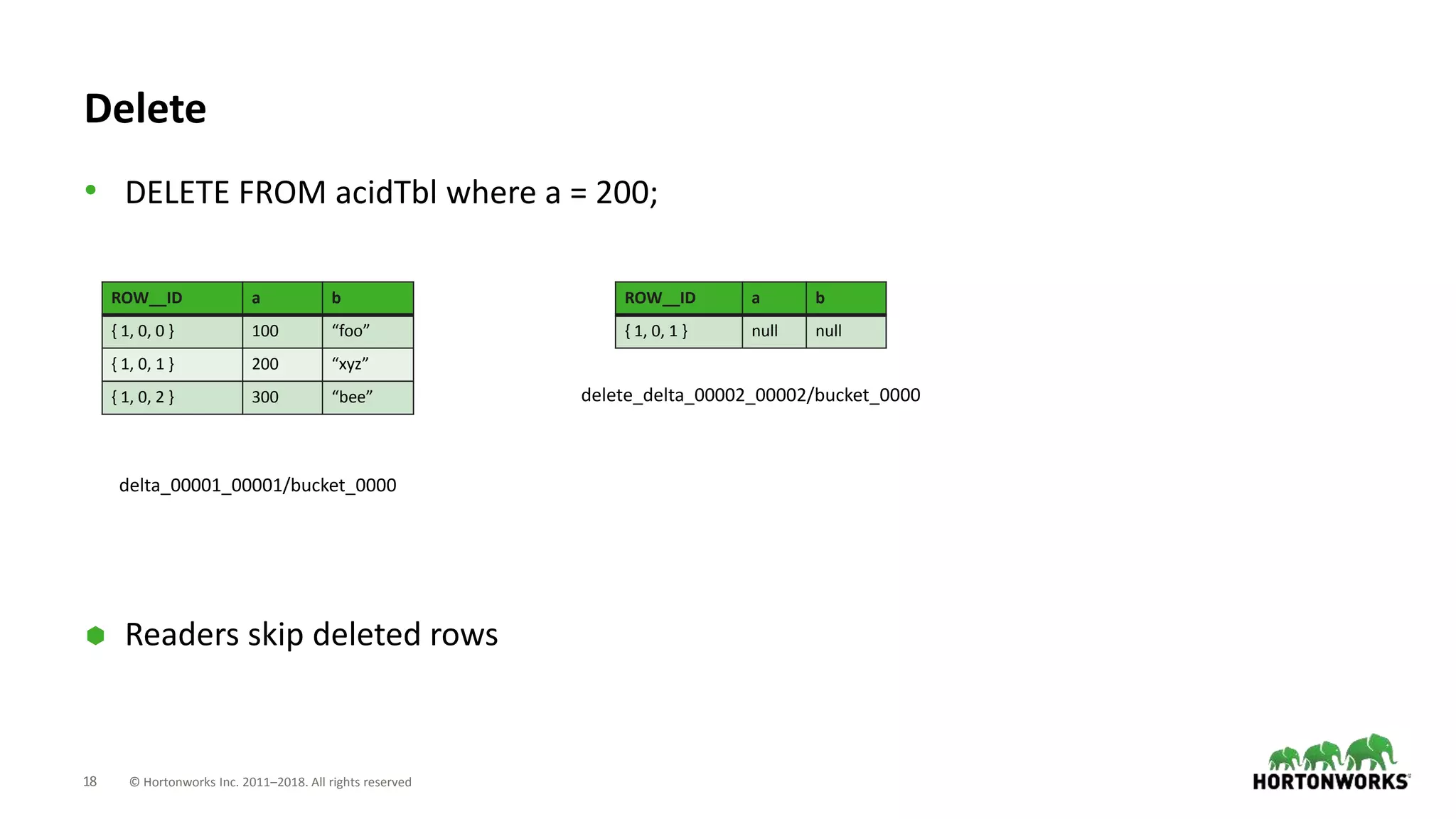
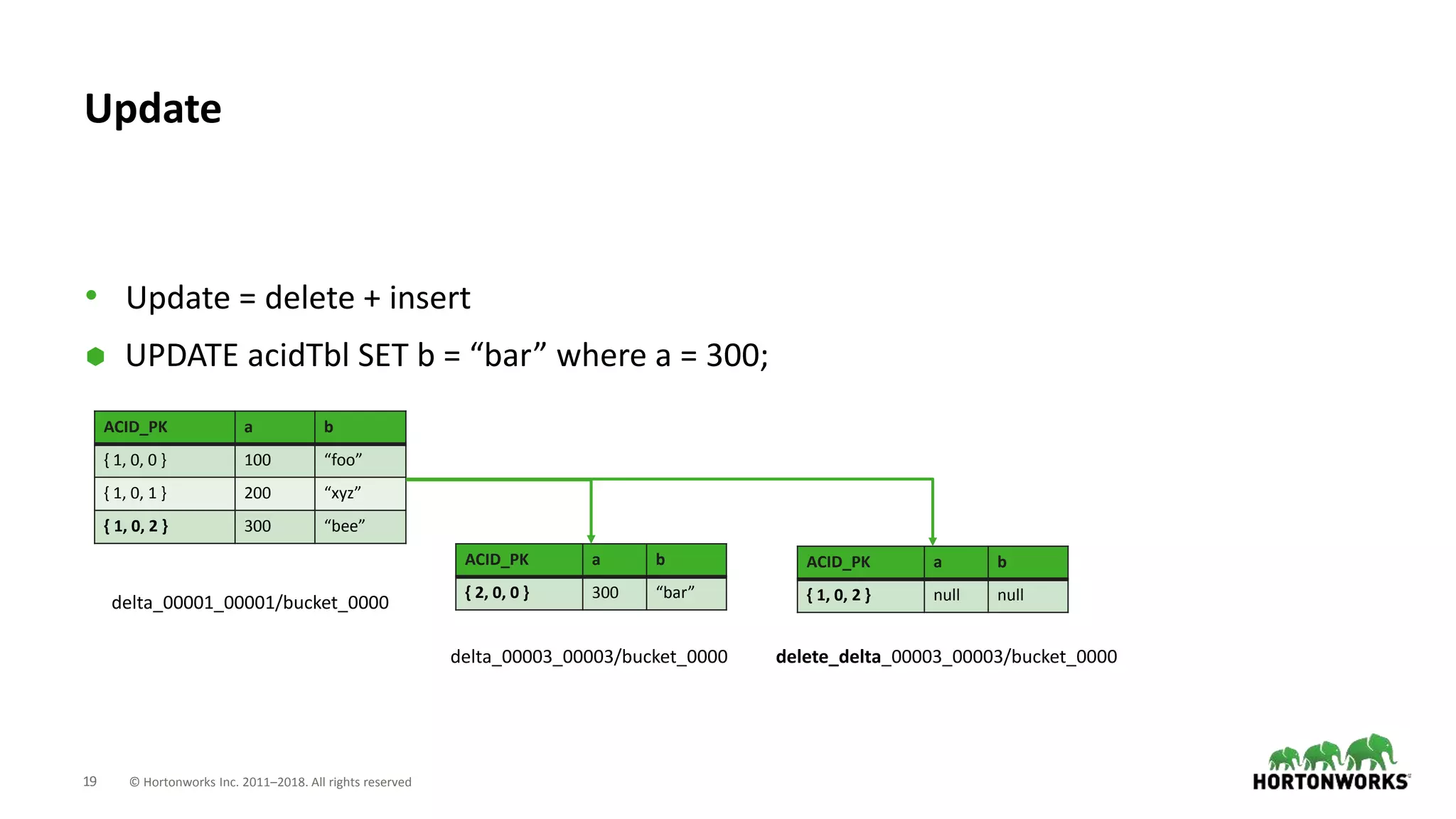
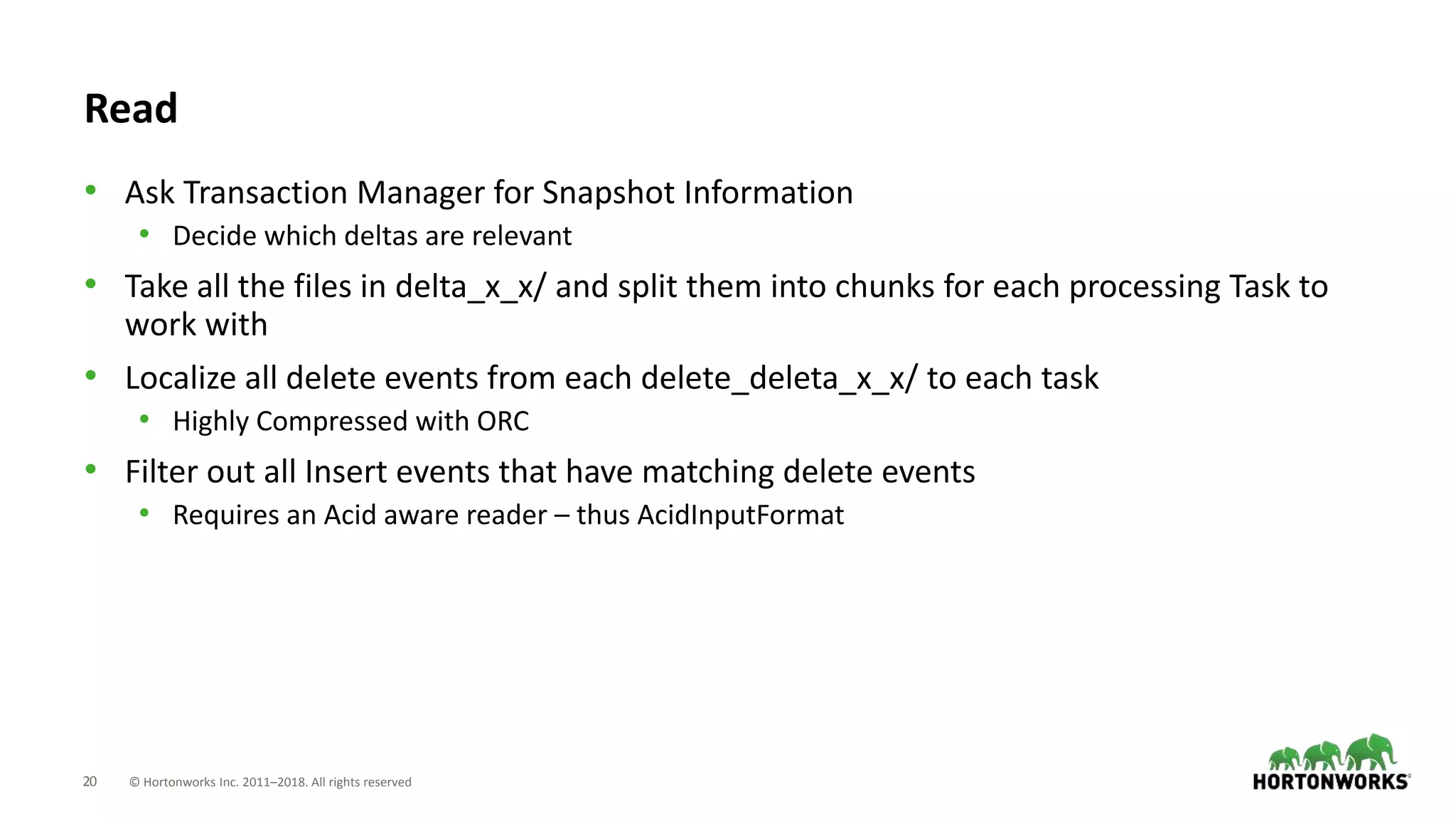
Detailed workings of transactional tables including creating, reading, deleting, and updating records with focus on maintaining ACID compliance through snapshots.
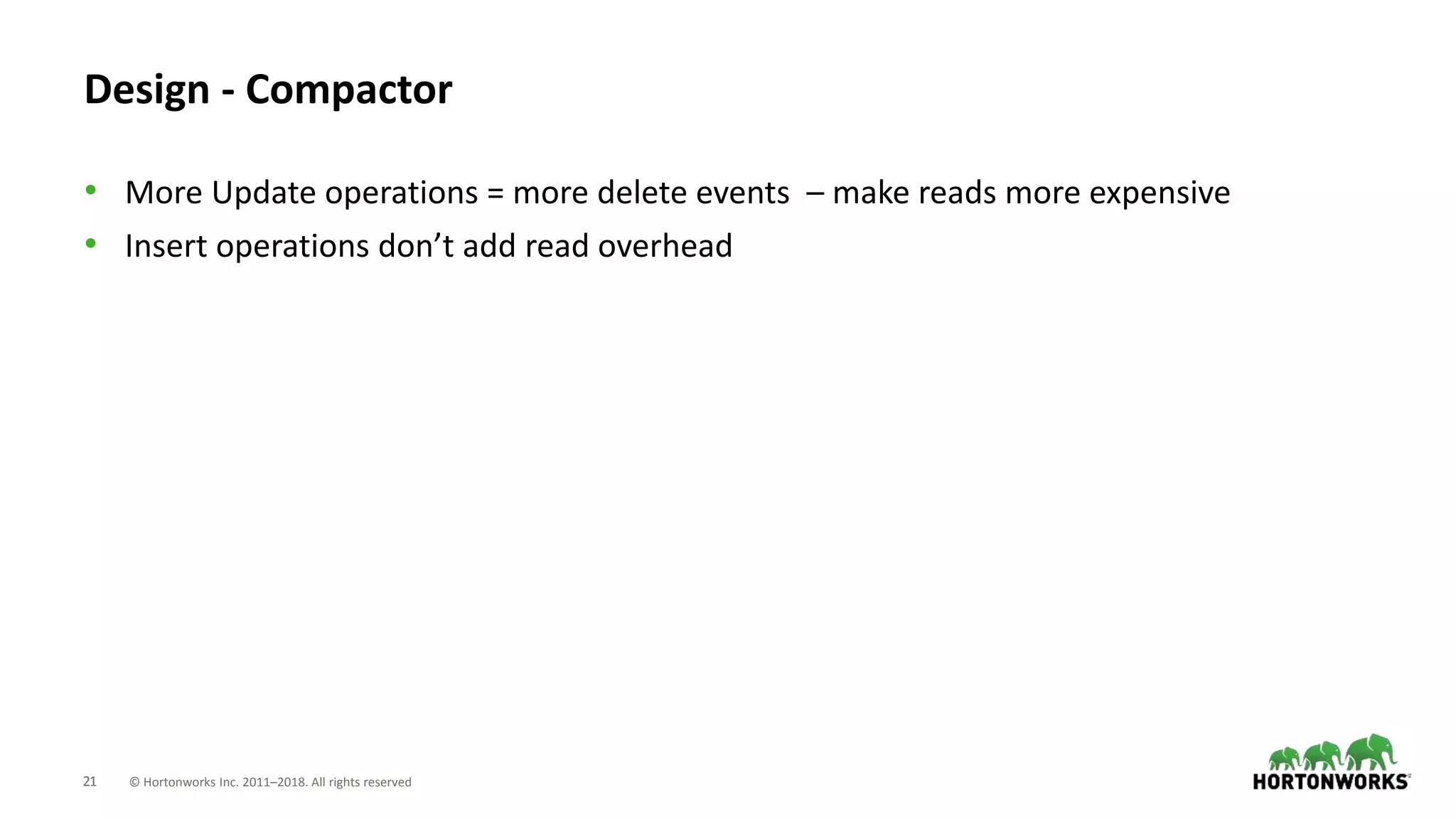
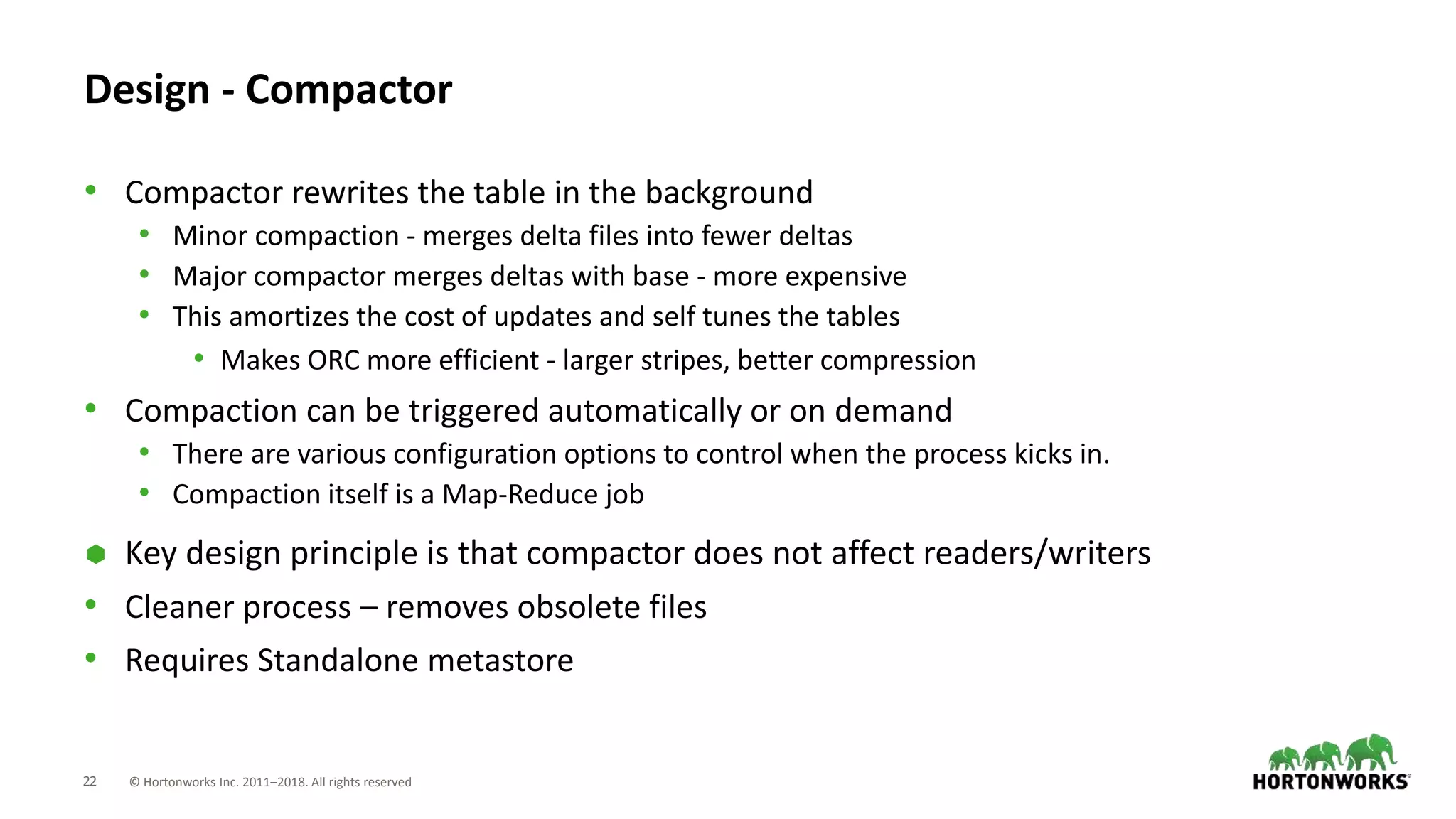
The design of the compaction process to manage delete events and improve read performance while ensuring it operates without affecting transactions.
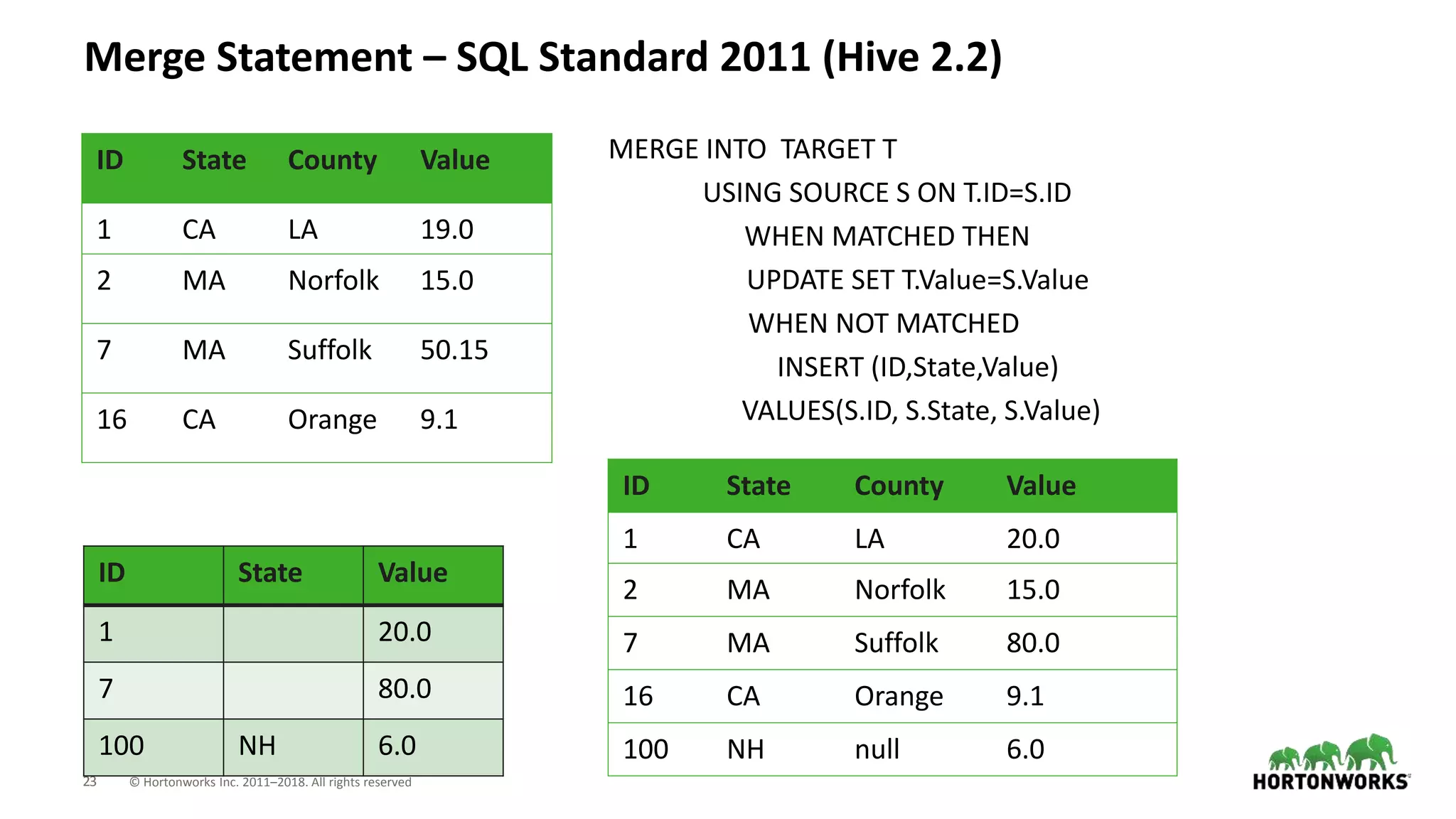
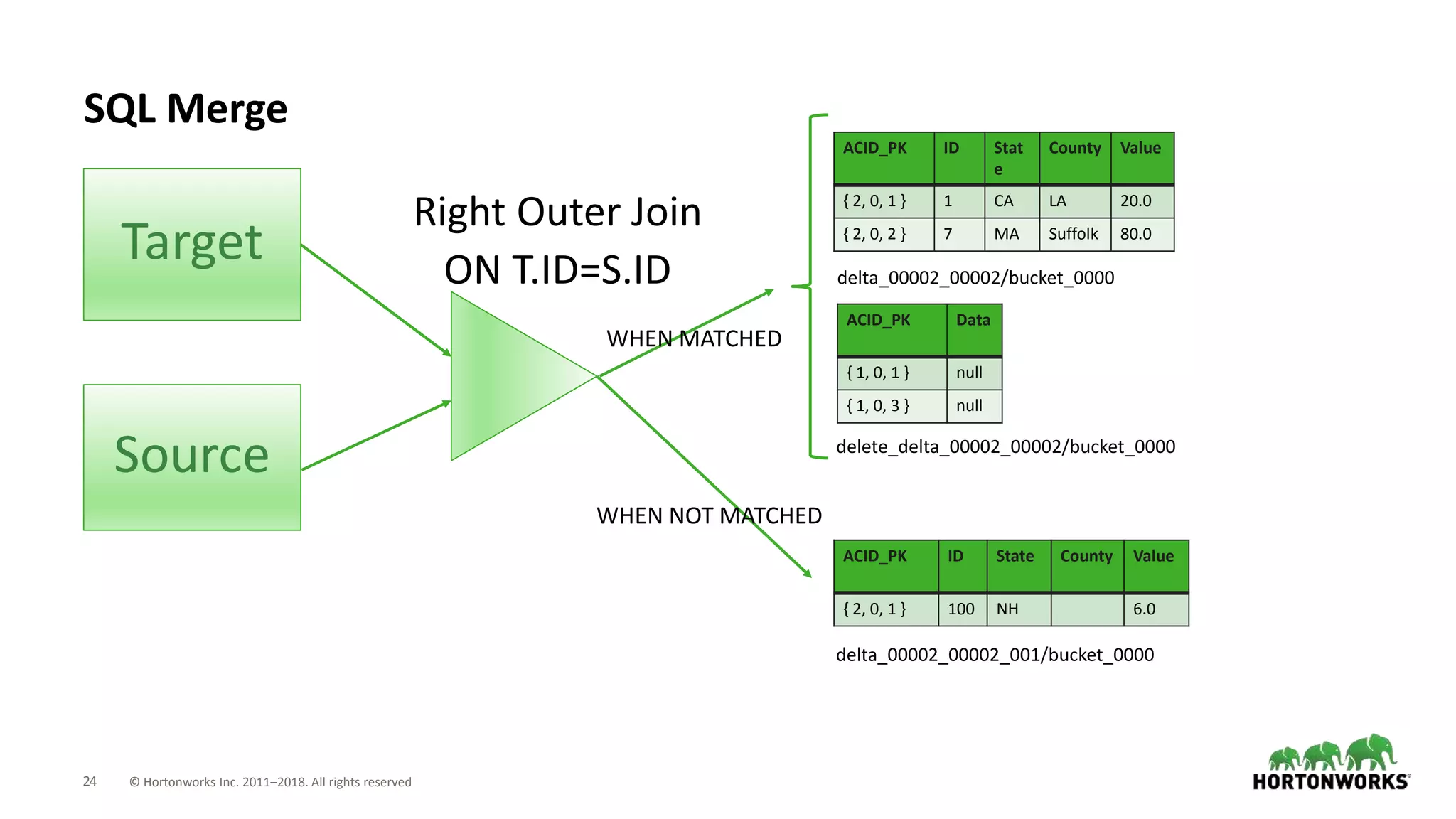
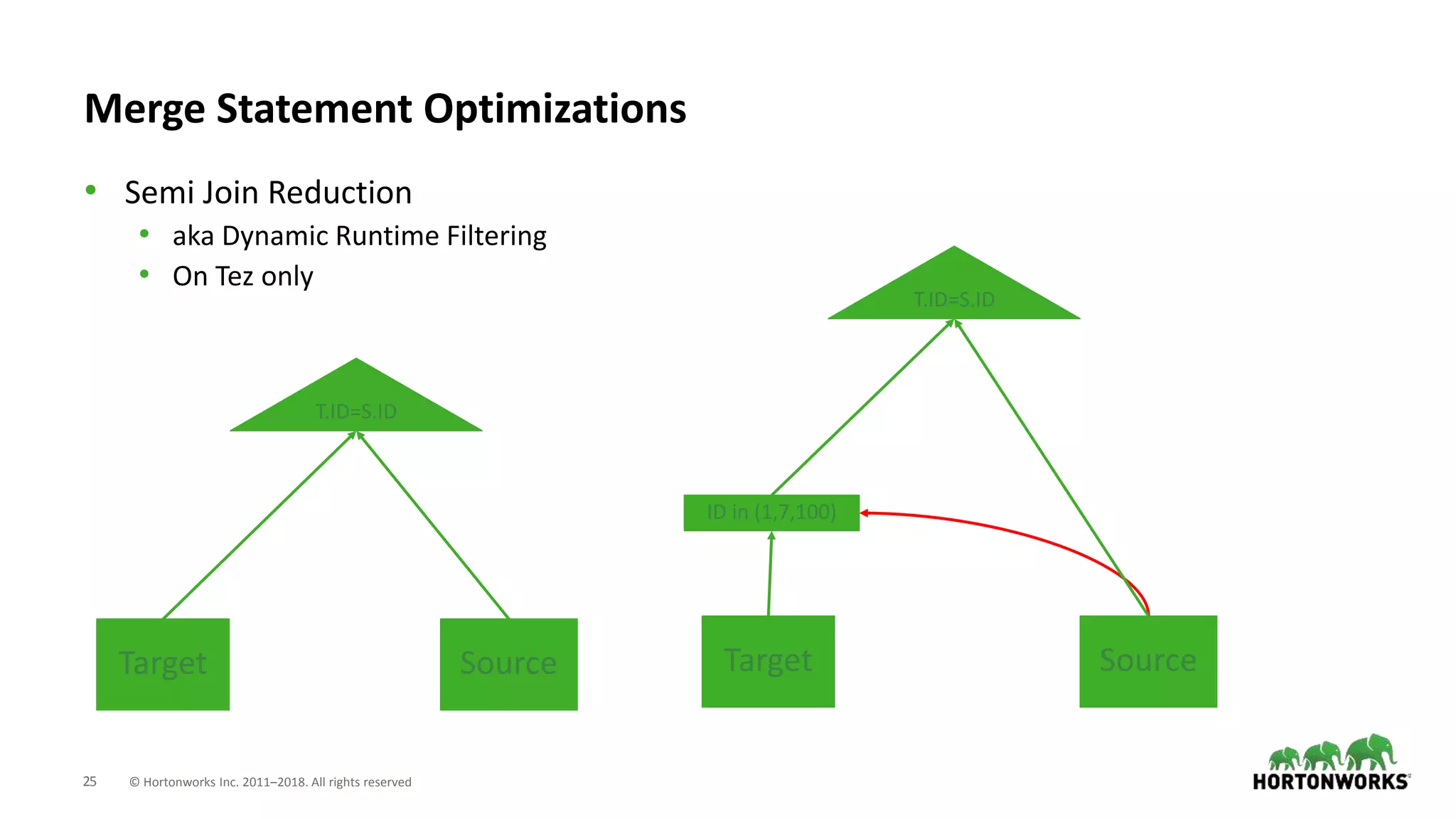
Introduction and demonstrations of SQL Merge statements in Hive, optimizations for efficient execution, and operational use cases.
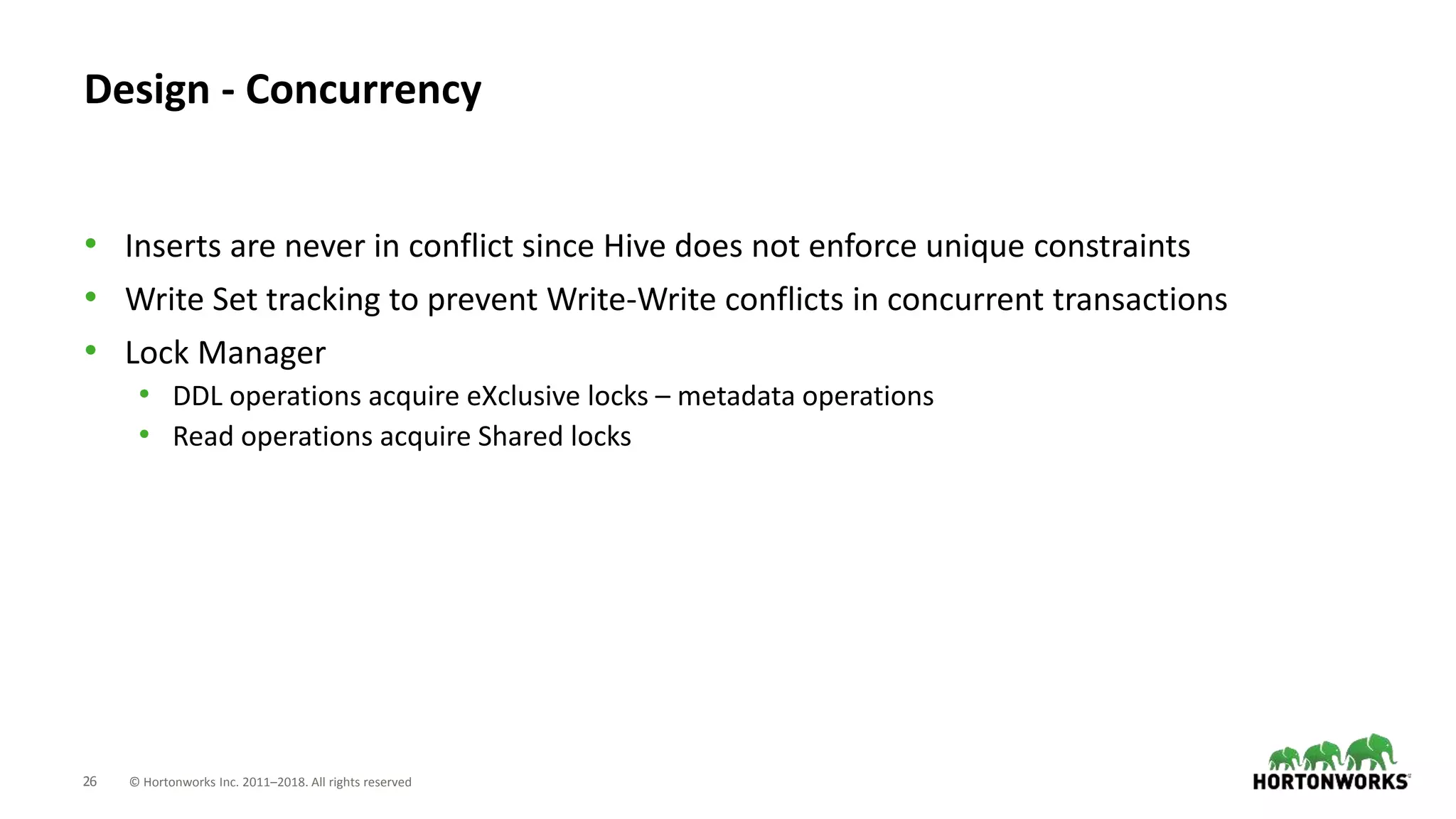
Concurrency management in Hive, including the handling of insert conflicts and locking mechanisms for transactions.
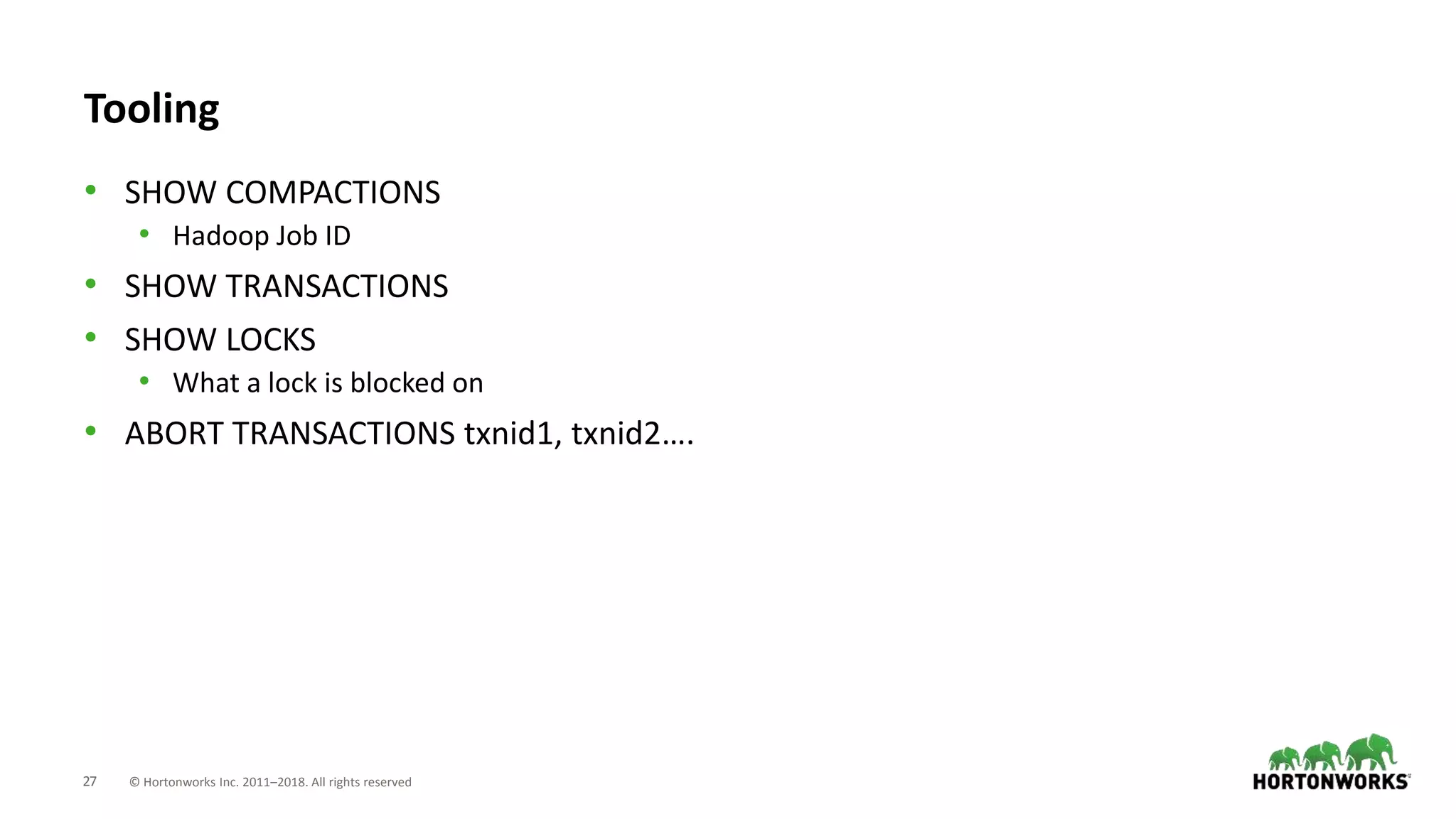
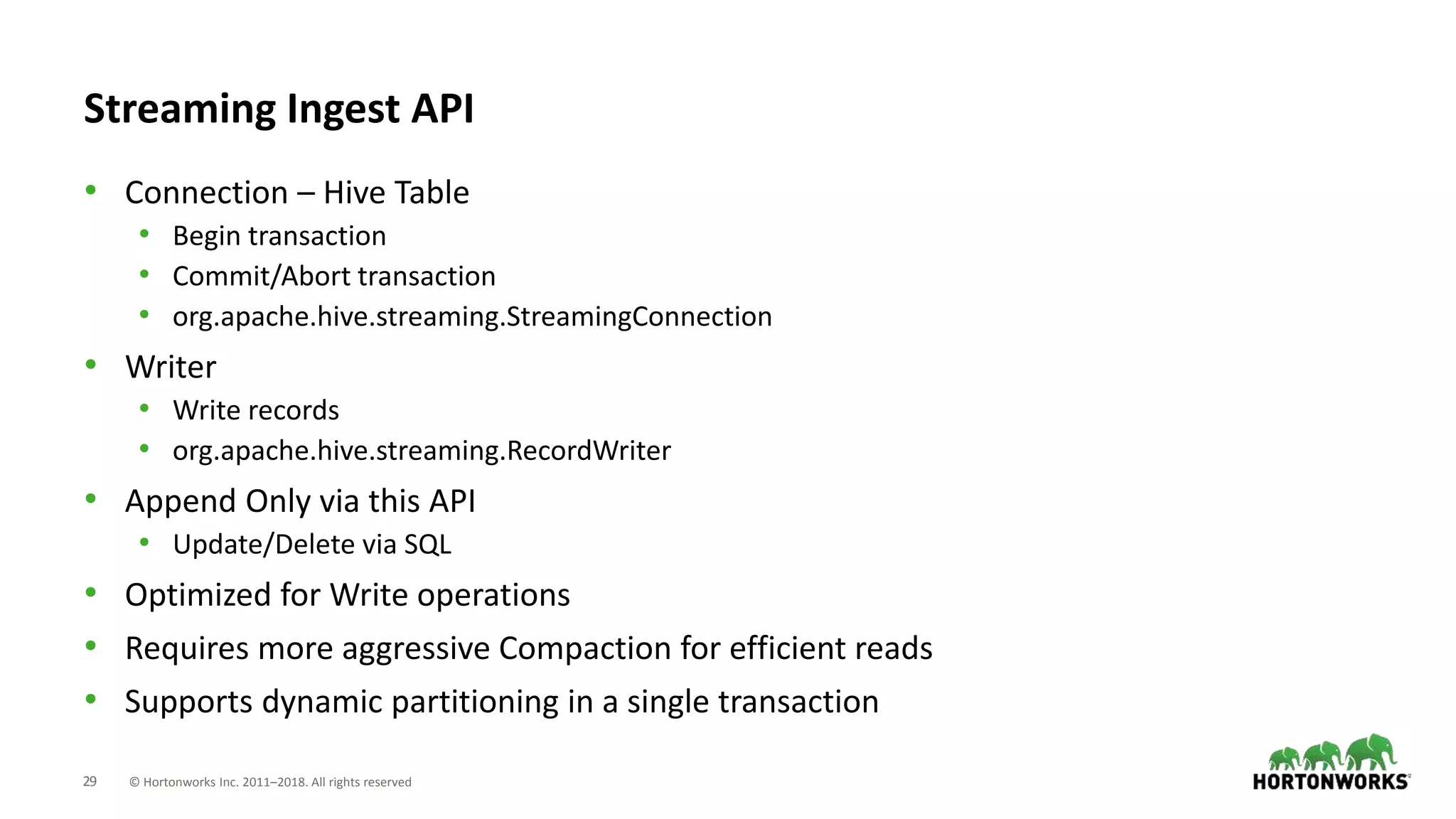
Tools available for handling transactions, compactions, and streaming data ingestion, aimed at facilitating operational efficiency.
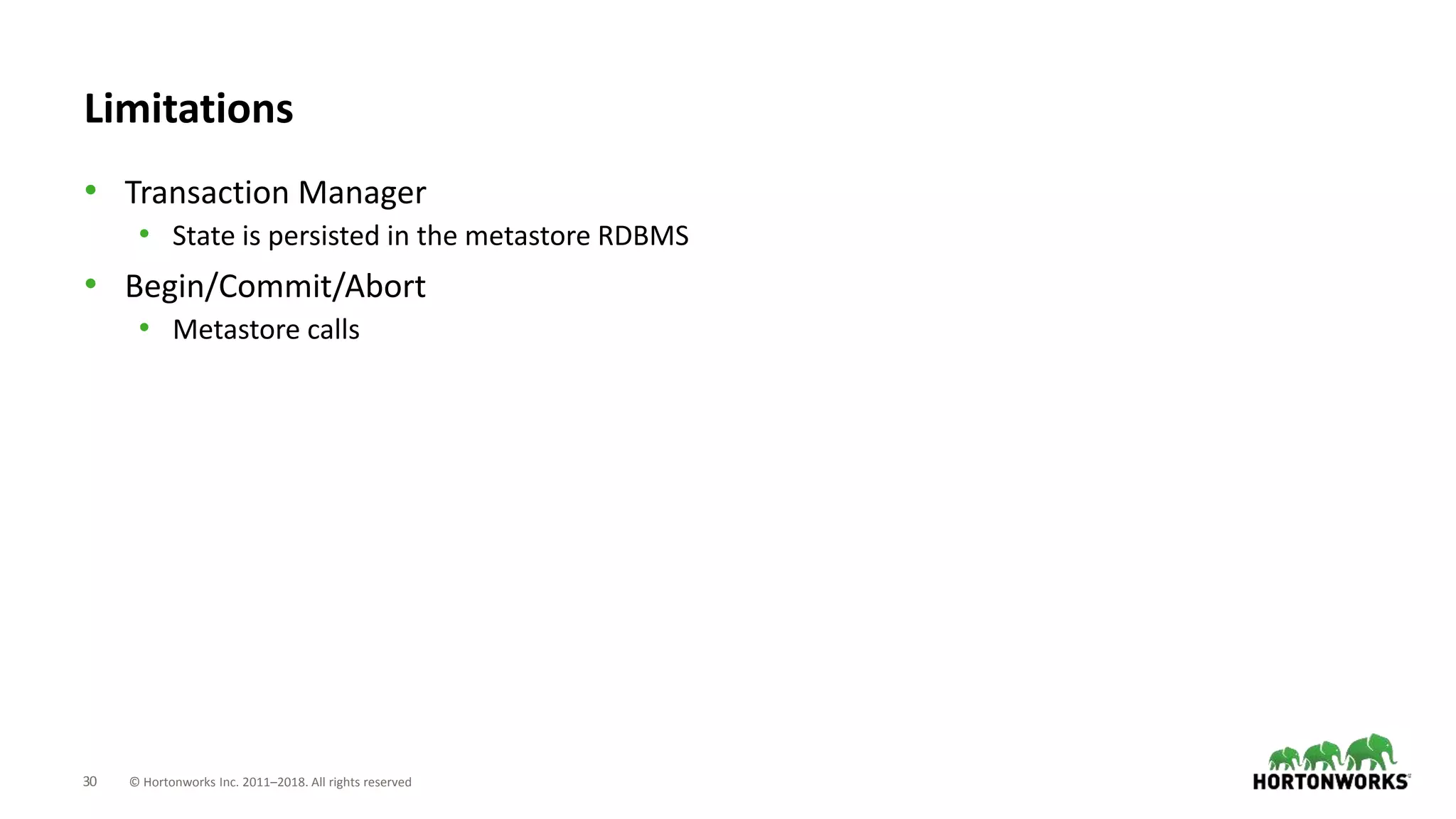
Discussion on the limitations of the transaction manager status in Hive and challenges associated with metastore interactions.
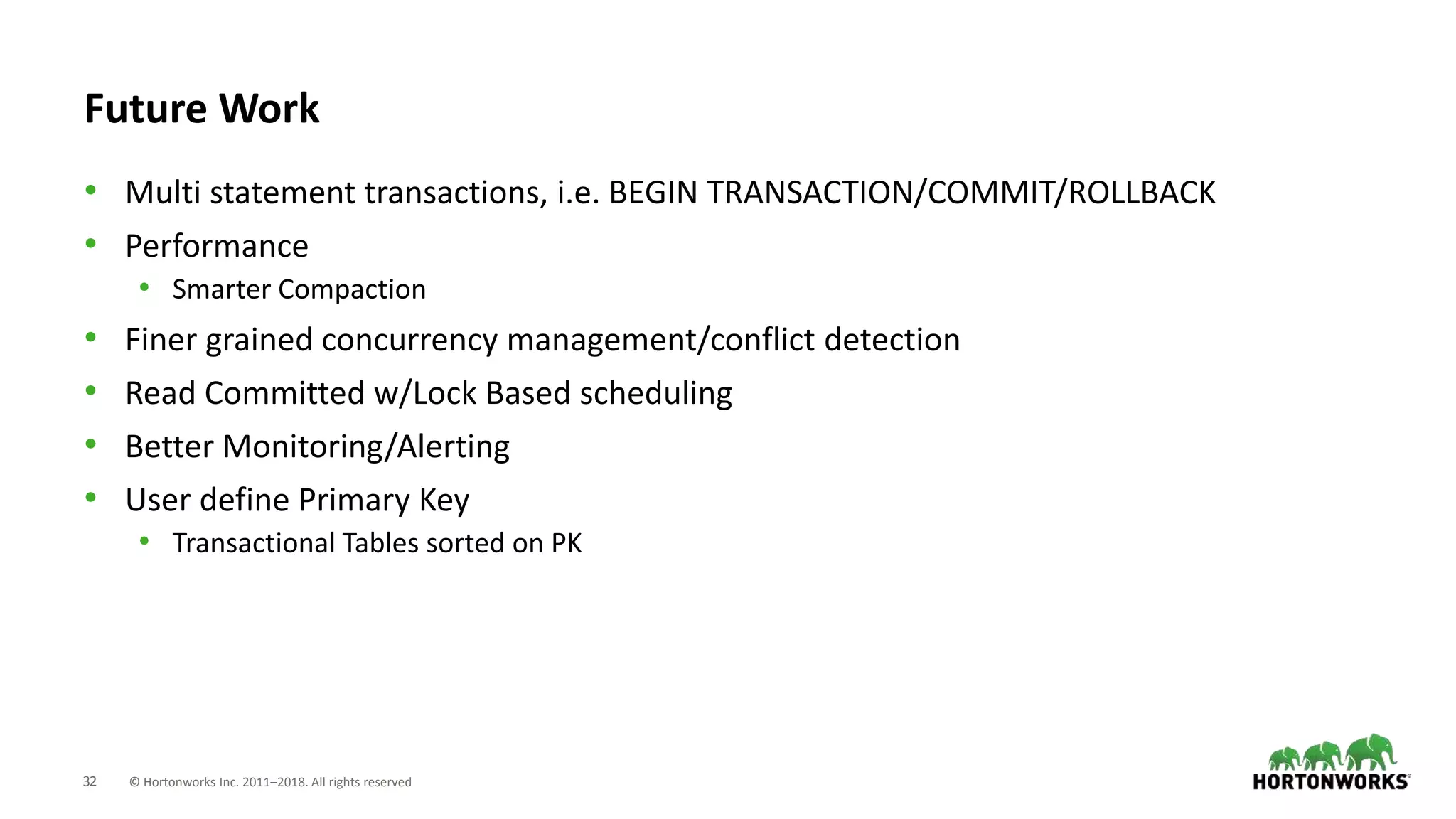
Future enhancements for Hive, including multi-statement transactions, performance improvements, better monitoring, and user-defined primary keys.
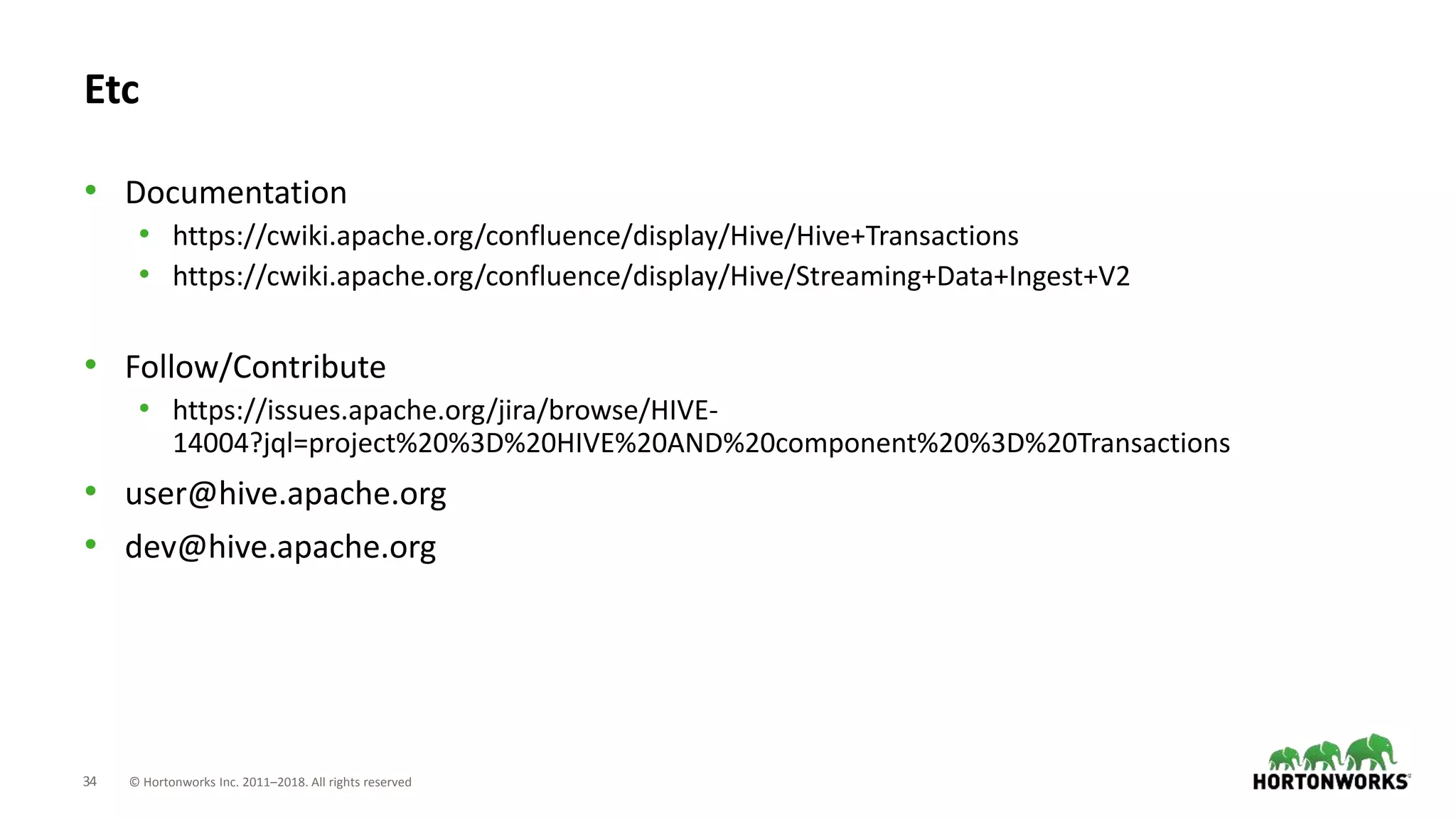
Additional reading materials, documentation links, and avenues for contributing to Hive's transaction enhancements.
Credits to contributors and concluding remarks from the presentation.


![Vibe Coding vs. Spec-Driven Development [Free Meetup]](https://cdn.slidesharecdn.com/ss_thumbnails/vibecodingvsspecdrivendevelopment-251209105622-43f455e7-thumbnail.jpg?width=640&height=640&fit=bounds)


