Learning Objectives:
Upon completion of this learning session,
the participants will be able to:
1. Write correct SOP’s
2. Relate department SOPs to the overall
objectives of the company
3. Understand the importance of applying
SOP’s
4. Update existing SOP’s to meet current
changes and improvements in the
company
5. Include SOP as part of training during the
Induction of a new staff
Contents:
1. Standard Operating
Procedures:
1.1 Define SOP’s
1. 2 Creating SOP’s
1. 3 Why do we need SOP’s:
A) With SOP we have
B) Without SOP we risk
2. Application of Standard
Operating Procedures:
2.1 Applying SOP’s
2. 2 Making sure your staff
follow SOP’s
2. 3 Using SOP’s during
Induction for new staff
2. 4 Reviewing & Updating
SOP’s
Standard Operating Procedures:
1.1 What are Standard Operating
Procedures (SOPs)?
- They are written instructions
intended to document how to perform
a routine task or activity or It is a
document consisting of step-by-step
information on how to execute a
task. It is really just a checklist.
Standard Operating Procedures:
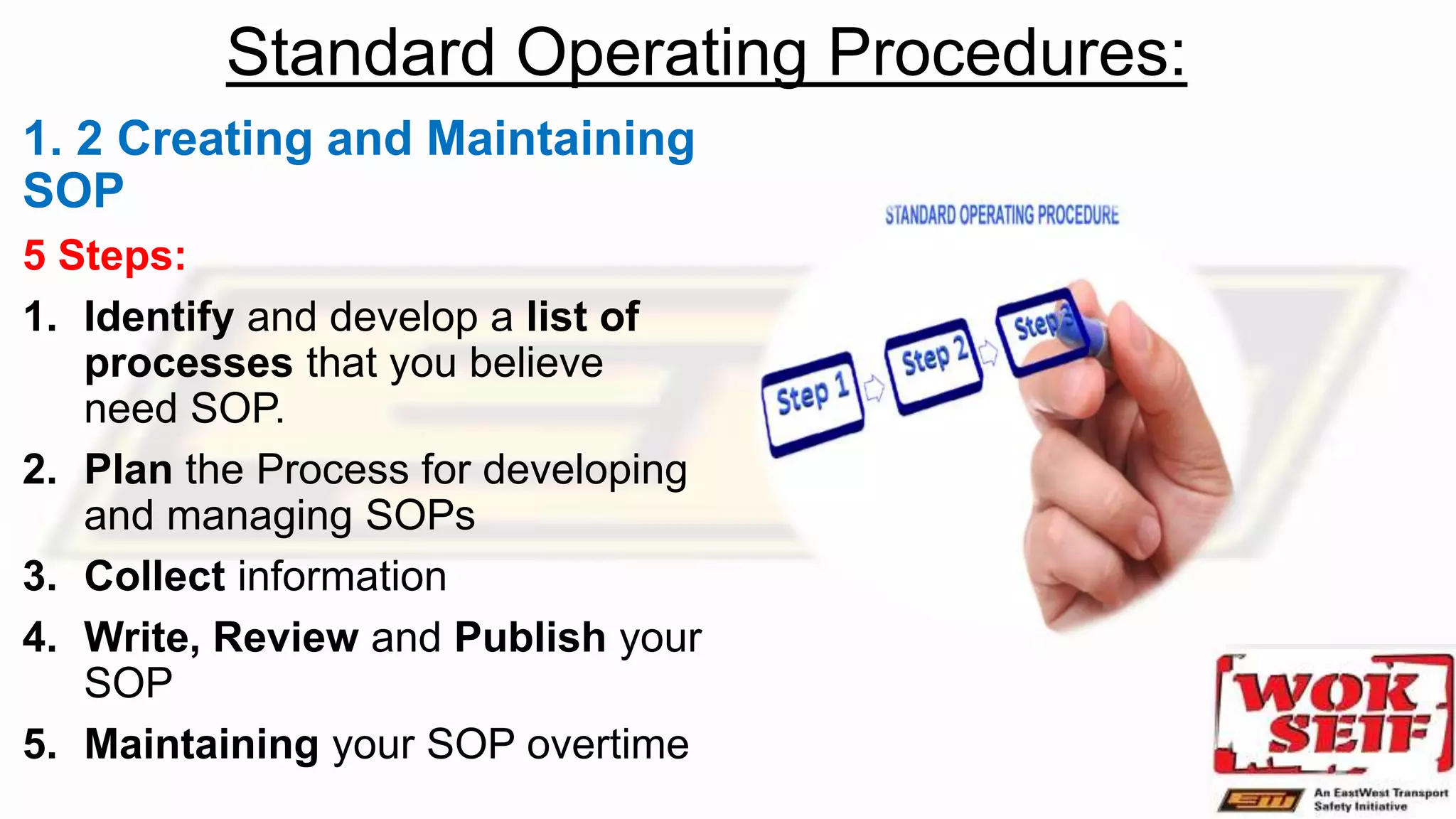
1. 2 Creating and Maintaining
SOP
5 Steps:
1. Identify and develop a list of
processes that you believe
need SOP.
2. Plan the Process for developing
and managing SOPs
3. Collect information
4. Write, Review and Publish your
SOP
5. Maintaining your SOP overtime
Standard Operating Procedures:
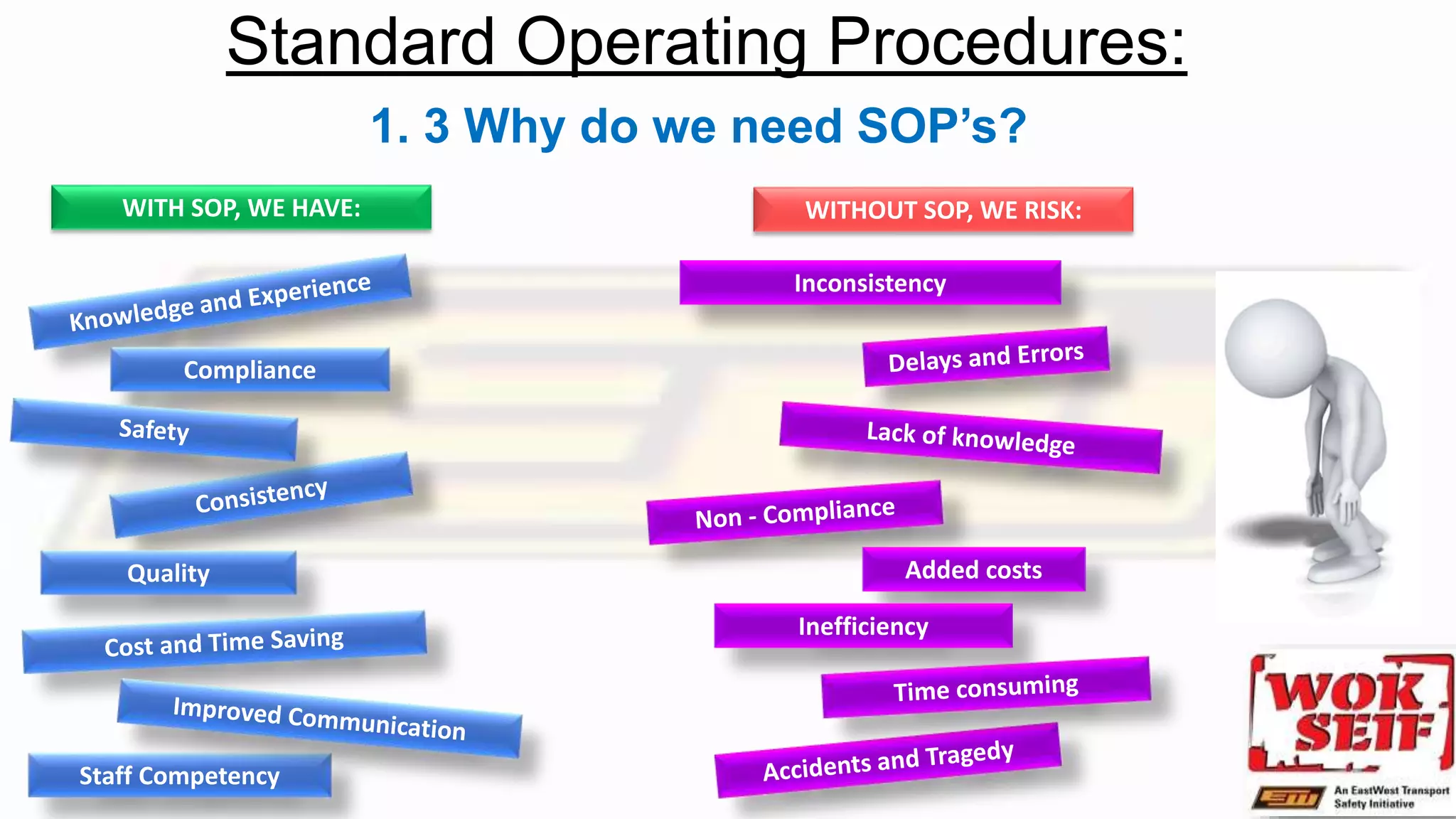
1. 3 Why do we need SOP’s?
Compliance
Quality
WITH SOP, WE HAVE:
Staff Competency
WITHOUT SOP, WE RISK:
Inconsistency
Added costs
Inefficiency
Application of Standard Operating Procedures:
2. 1 Applying SOP’s
3 Important Steps for Supervisors:
1. Train and Demonstrate an SOP to the user
2. Explain the importance of accuracy in SOP
3. Ensure accessibility of SOPs for all
Application of Standard Operating Procedures:
2. 2 How to make sure that your staff follow SOP’s:
Four steps for managers/supervisors:
1. Monitoring
Staff must sign-off to show that they are trained
physically and theoretically on how to carry out a
process
Visibility
To use posters or signage as a way of reminding them
2. Measurement
Make SOP part of Employee Review process
3. Frequency
Make sure to inform staff if an SOP is updated so they
know you give importance to SOP’s
Application of Standard Operating Procedures:
2. 3 Why it is important to use SOP’s in the
induction of a new staff?
Reasons:
- Saves time and training costs
- Staff is guided to perform the tasks assigned
to his/her role
- Avoiding of delays and errors
- Have the knowledge of what is expected of
him/her
- Know who to report to
- Have a clear picture of the role of the
department in the company
- Understand the objectives of the department
Application of Standard Operating Procedures:
2. 4 The importance of Reviewing & Updating
SOP’s:
Reasons:
1. To avoid and rectify any dispute and
misconceptions with a process
2. To maintain effective, efficient and realistic
processes
3. To be in line with changes and improvements in the
company
4. To fill in any gaps in a particular process
5. To avoid outdated information
6. For auditing purposes
THAT IS ALL EVERYONE AND THANK YOU FOR YOUR TIME!!!
ANY QUESTIONS?

Training on Standard Operating Procedures

  • 3.
    Learning Objectives: Upon completionof this learning session, the participants will be able to: 1. Write correct SOP’s 2. Relate department SOPs to the overall objectives of the company 3. Understand the importance of applying SOP’s 4. Update existing SOP’s to meet current changes and improvements in the company 5. Include SOP as part of training during the Induction of a new staff
  • 4.
    Contents: 1. Standard Operating Procedures: 1.1Define SOP’s 1. 2 Creating SOP’s 1. 3 Why do we need SOP’s: A) With SOP we have B) Without SOP we risk 2. Application of Standard Operating Procedures: 2.1 Applying SOP’s 2. 2 Making sure your staff follow SOP’s 2. 3 Using SOP’s during Induction for new staff 2. 4 Reviewing & Updating SOP’s
  • 5.
    Standard Operating Procedures: 1.1What are Standard Operating Procedures (SOPs)? - They are written instructions intended to document how to perform a routine task or activity or It is a document consisting of step-by-step information on how to execute a task. It is really just a checklist.
  • 6.
    Standard Operating Procedures: 1.2 Creating and Maintaining SOP 5 Steps: 1. Identify and develop a list of processes that you believe need SOP. 2. Plan the Process for developing and managing SOPs 3. Collect information 4. Write, Review and Publish your SOP 5. Maintaining your SOP overtime
  • 7.
    Standard Operating Procedures: 1.3 Why do we need SOP’s? Compliance Quality WITH SOP, WE HAVE: Staff Competency WITHOUT SOP, WE RISK: Inconsistency Added costs Inefficiency
  • 8.
    Application of StandardOperating Procedures: 2. 1 Applying SOP’s 3 Important Steps for Supervisors: 1. Train and Demonstrate an SOP to the user 2. Explain the importance of accuracy in SOP 3. Ensure accessibility of SOPs for all
  • 9.
    Application of StandardOperating Procedures: 2. 2 How to make sure that your staff follow SOP’s: Four steps for managers/supervisors: 1. Monitoring Staff must sign-off to show that they are trained physically and theoretically on how to carry out a process Visibility To use posters or signage as a way of reminding them 2. Measurement Make SOP part of Employee Review process 3. Frequency Make sure to inform staff if an SOP is updated so they know you give importance to SOP’s
  • 10.
    Application of StandardOperating Procedures: 2. 3 Why it is important to use SOP’s in the induction of a new staff? Reasons: - Saves time and training costs - Staff is guided to perform the tasks assigned to his/her role - Avoiding of delays and errors - Have the knowledge of what is expected of him/her - Know who to report to - Have a clear picture of the role of the department in the company - Understand the objectives of the department
  • 11.
    Application of StandardOperating Procedures: 2. 4 The importance of Reviewing & Updating SOP’s: Reasons: 1. To avoid and rectify any dispute and misconceptions with a process 2. To maintain effective, efficient and realistic processes 3. To be in line with changes and improvements in the company 4. To fill in any gaps in a particular process 5. To avoid outdated information 6. For auditing purposes
  • 12.
    THAT IS ALLEVERYONE AND THANK YOU FOR YOUR TIME!!! ANY QUESTIONS?