

Trainer:
M. Aamir
QA Head
 Garments are one of the basic needs of the human
beings apart from food and shelter. Garments are also
known as dress, cloth, attire, or apparel. People wear
clothing for functional as well as for social reasons.
◦ Women Wear
 Formal Wear
 Casual Wear
 Sports Wear
 Under Garment
◦ Men’s Wear
 Formal Wear
 Casual Wear
 Sports Wear
 Under Garments
◦ Kids Wear
 New Born Babies
 Infant Wear
 Toddlers Wear
 Under Garments
 Baby Just Born
 1 month to 1 year babies
 1 year to 3 years baby
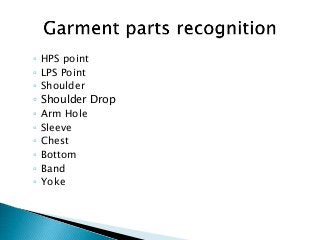
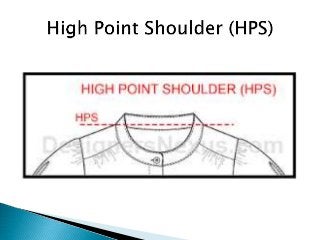
◦ HPS point
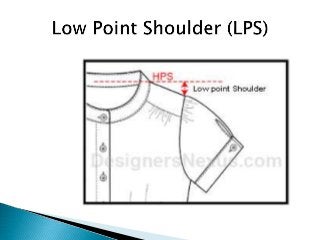
◦ LPS Point
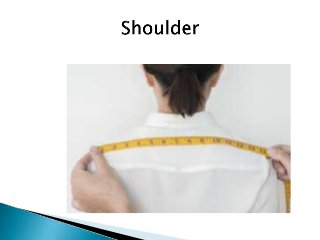
◦ Shoulder
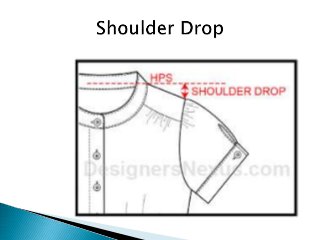
◦ Shoulder Drop
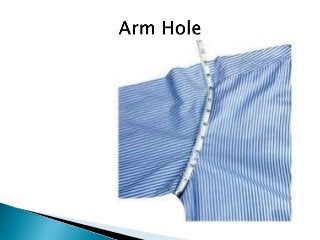
◦ Arm Hole
◦ Sleeve
◦ Chest
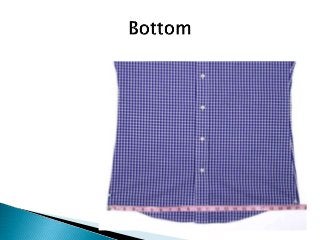
◦ Bottom
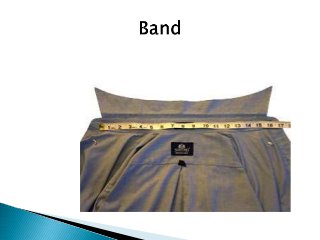
◦ Band
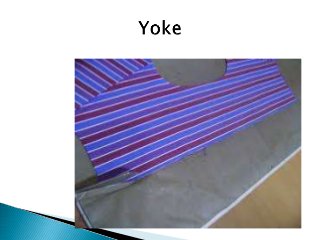
◦ Yoke
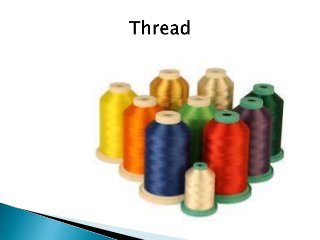
◦ Thread
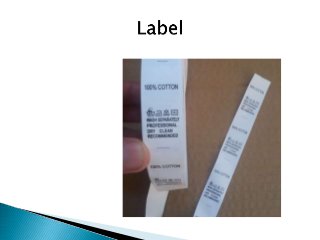
◦ Labels
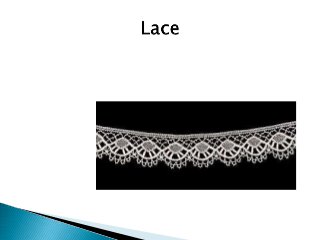
◦ Lace
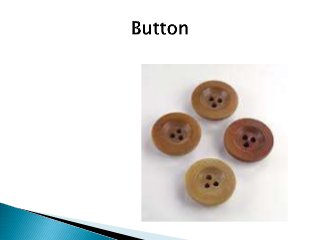
◦ Buttons
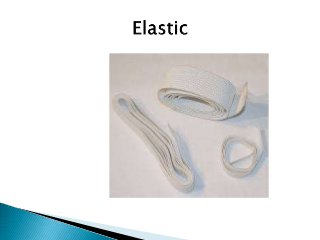
◦ Elastic
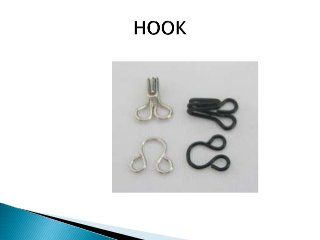
◦ Hook
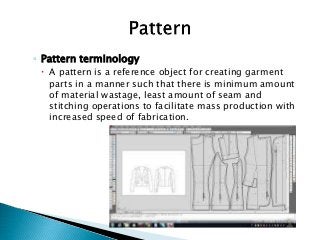
◦ Pattern terminology
 A pattern is a reference object for creating garment
parts in a manner such that there is minimum amount
of material wastage, least amount of seam and
stitching operations to facilitate mass production with
increased speed of fabrication.
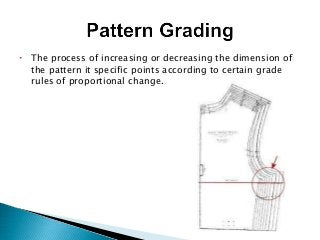
 The process of increasing or decreasing the dimension of
the pattern it specific points according to certain grade
rules of proportional change.
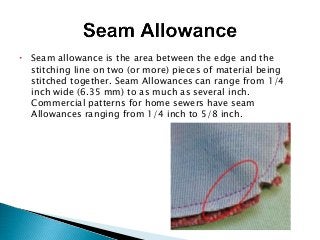
 Seam allowance is the area between the edge and the
stitching line on two (or more) pieces of material being
stitched together. Seam Allowances can range from 1/4
inch wide (6.35 mm) to as much as several inch.
Commercial patterns for home sewers have seam
Allowances ranging from 1/4 inch to 5/8 inch.
◦ Fulfilling needs which are defined for the product
◦ Quality is prevention
 Avoid doing things in a wrong way.
◦ Quality is customer satisfaction:
 Think that you are going to use the product, and work
towards making the product useful and satisfying for
you.
◦ Good Eye
◦ Good color perception
◦ Ability to understand and classify defects
◦ Ability to get along with others
◦ Common Sense
◦ Reasonable knowledge of math
◦ Quality is ultimately a question of customer satisfaction.
Good Quality increases- The value of a product or
service, establishes brand name, and builds up good
reputation for the garment exporting company.
◦ All these results to-
 Buyer satisfaction-
 The buyer is the most important person as he pays for the
products. He needs to be happy.
 Job security-
 If the company continues to satisfy the buyer, it will keep
getting orders regularly and the workers’ jobs will be secure.
 High sales-
 Good products sell out fast and profits can be earned.
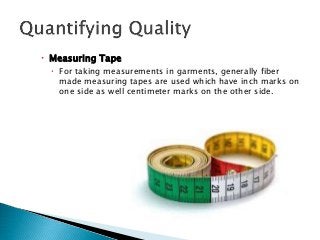
 Measuring Tape
 For taking measurements in garments, generally fiber
made measuring tapes are used which have inch marks on
one side as well centimeter marks on the other side.
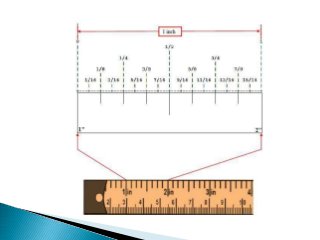
 For taking measurements in garments, generally fiber
made measuring tapes are used which have inch marks on
one side and inch as well centimeter marks on the other
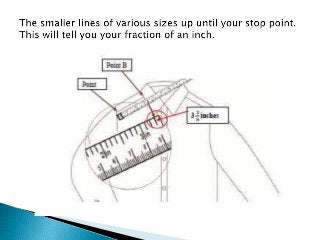
side. A number of fraction namely; 1/16, 1/8, 1/4, 1/2
etc. are used in garment measurements. These fractions
are basically various divisions of the measuring tape in
inches. We can understand fractions by observing the
figure below. The figure indicates the various fractions of
an inch‖ of measurement.
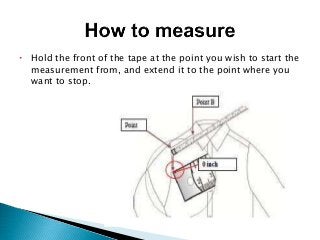
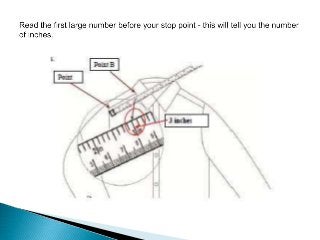
 Hold the front of the tape at the point you wish to start the
measurement from, and extend it to the point where you
want to stop.
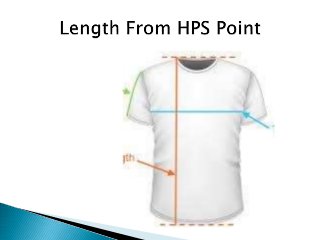
 Length from HPS
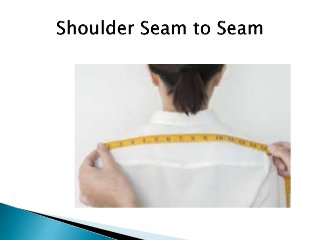
 Shoulder Seam to seam
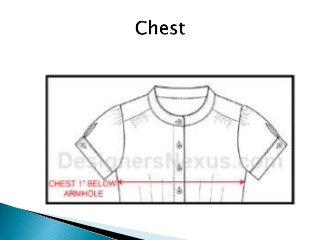
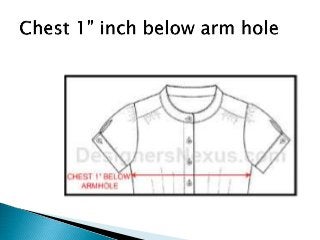
 Chest 1” inch below arm hole
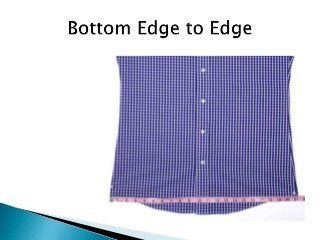
 Bottom edge to edge
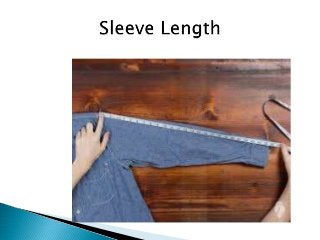
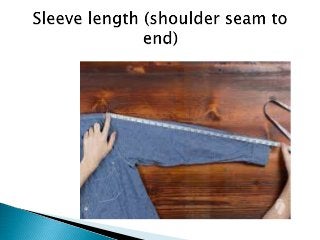
 Sleeve Length from arm hole seam to sleeve edge
◦ Responsible for doing inline inspections on all operations /
operators in a day.
◦ Responsible for generating all reports relating to inline
inspection.
◦ Responsible for ensuring that during inline inspection standard
quality specifications for each operation are being met at all the
operation points.
◦ Responsible for communicating any quality discrepancy during
inline inspection to the Quality Assurance Head and bringing the
same to the immediate notice of the Line In charge.
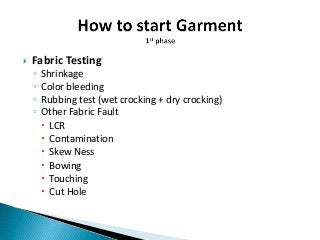
 Fabric Testing
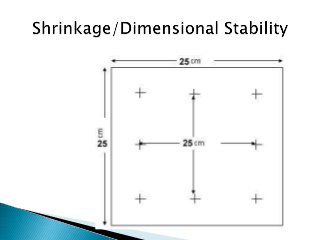
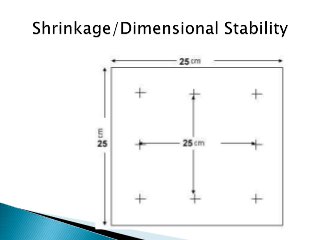
◦ Shrinkage
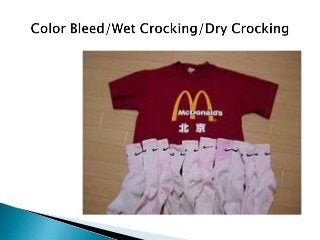
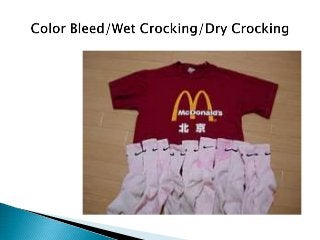
◦ Color bleeding
◦ Rubbing test (wet crocking + dry crocking)
◦ Other Fabric Fault
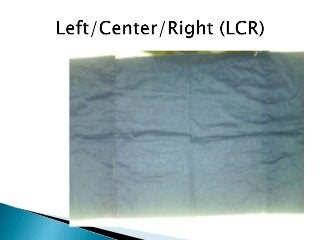
 LCR
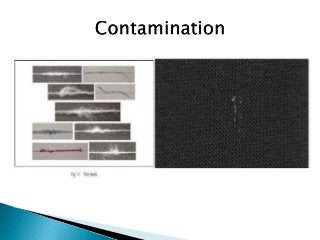
 Contamination
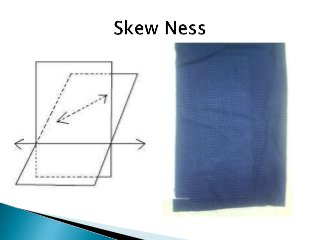
 Skew Ness
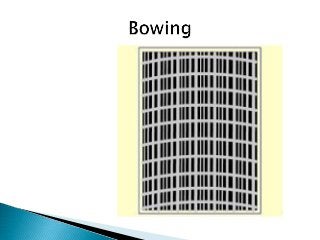
 Bowing
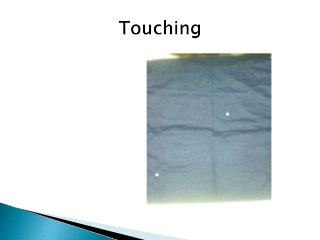
 Touching
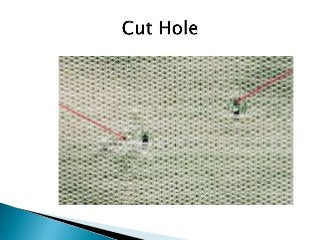
 Cut Hole
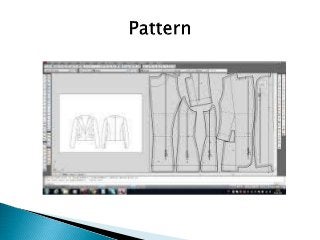
◦ Pattern
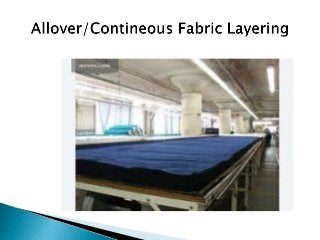
◦ Allover/Contineous cutting method
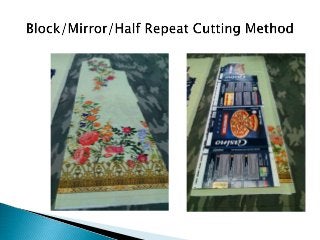
◦ Block/Mirror/Half Repeat Cutting Method
◦ Layering
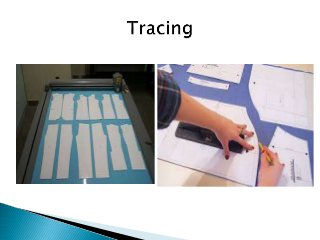
◦ Tracing
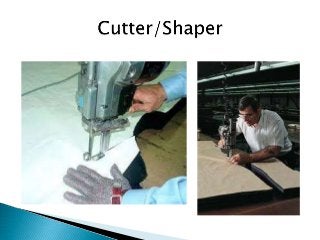
◦ Cutter/shaper
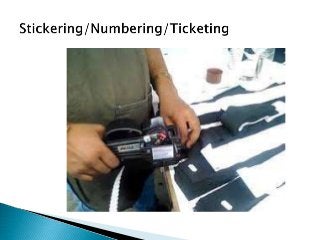
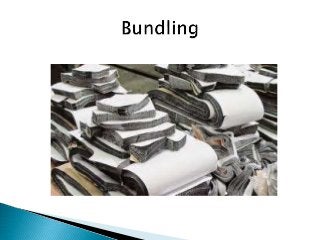
◦ Bundling/Numbering
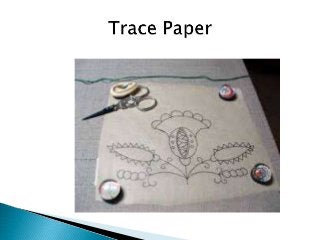
◦ Trace Paper
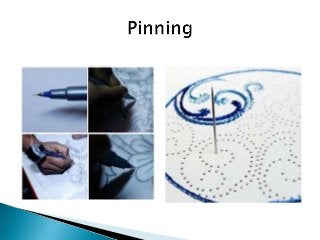
◦ Pinning
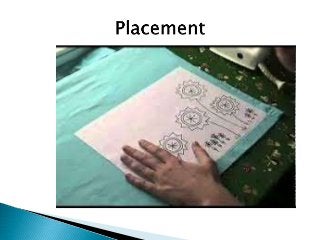
◦ Placement
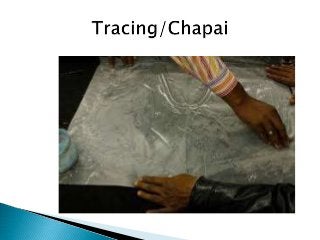
◦ Tracing
◦ Emb. Techniques
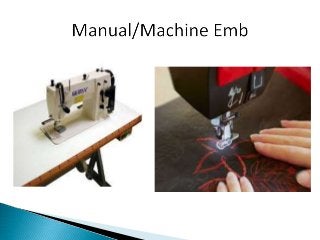
 Manual/Machine Emb
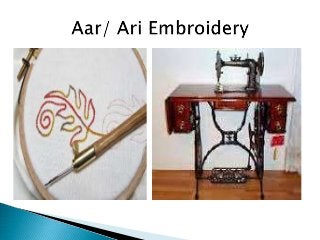
 Aar/Ari Emb
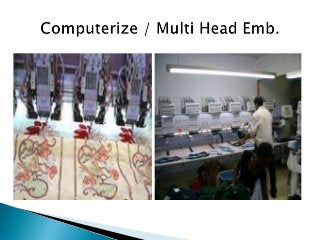
 Multi Head Emb
 Manual/Machine Emb
 Aar/Ari Emb
 Multi Head Emb
◦ Spec Sheet + Original Sample
◦ PP sample with changes
◦ Meeting with tailor head
◦ Inline Inspection
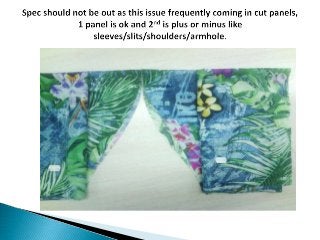
 Spec should not be out as this issue frequently coming in cut panels, 1
panel is ok and 2nd is plus or minus like sleeves/slits/shoulders/armhole.
 Neck spec plus is very frequent issue.
 Stitching margin is plus as per required.
 Stitching notch (tukkay/cut points) missing, it should be carefully done on
every operation.
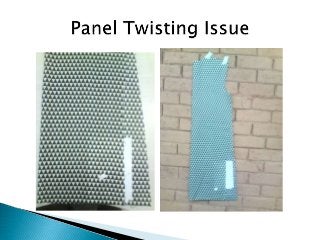
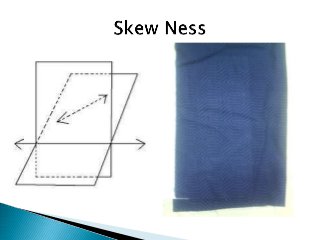
 Due to Fabric Issue cut panel are twisting, so proper press/stretch/ require
avoiding from this.
 Panel/block prints should be cut in center, as most of the articles in this
season are out of center.
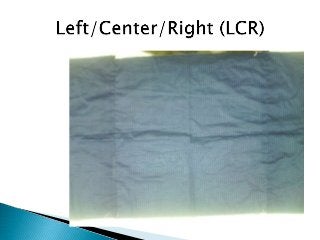
 LCR should be manage accordingly, and panels should be cut side to side
or center to center, left, center and right should not be mix.
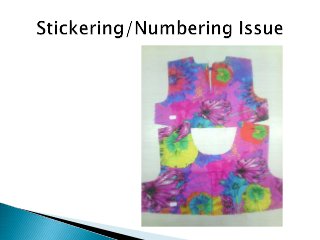
 Bundles are mixing due to following reasons
◦ Size mixing
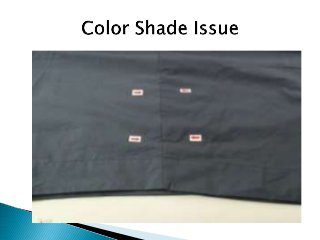
◦ Shade mix
◦ Wrong number stickers
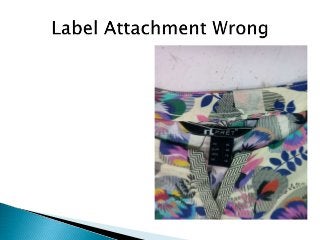
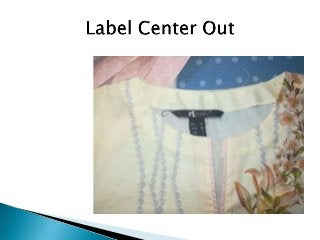
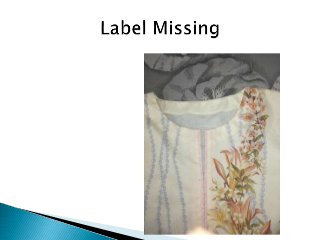
◦ Label
◦ Should be in center
◦ Should not be miss
◦ Should not be wrong attach, size and quality wise
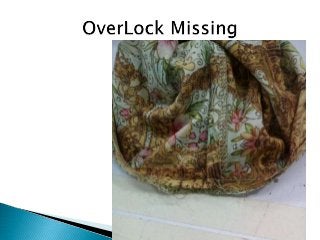
◦ Over lock
◦ Should not be miss
◦ Should be neat
◦ Should be on every possible panel
◦ Front neck slit/piping
◦ Should be even on both sides
◦ Should not be overlap
◦ Should not be slant
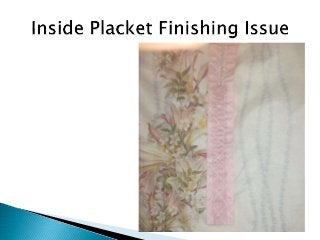
◦ Inner edge properly finish require with over lock or self folding
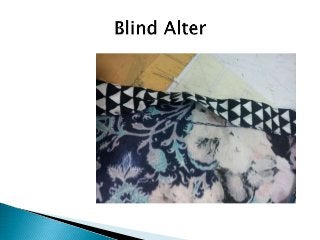
◦ Alteration
◦ Stitching alter should be reduce
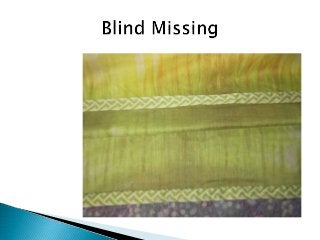
◦ Blind alter should be reduce
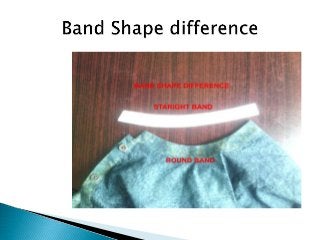
◦ Band
◦ Should not be uneven spec wise
◦ Shape should be accurate
◦ Button loops
◦ Should be equal size wise
◦ Should be according to button size
◦ Loop to loop distance should be equal
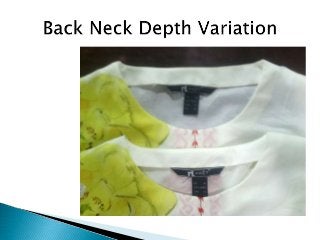
◦ Back neck depth
◦ loose thread Trim
◦ group to group working
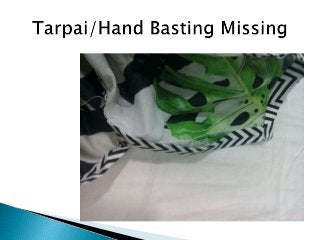
 Improvement require regarding hand basting (Tarpai) as mentioned below
◦ Should be hidden
◦ Stitch (tanka) should be maximum of ½ cm
◦ End Stitch should be lock
◦ Lock Stitch (thoka) Miss
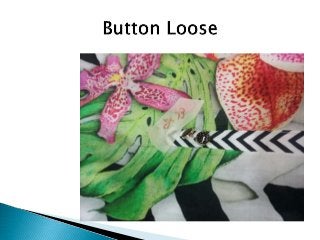
 Improvement require regarding Button Attachment as mentioned below
◦ Should not be loose
◦ Should not be slant
◦ Distance between button to button should be accurate
◦ Gently attach to avoid from puckering
 Improvement require regarding Hook Attachment as mentioned below
◦ Attachment should be neat,
◦ No thick knot req.
◦ No extra thread req.
◦ Placement should be accurate
◦ Both parts should be align
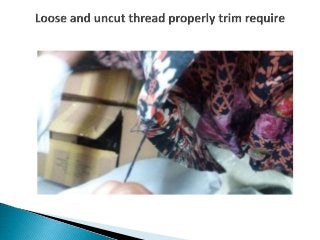
 Loose and uncut thread properly trim require
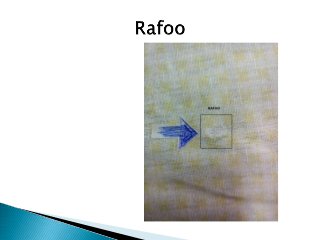
 Cut hole should properly amend (rafoo) req. and pieces should be
separate
 Improvement require regarding alteration as mentioned below
◦ Hand basting (tarpai)
◦ Button alteration
 Improvements regarding label require as mentioned below
◦ Should be in center
◦ Should not be miss
◦ Should not be wrong attach (size and quality wise)
 Improvements regarding wash require as mentioned below
◦ Stain should be remove
◦ Button marking (kahria/chalk) should be remove
 Have the proper approach toward operators.
◦ Approach operator with defective garment.
◦ Ask operator kindly to stop the work and pay attention.
◦ Explain defect found and ask if she understands why garment is
defective.
◦ Make sure operator understands why it is defective.
◦ Try to find out why the defect was created or why it was not detected at
the workstation.
◦ Restate the company‘s commitment to quality.
◦ Ask operator to inspect the current bundle for more defective parts and
then repair all parts that are out of tolerance including the one found
by the inspector. This should be done immediately.
 Train operators to sew with good quality from the beginning.
 Know quality specifications and tolerances.
 Be consistent in the decisions toward quality.
 Comment on both good and bad quality.
 Be sure to check each operator's work daily. The amount of defects found
should govern the amount of inspections performed. Vary inspection
times and inspection sequence. Check into middle of bundle. Do not
always look at only the top garments.
 SPI,s
◦ How to Measure Stitches per inch (SPI)
◦ SPI Recommendations for Woven Garments.
 Sewing Needles
◦ Anatomy Of Needle
◦ Types of Needles
◦ Needle Numbering System
 Sewing Thread
◦ Types of Thread
◦ Thread PLY
◦ Thread Count
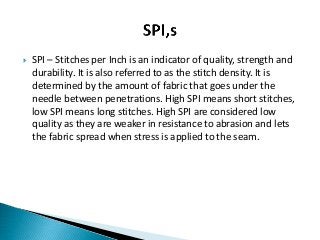
 SPI – Stitches per Inch is an indicator of quality, strength and
durability. It is also referred to as the stitch density. It is
determined by the amount of fabric that goes under the
needle between penetrations. High SPI means short stitches,
low SPI means long stitches. High SPI are considered low
quality as they are weaker in resistance to abrasion and lets
the fabric spread when stress is applied to the seam.
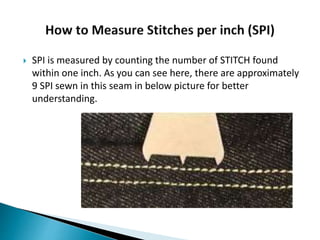
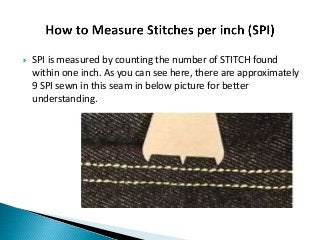
 SPI is measured by counting the number of STITCH found
within one inch. As you can see here, there are approximately
9 SPI sewn in this seam in below picture for better
understanding.
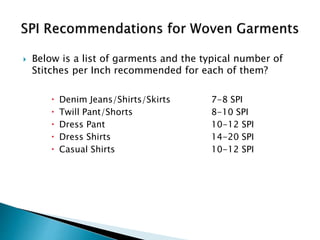
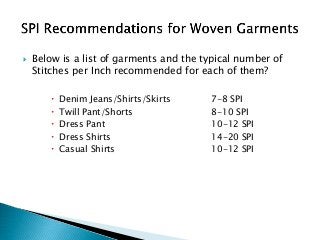
 Below is a list of garments and the typical number of
Stitches per Inch recommended for each of them?
 Denim Jeans/Shirts/Skirts 7-8 SPI
 Twill Pant/Shorts 8-10 SPI
 Dress Pant 10-12 SPI
 Dress Shirts 14-20 SPI
 Casual Shirts 10-12 SPI
◦ A sewing needle is a long slim tool with a pointed tip at one
end and a hole or eye at the other.
◦ The earliest needles were made of bone or wood; modern
ones are manufactured from high carbon steel wire and are
nickel- or 18K gold-plated for corrosion resistance.
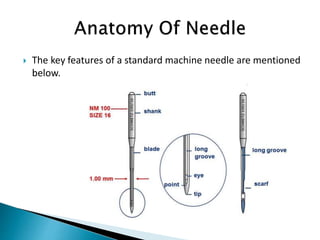
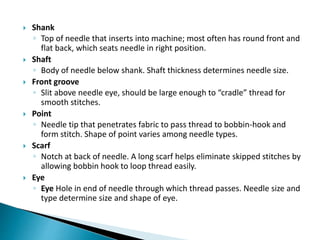
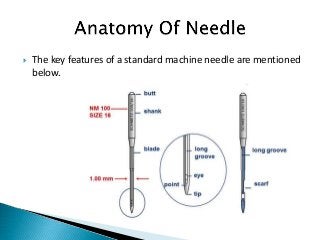
 The key features of a standard machine needle are mentioned
below.
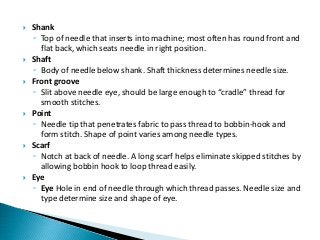
 Shank
◦ Top of needle that inserts into machine; most often has round front and
flat back, which seats needle in right position.
 Shaft
◦ Body of needle below shank. Shaft thickness determines needle size.
 Front groove
◦ Slit above needle eye, should be large enough to “cradle” thread for
smooth stitches.
 Point
◦ Needle tip that penetrates fabric to pass thread to bobbin-hook and
form stitch. Shape of point varies among needle types.
 Scarf
◦ Notch at back of needle. A long scarf helps eliminate skipped stitches by
allowing bobbin hook to loop thread easily.
 Eye
◦ Eye Hole in end of needle through which thread passes. Needle size and
type determine size and shape of eye.
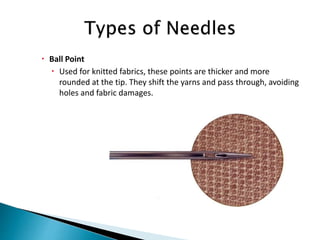
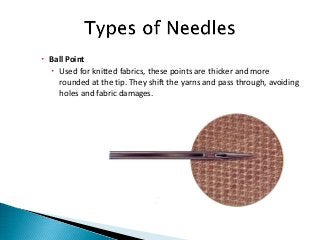
 Ball Point
 Used for knitted fabrics, these points are thicker and more
rounded at the tip. They shift the yarns and pass through, avoiding
holes and fabric damages.
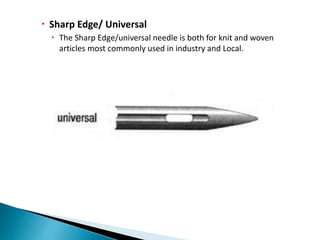
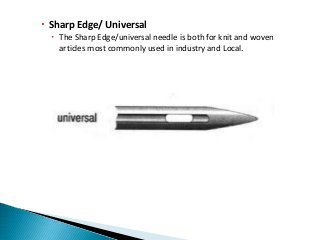
 Sharp Edge/ Universal
 The Sharp Edge/universal needle is both for knit and woven
articles most commonly used in industry and Local.
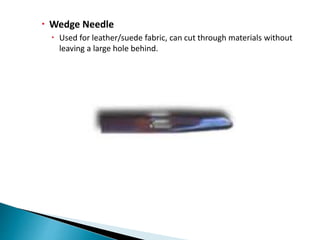
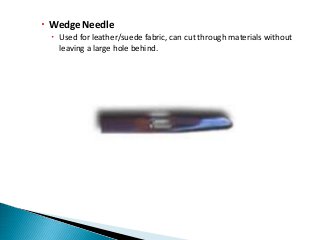
 Wedge Needle
 Used for leather/suede fabric, can cut through materials without
leaving a large hole behind.
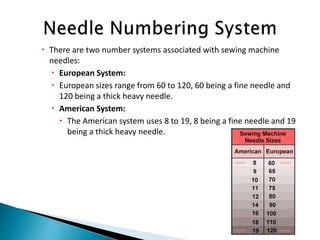
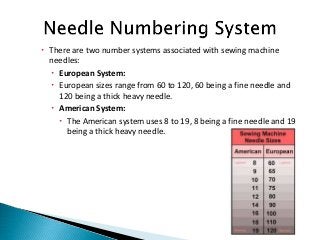
 There are two number systems associated with sewing machine
needles:
 European System:
 European sizes range from 60 to 120, 60 being a fine needle and
120 being a thick heavy needle.
 American System:
 The American system uses 8 to 19, 8 being a fine needle and 19
being a thick heavy needle.
 Sewing Thread
 A long, thin fiber of cotton, nylon, or other fibers used in sewing or
weaving.
 Types of Thread
◦ Polyester
◦ Polyester/Cotton
◦ Nylon
◦ Rayon
◦ Cotton
◦ Wool
 Thread PLY
◦ Yarns with many components are twisted together to form ply thread.
Most commonly used are 2, 3 or 4 ply threads.
 Thread Count
◦ 10 Thick
◦ 20
◦ 30
◦ 40
◦ 50
◦ 60
◦ 70
◦ 80
◦ 90
◦ 100 Thin
 Currently in Nishat Linen we are using 50 count, 3 ply, and polyester
cotton (mix) thread.
THANK YOU ALL
WISH YOU GOOD LUCK FOR YOUR FUTURE

Training

  • 1.
  • 2.
     Garments areone of the basic needs of the human beings apart from food and shelter. Garments are also known as dress, cloth, attire, or apparel. People wear clothing for functional as well as for social reasons.
  • 3.
    ◦ Women Wear Formal Wear  Casual Wear  Sports Wear  Under Garment
  • 8.
    ◦ Men’s Wear Formal Wear  Casual Wear  Sports Wear  Under Garments
  • 13.
    ◦ Kids Wear New Born Babies  Infant Wear  Toddlers Wear  Under Garments
  • 14.
  • 15.
     1 monthto 1 year babies
  • 16.
     1 yearto 3 years baby
  • 18.
    ◦ HPS point ◦LPS Point ◦ Shoulder ◦ Shoulder Drop ◦ Arm Hole ◦ Sleeve ◦ Chest ◦ Bottom ◦ Band ◦ Yoke
  • 29.
    ◦ Thread ◦ Labels ◦Lace ◦ Buttons ◦ Elastic ◦ Hook
  • 36.
    ◦ Pattern terminology A pattern is a reference object for creating garment parts in a manner such that there is minimum amount of material wastage, least amount of seam and stitching operations to facilitate mass production with increased speed of fabrication.
  • 37.
     The processof increasing or decreasing the dimension of the pattern it specific points according to certain grade rules of proportional change.
  • 38.
     Seam allowanceis the area between the edge and the stitching line on two (or more) pieces of material being stitched together. Seam Allowances can range from 1/4 inch wide (6.35 mm) to as much as several inch. Commercial patterns for home sewers have seam Allowances ranging from 1/4 inch to 5/8 inch.
  • 39.
    ◦ Fulfilling needswhich are defined for the product ◦ Quality is prevention  Avoid doing things in a wrong way. ◦ Quality is customer satisfaction:  Think that you are going to use the product, and work towards making the product useful and satisfying for you.
  • 40.
    ◦ Good Eye ◦Good color perception ◦ Ability to understand and classify defects ◦ Ability to get along with others ◦ Common Sense ◦ Reasonable knowledge of math
  • 41.
    ◦ Quality isultimately a question of customer satisfaction. Good Quality increases- The value of a product or service, establishes brand name, and builds up good reputation for the garment exporting company. ◦ All these results to-  Buyer satisfaction-  The buyer is the most important person as he pays for the products. He needs to be happy.  Job security-  If the company continues to satisfy the buyer, it will keep getting orders regularly and the workers’ jobs will be secure.  High sales-  Good products sell out fast and profits can be earned.
  • 42.
     Measuring Tape For taking measurements in garments, generally fiber made measuring tapes are used which have inch marks on one side as well centimeter marks on the other side.
  • 43.
     For takingmeasurements in garments, generally fiber made measuring tapes are used which have inch marks on one side and inch as well centimeter marks on the other side. A number of fraction namely; 1/16, 1/8, 1/4, 1/2 etc. are used in garment measurements. These fractions are basically various divisions of the measuring tape in inches. We can understand fractions by observing the figure below. The figure indicates the various fractions of an inch‖ of measurement.
  • 45.
     Hold thefront of the tape at the point you wish to start the measurement from, and extend it to the point where you want to stop.
  • 48.
     Length fromHPS  Shoulder Seam to seam  Chest 1” inch below arm hole  Bottom edge to edge  Sleeve Length from arm hole seam to sleeve edge
  • 54.
    ◦ Responsible fordoing inline inspections on all operations / operators in a day. ◦ Responsible for generating all reports relating to inline inspection. ◦ Responsible for ensuring that during inline inspection standard quality specifications for each operation are being met at all the operation points. ◦ Responsible for communicating any quality discrepancy during inline inspection to the Quality Assurance Head and bringing the same to the immediate notice of the Line In charge.
  • 55.
     Fabric Testing ◦Shrinkage ◦ Color bleeding ◦ Rubbing test (wet crocking + dry crocking) ◦ Other Fabric Fault  LCR  Contamination  Skew Ness  Bowing  Touching  Cut Hole
  • 64.
    ◦ Pattern ◦ Allover/Contineouscutting method ◦ Block/Mirror/Half Repeat Cutting Method ◦ Layering ◦ Tracing ◦ Cutter/shaper ◦ Bundling/Numbering
  • 72.
    ◦ Trace Paper ◦Pinning ◦ Placement ◦ Tracing ◦ Emb. Techniques  Manual/Machine Emb  Aar/Ari Emb  Multi Head Emb
  • 77.
     Manual/Machine Emb Aar/Ari Emb  Multi Head Emb
  • 81.
    ◦ Spec Sheet+ Original Sample ◦ PP sample with changes ◦ Meeting with tailor head ◦ Inline Inspection
  • 82.
     Spec shouldnot be out as this issue frequently coming in cut panels, 1 panel is ok and 2nd is plus or minus like sleeves/slits/shoulders/armhole.  Neck spec plus is very frequent issue.  Stitching margin is plus as per required.  Stitching notch (tukkay/cut points) missing, it should be carefully done on every operation.  Due to Fabric Issue cut panel are twisting, so proper press/stretch/ require avoiding from this.  Panel/block prints should be cut in center, as most of the articles in this season are out of center.  LCR should be manage accordingly, and panels should be cut side to side or center to center, left, center and right should not be mix.  Bundles are mixing due to following reasons ◦ Size mixing ◦ Shade mix ◦ Wrong number stickers
  • 83.
    ◦ Label ◦ Shouldbe in center ◦ Should not be miss ◦ Should not be wrong attach, size and quality wise ◦ Over lock ◦ Should not be miss ◦ Should be neat ◦ Should be on every possible panel ◦ Front neck slit/piping ◦ Should be even on both sides ◦ Should not be overlap ◦ Should not be slant ◦ Inner edge properly finish require with over lock or self folding
  • 84.
    ◦ Alteration ◦ Stitchingalter should be reduce ◦ Blind alter should be reduce ◦ Band ◦ Should not be uneven spec wise ◦ Shape should be accurate ◦ Button loops ◦ Should be equal size wise ◦ Should be according to button size ◦ Loop to loop distance should be equal ◦ Back neck depth ◦ loose thread Trim ◦ group to group working
  • 85.
     Improvement requireregarding hand basting (Tarpai) as mentioned below ◦ Should be hidden ◦ Stitch (tanka) should be maximum of ½ cm ◦ End Stitch should be lock ◦ Lock Stitch (thoka) Miss  Improvement require regarding Button Attachment as mentioned below ◦ Should not be loose ◦ Should not be slant ◦ Distance between button to button should be accurate ◦ Gently attach to avoid from puckering  Improvement require regarding Hook Attachment as mentioned below ◦ Attachment should be neat, ◦ No thick knot req. ◦ No extra thread req. ◦ Placement should be accurate ◦ Both parts should be align
  • 86.
     Loose anduncut thread properly trim require  Cut hole should properly amend (rafoo) req. and pieces should be separate  Improvement require regarding alteration as mentioned below ◦ Hand basting (tarpai) ◦ Button alteration  Improvements regarding label require as mentioned below ◦ Should be in center ◦ Should not be miss ◦ Should not be wrong attach (size and quality wise)  Improvements regarding wash require as mentioned below ◦ Stain should be remove ◦ Button marking (kahria/chalk) should be remove
  • 111.
     Have theproper approach toward operators. ◦ Approach operator with defective garment. ◦ Ask operator kindly to stop the work and pay attention. ◦ Explain defect found and ask if she understands why garment is defective. ◦ Make sure operator understands why it is defective. ◦ Try to find out why the defect was created or why it was not detected at the workstation. ◦ Restate the company‘s commitment to quality. ◦ Ask operator to inspect the current bundle for more defective parts and then repair all parts that are out of tolerance including the one found by the inspector. This should be done immediately.
  • 112.
     Train operatorsto sew with good quality from the beginning.  Know quality specifications and tolerances.  Be consistent in the decisions toward quality.  Comment on both good and bad quality.  Be sure to check each operator's work daily. The amount of defects found should govern the amount of inspections performed. Vary inspection times and inspection sequence. Check into middle of bundle. Do not always look at only the top garments.
  • 113.
     SPI,s ◦ Howto Measure Stitches per inch (SPI) ◦ SPI Recommendations for Woven Garments.  Sewing Needles ◦ Anatomy Of Needle ◦ Types of Needles ◦ Needle Numbering System  Sewing Thread ◦ Types of Thread ◦ Thread PLY ◦ Thread Count
  • 114.
     SPI –Stitches per Inch is an indicator of quality, strength and durability. It is also referred to as the stitch density. It is determined by the amount of fabric that goes under the needle between penetrations. High SPI means short stitches, low SPI means long stitches. High SPI are considered low quality as they are weaker in resistance to abrasion and lets the fabric spread when stress is applied to the seam.
  • 115.
     SPI ismeasured by counting the number of STITCH found within one inch. As you can see here, there are approximately 9 SPI sewn in this seam in below picture for better understanding.
  • 116.
     Below isa list of garments and the typical number of Stitches per Inch recommended for each of them?  Denim Jeans/Shirts/Skirts 7-8 SPI  Twill Pant/Shorts 8-10 SPI  Dress Pant 10-12 SPI  Dress Shirts 14-20 SPI  Casual Shirts 10-12 SPI
  • 117.
    ◦ A sewingneedle is a long slim tool with a pointed tip at one end and a hole or eye at the other. ◦ The earliest needles were made of bone or wood; modern ones are manufactured from high carbon steel wire and are nickel- or 18K gold-plated for corrosion resistance.
  • 118.
     The keyfeatures of a standard machine needle are mentioned below.
  • 119.
     Shank ◦ Topof needle that inserts into machine; most often has round front and flat back, which seats needle in right position.  Shaft ◦ Body of needle below shank. Shaft thickness determines needle size.  Front groove ◦ Slit above needle eye, should be large enough to “cradle” thread for smooth stitches.  Point ◦ Needle tip that penetrates fabric to pass thread to bobbin-hook and form stitch. Shape of point varies among needle types.  Scarf ◦ Notch at back of needle. A long scarf helps eliminate skipped stitches by allowing bobbin hook to loop thread easily.  Eye ◦ Eye Hole in end of needle through which thread passes. Needle size and type determine size and shape of eye.
  • 120.
     Ball Point Used for knitted fabrics, these points are thicker and more rounded at the tip. They shift the yarns and pass through, avoiding holes and fabric damages.
  • 121.
     Sharp Edge/Universal  The Sharp Edge/universal needle is both for knit and woven articles most commonly used in industry and Local.
  • 122.
     Wedge Needle Used for leather/suede fabric, can cut through materials without leaving a large hole behind.
  • 123.
     There aretwo number systems associated with sewing machine needles:  European System:  European sizes range from 60 to 120, 60 being a fine needle and 120 being a thick heavy needle.  American System:  The American system uses 8 to 19, 8 being a fine needle and 19 being a thick heavy needle.
  • 124.
     Sewing Thread A long, thin fiber of cotton, nylon, or other fibers used in sewing or weaving.  Types of Thread ◦ Polyester ◦ Polyester/Cotton ◦ Nylon ◦ Rayon ◦ Cotton ◦ Wool
  • 125.
     Thread PLY ◦Yarns with many components are twisted together to form ply thread. Most commonly used are 2, 3 or 4 ply threads.  Thread Count ◦ 10 Thick ◦ 20 ◦ 30 ◦ 40 ◦ 50 ◦ 60 ◦ 70 ◦ 80 ◦ 90 ◦ 100 Thin  Currently in Nishat Linen we are using 50 count, 3 ply, and polyester cotton (mix) thread.
  • 126.
    THANK YOU ALL WISHYOU GOOD LUCK FOR YOUR FUTURE