CE304 - RAILWAY,BRIDGE & TUNNEL ENGINEERING
Sr. no Name Id no
1 Maulik Vithalapara 16CE120
2 Nayan Pansuriya 16CE121
Made by :- Guided by:-
Name of faculty
Dr. L.B. Zala
BIRLA VISHVAKARMA MAHAVIDYALAYA
(An Autonomous Institutions)
V.V NAGAR- 388120.
Topic – Track Junctions and Simple
Track Layouts
TRACK JUNCTIONS AND SIMPLE TRACK LAYOUTS
 CONTENTS
 Turnout of Similar Flexure
 Turnout of Contrary Flexure
 Symmetrical Split
 Three-throw Switch
 Double Turnout
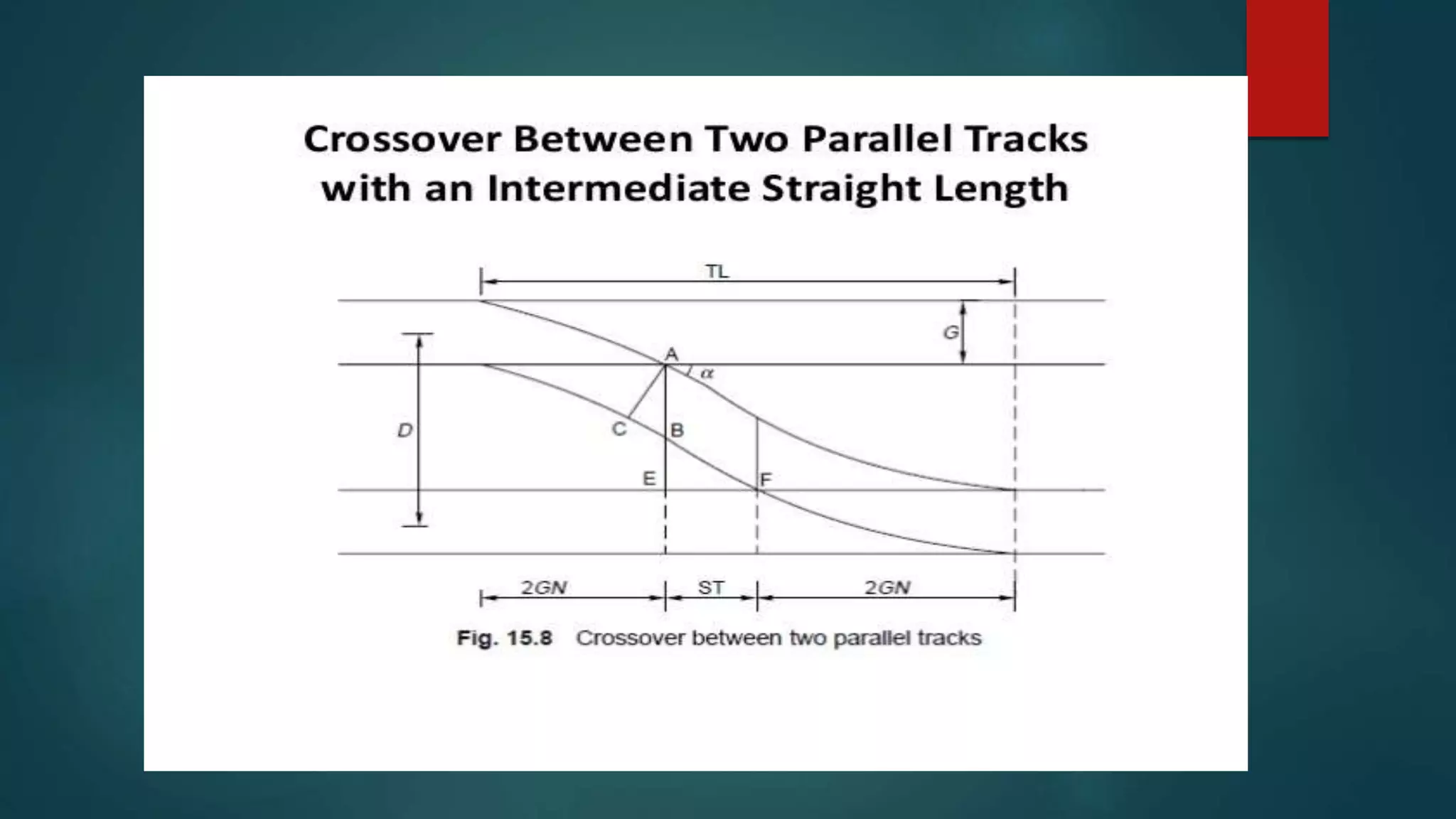
 Crossover
 Diamond Crossing
 Scissors Crossover
 Gauntleted Track
 Gathering Line
 Triangle
 Double Junction
INTRODUCTION
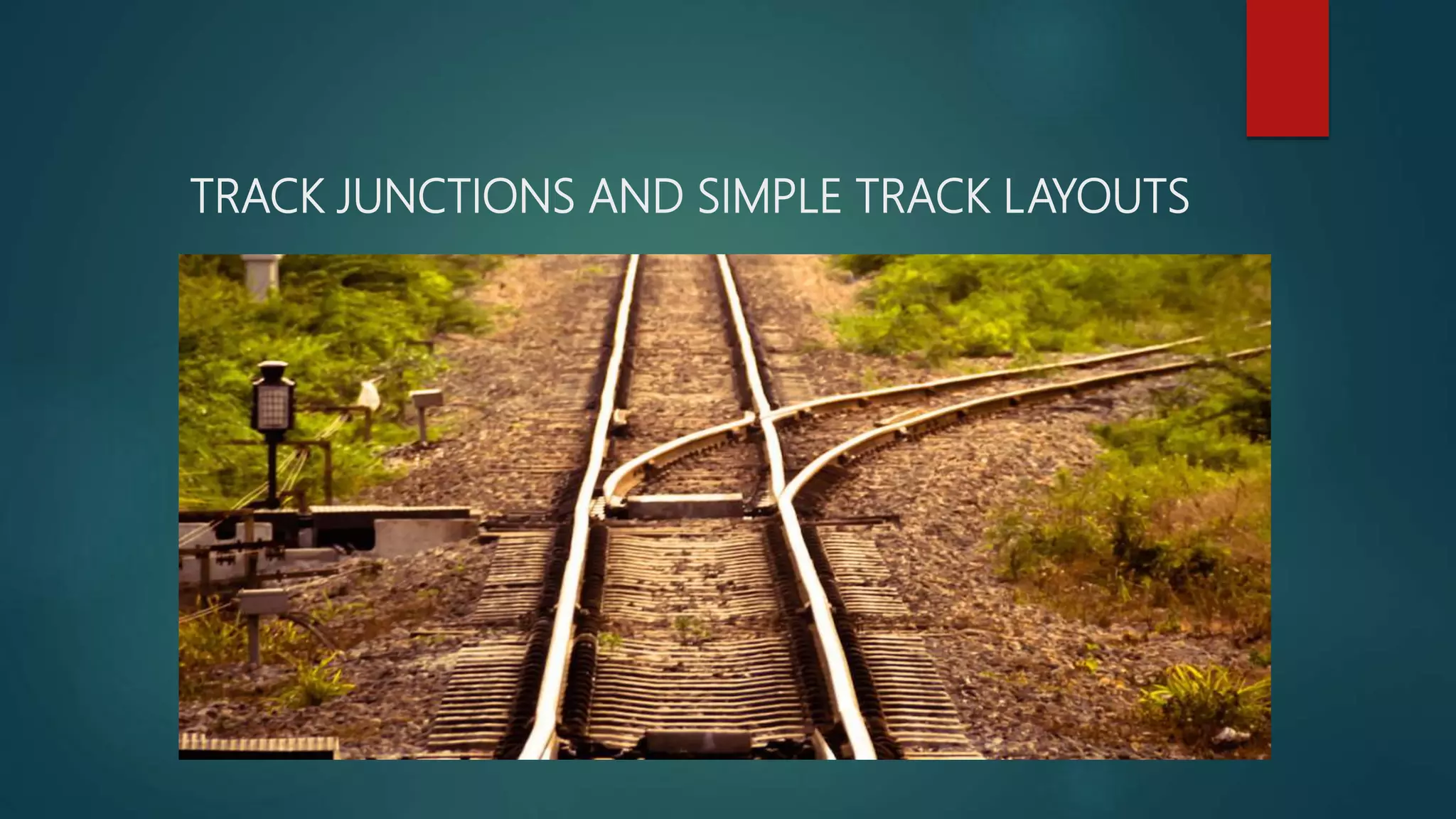
 Track junctions are formed by the combination of points and crossings.
 The main objective of track junctions is to transfer rail vehicles from one
track to another or to enable them to cross from one track to another.
 Depending upon the requirements of traffic, there can be several types
of track junctions with simple track layouts.
TURNOUT OF SIMILAR FLEXURE
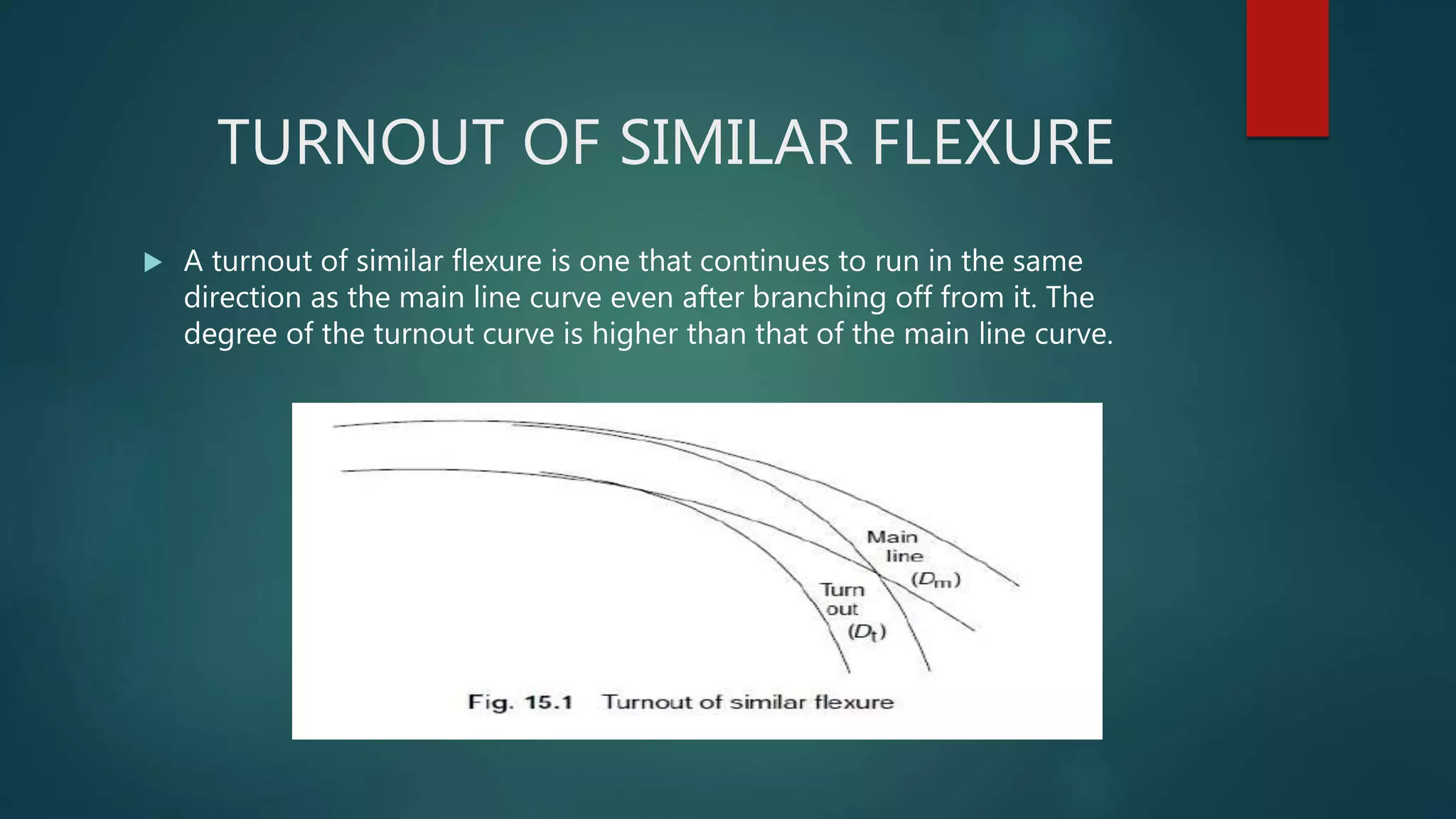
 A turnout of similar flexure is one that continues to run in the same
direction as the main line curve even after branching off from it. The
degree of the turnout curve is higher than that of the main line curve.
Turnout of Contrary Flexure
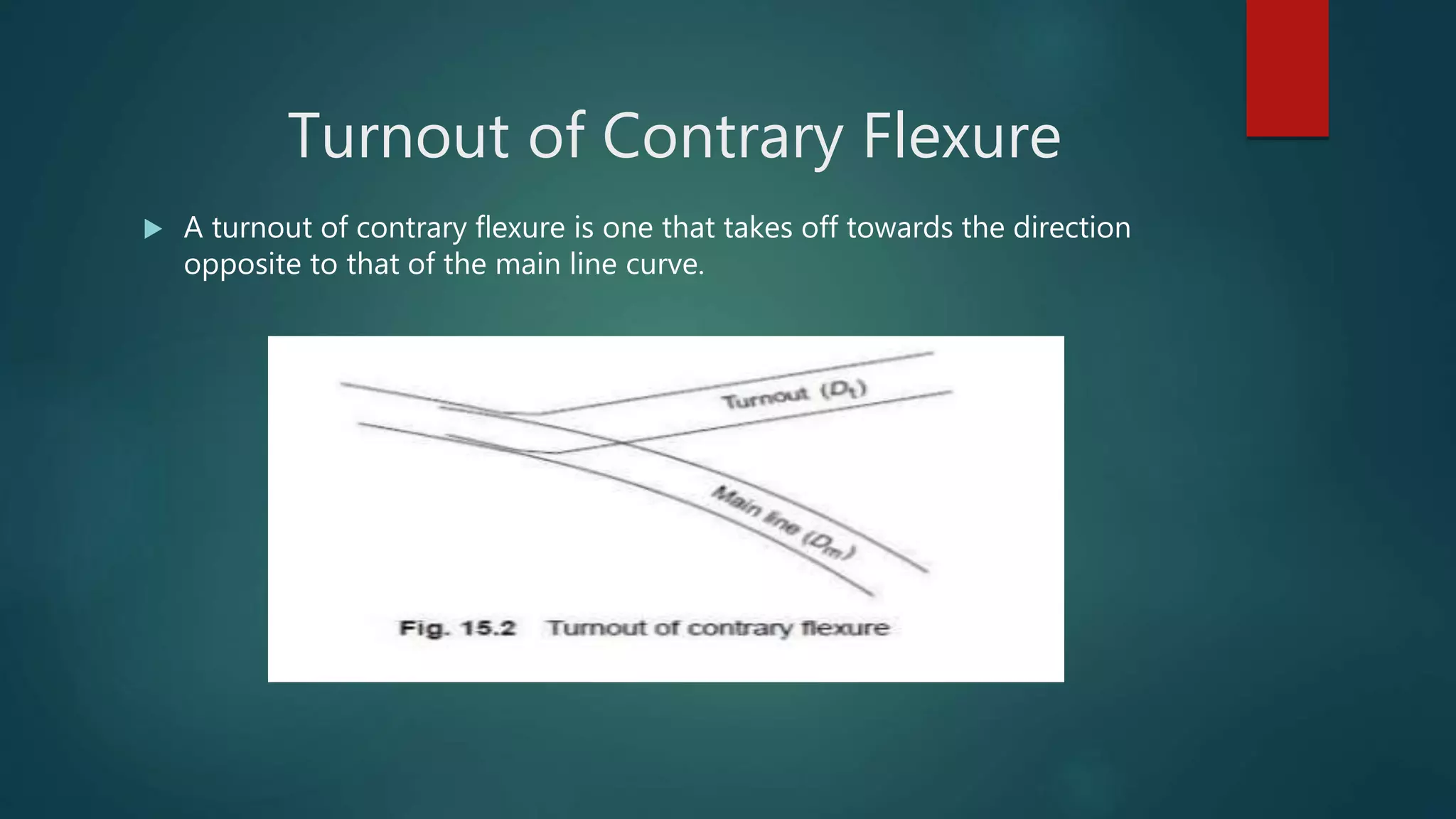
 A turnout of contrary flexure is one that takes off towards the direction
opposite to that of the main line curve.
Symmetrical Split
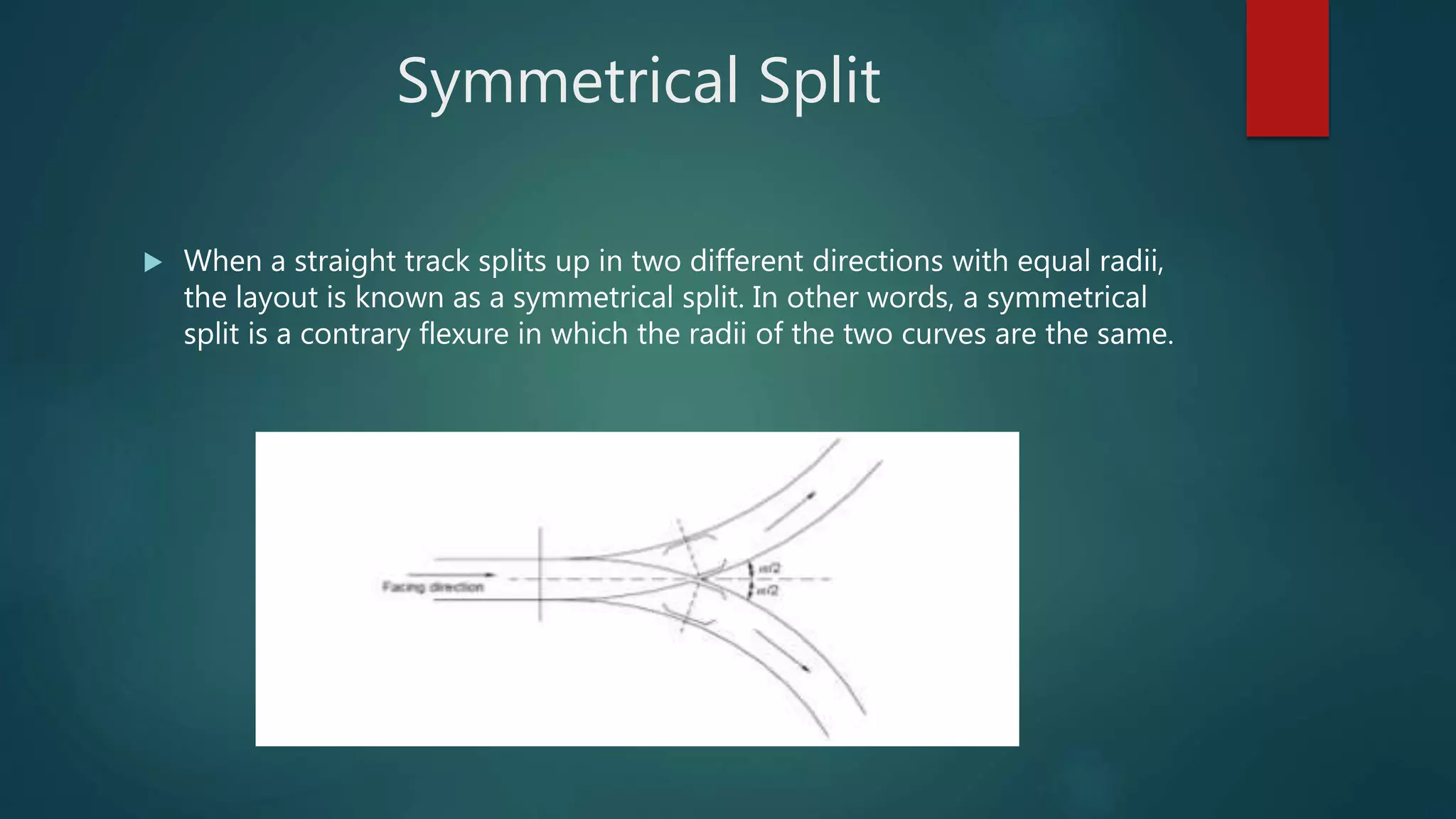
 When a straight track splits up in two different directions with equal radii,
the layout is known as a symmetrical split. In other words, a symmetrical
split is a contrary flexure in which the radii of the two curves are the same.
Symmetrical Split
 The salient features of a symmetrical split are the following.
 (a) The layout consists of a pair of points, one acute angle crossing, four
curved lead rails, and two check rails.
 (b) The layout is symmetrical about the centre line. This means that the
radii of the main track as well as of the branching track are equal.
 (c) The layout provides facilities for diverting vehicles both towards the left
and the right.
 (d) It is suitable for locations with space constraints, as it occupies
comparatively much less space than a turnout from the straight track.
Three-throw Switch
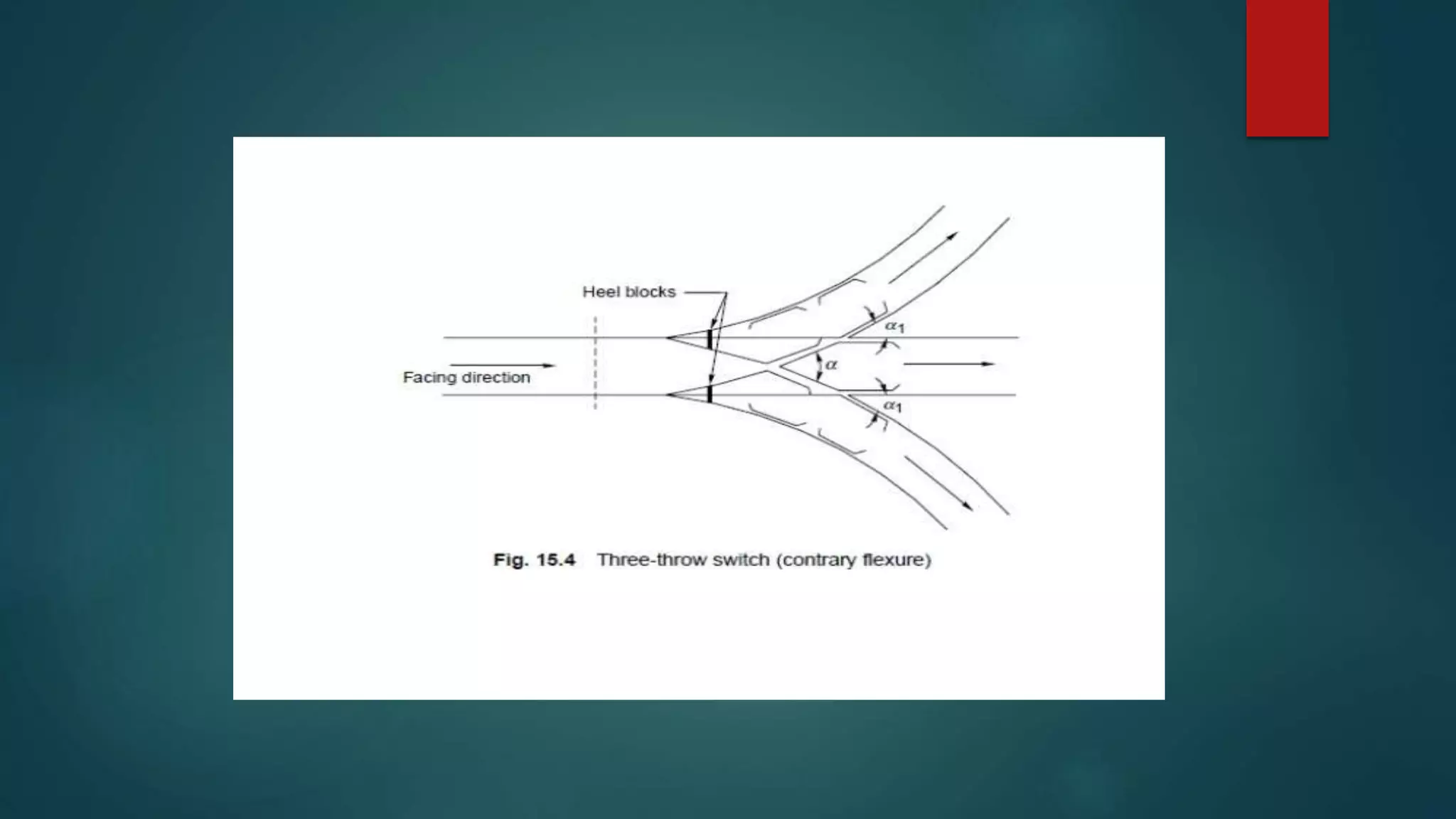
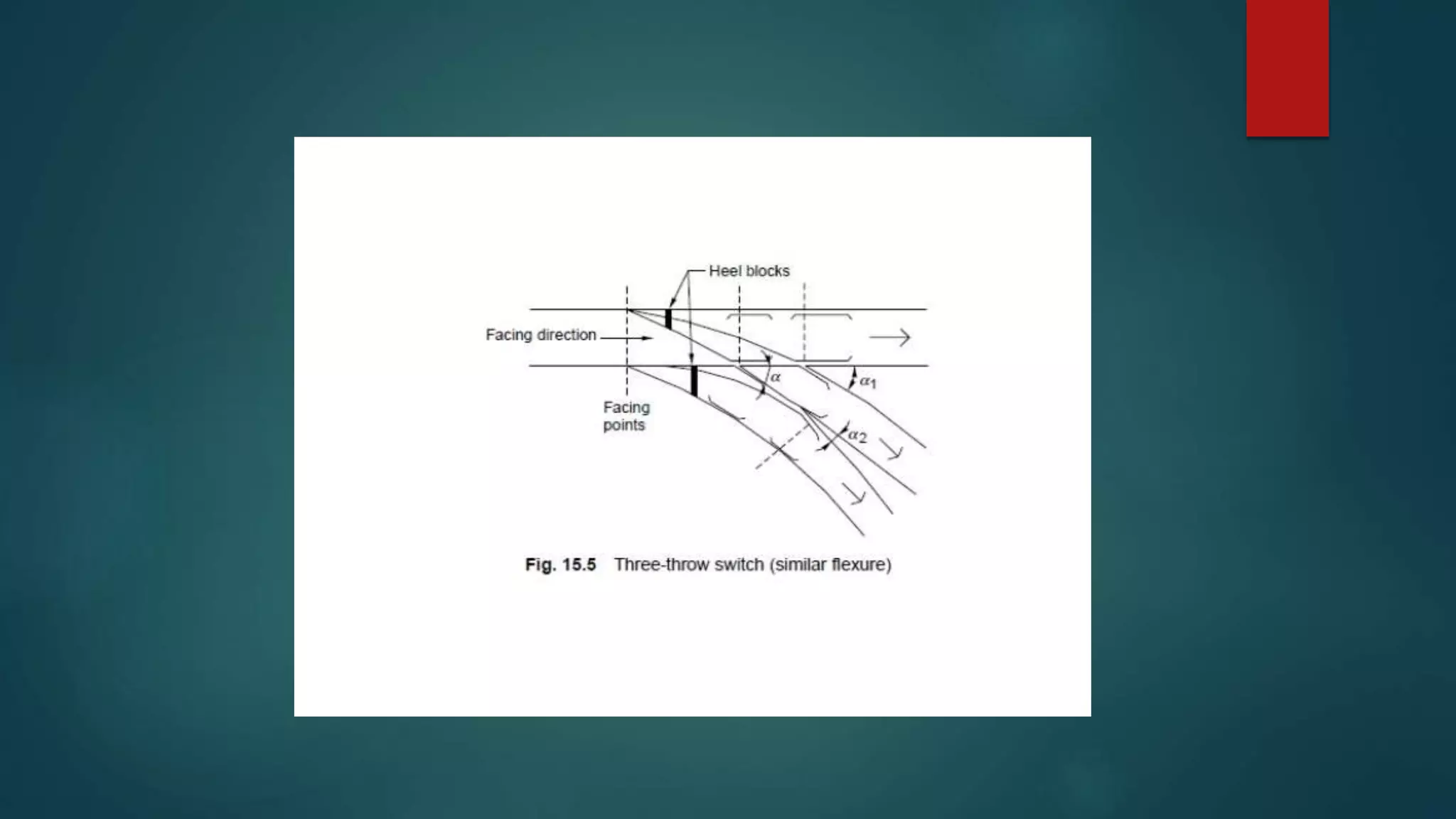
 In a three-throw arrangement, two turnouts take off from the same
point of a main line track. A three-throw switch can have contrary
flexure or similar flexure, as shown in Figs15.4 and 15.5, respectively.
Three-throw switches are used in congested goods yards and at
entry points to locomotive yards, where there is a great limitation of
space.
Three-throw Switch
 A three-throw switch has two switches and each switch has two tongue
rails placed side by side. There is a combined heel block for both the
tongue rails of the switch. The switches can be operated in such a way that
movement is possible in three different directions, i.e., straight, to the
right, and to the left. Three-throw switches are obsolete now as they may
prove to be hazardous, particularly at higher speeds, because the use of
double switches may lead to derailments.
Double Turnout
 A double turnout or tandem is an improvement over a three-throw switch.
In a double turnout, turnouts are staggered and take off from the main
line at two different places. This eliminates the defects of a three-throw
switch, as the heels of the two switches are kept at a certain distance from
each other. The distance between the two sets of switches should be
adequate to allow room for the usual throw of the point.
Double Turnout
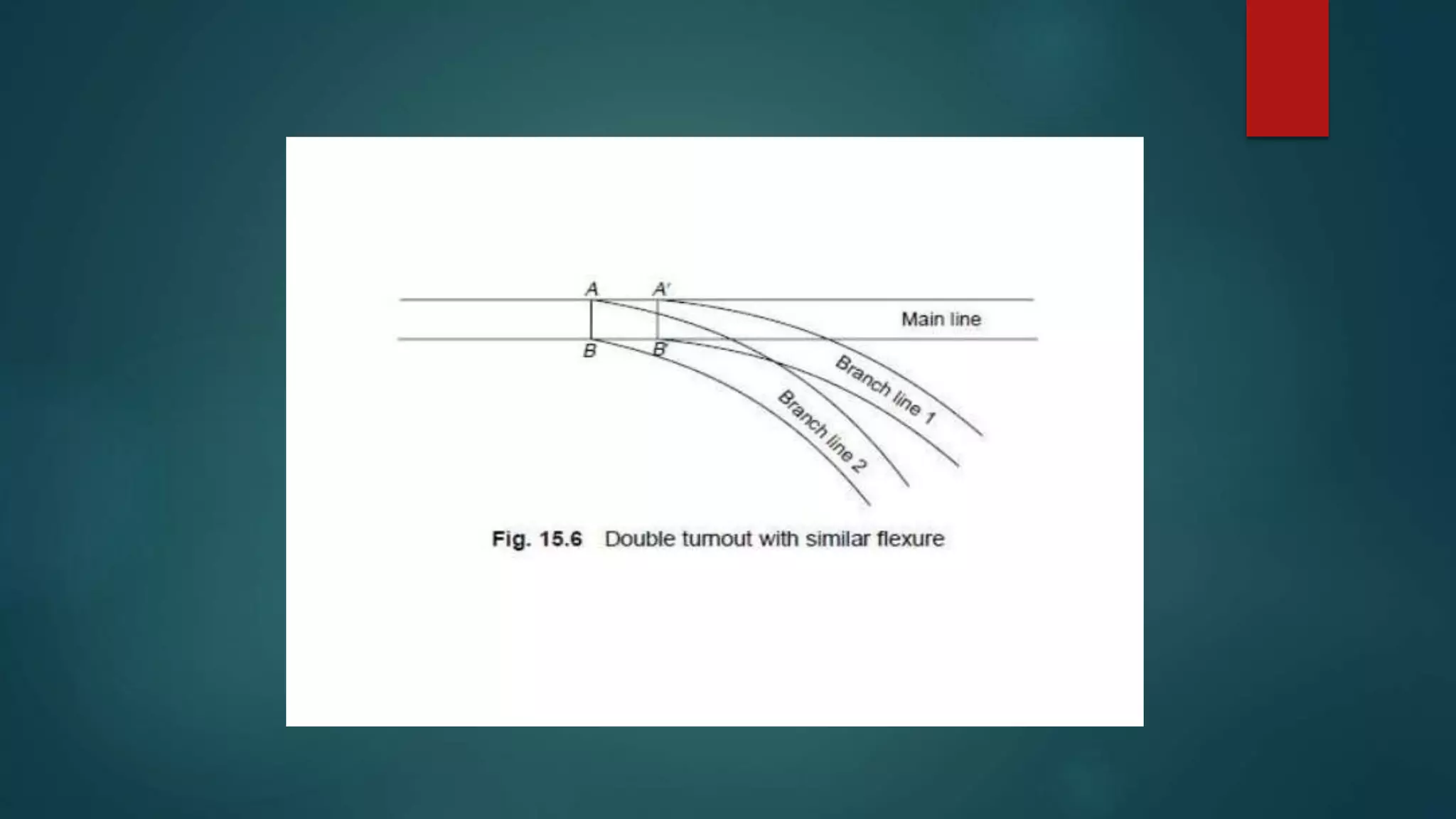
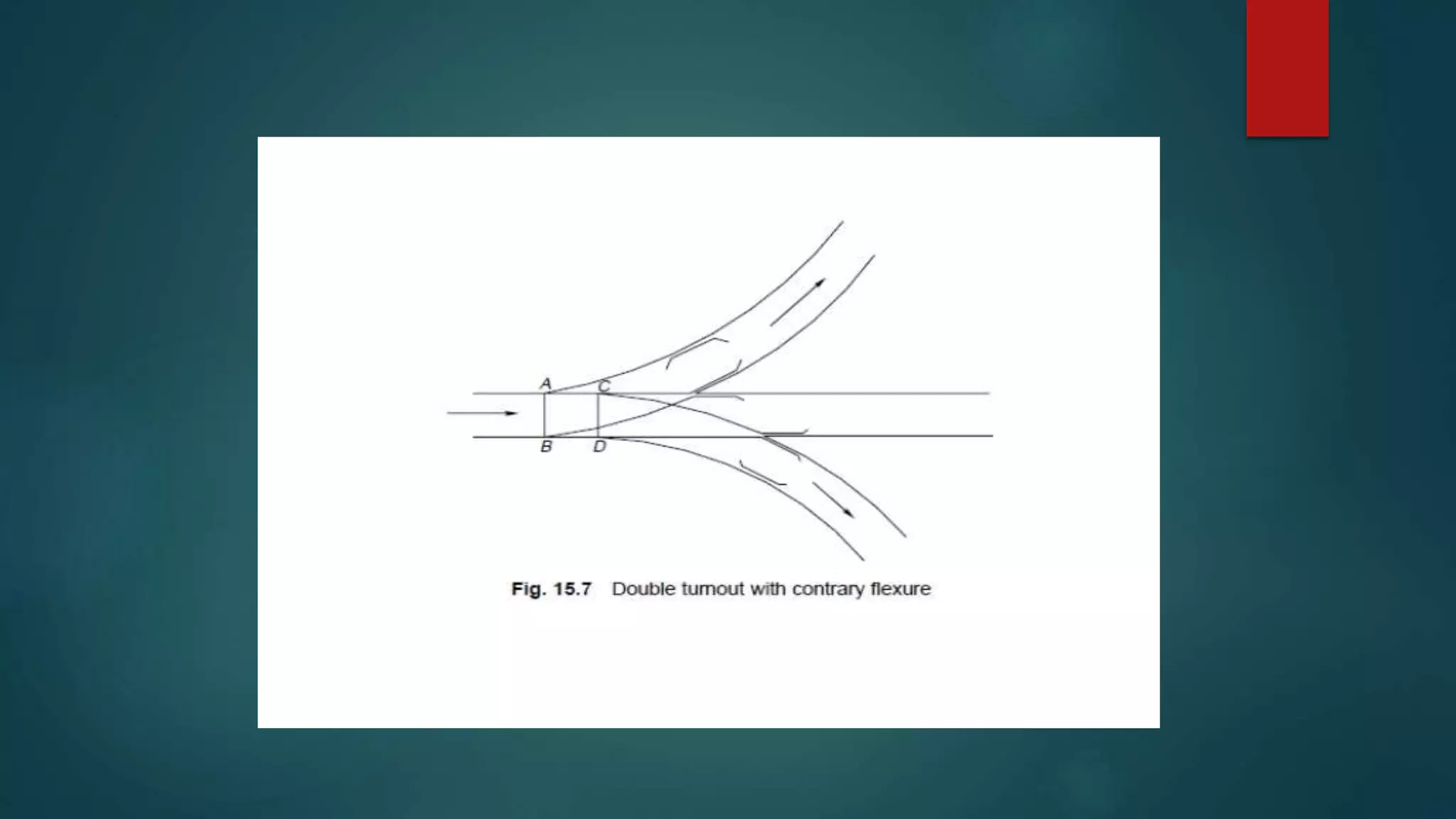
 Double turnouts can be of similar flexure, when the two turnouts take off
on the same side of track (Fig. 15.6) or of contrary flexure, when the two
turnouts take off in two different directions (Fig. 15.7). Double turnouts are
mostly used in congested areas, particularly where traffic is heavy, so as to
economize on space.
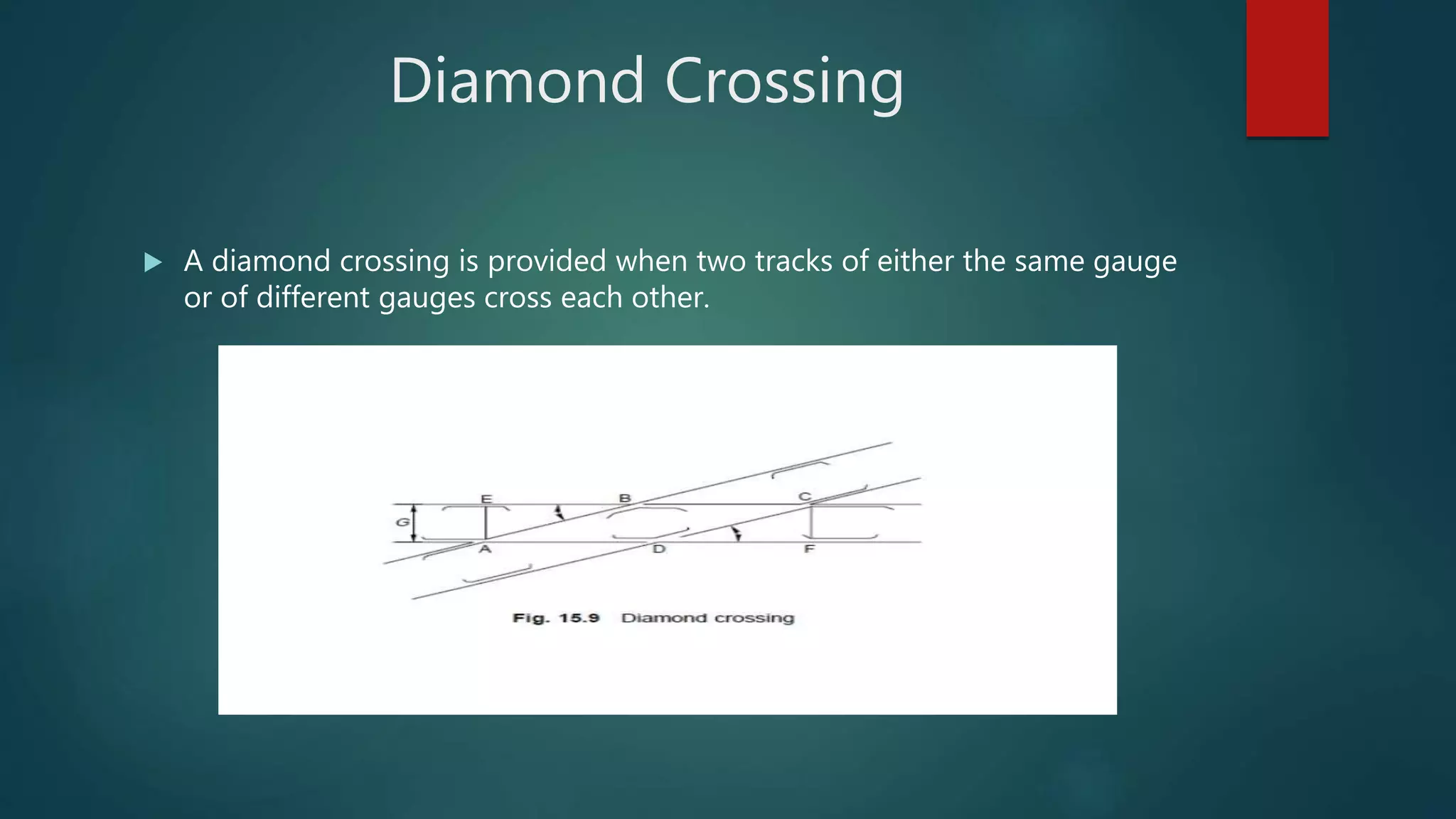
Diamond Crossing
 A diamond crossing is provided when two tracks of either the same gauge
or of different gauges cross each other.
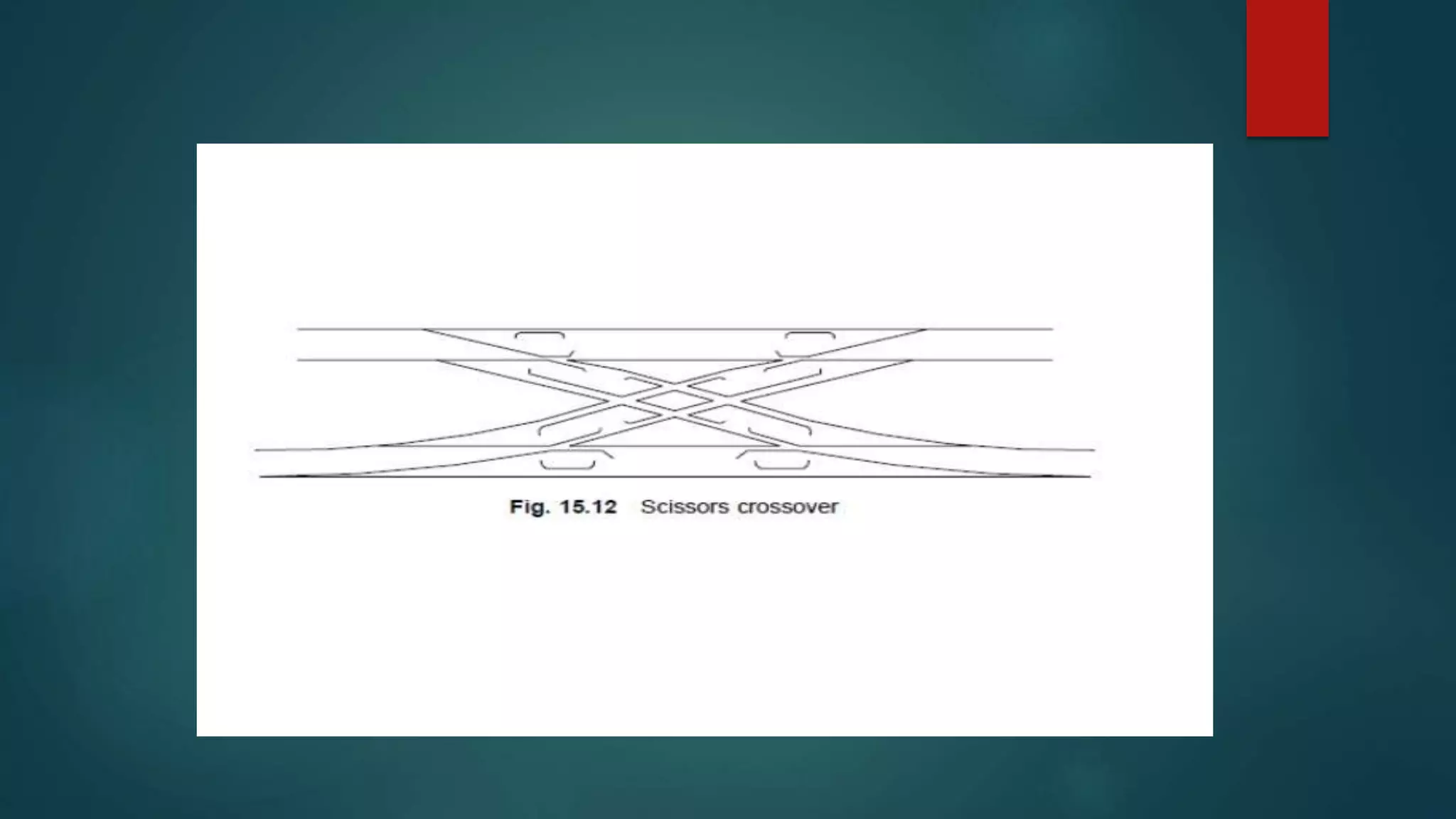
Scissors Crossover
 A scissors crossover is meant for transferring a vehicle from one track to
another track and vice versa.
 It is provided where lack of space does not permit the provision of two
separate crossovers.
 It consists of four pairs of switches, six acute crossings, two obtuse
crossings, check rails, etc.
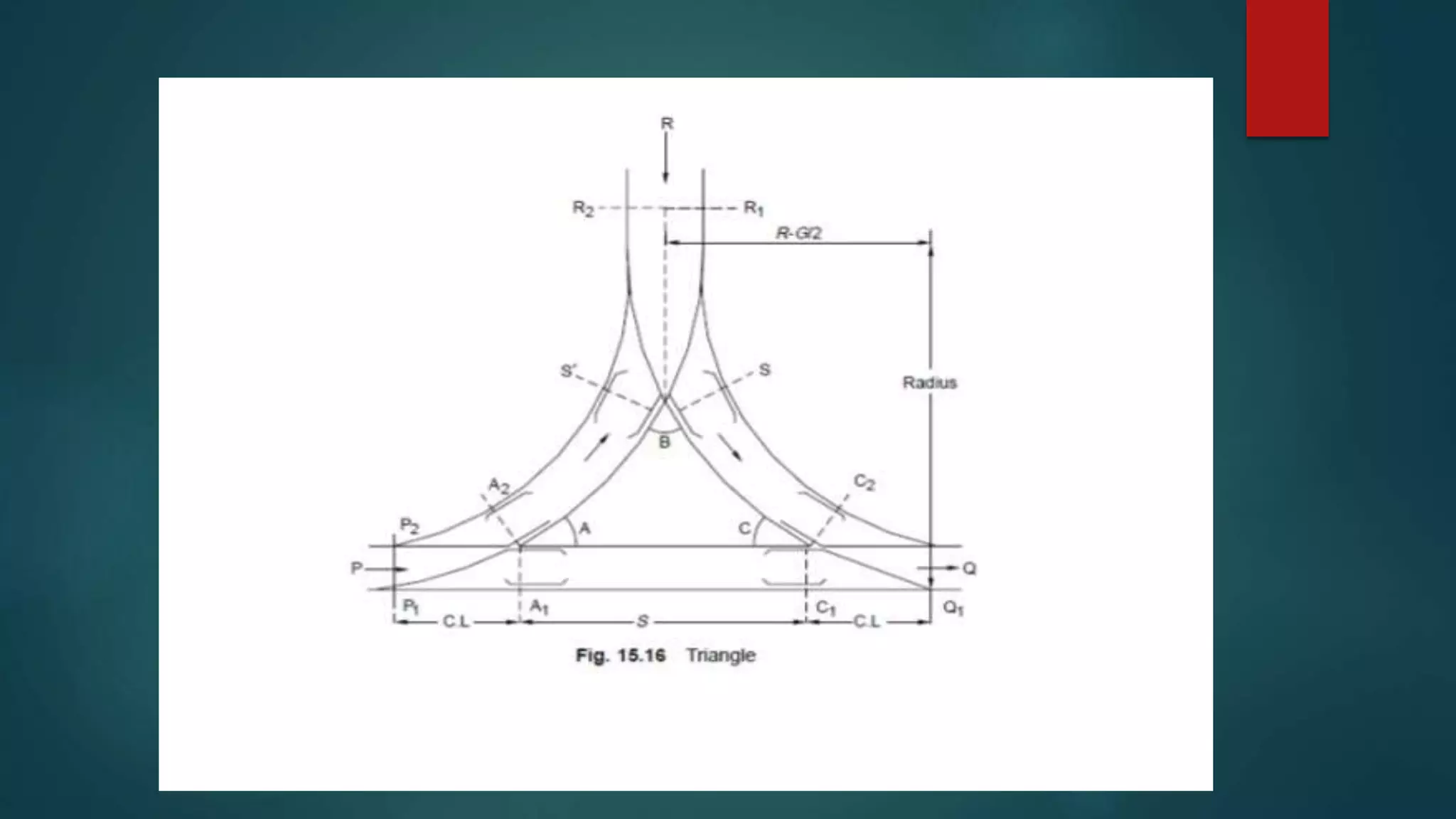
Triangle
 A triangle is mostly provided in terminal yards for changing the direction
of an engine.
 Turntables are also used for this purpose, but are costly, cumbersome, and
present a lot of problems in maintenance.
 Normally, a triangle is provided if enough land is available.
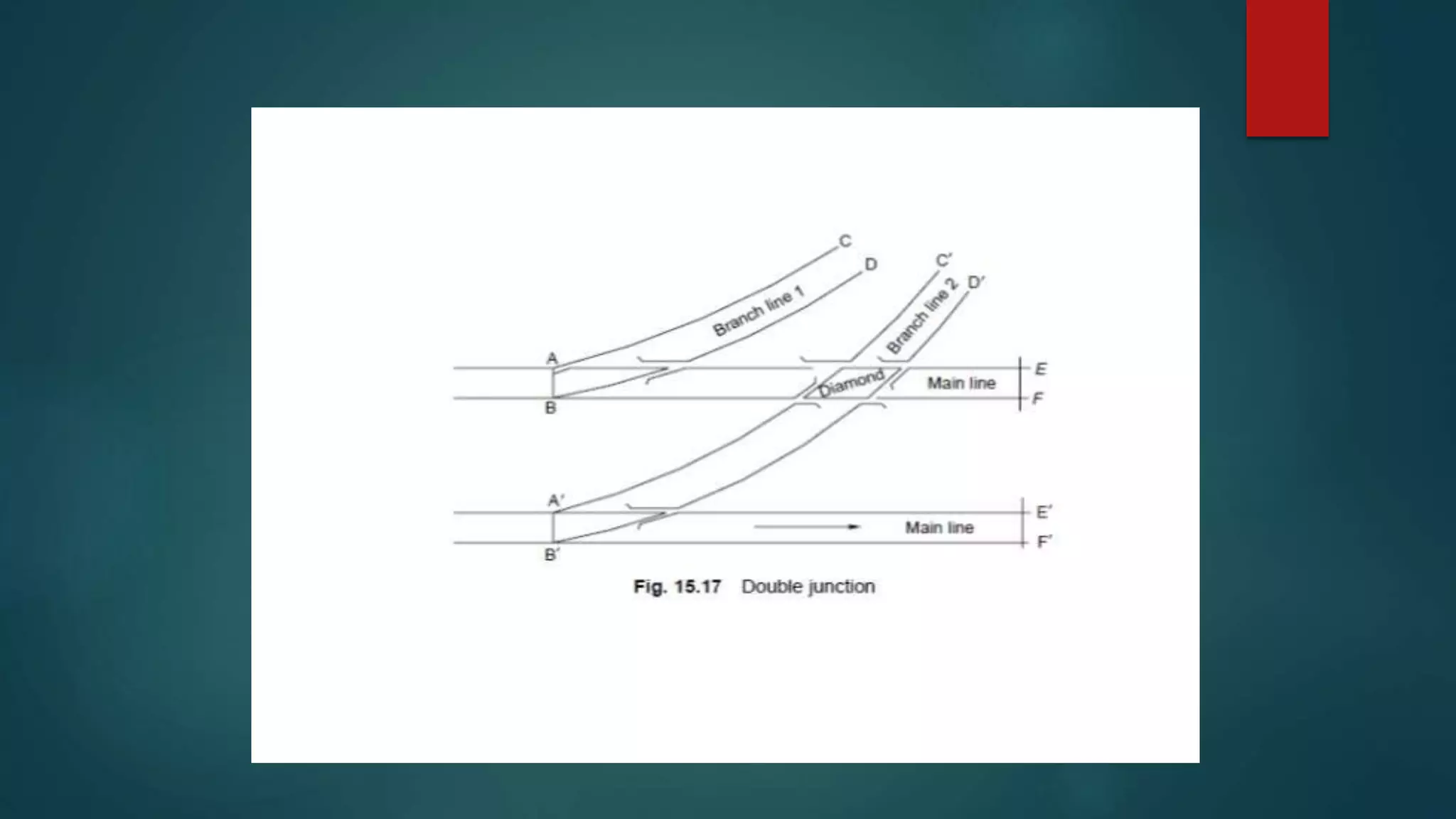
Double Junctions
 A double junction is required when two or more main line tracks are
running and other tracks are branching off from these main line tracks in
the samedirection.
 The layout of a double junction consists of ordinary turnouts with one or
more diamond crossings depending upon the number of parallel tracks.
 Double junctions may occur either on straight or curved main lines and the
branch lines may also be either single or double lines.
 These types of junctions are quite common in congested yards.
REFERENCE
 Railway Engineering by “Satish Chandra & M.M. Agarwal”
 www.braincart.com
 www.wikipedia.org
Thank you…..!

Track junction and simple track layouts

  • 1.
    CE304 - RAILWAY,BRIDGE& TUNNEL ENGINEERING Sr. no Name Id no 1 Maulik Vithalapara 16CE120 2 Nayan Pansuriya 16CE121 Made by :- Guided by:- Name of faculty Dr. L.B. Zala BIRLA VISHVAKARMA MAHAVIDYALAYA (An Autonomous Institutions) V.V NAGAR- 388120. Topic – Track Junctions and Simple Track Layouts
  • 2.
    TRACK JUNCTIONS ANDSIMPLE TRACK LAYOUTS
  • 3.
    TRACK JUNCTIONS ANDSIMPLE TRACK LAYOUTS  CONTENTS  Turnout of Similar Flexure  Turnout of Contrary Flexure  Symmetrical Split  Three-throw Switch  Double Turnout  Crossover  Diamond Crossing  Scissors Crossover  Gauntleted Track  Gathering Line  Triangle  Double Junction
  • 4.
    INTRODUCTION  Track junctionsare formed by the combination of points and crossings.  The main objective of track junctions is to transfer rail vehicles from one track to another or to enable them to cross from one track to another.  Depending upon the requirements of traffic, there can be several types of track junctions with simple track layouts.
  • 5.
    TURNOUT OF SIMILARFLEXURE  A turnout of similar flexure is one that continues to run in the same direction as the main line curve even after branching off from it. The degree of the turnout curve is higher than that of the main line curve.
  • 6.
    Turnout of ContraryFlexure  A turnout of contrary flexure is one that takes off towards the direction opposite to that of the main line curve.
  • 7.
    Symmetrical Split  Whena straight track splits up in two different directions with equal radii, the layout is known as a symmetrical split. In other words, a symmetrical split is a contrary flexure in which the radii of the two curves are the same.
  • 8.
    Symmetrical Split  Thesalient features of a symmetrical split are the following.  (a) The layout consists of a pair of points, one acute angle crossing, four curved lead rails, and two check rails.  (b) The layout is symmetrical about the centre line. This means that the radii of the main track as well as of the branching track are equal.  (c) The layout provides facilities for diverting vehicles both towards the left and the right.  (d) It is suitable for locations with space constraints, as it occupies comparatively much less space than a turnout from the straight track.
  • 9.
    Three-throw Switch  Ina three-throw arrangement, two turnouts take off from the same point of a main line track. A three-throw switch can have contrary flexure or similar flexure, as shown in Figs15.4 and 15.5, respectively. Three-throw switches are used in congested goods yards and at entry points to locomotive yards, where there is a great limitation of space.
  • 11.
    Three-throw Switch  Athree-throw switch has two switches and each switch has two tongue rails placed side by side. There is a combined heel block for both the tongue rails of the switch. The switches can be operated in such a way that movement is possible in three different directions, i.e., straight, to the right, and to the left. Three-throw switches are obsolete now as they may prove to be hazardous, particularly at higher speeds, because the use of double switches may lead to derailments.
  • 13.
    Double Turnout  Adouble turnout or tandem is an improvement over a three-throw switch. In a double turnout, turnouts are staggered and take off from the main line at two different places. This eliminates the defects of a three-throw switch, as the heels of the two switches are kept at a certain distance from each other. The distance between the two sets of switches should be adequate to allow room for the usual throw of the point.
  • 15.
    Double Turnout  Doubleturnouts can be of similar flexure, when the two turnouts take off on the same side of track (Fig. 15.6) or of contrary flexure, when the two turnouts take off in two different directions (Fig. 15.7). Double turnouts are mostly used in congested areas, particularly where traffic is heavy, so as to economize on space.
  • 18.
    Diamond Crossing  Adiamond crossing is provided when two tracks of either the same gauge or of different gauges cross each other.
  • 19.
    Scissors Crossover  Ascissors crossover is meant for transferring a vehicle from one track to another track and vice versa.  It is provided where lack of space does not permit the provision of two separate crossovers.  It consists of four pairs of switches, six acute crossings, two obtuse crossings, check rails, etc.
  • 21.
    Triangle  A triangleis mostly provided in terminal yards for changing the direction of an engine.  Turntables are also used for this purpose, but are costly, cumbersome, and present a lot of problems in maintenance.  Normally, a triangle is provided if enough land is available.
  • 23.
    Double Junctions  Adouble junction is required when two or more main line tracks are running and other tracks are branching off from these main line tracks in the samedirection.  The layout of a double junction consists of ordinary turnouts with one or more diamond crossings depending upon the number of parallel tracks.  Double junctions may occur either on straight or curved main lines and the branch lines may also be either single or double lines.  These types of junctions are quite common in congested yards.
  • 25.
    REFERENCE  Railway Engineeringby “Satish Chandra & M.M. Agarwal”  www.braincart.com  www.wikipedia.org
  • 26.