Download as PDF, PPTX

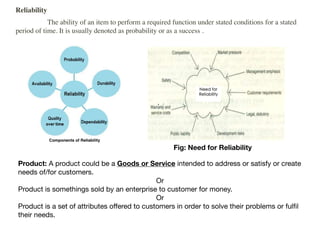
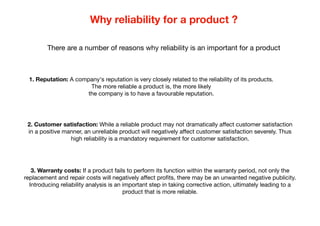

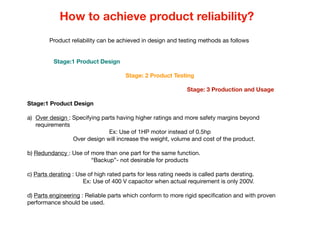


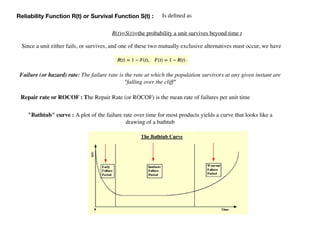


1. Reliability is the ability of a product to perform its intended function for a specified period of time. Achieving high reliability is important for reputation, customer satisfaction, reducing warranty costs, and gaining competitive advantages. 2. Product reliability can be improved through careful product design, testing, and production. Design approaches include overdesign, redundancy, derating parts, and using reliable parts. Testing evaluates parts, environments, and identifies failures. Production focuses on analyzing failures and implementing corrective actions. 3. Assessing and controlling reliability is crucial because customers expect products to work as intended. Unreliable products can destroy a company's reputation and take a long time to recover from. Reliability also significantly impacts economic


![Life Testing[1]](https://cdn.slidesharecdn.com/ss_thumbnails/lifetesting1-1226089764611608-9-thumbnail.jpg?width=640&height=640&fit=bounds)


![7 qc tools training material[1]](https://cdn.slidesharecdn.com/ss_thumbnails/7qctoolstrainingmaterial1-120925054558-phpapp02-thumbnail.jpg?width=640&height=640&fit=bounds)


