Presentation on Toxicology
Presented by-
1. Md. Habibur Rahman
2. Joy Prakash
3. Mohammad Ali
4. Asraful Islam Rayhan
5. Susmita Mistri Jui
Dept. of Pharmacy
JESSORE UNIVERSITY OF SCIENCE & TECHNOLOGY
 Toxicology
 Principles of Toxicology
 Dose-response relationship
 Risk = Hazard X Exposure
 Factors that influence toxicity
 Drug Toxicology
 Therapeutic index
 Therapeutic window
 Idiosyncrasy
 Pharmcogenetics
 Drug allergy
 Test for prediction drug allergy
Outline
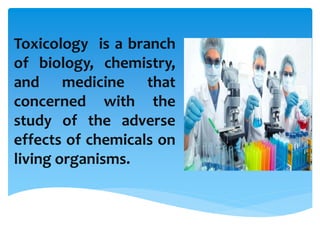
Toxicology is a branch
of biology, chemistry,
and medicine that
concerned with the
study of the adverse
effects of chemicals on
living organisms.
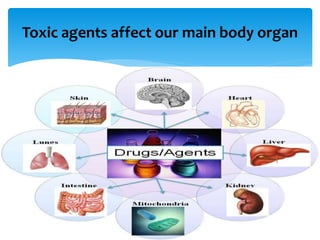
Toxic agents affect our main body organ
1. Dose-response
relationship
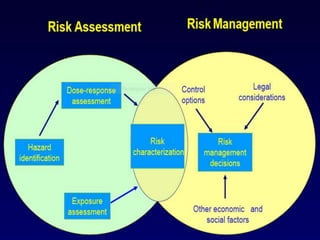
2. Risk = Hazard X Exposure
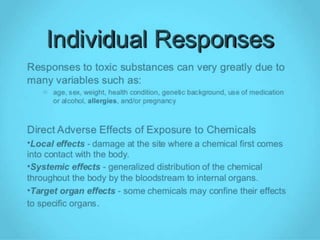
3. Individual Sensitivity
Basic Principles of Toxicology
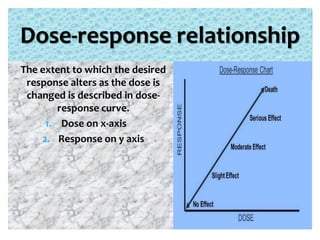
The extent to which the desired
response alters as the dose is
changed is described in dose-
response curve.
1. Dose on x-axis
2. Response on y axis
Dose-response relationship
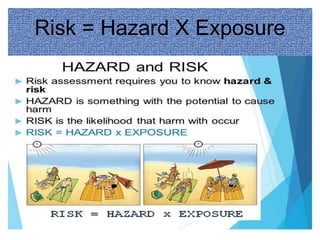
Risk = Hazard X Exposure
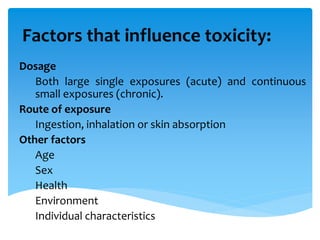
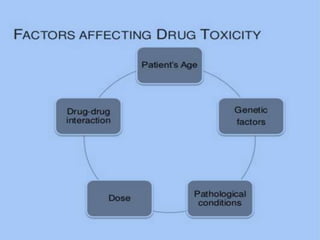
Factors that influence toxicity:
Dosage
Both large single exposures (acute) and continuous
small exposures (chronic).
Route of exposure
Ingestion, inhalation or skin absorption
Other factors
Age
Sex
Health
Environment
Individual characteristics
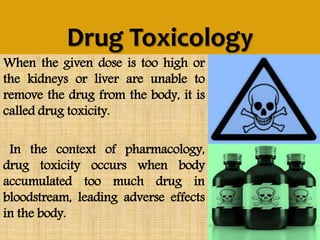
Drug Toxicology
When the given dose is too high or
the kidneys or liver are unable to
remove the drug from the body, it is
called drug toxicity.
In the context of pharmacology,
drug toxicity occurs when body
accumulated too much drug in
bloodstream, leading adverse effects
in the body.
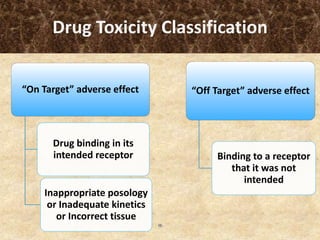
Drug Toxicity Classification
“On Target” adverse effect
Drug binding in its
intended receptor
Inappropriate posology
or Inadequate kinetics
or Incorrect tissue
“Off Target” adverse effect
Binding to a receptor
that it was not
intended
16
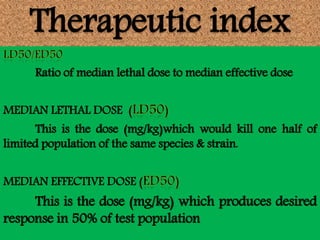
Therapeutic index
Ratio of median lethal dose to median effective dose
MEDIAN LETHAL DOSE (
This is the dose (mg/kg)which would kill one half of
limited population of the same species & strain.
MEDIAN EFFECTIVE DOSE (
This is the dose (mg/kg) which produces desired
response in 50% of test population
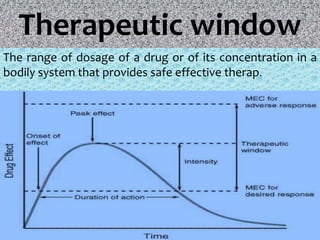
Therapeutic window
The range of dosage of a drug or of its concentration in a
bodily system that provides safe effective therap.
Idiosyncrasy
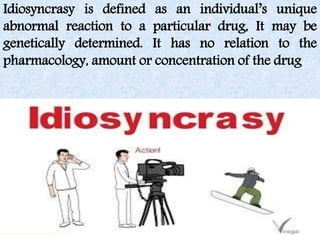
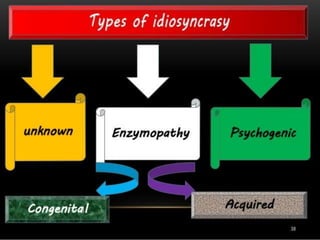
Idiosyncrasy is defined as an individual’s unique
abnormal reaction to a particular drug, It may be
genetically determined. It has no relation to the
pharmacology, amount or concentration of the drug
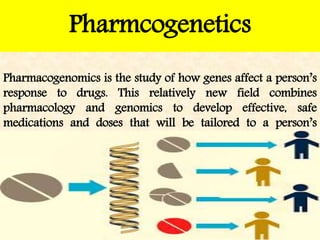
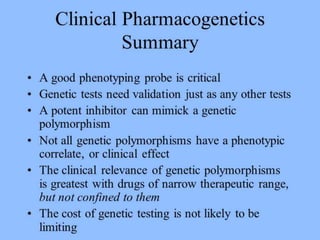
Pharmacogenomics is the study of how genes affect a person’s
response to drugs. This relatively new field combines
pharmacology and genomics to develop effective, safe
medications and doses that will be tailored to a person’s
genetic makeup.
Pharmcogenetics
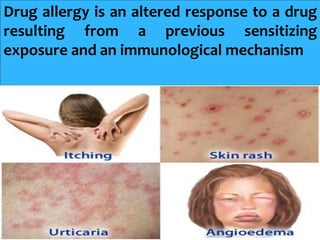
Drug allergy is an altered response to a drug
resulting from a previous sensitizing
exposure and an immunological mechanism
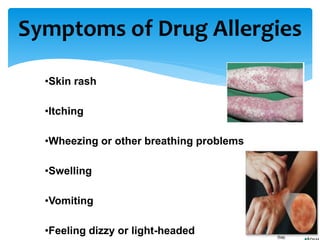
Symptoms of Drug Allergies
•Skin rash
•Itching
•Wheezing or other breathing problems
•Swelling
•Vomiting
•Feeling dizzy or light-headed
 Penicillin and related antibiotics
 Antibiotics containing sulfonamides (sulfa
drugs)
 Anticonvulsants
 Aspirin, ibuprofen and other nonsteroidal
anti inflammatory drugs (NSAIDs)
 Chemotherapy drugs
Common Triggers of Drug Allergies
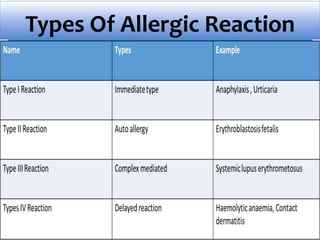
Types Of Allergic Reaction
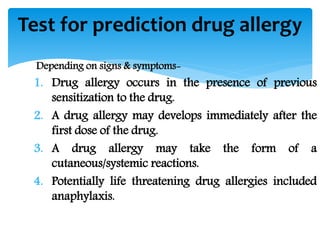
Depending on signs & symptoms-
1. Drug allergy occurs in the presence of previous
sensitization to the drug.
2. A drug allergy may develops immediately after the
first dose of the drug.
3. A drug allergy may take the form of a
cutaneous/systemic reactions.
4. Potentially life threatening drug allergies included
anaphylaxis.
Test for prediction drug allergy
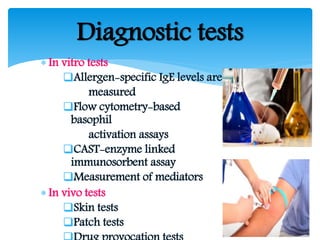
 In vitro tests
Allergen-specific IgE levels are
measured
Flow cytometry-based
basophil
activation assays
CAST-enzyme linked
immunosorbent assay
Measurement of mediators
 In vivo tests
Skin tests
Patch tests
Diagnostic tests
 1. https://en.m.wikipedia.org>wiki>toxicology
 2. https://en.m.wikipedia.org>wiki>drug & chemical toxicology
 3. http://www.slideshare.net
 4. http://www.authorstrem.com
 5. www. Drrajivdesaimd.com/allergy-pathophysiology/
 6. https://www.medichecks.com/tests/biochemistry-profile
 7. Clinical pharmacy, manual for 4th year students of the foreign
faculty; by S.V. Lelevich & T.V. Popechits; GRODNO 2010
 8. Casarett & Doull’s essentials of toxicology by Curtis & John
 9. www.pharmacologycorner.com/therapeutic-index/
 10. www.merck manuals.com/pharmacodynamics/dose-response
relationship
Toxicology

Toxicology

  • 3.
    Presentation on Toxicology Presentedby- 1. Md. Habibur Rahman 2. Joy Prakash 3. Mohammad Ali 4. Asraful Islam Rayhan 5. Susmita Mistri Jui Dept. of Pharmacy JESSORE UNIVERSITY OF SCIENCE & TECHNOLOGY
  • 4.
     Toxicology  Principlesof Toxicology  Dose-response relationship  Risk = Hazard X Exposure  Factors that influence toxicity  Drug Toxicology  Therapeutic index  Therapeutic window  Idiosyncrasy  Pharmcogenetics  Drug allergy  Test for prediction drug allergy Outline
  • 6.
    Toxicology is abranch of biology, chemistry, and medicine that concerned with the study of the adverse effects of chemicals on living organisms.
  • 7.
    Toxic agents affectour main body organ
  • 8.
    1. Dose-response relationship 2. Risk= Hazard X Exposure 3. Individual Sensitivity Basic Principles of Toxicology
  • 9.
    The extent towhich the desired response alters as the dose is changed is described in dose- response curve. 1. Dose on x-axis 2. Response on y axis Dose-response relationship
  • 10.
    Risk = HazardX Exposure
  • 14.
    Factors that influencetoxicity: Dosage Both large single exposures (acute) and continuous small exposures (chronic). Route of exposure Ingestion, inhalation or skin absorption Other factors Age Sex Health Environment Individual characteristics
  • 15.
    Drug Toxicology When thegiven dose is too high or the kidneys or liver are unable to remove the drug from the body, it is called drug toxicity. In the context of pharmacology, drug toxicity occurs when body accumulated too much drug in bloodstream, leading adverse effects in the body.
  • 16.
    Drug Toxicity Classification “OnTarget” adverse effect Drug binding in its intended receptor Inappropriate posology or Inadequate kinetics or Incorrect tissue “Off Target” adverse effect Binding to a receptor that it was not intended 16
  • 18.
    Therapeutic index Ratio ofmedian lethal dose to median effective dose MEDIAN LETHAL DOSE ( This is the dose (mg/kg)which would kill one half of limited population of the same species & strain. MEDIAN EFFECTIVE DOSE ( This is the dose (mg/kg) which produces desired response in 50% of test population
  • 19.
    Therapeutic window The rangeof dosage of a drug or of its concentration in a bodily system that provides safe effective therap.
  • 20.
  • 21.
    Idiosyncrasy is definedas an individual’s unique abnormal reaction to a particular drug, It may be genetically determined. It has no relation to the pharmacology, amount or concentration of the drug
  • 23.
    Pharmacogenomics is thestudy of how genes affect a person’s response to drugs. This relatively new field combines pharmacology and genomics to develop effective, safe medications and doses that will be tailored to a person’s genetic makeup. Pharmcogenetics
  • 26.
    Drug allergy isan altered response to a drug resulting from a previous sensitizing exposure and an immunological mechanism
  • 27.
    Symptoms of DrugAllergies •Skin rash •Itching •Wheezing or other breathing problems •Swelling •Vomiting •Feeling dizzy or light-headed
  • 28.
     Penicillin andrelated antibiotics  Antibiotics containing sulfonamides (sulfa drugs)  Anticonvulsants  Aspirin, ibuprofen and other nonsteroidal anti inflammatory drugs (NSAIDs)  Chemotherapy drugs Common Triggers of Drug Allergies
  • 29.
  • 31.
    Depending on signs& symptoms- 1. Drug allergy occurs in the presence of previous sensitization to the drug. 2. A drug allergy may develops immediately after the first dose of the drug. 3. A drug allergy may take the form of a cutaneous/systemic reactions. 4. Potentially life threatening drug allergies included anaphylaxis. Test for prediction drug allergy
  • 32.
     In vitrotests Allergen-specific IgE levels are measured Flow cytometry-based basophil activation assays CAST-enzyme linked immunosorbent assay Measurement of mediators  In vivo tests Skin tests Patch tests Diagnostic tests
  • 33.
     1. https://en.m.wikipedia.org>wiki>toxicology 2. https://en.m.wikipedia.org>wiki>drug & chemical toxicology  3. http://www.slideshare.net  4. http://www.authorstrem.com  5. www. Drrajivdesaimd.com/allergy-pathophysiology/  6. https://www.medichecks.com/tests/biochemistry-profile  7. Clinical pharmacy, manual for 4th year students of the foreign faculty; by S.V. Lelevich & T.V. Popechits; GRODNO 2010  8. Casarett & Doull’s essentials of toxicology by Curtis & John  9. www.pharmacologycorner.com/therapeutic-index/  10. www.merck manuals.com/pharmacodynamics/dose-response relationship