Towards the Quantified Organisation?
E2.0 Summit, Paris, February 2015
@LeeBryant
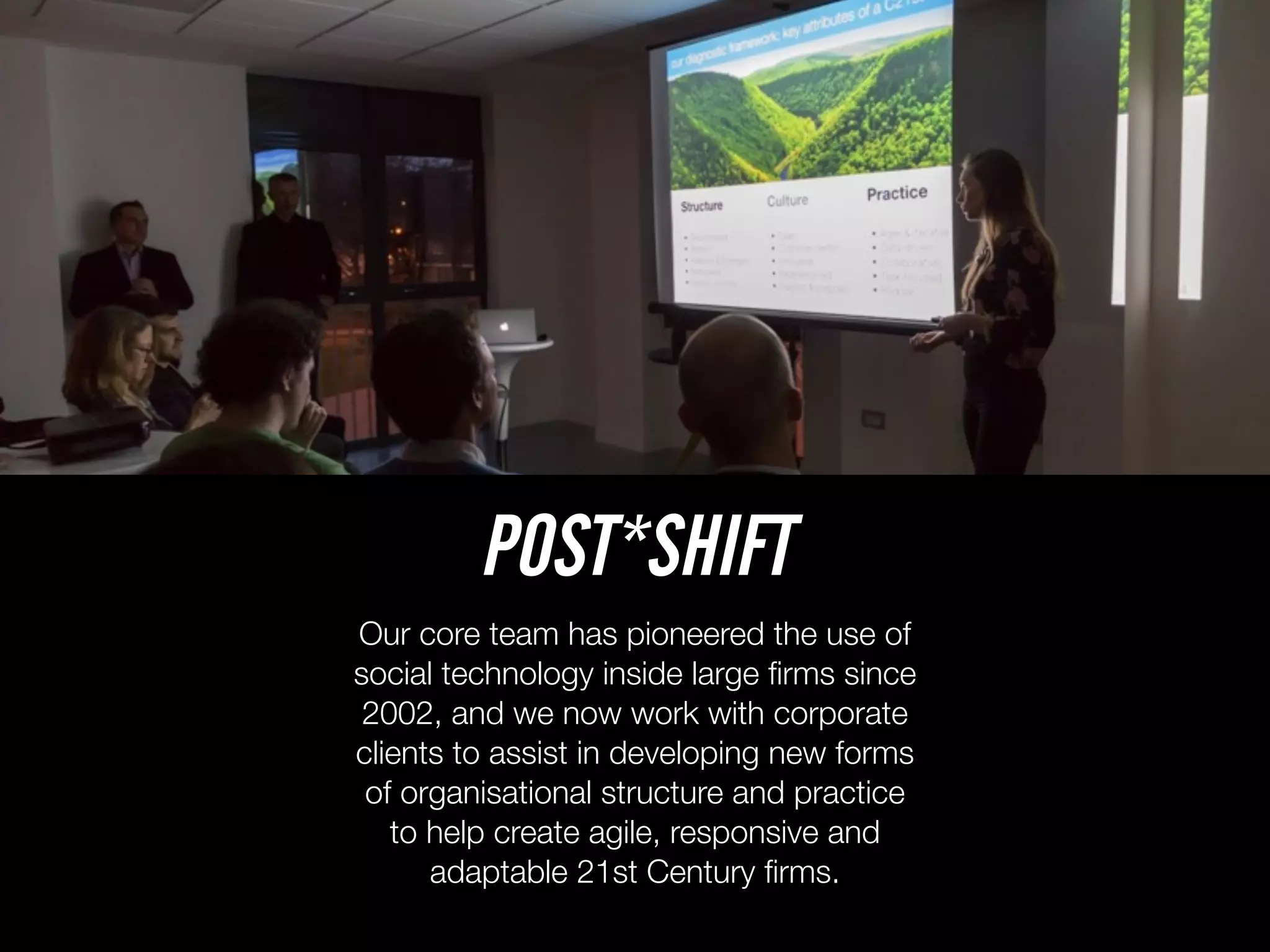
Our core team has pioneered the use of
social technology inside large firms since
2002, and we now work with corporate
clients to assist in developing new forms
of organisational structure and practice
to help create agile, responsive and
adaptable 21st Century firms.
POST*SHIFT
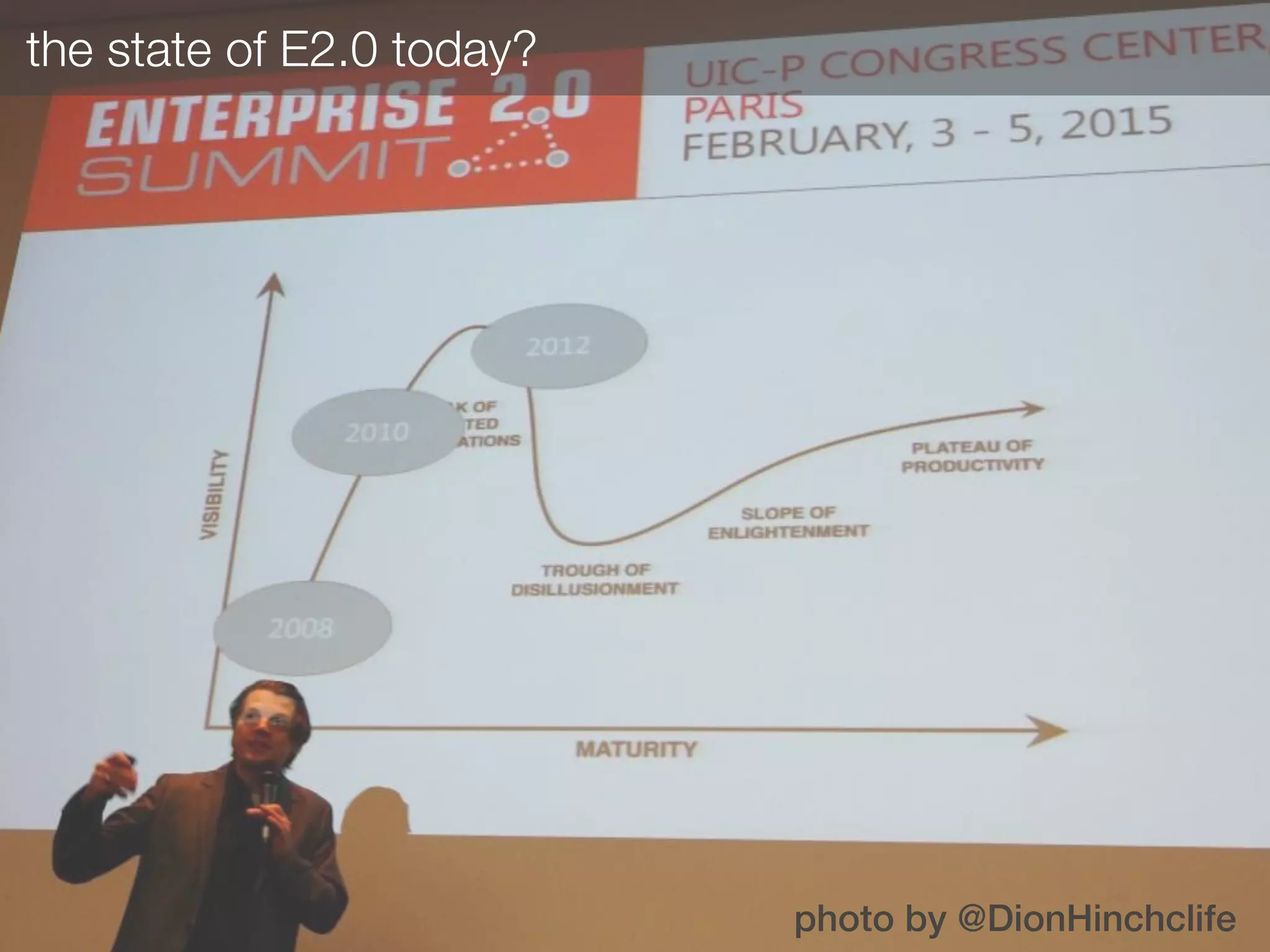
the state of E2.0 today?
photo by @DionHinchclife
#SocB iz
the state of E2.0 today?
#SocB iz
#DigitalTransformation
the state of E2.0 today?
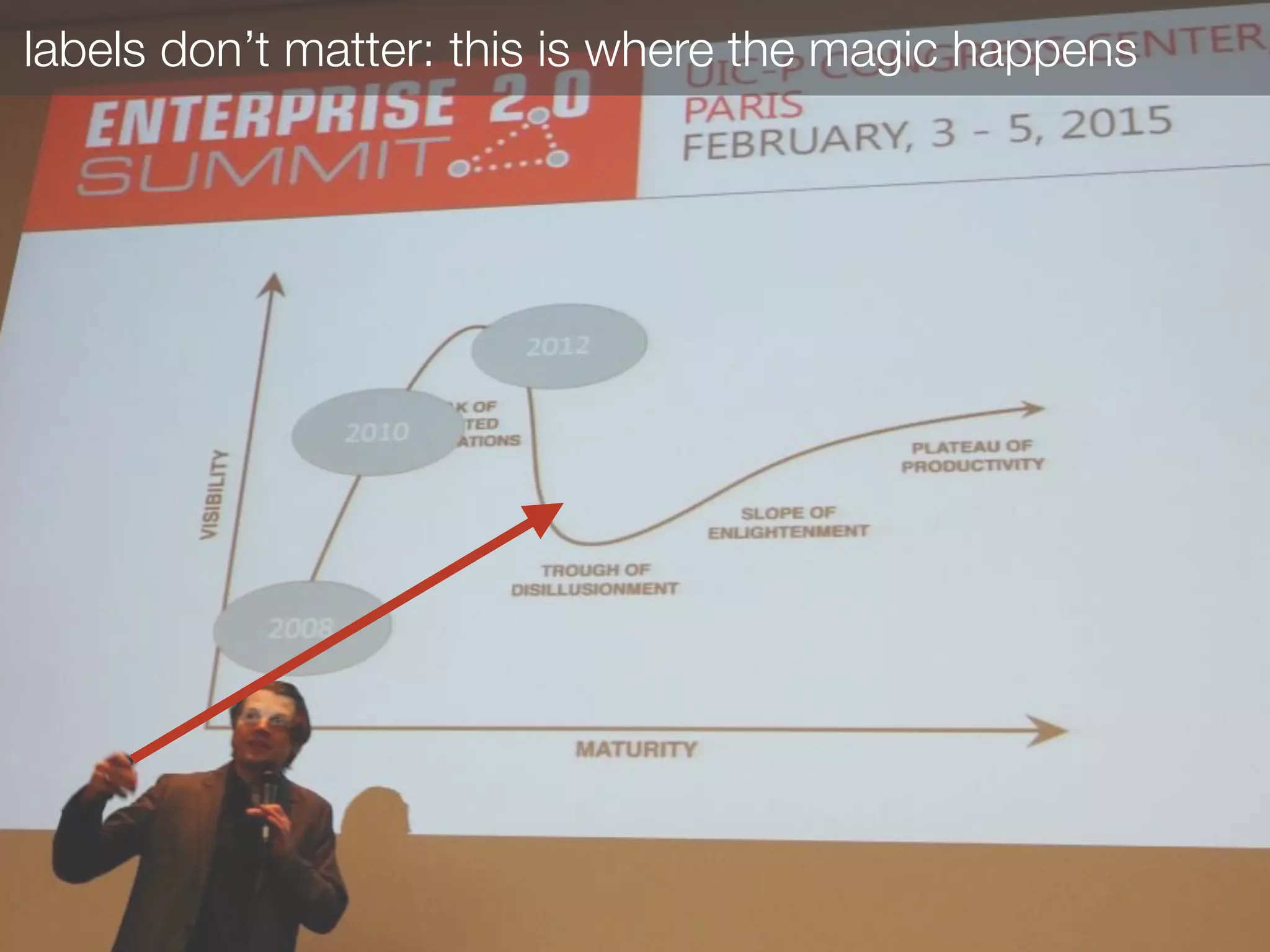
labels don’t matter: this is where the magic happens
“Communications tools
don't get socially interesting
until they get
technologically boring.”
Clay Shirky
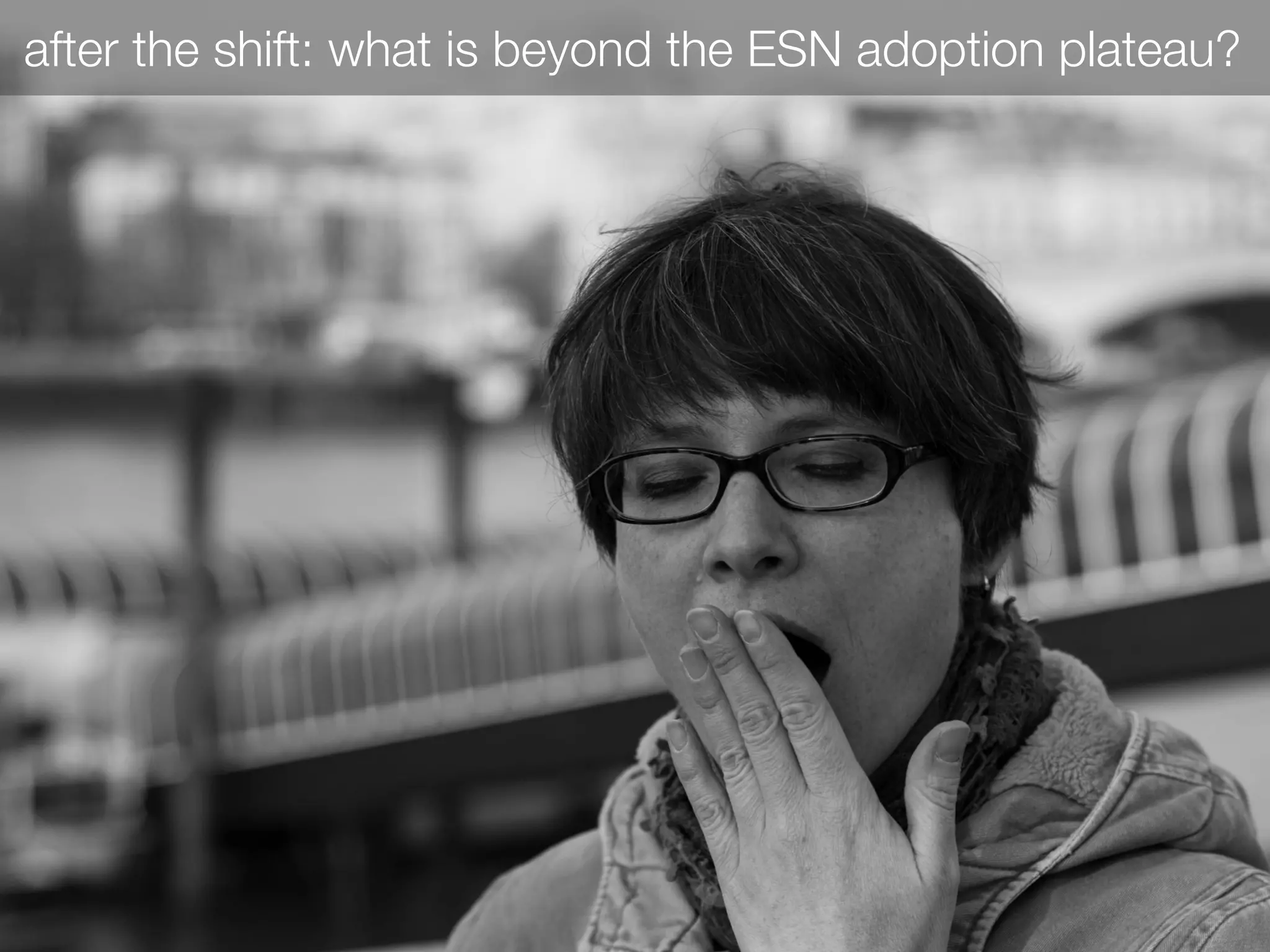
after the shift: what is beyond the ESN adoption plateau?
digital transformation: becoming a C21st business
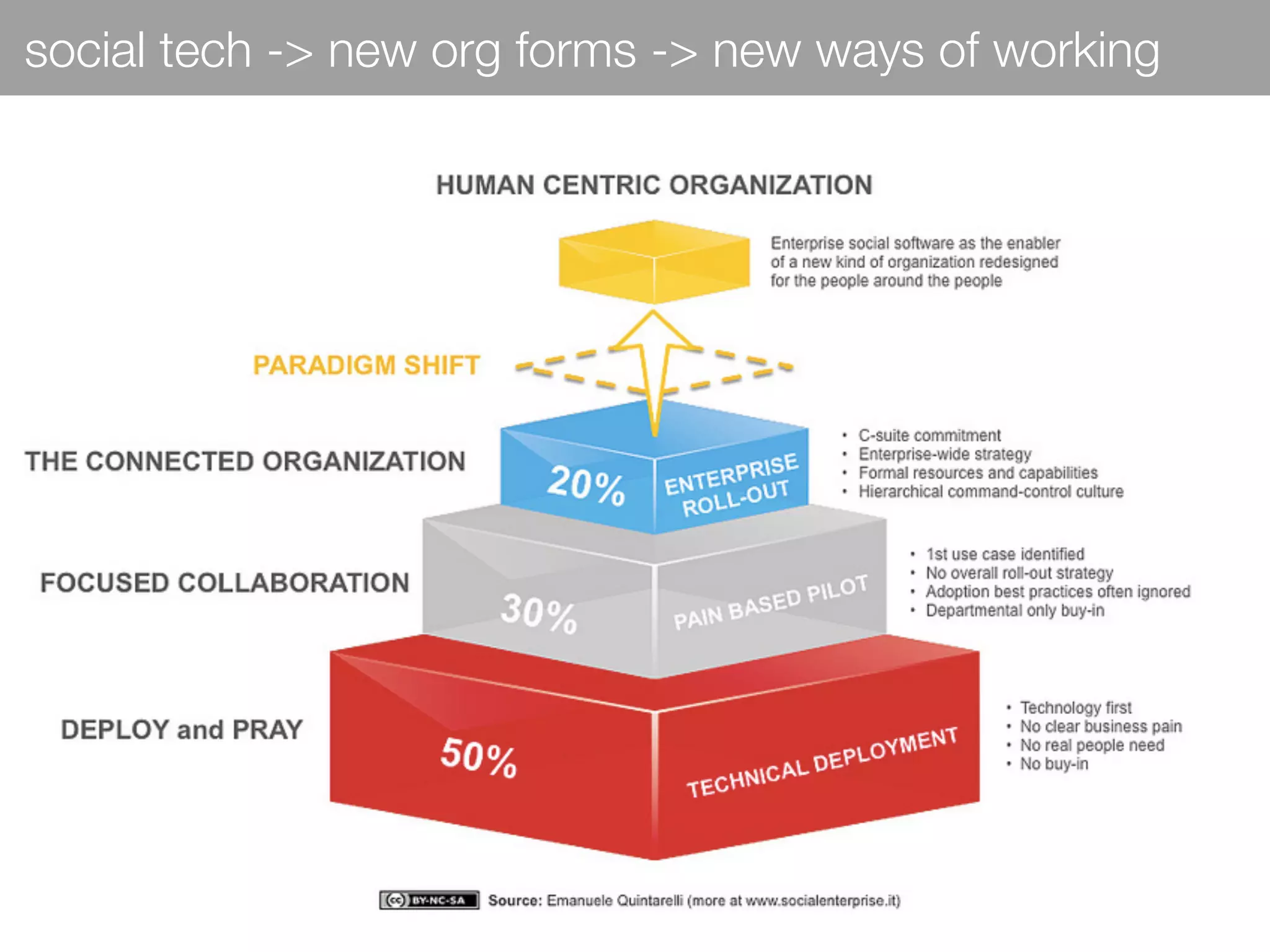
social tech -> new org forms -> new ways of working
Wider Market
changing market dynamics demand new capabilities
ecosystem
organisation
Market composition
Customer behaviour
Technology
Products
‣ Cambrian explosion of startups
‣ Software is eating the world
‣ Rapid emergence of high scale markets
‣ Speed to scale is crucial
‣ Platforms and ecosystems
‣ Experience versus features
‣ Collaborative consumption
‣ Everything as a service
‣ Empowered customers
‣ Trust is the new brand
‣ Mass-customisation
‣ The attention economy
‣ Faster diffusion of innovation
‣ Ubiquitous collaboration
‣ Connectivity in everything
‣ Designing for hackability
how do we define and develop these new capabilities?
Structure
•	Decentralised
	•	Resilient
	•	Adaptive & Emergent
	•	Networked
	•	Service-oriented
Culture
	•	Open
	•	Customer-centric
	•	Innovative
	•	Experience-led
	•	Passion & purpose
Practice
	•	Agile & Iterative
	•	Data-driven
	•	Collaborative
	•	Task-focused
	•	Podular
how do we define and develop these new capabilities?
“As a sales organisation we need
to offer an integrated experience
(not front-ends to a set of
separate silos working apart)
to grow key account value”
these dynamics also offer new ways to create value
Internal 

Realm
Liminal

Spaces
Ecosystem
Internal Teams
External teams
new models:
‣ IoT, connected devices,
data and platforms
‣ everything as a service
‣ customer co-creation
and open innovation
‣ startup incubation and
ecosystem development
what capabilities do we need to operate new biz models?
Structure
•	Decentralised
	•	Resilient
	•	Adaptive & Emergent
	•	Networked
	•	Service-oriented
Culture
	•	Open
	•	Customer-centric
	•	Innovative
	•	Experience-led
	•	Passion & purpose
Practice
	•	Agile & Iterative
	•	Data-driven
	•	Collaborative
	•	Task-focused
	•	Podular
what capabilities do we need to operate new biz models?
“As a hardware maker we need to
offer in-product software upgrades
(which extend the life of the
product and add new functionality)
to be more competitive”
In short: what kind of org do we need to be tomorrow?
social / digital can help grow new structures & capabilities
and they can help reduce hierarchical bureaucracy
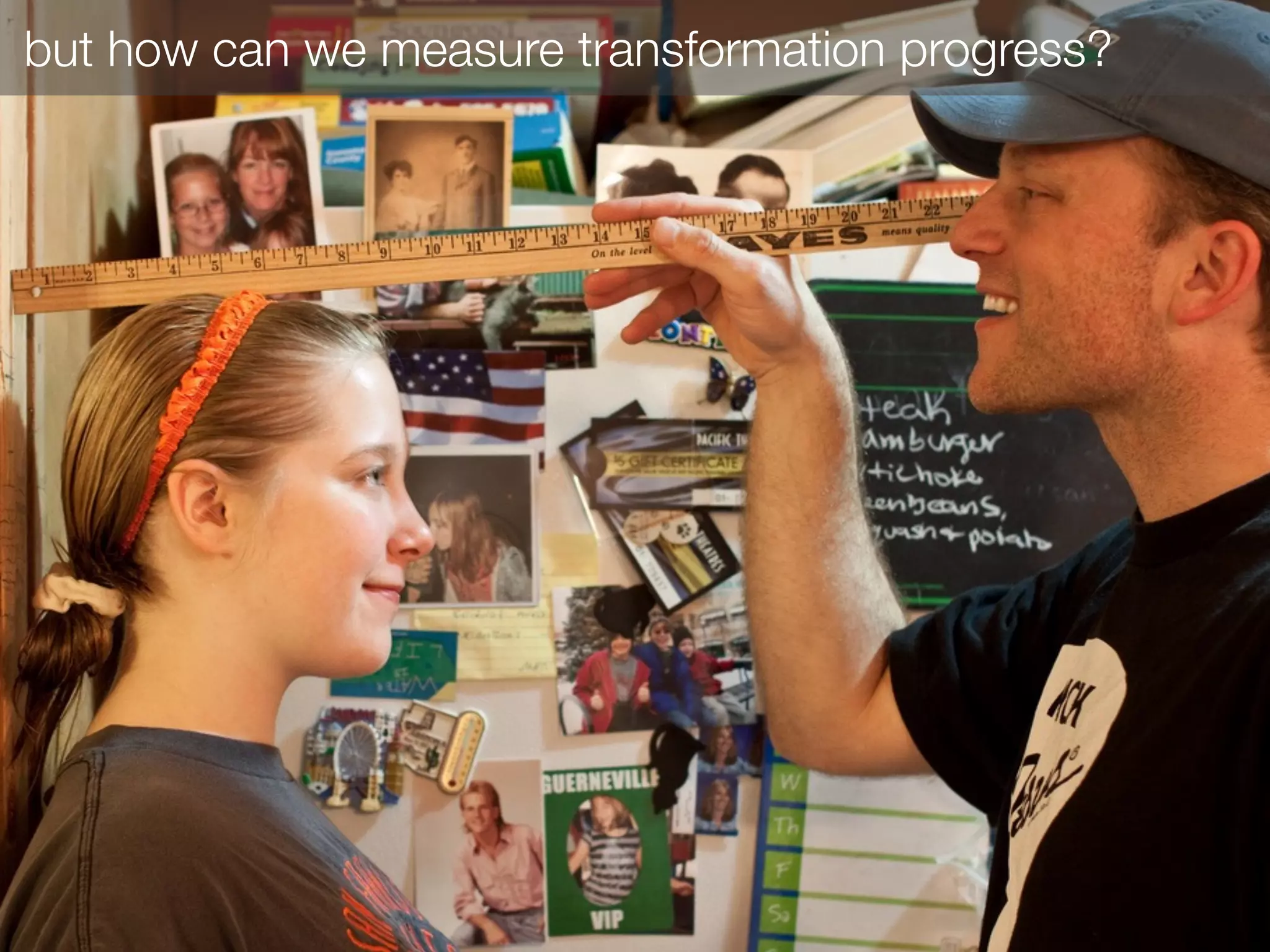
but how can we measure transformation progress?
our current thinking on a capability-driven model
Is this another change programme? (no!)
crash diets (like change programmes) rarely sustain
‘quantified self’ continual improvement works better
human sensor networks and the quantified organisation
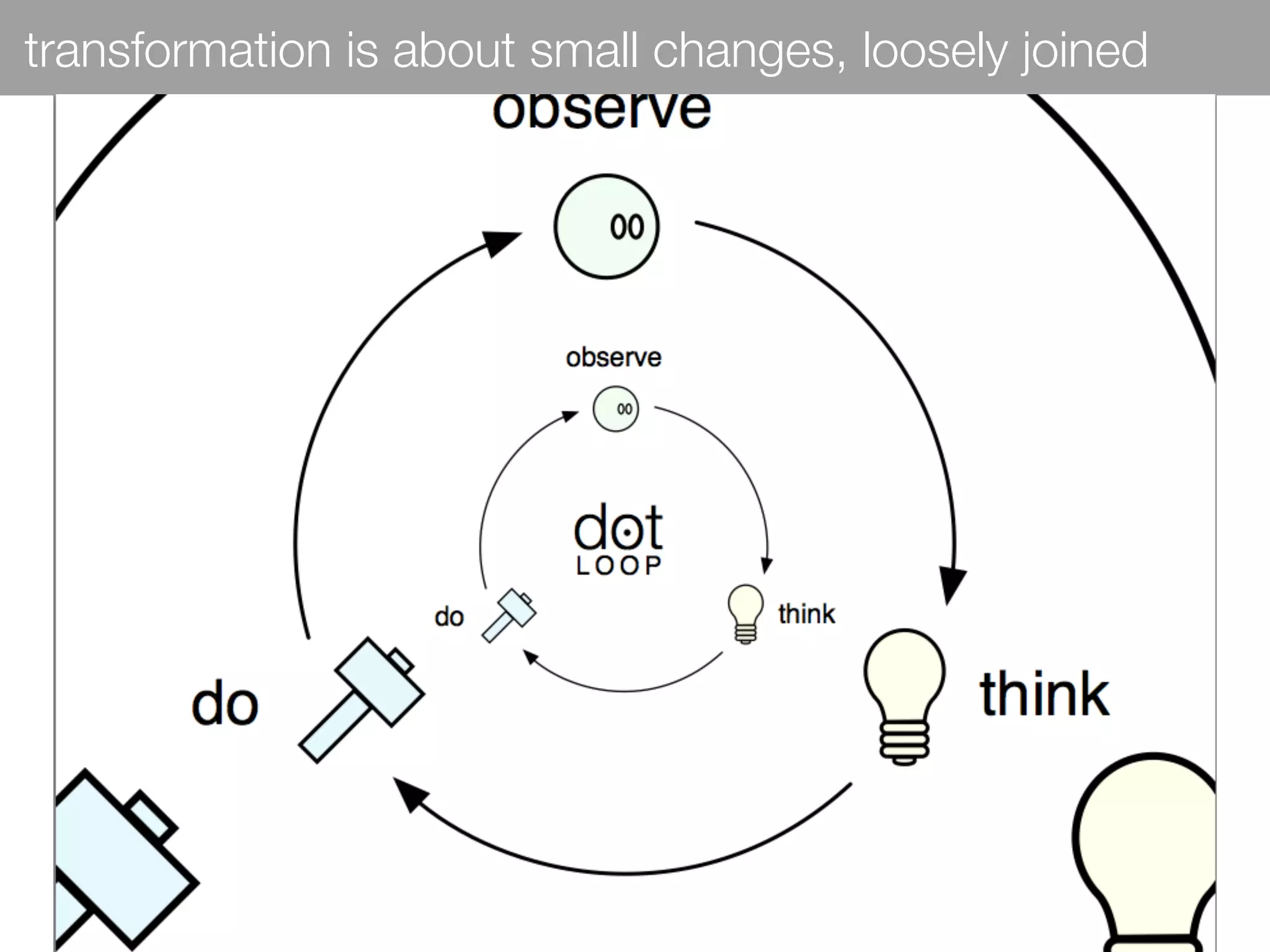
transformation is about small changes, loosely joined
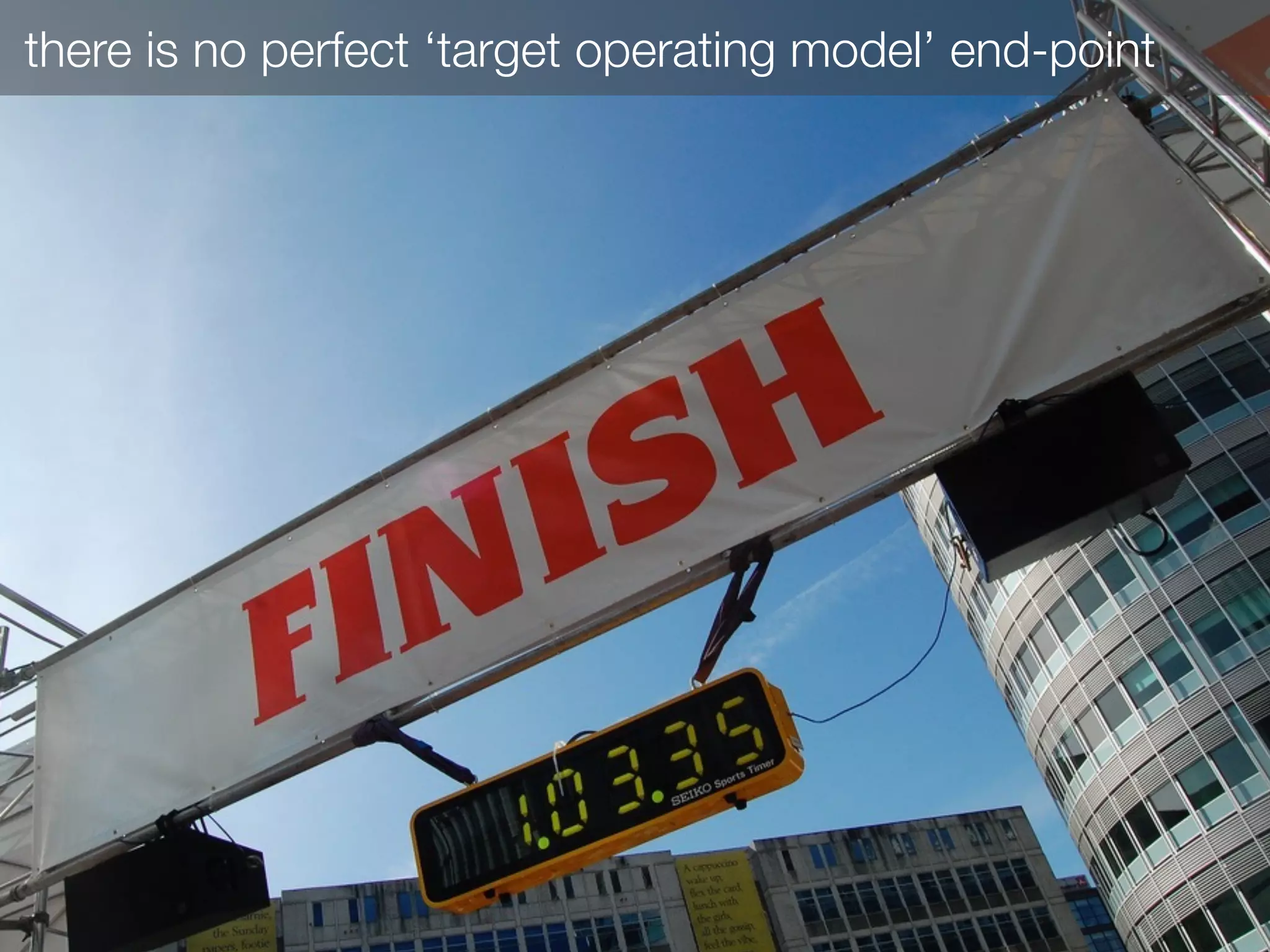
there is no perfect ‘target operating model’ end-point
this needs ‘sense & respond’ not ‘predict & control’
Laloux: organisations have an ‘evolutionary purpose’
let’s get transformation actions onto the weekly agenda
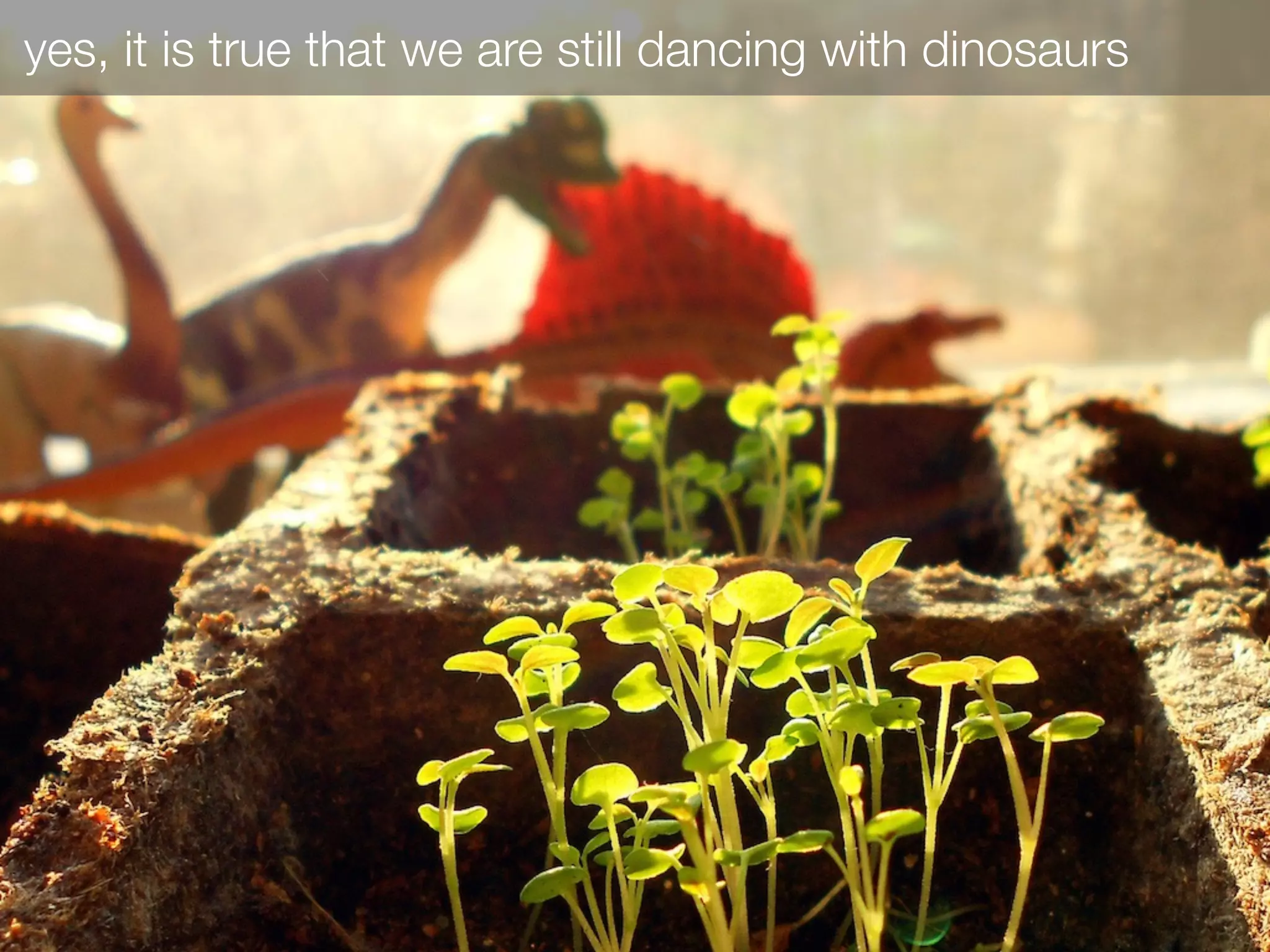
yes, it is true that we are still dancing with dinosaurs
but firms want to be more agile and able to change
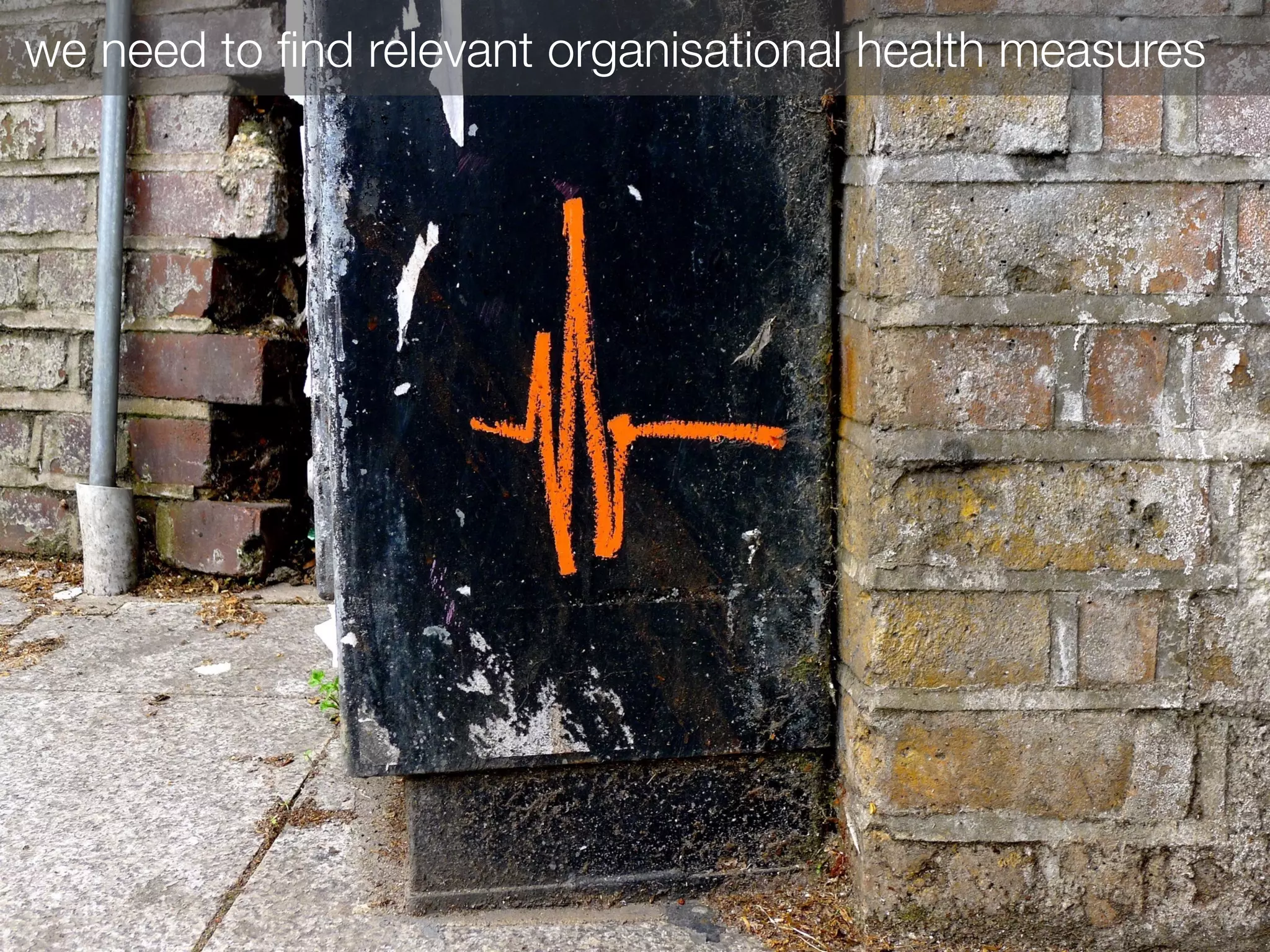
we need to find relevant organisational health measures
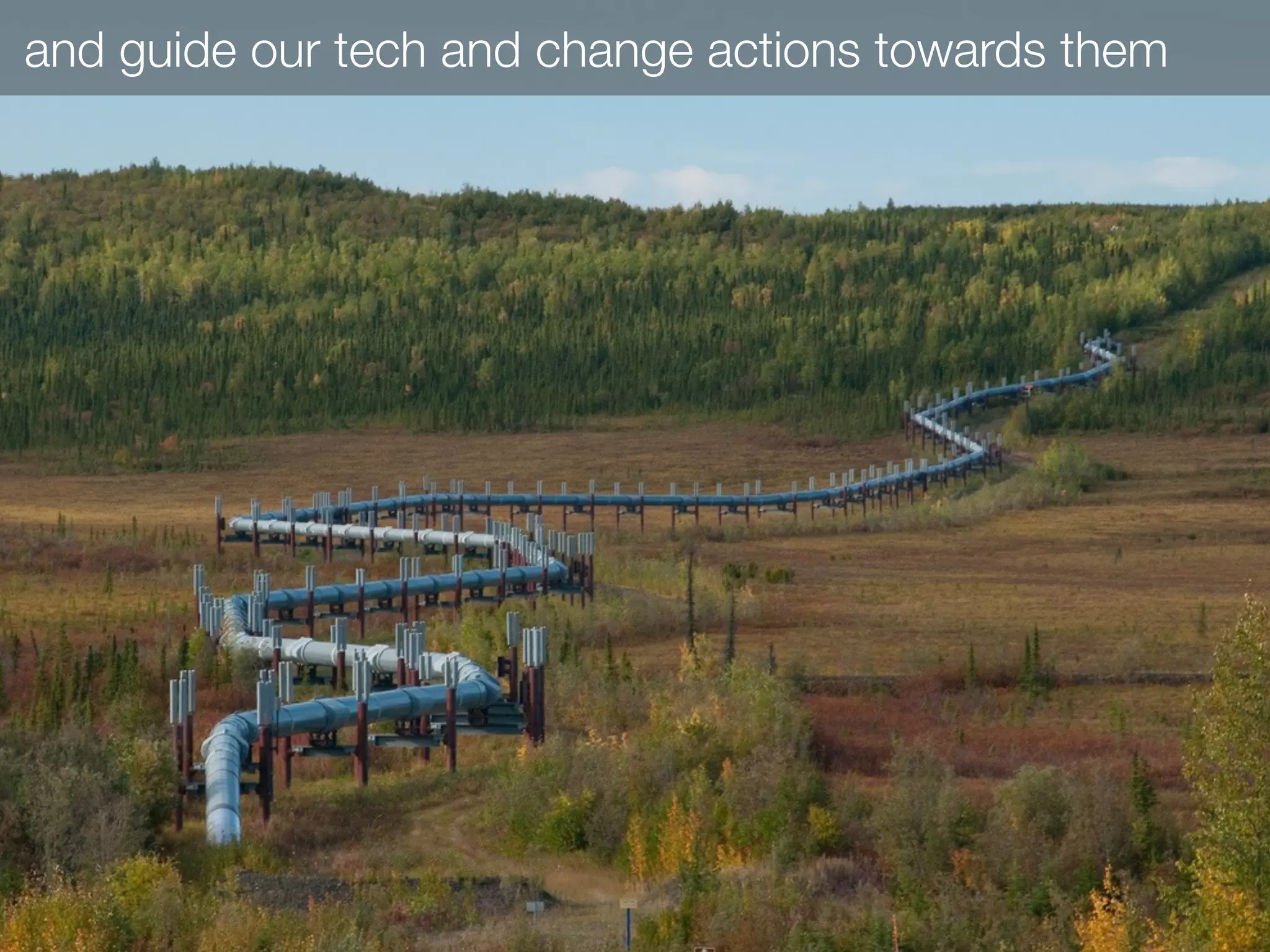
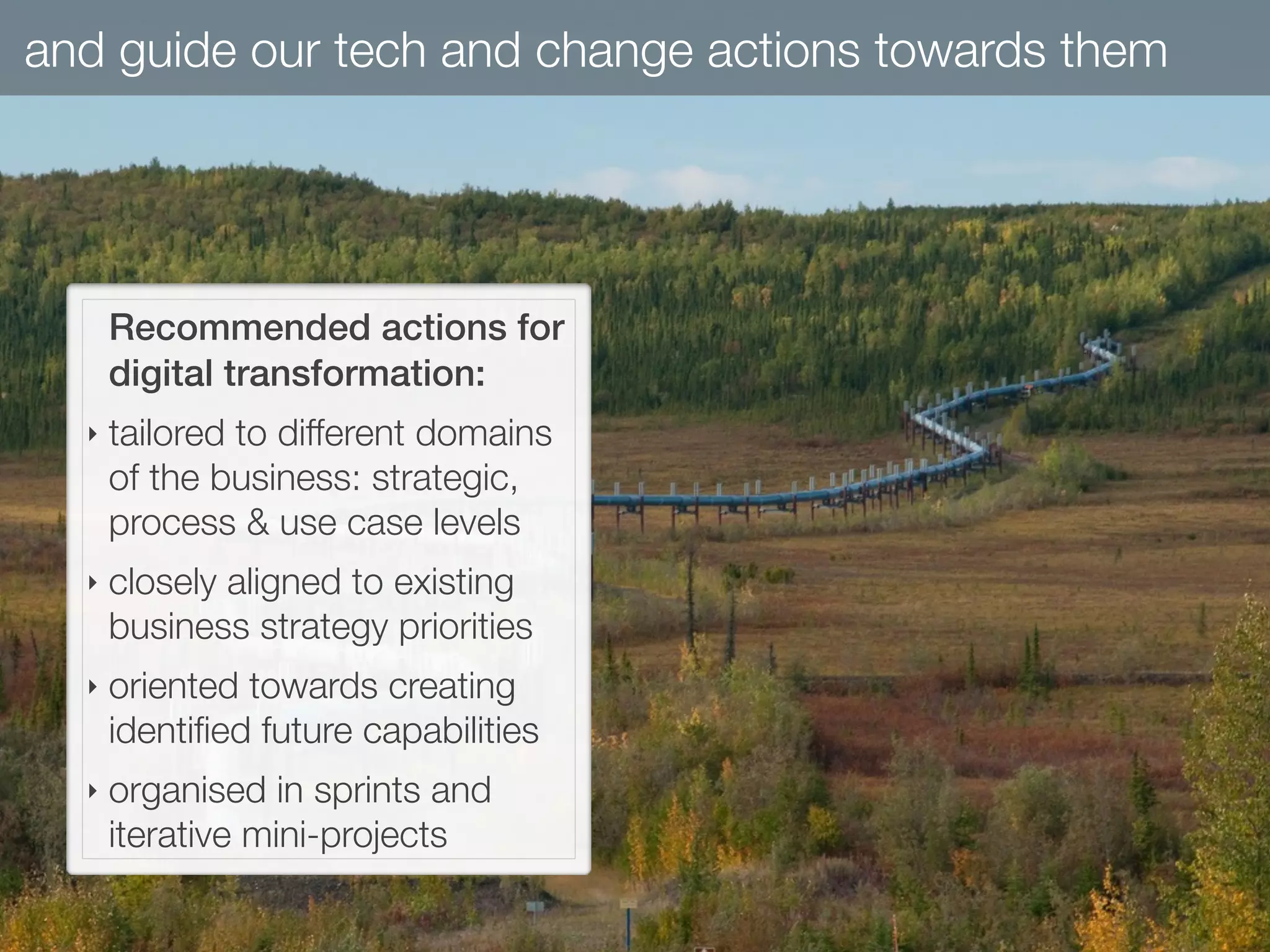
and guide our tech and change actions towards them
Recommended actions for
digital transformation:
‣ tailored to different domains
of the business: strategic,
process & use case levels
‣ closely aligned to existing
business strategy priorities
‣ oriented towards creating
identified future capabilities
‣ organised in sprints and
iterative mini-projects
transition strategies are important to make progress
Some basic advice:
‣ develop and support your
coalition of change agents
‣ start with fixed org. chart
points and build new agile
structures around them
‣ create protected spaces for
new networked structures
‣ devise workarounds for
planning, evaluation,
procurement, HR and other
fixed processes
maybe will see the emergence of quantified org apps?
in summary
in summary
An outline for capability-driven digital transformation:
1. Understand how changing market dynamics impact the biz
2. What organisational capabilities do these require?
3. Express capabilities as ‘agile user stories’ for the org
4. Define what success looks like and find relevant measures
5. Give each manager, each team oversight of their structure
6. Separate ‘what’ and ‘how’ in targets - let teams decide ‘how’
7. Align E2.0 and change efforts to develop these capabilities
8. Involve everyone in organisational self-awareness / change
9. Develop your guiding coalition and align on purpose
10. Do -> observe -> think; sense and respond; rinse and repeat
thank you
CONTACT US
info@postshift.com

FIND US
Our blog: www.postshift.com/blog

SlideShare: http://www.slideshare.net/Postshift

Twitter: @Postshift
POST*SHIFT
https://www.flickr.com/photos/certified_su/229016531

https://www.flickr.com/photos/tsevis/14793153807 

https://www.flickr.com/photos/mikecogh/7348035690 

https://www.flickr.com/photos/jayneandd/4450623309 

https://www.flickr.com/photos/16210667@N02/15721466273 

http://i.imgur.com/m5LMGCp.jpg 

https://www.flickr.com/photos/vandalog/9445960751/ 

https://twitter.com/dhinchcliffe/status/562887580044525569 

http://ht.ly/x0ohj 

http://www.flickr.com/photos/nicholas_t/3602389004 

https://www.flickr.com/photos/kellypietphotography/6922281830 

https://www.flickr.com/photos/eldomo/4250659210 

https://www.apple.com/watch/health-and-fitness/ 

https://www.flickr.com/photos/alandd/4637759763 

https://www.flickr.com/photos/linden_tea/7031006869/ 

http://gapingvoid.com/2006/09/11/the-dinosaur-cartoon-high-res-version/

https://www.flickr.com/photos/timothywildey/4954681763/ 

https://www.flickr.com/photos/wwarby/3016549999/ 

https://www.flickr.com/photos/nate2009/12436753284/ 

https://www.flickr.com/photos/decaseconds/8696247987/ 

https://www.flickr.com/photos/woolamaloo_gazette/13275645235 


image credits

Towards the Quantified Organisation

  • 1.
    Towards the QuantifiedOrganisation? E2.0 Summit, Paris, February 2015 @LeeBryant
  • 2.
    Our core teamhas pioneered the use of social technology inside large firms since 2002, and we now work with corporate clients to assist in developing new forms of organisational structure and practice to help create agile, responsive and adaptable 21st Century firms. POST*SHIFT
  • 3.
    the state ofE2.0 today? photo by @DionHinchclife
  • 4.
    #SocB iz the stateof E2.0 today?
  • 5.
  • 6.
    labels don’t matter:this is where the magic happens
  • 7.
    “Communications tools don't getsocially interesting until they get technologically boring.” Clay Shirky
  • 8.
    after the shift:what is beyond the ESN adoption plateau?
  • 9.
  • 10.
    social tech ->new org forms -> new ways of working
  • 11.
    Wider Market changing marketdynamics demand new capabilities ecosystem organisation Market composition Customer behaviour Technology Products ‣ Cambrian explosion of startups ‣ Software is eating the world ‣ Rapid emergence of high scale markets ‣ Speed to scale is crucial ‣ Platforms and ecosystems ‣ Experience versus features ‣ Collaborative consumption ‣ Everything as a service ‣ Empowered customers ‣ Trust is the new brand ‣ Mass-customisation ‣ The attention economy ‣ Faster diffusion of innovation ‣ Ubiquitous collaboration ‣ Connectivity in everything ‣ Designing for hackability
  • 12.
    how do wedefine and develop these new capabilities?
  • 13.
    Structure • Decentralised • Resilient • Adaptive & Emergent • Networked • Service-oriented Culture • Open • Customer-centric • Innovative • Experience-led • Passion& purpose Practice • Agile & Iterative • Data-driven • Collaborative • Task-focused • Podular how do we define and develop these new capabilities? “As a sales organisation we need to offer an integrated experience (not front-ends to a set of separate silos working apart) to grow key account value”
  • 14.
    these dynamics alsooffer new ways to create value Internal 
 Realm Liminal
 Spaces Ecosystem Internal Teams External teams new models: ‣ IoT, connected devices, data and platforms ‣ everything as a service ‣ customer co-creation and open innovation ‣ startup incubation and ecosystem development
  • 15.
    what capabilities dowe need to operate new biz models?
  • 16.
    Structure • Decentralised • Resilient • Adaptive & Emergent • Networked • Service-oriented Culture • Open • Customer-centric • Innovative • Experience-led • Passion& purpose Practice • Agile & Iterative • Data-driven • Collaborative • Task-focused • Podular what capabilities do we need to operate new biz models? “As a hardware maker we need to offer in-product software upgrades (which extend the life of the product and add new functionality) to be more competitive”
  • 17.
    In short: whatkind of org do we need to be tomorrow?
  • 18.
    social / digitalcan help grow new structures & capabilities
  • 19.
    and they canhelp reduce hierarchical bureaucracy
  • 20.
    but how canwe measure transformation progress?
  • 21.
    our current thinkingon a capability-driven model
  • 22.
    Is this anotherchange programme? (no!)
  • 23.
    crash diets (likechange programmes) rarely sustain
  • 24.
    ‘quantified self’ continualimprovement works better
  • 25.
    human sensor networksand the quantified organisation
  • 26.
    transformation is aboutsmall changes, loosely joined
  • 27.
    there is noperfect ‘target operating model’ end-point
  • 28.
    this needs ‘sense& respond’ not ‘predict & control’
  • 29.
    Laloux: organisations havean ‘evolutionary purpose’
  • 30.
    let’s get transformationactions onto the weekly agenda
  • 31.
    yes, it istrue that we are still dancing with dinosaurs
  • 32.
    yes, it istrue that we are still dancing with dinosaurs
  • 33.
    but firms wantto be more agile and able to change
  • 34.
    we need tofind relevant organisational health measures
  • 35.
    and guide ourtech and change actions towards them
  • 36.
    and guide ourtech and change actions towards them Recommended actions for digital transformation: ‣ tailored to different domains of the business: strategic, process & use case levels ‣ closely aligned to existing business strategy priorities ‣ oriented towards creating identified future capabilities ‣ organised in sprints and iterative mini-projects
  • 37.
    transition strategies areimportant to make progress
  • 38.
    transition strategies areimportant to make progress Some basic advice: ‣ develop and support your coalition of change agents ‣ start with fixed org. chart points and build new agile structures around them ‣ create protected spaces for new networked structures ‣ devise workarounds for planning, evaluation, procurement, HR and other fixed processes
  • 39.
    maybe will seethe emergence of quantified org apps?
  • 40.
  • 41.
    in summary An outlinefor capability-driven digital transformation: 1. Understand how changing market dynamics impact the biz 2. What organisational capabilities do these require? 3. Express capabilities as ‘agile user stories’ for the org 4. Define what success looks like and find relevant measures 5. Give each manager, each team oversight of their structure 6. Separate ‘what’ and ‘how’ in targets - let teams decide ‘how’ 7. Align E2.0 and change efforts to develop these capabilities 8. Involve everyone in organisational self-awareness / change 9. Develop your guiding coalition and align on purpose 10. Do -> observe -> think; sense and respond; rinse and repeat
  • 42.
  • 43.
    CONTACT US info@postshift.com FIND US Ourblog: www.postshift.com/blog SlideShare: http://www.slideshare.net/Postshift Twitter: @Postshift POST*SHIFT
  • 44.
    https://www.flickr.com/photos/certified_su/229016531 https://www.flickr.com/photos/tsevis/14793153807 https://www.flickr.com/photos/mikecogh/7348035690 https://www.flickr.com/photos/jayneandd/4450623309 https://www.flickr.com/photos/16210667@N02/15721466273 http://i.imgur.com/m5LMGCp.jpg https://www.flickr.com/photos/vandalog/9445960751/ https://twitter.com/dhinchcliffe/status/562887580044525569 http://ht.ly/x0ohj http://www.flickr.com/photos/nicholas_t/3602389004 https://www.flickr.com/photos/kellypietphotography/6922281830 https://www.flickr.com/photos/eldomo/4250659210 https://www.apple.com/watch/health-and-fitness/ https://www.flickr.com/photos/alandd/4637759763 https://www.flickr.com/photos/linden_tea/7031006869/ http://gapingvoid.com/2006/09/11/the-dinosaur-cartoon-high-res-version/ https://www.flickr.com/photos/timothywildey/4954681763/ https://www.flickr.com/photos/wwarby/3016549999/ https://www.flickr.com/photos/nate2009/12436753284/ https://www.flickr.com/photos/decaseconds/8696247987/ https://www.flickr.com/photos/woolamaloo_gazette/13275645235 
 
 image credits