Gametogenesis
Ms. Mayuri Patel
Sandra Shroff ROFEL College of Nursing, vapi
Gametogenesis
The process involved in the maturation of
the two highly specialized cells,
spermatozoon in male and ovum in the
female before they unite to form zygote, is
called gametogenesis.
Oogenesis
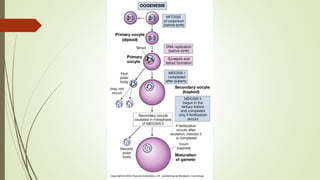
 The process involved in the development of a mature ovum
is called oogenesis.
 From yock sac – Primitive germ cells at 3rd
week
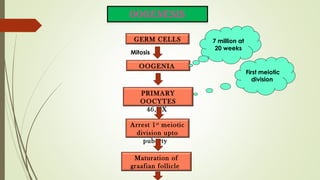
GERM CELLS
OOGENIA
First meiotic
division
PRIMARY
OOCYTES
46,XX
7 million at
20 weeks
Mitosis
Arrest 1st
meiotic
division upto
puberty
Maturation of
graafian follicle
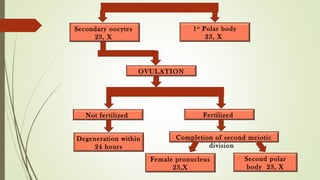
Secondary oocytes
23, X
1st
Polar body
23, X
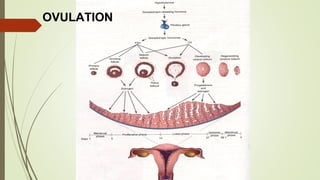
OVULATION
Not fertilized Fertilized
Degeneration within
24 hours
Completion of second meiotic
division
Female pronucleus
23,X
Second polar
body 23, X
Spermatogenesis
 The process involved in the
development of spermatids from
the primorbadial male germs and
their differentiation into
spermatozoa is called
spermatogenesis.
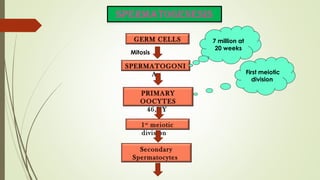
GERM CELLS
SPERMATOGONI
A First meiotic
division
PRIMARY
OOCYTES
46,XY
7 million at
20 weeks
Mitosis
1st
meiotic
division
Secondary
Spermatocytes
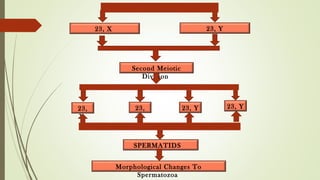
23, X 23, Y
Second Meiotic
Division
23,
X
Morphological Changes To
Spermatozoa
SPERMATIDS
23, Y23, Y23,
X
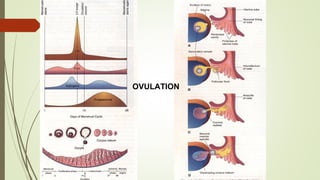
OVULATION
OVULATION
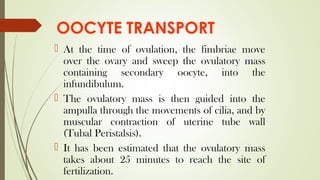
OOCYTE TRANSPORT
 At the time of ovulation, the fimbriae move
over the ovary and sweep the ovulatory mass
containing secondary oocyte, into the
infundibulum.
 The ovulatory mass is then guided into the
ampulla through the movements of cilia, and by
muscular contraction of uterine tube wall
(Tubal Peristalsis).
 It has been estimated that the ovulatory mass
takes about 25 minutes to reach the site of
fertilization.
SPERM TRANSPORT
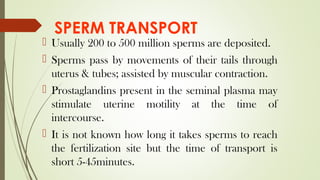
 Usually 200 to 500 million sperms are deposited.
 Sperms pass by movements of their tails through
uterus & tubes; assisted by muscular contraction.
 Prostaglandins present in the seminal plasma may
stimulate uterine motility at the time of
intercourse.
 It is not known how long it takes sperms to reach
the fertilization site but the time of transport is
short 5-45minutes.
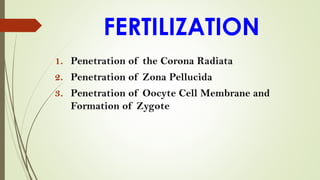
FERTILIZATION
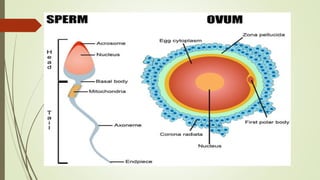
1. Penetration of the Corona Radiata
2. Penetration of Zona Pellucida
3. Penetration of Oocyte Cell Membrane and
Formation of Zygote
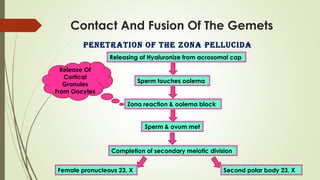
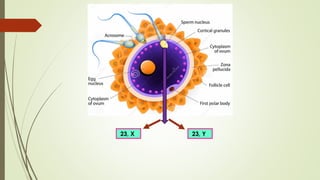
Contact And Fusion Of The Gemets
Penetration of the zona Pellucida
Releasing of Hyaluronize from acrosomal cap
Sperm touches oolema
Zona reaction & oolema block
Release Of
Cortical
Granules
From Oocytes
Sperm & ovum met
Completion of secondary meiotic division
Female pronucleous 23, X Second polar body 23, X
23, X 23, Y
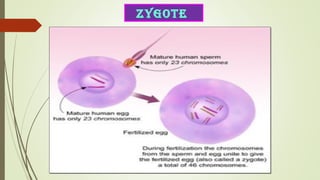
zYGote
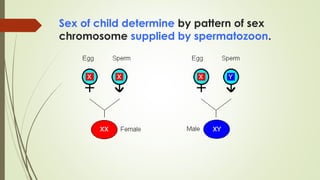
Sex of child determine by pattern of sex
chromosome supplied by spermatozoon.
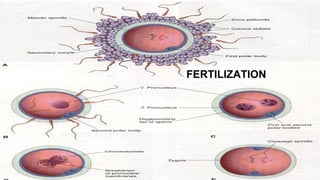
FERTILIZATION
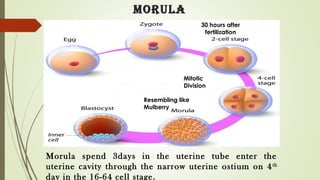
Morula
Mitotic
Division
Resembling like
Mulberry
30 hours after
fertilization
Morula spend 3days in the uterine tube enter the
uterine cavity through the narrow uterine ostium on 4th
day in the 16-64 cell stage.
TraNSPor
T
 Slow process
 Controlled by muscular
contraction
 Movement of cilia
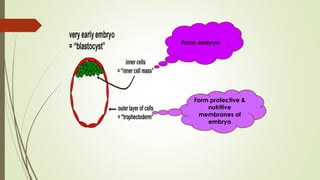
Form embryo
Form protective &
nutritive
membranes of
embryo

Gametogenesis

  • 1.
    Gametogenesis Ms. Mayuri Patel SandraShroff ROFEL College of Nursing, vapi
  • 2.
    Gametogenesis The process involvedin the maturation of the two highly specialized cells, spermatozoon in male and ovum in the female before they unite to form zygote, is called gametogenesis.
  • 3.
    Oogenesis  The processinvolved in the development of a mature ovum is called oogenesis.  From yock sac – Primitive germ cells at 3rd week
  • 4.
    GERM CELLS OOGENIA First meiotic division PRIMARY OOCYTES 46,XX 7million at 20 weeks Mitosis Arrest 1st meiotic division upto puberty Maturation of graafian follicle
  • 5.
    Secondary oocytes 23, X 1st Polarbody 23, X OVULATION Not fertilized Fertilized Degeneration within 24 hours Completion of second meiotic division Female pronucleus 23,X Second polar body 23, X
  • 6.
    Spermatogenesis  The processinvolved in the development of spermatids from the primorbadial male germs and their differentiation into spermatozoa is called spermatogenesis.
  • 7.
    GERM CELLS SPERMATOGONI A Firstmeiotic division PRIMARY OOCYTES 46,XY 7 million at 20 weeks Mitosis 1st meiotic division Secondary Spermatocytes
  • 8.
    23, X 23,Y Second Meiotic Division 23, X Morphological Changes To Spermatozoa SPERMATIDS 23, Y23, Y23, X
  • 10.
  • 11.
  • 12.
    OOCYTE TRANSPORT  Atthe time of ovulation, the fimbriae move over the ovary and sweep the ovulatory mass containing secondary oocyte, into the infundibulum.  The ovulatory mass is then guided into the ampulla through the movements of cilia, and by muscular contraction of uterine tube wall (Tubal Peristalsis).  It has been estimated that the ovulatory mass takes about 25 minutes to reach the site of fertilization.
  • 13.
    SPERM TRANSPORT  Usually200 to 500 million sperms are deposited.  Sperms pass by movements of their tails through uterus & tubes; assisted by muscular contraction.  Prostaglandins present in the seminal plasma may stimulate uterine motility at the time of intercourse.  It is not known how long it takes sperms to reach the fertilization site but the time of transport is short 5-45minutes.
  • 14.
    FERTILIZATION 1. Penetration ofthe Corona Radiata 2. Penetration of Zona Pellucida 3. Penetration of Oocyte Cell Membrane and Formation of Zygote
  • 16.
    Contact And FusionOf The Gemets Penetration of the zona Pellucida Releasing of Hyaluronize from acrosomal cap Sperm touches oolema Zona reaction & oolema block Release Of Cortical Granules From Oocytes Sperm & ovum met Completion of secondary meiotic division Female pronucleous 23, X Second polar body 23, X
  • 17.
  • 18.
  • 19.
    Sex of childdetermine by pattern of sex chromosome supplied by spermatozoon.
  • 20.
  • 21.
    Morula Mitotic Division Resembling like Mulberry 30 hoursafter fertilization Morula spend 3days in the uterine tube enter the uterine cavity through the narrow uterine ostium on 4th day in the 16-64 cell stage.
  • 22.
    TraNSPor T  Slow process Controlled by muscular contraction  Movement of cilia
  • 23.
    Form embryo Form protective& nutritive membranes of embryo