COMPUTED TOMOGRAPHY 
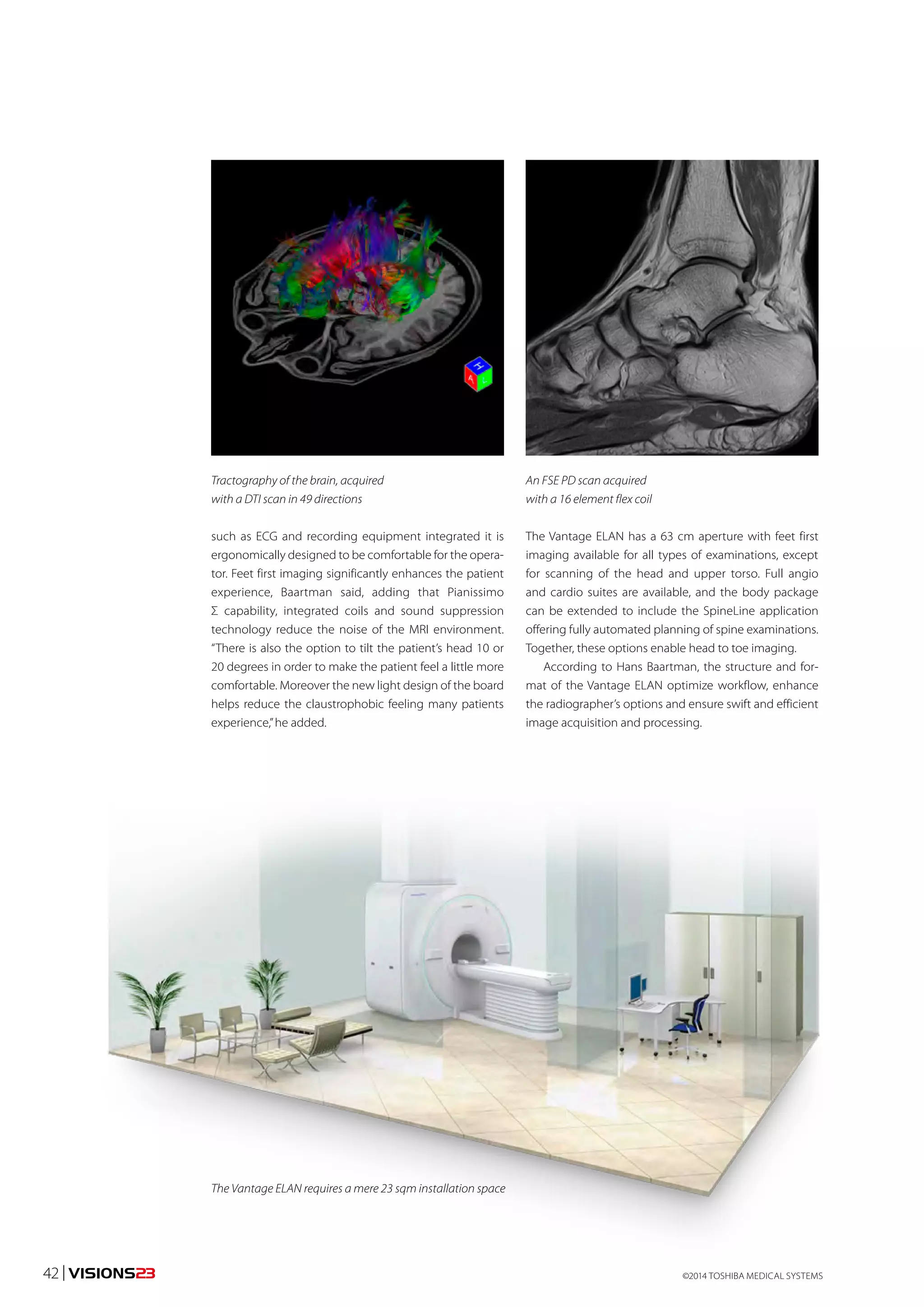
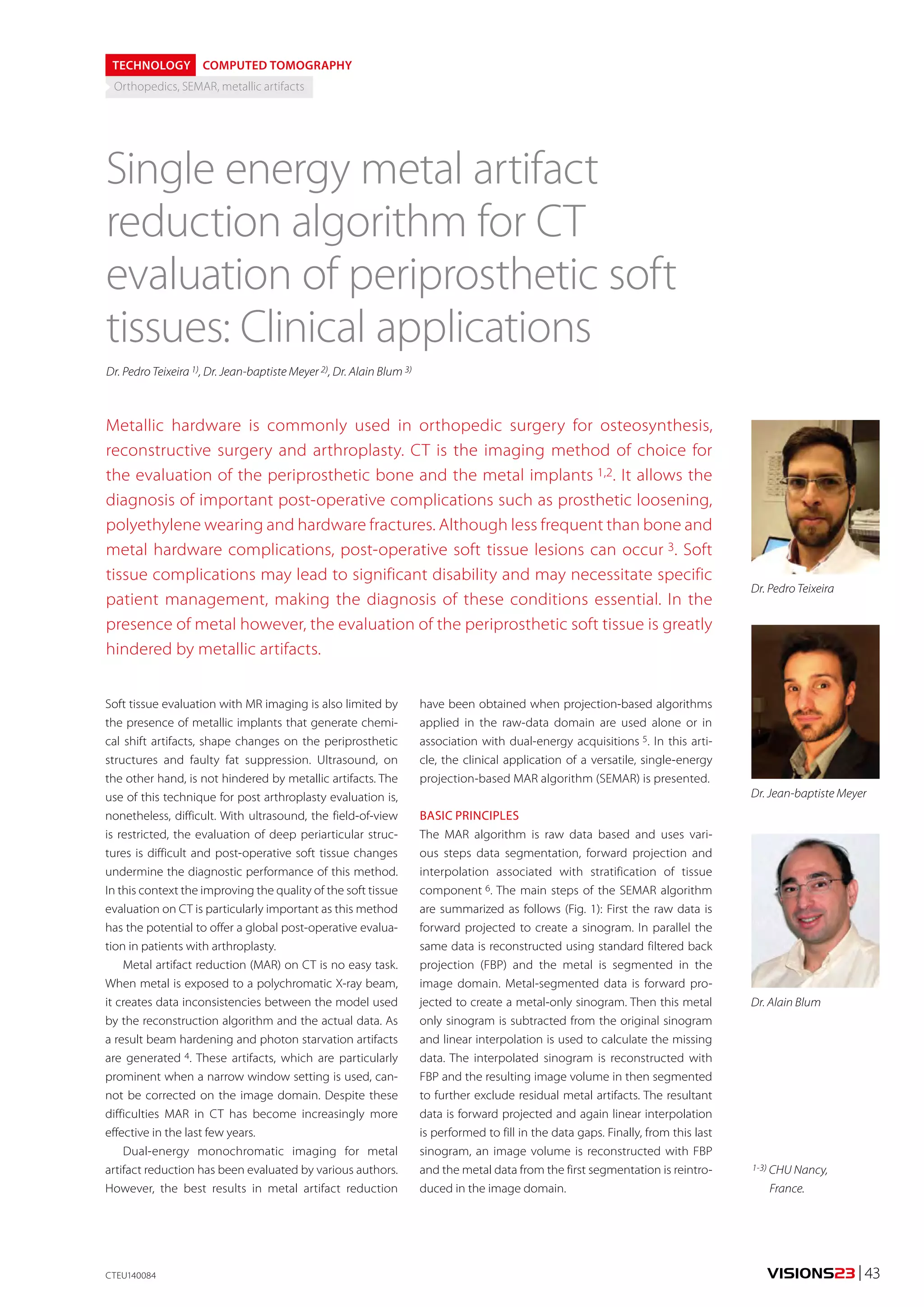
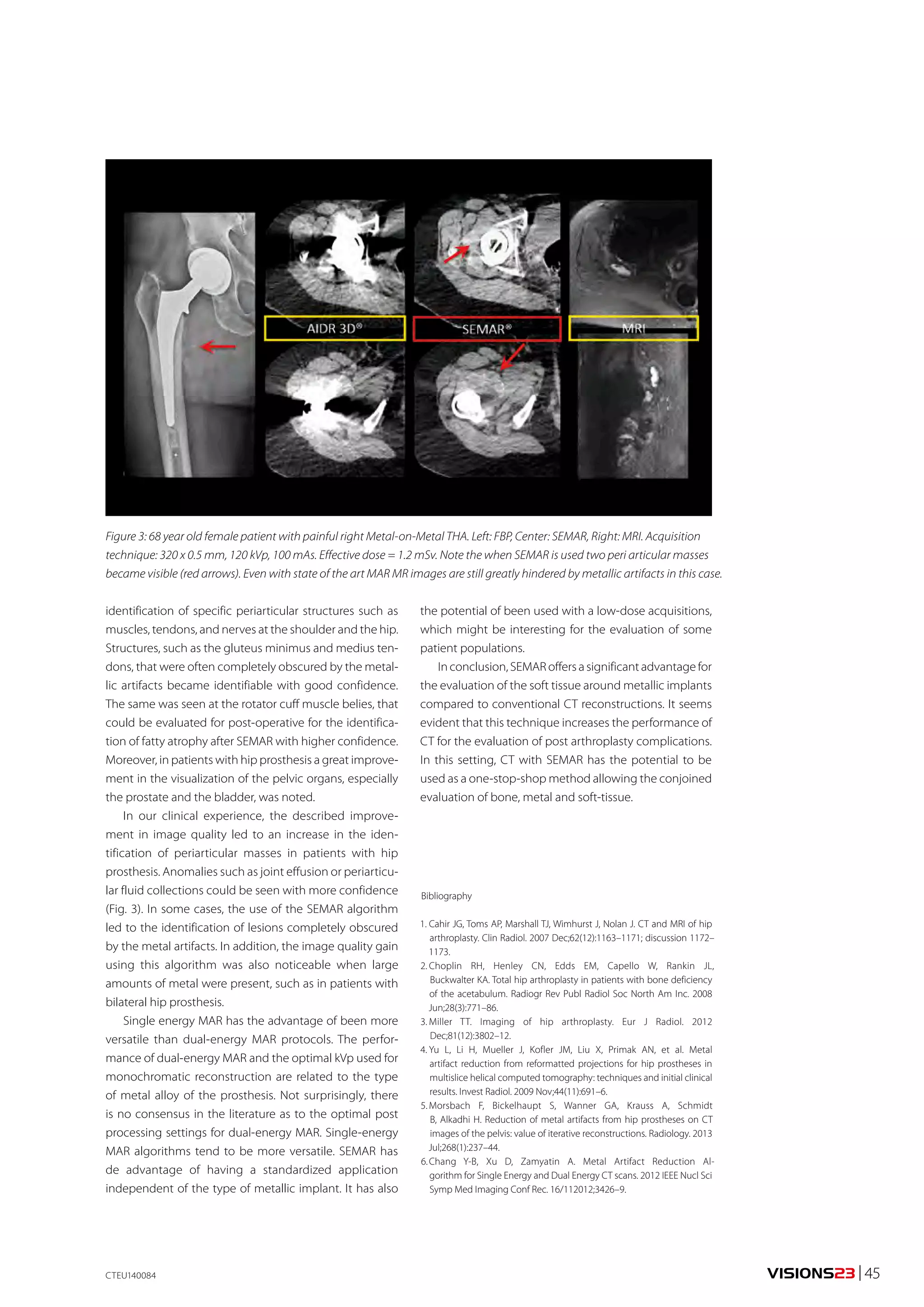
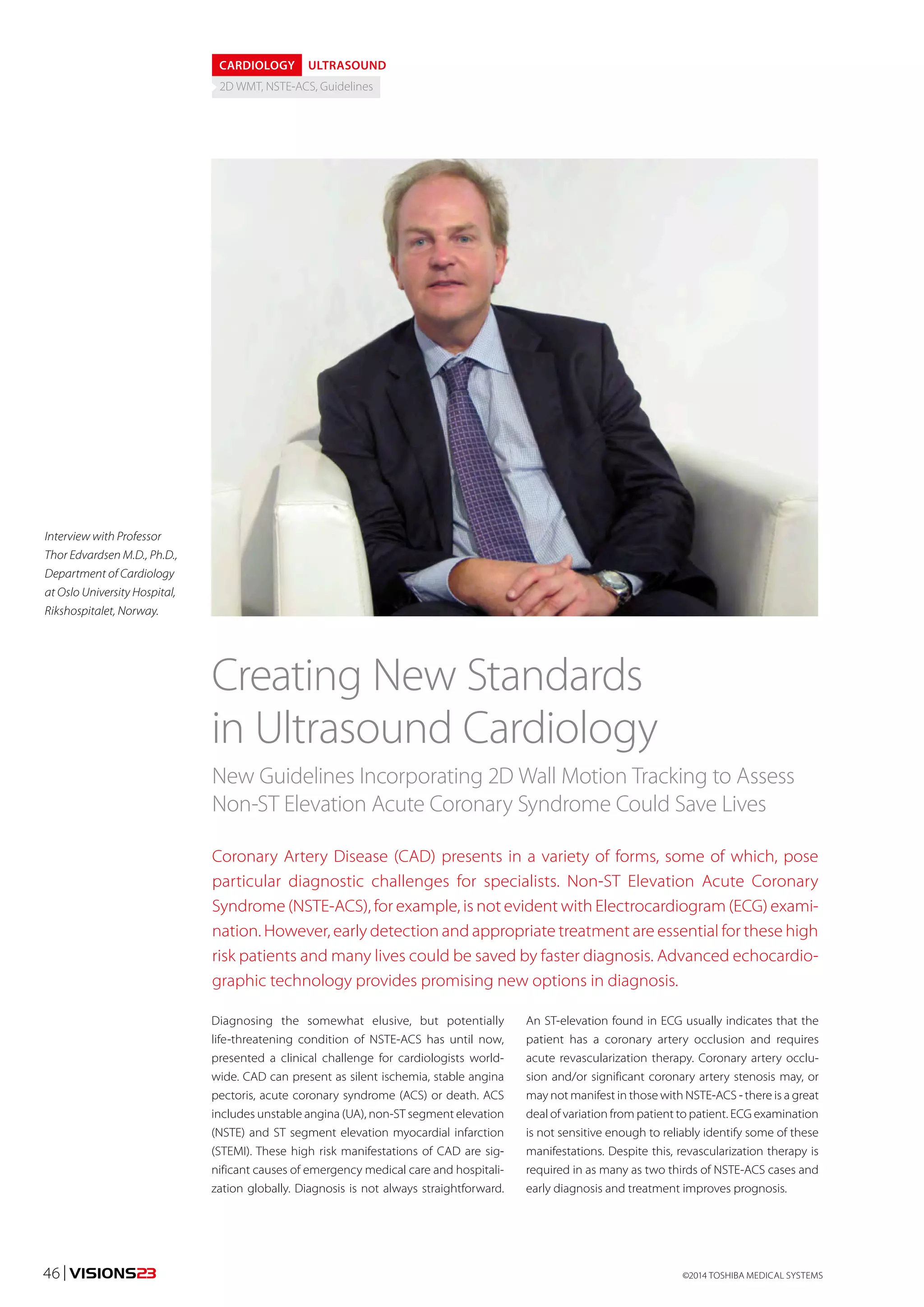
Superiority of Lung 
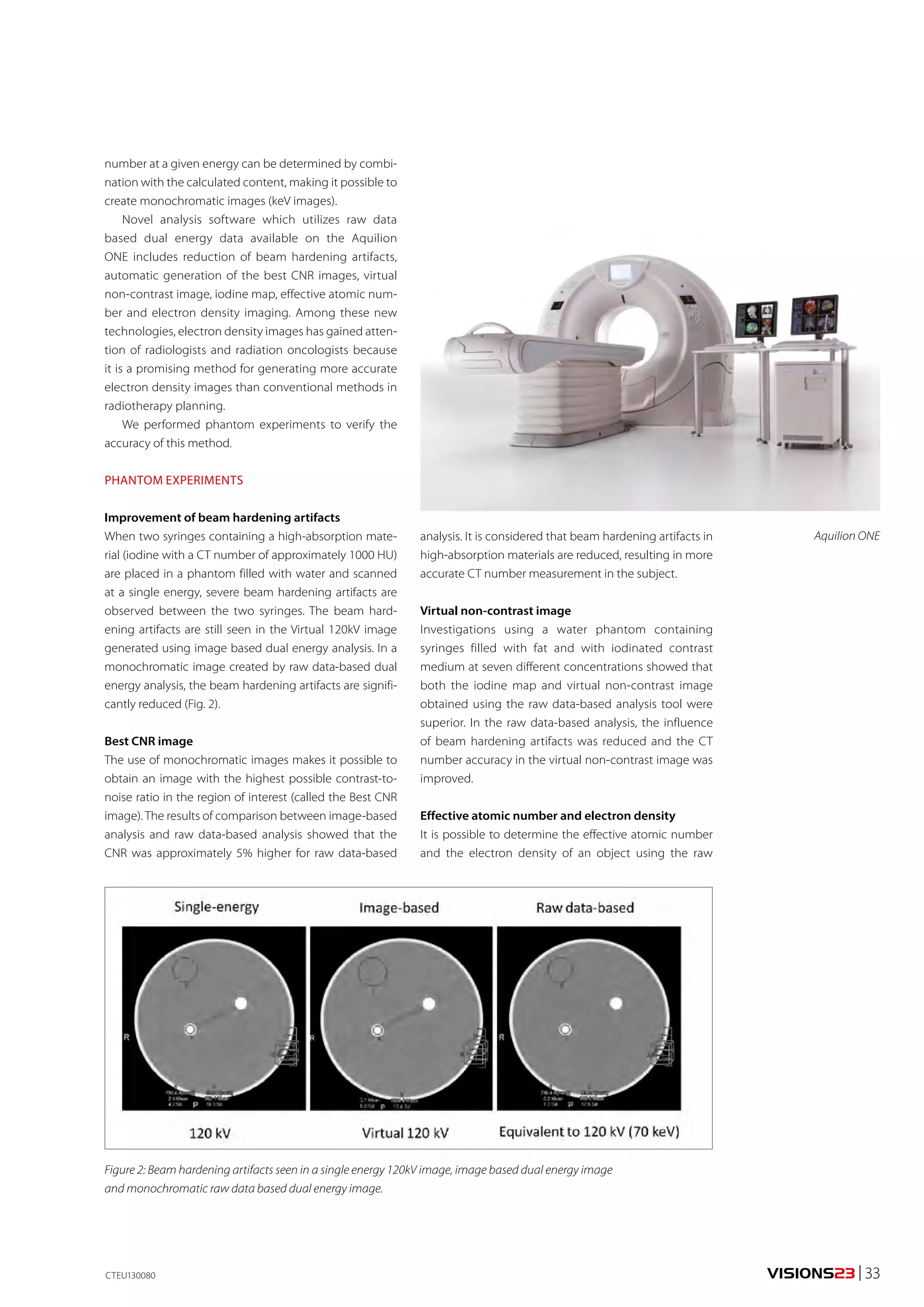
Subtraction Above 
Dual Energy 
X-RAY 
Spot Fluoro - Reducing Dose 
in Interventional Procedures 
ULTRASOUND 
Creating New Standards 
in Ultrasound Cardiology 
MAGNETIC RESONANCE 
Vantage ELAN Perfectly Combines 
23 
Performance and Affordability ISSN 1617-2876 
VISIONS FEBRUARY 2014
Imprint 
Publisher: 
TOSHIBA Medical Systems Europe B.V., 
Zilverstraat 1 
NL-2718 RP Zoetermeer 
Tel.: +31 79 368 92 22 
Fax: +31 79 368 94 44 
Web: www.toshiba-medical.eu 
Email: info@tmse.nl 
Editor-in-chief: 
Jack Hoogendoorn (jhoogendoorn@tmse.nl) 
Modality coordinators: 
CT: Roy Irwan 
UL: Joerg Schlegel 
XR: Jaco Terlouw 
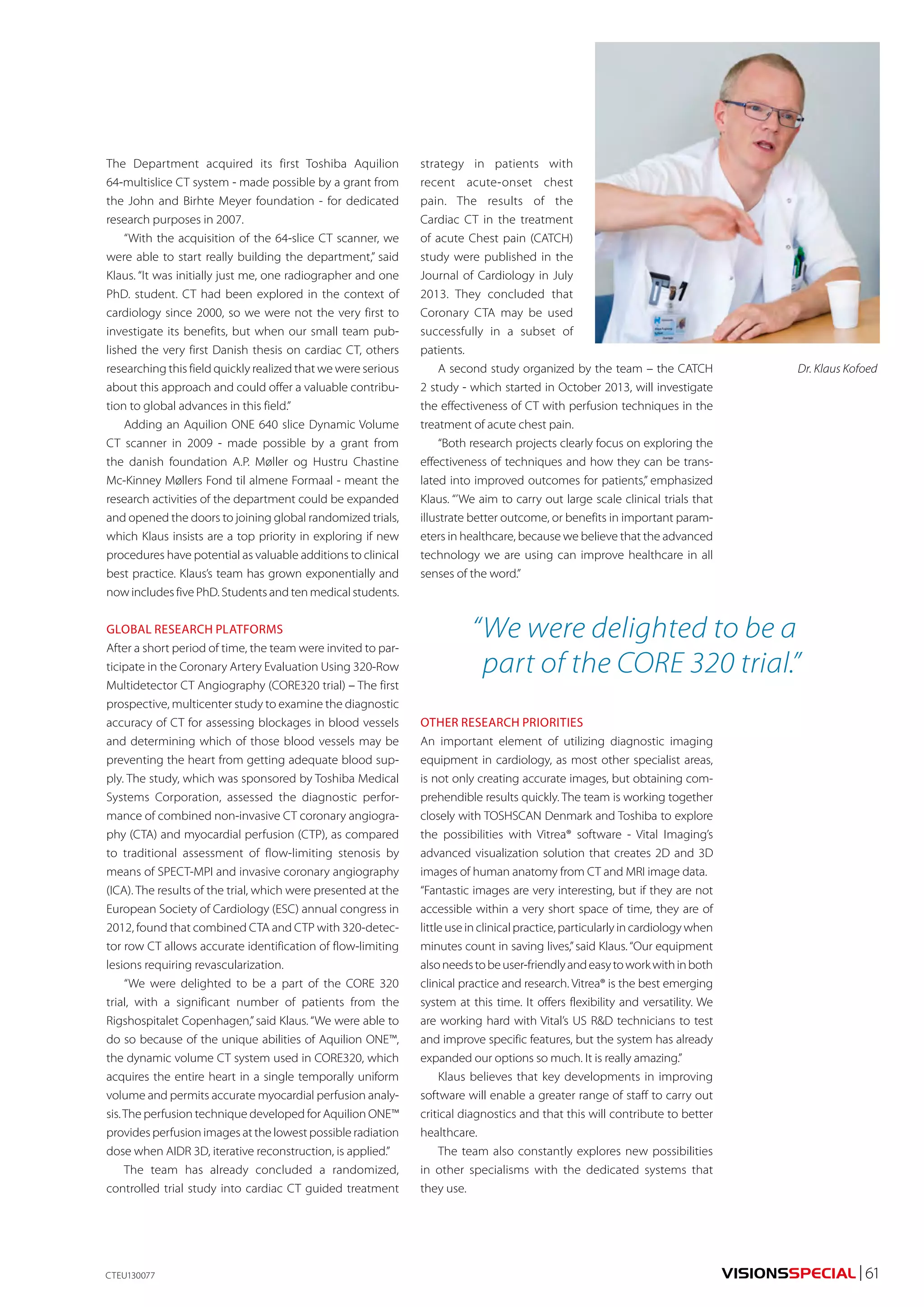
“Creating New Standards in Ultrasound Cardiology” & “Customer Focus: Rigshospitalet, Copenhagen” 
by The Creative Practice (www.thecreativepractice.com) 
Design & Layout: 
Boerma Reclame (www.boermareclame.com) 
Printing: 
Schefferdrukkerij (www.schefferdrukkerij.nl) 
Subscription Service: 
www.toshiba-medical.eu/visions 
© 2014 by TOSHIBA Medical Systems Europe 
All rights reserved
Dear reader, 
I grew up following the science fiction TV series, ‘Star Trek’. The original series was broadcast in the Netherlands 
between 1966 and 1969 and at that time, I was already intrigued by the foresight of the series’ Writer and 
Producer, Gene Roddenberry, and his team, particularly on technology and medical science. 
Devices in the series, such as The Communicator, Hypospray and Medical Tricorder, were presented as everyday 
utilitarian objects. Central characters, such as Captain James T. Kirk, used communicators to talk across galaxies 
with the starship, ‘The USS Enterprise’. And the ship’s Chief Medical Officer, Dr. McCoy, collected physiological 
information about patients and diagnosed diseases in just a couple of seconds. Further extensive clinical diag-noses 
were possible on board the ship using even more futuristic and astonishing systems and technologies. 
VISIONS23 | 3 
‘Completely logical’, I imagine Science Officer, Spock, would say. 
Now, almost 50 years later, we consider mobile phones as an essential part of our lives, ourselves, and some-times, 
even our personality. While they are true commodities, promising new concepts, technologies and 
products are emerging on the healthcare horizon. For example, Google Glass1 that enables live transmission 
of surgeries to medical colleagues and students. Or the Google Smart Contact Lens2 that can help people 
with diabetes control blood sugar level by measuring glucose levels in their tears second-by-second. Last but 
not least, the Scanadu Scout3. A scanner packed with sensors that enable anyone to conduct sophisticated 
physical examinations in an instance. A first step in the realization of Dr. McCoy’s Medical Tricorder? These are 
all fascinating developments that might have immediate impact on medicine, or might become important in 
the very near future. 
We, at Toshiba, follow all kinds of medical developments with great interest, but nevertheless, prefer to focus 
on continuously creating leading innovations in our field of expertise: medical imaging and treatment. Every 
year, we file thousands of patents, making innovation a key part of Toshiba’s fabric. And with each new product 
and technology that we develop, we keep in mind that the best patient treatment starts with a fast, safe and 
accurate examination to enable reliable diagnosis. 
Our aim and dedication is to provide you with amazing, unprecedented, state-of-the-art imaging and treat-ment 
products, systems and technologies that you never thought to be true. Or, as Dr. McCoy would say: 
“It is medical imaging, Jim, but not as we know it”. 
Kind regards, 
EDITORIAL 
Jack Hoogendoorn 
Sr. Manager Marketing Communications 
Toshiba Medical Systems Europe BV 
1 http://tinyurl.com/nfdfuwc 
2 http://tinyurl.com/mfd8aua 
3 http://www.scanadu.com
CONTENT 
10 ECR 2014 abstracts 
15 Time to ditch the chest X-ray? 
A comparison with CT 
Chest, Radiation Dose Reduction, AIDR3D 
17 Usefulness of 320-row CT in the oil industry 
Research, environment, oil recovery 
20 Medical Imaging Enters the Next Generation 
Product Introduction, Aquilion ONE Next Generation 
24 Planning a Hybrid Lab 
Indications, planning, equipment 
29 Dual Energy CT in the PRIME Time 
Dual Energy 
32 Dual Energy Raw Data Based Decomposition 
Analysis on Aquilion ONE 
Dual Energy 
38 Spot Fluoro – A novel innovative approach 
to reduce the dose during interventional 
procedures. 
Dose Reduction, Intervention, Spot Fluoroscopy 
40 Toshiba’s new Vantage ELAN Combines Strong 
Performance and Affordability 
20 
24 
40 
Further enhancement and technical 
innovation have taken Toshiba Medical 
Systems’ Aquilion ONE™ onto a new level. 
There are many challenges that have to 
be met to achieve an environment that 
works well for all. 
The impressive qualities of high performance, 
affordability and enhanced patient comfort 
define Toshiba’s new MR system. 
Product Introduction, Vantage ELAN 
©2014 4 | VISIONS23 TOSHIBA MEDICAL SYSTEMS
VISIONS23 | 5 
43 Single energy metal artifact reduction algorithm 
for CT evaluation of periprosthetic soft tissues: 
Clinical applications 
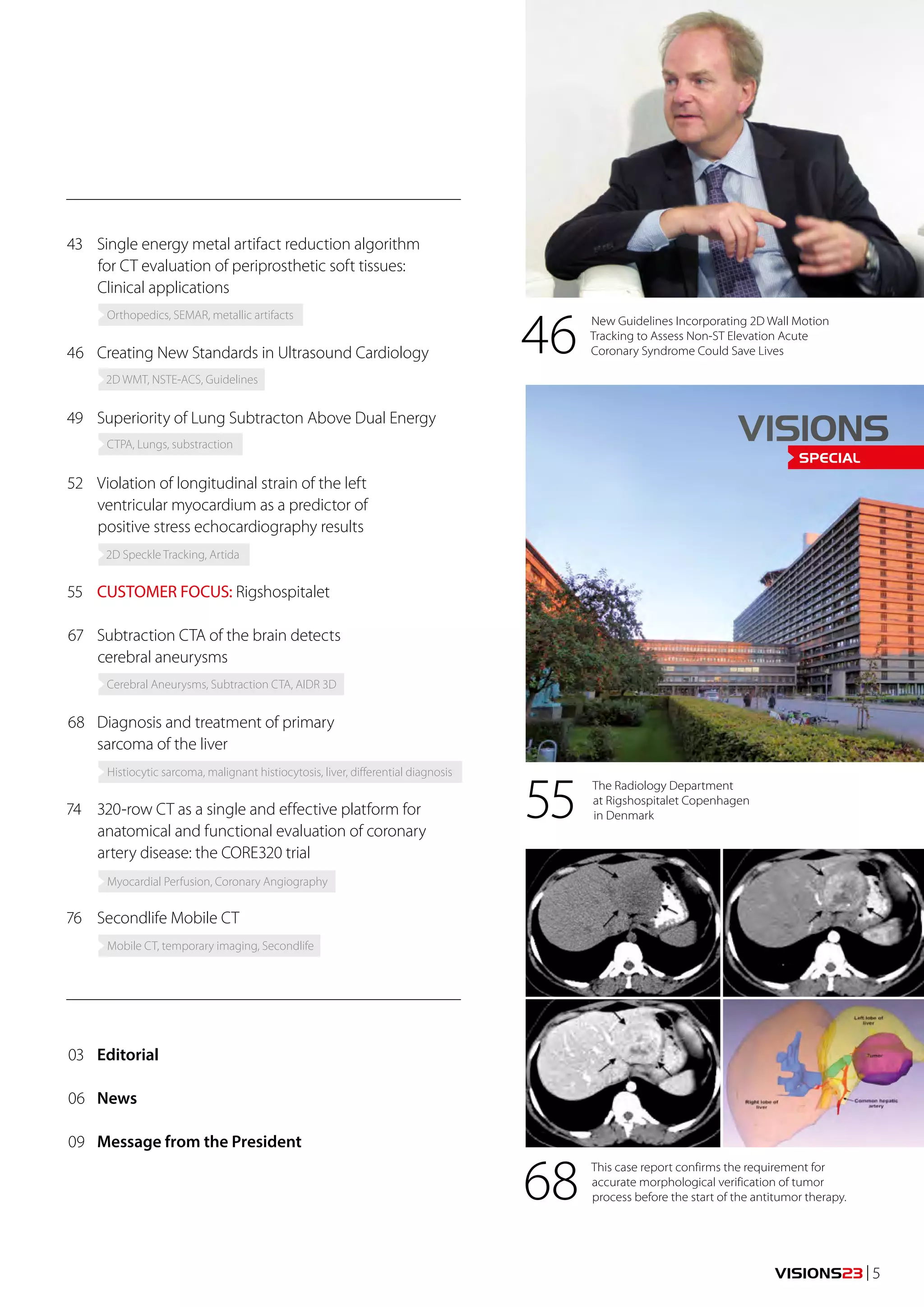
46 Creating New Standards in Ultrasound Cardiology 
49 Superiority of Lung Subtracton Above Dual Energy 
52 Violation of longitudinal strain of the left 
ventricular myocardium as a predictor of 
positive stress echocardiography results 
55 CUSTOMER FOCUS: Rigshospitalet 
67 Subtraction CTA of the brain detects 
cerebral aneurysms 
68 Diagnosis and treatment of primary 
sarcoma of the liver 
74 320-row CT as a single and effective platform for 
anatomical and functional evaluation of coronary 
artery disease: the CORE320 trial 
76 Secondlife Mobile CT 
46 
55 
68 
New Guidelines Incorporating 2D Wall Motion 
Tracking to Assess Non-ST Elevation Acute 
Coronary Syndrome Could Save Lives 
The Radiology Department 
at Rigshospitalet Copenhagen 
in Denmark 
This case report confirms the requirement for 
accurate morphological verification of tumor 
process before the start of the antitumor therapy. 
03 Editorial 
06 News 
09 Message from the President 
VISIONS 
SPECIAL 
Orthopedics, SEMAR, metallic artifacts 
2D WMT, NSTE-ACS, Guidelines 
CTPA, Lungs, substraction 
2D Speckle Tracking, Artida 
Cerebral Aneurysms, Subtraction CTA, AIDR 3D 
Histiocytic sarcoma, malignant histiocytosis, liver, differential diagnosis 
Myocardial Perfusion, Coronary Angiography 
Mobile CT, temporary imaging, Secondlife
The Bone Exhibition 
Free with the voucher on the 
The page on the right is part of the VISIONS Photo Page Series reflecting an eye for the beauty of 
our planet, the environment and the direct surroundings where Toshiba’s systems are installed 
by Toshiba and its customers. Not the actual imaging products but photos of sceneries, cities, 
countries or other cultural aspects are highlighted on this photo page. The Photo Page is based 
upon an idea of Prof. Edwin van Beek. 
Every reader of VISIONS can participate and get their picture published. The submitted content should 
include: high resolution (300dpi) image, photo of the hospital and a brief text, name of photographer 
and Toshiba system(s) installed. The complete result is shown on the opposite page. 
Send your pictures and texts to: jhoogendoorn@tmse.nl, Subject: Photo Page 
©2014 6 | VISIONS23 TOSHIBA MEDICAL SYSTEMS 
► 
NEWS 
Edinburgh: Transforming Global Healthcare 
Edinburgh is home to world-leading medical researchers 
who work in partnership with the NHS and the private 
sector. This close cooperation helps to accelerate 
medical discoveries and transform them into treatments 
for patients. 
Toshiba is featured in a promotional clip from the 
inspiring captial of Scotland. Have a look and pay spe-cial 
attention to the frames from 1:23m-1:44m where 
Dr. Ken Sutherland explains about Toshiba’s activities 
in Edinburgh. http://tinyurl.com/punkwhp 
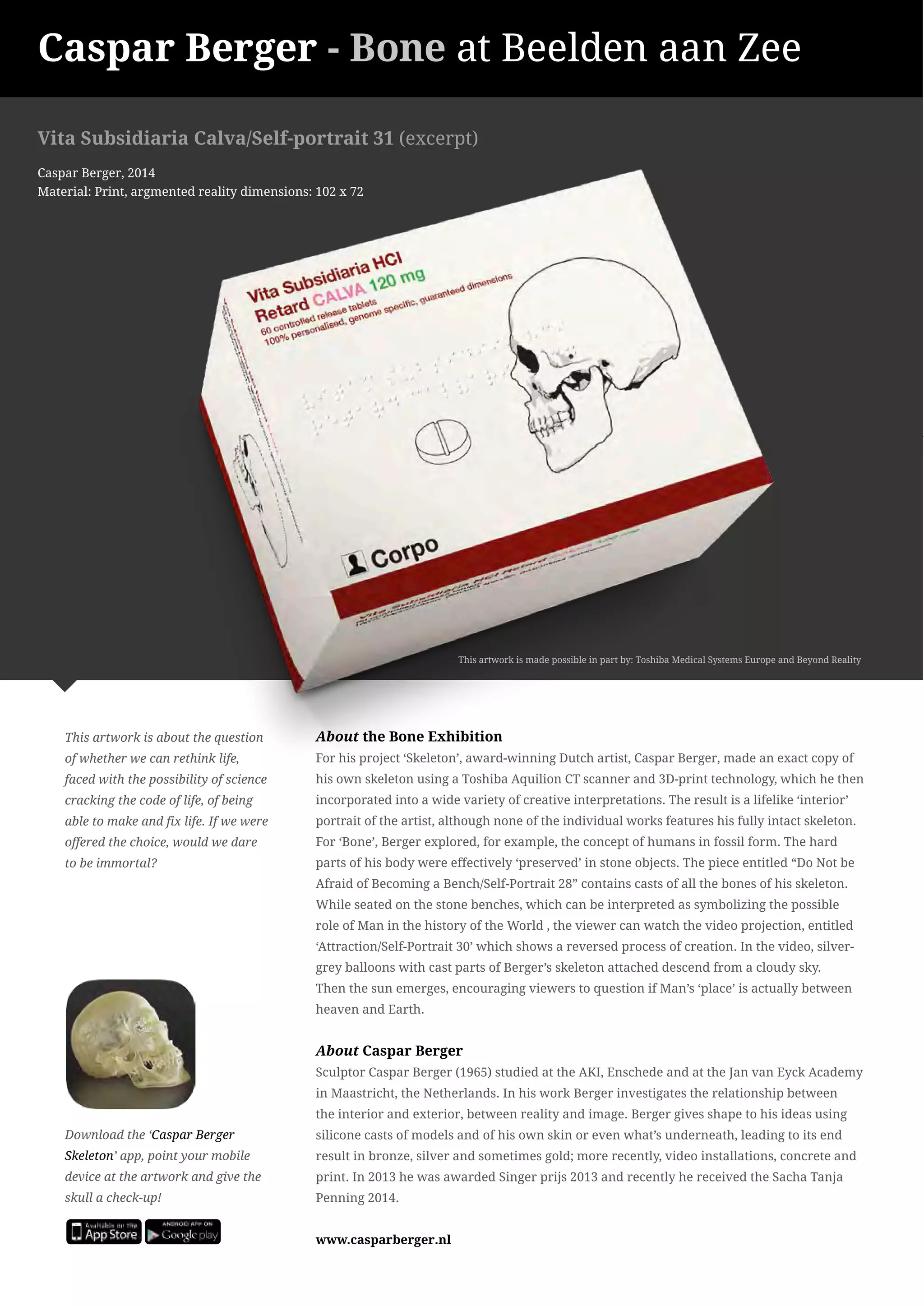
Self-portrait forms a red thread throughout the work of 
Caspar Berger. He became famous for self-portraits made 
from direct casts of his body, previously taken from the 
skin. This time the award-winning Dutch artist made an 
exact copy of his own skeleton using a Toshiba Aquilion 
CT scanner and 3D-print technology, which he then 
incorporated into a wide variety of creative interpreta-tions. 
The result is a lifelike ‘interior’ portrait of the artist, 
although none of the individual works features his fully 
intact skeleton. Curious how this is done? Have a look at: 
http://tinyurl.com/pk9rbhv 
In ‘Bone’, Berger explored the concept of humans in 
fossil form. The hard parts of his body were effectively 
‘preserved’ in stone objects. The piece entitled ‘Do Not 
be Afraid of Becoming a Bench/Self-Portrait 28’ contains 
casts of all the bones of his skeleton. The exhibition 
‘Bone’ can be seen at museum Beelden aan Zee, the 
Netherlands from February till June 2014. 
Vanitas/Self-portrait 35, 2014 (exerpt) 
Material: sealing wax, wood 
Dimensions: 140x85x80 
Photography: Erik en Petra Hesmerg 
www.casparberger.nl 
www.beeldenaanzee.nl/en 
Follow us 
Admission 
back of this magazine!
Nelspruit Medi-Clinic offers a magnificent panoramic view of 
the Drakensberg Mountain range in South Africa, and is conven-iently 
situated within easy reach of major arterial traffic routes. 
The hospital services a community that spreads as far as Belfast 
to Hoedspruit to Swaziland to Maputo. The imaging facilities of 
Drs Van Rensburg and Partners provide a full radiological service 
to the patients and doctors of Nelspruit Medi-Clinic, offering all 
diagnostic modalities including a Toshiba Aquilion64 CT scan-ner 
and Toshiba Zexira/FPD medical diagnostic imaging system. 
Text sources: www.mediclinic.co.za & http://vrprad.co.za/nelspruit-medi-clinic.html 
Photography: Jaco Terlouw 
Kruger National Park is one of the largest game reserves in Africa. 
It covers an area of 19,633 km2 in the provinces of Limpopo and 
Mpumalanga in northeastern South Africa, and extends 360 km from 
north to south and 65 km from east to west. Areas of the park were first 
protected by the government of the South African Republic in 1898, 
and it became South Africa’s first national park in 1926. 
VISIONS23 | 7 
Text Source: Wikipedia – Photography: Jaco Terlouw
MADE FOR LIFE. 
Our lives and social environment are subject to constant change and create 
ever-increasing needs and high demand for better medical solutions. We at 
Toshiba aim to maximize the quality, safety, and efficiency of medical care, 
supporting clinical practice with reliable quality products and innovative, 
cutting-edge technologies. 
The high image resolution and superior operability of our medical systems 
creates new clinical value. While our advanced applications, supported by 
highly reliable technologies, open the door to the next stage of medical care. 
We will continue to provide a wide variety of leading-edge solutions for the 
benefit of all people around the world, and seek to further development in the 
field of healthcare following our basic commitments: “Improving the quality of 
life”, “Lifelong commitment to innovation”, and “Achieving lifetime partnerships”. 
Toshiba: Made for Life! 
www.toshiba-medical.eu ULTRASOUND CT MRI X-RAY SERVICES
VISIONS23 | 9 
PRESIDENT’S 
MESSAGE 
Toshiba’s primary focus for FY2013 was to better 
understand our customer and the needs of their 
business in medical imaging – we always want to keep 
the customers first. 
In our CT business, we reached a very significant 
milestone with the manufacture of our 30,000th CT 
system in November 2013. We have continuously offered 
leading, innovative products based on the clinical needs 
of our customers since our first CT introduction. We 
believe that lowering CT dose and improving workflow 
are not choices that clinicians should have to make, so 
Toshiba CT is putting customers first by providing the 
industry’s best solutions to solve these challenges. We 
introduced Toshiba’s most advanced dose reduction 
technology, AIDR 3D, which enables our customers 
to achieve the best clinical results at the lowest dose. 
More recently we have introduced the suite of Adaptive 
Diagnostic CT technology, which makes complex 
examinations easier while simultaneously improving 
diagnostic accuracy and reproducibility to solve clinical 
challenges faced daily in routine practice. 
In our X-Ray business, we had the worldwide 
introduction of the DTS (Dose Tracking System) at RSNA 
2013. This technology provides a real-time display of the 
cumulative skin dose distribution during interventional 
procedures. The push for developing this technology 
came from the strong desire from the doctors to be 
able to monitor and minimize patient radiation which 
had risen sharply in recent years during interventions. 
Our team listened to this VOC (Voice of Customers) 
from around the world and successfully developed this 
system – understanding our customers’ business needs 
to protect their patients. 
In the MRI business unit, we launched Vantage 
Elan™, which is providing excellent image quality, while 
Satoshi Tsunakawa 
President and Chief Executive Officer 
Toshiba Medical Systems Corporation 
achieving ease-of-use, in a quiet environment, and with 
a very compact footprint. The operation of Vantage 
Elan is simple for any level of user which means better 
images for every customer while increasing operational 
efficiency. Vantage Elan requires only 23m2, and 
5 working days for the complete installation after system 
delivery which means real savings for the customer. 
Vantage Elan is the realization of the MRI team’s 
design goal of “No Compromises in Image Quality”, 
in spite of its compactness. I am confident that this 
system will become the new standard of the next 
generation of MRI systems. 
Our Ultrasound team launched a new technology 
called SMI (Superb Micro vascular Imaging). This new 
algorithm isolates and removes clutter while preserving 
the underlying hemodynamic flow information. This 
technology allows you to see the flow information that 
is behind the clutter and visualize extremely low velocity 
flows that are typically obscured with conventional 
Color Doppler. See the unseen – A giant step towards 
achieving our goal of “Picture Perfect Ultrasound” starts 
from here. 
Finally, last but not least, as of October 1st, healthcare 
has become one of the three business pillars of the 
Toshiba Corporation, and TMSC will be the core member 
of the new Healthcare Systems & Services Group. 
We will be working closely with the new established 
Healthcare Business Development Division in Toshiba 
Corporation. The mission of the Healthcare Group is to 
extend the scope of business from medical diagnostics 
to new healthcare related business, including disease 
prevention and patient care. With this initiative, and 
carefully expanding our businesses, we are continuing 
in our corporate philosophy to keep the customers and 
more importantly their patients first. 
“ We always keep our 
customers first.” 
By focusing on low dose, high-quality imaging technologies 
for accurate diagnosis and treatment, Toshiba continues to 
improve the quality of life for all people.
ECR 2014 
Abstracts 
Satellite Symposia MR/CT 
Adaptive Diagnostics - Solving Clinical Challenges 
Friday, March 7, 12:30 - 13:30 hrs, Room B 
Moderator: Prof. Dr. D. Hahn, Berlin, Germany 
Speaker Time Slot Title 
Prof. Dr. F. Barkhof, Amsterdam, The Netherlands 12.30 - 12.50 Latest generation 3T MRI first experience 
Prof. A. Blum, Nancy, France 12.50 - 13.10 A new reconstruction algorithm: Single Energy 
Prof. M. Prokop, Nijmegen, The Netherlands 13.10 - 13.30 Lung subtraction versus Dual Energy 3) 
1) Prof. F. Barkhof 
in Neuroradiology 1) 
Metal Artefacts Reduction (SEMAR), applied for 
evaluation of hip protheses 2) 
A 3T MRI system brings major advantages in neuroradiology compared to the 1.5T systems. Our initial experience with 
a latest generation 3T system, the Vantage Titan, indicates that the system provides increased patient comfort while 
offering significant quality and diagnostic benefits for several clinical applications. In this presentation we will discuss 
our initial clinical experience with the Vantage Titan 3T system, including clinical cases of time-of-flight MRA for evalu-ation 
of the vasculature, isotropic 3D FLAIR in the assessment of glioma and multiple sclerosis. Moreover, flow-spoiled 
black blood (FSBB), a proprietary Toshiba technique, is explored for the evaluation of microvasculature (lenticulostriate 
arteries) in aging and dementia. 
2) Prof. A. Blum 
Total Hip Arthroplasty (THA) is frequently performed for the treatment of advanced degenerative joint disease of the 
hip. Complication rates are low but the great number of hip prosthesis implanted renders radiologists prone to be 
confronted to post surgical peri prosthetic complications. 
Radiography remains the first step to assess a THA but CT-scans, MRI and sonography are now complementary tools 
that might be useful for the etiological diagnosis of a painful THA. Common indications for CT of THA are a painful hip 
prosthesis with normal radiographic findings, the assessment of osteolysis before surgical revision, the evaluation of 
soft tissues complications and the measurement of acetabular cup placement. 
Classic CT-scan is hampered by metal artifacts and is responsible for high radiation dose to the patient. Soft tissues 
anomalies are hardly seen with classic CT-scan. When optimized to reduce metal artifacts using suitable acquisition 
techniques and new algorithms, CT-scan is the most polyvalent technique to assess the components of the prosthesis, 
the cement and the bone interface, the bone stock and the soft tissues. These new algorithms: iterative reconstruction 
(AIDR 3D) and metal artifact reduction (SEMAR) software improve the image quality while reducing the dose. The 
objective of this presentation is to show how to improve prosthesis evaluation with CT scan. 
3) Prof. M. Prokop 
Pulmonary embolism with CT is a great challenge because small thrombi can easily be missed (many small arteries), 
differentiation partial volume making real embolus difficult. Furthermore, reduced lung perfusion almost invisible on 
standard CT. 
In this lecture, we will look into Dual Energy and Subtraction imaging techniques to detect perfusion defects, to help 
localize small emboli, and to increase a prognostic value. Both advantages and down sides of each method will be 
analysed and presented. 
Prof. F. Barkhof 
Prof. A. Blum 
Prof M. Prokop 
©2014 10 | VISIONS23 TOSHIBA MEDICAL SYSTEMS
BRINGING INNOVATION TO LIFE 
VISIONS23 | 11 
Satellite Symposia ULTRASOUND 
Expanding Clinical Boundries in Ultrasound 
Saturday, March 8, 2014, 12.30 - 13.30 hrs, Room E1 
Moderator: Prof. V. Mitkov, Russia 
Speaker Time Slot Title 
Dr. T. Fischer, Berlin, Germany 12.30 - 12.50 Genitourinary Ultrasound: Advanced Diagnostics 
Prof. A. Lim, London, United Kingdom 12.50 - 13.10 Abdominal and high-frequency Ultrasound 
Prof. J. Hata, Kawasaki, Japan 13.10 - 13.30 Seeing the Unseen - New Clinical Findings 
1) Dr. T. Fischer 
in Prostate Cancer and Scrotal Lesions 1) 
imaging: Latest technologies for improved 
lesion detection and characterisation 2) 
by Novel Imaging Techniques 3) 
Prostate: Men with an elevated serum level of prostate-specific antigen (PSA) or suspicious findings on digital rectal 
examination (DRE) are examined by transrectal ultrasound (TRUS). For histological confirmation and therapeutic plan-ning, 
ultrasound guided systematic biopsy of the prostate is performed. However, in a subgroup of patients with 
elevated PSA levels, no malignancy is detected by biopsy or up to four biopsies are performed before prostate cancer is 
detected. A negative biopsy therefore does not exclude prostate cancer. In consequence, unnecessary biopsies with an 
increase of complications are performed in healthy men. Real-time MR/US image fusion may enhance cancer detection 
rates of TRUS-guided biopsies and contributes to lesion characterization by state-of-the-art US techniques. The study 
presented here for the first time compares state-of-the art US techniques after contrast medium administration with 
MRI and histology as the standard of reference. 
Scrotum: Ultrasound is the imaging modality of choice for the examination of the scrotum. The propblem of tumour 
/ haematoma misinterpretation can result in unnecessary orchiectomy. CEUS for the testis can be currently recom-mended 
for the differentiation between hypovascular and avascular lesions (benign). 
Learning objects: 
- To investigate whether multiparametric magnetic resonance imaging (MRI) allows lesion localization in prostate can-cer 
in patients scheduled for MR/US fusion biopsy and whether the findings correlate with new ultrasound techniques 
- Prostate lesions were classified on the basis of MRI and US (B-mode scan, power Doppler, elastography/TDI, CEUS) 
- Targeted biopsies were performed in the MR/US fusionmode 
- Indications for the use of CEUS in focal testicular lesions, secmental infartion, after trauma and abscess formation in 
severe epididymoorchitis. 
2) Prof. A. Lim 
This talk will encompass the latest technological developments of the Aplio 500 with particular focus on a few advanced 
applications for abdominal and small parts ultrasound. These newest developments include the improved visualisation 
of the microvasculature without the need for contrast and its potential clinical applications will be discussed. There 
have also been significant improvement in specialist applications such as elastography and also improved sensitivity in 
high frequency contrast technology. The latter now also allows reliable detection of the sentinel lymph node and their 
clinical impact will be outlined and illustrated. 
Dr. T. Fischer 
Prof. A. Lim
3) Prof. J. Hata 
In this session, the clinical experience of Superb microflow imaging (SMI), which is the novel application of Aplio 500 
from Toshiba, is discussed. SMI is a unique ultrasound Doppler imaging employing multi-dimensional filter that makes 
it possible to depict minute vessels with slow velocity, without using contrast agents. In other words, the advantages 
of SMI are; 1.high frame rate, 2. high sensitivity, 3. high resolution, and 4. less motion artifact. 
Therefore, SMI is useful in various situations encountered in daily practice. The evaluation of the density and the shape 
of tumor vessels with SMI help us diagnose and differentiate tumorous lesions and also could be the non-invasive 
modality for the assessment of therapeutic effect of chemotherapy. Since SMI clearly visualizes minute vessels, it can 
also be used to evaluate the disease activity in inflammatory disorders, even in bowel inflammation such as ulcerative 
colitis, Crohn’s disease, and so forth. Furthermore, the diagnosis of organ ischemia can be done accurately with SMI, 
which is expressed as the focal defect of minute vessels in a real-time fashion, with high spatial resolution. In addition, 
SMI provides more sensitive view of minute vessels after the injection of contrast agent, which helps us to obtain the 
sustained dynamic image of microflow even after the first pass of the contrast agent. 
In conclusion, SMI, which provides the dynamic image of microvessels, is an essential tool for the diagnosis and the 
evaluation of various clinical conditions. 
Toshiba Workshop 
Sessions will be offered Friday, March 7 thru Sunday, March 9. Times as listed below in room Lounge 6 - Level 01 
(max 20 seats). 
Workshops are open to any ECR 2014 attendees. On-line registration in the “myuserArea” of the ECR web page. 
Toshiba is offering a series of educational sessions for radiologists throughout ECR 2014. Each mentored workshop is 
preceded by a short lecture providing an overview on data acquisition, clinical use and image interpretation. Clinical 
cases will be analyzed and interpreted by participants on the workstations provided. The maximum number of 
participants per session is 20 (2 participants per workstation). CME credits will be provided, and the workshop language 
is English. 
Prof. J. Hata 
Date Time Slot Title 
March 7, 2013 1 10:00 - 11:00 Ultrasound - Elastography Quantification, guest speaker: Dr. V. Cantisani, Rome, Italy 
March 7, 2013 2 11:15 - 12:15 Ultrasound - Fly Thru Acquisition and Reconstructions, guest speaker: Dr. B. Smith, London, UK 
March 7, 2013 3 12:30 - 13:30 Ultrasound - DCEUS in a multicenter study, guest speaker: Dr. N. Lassau, Paris, France 
March 7, 2013 4 13:45 - 14:45 Ultrasound - Elastography Quantification, guest speaker: Dr. V. Cantisani, Rome, Italy 
March 7, 2013 5 15:00 - 16:00 Ultrasound - Fly Thru Acquisition and Reconstructions, guest speaker: Dr. B. Smith, London, UK 
March 7, 2013 6 16:15 - 17:15 Ultrasound - DCEUS in a multicenter study, guest speaker: Dr. N. Lassau, Paris, France 
March 8, 2013 7 10:00 - 11:00 CT - Ultra low dose brain perfusion, guest speaker: Dr. E. Smit, Nijmegen, The Netherlands 
March 8, 2013 8 11:15 - 12:15 ViTAL - Lung Density Analysis, guest speaker: Dr. S. Niehues, Berlin, Germany 
March 8, 2013 9 13:45 - 14:45 CT - Myocardial perfusion, guest speaker: Dr. K. Kofoed, Copenhagen, Denmark 
March 8, 2013 10 15:00 - 16:00 CT - Liver perfusion, guest speaker: Dr. H. Schöllnast, Graz, Austria 
March 8, 2013 11 16:15 - 17:15 CT - Ultra Low Cardiac CTA, guest speaker: Dr. R. Bull, Bournemouth, UK 
March 9, 2013 12 10:00 - 11:00 ViTAL - TAVR planning, guest speaker: Dr. S. Niehues, Berlin, Germany 
March 9, 2013 13 11:15 - 12:15 CT - Ultra Low Cardiac CTA, guest speaker: Dr. R. Bull, Bournemouth, UK 
March 9, 2013 14 12:30 - 13:30 ViTAL - Lung Density Analysis, guest speakers: Dr. S. Niehues, Berlin, Germany 
March 9, 2013 15 13:45 - 14:45 CT - Liver perfusion, guest speaker: Dr. H. Schöllnast, Graz, Austria 
March 9, 2013 16 15:00 - 16:00 CT - Myocardial perfusion, guest speaker: Dr. K. Kofoed, Copenhagen, Denmark 
March 9, 2013 17 16:15 - 17:15 CT - Ultra low dose brain perfusion, guest speaker: Dr. E. Smit, Nijmegen, The Netherlands 
©2014 12 | VISIONS23 TOSHIBA MEDICAL SYSTEMS
BRINGING INNOVATION TO LIFE 
VISIONS23 | 13 
Floor plan is an indication. 
Please follow the signage 
TOSHIBA IWS. 
DCEUS Quantification Workshop Bracco/Toshiba 
Saturday, March 8, 2014, 12.30 - 13.20 hrs, Room Lounge 1 - Level 01 (max 30 seats) 
Quantification of Renal Perfusion 
Moderator: Prof. Jean-Michel Correas, Paris, France 
Bracco and Toshiba offer a 50 minutes educational session for radiologists on quantification of Dynamic Contrast 
Enhanced Ultrasound (DCEUS) based on the use of the Bracco quantification software VueBox™ and contrast-enhanced 
ultrasound sequences acquired with the Toshiba Aplio 500. Brief introductionary lectures will provide an overview of 
concepts in DCEUS quantification and in renal perfusion. In the hands on session, the participants will perform their 
own analysis of Toshiba Aplio 500 clips under the supervision of Prof. Jean-Michel Correas using laptops equipped with 
the VueBox software.
Want to be up-to-date on 
Diagnostic Imaging Innovations? 
Join the Toshiba Sessions 
Adaptive Diagnostics - Solving Clinical Challenges 
Date: Friday, March 7, 2014 
Time: 12.30 - 13.30 hrs 
Room: Room B 
Quantification of Renal Perfusion (Toshiba & Bracco) 
Date: Saturday, March 8, 2014 
Time: 10.30 - 11.30 hrs 
Room: Room Lounge 1 - Level 01 
Expanding Clinical Boundries in Ultrasound 
Date: Saturday, March 8, 2014 
Time: 12.30 - 13.30 hrs 
Room: Room E1 
Toshiba Workshops for the duration of ECR 
Room: Software Demonstration Room, Lounge 6 - Level 01 
Earn 
1 CME 
credit! 
Sessions open to any ECR 2014 attendees. 
On-line registration in the “myuserArea” of the ECR web page. 
Earn 
1 CME 
credit! 
CME 
credited! 
www.toshiba-medical.eu ULTRASOUND CT MRI X-RAY SERVICES
VISIONS23 | 15 
CLINICAL CASE COMPUTED TOMOGRAPHY 
Chest, Radiation Dose Reduction, AIDR3D 
Time to ditch the chest X-ray? 
A comparison with CT 
Dr. T.M.Aaløkken 1), J.F. Kristiansen MSc 2), Dr. A. Günther 3), A.C.T. Martinsen PhD 4) 
It is widely accepted that Computer Tomography (CT) is both more time consuming 
and expensive than chest radiography. Furthermore, CT incurs a considerably higher 
radiation dose than the conventional chest X-ray. Ideally we wish to combine the low-dose 
of the chest X-ray with the high image quality of CT, but this ambitious aim has, 
until now, not been possible. In this study we compared conventional chest radiography 
to 320-detector-row CT Aquilion ONE™ using advanced iterative reconstruction (AIDR 
3D) in terms of image quality, radiation dose and laboratory time. 
MATERIALS AND METHODS 
We examined 13 patients with suspected pulmonary 
lesions, following chest radiography with ultralow-dose 
CT acquired on an Aquilion ONE scanner. Images were 
acquired at 135 kV and 10 mA, with 0.5-mm slice thick-ness 
and rotation time of 350 msec. 
Three experienced chest radiologists rated both sets 
of images for pathological findings on a three-point 
scale, and image quality was rated according to nine 
criteria of the European guidelines for chest CT and chest 
radiographs. 
RESULTS 
Both image quality and the ability to detect and exclude 
pathology was strikingly better for ultralow-dose CT than 
for radiography. The radiation dose for CT and conven-tional 
radiographs was comparable and the laboratory 
time only marginally longer for CT. 
In summary, we found the following: 
• 33 relevant findings including 19 masses, nodules, and 
micronodules. 
• Detection sensitivity for all observers and all findings 
was 18% ± 3% for radiography and 89% ± 2% for 
ultralow-dose CT. 
• The positive predictive value for radiography was 37%, 
including 31 false-positive findings, while the positive 
predictive value for CT was 98% with two false-positive 
findings. 
• Image quality for all readers was significantly higher for 
the CT images (p < 0.05). 
• The average effective dose was 0.05 mSv for chest radi-ography 
and 0.105 mSv for CT. 
• The average laboratory time was five minutes for chest 
radiography versus seven minutes for CT. 
Dr. T.M. Aaløkken 
J.F. Kristiansen MSc 
Dr. A. Günther 
A.C.T. Martinsen PhD 
1-4) Oslo University 
Hospital, Norway 
CTEU130074 
Figure 1: Above is a false-negative chest X-ray. 
Figure 2: an ultralow-dose 3-mm axial chest CT of the same 
patient acquired on a 320-detector-row scanner (Aquilion 
ONE) and reconstructed with AIDR 3D shows a 7-mm nodule.
CONCLUSION 
The study demonstrated that the diagnostic yield from 
ultra low dose CT is far superior to that of chest radiographs. 
Chest CT has traditionally incurred an effective radia-tion 
dose of approximately 4 mSv. Iterative reconstruction 
techniques now enable CT imaging at much lower doses 
and CT has become a fast and accessible modality. In this 
light the only remaining advantage of chest radiography 
is the low expense. 
This work was presented at RSNA 2012. Moderator 
Dr. Narinder Paul from the University of Toronto rose the 
issue of an increase in findings with CT potentially leading 
to additional tests, costs, and risks. 
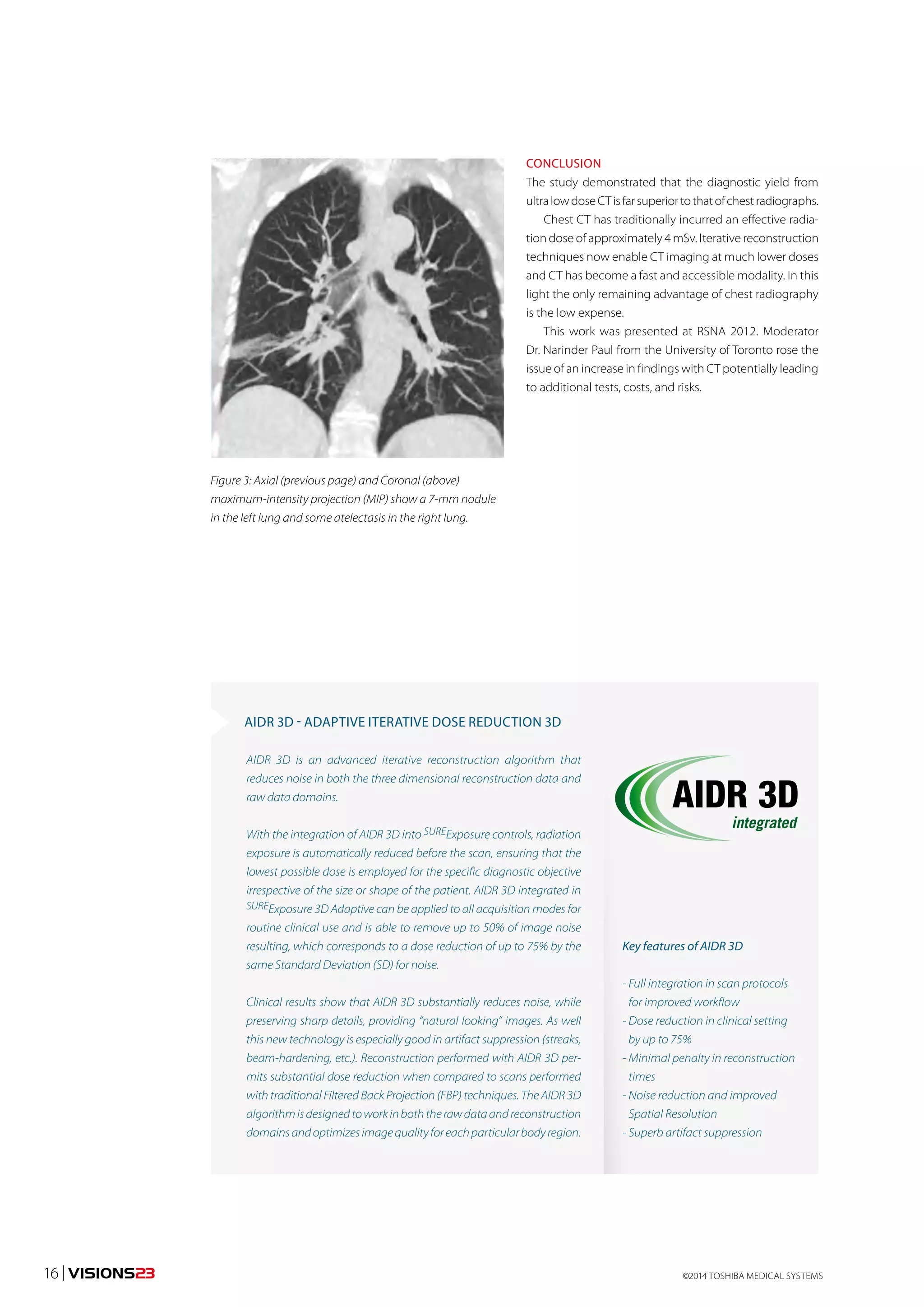
Figure 3: Axial (previous page) and Coronal (above) 
maximum-intensity projection (MIP) show a 7-mm nodule 
in the left lung and some atelectasis in the right lung. 
AIDR 3D - ADAPTIVE ITERATIVE DOSE REDUCTION 3D 
AIDR 3D is an advanced iterative reconstruction algorithm that 
reduces noise in both the three dimensional reconstruction data and 
raw data domains. 
With the integration of AIDR 3D into SUREExposure controls, radiation 
exposure is automatically reduced before the scan, ensuring that the 
lowest possible dose is employed for the specific diagnostic objective 
irrespective of the size or shape of the patient. AIDR 3D integrated in 
SUREExposure 3D Adaptive can be applied to all acquisition modes for 
routine clinical use and is able to remove up to 50% of image noise 
resulting, which corresponds to a dose reduction of up to 75% by the 
same Standard Deviation (SD) for noise. 
Clinical results show that AIDR 3D substantially reduces noise, while 
preserving sharp details, providing “natural looking” images. As well 
this new technology is especially good in artifact suppression (streaks, 
beam-hardening, etc.). Reconstruction performed with AIDR 3D per-mits 
substantial dose reduction when compared to scans performed 
with traditional Filtered Back Projection (FBP) techniques. The AIDR 3D 
algorithm is designed to work in both the raw data and reconstruction 
domains and optimizes image quality for each particular body region. 
Key features of AIDR 3D 
- Full integration in scan protocols 
for improved workflow 
- Dose reduction in clinical setting 
by up to 75% 
- Minimal penalty in reconstruction 
times 
- Noise reduction and improved 
Spatial Resolution 
- Superb artifact suppression 
©2014 16 | VISIONS23 TOSHIBA MEDICAL SYSTEMS
VISIONS23 | 17 
The usefulness of a 320-row CT 
scanner in the oil industry 
Alberta Innovates - Technology Futures (Tech Futures) is part of an integrated provincial 
system that works to further research and innovation in Alberta, Canada. The priority of 
the corporation is to accelerate the development and growth of new and existing 
industries in agriculture, forestry, energy, environment, and health. To help meet 
research needs in Alberta, the Heavy Oil & Oil Sands (HOOS) group at Tech Futures 
acquired an Aquilion ONE™ CT scanner. 
As a world leader in energy technology and innovation, 
HOOS works with companies to enhance the recovery 
of unconventional oil. The goal is to help oil producers 
engage in sustainable development of Alberta’s 
resources through technologies that reduce costs, 
improve recovery, and decrease environmental impact. 
Research in this area is facilitated by the Aquilion ONE, 
which was purchased primarily as support for applied 
R&D in petroleum recovery and advanced materials. 
This article describes the use of CT with Aquilion ONE 
for research at Tech Futures. 
COMPUTED TOMOGRAPHY AT TECH FUTURES 
Through computed tomography, non-destructive exami-nation 
of internal structure is accomplished and high-res-olution 
3D images of items like geological core samples 
and sand packs are created. A wide variety of reconstruc-tion 
algorithms and post-processing options are used 
at Tech Futures to suit the material being scanned and 
the imaging needs of the customer. Accurate extrac-tion 
of quantitative information from advanced image 
processing, along with 2D and 3D reconstructions, is 
often paramount. Quantitative information is delivered 
to clients by way of customized calibrations for each 
object or experiment scanned. Targeted noise-reduction 
techniques provide methods to acquire the best reso-lution 
possible. Specifically, this involves repeat scans 
and averaging data whenever possible to reduce noise. 
Further discrimination of materials can be done through 
dual energy scanning, which exploits subtle differences 
in attenuation spectra. 
Tech Futures’ current strategy is to design CT experi-ments 
conducive to the energy level and geometry of 
the Aquilion ONE. Low-attenuation vessels and materials 
suitable for X-ray use are considered in the experimen-tal 
design stage. The speed of the scanner, for both the 
acquisition and reconstruction of data, makes it possible 
to track processes that change on a scale of minutes. 
CTEU130078 
Shauna Cameron, P.Ag, 
Imaging Specialist 
1) Alberta Innovates – 
Technology Futures. 
Alberta Innovates - Technology Futures, Edmonton, Canada 
Shauna Cameron, P.Ag 1) 
This is invaluable for fluid flow experiments in cores and 
sand packs. 
Efforts are also made to carefully register experiments 
when repeat scans are taken in order to successfully 
subtract images and uncover small changes in density. 
Orbital sync has been a useful tool in securing registra-tion. 
This function ensures that the source and detector 
are located in precisely the same starting position for each 
repeat scan allowing the images to be either subtracted 
for discrimination of tiny density changes or averaged for 
noise reduction. 
Radiation dose reduction is not critical to scans 
carried out at Tech Futures since subjects are not living. 
In fact, objects or experiments are scanned repeatedly 
at the highest available settings in order to extract the 
best quantitative information. Often, protocols are 
designed so objects are scanned in short lengths, with 
multiple volumes necessary to cover the desired length. 
This technique permits the highest allowable dose to 
penetrate objects much denser than the human body. 
OIL RECOVERY FROM ROCK: DIGITAL ROCKS 
One application for advanced imaging with Tech Futures’ 
scanner is digital rocks, which is an emerging concept in 
characterizing reservoirs by obtaining physical properties 
directly from images of rocks. The technology combines 
OIL INDUSTRY COMPUTED TOMOGRAPHY 
Research, environment, oil recovery
data can be very useful in studying pore architecture and 
physics of the processes happening during enhanced oil 
recovery (EOR). It is especially important for unconven-tional 
resources like shale, carbonate, tight gas, and coal 
seam gas. One of the most interesting aspects at this time 
is characterizing bitumen-bearing carbonates, especially 
fracture characterization. 
Digital rocks enables Tech Futures to engage in a 
unique up-scaling effort of merging micro and macro 
imaging to observe a wide range of fluids, conditions, 
and detailed behaviour in EOR processes. The advantage 
of the technique is the considerable cost savings over 
securing individual laboratory analysis for each desired 
property. The procedure involves first obtaining full core 
mm-scale resolution scans with the Aquilion ONE scan-ner 
to identify sites representative of a range of image 
properties. This is followed by micro CT scans (approxi-mately 
10 micron resolution), available from various out-sourced 
labs, which are suitable for sand packs or other 
very small samples. Imaging with sufficient resolution to 
resolve individual pores in a sand pack or a core is inevita-bly 
restricted to a very small volume. Simulation software 
is used to upscale the results of pore scale multi-phase 
flow simulations to obtain flow properties at each site 
and look for correlations between flow properties and 
CT at different scales (mm to micron resolution) with 
X-ray and scanning-electron microscopy (SEM) to create 
images of the internal structure of the pore spaces as 
well as minerals and organic matter within them. Such 
Figure 2: Axial image of Alberta Carbonate Core 
225 TO 65 MILLION YEARS IN THE MAKING 
Dinosaurs first appeared 225 million years ago and died out 
65 million years ago. Today most dinosaur fossils are found 
by doing fieldwork, but also during excavations for tunnels, 
buildings and drilling for oil wells. The Aquilion ONE at 
Alberta Innovates - Technology Futures scans these fossils 
to provide detailed information to paleontologists on 
the structures of the animals. Below are two examples of 
dinosaur fossils scanned with Aquilion ONE. 
3D Image of a 
Juvenile Ceratopsian 
3D image of the Snout (Antorbital 
Region) of a Tyrannosaur 
Specimens are from the collections of the University of 
Alberta, Laboratory of Vertebrate Paleontology 
AQUILION ONE ASSISTS IN MEASURING PERMAFROST 
Water is trapped as ice in the permafrost of the world’s artic regions. If the Earth 
is warming, the amount of water in the permafrost should decrease as the ice 
melts. How can we measure the ice in permafrost? The Aquilion ONE at Alberta 
Innovates - Technology Futures, is doing just such measurements. Permafrost 
cores are scanned and 3D volume rendered images are produced depicting ice 
and sediment. Quantitative measurements can also be made to determine the 
percentage of ice in each core. By imaging cores from the same region over many 
years, the change in the amount of ice can be measured. 
Three images from CT data. (A) Axial slice; (B) 3D reconstruction; (C) Longitudinal 
slice. Soil is white, ice is gray and gas is black. Calmels, F., Froese D.G., and Clavano, 
W. Cryostratigraphic record of permafrost degradation and recovery following 
historic (1898-1992) surface disturbances in the Klondike region, central Yukon 
Territory. Can. J. Earth Sci. 49: 938–952 
18 | VISIONS23 ©2014 TOSHIBA MEDICAL SYSTEMS
VISIONS23 | 19 
Figure 3: Merging macro and micro scanning to observe 
a range of conditions to determine the behaviour of 
enhanced oil recovery. 
image properties. Properties are then mapped back onto 
the macro CT scan using the correlations and core scale 
flow simulations are performed with the results to make 
predictions for recovery from the oil reservoir. 
OIL RECOVERY FROM SAND: IMAGING SAND PACKS 
Other HOOS applications of the Tech Futures scanner 
include calculating porosities and saturations in sand 
packs, tracking solute in sand packs, testing solute uptake 
in oil, studying turbulent flow in water as well as laminar 
flow in oil, monitoring sand failure or production, and 
investigating the waterflood process used in oil recovery 
at the scale of sand grain pores. 
CONCLUSION 
The use of CT to image and quantify materials greatly 
assists scientists in determining potential sites for com-mercial 
oil extraction in unconventional materials such 
as carbonates and oil sands. This is a very interesting and 
different application of CT from its usual medical uses. 
Figure 4: A sagittal section through a waterflood experiment 
in a cylindrical sand pack. Flow is from left to right. Blue indi-cates 
“unswept” regions with oil saturations of about 90%. 
Red indicates where water has displaced about 25% of the 
oil. This “synthetic radiograph” was obtained by averaging 
a number of sagittal slices near the axis of a cylindrical pack, 
to reduce noise and improve the spatial resolution. 
LOCAL SERVICE SEALS THE DEAL 
Core experiments on the Aquilion ONE 
Research is facilitated by the Aquilion ONE, which was purchased in 2013, 
primarily as support for applied R&D in petroleum recovery and advanced 
materials. This CT system was an upgrade to an Aquilion 64, which had been 
installed in the Edmonton facility in 2007. 
The decision to purchase the original Aquilion 64 in 2007 was based partly on its 
ability to monitor dynamic processes. Another deciding factor was the presence 
of a local service base, which enables Tech Futures to obtain same-day service 
calls to address instrument problems. While the energy range of the medical 
scanner is lower than that of the industrial CT scanner HOOS used previously, 
the trade-off of higher energies and longer scan times for greater speed and local 
service was deemed favourable. 
The speed of the scanner, for both the acquisition and reconstruction of data, 
makes it possible to track processes that change on a scale of minutes. This is 
invaluable to fluid flow experiments in cores and sand packs. The wide area 
coverage allows cores to be scanned in fewer sections and enhances the 
measurements of dynamic processes. 
Flow Experiments on the Aquilion 64 
CTEU130078
NEW COMPUTED TOMOGRAPHY 
Product Introduction, Aquilion ONE Next Generation 
Medical Imaging Enters 
the Next Generation 
Ground-breaking Aquilion ONE Technology 
The world’s best scanner just got even better. The performance of Toshiba Medical 
Systems’ Aquilion ONE™ has impressed radiologists in recent years but further 
enhancement and technical innovation have taken it onto a new level and added yet 
another dimension to CT imaging. 
AQUILION ONE NEXT GENERATION 
The latest evolution of the leading dynamic volume CT 
system sees increased ease of use for radiologists and 
radiographers, better patient safety and comfort as 
well as outstanding image clarity. Like its predecessor, 
the next generation of the Aquilion ONE system has 
the ability to scan entire organs in a single gantry rota-tion. 
The 16 cm detector makes it possible to capture 
morphology at a single moment in time - be it a heart, 
foot, or an infant’s chest - and eliminates movement 
artefacts. Patient comfort and safety are optimized by a 
larger gantry aperture and a newly developed Quantum 
VI detector, providing higher light output for optimized 
dose reduction. 
The new CT is entering the market at a time when 
Toshiba Medical Systems is set to become an ever more 
important ‘player’ within the Toshiba Corporation and the 
corporation’s healthcare sector already has plans for fur-ther 
expansion. Satoshi Tsunakawa, President and CEO 
of Toshiba Medical Systems Corp., Japan, emphasizes 
that the main aim of the business is to further extend 
the scope from medical diagnostics to new business to 
include disease prevention and patient care. Toshiba is 
already a key player in diagnostic imaging and has already 
sold 30,000 CT machines worldwide but believes there 
are further opportunities within the sector. “In order to 
realise this vision, our target for revenue in this year is 10% 
growth over last year,” Tsunakawa adds. 
The next generation of 
Aquilion ONE offers enhanced 
workflow and patient comfort 
along with innovative 
new imaging tools. 
©2014 20 | VISIONS23 TOSHIBA MEDICAL SYSTEMS
Satoshi Tsunakawa, President and CEO, Toshiba Medical 
System Corporation, Japan 
At the heart of that growth – and a critical component 
in the evolution of the new Aquilion ONE – is the strong 
ethos of innovation within Toshiba. Henk Zomer, Senior 
Manager of the CT Business Unit at Toshiba Medical 
Systems Europe, says that innovation is a strong theme 
running through the development of CT within Toshiba 
which has seen the company become the CT market 
leader in Japan. At present, it is in third place on the 
global stage but has clearly-defined aims to become the 
number one CT manufacturer in the world. “Innovation 
never stops,” Zomer points out, and adds “it is a never-ending 
challenge between highly professional creative 
users and our engineers.” 
ADAPTIVE DIAGNOSTICS 
What sets the next generation of Aquilion ONE apart 
is its flexibility and performance, making use of new 
innovations like Adaptive Diagnostics, including Dual 
Energy raw data analysis, Variable Helical Pitch, SEMAR 
(Single-Energy Metal Artifact Reduction) and new 
SURESubtraction applications. Adaptive Diagnostics is 
Toshiba’s patient-centric suite of unique imaging solu-tions 
to simplify complex protocols and ensure consist-ent 
quality of results and simplifying workflows. 
Meanwhile Dual Energy scanning is helping to bring 
greater consistency to clinical results. While anatomical 
structures attenuate X-rays differently, Dual Energy raw 
data analysis increases the amount of information avail-able 
from CT imaging. 
In addition the SURESubtraction applications provide 
clinical solutions to the challenges faced in everyday 
clinical practice: the brain subtraction algorithm enables 
accurate subtraction of the skull and medical implants; 
the neck subtraction deformable registration algorithm 
creates high-resolution images freed of bone structures; 
the lung subtraction provides iodine maps of the lung 
parenchyma with exceptional high contrast-to-noise 
ratio; and ortho subtraction ensures accurate subtraction 
of skeletal structures and calcified plaques. 
With a constant focus on radiation dose, patient and 
staff safety, Toshiba developed fully integrated AIDR 3D 
(Adaptive Iterative Dose Reduction). AIDR 3D assists the 
radiologist in automatically saving dose on every exami-nation 
while maintaining excellent diagnostic image 
quality at a radiation dose suitable for each patient. 
A major challenge in CT remains the interpretation of 
scans from patients with metallic implants. This is where 
SEMAR technology plays a role by employing a sophis-ticated 
reconstruction algorithm to eliminate artefacts 
caused by metal while still improving visualisation of the 
implant. SEMAR can be used in routine low dose standard 
volume acquisitions and the combination with AIDR 3D 
provides excellent image quality. 
INITIAL CLINICAL EXPERIENCE WITH 
THE NEW AQUILION ONE 
Radiologists who have experienced the Aquilion ONE in 
recent years have been impressed with the next genera-tion 
of this dynamic volume CT system. 
Dr. Russell Bull is particularly impressed by the ease of use, 
image quality and integrated dose reduction of the new 
Aquilion ONE. 
Image Quality and Workflow 
Consultant radiologist Dr. Russell Bull from the Royal 
Bournemouth Hospital in the south of England has been 
using an Aquilion ONE since 2009. At that time, he recalls, 
the facility to cover a whole organ for the first time was 
a major leap forward in scanning for his department. But 
as he points out: “None of these advances matter unless 
they change the diagnosis or experience of the patient, 
the throughput or cost of procedure. If it is just clever 
that does not matter, but the Aquilion ONE completely 
CTEU140086 VISIONS23 | 21
revolutionised our practice.” He saw improved efficiency 
and throughput. “It increased scan efficiency and the 
volumetric scanning allowed use of much lower doses 
of contrast agent.” 
“We wondered whether it could ever get any better,” 
he says, “but it did, we have now the Aquilion ONE Next 
Generation.” He is particularly pleased with the new 
Quantum Vi Detector which he says has improved detec-tor 
efficiency. “The improvements we have seen are large; 
much better patient experience from the large bore, 
very large patients receive low radiation dose and image 
quality is again better. There are fewer artefacts and less 
IV contrast is needed. Furthermore we have the ability 
to scan a wider range of patients as well seeing much 
faster reporting. As a result, the workflow has improved 
enormously.” 
“We always thought that our Aquilion ONE was the 
‘world’s best scanner’ but it is clear that the Aquilion ONE 
Next Generation is now the ‘world’s best scanner’. It is 
unbeatable for ease of use, image quality, low radiation 
and is completely revolutionising what we do.” 
Superintendent Technologist Matthew Benbow values the 
enhanced comfort Aquilion ONE offers for both his patients 
and his staff. 
Matthew Benbow, who is a Superintendent Technologist 
at Royal Bournemouth Hospital, stated that the new 
Aquilion ONE has made important differences to his 
team. 
The wider bore has made it more comfortable for 
patients, especially for those whose movements are 
restricted and those who are unable to place their arms 
above their heads. Aquilion ONE has been ergonomi-cally 
designed for fast patient throughput and increased 
patient comfort, with the technology aligned in such a 
way to ensure that examinations are conducted with 
minimal steps. 
Benbow said: “Our Aquilion ONE with motorized 
lateral table slide function allows the patient to be 
positioned without physical strain. This is an invaluable 
feature safeguarding the health, safety and wellbeing of 
radiographers from a lifting perspective”. 
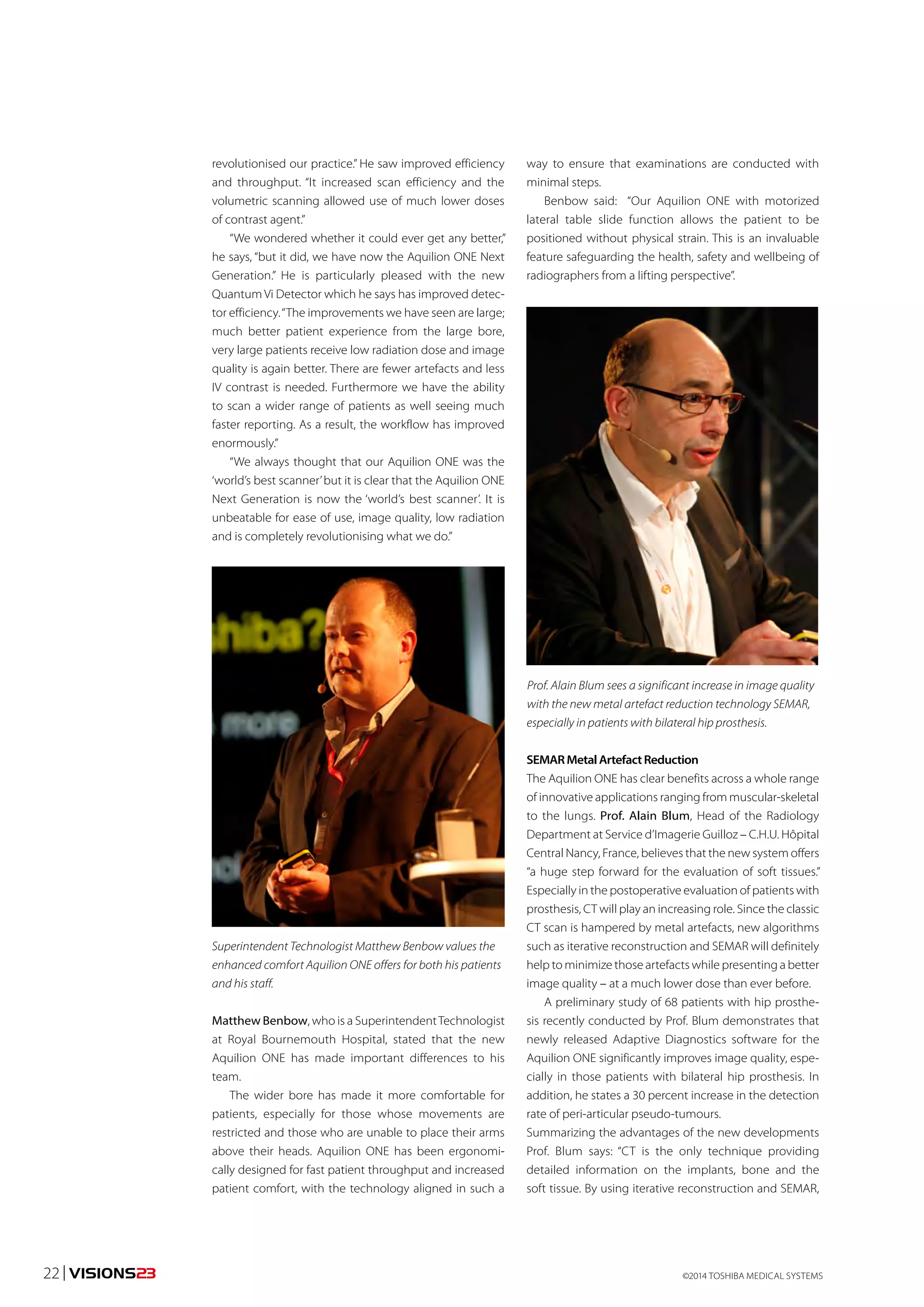
Prof. Alain Blum sees a significant increase in image quality 
with the new metal artefact reduction technology SEMAR, 
especially in patients with bilateral hip prosthesis. 
SEMAR Metal Artefact Reduction 
The Aquilion ONE has clear benefits across a whole range 
of innovative applications ranging from muscular-skeletal 
to the lungs. Prof. Alain Blum, Head of the Radiology 
Department at Service d’Imagerie Guilloz – C.H.U. Hôpital 
Central Nancy, France, believes that the new system offers 
“a huge step forward for the evaluation of soft tissues.” 
Especially in the postoperative evaluation of patients with 
prosthesis, CT will play an increasing role. Since the classic 
CT scan is hampered by metal artefacts, new algorithms 
such as iterative reconstruction and SEMAR will definitely 
help to minimize those artefacts while presenting a better 
image quality – at a much lower dose than ever before. 
A preliminary study of 68 patients with hip prosthe-sis 
recently conducted by Prof. Blum demonstrates that 
newly released Adaptive Diagnostics software for the 
Aquilion ONE significantly improves image quality, espe-cially 
in those patients with bilateral hip prosthesis. In 
addition, he states a 30 percent increase in the detection 
rate of peri-articular pseudo-tumours. 
Summarizing the advantages of the new developments 
Prof. Blum says: “CT is the only technique providing 
detailed information on the implants, bone and the 
soft tissue. By using iterative reconstruction and SEMAR, 
©2014 22 | VISIONS23 TOSHIBA MEDICAL SYSTEMS
VISIONS23 | 23 
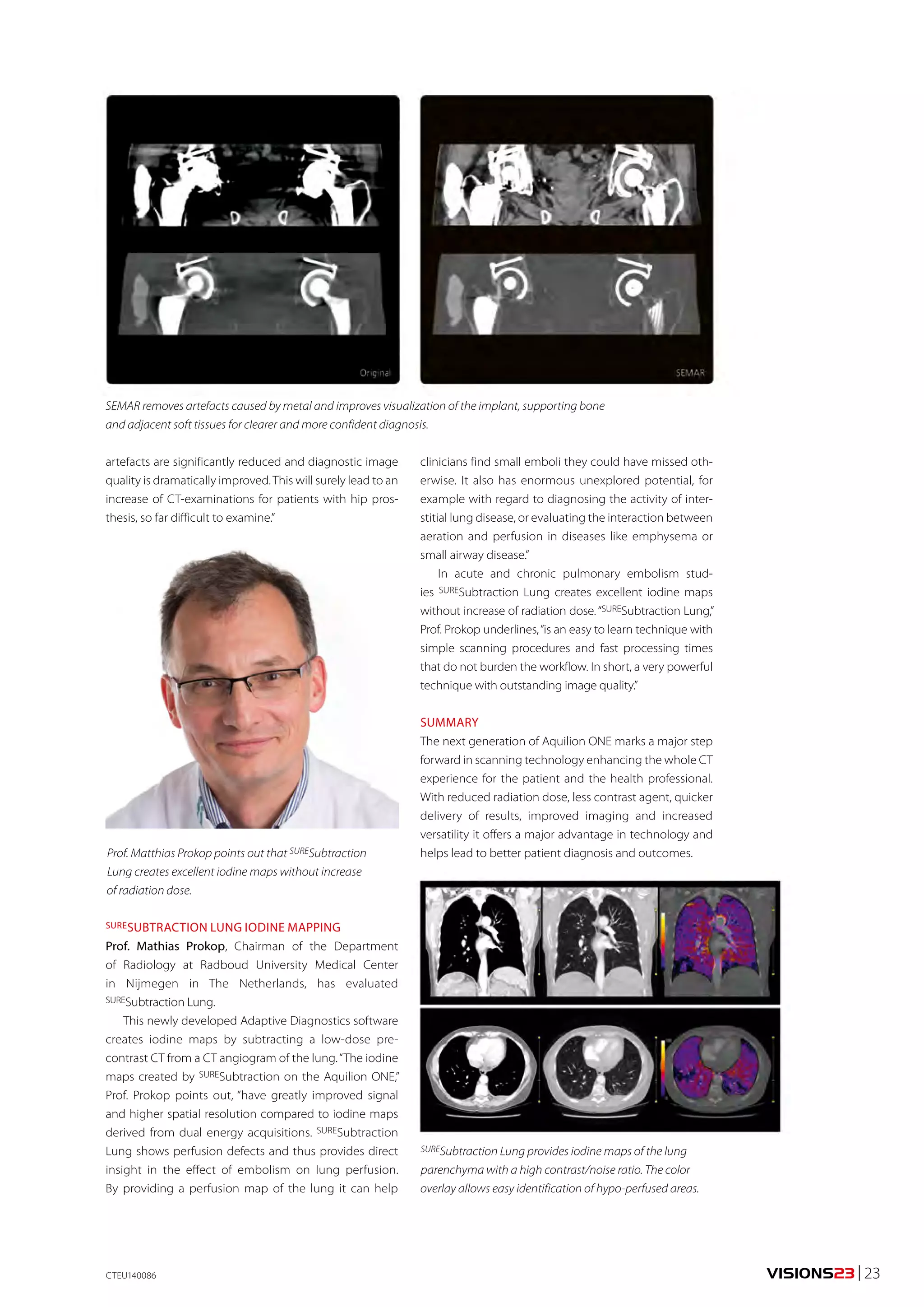
SEMAR removes artefacts caused by metal and improves visualization of the implant, supporting bone 
and adjacent soft tissues for clearer and more confident diagnosis. 
artefacts are significantly reduced and diagnostic image 
quality is dramatically improved. This will surely lead to an 
increase of CT-examinations for patients with hip pros-thesis, 
so far difficult to examine.” 
SURESUBTRACTION LUNG IODINE MAPPING 
Prof. Mathias Prokop, Chairman of the Department 
of Radiology at Radboud University Medical Center 
in Nijmegen in The Netherlands, has evaluated 
SURESubtraction Lung. 
This newly developed Adaptive Diagnostics software 
creates iodine maps by subtracting a low-dose pre-contrast 
CT from a CT angiogram of the lung. “The iodine 
maps created by SURESubtraction on the Aquilion ONE,” 
Prof. Prokop points out, “have greatly improved signal 
and higher spatial resolution compared to iodine maps 
derived from dual energy acquisitions. SURESubtraction 
Lung shows perfusion defects and thus provides direct 
insight in the effect of embolism on lung perfusion. 
By providing a perfusion map of the lung it can help 
SURESubtraction Lung provides iodine maps of the lung 
parenchyma with a high contrast/noise ratio. The color 
overlay allows easy identification of hypo-perfused areas. 
Prof. Matthias Prokop points out that SURESubtraction 
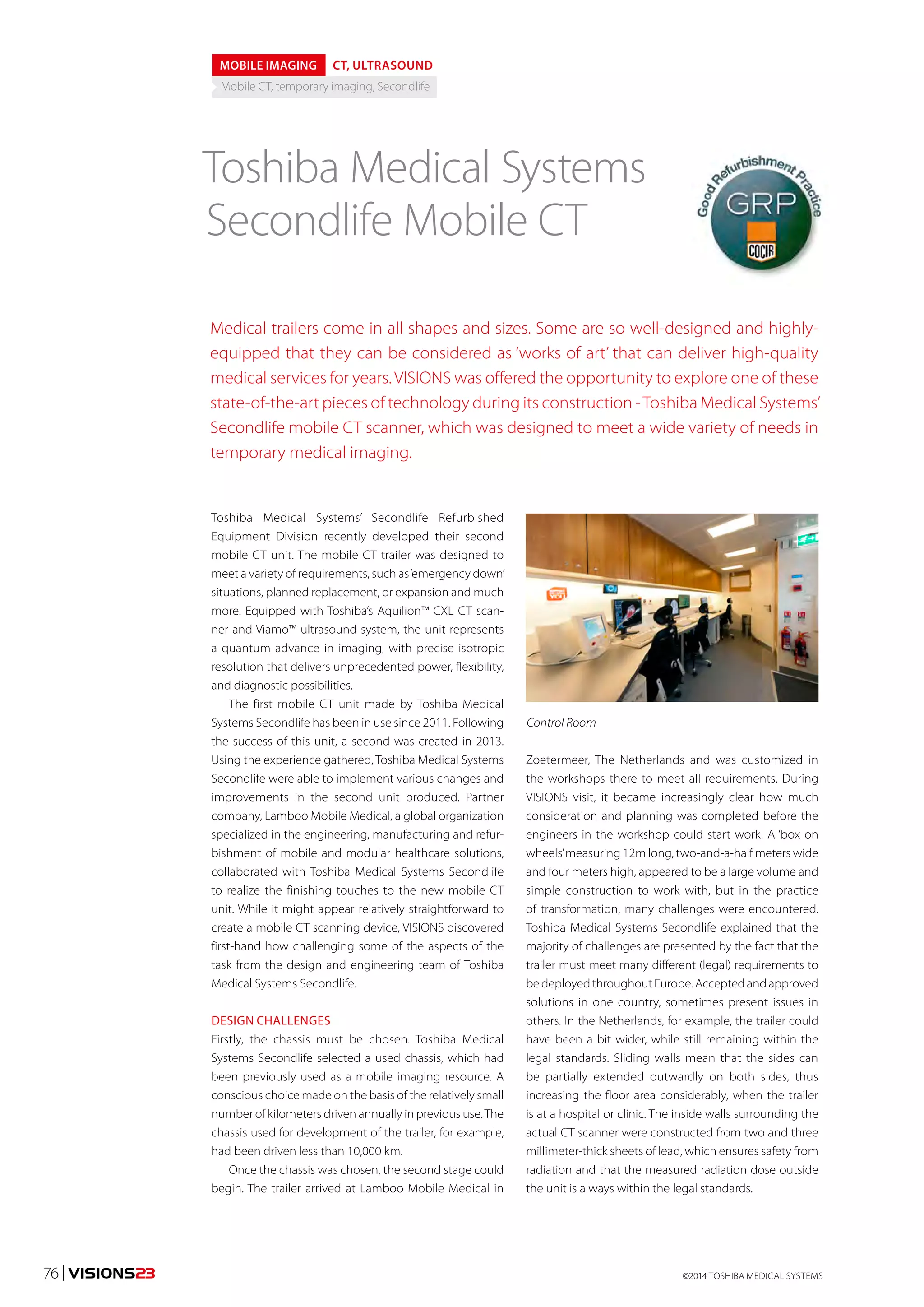
Lung creates excellent iodine maps without increase 
of radiation dose. 
clinicians find small emboli they could have missed oth-erwise. 
It also has enormous unexplored potential, for 
example with regard to diagnosing the activity of inter-stitial 
lung disease, or evaluating the interaction between 
aeration and perfusion in diseases like emphysema or 
small airway disease.” 
In acute and chronic pulmonary embolism stud-ies 
SURESubtraction Lung creates excellent iodine maps 
without increase of radiation dose. “SURESubtraction Lung,” 
Prof. Prokop underlines, “is an easy to learn technique with 
simple scanning procedures and fast processing times 
that do not burden the workflow. In short, a very powerful 
technique with outstanding image quality.” 
SUMMARY 
The next generation of Aquilion ONE marks a major step 
forward in scanning technology enhancing the whole CT 
experience for the patient and the health professional. 
With reduced radiation dose, less contrast agent, quicker 
delivery of results, improved imaging and increased 
versatility it offers a major advantage in technology and 
helps lead to better patient diagnosis and outcomes. 
CTEU140086
PRACTICAL X-RAY 
Indications, planning, equipment 
Planning a Hybrid Lab 
Angela Nightingale 1) 
Whilst it may seem a simple task to combine an imaging suite with a surgical one, 
there are many challenges that have to be met to achieve an environment that works 
well for all. 
Angela Nightingale 
1) Toshiba Medical 
Systems Ltd, Crawley, 
United Kingdom 
Advanced technology is changing the way surgery is 
being performed, with minimally invasive techniques 
being applied to many areas. To undertake these com-plex 
procedures a new ‘Hybrid’ operating and imaging 
environment has been developed which combines a full 
operating theatre with high level surgical facilities and 
advanced imaging equipment. 
There needs to be a great deal of thought given 
to whether it is even appropriate, so there should be 
detailed analysis of what procedures will be undertaken, 
in what numbers and by whom, to ensure that the maxi-mum 
use will be made of such a major financial invest-ment. 
In some cases it may be more appropriate and 
financially prudent to install separate facilities. 
If the clinical and financial indications are positive, 
then all the stakeholders must be identified at a very early 
stage, their input sought and a room usage plan devel-oped. 
These high technology rooms require too large an 
investment to be used on a part time basis, so care should 
be taken to maximise use. 
©2014 24 | VISIONS23 TOSHIBA MEDICAL SYSTEMS
VISIONS23 | 25 
CLINICAL INDICATIONS FOR A HYBRID LAB 
Cardiac 
Initially developed for Paediatric Cardiology, use of hybrid 
labs has expanded into adult surgery with coronary revas-cularisation, 
trans catheter valve replacement (TAVI) and 
repair, left ventricular assist devices (LVAD’s) and aortic stent 
placement ideally performed in such an environment. 
Tavi 
Trans catheter replacement of aortic valves is still limited 
to patients at high risk during conventional surgical tech-niques. 
The European Societies of Cardiac Surgery and 
Cardiology have recommended the hybrid environment 
as the ideal for these new less invasive techniques. 
Figure 1: Tavi procedure picture 
Congenital heart disease 
In certain groups of patients and conditions the combi-nation 
of imaging and a percutaneous approach reduces 
the challenge of navigating complex anatomy, bypass 
time, overall risk and therefore improves outcomes. 
Coronary artery disease 
Primary diagnosis will always be via CT or a conventional 
Cath, but in cases of graft failures research suggests 
that 13-20% could be diagnosed and then immediately 
repaired, but currently the two procedures are generally 
regarded as separate options. A hybrid approach can 
decrease morbidity and mortality when compared with 
conventional surgery. 
Endovascular aortic repair 
Endovascular repair of the descending aorta (EVAR) is a 
well-established technique with a higher survival rate than 
open surgery, but only recently has the same technique 
been applied to the rest of the aorta. This is often com-bined 
with open surgery, a situation for which a hybrid lab 
is ideally suited and minimises risk for the patient. 
XREU130018 
Figure 2: Evar procedure image 
Pacemaker and icd implantation 
The hybrid lab offers better imaging and superior angula-tion 
than a mobile unit and higher infection control than 
a conventional lab, minimising risk. 
EP 
Theoretically the combined use of surgical epicardial 
and interventional endocardial approaches for atrial 
fibrillation can offer advantages over conventional EP 
treatment. 
Non Cardiac 
The last two decades have seen a paradigm shift in the 
treatment of vascular diseases, from traditional open 
surgical repairs (OSR) to percutaneous interventions. 
Neither the classic operating room nor the conventional 
angiography suite is optimal for both. 
Thoracic aortic aneurysm 
Diseases of the thoracic aorta are currently commonly 
being treated by transfemoral endovascular procedures, 
avoiding the inherent morbidity of other more invasive 
procedures and involving a considerably shorter recovery 
period. 
Abdominal aortic aneurysm 
When aortic repairs are combined with revascularisation 
or embolisation of other vessels the need for a combined 
imaging and surgical facility becomes essential. 
Limb ischaemia 
Endovascular treatment has also gaining in acceptance 
for the treatment of chronic limb ischemia. Many of these 
patients have multilevel disease so that iliac and femoral 
revascularisation is often needed, sometimes in conjunc-tion 
with the popliteal segment.
Figure 3: Aortic aneurysm repair 
Neuro-interventional 
For Neuro-interventional procedures, a hybrid theatre 
can provide clinical benefits in stroke, aneurysm, trauma, 
paediatric and more complex cases. New procedures, 
such as endovascular neurosurgery, are evolving as 
the latest imaging equipment can provide advanced 
image guidance to allow more accurate positioning of 
Catheters, stents, coils and guide wires. 
Figure 4: Avm embolisation image 
PLANNING A HYBRID THEATRE 
Addressing all clinical needs 
For the successful development of a hybrid lab the roles 
of each of the stake holding groups need to be under-stood 
and taken into account. The key internal people 
who should be involved on hybrid suite planning com-mittees 
include the surgeons and cardiologists who will 
use the facility, the theatre and imaging lab staff, surgical 
nurses, IT staff, facilities/estates manager, infection con-trol 
personnel, hospital engineers and directorate man-agement. 
External stakeholders are major equipment 
manufacturers, the architect, M and E consultants, struc-tural 
engineers, electricians and IT. 
Location, location, location 
It is generally simpler to put a hybrid room close to or in 
an Operating Theatre environment as the infrastructure 
to support its use is close at hand, rather than try and 
reproduce a full surgical environment in an open depart-ment. 
In a theatre, positive pressure ventilation, sterilisa-tion 
equipment, scrubs, etc., are all available so do not 
need to be duplicated. 
Size does matter 
A hybrid lab needs to be substantially larger than either a 
conventional surgical theatre or an interventional imag-ing 
room as, unlike an imaging only room, there needs to 
be space to park the imaging equipment out of the way 
of the surgical area. 
Physical room considerations 
Interventional imaging equipment may suspended from 
the ceiling, located on the floor, or both, so the floor and 
ceiling strength needs to be determined, before a choice 
of equipment is made. Ceiling mounted systems require 
a minimum and maximum height for installation which 
may be difficult to achieve in an existing space. 
Ancillary rooms 
These should include patient preparation and recovery 
areas, clean and dirty utility, staff areas and offices. If the 
Hybrid room is located in the same area as other operat-ing 
theatres, this will allow sharing of some of these facili-ties, 
reducing cost and increasing usage rates. 
Construction access 
Typically the imaging equipment in a hybrid room is 
delivered in one or two very large pieces which require 
a delivery route with minimum door and ceiling heights 
and widths, which should be taken into account when 
looking at potential locations. 
IN-ROOM PLANNING 
Radiation protection 
A radiation protection advisor should be consulted when 
planning the layout of the area so that they can advise 
on the level of protection required, which may include 
lead shielding of wall/doors, radiation warning lights and 
local rules. 
When selecting the imaging equipment for the room, 
input should be sought from radiology or cardiology staff 
to look at clinical examination dose levels v image quality 
and potential dose saving features of each system. 
©2014 26 | VISIONS23 TOSHIBA MEDICAL SYSTEMS
Lighting 
There are many different types of lighting that need to be 
planned in this type of suite – general/ambient, general 
surgical and procedure specific. The various users of the 
room should suggest the lighting they need and the pro-ject 
manager and building works contractor will plan a 
scheme in conjunction with specialists if needed. 
Anaesthetic considerations 
In an ideal situation the positioning and type of these 
facilities would suit every surgeon’s/anaesthetist’s 
preference and procedure type, but this is rarely possi-ble. 
Ceiling mounted units will provide the maximum 
flexibility whilst keeping the floor clear of obstructions, 
facilitating high levels of infection control and the best 
access to the patient. 
Air conditioning 
Full compliance with current codes of practice and 
guidelines for a surgical theatre will be required. Imaging 
equipment has an temperature range for optimum reli-ability 
and image quality and its heat output and that of 
other equipment in the room will need to be included in 
all air conditioning calculations. Specific surgical proce-dures 
may also require specialist environmental condi-tions 
and these should be taken into account. 
It considerations 
Hybrid surgical suites are often one of the most techno-logically 
advanced rooms in a hospital, so the suite will 
require multiple network points to access patient records, 
previous studies and other data, which may also require 
additional display monitors. 
External AV conferencing is also frequently required 
which will need to be planned for – microphone and 
camera positions, network points, bandwidth etc. all have 
to be part of the suite specification. 
Infection control 
It is important that the site’s IC department is consulted at 
an early stage to ensure that their recommendations are 
incorporated into the design of the suite and possibly the 
choice of equipment within the lab. 
Storage/catheters 
Opinion on storage for Catheters, devices, consumables 
and other theatre items varies widely and will largely 
depend on local opinion and the predominant use of 
the room. For imaging there may be a need to store 
Catheters within the room and appropriate cabinets 
will need to be installed to comply with local infection 
controls regulations. If space permits it may be better to 
have a storage area adjacent to and accessible from the 
theatre itself. 
ADDITIONAL EQUIPMENT 
Specialized Equipment 
The list of additional equipment that may be used in this 
type of environment is almost infinite and will change 
over time as new procedures are developed. 
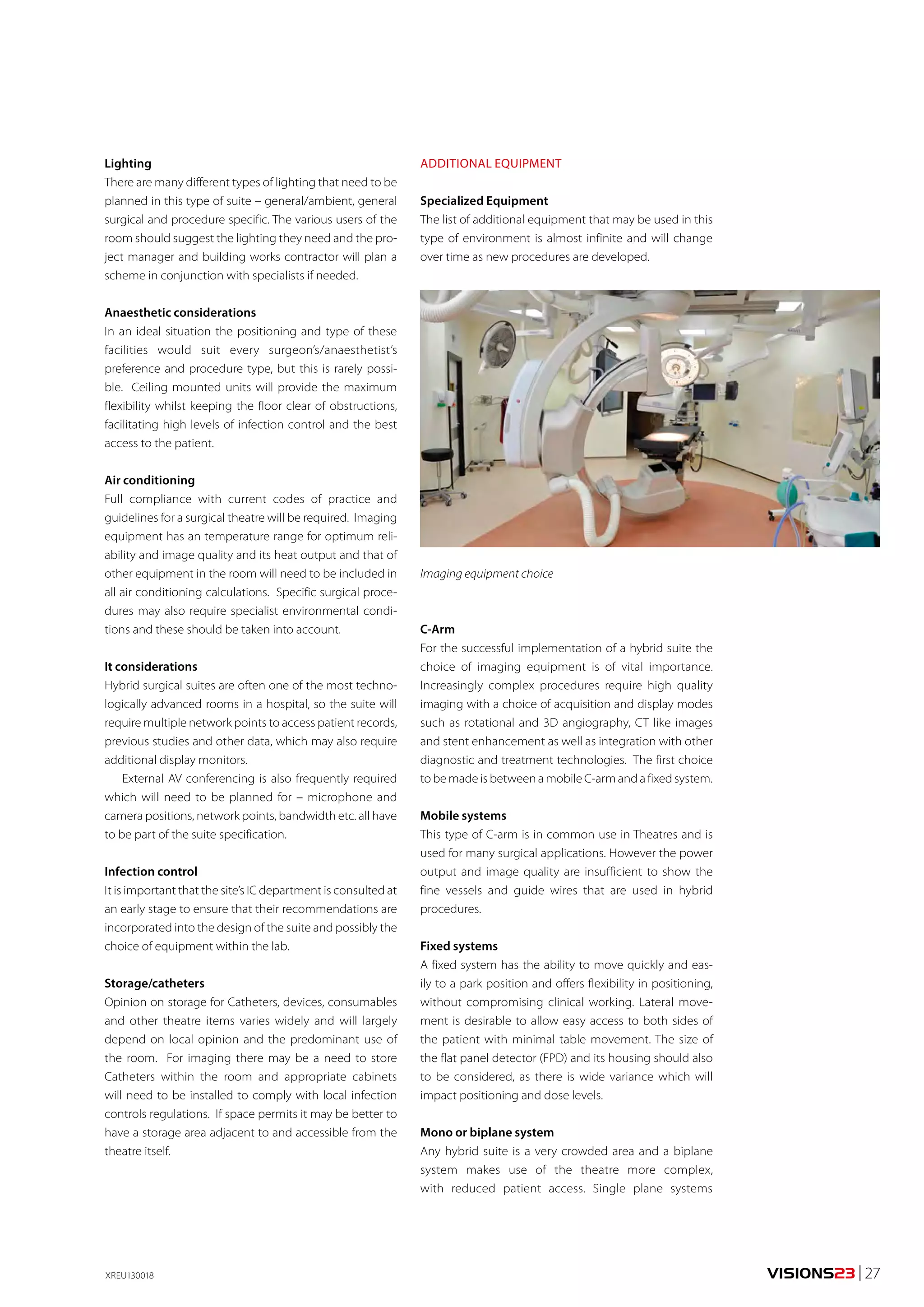
Imaging equipment choice 
C-Arm 
For the successful implementation of a hybrid suite the 
choice of imaging equipment is of vital importance. 
Increasingly complex procedures require high quality 
imaging with a choice of acquisition and display modes 
such as rotational and 3D angiography, CT like images 
and stent enhancement as well as integration with other 
diagnostic and treatment technologies. The first choice 
to be made is between a mobile C-arm and a fixed system. 
Mobile systems 
This type of C-arm is in common use in Theatres and is 
used for many surgical applications. However the power 
output and image quality are insufficient to show the 
fine vessels and guide wires that are used in hybrid 
procedures. 
Fixed systems 
A fixed system has the ability to move quickly and eas-ily 
to a park position and offers flexibility in positioning, 
without compromising clinical working. Lateral move-ment 
is desirable to allow easy access to both sides of 
the patient with minimal table movement. The size of 
the flat panel detector (FPD) and its housing should also 
to be considered, as there is wide variance which will 
impact positioning and dose levels. 
Mono or biplane system 
Any hybrid suite is a very crowded area and a biplane 
system makes use of the theatre more complex, 
with reduced patient access. Single plane systems 
XREU130018 VISIONS23 | 27
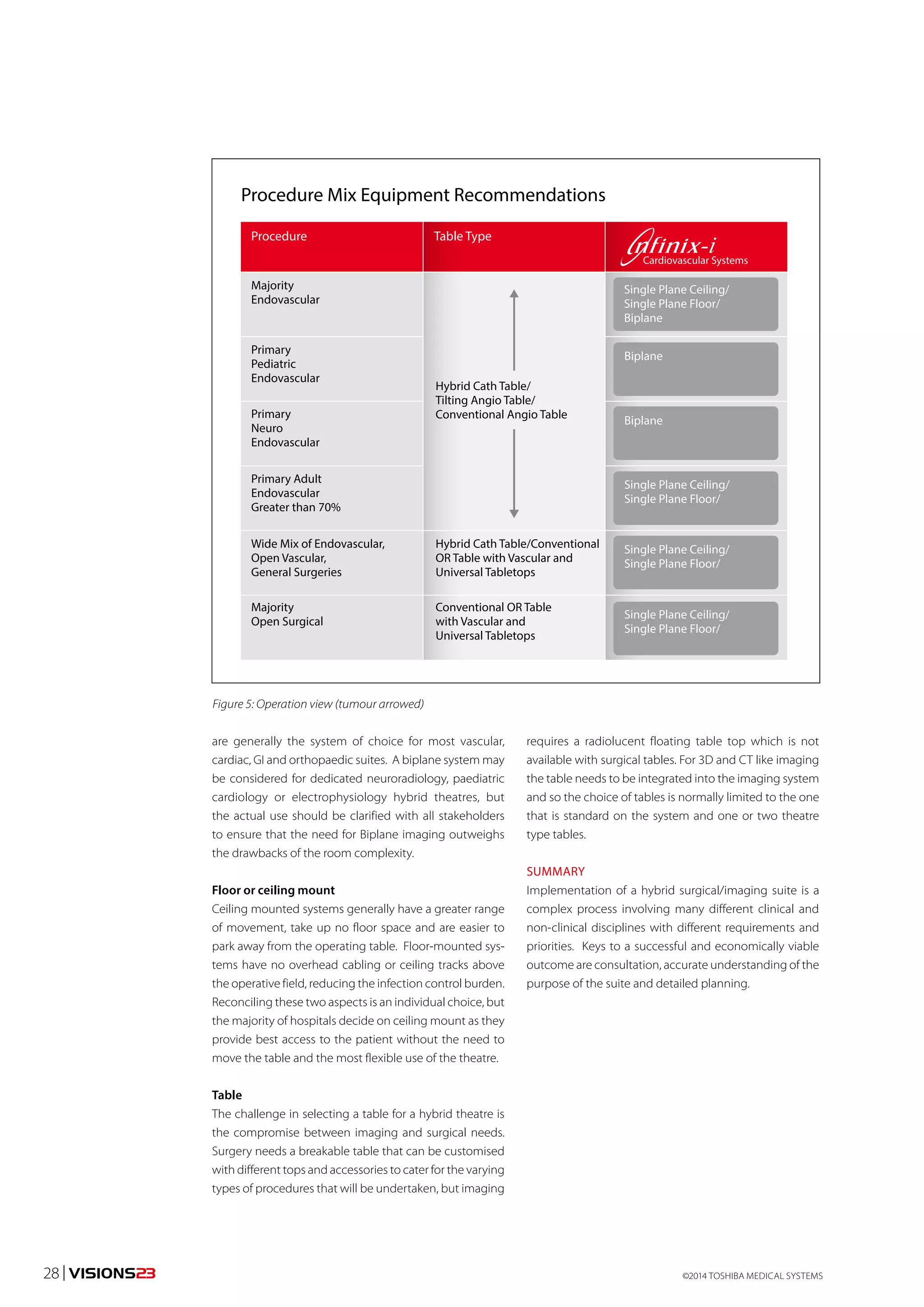
Procedure Mix Equipment Recommendations 
Procedure 
Majority 
Endovascular 
Primary 
Pediatric 
Endovascular 
Primary 
Neuro 
Endovascular 
Primary Adult 
Endovascular 
Greater than 70% 
Wide Mix of Endovascular, 
Open Vascular, 
General Surgeries 
Majority 
Open Surgical 
Table Type 
Hybrid Cath Table/ 
Tilting Angio Table/ 
Conventional Angio Table 
Hybrid Cath Table/Conventional 
OR Table with Vascular and 
Universal Tabletops 
Conventional OR Table 
with Vascular and 
Universal Tabletops 
Figure 5: Operation view (tumour arrowed) 
are generally the system of choice for most vascular, 
cardiac, GI and orthopaedic suites. A biplane system may 
be considered for dedicated neuroradiology, paediatric 
cardiology or electrophysiology hybrid theatres, but 
the actual use should be clarified with all stakeholders 
to ensure that the need for Biplane imaging outweighs 
the drawbacks of the room complexity. 
Floor or ceiling mount 
Ceiling mounted systems generally have a greater range 
of movement, take up no floor space and are easier to 
park away from the operating table. Floor-mounted sys-tems 
have no overhead cabling or ceiling tracks above 
the operative field, reducing the infection control burden. 
Reconciling these two aspects is an individual choice, but 
the majority of hospitals decide on ceiling mount as they 
provide best access to the patient without the need to 
move the table and the most flexible use of the theatre. 
Table 
The challenge in selecting a table for a hybrid theatre is 
the compromise between imaging and surgical needs. 
Surgery needs a breakable table that can be customised 
with different tops and accessories to cater for the varying 
types of procedures that will be undertaken, but imaging 
Cardiovascular Systems 
Single Plane Ceiling/ 
Single Plane Floor/ 
Biplane 
Biplane 
Biplane 
Single Plane Ceiling/ 
Single Plane Floor/ 
Single Plane Ceiling/ 
Single Plane Floor/ 
Single Plane Ceiling/ 
Single Plane Floor/ 
requires a radiolucent floating table top which is not 
available with surgical tables. For 3D and CT like imaging 
the table needs to be integrated into the imaging system 
and so the choice of tables is normally limited to the one 
that is standard on the system and one or two theatre 
type tables. 
SUMMARY 
Implementation of a hybrid surgical/imaging suite is a 
complex process involving many different clinical and 
non-clinical disciplines with different requirements and 
priorities. Keys to a successful and economically viable 
outcome are consultation, accurate understanding of the 
purpose of the suite and detailed planning. 
©2014 28 | VISIONS23 TOSHIBA MEDICAL SYSTEMS
VISIONS23 | 29 
TECHNOLOGY COMPUTED TOMOGRAPHY 
Dual Energy 
Dual Energy CT in 
the PRIME Time 
Dr. Orla Buckley 1) 
The storms of the ‘slice war’, ‘gantry rotation war’ and ‘dose war’ have calmed, for now. 
Significant technologic advances are now available such as 320 detector row panels 
with 16cm volume coverage and remarkable gantry rotation times (275ms) on the 
Aquilion ONE™ (Toshiba). Toshiba AIDR 3D technology has shown the effective dose 
exposures can be reduced by up to 75%. What is next for CT, what battle to choose 
now? Huge advances in spatial and temporal resolution aren’t enough? CT now leaps 
further into the realm of tissue characterisation like its rival MRI? 
By virtue of the interaction of emitted xrays from the CT 
tube with the k-edge of matter, CT has not had difficulty 
differentiating anatomic structures with significantly dif-ferent 
composition or atomic number. The attenuation 
coefficient of photons varies significantly with differing 
k-edge binding energies. Fat, bone or air for example will 
not be mistaken on CT. The challenge arises for matter 
with similar k-edge binding energies. Two materials will 
behave differently at differing photon energies, depend-ing 
on the elements they are composed. Matter with a 
high atomic number such as calcium has a higher change 
in attenuation at differing kVp energies than uric acid for 
example, which has a lower atomic number. 
By emitting two different photon energies, 135 and 
80 kVp, matter with close k-edge binding energies can 
be differentiated. Aquilion ONE and Aquilion PRIME 
(Toshiba), are amongst the scanners that are leading the 
way in this new era of CT technology. 
PRACTICAL CONSIDERATIONS FOR DUAL ENERGY CT 
1. Noise and image quality: 
How to prevent noise on the low dose scan? 
Although two separate volumes with separate energies 
are acquired, the Toshiba’s DE technology automatically 
adjusts the mA settings for each kVp to provide image 
volumes with similar signal to noise ratios. 
2. Coverage: 
Complete coverage of a region is acquired at both 
energies by using a very low pitch. Scan start times 
are synchronized. With the z axis resolution of 16cm in 
the Aquilion ONE, volumetric scanning of a solid organ 
can be acquired with two temporally uniform data sets 
provided. Any potential for motion artifact is eliminated 
Dr. Orla Buckley 
1) Tallaght Hospital 
Ireland 
CTEU140081 
with this capability. Scanners with less detector rows take 
advantage of a very low pitch to ensure coverage of the 
required volume. 
3. Radiation exposure: 
Low pitch, dual energy exposures… Is this recipe for high 
radiation exposure? Depending on the body mass of the 
patient and the volume of the target organ, the mA can 
be manually set to a higher or lower on the console prior 
to scanning. Secondly, exposure can be manually turned 
OFF in the upper part of gantry rotation that would 
expose the ventral side of the patient and potentially 
radiation sensitive areas such as breast tissue in females 
(Fig. 1). 
Figure 1: Tube exposure can be manually turned OFF in the 
upper 180° of gantry rotation that would expose the ventral 
side of the patient and potentially more radiation sensitive 
areas such as breast tissue in females.
Although noise is reduced by automatic adjustment of 
the mA settings on the low dose scan, the DE images will 
often appear ‘noisier’ than the diagnostic standard expo-sure. 
Radiologists need to recognize that the dataset will 
provide images with low noise for general diagnosis in 
addition to lower kVp data, which is used for the tissue 
decomposition algorithm. 
4. Post processing 
Post processing of the image datasets produces not only 
color-coded cross-sectional images but three-dimen-sional, 
360° rotational volume-rendered models. This is a 
relatively automated process. As an example, in the set-ting 
of analysis of renal stone composition, a two mate-rial 
composition algorithm is utilized to separate stones 
composed of uric acid from other compositions such as 
calcium or struvite, Colour coding of the post processed 
data set readily identifies the composition of the stone. 
Figure 2a: Coronal CT images of the kidneys at low kV, 
high mA (left), high kV, low mA (right) 
Figure 2b 
5. What can Dual Energy CT do? 
By virtue of its ability to differentiate tissue composition 
and behavior of matter at different energies, DECT can 
characterise matter, can be used to generate virtual non 
contrast data sets and can enhance depiction of iodine 
containing structures at low energy exposures. 
CLINICAL APPLICATIONS 
Case 1 
A 62 year old male patient presented to the emer-gency 
department with renal colic. Background history 
includes obesity, hypercholesterolaemia and a personal 
history of renal stones. Dipstick urinalysis demonstrates 
microscopic haematuria. Review of prior imaging dem-onstrates 
a longstanding left lower pole renal stone 
measuring 1cm. Discussion with the urology service 
indicates prior failed lithotripsy. 
CT KUB was ordered (Fig. 2). A dual energy proto-col 
was performed to identify the composition of the 
known stone in light of prior failed lithotripsy. 
Fig. 2a and 2b are select coronal images from the 
DECT acquisition. Fig. 2a illustrates the coronal CT 
images of the left kidney at the high and low kVp with 
adjusted mA. The 1 cm high attenuating renal calculus 
is seen at the lower pole of the left kidney. Application 
of the colour coded decomposition algorithm indicates 
this stone is made of mixed composition. 
10 % of renal stones are composed of uric acid. 
Lithotripsy is of reduced therapeutic benefit in these 
patients compared to other stone compositions and 
urine alkalinisation can be a better therapeutic option. 
At our institution, a National Urology centre, renal stone 
characterization has had a big impact on stone man-agement. 
Alternate pathways of treatment are suited 
to different stones and DECT permits this characteriza-tion. 
Some are suitable for lithotripsy, uric acid stones 
response to urine alkalinisation and very high density 
stones such as brushite stones may be refractory to all 
non-invasive treatment and percutaneous nephrosto-lithotomy 
is the best therapeutic option. Recognition 
of the stone composition and selection of appropriate 
therapy results in better clinical outcome, better patient 
satisfaction as a result and also economic benefit. 
Case 2 
A 64 year old gentleman presented to the Rheumatology 
clinic in August 2012 with a 20-year history of joint pain 
and swelling. His symptoms had started in the right 
second metatarsophalangeal joint (MTP). Subsequently 
over years this progressed to involve his elbows, ankles, 
knees and fingers and toes. At presentation he was tak-ing 
NSAIDs, allopurinol and colchicine as prescribed by 
his general practitioner. 
Joint aspirate was non diagnostic. Ultrasound of 
the small joints of the hands was suggestive of gout. 
©2014 30 | VISIONS23 TOSHIBA MEDICAL SYSTEMS
VISIONS23 | 31 
Although the clinical picture was highly suggestive of 
gout, prior to initiation of uric oxidase infusions, DECT 
was performed to confirm the presence of uric acid 
and quantitatively assess tophus burden so treatment 
efficacy could be monitored on serial scanning. 
DECT of the hands and feet was acquired as shown in 
Fig. 3 and Fig. 4. 
DECT allows earlier detection of gout before erosive 
changes have taken place. Clinically challenging cases 
where the cause of the inflamed joint is unclear and 
serum biochemistry and ultrasound are equivocal often 
occur and DECT can provide a definitive answer as the 
presence of uric acid crystals or other causes. With the 
advent of new costly uric acid pharmacologic agents 
such as the new recombinant uric oxidase agents, there 
is greater pressure to determine tophus burden before, 
during and after treatment to try and prove efficacy of 
treatment. The ability to perform volumetric analysis of 
the tophus burden is of particular utility in quantifying 
response to treatment. 
References 
1. Nicolaou S, Yong-Hing C, Glea-Soler S, Hou DJ, Louis L, Munk P. Dual 
Energy CT as a Potential New Diagnostic Tool in the Management of 
Gout in the Acute Setting. AJR 2010 194: 1072-1078. 
2. Desai MA, Peterson JJ, Warren Garner H, Kansdorf MJ. Clinical Utility 
of Dual Energy CT for Evaluation of Tophaceous Gout. Radiographics 
2001; 31: 1365-1375. 
3. Coursey CA, Nelson RC, Boll DT, Paulson EK, Neville AM, Marin D, Gupta 
RT, Schindera ST. Radiographics. 2010 Jul-Aug;30 (4):1037-55 
Figure 3: Extensive uric acid deposits are demonstrated in these volume rendered images and 
Multi Planar Reformat images. In these images acquired using dual energy with application 
of a gout algorithm, uric acid crystals are coded in red. Gout is present at the second MCP in 
particular where a volume of 0.22cm3 of crystal deposit is present. 
Figure 4: Uric acid deposits colour coded in red at the 
first MTP joint associated with underlying bone erosions 
(osseus erosions better depicted on bone algorithm). 
Volumetric quantitation of the uric acid deposits provided, 
0.37 cm³ in this example. 
CTEU140081
TECHNOLOGY COMPUTED TOMOGRAPHY 
Dual Energy 
Dual Energy Raw Data Based 
Decomposition Analysis 
on Aquilion ONE 
Dr. Fuminari Tatsugami 1), Dr. Toru Higaki 2), Dr. Kazuo Awai 3) 
Dual energy raw data based decomposition analysis has recently become available on 
the Aquilion ONE™ CT scanner. Monochromatic images are generated using this tech-nique. 
Research performed at other sites has indicated that monochromatic images 
may have clinical value. In this article we outline our investigations into the use of this 
technology in both phantom experiments and in two clinical cases. 
Dual energy CT, in 
which the subject is 
scanned at two dif-ferent 
energies (tube 
voltages), can be used 
to perform material 
decomposition based 
on the differences in 
material absorption 
coefficients at dif-ferent 
energies and 
also to create refer-ence 
material images 
for various types of 
analysis. Specifically, 
it supports material 
decomposition, the 
creation of iodine 
maps and virtual non-contrast images, effective atomic 
number analysis and electron density analysis. 
The basic requirements for dual energy analysis 
are that the datasets must be temporally and spatially 
matched. Specifically, there must be no temporal differ-ence 
between the two scans and the tube orbits must 
match. It is also important that there should be a large dif-ference 
between the two energies and the exposure dose 
should be adjusted so that the noise levels are the same. 
Aquilion ONE supports dual energy imaging and 
analysis using both volume scanning and helical scan-ning. 
In volume scanning, it is possible to switch the tube 
voltage between 135 kV and 80 kV in as little as 0.2 s. In 
helical scanning, a mode in which exposure is performed 
only from the patient’s back is provided to minimize X-ray 
exposure to the breasts. 
Dual Energy analysis methods can be broadly classi-fied 
into two types: image-based analysis and raw data-based 
analysis. In Aquilion ONE, it is possible to perform 
Dr. Fuminari Tatsugami 
Dr. Toru Higaki 
Dr. Kazuo Awai 
1) Department of 
Diagnostic Radiology, 
Hiroshima University 
Hospital 
2-3) Department of 
Diagnostic Radiology, 
Institute of Biomedical 
Sciences, Hiroshima 
University 
Figure 1: Raw data-based dual energy analysis uses projec-tion 
data from two different energies. Two raw datasets 
based on water and bone densities are created and recon-structed 
into volumes. These volumes are used to generate 
monochromatic images. 
raw data-based analysis using volume scan data. Analysis 
using raw data has been shown to produce more accu-rate 
dual energy results than image based analysis. 
RAW DATA-BASED ANALYSIS 
In raw data-based analysis, the count values (raw data-sets) 
acquired at two different energies are used for 
calculation. Specifically, the human body is assumed to 
be a mixture of two different materials such as water and 
bone or water and iodine, and the content of each mate-rial 
is calculated from the two count values (raw datasets) 
obtained by dual energy scanning (Fig. 1). Since the Liner 
attenuation coefficient of each material is known, the CT 
©2014 32 | VISIONS23 TOSHIBA MEDICAL SYSTEMS
number at a given energy can be determined by combi-nation 
with the calculated content, making it possible to 
create monochromatic images (keV images). 
Novel analysis software which utilizes raw data 
based dual energy data available on the Aquilion 
ONE includes reduction of beam hardening artifacts, 
automatic generation of the best CNR images, virtual 
non-contrast image, iodine map, effective atomic num-ber 
and electron density imaging. Among these new 
technologies, electron density images has gained atten-tion 
of radiologists and radiation oncologists because 
it is a promising method for generating more accurate 
electron density images than conventional methods in 
radiotherapy planning. 
We performed phantom experiments to verify the 
accuracy of this method. 
PHANTOM EXPERIMENTS 
Improvement of beam hardening artifacts 
When two syringes containing a high-absorption mate-rial 
(iodine with a CT number of approximately 1000 HU) 
are placed in a phantom filled with water and scanned 
at a single energy, severe beam hardening artifacts are 
observed between the two syringes. The beam hard-ening 
artifacts are still seen in the Virtual 120kV image 
generated using image based dual energy analysis. In a 
monochromatic image created by raw data-based dual 
energy analysis, the beam hardening artifacts are signifi-cantly 
reduced (Fig. 2). 
Best CNR image 
The use of monochromatic images makes it possible to 
obtain an image with the highest possible contrast-to-noise 
ratio in the region of interest (called the Best CNR 
image). The results of comparison between image-based 
analysis and raw data-based analysis showed that the 
CNR was approximately 5% higher for raw data-based 
analysis. It is considered that beam hardening artifacts in 
high-absorption materials are reduced, resulting in more 
accurate CT number measurement in the subject. 
Virtual non-contrast image 
Investigations using a water phantom containing 
syringes filled with fat and with iodinated contrast 
medium at seven different concentrations showed that 
both the iodine map and virtual non-contrast image 
obtained using the raw data-based analysis tool were 
superior. In the raw data-based analysis, the influence 
of beam hardening artifacts was reduced and the CT 
number accuracy in the virtual non-contrast image was 
improved. 
Effective atomic number and electron density 
It is possible to determine the effective atomic number 
and the electron density of an object using the raw 
Figure 2: Beam hardening artifacts seen in a single energy 120kV image, image based dual energy image 
and monochromatic raw data based dual energy image. 
Aquilion ONE 
CTEU130080 VISIONS23 | 33
Figure 3: The measured values for water and fat were close to the typical values for these materials. For iodine, 
the higher the concentration, the higher the effective Z value, the lower the concentration the closer the 
effective Z value is to water. 
Figure 4: The measured electron density values for water and fat were close to the typical values for 
these materials. The iodine measurements were equivalent to water, regardless of concentration. 
data-based analysis application. The fat and water in the 
phantom were measured to determine their effective 
atomic numbers. The measured values were 5.45 and 7.31, 
respectively, which were quite close to the typical values of 
5.92 for fat and 7.42 for water (Fig. 3). The higher the iodine 
concentration, the higher the effective atomic number. 
The measured electron density values for fat and water 
were 3.11 and 3.35, respectively, which were also quite 
close to the typical values of 3.09 for fat and 3.34 for water 
(Fig. 4). 
CLINICAL CASES 
Raw Data based dual energy analysis methods were then 
applied to two clinical cases to understand the clinical 
value of this application. 
Improvement of beam hardening artifacts 
This 52-year-old man visited a local physician complain-ing 
of narrowing of the visual fields. Physical examination 
showed papilledema. A CT was requested to investigate 
the cause of the visual disturbances. In Figure 5, a tumor 
©2014 34 | VISIONS23 TOSHIBA MEDICAL SYSTEMS
VISIONS23 | 35 
Figure 5: Comparison of beam hardening artifacts in a dual energy scan of the brain. 
The artifacts are reduced in the 70keV monochromatic image. 
Figure 6: The best CNR image was selected from a series of monochromatic 
images to demonstrate the tumor and parenchyma. 
CTEU130080
Figure 7: Comparison of virtual non-contrast images indicates that the SD and CNR are 
improved with raw data based analysis. 
is seen at the left cerebellopontine angle, but band-like 
beam hardening artifacts are superimposed on the 
tumor at the skull base. These artifacts could be reduced 
by creating a monochromatic image at 70 keV while 
maintaining good image quality. 
A tumor at the left cerebellopontine angle and hydro-cephalus 
associated with the tumor were confirmed by 
MRI. The patient was referred to the neurosurgery depart-ment 
of our hospital. 
Best CNR image 
This 75-year-old man visited a local physician complain-ing 
of speech difficulties, headache, and vomiting. CT 
showed a metastatic tumor in the left parietal region 
surrounded by hemorrhage in the left parietal lobe. 
Monochromatic images in the range from 35 to 135 keV 
were created, and the image with the optimal CNR for 
evaluating the tumor and cerebral parenchyma was gen-erated 
using the Best CNR tool. The CNR values for each 
keV are displayed as a graph. The Best CNR image for this 
patient was 63 keV (Fig 6). The patient was referred to the 
neurosurgery department of our hospital. 
Virtual non-contrast image 
The data from the same patient was then used to 
investigate virtual non contrast images. Figure 7 shows 
the comparison of image-based and raw data-based 
virtual non-contrast images. The noise level in the raw 
data-based virtual non-contrast image was lower than 
that in the image-based virtual non-contrast image. The 
SD of the raw data-based virtual non-contrast image was 
8.4, which was superior to the SD of 11.6 for the image-based 
virtual non-contrast image. The CNR was also 
improved to 3.5 from 2.0. 
Effective atomic number and electron density 
The data from the same patient was then used to investi-gate 
effective atomic number and electron density. ROIs 
were placed in the bone, hemorrhage, and tumor to cre-ate 
effective atomic number images (Fig. 8). 
The measured value for bone was 12.67, which was 
close to the typical value of 13.8. The measured value 
for hemorrhage was 6.75, which was lower than that of 
water (7.42). Although the measured value for the tumor 
was 8.69, such measurements are affected by the iodi-nated 
contrast medium and may therefore vary depend-ing 
on the primary lesion or the malignancy grade of 
the tumor. 
The measured electron density value for bone was 
5.12, which was higher than that of hemorrhage (3.7) or 
the tumor (3.58) (Fig. 9). The electron density values for 
hemorrhage and the tumor were close to that of water 
(3.34). Electron density images can be used to determine 
electron density values directly from clinical images, and 
it may therefore be possible to create more accurate 
dose distribution maps for radiotherapy planning. 
©2014 36 | VISIONS23 TOSHIBA MEDICAL SYSTEMS
VISIONS23 | 37 
Figure 8: Effective atomic number indicates that the hemorrhage has a value lower 
than water (typical value:7.42). The value for tumor could indicate grade of malignancy. 
Figure 9: Electron density image could potentially be used for radiotherapy planning 
as the electron density values can be calculated from the clinical images. 
CONCLUSION 
The main advantages of dual energy technology using 
Aquilion ONE are that volume data can be acquired over 
a range of 16 cm in a single rotation, the tube current can 
be adjusted for each tube voltage, and AIDR 3D can be 
used in combination. 
We have shown that monochromatic images can be 
used to reduce beam hardening artifacts. In addition, it 
is possible to use monochromatic images to measure 
effective atomic number and electron density which 
are expected to be employed in clinical practice in 
the near future. Effective atomic number images have 
the potential to be used to differentiate tumors, while 
electron density measurements could be used for more 
accurate radiotherapy planning. 
We look forward to further investigations into the 
clinical value of raw data based dual energy analysis.
TECHNOLOGY X-RAY 
Dose Reduction, Intervention, Spot Fluoroscopy 
Spot Fluoro - A Novel, Promising 
Approach to Reduce the Dose in 
Interventional Procedures 
Dr. Ljubisa Borota MD PhD 1), Andreas Patz 2), Takuya Sakaguchi 3) 
The Infinix™ VF-i/BP was installed in November 2011 at the Department of Radiology, 
University Hospital in Uppsala, Sweden. Since then, more than 480 interventions in 
the cerebrospinal blood vessels and more than 1000 cerebral angiographies have 
been performed using the system. Additionally, more than 120 peripheral AVM were 
treated under the same period. The system has also been used for neurosurgical 
interventions,nerve root blockades and spinal myelographies. 
The machine was designed to be very robust, but highly 
ergonomical and user-friendly. This system is character-ized 
by superior mobility of the C-arms and unique, 
flexible lateral isocenter, which enables an optimal com-bination 
of biplanar working projections, regardless of 
the size and position of the region of interest. 
The ‘jewel in the crown’ of the Infinix is, however, 
the Spot Fluoroscopy function, which is, according to 
Toshiba’s Development Team, an innovative system, 
designed to save dose in interventional procedures. 
Interventional procedures have become increasingly 
complex, which results in a significant prolongation of 
the fluoroscopic time during endovascular procedures. 
That is why, dose-saving techniques have gained 
more significance than ever before for patients and 
medical staff. 
Sport Fluoroscopy is a Toshiba-patented function that is 
based on: 
1. Asymmetric Virtual Collimation that allows a free 
definition of any desired collimation based on Last 
Image Hold. 
2. Superimposition of Last Image Hold information to 
keep anatomical or device relevant reference informa-tion 
visible during Fluoroscopy. 
3. Novel Automatic Brightness Control (ABC) technique 
that avoids a dose increase, regardless of collimation. 
The core of the new function is the flexible sensing 
area of the ABC that adapts instantly to the predefined 
collimated field of view. The activation of the Spot 
Fluoroscopy by a simple, double mouse-click for each 
projection is enough to define the area of interest, 
required for exposure during Fluoroscopy. The locali-zation, 
shape and size of this area can be redefined as 
Dr. Ljubisa Borota 
1) Unit of 
Neurointervention, 
Center for Imaging, 
University Hospital, 
Uppsala, Sweden 
2) Toshiba Medical Systems 
Europe BV, 
Zoetermeer, 
The Netherlands 
3) Toshiba Medical Systems 
Corporation, Otawara, 
Japan 
Only radiation in 
selected region of 
interest. No increased 
Entrance Dose 
No radiation. Reference 
image based on LIH. 
No loss of information 
Spot Fluoro advantages 
many times as necessary using LIH (Last Image Hold). 
Since the last image hold is superimposed over the 
collimator blades, important anatomic landmarks are 
not lost during Fluoroscopy. This easy-to-use function 
reduces both the dose directly delivered to the patient 
and the scattered radiation that the staff is exposed to. 
Spot Fluoroscopy, coupled with the live zoom function, 
enable superior visualization of the target vascular struc-tures, 
without requiring an increased dose. 
During the summer of 2013, the Neurointerventional 
Team of the Uppsala University Hospital, together with 
Toshiba’s engineers, performed large-scale measure-ments 
of various dose parameters, analyzed these and 
explored their impact on daily work. 
©2014 38 | VISIONS23 TOSHIBA MEDICAL SYSTEMS
The results of the analysis showed statistically highly 
significant reduction of the Dose Area Product (DAP) and 
Dose Area Product Rate (DAP Rate) 1. The analysis also 
showed that activation of the Spot Fluoro function did 
not lead to any prolongation of the total Fluoroscopy 
time or, in other words, that activation of the Spot Fluoro 
did not have any negative impact on daily work 1. The 
image quality was assessed by two experienced neuro-radiologists. 
It was concluded that the steep angles of 
working projections and massive bony structures of the 
skull base surrounding the target might cause marginal 
degradation of image quality. 
Our results have clearly shown that reasonable 
combination of conventional Fluoroscopy and Spot 
Fluoroscopy can provide satisfactory image quality 
during neurointerventional procedure with the lowest 
possible dose to the patient and staff. 
1. Borota L., (Uppsala, SWEDEN); Patz A. (Zoetermeer, NETHERLANDS); Saka-guchi 
T. (Otawara, JAPAN): Spot Fluoro – A novel innovative approach to 
reduce the dose in interventional Procedures, Advantages and Draw-backs, 
ECR, Vienna, 7 – 10 March, 2014 
DR. SHALABI LEADS THE IMAGING AND FUNCTIONAL MEDICAL CENTERS (BFC) 
AT AKADEMISKA UNIVERSITY HOSPITAL IN UPPSALA, SWEDEN. 
When I became Head of the Centers in 2010, I put a focus on developing our 
Neuro-section. We changed our way of working and I have been lucky enough 
to be able to recruit expert competence. Our vision is to contribute to good 
health and good quality of life, and involves making the patients an integral 
part of the process. 
Since 2011, we have seen extensive development of Neurointerventional 
Radiology at the Centre for Medical Imaging. The number of interventions 
performed by the Neurointerventional Team has increased tremendously. 
This increase corresponds with the installation of Toshiba’s Infinix i-BP sys-tem. 
During the first phase of development in this specialist department, the 
Neurointerventional Team focused on acquiring the knowledge and skills nec-essary 
for treating a wide range of cerebrospinal vascular diseases. Despite the 
fact that the Team was understaffed, they achieved amazing results. The num-ber 
of interventions increased by 300% compared to before 2010. Toshiba’s 
Dr. Shalabi - Head of department 
Akademiska, Uppsala University, 
Sweden. 
team of engineers contributed significantly to fast development of The Center’s neurointerventional service. It could 
be said that the Neurointervention Team and Toshiba’s engineers ‘grew up together’ during this time. 
Since the beginning of the 2013, the Neurointervention Team and Toshiba’s Development Team worked hard 
on the clinical implementation of Spot Fluoroscopy - a new innovative approach for reducing dosage in inter-ventional 
procedures. This represented a new phase in the development of the neurointervention at The Center. 
During the phase, Toshiba’s Development Team played a very important role. I am proud that the first results of 
this common project have already been successfully demonstrated at the ABC/WIN (Anatomy Biology Clinical 
Correlations Working Group in Interventional Neuroradiology) Congress 2014, in Val d’Isere, France, and now, in 
extended form, at the ECR (European Congress of Radiology) in Vienna, Austria. I really hope that the scientific 
collaboration between my department and Toshiba Medical Systems will continue in the same vein and with even 
better scientific results. 
Throughout 2013, the Neurointerventional Team has performed numerous demonstrations of the equipment for 
other potential customers by performing neurointerventions and complex examinations of the cerebral blood 
vessels, along with presentation of detailed descriptions of the system. I have received very positive feedback from 
this. I also hope that the future relations will continue to be based on mutual benefit and be as pleasurable as they 
have so far proved to be. 
XREU140019 VISIONS23 | 39
NEW MAGNETIC RESONANCE 
Product Introduction, Vantage ELAN 
Toshiba’s new Vantage ELAN 
Combines Strong Performance 
and Affordability 
The impressive qualities of high performance, affordability and enhanced patient 
comfort define Toshiba’s innovative new MR product. 
Cost-effective and compact, the premium 1.5T MRI 
Vantage ELAN™ system uses the same type of magnet 
as other Toshiba products to achieve excellent image 
quality but requires a mere 23 sqm of space. With its 
widely recognised complete M-Power clinical applica-tion 
software suite and HHS (High Speed Switching) 
technology to facilitate the use of 16 channel coils, the 
Vantage ELAN manages to maintain ease of use for the 
operator while offering a quiet and comfortable patient 
experience due to Toshiba’s renowned Pianissimo noise 
reduction technology. 
This low-noise quality was one of the features of 
the Vantage ELAN that particularly attracted radiologist 
Dr Peter Thorsten since it is an innovation which sig-nificantly 
improves patient experience. When expanding 
his radiology practice in Güstrow, Germany, Thorsten 
selected Toshiba’s Vantage ELAN – the first such system 
outside of Japan – as the “natural choice” in view of the 
successful relationship with the company following the 
installation of a Vantage Titan MRI scanner in 2010. He is 
particularly enthusiastic about the user interface of the 
Vantage ELAN and since his staff is already familiar with 
the Toshiba protocols, the shift to the new system will 
be smooth. 
“I had the opportunity to look at the system at RSNA 
in Chicago and was so impressed by its performance 
and the coil concept that we decided to acquire it,” Dr 
Thorsten explained. It will be used for all types of exami-nations 
from the head to the spinal column and joints. 
“Moreover,” he added, “abdominal MRI is an important 
area in our office and the Toshiba sequence strategy has 
enabled us to specialize in MR phlebography.” 
As Toshiba aims to grow its market share, particularly 
in Europe, the company is confident that the addition 
of the Vantage ELAN to its MRI portfolio has created a 
unique opportunity within the marketplace. 
Toshiba’s Vantage 
ELAN combines 
clinical performance 
with affordability and 
patient comfort 
©2014 40 | VISIONS23 TOSHIBA MEDICAL SYSTEMS
Dr. Peter Torsten (third from left) from Güstrow, Germany, is particularly impressed by 
the comprehensive coil concept and the low-noise performance of Vantage ELAN 
Alain Bertinatti, Toshiba Medical System Europe’s MR 
Business Unit Manager, underlined that the cost pressure 
hospitals and healthcare systems are currently experienc-ing 
was a major consideration in the development of the 
new product. Faced with the decision to either compro-mise 
on its renowned image quality, design, technical 
innovation or unique set of features or to endeavour to 
deliver a high quality product at a competitive price, the 
company clearly opted for the latter. Bertinatti is proud 
to present the Vantage ELAN system which combines 
outstanding homogeneity and a 1.5T ultra-short zero 
boil-off magnet to offer excellent image quality. In addi-tion, 
the system is equipped with Eco Mode technology 
to ensure highest energy efficiency. 
Bertinatti pointed out that all the latest innovations 
of Toshiba systems are available on the Vantage ELAN, 
including Toshiba’s advanced non-contrast MRA tech-nology, 
which allows exceptional vascular imaging with-out 
the use of contrast, thus reducing patient risk and at 
the same time being cost-effective. 
Dr Isabelle Parienty-Boyer from the Radiodiagnostic 
and Medical Imaging Centre, Hauts-de-Seine, France, is 
a specialist in non-contrast renal MR angiography. She 
performed about 700 examinations of renal arteries in 
patients suffering from renal insufficiency. Since referring 
nephrologists often ask her to refrain from using gadolin-ium 
she works with Toshiba’s Vantage MR system without 
contrast agents because the results are as good as the 
contrast-enhanced scans, sometimes even better. In her 
opinion Toshiba offers the best equipment for this type 
of examination because of the ability to use two planes, 
axial and coronal. 
Hans Baartman, Senior Product Manager at Toshiba 
Medical Systems Europe, highlighted another major ben-efit 
of the Vantage ELAN: the ease and speed of installa-tion. 
Since the system requires little space it can simply 
be integrated in the examination room. With all elements 
Time-SLIP of renal vessels, a non-contrast-enhanced 
MR angio technique 
MREU140016 VISIONS23 | 41
Tractography of the brain, acquired 
with a DTI scan in 49 directions 
An FSE PD scan acquired 
with a 16 element flex coil 
such as ECG and recording equipment integrated it is 
ergonomically designed to be comfortable for the opera-tor. 
Feet first imaging significantly enhances the patient 
experience, Baartman said, adding that Pianissimo 
Σ capability, integrated coils and sound suppression 
technology reduce the noise of the MRI environment. 
“There is also the option to tilt the patient’s head 10 or 
20 degrees in order to make the patient feel a little more 
comfortable. Moreover the new light design of the board 
helps reduce the claustrophobic feeling many patients 
experience,” he added. 
The Vantage ELAN requires a mere 23 sqm installation space 
The Vantage ELAN has a 63 cm aperture with feet first 
imaging available for all types of examinations, except 
for scanning of the head and upper torso. Full angio 
and cardio suites are available, and the body package 
can be extended to include the SpineLine application 
offering fully automated planning of spine examinations. 
Together, these options enable head to toe imaging. 
According to Hans Baartman, the structure and for-mat 
of the Vantage ELAN optimize workflow, enhance 
the radiographer’s options and ensure swift and efficient 
image acquisition and processing. 
©2014 42 | VISIONS23 TOSHIBA MEDICAL SYSTEMS
VISIONS23 | 43 
Single energy metal artifact 
reduction algorithm for CT 
evaluation of periprosthetic soft 
tissues: Clinical applications 
Metallic hardware is commonly used in orthopedic surgery for osteosynthesis, 
reconstructive surgery and arthroplasty. CT is the imaging method of choice for 
the evaluation of the periprosthetic bone and the metal implants 1,2. It allows the 
diagnosis of important post-operative complications such as prosthetic loosening, 
polyethylene wearing and hardware fractures. Although less frequent than bone and 
metal hardware complications, post-operative soft tissue lesions can occur 3. Soft 
tissue complications may lead to significant disability and may necessitate specific 
patient management, making the diagnosis of these conditions essential. In the 
presence of metal however, the evaluation of the periprosthetic soft tissue is greatly 
hindered by metallic artifacts. 
Soft tissue evaluation with MR imaging is also limited by 
the presence of metallic implants that generate chemi-cal 
shift artifacts, shape changes on the periprosthetic 
structures and faulty fat suppression. Ultrasound, on 
the other hand, is not hindered by metallic artifacts. The 
use of this technique for post arthroplasty evaluation is, 
nonetheless, difficult. With ultrasound, the field-of-view 
is restricted, the evaluation of deep periarticular struc-tures 
is difficult and post-operative soft tissue changes 
undermine the diagnostic performance of this method. 
In this context the improving the quality of the soft tissue 
evaluation on CT is particularly important as this method 
has the potential to offer a global post-operative evalua-tion 
in patients with arthroplasty. 
Metal artifact reduction (MAR) on CT is no easy task. 
When metal is exposed to a polychromatic X-ray beam, 
it creates data inconsistencies between the model used 
by the reconstruction algorithm and the actual data. As 
a result beam hardening and photon starvation artifacts 
are generated 4. These artifacts, which are particularly 
prominent when a narrow window setting is used, can-not 
be corrected on the image domain. Despite these 
difficulties MAR in CT has become increasingly more 
effective in the last few years. 
Dual-energy monochromatic imaging for metal 
artifact reduction has been evaluated by various authors. 
However, the best results in metal artifact reduction 
CTEU140084 
Dr. Pedro Teixeira 
Dr. Jean-baptiste Meyer 
Dr. Alain Blum 
1-3) CHU Nancy, 
France. 
Dr. Pedro Teixeira 1), Dr. Jean-baptiste Meyer 2), Dr. Alain Blum 3) 
have been obtained when projection-based algorithms 
applied in the raw-data domain are used alone or in 
association with dual-energy acquisitions 5. In this arti-cle, 
the clinical application of a versatile, single-energy 
projection-based MAR algorithm (SEMAR) is presented. 
BASIC PRINCIPLES 
The MAR algorithm is raw data based and uses vari-ous 
steps data segmentation, forward projection and 
interpolation associated with stratification of tissue 
component 6. The main steps of the SEMAR algorithm 
are summarized as follows (Fig. 1): First the raw data is 
forward projected to create a sinogram. In parallel the 
same data is reconstructed using standard filtered back 
projection (FBP) and the metal is segmented in the 
image domain. Metal-segmented data is forward pro-jected 
to create a metal-only sinogram. Then this metal 
only sinogram is subtracted from the original sinogram 
and linear interpolation is used to calculate the missing 
data. The interpolated sinogram is reconstructed with 
FBP and the resulting image volume in then segmented 
to further exclude residual metal artifacts. The resultant 
data is forward projected and again linear interpolation 
is performed to fill in the data gaps. Finally, from this last 
sinogram, an image volume is reconstructed with FBP 
and the metal data from the first segmentation is reintro-duced 
in the image domain. 
TECHNOLOGY COMPUTED TOMOGRAPHY 
Orthopedics, SEMAR, metallic artifacts
Figure 1: SEMAR Algorithm. BPJ: Back Projecten, FPJ: Forward projection 
SEMAR algorithm before analysis. Soft tissue structures 
were evaluated with a narrow window setting (400/10). 
The images acquired with iterative reconstruction 
only were compared to those acquired with the associa-tion 
of iterative reconstruction and SEMAR (Figs. 2, 3). 
DISCUSSION 
The use of the SEMAR algorithm led to a noticeable global 
increase in image quality for the analysis of the periar-ticular 
soft tissue structures of the hip and shoulder. The 
SEMAR reconstruction increased the confidence in the 
MATERIAL AND METHODS 
Patients referred to our institution for the evaluation 
of post arthroplasty pain and discomfort were imaged 
with a 320 detector-row CT scanner (Aquilion ONE, 
Toshiba Medical Systems, Otawara, Japan). A sequential 
acquisition with 16 cm z-axis coverage was performed. 
When 16 cm was not enough to cover all the prosthesis 
a wide-volume acquisition was performed. Tube output 
parameters were adapted to the patient’s body habitus 
and iterative reconstruction (AIDR 3D) was used in all 
patients. The images were further reconstructed with the 
Figure 2: Left: Iterative reconstruction images of hip implants. Right: SEMAR images 
44 | VISIONS23 ©2014 TOSHIBA MEDICAL SYSTEMS
VISIONS23 | 45 
Figure 3: 68 year old female patient with painful right Metal-on-Metal THA. Left: FBP, Center: SEMAR, Right: MRI. Acquisition 
technique: 320 x 0.5 mm, 120 kVp, 100 mAs. Effective dose = 1.2 mSv. Note the when SEMAR is used two peri articular masses 
became visible (red arrows). Even with state of the art MAR MR images are still greatly hindered by metallic artifacts in this case. 
CTEU140084 
Bibliography 
1. Cahir JG, Toms AP, Marshall TJ, Wimhurst J, Nolan J. CT and MRI of hip 
arthroplasty. Clin Radiol. 2007 Dec;62(12):1163–1171; discussion 1172– 
1173. 
2. Choplin RH, Henley CN, Edds EM, Capello W, Rankin JL, 
Buckwalter KA. Total hip arthroplasty in patients with bone deficiency 
of the acetabulum. Radiogr Rev Publ Radiol Soc North Am Inc. 2008 
Jun;28(3):771–86. 
3. Miller TT. Imaging of hip arthroplasty. Eur J Radiol. 2012 
Dec;81(12):3802–12. 
4. Yu L, Li H, Mueller J, Kofler JM, Liu X, Primak AN, et al. Metal 
artifact reduction from reformatted projections for hip prostheses in 
multislice helical computed tomography: techniques and initial clinical 
results. Invest Radiol. 2009 Nov;44(11):691–6. 
5. Morsbach F, Bickelhaupt S, Wanner GA, Krauss A, Schmidt 
B, Alkadhi H. Reduction of metal artifacts from hip prostheses on CT 
images of the pelvis: value of iterative reconstructions. Radiology. 2013 
Jul;268(1):237–44. 
6. Chang Y-B, Xu D, Zamyatin A. Metal Artifact Reduction Al-gorithm 
for Single Energy and Dual Energy CT scans. 2012 IEEE Nucl Sci 
Symp Med Imaging Conf Rec. 16/112012;3426–9. 
identification of specific periarticular structures such as 
muscles, tendons, and nerves at the shoulder and the hip. 
Structures, such as the gluteus minimus and medius ten-dons, 
that were often completely obscured by the metal-lic 
artifacts became identifiable with good confidence. 
The same was seen at the rotator cuff muscle belies, that 
could be evaluated for post-operative for the identifica-tion 
of fatty atrophy after SEMAR with higher confidence. 
Moreover, in patients with hip prosthesis a great improve-ment 
in the visualization of the pelvic organs, especially 
the prostate and the bladder, was noted. 
In our clinical experience, the described improve-ment 
in image quality led to an increase in the iden-tification 
of periarticular masses in patients with hip 
prosthesis. Anomalies such as joint effusion or periarticu-lar 
fluid collections could be seen with more confidence 
(Fig. 3). In some cases, the use of the SEMAR algorithm 
led to the identification of lesions completely obscured 
by the metal artifacts. In addition, the image quality gain 
using this algorithm was also noticeable when large 
amounts of metal were present, such as in patients with 
bilateral hip prosthesis. 
Single energy MAR has the advantage of been more 
versatile than dual-energy MAR protocols. The perfor-mance 
of dual-energy MAR and the optimal kVp used for 
monochromatic reconstruction are related to the type 
of metal alloy of the prosthesis. Not surprisingly, there 
is no consensus in the literature as to the optimal post 
processing settings for dual-energy MAR. Single-energy 
MAR algorithms tend to be more versatile. SEMAR has 
de advantage of having a standardized application 
independent of the type of metallic implant. It has also 
the potential of been used with a low-dose acquisitions, 
which might be interesting for the evaluation of some 
patient populations. 
In conclusion, SEMAR offers a significant advantage for 
the evaluation of the soft tissue around metallic implants 
compared to conventional CT reconstructions. It seems 
evident that this technique increases the performance of 
CT for the evaluation of post arthroplasty complications. 
In this setting, CT with SEMAR has the potential to be 
used as a one-stop-shop method allowing the conjoined 
evaluation of bone, metal and soft-tissue.
CARDIOLOGY ULTRASOUND 
2D WMT, NSTE-ACS, Guidelines 
Creating New Standards 
in Ultrasound Cardiology 
New Guidelines Incorporating 2D Wall Motion Tracking to Assess 
Non-ST Elevation Acute Coronary Syndrome Could Save Lives 
Coronary Artery Disease (CAD) presents in a variety of forms, some of which, pose 
particular diagnostic challenges for specialists. Non-ST Elevation Acute Coronary 
Syndrome (NSTE-ACS), for example, is not evident with Electrocardiogram (ECG) exami-nation. 
However, early detection and appropriate treatment are essential for these high 
risk patients and many lives could be saved by faster diagnosis. Advanced echocardio-graphic 
technology provides promising new options in diagnosis. 
An ST-elevation found in ECG usually indicates that the 
patient has a coronary artery occlusion and requires 
acute revascularization therapy. Coronary artery occlu-sion 
and/or significant coronary artery stenosis may, or 
may not manifest in those with NSTE-ACS - there is a great 
deal of variation from patient to patient. ECG examination 
is not sensitive enough to reliably identify some of these 
manifestations. Despite this, revascularization therapy is 
required in as many as two thirds of NSTE-ACS cases and 
early diagnosis and treatment improves prognosis. 
Diagnosing the somewhat elusive, but potentially 
life-threatening condition of NSTE-ACS has until now, 
presented a clinical challenge for cardiologists world-wide. 
CAD can present as silent ischemia, stable angina 
pectoris, acute coronary syndrome (ACS) or death. ACS 
includes unstable angina (UA), non-ST segment elevation 
(NSTE) and ST segment elevation myocardial infarction 
(STEMI). These high risk manifestations of CAD are sig-nificant 
causes of emergency medical care and hospitali-zation 
globally. Diagnosis is not always straightforward. 
Interview with Professor 
Thor Edvardsen M.D., Ph.D., 
Department of Cardiology 
at Oslo University Hospital, 
Rikshospitalet, Norway. 
46 | VISIONS23 ©2014 TOSHIBA MEDICAL SYSTEMS
VISIONS23 | 47 
PROMISING RESULTS 
Professor Edvardsen, together with a dedicated cardi-ology 
research group at the Oslo University Hospital, 
Rikshospitalet, in Norway, assessed the endocardial func-tion 
of patients with significant CAD compared to those 
with without. They measured layer-specific strain through 
2D WMT, using 2D speckle-tracking echocardiography 
(STE) incorporated in Toshiba’s Ultrasound systems such 
as the Artida, Aplio and Xario. Territorial longitudinal strain 
(TLS) was calculated on the basis of perfusion territories 
of the three major coronary arteries in a 16-segment Left 
Ventricular (LV) model and global circumferential strain 
(GCS) was averaged from six circumferential LV segments 
in all three layers. 
The eventual study, published in The Journal of the 
American College of Cardiology (JACC) Cardiovascular 
Imaging in May 2013 1, showed that endocardial func-tion 
was more affected in patients with significant CAD 
compared to epicardial function and ejection fraction 
(EF). Patients with significant CAD had worse function in 
all three myocardial layers assessed through TLS and GCS. 
Endocardial TLS was most affected. Differences in endo-cardial 
and epicardial TLS and GCS were lower in patients 
with significant CAD, reflecting a pronounced decrease in 
endocardial function. 
“Since publication of this research paper, I have 
received significant positive interest from cardiologists 
from all over the world, who are eager to find out more 
about the results, techniques used and how to replicate 
them,” said Professor Edvardsen. “Apart from the emerging 
scientific evidence of its potential to save lives, what I like 
A SOPHISTICATED SOLUTION 
Professor Thor Edvardsen M.D., Ph.D. is one of the world’s 
leading cardiologists. He promotes the use of advanced 
echocardiography techniques as a reliable diagnostic tool 
in the assessment of suspected NSTE-ACS patients. Using 
Toshiba’s 2D speckle tracking technology, he advocates 
Wall Motion Tracking (WMT) for analyzing strain in the 
myocardial layers and detecting myocardial deformation 
- an intrinsic mechanical property that measures myo-cardial 
systolic function more directly than cavity-based 
echocardiographic parameters. As its potential to save 
lives becomes evident, Toshiba has introduced 2D WMT 
into all its echocardiographic systems and has organized 
an international training initiative to enhance knowledge 
about the technique. 
RESEARCH WITH LIFE SAVING POTENTIAL 
“The high mortality of NSTE-ACS patients has always 
concerned me and has driven my research into new 
diagnostic procedures that could save lives,” remarked 
Professor Edvardsen. “It is vital to discover and treat sig-nificant 
CAD quickly and effectively. Echocardiographic 
tools have progressed significantly in the last 10 years and 
advances in 2D image resolution enable analysis of layer-specific 
myocardial deformation and myocardial systolic 
function clearly, quickly and accurately. I would like to see 
these techniques incorporated into global best practice 
guidelines for the diagnostic and treatment strategy of 
suspected NSTE-ACS patients, as soon as possible.” 
ADVANCED TECHNOLOGY 
Before Toshiba developed 2D WMT, imaging techniques 
enabled examination of the complete thickness of the 
myocardial wall, without distinction between the lay-ers 
of the myocardium. The left ventricular wall of the 
myocardium comprises three myocardial layers with the 
endocardial layer the most susceptible to ischemic injury. 
Toshiba pioneered improvements in 2D echocardio-graphic 
image resolution that enable the analysis of the 
different layers and with careful evaluation, can increase 
the diagnostic accuracy in CAD. The 2D WMT technique is 
currently unique to Toshiba systems. It is not offered with 
any other commercially available system. 
“2D WMT is a semi-automated quantitative technique 
for assessment of cardiac function based on gray-scale 
images,” explained professor Edvardsen. “Strain in terms 
of relative tissue deformation, is evaluated on a frame-by- 
frame basis, by tracking acoustic markers (speckles) 
throughout the cardiac cycle. We measure it in each 
Left Ventricle section by calculating the average relative 
deformation in longitudinal circumferential, or radial 
directions. Analysis of this strain analysis enables global 
and regional myocardial deformation to be quantified, 
which can help to identify NSTE-ACS patients with coro-nary 
artery occlusion, so that appropriate treatment can 
be started immediately.” 
ULEU130038 
“ What I like about 
2D speckle tracking 
is its robustness.”
“ The potential of 2D 
WMT to save lives 
is considerable.” 
about 2D speckle tracking is its robustness - the repro-ducibility 
is very good, the technique can be very easily 
trained to others and takes only minutes to incorporate 
into diagnostic procedures. We advise clinics to adopt the 
procedures and work together with hospitals and clinics 
across Norway to train people in the technique. ” 
The Cardiac Competence Team from Toshiba pro-vides 
intensive support to the Cardiology Research Team 
of the Rikshospitalet Oslo. In addition engineers from 
Toshiba Medical Systems Japan also collaborate with the 
advanced cardiological research activities. The hospital 
received their Artida™ system three years ago for research 
purposes. Since the introduction of the speckle tracking 
technology Toshiba has incorporated 2D and 3D speckle 
tracking into its full range of echocardiographic systems. 
POTENTIAL FOR POINT OF NEED DIAGNOSTICS 
“A key aspect of improving prognosis is fast, effective 
diagnosis. Medical emergencies can arise at any time and 
any place and there might not always be a cardiologist 
available. Technology and techniques that are reliable, 
mobile, convenient and easy to use for other specialists 
can improve a patient’s chances.” emphasized Professor 
Edvardsen. “The compact size and mobility of the wide 
range of Toshiba systems that incorporate 2D WMT offers 
the potential for diagnosis in a variety of practical set-tings, 
including smaller clinics and health centers. The 
key to the future is in developing effective point of need 
devices and practices that can be used by a broader 
range of healthcare professionals.” 
GROWING INTEREST 
There is an increasing interest in diagnosing the contrac-tility 
of the different myocardial layers. Growing interest 
from cardiologists in the paper published by Professor 
Edvardsen and his team was confirmed with additional 
interest in presentation of the 2D WMT technique in NTSE-ACS 
by Dr. Sebastian Savari, Lead Cardiology Research 
Associate at Oslo University Hospital, Rikshostpitalet, 
Norway, at the European Cardiology Society 2013 
Congress in Amsterdam, the Netherlands. Dr. Savari’s 
presentation was delivered to a packed and appreciative 
audience of international cardiologists. 2 
In response to this growing interest, Toshiba has 
organized practical workshops in WMT for specialists. The 
first took place on November 2013 at Clinico San Carlos, 
Madrid, Spain, where leading cardiologist, Dr. Leopoldo 
Pérez de Isla, conducted a two-day training on the clinical 
impact of WMT. 
Prof. Thor Edvardsen is one of the world’s leading cardiolo-gists. 
He received his Medical Degree (M.D.) from Haukeland 
University Hospital, University of Bergen, Norway and Ph.D. 
/ Dr.Med. from the University of Oslo, Norway. Professor 
Edvardsen is a board-certified specialist in Internal Medicine 
and Cardiology and has been a senior staff member at 
Department of Cardiology at Oslo University Hospital, 
Rikshospitalet, since 2002. He became Acting Chief of the 
Department of Cardiology in 2012. In 2003-2004, he worked at 
John Hopkins Hospital, Baltimore, United States (US). Professor 
Edvardsen was reelected as a Board member of the European 
Association of Cardiovascular Imaging (EACVI) in 2012 and is 
now the Chair of the EACVI Scientific Documents Committee. 
He has more than 100 international scientific publications 
and 10 book chapters. He is active in clinical and experimental 
research in the area of myocardial function and has extensive 
knowledge of cardiac ultrasound, MRI, CT and hemodynamics. 
GLOBAL BEST PRACTICE 
Professor Edvardsen strongly believes 2D WMT should 
become an additional standard best practice globally. 
“The evidence emerging from research is clear and 
positive and the potential of 2D WMT to save lives is 
considerable,” he said. “The sooner it is incorporated into 
international guidelines on Assessing Non-ST Elevation 
Acute Coronary Syndrome the better, however, this will 
probably take some time to realize.” 
References: 
1. Sarvari SI, Haugaa KH, Zahid W, Bendz B, Aaberge L, Aakhus 
S, Edvardsen T: The Diagnostic Value of Layer-Specific 
Quantification of Myocardial Deformation in the Assessment 
of Patients with Coronary Artery Disease. J Am Coll Cardiol 
Img 2013 6(5):535-44. 
2. http://tinyurl.com/ptpenwx 
48 | VISIONS23 ©2014 TOSHIBA MEDICAL SYSTEMS
VISIONS23 | 49 
SUBSTRACTION COMPUTED TOMOGRAPHY 
CTPA, Lungs, substraction 
Superiority of Lung Subtraction 
Above Dual Energy 
W.J. van der Woude 1) 
CT Pulmonary Angiogram (CTPA) is nowadays the method to rule out pulmonary 
embolism (PE), by looking at filling defects in central or peripheral arteries. Small embo-lisms 
are easily being missed because of the many small arteries. Differentiation can 
also be hard because of partial volume effect. Distal to an embolus the lung perfusion 
might be disturbed. The new lung subtraction method might be able to show the 
reduced lung perfusion, which is almost invisible at the standard CT. 
PULMONARY EMBOLISM 
PE is displacement of thrombi from the peripheral veins, 
like the legs or arms, into the main artery of the lung or 
one of its branches. The risk of PE is increased in various 
situations, such as cancer and prolonged bed rest. 
With CTPA it is feasible to detect this thrombi, as they 
show up as filling defects in central arteries or occlusion 
of the peripheral arteries in the lungs. Because of many 
small arteries and partial volume effect it can be difficult 
to detect smaller thrombi which results in missed emboli. 
Reduced lung perfusion caused by thrombi is almost 
infeasible with standard CTPA. 
DUAL-ENERGY 
In Dual Energy (DE) imaging, two peak voltages (kVps) 
are used to acquire two sets of images of the desired 
anatomic region. Comparing Hounsfield Unit (HU) dif-ferences 
of the two images allows differentiation of 
tissues. Thereby it is possible to display the local iodine 
concentration and detect local perfusion differences and 
differentiate iodine from calcium. The low- and high-energy 
scans are acquired in a simultaneous, sequential 
or interleaved way. The advantage of the technique lies in 
W.J. van der Woude 
1) Radboud University 
Medical Center, 
Nijmegen, 
The Netherlands 
CTEU140082 
the fact that there is no motion between the series and 
therefore image registration is not necessary. 
Several important limitations exist in the clinical 
application of DE. First the low kVp datasets have sub-stantiality 
more noise than images acquired at higher kVp 
and therefore ineffective in obese patients. Second, in a 
dual-source system the second tube has a restriction in 
maximum FOV. 
IODINE MAPS 
The local distribution of contrast can be visualized in 
an Iodine Map, where the amount of local contrast is 
displayed as a color overlay. When there is a complete 
obstruction of a pulmonary artery caused by a cloth, 
perfusion defects are usually shown. In this setting, 
wedge-shaped perfusion defects are demonstrated 
at the subpleural portion of the corresponding lung 
parenchyma. 
SUBTRACTION IMAGING 
Besides DE there is also the possibility of using subtrac-tion 
imaging. For subtraction imaging there is the need 
of a pre and post contrast CT. When subtracting the post 
Figure 1: kVp linearity Dual Energy Figure 2: kVp linearity Subtraction Imaging
contrast scan from the pre contrast scan a subtraction 
image is derived. Because of the kVp-linearity of iodine 
the CNR of subtraction imaging is always higher than 
that of DE. The amount is dependant of the kVp used. 
For example when scanning with 100kVp the CNR is 3.3 
times higher. For identical image quality of iodine maps 
ten times less dose is needed for subtraction imaging. 
The key challenge in subtraction imaging is the 
registration of pulmonary arteries. Because of pulsation, 
motion and difference in breathing, artefacts may arise. 
Together with Toshiba Medical Systems we managed to 
tackle this challenge and the result has less artefacts and 
excellent display of small vessels. 
WORKFLOW 
For our CTPA scans we use the Aquilion ONE ViSION 
Edition, which provides a fast rotation time of 0.275s and 
because of its new designed detector, 20% more light 
output can be achieved. Together with the new designed 
subtraction scan mode we can reduce artefacts even 
Figure 3: Idea behind new scanmode threshold in the pulmonary trunk. If patients put to much 
Figure 4: New Subtraction Sacmode 
Figure 5: Voice timing setup on scan console 1 
more. For the subtraction method settings like kVp, FOV, 
Reconstruction Filter and Scan Range have to be exactly 
the same. In the subtraction scan mode the pre and post 
contrast acquisitions are linked to assure that these scan 
conditions are equal for both scans. Besides this link 
of settings the S&V and ROI placement must be made 
before the pre contrast acquisition to have as less time as 
possible between both scans. 
To prevent bad enhancement caused by the vals-alva 
manoeuvre we use voice timing. With the valsalva 
manoeuvre patients keep their breath while putting to 
much pressure. As soon as the pressure rises in the chest, 
blood will be forced out of the pulmonary circulation. 
When the pressure on the chest is released, venous blood 
can once more enter the chest and the heart. As a result 
of the manoeuvre the contrast bolus will be interrupted 
and bad enhancement of the pulmonary vessels will 
be seen. With voice timing patients get the breath hold 
command after a fixed time instead of reaching the set 
©2014 50 | VISIONS23 TOSHIBA MEDICAL SYSTEMS
VISIONS23 | 51 
Figure 6: Axial and Coronal view of lung embolisms and corresponding perfusion defects 
pressure in their breath hold this will be measured in the 
SUREStart and the start of the scan will be delayed till the 
contrast bolus recurs. 
After scanning both acquisitions image data is stored 
on the console. On the display console both series have 
to be loaded in the SURESubtraction Lung, which can be 
found in the Clinical Applications. The application needs 
the user to load pre and post contrast scans and regis-tration 
and color-coding gets done automatic in a short 
period. Color-coded images can be stored and send to 
PACS or any other system for reviewing. 
DOSE 
Because the pre contrast scan is mainly made for subtrac-tion 
imaging, it can be at a very low-dose. Therefor we use 
a SUREExposure of SD 30 and AIDR 3D on. The post con-trast 
is a normal CTPA scan and made with SUREExposure 
SD 22.5 and also with AIDR 3D on. As a result the median 
DLP and effective dose, for both scans, in 50 consecutive 
patients is 171 (2.5mSv) with a range from 84 (1.2mSv) to 
815 (11.8mSv). k-factor = 0.014 mSv × (mGy×cm)-1. 
CTEU140082 
OUTSIDE PE 
The subtraction scan method is very helpful in patients 
with interstitial lung disease. In these patients subtraction 
can provide information about the perfusion in areas of 
inflammation or air trapping where perfusion could be 
used as a marker of disease activity. 
Also for patients with Emphysema and COPD subtrac-tion 
could help for the evaluation of the local perfusion 
and tell something about the local perfusion. The perfu-sion 
could then be related to emphysema and the COPD 
gold stage. 
CONCLUSION 
Our initial experience with lung subtraction in CTPA shows 
that it is an excellent tool for detecting perfusion defects. 
Corresponding the perfusion defects with the vessels we 
could improve the finding of PE, particular when situated 
in smaller arteries. The amount of obstruction could be 
used as outcome predictor. If reproduced in a large study 
with patient follow-up, the lung subtraction method might 
help to select patients who will benefit from treatment.
CARDIOLOGY ULTRASOUND 
2D Speckle Tracking, Artida 
Violation of longitudinal strain of 
the left ventricular myocardium 
as a predictor of positive stress 
echocardiography results. 
Dr. V.V. Potapov 1), Dr. A.M. Vishnjakov 2), Dr. E.A. Efremova 3), Dr. I.L. Kudryashov 4), Dr. V.E. Smyalovsky 5), 
Dr. G.Y. Khlynova 6), Dr. S.E. Nikolsky 7) 
Violations of longitudinal strain of the left ventricular (LV) myocardium are known as 
one of the earliest manifestations of systolic dysfunction, appearing when the global 
contractility of the heart is preserved due to compensatory increase of other types 
of strain (circular, radial, and torsion). To maintain a normal level of the left ventricle 
global contractility and pumping function parameters, sufficient reserves are needed 
to enable functioning of these compensation mechanisms at rest. However, during 
exercise or other stress these reserves may be exhausted, and the compensation will fail. 
RESULTS 
The study at rest showed no visual violations of contractil-ity 
in any patient, and the ejection fraction ranged from 
58% to 71% (64.2 ± 4.7%). Transmural (both local and 
global) deformation indices of the LV myocardium were 
normal. However, the evaluation of longitudinal strain 
before stress testing identified two subgroups: 9 patients 
with the range of all indices of global and local longitudi-nal 
strain from -15% to -18% (the first subgroup), and 11 
patients (the second subgroup) with violations of local 
longitudinal strain in some segments (-7% to -12%), with-out 
any effect on the overall local myocardial contractility 
at rest. Visual examination of the working report of stress 
echocardiography at a maximum frequency of stimula-tion 
showed some zones of hypokinesia in all patients 
from the second group, accompanied by a significant 
expansion of the regions of longitudinal strain violation, 
and also by reduction of transmural strain in segments 
AIM 
The study was aimed at comparison of the longitudinal 
strain at rest with the results of subsequent stress echo-cardiography 
in patients without clinical manifestations 
of coronary heart disease. 
MATERIALS AND METHODS 
The study involved 20 patients without cardiac com-plaints 
(16 men and 4 women) aged 40–50 years (mean 
age 43.7 ± 7.2) with a variety of nonspecific electrocar-diographic 
(ECG) changes: extrasystole, negative T waves, 
etc. listed in Table 1. All patients had undergone stress 
ECG (bicycle ergometry or treadmill test), but for various 
reasons this kind of exercise was not included in the 
diagnostic criteria (subjective reasons, a significant blood 
pressure increase during the procedure, etc.). Therefore, 
in all 20 individuals stress echocardiography with 
transesophageal atrial pacing was performed. In addition 
to the standard study protocol with compara-tive 
visual assessment of the kinetics of the left 
ventricular myocardium at rest and at different 
stages of stimulation (120, 140, and 160 pulses 
per minute), the quantitative characteristics of 
the longitudinal and transmural myocardial 
strain before the exercise and at its peak were 
studied using 2D Speckle Tracking technology 
(“Artida” from Toshiba, Japan). Statistical analy-sis 
was performed on a personal computer 
using the Student’s test criterion with the 
Microsoft Excel software package. Differences 
with p<0.05 were considered significant. 
Table 1: The distribution of electrocardiographic 
changes at rest in the patients examined. 
Electrocardiographic signs 
Number of patients 
Atrial extrasystole 8 
Ventricular extrasystole 7 
Negative T waves 8 
Uncertain ST-segment depression 4 
Dr. V.V. Potapov 
Dr. V.E. Smyalovsky 
1-7) The budget-funded 
healthcare facility 
“Clinical Diagnostic 
Centre”, Omsk region. 
52 | VISIONS23 ©2013 TOSHIBA MEDICAL SYSTEMS
VISIONS23 | 53 
Figure 1: Quantitative parameters of global and local 
circular strain before stress-testing in a patient with a 
positive test result. All the indicators of strain are within 
the normal range. 
Figure 3: Transmural deformation of the LV endocardial 
layer before the stimulation. All areas of the left ventricle 
reflecting the normal indices of overall contraction are 
coloured yellow. 
with hypokinesia. The ejection fraction was significantly 
decreased in both groups compared to the baseline (p = 
0.036 and p = 0.0005, respectively), but the second sub-group 
with a positive result showed its decrease below 
normal values, to 44.3 ± 2.1% at the peak of stimulation. 
CONCLUSION 
Thus, stress echocardiography with transesophageal 
atrial pacing showed a positive result in all patients with 
local violations of longitudinal strain before the exercise, 
reflecting the functional state of the subendocardial 
layer of the LV myocardium, i.e. revealed chronotropic 
exercise-induced ischemic response in the LV. Therefore, 
the detection of local violations of the longitudinal func-tion 
of the LV myocardium, even without their impact 
on the overall motility, can be regarded in stress testing 
as a predictor of a diagnostically significant reduction in 
contractility. 
ULEU130039 
Figure 2: Longitudinal strain of LV endocardial layer before 
the stimulation. Localized areas of the left ventricle with a 
pronounced decrease in this indicator are coloured blue. 
Figure 4: Longitudinal strain of LV endocardial layer at the 
peak of stimulation. Areas of the left ventricle with a pro-nounced 
decrease in this indicator are coloured blue. 
Figure 5: Transmural myocardial deformation of the LV 
endocardial layer at the peak of stimulation. Areas of the 
left ventricle with a pronounced decrease in contractility are 
coloured dark brown.
Connected. No exceptions. 
www.vitalimages.com 
Care Team 
Connect multiple 
specialties and multiple 
modalities to provide 
richer clinical information 
to the care team. 
Imaging Enterprise 
Integrate with any technology in 
the healthcare imaging 
enterprise with our flexible 
and comprehensive deployment 
options. 
Patients 
Extend the power and utility 
of images, helping the care team 
improve patient outcomes through 
better communication and 
planning. 
www.vitalimages.com
VISIONS 
SPECIAL 
Customer Focus: 
Rigshospitalet, Copenhagen 
Equipped for Success 
Interview with Ilse Vejborg (Head of Radiology) 
and Johnny Madelung (Chief Radiographer) 
Supporting Specialist Strengths 
Interview with Dr. Klaus Kofoed (Cardiologist Clinical Associate Professor) and 
Karen Damgaard (Consultant Radiologist in Pediatric Radiology) 
Delivering Excellence through 
Partnership in Denmark 
Interview with Bjarne Alhøj (Managing Director of TOSHSCAN Denmark)
Equipped for Success 
The Radiology Department at Rigshospitalet Copenhagen in Denmark is an emerg-ing 
global center of excellence and comprises nearly 300 staff, carries out more than 
160,000 examinations per year it has significant capabilities in both specialist clinical 
practice and pioneering research and is gaining increasing recognition as a global 
center of excellence. The Department has been equipped to the highest standards 
with a large proportion of its systems made by Toshiba. Ilse Vejborg, Head of Radiology, 
and Johnny Madelung, Chief Radiographer, lead the Department and have been largely 
responsible for driving its long term development into a world class diagnostics centre, 
together with highly specialised teams. VISIONS spoke to Ilse and Johnny to find out 
exactly how this has been achieved. 
Inside the Rigshospitalet, the spacious reception and route 
to the Radiology Department, where the VISIONS inter-views 
are scheduled, have a calm, relaxed atmosphere, 
which gives little indication that this is one of Denmark’s 
largest, busiest and most prestigious specialized hospitals, 
with 1200 beds, more than 100 departments and func-tions, 
over 50 professional specialties and 8000 staff. Using 
resourceful and clever spatial design, including use of 
underground room for housing medical equipment, the 
hospital has created a welcoming and friendly environ-ment, 
in which, cutting-edge diagnostics, treatment, 
patient care, research and medical education are carried 
out efficiently and effectively. 
THE HEART OF HEALTHCARE 
At the heart of the Radiology Department, literally and 
figuratively, is the staff. In the center of the Department’s 
main isle, hangs a large board featuring the staff – 
their photographs, names, specialisms and job title. It 
includes each and every employee at the facility. There 
are nearly 300 profiles on display, arranged within 
five specialist sectors, including Body Imaging, Breast 
Imaging, Neuro radiology, Ultrasound and Vascular 
Intervention. Alongside their own specialisms, the 
Department’s staff also played a major role in develop-ing 
a brand new trauma center that has recently been 
opened at the hospital. Its highly skilled and highly 
motivated individuals, working together within a non-hierarchical 
structure, enable this facility to achieve 
formidable results in clinical practice and research. The 
Department’s cutting-edge equipment, which includes 
15 ultrasound-, 11 CT- and five MRIs scanners. Most of 
the CT systems are made by Toshiba, and it has its own 
dedicated TOSHSCAN Denmark service engineer onsite, 
along with ongoing support from staff at TOSHSCAN 
Denmark, Toshiba Europe and Toshiba Japan. This 
ensures it deliver the high quality imaging necessary 
for accurate diagnosis, treatment and research into the 
specialist cases that the hospital receives. 
Ilse Vejborg, was recently appointed as the new Head 
of the Radiology Department. She has worked at the 
hospital for more than 24 years. She described the team 
dynamic, which enables the Department to achieve the 
high standards that it has become reknown for. 
“This is the biggest radiology department in Denmark, 
295 highly specialized staff – You might think it would be 
a challenge to simply remember who everyone working 
here is, and yet the sheer size of the department offers 
more of a benefit than challenging to manage!” she 
remarked. “This is because our staff are clearly organized 
according to specialized sector, which gives everyone 
unique opportunities to utilize and develop their exper-tise. 
I rely completely on, and trust in, their specialist 
skills. All our specialists are very experienced and 100% 
engaged in delivering a very high level of service. We have 
cultivated a strong sense of teamwork, despite the large 
size of the department, and there are no barriers between 
different staff. We all work together to solve problems and 
get procedures done, and this is a nice feeling.” 
Johnny Madelung, Chief Radiographer, originally 
joined the department 26 years ago and has been work-ing 
in his current post for the last 12 years. 
“The Department is a really nice place to work,” he said. 
“Specialists and other staff work together well in its open 
and communicative environment. We have a multina-tional 
team, with Danish, English, Swedish, or Norwegian 
languages spoken. This positive environment has been 
cultivated over many years. This doesn’t, of course, just 
happen easily by itself. The Department is well-equipped 
with state-of-the-art systems and spatially arranged to 
optimize the environment for patient and staff alike. The 
positive reputation of our great department attracts radi-ographers 
from all over the world, who are ‘queuing up’ 
to work here. 
©2014 56 | VISIONSSPECIAL TOSHIBA MEDICAL SYSTEMS
Before being appointed as Head of the Radiology Department at Rigshospitalet 
Copenhagen in (month) 2013, Ilse was Acting Head for one year. Alongside her new 
role, she still leads the mammography screening program for the Copenhagen, in 
which, 200,000 women each year are screened as a preventative care measure against 
breast cancer. The screening program operates across five hospitals in the region. Her 
expertise in breast imaging, gathered over more than 18 years, also extends to on 
national and international levels. Ilse is the President of the Danish Society of Breast 
Imaging, she is a member of the Danish national Steering Committee on breast cancer 
Imaging and of the council in the Danish Breast Cancer Cooperative Group (DBCG) 
and the Danish National Steering Committee of Quality Assurance in Mammography 
Screening (DKMS). In addition, she is one of three medical experts on breast imaging 
on The Danish National Complaint Board. Ilse develops national clinical guidelines on 
both diagnosis of breast cancer and mammography screening. She also supervises PhD 
students at the department of Radiology. She is an associate editor of BMC Cancer and 
has authored 59 scientific papers and contributed to textbooks on breast examina-tion 
as well as organized and presented in international and national training courses, 
“ One of my main priorities 
is exploring new advances 
in technology.” 
VISIONSSPECIAL | 57 
AN EYE ON TECHNOLOGY 
Alongside his clinical role, Johnny has driven the introduc-tion 
of pioneering new equipment into the Department 
for many years. 
“One of my main priorities is exploring new advances 
in technology to ensure that our staff has the right equip-ment 
to deliver high quality results,” he said.”I travel a lot 
to other hospitals worldwide, where I gather insight into 
the management of radiology departments in different 
countries. I bring back home any useful pieces of informa-tion 
on new products and practices. This is part of our 
two-way, information-sharing relationship with the other 
hospitals, in which, they are also invited back to learn 
about our procedures and equipment. Most radiology 
departments are more than happy to participate in this 
type of exchange and want to showcase the best of their 
knowledge to help and inspire others.” 
EXPERT-LED DECISION-MAKING 
As the Department expands in both clinical and research 
capabilities, and technological possibilities advance, 
acquiring new imaging equipment is a frequent priority 
for the team. From initial concept to final purchase, the 
decision-making process at the Radiology Department 
involves several specialists, hospital authorities and also 
the purchasing department. 
“Normally, a working group comprising of physicians 
and radiographers, and regulatory medical technicians 
is formed to specify exactly what is required, thoroughly 
investigate the options available and their costs, and 
develop a tender for purchase,” explained Johnny. “It is 
the staff who ultimately led the decision-making process, 
Ilse Vejborg – Head of Department of Radiology 
scientific congresses and seminars and media broadcasts. 
according to what functionality they require in sys-tems, 
because they will work daily with the equipment 
acquired. We keep all those involved in the decision-making 
process updated on the latest developments in 
the equipment marketplace.” 
Johnny is also head of the Department’s environ-mental 
group, which aims to ensure that health, safety, 
comfort and environmentally sustainability are incorpo-rated 
inherently in the workplace. These factors are also 
increasingly important considerations in the decision-making 
process for purchasing new equipment. 
While functionality principally drives the choice of 
equipment at the hospital, the eventual purchase is, of 
course, subject to financial approval and appropriate 
purchasing processes. 
“We wanted to have the Toshiba machine as it was the 
best,” added Ilse. “Of course, advanced technology has a 
price tag, but we wanted our staff to have the tools to 
help them excel, so we demonstrated the value of the 
system to our purchasing staff really specifying exactly 
what it offered to justify the expense.” 
Service is also a key element in choosing systems. 
“The first CT scanner that we bought from Toshiba, 
eight years ago, already provided a very exciting option,”
remarked Johnny, “We had heard of it before, but didn’t 
initially know very much about it. When we explored the 
option, we could clearly see that the scanner’s capabili-ties 
were way beyond the capabilities of other scanners. 
Toshiba was, and still is, one step ahead of the other scan-ners. 
It offered the exciting option of upgrading from 
using our single slice system to Toshiba’s new Aquilion 
64-multislice CT system. The big issue for us, however, 
was what would be the arrangement for service from a 
Japanese manufacturer. Bjarne Alhøj, Managing Director 
of TOSHSCAN Denmark, our Toshiba representative in 
Denmark, assured us that the requested service would 
be provided. So we purchased it and have been delighted 
with the system, its capabilities, performance, mainte-nance 
and service ever since.” 
The Department now has three Aquilion 64-multi-slice 
CT scanners, one Aquilion ONE™ 640 slice Dynamic 
Volume CT scanner, two Aquilion ONE™ /ViSION Edition 
640-slice Dynamic Volume CT scanners, one Aquilion™ LB 
16-slice Sliding Gantry CT scanner in the NeuroSurgery 
Department, two Aquilion LB 32-slice Sliding Gantry 
scanners in the new Trauma Center and one Infinix™ VF-I 
Angiosystem. For the last year, a full-time TOSHSCAN 
Denmark service engineer has been located at the 
hospital to assist with any technical issues. 
ENHANCED CAPABILITIES 
With the majority of the Department’s CT systems now 
comprised of Toshiba technology, the capabilities of the 
five specialist sectors have advanced and the throughput 
of the department has increased. Having high quality sys-tems 
has contributed towards increasing the hospital’s 
patient throughput from 15,000 examinations per year 
in 2001 to 55.000 per year in 2013. 
The staff particularly welcomed the enhanced capa-bilities 
offered by their first Toshiba’s Aquilion 64 multislice 
CT scanner, and the enhancements offered by Toshiba’s 
equipment ever since. 
“The 64-slice CT scanner was a breakthrough at the 
time!”’ exclaimed Johnny.” Other scanners featured this, 
but it was astonishing. The quality of images that we 
could achieve with it couldn’t be compared to anything 
we’d had before. It has now become our workhorse and 
we have since purchased a new 640 slice system, with 
“ The dose reduction 
possibilities offered 
with Toshiba equip-ment 
are marvelous.” 
which, we are still exploring capabilities, but also provide 
superior quality images. All our systems are in constant 
use in the Department.” 
“We work to improve the quality of our work and 
make images that are better and better each day,” added 
Ilse. “The applications that staff can make are very good. 
The dose reduction possibilities offered with Toshiba 
equipment are marvelous and are continuously improv-ing. 
The best becomes even better. With the Aquilion 
640-multislice, we perform a wider range of perfusion 
imaging and improve the assessment and adjustment of 
oncology treatment regimes. We also carry out guided 
scans of the whole liver in one section and guided abla-tion 
needle biopsies. For pediatric imaging, the shorter 
time required for scanning and dose reduction is ideal.” 
Through the partnership with TOSHSCAN Denmark, 
the Department receives regular software upgrades, 
which ensure that even their older Toshiba systems can 
be further optimized. 
Johnny Madelung – Chief Radiographer 
Johnny Madelung joined the Radiology Department 
in 1985 and was appointed Chief Radiographer in 
2001. Johnny is an expert in imaging technology 
and has also been requested to equip and set up 
several Radiology Departments in other hospitals 
in Denmark. 
©2014 58 | VISIONSSPECIAL TOSHIBA MEDICAL SYSTEMS
VISIONSSPECIAL | 59 
Ilse Vejborg and Johnny Madelung in front of one of the two Aquilion LB 32-slice Sliding 
Gantry CT scanners at the World Class Trauma Center at Rigshospitalet. 
WORLD CLASS TRAUMA CENTER 
The latest Toshiba systems to be installed at the 
Department were two Aquilion LB 32-slice Sliding Gantry 
CT scanners, the first to be installed in Europe, which 
provides key imaging capabilities to the Rigshospitalet’s 
brand new Trauma Center. 
“The new Trauma Center is being equipped as a Level 
I facility and will be the only one in a public hospital 
outside the United States,” explained Ilse. “It has been a 
challenge to develop the CT system for this facility, but 
TOSHSCAN Denmark and Toshiba have provided dedi-cated 
support and a unique solution that is now opera-tional 
- A big achievement that matches our expectations 
and ambitions exactly.” 
SERVICE MAKES ALL THE DIFFERENCE 
TOSHSCAN Denmark has collaborated with the Radiology 
Department for the last eight years and has provided 
dedicated support on many levels. As well as working 
with TOSHSCAN Denmark’s resident service engineer, 
the Radiology Team work together regularly with Toshiba 
experts in both Europe and Japan. 
“TOSHSCAN Denmark and Toshiba’s collaboration 
is very important to us,” said Ilse.”All our staff know the 
TOSHSCAN and Toshiba Teams and they are considered 
‘part of the family’ here. With so much of our equipment 
from Toshiba, we particularly benefit from the TOSHSCAN 
Denmark service engineer, who is based here. There is 
always someone knowledgeable on-hand to help us. 
Both organizations ‘speak our specialist language’. With 
our capabilities increasing due to the possibilities with our 
systems and our Department’s planned development, this 
will continue to be important in the future. TOSHSCAN 
Denmark is a customer-driven, well-organized company, 
who really listen to any issues, even if we have special 
issues and consult Toshiba to jointly resolve any issues.” 
FORGING A PROMISING FUTURE 
The Radiology Department is planning for further 
growth and as trusted and effective partners, TOSHSCAN 
Denmark and Toshiba are seen as important allies in future 
developments. 
“We are already working with TOSHSCAN Denmark and 
Toshiba on several research and development projects, but 
we hope is carry out more scientific work on the Aquilion 
ONE /ViSION Edition Dynamic Volume CT scanner using 
perfusion techniques,” explained Johnny. “We are also 
expanding our building and creating a new, strengthened 
specialist sector in neurological and orthopedic imaging, 
which will eventually require new equipment “ 
Many specialists at the Department, including Ilse, also 
play a role in contributing to the development of national 
and even international imaging guidelines and best prac-tices 
for their specialist area. 
“Our partnership with TOSHSCAN Denmark and 
Toshiba’s high quality systems and innovative technology 
help us to provide the best to our patients,” concluded 
Ilse. “In the future, we will treat even more patients from all 
over the country and we will be able to treat even more 
patients with expansion, both in terms of our geographi-cal 
scope and indications. At the core of this will be further 
development of our imaging capabilities.” 
CTEU130077
Supporting Specialist Strengths 
Amongst the 295-strong Radiology Department at the Rigshospitalet Copenhagen 
are three professors, 35 senior consultants, 12 consultants, nine PhD. students and 20 
physicians in specialist training. Organized into five specialist departments in Body 
Imaging, Breast Imaging, Neuro radiology, Ultrasound and Vascular Intervention, they 
collectively deliver world class diagnostic results in both clinical practice and research. 
VISIONS explored the new Trauma Center and met with Klaus Kofoed, (M.D., PhD., 
DMSc.) Cardiologist Clinical Associate Professor, and Karen Damgaard (M.D., DMSc.), 
Consultant Radiologist in Pediatric Radiology, to find out more about the specialist 
work carried out at the hospital and how partnership with TOSHSCAN Denmark and 
Toshiba benefits it. 
Equipped with a large proportion of imaging systems 
from Toshiba, the specialists at the Radiology Department 
have access to a wide range of options with dedicated 
machines for specialist diagnosis and treatment, as well 
as research. 
EXCELLING IN EMERGENCY CARE 
The Risghospitalet’s new Trauma Center is a brand new 
facility to diagnose and treat injuries in adults and chil-dren 
sustained through accident and emergency. On 
completion, it will be equipped equivalent to Trauma 
Level I US standards and will be the only facility of this 
level in a public hospital outside the United States (US). It 
will be used to treat up to 12,000 serious trauma cases per 
year, including 1,000 seriously injured, 450 acutely ill and 
250 burns patients. The Radiology Department led devel-opment 
of the Center, and key radiologists from various 
specialisms form a key part of the operational team. 
Seconds count in Trauma care. Extremely speedy 
expert diagnosis and treatment, as well as minimal patient 
movement during examination and treatment are vital. 
To transport patients to the Trauma Center efficiently and 
easily, the Rigshospitalet has its own helipad, located on 
the roof above the facility and a dedicated elevator. Once 
inside the Center, many specialists may be required to 
examine the patient immediately and simultaneously, so 
it has been specially designed with ease of movement, 
continual observation, and workflow efficiency in mind. 
All equipment for diagnosis and treatment is located for 
optimal convenience in the same area. 
Critical in the Trauma Center are two Toshiba Aquilion 
LB 32-slice Sliding Gantry CT scanners, the first system of 
its kind to be installed in Europe. TOSHSCAN Denmark 
and Toshiba provided the concept and planning for the 
installation in close collaboration with the Radiology 
Department and the Trauma Center. 
“We didn’t think this type of tailored solution would be 
possible, but TOSCHAN Denmark and Toshiba developed 
the proposal and successfully installed the systems,” said 
Ilse Vejborg, Head of the Radiology Department. “It has 
been a challenge to develop the CT system for this facil-ity, 
but through dedicated support our unique solution is 
now operational. This is a big achievement. The systems 
provides key functionality in the new suite, which will 
enable us to save lives.” 
PIONEERING ADVANCES IN CARDIOLOGY 
Klaus Kofoed trained as a cardiologist at the Rigshospitalet 
and worked in close contact with the Radiology 
Department after obtaining his PhD. in 2005. He was 
appointed to introduce Cardiac CT at the Cardiology 
Department. Since then, Klaus has pioneered new ways 
of exploring the heart with CT examinations alongside 
his clinical responsibilities, and has helped raised the 
profile of the Radiology Department work’s in the global 
cardiology spotlight. His inspiration comes from finding 
new techniques with potential to advance clinical prac-tice 
and his work now comprises of a large proportion 
of research. 
“When I started working at Rigshospitalet, I recognized 
the potential for CT examination in cardiology, but did 
not know a great deal about the technicalities involved 
in radiography,” he explained. “Thanks to the supportive 
research environment here, the extensive knowledge of 
the Radiology Department staff, the well-defined culture 
of mutual respect for each discipline, the acquisition of 
advanced systems, such as Toshiba’s Aquilion 64-multi-slice 
CT scanner and the Aquilion ONE 640 slice Dynamic 
Volume CT, and the cooperation with research and 
development specialists at TOSHSCAN Denmark and 
Toshiba, I have had the freedom to explore the potential 
of this possibility.” 
©2014 60 | VISIONSSPECIAL TOSHIBA MEDICAL SYSTEMS
VISIONSSPECIAL | 61 
The Department acquired its first Toshiba Aquilion 
64-multislice CT system - made possible by a grant from 
the John and Birhte Meyer foundation - for dedicated 
research purposes in 2007. 
“With the acquisition of the 64-slice CT scanner, we 
were able to start really building the department,” said 
Klaus. “It was initially just me, one radiographer and one 
PhD. student. CT had been explored in the context of 
cardiology since 2000, so we were not the very first to 
investigate its benefits, but when our small team pub-lished 
the very first Danish thesis on cardiac CT, others 
researching this field quickly realized that we were serious 
about this approach and could offer a valuable contribu-tion 
to global advances in this field.” 
Adding an Aquilion ONE 640 slice Dynamic Volume 
CT scanner in 2009 - made possible by a grant from 
the danish foundation A.P. Møller og Hustru Chastine 
Mc-Kinney Møllers Fond til almene Formaal - meant the 
research activities of the department could be expanded 
and opened the doors to joining global randomized trials, 
which Klaus insists are a top priority in exploring if new 
procedures have potential as valuable additions to clinical 
best practice. Klaus’s team has grown exponentially and 
now includes five PhD. Students and ten medical students. 
GLOBAL RESEARCH PLATFORMS 
After a short period of time, the team were invited to par-ticipate 
in the Coronary Artery Evaluation Using 320-Row 
Multidetector CT Angiography (CORE320 trial) – The first 
prospective, multicenter study to examine the diagnostic 
accuracy of CT for assessing blockages in blood vessels 
and determining which of those blood vessels may be 
preventing the heart from getting adequate blood sup-ply. 
The study, which was sponsored by Toshiba Medical 
Systems Corporation, assessed the diagnostic perfor-mance 
of combined non-invasive CT coronary angiogra-phy 
(CTA) and myocardial perfusion (CTP), as compared 
to traditional assessment of flow-limiting stenosis by 
means of SPECT-MPI and invasive coronary angiography 
(ICA). The results of the trial, which were presented at the 
European Society of Cardiology (ESC) annual congress in 
2012, found that combined CTA and CTP with 320-detec-tor 
row CT allows accurate identification of flow-limiting 
lesions requiring revascularization. 
“We were delighted to be a part of the CORE 320 
trial, with a significant number of patients from the 
Rigshospitalet Copenhagen,” said Klaus. “We were able to 
do so because of the unique abilities of Aquilion ONE™, 
the dynamic volume CT system used in CORE320, which 
acquires the entire heart in a single temporally uniform 
volume and permits accurate myocardial perfusion analy-sis. 
The perfusion technique developed for Aquilion ONE™ 
provides perfusion images at the lowest possible radiation 
dose when AIDR 3D, iterative reconstruction, is applied.” 
The team has already concluded a randomized, 
controlled trial study into cardiac CT guided treatment 
strategy in patients with 
recent acute-onset chest 
pain. The results of the 
Cardiac CT in the treatment 
of acute Chest pain (CATCH) 
study were published in the 
Journal of Cardiology in July 
2013. They concluded that 
Coronary CTA may be used 
successfully in a subset of 
patients. 
A second study organized by the team – the CATCH 
2 study - which started in October 2013, will investigate 
the effectiveness of CT with perfusion techniques in the 
treatment of acute chest pain. 
“Both research projects clearly focus on exploring the 
effectiveness of techniques and how they can be trans-lated 
into improved outcomes for patients,” emphasized 
Klaus. “’We aim to carry out large scale clinical trials that 
illustrate better outcome, or benefits in important param-eters 
in healthcare, because we believe that the advanced 
technology we are using can improve healthcare in all 
senses of the word.” 
CTEU130077 
“ We were delighted to be a 
part of the CORE 320 trial.” 
OTHER RESEARCH PRIORITIES 
An important element of utilizing diagnostic imaging 
equipment in cardiology, as most other specialist areas, 
is not only creating accurate images, but obtaining com-prehendible 
results quickly. The team is working together 
closely with TOSHSCAN Denmark and Toshiba to explore 
the possibilities with Vitrea® software - Vital Imaging’s 
advanced visualization solution that creates 2D and 3D 
images of human anatomy from CT and MRI image data. 
“Fantastic images are very interesting, but if they are not 
accessible within a very short space of time, they are of 
little use in clinical practice, particularly in cardiology when 
minutes count in saving lives,” said Klaus. “Our equipment 
also needs to be user-friendly and easy to work with in both 
clinical practice and research. Vitrea® is the best emerging 
system at this time. It offers flexibility and versatility. We 
are working hard with Vital’s US R&D technicians to test 
and improve specific features, but the system has already 
expanded our options so much. It is really amazing.” 
Klaus believes that key developments in improving 
software will enable a greater range of staff to carry out 
critical diagnostics and that this will contribute to better 
healthcare. 
The team also constantly explores new possibilities 
in other specialisms with the dedicated systems that 
they use. 
Dr. Klaus Kofoed
“We are lucky to have dedi-cated 
equipment for our 
research and so we explore 
all that can be done with 
the equipment, carrying 
out as much basic scientific 
research as possible,” said 
Klaus. “Alongside the ben-efits 
for cardiac research, we 
often notice great potential 
for using the systems for 
other areas, such as oncology. We aim to extract as 
much information as we can from our skilled staff and 
advanced resources to maximize the opportunities. It 
could be many years before healthcare providers see the 
full implications of this, but this does not discourage us. 
We are hoping to expand this functionality even further 
in the future.” 
“Some of the features of the system, such as the speed 
of examination, low dose and physical suitability of the 
equipment make it an excellent tool for working with 
children, and a very good way to avoid many of the 
clinical problems in this patient sector posed by MRI,” 
she remarked. 
With the system, the radiographers no longer have to 
rely on anesthetics for pediatric patients. Previously, they 
would frequently examine children that had been pre-pared 
for anesthesia. The children would have a needle 
inserted in their arms and would often require sedation. 
The anesthesia department would be on standby, on 
certain allocated days, in case required. 
“When the system arrived, it was marvelous,” contin-ued 
Karen, “Pediatric CT can now be carried out largely 
without the need for anesthesia, because it is fast, efficient 
and creates high quality, artifact-free images, just by talk-ing 
to the young patients and relaxing them. We have 
used the system to perform pediatric cerebral-, trauma- 
CT and chest-CTs.” 
NEW EXAMINATIONS 
In pediatric pulmonary examinations, the system has 
enabled visualization of lung structure and air trapping by 
volume investigations trough spirometri guided CT per-formed 
by a dedicated research group from the Danish 
ChILD Center, Pediatric Pulmonary Service, Rigshospitalet-and 
the department has now replaced conventional HRCT 
with spirometri guided CT in children with cystic fibrosis. 
“This gives a true state of respiration and is particularly 
important in many long term situations - such as exam-ining 
children with congenital lung diseases, where it is 
important to make the CT in exactly the same manner 
from year to year, to find any progression in disease of 
the bronchial system,” she explained. “Radiographers from 
the pediatric team have visited and are working together 
with Great Ormond Street Childrens Hospital in London to 
further explore the technique.” 
“Ten years ago, the media created a negative image of 
CT in pediatrics that we now know is incorrect,” she con-tinued. 
“The advantages in pediatrics in terms of reduced 
cost, enhanced efficiency, increased safety, reduced dos-age 
and complications make it ideal for this increasingly 
important specialism. Systems like Toshiba’s advance 
the clinical and practical possibilities to a new level and 
I would advocate for the use of CT in pediatrics at any time 
when detailed imaging is indicated.” 
CLEAR BENEFITS 
Through its long term partnership with TOSHSCAN 
Denmark and Toshiba and effective strategy that utilizes 
Toshiba’s advanced imaging technology in an optimum 
clinical and research environment, the Rigshopitalet 
Copenhagen is better equipped to meet the inevitable 
challenges of advancing medicine and delivering special-ized 
diagnostics and patient care. 
Dr. Karen Damgaard 
“ Pediatric CT can now be 
carried out largely without 
the need for anesthesia.” 
SHARING FINDINGS GLOBALLY 
Klaus’s team has hosted a number of high-level, inter-national 
workshops with the support of Toshiba and 
TOSHSCAN Denmark. They provide a chance to promote 
the new techniques they have pioneered, demonstrate 
the capabilities of Toshiba technology and raise the pro-file 
of the hospital internationally. The basic and advanced 
courses, also offer opportunities to gather feedback, ideas 
and experience from other specialists. In October 2013, 
the seminar on CT Myocardial Perfusion performed on 
2nd generation 320 Row Detector CT attracted 80 partici-pants, 
and following its success, two more courses have 
been already scheduled for 2014. 
CHANGING PRACTICES 
Klaus firmly believes that another major advance in the 
future will be in integrating imaging equipment into the 
cardiology treatment suite. 
“This would change the practice of cardiology and 
enable many more lives to be saved,” he remarked. 
CREATING NEW POSSIBILITIES IN PEDIATRICS 
Karen Damgaard, Consultant Radiologist, has led the 
Rigshospitalet’s pediatric diagnostics program since 
1989. Amongst other developments in this growing 
area of medicine, access to the Radiology Department’s 
Toshiba Aquilion ONE VISION 640 slice Dynamic Volume 
CT scanner has created new possibilities for clinical prac-tice 
and research. 
©2014 62 | VISIONSSPECIAL TOSHIBA MEDICAL SYSTEMS
VISIONSSPECIAL | 63 
Delivering Excellence through 
Partnership in Denmark 
TOSHSCAN Denmark, the well-known face of Toshiba in Denmark, provides a full range 
of imaging products and service to the Danish market. Established 13 years ago in 
response to demand for Toshiba’s systems in the country, TOSHSCAN Denmark has 
developed a robust business within the technophile Danish healthcare landscape. 
Epitomizing Toshiba’s core values of dedicated partnership, high quality and innovative 
solutions and service, the organization is highly regarded across the country. VISIONS 
talked to Bjarne Alhøj, Managing Director of TOSHSCAN Denmark, to find out more 
about why excellence and partnership are such key ingredients in success. 
A STORY OF SUCCESS 
Bjarne has led TOSHSCAN Denmark since 2001. He joined 
the organization with a burning ambition to make Toshiba’s 
pioneering technology widely available to public hospitals 
and private clinics in Denmark. He built the organization 
from scratch, using a focused, modular approach – a strat-egy 
to consolidate growth, modality by modality, eventu-ally 
encompassing them all to ensure solid development. 
TOSHSCAN Denmark’s initial focus was on Toshiba’s CT 
and Ultrasound capabilities, because Bjarne felt its offer 
in this was particularly strong and addressed the greatest 
immediate needs within the Danish market. X-Ray was 
later added as an additional focus. 
“I studied medical engineering and worked as a 
healthcare engineer before joining TOSHSCAN Denmark. 
Throughout my career, I worked closely with Toshiba, 
knew how high quality their products were and was 
familiar with Toshiba’s background, the stability of the 
company and its products,” he explained. “I also knew that 
many Danish healthcare specialists had recognized the 
same qualities and wanted to purchase Toshiba’s scan-ners, 
however, at the time, they weren’t available here. 
When I was offered the position of Managing Director 
of the new TOSHSCAN Denmark organization, it was the 
perfect opportunity to build a dedicated Toshiba organi-zation 
in Denmark and bring Toshiba’s products to the 
specialists that appreciated and wanted them.” 
Providing a supportive and professional service 
alongside Toshiba’s high quality products and technol-ogy, 
TOSHSCAN Denmark has many satisfied customers 
nationally and has also enabled many Danish specialists 
contribute to the global medical imaging technology 
platform, by engaging them in open, two-way partner-ships, 
for example, in R&D. This is particularly true of the 
Rigshospitalet Copenhagen in Denmark’s capital city - a 
large, specialized hospital with significant capabilities. 
Toshiba systems and long term support from TOSHSCAN 
Denmark has helped equip the radiology department to 
the highest standards and help it emerge as a center of 
global excellence. 
“One of my very first priorities was to support the 
prestigious Rigshospitalet Copenhagen, which at the 
time, were using just a few Toshiba ultrasound systems 
at the hospital. My ultimate goal was to supply Toshiba 
technology in all modalities, because I knew this could 
help the Radiology Team realize their ambitions,” he con-tinued. 
“When we first approached the Team, they were 
impressed by Toshiba’s products, but had concerns that 
service would be provided from Toshiba headquarters in 
Japan, which, of course, would have been impractical. I 
believe that both high quality products and equally high 
quality support in optimizing their application are the 
most vital aspects of our work. Therefore, we provided 
the hospital with dedicated local service and have since 
supplied the majority of the department’s CT solutions, 
including, most recently, those for the hospital’s new 
Trauma Center – the first in world to be equipped with 
two CT systems set within a gantry that moves over the 
patient on the surgery table” 
Because of the sheer number of Toshiba systems 
that the department now has, TOSHSCAN Denmark has 
a dedicated service engineer located onsite for mainte-nance 
of the systems. 
PRESTIGIOUS PARTNERSHIP 
TOSHSCAN Denmark’s relationship with the 
Rigshospitalet quickly evolved into a truly two-way part-nership. 
Danish specialists are globally renowned for their 
interest in innovation and what technology can offer, as 
well as their professionalism. With its strong active focus 
on research and medical education, alongside clinical 
practice, the hospital provides a prime example of how 
Toshiba’s strategic priority to incorporate ‘The Voice of the 
Customer’ helps advance products and service.
“We listen intently to all our customers and even involve 
many of them in evaluating new systems and software, 
incorporating their feedback into Toshiba’s R&D activities,” 
explained Bjarne. “Quite often, feedback from customers 
is implemented into Toshiba’s technology. We worked 
closely together with the Rigshopsitalet to develop the 
unique CT system - incorporating two Toshiba Aquilion 
LB 32 slice Sliding Gantry CT scanners - that we created 
for the hospital’s new Trauma Center, and the Radiology 
Department is exploring software, such as research into 
the latest Vitrea developments. In addition, special-ists 
at the hospital host international CT workshops on 
new techniques jointly organized between TOSHSCAN, 
Toshiba and the Radiology Department.” 
Bjarne insists that the key to Toshiba and TOSHSCAN 
Denmark’s success in collaborations is strict specificity 
about the scope of the cooperation, open communica-tion 
and planning, which leads to better productivity and 
lasting relationships: 
“Everyone at TOSHSCAN Denmark is well known 
by everybody at the Radiology Department of the 
Rigshospitalet, particular our onsite service engineer, who 
is regarded as a member of the hospital’s staff” he says. 
“And the Radiology Team work together regularly with 
Toshiba R&D experts in both Europe and Japan. Since I 
have been dealing with Toshiba for more than 25 years, 
I know the organization very well and have been friends 
for years with many Toshiba colleagues. For me that’s also 
very important.Good quality, long term relationships are 
an essential in this business.” 
ELEGANT SOLUTIONS 
Partnership at this level enables the inevitable challenges 
of advancing medicine and delivering specialized diag-nostics 
and patient care to be overcome. Equipping the 
“ We listen 
intently to all 
our customers.” 
Rigshospitalet’s new Trauma Center presented such a 
big challenge. The hospital has created a Level I Trauma 
Center – the first public facility of this standard outside 
the United States (US). However, the specialists weren’t 
entirely sure how to progress their plans. TOSHSCAN 
Denmark and Toshiba provided the idea to install two CT 
large bore scanners both enabled to move from and to 
the fixed couch, so patients are not moved during the 
scanning and/or treatment. The Radiology Department 
didn’t think this was possible, but TOSHSCAN Denmark 
and Toshiba further developed the proposal and made a 
plan to successfully install the systems. 
“It took a while to develop the installation for the 
Trauma Center at the hospital, with many challenges 
along the way, but we have provided an elegant solution, 
the likes of which I have never seen beforein my career,” 
remarked Bjarne. “Its development has been made pos-sible 
by people collaborating well together.” 
TAILORED APPROACH 
Identifying which customers could potentially ben-efit 
from Toshiba’s offer is an important sales focus. Daily 
cooperation with key customers is not always easy, but 
is vital to build a framework for future business together. 
TOSHSCAN Denmark considers all its customers unique 
and considers quality service as that focusing only on 
promoting products that can add value to individual 
customer’s needs. 
“TOSHSCAN Denmark is known as a company that is 
dedicated to supporting its customers,” said Bjarne.“We 
supply all modalities, but focus on each individual cus-tomer’s 
needs and finding the right solutions for each 
client. We do not press if a customer is satisfied with 
equipment from another vendorand fully respect a cus-tomer’s 
decision in choosing equipment. Too many com-panies 
try to sell their whole palette of products, when 
sometimes, it may not be required.” 
DISCOVERING NEW POSSIBILITIES 
Denmark has a strong and well–established research 
culture. Danish customers generally have much experi-ence 
with research and development and want to be 
at the forefront of developments. Denmark provides a 
structured research environment because individual 
patients can be followed for many years due to its excel-lent 
national healthcare record-keeping system. In addi-tion, 
Danish healthcare authorities are supportive of good 
scientific research. In association with the University of 
Bjarne Alhøj 
©2014 64 | VISIONSSPECIAL TOSHIBA MEDICAL SYSTEMS
VISIONSSPECIAL | 65 
Copenhagen and the Danish University of Technology, 
the Radiology Department at the Rigshospitalet 
Copenhagen has a strong active research program 
and has some dedicated research equipment within its 
resources. 
Bjarne has also found that Danish customers are par-ticularly 
interested to get the most possible from new 
developments and optimize the use of equipment. The 
versatility and advanced capabilities of Toshiba’s systems 
mean that customers themselves may find new opportu-nities 
in clinical practice and research that had not been 
previously explored. For example, the Rigshospitalet 
Copenhagen, have discovered that Toshiba systems can 
support outstanding CT Perfusion studies. 
“Sometimes, it is the customer, who discovers new 
applications for our systems, because Toshiba’s technol-ogy 
has so many facets that even our own developers 
may not be completely aware of the full capabilities,” 
explained Bjarne. “When these offer benefits for patients 
they create new research and development avenues for 
the company.Toshiba provides support to selected spe-cialists 
for larger scale research to explore promising new 
techniques in some cases.” 
DISSEMINATING KNOWLEDGE 
Rigshospitalet Copenhagen has hosted a number of 
high-level, international CT workshops with the sup-port 
of Toshiba and TOSHSCAN Denmark. Attended by 
specialists from all over the world, they provide a chance 
for physicians to promote new techniques, demon-strate 
the capabilities of Toshiba technology and raise 
the profile of the hospital internationally.The courses 
also create opportunities to gather feedback, ideas and 
experience from other specialists and users.Most recently, 
the Rigshospitalet’s seminar on Advanced Myocardial 
CT Perfusion performed on 2nd generation 320 Row 
Detector CT, run by Dr. Klaus Kofoed, Cardiologist at 
Rigshospitalet. 
MEETING THE CHALLENGES OF CHANGE 
While the specialist consultants at Rigshospitalet 
Copenhagen are convinced of the capabilities of Toshiba 
systems and work closely with TOSHSCAN Denmark, they 
are not the only ones involved in TOSHSCAN Denmark’s 
partnerships. 
“We also work closely with purchasing departments at 
our customers because they are an integral part of the 
decision-making team in Denmark,” said Bjarne. “Toshiba 
technology offers many new exciting clinical and research 
options, but of course, this has a price.We keep both cli-nicians 
and purchasers informed of what technology is 
coming up and what it costs.” 
Denmark’s healthcare system includes an increasing 
proportion of governmental national tenders, in which 
certain equipment is purchased for hospitals across 
the country. Over the next six years, it will focus on the 
development of six new ‘super hospitals’ - located in 
each of the five regions in Denmark and incorporating 
a full range of medical specialization. The system is also 
being revised to put patients firmly at the center of care, 
which will result in better care, but also drives changes 
for healthcare providers. 
“TOSHSCAN Denmark and Toshiba are geared to 
meet the challenges of change head on,”’ said Bjarne. 
“We must meet the increasing demands on equip-ment, 
but also continue to develop new things.While 
we are advancing fast, there are still huge opportunities 
to improve the speed and accuracy of diagnosis and 
help patients become healthy again through exploring 
new areas that continually emerge in our industry. One 
of the biggest challenges is defining how to structure 
healthcare in the best way and how we can improve our 
support, so that the benefits to hospitals and patients 
are optimized. We sell solutions, not just equipment - 
TOSHIBA Made for Life.” 
ENVIRONMENTAL PRIORITIES 
In line with growing focus on sustainability and the 
environment, TOSHSCAN Denmark implements Toshiba’s 
environmental policy, as well as its own. 
“In addition to the environmental benefits offered by 
Toshiba’s systems, such as energy-saving features, reduced 
packaging and other eco-standards, TOSHSCAN Denmark 
strives to contribute to making our business more sus-tainable 
in any way that we can,” said Bjarne. “We want to 
ensure that our staff and our customers and their patients 
have safe, healthy and environmentally-compatible sur-roundings. 
This is also a personal goal for me.” 
AWARD-WINNING 
Guided by Bjarne’s careful strategic approach and deliv-ering 
on TOSHSCAN Denmark’s substantial promise of 
high quality support and service in providing Toshiba’s 
innovative diagnostic solutions, the organization has 
established an unparalleled reputation in Denmark with 
customers and the medical imaging industry alike. Its 
long term clients include prestigious world class medi-cal 
establishments, like the Rigshospitalet Copenhagen. 
The organization has recently been recognized with 
Toshiba Medical Systems Europe awards for Outstanding 
Performance 2012 DABO Region North and Outstanding 
CT Performance 2012. 
BRIGHT FUTURE 
Now comprising a strong, modern organization, 
TOSHSCAN Denmark continues to grow year by year. In 
2012, it became Denmark’s market leader in CT systems. 
“Further growth is important, but we must ensure that 
this is stable and only grow in a way that creates a solid, 
sustainable organization that will be around to support its 
clients, their patients and contribute to the global Toshiba 
organization well into the future,” concluded Bjarne.
Truly master the interpretation 
of myocardial CT Perfusion! 
SPONSORED BY 
www.rigshospitalet.dk 
SPONSORED BY 
Since the introduction of cardiac imaging with Computed 
Tomography at Rigshospitalet, cardiologists and radiologists 
have been interested in myocardial perfusion imaging. 
After the installation of the Toshiba Aquilion ONE, the 
departments of Cardiology and Radiology have performed 
numerous myocardial perfusion CT scans and obtained 
wide experience which we are willing to share with you! 
Introduction course: 
the purpose of this 2-day course is to 
acquire a working knowledge of current 
320-Detector Row CT for cardiovascular 
imaging and myocardial perfusion. 
Furthermore, clinical results in daily 
practice will be discussed. 
19 - 20 June 2014 
30 - 31 October 2014 
Advanced course: 
this clinical case oriented course is 
specifically aimed at experienced users 
who have already a basic knowledge of 
CTP (in addition to extensive experience 
in coronary CT angiography) and would 
like to improve their CTP reading skills. 
22-23-24 January 2014 
17-18-19 September 2014 
Department of Radiology and Cardiology 
Blegdamsvej 9, 2100 Copenhagen, Denmark 
www.rh-ct-cardiacperfusion.dk
VISIONS23 | 67 
REPORT 
COMPUTED TOMOGRAPHY 
Subtraction CTA of the brain 
detects cerebral aneurysms 
Dr. W. Chen 1), Dr. W. Xing 2), Dr. Y. Peng 3), Dr. Z. He 4), Dr. C. Wang 5), Dr. Q. Wang 6) 
We show in this short article that we can detect cerebral aneurysms using 320-row 
detector CT in conjunction with a powerful subtraction technique. 
A cerebral aneurysm, also referred to as brain aneurysm 
is a weak swollen spot on the wall of a brain artery very 
much like a thin balloon on an inner tube. Over time, the 
blood flow within the artery pounds against the thinned 
portion of the wall and aneurysms form silently from 
wear and tear on the arteries. 
As the artery wall becomes gradually thinner from 
the dilation, the blood flow causes the weakened wall to 
swell outward. This pressure may cause the aneurysm to 
rupture and allow blood to escape into the space around 
the brain. A ruptured brain aneurysm commonly requires 
advanced surgical treatment. 
MATERIAL AND METHODS 
282 patients with suspected cerebral aneurysms were 
enrolled in the study. The volumetric subtraction CTA 
was performed on Aquilion ONE™ covering the whole 
brain without moving the table. A low dose non contrast 
volume acquisition was performed followed by a post 
contrast volumetric acquisition. SURESubtraction was 
performed to remove the bone from the post contrast 
images. Each patient underwent invasive DSA which 
served as the reference standard. A total of 239 aneu-rysms 
in 198 patients (70.2%) were detected by DSA. 
RESULTS 
The results showed that the accuracy of non-subtracted 
volumetric CTA was lower than for subtracted CTA, 
especially for aneurysms adjacent to bone tissue. The dif-ference 
between subtracted CTA and invasive DSA was 
not significant (p=0.5), however the difference between 
non subtracted CTA and invasive DSA was considered 
significant (p=0.031). 
Dr. W. Chen 
Dr. W. Xing 
1-6) Third Affiliated 
Hospital of Suzhou 
University, China 
CTEU130079 
Figure 1: Example of a patient with an aneurysm of the 
internal carotid artery. The aneurysm is easy to evaluate in 
the subtracted image. 
Cerebral Aneurysms, Subtraction CTA, AIDR 3D 
The advantage of CTA over invasive DSA is that CTA is 
non-invasive, fast, widely available and easy to perform. 
The added advantage of subtraction is in identifying 
aneurysms in vessels that are adjacent to bone, such as 
the internal carotid arteries (Figure 1). These can be eas-ily 
missed on non-subtracted images. One limitation of 
subtracted images is that plaque and calcification of the 
aneurysm are not displayed. Despite these limitations we 
have been using subtracted CTA as the first-line imaging 
modality to screen patients presenting with symptoms 
suspicious of cerebral aneurysms. 
CONCLUSION 
Subtracted DSA of the brain could replace invasive 
angiography for the detection of cerebral aneurysms. 
Sens Spec Acc 
Non subtracted CTA 96.7% 100% 97.5% 
Subtracted CTA 99.2% 100% 99.4% 
The results were published in Radiology: 
Chen W, Xing W, Peng Y, He Z, Wang C, Wang Q, 
Cerebral Aneurysms: Accuracy of 320-Detector Row 
Non-subtracted and Subtracted Volumetric CT 
Angiography for Diagnosis, Radiology, 2013, Sep 5
CASE REPORT UL, CT, MRI, PET 
Histiocytic sarcoma, malignant histiocytosis, liver, differential diagnosis 
Diagnosis and treatment 
of primary sarcoma of the liver 
N.A. Rubtsova 1), D.V. Sidorov 2), L.O. Petrov 3), K.B. Puzakov 4), N.V. Zhukov 5), M.A. Vernyuk 6), O.A. Pavlova 7) 
Histiocytic sarcoma is a rare tumor, representing less than 1% of all the hematopoietic 
and lymphoid neoplasms. An isolated hepatic lesion is even a rarer manifestation of 
malignant histiocytosis. The problem with diagnosis of primary histiocytic sarcoma of 
the liver lies in the absence of specific diagnostic criteria for this condition when patients 
are examined by echography, computed tomography and magnetic resonance imag-ing. 
A non-distinctive clinical features characteristic for any primary tumor of the liver 
and the absence of a uniform diagnostic algorithm makes the choice of treatment 
tactics difficult, which may have an unfavorable impact on the disease prognosis. 
The approximate worldwide incidence of primary malig-nant 
liver tumors (PMLT) does not exceed 0.7% of all 
oncologic conditions 1. In Russia in 2012, the annual inci-dence 
rate of primary malignant tumors of the liver and 
intrahepatic bile ducts was 4.6 per 100 000 population 2. 
Of all PMLT, hepatocellular carcinoma comprises 58-76%, 
cholangiocellular carcinoma - about 7-35%, and hepato-blastoma 
is found in 1-6% of adult population. Sarcomas 
are rarer forms of PMLT. According to LCSGJ (1997), the 
analysis of materials obtained from 649 medical centers 
revealed only 11 cases of liver sarcoma per 13381 cases of 
hepatocellular carcinoma 3. 
Studies from the medical literature contain references 
to the undifferentiated embryonal sarcoma (ES) of the 
liver. According to some authors, starting from 1978 
there are over 200 case reports dealing with the ES of 
the liver 4-7. Angiosarcoma is the other relatively common 
form of PMLT 8. Medical literature contains occasional 
case reports of primary carcinosarcoma and liposarcoma 
of the liver 9-11. Histiocytic sarcoma is the rarest form of 
PMLT, and we were unable to find any references to the 
primary histiocytic sarcoma of the liver in the medical 
databases available to date. 
CASE REPORT 
In this report, we present the case of a patient with histio-cytic 
sarcoma of the liver. 
Female patient, 24 years old, presented to the 
Moscow Herzen oncological research institute from a 
local outpatient clinic where an ultrasound examination 
(US) revealed a mass in the left lobe of the liver. 
She has no relevant family history regarding tumors. 
No evidence of chronic viral or non-viral hepatitis was 
obtained. The levels of tumor markers including the 
Alpha-Fetoprotein (AFP) are within normal. Gastroscopy 
N.A. Rubtsova 
D.V. Sidorov 
L.O. Petrov 
1-7) Moscow Herzen 
oncological research 
institute 
and colonoscopy showed negative findings. U/S 
examination of the hepatic segment II revealed a non-homogeneous 
mass sized 60 x 55 x 53 mm, with uneven 
contours, showing pathologic vascularization, causing 
deformation of the visceral surface of the left hepatic 
lobe and located adjacent to the stomach along the 
lesser curvature wall. The results of U/S examination 
allowed us to suspect the presence of a primary tumor of 
the liver or metastatic tumor with unknown primary site. 
In order to conduct a differential diagnosis and evalu-ate 
the dissemination of the tumor process the patient 
underwent a thoracic and abdominal computed tomog-raphy 
(CT) scan with intravenous contrast enhancement 
and gadoxetic acid-enhanced (Gd-EOB-DTPA) magnetic 
resonance imaging (MRI) of the liver. 
Patient underwent MRI on 1.5T MR imaging with 
a flexible 4-channel body coil and the Vantage Titan™ 
system (Toshiba). MRI protocol that we used – Dynamic 
3D FatSAT. TR 5.5ms, TE 2.5ms, Flip angle 12˚, NAQ 1.0, 
MTX 206х206, Slice thick/slice Gap 8mm/0mm, FOV 
320, Image technique FFE3D2.5_quick. Total scan time 
15.0min include five segments: 1-st segment: delay time 
0s, period 20.0s, repeat 1.0; 2-nd segment: delay time 
10.0s, period 30.0, repeat 3.0; 3-rd segment: delay time 0s, 
period 20.0s, repeat 1.0; 4-th segment delay time 440.0s 
period 20.0, repeat 1.0, 5-th segment delay time 280.0s 
period 20.0, repeat 1.0. As a MR-contrast agent we used 
primovist (gadoxetate disodium) 20.0ml, injection speed 
2ml/s. Patient underwent CT on 16-slices Aquilion™ LB 
(Toshiba). We used standard CT protocol for abdomen. 
Position: head first, respiratory phase: inspiration, scan 
direction/type: craniocaudal/helical, slice thick/slice Gap 
5/1mm, 120kV, 100mA, kernel: FC03. As a CT-contrast 
agent we used omnipack 350 (Iohexol) 200ml, injection 
speed 5ml/s. 
©2014 68 | VISIONS23 TOSHIBA MEDICAL SYSTEMS
VISIONS23 | 69 
A chest CT scan revealed solitary foci in the right lower 
lobe (S6) and left upper lobe (S4) of the liver sized 6 to 
7 mm, of which it was difficult to make a proper judge-ment. 
The differential diagnosis was made between focal 
pneumofibrosis and metastatic tumor (Fig. 1). 
In the bones at the level of CT section there are mul-tiple 
dense foci sized from 5 to 26 mm mostly located 
in the vertebral bodies and spreading to the transverse 
processes and vertebral arch, as well as in the pelvic 
bones (Fig. 2). These findings allowed us to suspect the 
metastatic skeletal lesions. 
Analysis of T1 and T2-weighted MR images (WI) from 
the projections acquired during CT scan showed a low-signal 
intensity foci and the absence of characteristic for 
osteoblastic metastases perifocal edema zone at that 
(Fig. 3). Also, these foci did not show accumulation of 
contrasting material after dynamic intravenous contrast 
enhancement (Fig. 4). 
In order to elaborate on etiology of focal skeletal 
lesions we performed bone scintiography with tech-netium 
99m-methylene diphosphate (Tc-99m) which 
revealed normal osseous uptake of bone imaging agent 
and no pathological hyperfixation foci in the bones. 
CT and MRI examination of abdominal organs 
revealed a fairly well-defined tumor nodule with dimen-sions 
of 63 х 54 х 60 mm, located in segment II (with 
involvement of segment III) of the left hepatic lobe. 
The tumor mass was of non-homogeneous structure. 
Dynamic MR imaging after intravenous bolus injection 
revealed moderate enhancement during hepatic arterial 
phase. CT scan showed peripheral hypervascularization 
and central hypovascularization of the nodule. On post-contrast 
CT scans the tumor was virtually isointense with 
the surrounding unchanged parenchyma in the hepatic 
arteriovenous and parenchymal phases (Fig. 5), and on 
MRI the tumor had reduced signal intensity. Against 
this backdrop, the central parts of the tumor showed 
hypovascular areas resembling necrotic zones. However, 
the analysis of delayed MR images that were taken at 10 
and 15 min. post-contrast enhancement showed that 
the central parts acquired a hyperintensive signal with 
concurrent reduction of signal intensity of tumor bulk 
(Fig. 6). 
The CT and MRI findings were highly equivocal. 
Differential diagnosis had to be done between hepa-tocellular 
carcinoma (HCC) and metastatic liver cancer 
lesions. Taking into account that gadoxetic acid was used 
as a contrast agent, the enhancement pattern was not 
typical for HCC. Also, the presence of metastatic lesions in 
the bones and lungs are not the most common markers 
for localized HCC. 
The patient was admitted to the Abdominal Oncology 
Department of the Moscow Herzen oncological research 
institute in order to work out the treatment tactics. 
We have performed the ultrasound-guided thick 
needle biopsy of the hepatic mass. In addition, to verify 
Figure 1: CT lung scan. Solitary foci of dense lung tissue in 
the S6 of the lower right lobe and S4 of the upper left lobe 
(each encircled by a broken line). 
Figure 2: CT scans of the thoracic and lumbar vertebrae and 
pelvic bones showing multiple foci of dense bone tissue (arrows). 
MREU130015 
Figure 3: The axial MR images of the lumbar spine at the 
level of L2: а – Т2 WI, b – Т1 WI, c – Т2 WI with fat saturation 
(FatSat) images. Focal changes in the vertebral body and 
vertebral arch are arrowed.
the presence of osseous changes we performed a 
CT-guided targeted biopsy of one of the foci in the body 
of the L4 lumbar vertebra (Fig. 7). 
The histological and immunohistochemical (IHC) 
examination of the biopsied mass obtained from the left 
hepatic lobe revealed the following. Most of the hepatic 
tissue was replaced by the polymorphocellular lymphoid 
infiltrate predominantly composed of small lympho-cytes 
with an admixture of plasma cells and eosinophils. 
Against the backdrop of the infiltrate, there are occasional 
giant cells resembling Hodgkin cells and Beresovsky- 
Sternberg-Reed cells. 
Leukocytes are positive for LCA, B-lymphocytes - for CD20, 
T-lymphocytes for CD3, occasional large cells - for CD30, 
Figure 4: Contrast Enhanced T1 WI MR images of the lower thoracic and lumbar vertebrae pre-sent 
consecutive axial slices. Low-signal intensity foci that do not accumulate contrast material 
after dynamic intravenous contrast enhancement are encircled by a broken line and arrowed. 
Figure 5: Axial CT scans of abdominal organs (tumor nodule is arrowed): а – native phase, 
b – post-contrast image, hepatic arterial phase, c – arteriovenous phase, d – 3D model of 
the liver highlighting the tumor, unchanged parenchyma of the right and left lobes and 
branches of the hepatic artery and hepatic portal vein. 
granulocytes and occasional large cells – for CD15, plasma 
cells - for ЕМА, B-lymphocytes - for РАХ-5 (also, less intense 
staining in occasional large cells). Approximately 30% of 
tumor cells express Ki67 antigen. The morphological pat-tern 
and immune phenotype are characteristic for classi-cal 
Hodgkin’s lymphoma. Its variant can not be defined 
because of the insufficient amount of tissue provided. 
The additional ICH examination was carried out using 
cell type-specific antibodies. Large and partly small cells 
were positive for CD68, small fraction of cells was positive 
for Bсl 6, plasma cells were positive for CD138 and nega-tive 
for CD1a, CD30 and glycoforin. These findings indicate 
an histiocytic sarcoma of the liver (non-langerhans type), 
ICD-0 code 9755/3. 
Results of histological examination of the material 
obtained from the L4 vertebra biopsy: the biopsy material 
is represented by a fragment of compact bone tissue with 
a mosaic pattern, fragmentation and dystrophic changes 
of the bone plates but with no signs of tumor growth. 
Given the results of histological examination of the 
hepatic mass puncture biopsy and the equivocal results 
of the chest CT scan regarding the nature of foci in lungs 
and bones, the patient was subjected to F-18 fluorodeoxy-glucose 
(FDG) positron emission tomography (PET). PET 
scan revealed a solitary focus of pathological metabolic 
changes in the left lobe of the liver parenchyma. There 
was no evidence of the presence of tumor in other organs 
examined. 
After discussing the case at the board of doctors it 
was decided to conduct surgical treatment, namely, the 
anatomical liver resection (bisegmentectomy SII-SIII) for 
liver tumor (Fig. 8). 
The dissection of the liver parenchyma was performed 
using the water-jet dissector and harmonic scalpel. The 
Pringle maneuver was not applied. The duration of sur-gical 
intervention was 115 min., and the intra-operative 
blood loss was 150 mL. 
The post-operative period ran smoothly, and the 
wound healed by primary intention. The patient was 
discharged from hospital on day 8 of the post-operative 
period. According to the post-operative histological 
examination, the removed tumor nodule is the histiocytic 
sarcoma of the liver, and the resection edges are intact. 
Control examination performed 8 weeks post-operation 
revealed no signs of tumor progression. 
DISCUSSION 
Histiocytic sarcoma (HS) is a rare tumor, representing 
less than 1% of all the hematopoietic and lymphoid 
neoplasms [12, 13]. Malignant histiocytosis or HS occurs 
mostly in the mononuclear phagocytic system organs, 
which is manifested in the clinical symptoms of the dis-ease. 
The most common HS manifestations are lymphad-enopathy 
and skeletal lesions while liver, spleen, lungs, 
pleura, skin, kidneys, bone marrow and gastrointestinal 
tract are less frequently affected 14. 
©2014 70 | VISIONS23 TOSHIBA MEDICAL SYSTEMS
VISIONS23 | 71 
This clinical case report may be of interest not only 
because the HS of the liver is extremely rare but also 
because there are no universally recognized pathognomic 
diagnostic criteria. CT scan and gadoxetic acid-enhanced 
MR imaging of the liver enabled to rule out HCC with a 
high degree of probability, although failed to solve some 
other diagnostic tasks. 
Based on the overall diagnostic data provided by the 
CT and MRI examination and histological examination 
of the liver biopsy, we could suggest that changes in 
the liver, bones and lungs were of systemic origin which 
resulted from the same malignant histiocytosis-related 
tumor process. However, the clinical picture did not fit into 
the typical manifestations of HS which is characterized by 
destructive skeletal changes that manifest in the occur-rence 
of osteolytic lesions. 
The difficulties with this diagnostic algorithm resided in 
the presence of two rare pathologic conditions at once, i.e., 
primary HS of the liver and a metabolic disorder manifested 
in the occurrence of compact islets of dense bone tissue 
(a non-typical osteopoikilosis may be considered among 
other options). The latter merits individual attention and 
can be presented as an independent clinical case report. 
By the same token, the histiocyte-derived malignant 
tumors are characterized by aggressive course, dismal 
prognosis and poor response to polychemotherapy. 
The prognosis of HS in patients on chemotherapy 
largely depends on tumor biology (tumor progression 
rate) rather than on the cytostatic treatment regimen. 
Unfortunately, the rarity of the disease does not allow 
the recognition of biological subtypes which are char-acterized 
by a more favorable course. However, several 
developments in recent years towards using more intense 
therapeutic regimens, as well as the encouraging results of 
implementation of targeted antitumor drugs, allow us to 
hope for possible improvement of prognosis in patients 
with HS 15. 
There are medical literature reports on the use of 
imatinib, sorafenib and bevacizumab which were admin-istered 
depending on detected expression of the platelet 
growth factor, vascular endothelial growth factor or epi-dermal 
growth factor receptors 16. The effectiveness of 
thalidomide (in combination with CHOP chemotherapy 
regimen) has been shown when used as an induction 
therapy in patients with histiocytic sarcoma or as a mainte-nance 
treatment after high-dose chemotherapy followed 
by autologous blood stem cells transplantation 17. There 
are reports on successful use of alemtusumab (CD52 
antibodies) in patients with advanced chemotherapy-resistant 
HS expressing CD52 antigen 18. However, consid-ering 
the rarity of the disease and, hence, low likelihood 
of conducting a large-scale prospective trial, the therapy 
for HS is likely to remain empirical for a rather long time. 
The absence of uniform treatment standards for HS, 
equivocal efficacy of different chemotherapy regimens 
and low effectiveness of radiation therapy make surgical 
Figure 6: MR images of abdominal organs (Т1 WI axial images): 
а – before contrast enhancement, b – post-contrast enhancement, hepatic arterial 
phase, c – parenchymal phase, d – delayed phase (central part of the tumour shows 
hyperintense signal - arrowed). 
Figure 7: CT scan of the L4 lumbar vertebra demonstrating 
the CT-guided puncture biopsy steps. 
MREU130015 
Figure 8: Operation view (tumour arrowed)
management of localized tumors an obvious choice 18. 
This conclusion is supported by reports of effective surgical 
treatment in HS patients with isolated lesions of spleen and 
terminal ileum 13-19. 
Our case report demonstrates difficulties with differen-tial 
diagnosis of primary tumors of the liver and confirms 
the requirement for accurate morphological verification of 
tumor process before the start of the antitumor therapy. 
References: 
1. Vashakhmadze L.V., Khomyakov V.M. Primary tumors of the liver. // 
Chapter in the national manual “Oncology” (Russian). GEOTAR-Media, 
Moscow, 2008, p. 718-722. 
2. «State of oncologic care in Russia». A.D. Kaprin, V.V. Starinsky, G.V. 
Petrova, Eds. (Russian). RIIS FIAN, Moscow, 2013, 230 pp. 
3. Patutko Yu.I., Sagaidak I.V., Kotelnikov A.G. Liver cancer. // Chapter in the 
national manual “Oncology” (Russian). MIA, Moscow, 2008, p. 454-498. 
4. Gao J., Fei L., Li S. et al. Undifferentiated embryonal sarcoma of the liver 
in a child: A case report and review of the literature // Oncol Lett., 2013, 
5(3): 739–742. 
5. Keita Noguchi, Hideki Yokoo, Kazuaki Nakanishi et al A long-term 
survival case of adult undifferentiated embryonal sarcoma of liver // 
World J Surg Oncol. 2012; 10: 65. 
6. Li Ma, Yue-Ping Liu, Cui-Zhi Geng et al. Undifferentiated embryonal 
sarcoma of liver in an old female: Case report and review of the 
literature // World J Gastroenterol. 2008; 14(47): 7267–7270. 
7. Pachera S., Nishio H., Takahashi Y. et al. Undifferentiated embryonal 
sarcoma of the liver: case report and literature survey.//J. Hepatobiliary 
Pancreat Surg. 2008; 15(5):536-44. 
8. Nunes T.F., Barbosa F.C., Miiji L.N., de Souza L.G. Chemoembolisation 
combined with percutaneous radiofrequency ablation in the treatment 
of primary angiosarcoma of the liver //BMJ Case Rep. 2013 May 22; 2013. 
9. Binesh F, Akhavan A, Kargar S, Navabii H. Primary liposarcoma of liver: 
a rare case and literature review. //BMJ Case Rep. 2012 Jun 29;2012. 
10. Wang Q.B., Cui B.K., Weng J.M.et al. Clinicopathological characteristics 
and outcome of primary sarcomatoid carcinoma andcarcinosarcoma 
of the liver. //J Gastrointest Surg. 2012 Sep;16(9):1715-26. 
11. Schaefer I.M., Schweyer S., Kuhlgatz J. Chromosomal imbalances in 
primary hepatic carcinosarcoma //Hum Pathol. 2012 Aug;43(8):1328-33. 
12. Pavlovskaya A.I., Savelov N.A., Kovrigina A.M., Anurova O.A. // Archives 
of pathology (Russian), 2004, № 4, p. 44-47. 
13. Khan A.A., Agarwal A., Chaddha S.K., Gagliardi J.A. Histiocytic sarcoma 
of the terminal ileum presenting as a larg ulcerating lesion: CT 
diagnosis // Radiology, 2009;4:262. 
14. Doronin V.A., Kryvolapov Yu.A., Nechesnyuk A.V., Pyvnik A.V. 
Histiocytic saecoma. Clinical case and literature review. // Clinical 
oncohematology (Russian), 2009, April, p. 161-167. 
15. DeMers N.M., Bowers J., Appin C et al. Malignant histiocytosis of the 
skin: a case report and review of the literature //J Dermatol Case Rep. 
2009 April 5; 3(1): 4–7. 
16. Schlick K., Aigelsreiter A., Pichler M. et al. Histiocytic sarcoma - targeted 
therapy: novel therapeutic options? A series of 4 cases //Onkologie. 
2012; 35(7-8): 447-50. 
17. Gergis U., Dax H., Ritchie E. et al. Autologous hematopoietic stem-cell 
transplantation in combination with thalidomide as treatment for 
histiocytic sarcoma: a case report and review of the literature //J. Clin 
Oncol. 2011 Apr 1; 29(10): 251-3. 
18. Shukla N, Kobos R, Renaud T. et al. Successful treatment of refractory 
metastatic histiocytic sarcoma with alemtuzumab //Cancer. 2012 Aug 
1; 118(15): 3719-24. doi: 10.1002/cncr.26712. Epub 2011 Dec 13. 
19. Satoshi Yamamoto, Tadashi Tsukamoto, Akishige Kanazawa. 
Laparoscopic splenectomy for histiocytic sarcoma of the spleen // 
World J Gastrointest Surg. 2013 April 27; 5(4): 129–134. 
SPONSORED BY 
Neurological Imaging 
with Dynamic Volume CT 
Brain Perfusion and 4D CTA 
20 - 21 November 2014 
This 2-day workshop aims to provide a working knowledge of current 320-row dynamic volume MDCT (Aquilion ONE™) for 
neurological imaging, covering evaluation of both brain perfusion as well as cerebrovascular anatomy and pathology. An experienced 
faculty will guide you from scan procedures to implementation of comprehensive imaging protocols for diagnosis and management 
of neurological conditions. In addition, the highly interactive program allows hands-on interpretation and discussion of clinical case 
studies. Afterwards, participants will know how to apply dynamic volume CT for optimal brain imaging. 
Register now! Simply send your e-mail to: e.j.c.m.van_beelen@lumc.nl
ULTRASOUND Find out more at CT MRI X-RAY SERVICES 
toshiba-medical.eu/xario200 
VISIONS22 | 25 
www.toshiba-medical.eu
REPORT 
COMPUTED TOMOGRAPHY 
Myocardial Perfusion, Coronary Angiography 
320-row CT as a single and effec-tive 
platform for anatomical and 
functional evaluation of coronary 
artery disease: the CORE320 trial 
Joanne D. Schuijf, PhD 1); Chloe Steveson, MMRS 2) 
A single 320-detector row CT examination that combines coronary angiography and 
myocardial perfusion is effective in the detection of haemodynamically significant 
coronary stenoses, according to the international, multicenter trial CORE320. The results 
have recently been published in the European Heart Journal1. 
CLINICAL NEED FOR BOTH ANATOMICAL 
AND FUNCTIONAL ASSESSMENT 
In the diagnosis and management of coronary artery 
disease (CAD), imaging plays an increasingly important 
role. In particular, non-invasive CT coronary angiography 
(CTA) has emerged as an attractive tool for initial evalua-tion 
of patients presenting with symptoms or other signs 
suggestive of CAD. Yet an important limitation of this 
particular approach is that it only provides information on 
the anatomical severity of disease. In contrast, knowledge 
whether detected coronary stenoses result in reduced 
myocardial perfusion is crucial for further management, 
such as assessing the need for coronary intervention. This 
notion has fuelled the development of CT myocardial 
perfusion (CTP). 
While initial studies have shown the feasibility of 
combined CTA and CTP, these experiences were limited 
to single-center evaluations in small patient cohorts. 
However, for a test to be accepted in the clinical arena, 
more robust, prospective data are needed. Recently, the 
results from the first large, international, multicenter trial 
on this topic, the CORE320 trial, have become available, 
confirming the value of combined CTA and CTP with 
320-detector row CT. 
STUDY DESIGN AND METHODS 
Researchers from 16 sites in eight countries enrolled 
381 patients who were referred for cardiac evaluation 
because of suspected or known CAD (Fig. 1). All patients 
underwent a comprehensive imaging protocol consist-ing 
of combined CTA and adenosine stress CTP as well as 
myocardial perfusion imaging (MPI) by means of SPECT 
prior to conventional invasive coronary angiography 
(ICA). Imaging data were evaluated by four independent 
blinded core laboratories. 
Figure 1: Participating countries. 
Joanne D. Schuijf 
Chloe Steveson 
1) Toshiba Medical 
Systems Europe, 
Zoetermeer, 
The Netherlands 
2) Toshiba Medical 
Systems Corporation, 
Otawara, Japan 
For the reference standard, each patient and vessel was 
classified as normal or having CAD, defined as ≥ 50% 
coronary stenosis by ICA with an associated perfusion 
defect by SPECT MPI in the corresponding territory. An 
example dataset of the four imaging components is pro-vided 
in Fig. 2. 
CLEAR BENEFIT WHEN ADDING CTP TO CTA 
Based on the gold standard, 38% of patients were positive 
for CAD. The patient-based diagnostic accuracy defined 
by the area under the receiver operating characteristic 
curve (AUC) of integrated CTA–CTP for detecting or 
excluding flow-limiting CAD was 0.87 [95% confidence 
interval (CI): 0.84–0.91]. In a next step, the analysis was 
repeated in patients without prior CAD, revealing an even 
higher AUC of 0.93 (95% CI: 0.89–0.97). For the combina-tion 
of a CTA stenosis ≥50% and a CTP perfusion defect 
(summed stress score ≥4), the sensitivity, specificity, posi-tive 
predictive, and negative predicative values (95% CI) 
were 80% (72–86), 74% (68–80), 65% (58–72), and 86% 
(80–90), respectively. 
74 | VISIONS23 ©2014 TOSHIBA MEDICAL SYSTEMS
VISIONS23 | 75 
Figure 2: An example case of the four 
study imaging components. 
Panel A depicts a CTA image with 
an occlusion of the left anterior 
descending artery. 
Panel B depicts an ICA image 
confirming the occluded left anterior 
descending artery. 
Panel C is a stress CTP short-axis 
reconstruction with a defect visible 
in the anterior wall. In this patient, 
defects were seen on CTP in the 
basal anterior (severe), distal anterior 
(severe), distal anteroseptal (moderate), 
and apical (moderate) walls. Distal 
anterior and apical defects had fixed 
components. 
Panel D: SPECT MPI images with 
perfusion defects in the distal anterior 
(severe), distal anteroseptal (severe, 
fixed), and apical (severe) walls. 
Reference: 
1. Rochitte CE, George RT, Chen MY, Arbab-Zadeh A, Dewey M, Miller 
JM, Niinuma H, Yoshioka K, Kitagawa K, Nakamori S, Laham R, Vavere 
AL, Cerci RJ, Mehra VC, Nomura C, Kofoed KF, Jinzaki M, Kuribayashi S, 
de Roos A, Laule M, Tan SY, Hoe J, Paul N, Rybicki FJ, Brinker JA, Arai 
AE, Cox C, Clouse ME, Di Carli MF, Lima JA. Computed tomography 
angiography and perfusion to assess coronary artery stenosis causing 
perfusion defects by single photon emission computed tomography: 
the CORE320 study. Eur Heart J. 2013 Nov 19. 
Importantly, when comparing the AUC of the combina-tion 
of CTA and CTP to the AUC of CTA alone, the authors 
observed a significant increase in diagnostic accuracy for 
the addition of CTP. This improvement in the detection 
of flow-limiting disease was seen both at the patient and 
vessel level. These data confirm that the addition of CTP 
to CTA provides a clear benefit in the evaluation of CAD. 
RADIATION DOSE 
Although no iterative reconstruction algorithms were 
available at the time of data collection, the median esti-mated 
total body effective radiation dose for the com-bined 
CTA–CTP protocol (9.32 mSv) was still lower than 
those for SPECT and ICA (9.75 and 12.0 mSv, respectively). 
Even more, with the recent introduction of iterative 
reconstruction algorithms, considerably lower radiation 
doses can be achieved. 
ADVANTAGES OF 320-DETECTOR ROW CT FOR CTP 
For this study, a dedicated 320-detector row CT scanner 
(Aquilion ONE™) was used. While CTP may be performed 
on less advanced scanners, there are several important 
advantages of using a dynamic volume CT system. Since 
the entire heart is acquired in a single heart beat, a single 
temporally uniform volume is obtained. The resulting 
uniform contrast enhancement facilitates myocardial 
perfusion analysis substantially. Accordingly, higher suc-cess 
rates as well as improved diagnostic accuracy can 
be expected. 
CONCLUSION 
In conclusion, the non-invasive combination of CTA and 
CTP with 320-detector row CT performs equally well as 
the conventional gold standard (ICA in combination with 
SPECT MPI) to detect flow-limiting CAD. As the study 
investigators write, CORE320 establishes CT as a single 
imaging platform to gather both morphologic and func-tional 
information with high accuracy. The trial provides 
an important foundation for further studies that may help 
in defining the clinical applicability of combined CTA and 
CTP in more detail. 
Toshiba provides guides to perform and inter-pret 
CT myocardial perfusion examinations. The 
Aquilion ONE Myocardial Perfusion Scan Guide 
and Myocardial Perfusion Interpretation Guide 
are available. 
Rigshospitalet (University of Copenhagen, 
Denmark), one of the CORE320 sites, conducts 
a CT Myocardial Perfusion 2 day Introduction 
Course and a 3 day Advanced Course at vari-ous 
times throughout the year. These courses 
include both scanning techniques and interpre-tation 
of CT myocardial perfusion. Details can 
be found at www.rh-ct-cardiacperfusion.dk. 
CTEU140087
MOBILE IMAGING CT, ULTRASOUND 
Mobile CT, temporary imaging, Secondlife 
Toshiba Medical Systems 
Secondlife Mobile CT 
Medical trailers come in all shapes and sizes. Some are so well-designed and highly-equipped 
that they can be considered as ‘works of art’ that can deliver high-quality 
medical services for years. VISIONS was offered the opportunity to explore one of these 
state-of-the-art pieces of technology during its construction - Toshiba Medical Systems’ 
Secondlife mobile CT scanner, which was designed to meet a wide variety of needs in 
temporary medical imaging. 
Toshiba Medical Systems’ Secondlife Refurbished 
Equipment Division recently developed their second 
mobile CT unit. The mobile CT trailer was designed to 
meet a variety of requirements, such as ‘emergency down’ 
situations, planned replacement, or expansion and much 
more. Equipped with Toshiba’s Aquilion™ CXL CT scan-ner 
and Viamo™ ultrasound system, the unit represents 
a quantum advance in imaging, with precise isotropic 
resolution that delivers unprecedented power, flexibility, 
and diagnostic possibilities. 
The first mobile CT unit made by Toshiba Medical 
Systems Secondlife has been in use since 2011. Following 
the success of this unit, a second was created in 2013. 
Using the experience gathered, Toshiba Medical Systems 
Secondlife were able to implement various changes and 
improvements in the second unit produced. Partner 
company, Lamboo Mobile Medical, a global organization 
specialized in the engineering, manufacturing and refur-bishment 
of mobile and modular healthcare solutions, 
collaborated with Toshiba Medical Systems Secondlife 
to realize the finishing touches to the new mobile CT 
unit. While it might appear relatively straightforward to 
create a mobile CT scanning device, VISIONS discovered 
first-hand how challenging some of the aspects of the 
task from the design and engineering team of Toshiba 
Medical Systems Secondlife. 
DESIGN CHALLENGES 
Firstly, the chassis must be chosen. Toshiba Medical 
Systems Secondlife selected a used chassis, which had 
been previously used as a mobile imaging resource. A 
conscious choice made on the basis of the relatively small 
number of kilometers driven annually in previous use. The 
chassis used for development of the trailer, for example, 
had been driven less than 10,000 km. 
Once the chassis was chosen, the second stage could 
begin. The trailer arrived at Lamboo Mobile Medical in 
Control Room 
Zoetermeer, The Netherlands and was customized in 
the workshops there to meet all requirements. During 
VISIONS visit, it became increasingly clear how much 
consideration and planning was completed before the 
engineers in the workshop could start work. A ‘box on 
wheels’ measuring 12m long, two-and-a-half meters wide 
and four meters high, appeared to be a large volume and 
simple construction to work with, but in the practice 
of transformation, many challenges were encountered. 
Toshiba Medical Systems Secondlife explained that the 
majority of challenges are presented by the fact that the 
trailer must meet many different (legal) requirements to 
be deployed throughout Europe. Accepted and approved 
solutions in one country, sometimes present issues in 
others. In the Netherlands, for example, the trailer could 
have been a bit wider, while still remaining within the 
legal standards. Sliding walls mean that the sides can 
be partially extended outwardly on both sides, thus 
increasing the floor area considerably, when the trailer 
is at a hospital or clinic. The inside walls surrounding the 
actual CT scanner were constructed from two and three 
millimeter-thick sheets of lead, which ensures safety from 
radiation and that the measured radiation dose outside 
the unit is always within the legal standards. 
©2014 76 | VISIONS23 TOSHIBA MEDICAL SYSTEMS
VISIONS23 | 77 
MEETING SPECIALISTS’ NEEDS 
Regarding the floor of the unit, demands and regula-tions 
mostly concerned the working surface. For 
example, sufficient distance between the scanner and 
the walls of the trailer were required to provide staff 
with adequate space to do their work. The interior is 
designed to suit the specialist healthcare professionals. 
The control room offers radiographers a spacious and 
light working environment with built-in stereo CD/MP3 
player. The working area is also equipped with lots of 
storage space. The accessibility of a phone line, data 
ports, digital interfacing, and DICOM 3.0 connectivity 
in the mobile CT Units facilitates maximum versatility in 
communication with the rest of the hospital. The mobile 
unit has also a Vitrea digital 3D workstation, up to 2TB 
external image storage capacity and InnerVision remote 
service support connectivity on board. 
The mobile CT unit within the trailer uses a standard 
power connector to comply with the power outlets 
already supplied the hospital. Fresh water and black water 
connections can be made from the trailer to the facility. 
The mobile CT unit can be used as completely self-sup-porting 
imaging solution. It has its own aggregate, cli-mate 
control and a lift for patients, who may be admitted 
on a trolley. The hydraulic patient lift on the trailer ensures 
safety and convenience for staff and patients alike. 
OPTIMAL PATIENT COMFORT 
The well-being of the patient is, of course, paramount. 
Calmness, spaciousness and soothing colors provide 
the most comfortable environment possible, so even 
decorative details of the trailer’s interior and exterior 
count. While the outside of the Mobile CT is built to suit 
the environment, in which, it is placed, the interior is 
built to suit the patients, radiologists and radiographers. 
The environmentally-sensitive design of the mobile CT 
unit includes the attractive internal and external color 
GNEU130010 
Mobile CT system and soothing scenes 
on the ceiling and side wall. 
scheme, wood-design interior, ambient lighting and 
advanced climate control system. 
Patients examined in a CT scanner, can sometimes 
experience a claustrophobic feeling. In addition, lying 
still and silent for some time can add to the discomfort 
of the experience for many people, especially for young 
patients. Soothing scenes on the ceiling and side wall of 
the mobile CT unit are designed to provide a pleasant 
distraction for patients. 
For the privacy of patients, a cubicle is provided, 
accessible via easy-to-use stairs at the side of the trailer. A 
technical cabinet for the computer equipment and gen-erator 
is also integrated. In short, no space is left unused! 
And yet the total weight of the trailer does not exceed 
twelve tonnes. 
ACCESSIBLE CARE 
The biggest challenge is not necessarily building such 
a high-quality trailer, but designing it to offer optimal 
accessibility in the places where the trailer is generally 
used. Hospitals and nursing homes are generally not eas-ily 
accessible for trucks. There is often only limited space. 
Toshiba’s Secondlife Mobile Imaging Truck
However, there is always the need to park the mobile CT 
unit as close as possible to the hospital building, so that 
patients can access the unit easily, quickly, and comfort-ably. 
This was the reason for selecting a tractor-trailer 
combination, and not, for example, an integrated bus 
chassis. Because mobile scanners are usually located 
for long periods near a hospital or institution, there is no 
need for a more mobile bus unit. Partnership with the 
assigned carrier of Toshiba Medical Systems Secondlife 
means that the carrier provides towing of the vehicle at 
any location. Thus, the tractor can be used for towing in 
other areas, instead of remaining unused for days. During 
VISIONS visit, the finishing touches were being made to 
match the agreed delivery date. As you read this, the new 
acquisition will be in service for Toshiba Medical Systems 
United Kingdom. After that, the trailer will be employed 
across Europe. 
About Toshiba Medical Systems Secondlife 
Toshiba Medical Systems Secondlife specializes in selling and acquisition of pre-owned and 
ex-demonstration medical imaging equipment: CT, MRI, Ultrasound, X-ray, C-Arms, and more. 
Toshiba Medical Systems Secondlife provides short- to long term medical diagnostic imaging 
solutions, such as trade-in on all Toshiba Medical Systems and non-Toshiba products (Ultrasound, 
CT, MRI and X-ray). All Toshiba equipment will be refurbished to equate ‘factory quality’ backed 
by a one-year warranty – just as any new system. 
Toshiba Medical Systems Secondlife also provides professional dismantling services. In addition 
to their specializations, they deal with most other types of healthcare equipment including 
mobile units and occasionally complete hospital installations. The technical department works 
in their own facilities, as well as onsite, in clinics and hospitals throughout the European territory 
to supply the highest quality equipment. 
©2014 78 | VISIONS23 TOSHIBA MEDICAL SYSTEMS
Caspar Berger 
Hidden in the dunes of Scheveningen, like 
a pearl in the sand, you will find museum 
Beelden aan Zee, a truly unique museum in the 
Netherlands that focuses on modern and con-temporary 
international sculpture. Man - the 
human image - is the leitmotiv of the collection 
of Beelden aan Zee. The collection holds work 
from sculptors as: Karel Appel, Atelier van 
Lieshout, Fernando Botero, Cesar, Tony Cragg, 
Igor Mitoraj, Jan Meefout and Ossip Zadkine. 
As from January 31st 2014 the following expo-sition 
can be seen at museum Beelden aan Zee: 
• Caspar Berger - Bone. 
• Yubi Kirindongo - Rebel in Art & Soul. 
• George Minne - Voorbode van de Moderne 
Kunst & Nick Ervinck - GNI-RI. 
www.beeldenaanzee.nl 
Free 
Admission 
This voucher entitles free 
admission for one person 
to Museum Beelden aan Zee. 
Museum Beelden aan Zee 
Harteveltstraat 1 
2586 EL Den Haag 
T: +31 70 358 58 57 
www.beeldenaanzee.nl 
Valid until June 1st 2014
Caspar Berger - Bone at Beelden aan Zee 
Vita Subsidiaria Calva/Self-portrait 31 (excerpt) 
Caspar Berger, 2014 
Material: Print, argmented reality dimensions: 102 x 72 
This artwork is about the question 
of whether we can rethink life, 
faced with the possibility of science 
cracking the code of life, of being 
able to make and fix life. If we were 
offered the choice, would we dare 
to be immortal? 
Download the ‘Caspar Berger 
Skeleton’ app, point your mobile 
device at the artwork and give the 
skull a check-up! 
About the Bone Exhibition 
For his project ‘Skeleton’, award-winning Dutch artist, Caspar Berger, made an exact copy of 
his own skeleton using a Toshiba Aquilion CT scanner and 3D-print technology, which he then 
incorporated into a wide variety of creative interpretations. The result is a lifelike ‘interior’ 
portrait of the artist, although none of the individual works features his fully intact skeleton. 
For ‘Bone’, Berger explored, for example, the concept of humans in fossil form. The hard 
parts of his body were effectively ‘preserved’ in stone objects. The piece entitled “Do Not be 
Afraid of Becoming a Bench/Self-Portrait 28” contains casts of all the bones of his skeleton. 
While seated on the stone benches, which can be interpreted as symbolizing the possible 
role of Man in the history of the World , the viewer can watch the video projection, entitled 
‘Attraction/Self-Portrait 30’ which shows a reversed process of creation. In the video, silver-grey 
balloons with cast parts of Berger’s skeleton attached descend from a cloudy sky. 
Then the sun emerges, encouraging viewers to question if Man’s ‘place’ is actually between 
heaven and Earth. 
About Caspar Berger 
Sculptor Caspar Berger (1965) studied at the AKI, Enschede and at the Jan van Eyck Academy 
in Maastricht, the Netherlands. In his work Berger investigates the relationship between 
the interior and exterior, between reality and image. Berger gives shape to his ideas using 
silicone casts of models and of his own skin or even what’s underneath, leading to its end 
result in bronze, silver and sometimes gold; more recently, video installations, concrete and 
print. In 2013 he was awarded Singer prijs 2013 and recently he received the Sacha Tanja 
Penning 2014. 
www.casparberger.nl 
This artwork is made possible in part by: Toshiba Medical Systems Europe and Beyond Reality

Toshiba Visions 23

  • 1.
    COMPUTED TOMOGRAPHY Superiorityof Lung Subtraction Above Dual Energy X-RAY Spot Fluoro - Reducing Dose in Interventional Procedures ULTRASOUND Creating New Standards in Ultrasound Cardiology MAGNETIC RESONANCE Vantage ELAN Perfectly Combines 23 Performance and Affordability ISSN 1617-2876 VISIONS FEBRUARY 2014
  • 2.
    Imprint Publisher: TOSHIBAMedical Systems Europe B.V., Zilverstraat 1 NL-2718 RP Zoetermeer Tel.: +31 79 368 92 22 Fax: +31 79 368 94 44 Web: www.toshiba-medical.eu Email: info@tmse.nl Editor-in-chief: Jack Hoogendoorn (jhoogendoorn@tmse.nl) Modality coordinators: CT: Roy Irwan UL: Joerg Schlegel XR: Jaco Terlouw “Creating New Standards in Ultrasound Cardiology” & “Customer Focus: Rigshospitalet, Copenhagen” by The Creative Practice (www.thecreativepractice.com) Design & Layout: Boerma Reclame (www.boermareclame.com) Printing: Schefferdrukkerij (www.schefferdrukkerij.nl) Subscription Service: www.toshiba-medical.eu/visions © 2014 by TOSHIBA Medical Systems Europe All rights reserved
  • 3.
    Dear reader, Igrew up following the science fiction TV series, ‘Star Trek’. The original series was broadcast in the Netherlands between 1966 and 1969 and at that time, I was already intrigued by the foresight of the series’ Writer and Producer, Gene Roddenberry, and his team, particularly on technology and medical science. Devices in the series, such as The Communicator, Hypospray and Medical Tricorder, were presented as everyday utilitarian objects. Central characters, such as Captain James T. Kirk, used communicators to talk across galaxies with the starship, ‘The USS Enterprise’. And the ship’s Chief Medical Officer, Dr. McCoy, collected physiological information about patients and diagnosed diseases in just a couple of seconds. Further extensive clinical diag-noses were possible on board the ship using even more futuristic and astonishing systems and technologies. VISIONS23 | 3 ‘Completely logical’, I imagine Science Officer, Spock, would say. Now, almost 50 years later, we consider mobile phones as an essential part of our lives, ourselves, and some-times, even our personality. While they are true commodities, promising new concepts, technologies and products are emerging on the healthcare horizon. For example, Google Glass1 that enables live transmission of surgeries to medical colleagues and students. Or the Google Smart Contact Lens2 that can help people with diabetes control blood sugar level by measuring glucose levels in their tears second-by-second. Last but not least, the Scanadu Scout3. A scanner packed with sensors that enable anyone to conduct sophisticated physical examinations in an instance. A first step in the realization of Dr. McCoy’s Medical Tricorder? These are all fascinating developments that might have immediate impact on medicine, or might become important in the very near future. We, at Toshiba, follow all kinds of medical developments with great interest, but nevertheless, prefer to focus on continuously creating leading innovations in our field of expertise: medical imaging and treatment. Every year, we file thousands of patents, making innovation a key part of Toshiba’s fabric. And with each new product and technology that we develop, we keep in mind that the best patient treatment starts with a fast, safe and accurate examination to enable reliable diagnosis. Our aim and dedication is to provide you with amazing, unprecedented, state-of-the-art imaging and treat-ment products, systems and technologies that you never thought to be true. Or, as Dr. McCoy would say: “It is medical imaging, Jim, but not as we know it”. Kind regards, EDITORIAL Jack Hoogendoorn Sr. Manager Marketing Communications Toshiba Medical Systems Europe BV 1 http://tinyurl.com/nfdfuwc 2 http://tinyurl.com/mfd8aua 3 http://www.scanadu.com
  • 4.
    CONTENT 10 ECR2014 abstracts 15 Time to ditch the chest X-ray? A comparison with CT Chest, Radiation Dose Reduction, AIDR3D 17 Usefulness of 320-row CT in the oil industry Research, environment, oil recovery 20 Medical Imaging Enters the Next Generation Product Introduction, Aquilion ONE Next Generation 24 Planning a Hybrid Lab Indications, planning, equipment 29 Dual Energy CT in the PRIME Time Dual Energy 32 Dual Energy Raw Data Based Decomposition Analysis on Aquilion ONE Dual Energy 38 Spot Fluoro – A novel innovative approach to reduce the dose during interventional procedures. Dose Reduction, Intervention, Spot Fluoroscopy 40 Toshiba’s new Vantage ELAN Combines Strong Performance and Affordability 20 24 40 Further enhancement and technical innovation have taken Toshiba Medical Systems’ Aquilion ONE™ onto a new level. There are many challenges that have to be met to achieve an environment that works well for all. The impressive qualities of high performance, affordability and enhanced patient comfort define Toshiba’s new MR system. Product Introduction, Vantage ELAN ©2014 4 | VISIONS23 TOSHIBA MEDICAL SYSTEMS
  • 5.
    VISIONS23 | 5 43 Single energy metal artifact reduction algorithm for CT evaluation of periprosthetic soft tissues: Clinical applications 46 Creating New Standards in Ultrasound Cardiology 49 Superiority of Lung Subtracton Above Dual Energy 52 Violation of longitudinal strain of the left ventricular myocardium as a predictor of positive stress echocardiography results 55 CUSTOMER FOCUS: Rigshospitalet 67 Subtraction CTA of the brain detects cerebral aneurysms 68 Diagnosis and treatment of primary sarcoma of the liver 74 320-row CT as a single and effective platform for anatomical and functional evaluation of coronary artery disease: the CORE320 trial 76 Secondlife Mobile CT 46 55 68 New Guidelines Incorporating 2D Wall Motion Tracking to Assess Non-ST Elevation Acute Coronary Syndrome Could Save Lives The Radiology Department at Rigshospitalet Copenhagen in Denmark This case report confirms the requirement for accurate morphological verification of tumor process before the start of the antitumor therapy. 03 Editorial 06 News 09 Message from the President VISIONS SPECIAL Orthopedics, SEMAR, metallic artifacts 2D WMT, NSTE-ACS, Guidelines CTPA, Lungs, substraction 2D Speckle Tracking, Artida Cerebral Aneurysms, Subtraction CTA, AIDR 3D Histiocytic sarcoma, malignant histiocytosis, liver, differential diagnosis Myocardial Perfusion, Coronary Angiography Mobile CT, temporary imaging, Secondlife
  • 6.
    The Bone Exhibition Free with the voucher on the The page on the right is part of the VISIONS Photo Page Series reflecting an eye for the beauty of our planet, the environment and the direct surroundings where Toshiba’s systems are installed by Toshiba and its customers. Not the actual imaging products but photos of sceneries, cities, countries or other cultural aspects are highlighted on this photo page. The Photo Page is based upon an idea of Prof. Edwin van Beek. Every reader of VISIONS can participate and get their picture published. The submitted content should include: high resolution (300dpi) image, photo of the hospital and a brief text, name of photographer and Toshiba system(s) installed. The complete result is shown on the opposite page. Send your pictures and texts to: jhoogendoorn@tmse.nl, Subject: Photo Page ©2014 6 | VISIONS23 TOSHIBA MEDICAL SYSTEMS ► NEWS Edinburgh: Transforming Global Healthcare Edinburgh is home to world-leading medical researchers who work in partnership with the NHS and the private sector. This close cooperation helps to accelerate medical discoveries and transform them into treatments for patients. Toshiba is featured in a promotional clip from the inspiring captial of Scotland. Have a look and pay spe-cial attention to the frames from 1:23m-1:44m where Dr. Ken Sutherland explains about Toshiba’s activities in Edinburgh. http://tinyurl.com/punkwhp Self-portrait forms a red thread throughout the work of Caspar Berger. He became famous for self-portraits made from direct casts of his body, previously taken from the skin. This time the award-winning Dutch artist made an exact copy of his own skeleton using a Toshiba Aquilion CT scanner and 3D-print technology, which he then incorporated into a wide variety of creative interpreta-tions. The result is a lifelike ‘interior’ portrait of the artist, although none of the individual works features his fully intact skeleton. Curious how this is done? Have a look at: http://tinyurl.com/pk9rbhv In ‘Bone’, Berger explored the concept of humans in fossil form. The hard parts of his body were effectively ‘preserved’ in stone objects. The piece entitled ‘Do Not be Afraid of Becoming a Bench/Self-Portrait 28’ contains casts of all the bones of his skeleton. The exhibition ‘Bone’ can be seen at museum Beelden aan Zee, the Netherlands from February till June 2014. Vanitas/Self-portrait 35, 2014 (exerpt) Material: sealing wax, wood Dimensions: 140x85x80 Photography: Erik en Petra Hesmerg www.casparberger.nl www.beeldenaanzee.nl/en Follow us Admission back of this magazine!
  • 7.
    Nelspruit Medi-Clinic offersa magnificent panoramic view of the Drakensberg Mountain range in South Africa, and is conven-iently situated within easy reach of major arterial traffic routes. The hospital services a community that spreads as far as Belfast to Hoedspruit to Swaziland to Maputo. The imaging facilities of Drs Van Rensburg and Partners provide a full radiological service to the patients and doctors of Nelspruit Medi-Clinic, offering all diagnostic modalities including a Toshiba Aquilion64 CT scan-ner and Toshiba Zexira/FPD medical diagnostic imaging system. Text sources: www.mediclinic.co.za & http://vrprad.co.za/nelspruit-medi-clinic.html Photography: Jaco Terlouw Kruger National Park is one of the largest game reserves in Africa. It covers an area of 19,633 km2 in the provinces of Limpopo and Mpumalanga in northeastern South Africa, and extends 360 km from north to south and 65 km from east to west. Areas of the park were first protected by the government of the South African Republic in 1898, and it became South Africa’s first national park in 1926. VISIONS23 | 7 Text Source: Wikipedia – Photography: Jaco Terlouw
  • 8.
    MADE FOR LIFE. Our lives and social environment are subject to constant change and create ever-increasing needs and high demand for better medical solutions. We at Toshiba aim to maximize the quality, safety, and efficiency of medical care, supporting clinical practice with reliable quality products and innovative, cutting-edge technologies. The high image resolution and superior operability of our medical systems creates new clinical value. While our advanced applications, supported by highly reliable technologies, open the door to the next stage of medical care. We will continue to provide a wide variety of leading-edge solutions for the benefit of all people around the world, and seek to further development in the field of healthcare following our basic commitments: “Improving the quality of life”, “Lifelong commitment to innovation”, and “Achieving lifetime partnerships”. Toshiba: Made for Life! www.toshiba-medical.eu ULTRASOUND CT MRI X-RAY SERVICES
  • 9.
    VISIONS23 | 9 PRESIDENT’S MESSAGE Toshiba’s primary focus for FY2013 was to better understand our customer and the needs of their business in medical imaging – we always want to keep the customers first. In our CT business, we reached a very significant milestone with the manufacture of our 30,000th CT system in November 2013. We have continuously offered leading, innovative products based on the clinical needs of our customers since our first CT introduction. We believe that lowering CT dose and improving workflow are not choices that clinicians should have to make, so Toshiba CT is putting customers first by providing the industry’s best solutions to solve these challenges. We introduced Toshiba’s most advanced dose reduction technology, AIDR 3D, which enables our customers to achieve the best clinical results at the lowest dose. More recently we have introduced the suite of Adaptive Diagnostic CT technology, which makes complex examinations easier while simultaneously improving diagnostic accuracy and reproducibility to solve clinical challenges faced daily in routine practice. In our X-Ray business, we had the worldwide introduction of the DTS (Dose Tracking System) at RSNA 2013. This technology provides a real-time display of the cumulative skin dose distribution during interventional procedures. The push for developing this technology came from the strong desire from the doctors to be able to monitor and minimize patient radiation which had risen sharply in recent years during interventions. Our team listened to this VOC (Voice of Customers) from around the world and successfully developed this system – understanding our customers’ business needs to protect their patients. In the MRI business unit, we launched Vantage Elan™, which is providing excellent image quality, while Satoshi Tsunakawa President and Chief Executive Officer Toshiba Medical Systems Corporation achieving ease-of-use, in a quiet environment, and with a very compact footprint. The operation of Vantage Elan is simple for any level of user which means better images for every customer while increasing operational efficiency. Vantage Elan requires only 23m2, and 5 working days for the complete installation after system delivery which means real savings for the customer. Vantage Elan is the realization of the MRI team’s design goal of “No Compromises in Image Quality”, in spite of its compactness. I am confident that this system will become the new standard of the next generation of MRI systems. Our Ultrasound team launched a new technology called SMI (Superb Micro vascular Imaging). This new algorithm isolates and removes clutter while preserving the underlying hemodynamic flow information. This technology allows you to see the flow information that is behind the clutter and visualize extremely low velocity flows that are typically obscured with conventional Color Doppler. See the unseen – A giant step towards achieving our goal of “Picture Perfect Ultrasound” starts from here. Finally, last but not least, as of October 1st, healthcare has become one of the three business pillars of the Toshiba Corporation, and TMSC will be the core member of the new Healthcare Systems & Services Group. We will be working closely with the new established Healthcare Business Development Division in Toshiba Corporation. The mission of the Healthcare Group is to extend the scope of business from medical diagnostics to new healthcare related business, including disease prevention and patient care. With this initiative, and carefully expanding our businesses, we are continuing in our corporate philosophy to keep the customers and more importantly their patients first. “ We always keep our customers first.” By focusing on low dose, high-quality imaging technologies for accurate diagnosis and treatment, Toshiba continues to improve the quality of life for all people.
  • 10.
    ECR 2014 Abstracts Satellite Symposia MR/CT Adaptive Diagnostics - Solving Clinical Challenges Friday, March 7, 12:30 - 13:30 hrs, Room B Moderator: Prof. Dr. D. Hahn, Berlin, Germany Speaker Time Slot Title Prof. Dr. F. Barkhof, Amsterdam, The Netherlands 12.30 - 12.50 Latest generation 3T MRI first experience Prof. A. Blum, Nancy, France 12.50 - 13.10 A new reconstruction algorithm: Single Energy Prof. M. Prokop, Nijmegen, The Netherlands 13.10 - 13.30 Lung subtraction versus Dual Energy 3) 1) Prof. F. Barkhof in Neuroradiology 1) Metal Artefacts Reduction (SEMAR), applied for evaluation of hip protheses 2) A 3T MRI system brings major advantages in neuroradiology compared to the 1.5T systems. Our initial experience with a latest generation 3T system, the Vantage Titan, indicates that the system provides increased patient comfort while offering significant quality and diagnostic benefits for several clinical applications. In this presentation we will discuss our initial clinical experience with the Vantage Titan 3T system, including clinical cases of time-of-flight MRA for evalu-ation of the vasculature, isotropic 3D FLAIR in the assessment of glioma and multiple sclerosis. Moreover, flow-spoiled black blood (FSBB), a proprietary Toshiba technique, is explored for the evaluation of microvasculature (lenticulostriate arteries) in aging and dementia. 2) Prof. A. Blum Total Hip Arthroplasty (THA) is frequently performed for the treatment of advanced degenerative joint disease of the hip. Complication rates are low but the great number of hip prosthesis implanted renders radiologists prone to be confronted to post surgical peri prosthetic complications. Radiography remains the first step to assess a THA but CT-scans, MRI and sonography are now complementary tools that might be useful for the etiological diagnosis of a painful THA. Common indications for CT of THA are a painful hip prosthesis with normal radiographic findings, the assessment of osteolysis before surgical revision, the evaluation of soft tissues complications and the measurement of acetabular cup placement. Classic CT-scan is hampered by metal artifacts and is responsible for high radiation dose to the patient. Soft tissues anomalies are hardly seen with classic CT-scan. When optimized to reduce metal artifacts using suitable acquisition techniques and new algorithms, CT-scan is the most polyvalent technique to assess the components of the prosthesis, the cement and the bone interface, the bone stock and the soft tissues. These new algorithms: iterative reconstruction (AIDR 3D) and metal artifact reduction (SEMAR) software improve the image quality while reducing the dose. The objective of this presentation is to show how to improve prosthesis evaluation with CT scan. 3) Prof. M. Prokop Pulmonary embolism with CT is a great challenge because small thrombi can easily be missed (many small arteries), differentiation partial volume making real embolus difficult. Furthermore, reduced lung perfusion almost invisible on standard CT. In this lecture, we will look into Dual Energy and Subtraction imaging techniques to detect perfusion defects, to help localize small emboli, and to increase a prognostic value. Both advantages and down sides of each method will be analysed and presented. Prof. F. Barkhof Prof. A. Blum Prof M. Prokop ©2014 10 | VISIONS23 TOSHIBA MEDICAL SYSTEMS
  • 11.
    BRINGING INNOVATION TOLIFE VISIONS23 | 11 Satellite Symposia ULTRASOUND Expanding Clinical Boundries in Ultrasound Saturday, March 8, 2014, 12.30 - 13.30 hrs, Room E1 Moderator: Prof. V. Mitkov, Russia Speaker Time Slot Title Dr. T. Fischer, Berlin, Germany 12.30 - 12.50 Genitourinary Ultrasound: Advanced Diagnostics Prof. A. Lim, London, United Kingdom 12.50 - 13.10 Abdominal and high-frequency Ultrasound Prof. J. Hata, Kawasaki, Japan 13.10 - 13.30 Seeing the Unseen - New Clinical Findings 1) Dr. T. Fischer in Prostate Cancer and Scrotal Lesions 1) imaging: Latest technologies for improved lesion detection and characterisation 2) by Novel Imaging Techniques 3) Prostate: Men with an elevated serum level of prostate-specific antigen (PSA) or suspicious findings on digital rectal examination (DRE) are examined by transrectal ultrasound (TRUS). For histological confirmation and therapeutic plan-ning, ultrasound guided systematic biopsy of the prostate is performed. However, in a subgroup of patients with elevated PSA levels, no malignancy is detected by biopsy or up to four biopsies are performed before prostate cancer is detected. A negative biopsy therefore does not exclude prostate cancer. In consequence, unnecessary biopsies with an increase of complications are performed in healthy men. Real-time MR/US image fusion may enhance cancer detection rates of TRUS-guided biopsies and contributes to lesion characterization by state-of-the-art US techniques. The study presented here for the first time compares state-of-the art US techniques after contrast medium administration with MRI and histology as the standard of reference. Scrotum: Ultrasound is the imaging modality of choice for the examination of the scrotum. The propblem of tumour / haematoma misinterpretation can result in unnecessary orchiectomy. CEUS for the testis can be currently recom-mended for the differentiation between hypovascular and avascular lesions (benign). Learning objects: - To investigate whether multiparametric magnetic resonance imaging (MRI) allows lesion localization in prostate can-cer in patients scheduled for MR/US fusion biopsy and whether the findings correlate with new ultrasound techniques - Prostate lesions were classified on the basis of MRI and US (B-mode scan, power Doppler, elastography/TDI, CEUS) - Targeted biopsies were performed in the MR/US fusionmode - Indications for the use of CEUS in focal testicular lesions, secmental infartion, after trauma and abscess formation in severe epididymoorchitis. 2) Prof. A. Lim This talk will encompass the latest technological developments of the Aplio 500 with particular focus on a few advanced applications for abdominal and small parts ultrasound. These newest developments include the improved visualisation of the microvasculature without the need for contrast and its potential clinical applications will be discussed. There have also been significant improvement in specialist applications such as elastography and also improved sensitivity in high frequency contrast technology. The latter now also allows reliable detection of the sentinel lymph node and their clinical impact will be outlined and illustrated. Dr. T. Fischer Prof. A. Lim
  • 12.
    3) Prof. J.Hata In this session, the clinical experience of Superb microflow imaging (SMI), which is the novel application of Aplio 500 from Toshiba, is discussed. SMI is a unique ultrasound Doppler imaging employing multi-dimensional filter that makes it possible to depict minute vessels with slow velocity, without using contrast agents. In other words, the advantages of SMI are; 1.high frame rate, 2. high sensitivity, 3. high resolution, and 4. less motion artifact. Therefore, SMI is useful in various situations encountered in daily practice. The evaluation of the density and the shape of tumor vessels with SMI help us diagnose and differentiate tumorous lesions and also could be the non-invasive modality for the assessment of therapeutic effect of chemotherapy. Since SMI clearly visualizes minute vessels, it can also be used to evaluate the disease activity in inflammatory disorders, even in bowel inflammation such as ulcerative colitis, Crohn’s disease, and so forth. Furthermore, the diagnosis of organ ischemia can be done accurately with SMI, which is expressed as the focal defect of minute vessels in a real-time fashion, with high spatial resolution. In addition, SMI provides more sensitive view of minute vessels after the injection of contrast agent, which helps us to obtain the sustained dynamic image of microflow even after the first pass of the contrast agent. In conclusion, SMI, which provides the dynamic image of microvessels, is an essential tool for the diagnosis and the evaluation of various clinical conditions. Toshiba Workshop Sessions will be offered Friday, March 7 thru Sunday, March 9. Times as listed below in room Lounge 6 - Level 01 (max 20 seats). Workshops are open to any ECR 2014 attendees. On-line registration in the “myuserArea” of the ECR web page. Toshiba is offering a series of educational sessions for radiologists throughout ECR 2014. Each mentored workshop is preceded by a short lecture providing an overview on data acquisition, clinical use and image interpretation. Clinical cases will be analyzed and interpreted by participants on the workstations provided. The maximum number of participants per session is 20 (2 participants per workstation). CME credits will be provided, and the workshop language is English. Prof. J. Hata Date Time Slot Title March 7, 2013 1 10:00 - 11:00 Ultrasound - Elastography Quantification, guest speaker: Dr. V. Cantisani, Rome, Italy March 7, 2013 2 11:15 - 12:15 Ultrasound - Fly Thru Acquisition and Reconstructions, guest speaker: Dr. B. Smith, London, UK March 7, 2013 3 12:30 - 13:30 Ultrasound - DCEUS in a multicenter study, guest speaker: Dr. N. Lassau, Paris, France March 7, 2013 4 13:45 - 14:45 Ultrasound - Elastography Quantification, guest speaker: Dr. V. Cantisani, Rome, Italy March 7, 2013 5 15:00 - 16:00 Ultrasound - Fly Thru Acquisition and Reconstructions, guest speaker: Dr. B. Smith, London, UK March 7, 2013 6 16:15 - 17:15 Ultrasound - DCEUS in a multicenter study, guest speaker: Dr. N. Lassau, Paris, France March 8, 2013 7 10:00 - 11:00 CT - Ultra low dose brain perfusion, guest speaker: Dr. E. Smit, Nijmegen, The Netherlands March 8, 2013 8 11:15 - 12:15 ViTAL - Lung Density Analysis, guest speaker: Dr. S. Niehues, Berlin, Germany March 8, 2013 9 13:45 - 14:45 CT - Myocardial perfusion, guest speaker: Dr. K. Kofoed, Copenhagen, Denmark March 8, 2013 10 15:00 - 16:00 CT - Liver perfusion, guest speaker: Dr. H. Schöllnast, Graz, Austria March 8, 2013 11 16:15 - 17:15 CT - Ultra Low Cardiac CTA, guest speaker: Dr. R. Bull, Bournemouth, UK March 9, 2013 12 10:00 - 11:00 ViTAL - TAVR planning, guest speaker: Dr. S. Niehues, Berlin, Germany March 9, 2013 13 11:15 - 12:15 CT - Ultra Low Cardiac CTA, guest speaker: Dr. R. Bull, Bournemouth, UK March 9, 2013 14 12:30 - 13:30 ViTAL - Lung Density Analysis, guest speakers: Dr. S. Niehues, Berlin, Germany March 9, 2013 15 13:45 - 14:45 CT - Liver perfusion, guest speaker: Dr. H. Schöllnast, Graz, Austria March 9, 2013 16 15:00 - 16:00 CT - Myocardial perfusion, guest speaker: Dr. K. Kofoed, Copenhagen, Denmark March 9, 2013 17 16:15 - 17:15 CT - Ultra low dose brain perfusion, guest speaker: Dr. E. Smit, Nijmegen, The Netherlands ©2014 12 | VISIONS23 TOSHIBA MEDICAL SYSTEMS
  • 13.
    BRINGING INNOVATION TOLIFE VISIONS23 | 13 Floor plan is an indication. Please follow the signage TOSHIBA IWS. DCEUS Quantification Workshop Bracco/Toshiba Saturday, March 8, 2014, 12.30 - 13.20 hrs, Room Lounge 1 - Level 01 (max 30 seats) Quantification of Renal Perfusion Moderator: Prof. Jean-Michel Correas, Paris, France Bracco and Toshiba offer a 50 minutes educational session for radiologists on quantification of Dynamic Contrast Enhanced Ultrasound (DCEUS) based on the use of the Bracco quantification software VueBox™ and contrast-enhanced ultrasound sequences acquired with the Toshiba Aplio 500. Brief introductionary lectures will provide an overview of concepts in DCEUS quantification and in renal perfusion. In the hands on session, the participants will perform their own analysis of Toshiba Aplio 500 clips under the supervision of Prof. Jean-Michel Correas using laptops equipped with the VueBox software.
  • 14.
    Want to beup-to-date on Diagnostic Imaging Innovations? Join the Toshiba Sessions Adaptive Diagnostics - Solving Clinical Challenges Date: Friday, March 7, 2014 Time: 12.30 - 13.30 hrs Room: Room B Quantification of Renal Perfusion (Toshiba & Bracco) Date: Saturday, March 8, 2014 Time: 10.30 - 11.30 hrs Room: Room Lounge 1 - Level 01 Expanding Clinical Boundries in Ultrasound Date: Saturday, March 8, 2014 Time: 12.30 - 13.30 hrs Room: Room E1 Toshiba Workshops for the duration of ECR Room: Software Demonstration Room, Lounge 6 - Level 01 Earn 1 CME credit! Sessions open to any ECR 2014 attendees. On-line registration in the “myuserArea” of the ECR web page. Earn 1 CME credit! CME credited! www.toshiba-medical.eu ULTRASOUND CT MRI X-RAY SERVICES
  • 15.
    VISIONS23 | 15 CLINICAL CASE COMPUTED TOMOGRAPHY Chest, Radiation Dose Reduction, AIDR3D Time to ditch the chest X-ray? A comparison with CT Dr. T.M.Aaløkken 1), J.F. Kristiansen MSc 2), Dr. A. Günther 3), A.C.T. Martinsen PhD 4) It is widely accepted that Computer Tomography (CT) is both more time consuming and expensive than chest radiography. Furthermore, CT incurs a considerably higher radiation dose than the conventional chest X-ray. Ideally we wish to combine the low-dose of the chest X-ray with the high image quality of CT, but this ambitious aim has, until now, not been possible. In this study we compared conventional chest radiography to 320-detector-row CT Aquilion ONE™ using advanced iterative reconstruction (AIDR 3D) in terms of image quality, radiation dose and laboratory time. MATERIALS AND METHODS We examined 13 patients with suspected pulmonary lesions, following chest radiography with ultralow-dose CT acquired on an Aquilion ONE scanner. Images were acquired at 135 kV and 10 mA, with 0.5-mm slice thick-ness and rotation time of 350 msec. Three experienced chest radiologists rated both sets of images for pathological findings on a three-point scale, and image quality was rated according to nine criteria of the European guidelines for chest CT and chest radiographs. RESULTS Both image quality and the ability to detect and exclude pathology was strikingly better for ultralow-dose CT than for radiography. The radiation dose for CT and conven-tional radiographs was comparable and the laboratory time only marginally longer for CT. In summary, we found the following: • 33 relevant findings including 19 masses, nodules, and micronodules. • Detection sensitivity for all observers and all findings was 18% ± 3% for radiography and 89% ± 2% for ultralow-dose CT. • The positive predictive value for radiography was 37%, including 31 false-positive findings, while the positive predictive value for CT was 98% with two false-positive findings. • Image quality for all readers was significantly higher for the CT images (p < 0.05). • The average effective dose was 0.05 mSv for chest radi-ography and 0.105 mSv for CT. • The average laboratory time was five minutes for chest radiography versus seven minutes for CT. Dr. T.M. Aaløkken J.F. Kristiansen MSc Dr. A. Günther A.C.T. Martinsen PhD 1-4) Oslo University Hospital, Norway CTEU130074 Figure 1: Above is a false-negative chest X-ray. Figure 2: an ultralow-dose 3-mm axial chest CT of the same patient acquired on a 320-detector-row scanner (Aquilion ONE) and reconstructed with AIDR 3D shows a 7-mm nodule.
  • 16.
    CONCLUSION The studydemonstrated that the diagnostic yield from ultra low dose CT is far superior to that of chest radiographs. Chest CT has traditionally incurred an effective radia-tion dose of approximately 4 mSv. Iterative reconstruction techniques now enable CT imaging at much lower doses and CT has become a fast and accessible modality. In this light the only remaining advantage of chest radiography is the low expense. This work was presented at RSNA 2012. Moderator Dr. Narinder Paul from the University of Toronto rose the issue of an increase in findings with CT potentially leading to additional tests, costs, and risks. Figure 3: Axial (previous page) and Coronal (above) maximum-intensity projection (MIP) show a 7-mm nodule in the left lung and some atelectasis in the right lung. AIDR 3D - ADAPTIVE ITERATIVE DOSE REDUCTION 3D AIDR 3D is an advanced iterative reconstruction algorithm that reduces noise in both the three dimensional reconstruction data and raw data domains. With the integration of AIDR 3D into SUREExposure controls, radiation exposure is automatically reduced before the scan, ensuring that the lowest possible dose is employed for the specific diagnostic objective irrespective of the size or shape of the patient. AIDR 3D integrated in SUREExposure 3D Adaptive can be applied to all acquisition modes for routine clinical use and is able to remove up to 50% of image noise resulting, which corresponds to a dose reduction of up to 75% by the same Standard Deviation (SD) for noise. Clinical results show that AIDR 3D substantially reduces noise, while preserving sharp details, providing “natural looking” images. As well this new technology is especially good in artifact suppression (streaks, beam-hardening, etc.). Reconstruction performed with AIDR 3D per-mits substantial dose reduction when compared to scans performed with traditional Filtered Back Projection (FBP) techniques. The AIDR 3D algorithm is designed to work in both the raw data and reconstruction domains and optimizes image quality for each particular body region. Key features of AIDR 3D - Full integration in scan protocols for improved workflow - Dose reduction in clinical setting by up to 75% - Minimal penalty in reconstruction times - Noise reduction and improved Spatial Resolution - Superb artifact suppression ©2014 16 | VISIONS23 TOSHIBA MEDICAL SYSTEMS
  • 17.
    VISIONS23 | 17 The usefulness of a 320-row CT scanner in the oil industry Alberta Innovates - Technology Futures (Tech Futures) is part of an integrated provincial system that works to further research and innovation in Alberta, Canada. The priority of the corporation is to accelerate the development and growth of new and existing industries in agriculture, forestry, energy, environment, and health. To help meet research needs in Alberta, the Heavy Oil & Oil Sands (HOOS) group at Tech Futures acquired an Aquilion ONE™ CT scanner. As a world leader in energy technology and innovation, HOOS works with companies to enhance the recovery of unconventional oil. The goal is to help oil producers engage in sustainable development of Alberta’s resources through technologies that reduce costs, improve recovery, and decrease environmental impact. Research in this area is facilitated by the Aquilion ONE, which was purchased primarily as support for applied R&D in petroleum recovery and advanced materials. This article describes the use of CT with Aquilion ONE for research at Tech Futures. COMPUTED TOMOGRAPHY AT TECH FUTURES Through computed tomography, non-destructive exami-nation of internal structure is accomplished and high-res-olution 3D images of items like geological core samples and sand packs are created. A wide variety of reconstruc-tion algorithms and post-processing options are used at Tech Futures to suit the material being scanned and the imaging needs of the customer. Accurate extrac-tion of quantitative information from advanced image processing, along with 2D and 3D reconstructions, is often paramount. Quantitative information is delivered to clients by way of customized calibrations for each object or experiment scanned. Targeted noise-reduction techniques provide methods to acquire the best reso-lution possible. Specifically, this involves repeat scans and averaging data whenever possible to reduce noise. Further discrimination of materials can be done through dual energy scanning, which exploits subtle differences in attenuation spectra. Tech Futures’ current strategy is to design CT experi-ments conducive to the energy level and geometry of the Aquilion ONE. Low-attenuation vessels and materials suitable for X-ray use are considered in the experimen-tal design stage. The speed of the scanner, for both the acquisition and reconstruction of data, makes it possible to track processes that change on a scale of minutes. CTEU130078 Shauna Cameron, P.Ag, Imaging Specialist 1) Alberta Innovates – Technology Futures. Alberta Innovates - Technology Futures, Edmonton, Canada Shauna Cameron, P.Ag 1) This is invaluable for fluid flow experiments in cores and sand packs. Efforts are also made to carefully register experiments when repeat scans are taken in order to successfully subtract images and uncover small changes in density. Orbital sync has been a useful tool in securing registra-tion. This function ensures that the source and detector are located in precisely the same starting position for each repeat scan allowing the images to be either subtracted for discrimination of tiny density changes or averaged for noise reduction. Radiation dose reduction is not critical to scans carried out at Tech Futures since subjects are not living. In fact, objects or experiments are scanned repeatedly at the highest available settings in order to extract the best quantitative information. Often, protocols are designed so objects are scanned in short lengths, with multiple volumes necessary to cover the desired length. This technique permits the highest allowable dose to penetrate objects much denser than the human body. OIL RECOVERY FROM ROCK: DIGITAL ROCKS One application for advanced imaging with Tech Futures’ scanner is digital rocks, which is an emerging concept in characterizing reservoirs by obtaining physical properties directly from images of rocks. The technology combines OIL INDUSTRY COMPUTED TOMOGRAPHY Research, environment, oil recovery
  • 18.
    data can bevery useful in studying pore architecture and physics of the processes happening during enhanced oil recovery (EOR). It is especially important for unconven-tional resources like shale, carbonate, tight gas, and coal seam gas. One of the most interesting aspects at this time is characterizing bitumen-bearing carbonates, especially fracture characterization. Digital rocks enables Tech Futures to engage in a unique up-scaling effort of merging micro and macro imaging to observe a wide range of fluids, conditions, and detailed behaviour in EOR processes. The advantage of the technique is the considerable cost savings over securing individual laboratory analysis for each desired property. The procedure involves first obtaining full core mm-scale resolution scans with the Aquilion ONE scan-ner to identify sites representative of a range of image properties. This is followed by micro CT scans (approxi-mately 10 micron resolution), available from various out-sourced labs, which are suitable for sand packs or other very small samples. Imaging with sufficient resolution to resolve individual pores in a sand pack or a core is inevita-bly restricted to a very small volume. Simulation software is used to upscale the results of pore scale multi-phase flow simulations to obtain flow properties at each site and look for correlations between flow properties and CT at different scales (mm to micron resolution) with X-ray and scanning-electron microscopy (SEM) to create images of the internal structure of the pore spaces as well as minerals and organic matter within them. Such Figure 2: Axial image of Alberta Carbonate Core 225 TO 65 MILLION YEARS IN THE MAKING Dinosaurs first appeared 225 million years ago and died out 65 million years ago. Today most dinosaur fossils are found by doing fieldwork, but also during excavations for tunnels, buildings and drilling for oil wells. The Aquilion ONE at Alberta Innovates - Technology Futures scans these fossils to provide detailed information to paleontologists on the structures of the animals. Below are two examples of dinosaur fossils scanned with Aquilion ONE. 3D Image of a Juvenile Ceratopsian 3D image of the Snout (Antorbital Region) of a Tyrannosaur Specimens are from the collections of the University of Alberta, Laboratory of Vertebrate Paleontology AQUILION ONE ASSISTS IN MEASURING PERMAFROST Water is trapped as ice in the permafrost of the world’s artic regions. If the Earth is warming, the amount of water in the permafrost should decrease as the ice melts. How can we measure the ice in permafrost? The Aquilion ONE at Alberta Innovates - Technology Futures, is doing just such measurements. Permafrost cores are scanned and 3D volume rendered images are produced depicting ice and sediment. Quantitative measurements can also be made to determine the percentage of ice in each core. By imaging cores from the same region over many years, the change in the amount of ice can be measured. Three images from CT data. (A) Axial slice; (B) 3D reconstruction; (C) Longitudinal slice. Soil is white, ice is gray and gas is black. Calmels, F., Froese D.G., and Clavano, W. Cryostratigraphic record of permafrost degradation and recovery following historic (1898-1992) surface disturbances in the Klondike region, central Yukon Territory. Can. J. Earth Sci. 49: 938–952 18 | VISIONS23 ©2014 TOSHIBA MEDICAL SYSTEMS
  • 19.
    VISIONS23 | 19 Figure 3: Merging macro and micro scanning to observe a range of conditions to determine the behaviour of enhanced oil recovery. image properties. Properties are then mapped back onto the macro CT scan using the correlations and core scale flow simulations are performed with the results to make predictions for recovery from the oil reservoir. OIL RECOVERY FROM SAND: IMAGING SAND PACKS Other HOOS applications of the Tech Futures scanner include calculating porosities and saturations in sand packs, tracking solute in sand packs, testing solute uptake in oil, studying turbulent flow in water as well as laminar flow in oil, monitoring sand failure or production, and investigating the waterflood process used in oil recovery at the scale of sand grain pores. CONCLUSION The use of CT to image and quantify materials greatly assists scientists in determining potential sites for com-mercial oil extraction in unconventional materials such as carbonates and oil sands. This is a very interesting and different application of CT from its usual medical uses. Figure 4: A sagittal section through a waterflood experiment in a cylindrical sand pack. Flow is from left to right. Blue indi-cates “unswept” regions with oil saturations of about 90%. Red indicates where water has displaced about 25% of the oil. This “synthetic radiograph” was obtained by averaging a number of sagittal slices near the axis of a cylindrical pack, to reduce noise and improve the spatial resolution. LOCAL SERVICE SEALS THE DEAL Core experiments on the Aquilion ONE Research is facilitated by the Aquilion ONE, which was purchased in 2013, primarily as support for applied R&D in petroleum recovery and advanced materials. This CT system was an upgrade to an Aquilion 64, which had been installed in the Edmonton facility in 2007. The decision to purchase the original Aquilion 64 in 2007 was based partly on its ability to monitor dynamic processes. Another deciding factor was the presence of a local service base, which enables Tech Futures to obtain same-day service calls to address instrument problems. While the energy range of the medical scanner is lower than that of the industrial CT scanner HOOS used previously, the trade-off of higher energies and longer scan times for greater speed and local service was deemed favourable. The speed of the scanner, for both the acquisition and reconstruction of data, makes it possible to track processes that change on a scale of minutes. This is invaluable to fluid flow experiments in cores and sand packs. The wide area coverage allows cores to be scanned in fewer sections and enhances the measurements of dynamic processes. Flow Experiments on the Aquilion 64 CTEU130078
  • 20.
    NEW COMPUTED TOMOGRAPHY Product Introduction, Aquilion ONE Next Generation Medical Imaging Enters the Next Generation Ground-breaking Aquilion ONE Technology The world’s best scanner just got even better. The performance of Toshiba Medical Systems’ Aquilion ONE™ has impressed radiologists in recent years but further enhancement and technical innovation have taken it onto a new level and added yet another dimension to CT imaging. AQUILION ONE NEXT GENERATION The latest evolution of the leading dynamic volume CT system sees increased ease of use for radiologists and radiographers, better patient safety and comfort as well as outstanding image clarity. Like its predecessor, the next generation of the Aquilion ONE system has the ability to scan entire organs in a single gantry rota-tion. The 16 cm detector makes it possible to capture morphology at a single moment in time - be it a heart, foot, or an infant’s chest - and eliminates movement artefacts. Patient comfort and safety are optimized by a larger gantry aperture and a newly developed Quantum VI detector, providing higher light output for optimized dose reduction. The new CT is entering the market at a time when Toshiba Medical Systems is set to become an ever more important ‘player’ within the Toshiba Corporation and the corporation’s healthcare sector already has plans for fur-ther expansion. Satoshi Tsunakawa, President and CEO of Toshiba Medical Systems Corp., Japan, emphasizes that the main aim of the business is to further extend the scope from medical diagnostics to new business to include disease prevention and patient care. Toshiba is already a key player in diagnostic imaging and has already sold 30,000 CT machines worldwide but believes there are further opportunities within the sector. “In order to realise this vision, our target for revenue in this year is 10% growth over last year,” Tsunakawa adds. The next generation of Aquilion ONE offers enhanced workflow and patient comfort along with innovative new imaging tools. ©2014 20 | VISIONS23 TOSHIBA MEDICAL SYSTEMS
  • 21.
    Satoshi Tsunakawa, Presidentand CEO, Toshiba Medical System Corporation, Japan At the heart of that growth – and a critical component in the evolution of the new Aquilion ONE – is the strong ethos of innovation within Toshiba. Henk Zomer, Senior Manager of the CT Business Unit at Toshiba Medical Systems Europe, says that innovation is a strong theme running through the development of CT within Toshiba which has seen the company become the CT market leader in Japan. At present, it is in third place on the global stage but has clearly-defined aims to become the number one CT manufacturer in the world. “Innovation never stops,” Zomer points out, and adds “it is a never-ending challenge between highly professional creative users and our engineers.” ADAPTIVE DIAGNOSTICS What sets the next generation of Aquilion ONE apart is its flexibility and performance, making use of new innovations like Adaptive Diagnostics, including Dual Energy raw data analysis, Variable Helical Pitch, SEMAR (Single-Energy Metal Artifact Reduction) and new SURESubtraction applications. Adaptive Diagnostics is Toshiba’s patient-centric suite of unique imaging solu-tions to simplify complex protocols and ensure consist-ent quality of results and simplifying workflows. Meanwhile Dual Energy scanning is helping to bring greater consistency to clinical results. While anatomical structures attenuate X-rays differently, Dual Energy raw data analysis increases the amount of information avail-able from CT imaging. In addition the SURESubtraction applications provide clinical solutions to the challenges faced in everyday clinical practice: the brain subtraction algorithm enables accurate subtraction of the skull and medical implants; the neck subtraction deformable registration algorithm creates high-resolution images freed of bone structures; the lung subtraction provides iodine maps of the lung parenchyma with exceptional high contrast-to-noise ratio; and ortho subtraction ensures accurate subtraction of skeletal structures and calcified plaques. With a constant focus on radiation dose, patient and staff safety, Toshiba developed fully integrated AIDR 3D (Adaptive Iterative Dose Reduction). AIDR 3D assists the radiologist in automatically saving dose on every exami-nation while maintaining excellent diagnostic image quality at a radiation dose suitable for each patient. A major challenge in CT remains the interpretation of scans from patients with metallic implants. This is where SEMAR technology plays a role by employing a sophis-ticated reconstruction algorithm to eliminate artefacts caused by metal while still improving visualisation of the implant. SEMAR can be used in routine low dose standard volume acquisitions and the combination with AIDR 3D provides excellent image quality. INITIAL CLINICAL EXPERIENCE WITH THE NEW AQUILION ONE Radiologists who have experienced the Aquilion ONE in recent years have been impressed with the next genera-tion of this dynamic volume CT system. Dr. Russell Bull is particularly impressed by the ease of use, image quality and integrated dose reduction of the new Aquilion ONE. Image Quality and Workflow Consultant radiologist Dr. Russell Bull from the Royal Bournemouth Hospital in the south of England has been using an Aquilion ONE since 2009. At that time, he recalls, the facility to cover a whole organ for the first time was a major leap forward in scanning for his department. But as he points out: “None of these advances matter unless they change the diagnosis or experience of the patient, the throughput or cost of procedure. If it is just clever that does not matter, but the Aquilion ONE completely CTEU140086 VISIONS23 | 21
  • 22.
    revolutionised our practice.”He saw improved efficiency and throughput. “It increased scan efficiency and the volumetric scanning allowed use of much lower doses of contrast agent.” “We wondered whether it could ever get any better,” he says, “but it did, we have now the Aquilion ONE Next Generation.” He is particularly pleased with the new Quantum Vi Detector which he says has improved detec-tor efficiency. “The improvements we have seen are large; much better patient experience from the large bore, very large patients receive low radiation dose and image quality is again better. There are fewer artefacts and less IV contrast is needed. Furthermore we have the ability to scan a wider range of patients as well seeing much faster reporting. As a result, the workflow has improved enormously.” “We always thought that our Aquilion ONE was the ‘world’s best scanner’ but it is clear that the Aquilion ONE Next Generation is now the ‘world’s best scanner’. It is unbeatable for ease of use, image quality, low radiation and is completely revolutionising what we do.” Superintendent Technologist Matthew Benbow values the enhanced comfort Aquilion ONE offers for both his patients and his staff. Matthew Benbow, who is a Superintendent Technologist at Royal Bournemouth Hospital, stated that the new Aquilion ONE has made important differences to his team. The wider bore has made it more comfortable for patients, especially for those whose movements are restricted and those who are unable to place their arms above their heads. Aquilion ONE has been ergonomi-cally designed for fast patient throughput and increased patient comfort, with the technology aligned in such a way to ensure that examinations are conducted with minimal steps. Benbow said: “Our Aquilion ONE with motorized lateral table slide function allows the patient to be positioned without physical strain. This is an invaluable feature safeguarding the health, safety and wellbeing of radiographers from a lifting perspective”. Prof. Alain Blum sees a significant increase in image quality with the new metal artefact reduction technology SEMAR, especially in patients with bilateral hip prosthesis. SEMAR Metal Artefact Reduction The Aquilion ONE has clear benefits across a whole range of innovative applications ranging from muscular-skeletal to the lungs. Prof. Alain Blum, Head of the Radiology Department at Service d’Imagerie Guilloz – C.H.U. Hôpital Central Nancy, France, believes that the new system offers “a huge step forward for the evaluation of soft tissues.” Especially in the postoperative evaluation of patients with prosthesis, CT will play an increasing role. Since the classic CT scan is hampered by metal artefacts, new algorithms such as iterative reconstruction and SEMAR will definitely help to minimize those artefacts while presenting a better image quality – at a much lower dose than ever before. A preliminary study of 68 patients with hip prosthe-sis recently conducted by Prof. Blum demonstrates that newly released Adaptive Diagnostics software for the Aquilion ONE significantly improves image quality, espe-cially in those patients with bilateral hip prosthesis. In addition, he states a 30 percent increase in the detection rate of peri-articular pseudo-tumours. Summarizing the advantages of the new developments Prof. Blum says: “CT is the only technique providing detailed information on the implants, bone and the soft tissue. By using iterative reconstruction and SEMAR, ©2014 22 | VISIONS23 TOSHIBA MEDICAL SYSTEMS
  • 23.
    VISIONS23 | 23 SEMAR removes artefacts caused by metal and improves visualization of the implant, supporting bone and adjacent soft tissues for clearer and more confident diagnosis. artefacts are significantly reduced and diagnostic image quality is dramatically improved. This will surely lead to an increase of CT-examinations for patients with hip pros-thesis, so far difficult to examine.” SURESUBTRACTION LUNG IODINE MAPPING Prof. Mathias Prokop, Chairman of the Department of Radiology at Radboud University Medical Center in Nijmegen in The Netherlands, has evaluated SURESubtraction Lung. This newly developed Adaptive Diagnostics software creates iodine maps by subtracting a low-dose pre-contrast CT from a CT angiogram of the lung. “The iodine maps created by SURESubtraction on the Aquilion ONE,” Prof. Prokop points out, “have greatly improved signal and higher spatial resolution compared to iodine maps derived from dual energy acquisitions. SURESubtraction Lung shows perfusion defects and thus provides direct insight in the effect of embolism on lung perfusion. By providing a perfusion map of the lung it can help SURESubtraction Lung provides iodine maps of the lung parenchyma with a high contrast/noise ratio. The color overlay allows easy identification of hypo-perfused areas. Prof. Matthias Prokop points out that SURESubtraction Lung creates excellent iodine maps without increase of radiation dose. clinicians find small emboli they could have missed oth-erwise. It also has enormous unexplored potential, for example with regard to diagnosing the activity of inter-stitial lung disease, or evaluating the interaction between aeration and perfusion in diseases like emphysema or small airway disease.” In acute and chronic pulmonary embolism stud-ies SURESubtraction Lung creates excellent iodine maps without increase of radiation dose. “SURESubtraction Lung,” Prof. Prokop underlines, “is an easy to learn technique with simple scanning procedures and fast processing times that do not burden the workflow. In short, a very powerful technique with outstanding image quality.” SUMMARY The next generation of Aquilion ONE marks a major step forward in scanning technology enhancing the whole CT experience for the patient and the health professional. With reduced radiation dose, less contrast agent, quicker delivery of results, improved imaging and increased versatility it offers a major advantage in technology and helps lead to better patient diagnosis and outcomes. CTEU140086
  • 24.
    PRACTICAL X-RAY Indications,planning, equipment Planning a Hybrid Lab Angela Nightingale 1) Whilst it may seem a simple task to combine an imaging suite with a surgical one, there are many challenges that have to be met to achieve an environment that works well for all. Angela Nightingale 1) Toshiba Medical Systems Ltd, Crawley, United Kingdom Advanced technology is changing the way surgery is being performed, with minimally invasive techniques being applied to many areas. To undertake these com-plex procedures a new ‘Hybrid’ operating and imaging environment has been developed which combines a full operating theatre with high level surgical facilities and advanced imaging equipment. There needs to be a great deal of thought given to whether it is even appropriate, so there should be detailed analysis of what procedures will be undertaken, in what numbers and by whom, to ensure that the maxi-mum use will be made of such a major financial invest-ment. In some cases it may be more appropriate and financially prudent to install separate facilities. If the clinical and financial indications are positive, then all the stakeholders must be identified at a very early stage, their input sought and a room usage plan devel-oped. These high technology rooms require too large an investment to be used on a part time basis, so care should be taken to maximise use. ©2014 24 | VISIONS23 TOSHIBA MEDICAL SYSTEMS
  • 25.
    VISIONS23 | 25 CLINICAL INDICATIONS FOR A HYBRID LAB Cardiac Initially developed for Paediatric Cardiology, use of hybrid labs has expanded into adult surgery with coronary revas-cularisation, trans catheter valve replacement (TAVI) and repair, left ventricular assist devices (LVAD’s) and aortic stent placement ideally performed in such an environment. Tavi Trans catheter replacement of aortic valves is still limited to patients at high risk during conventional surgical tech-niques. The European Societies of Cardiac Surgery and Cardiology have recommended the hybrid environment as the ideal for these new less invasive techniques. Figure 1: Tavi procedure picture Congenital heart disease In certain groups of patients and conditions the combi-nation of imaging and a percutaneous approach reduces the challenge of navigating complex anatomy, bypass time, overall risk and therefore improves outcomes. Coronary artery disease Primary diagnosis will always be via CT or a conventional Cath, but in cases of graft failures research suggests that 13-20% could be diagnosed and then immediately repaired, but currently the two procedures are generally regarded as separate options. A hybrid approach can decrease morbidity and mortality when compared with conventional surgery. Endovascular aortic repair Endovascular repair of the descending aorta (EVAR) is a well-established technique with a higher survival rate than open surgery, but only recently has the same technique been applied to the rest of the aorta. This is often com-bined with open surgery, a situation for which a hybrid lab is ideally suited and minimises risk for the patient. XREU130018 Figure 2: Evar procedure image Pacemaker and icd implantation The hybrid lab offers better imaging and superior angula-tion than a mobile unit and higher infection control than a conventional lab, minimising risk. EP Theoretically the combined use of surgical epicardial and interventional endocardial approaches for atrial fibrillation can offer advantages over conventional EP treatment. Non Cardiac The last two decades have seen a paradigm shift in the treatment of vascular diseases, from traditional open surgical repairs (OSR) to percutaneous interventions. Neither the classic operating room nor the conventional angiography suite is optimal for both. Thoracic aortic aneurysm Diseases of the thoracic aorta are currently commonly being treated by transfemoral endovascular procedures, avoiding the inherent morbidity of other more invasive procedures and involving a considerably shorter recovery period. Abdominal aortic aneurysm When aortic repairs are combined with revascularisation or embolisation of other vessels the need for a combined imaging and surgical facility becomes essential. Limb ischaemia Endovascular treatment has also gaining in acceptance for the treatment of chronic limb ischemia. Many of these patients have multilevel disease so that iliac and femoral revascularisation is often needed, sometimes in conjunc-tion with the popliteal segment.
  • 26.
    Figure 3: Aorticaneurysm repair Neuro-interventional For Neuro-interventional procedures, a hybrid theatre can provide clinical benefits in stroke, aneurysm, trauma, paediatric and more complex cases. New procedures, such as endovascular neurosurgery, are evolving as the latest imaging equipment can provide advanced image guidance to allow more accurate positioning of Catheters, stents, coils and guide wires. Figure 4: Avm embolisation image PLANNING A HYBRID THEATRE Addressing all clinical needs For the successful development of a hybrid lab the roles of each of the stake holding groups need to be under-stood and taken into account. The key internal people who should be involved on hybrid suite planning com-mittees include the surgeons and cardiologists who will use the facility, the theatre and imaging lab staff, surgical nurses, IT staff, facilities/estates manager, infection con-trol personnel, hospital engineers and directorate man-agement. External stakeholders are major equipment manufacturers, the architect, M and E consultants, struc-tural engineers, electricians and IT. Location, location, location It is generally simpler to put a hybrid room close to or in an Operating Theatre environment as the infrastructure to support its use is close at hand, rather than try and reproduce a full surgical environment in an open depart-ment. In a theatre, positive pressure ventilation, sterilisa-tion equipment, scrubs, etc., are all available so do not need to be duplicated. Size does matter A hybrid lab needs to be substantially larger than either a conventional surgical theatre or an interventional imag-ing room as, unlike an imaging only room, there needs to be space to park the imaging equipment out of the way of the surgical area. Physical room considerations Interventional imaging equipment may suspended from the ceiling, located on the floor, or both, so the floor and ceiling strength needs to be determined, before a choice of equipment is made. Ceiling mounted systems require a minimum and maximum height for installation which may be difficult to achieve in an existing space. Ancillary rooms These should include patient preparation and recovery areas, clean and dirty utility, staff areas and offices. If the Hybrid room is located in the same area as other operat-ing theatres, this will allow sharing of some of these facili-ties, reducing cost and increasing usage rates. Construction access Typically the imaging equipment in a hybrid room is delivered in one or two very large pieces which require a delivery route with minimum door and ceiling heights and widths, which should be taken into account when looking at potential locations. IN-ROOM PLANNING Radiation protection A radiation protection advisor should be consulted when planning the layout of the area so that they can advise on the level of protection required, which may include lead shielding of wall/doors, radiation warning lights and local rules. When selecting the imaging equipment for the room, input should be sought from radiology or cardiology staff to look at clinical examination dose levels v image quality and potential dose saving features of each system. ©2014 26 | VISIONS23 TOSHIBA MEDICAL SYSTEMS
  • 27.
    Lighting There aremany different types of lighting that need to be planned in this type of suite – general/ambient, general surgical and procedure specific. The various users of the room should suggest the lighting they need and the pro-ject manager and building works contractor will plan a scheme in conjunction with specialists if needed. Anaesthetic considerations In an ideal situation the positioning and type of these facilities would suit every surgeon’s/anaesthetist’s preference and procedure type, but this is rarely possi-ble. Ceiling mounted units will provide the maximum flexibility whilst keeping the floor clear of obstructions, facilitating high levels of infection control and the best access to the patient. Air conditioning Full compliance with current codes of practice and guidelines for a surgical theatre will be required. Imaging equipment has an temperature range for optimum reli-ability and image quality and its heat output and that of other equipment in the room will need to be included in all air conditioning calculations. Specific surgical proce-dures may also require specialist environmental condi-tions and these should be taken into account. It considerations Hybrid surgical suites are often one of the most techno-logically advanced rooms in a hospital, so the suite will require multiple network points to access patient records, previous studies and other data, which may also require additional display monitors. External AV conferencing is also frequently required which will need to be planned for – microphone and camera positions, network points, bandwidth etc. all have to be part of the suite specification. Infection control It is important that the site’s IC department is consulted at an early stage to ensure that their recommendations are incorporated into the design of the suite and possibly the choice of equipment within the lab. Storage/catheters Opinion on storage for Catheters, devices, consumables and other theatre items varies widely and will largely depend on local opinion and the predominant use of the room. For imaging there may be a need to store Catheters within the room and appropriate cabinets will need to be installed to comply with local infection controls regulations. If space permits it may be better to have a storage area adjacent to and accessible from the theatre itself. ADDITIONAL EQUIPMENT Specialized Equipment The list of additional equipment that may be used in this type of environment is almost infinite and will change over time as new procedures are developed. Imaging equipment choice C-Arm For the successful implementation of a hybrid suite the choice of imaging equipment is of vital importance. Increasingly complex procedures require high quality imaging with a choice of acquisition and display modes such as rotational and 3D angiography, CT like images and stent enhancement as well as integration with other diagnostic and treatment technologies. The first choice to be made is between a mobile C-arm and a fixed system. Mobile systems This type of C-arm is in common use in Theatres and is used for many surgical applications. However the power output and image quality are insufficient to show the fine vessels and guide wires that are used in hybrid procedures. Fixed systems A fixed system has the ability to move quickly and eas-ily to a park position and offers flexibility in positioning, without compromising clinical working. Lateral move-ment is desirable to allow easy access to both sides of the patient with minimal table movement. The size of the flat panel detector (FPD) and its housing should also to be considered, as there is wide variance which will impact positioning and dose levels. Mono or biplane system Any hybrid suite is a very crowded area and a biplane system makes use of the theatre more complex, with reduced patient access. Single plane systems XREU130018 VISIONS23 | 27
  • 28.
    Procedure Mix EquipmentRecommendations Procedure Majority Endovascular Primary Pediatric Endovascular Primary Neuro Endovascular Primary Adult Endovascular Greater than 70% Wide Mix of Endovascular, Open Vascular, General Surgeries Majority Open Surgical Table Type Hybrid Cath Table/ Tilting Angio Table/ Conventional Angio Table Hybrid Cath Table/Conventional OR Table with Vascular and Universal Tabletops Conventional OR Table with Vascular and Universal Tabletops Figure 5: Operation view (tumour arrowed) are generally the system of choice for most vascular, cardiac, GI and orthopaedic suites. A biplane system may be considered for dedicated neuroradiology, paediatric cardiology or electrophysiology hybrid theatres, but the actual use should be clarified with all stakeholders to ensure that the need for Biplane imaging outweighs the drawbacks of the room complexity. Floor or ceiling mount Ceiling mounted systems generally have a greater range of movement, take up no floor space and are easier to park away from the operating table. Floor-mounted sys-tems have no overhead cabling or ceiling tracks above the operative field, reducing the infection control burden. Reconciling these two aspects is an individual choice, but the majority of hospitals decide on ceiling mount as they provide best access to the patient without the need to move the table and the most flexible use of the theatre. Table The challenge in selecting a table for a hybrid theatre is the compromise between imaging and surgical needs. Surgery needs a breakable table that can be customised with different tops and accessories to cater for the varying types of procedures that will be undertaken, but imaging Cardiovascular Systems Single Plane Ceiling/ Single Plane Floor/ Biplane Biplane Biplane Single Plane Ceiling/ Single Plane Floor/ Single Plane Ceiling/ Single Plane Floor/ Single Plane Ceiling/ Single Plane Floor/ requires a radiolucent floating table top which is not available with surgical tables. For 3D and CT like imaging the table needs to be integrated into the imaging system and so the choice of tables is normally limited to the one that is standard on the system and one or two theatre type tables. SUMMARY Implementation of a hybrid surgical/imaging suite is a complex process involving many different clinical and non-clinical disciplines with different requirements and priorities. Keys to a successful and economically viable outcome are consultation, accurate understanding of the purpose of the suite and detailed planning. ©2014 28 | VISIONS23 TOSHIBA MEDICAL SYSTEMS
  • 29.
    VISIONS23 | 29 TECHNOLOGY COMPUTED TOMOGRAPHY Dual Energy Dual Energy CT in the PRIME Time Dr. Orla Buckley 1) The storms of the ‘slice war’, ‘gantry rotation war’ and ‘dose war’ have calmed, for now. Significant technologic advances are now available such as 320 detector row panels with 16cm volume coverage and remarkable gantry rotation times (275ms) on the Aquilion ONE™ (Toshiba). Toshiba AIDR 3D technology has shown the effective dose exposures can be reduced by up to 75%. What is next for CT, what battle to choose now? Huge advances in spatial and temporal resolution aren’t enough? CT now leaps further into the realm of tissue characterisation like its rival MRI? By virtue of the interaction of emitted xrays from the CT tube with the k-edge of matter, CT has not had difficulty differentiating anatomic structures with significantly dif-ferent composition or atomic number. The attenuation coefficient of photons varies significantly with differing k-edge binding energies. Fat, bone or air for example will not be mistaken on CT. The challenge arises for matter with similar k-edge binding energies. Two materials will behave differently at differing photon energies, depend-ing on the elements they are composed. Matter with a high atomic number such as calcium has a higher change in attenuation at differing kVp energies than uric acid for example, which has a lower atomic number. By emitting two different photon energies, 135 and 80 kVp, matter with close k-edge binding energies can be differentiated. Aquilion ONE and Aquilion PRIME (Toshiba), are amongst the scanners that are leading the way in this new era of CT technology. PRACTICAL CONSIDERATIONS FOR DUAL ENERGY CT 1. Noise and image quality: How to prevent noise on the low dose scan? Although two separate volumes with separate energies are acquired, the Toshiba’s DE technology automatically adjusts the mA settings for each kVp to provide image volumes with similar signal to noise ratios. 2. Coverage: Complete coverage of a region is acquired at both energies by using a very low pitch. Scan start times are synchronized. With the z axis resolution of 16cm in the Aquilion ONE, volumetric scanning of a solid organ can be acquired with two temporally uniform data sets provided. Any potential for motion artifact is eliminated Dr. Orla Buckley 1) Tallaght Hospital Ireland CTEU140081 with this capability. Scanners with less detector rows take advantage of a very low pitch to ensure coverage of the required volume. 3. Radiation exposure: Low pitch, dual energy exposures… Is this recipe for high radiation exposure? Depending on the body mass of the patient and the volume of the target organ, the mA can be manually set to a higher or lower on the console prior to scanning. Secondly, exposure can be manually turned OFF in the upper part of gantry rotation that would expose the ventral side of the patient and potentially radiation sensitive areas such as breast tissue in females (Fig. 1). Figure 1: Tube exposure can be manually turned OFF in the upper 180° of gantry rotation that would expose the ventral side of the patient and potentially more radiation sensitive areas such as breast tissue in females.
  • 30.
    Although noise isreduced by automatic adjustment of the mA settings on the low dose scan, the DE images will often appear ‘noisier’ than the diagnostic standard expo-sure. Radiologists need to recognize that the dataset will provide images with low noise for general diagnosis in addition to lower kVp data, which is used for the tissue decomposition algorithm. 4. Post processing Post processing of the image datasets produces not only color-coded cross-sectional images but three-dimen-sional, 360° rotational volume-rendered models. This is a relatively automated process. As an example, in the set-ting of analysis of renal stone composition, a two mate-rial composition algorithm is utilized to separate stones composed of uric acid from other compositions such as calcium or struvite, Colour coding of the post processed data set readily identifies the composition of the stone. Figure 2a: Coronal CT images of the kidneys at low kV, high mA (left), high kV, low mA (right) Figure 2b 5. What can Dual Energy CT do? By virtue of its ability to differentiate tissue composition and behavior of matter at different energies, DECT can characterise matter, can be used to generate virtual non contrast data sets and can enhance depiction of iodine containing structures at low energy exposures. CLINICAL APPLICATIONS Case 1 A 62 year old male patient presented to the emer-gency department with renal colic. Background history includes obesity, hypercholesterolaemia and a personal history of renal stones. Dipstick urinalysis demonstrates microscopic haematuria. Review of prior imaging dem-onstrates a longstanding left lower pole renal stone measuring 1cm. Discussion with the urology service indicates prior failed lithotripsy. CT KUB was ordered (Fig. 2). A dual energy proto-col was performed to identify the composition of the known stone in light of prior failed lithotripsy. Fig. 2a and 2b are select coronal images from the DECT acquisition. Fig. 2a illustrates the coronal CT images of the left kidney at the high and low kVp with adjusted mA. The 1 cm high attenuating renal calculus is seen at the lower pole of the left kidney. Application of the colour coded decomposition algorithm indicates this stone is made of mixed composition. 10 % of renal stones are composed of uric acid. Lithotripsy is of reduced therapeutic benefit in these patients compared to other stone compositions and urine alkalinisation can be a better therapeutic option. At our institution, a National Urology centre, renal stone characterization has had a big impact on stone man-agement. Alternate pathways of treatment are suited to different stones and DECT permits this characteriza-tion. Some are suitable for lithotripsy, uric acid stones response to urine alkalinisation and very high density stones such as brushite stones may be refractory to all non-invasive treatment and percutaneous nephrosto-lithotomy is the best therapeutic option. Recognition of the stone composition and selection of appropriate therapy results in better clinical outcome, better patient satisfaction as a result and also economic benefit. Case 2 A 64 year old gentleman presented to the Rheumatology clinic in August 2012 with a 20-year history of joint pain and swelling. His symptoms had started in the right second metatarsophalangeal joint (MTP). Subsequently over years this progressed to involve his elbows, ankles, knees and fingers and toes. At presentation he was tak-ing NSAIDs, allopurinol and colchicine as prescribed by his general practitioner. Joint aspirate was non diagnostic. Ultrasound of the small joints of the hands was suggestive of gout. ©2014 30 | VISIONS23 TOSHIBA MEDICAL SYSTEMS
  • 31.
    VISIONS23 | 31 Although the clinical picture was highly suggestive of gout, prior to initiation of uric oxidase infusions, DECT was performed to confirm the presence of uric acid and quantitatively assess tophus burden so treatment efficacy could be monitored on serial scanning. DECT of the hands and feet was acquired as shown in Fig. 3 and Fig. 4. DECT allows earlier detection of gout before erosive changes have taken place. Clinically challenging cases where the cause of the inflamed joint is unclear and serum biochemistry and ultrasound are equivocal often occur and DECT can provide a definitive answer as the presence of uric acid crystals or other causes. With the advent of new costly uric acid pharmacologic agents such as the new recombinant uric oxidase agents, there is greater pressure to determine tophus burden before, during and after treatment to try and prove efficacy of treatment. The ability to perform volumetric analysis of the tophus burden is of particular utility in quantifying response to treatment. References 1. Nicolaou S, Yong-Hing C, Glea-Soler S, Hou DJ, Louis L, Munk P. Dual Energy CT as a Potential New Diagnostic Tool in the Management of Gout in the Acute Setting. AJR 2010 194: 1072-1078. 2. Desai MA, Peterson JJ, Warren Garner H, Kansdorf MJ. Clinical Utility of Dual Energy CT for Evaluation of Tophaceous Gout. Radiographics 2001; 31: 1365-1375. 3. Coursey CA, Nelson RC, Boll DT, Paulson EK, Neville AM, Marin D, Gupta RT, Schindera ST. Radiographics. 2010 Jul-Aug;30 (4):1037-55 Figure 3: Extensive uric acid deposits are demonstrated in these volume rendered images and Multi Planar Reformat images. In these images acquired using dual energy with application of a gout algorithm, uric acid crystals are coded in red. Gout is present at the second MCP in particular where a volume of 0.22cm3 of crystal deposit is present. Figure 4: Uric acid deposits colour coded in red at the first MTP joint associated with underlying bone erosions (osseus erosions better depicted on bone algorithm). Volumetric quantitation of the uric acid deposits provided, 0.37 cm³ in this example. CTEU140081
  • 32.
    TECHNOLOGY COMPUTED TOMOGRAPHY Dual Energy Dual Energy Raw Data Based Decomposition Analysis on Aquilion ONE Dr. Fuminari Tatsugami 1), Dr. Toru Higaki 2), Dr. Kazuo Awai 3) Dual energy raw data based decomposition analysis has recently become available on the Aquilion ONE™ CT scanner. Monochromatic images are generated using this tech-nique. Research performed at other sites has indicated that monochromatic images may have clinical value. In this article we outline our investigations into the use of this technology in both phantom experiments and in two clinical cases. Dual energy CT, in which the subject is scanned at two dif-ferent energies (tube voltages), can be used to perform material decomposition based on the differences in material absorption coefficients at dif-ferent energies and also to create refer-ence material images for various types of analysis. Specifically, it supports material decomposition, the creation of iodine maps and virtual non-contrast images, effective atomic number analysis and electron density analysis. The basic requirements for dual energy analysis are that the datasets must be temporally and spatially matched. Specifically, there must be no temporal differ-ence between the two scans and the tube orbits must match. It is also important that there should be a large dif-ference between the two energies and the exposure dose should be adjusted so that the noise levels are the same. Aquilion ONE supports dual energy imaging and analysis using both volume scanning and helical scan-ning. In volume scanning, it is possible to switch the tube voltage between 135 kV and 80 kV in as little as 0.2 s. In helical scanning, a mode in which exposure is performed only from the patient’s back is provided to minimize X-ray exposure to the breasts. Dual Energy analysis methods can be broadly classi-fied into two types: image-based analysis and raw data-based analysis. In Aquilion ONE, it is possible to perform Dr. Fuminari Tatsugami Dr. Toru Higaki Dr. Kazuo Awai 1) Department of Diagnostic Radiology, Hiroshima University Hospital 2-3) Department of Diagnostic Radiology, Institute of Biomedical Sciences, Hiroshima University Figure 1: Raw data-based dual energy analysis uses projec-tion data from two different energies. Two raw datasets based on water and bone densities are created and recon-structed into volumes. These volumes are used to generate monochromatic images. raw data-based analysis using volume scan data. Analysis using raw data has been shown to produce more accu-rate dual energy results than image based analysis. RAW DATA-BASED ANALYSIS In raw data-based analysis, the count values (raw data-sets) acquired at two different energies are used for calculation. Specifically, the human body is assumed to be a mixture of two different materials such as water and bone or water and iodine, and the content of each mate-rial is calculated from the two count values (raw datasets) obtained by dual energy scanning (Fig. 1). Since the Liner attenuation coefficient of each material is known, the CT ©2014 32 | VISIONS23 TOSHIBA MEDICAL SYSTEMS
  • 33.
    number at agiven energy can be determined by combi-nation with the calculated content, making it possible to create monochromatic images (keV images). Novel analysis software which utilizes raw data based dual energy data available on the Aquilion ONE includes reduction of beam hardening artifacts, automatic generation of the best CNR images, virtual non-contrast image, iodine map, effective atomic num-ber and electron density imaging. Among these new technologies, electron density images has gained atten-tion of radiologists and radiation oncologists because it is a promising method for generating more accurate electron density images than conventional methods in radiotherapy planning. We performed phantom experiments to verify the accuracy of this method. PHANTOM EXPERIMENTS Improvement of beam hardening artifacts When two syringes containing a high-absorption mate-rial (iodine with a CT number of approximately 1000 HU) are placed in a phantom filled with water and scanned at a single energy, severe beam hardening artifacts are observed between the two syringes. The beam hard-ening artifacts are still seen in the Virtual 120kV image generated using image based dual energy analysis. In a monochromatic image created by raw data-based dual energy analysis, the beam hardening artifacts are signifi-cantly reduced (Fig. 2). Best CNR image The use of monochromatic images makes it possible to obtain an image with the highest possible contrast-to-noise ratio in the region of interest (called the Best CNR image). The results of comparison between image-based analysis and raw data-based analysis showed that the CNR was approximately 5% higher for raw data-based analysis. It is considered that beam hardening artifacts in high-absorption materials are reduced, resulting in more accurate CT number measurement in the subject. Virtual non-contrast image Investigations using a water phantom containing syringes filled with fat and with iodinated contrast medium at seven different concentrations showed that both the iodine map and virtual non-contrast image obtained using the raw data-based analysis tool were superior. In the raw data-based analysis, the influence of beam hardening artifacts was reduced and the CT number accuracy in the virtual non-contrast image was improved. Effective atomic number and electron density It is possible to determine the effective atomic number and the electron density of an object using the raw Figure 2: Beam hardening artifacts seen in a single energy 120kV image, image based dual energy image and monochromatic raw data based dual energy image. Aquilion ONE CTEU130080 VISIONS23 | 33
  • 34.
    Figure 3: Themeasured values for water and fat were close to the typical values for these materials. For iodine, the higher the concentration, the higher the effective Z value, the lower the concentration the closer the effective Z value is to water. Figure 4: The measured electron density values for water and fat were close to the typical values for these materials. The iodine measurements were equivalent to water, regardless of concentration. data-based analysis application. The fat and water in the phantom were measured to determine their effective atomic numbers. The measured values were 5.45 and 7.31, respectively, which were quite close to the typical values of 5.92 for fat and 7.42 for water (Fig. 3). The higher the iodine concentration, the higher the effective atomic number. The measured electron density values for fat and water were 3.11 and 3.35, respectively, which were also quite close to the typical values of 3.09 for fat and 3.34 for water (Fig. 4). CLINICAL CASES Raw Data based dual energy analysis methods were then applied to two clinical cases to understand the clinical value of this application. Improvement of beam hardening artifacts This 52-year-old man visited a local physician complain-ing of narrowing of the visual fields. Physical examination showed papilledema. A CT was requested to investigate the cause of the visual disturbances. In Figure 5, a tumor ©2014 34 | VISIONS23 TOSHIBA MEDICAL SYSTEMS
  • 35.
    VISIONS23 | 35 Figure 5: Comparison of beam hardening artifacts in a dual energy scan of the brain. The artifacts are reduced in the 70keV monochromatic image. Figure 6: The best CNR image was selected from a series of monochromatic images to demonstrate the tumor and parenchyma. CTEU130080
  • 36.
    Figure 7: Comparisonof virtual non-contrast images indicates that the SD and CNR are improved with raw data based analysis. is seen at the left cerebellopontine angle, but band-like beam hardening artifacts are superimposed on the tumor at the skull base. These artifacts could be reduced by creating a monochromatic image at 70 keV while maintaining good image quality. A tumor at the left cerebellopontine angle and hydro-cephalus associated with the tumor were confirmed by MRI. The patient was referred to the neurosurgery depart-ment of our hospital. Best CNR image This 75-year-old man visited a local physician complain-ing of speech difficulties, headache, and vomiting. CT showed a metastatic tumor in the left parietal region surrounded by hemorrhage in the left parietal lobe. Monochromatic images in the range from 35 to 135 keV were created, and the image with the optimal CNR for evaluating the tumor and cerebral parenchyma was gen-erated using the Best CNR tool. The CNR values for each keV are displayed as a graph. The Best CNR image for this patient was 63 keV (Fig 6). The patient was referred to the neurosurgery department of our hospital. Virtual non-contrast image The data from the same patient was then used to investigate virtual non contrast images. Figure 7 shows the comparison of image-based and raw data-based virtual non-contrast images. The noise level in the raw data-based virtual non-contrast image was lower than that in the image-based virtual non-contrast image. The SD of the raw data-based virtual non-contrast image was 8.4, which was superior to the SD of 11.6 for the image-based virtual non-contrast image. The CNR was also improved to 3.5 from 2.0. Effective atomic number and electron density The data from the same patient was then used to investi-gate effective atomic number and electron density. ROIs were placed in the bone, hemorrhage, and tumor to cre-ate effective atomic number images (Fig. 8). The measured value for bone was 12.67, which was close to the typical value of 13.8. The measured value for hemorrhage was 6.75, which was lower than that of water (7.42). Although the measured value for the tumor was 8.69, such measurements are affected by the iodi-nated contrast medium and may therefore vary depend-ing on the primary lesion or the malignancy grade of the tumor. The measured electron density value for bone was 5.12, which was higher than that of hemorrhage (3.7) or the tumor (3.58) (Fig. 9). The electron density values for hemorrhage and the tumor were close to that of water (3.34). Electron density images can be used to determine electron density values directly from clinical images, and it may therefore be possible to create more accurate dose distribution maps for radiotherapy planning. ©2014 36 | VISIONS23 TOSHIBA MEDICAL SYSTEMS
  • 37.
    VISIONS23 | 37 Figure 8: Effective atomic number indicates that the hemorrhage has a value lower than water (typical value:7.42). The value for tumor could indicate grade of malignancy. Figure 9: Electron density image could potentially be used for radiotherapy planning as the electron density values can be calculated from the clinical images. CONCLUSION The main advantages of dual energy technology using Aquilion ONE are that volume data can be acquired over a range of 16 cm in a single rotation, the tube current can be adjusted for each tube voltage, and AIDR 3D can be used in combination. We have shown that monochromatic images can be used to reduce beam hardening artifacts. In addition, it is possible to use monochromatic images to measure effective atomic number and electron density which are expected to be employed in clinical practice in the near future. Effective atomic number images have the potential to be used to differentiate tumors, while electron density measurements could be used for more accurate radiotherapy planning. We look forward to further investigations into the clinical value of raw data based dual energy analysis.
  • 38.
    TECHNOLOGY X-RAY DoseReduction, Intervention, Spot Fluoroscopy Spot Fluoro - A Novel, Promising Approach to Reduce the Dose in Interventional Procedures Dr. Ljubisa Borota MD PhD 1), Andreas Patz 2), Takuya Sakaguchi 3) The Infinix™ VF-i/BP was installed in November 2011 at the Department of Radiology, University Hospital in Uppsala, Sweden. Since then, more than 480 interventions in the cerebrospinal blood vessels and more than 1000 cerebral angiographies have been performed using the system. Additionally, more than 120 peripheral AVM were treated under the same period. The system has also been used for neurosurgical interventions,nerve root blockades and spinal myelographies. The machine was designed to be very robust, but highly ergonomical and user-friendly. This system is character-ized by superior mobility of the C-arms and unique, flexible lateral isocenter, which enables an optimal com-bination of biplanar working projections, regardless of the size and position of the region of interest. The ‘jewel in the crown’ of the Infinix is, however, the Spot Fluoroscopy function, which is, according to Toshiba’s Development Team, an innovative system, designed to save dose in interventional procedures. Interventional procedures have become increasingly complex, which results in a significant prolongation of the fluoroscopic time during endovascular procedures. That is why, dose-saving techniques have gained more significance than ever before for patients and medical staff. Sport Fluoroscopy is a Toshiba-patented function that is based on: 1. Asymmetric Virtual Collimation that allows a free definition of any desired collimation based on Last Image Hold. 2. Superimposition of Last Image Hold information to keep anatomical or device relevant reference informa-tion visible during Fluoroscopy. 3. Novel Automatic Brightness Control (ABC) technique that avoids a dose increase, regardless of collimation. The core of the new function is the flexible sensing area of the ABC that adapts instantly to the predefined collimated field of view. The activation of the Spot Fluoroscopy by a simple, double mouse-click for each projection is enough to define the area of interest, required for exposure during Fluoroscopy. The locali-zation, shape and size of this area can be redefined as Dr. Ljubisa Borota 1) Unit of Neurointervention, Center for Imaging, University Hospital, Uppsala, Sweden 2) Toshiba Medical Systems Europe BV, Zoetermeer, The Netherlands 3) Toshiba Medical Systems Corporation, Otawara, Japan Only radiation in selected region of interest. No increased Entrance Dose No radiation. Reference image based on LIH. No loss of information Spot Fluoro advantages many times as necessary using LIH (Last Image Hold). Since the last image hold is superimposed over the collimator blades, important anatomic landmarks are not lost during Fluoroscopy. This easy-to-use function reduces both the dose directly delivered to the patient and the scattered radiation that the staff is exposed to. Spot Fluoroscopy, coupled with the live zoom function, enable superior visualization of the target vascular struc-tures, without requiring an increased dose. During the summer of 2013, the Neurointerventional Team of the Uppsala University Hospital, together with Toshiba’s engineers, performed large-scale measure-ments of various dose parameters, analyzed these and explored their impact on daily work. ©2014 38 | VISIONS23 TOSHIBA MEDICAL SYSTEMS
  • 39.
    The results ofthe analysis showed statistically highly significant reduction of the Dose Area Product (DAP) and Dose Area Product Rate (DAP Rate) 1. The analysis also showed that activation of the Spot Fluoro function did not lead to any prolongation of the total Fluoroscopy time or, in other words, that activation of the Spot Fluoro did not have any negative impact on daily work 1. The image quality was assessed by two experienced neuro-radiologists. It was concluded that the steep angles of working projections and massive bony structures of the skull base surrounding the target might cause marginal degradation of image quality. Our results have clearly shown that reasonable combination of conventional Fluoroscopy and Spot Fluoroscopy can provide satisfactory image quality during neurointerventional procedure with the lowest possible dose to the patient and staff. 1. Borota L., (Uppsala, SWEDEN); Patz A. (Zoetermeer, NETHERLANDS); Saka-guchi T. (Otawara, JAPAN): Spot Fluoro – A novel innovative approach to reduce the dose in interventional Procedures, Advantages and Draw-backs, ECR, Vienna, 7 – 10 March, 2014 DR. SHALABI LEADS THE IMAGING AND FUNCTIONAL MEDICAL CENTERS (BFC) AT AKADEMISKA UNIVERSITY HOSPITAL IN UPPSALA, SWEDEN. When I became Head of the Centers in 2010, I put a focus on developing our Neuro-section. We changed our way of working and I have been lucky enough to be able to recruit expert competence. Our vision is to contribute to good health and good quality of life, and involves making the patients an integral part of the process. Since 2011, we have seen extensive development of Neurointerventional Radiology at the Centre for Medical Imaging. The number of interventions performed by the Neurointerventional Team has increased tremendously. This increase corresponds with the installation of Toshiba’s Infinix i-BP sys-tem. During the first phase of development in this specialist department, the Neurointerventional Team focused on acquiring the knowledge and skills nec-essary for treating a wide range of cerebrospinal vascular diseases. Despite the fact that the Team was understaffed, they achieved amazing results. The num-ber of interventions increased by 300% compared to before 2010. Toshiba’s Dr. Shalabi - Head of department Akademiska, Uppsala University, Sweden. team of engineers contributed significantly to fast development of The Center’s neurointerventional service. It could be said that the Neurointervention Team and Toshiba’s engineers ‘grew up together’ during this time. Since the beginning of the 2013, the Neurointervention Team and Toshiba’s Development Team worked hard on the clinical implementation of Spot Fluoroscopy - a new innovative approach for reducing dosage in inter-ventional procedures. This represented a new phase in the development of the neurointervention at The Center. During the phase, Toshiba’s Development Team played a very important role. I am proud that the first results of this common project have already been successfully demonstrated at the ABC/WIN (Anatomy Biology Clinical Correlations Working Group in Interventional Neuroradiology) Congress 2014, in Val d’Isere, France, and now, in extended form, at the ECR (European Congress of Radiology) in Vienna, Austria. I really hope that the scientific collaboration between my department and Toshiba Medical Systems will continue in the same vein and with even better scientific results. Throughout 2013, the Neurointerventional Team has performed numerous demonstrations of the equipment for other potential customers by performing neurointerventions and complex examinations of the cerebral blood vessels, along with presentation of detailed descriptions of the system. I have received very positive feedback from this. I also hope that the future relations will continue to be based on mutual benefit and be as pleasurable as they have so far proved to be. XREU140019 VISIONS23 | 39
  • 40.
    NEW MAGNETIC RESONANCE Product Introduction, Vantage ELAN Toshiba’s new Vantage ELAN Combines Strong Performance and Affordability The impressive qualities of high performance, affordability and enhanced patient comfort define Toshiba’s innovative new MR product. Cost-effective and compact, the premium 1.5T MRI Vantage ELAN™ system uses the same type of magnet as other Toshiba products to achieve excellent image quality but requires a mere 23 sqm of space. With its widely recognised complete M-Power clinical applica-tion software suite and HHS (High Speed Switching) technology to facilitate the use of 16 channel coils, the Vantage ELAN manages to maintain ease of use for the operator while offering a quiet and comfortable patient experience due to Toshiba’s renowned Pianissimo noise reduction technology. This low-noise quality was one of the features of the Vantage ELAN that particularly attracted radiologist Dr Peter Thorsten since it is an innovation which sig-nificantly improves patient experience. When expanding his radiology practice in Güstrow, Germany, Thorsten selected Toshiba’s Vantage ELAN – the first such system outside of Japan – as the “natural choice” in view of the successful relationship with the company following the installation of a Vantage Titan MRI scanner in 2010. He is particularly enthusiastic about the user interface of the Vantage ELAN and since his staff is already familiar with the Toshiba protocols, the shift to the new system will be smooth. “I had the opportunity to look at the system at RSNA in Chicago and was so impressed by its performance and the coil concept that we decided to acquire it,” Dr Thorsten explained. It will be used for all types of exami-nations from the head to the spinal column and joints. “Moreover,” he added, “abdominal MRI is an important area in our office and the Toshiba sequence strategy has enabled us to specialize in MR phlebography.” As Toshiba aims to grow its market share, particularly in Europe, the company is confident that the addition of the Vantage ELAN to its MRI portfolio has created a unique opportunity within the marketplace. Toshiba’s Vantage ELAN combines clinical performance with affordability and patient comfort ©2014 40 | VISIONS23 TOSHIBA MEDICAL SYSTEMS
  • 41.
    Dr. Peter Torsten(third from left) from Güstrow, Germany, is particularly impressed by the comprehensive coil concept and the low-noise performance of Vantage ELAN Alain Bertinatti, Toshiba Medical System Europe’s MR Business Unit Manager, underlined that the cost pressure hospitals and healthcare systems are currently experienc-ing was a major consideration in the development of the new product. Faced with the decision to either compro-mise on its renowned image quality, design, technical innovation or unique set of features or to endeavour to deliver a high quality product at a competitive price, the company clearly opted for the latter. Bertinatti is proud to present the Vantage ELAN system which combines outstanding homogeneity and a 1.5T ultra-short zero boil-off magnet to offer excellent image quality. In addi-tion, the system is equipped with Eco Mode technology to ensure highest energy efficiency. Bertinatti pointed out that all the latest innovations of Toshiba systems are available on the Vantage ELAN, including Toshiba’s advanced non-contrast MRA tech-nology, which allows exceptional vascular imaging with-out the use of contrast, thus reducing patient risk and at the same time being cost-effective. Dr Isabelle Parienty-Boyer from the Radiodiagnostic and Medical Imaging Centre, Hauts-de-Seine, France, is a specialist in non-contrast renal MR angiography. She performed about 700 examinations of renal arteries in patients suffering from renal insufficiency. Since referring nephrologists often ask her to refrain from using gadolin-ium she works with Toshiba’s Vantage MR system without contrast agents because the results are as good as the contrast-enhanced scans, sometimes even better. In her opinion Toshiba offers the best equipment for this type of examination because of the ability to use two planes, axial and coronal. Hans Baartman, Senior Product Manager at Toshiba Medical Systems Europe, highlighted another major ben-efit of the Vantage ELAN: the ease and speed of installa-tion. Since the system requires little space it can simply be integrated in the examination room. With all elements Time-SLIP of renal vessels, a non-contrast-enhanced MR angio technique MREU140016 VISIONS23 | 41
  • 42.
    Tractography of thebrain, acquired with a DTI scan in 49 directions An FSE PD scan acquired with a 16 element flex coil such as ECG and recording equipment integrated it is ergonomically designed to be comfortable for the opera-tor. Feet first imaging significantly enhances the patient experience, Baartman said, adding that Pianissimo Σ capability, integrated coils and sound suppression technology reduce the noise of the MRI environment. “There is also the option to tilt the patient’s head 10 or 20 degrees in order to make the patient feel a little more comfortable. Moreover the new light design of the board helps reduce the claustrophobic feeling many patients experience,” he added. The Vantage ELAN requires a mere 23 sqm installation space The Vantage ELAN has a 63 cm aperture with feet first imaging available for all types of examinations, except for scanning of the head and upper torso. Full angio and cardio suites are available, and the body package can be extended to include the SpineLine application offering fully automated planning of spine examinations. Together, these options enable head to toe imaging. According to Hans Baartman, the structure and for-mat of the Vantage ELAN optimize workflow, enhance the radiographer’s options and ensure swift and efficient image acquisition and processing. ©2014 42 | VISIONS23 TOSHIBA MEDICAL SYSTEMS
  • 43.
    VISIONS23 | 43 Single energy metal artifact reduction algorithm for CT evaluation of periprosthetic soft tissues: Clinical applications Metallic hardware is commonly used in orthopedic surgery for osteosynthesis, reconstructive surgery and arthroplasty. CT is the imaging method of choice for the evaluation of the periprosthetic bone and the metal implants 1,2. It allows the diagnosis of important post-operative complications such as prosthetic loosening, polyethylene wearing and hardware fractures. Although less frequent than bone and metal hardware complications, post-operative soft tissue lesions can occur 3. Soft tissue complications may lead to significant disability and may necessitate specific patient management, making the diagnosis of these conditions essential. In the presence of metal however, the evaluation of the periprosthetic soft tissue is greatly hindered by metallic artifacts. Soft tissue evaluation with MR imaging is also limited by the presence of metallic implants that generate chemi-cal shift artifacts, shape changes on the periprosthetic structures and faulty fat suppression. Ultrasound, on the other hand, is not hindered by metallic artifacts. The use of this technique for post arthroplasty evaluation is, nonetheless, difficult. With ultrasound, the field-of-view is restricted, the evaluation of deep periarticular struc-tures is difficult and post-operative soft tissue changes undermine the diagnostic performance of this method. In this context the improving the quality of the soft tissue evaluation on CT is particularly important as this method has the potential to offer a global post-operative evalua-tion in patients with arthroplasty. Metal artifact reduction (MAR) on CT is no easy task. When metal is exposed to a polychromatic X-ray beam, it creates data inconsistencies between the model used by the reconstruction algorithm and the actual data. As a result beam hardening and photon starvation artifacts are generated 4. These artifacts, which are particularly prominent when a narrow window setting is used, can-not be corrected on the image domain. Despite these difficulties MAR in CT has become increasingly more effective in the last few years. Dual-energy monochromatic imaging for metal artifact reduction has been evaluated by various authors. However, the best results in metal artifact reduction CTEU140084 Dr. Pedro Teixeira Dr. Jean-baptiste Meyer Dr. Alain Blum 1-3) CHU Nancy, France. Dr. Pedro Teixeira 1), Dr. Jean-baptiste Meyer 2), Dr. Alain Blum 3) have been obtained when projection-based algorithms applied in the raw-data domain are used alone or in association with dual-energy acquisitions 5. In this arti-cle, the clinical application of a versatile, single-energy projection-based MAR algorithm (SEMAR) is presented. BASIC PRINCIPLES The MAR algorithm is raw data based and uses vari-ous steps data segmentation, forward projection and interpolation associated with stratification of tissue component 6. The main steps of the SEMAR algorithm are summarized as follows (Fig. 1): First the raw data is forward projected to create a sinogram. In parallel the same data is reconstructed using standard filtered back projection (FBP) and the metal is segmented in the image domain. Metal-segmented data is forward pro-jected to create a metal-only sinogram. Then this metal only sinogram is subtracted from the original sinogram and linear interpolation is used to calculate the missing data. The interpolated sinogram is reconstructed with FBP and the resulting image volume in then segmented to further exclude residual metal artifacts. The resultant data is forward projected and again linear interpolation is performed to fill in the data gaps. Finally, from this last sinogram, an image volume is reconstructed with FBP and the metal data from the first segmentation is reintro-duced in the image domain. TECHNOLOGY COMPUTED TOMOGRAPHY Orthopedics, SEMAR, metallic artifacts
  • 44.
    Figure 1: SEMARAlgorithm. BPJ: Back Projecten, FPJ: Forward projection SEMAR algorithm before analysis. Soft tissue structures were evaluated with a narrow window setting (400/10). The images acquired with iterative reconstruction only were compared to those acquired with the associa-tion of iterative reconstruction and SEMAR (Figs. 2, 3). DISCUSSION The use of the SEMAR algorithm led to a noticeable global increase in image quality for the analysis of the periar-ticular soft tissue structures of the hip and shoulder. The SEMAR reconstruction increased the confidence in the MATERIAL AND METHODS Patients referred to our institution for the evaluation of post arthroplasty pain and discomfort were imaged with a 320 detector-row CT scanner (Aquilion ONE, Toshiba Medical Systems, Otawara, Japan). A sequential acquisition with 16 cm z-axis coverage was performed. When 16 cm was not enough to cover all the prosthesis a wide-volume acquisition was performed. Tube output parameters were adapted to the patient’s body habitus and iterative reconstruction (AIDR 3D) was used in all patients. The images were further reconstructed with the Figure 2: Left: Iterative reconstruction images of hip implants. Right: SEMAR images 44 | VISIONS23 ©2014 TOSHIBA MEDICAL SYSTEMS
  • 45.
    VISIONS23 | 45 Figure 3: 68 year old female patient with painful right Metal-on-Metal THA. Left: FBP, Center: SEMAR, Right: MRI. Acquisition technique: 320 x 0.5 mm, 120 kVp, 100 mAs. Effective dose = 1.2 mSv. Note the when SEMAR is used two peri articular masses became visible (red arrows). Even with state of the art MAR MR images are still greatly hindered by metallic artifacts in this case. CTEU140084 Bibliography 1. Cahir JG, Toms AP, Marshall TJ, Wimhurst J, Nolan J. CT and MRI of hip arthroplasty. Clin Radiol. 2007 Dec;62(12):1163–1171; discussion 1172– 1173. 2. Choplin RH, Henley CN, Edds EM, Capello W, Rankin JL, Buckwalter KA. Total hip arthroplasty in patients with bone deficiency of the acetabulum. Radiogr Rev Publ Radiol Soc North Am Inc. 2008 Jun;28(3):771–86. 3. Miller TT. Imaging of hip arthroplasty. Eur J Radiol. 2012 Dec;81(12):3802–12. 4. Yu L, Li H, Mueller J, Kofler JM, Liu X, Primak AN, et al. Metal artifact reduction from reformatted projections for hip prostheses in multislice helical computed tomography: techniques and initial clinical results. Invest Radiol. 2009 Nov;44(11):691–6. 5. Morsbach F, Bickelhaupt S, Wanner GA, Krauss A, Schmidt B, Alkadhi H. Reduction of metal artifacts from hip prostheses on CT images of the pelvis: value of iterative reconstructions. Radiology. 2013 Jul;268(1):237–44. 6. Chang Y-B, Xu D, Zamyatin A. Metal Artifact Reduction Al-gorithm for Single Energy and Dual Energy CT scans. 2012 IEEE Nucl Sci Symp Med Imaging Conf Rec. 16/112012;3426–9. identification of specific periarticular structures such as muscles, tendons, and nerves at the shoulder and the hip. Structures, such as the gluteus minimus and medius ten-dons, that were often completely obscured by the metal-lic artifacts became identifiable with good confidence. The same was seen at the rotator cuff muscle belies, that could be evaluated for post-operative for the identifica-tion of fatty atrophy after SEMAR with higher confidence. Moreover, in patients with hip prosthesis a great improve-ment in the visualization of the pelvic organs, especially the prostate and the bladder, was noted. In our clinical experience, the described improve-ment in image quality led to an increase in the iden-tification of periarticular masses in patients with hip prosthesis. Anomalies such as joint effusion or periarticu-lar fluid collections could be seen with more confidence (Fig. 3). In some cases, the use of the SEMAR algorithm led to the identification of lesions completely obscured by the metal artifacts. In addition, the image quality gain using this algorithm was also noticeable when large amounts of metal were present, such as in patients with bilateral hip prosthesis. Single energy MAR has the advantage of been more versatile than dual-energy MAR protocols. The perfor-mance of dual-energy MAR and the optimal kVp used for monochromatic reconstruction are related to the type of metal alloy of the prosthesis. Not surprisingly, there is no consensus in the literature as to the optimal post processing settings for dual-energy MAR. Single-energy MAR algorithms tend to be more versatile. SEMAR has de advantage of having a standardized application independent of the type of metallic implant. It has also the potential of been used with a low-dose acquisitions, which might be interesting for the evaluation of some patient populations. In conclusion, SEMAR offers a significant advantage for the evaluation of the soft tissue around metallic implants compared to conventional CT reconstructions. It seems evident that this technique increases the performance of CT for the evaluation of post arthroplasty complications. In this setting, CT with SEMAR has the potential to be used as a one-stop-shop method allowing the conjoined evaluation of bone, metal and soft-tissue.
  • 46.
    CARDIOLOGY ULTRASOUND 2DWMT, NSTE-ACS, Guidelines Creating New Standards in Ultrasound Cardiology New Guidelines Incorporating 2D Wall Motion Tracking to Assess Non-ST Elevation Acute Coronary Syndrome Could Save Lives Coronary Artery Disease (CAD) presents in a variety of forms, some of which, pose particular diagnostic challenges for specialists. Non-ST Elevation Acute Coronary Syndrome (NSTE-ACS), for example, is not evident with Electrocardiogram (ECG) exami-nation. However, early detection and appropriate treatment are essential for these high risk patients and many lives could be saved by faster diagnosis. Advanced echocardio-graphic technology provides promising new options in diagnosis. An ST-elevation found in ECG usually indicates that the patient has a coronary artery occlusion and requires acute revascularization therapy. Coronary artery occlu-sion and/or significant coronary artery stenosis may, or may not manifest in those with NSTE-ACS - there is a great deal of variation from patient to patient. ECG examination is not sensitive enough to reliably identify some of these manifestations. Despite this, revascularization therapy is required in as many as two thirds of NSTE-ACS cases and early diagnosis and treatment improves prognosis. Diagnosing the somewhat elusive, but potentially life-threatening condition of NSTE-ACS has until now, presented a clinical challenge for cardiologists world-wide. CAD can present as silent ischemia, stable angina pectoris, acute coronary syndrome (ACS) or death. ACS includes unstable angina (UA), non-ST segment elevation (NSTE) and ST segment elevation myocardial infarction (STEMI). These high risk manifestations of CAD are sig-nificant causes of emergency medical care and hospitali-zation globally. Diagnosis is not always straightforward. Interview with Professor Thor Edvardsen M.D., Ph.D., Department of Cardiology at Oslo University Hospital, Rikshospitalet, Norway. 46 | VISIONS23 ©2014 TOSHIBA MEDICAL SYSTEMS
  • 47.
    VISIONS23 | 47 PROMISING RESULTS Professor Edvardsen, together with a dedicated cardi-ology research group at the Oslo University Hospital, Rikshospitalet, in Norway, assessed the endocardial func-tion of patients with significant CAD compared to those with without. They measured layer-specific strain through 2D WMT, using 2D speckle-tracking echocardiography (STE) incorporated in Toshiba’s Ultrasound systems such as the Artida, Aplio and Xario. Territorial longitudinal strain (TLS) was calculated on the basis of perfusion territories of the three major coronary arteries in a 16-segment Left Ventricular (LV) model and global circumferential strain (GCS) was averaged from six circumferential LV segments in all three layers. The eventual study, published in The Journal of the American College of Cardiology (JACC) Cardiovascular Imaging in May 2013 1, showed that endocardial func-tion was more affected in patients with significant CAD compared to epicardial function and ejection fraction (EF). Patients with significant CAD had worse function in all three myocardial layers assessed through TLS and GCS. Endocardial TLS was most affected. Differences in endo-cardial and epicardial TLS and GCS were lower in patients with significant CAD, reflecting a pronounced decrease in endocardial function. “Since publication of this research paper, I have received significant positive interest from cardiologists from all over the world, who are eager to find out more about the results, techniques used and how to replicate them,” said Professor Edvardsen. “Apart from the emerging scientific evidence of its potential to save lives, what I like A SOPHISTICATED SOLUTION Professor Thor Edvardsen M.D., Ph.D. is one of the world’s leading cardiologists. He promotes the use of advanced echocardiography techniques as a reliable diagnostic tool in the assessment of suspected NSTE-ACS patients. Using Toshiba’s 2D speckle tracking technology, he advocates Wall Motion Tracking (WMT) for analyzing strain in the myocardial layers and detecting myocardial deformation - an intrinsic mechanical property that measures myo-cardial systolic function more directly than cavity-based echocardiographic parameters. As its potential to save lives becomes evident, Toshiba has introduced 2D WMT into all its echocardiographic systems and has organized an international training initiative to enhance knowledge about the technique. RESEARCH WITH LIFE SAVING POTENTIAL “The high mortality of NSTE-ACS patients has always concerned me and has driven my research into new diagnostic procedures that could save lives,” remarked Professor Edvardsen. “It is vital to discover and treat sig-nificant CAD quickly and effectively. Echocardiographic tools have progressed significantly in the last 10 years and advances in 2D image resolution enable analysis of layer-specific myocardial deformation and myocardial systolic function clearly, quickly and accurately. I would like to see these techniques incorporated into global best practice guidelines for the diagnostic and treatment strategy of suspected NSTE-ACS patients, as soon as possible.” ADVANCED TECHNOLOGY Before Toshiba developed 2D WMT, imaging techniques enabled examination of the complete thickness of the myocardial wall, without distinction between the lay-ers of the myocardium. The left ventricular wall of the myocardium comprises three myocardial layers with the endocardial layer the most susceptible to ischemic injury. Toshiba pioneered improvements in 2D echocardio-graphic image resolution that enable the analysis of the different layers and with careful evaluation, can increase the diagnostic accuracy in CAD. The 2D WMT technique is currently unique to Toshiba systems. It is not offered with any other commercially available system. “2D WMT is a semi-automated quantitative technique for assessment of cardiac function based on gray-scale images,” explained professor Edvardsen. “Strain in terms of relative tissue deformation, is evaluated on a frame-by- frame basis, by tracking acoustic markers (speckles) throughout the cardiac cycle. We measure it in each Left Ventricle section by calculating the average relative deformation in longitudinal circumferential, or radial directions. Analysis of this strain analysis enables global and regional myocardial deformation to be quantified, which can help to identify NSTE-ACS patients with coro-nary artery occlusion, so that appropriate treatment can be started immediately.” ULEU130038 “ What I like about 2D speckle tracking is its robustness.”
  • 48.
    “ The potentialof 2D WMT to save lives is considerable.” about 2D speckle tracking is its robustness - the repro-ducibility is very good, the technique can be very easily trained to others and takes only minutes to incorporate into diagnostic procedures. We advise clinics to adopt the procedures and work together with hospitals and clinics across Norway to train people in the technique. ” The Cardiac Competence Team from Toshiba pro-vides intensive support to the Cardiology Research Team of the Rikshospitalet Oslo. In addition engineers from Toshiba Medical Systems Japan also collaborate with the advanced cardiological research activities. The hospital received their Artida™ system three years ago for research purposes. Since the introduction of the speckle tracking technology Toshiba has incorporated 2D and 3D speckle tracking into its full range of echocardiographic systems. POTENTIAL FOR POINT OF NEED DIAGNOSTICS “A key aspect of improving prognosis is fast, effective diagnosis. Medical emergencies can arise at any time and any place and there might not always be a cardiologist available. Technology and techniques that are reliable, mobile, convenient and easy to use for other specialists can improve a patient’s chances.” emphasized Professor Edvardsen. “The compact size and mobility of the wide range of Toshiba systems that incorporate 2D WMT offers the potential for diagnosis in a variety of practical set-tings, including smaller clinics and health centers. The key to the future is in developing effective point of need devices and practices that can be used by a broader range of healthcare professionals.” GROWING INTEREST There is an increasing interest in diagnosing the contrac-tility of the different myocardial layers. Growing interest from cardiologists in the paper published by Professor Edvardsen and his team was confirmed with additional interest in presentation of the 2D WMT technique in NTSE-ACS by Dr. Sebastian Savari, Lead Cardiology Research Associate at Oslo University Hospital, Rikshostpitalet, Norway, at the European Cardiology Society 2013 Congress in Amsterdam, the Netherlands. Dr. Savari’s presentation was delivered to a packed and appreciative audience of international cardiologists. 2 In response to this growing interest, Toshiba has organized practical workshops in WMT for specialists. The first took place on November 2013 at Clinico San Carlos, Madrid, Spain, where leading cardiologist, Dr. Leopoldo Pérez de Isla, conducted a two-day training on the clinical impact of WMT. Prof. Thor Edvardsen is one of the world’s leading cardiolo-gists. He received his Medical Degree (M.D.) from Haukeland University Hospital, University of Bergen, Norway and Ph.D. / Dr.Med. from the University of Oslo, Norway. Professor Edvardsen is a board-certified specialist in Internal Medicine and Cardiology and has been a senior staff member at Department of Cardiology at Oslo University Hospital, Rikshospitalet, since 2002. He became Acting Chief of the Department of Cardiology in 2012. In 2003-2004, he worked at John Hopkins Hospital, Baltimore, United States (US). Professor Edvardsen was reelected as a Board member of the European Association of Cardiovascular Imaging (EACVI) in 2012 and is now the Chair of the EACVI Scientific Documents Committee. He has more than 100 international scientific publications and 10 book chapters. He is active in clinical and experimental research in the area of myocardial function and has extensive knowledge of cardiac ultrasound, MRI, CT and hemodynamics. GLOBAL BEST PRACTICE Professor Edvardsen strongly believes 2D WMT should become an additional standard best practice globally. “The evidence emerging from research is clear and positive and the potential of 2D WMT to save lives is considerable,” he said. “The sooner it is incorporated into international guidelines on Assessing Non-ST Elevation Acute Coronary Syndrome the better, however, this will probably take some time to realize.” References: 1. Sarvari SI, Haugaa KH, Zahid W, Bendz B, Aaberge L, Aakhus S, Edvardsen T: The Diagnostic Value of Layer-Specific Quantification of Myocardial Deformation in the Assessment of Patients with Coronary Artery Disease. J Am Coll Cardiol Img 2013 6(5):535-44. 2. http://tinyurl.com/ptpenwx 48 | VISIONS23 ©2014 TOSHIBA MEDICAL SYSTEMS
  • 49.
    VISIONS23 | 49 SUBSTRACTION COMPUTED TOMOGRAPHY CTPA, Lungs, substraction Superiority of Lung Subtraction Above Dual Energy W.J. van der Woude 1) CT Pulmonary Angiogram (CTPA) is nowadays the method to rule out pulmonary embolism (PE), by looking at filling defects in central or peripheral arteries. Small embo-lisms are easily being missed because of the many small arteries. Differentiation can also be hard because of partial volume effect. Distal to an embolus the lung perfusion might be disturbed. The new lung subtraction method might be able to show the reduced lung perfusion, which is almost invisible at the standard CT. PULMONARY EMBOLISM PE is displacement of thrombi from the peripheral veins, like the legs or arms, into the main artery of the lung or one of its branches. The risk of PE is increased in various situations, such as cancer and prolonged bed rest. With CTPA it is feasible to detect this thrombi, as they show up as filling defects in central arteries or occlusion of the peripheral arteries in the lungs. Because of many small arteries and partial volume effect it can be difficult to detect smaller thrombi which results in missed emboli. Reduced lung perfusion caused by thrombi is almost infeasible with standard CTPA. DUAL-ENERGY In Dual Energy (DE) imaging, two peak voltages (kVps) are used to acquire two sets of images of the desired anatomic region. Comparing Hounsfield Unit (HU) dif-ferences of the two images allows differentiation of tissues. Thereby it is possible to display the local iodine concentration and detect local perfusion differences and differentiate iodine from calcium. The low- and high-energy scans are acquired in a simultaneous, sequential or interleaved way. The advantage of the technique lies in W.J. van der Woude 1) Radboud University Medical Center, Nijmegen, The Netherlands CTEU140082 the fact that there is no motion between the series and therefore image registration is not necessary. Several important limitations exist in the clinical application of DE. First the low kVp datasets have sub-stantiality more noise than images acquired at higher kVp and therefore ineffective in obese patients. Second, in a dual-source system the second tube has a restriction in maximum FOV. IODINE MAPS The local distribution of contrast can be visualized in an Iodine Map, where the amount of local contrast is displayed as a color overlay. When there is a complete obstruction of a pulmonary artery caused by a cloth, perfusion defects are usually shown. In this setting, wedge-shaped perfusion defects are demonstrated at the subpleural portion of the corresponding lung parenchyma. SUBTRACTION IMAGING Besides DE there is also the possibility of using subtrac-tion imaging. For subtraction imaging there is the need of a pre and post contrast CT. When subtracting the post Figure 1: kVp linearity Dual Energy Figure 2: kVp linearity Subtraction Imaging
  • 50.
    contrast scan fromthe pre contrast scan a subtraction image is derived. Because of the kVp-linearity of iodine the CNR of subtraction imaging is always higher than that of DE. The amount is dependant of the kVp used. For example when scanning with 100kVp the CNR is 3.3 times higher. For identical image quality of iodine maps ten times less dose is needed for subtraction imaging. The key challenge in subtraction imaging is the registration of pulmonary arteries. Because of pulsation, motion and difference in breathing, artefacts may arise. Together with Toshiba Medical Systems we managed to tackle this challenge and the result has less artefacts and excellent display of small vessels. WORKFLOW For our CTPA scans we use the Aquilion ONE ViSION Edition, which provides a fast rotation time of 0.275s and because of its new designed detector, 20% more light output can be achieved. Together with the new designed subtraction scan mode we can reduce artefacts even Figure 3: Idea behind new scanmode threshold in the pulmonary trunk. If patients put to much Figure 4: New Subtraction Sacmode Figure 5: Voice timing setup on scan console 1 more. For the subtraction method settings like kVp, FOV, Reconstruction Filter and Scan Range have to be exactly the same. In the subtraction scan mode the pre and post contrast acquisitions are linked to assure that these scan conditions are equal for both scans. Besides this link of settings the S&V and ROI placement must be made before the pre contrast acquisition to have as less time as possible between both scans. To prevent bad enhancement caused by the vals-alva manoeuvre we use voice timing. With the valsalva manoeuvre patients keep their breath while putting to much pressure. As soon as the pressure rises in the chest, blood will be forced out of the pulmonary circulation. When the pressure on the chest is released, venous blood can once more enter the chest and the heart. As a result of the manoeuvre the contrast bolus will be interrupted and bad enhancement of the pulmonary vessels will be seen. With voice timing patients get the breath hold command after a fixed time instead of reaching the set ©2014 50 | VISIONS23 TOSHIBA MEDICAL SYSTEMS
  • 51.
    VISIONS23 | 51 Figure 6: Axial and Coronal view of lung embolisms and corresponding perfusion defects pressure in their breath hold this will be measured in the SUREStart and the start of the scan will be delayed till the contrast bolus recurs. After scanning both acquisitions image data is stored on the console. On the display console both series have to be loaded in the SURESubtraction Lung, which can be found in the Clinical Applications. The application needs the user to load pre and post contrast scans and regis-tration and color-coding gets done automatic in a short period. Color-coded images can be stored and send to PACS or any other system for reviewing. DOSE Because the pre contrast scan is mainly made for subtrac-tion imaging, it can be at a very low-dose. Therefor we use a SUREExposure of SD 30 and AIDR 3D on. The post con-trast is a normal CTPA scan and made with SUREExposure SD 22.5 and also with AIDR 3D on. As a result the median DLP and effective dose, for both scans, in 50 consecutive patients is 171 (2.5mSv) with a range from 84 (1.2mSv) to 815 (11.8mSv). k-factor = 0.014 mSv × (mGy×cm)-1. CTEU140082 OUTSIDE PE The subtraction scan method is very helpful in patients with interstitial lung disease. In these patients subtraction can provide information about the perfusion in areas of inflammation or air trapping where perfusion could be used as a marker of disease activity. Also for patients with Emphysema and COPD subtrac-tion could help for the evaluation of the local perfusion and tell something about the local perfusion. The perfu-sion could then be related to emphysema and the COPD gold stage. CONCLUSION Our initial experience with lung subtraction in CTPA shows that it is an excellent tool for detecting perfusion defects. Corresponding the perfusion defects with the vessels we could improve the finding of PE, particular when situated in smaller arteries. The amount of obstruction could be used as outcome predictor. If reproduced in a large study with patient follow-up, the lung subtraction method might help to select patients who will benefit from treatment.
  • 52.
    CARDIOLOGY ULTRASOUND 2DSpeckle Tracking, Artida Violation of longitudinal strain of the left ventricular myocardium as a predictor of positive stress echocardiography results. Dr. V.V. Potapov 1), Dr. A.M. Vishnjakov 2), Dr. E.A. Efremova 3), Dr. I.L. Kudryashov 4), Dr. V.E. Smyalovsky 5), Dr. G.Y. Khlynova 6), Dr. S.E. Nikolsky 7) Violations of longitudinal strain of the left ventricular (LV) myocardium are known as one of the earliest manifestations of systolic dysfunction, appearing when the global contractility of the heart is preserved due to compensatory increase of other types of strain (circular, radial, and torsion). To maintain a normal level of the left ventricle global contractility and pumping function parameters, sufficient reserves are needed to enable functioning of these compensation mechanisms at rest. However, during exercise or other stress these reserves may be exhausted, and the compensation will fail. RESULTS The study at rest showed no visual violations of contractil-ity in any patient, and the ejection fraction ranged from 58% to 71% (64.2 ± 4.7%). Transmural (both local and global) deformation indices of the LV myocardium were normal. However, the evaluation of longitudinal strain before stress testing identified two subgroups: 9 patients with the range of all indices of global and local longitudi-nal strain from -15% to -18% (the first subgroup), and 11 patients (the second subgroup) with violations of local longitudinal strain in some segments (-7% to -12%), with-out any effect on the overall local myocardial contractility at rest. Visual examination of the working report of stress echocardiography at a maximum frequency of stimula-tion showed some zones of hypokinesia in all patients from the second group, accompanied by a significant expansion of the regions of longitudinal strain violation, and also by reduction of transmural strain in segments AIM The study was aimed at comparison of the longitudinal strain at rest with the results of subsequent stress echo-cardiography in patients without clinical manifestations of coronary heart disease. MATERIALS AND METHODS The study involved 20 patients without cardiac com-plaints (16 men and 4 women) aged 40–50 years (mean age 43.7 ± 7.2) with a variety of nonspecific electrocar-diographic (ECG) changes: extrasystole, negative T waves, etc. listed in Table 1. All patients had undergone stress ECG (bicycle ergometry or treadmill test), but for various reasons this kind of exercise was not included in the diagnostic criteria (subjective reasons, a significant blood pressure increase during the procedure, etc.). Therefore, in all 20 individuals stress echocardiography with transesophageal atrial pacing was performed. In addition to the standard study protocol with compara-tive visual assessment of the kinetics of the left ventricular myocardium at rest and at different stages of stimulation (120, 140, and 160 pulses per minute), the quantitative characteristics of the longitudinal and transmural myocardial strain before the exercise and at its peak were studied using 2D Speckle Tracking technology (“Artida” from Toshiba, Japan). Statistical analy-sis was performed on a personal computer using the Student’s test criterion with the Microsoft Excel software package. Differences with p<0.05 were considered significant. Table 1: The distribution of electrocardiographic changes at rest in the patients examined. Electrocardiographic signs Number of patients Atrial extrasystole 8 Ventricular extrasystole 7 Negative T waves 8 Uncertain ST-segment depression 4 Dr. V.V. Potapov Dr. V.E. Smyalovsky 1-7) The budget-funded healthcare facility “Clinical Diagnostic Centre”, Omsk region. 52 | VISIONS23 ©2013 TOSHIBA MEDICAL SYSTEMS
  • 53.
    VISIONS23 | 53 Figure 1: Quantitative parameters of global and local circular strain before stress-testing in a patient with a positive test result. All the indicators of strain are within the normal range. Figure 3: Transmural deformation of the LV endocardial layer before the stimulation. All areas of the left ventricle reflecting the normal indices of overall contraction are coloured yellow. with hypokinesia. The ejection fraction was significantly decreased in both groups compared to the baseline (p = 0.036 and p = 0.0005, respectively), but the second sub-group with a positive result showed its decrease below normal values, to 44.3 ± 2.1% at the peak of stimulation. CONCLUSION Thus, stress echocardiography with transesophageal atrial pacing showed a positive result in all patients with local violations of longitudinal strain before the exercise, reflecting the functional state of the subendocardial layer of the LV myocardium, i.e. revealed chronotropic exercise-induced ischemic response in the LV. Therefore, the detection of local violations of the longitudinal func-tion of the LV myocardium, even without their impact on the overall motility, can be regarded in stress testing as a predictor of a diagnostically significant reduction in contractility. ULEU130039 Figure 2: Longitudinal strain of LV endocardial layer before the stimulation. Localized areas of the left ventricle with a pronounced decrease in this indicator are coloured blue. Figure 4: Longitudinal strain of LV endocardial layer at the peak of stimulation. Areas of the left ventricle with a pro-nounced decrease in this indicator are coloured blue. Figure 5: Transmural myocardial deformation of the LV endocardial layer at the peak of stimulation. Areas of the left ventricle with a pronounced decrease in contractility are coloured dark brown.
  • 54.
    Connected. No exceptions. www.vitalimages.com Care Team Connect multiple specialties and multiple modalities to provide richer clinical information to the care team. Imaging Enterprise Integrate with any technology in the healthcare imaging enterprise with our flexible and comprehensive deployment options. Patients Extend the power and utility of images, helping the care team improve patient outcomes through better communication and planning. www.vitalimages.com
  • 55.
    VISIONS SPECIAL CustomerFocus: Rigshospitalet, Copenhagen Equipped for Success Interview with Ilse Vejborg (Head of Radiology) and Johnny Madelung (Chief Radiographer) Supporting Specialist Strengths Interview with Dr. Klaus Kofoed (Cardiologist Clinical Associate Professor) and Karen Damgaard (Consultant Radiologist in Pediatric Radiology) Delivering Excellence through Partnership in Denmark Interview with Bjarne Alhøj (Managing Director of TOSHSCAN Denmark)
  • 56.
    Equipped for Success The Radiology Department at Rigshospitalet Copenhagen in Denmark is an emerg-ing global center of excellence and comprises nearly 300 staff, carries out more than 160,000 examinations per year it has significant capabilities in both specialist clinical practice and pioneering research and is gaining increasing recognition as a global center of excellence. The Department has been equipped to the highest standards with a large proportion of its systems made by Toshiba. Ilse Vejborg, Head of Radiology, and Johnny Madelung, Chief Radiographer, lead the Department and have been largely responsible for driving its long term development into a world class diagnostics centre, together with highly specialised teams. VISIONS spoke to Ilse and Johnny to find out exactly how this has been achieved. Inside the Rigshospitalet, the spacious reception and route to the Radiology Department, where the VISIONS inter-views are scheduled, have a calm, relaxed atmosphere, which gives little indication that this is one of Denmark’s largest, busiest and most prestigious specialized hospitals, with 1200 beds, more than 100 departments and func-tions, over 50 professional specialties and 8000 staff. Using resourceful and clever spatial design, including use of underground room for housing medical equipment, the hospital has created a welcoming and friendly environ-ment, in which, cutting-edge diagnostics, treatment, patient care, research and medical education are carried out efficiently and effectively. THE HEART OF HEALTHCARE At the heart of the Radiology Department, literally and figuratively, is the staff. In the center of the Department’s main isle, hangs a large board featuring the staff – their photographs, names, specialisms and job title. It includes each and every employee at the facility. There are nearly 300 profiles on display, arranged within five specialist sectors, including Body Imaging, Breast Imaging, Neuro radiology, Ultrasound and Vascular Intervention. Alongside their own specialisms, the Department’s staff also played a major role in develop-ing a brand new trauma center that has recently been opened at the hospital. Its highly skilled and highly motivated individuals, working together within a non-hierarchical structure, enable this facility to achieve formidable results in clinical practice and research. The Department’s cutting-edge equipment, which includes 15 ultrasound-, 11 CT- and five MRIs scanners. Most of the CT systems are made by Toshiba, and it has its own dedicated TOSHSCAN Denmark service engineer onsite, along with ongoing support from staff at TOSHSCAN Denmark, Toshiba Europe and Toshiba Japan. This ensures it deliver the high quality imaging necessary for accurate diagnosis, treatment and research into the specialist cases that the hospital receives. Ilse Vejborg, was recently appointed as the new Head of the Radiology Department. She has worked at the hospital for more than 24 years. She described the team dynamic, which enables the Department to achieve the high standards that it has become reknown for. “This is the biggest radiology department in Denmark, 295 highly specialized staff – You might think it would be a challenge to simply remember who everyone working here is, and yet the sheer size of the department offers more of a benefit than challenging to manage!” she remarked. “This is because our staff are clearly organized according to specialized sector, which gives everyone unique opportunities to utilize and develop their exper-tise. I rely completely on, and trust in, their specialist skills. All our specialists are very experienced and 100% engaged in delivering a very high level of service. We have cultivated a strong sense of teamwork, despite the large size of the department, and there are no barriers between different staff. We all work together to solve problems and get procedures done, and this is a nice feeling.” Johnny Madelung, Chief Radiographer, originally joined the department 26 years ago and has been work-ing in his current post for the last 12 years. “The Department is a really nice place to work,” he said. “Specialists and other staff work together well in its open and communicative environment. We have a multina-tional team, with Danish, English, Swedish, or Norwegian languages spoken. This positive environment has been cultivated over many years. This doesn’t, of course, just happen easily by itself. The Department is well-equipped with state-of-the-art systems and spatially arranged to optimize the environment for patient and staff alike. The positive reputation of our great department attracts radi-ographers from all over the world, who are ‘queuing up’ to work here. ©2014 56 | VISIONSSPECIAL TOSHIBA MEDICAL SYSTEMS
  • 57.
    Before being appointedas Head of the Radiology Department at Rigshospitalet Copenhagen in (month) 2013, Ilse was Acting Head for one year. Alongside her new role, she still leads the mammography screening program for the Copenhagen, in which, 200,000 women each year are screened as a preventative care measure against breast cancer. The screening program operates across five hospitals in the region. Her expertise in breast imaging, gathered over more than 18 years, also extends to on national and international levels. Ilse is the President of the Danish Society of Breast Imaging, she is a member of the Danish national Steering Committee on breast cancer Imaging and of the council in the Danish Breast Cancer Cooperative Group (DBCG) and the Danish National Steering Committee of Quality Assurance in Mammography Screening (DKMS). In addition, she is one of three medical experts on breast imaging on The Danish National Complaint Board. Ilse develops national clinical guidelines on both diagnosis of breast cancer and mammography screening. She also supervises PhD students at the department of Radiology. She is an associate editor of BMC Cancer and has authored 59 scientific papers and contributed to textbooks on breast examina-tion as well as organized and presented in international and national training courses, “ One of my main priorities is exploring new advances in technology.” VISIONSSPECIAL | 57 AN EYE ON TECHNOLOGY Alongside his clinical role, Johnny has driven the introduc-tion of pioneering new equipment into the Department for many years. “One of my main priorities is exploring new advances in technology to ensure that our staff has the right equip-ment to deliver high quality results,” he said.”I travel a lot to other hospitals worldwide, where I gather insight into the management of radiology departments in different countries. I bring back home any useful pieces of informa-tion on new products and practices. This is part of our two-way, information-sharing relationship with the other hospitals, in which, they are also invited back to learn about our procedures and equipment. Most radiology departments are more than happy to participate in this type of exchange and want to showcase the best of their knowledge to help and inspire others.” EXPERT-LED DECISION-MAKING As the Department expands in both clinical and research capabilities, and technological possibilities advance, acquiring new imaging equipment is a frequent priority for the team. From initial concept to final purchase, the decision-making process at the Radiology Department involves several specialists, hospital authorities and also the purchasing department. “Normally, a working group comprising of physicians and radiographers, and regulatory medical technicians is formed to specify exactly what is required, thoroughly investigate the options available and their costs, and develop a tender for purchase,” explained Johnny. “It is the staff who ultimately led the decision-making process, Ilse Vejborg – Head of Department of Radiology scientific congresses and seminars and media broadcasts. according to what functionality they require in sys-tems, because they will work daily with the equipment acquired. We keep all those involved in the decision-making process updated on the latest developments in the equipment marketplace.” Johnny is also head of the Department’s environ-mental group, which aims to ensure that health, safety, comfort and environmentally sustainability are incorpo-rated inherently in the workplace. These factors are also increasingly important considerations in the decision-making process for purchasing new equipment. While functionality principally drives the choice of equipment at the hospital, the eventual purchase is, of course, subject to financial approval and appropriate purchasing processes. “We wanted to have the Toshiba machine as it was the best,” added Ilse. “Of course, advanced technology has a price tag, but we wanted our staff to have the tools to help them excel, so we demonstrated the value of the system to our purchasing staff really specifying exactly what it offered to justify the expense.” Service is also a key element in choosing systems. “The first CT scanner that we bought from Toshiba, eight years ago, already provided a very exciting option,”
  • 58.
    remarked Johnny, “Wehad heard of it before, but didn’t initially know very much about it. When we explored the option, we could clearly see that the scanner’s capabili-ties were way beyond the capabilities of other scanners. Toshiba was, and still is, one step ahead of the other scan-ners. It offered the exciting option of upgrading from using our single slice system to Toshiba’s new Aquilion 64-multislice CT system. The big issue for us, however, was what would be the arrangement for service from a Japanese manufacturer. Bjarne Alhøj, Managing Director of TOSHSCAN Denmark, our Toshiba representative in Denmark, assured us that the requested service would be provided. So we purchased it and have been delighted with the system, its capabilities, performance, mainte-nance and service ever since.” The Department now has three Aquilion 64-multi-slice CT scanners, one Aquilion ONE™ 640 slice Dynamic Volume CT scanner, two Aquilion ONE™ /ViSION Edition 640-slice Dynamic Volume CT scanners, one Aquilion™ LB 16-slice Sliding Gantry CT scanner in the NeuroSurgery Department, two Aquilion LB 32-slice Sliding Gantry scanners in the new Trauma Center and one Infinix™ VF-I Angiosystem. For the last year, a full-time TOSHSCAN Denmark service engineer has been located at the hospital to assist with any technical issues. ENHANCED CAPABILITIES With the majority of the Department’s CT systems now comprised of Toshiba technology, the capabilities of the five specialist sectors have advanced and the throughput of the department has increased. Having high quality sys-tems has contributed towards increasing the hospital’s patient throughput from 15,000 examinations per year in 2001 to 55.000 per year in 2013. The staff particularly welcomed the enhanced capa-bilities offered by their first Toshiba’s Aquilion 64 multislice CT scanner, and the enhancements offered by Toshiba’s equipment ever since. “The 64-slice CT scanner was a breakthrough at the time!”’ exclaimed Johnny.” Other scanners featured this, but it was astonishing. The quality of images that we could achieve with it couldn’t be compared to anything we’d had before. It has now become our workhorse and we have since purchased a new 640 slice system, with “ The dose reduction possibilities offered with Toshiba equip-ment are marvelous.” which, we are still exploring capabilities, but also provide superior quality images. All our systems are in constant use in the Department.” “We work to improve the quality of our work and make images that are better and better each day,” added Ilse. “The applications that staff can make are very good. The dose reduction possibilities offered with Toshiba equipment are marvelous and are continuously improv-ing. The best becomes even better. With the Aquilion 640-multislice, we perform a wider range of perfusion imaging and improve the assessment and adjustment of oncology treatment regimes. We also carry out guided scans of the whole liver in one section and guided abla-tion needle biopsies. For pediatric imaging, the shorter time required for scanning and dose reduction is ideal.” Through the partnership with TOSHSCAN Denmark, the Department receives regular software upgrades, which ensure that even their older Toshiba systems can be further optimized. Johnny Madelung – Chief Radiographer Johnny Madelung joined the Radiology Department in 1985 and was appointed Chief Radiographer in 2001. Johnny is an expert in imaging technology and has also been requested to equip and set up several Radiology Departments in other hospitals in Denmark. ©2014 58 | VISIONSSPECIAL TOSHIBA MEDICAL SYSTEMS
  • 59.
    VISIONSSPECIAL | 59 Ilse Vejborg and Johnny Madelung in front of one of the two Aquilion LB 32-slice Sliding Gantry CT scanners at the World Class Trauma Center at Rigshospitalet. WORLD CLASS TRAUMA CENTER The latest Toshiba systems to be installed at the Department were two Aquilion LB 32-slice Sliding Gantry CT scanners, the first to be installed in Europe, which provides key imaging capabilities to the Rigshospitalet’s brand new Trauma Center. “The new Trauma Center is being equipped as a Level I facility and will be the only one in a public hospital outside the United States,” explained Ilse. “It has been a challenge to develop the CT system for this facility, but TOSHSCAN Denmark and Toshiba have provided dedi-cated support and a unique solution that is now opera-tional - A big achievement that matches our expectations and ambitions exactly.” SERVICE MAKES ALL THE DIFFERENCE TOSHSCAN Denmark has collaborated with the Radiology Department for the last eight years and has provided dedicated support on many levels. As well as working with TOSHSCAN Denmark’s resident service engineer, the Radiology Team work together regularly with Toshiba experts in both Europe and Japan. “TOSHSCAN Denmark and Toshiba’s collaboration is very important to us,” said Ilse.”All our staff know the TOSHSCAN and Toshiba Teams and they are considered ‘part of the family’ here. With so much of our equipment from Toshiba, we particularly benefit from the TOSHSCAN Denmark service engineer, who is based here. There is always someone knowledgeable on-hand to help us. Both organizations ‘speak our specialist language’. With our capabilities increasing due to the possibilities with our systems and our Department’s planned development, this will continue to be important in the future. TOSHSCAN Denmark is a customer-driven, well-organized company, who really listen to any issues, even if we have special issues and consult Toshiba to jointly resolve any issues.” FORGING A PROMISING FUTURE The Radiology Department is planning for further growth and as trusted and effective partners, TOSHSCAN Denmark and Toshiba are seen as important allies in future developments. “We are already working with TOSHSCAN Denmark and Toshiba on several research and development projects, but we hope is carry out more scientific work on the Aquilion ONE /ViSION Edition Dynamic Volume CT scanner using perfusion techniques,” explained Johnny. “We are also expanding our building and creating a new, strengthened specialist sector in neurological and orthopedic imaging, which will eventually require new equipment “ Many specialists at the Department, including Ilse, also play a role in contributing to the development of national and even international imaging guidelines and best prac-tices for their specialist area. “Our partnership with TOSHSCAN Denmark and Toshiba’s high quality systems and innovative technology help us to provide the best to our patients,” concluded Ilse. “In the future, we will treat even more patients from all over the country and we will be able to treat even more patients with expansion, both in terms of our geographi-cal scope and indications. At the core of this will be further development of our imaging capabilities.” CTEU130077
  • 60.
    Supporting Specialist Strengths Amongst the 295-strong Radiology Department at the Rigshospitalet Copenhagen are three professors, 35 senior consultants, 12 consultants, nine PhD. students and 20 physicians in specialist training. Organized into five specialist departments in Body Imaging, Breast Imaging, Neuro radiology, Ultrasound and Vascular Intervention, they collectively deliver world class diagnostic results in both clinical practice and research. VISIONS explored the new Trauma Center and met with Klaus Kofoed, (M.D., PhD., DMSc.) Cardiologist Clinical Associate Professor, and Karen Damgaard (M.D., DMSc.), Consultant Radiologist in Pediatric Radiology, to find out more about the specialist work carried out at the hospital and how partnership with TOSHSCAN Denmark and Toshiba benefits it. Equipped with a large proportion of imaging systems from Toshiba, the specialists at the Radiology Department have access to a wide range of options with dedicated machines for specialist diagnosis and treatment, as well as research. EXCELLING IN EMERGENCY CARE The Risghospitalet’s new Trauma Center is a brand new facility to diagnose and treat injuries in adults and chil-dren sustained through accident and emergency. On completion, it will be equipped equivalent to Trauma Level I US standards and will be the only facility of this level in a public hospital outside the United States (US). It will be used to treat up to 12,000 serious trauma cases per year, including 1,000 seriously injured, 450 acutely ill and 250 burns patients. The Radiology Department led devel-opment of the Center, and key radiologists from various specialisms form a key part of the operational team. Seconds count in Trauma care. Extremely speedy expert diagnosis and treatment, as well as minimal patient movement during examination and treatment are vital. To transport patients to the Trauma Center efficiently and easily, the Rigshospitalet has its own helipad, located on the roof above the facility and a dedicated elevator. Once inside the Center, many specialists may be required to examine the patient immediately and simultaneously, so it has been specially designed with ease of movement, continual observation, and workflow efficiency in mind. All equipment for diagnosis and treatment is located for optimal convenience in the same area. Critical in the Trauma Center are two Toshiba Aquilion LB 32-slice Sliding Gantry CT scanners, the first system of its kind to be installed in Europe. TOSHSCAN Denmark and Toshiba provided the concept and planning for the installation in close collaboration with the Radiology Department and the Trauma Center. “We didn’t think this type of tailored solution would be possible, but TOSCHAN Denmark and Toshiba developed the proposal and successfully installed the systems,” said Ilse Vejborg, Head of the Radiology Department. “It has been a challenge to develop the CT system for this facil-ity, but through dedicated support our unique solution is now operational. This is a big achievement. The systems provides key functionality in the new suite, which will enable us to save lives.” PIONEERING ADVANCES IN CARDIOLOGY Klaus Kofoed trained as a cardiologist at the Rigshospitalet and worked in close contact with the Radiology Department after obtaining his PhD. in 2005. He was appointed to introduce Cardiac CT at the Cardiology Department. Since then, Klaus has pioneered new ways of exploring the heart with CT examinations alongside his clinical responsibilities, and has helped raised the profile of the Radiology Department work’s in the global cardiology spotlight. His inspiration comes from finding new techniques with potential to advance clinical prac-tice and his work now comprises of a large proportion of research. “When I started working at Rigshospitalet, I recognized the potential for CT examination in cardiology, but did not know a great deal about the technicalities involved in radiography,” he explained. “Thanks to the supportive research environment here, the extensive knowledge of the Radiology Department staff, the well-defined culture of mutual respect for each discipline, the acquisition of advanced systems, such as Toshiba’s Aquilion 64-multi-slice CT scanner and the Aquilion ONE 640 slice Dynamic Volume CT, and the cooperation with research and development specialists at TOSHSCAN Denmark and Toshiba, I have had the freedom to explore the potential of this possibility.” ©2014 60 | VISIONSSPECIAL TOSHIBA MEDICAL SYSTEMS
  • 61.
    VISIONSSPECIAL | 61 The Department acquired its first Toshiba Aquilion 64-multislice CT system - made possible by a grant from the John and Birhte Meyer foundation - for dedicated research purposes in 2007. “With the acquisition of the 64-slice CT scanner, we were able to start really building the department,” said Klaus. “It was initially just me, one radiographer and one PhD. student. CT had been explored in the context of cardiology since 2000, so we were not the very first to investigate its benefits, but when our small team pub-lished the very first Danish thesis on cardiac CT, others researching this field quickly realized that we were serious about this approach and could offer a valuable contribu-tion to global advances in this field.” Adding an Aquilion ONE 640 slice Dynamic Volume CT scanner in 2009 - made possible by a grant from the danish foundation A.P. Møller og Hustru Chastine Mc-Kinney Møllers Fond til almene Formaal - meant the research activities of the department could be expanded and opened the doors to joining global randomized trials, which Klaus insists are a top priority in exploring if new procedures have potential as valuable additions to clinical best practice. Klaus’s team has grown exponentially and now includes five PhD. Students and ten medical students. GLOBAL RESEARCH PLATFORMS After a short period of time, the team were invited to par-ticipate in the Coronary Artery Evaluation Using 320-Row Multidetector CT Angiography (CORE320 trial) – The first prospective, multicenter study to examine the diagnostic accuracy of CT for assessing blockages in blood vessels and determining which of those blood vessels may be preventing the heart from getting adequate blood sup-ply. The study, which was sponsored by Toshiba Medical Systems Corporation, assessed the diagnostic perfor-mance of combined non-invasive CT coronary angiogra-phy (CTA) and myocardial perfusion (CTP), as compared to traditional assessment of flow-limiting stenosis by means of SPECT-MPI and invasive coronary angiography (ICA). The results of the trial, which were presented at the European Society of Cardiology (ESC) annual congress in 2012, found that combined CTA and CTP with 320-detec-tor row CT allows accurate identification of flow-limiting lesions requiring revascularization. “We were delighted to be a part of the CORE 320 trial, with a significant number of patients from the Rigshospitalet Copenhagen,” said Klaus. “We were able to do so because of the unique abilities of Aquilion ONE™, the dynamic volume CT system used in CORE320, which acquires the entire heart in a single temporally uniform volume and permits accurate myocardial perfusion analy-sis. The perfusion technique developed for Aquilion ONE™ provides perfusion images at the lowest possible radiation dose when AIDR 3D, iterative reconstruction, is applied.” The team has already concluded a randomized, controlled trial study into cardiac CT guided treatment strategy in patients with recent acute-onset chest pain. The results of the Cardiac CT in the treatment of acute Chest pain (CATCH) study were published in the Journal of Cardiology in July 2013. They concluded that Coronary CTA may be used successfully in a subset of patients. A second study organized by the team – the CATCH 2 study - which started in October 2013, will investigate the effectiveness of CT with perfusion techniques in the treatment of acute chest pain. “Both research projects clearly focus on exploring the effectiveness of techniques and how they can be trans-lated into improved outcomes for patients,” emphasized Klaus. “’We aim to carry out large scale clinical trials that illustrate better outcome, or benefits in important param-eters in healthcare, because we believe that the advanced technology we are using can improve healthcare in all senses of the word.” CTEU130077 “ We were delighted to be a part of the CORE 320 trial.” OTHER RESEARCH PRIORITIES An important element of utilizing diagnostic imaging equipment in cardiology, as most other specialist areas, is not only creating accurate images, but obtaining com-prehendible results quickly. The team is working together closely with TOSHSCAN Denmark and Toshiba to explore the possibilities with Vitrea® software - Vital Imaging’s advanced visualization solution that creates 2D and 3D images of human anatomy from CT and MRI image data. “Fantastic images are very interesting, but if they are not accessible within a very short space of time, they are of little use in clinical practice, particularly in cardiology when minutes count in saving lives,” said Klaus. “Our equipment also needs to be user-friendly and easy to work with in both clinical practice and research. Vitrea® is the best emerging system at this time. It offers flexibility and versatility. We are working hard with Vital’s US R&D technicians to test and improve specific features, but the system has already expanded our options so much. It is really amazing.” Klaus believes that key developments in improving software will enable a greater range of staff to carry out critical diagnostics and that this will contribute to better healthcare. The team also constantly explores new possibilities in other specialisms with the dedicated systems that they use. Dr. Klaus Kofoed
  • 62.
    “We are luckyto have dedi-cated equipment for our research and so we explore all that can be done with the equipment, carrying out as much basic scientific research as possible,” said Klaus. “Alongside the ben-efits for cardiac research, we often notice great potential for using the systems for other areas, such as oncology. We aim to extract as much information as we can from our skilled staff and advanced resources to maximize the opportunities. It could be many years before healthcare providers see the full implications of this, but this does not discourage us. We are hoping to expand this functionality even further in the future.” “Some of the features of the system, such as the speed of examination, low dose and physical suitability of the equipment make it an excellent tool for working with children, and a very good way to avoid many of the clinical problems in this patient sector posed by MRI,” she remarked. With the system, the radiographers no longer have to rely on anesthetics for pediatric patients. Previously, they would frequently examine children that had been pre-pared for anesthesia. The children would have a needle inserted in their arms and would often require sedation. The anesthesia department would be on standby, on certain allocated days, in case required. “When the system arrived, it was marvelous,” contin-ued Karen, “Pediatric CT can now be carried out largely without the need for anesthesia, because it is fast, efficient and creates high quality, artifact-free images, just by talk-ing to the young patients and relaxing them. We have used the system to perform pediatric cerebral-, trauma- CT and chest-CTs.” NEW EXAMINATIONS In pediatric pulmonary examinations, the system has enabled visualization of lung structure and air trapping by volume investigations trough spirometri guided CT per-formed by a dedicated research group from the Danish ChILD Center, Pediatric Pulmonary Service, Rigshospitalet-and the department has now replaced conventional HRCT with spirometri guided CT in children with cystic fibrosis. “This gives a true state of respiration and is particularly important in many long term situations - such as exam-ining children with congenital lung diseases, where it is important to make the CT in exactly the same manner from year to year, to find any progression in disease of the bronchial system,” she explained. “Radiographers from the pediatric team have visited and are working together with Great Ormond Street Childrens Hospital in London to further explore the technique.” “Ten years ago, the media created a negative image of CT in pediatrics that we now know is incorrect,” she con-tinued. “The advantages in pediatrics in terms of reduced cost, enhanced efficiency, increased safety, reduced dos-age and complications make it ideal for this increasingly important specialism. Systems like Toshiba’s advance the clinical and practical possibilities to a new level and I would advocate for the use of CT in pediatrics at any time when detailed imaging is indicated.” CLEAR BENEFITS Through its long term partnership with TOSHSCAN Denmark and Toshiba and effective strategy that utilizes Toshiba’s advanced imaging technology in an optimum clinical and research environment, the Rigshopitalet Copenhagen is better equipped to meet the inevitable challenges of advancing medicine and delivering special-ized diagnostics and patient care. Dr. Karen Damgaard “ Pediatric CT can now be carried out largely without the need for anesthesia.” SHARING FINDINGS GLOBALLY Klaus’s team has hosted a number of high-level, inter-national workshops with the support of Toshiba and TOSHSCAN Denmark. They provide a chance to promote the new techniques they have pioneered, demonstrate the capabilities of Toshiba technology and raise the pro-file of the hospital internationally. The basic and advanced courses, also offer opportunities to gather feedback, ideas and experience from other specialists. In October 2013, the seminar on CT Myocardial Perfusion performed on 2nd generation 320 Row Detector CT attracted 80 partici-pants, and following its success, two more courses have been already scheduled for 2014. CHANGING PRACTICES Klaus firmly believes that another major advance in the future will be in integrating imaging equipment into the cardiology treatment suite. “This would change the practice of cardiology and enable many more lives to be saved,” he remarked. CREATING NEW POSSIBILITIES IN PEDIATRICS Karen Damgaard, Consultant Radiologist, has led the Rigshospitalet’s pediatric diagnostics program since 1989. Amongst other developments in this growing area of medicine, access to the Radiology Department’s Toshiba Aquilion ONE VISION 640 slice Dynamic Volume CT scanner has created new possibilities for clinical prac-tice and research. ©2014 62 | VISIONSSPECIAL TOSHIBA MEDICAL SYSTEMS
  • 63.
    VISIONSSPECIAL | 63 Delivering Excellence through Partnership in Denmark TOSHSCAN Denmark, the well-known face of Toshiba in Denmark, provides a full range of imaging products and service to the Danish market. Established 13 years ago in response to demand for Toshiba’s systems in the country, TOSHSCAN Denmark has developed a robust business within the technophile Danish healthcare landscape. Epitomizing Toshiba’s core values of dedicated partnership, high quality and innovative solutions and service, the organization is highly regarded across the country. VISIONS talked to Bjarne Alhøj, Managing Director of TOSHSCAN Denmark, to find out more about why excellence and partnership are such key ingredients in success. A STORY OF SUCCESS Bjarne has led TOSHSCAN Denmark since 2001. He joined the organization with a burning ambition to make Toshiba’s pioneering technology widely available to public hospitals and private clinics in Denmark. He built the organization from scratch, using a focused, modular approach – a strat-egy to consolidate growth, modality by modality, eventu-ally encompassing them all to ensure solid development. TOSHSCAN Denmark’s initial focus was on Toshiba’s CT and Ultrasound capabilities, because Bjarne felt its offer in this was particularly strong and addressed the greatest immediate needs within the Danish market. X-Ray was later added as an additional focus. “I studied medical engineering and worked as a healthcare engineer before joining TOSHSCAN Denmark. Throughout my career, I worked closely with Toshiba, knew how high quality their products were and was familiar with Toshiba’s background, the stability of the company and its products,” he explained. “I also knew that many Danish healthcare specialists had recognized the same qualities and wanted to purchase Toshiba’s scan-ners, however, at the time, they weren’t available here. When I was offered the position of Managing Director of the new TOSHSCAN Denmark organization, it was the perfect opportunity to build a dedicated Toshiba organi-zation in Denmark and bring Toshiba’s products to the specialists that appreciated and wanted them.” Providing a supportive and professional service alongside Toshiba’s high quality products and technol-ogy, TOSHSCAN Denmark has many satisfied customers nationally and has also enabled many Danish specialists contribute to the global medical imaging technology platform, by engaging them in open, two-way partner-ships, for example, in R&D. This is particularly true of the Rigshospitalet Copenhagen in Denmark’s capital city - a large, specialized hospital with significant capabilities. Toshiba systems and long term support from TOSHSCAN Denmark has helped equip the radiology department to the highest standards and help it emerge as a center of global excellence. “One of my very first priorities was to support the prestigious Rigshospitalet Copenhagen, which at the time, were using just a few Toshiba ultrasound systems at the hospital. My ultimate goal was to supply Toshiba technology in all modalities, because I knew this could help the Radiology Team realize their ambitions,” he con-tinued. “When we first approached the Team, they were impressed by Toshiba’s products, but had concerns that service would be provided from Toshiba headquarters in Japan, which, of course, would have been impractical. I believe that both high quality products and equally high quality support in optimizing their application are the most vital aspects of our work. Therefore, we provided the hospital with dedicated local service and have since supplied the majority of the department’s CT solutions, including, most recently, those for the hospital’s new Trauma Center – the first in world to be equipped with two CT systems set within a gantry that moves over the patient on the surgery table” Because of the sheer number of Toshiba systems that the department now has, TOSHSCAN Denmark has a dedicated service engineer located onsite for mainte-nance of the systems. PRESTIGIOUS PARTNERSHIP TOSHSCAN Denmark’s relationship with the Rigshospitalet quickly evolved into a truly two-way part-nership. Danish specialists are globally renowned for their interest in innovation and what technology can offer, as well as their professionalism. With its strong active focus on research and medical education, alongside clinical practice, the hospital provides a prime example of how Toshiba’s strategic priority to incorporate ‘The Voice of the Customer’ helps advance products and service.
  • 64.
    “We listen intentlyto all our customers and even involve many of them in evaluating new systems and software, incorporating their feedback into Toshiba’s R&D activities,” explained Bjarne. “Quite often, feedback from customers is implemented into Toshiba’s technology. We worked closely together with the Rigshopsitalet to develop the unique CT system - incorporating two Toshiba Aquilion LB 32 slice Sliding Gantry CT scanners - that we created for the hospital’s new Trauma Center, and the Radiology Department is exploring software, such as research into the latest Vitrea developments. In addition, special-ists at the hospital host international CT workshops on new techniques jointly organized between TOSHSCAN, Toshiba and the Radiology Department.” Bjarne insists that the key to Toshiba and TOSHSCAN Denmark’s success in collaborations is strict specificity about the scope of the cooperation, open communica-tion and planning, which leads to better productivity and lasting relationships: “Everyone at TOSHSCAN Denmark is well known by everybody at the Radiology Department of the Rigshospitalet, particular our onsite service engineer, who is regarded as a member of the hospital’s staff” he says. “And the Radiology Team work together regularly with Toshiba R&D experts in both Europe and Japan. Since I have been dealing with Toshiba for more than 25 years, I know the organization very well and have been friends for years with many Toshiba colleagues. For me that’s also very important.Good quality, long term relationships are an essential in this business.” ELEGANT SOLUTIONS Partnership at this level enables the inevitable challenges of advancing medicine and delivering specialized diag-nostics and patient care to be overcome. Equipping the “ We listen intently to all our customers.” Rigshospitalet’s new Trauma Center presented such a big challenge. The hospital has created a Level I Trauma Center – the first public facility of this standard outside the United States (US). However, the specialists weren’t entirely sure how to progress their plans. TOSHSCAN Denmark and Toshiba provided the idea to install two CT large bore scanners both enabled to move from and to the fixed couch, so patients are not moved during the scanning and/or treatment. The Radiology Department didn’t think this was possible, but TOSHSCAN Denmark and Toshiba further developed the proposal and made a plan to successfully install the systems. “It took a while to develop the installation for the Trauma Center at the hospital, with many challenges along the way, but we have provided an elegant solution, the likes of which I have never seen beforein my career,” remarked Bjarne. “Its development has been made pos-sible by people collaborating well together.” TAILORED APPROACH Identifying which customers could potentially ben-efit from Toshiba’s offer is an important sales focus. Daily cooperation with key customers is not always easy, but is vital to build a framework for future business together. TOSHSCAN Denmark considers all its customers unique and considers quality service as that focusing only on promoting products that can add value to individual customer’s needs. “TOSHSCAN Denmark is known as a company that is dedicated to supporting its customers,” said Bjarne.“We supply all modalities, but focus on each individual cus-tomer’s needs and finding the right solutions for each client. We do not press if a customer is satisfied with equipment from another vendorand fully respect a cus-tomer’s decision in choosing equipment. Too many com-panies try to sell their whole palette of products, when sometimes, it may not be required.” DISCOVERING NEW POSSIBILITIES Denmark has a strong and well–established research culture. Danish customers generally have much experi-ence with research and development and want to be at the forefront of developments. Denmark provides a structured research environment because individual patients can be followed for many years due to its excel-lent national healthcare record-keeping system. In addi-tion, Danish healthcare authorities are supportive of good scientific research. In association with the University of Bjarne Alhøj ©2014 64 | VISIONSSPECIAL TOSHIBA MEDICAL SYSTEMS
  • 65.
    VISIONSSPECIAL | 65 Copenhagen and the Danish University of Technology, the Radiology Department at the Rigshospitalet Copenhagen has a strong active research program and has some dedicated research equipment within its resources. Bjarne has also found that Danish customers are par-ticularly interested to get the most possible from new developments and optimize the use of equipment. The versatility and advanced capabilities of Toshiba’s systems mean that customers themselves may find new opportu-nities in clinical practice and research that had not been previously explored. For example, the Rigshospitalet Copenhagen, have discovered that Toshiba systems can support outstanding CT Perfusion studies. “Sometimes, it is the customer, who discovers new applications for our systems, because Toshiba’s technol-ogy has so many facets that even our own developers may not be completely aware of the full capabilities,” explained Bjarne. “When these offer benefits for patients they create new research and development avenues for the company.Toshiba provides support to selected spe-cialists for larger scale research to explore promising new techniques in some cases.” DISSEMINATING KNOWLEDGE Rigshospitalet Copenhagen has hosted a number of high-level, international CT workshops with the sup-port of Toshiba and TOSHSCAN Denmark. Attended by specialists from all over the world, they provide a chance for physicians to promote new techniques, demon-strate the capabilities of Toshiba technology and raise the profile of the hospital internationally.The courses also create opportunities to gather feedback, ideas and experience from other specialists and users.Most recently, the Rigshospitalet’s seminar on Advanced Myocardial CT Perfusion performed on 2nd generation 320 Row Detector CT, run by Dr. Klaus Kofoed, Cardiologist at Rigshospitalet. MEETING THE CHALLENGES OF CHANGE While the specialist consultants at Rigshospitalet Copenhagen are convinced of the capabilities of Toshiba systems and work closely with TOSHSCAN Denmark, they are not the only ones involved in TOSHSCAN Denmark’s partnerships. “We also work closely with purchasing departments at our customers because they are an integral part of the decision-making team in Denmark,” said Bjarne. “Toshiba technology offers many new exciting clinical and research options, but of course, this has a price.We keep both cli-nicians and purchasers informed of what technology is coming up and what it costs.” Denmark’s healthcare system includes an increasing proportion of governmental national tenders, in which certain equipment is purchased for hospitals across the country. Over the next six years, it will focus on the development of six new ‘super hospitals’ - located in each of the five regions in Denmark and incorporating a full range of medical specialization. The system is also being revised to put patients firmly at the center of care, which will result in better care, but also drives changes for healthcare providers. “TOSHSCAN Denmark and Toshiba are geared to meet the challenges of change head on,”’ said Bjarne. “We must meet the increasing demands on equip-ment, but also continue to develop new things.While we are advancing fast, there are still huge opportunities to improve the speed and accuracy of diagnosis and help patients become healthy again through exploring new areas that continually emerge in our industry. One of the biggest challenges is defining how to structure healthcare in the best way and how we can improve our support, so that the benefits to hospitals and patients are optimized. We sell solutions, not just equipment - TOSHIBA Made for Life.” ENVIRONMENTAL PRIORITIES In line with growing focus on sustainability and the environment, TOSHSCAN Denmark implements Toshiba’s environmental policy, as well as its own. “In addition to the environmental benefits offered by Toshiba’s systems, such as energy-saving features, reduced packaging and other eco-standards, TOSHSCAN Denmark strives to contribute to making our business more sus-tainable in any way that we can,” said Bjarne. “We want to ensure that our staff and our customers and their patients have safe, healthy and environmentally-compatible sur-roundings. This is also a personal goal for me.” AWARD-WINNING Guided by Bjarne’s careful strategic approach and deliv-ering on TOSHSCAN Denmark’s substantial promise of high quality support and service in providing Toshiba’s innovative diagnostic solutions, the organization has established an unparalleled reputation in Denmark with customers and the medical imaging industry alike. Its long term clients include prestigious world class medi-cal establishments, like the Rigshospitalet Copenhagen. The organization has recently been recognized with Toshiba Medical Systems Europe awards for Outstanding Performance 2012 DABO Region North and Outstanding CT Performance 2012. BRIGHT FUTURE Now comprising a strong, modern organization, TOSHSCAN Denmark continues to grow year by year. In 2012, it became Denmark’s market leader in CT systems. “Further growth is important, but we must ensure that this is stable and only grow in a way that creates a solid, sustainable organization that will be around to support its clients, their patients and contribute to the global Toshiba organization well into the future,” concluded Bjarne.
  • 66.
    Truly master theinterpretation of myocardial CT Perfusion! SPONSORED BY www.rigshospitalet.dk SPONSORED BY Since the introduction of cardiac imaging with Computed Tomography at Rigshospitalet, cardiologists and radiologists have been interested in myocardial perfusion imaging. After the installation of the Toshiba Aquilion ONE, the departments of Cardiology and Radiology have performed numerous myocardial perfusion CT scans and obtained wide experience which we are willing to share with you! Introduction course: the purpose of this 2-day course is to acquire a working knowledge of current 320-Detector Row CT for cardiovascular imaging and myocardial perfusion. Furthermore, clinical results in daily practice will be discussed. 19 - 20 June 2014 30 - 31 October 2014 Advanced course: this clinical case oriented course is specifically aimed at experienced users who have already a basic knowledge of CTP (in addition to extensive experience in coronary CT angiography) and would like to improve their CTP reading skills. 22-23-24 January 2014 17-18-19 September 2014 Department of Radiology and Cardiology Blegdamsvej 9, 2100 Copenhagen, Denmark www.rh-ct-cardiacperfusion.dk
  • 67.
    VISIONS23 | 67 REPORT COMPUTED TOMOGRAPHY Subtraction CTA of the brain detects cerebral aneurysms Dr. W. Chen 1), Dr. W. Xing 2), Dr. Y. Peng 3), Dr. Z. He 4), Dr. C. Wang 5), Dr. Q. Wang 6) We show in this short article that we can detect cerebral aneurysms using 320-row detector CT in conjunction with a powerful subtraction technique. A cerebral aneurysm, also referred to as brain aneurysm is a weak swollen spot on the wall of a brain artery very much like a thin balloon on an inner tube. Over time, the blood flow within the artery pounds against the thinned portion of the wall and aneurysms form silently from wear and tear on the arteries. As the artery wall becomes gradually thinner from the dilation, the blood flow causes the weakened wall to swell outward. This pressure may cause the aneurysm to rupture and allow blood to escape into the space around the brain. A ruptured brain aneurysm commonly requires advanced surgical treatment. MATERIAL AND METHODS 282 patients with suspected cerebral aneurysms were enrolled in the study. The volumetric subtraction CTA was performed on Aquilion ONE™ covering the whole brain without moving the table. A low dose non contrast volume acquisition was performed followed by a post contrast volumetric acquisition. SURESubtraction was performed to remove the bone from the post contrast images. Each patient underwent invasive DSA which served as the reference standard. A total of 239 aneu-rysms in 198 patients (70.2%) were detected by DSA. RESULTS The results showed that the accuracy of non-subtracted volumetric CTA was lower than for subtracted CTA, especially for aneurysms adjacent to bone tissue. The dif-ference between subtracted CTA and invasive DSA was not significant (p=0.5), however the difference between non subtracted CTA and invasive DSA was considered significant (p=0.031). Dr. W. Chen Dr. W. Xing 1-6) Third Affiliated Hospital of Suzhou University, China CTEU130079 Figure 1: Example of a patient with an aneurysm of the internal carotid artery. The aneurysm is easy to evaluate in the subtracted image. Cerebral Aneurysms, Subtraction CTA, AIDR 3D The advantage of CTA over invasive DSA is that CTA is non-invasive, fast, widely available and easy to perform. The added advantage of subtraction is in identifying aneurysms in vessels that are adjacent to bone, such as the internal carotid arteries (Figure 1). These can be eas-ily missed on non-subtracted images. One limitation of subtracted images is that plaque and calcification of the aneurysm are not displayed. Despite these limitations we have been using subtracted CTA as the first-line imaging modality to screen patients presenting with symptoms suspicious of cerebral aneurysms. CONCLUSION Subtracted DSA of the brain could replace invasive angiography for the detection of cerebral aneurysms. Sens Spec Acc Non subtracted CTA 96.7% 100% 97.5% Subtracted CTA 99.2% 100% 99.4% The results were published in Radiology: Chen W, Xing W, Peng Y, He Z, Wang C, Wang Q, Cerebral Aneurysms: Accuracy of 320-Detector Row Non-subtracted and Subtracted Volumetric CT Angiography for Diagnosis, Radiology, 2013, Sep 5
  • 68.
    CASE REPORT UL,CT, MRI, PET Histiocytic sarcoma, malignant histiocytosis, liver, differential diagnosis Diagnosis and treatment of primary sarcoma of the liver N.A. Rubtsova 1), D.V. Sidorov 2), L.O. Petrov 3), K.B. Puzakov 4), N.V. Zhukov 5), M.A. Vernyuk 6), O.A. Pavlova 7) Histiocytic sarcoma is a rare tumor, representing less than 1% of all the hematopoietic and lymphoid neoplasms. An isolated hepatic lesion is even a rarer manifestation of malignant histiocytosis. The problem with diagnosis of primary histiocytic sarcoma of the liver lies in the absence of specific diagnostic criteria for this condition when patients are examined by echography, computed tomography and magnetic resonance imag-ing. A non-distinctive clinical features characteristic for any primary tumor of the liver and the absence of a uniform diagnostic algorithm makes the choice of treatment tactics difficult, which may have an unfavorable impact on the disease prognosis. The approximate worldwide incidence of primary malig-nant liver tumors (PMLT) does not exceed 0.7% of all oncologic conditions 1. In Russia in 2012, the annual inci-dence rate of primary malignant tumors of the liver and intrahepatic bile ducts was 4.6 per 100 000 population 2. Of all PMLT, hepatocellular carcinoma comprises 58-76%, cholangiocellular carcinoma - about 7-35%, and hepato-blastoma is found in 1-6% of adult population. Sarcomas are rarer forms of PMLT. According to LCSGJ (1997), the analysis of materials obtained from 649 medical centers revealed only 11 cases of liver sarcoma per 13381 cases of hepatocellular carcinoma 3. Studies from the medical literature contain references to the undifferentiated embryonal sarcoma (ES) of the liver. According to some authors, starting from 1978 there are over 200 case reports dealing with the ES of the liver 4-7. Angiosarcoma is the other relatively common form of PMLT 8. Medical literature contains occasional case reports of primary carcinosarcoma and liposarcoma of the liver 9-11. Histiocytic sarcoma is the rarest form of PMLT, and we were unable to find any references to the primary histiocytic sarcoma of the liver in the medical databases available to date. CASE REPORT In this report, we present the case of a patient with histio-cytic sarcoma of the liver. Female patient, 24 years old, presented to the Moscow Herzen oncological research institute from a local outpatient clinic where an ultrasound examination (US) revealed a mass in the left lobe of the liver. She has no relevant family history regarding tumors. No evidence of chronic viral or non-viral hepatitis was obtained. The levels of tumor markers including the Alpha-Fetoprotein (AFP) are within normal. Gastroscopy N.A. Rubtsova D.V. Sidorov L.O. Petrov 1-7) Moscow Herzen oncological research institute and colonoscopy showed negative findings. U/S examination of the hepatic segment II revealed a non-homogeneous mass sized 60 x 55 x 53 mm, with uneven contours, showing pathologic vascularization, causing deformation of the visceral surface of the left hepatic lobe and located adjacent to the stomach along the lesser curvature wall. The results of U/S examination allowed us to suspect the presence of a primary tumor of the liver or metastatic tumor with unknown primary site. In order to conduct a differential diagnosis and evalu-ate the dissemination of the tumor process the patient underwent a thoracic and abdominal computed tomog-raphy (CT) scan with intravenous contrast enhancement and gadoxetic acid-enhanced (Gd-EOB-DTPA) magnetic resonance imaging (MRI) of the liver. Patient underwent MRI on 1.5T MR imaging with a flexible 4-channel body coil and the Vantage Titan™ system (Toshiba). MRI protocol that we used – Dynamic 3D FatSAT. TR 5.5ms, TE 2.5ms, Flip angle 12˚, NAQ 1.0, MTX 206х206, Slice thick/slice Gap 8mm/0mm, FOV 320, Image technique FFE3D2.5_quick. Total scan time 15.0min include five segments: 1-st segment: delay time 0s, period 20.0s, repeat 1.0; 2-nd segment: delay time 10.0s, period 30.0, repeat 3.0; 3-rd segment: delay time 0s, period 20.0s, repeat 1.0; 4-th segment delay time 440.0s period 20.0, repeat 1.0, 5-th segment delay time 280.0s period 20.0, repeat 1.0. As a MR-contrast agent we used primovist (gadoxetate disodium) 20.0ml, injection speed 2ml/s. Patient underwent CT on 16-slices Aquilion™ LB (Toshiba). We used standard CT protocol for abdomen. Position: head first, respiratory phase: inspiration, scan direction/type: craniocaudal/helical, slice thick/slice Gap 5/1mm, 120kV, 100mA, kernel: FC03. As a CT-contrast agent we used omnipack 350 (Iohexol) 200ml, injection speed 5ml/s. ©2014 68 | VISIONS23 TOSHIBA MEDICAL SYSTEMS
  • 69.
    VISIONS23 | 69 A chest CT scan revealed solitary foci in the right lower lobe (S6) and left upper lobe (S4) of the liver sized 6 to 7 mm, of which it was difficult to make a proper judge-ment. The differential diagnosis was made between focal pneumofibrosis and metastatic tumor (Fig. 1). In the bones at the level of CT section there are mul-tiple dense foci sized from 5 to 26 mm mostly located in the vertebral bodies and spreading to the transverse processes and vertebral arch, as well as in the pelvic bones (Fig. 2). These findings allowed us to suspect the metastatic skeletal lesions. Analysis of T1 and T2-weighted MR images (WI) from the projections acquired during CT scan showed a low-signal intensity foci and the absence of characteristic for osteoblastic metastases perifocal edema zone at that (Fig. 3). Also, these foci did not show accumulation of contrasting material after dynamic intravenous contrast enhancement (Fig. 4). In order to elaborate on etiology of focal skeletal lesions we performed bone scintiography with tech-netium 99m-methylene diphosphate (Tc-99m) which revealed normal osseous uptake of bone imaging agent and no pathological hyperfixation foci in the bones. CT and MRI examination of abdominal organs revealed a fairly well-defined tumor nodule with dimen-sions of 63 х 54 х 60 mm, located in segment II (with involvement of segment III) of the left hepatic lobe. The tumor mass was of non-homogeneous structure. Dynamic MR imaging after intravenous bolus injection revealed moderate enhancement during hepatic arterial phase. CT scan showed peripheral hypervascularization and central hypovascularization of the nodule. On post-contrast CT scans the tumor was virtually isointense with the surrounding unchanged parenchyma in the hepatic arteriovenous and parenchymal phases (Fig. 5), and on MRI the tumor had reduced signal intensity. Against this backdrop, the central parts of the tumor showed hypovascular areas resembling necrotic zones. However, the analysis of delayed MR images that were taken at 10 and 15 min. post-contrast enhancement showed that the central parts acquired a hyperintensive signal with concurrent reduction of signal intensity of tumor bulk (Fig. 6). The CT and MRI findings were highly equivocal. Differential diagnosis had to be done between hepa-tocellular carcinoma (HCC) and metastatic liver cancer lesions. Taking into account that gadoxetic acid was used as a contrast agent, the enhancement pattern was not typical for HCC. Also, the presence of metastatic lesions in the bones and lungs are not the most common markers for localized HCC. The patient was admitted to the Abdominal Oncology Department of the Moscow Herzen oncological research institute in order to work out the treatment tactics. We have performed the ultrasound-guided thick needle biopsy of the hepatic mass. In addition, to verify Figure 1: CT lung scan. Solitary foci of dense lung tissue in the S6 of the lower right lobe and S4 of the upper left lobe (each encircled by a broken line). Figure 2: CT scans of the thoracic and lumbar vertebrae and pelvic bones showing multiple foci of dense bone tissue (arrows). MREU130015 Figure 3: The axial MR images of the lumbar spine at the level of L2: а – Т2 WI, b – Т1 WI, c – Т2 WI with fat saturation (FatSat) images. Focal changes in the vertebral body and vertebral arch are arrowed.
  • 70.
    the presence ofosseous changes we performed a CT-guided targeted biopsy of one of the foci in the body of the L4 lumbar vertebra (Fig. 7). The histological and immunohistochemical (IHC) examination of the biopsied mass obtained from the left hepatic lobe revealed the following. Most of the hepatic tissue was replaced by the polymorphocellular lymphoid infiltrate predominantly composed of small lympho-cytes with an admixture of plasma cells and eosinophils. Against the backdrop of the infiltrate, there are occasional giant cells resembling Hodgkin cells and Beresovsky- Sternberg-Reed cells. Leukocytes are positive for LCA, B-lymphocytes - for CD20, T-lymphocytes for CD3, occasional large cells - for CD30, Figure 4: Contrast Enhanced T1 WI MR images of the lower thoracic and lumbar vertebrae pre-sent consecutive axial slices. Low-signal intensity foci that do not accumulate contrast material after dynamic intravenous contrast enhancement are encircled by a broken line and arrowed. Figure 5: Axial CT scans of abdominal organs (tumor nodule is arrowed): а – native phase, b – post-contrast image, hepatic arterial phase, c – arteriovenous phase, d – 3D model of the liver highlighting the tumor, unchanged parenchyma of the right and left lobes and branches of the hepatic artery and hepatic portal vein. granulocytes and occasional large cells – for CD15, plasma cells - for ЕМА, B-lymphocytes - for РАХ-5 (also, less intense staining in occasional large cells). Approximately 30% of tumor cells express Ki67 antigen. The morphological pat-tern and immune phenotype are characteristic for classi-cal Hodgkin’s lymphoma. Its variant can not be defined because of the insufficient amount of tissue provided. The additional ICH examination was carried out using cell type-specific antibodies. Large and partly small cells were positive for CD68, small fraction of cells was positive for Bсl 6, plasma cells were positive for CD138 and nega-tive for CD1a, CD30 and glycoforin. These findings indicate an histiocytic sarcoma of the liver (non-langerhans type), ICD-0 code 9755/3. Results of histological examination of the material obtained from the L4 vertebra biopsy: the biopsy material is represented by a fragment of compact bone tissue with a mosaic pattern, fragmentation and dystrophic changes of the bone plates but with no signs of tumor growth. Given the results of histological examination of the hepatic mass puncture biopsy and the equivocal results of the chest CT scan regarding the nature of foci in lungs and bones, the patient was subjected to F-18 fluorodeoxy-glucose (FDG) positron emission tomography (PET). PET scan revealed a solitary focus of pathological metabolic changes in the left lobe of the liver parenchyma. There was no evidence of the presence of tumor in other organs examined. After discussing the case at the board of doctors it was decided to conduct surgical treatment, namely, the anatomical liver resection (bisegmentectomy SII-SIII) for liver tumor (Fig. 8). The dissection of the liver parenchyma was performed using the water-jet dissector and harmonic scalpel. The Pringle maneuver was not applied. The duration of sur-gical intervention was 115 min., and the intra-operative blood loss was 150 mL. The post-operative period ran smoothly, and the wound healed by primary intention. The patient was discharged from hospital on day 8 of the post-operative period. According to the post-operative histological examination, the removed tumor nodule is the histiocytic sarcoma of the liver, and the resection edges are intact. Control examination performed 8 weeks post-operation revealed no signs of tumor progression. DISCUSSION Histiocytic sarcoma (HS) is a rare tumor, representing less than 1% of all the hematopoietic and lymphoid neoplasms [12, 13]. Malignant histiocytosis or HS occurs mostly in the mononuclear phagocytic system organs, which is manifested in the clinical symptoms of the dis-ease. The most common HS manifestations are lymphad-enopathy and skeletal lesions while liver, spleen, lungs, pleura, skin, kidneys, bone marrow and gastrointestinal tract are less frequently affected 14. ©2014 70 | VISIONS23 TOSHIBA MEDICAL SYSTEMS
  • 71.
    VISIONS23 | 71 This clinical case report may be of interest not only because the HS of the liver is extremely rare but also because there are no universally recognized pathognomic diagnostic criteria. CT scan and gadoxetic acid-enhanced MR imaging of the liver enabled to rule out HCC with a high degree of probability, although failed to solve some other diagnostic tasks. Based on the overall diagnostic data provided by the CT and MRI examination and histological examination of the liver biopsy, we could suggest that changes in the liver, bones and lungs were of systemic origin which resulted from the same malignant histiocytosis-related tumor process. However, the clinical picture did not fit into the typical manifestations of HS which is characterized by destructive skeletal changes that manifest in the occur-rence of osteolytic lesions. The difficulties with this diagnostic algorithm resided in the presence of two rare pathologic conditions at once, i.e., primary HS of the liver and a metabolic disorder manifested in the occurrence of compact islets of dense bone tissue (a non-typical osteopoikilosis may be considered among other options). The latter merits individual attention and can be presented as an independent clinical case report. By the same token, the histiocyte-derived malignant tumors are characterized by aggressive course, dismal prognosis and poor response to polychemotherapy. The prognosis of HS in patients on chemotherapy largely depends on tumor biology (tumor progression rate) rather than on the cytostatic treatment regimen. Unfortunately, the rarity of the disease does not allow the recognition of biological subtypes which are char-acterized by a more favorable course. However, several developments in recent years towards using more intense therapeutic regimens, as well as the encouraging results of implementation of targeted antitumor drugs, allow us to hope for possible improvement of prognosis in patients with HS 15. There are medical literature reports on the use of imatinib, sorafenib and bevacizumab which were admin-istered depending on detected expression of the platelet growth factor, vascular endothelial growth factor or epi-dermal growth factor receptors 16. The effectiveness of thalidomide (in combination with CHOP chemotherapy regimen) has been shown when used as an induction therapy in patients with histiocytic sarcoma or as a mainte-nance treatment after high-dose chemotherapy followed by autologous blood stem cells transplantation 17. There are reports on successful use of alemtusumab (CD52 antibodies) in patients with advanced chemotherapy-resistant HS expressing CD52 antigen 18. However, consid-ering the rarity of the disease and, hence, low likelihood of conducting a large-scale prospective trial, the therapy for HS is likely to remain empirical for a rather long time. The absence of uniform treatment standards for HS, equivocal efficacy of different chemotherapy regimens and low effectiveness of radiation therapy make surgical Figure 6: MR images of abdominal organs (Т1 WI axial images): а – before contrast enhancement, b – post-contrast enhancement, hepatic arterial phase, c – parenchymal phase, d – delayed phase (central part of the tumour shows hyperintense signal - arrowed). Figure 7: CT scan of the L4 lumbar vertebra demonstrating the CT-guided puncture biopsy steps. MREU130015 Figure 8: Operation view (tumour arrowed)
  • 72.
    management of localizedtumors an obvious choice 18. This conclusion is supported by reports of effective surgical treatment in HS patients with isolated lesions of spleen and terminal ileum 13-19. Our case report demonstrates difficulties with differen-tial diagnosis of primary tumors of the liver and confirms the requirement for accurate morphological verification of tumor process before the start of the antitumor therapy. References: 1. Vashakhmadze L.V., Khomyakov V.M. Primary tumors of the liver. // Chapter in the national manual “Oncology” (Russian). GEOTAR-Media, Moscow, 2008, p. 718-722. 2. «State of oncologic care in Russia». A.D. Kaprin, V.V. Starinsky, G.V. Petrova, Eds. (Russian). RIIS FIAN, Moscow, 2013, 230 pp. 3. Patutko Yu.I., Sagaidak I.V., Kotelnikov A.G. Liver cancer. // Chapter in the national manual “Oncology” (Russian). MIA, Moscow, 2008, p. 454-498. 4. Gao J., Fei L., Li S. et al. Undifferentiated embryonal sarcoma of the liver in a child: A case report and review of the literature // Oncol Lett., 2013, 5(3): 739–742. 5. Keita Noguchi, Hideki Yokoo, Kazuaki Nakanishi et al A long-term survival case of adult undifferentiated embryonal sarcoma of liver // World J Surg Oncol. 2012; 10: 65. 6. Li Ma, Yue-Ping Liu, Cui-Zhi Geng et al. Undifferentiated embryonal sarcoma of liver in an old female: Case report and review of the literature // World J Gastroenterol. 2008; 14(47): 7267–7270. 7. Pachera S., Nishio H., Takahashi Y. et al. Undifferentiated embryonal sarcoma of the liver: case report and literature survey.//J. Hepatobiliary Pancreat Surg. 2008; 15(5):536-44. 8. Nunes T.F., Barbosa F.C., Miiji L.N., de Souza L.G. Chemoembolisation combined with percutaneous radiofrequency ablation in the treatment of primary angiosarcoma of the liver //BMJ Case Rep. 2013 May 22; 2013. 9. Binesh F, Akhavan A, Kargar S, Navabii H. Primary liposarcoma of liver: a rare case and literature review. //BMJ Case Rep. 2012 Jun 29;2012. 10. Wang Q.B., Cui B.K., Weng J.M.et al. Clinicopathological characteristics and outcome of primary sarcomatoid carcinoma andcarcinosarcoma of the liver. //J Gastrointest Surg. 2012 Sep;16(9):1715-26. 11. Schaefer I.M., Schweyer S., Kuhlgatz J. Chromosomal imbalances in primary hepatic carcinosarcoma //Hum Pathol. 2012 Aug;43(8):1328-33. 12. Pavlovskaya A.I., Savelov N.A., Kovrigina A.M., Anurova O.A. // Archives of pathology (Russian), 2004, № 4, p. 44-47. 13. Khan A.A., Agarwal A., Chaddha S.K., Gagliardi J.A. Histiocytic sarcoma of the terminal ileum presenting as a larg ulcerating lesion: CT diagnosis // Radiology, 2009;4:262. 14. Doronin V.A., Kryvolapov Yu.A., Nechesnyuk A.V., Pyvnik A.V. Histiocytic saecoma. Clinical case and literature review. // Clinical oncohematology (Russian), 2009, April, p. 161-167. 15. DeMers N.M., Bowers J., Appin C et al. Malignant histiocytosis of the skin: a case report and review of the literature //J Dermatol Case Rep. 2009 April 5; 3(1): 4–7. 16. Schlick K., Aigelsreiter A., Pichler M. et al. Histiocytic sarcoma - targeted therapy: novel therapeutic options? A series of 4 cases //Onkologie. 2012; 35(7-8): 447-50. 17. Gergis U., Dax H., Ritchie E. et al. Autologous hematopoietic stem-cell transplantation in combination with thalidomide as treatment for histiocytic sarcoma: a case report and review of the literature //J. Clin Oncol. 2011 Apr 1; 29(10): 251-3. 18. Shukla N, Kobos R, Renaud T. et al. Successful treatment of refractory metastatic histiocytic sarcoma with alemtuzumab //Cancer. 2012 Aug 1; 118(15): 3719-24. doi: 10.1002/cncr.26712. Epub 2011 Dec 13. 19. Satoshi Yamamoto, Tadashi Tsukamoto, Akishige Kanazawa. Laparoscopic splenectomy for histiocytic sarcoma of the spleen // World J Gastrointest Surg. 2013 April 27; 5(4): 129–134. SPONSORED BY Neurological Imaging with Dynamic Volume CT Brain Perfusion and 4D CTA 20 - 21 November 2014 This 2-day workshop aims to provide a working knowledge of current 320-row dynamic volume MDCT (Aquilion ONE™) for neurological imaging, covering evaluation of both brain perfusion as well as cerebrovascular anatomy and pathology. An experienced faculty will guide you from scan procedures to implementation of comprehensive imaging protocols for diagnosis and management of neurological conditions. In addition, the highly interactive program allows hands-on interpretation and discussion of clinical case studies. Afterwards, participants will know how to apply dynamic volume CT for optimal brain imaging. Register now! Simply send your e-mail to: e.j.c.m.van_beelen@lumc.nl
  • 73.
    ULTRASOUND Find outmore at CT MRI X-RAY SERVICES toshiba-medical.eu/xario200 VISIONS22 | 25 www.toshiba-medical.eu
  • 74.
    REPORT COMPUTED TOMOGRAPHY Myocardial Perfusion, Coronary Angiography 320-row CT as a single and effec-tive platform for anatomical and functional evaluation of coronary artery disease: the CORE320 trial Joanne D. Schuijf, PhD 1); Chloe Steveson, MMRS 2) A single 320-detector row CT examination that combines coronary angiography and myocardial perfusion is effective in the detection of haemodynamically significant coronary stenoses, according to the international, multicenter trial CORE320. The results have recently been published in the European Heart Journal1. CLINICAL NEED FOR BOTH ANATOMICAL AND FUNCTIONAL ASSESSMENT In the diagnosis and management of coronary artery disease (CAD), imaging plays an increasingly important role. In particular, non-invasive CT coronary angiography (CTA) has emerged as an attractive tool for initial evalua-tion of patients presenting with symptoms or other signs suggestive of CAD. Yet an important limitation of this particular approach is that it only provides information on the anatomical severity of disease. In contrast, knowledge whether detected coronary stenoses result in reduced myocardial perfusion is crucial for further management, such as assessing the need for coronary intervention. This notion has fuelled the development of CT myocardial perfusion (CTP). While initial studies have shown the feasibility of combined CTA and CTP, these experiences were limited to single-center evaluations in small patient cohorts. However, for a test to be accepted in the clinical arena, more robust, prospective data are needed. Recently, the results from the first large, international, multicenter trial on this topic, the CORE320 trial, have become available, confirming the value of combined CTA and CTP with 320-detector row CT. STUDY DESIGN AND METHODS Researchers from 16 sites in eight countries enrolled 381 patients who were referred for cardiac evaluation because of suspected or known CAD (Fig. 1). All patients underwent a comprehensive imaging protocol consist-ing of combined CTA and adenosine stress CTP as well as myocardial perfusion imaging (MPI) by means of SPECT prior to conventional invasive coronary angiography (ICA). Imaging data were evaluated by four independent blinded core laboratories. Figure 1: Participating countries. Joanne D. Schuijf Chloe Steveson 1) Toshiba Medical Systems Europe, Zoetermeer, The Netherlands 2) Toshiba Medical Systems Corporation, Otawara, Japan For the reference standard, each patient and vessel was classified as normal or having CAD, defined as ≥ 50% coronary stenosis by ICA with an associated perfusion defect by SPECT MPI in the corresponding territory. An example dataset of the four imaging components is pro-vided in Fig. 2. CLEAR BENEFIT WHEN ADDING CTP TO CTA Based on the gold standard, 38% of patients were positive for CAD. The patient-based diagnostic accuracy defined by the area under the receiver operating characteristic curve (AUC) of integrated CTA–CTP for detecting or excluding flow-limiting CAD was 0.87 [95% confidence interval (CI): 0.84–0.91]. In a next step, the analysis was repeated in patients without prior CAD, revealing an even higher AUC of 0.93 (95% CI: 0.89–0.97). For the combina-tion of a CTA stenosis ≥50% and a CTP perfusion defect (summed stress score ≥4), the sensitivity, specificity, posi-tive predictive, and negative predicative values (95% CI) were 80% (72–86), 74% (68–80), 65% (58–72), and 86% (80–90), respectively. 74 | VISIONS23 ©2014 TOSHIBA MEDICAL SYSTEMS
  • 75.
    VISIONS23 | 75 Figure 2: An example case of the four study imaging components. Panel A depicts a CTA image with an occlusion of the left anterior descending artery. Panel B depicts an ICA image confirming the occluded left anterior descending artery. Panel C is a stress CTP short-axis reconstruction with a defect visible in the anterior wall. In this patient, defects were seen on CTP in the basal anterior (severe), distal anterior (severe), distal anteroseptal (moderate), and apical (moderate) walls. Distal anterior and apical defects had fixed components. Panel D: SPECT MPI images with perfusion defects in the distal anterior (severe), distal anteroseptal (severe, fixed), and apical (severe) walls. Reference: 1. Rochitte CE, George RT, Chen MY, Arbab-Zadeh A, Dewey M, Miller JM, Niinuma H, Yoshioka K, Kitagawa K, Nakamori S, Laham R, Vavere AL, Cerci RJ, Mehra VC, Nomura C, Kofoed KF, Jinzaki M, Kuribayashi S, de Roos A, Laule M, Tan SY, Hoe J, Paul N, Rybicki FJ, Brinker JA, Arai AE, Cox C, Clouse ME, Di Carli MF, Lima JA. Computed tomography angiography and perfusion to assess coronary artery stenosis causing perfusion defects by single photon emission computed tomography: the CORE320 study. Eur Heart J. 2013 Nov 19. Importantly, when comparing the AUC of the combina-tion of CTA and CTP to the AUC of CTA alone, the authors observed a significant increase in diagnostic accuracy for the addition of CTP. This improvement in the detection of flow-limiting disease was seen both at the patient and vessel level. These data confirm that the addition of CTP to CTA provides a clear benefit in the evaluation of CAD. RADIATION DOSE Although no iterative reconstruction algorithms were available at the time of data collection, the median esti-mated total body effective radiation dose for the com-bined CTA–CTP protocol (9.32 mSv) was still lower than those for SPECT and ICA (9.75 and 12.0 mSv, respectively). Even more, with the recent introduction of iterative reconstruction algorithms, considerably lower radiation doses can be achieved. ADVANTAGES OF 320-DETECTOR ROW CT FOR CTP For this study, a dedicated 320-detector row CT scanner (Aquilion ONE™) was used. While CTP may be performed on less advanced scanners, there are several important advantages of using a dynamic volume CT system. Since the entire heart is acquired in a single heart beat, a single temporally uniform volume is obtained. The resulting uniform contrast enhancement facilitates myocardial perfusion analysis substantially. Accordingly, higher suc-cess rates as well as improved diagnostic accuracy can be expected. CONCLUSION In conclusion, the non-invasive combination of CTA and CTP with 320-detector row CT performs equally well as the conventional gold standard (ICA in combination with SPECT MPI) to detect flow-limiting CAD. As the study investigators write, CORE320 establishes CT as a single imaging platform to gather both morphologic and func-tional information with high accuracy. The trial provides an important foundation for further studies that may help in defining the clinical applicability of combined CTA and CTP in more detail. Toshiba provides guides to perform and inter-pret CT myocardial perfusion examinations. The Aquilion ONE Myocardial Perfusion Scan Guide and Myocardial Perfusion Interpretation Guide are available. Rigshospitalet (University of Copenhagen, Denmark), one of the CORE320 sites, conducts a CT Myocardial Perfusion 2 day Introduction Course and a 3 day Advanced Course at vari-ous times throughout the year. These courses include both scanning techniques and interpre-tation of CT myocardial perfusion. Details can be found at www.rh-ct-cardiacperfusion.dk. CTEU140087
  • 76.
    MOBILE IMAGING CT,ULTRASOUND Mobile CT, temporary imaging, Secondlife Toshiba Medical Systems Secondlife Mobile CT Medical trailers come in all shapes and sizes. Some are so well-designed and highly-equipped that they can be considered as ‘works of art’ that can deliver high-quality medical services for years. VISIONS was offered the opportunity to explore one of these state-of-the-art pieces of technology during its construction - Toshiba Medical Systems’ Secondlife mobile CT scanner, which was designed to meet a wide variety of needs in temporary medical imaging. Toshiba Medical Systems’ Secondlife Refurbished Equipment Division recently developed their second mobile CT unit. The mobile CT trailer was designed to meet a variety of requirements, such as ‘emergency down’ situations, planned replacement, or expansion and much more. Equipped with Toshiba’s Aquilion™ CXL CT scan-ner and Viamo™ ultrasound system, the unit represents a quantum advance in imaging, with precise isotropic resolution that delivers unprecedented power, flexibility, and diagnostic possibilities. The first mobile CT unit made by Toshiba Medical Systems Secondlife has been in use since 2011. Following the success of this unit, a second was created in 2013. Using the experience gathered, Toshiba Medical Systems Secondlife were able to implement various changes and improvements in the second unit produced. Partner company, Lamboo Mobile Medical, a global organization specialized in the engineering, manufacturing and refur-bishment of mobile and modular healthcare solutions, collaborated with Toshiba Medical Systems Secondlife to realize the finishing touches to the new mobile CT unit. While it might appear relatively straightforward to create a mobile CT scanning device, VISIONS discovered first-hand how challenging some of the aspects of the task from the design and engineering team of Toshiba Medical Systems Secondlife. DESIGN CHALLENGES Firstly, the chassis must be chosen. Toshiba Medical Systems Secondlife selected a used chassis, which had been previously used as a mobile imaging resource. A conscious choice made on the basis of the relatively small number of kilometers driven annually in previous use. The chassis used for development of the trailer, for example, had been driven less than 10,000 km. Once the chassis was chosen, the second stage could begin. The trailer arrived at Lamboo Mobile Medical in Control Room Zoetermeer, The Netherlands and was customized in the workshops there to meet all requirements. During VISIONS visit, it became increasingly clear how much consideration and planning was completed before the engineers in the workshop could start work. A ‘box on wheels’ measuring 12m long, two-and-a-half meters wide and four meters high, appeared to be a large volume and simple construction to work with, but in the practice of transformation, many challenges were encountered. Toshiba Medical Systems Secondlife explained that the majority of challenges are presented by the fact that the trailer must meet many different (legal) requirements to be deployed throughout Europe. Accepted and approved solutions in one country, sometimes present issues in others. In the Netherlands, for example, the trailer could have been a bit wider, while still remaining within the legal standards. Sliding walls mean that the sides can be partially extended outwardly on both sides, thus increasing the floor area considerably, when the trailer is at a hospital or clinic. The inside walls surrounding the actual CT scanner were constructed from two and three millimeter-thick sheets of lead, which ensures safety from radiation and that the measured radiation dose outside the unit is always within the legal standards. ©2014 76 | VISIONS23 TOSHIBA MEDICAL SYSTEMS
  • 77.
    VISIONS23 | 77 MEETING SPECIALISTS’ NEEDS Regarding the floor of the unit, demands and regula-tions mostly concerned the working surface. For example, sufficient distance between the scanner and the walls of the trailer were required to provide staff with adequate space to do their work. The interior is designed to suit the specialist healthcare professionals. The control room offers radiographers a spacious and light working environment with built-in stereo CD/MP3 player. The working area is also equipped with lots of storage space. The accessibility of a phone line, data ports, digital interfacing, and DICOM 3.0 connectivity in the mobile CT Units facilitates maximum versatility in communication with the rest of the hospital. The mobile unit has also a Vitrea digital 3D workstation, up to 2TB external image storage capacity and InnerVision remote service support connectivity on board. The mobile CT unit within the trailer uses a standard power connector to comply with the power outlets already supplied the hospital. Fresh water and black water connections can be made from the trailer to the facility. The mobile CT unit can be used as completely self-sup-porting imaging solution. It has its own aggregate, cli-mate control and a lift for patients, who may be admitted on a trolley. The hydraulic patient lift on the trailer ensures safety and convenience for staff and patients alike. OPTIMAL PATIENT COMFORT The well-being of the patient is, of course, paramount. Calmness, spaciousness and soothing colors provide the most comfortable environment possible, so even decorative details of the trailer’s interior and exterior count. While the outside of the Mobile CT is built to suit the environment, in which, it is placed, the interior is built to suit the patients, radiologists and radiographers. The environmentally-sensitive design of the mobile CT unit includes the attractive internal and external color GNEU130010 Mobile CT system and soothing scenes on the ceiling and side wall. scheme, wood-design interior, ambient lighting and advanced climate control system. Patients examined in a CT scanner, can sometimes experience a claustrophobic feeling. In addition, lying still and silent for some time can add to the discomfort of the experience for many people, especially for young patients. Soothing scenes on the ceiling and side wall of the mobile CT unit are designed to provide a pleasant distraction for patients. For the privacy of patients, a cubicle is provided, accessible via easy-to-use stairs at the side of the trailer. A technical cabinet for the computer equipment and gen-erator is also integrated. In short, no space is left unused! And yet the total weight of the trailer does not exceed twelve tonnes. ACCESSIBLE CARE The biggest challenge is not necessarily building such a high-quality trailer, but designing it to offer optimal accessibility in the places where the trailer is generally used. Hospitals and nursing homes are generally not eas-ily accessible for trucks. There is often only limited space. Toshiba’s Secondlife Mobile Imaging Truck
  • 78.
    However, there isalways the need to park the mobile CT unit as close as possible to the hospital building, so that patients can access the unit easily, quickly, and comfort-ably. This was the reason for selecting a tractor-trailer combination, and not, for example, an integrated bus chassis. Because mobile scanners are usually located for long periods near a hospital or institution, there is no need for a more mobile bus unit. Partnership with the assigned carrier of Toshiba Medical Systems Secondlife means that the carrier provides towing of the vehicle at any location. Thus, the tractor can be used for towing in other areas, instead of remaining unused for days. During VISIONS visit, the finishing touches were being made to match the agreed delivery date. As you read this, the new acquisition will be in service for Toshiba Medical Systems United Kingdom. After that, the trailer will be employed across Europe. About Toshiba Medical Systems Secondlife Toshiba Medical Systems Secondlife specializes in selling and acquisition of pre-owned and ex-demonstration medical imaging equipment: CT, MRI, Ultrasound, X-ray, C-Arms, and more. Toshiba Medical Systems Secondlife provides short- to long term medical diagnostic imaging solutions, such as trade-in on all Toshiba Medical Systems and non-Toshiba products (Ultrasound, CT, MRI and X-ray). All Toshiba equipment will be refurbished to equate ‘factory quality’ backed by a one-year warranty – just as any new system. Toshiba Medical Systems Secondlife also provides professional dismantling services. In addition to their specializations, they deal with most other types of healthcare equipment including mobile units and occasionally complete hospital installations. The technical department works in their own facilities, as well as onsite, in clinics and hospitals throughout the European territory to supply the highest quality equipment. ©2014 78 | VISIONS23 TOSHIBA MEDICAL SYSTEMS
  • 79.
    Caspar Berger Hiddenin the dunes of Scheveningen, like a pearl in the sand, you will find museum Beelden aan Zee, a truly unique museum in the Netherlands that focuses on modern and con-temporary international sculpture. Man - the human image - is the leitmotiv of the collection of Beelden aan Zee. The collection holds work from sculptors as: Karel Appel, Atelier van Lieshout, Fernando Botero, Cesar, Tony Cragg, Igor Mitoraj, Jan Meefout and Ossip Zadkine. As from January 31st 2014 the following expo-sition can be seen at museum Beelden aan Zee: • Caspar Berger - Bone. • Yubi Kirindongo - Rebel in Art & Soul. • George Minne - Voorbode van de Moderne Kunst & Nick Ervinck - GNI-RI. www.beeldenaanzee.nl Free Admission This voucher entitles free admission for one person to Museum Beelden aan Zee. Museum Beelden aan Zee Harteveltstraat 1 2586 EL Den Haag T: +31 70 358 58 57 www.beeldenaanzee.nl Valid until June 1st 2014
  • 80.
    Caspar Berger -Bone at Beelden aan Zee Vita Subsidiaria Calva/Self-portrait 31 (excerpt) Caspar Berger, 2014 Material: Print, argmented reality dimensions: 102 x 72 This artwork is about the question of whether we can rethink life, faced with the possibility of science cracking the code of life, of being able to make and fix life. If we were offered the choice, would we dare to be immortal? Download the ‘Caspar Berger Skeleton’ app, point your mobile device at the artwork and give the skull a check-up! About the Bone Exhibition For his project ‘Skeleton’, award-winning Dutch artist, Caspar Berger, made an exact copy of his own skeleton using a Toshiba Aquilion CT scanner and 3D-print technology, which he then incorporated into a wide variety of creative interpretations. The result is a lifelike ‘interior’ portrait of the artist, although none of the individual works features his fully intact skeleton. For ‘Bone’, Berger explored, for example, the concept of humans in fossil form. The hard parts of his body were effectively ‘preserved’ in stone objects. The piece entitled “Do Not be Afraid of Becoming a Bench/Self-Portrait 28” contains casts of all the bones of his skeleton. While seated on the stone benches, which can be interpreted as symbolizing the possible role of Man in the history of the World , the viewer can watch the video projection, entitled ‘Attraction/Self-Portrait 30’ which shows a reversed process of creation. In the video, silver-grey balloons with cast parts of Berger’s skeleton attached descend from a cloudy sky. Then the sun emerges, encouraging viewers to question if Man’s ‘place’ is actually between heaven and Earth. About Caspar Berger Sculptor Caspar Berger (1965) studied at the AKI, Enschede and at the Jan van Eyck Academy in Maastricht, the Netherlands. In his work Berger investigates the relationship between the interior and exterior, between reality and image. Berger gives shape to his ideas using silicone casts of models and of his own skin or even what’s underneath, leading to its end result in bronze, silver and sometimes gold; more recently, video installations, concrete and print. In 2013 he was awarded Singer prijs 2013 and recently he received the Sacha Tanja Penning 2014. www.casparberger.nl This artwork is made possible in part by: Toshiba Medical Systems Europe and Beyond Reality