LISTENING SKILLS
Dr. Megha Virmani Arya
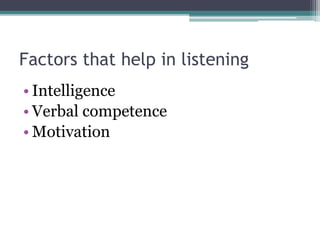
Factors that help in listening
• Intelligence
• Verbal competence
• Motivation
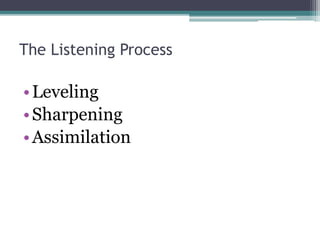
The Listening Process
•Leveling
•Sharpening
•Assimilation
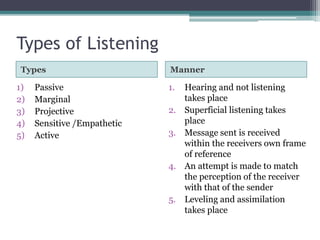
Types of Listening
Types Manner
1) Passive
2) Marginal
3) Projective
4) Sensitive /Empathetic
5) Active
1. Hearing and not listening
takes place
2. Superficial listening takes
place
3. Message sent is received
within the receivers own frame
of reference
4. An attempt is made to match
the perception of the receiver
with that of the sender
5. Leveling and assimilation
takes place
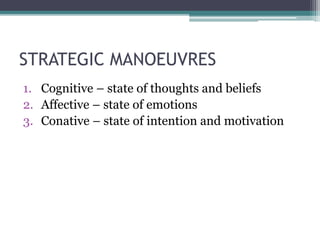
STRATEGIC MANOEUVRES
1. Cognitive – state of thoughts and beliefs
2. Affective – state of emotions
3. Conative – state of intention and motivation
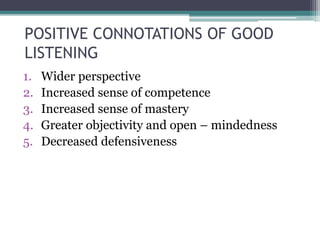
POSITIVE CONNOTATIONS OF GOOD
LISTENING
1. Wider perspective
2. Increased sense of competence
3. Increased sense of mastery
4. Greater objectivity and open – mindedness
5. Decreased defensiveness
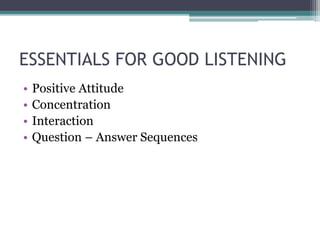
ESSENTIALS FOR GOOD LISTENING
• Positive Attitude
• Concentration
• Interaction
• Question – Answer Sequences
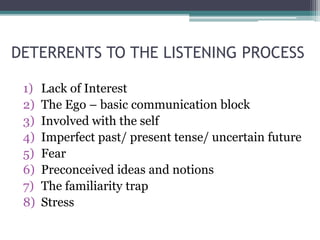
DETERRENTS TO THE LISTENING PROCESS
1) Lack of Interest
2) The Ego – basic communication block
3) Involved with the self
4) Imperfect past/ present tense/ uncertain future
5) Fear
6) Preconceived ideas and notions
7) The familiarity trap
8) Stress

Topic 3.pptx listening

  • 1.
  • 2.
    Factors that helpin listening • Intelligence • Verbal competence • Motivation
  • 3.
  • 4.
    Types of Listening TypesManner 1) Passive 2) Marginal 3) Projective 4) Sensitive /Empathetic 5) Active 1. Hearing and not listening takes place 2. Superficial listening takes place 3. Message sent is received within the receivers own frame of reference 4. An attempt is made to match the perception of the receiver with that of the sender 5. Leveling and assimilation takes place
  • 5.
    STRATEGIC MANOEUVRES 1. Cognitive– state of thoughts and beliefs 2. Affective – state of emotions 3. Conative – state of intention and motivation
  • 6.
    POSITIVE CONNOTATIONS OFGOOD LISTENING 1. Wider perspective 2. Increased sense of competence 3. Increased sense of mastery 4. Greater objectivity and open – mindedness 5. Decreased defensiveness
  • 7.
    ESSENTIALS FOR GOODLISTENING • Positive Attitude • Concentration • Interaction • Question – Answer Sequences
  • 8.
    DETERRENTS TO THELISTENING PROCESS 1) Lack of Interest 2) The Ego – basic communication block 3) Involved with the self 4) Imperfect past/ present tense/ uncertain future 5) Fear 6) Preconceived ideas and notions 7) The familiarity trap 8) Stress