Downloaded 28 times
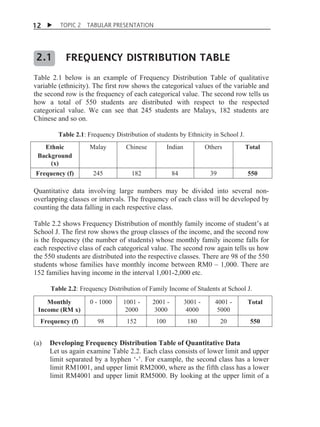
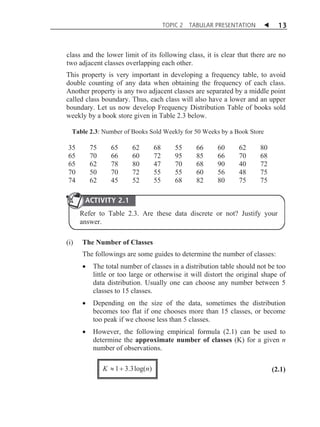
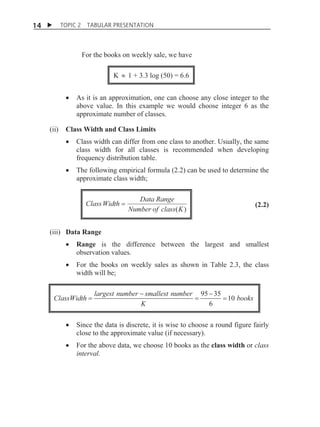
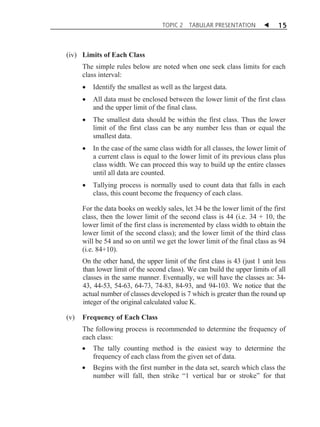
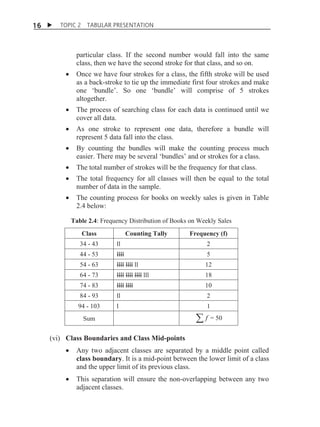
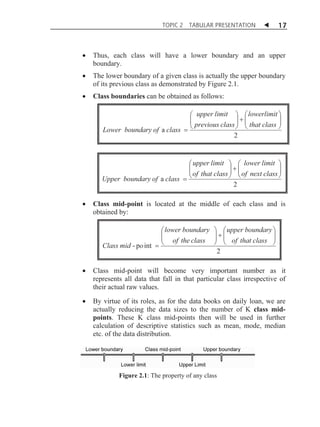
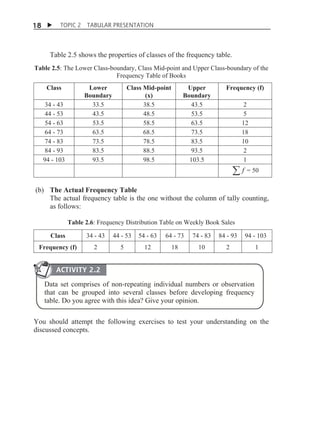
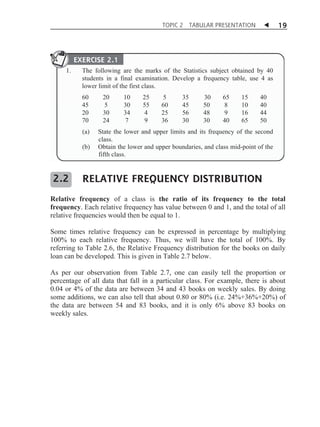
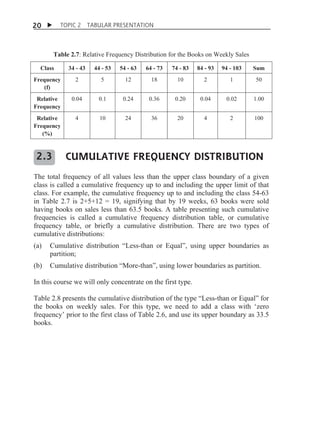
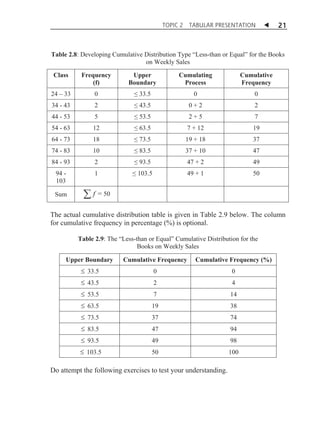
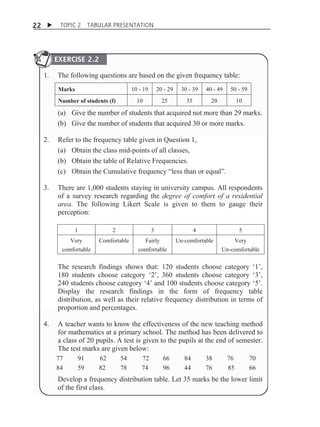
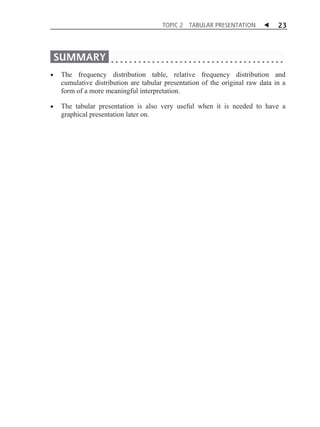

1. The document discusses different types of tabular presentations of data, including frequency distribution tables, relative frequency distribution tables, and cumulative frequency distribution tables. 2. It provides examples of how to construct each type of table using sample data on weekly book sales by a book store. Frequency tables involve grouping the data into classes and counting the frequency in each class. 3. Relative frequency tables show the proportion or percentage of the total data that falls into each class. Cumulative frequency tables show the running total frequency up to and including the upper limit of each class.


