BHARGAV MEHTA
Msc Nursing (ped. Dept)
Weight and height:
 Declines compare to infant
 At 2years: 12kg (27pounds)
 At 2 and half years: 4times that at birth
 Slowing of weight gain leads to a reduced metabolic
rate resulting decreased appetite.
 Gain in height is greater than that in weight during the
toddler period. Height increases about 10- 12.5cm (4 to
5inches) per year.
 Boys tend to be slightly taller than girls.
 Decreased head circumference
 Trunk is long
 Transverse diameter increases, greater than anterio
posterior diameter.
 Abdomen protrudes "pot bellied”
 Bowed leg
 Dentition: at 2years- 16 teeth, 2 and half-
20temporary teeth
 Integumentary: resistance to skin infection
 Cardiovascular: pulse rate decreases, BP increases,
heart and blood vessels increases in size.
 Respiratory: respiratory tract increases in size,
increases thoracic volume leading to decreased RR.
 GI system: salivary gland develops, chew food,
stomach capacity increases.
 Nervous system: increased maturation of brain
resulting increased intellectual and cognitive abilities.
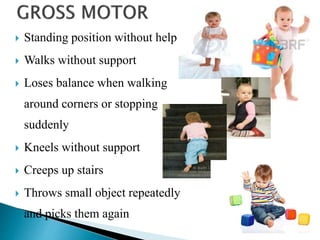
 Standing position without help
 Walks without support
 Loses balance when walking
around corners or stopping
suddenly
 Kneels without support
 Creeps up stairs
 Throws small object repeatedly
and picks them again
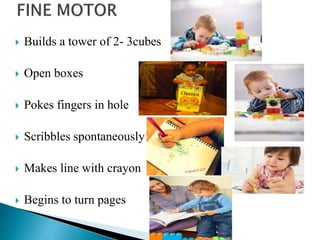
 Builds a tower of 2- 3cubes
 Open boxes
 Pokes fingers in hole
 Scribbles spontaneously
 Makes line with crayon
 Begins to turn pages
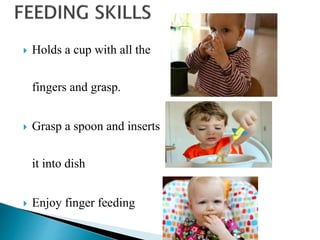
 Holds a cup with all the
fingers and grasp.
 Grasp a spoon and inserts
it into dish
 Enjoy finger feeding
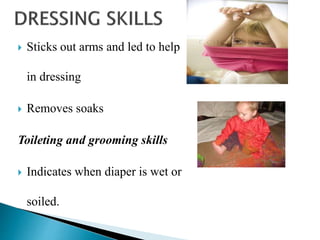
 Sticks out arms and led to help
in dressing
 Removes soaks
Toileting and grooming skills
 Indicates when diaper is wet or
soiled.
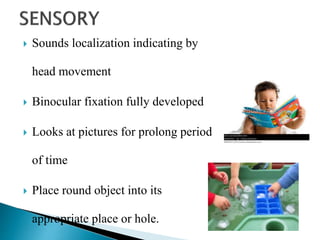
 Sounds localization indicating by
head movement
 Binocular fixation fully developed
 Looks at pictures for prolong period
of time
 Place round object into its
appropriate place or hole.
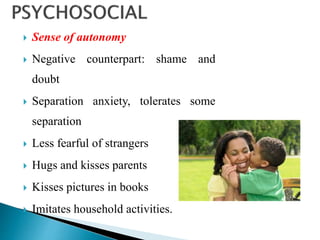
 Sense of autonomy
 Negative counterpart: shame and
doubt
 Separation anxiety, tolerates some
separation
 Less fearful of strangers
 Hugs and kisses parents
 Kisses pictures in books
 Imitates household activities.
 Psychosexual: Anal stage
 Spiritual: Intuitive- projective
 Intellectual: Sensorimotor stage
 Moral: Preconventional morality
RECEPTIVE
 Recognizes names of various parts of body
 Responds to familiar, simple commands
EXPRESSIVE
 Continues use of expressive jargon with gestures
 Says 2 to 6words
 Names familiar pictures or objects like “ball”
 Shakes head to communicate “no”
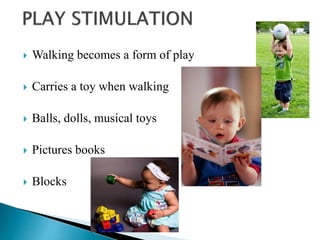
 Walking becomes a form of play
 Carries a toy when walking
 Balls, dolls, musical toys
 Pictures books
 Blocks
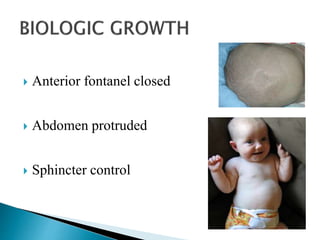
 Anterior fontanel closed
 Abdomen protruded
 Sphincter control
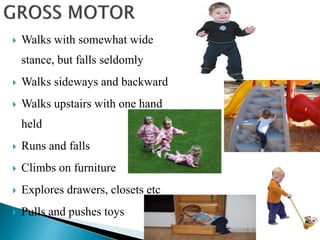
 Walks with somewhat wide
stance, but falls seldomly
 Walks sideways and backward
 Walks upstairs with one hand
held
 Runs and falls
 Climbs on furniture
 Explores drawers, closets etc
 Pulls and pushes toys
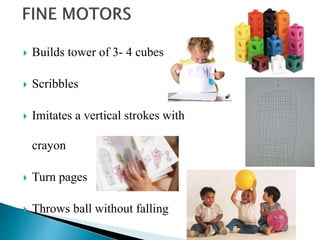
 Builds tower of 3- 4 cubes
 Scribbles
 Imitates a vertical strokes with
crayon
 Turn pages
 Throws ball without falling
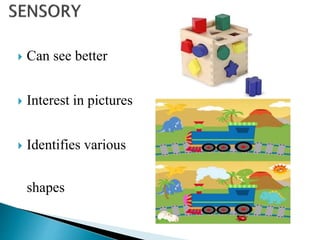
 Can see better
 Interest in pictures
 Identifies various
shapes
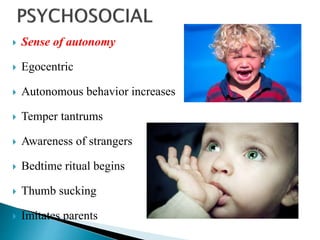
 Sense of autonomy
 Egocentric
 Autonomous behavior increases
 Temper tantrums
 Awareness of strangers
 Bedtime ritual begins
 Thumb sucking
 Imitates parents
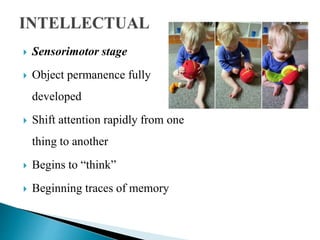
 Sensorimotor stage
 Object permanence fully
developed
 Shift attention rapidly from one
thing to another
 Begins to “think”
 Beginning traces of memory
RECEPTIVE
 Identifies pictures of familiar objects when named
 Identifies one or more parts of body when named
EXPRESSIVE
 Speaks 10 real words
 Names pictures
 Uses words more than gestures
 Sentence length
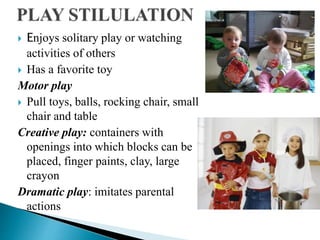
 Enjoys solitary play or watching
activities of others
 Has a favorite toy
Motor play
 Pull toys, balls, rocking chair, small
chair and table
Creative play: containers with
openings into which blocks can be
placed, finger paints, clay, large
crayon
Dramatic play: imitates parental
actions
 Weight: 11.8 to 12.7kg
 Height: 82.5 to 85cm
 CC> HC
 HC: 49 TO 50 cm
 Pulse:110 beats/min
 Respiration: 26- 28 breaths/per
 BP: 99/ 64
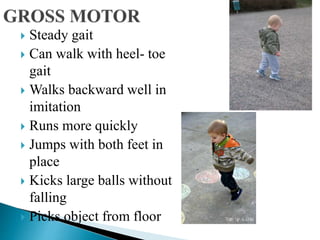
 Steady gait
 Can walk with heel- toe
gait
 Walks backward well in
imitation
 Runs more quickly
 Jumps with both feet in
place
 Kicks large balls without
falling
 Picks object from floor
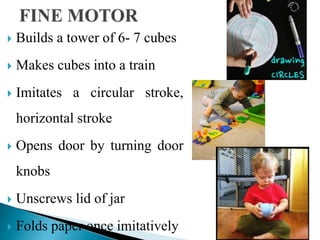
 Builds a tower of 6- 7 cubes
 Makes cubes into a train
 Imitates a circular stroke,
horizontal stroke
 Opens door by turning door
knobs
 Unscrews lid of jar
 Folds paper once imitatively
 Feeding skills: drinks well from a small glass, put spoon
into mouth with one hand, can use straw, imitates eating
habits of others
 Dressing skills: pulls on own simple garments- coat,
elastic pants, shoe laces, removes cloths
 Toileting and grooming skills: verbalizes toilet needs,
usually urinates when taken to toilet, may brush teeth with
help, attempts to wash self in tub or shower.
 Visual acuity: 20/40
 well accommodation
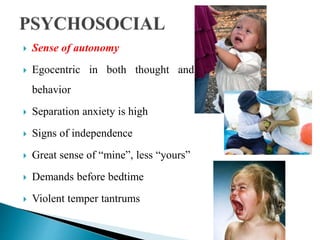
 Sense of autonomy
 Egocentric in both thought and
behavior
 Separation anxiety is high
 Signs of independence
 Great sense of “mine”, less “yours”
 Demands before bedtime
 Violent temper tantrums
 Preoperational stage
 Preoccupation with symbols in language, dreams and
fantasy
 Attention span longer
 Memory increases
 Symbolic thoughts begins
 Imitation become more symbolic
 Preconventional morality
 Stage 1 (2- 3years): if punished for doing it,
it’s wrong; it not punished it must be right.
RECEPTIVE
 Understands more complex sentences
 Obeys prepositions “on”, “under” and two commands
“pick up your coat and put it on the chair”
 Enjoys stories with pictures
EXPRESSIVE
 Knows about 300words
 Uses pronouns “I”, “me”, “mine”.
 Enjoys parallel play- social interaction
 Motor play: pulls wagon, places beads in box and dumps
them
 Creative play: clay materials, finger-paints, brush paints,
large crayon, puzzles
 Quiet play: hearing stories
 Dramatic: domestic mimicry, enjoys with dolls.
 Weight: gains about 5kg
 Height: gains 6- 8cm
 Dentition: full sets of 20 temporary teeth
 Daytime bowel and bladder control
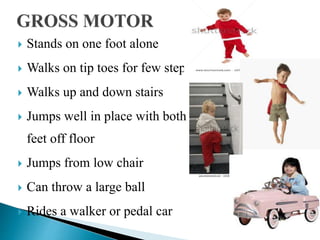
 Stands on one foot alone
 Walks on tip toes for few steps
 Walks up and down stairs
 Jumps well in place with both
feet off floor
 Jumps from low chair
 Can throw a large ball
 Rides a walker or pedal car
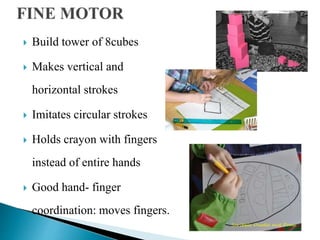
 Build tower of 8cubes
 Makes vertical and
horizontal strokes
 Imitates circular strokes
 Holds crayon with fingers
instead of entire hands
 Good hand- finger
coordination: moves fingers.
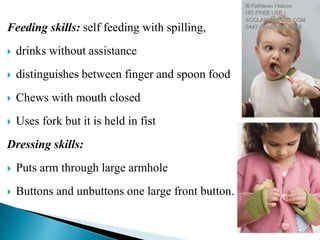
Feeding skills: self feeding with spilling,
 drinks without assistance
 distinguishes between finger and spoon food
 Chews with mouth closed
 Uses fork but it is held in fist
Dressing skills:
 Puts arm through large armhole
 Buttons and unbuttons one large front button.
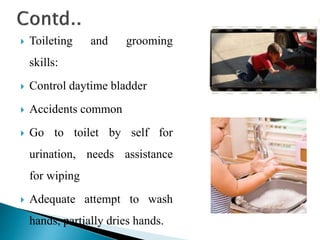
 Toileting and grooming
skills:
 Control daytime bladder
 Accidents common
 Go to toilet by self for
urination, needs assistance
for wiping
 Adequate attempt to wash
hands, partially dries hands.
 Visual acuity: 20/ 30
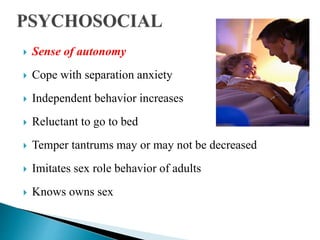
 Sense of autonomy
 Cope with separation anxiety
 Independent behavior increases
 Reluctant to go to bed
 Temper tantrums may or may not be decreased
 Imitates sex role behavior of adults
 Knows owns sex
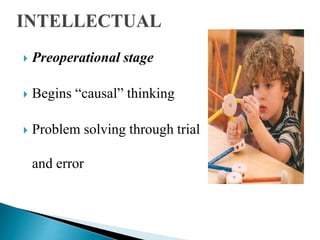
 Preoperational stage
 Begins “causal” thinking
 Problem solving through trial
and error
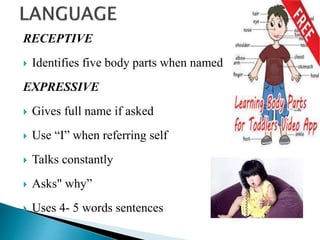
RECEPTIVE
 Identifies five body parts when named
EXPRESSIVE
 Gives full name if asked
 Use “I” when referring self
 Talks constantly
 Asks" why”
 Uses 4- 5 words sentences
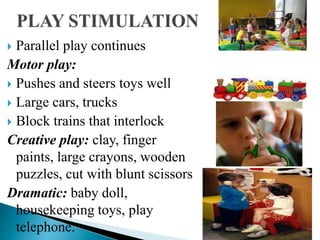
 Parallel play continues
Motor play:
 Pushes and steers toys well
 Large cars, trucks
 Block trains that interlock
Creative play: clay, finger
paints, large crayons, wooden
puzzles, cut with blunt scissors
Dramatic: baby doll,
housekeeping toys, play
telephone.
Love
and
security
Disciplin
e
leading
to self
control
Progress
sion to
independ
ance
Control
of bodily
functions
Toddler g n d
Toddler g n d

Toddler g n d

  • 1.
  • 2.
    Weight and height: Declines compare to infant  At 2years: 12kg (27pounds)  At 2 and half years: 4times that at birth  Slowing of weight gain leads to a reduced metabolic rate resulting decreased appetite.  Gain in height is greater than that in weight during the toddler period. Height increases about 10- 12.5cm (4 to 5inches) per year.
  • 3.
     Boys tendto be slightly taller than girls.  Decreased head circumference  Trunk is long  Transverse diameter increases, greater than anterio posterior diameter.  Abdomen protrudes "pot bellied”  Bowed leg  Dentition: at 2years- 16 teeth, 2 and half- 20temporary teeth
  • 4.
     Integumentary: resistanceto skin infection  Cardiovascular: pulse rate decreases, BP increases, heart and blood vessels increases in size.  Respiratory: respiratory tract increases in size, increases thoracic volume leading to decreased RR.  GI system: salivary gland develops, chew food, stomach capacity increases.  Nervous system: increased maturation of brain resulting increased intellectual and cognitive abilities.
  • 6.
     Standing positionwithout help  Walks without support  Loses balance when walking around corners or stopping suddenly  Kneels without support  Creeps up stairs  Throws small object repeatedly and picks them again
  • 7.
     Builds atower of 2- 3cubes  Open boxes  Pokes fingers in hole  Scribbles spontaneously  Makes line with crayon  Begins to turn pages
  • 8.
     Holds acup with all the fingers and grasp.  Grasp a spoon and inserts it into dish  Enjoy finger feeding
  • 9.
     Sticks outarms and led to help in dressing  Removes soaks Toileting and grooming skills  Indicates when diaper is wet or soiled.
  • 10.
     Sounds localizationindicating by head movement  Binocular fixation fully developed  Looks at pictures for prolong period of time  Place round object into its appropriate place or hole.
  • 11.
     Sense ofautonomy  Negative counterpart: shame and doubt  Separation anxiety, tolerates some separation  Less fearful of strangers  Hugs and kisses parents  Kisses pictures in books  Imitates household activities.
  • 12.
     Psychosexual: Analstage  Spiritual: Intuitive- projective  Intellectual: Sensorimotor stage  Moral: Preconventional morality
  • 13.
    RECEPTIVE  Recognizes namesof various parts of body  Responds to familiar, simple commands EXPRESSIVE  Continues use of expressive jargon with gestures  Says 2 to 6words  Names familiar pictures or objects like “ball”  Shakes head to communicate “no”
  • 14.
     Walking becomesa form of play  Carries a toy when walking  Balls, dolls, musical toys  Pictures books  Blocks
  • 16.
     Anterior fontanelclosed  Abdomen protruded  Sphincter control
  • 17.
     Walks withsomewhat wide stance, but falls seldomly  Walks sideways and backward  Walks upstairs with one hand held  Runs and falls  Climbs on furniture  Explores drawers, closets etc  Pulls and pushes toys
  • 18.
     Builds towerof 3- 4 cubes  Scribbles  Imitates a vertical strokes with crayon  Turn pages  Throws ball without falling
  • 19.
     Can seebetter  Interest in pictures  Identifies various shapes
  • 20.
     Sense ofautonomy  Egocentric  Autonomous behavior increases  Temper tantrums  Awareness of strangers  Bedtime ritual begins  Thumb sucking  Imitates parents
  • 21.
     Sensorimotor stage Object permanence fully developed  Shift attention rapidly from one thing to another  Begins to “think”  Beginning traces of memory
  • 22.
    RECEPTIVE  Identifies picturesof familiar objects when named  Identifies one or more parts of body when named EXPRESSIVE  Speaks 10 real words  Names pictures  Uses words more than gestures  Sentence length
  • 23.
     Enjoys solitaryplay or watching activities of others  Has a favorite toy Motor play  Pull toys, balls, rocking chair, small chair and table Creative play: containers with openings into which blocks can be placed, finger paints, clay, large crayon Dramatic play: imitates parental actions
  • 25.
     Weight: 11.8to 12.7kg  Height: 82.5 to 85cm  CC> HC  HC: 49 TO 50 cm  Pulse:110 beats/min  Respiration: 26- 28 breaths/per  BP: 99/ 64
  • 26.
     Steady gait Can walk with heel- toe gait  Walks backward well in imitation  Runs more quickly  Jumps with both feet in place  Kicks large balls without falling  Picks object from floor
  • 27.
     Builds atower of 6- 7 cubes  Makes cubes into a train  Imitates a circular stroke, horizontal stroke  Opens door by turning door knobs  Unscrews lid of jar  Folds paper once imitatively
  • 28.
     Feeding skills:drinks well from a small glass, put spoon into mouth with one hand, can use straw, imitates eating habits of others  Dressing skills: pulls on own simple garments- coat, elastic pants, shoe laces, removes cloths  Toileting and grooming skills: verbalizes toilet needs, usually urinates when taken to toilet, may brush teeth with help, attempts to wash self in tub or shower.
  • 29.
     Visual acuity:20/40  well accommodation
  • 30.
     Sense ofautonomy  Egocentric in both thought and behavior  Separation anxiety is high  Signs of independence  Great sense of “mine”, less “yours”  Demands before bedtime  Violent temper tantrums
  • 31.
     Preoperational stage Preoccupation with symbols in language, dreams and fantasy  Attention span longer  Memory increases  Symbolic thoughts begins  Imitation become more symbolic
  • 32.
     Preconventional morality Stage 1 (2- 3years): if punished for doing it, it’s wrong; it not punished it must be right.
  • 33.
    RECEPTIVE  Understands morecomplex sentences  Obeys prepositions “on”, “under” and two commands “pick up your coat and put it on the chair”  Enjoys stories with pictures EXPRESSIVE  Knows about 300words  Uses pronouns “I”, “me”, “mine”.
  • 34.
     Enjoys parallelplay- social interaction  Motor play: pulls wagon, places beads in box and dumps them  Creative play: clay materials, finger-paints, brush paints, large crayon, puzzles  Quiet play: hearing stories  Dramatic: domestic mimicry, enjoys with dolls.
  • 36.
     Weight: gainsabout 5kg  Height: gains 6- 8cm  Dentition: full sets of 20 temporary teeth  Daytime bowel and bladder control
  • 37.
     Stands onone foot alone  Walks on tip toes for few steps  Walks up and down stairs  Jumps well in place with both feet off floor  Jumps from low chair  Can throw a large ball  Rides a walker or pedal car
  • 38.
     Build towerof 8cubes  Makes vertical and horizontal strokes  Imitates circular strokes  Holds crayon with fingers instead of entire hands  Good hand- finger coordination: moves fingers.
  • 39.
    Feeding skills: selffeeding with spilling,  drinks without assistance  distinguishes between finger and spoon food  Chews with mouth closed  Uses fork but it is held in fist Dressing skills:  Puts arm through large armhole  Buttons and unbuttons one large front button.
  • 40.
     Toileting andgrooming skills:  Control daytime bladder  Accidents common  Go to toilet by self for urination, needs assistance for wiping  Adequate attempt to wash hands, partially dries hands.
  • 41.
  • 42.
     Sense ofautonomy  Cope with separation anxiety  Independent behavior increases  Reluctant to go to bed  Temper tantrums may or may not be decreased  Imitates sex role behavior of adults  Knows owns sex
  • 43.
     Preoperational stage Begins “causal” thinking  Problem solving through trial and error
  • 44.
    RECEPTIVE  Identifies fivebody parts when named EXPRESSIVE  Gives full name if asked  Use “I” when referring self  Talks constantly  Asks" why”  Uses 4- 5 words sentences
  • 45.
     Parallel playcontinues Motor play:  Pushes and steers toys well  Large cars, trucks  Block trains that interlock Creative play: clay, finger paints, large crayons, wooden puzzles, cut with blunt scissors Dramatic: baby doll, housekeeping toys, play telephone.
  • 46.