The Time
       Between
       the Wars
The Roaring 20s and the Great Depression
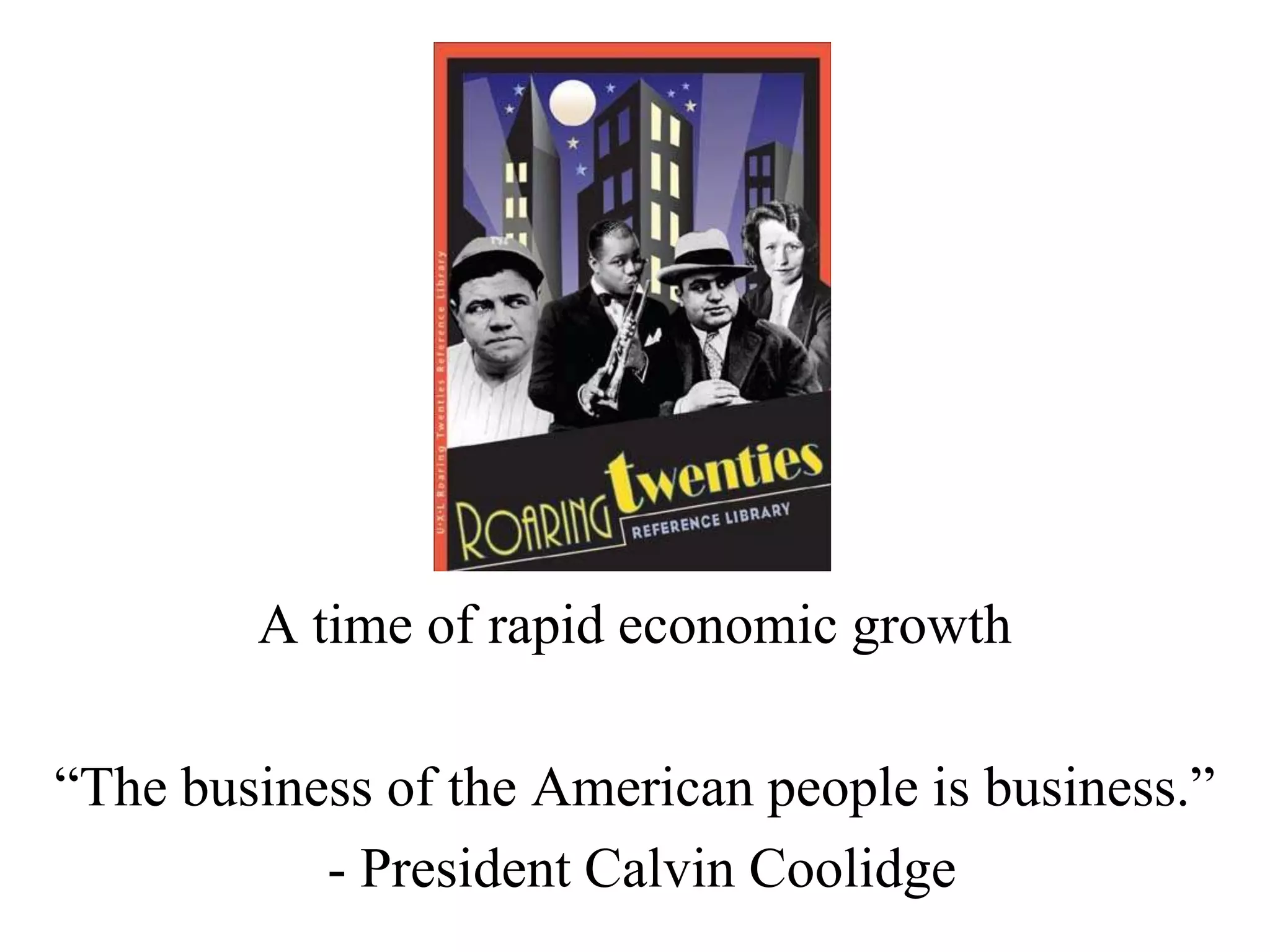
A time of rapid economic growth

“The business of the American people is business.”
           - President Calvin Coolidge
• The majority of the people in Europe and
  the United States lived in urban (cities)
  areas.
• The 1920s are marked by the art, literature,
  cinema, and movies that were created, so it
  is sometimes known as the “Jazz Age.”
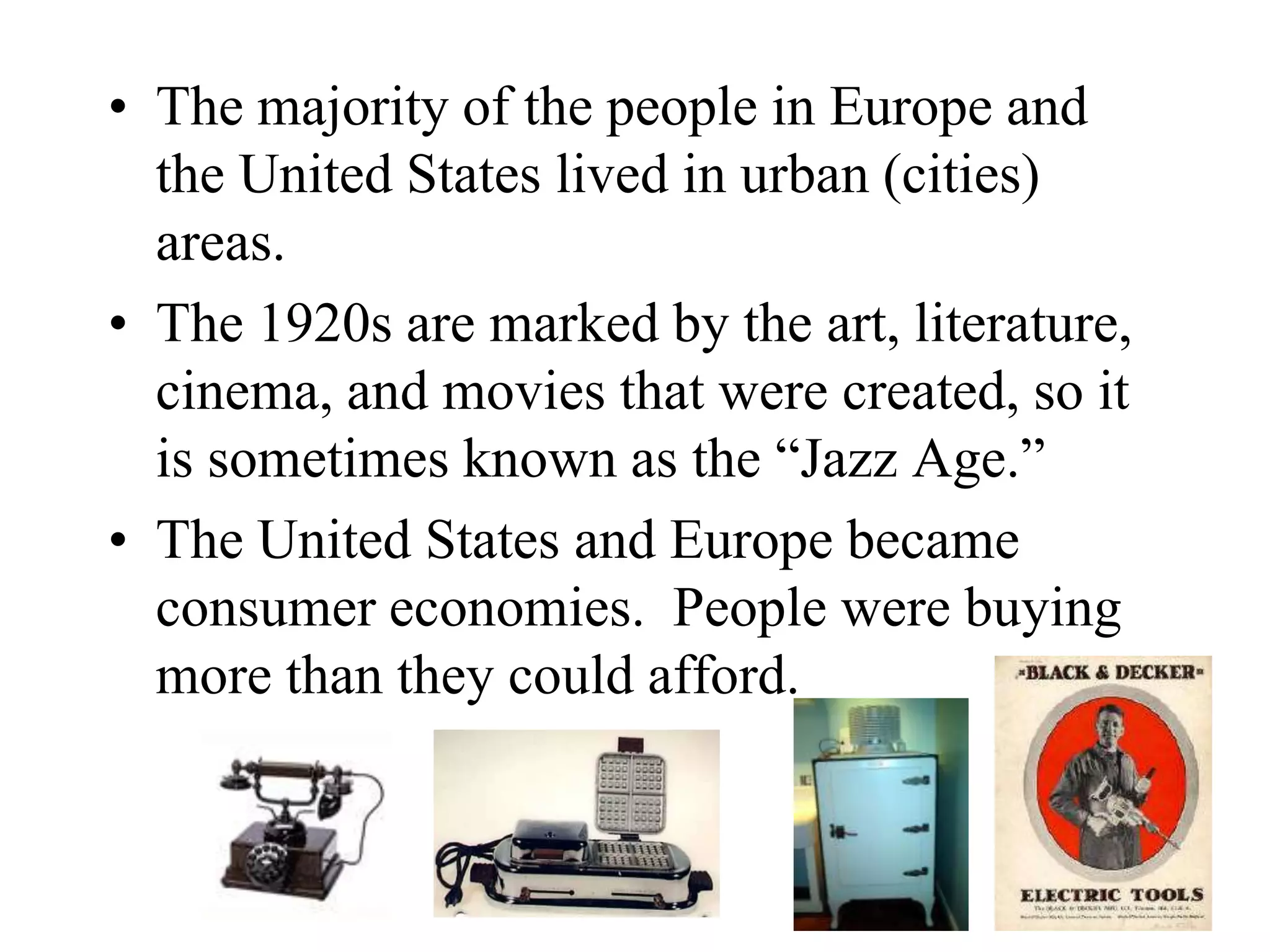
• The United States and Europe became
  consumer economies. People were buying
  more than they could afford.
Prohibition
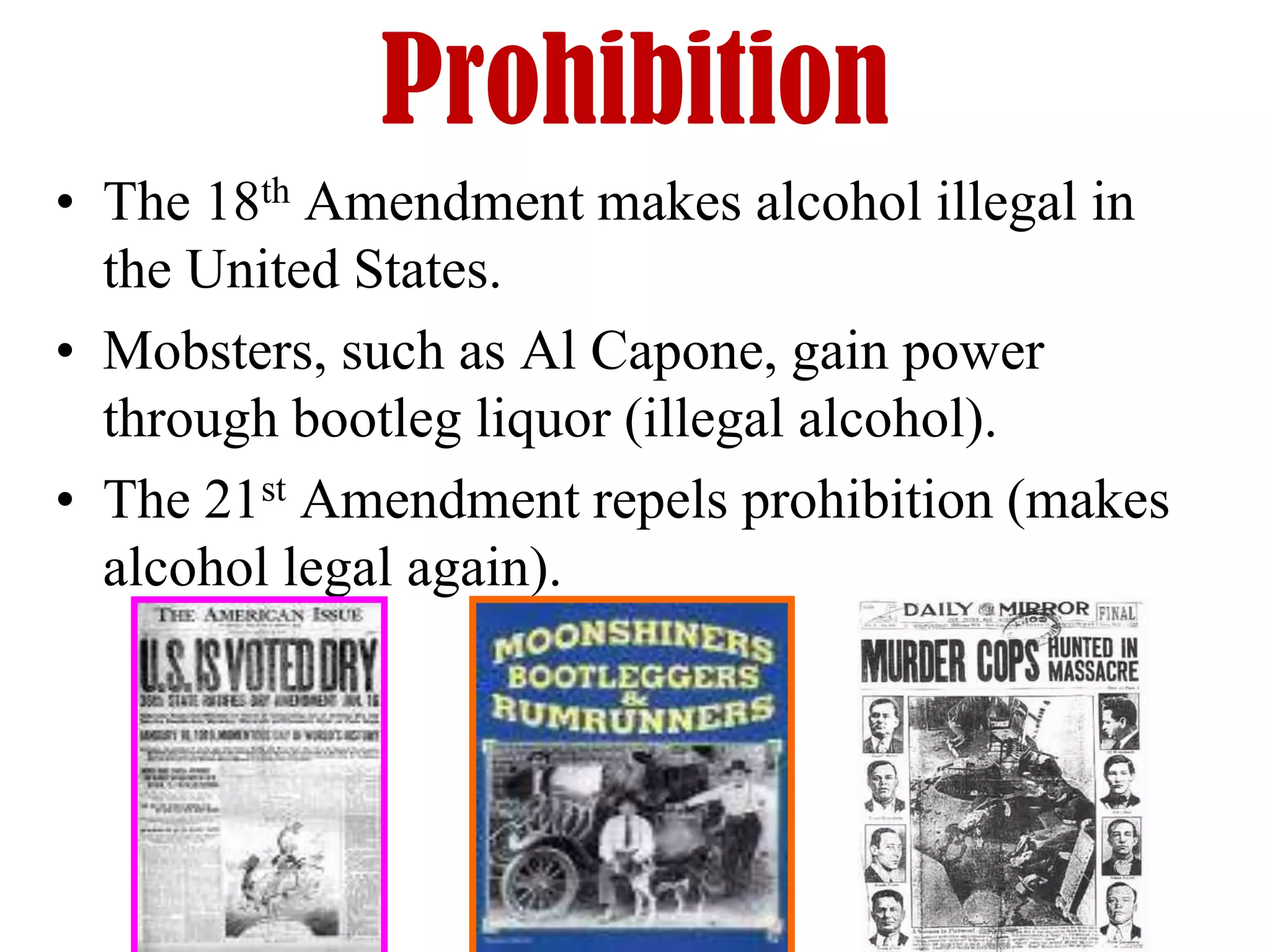
• The 18th Amendment makes alcohol illegal in
  the United States.
• Mobsters, such as Al Capone, gain power
  through bootleg liquor (illegal alcohol).
• The 21st Amendment repels prohibition (makes
  alcohol legal again).
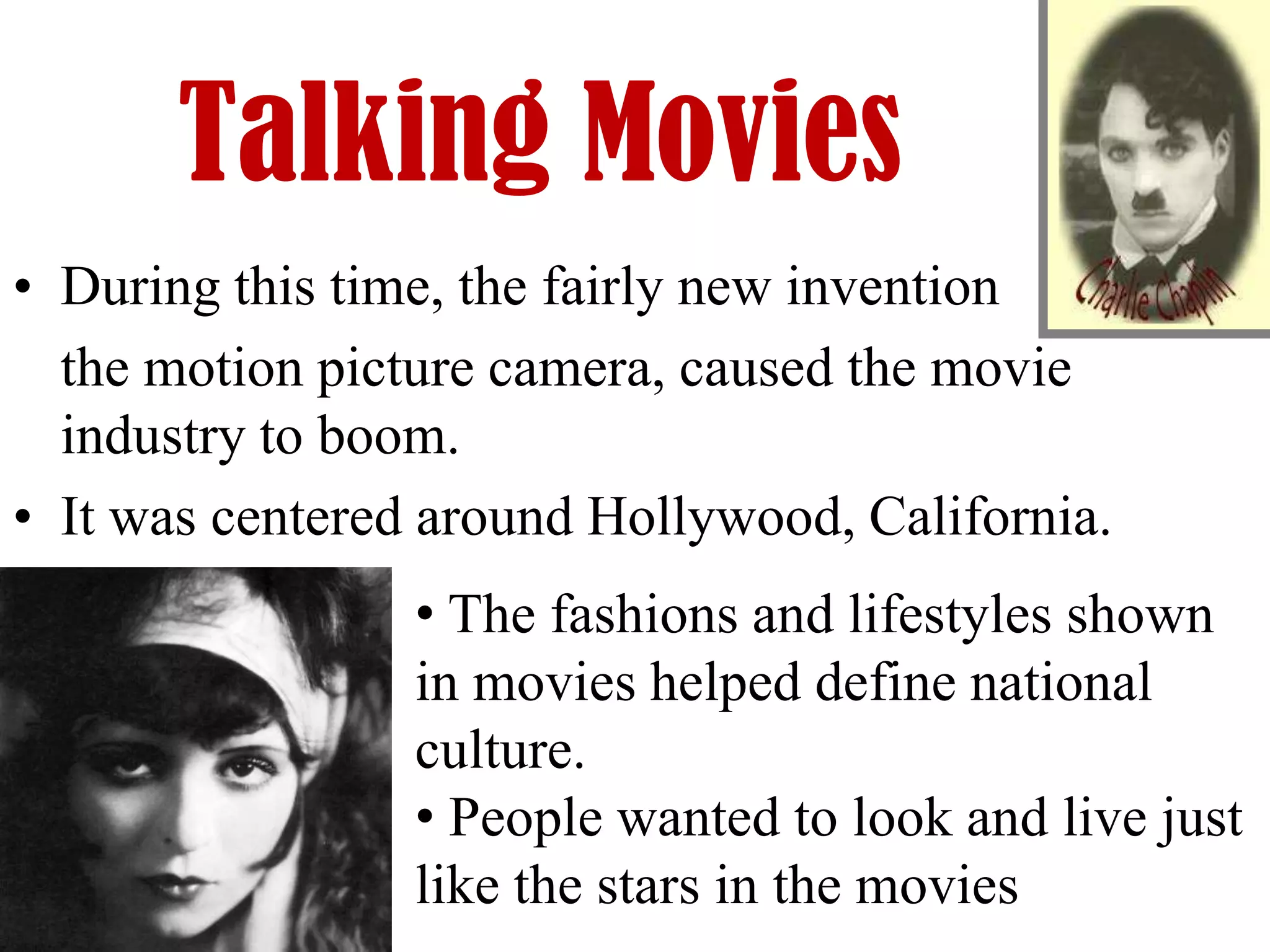
Talking Movies
• During this time, the fairly new invention
  the motion picture camera, caused the movie
  industry to boom.
• It was centered around Hollywood, California.
                 • The fashions and lifestyles shown
                 in movies helped define national
                 culture.
                 • People wanted to look and live just
                 like the stars in the movies
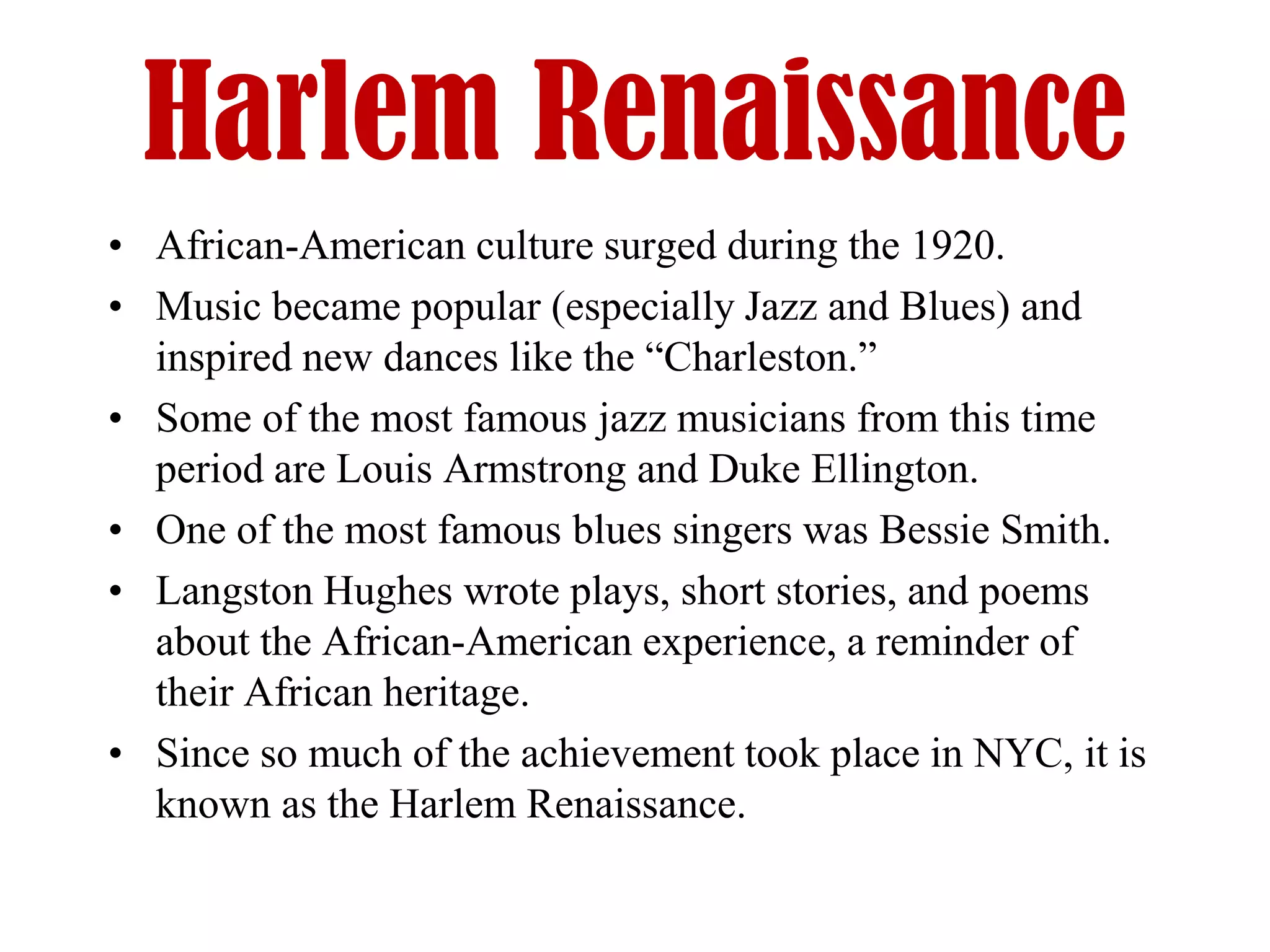
Harlem Renaissance
• African-American culture surged during the 1920.
• Music became popular (especially Jazz and Blues) and
  inspired new dances like the “Charleston.”
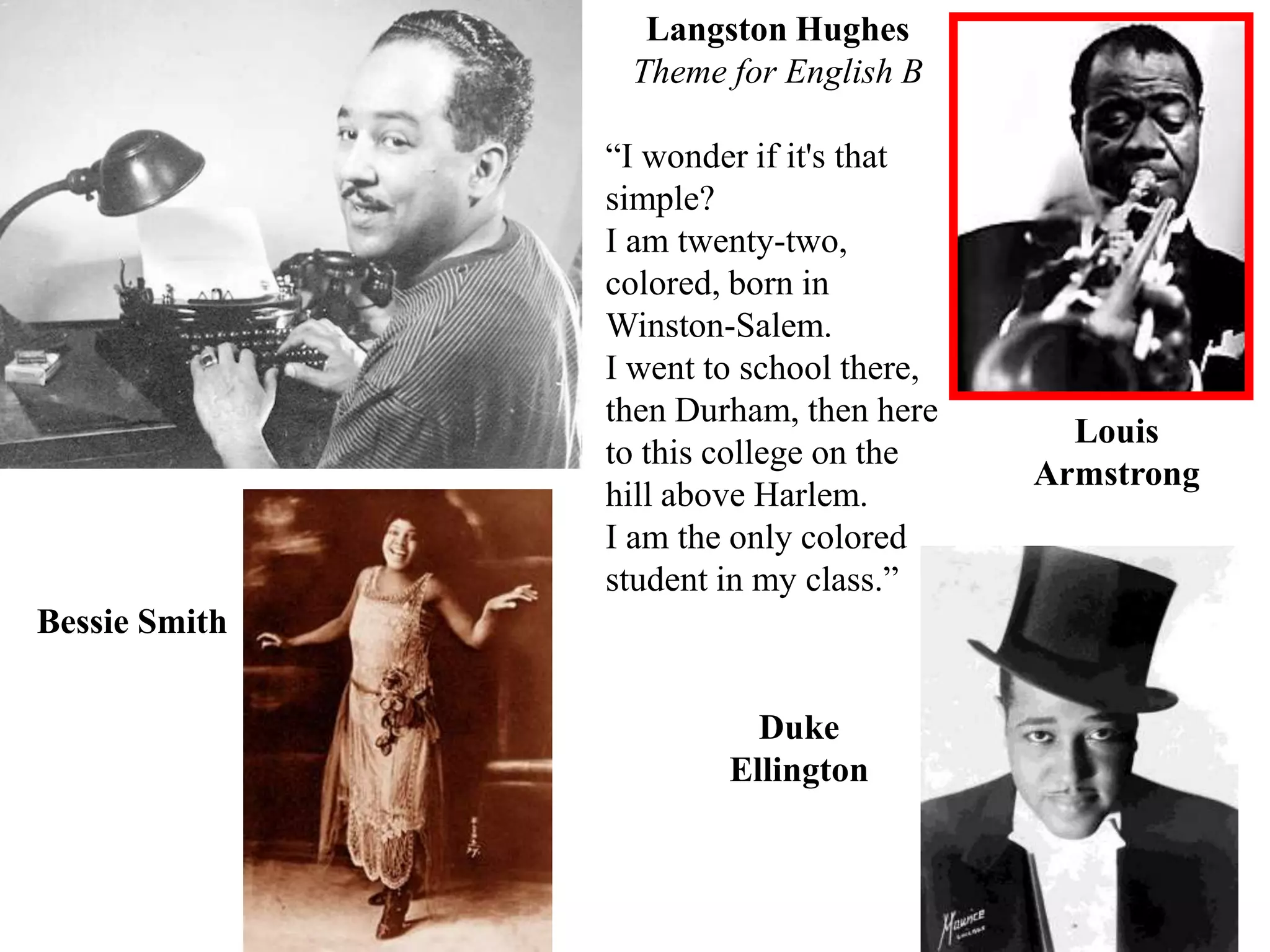
• Some of the most famous jazz musicians from this time
  period are Louis Armstrong and Duke Ellington.
• One of the most famous blues singers was Bessie Smith.
• Langston Hughes wrote plays, short stories, and poems
  about the African-American experience, a reminder of
  their African heritage.
• Since so much of the achievement took place in NYC, it is
  known as the Harlem Renaissance.
Langston Hughes
                Theme for English B

               “I wonder if it's that
               simple?
               I am twenty-two,
               colored, born in
               Winston-Salem.
               I went to school there,
               then Durham, then here
                                           Louis
               to this college on the
                                         Armstrong
               hill above Harlem.
               I am the only colored
               student in my class.”
Bessie Smith

                         Duke
                       Ellington
The Great Depression
 When the United States stock market
  crashed on October 29, 1929, the
    world’s economy collapsed.
The Early 1930s
• nations struggled through depressions
• businesses went broke
• millions of people were out of work
• banks closed
• poverty spread throughout the world
• The climate was perfect for the rise of dictators
  such as Adolf Hitler (Germany) and Benito
  Mussolini (Italy).
• This period is known as the Great Depression.
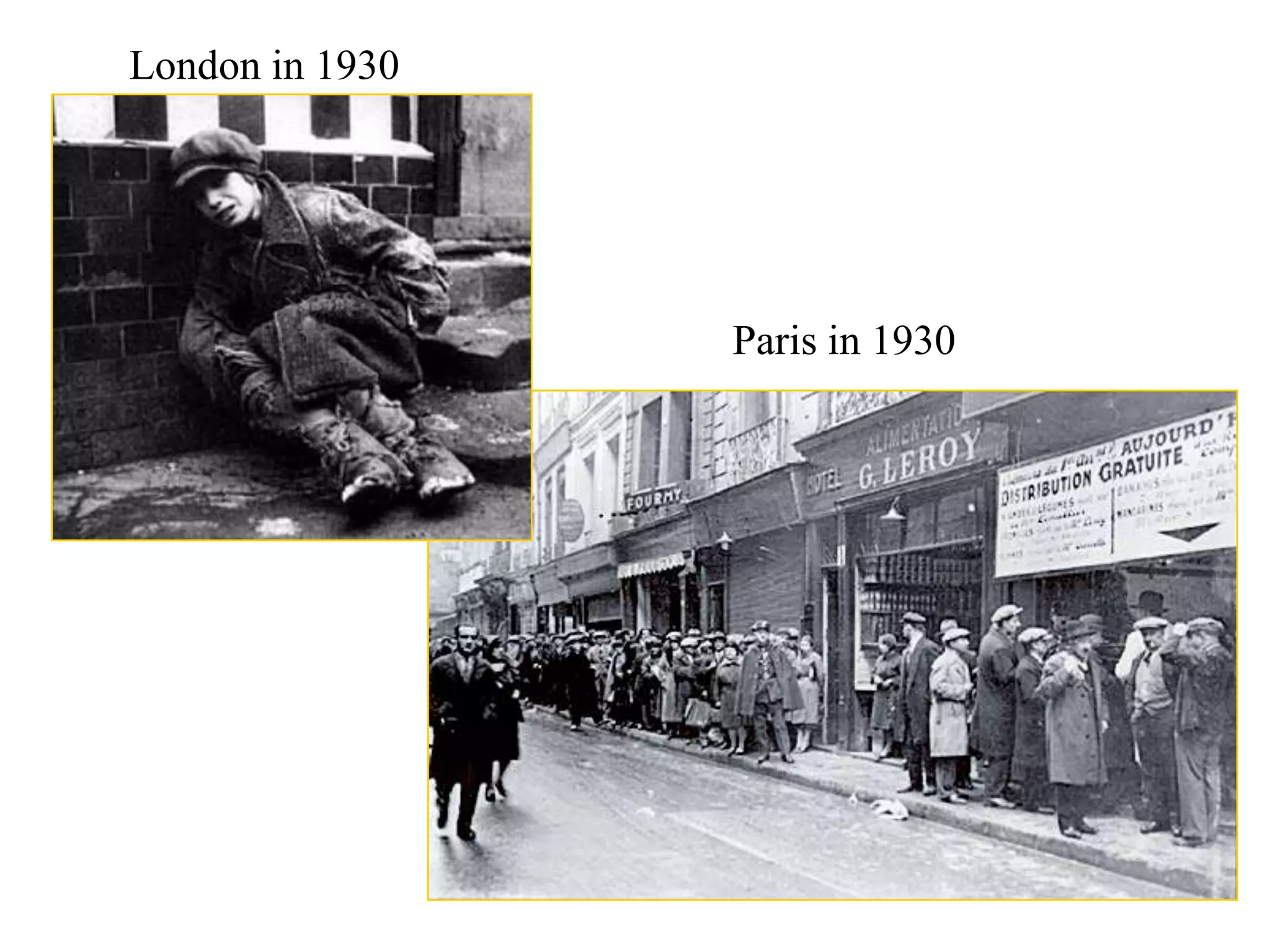
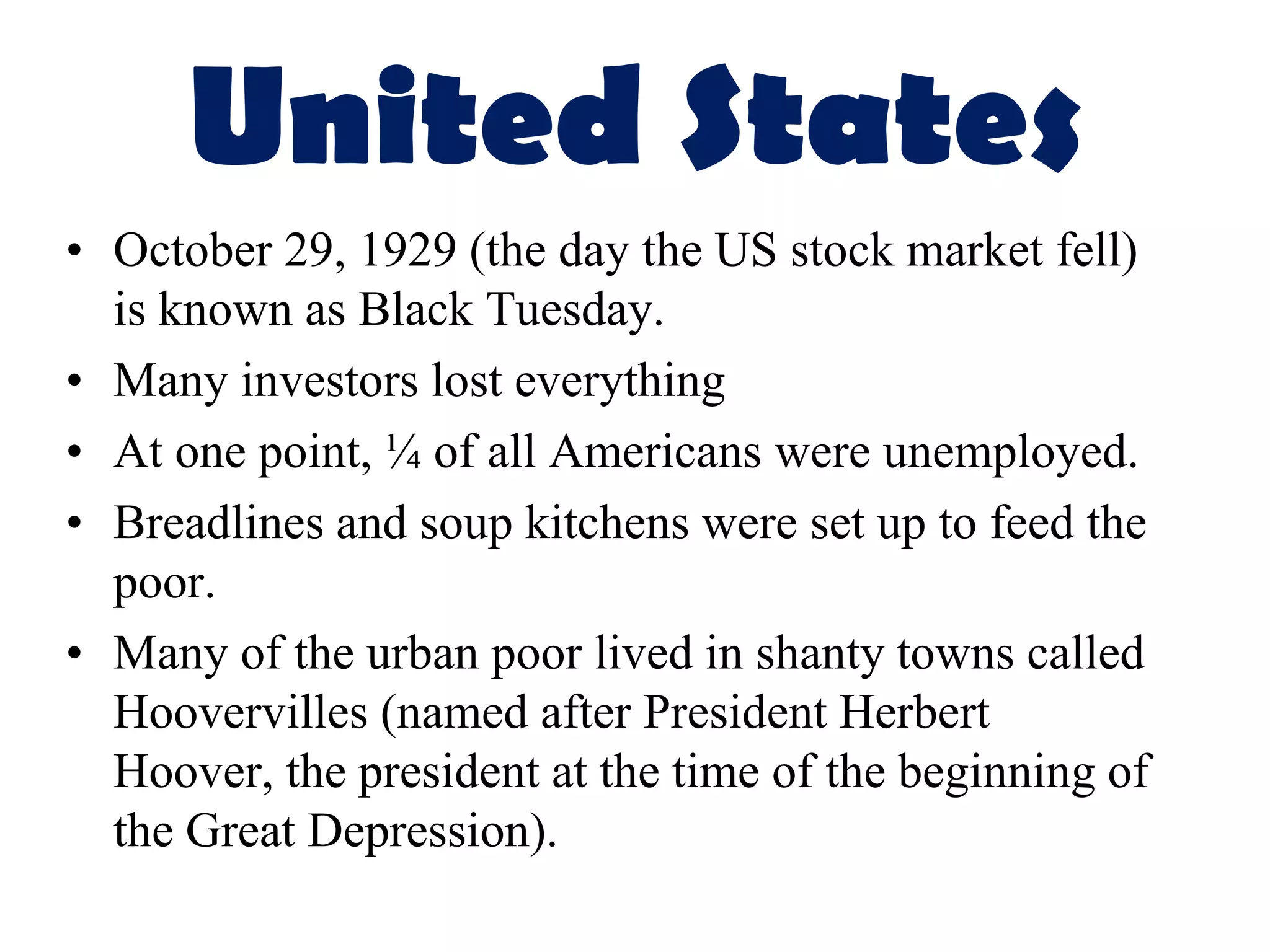
London in 1930


                 Paris in 1930
United States
• October 29, 1929 (the day the US stock market fell)
  is known as Black Tuesday.
• Many investors lost everything
• At one point, ¼ of all Americans were unemployed.
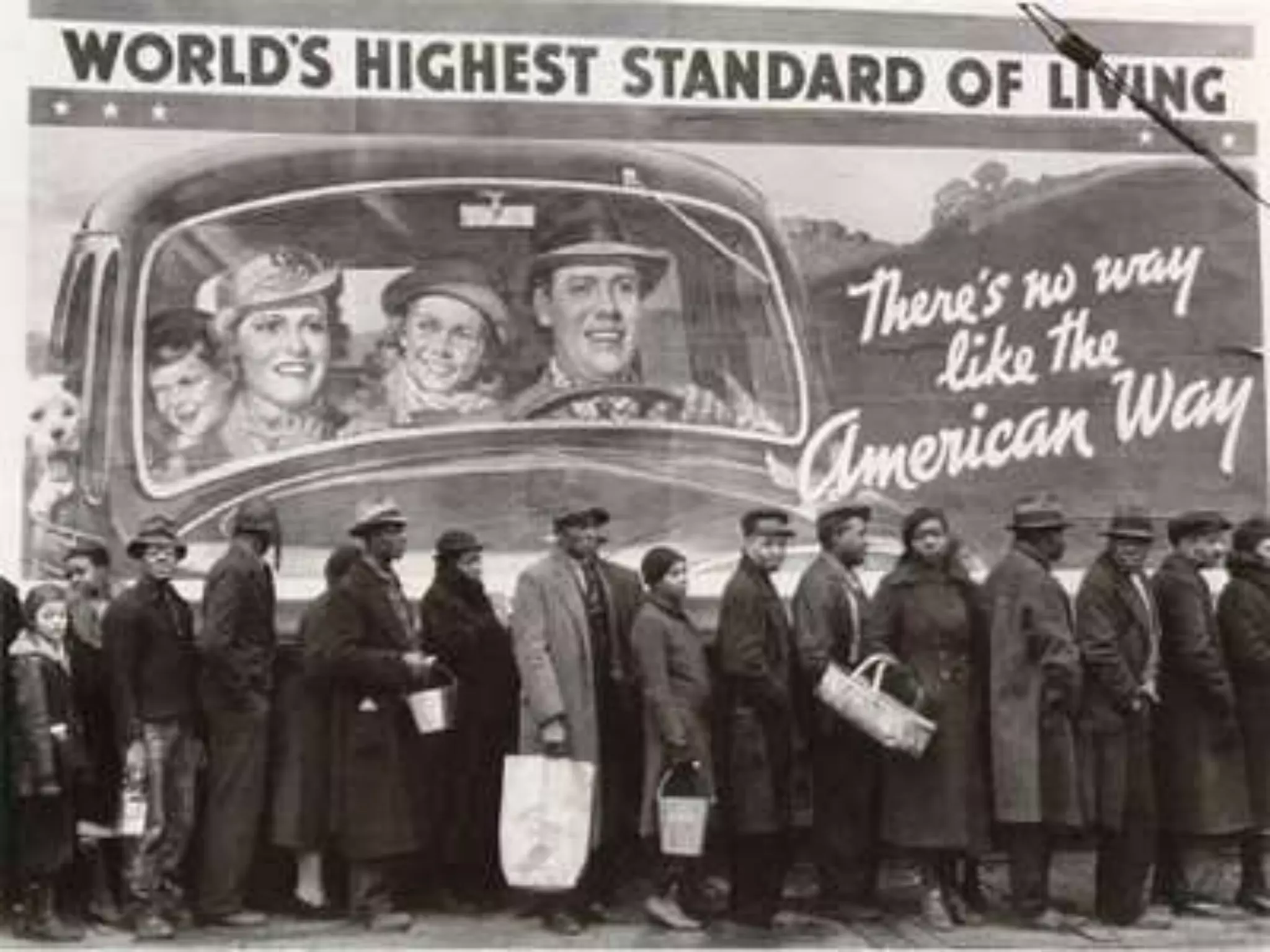
• Breadlines and soup kitchens were set up to feed the
  poor.
• Many of the urban poor lived in shanty towns called
  Hoovervilles (named after President Herbert
  Hoover, the president at the time of the beginning of
  the Great Depression).
Germany
• Germany depended heavily on American loans.
• The Wall Street Crash (Black Tuesday) placed
  more pressure for Germany to repay US loans.
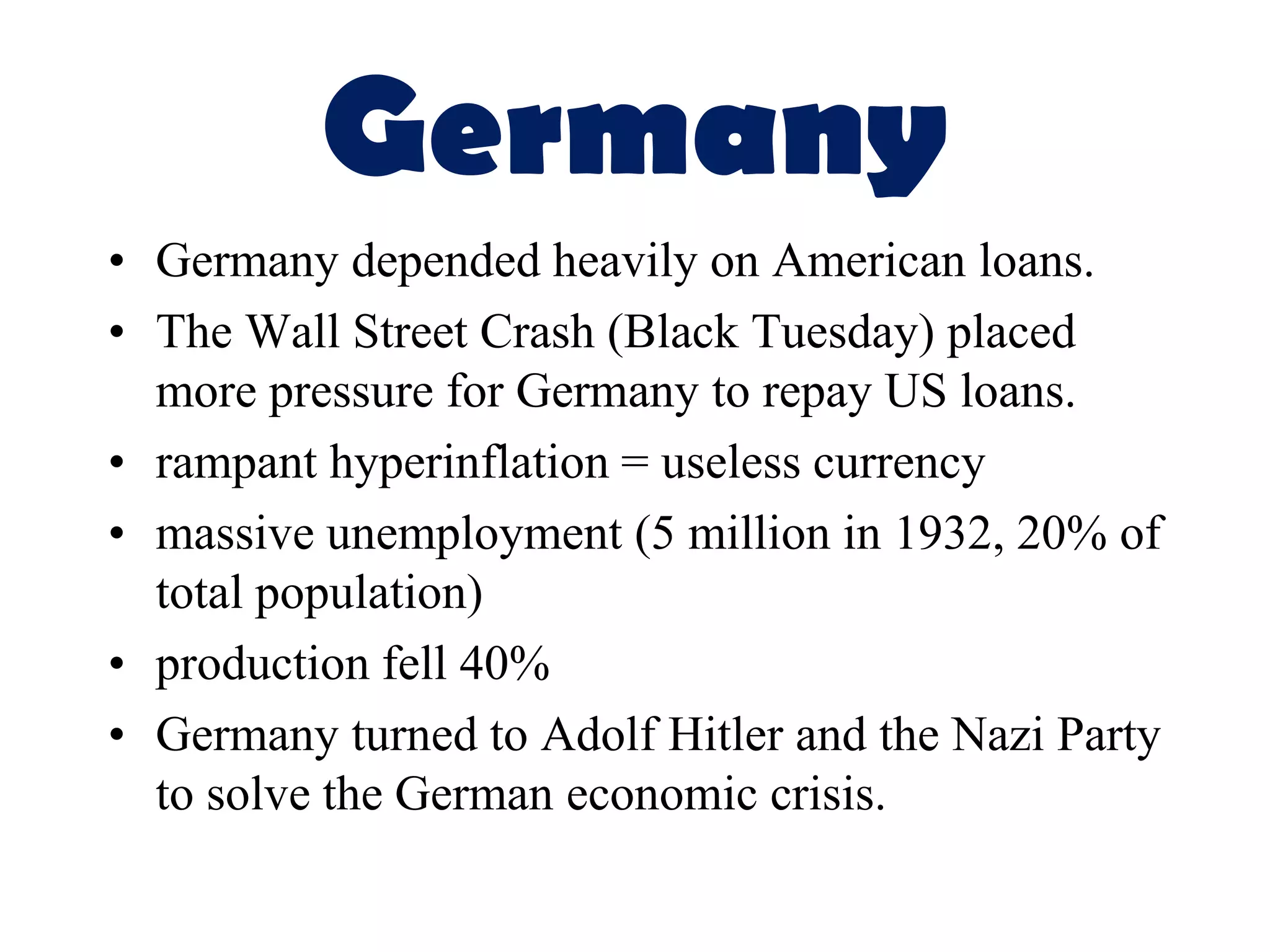
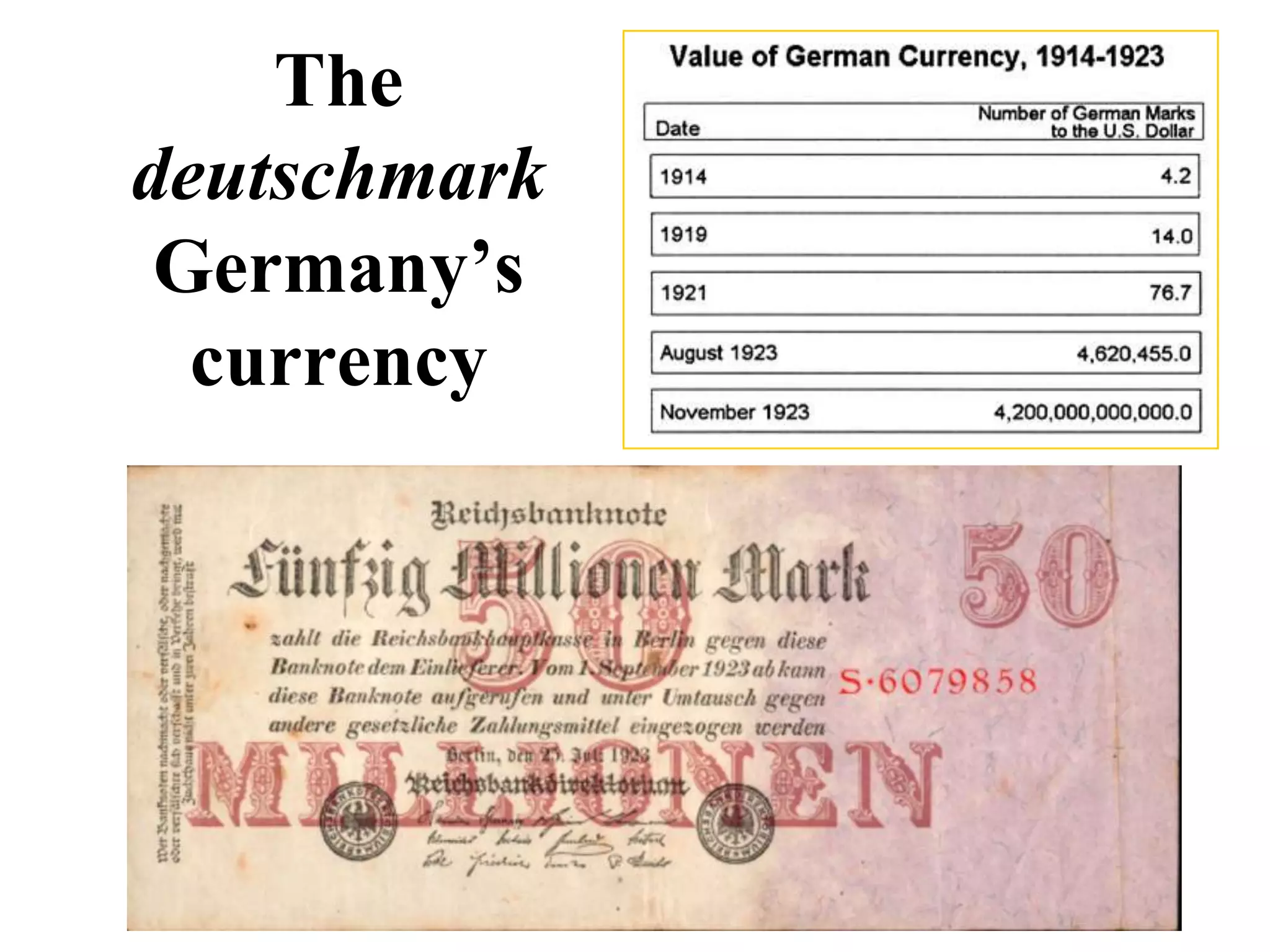
• rampant hyperinflation = useless currency
• massive unemployment (5 million in 1932, 20% of
  total population)
• production fell 40%
• Germany turned to Adolf Hitler and the Nazi Party
  to solve the German economic crisis.
The
deutschmark
 Germany’s
  currency
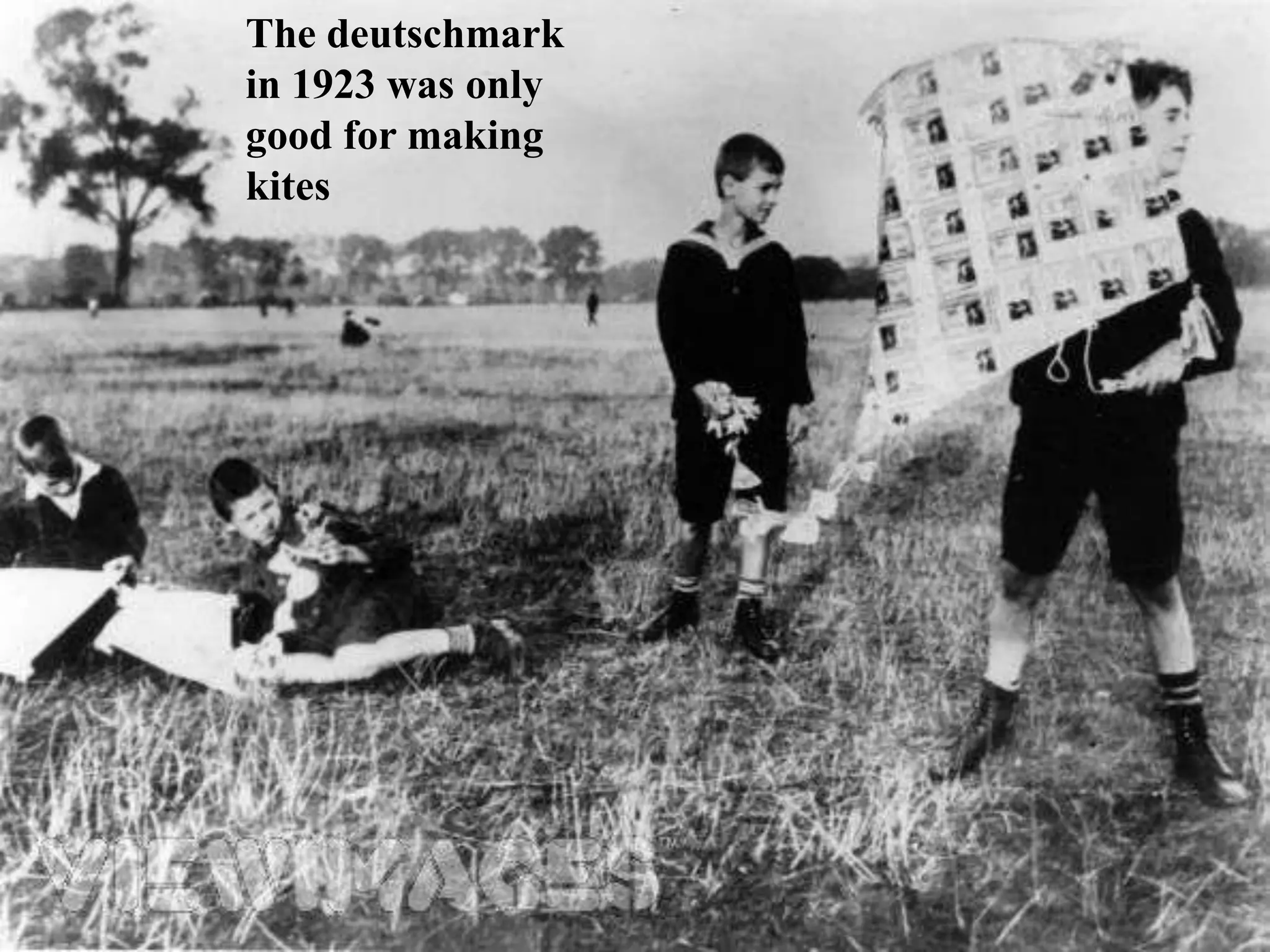
The deutschmark
in 1923 was only
good for making
kites
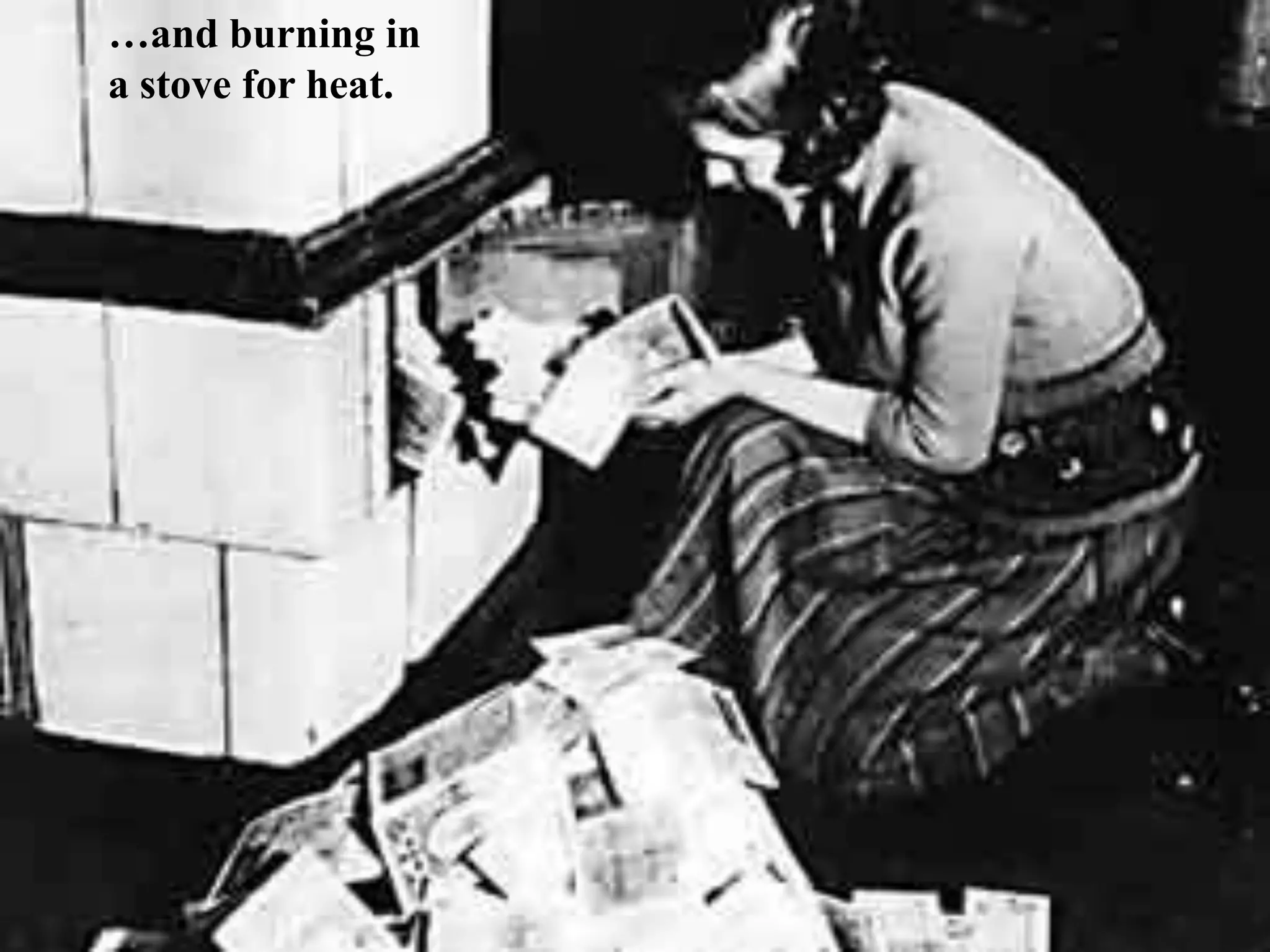
…and burning in
a stove for heat.
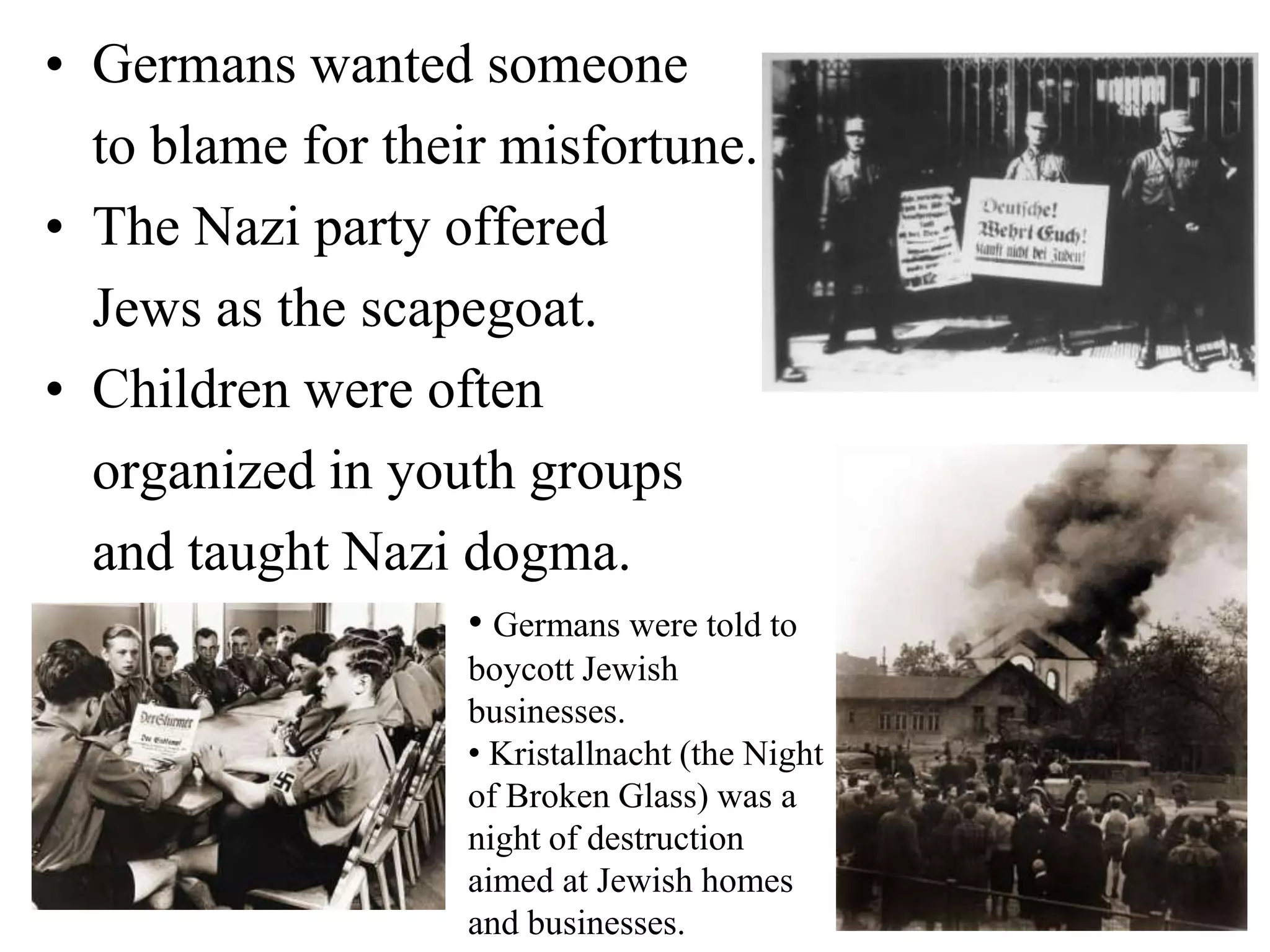
• Germans wanted someone
  to blame for their misfortune.
• The Nazi party offered
  Jews as the scapegoat.
• Children were often
  organized in youth groups
  and taught Nazi dogma.
                  • Germans were told to
                  boycott Jewish
                  businesses.
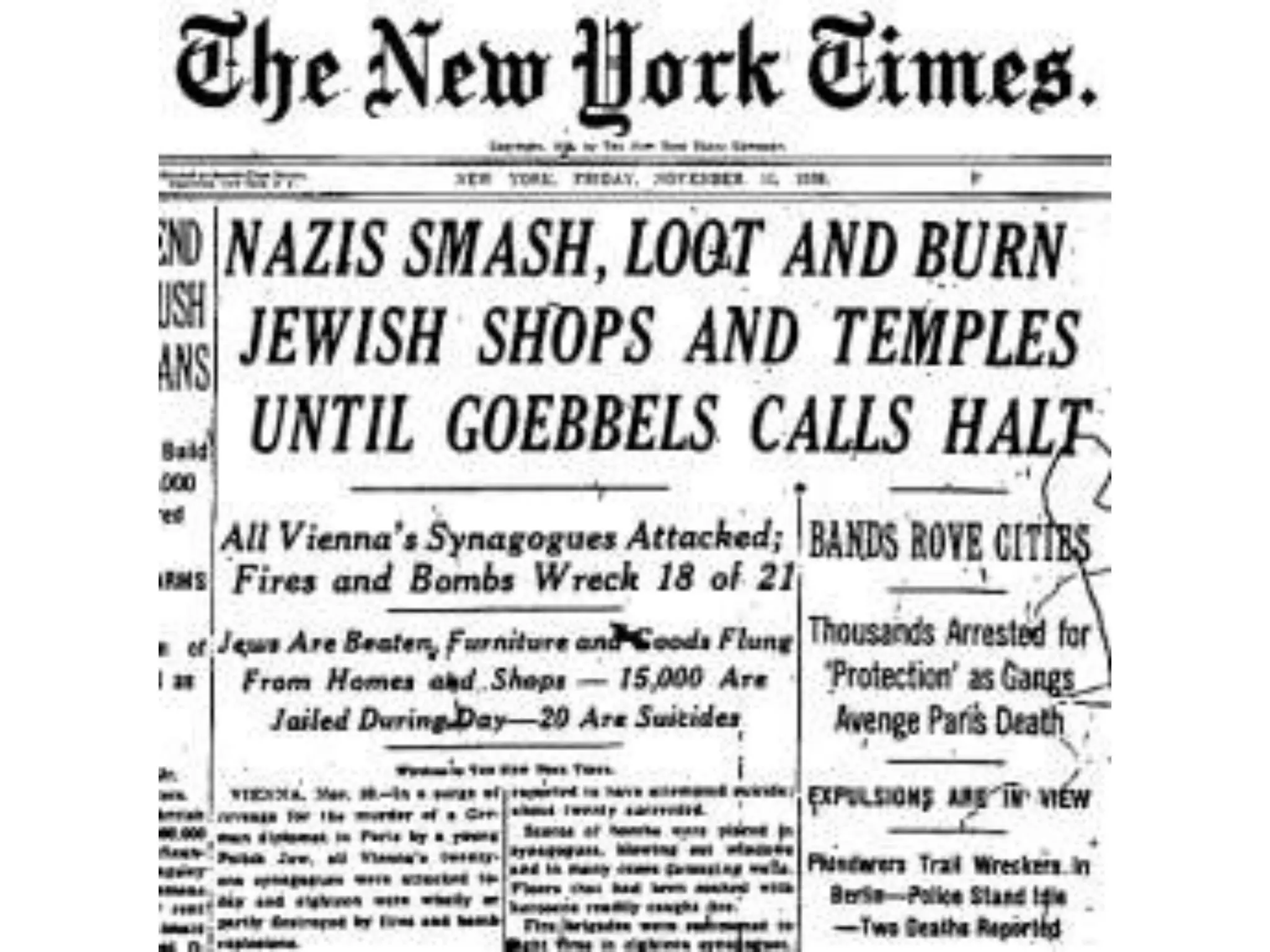
                  • Kristallnacht (the Night
                  of Broken Glass) was a
                  night of destruction
                  aimed at Jewish homes
                  and businesses.
Time between the wars

Time between the wars

  • 1.
    The Time Between the Wars The Roaring 20s and the Great Depression
  • 2.
    A time ofrapid economic growth “The business of the American people is business.” - President Calvin Coolidge
  • 3.
    • The majorityof the people in Europe and the United States lived in urban (cities) areas. • The 1920s are marked by the art, literature, cinema, and movies that were created, so it is sometimes known as the “Jazz Age.” • The United States and Europe became consumer economies. People were buying more than they could afford.
  • 4.
    Prohibition • The 18thAmendment makes alcohol illegal in the United States. • Mobsters, such as Al Capone, gain power through bootleg liquor (illegal alcohol). • The 21st Amendment repels prohibition (makes alcohol legal again).
  • 5.
    Talking Movies • Duringthis time, the fairly new invention the motion picture camera, caused the movie industry to boom. • It was centered around Hollywood, California. • The fashions and lifestyles shown in movies helped define national culture. • People wanted to look and live just like the stars in the movies
  • 6.
    Harlem Renaissance • African-Americanculture surged during the 1920. • Music became popular (especially Jazz and Blues) and inspired new dances like the “Charleston.” • Some of the most famous jazz musicians from this time period are Louis Armstrong and Duke Ellington. • One of the most famous blues singers was Bessie Smith. • Langston Hughes wrote plays, short stories, and poems about the African-American experience, a reminder of their African heritage. • Since so much of the achievement took place in NYC, it is known as the Harlem Renaissance.
  • 7.
    Langston Hughes Theme for English B “I wonder if it's that simple? I am twenty-two, colored, born in Winston-Salem. I went to school there, then Durham, then here Louis to this college on the Armstrong hill above Harlem. I am the only colored student in my class.” Bessie Smith Duke Ellington
  • 8.
    The Great Depression When the United States stock market crashed on October 29, 1929, the world’s economy collapsed.
  • 9.
    The Early 1930s •nations struggled through depressions • businesses went broke • millions of people were out of work • banks closed • poverty spread throughout the world • The climate was perfect for the rise of dictators such as Adolf Hitler (Germany) and Benito Mussolini (Italy). • This period is known as the Great Depression.
  • 10.
    London in 1930 Paris in 1930
  • 11.
    United States • October29, 1929 (the day the US stock market fell) is known as Black Tuesday. • Many investors lost everything • At one point, ¼ of all Americans were unemployed. • Breadlines and soup kitchens were set up to feed the poor. • Many of the urban poor lived in shanty towns called Hoovervilles (named after President Herbert Hoover, the president at the time of the beginning of the Great Depression).
  • 13.
    Germany • Germany dependedheavily on American loans. • The Wall Street Crash (Black Tuesday) placed more pressure for Germany to repay US loans. • rampant hyperinflation = useless currency • massive unemployment (5 million in 1932, 20% of total population) • production fell 40% • Germany turned to Adolf Hitler and the Nazi Party to solve the German economic crisis.
  • 14.
  • 15.
    The deutschmark in 1923was only good for making kites
  • 16.
    …and burning in astove for heat.
  • 17.
    • Germans wantedsomeone to blame for their misfortune. • The Nazi party offered Jews as the scapegoat. • Children were often organized in youth groups and taught Nazi dogma. • Germans were told to boycott Jewish businesses. • Kristallnacht (the Night of Broken Glass) was a night of destruction aimed at Jewish homes and businesses.