Americans in the Great
Depression
The Great Crash
● Feb. 1928 - speculative rush begins. Stocks values start to balloon.
Brokerage firms start to offer easy credit loans.
● Autumn 1929: Bull market (aggressive market) starts to fall apart. October
21st and 23rd both have notable drops in prices, but recover.
○ JP Morgan orchestrates one of these recoveries to try to restore public confidence
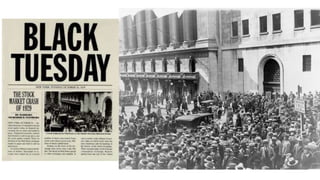
● October 29, 1929: Black Tuesday
○ Stocks in many companies become basically useless
○ One of the more visible signs of the unhealthy conditions in the American economy, but is not
the cause of the Great Depression
Causes of the Great Depression
● Lots of disagreement among
historians about the causes, but
some agreement on several
factors:
○ Lack of diversification in the
American market in the 1920s
○ Maldistribution of Wealth
○ Credit Structure of the Economy
○ Declining Exports
○ International Debt Structure
Progress of the Depression
● The Stock Market Crash of 1929 did not cause a crisis, as it did help trigger a
chain of events that exposed longstanding weaknesses in the economy.
● Banking system starts to collapse.
○ Nation’s money supply decreases
○ Deflation starts
○ Federal Reserve system acts in its own interest, raises interest rates (makes the problem
worse)
● Gross national product plummets
○ 25% decline in 3 years
○ Farm incomes drop by more than half
● Unemployment soars
○ By 1932, approx. 25% of the workforce is unemployed
Unemployment and Relief
● Cities are virtually paralyzed
● Many Americans taught to believe that they were responsible for their own
fortune or failure
○ Men take this especially hard - challenges notions of masculinity
● Increasing number of families turn to state and local public relief services
○ Charities are unaccustomed to huge demand, start to buckle under pressure
● Tax revenues decline, state has less to spend on aid
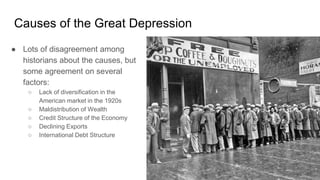
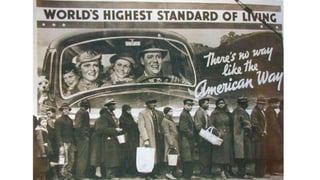
● Breadlines start to form, people sift through garbage for food
○ Red Cross and Salvation Army
● Nearly 2 million men take to living on the roads, often “riding the rails”
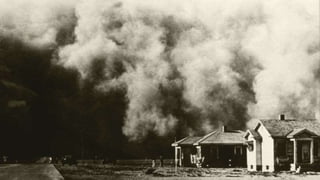
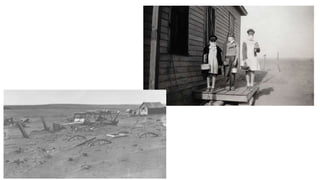
Dust Bowl
● Conditions are actually worse in many rural areas
● Farm income declines by 60% between 1929 and 1932 and a third of all
Americans lost their land
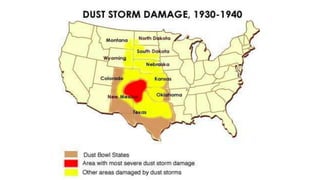
● Beginning in 1930, an already-struggling region was hit with a natural
disaster: The Dust Bowl
○ North Texas to the Dakotas
○ One of the worst droughts in America’s history
○ Lasts for a decade
○ Swarms of grasshoppers add to strain
○ Huge dust storms called “black blizzards”
● Many flee their ruined farms and go on the road looking for work
○ Many head toward California
○ Often referred to as “Okies”
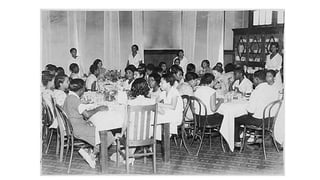
African Americans and the Depression
● Most African Americans had not shared in the prosperity of the 20s
● Experienced more unemployment, homelessness, malnutrition, and disease
than they had in the 20s, and considerably more than the white population
● Many flee the same farming conditions that plagued the population as a
whole, but found their luck in the cities was considerably worse.
○ General feeling that white men should have jobs
○ Whites in many Southern cities began to call for Black people to be fired to
make room for white
● Approx. 400,000 leave the South for northern cities in the 1930s
○ NYC umemployment for African American population was 50%
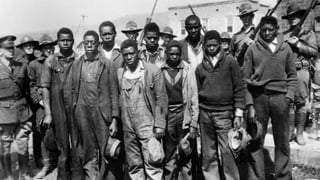
Scottsboro Boys
● March 1931 – 9 young black men were pulled from a freight train in
Scottsboro, Alabama and charged with vagrancy and disorder.
○ Two white women who had been on the train accused the boys of rape, although the evidence
overwhelmingly indicated that this had not happened
● An all-white jury in Alabama convicted them of the crime, sentenced 8 to
death, case went on to the Supreme Court
● NAACP, International Labor Defense, and Communist Party come to the
boy’s defense.
● All of the boys survived and ended up free, although the last one was not
released until 1950
Mexican Americans in the Great Depression
● Similar patterns of discrimination follow Mexican Americans, most live in the
Southwest
○ 1930s: Approx. 2 million Latinos in the U.S.
● Faced similar employment discriminations, and had been employed in mostly
unskilled labor positions or agriculture
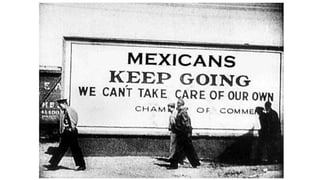
● Mass deportations started
● Explicitly excluded from most forms of aid and government services
○ No access to schools, hospitals kicked them out, relief programs would not serve Latinos
● Migration to the city becomes common
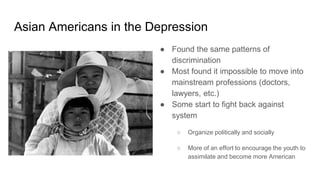
Asian Americans in the Depression
● Found the same patterns of
discrimination
● Most found it impossible to move into
mainstream professions (doctors,
lawyers, etc.)
● Some start to fight back against
system
○ Organize politically and socially
○ More of an effort to encourage the youth to
assimilate and become more American
Women During the Great Depression
● Strong belief that any available work should go to men
○ Particularly strong belief that women who had an employed husband should not have a job
● However, both single and married women worked during the decade
● Advantaged in that the nonprofessional jobs women traditionally held were
often the last to go
● Women of color not included
○ As many as half of all black women lost their jobs, although their employment numbers were
still higher than white women (due to necessity)
● Economic troubles start to erode support women had gained since
Progressive Era
● Had to worry about men leaving families
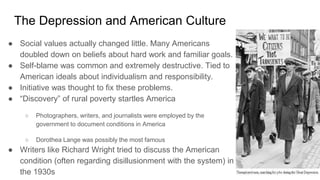
The Depression and American Culture
● Social values actually changed little. Many Americans
doubled down on beliefs about hard work and familiar goals.
● Self-blame was common and extremely destructive. Tied to
American ideals about individualism and responsibility.
● Initiative was thought to fix these problems.
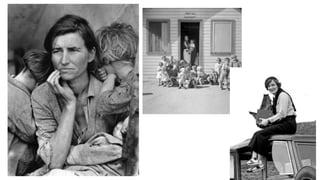
● “Discovery” of rural poverty startles America
○ Photographers, writers, and journalists were employed by the
government to document conditions in America
○ Dorothea Lange was possibly the most famous
● Writers like Richard Wright tried to discuss the American
condition (often regarding disillusionment with the system) in
the 1930s
Radio
● Radios are very common – most families have one (or have close
acquaintances with one)
● Unlike now, listening to the radio was often a public activity
● Escapist programming is most common – acts to distract the population from
their problems
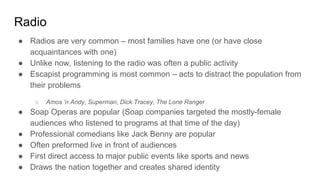
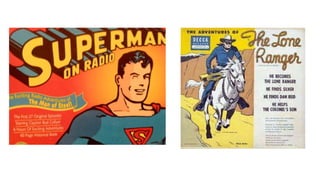
○ Amos ‘n Andy, Superman, Dick Tracey, The Lone Ranger
● Soap Operas are popular (Soap companies targeted the mostly-female
audiences who listened to programs at that time of the day)
● Professional comedians like Jack Benny are popular
● Often preformed live in front of audiences
● First direct access to major public events like sports and news
● Draws the nation together and creates shared identity
Movies
● Movie attendance drops in the early 1930s, but increases
later – cheap enough to still go out and enjoy
● Escapist films are popular, like with the radio
● Hollywood does not challenge social norms
● Some films question social values and examine social issues
○ Mr. Smith Goes to Washington
● Studios begin to dominate the field, and actors gain
followings
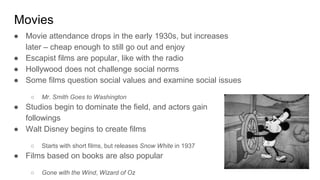
● Walt Disney begins to create films
○ Starts with short films, but releases Snow White in 1937
● Films based on books are also popular
○ Gone with the Wind, Wizard of Oz
Popular Literature and Journalism
● Social strain shows much more strongly in this
area than radio and movies
● Much literature and journalism in this era directly
discussed the problems of the day.
● Some of the most popular works are still escapist
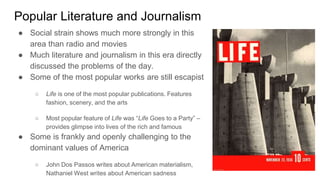
○ Life is one of the most popular publications. Features
fashion, scenery, and the arts
○ Most popular feature of Life was “Life Goes to a Party” –
provides glimpse into lives of the rich and famous
● Some is frankly and openly challenging to the
dominant values of America
○ John Dos Passos writes about American materialism,
Nathaniel West writes about American sadness

Americans in the Great Depression

  • 1.
    Americans in theGreat Depression
  • 2.
    The Great Crash ●Feb. 1928 - speculative rush begins. Stocks values start to balloon. Brokerage firms start to offer easy credit loans. ● Autumn 1929: Bull market (aggressive market) starts to fall apart. October 21st and 23rd both have notable drops in prices, but recover. ○ JP Morgan orchestrates one of these recoveries to try to restore public confidence ● October 29, 1929: Black Tuesday ○ Stocks in many companies become basically useless ○ One of the more visible signs of the unhealthy conditions in the American economy, but is not the cause of the Great Depression
  • 4.
    Causes of theGreat Depression ● Lots of disagreement among historians about the causes, but some agreement on several factors: ○ Lack of diversification in the American market in the 1920s ○ Maldistribution of Wealth ○ Credit Structure of the Economy ○ Declining Exports ○ International Debt Structure
  • 6.
    Progress of theDepression ● The Stock Market Crash of 1929 did not cause a crisis, as it did help trigger a chain of events that exposed longstanding weaknesses in the economy. ● Banking system starts to collapse. ○ Nation’s money supply decreases ○ Deflation starts ○ Federal Reserve system acts in its own interest, raises interest rates (makes the problem worse) ● Gross national product plummets ○ 25% decline in 3 years ○ Farm incomes drop by more than half ● Unemployment soars ○ By 1932, approx. 25% of the workforce is unemployed
  • 7.
    Unemployment and Relief ●Cities are virtually paralyzed ● Many Americans taught to believe that they were responsible for their own fortune or failure ○ Men take this especially hard - challenges notions of masculinity ● Increasing number of families turn to state and local public relief services ○ Charities are unaccustomed to huge demand, start to buckle under pressure ● Tax revenues decline, state has less to spend on aid ● Breadlines start to form, people sift through garbage for food ○ Red Cross and Salvation Army ● Nearly 2 million men take to living on the roads, often “riding the rails”
  • 8.
    Dust Bowl ● Conditionsare actually worse in many rural areas ● Farm income declines by 60% between 1929 and 1932 and a third of all Americans lost their land ● Beginning in 1930, an already-struggling region was hit with a natural disaster: The Dust Bowl ○ North Texas to the Dakotas ○ One of the worst droughts in America’s history ○ Lasts for a decade ○ Swarms of grasshoppers add to strain ○ Huge dust storms called “black blizzards” ● Many flee their ruined farms and go on the road looking for work ○ Many head toward California ○ Often referred to as “Okies”
  • 12.
    African Americans andthe Depression ● Most African Americans had not shared in the prosperity of the 20s ● Experienced more unemployment, homelessness, malnutrition, and disease than they had in the 20s, and considerably more than the white population ● Many flee the same farming conditions that plagued the population as a whole, but found their luck in the cities was considerably worse. ○ General feeling that white men should have jobs ○ Whites in many Southern cities began to call for Black people to be fired to make room for white ● Approx. 400,000 leave the South for northern cities in the 1930s ○ NYC umemployment for African American population was 50%
  • 14.
    Scottsboro Boys ● March1931 – 9 young black men were pulled from a freight train in Scottsboro, Alabama and charged with vagrancy and disorder. ○ Two white women who had been on the train accused the boys of rape, although the evidence overwhelmingly indicated that this had not happened ● An all-white jury in Alabama convicted them of the crime, sentenced 8 to death, case went on to the Supreme Court ● NAACP, International Labor Defense, and Communist Party come to the boy’s defense. ● All of the boys survived and ended up free, although the last one was not released until 1950
  • 16.
    Mexican Americans inthe Great Depression ● Similar patterns of discrimination follow Mexican Americans, most live in the Southwest ○ 1930s: Approx. 2 million Latinos in the U.S. ● Faced similar employment discriminations, and had been employed in mostly unskilled labor positions or agriculture ● Mass deportations started ● Explicitly excluded from most forms of aid and government services ○ No access to schools, hospitals kicked them out, relief programs would not serve Latinos ● Migration to the city becomes common
  • 18.
    Asian Americans inthe Depression ● Found the same patterns of discrimination ● Most found it impossible to move into mainstream professions (doctors, lawyers, etc.) ● Some start to fight back against system ○ Organize politically and socially ○ More of an effort to encourage the youth to assimilate and become more American
  • 19.
    Women During theGreat Depression ● Strong belief that any available work should go to men ○ Particularly strong belief that women who had an employed husband should not have a job ● However, both single and married women worked during the decade ● Advantaged in that the nonprofessional jobs women traditionally held were often the last to go ● Women of color not included ○ As many as half of all black women lost their jobs, although their employment numbers were still higher than white women (due to necessity) ● Economic troubles start to erode support women had gained since Progressive Era ● Had to worry about men leaving families
  • 20.
    The Depression andAmerican Culture ● Social values actually changed little. Many Americans doubled down on beliefs about hard work and familiar goals. ● Self-blame was common and extremely destructive. Tied to American ideals about individualism and responsibility. ● Initiative was thought to fix these problems. ● “Discovery” of rural poverty startles America ○ Photographers, writers, and journalists were employed by the government to document conditions in America ○ Dorothea Lange was possibly the most famous ● Writers like Richard Wright tried to discuss the American condition (often regarding disillusionment with the system) in the 1930s
  • 22.
    Radio ● Radios arevery common – most families have one (or have close acquaintances with one) ● Unlike now, listening to the radio was often a public activity ● Escapist programming is most common – acts to distract the population from their problems ○ Amos ‘n Andy, Superman, Dick Tracey, The Lone Ranger ● Soap Operas are popular (Soap companies targeted the mostly-female audiences who listened to programs at that time of the day) ● Professional comedians like Jack Benny are popular ● Often preformed live in front of audiences ● First direct access to major public events like sports and news ● Draws the nation together and creates shared identity
  • 24.
    Movies ● Movie attendancedrops in the early 1930s, but increases later – cheap enough to still go out and enjoy ● Escapist films are popular, like with the radio ● Hollywood does not challenge social norms ● Some films question social values and examine social issues ○ Mr. Smith Goes to Washington ● Studios begin to dominate the field, and actors gain followings ● Walt Disney begins to create films ○ Starts with short films, but releases Snow White in 1937 ● Films based on books are also popular ○ Gone with the Wind, Wizard of Oz
  • 25.
    Popular Literature andJournalism ● Social strain shows much more strongly in this area than radio and movies ● Much literature and journalism in this era directly discussed the problems of the day. ● Some of the most popular works are still escapist ○ Life is one of the most popular publications. Features fashion, scenery, and the arts ○ Most popular feature of Life was “Life Goes to a Party” – provides glimpse into lives of the rich and famous ● Some is frankly and openly challenging to the dominant values of America ○ John Dos Passos writes about American materialism, Nathaniel West writes about American sadness