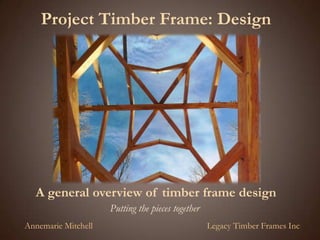
Project Timber Frame: DesignA general overview of timber frame designPutting the pieces togetherAnnemarie MitchellLegacy Timber Frames Inc
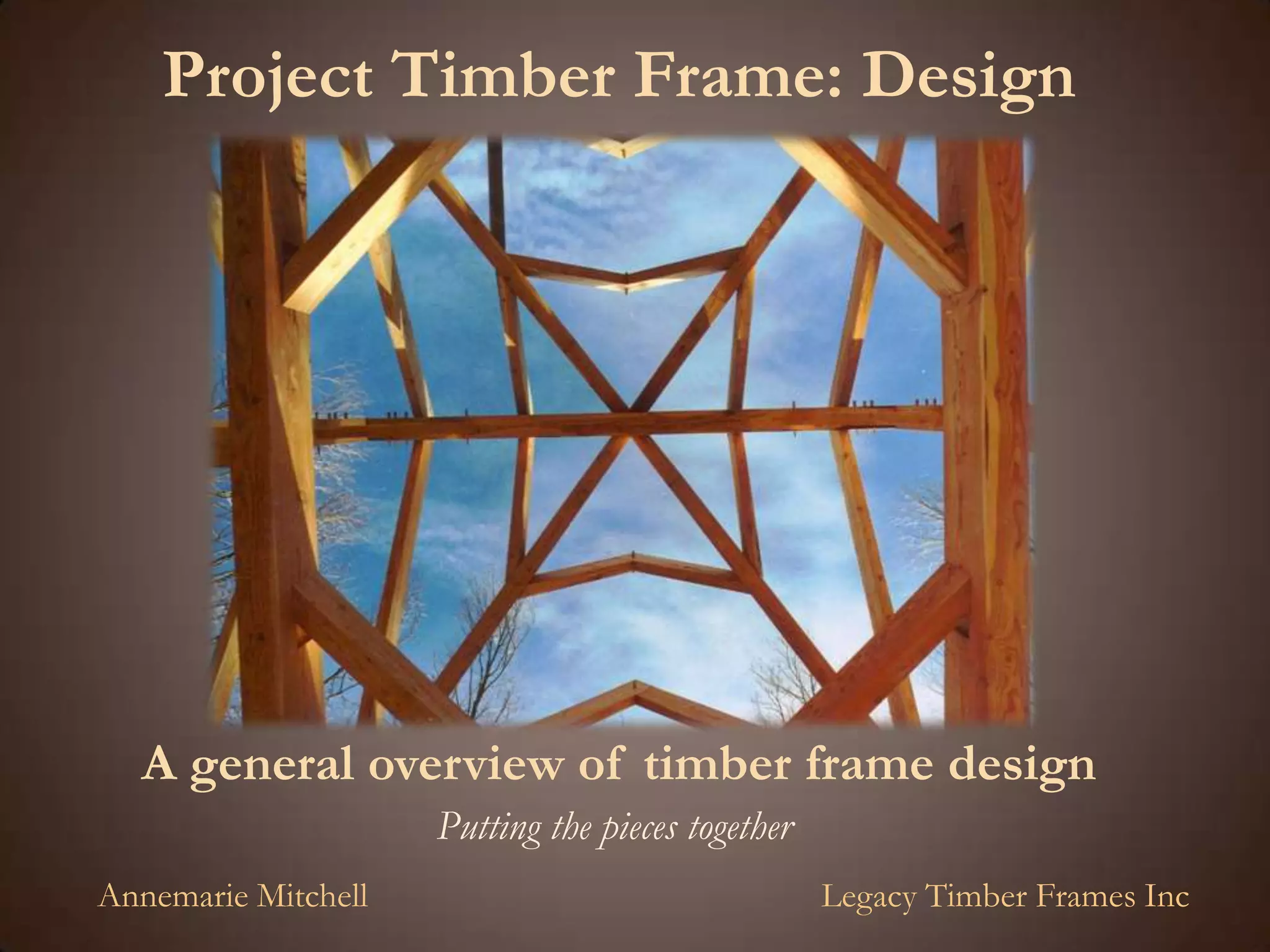
The Timber Frame:  A brief summaryTimber frame vs. log constructionTimber Frame vs. Post & BeamTimber frame componentsTimber frame typesThe Design:  A place  to startThe design processDesign considerationsBudgetLifestyleBuilding sitePutting it on paper
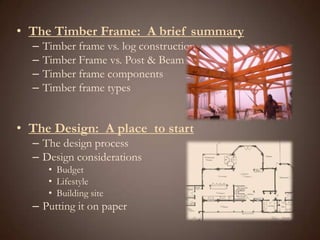
Timber Frame vs. Log ConstructionIn timber frame construction,  the timbers are vertical posts and horizontal beams.Timber frames need a separate enclosure system on the outside of the frameIn log construction,  the logs  are stacked horizontally  on top of each other to create the exterior walls.  The logs are the exterior and interior wall surface
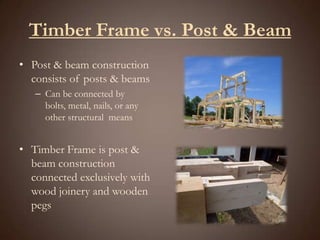
Timber Frame vs. Post & BeamPost & beam construction consists of posts & beamsCan be connected by bolts, metal, nails, or any other structural  meansTimber Frame is post & beam construction connected exclusively with wood joinery and wooden pegs
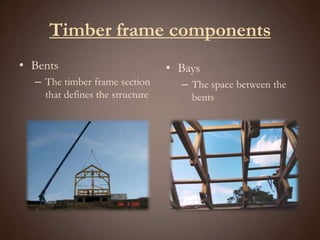
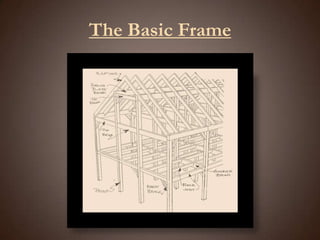
Timber frame componentsBentsThe timber frame section that defines the structureBaysThe space between the bents
The Basic Frame
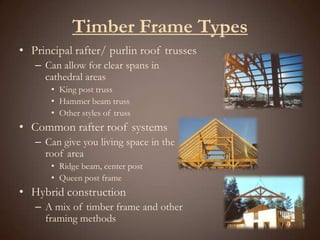
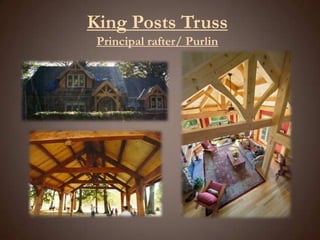
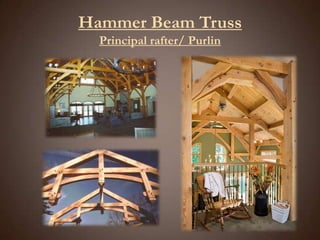
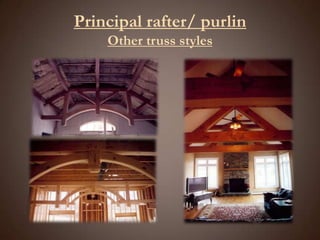
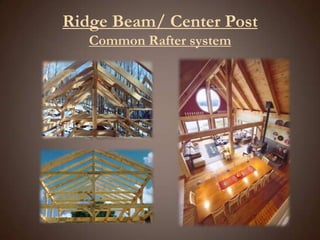
Timber Frame TypesPrincipal rafter/ purlin roof trussesCan allow for clear spans in cathedral areasKing post trussHammer beam trussOther styles of trussCommon rafter roof systemsCan give you living space in the roof areaRidge beam, center postQueen post frameHybrid constructionA mix of timber frame and other framing methods
King Posts TrussPrincipal rafter/ Purlin
Hammer Beam TrussPrincipal rafter/ Purlin
Principal rafter/ purlinOther truss styles
Ridge Beam/ Center PostCommon Rafter system
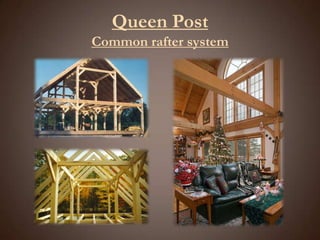
Queen PostCommon rafter system
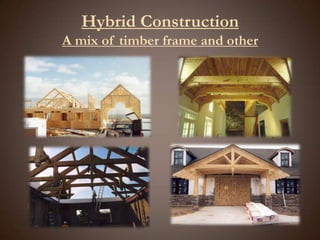
Hybrid ConstructionA mix of timber frame and other
The Design Process A full set of blueprints/ construction drawings are needed prior to constructionAllow enough time for the design process which can be about 4-6 months or more for a custom designThe more thought out your design is, the easier and more cost-effective the construction will beEach timber frame company handles design differentlyStock plans to choose fromIn- house design servicesArchitects they work withWork with your architect/ designerChoose your timber frame company before completing designEach timber frame company has different framing systems and building requirementsIf you have a timber frame company do the design, copyright laws prevent you from taking the plans to another timber framer to build that designThe more information you can bring to the design process, the betterDon’t worry about drawing  floor plans;  a bubble diagram  or even a list of your needs is a great place to start
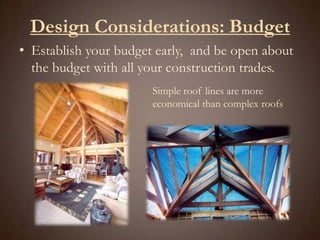
Design Considerations: BudgetEstablish your budget early,  and be open about the budget with all your construction trades.Simple roof lines are more  economical than complex roofs
Design Considerations: LifestyleLifestyle is the key consideration for design.How many people will be living in the house?How much and what type of entertaining?What are the present and future needs for space?What are the sleeping habits of each of the household? What is a typical day of each of the members? How will that change over the years?Are there any pets?  If so do they require special space?Are there any hobbies that require space or separation?
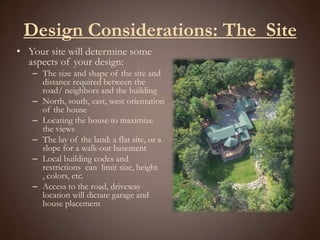
Design Considerations: The  SiteYour site will determine some aspects of your design:The size and shape of the site and distance required between the road/ neighbors and the buildingNorth, south, east, west orientation of the house Locating the house to maximize the viewsThe lay of the land: a flat site, or a slope for a walk-out basementLocal building codes and restrictions  can  limit size, height , colors, etc.Access to the road, driveway location will dictate garage and house placement
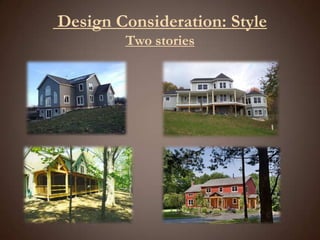
 Design Consideration: StyleTwo stories
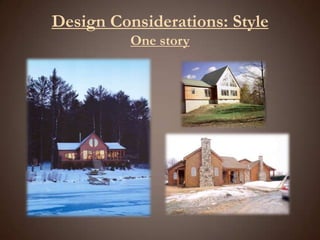
Design Considerations: StyleOne story
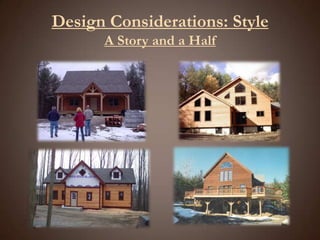
Design Considerations: StyleA Story and a Half
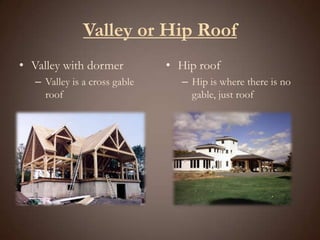
Valley or Hip RoofValley with dormerValley is a cross gable roofHip roofHip is where there is no gable, just roof
A Place to Start Your DesignHave each member of the household  write down a “must have” list and a “wish” list of everything that is important to them.Think about how you live, and which rooms are the most used. Measure the rooms  that work, and don’t work, in your present homeBegin a file with clippings from magazines & take photos of homes in the style you likeWrite down anything you can think of about the spaces you’d likeThink about how your budget and site will  lend themselves to the design.Don’t worry about having drawings before talking with timber frame companies or designers.  They can help you put your thoughts on paper—it’s what they do every day.
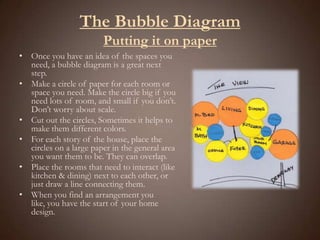
The Bubble DiagramPutting it on paperOnce you have an idea of the spaces you need, a bubble diagram is a great next step.Make a circle of paper for each room or space you need. Make the circle big if you need lots of room, and small if you don’t. Don’t worry about scale.Cut out the circles, Sometimes it helps to make them different colors.For each story of the house, place the circles on a large paper in the general area you want them to be. They can overlap. Place the rooms that need to interact (like kitchen & dining) next to each other, or just draw a line connecting them.When you find an arrangement you like, you have the start of your home design.
QuestionsPlease feel free to ask any questionsContact: Legacy Timber Frames Inc691 County Rd 70Stillwater, NY 12170Phone: (518) 279-9108Fax: (518) 581-9219E-mail: info@legacytimberframes.com

Timber Frame Design

  • 1.
    Project Timber Frame:DesignA general overview of timber frame designPutting the pieces togetherAnnemarie MitchellLegacy Timber Frames Inc
  • 2.
    The Timber Frame: A brief summaryTimber frame vs. log constructionTimber Frame vs. Post & BeamTimber frame componentsTimber frame typesThe Design: A place to startThe design processDesign considerationsBudgetLifestyleBuilding sitePutting it on paper
  • 3.
    Timber Frame vs.Log ConstructionIn timber frame construction, the timbers are vertical posts and horizontal beams.Timber frames need a separate enclosure system on the outside of the frameIn log construction, the logs are stacked horizontally on top of each other to create the exterior walls. The logs are the exterior and interior wall surface
  • 4.
    Timber Frame vs.Post & BeamPost & beam construction consists of posts & beamsCan be connected by bolts, metal, nails, or any other structural meansTimber Frame is post & beam construction connected exclusively with wood joinery and wooden pegs
  • 5.
    Timber frame componentsBentsThetimber frame section that defines the structureBaysThe space between the bents
  • 6.
  • 7.
    Timber Frame TypesPrincipalrafter/ purlin roof trussesCan allow for clear spans in cathedral areasKing post trussHammer beam trussOther styles of trussCommon rafter roof systemsCan give you living space in the roof areaRidge beam, center postQueen post frameHybrid constructionA mix of timber frame and other framing methods
  • 8.
  • 9.
  • 10.
  • 11.
    Ridge Beam/ CenterPostCommon Rafter system
  • 12.
  • 13.
    Hybrid ConstructionA mixof timber frame and other
  • 14.
    The Design ProcessA full set of blueprints/ construction drawings are needed prior to constructionAllow enough time for the design process which can be about 4-6 months or more for a custom designThe more thought out your design is, the easier and more cost-effective the construction will beEach timber frame company handles design differentlyStock plans to choose fromIn- house design servicesArchitects they work withWork with your architect/ designerChoose your timber frame company before completing designEach timber frame company has different framing systems and building requirementsIf you have a timber frame company do the design, copyright laws prevent you from taking the plans to another timber framer to build that designThe more information you can bring to the design process, the betterDon’t worry about drawing floor plans; a bubble diagram or even a list of your needs is a great place to start
  • 15.
    Design Considerations: BudgetEstablishyour budget early, and be open about the budget with all your construction trades.Simple roof lines are more economical than complex roofs
  • 16.
    Design Considerations: LifestyleLifestyleis the key consideration for design.How many people will be living in the house?How much and what type of entertaining?What are the present and future needs for space?What are the sleeping habits of each of the household? What is a typical day of each of the members? How will that change over the years?Are there any pets? If so do they require special space?Are there any hobbies that require space or separation?
  • 17.
    Design Considerations: The SiteYour site will determine some aspects of your design:The size and shape of the site and distance required between the road/ neighbors and the buildingNorth, south, east, west orientation of the house Locating the house to maximize the viewsThe lay of the land: a flat site, or a slope for a walk-out basementLocal building codes and restrictions can limit size, height , colors, etc.Access to the road, driveway location will dictate garage and house placement
  • 18.
    Design Consideration:StyleTwo stories
  • 19.
  • 20.
  • 21.
    Valley or HipRoofValley with dormerValley is a cross gable roofHip roofHip is where there is no gable, just roof
  • 22.
    A Place toStart Your DesignHave each member of the household write down a “must have” list and a “wish” list of everything that is important to them.Think about how you live, and which rooms are the most used. Measure the rooms that work, and don’t work, in your present homeBegin a file with clippings from magazines & take photos of homes in the style you likeWrite down anything you can think of about the spaces you’d likeThink about how your budget and site will lend themselves to the design.Don’t worry about having drawings before talking with timber frame companies or designers. They can help you put your thoughts on paper—it’s what they do every day.
  • 23.
    The Bubble DiagramPuttingit on paperOnce you have an idea of the spaces you need, a bubble diagram is a great next step.Make a circle of paper for each room or space you need. Make the circle big if you need lots of room, and small if you don’t. Don’t worry about scale.Cut out the circles, Sometimes it helps to make them different colors.For each story of the house, place the circles on a large paper in the general area you want them to be. They can overlap. Place the rooms that need to interact (like kitchen & dining) next to each other, or just draw a line connecting them.When you find an arrangement you like, you have the start of your home design.
  • 24.
    QuestionsPlease feel freeto ask any questionsContact: Legacy Timber Frames Inc691 County Rd 70Stillwater, NY 12170Phone: (518) 279-9108Fax: (518) 581-9219E-mail: info@legacytimberframes.com