Tilt Table Standing in
Physiotherapy
Objectives:
• Understand the definition and principles of tilt table standing.
• Learn the indications and precautions in physiotherapy.
• Explore the contraindications for tilt table standing.
• Review instructions for usage.
• Discuss clinical examples to illustrate its application.
Definition
•Tilt Table Standing:
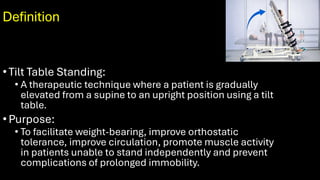
• A therapeutic technique where a patient is gradually
elevated from a supine to an upright position using a tilt
table.
•Purpose:
• To facilitate weight-bearing, improve orthostatic
tolerance, improve circulation, promote muscle activity
in patients unable to stand independently and prevent
complications of prolonged immobility.
Principles of Tilt Table Standing
•Gradual Elevation:
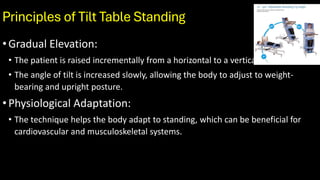
• The patient is raised incrementally from a horizontal to a vertical position.
• The angle of tilt is increased slowly, allowing the body to adjust to weight-
bearing and upright posture.
•Physiological Adaptation:
• The technique helps the body adapt to standing, which can be beneficial for
cardiovascular and musculoskeletal systems.
Indications in Physiotherapy
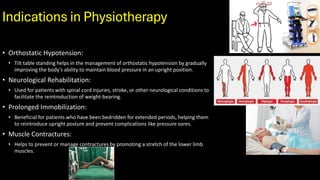
• Orthostatic Hypotension:
• Tilt table standing helps in the management of orthostatic hypotension by gradually
improving the body's ability to maintain blood pressure in an upright position.
• Neurological Rehabilitation:
• Used for patients with spinal cord injuries, stroke, or other neurological conditions to
facilitate the reintroduction of weight-bearing.
• Prolonged Immobilization:
• Beneficial for patients who have been bedridden for extended periods, helping them
to reintroduce upright posture and prevent complications like pressure sores.
• Muscle Contractures:
• Helps to prevent or manage contractures by promoting a stretch of the lower limb
muscles.
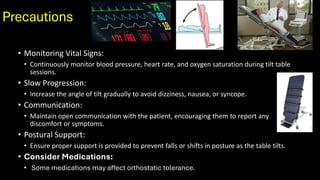
Precautions
• Monitoring Vital Signs:
• Continuously monitor blood pressure, heart rate, and oxygen saturation during tilt table
sessions.
• Slow Progression:
• Increase the angle of tilt gradually to avoid dizziness, nausea, or syncope.
• Communication:
• Maintain open communication with the patient, encouraging them to report any
discomfort or symptoms.
• Postural Support:
• Ensure proper support is provided to prevent falls or shifts in posture as the table tilts.
• Consider Medications:
• Some medications may affect orthostatic tolerance.
Consider Medications:
• Antihypertensive Medications:
• Diuretics: These medications can reduce blood volume, leading to lower blood pressure.
• Alpha-blockers: These medications relax blood vessels, causing vasodilation and potentially
lowering blood pressure.
• Beta-blockers: While primarily used for heart conditions, beta-blockers can also affect heart
rate and blood pressure.
• Angiotensin-Converting Enzyme (ACE) Inhibitors: These medications lower blood pressure
by blocking the production of a hormone that constricts blood vessels.
• Angiotensin II Receptor Blockers (ARBs): Similar to ACE inhibitors, ARBs lower blood
pressure by blocking the effects of a hormone that constricts blood vessels.
Consider Medications:
• Other Medications:
• Antidepressants: Some antidepressants, particularly tricyclic antidepressants and
selective serotonin reuptake inhibitors (SSRIs), can affect blood pressure.
• Antipsychotics: These medications can cause sedation and hypotension.
• Vasodilators: Medications used to dilate blood vessels can lower blood pressure.
• Narcotics: Opioids can cause hypotension and sedation.
Contraindications
•Severe cardiovascular instability
• Patients with unstable blood pressure, arrhythmias, or recent myocardial infarction should
avoid tilt table standing.
•Severe Orthostatic Hypotension:
• Patients who cannot tolerate even minimal tilting without severe hypotension may be
contraindicated.
•Acute deep vein thrombosis (DVT).
• Patients with known DVT should not undergo tilt table standing until cleared by a physician.
•Fractures or severe joint instability.
• Avoid using tilt tables in patients with recent surgeries or unstable fractures, particularly in
the lower limbs or spine.
Instructions for Usage
• Preparation:
• Ensure the patient is dressed comfortably and appropriately for the session.
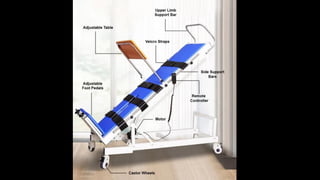
• Position the patient securely on the tilt table with appropriate straps(chest, abdominal and knee) and supports.
• Starting Position:
• Begin with the patient lying flat (0 degrees) and ensure they are comfortable.
• Incremental Tilting:
• Gradually increase the angle by 10-20 degrees every few minutes, observing the patient’s response.
• Duration:
• Sessions typically last between 15-30 minutes, depending on the patient's tolerance and clinical goals.
• Post-Treatment:
• Slowly return the patient to the horizontal position after the session and allow them to rest before getting off
the table.
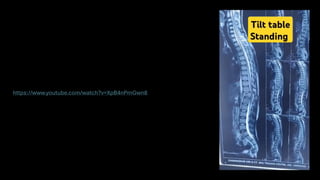
https://www.youtube.com/watch?v=XpB4nPmGwn8
Frequency of Blood Pressure Monitoring
1.Before the Procedure:
1.Baseline Measurement: Check BP while the patient is in a supine
position (lying flat) before initiating the tilt.
2.During the Procedure:
1.Immediately After Tilting: Check BP right after the initial tilt (15–30
degrees).
2.At Regular Intervals: Check BP every 3-5 minutes during the session,
especially when the tilt is increased or if the patient’s condition is
unstable.
3.If Symptoms Occur: Monitor BP more frequently if the patient reports
symptoms like dizziness, light-headedness, nausea, or any signs of
orthostatic hypotension.
3.After Returning to Supine Position:
1.Recheck BP after returning the patient to the flat position to monitor
their recovery.
Duration of Treatment Based on the Condition
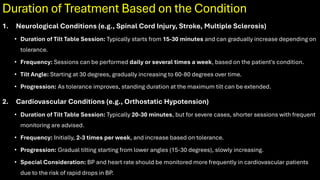
1. Neurological Conditions (e.g., Spinal Cord Injury, Stroke, Multiple Sclerosis)
• Duration of Tilt Table Session: Typically starts from 15-30 minutes and can gradually increase depending on
tolerance.
• Frequency: Sessions can be performed daily or several times a week, based on the patient's condition.
• Tilt Angle: Starting at 30 degrees, gradually increasing to 60-80 degrees over time.
• Progression: As tolerance improves, standing duration at the maximum tilt can be extended.
2. Cardiovascular Conditions (e.g., Orthostatic Hypotension)
• Duration of Tilt Table Session: Typically 20-30 minutes, but for severe cases, shorter sessions with frequent
monitoring are advised.
• Frequency: Initially, 2-3 times per week, and increase based on tolerance.
• Progression: Gradual tilting starting from lower angles (15-30 degrees), slowly increasing.
• Special Consideration: BP and heart rate should be monitored more frequently in cardiovascular patients
due to the risk of rapid drops in BP.
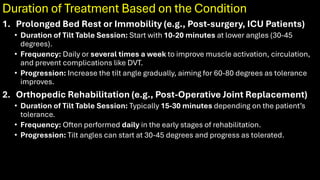
Duration of Treatment Based on the Condition
1. Prolonged Bed Rest or Immobility (e.g., Post-surgery, ICU Patients)
• Duration of Tilt Table Session: Start with 10-20 minutes at lower angles (30-45
degrees).
• Frequency: Daily or several times a week to improve muscle activation, circulation,
and prevent complications like DVT.
• Progression: Increase the tilt angle gradually, aiming for 60-80 degrees as tolerance
improves.
2. Orthopedic Rehabilitation (e.g., Post-Operative Joint Replacement)
• Duration of Tilt Table Session: Typically 15-30 minutes depending on the patient’s
tolerance.
• Frequency: Often performed daily in the early stages of rehabilitation.
• Progression: Tilt angles can start at 30-45 degrees and progress as tolerated.
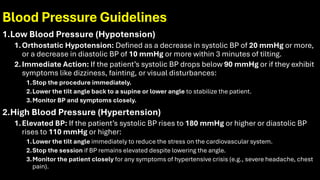
Blood Pressure Guidelines
1.Low Blood Pressure (Hypotension)
1.Orthostatic Hypotension: Defined as a decrease in systolic BP of 20 mmHg or more,
or a decrease in diastolic BP of 10 mmHg or more within 3 minutes of tilting.
2.Immediate Action: If the patient’s systolic BP drops below 90 mmHg or if they exhibit
symptoms like dizziness, fainting, or visual disturbances:
1.Stop the procedure immediately.
2.Lower the tilt angle back to a supine or lower angle to stabilize the patient.
3.Monitor BP and symptoms closely.
2.High Blood Pressure (Hypertension)
1.Elevated BP: If the patient’s systolic BP rises to 180 mmHg or higher or diastolic BP
rises to 110 mmHg or higher:
1.Lower the tilt angle immediately to reduce the stress on the cardiovascular system.
2.Stop the session if BP remains elevated despite lowering the angle.
3.Monitor the patient closely for any symptoms of hypertensive crisis (e.g., severe headache, chest
pain).
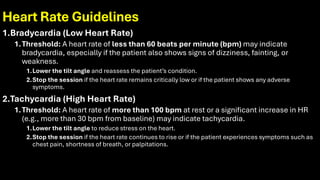
Heart Rate Guidelines
1.Bradycardia (Low Heart Rate)
1.Threshold: A heart rate of less than 60 beats per minute (bpm) may indicate
bradycardia, especially if the patient also shows signs of dizziness, fainting, or
weakness.
1.Lower the tilt angle and reassess the patient’s condition.
2.Stop the session if the heart rate remains critically low or if the patient shows any adverse
symptoms.
2.Tachycardia (High Heart Rate)
1.Threshold: A heart rate of more than 100 bpm at rest or a significant increase in HR
(e.g., more than 30 bpm from baseline) may indicate tachycardia.
1.Lower the tilt angle to reduce stress on the heart.
2.Stop the session if the heart rate continues to rise or if the patient experiences symptoms such as
chest pain, shortness of breath, or palpitations.
Special Considerations
• Pre-existing Conditions: Patients with cardiovascular diseases, such as a
history of hypertension or heart arrhythmias, may have lower thresholds for
stopping the procedure.
• Close Monitoring: For patients at higher risk (e.g., those with severe
autonomic dysfunction or postural orthostatic tachycardia syndrome),
continuous monitoring with advanced equipment may be necessary.
Special Considerations
• Pre-existing Conditions: Patients with cardiovascular diseases, such as a
history of hypertension or heart arrhythmias, may have lower thresholds for
stopping the procedure.
• Example:
• Hypertension: A patient with chronic hypertension may already have a baseline blood
pressure that is elevated (e.g., 140/90 mmHg). During tilt table standing, if their blood
pressure rises to 180/110 mmHg, the tilt angle should be lowered immediately to
prevent complications such as a hypertensive crisis, which could lead to stroke or
heart attack.
• Arrhythmias: A patient with a history of atrial fibrillation may experience an irregular
heartbeat during the procedure. If their heart rate suddenly spikes (e.g., from 80 bpm
to 120 bpm) or becomes irregular, the session should be paused, and the patient
should be returned to a safer position to prevent worsening arrhythmia or even cardiac
arrest.
General Guidelines for Stopping or Adjusting the
Tilt
• Symptoms: Any signs of distress, including chest pain, severe shortness of
breath, confusion, or visual disturbances, warrant immediate cessation of
the procedure.
• Patient Feedback: Always consider the patient’s subjective experience. If
they feel unwell, dizzy, or excessively fatigued, lower the tilt angle or stop the
session altogether.
• Gradual Changes: If adjustments need to be made, do so gradually. Rapid
changes can cause further instability.
Clinical Example 1: Spinal Cord Injury Rehabilitation
• Case Summary:
• A 35-year-old male with a T6 spinal cord injury.
• Goals:
• Reintroduce weight-bearing, improve circulation, and prevent orthostatic hypotension.
• Tilt Table Protocol:
• Begin at 15 degrees and increase by 15 degrees every 5 minutes, aiming for 45 degrees.
• Monitor blood pressure and heart rate closely.
• Gradually increase the angle over several sessions until 90 degrees is achieved.
Clinical Example 2: Stroke Rehabilitation
•Case Summary:
• A 60-year-old female post-stroke with hemiplegia.
•Goals:
• Improve postural control, reintroduce weight-bearing on the affected side.
•Tilt Table Protocol:
• Start at 20 degrees and hold for 10 minutes.
• Increase by 10 degrees per session, aiming for 70 degrees.
• Focus on encouraging the patient to activate muscles on the affected side
during the session.
Clinical Example 3: Prolonged Bed Rest
• Case Summary:
• An 80-year-old patient with prolonged bed rest due to pneumonia.
• Goals:
• Prevent orthostatic hypotension, improve circulation, and begin early mobilization.
• Tilt Table Protocol:
• Start with a very gentle angle (10 degrees) and hold for 5-10 minutes.
• Increase by 5-10 degrees per session, closely monitoring for signs of dizziness or
fatigue.
• Target 45 degrees as the final goal before transitioning to sitting and standing
exercises.
References
•Tilt Table Training for Orthostatic Intolerance: A Systematic Review" by A. J. van der Meer et al.
in Physical Therapy
•"The Role of Tilt Table Training in the Rehabilitation of Patients with Vestibular Disorders" by
J. P. Furman et al. in Neurology
•"Tilt Table Training for Postural Hypotension: A Review" by J. S. Robertson et al. in Journal of
Cardiovascular Pharmacology
•Guidelines for the Management of Postural Hypotension by the American College of Cardiology
and the American Heart Association
•Position Statement on Vestibular Rehabilitation by the American Physical Therapy Association
•Physical Rehabilitation: By K. Daniel Kottke, Frederick P. Webber, and Gerald D. Stillman
•Kinesiology: Foundations of Movement Science: By David K. Neumann
•Orthopedic Physical Therapy: By Terry R. Ruoti and Joseph E. Iorio

Tilt Table Standing in Physiotherapy.pdf

  • 1.
    Tilt Table Standingin Physiotherapy
  • 2.
    Objectives: • Understand thedefinition and principles of tilt table standing. • Learn the indications and precautions in physiotherapy. • Explore the contraindications for tilt table standing. • Review instructions for usage. • Discuss clinical examples to illustrate its application.
  • 3.
    Definition •Tilt Table Standing: •A therapeutic technique where a patient is gradually elevated from a supine to an upright position using a tilt table. •Purpose: • To facilitate weight-bearing, improve orthostatic tolerance, improve circulation, promote muscle activity in patients unable to stand independently and prevent complications of prolonged immobility.
  • 4.
    Principles of TiltTable Standing •Gradual Elevation: • The patient is raised incrementally from a horizontal to a vertical position. • The angle of tilt is increased slowly, allowing the body to adjust to weight- bearing and upright posture. •Physiological Adaptation: • The technique helps the body adapt to standing, which can be beneficial for cardiovascular and musculoskeletal systems.
  • 6.
    Indications in Physiotherapy •Orthostatic Hypotension: • Tilt table standing helps in the management of orthostatic hypotension by gradually improving the body's ability to maintain blood pressure in an upright position. • Neurological Rehabilitation: • Used for patients with spinal cord injuries, stroke, or other neurological conditions to facilitate the reintroduction of weight-bearing. • Prolonged Immobilization: • Beneficial for patients who have been bedridden for extended periods, helping them to reintroduce upright posture and prevent complications like pressure sores. • Muscle Contractures: • Helps to prevent or manage contractures by promoting a stretch of the lower limb muscles.
  • 7.
    Precautions • Monitoring VitalSigns: • Continuously monitor blood pressure, heart rate, and oxygen saturation during tilt table sessions. • Slow Progression: • Increase the angle of tilt gradually to avoid dizziness, nausea, or syncope. • Communication: • Maintain open communication with the patient, encouraging them to report any discomfort or symptoms. • Postural Support: • Ensure proper support is provided to prevent falls or shifts in posture as the table tilts. • Consider Medications: • Some medications may affect orthostatic tolerance.
  • 8.
    Consider Medications: • AntihypertensiveMedications: • Diuretics: These medications can reduce blood volume, leading to lower blood pressure. • Alpha-blockers: These medications relax blood vessels, causing vasodilation and potentially lowering blood pressure. • Beta-blockers: While primarily used for heart conditions, beta-blockers can also affect heart rate and blood pressure. • Angiotensin-Converting Enzyme (ACE) Inhibitors: These medications lower blood pressure by blocking the production of a hormone that constricts blood vessels. • Angiotensin II Receptor Blockers (ARBs): Similar to ACE inhibitors, ARBs lower blood pressure by blocking the effects of a hormone that constricts blood vessels.
  • 9.
    Consider Medications: • OtherMedications: • Antidepressants: Some antidepressants, particularly tricyclic antidepressants and selective serotonin reuptake inhibitors (SSRIs), can affect blood pressure. • Antipsychotics: These medications can cause sedation and hypotension. • Vasodilators: Medications used to dilate blood vessels can lower blood pressure. • Narcotics: Opioids can cause hypotension and sedation.
  • 10.
    Contraindications •Severe cardiovascular instability •Patients with unstable blood pressure, arrhythmias, or recent myocardial infarction should avoid tilt table standing. •Severe Orthostatic Hypotension: • Patients who cannot tolerate even minimal tilting without severe hypotension may be contraindicated. •Acute deep vein thrombosis (DVT). • Patients with known DVT should not undergo tilt table standing until cleared by a physician. •Fractures or severe joint instability. • Avoid using tilt tables in patients with recent surgeries or unstable fractures, particularly in the lower limbs or spine.
  • 11.
    Instructions for Usage •Preparation: • Ensure the patient is dressed comfortably and appropriately for the session. • Position the patient securely on the tilt table with appropriate straps(chest, abdominal and knee) and supports. • Starting Position: • Begin with the patient lying flat (0 degrees) and ensure they are comfortable. • Incremental Tilting: • Gradually increase the angle by 10-20 degrees every few minutes, observing the patient’s response. • Duration: • Sessions typically last between 15-30 minutes, depending on the patient's tolerance and clinical goals. • Post-Treatment: • Slowly return the patient to the horizontal position after the session and allow them to rest before getting off the table.
  • 12.
  • 13.
    Frequency of BloodPressure Monitoring 1.Before the Procedure: 1.Baseline Measurement: Check BP while the patient is in a supine position (lying flat) before initiating the tilt. 2.During the Procedure: 1.Immediately After Tilting: Check BP right after the initial tilt (15–30 degrees). 2.At Regular Intervals: Check BP every 3-5 minutes during the session, especially when the tilt is increased or if the patient’s condition is unstable. 3.If Symptoms Occur: Monitor BP more frequently if the patient reports symptoms like dizziness, light-headedness, nausea, or any signs of orthostatic hypotension. 3.After Returning to Supine Position: 1.Recheck BP after returning the patient to the flat position to monitor their recovery.
  • 14.
    Duration of TreatmentBased on the Condition 1. Neurological Conditions (e.g., Spinal Cord Injury, Stroke, Multiple Sclerosis) • Duration of Tilt Table Session: Typically starts from 15-30 minutes and can gradually increase depending on tolerance. • Frequency: Sessions can be performed daily or several times a week, based on the patient's condition. • Tilt Angle: Starting at 30 degrees, gradually increasing to 60-80 degrees over time. • Progression: As tolerance improves, standing duration at the maximum tilt can be extended. 2. Cardiovascular Conditions (e.g., Orthostatic Hypotension) • Duration of Tilt Table Session: Typically 20-30 minutes, but for severe cases, shorter sessions with frequent monitoring are advised. • Frequency: Initially, 2-3 times per week, and increase based on tolerance. • Progression: Gradual tilting starting from lower angles (15-30 degrees), slowly increasing. • Special Consideration: BP and heart rate should be monitored more frequently in cardiovascular patients due to the risk of rapid drops in BP.
  • 15.
    Duration of TreatmentBased on the Condition 1. Prolonged Bed Rest or Immobility (e.g., Post-surgery, ICU Patients) • Duration of Tilt Table Session: Start with 10-20 minutes at lower angles (30-45 degrees). • Frequency: Daily or several times a week to improve muscle activation, circulation, and prevent complications like DVT. • Progression: Increase the tilt angle gradually, aiming for 60-80 degrees as tolerance improves. 2. Orthopedic Rehabilitation (e.g., Post-Operative Joint Replacement) • Duration of Tilt Table Session: Typically 15-30 minutes depending on the patient’s tolerance. • Frequency: Often performed daily in the early stages of rehabilitation. • Progression: Tilt angles can start at 30-45 degrees and progress as tolerated.
  • 16.
    Blood Pressure Guidelines 1.LowBlood Pressure (Hypotension) 1.Orthostatic Hypotension: Defined as a decrease in systolic BP of 20 mmHg or more, or a decrease in diastolic BP of 10 mmHg or more within 3 minutes of tilting. 2.Immediate Action: If the patient’s systolic BP drops below 90 mmHg or if they exhibit symptoms like dizziness, fainting, or visual disturbances: 1.Stop the procedure immediately. 2.Lower the tilt angle back to a supine or lower angle to stabilize the patient. 3.Monitor BP and symptoms closely. 2.High Blood Pressure (Hypertension) 1.Elevated BP: If the patient’s systolic BP rises to 180 mmHg or higher or diastolic BP rises to 110 mmHg or higher: 1.Lower the tilt angle immediately to reduce the stress on the cardiovascular system. 2.Stop the session if BP remains elevated despite lowering the angle. 3.Monitor the patient closely for any symptoms of hypertensive crisis (e.g., severe headache, chest pain).
  • 17.
    Heart Rate Guidelines 1.Bradycardia(Low Heart Rate) 1.Threshold: A heart rate of less than 60 beats per minute (bpm) may indicate bradycardia, especially if the patient also shows signs of dizziness, fainting, or weakness. 1.Lower the tilt angle and reassess the patient’s condition. 2.Stop the session if the heart rate remains critically low or if the patient shows any adverse symptoms. 2.Tachycardia (High Heart Rate) 1.Threshold: A heart rate of more than 100 bpm at rest or a significant increase in HR (e.g., more than 30 bpm from baseline) may indicate tachycardia. 1.Lower the tilt angle to reduce stress on the heart. 2.Stop the session if the heart rate continues to rise or if the patient experiences symptoms such as chest pain, shortness of breath, or palpitations.
  • 18.
    Special Considerations • Pre-existingConditions: Patients with cardiovascular diseases, such as a history of hypertension or heart arrhythmias, may have lower thresholds for stopping the procedure. • Close Monitoring: For patients at higher risk (e.g., those with severe autonomic dysfunction or postural orthostatic tachycardia syndrome), continuous monitoring with advanced equipment may be necessary.
  • 19.
    Special Considerations • Pre-existingConditions: Patients with cardiovascular diseases, such as a history of hypertension or heart arrhythmias, may have lower thresholds for stopping the procedure. • Example: • Hypertension: A patient with chronic hypertension may already have a baseline blood pressure that is elevated (e.g., 140/90 mmHg). During tilt table standing, if their blood pressure rises to 180/110 mmHg, the tilt angle should be lowered immediately to prevent complications such as a hypertensive crisis, which could lead to stroke or heart attack. • Arrhythmias: A patient with a history of atrial fibrillation may experience an irregular heartbeat during the procedure. If their heart rate suddenly spikes (e.g., from 80 bpm to 120 bpm) or becomes irregular, the session should be paused, and the patient should be returned to a safer position to prevent worsening arrhythmia or even cardiac arrest.
  • 20.
    General Guidelines forStopping or Adjusting the Tilt • Symptoms: Any signs of distress, including chest pain, severe shortness of breath, confusion, or visual disturbances, warrant immediate cessation of the procedure. • Patient Feedback: Always consider the patient’s subjective experience. If they feel unwell, dizzy, or excessively fatigued, lower the tilt angle or stop the session altogether. • Gradual Changes: If adjustments need to be made, do so gradually. Rapid changes can cause further instability.
  • 21.
    Clinical Example 1:Spinal Cord Injury Rehabilitation • Case Summary: • A 35-year-old male with a T6 spinal cord injury. • Goals: • Reintroduce weight-bearing, improve circulation, and prevent orthostatic hypotension. • Tilt Table Protocol: • Begin at 15 degrees and increase by 15 degrees every 5 minutes, aiming for 45 degrees. • Monitor blood pressure and heart rate closely. • Gradually increase the angle over several sessions until 90 degrees is achieved.
  • 22.
    Clinical Example 2:Stroke Rehabilitation •Case Summary: • A 60-year-old female post-stroke with hemiplegia. •Goals: • Improve postural control, reintroduce weight-bearing on the affected side. •Tilt Table Protocol: • Start at 20 degrees and hold for 10 minutes. • Increase by 10 degrees per session, aiming for 70 degrees. • Focus on encouraging the patient to activate muscles on the affected side during the session.
  • 23.
    Clinical Example 3:Prolonged Bed Rest • Case Summary: • An 80-year-old patient with prolonged bed rest due to pneumonia. • Goals: • Prevent orthostatic hypotension, improve circulation, and begin early mobilization. • Tilt Table Protocol: • Start with a very gentle angle (10 degrees) and hold for 5-10 minutes. • Increase by 5-10 degrees per session, closely monitoring for signs of dizziness or fatigue. • Target 45 degrees as the final goal before transitioning to sitting and standing exercises.
  • 24.
    References •Tilt Table Trainingfor Orthostatic Intolerance: A Systematic Review" by A. J. van der Meer et al. in Physical Therapy •"The Role of Tilt Table Training in the Rehabilitation of Patients with Vestibular Disorders" by J. P. Furman et al. in Neurology •"Tilt Table Training for Postural Hypotension: A Review" by J. S. Robertson et al. in Journal of Cardiovascular Pharmacology •Guidelines for the Management of Postural Hypotension by the American College of Cardiology and the American Heart Association •Position Statement on Vestibular Rehabilitation by the American Physical Therapy Association •Physical Rehabilitation: By K. Daniel Kottke, Frederick P. Webber, and Gerald D. Stillman •Kinesiology: Foundations of Movement Science: By David K. Neumann •Orthopedic Physical Therapy: By Terry R. Ruoti and Joseph E. Iorio