ULTRAVIOLET RADIATION
DR SREERAJ S R
Sreeraj S R
http://www.noctilio.com/ultraviolent-scorpions/
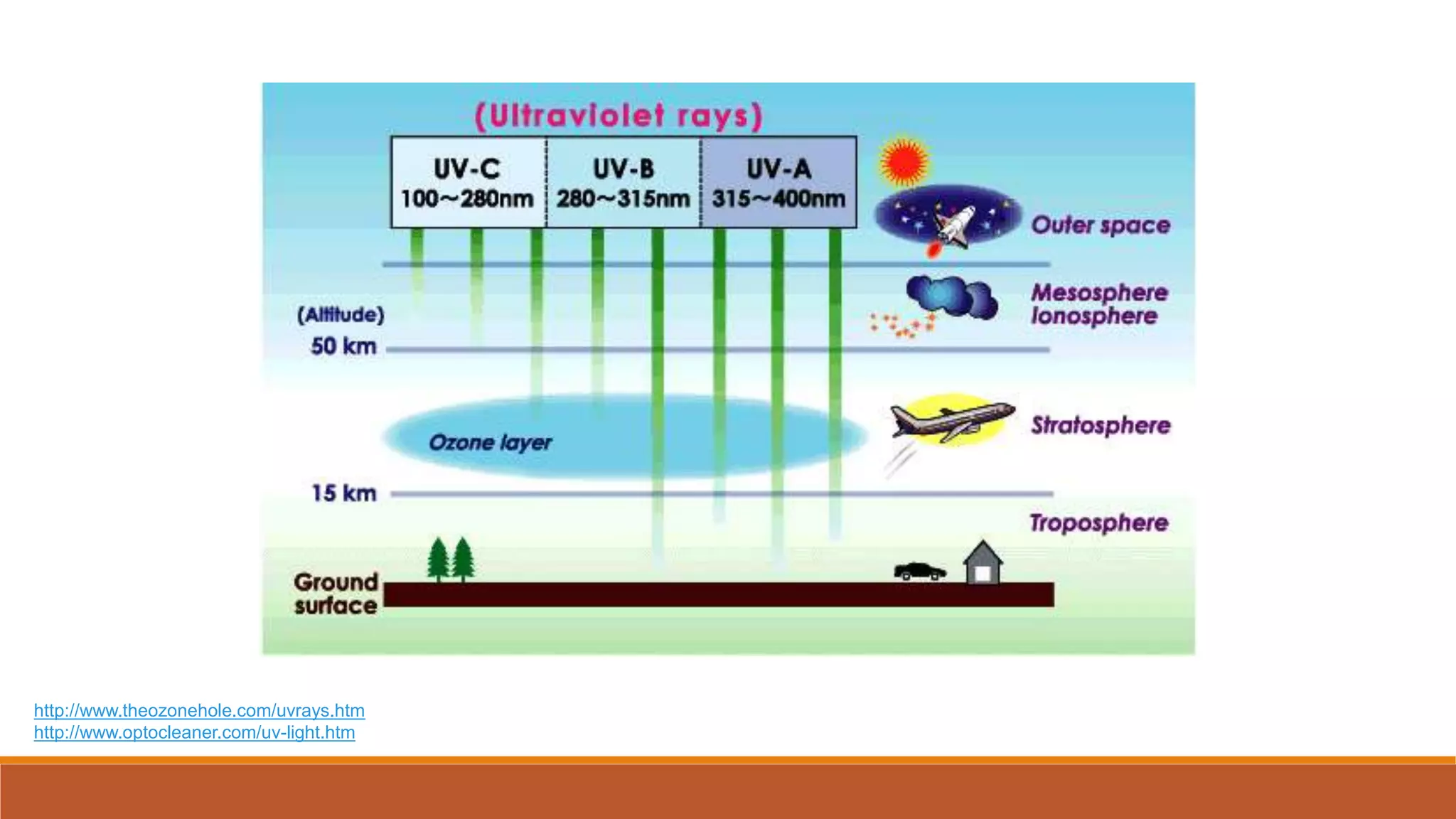
http://www.theozonehole.com/uvrays.htm
http://www.optocleaner.com/uv-light.htm
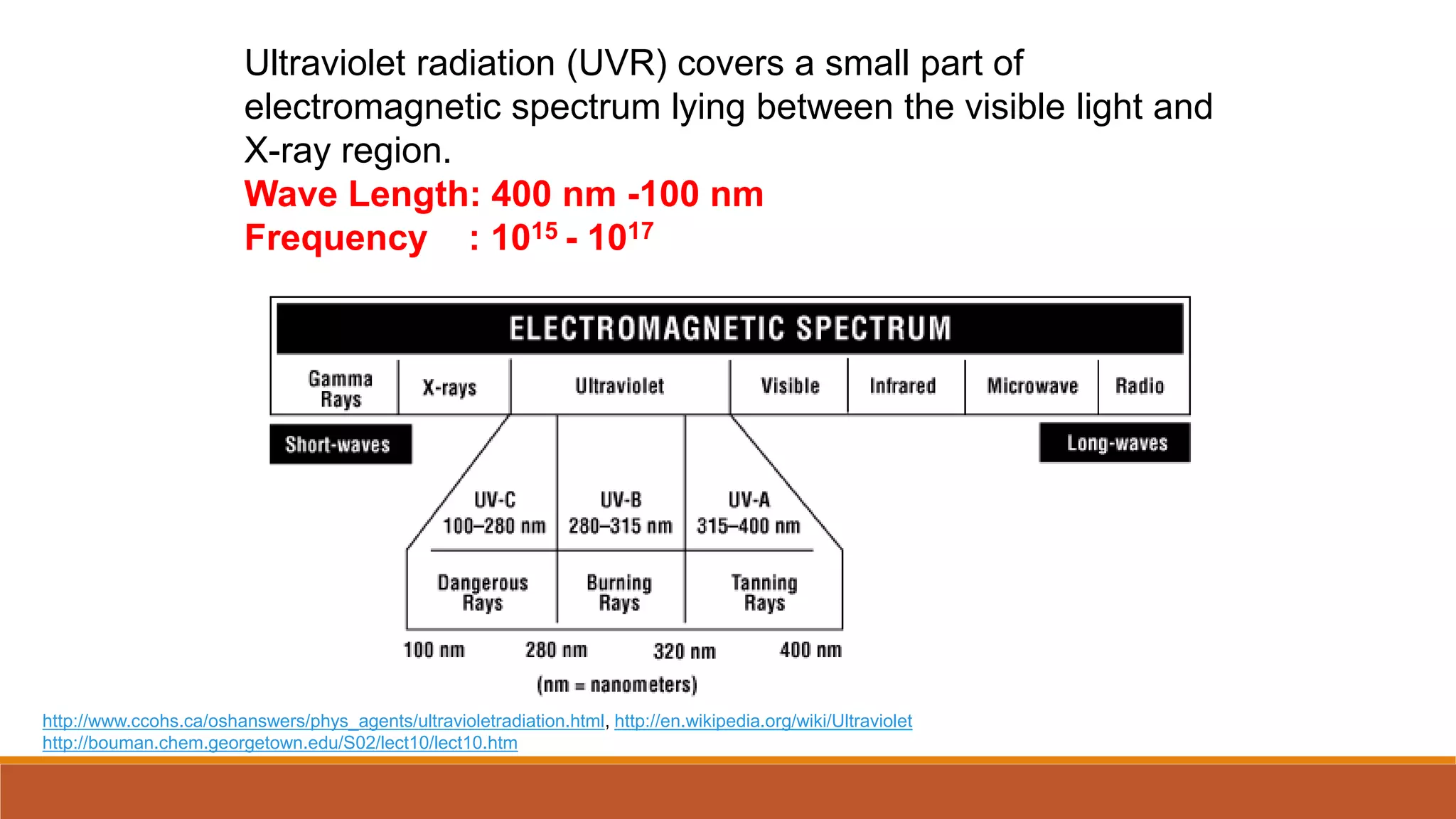
Ultraviolet radiation (UVR) covers a small part of
electromagnetic spectrum lying between the visible light and
X-ray region.
Wave Length: 400 nm -100 nm
Frequency : 1015 - 1017
http://www.ccohs.ca/oshanswers/phys_agents/ultravioletradiation.html, http://en.wikipedia.org/wiki/Ultraviolet
http://bouman.chem.georgetown.edu/S02/lect10/lect10.htm
Sreeraj S R
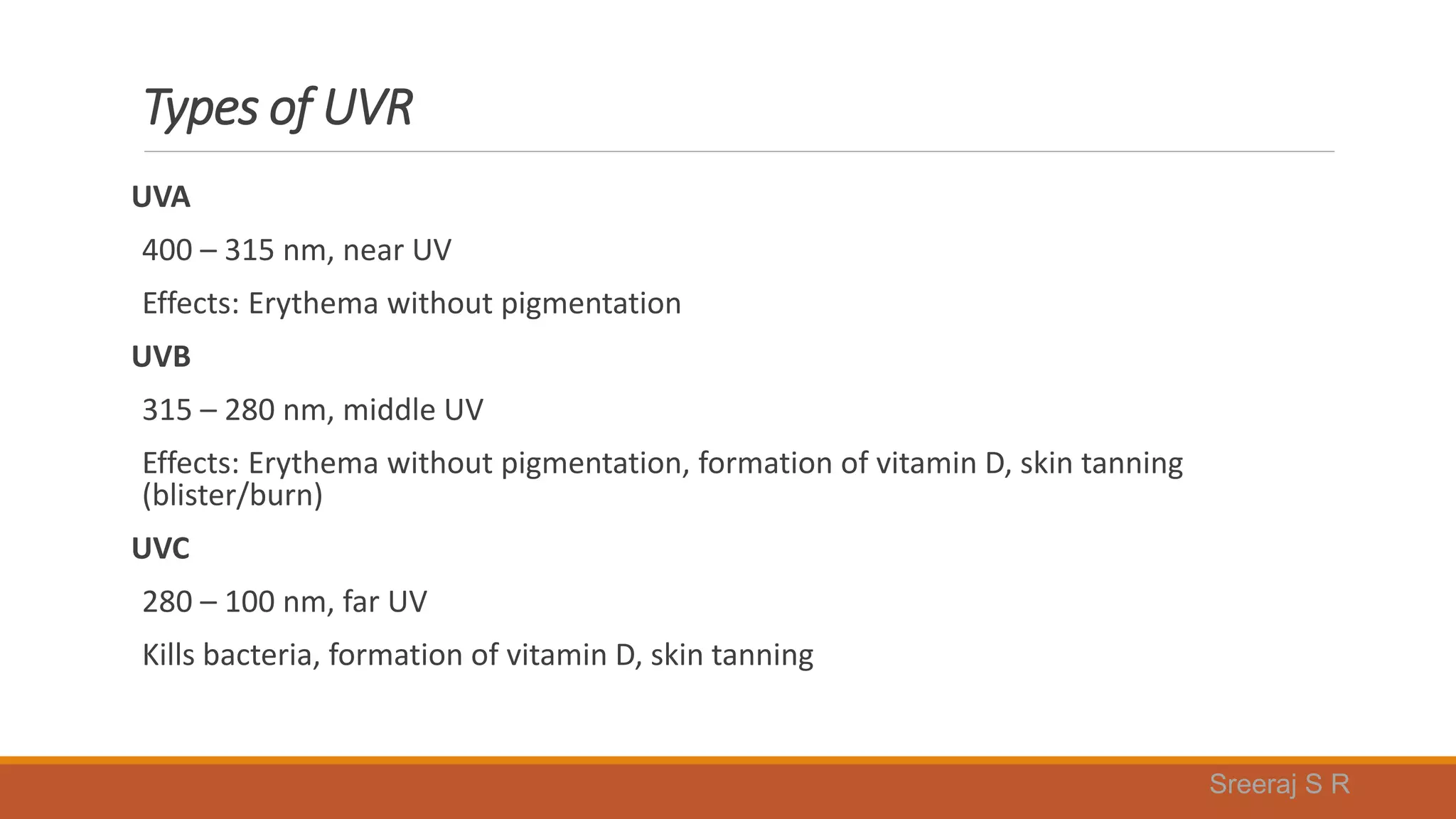
Types of UVR
UVA
400 – 315 nm, near UV
Effects: Erythema without pigmentation
UVB
315 – 280 nm, middle UV
Effects: Erythema without pigmentation, formation of vitamin D, skin tanning
(blister/burn)
UVC
280 – 100 nm, far UV
Kills bacteria, formation of vitamin D, skin tanning
Sreeraj S R
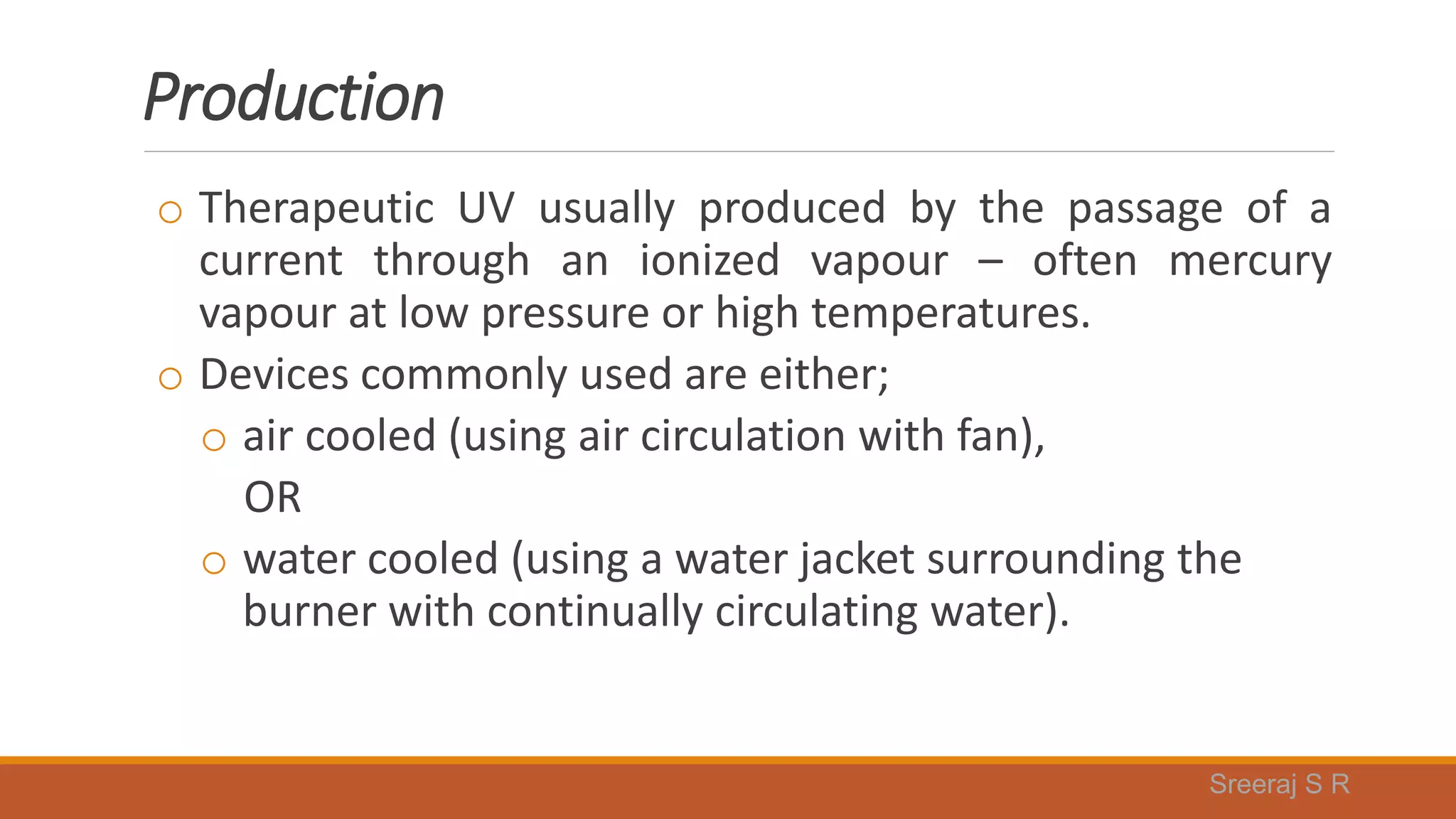
Production
o Therapeutic UV usually produced by the passage of a
current through an ionized vapour – often mercury
vapour at low pressure or high temperatures.
o Devices commonly used are either;
o air cooled (using air circulation with fan),
OR
o water cooled (using a water jacket surrounding the
burner with continually circulating water).
Sreeraj S R
Production
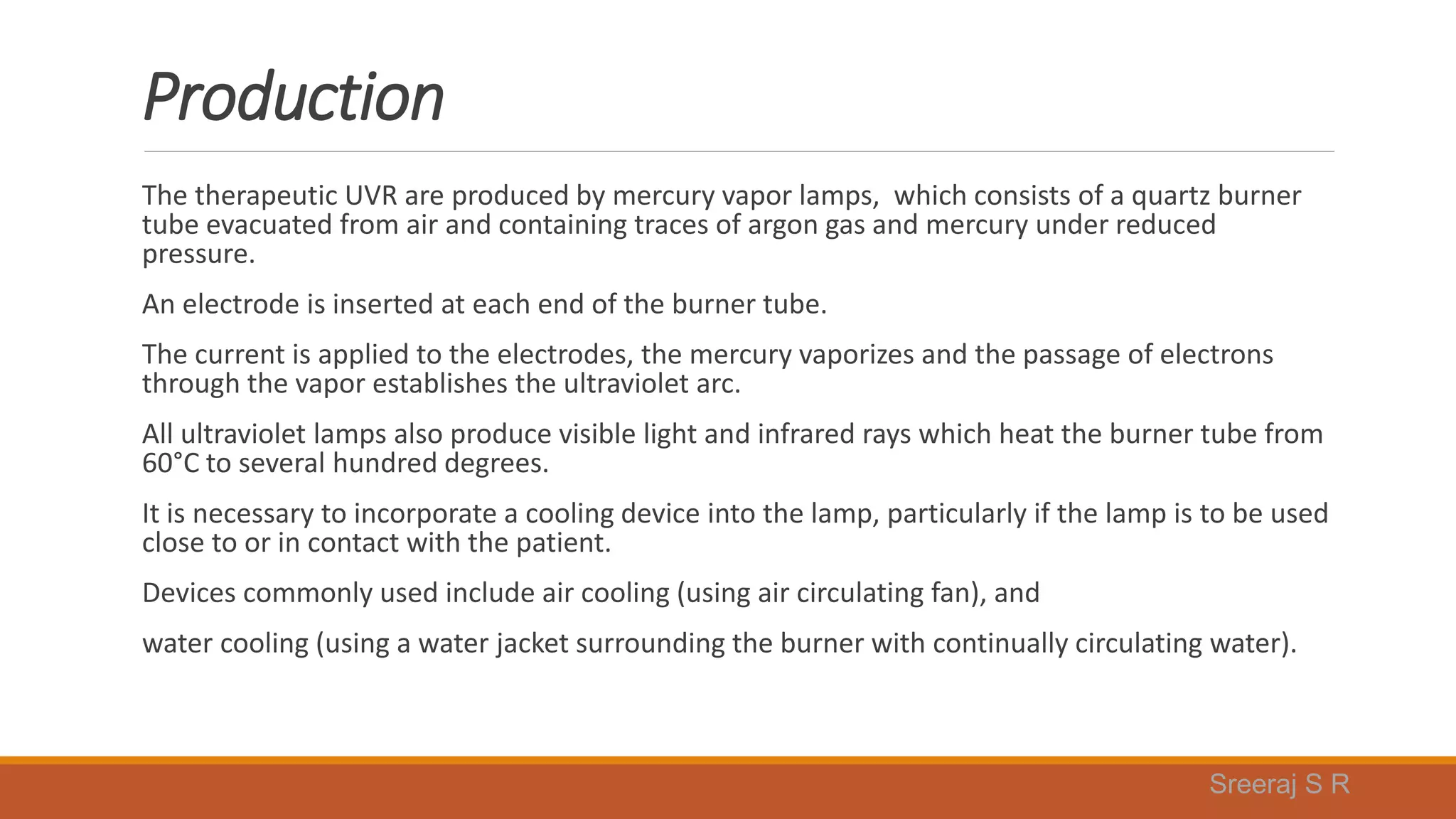
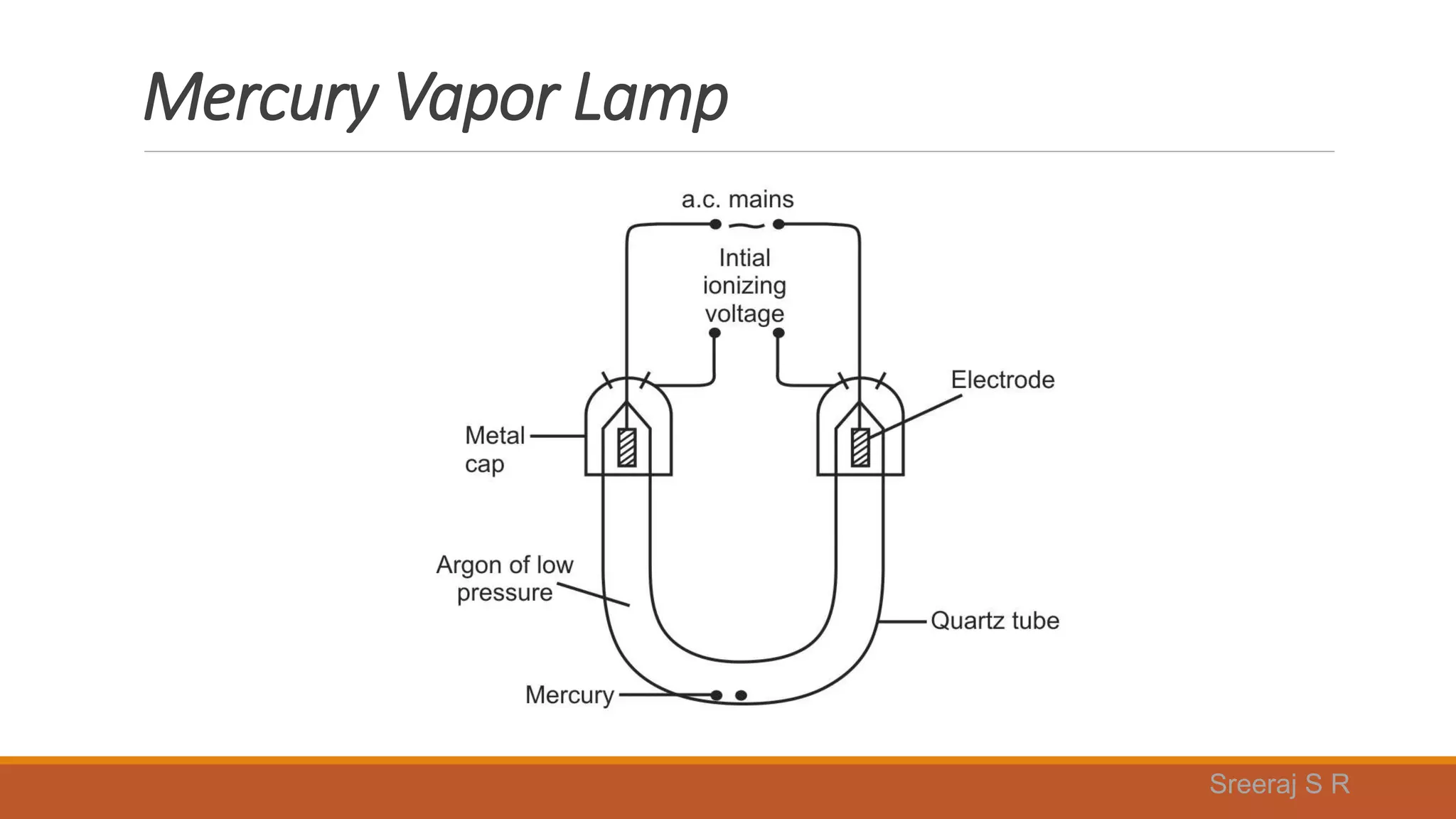
The therapeutic UVR are produced by mercury vapor lamps, which consists of a quartz burner
tube evacuated from air and containing traces of argon gas and mercury under reduced
pressure.
An electrode is inserted at each end of the burner tube.
The current is applied to the electrodes, the mercury vaporizes and the passage of electrons
through the vapor establishes the ultraviolet arc.
All ultraviolet lamps also produce visible light and infrared rays which heat the burner tube from
60°C to several hundred degrees.
It is necessary to incorporate a cooling device into the lamp, particularly if the lamp is to be used
close to or in contact with the patient.
Devices commonly used include air cooling (using air circulating fan), and
water cooling (using a water jacket surrounding the burner with continually circulating water).
Sreeraj S R
Mercury Vapor Lamp
Sreeraj S R
Tridymite Formation
The heat produced inside the Burner or Quartz tube causes some of
it to change to another form of silica called Tridymite.
Tridymite is Opaque to UVR. So output of the rays tends to FALL.
A variable resistance is included in the burner circuit to increase the
potential difference across the burner & intensity of the current.
Sreeraj S R
Ozone Formation
Shorter UVR of < 250nm turns atmospheric oxygen into Ozone.
Levels of ozone can be detected by smell.
Ozone is a toxic gas for inhalation.
The harmful effects can be reduced by providing good ventilation.
Sreeraj S R
Fluorescent lamps
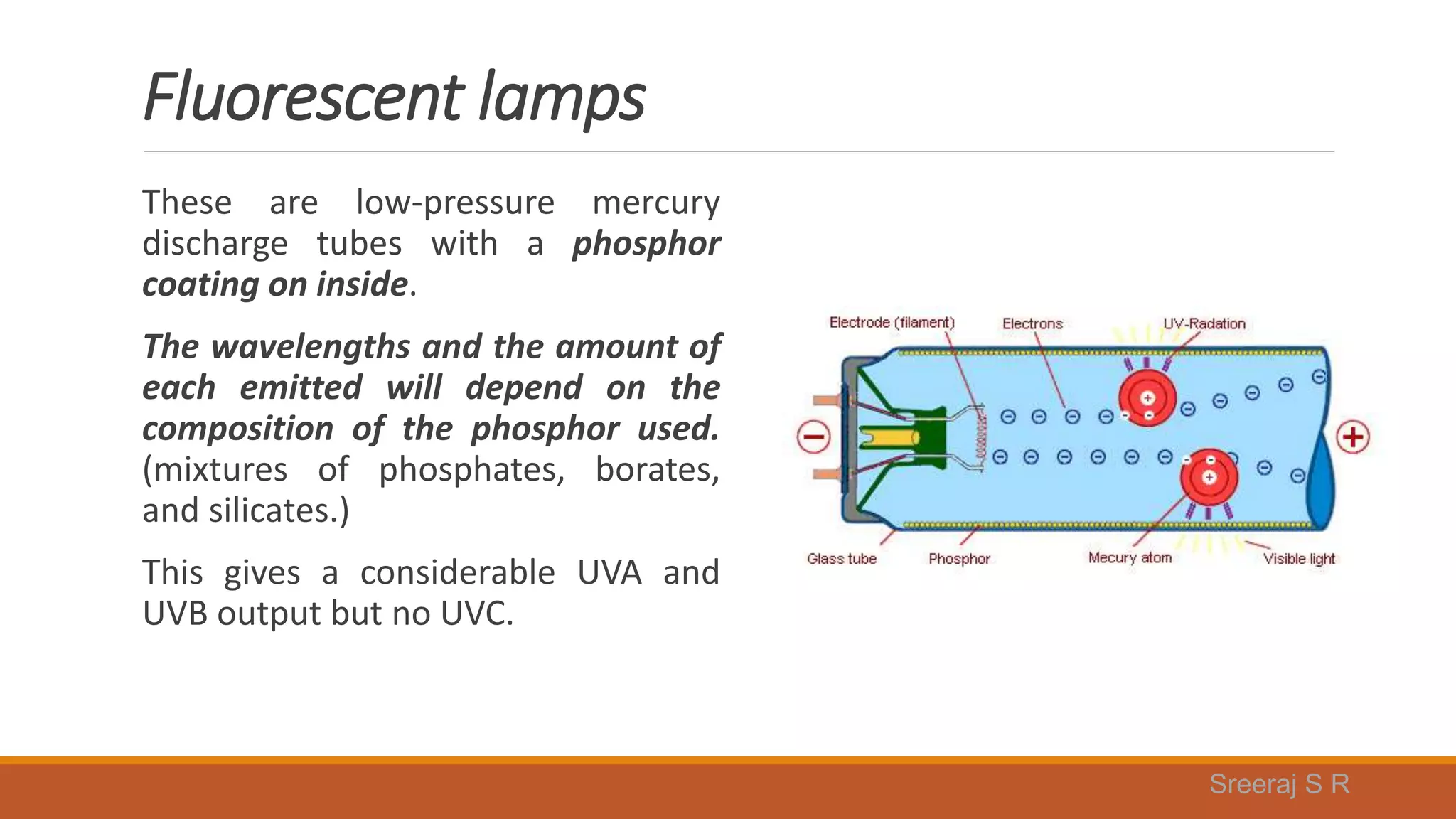
These are low-pressure mercury
discharge tubes with a phosphor
coating on inside.
The wavelengths and the amount of
each emitted will depend on the
composition of the phosphor used.
(mixtures of phosphates, borates,
and silicates.)
This gives a considerable UVA and
UVB output but no UVC.
Sreeraj S R
Kromayer lamp
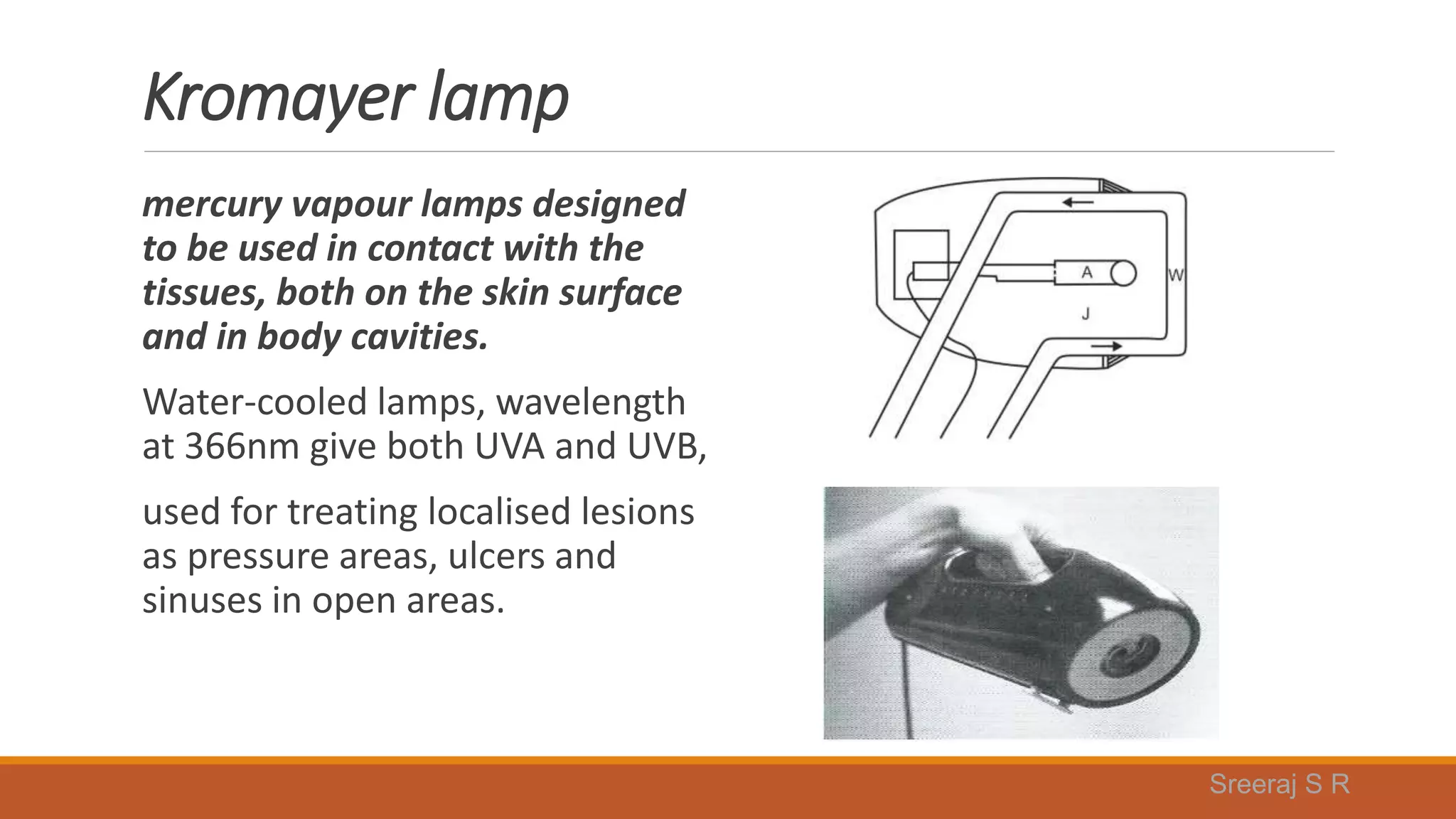
mercury vapour lamps designed
to be used in contact with the
tissues, both on the skin surface
and in body cavities.
Water-cooled lamps, wavelength
at 366nm give both UVA and UVB,
used for treating localised lesions
as pressure areas, ulcers and
sinuses in open areas.
Sreeraj S R
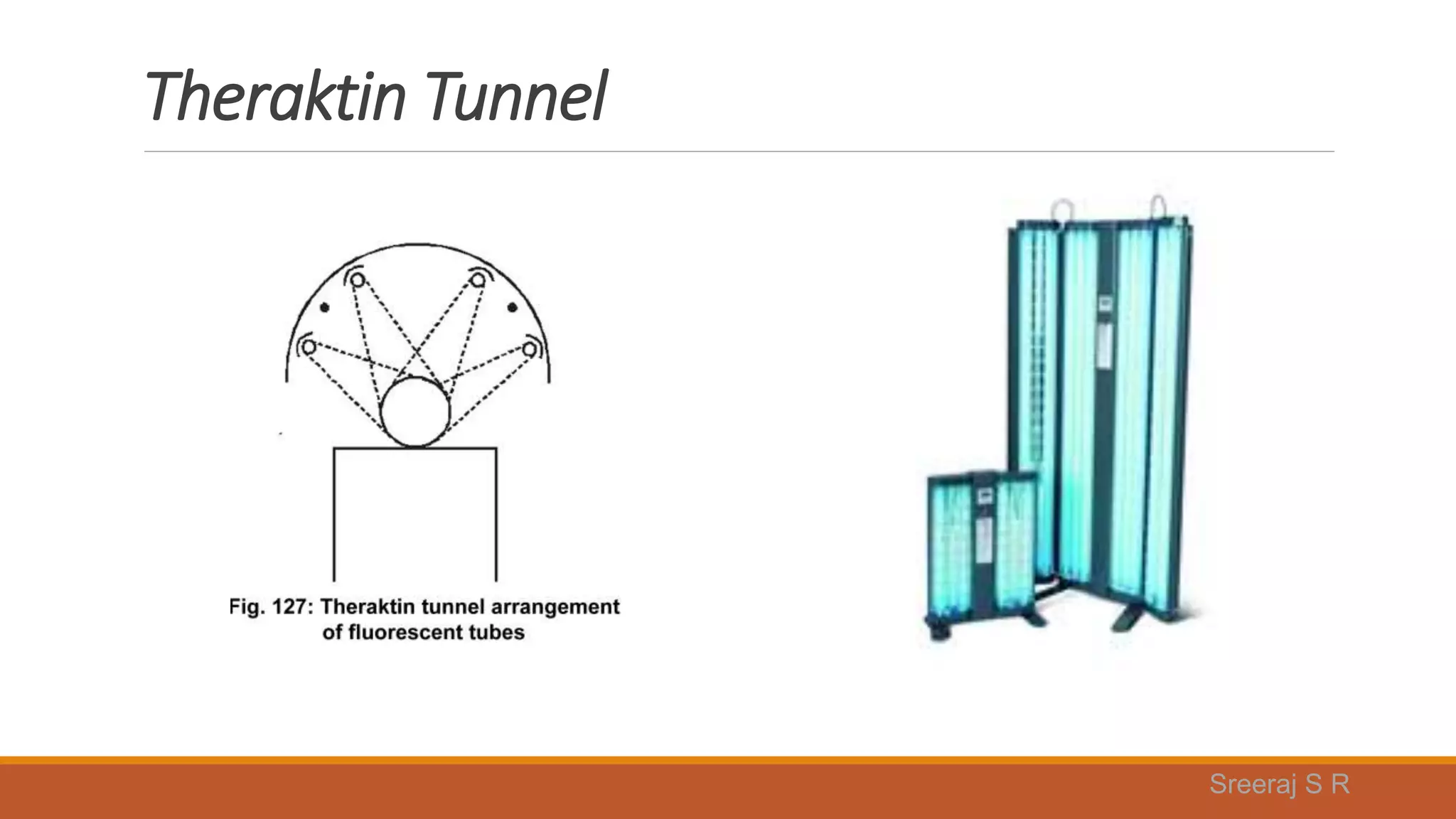
Theraktin Tunnel
Sreeraj S R
Alpine Lamp
o Medium/Low Pressure Mercury Arc Lamp / high-altitude lamps
o wavelength 253nm (short wavelength) used in treatment of
generalized skin conditions as acne and psoriasis.
o Short UVR react with oxygen in the air to produce a small
quantity of ozone (O3),
o Ozone is toxic at high concentrations so ventilation should be
adequate around these lamps.
Sreeraj S R
Depth of Penetration
Sreeraj S R
Physiological effects
Immediate/acute effects
1. Erythema
2. Pigmentation
3. Increased skin growth
4. Vitamin D production
5. Esophylactic effect
6. Immunosuppressive effects
7. Effects on eye
Sreeraj S R
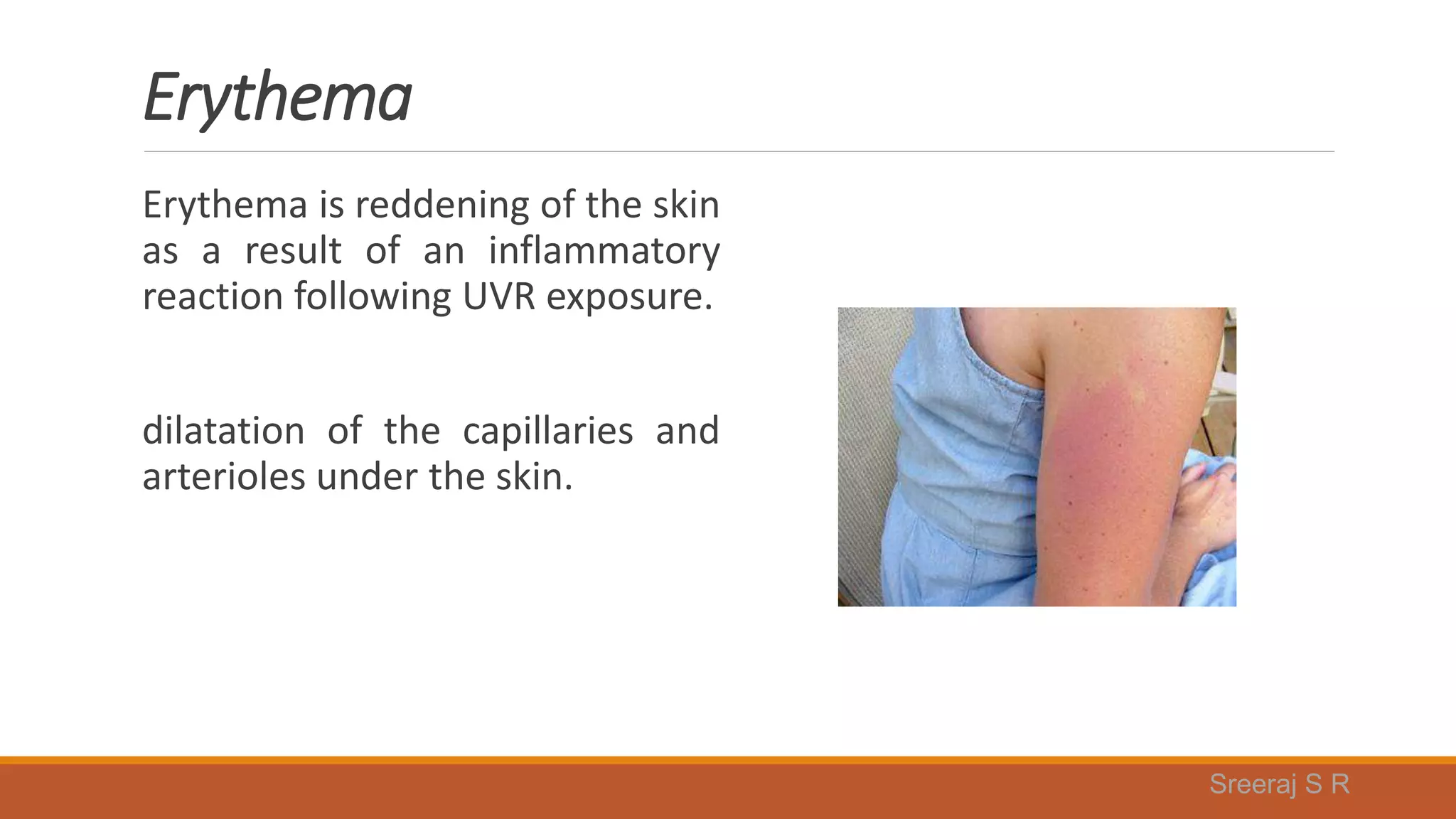
Erythema
Erythema is reddening of the skin
as a result of an inflammatory
reaction following UVR exposure.
dilatation of the capillaries and
arterioles under the skin.
Sreeraj S R
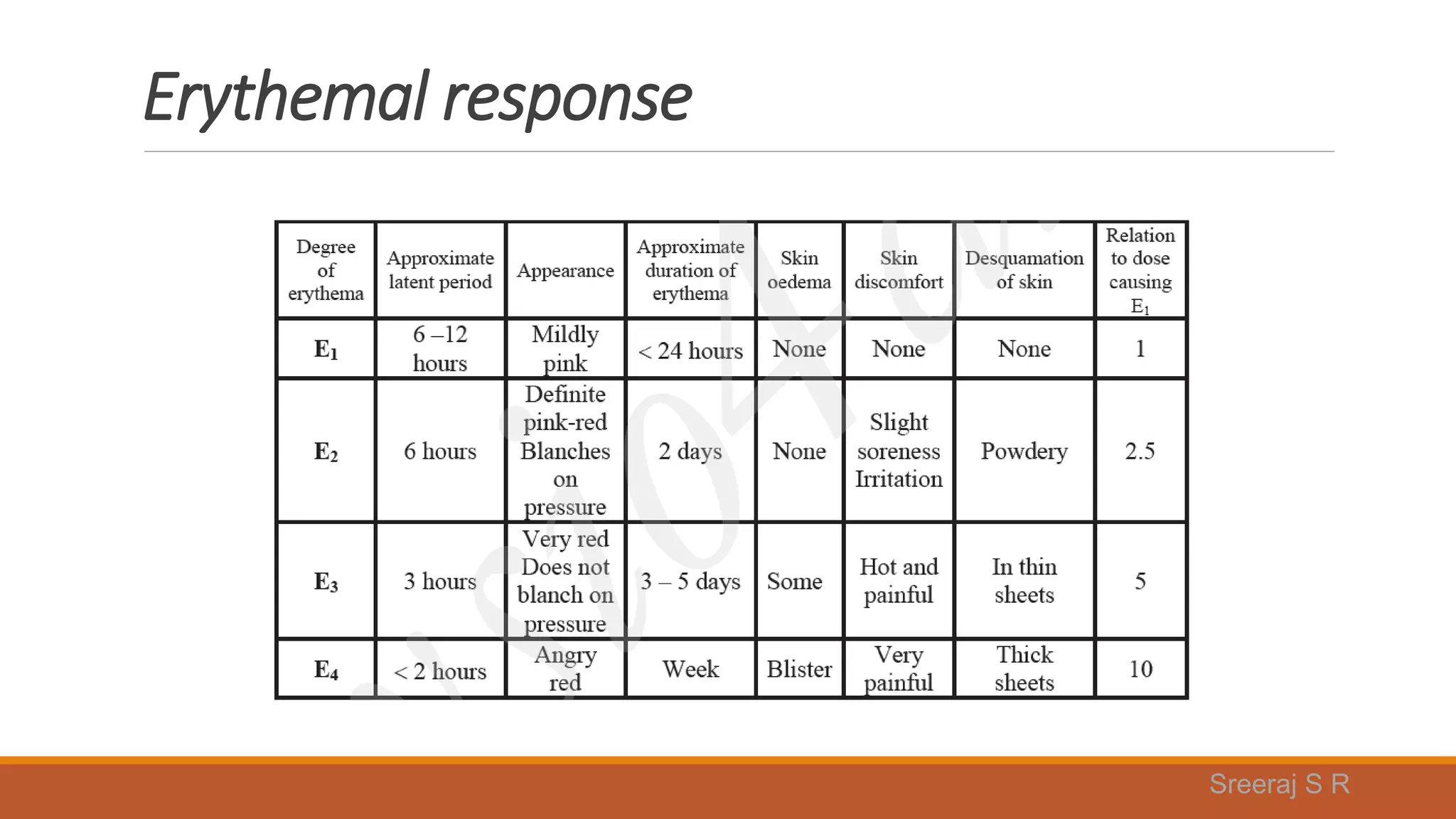
Erythemal response
Sreeraj S R
Pigmentation
o Pigmentation or tanning of the skin follows the erythema,
o its amount varies with the intensity of the erythema.
o It is due to the increased activity of melanoblasts leading to
deposition of the pigment melanin to the superficial layers of the
epidermis.
o The pigmentation Reduces the penetration of UV.
Sreeraj S R
Thickening of Epidermis
o UVR provokes an increased reproduction of Keratinocytes.
o This leads to thickening of epidermis
o This acts as a protection against the UV rays.
o So longer doses are required to repeat an Erythemal reaction.
Sreeraj S R
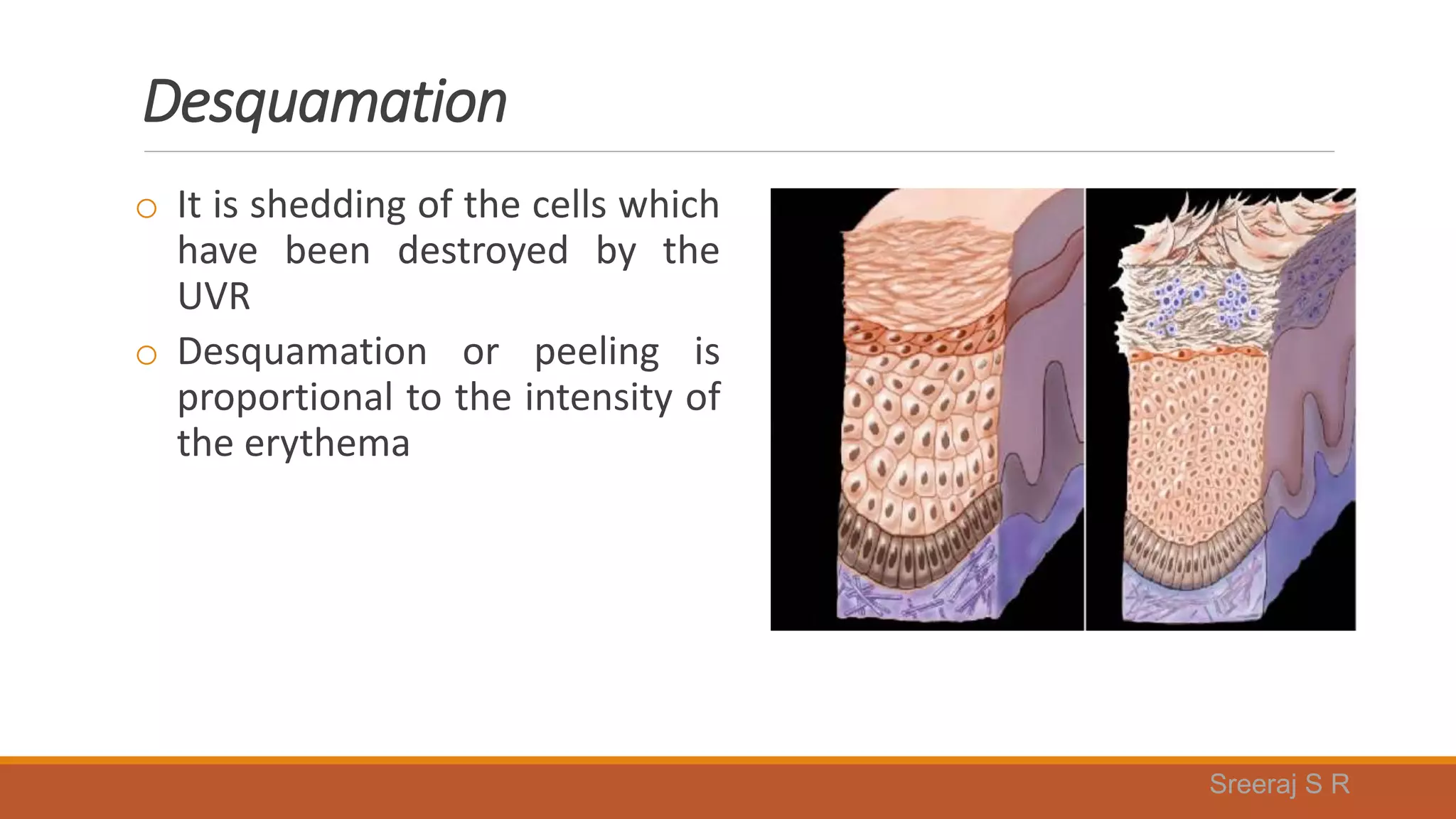
Desquamation
o It is shedding of the cells which
have been destroyed by the
UVR
o Desquamation or peeling is
proportional to the intensity of
the erythema
Sreeraj S R
Vitamin D production
o UVB can convert sterols in the
skin, such as 7-dehydro-
cholesterol to vitamin D
o Vitamin D is required to assist
in the absorption of calcium
and phosphorous from the
intestine to blood stream.
o Sub erythemal doses of UVB
are adequate to promote
vitamin D synthesis
Sreeraj S R
The Esophylactic effect
o General UVA Irradiation leads to
o Stimulation of macrophage or mononuclear phagocyte system
o Ingest bacteria & produce Antibodies against Bacteria & toxins.
o So the resistance of the body to infection is increased.
Sreeraj S R
Immunosuppressive Effects
o UV destroys Langerhan’s cells and stimulates the proliferation of
suppressor T cells.
o (T cells are regulatory in that they inhibit antibody production)
o This immunosuppressive effects may contribute to the
development of skin cancer.
o In short, UV radiation induces a state of relative immuno
suppression that prevents tumor rejection.
Sreeraj S R
Effects on eye
o Strong doses of UVB and C radiation to the eyes can lead to
conjunctivitis and photokeratitis results in irritation of the eye, a
feeling of grit in the eye, watering of the eye and aversion to light
(photophobia)
o In severe cases intense pain and spasm of the eyelid may be
present. This is also known as ‘snow blindness’
o While UVB and C are absorbed in the cornea, UVA can pass
through to be absorbed mainly in the lens of the eye.
o The strong doses of UVA may lead to formation of cataracts.
Sreeraj S R
Physiological effects
Long term/chronic effects
1. Solar elastosis or aging
2. Cancer
Sreeraj S R
Solar Elastosis & Ageing
o Prolonged exposure of UVR lead to;
o premature ageing of the skin; this is especially so in the fair-
skinned.
o decreased function of sebaceous and sweat glands
o loss of elastic tissue
o The skin becomes wrinkled, dry, and leathery.
Sreeraj S R
Cancer
o UV rays may have influence on DNA and thus on cell replication.
o Leading to Carcinogenesis.
o Skin cancers, basal cell and squamous cell carcinomas.
o Shorter ultraviolet waves should be avoided, and
o courses of treatment should not exceed four weeks.
Sreeraj S R
UVR dosage
Skin response to UVR depends upon:
1. Quantity of UVR energy applied to the skin
2. Biological responsiveness of skin
Sreeraj S R
UVR dosage
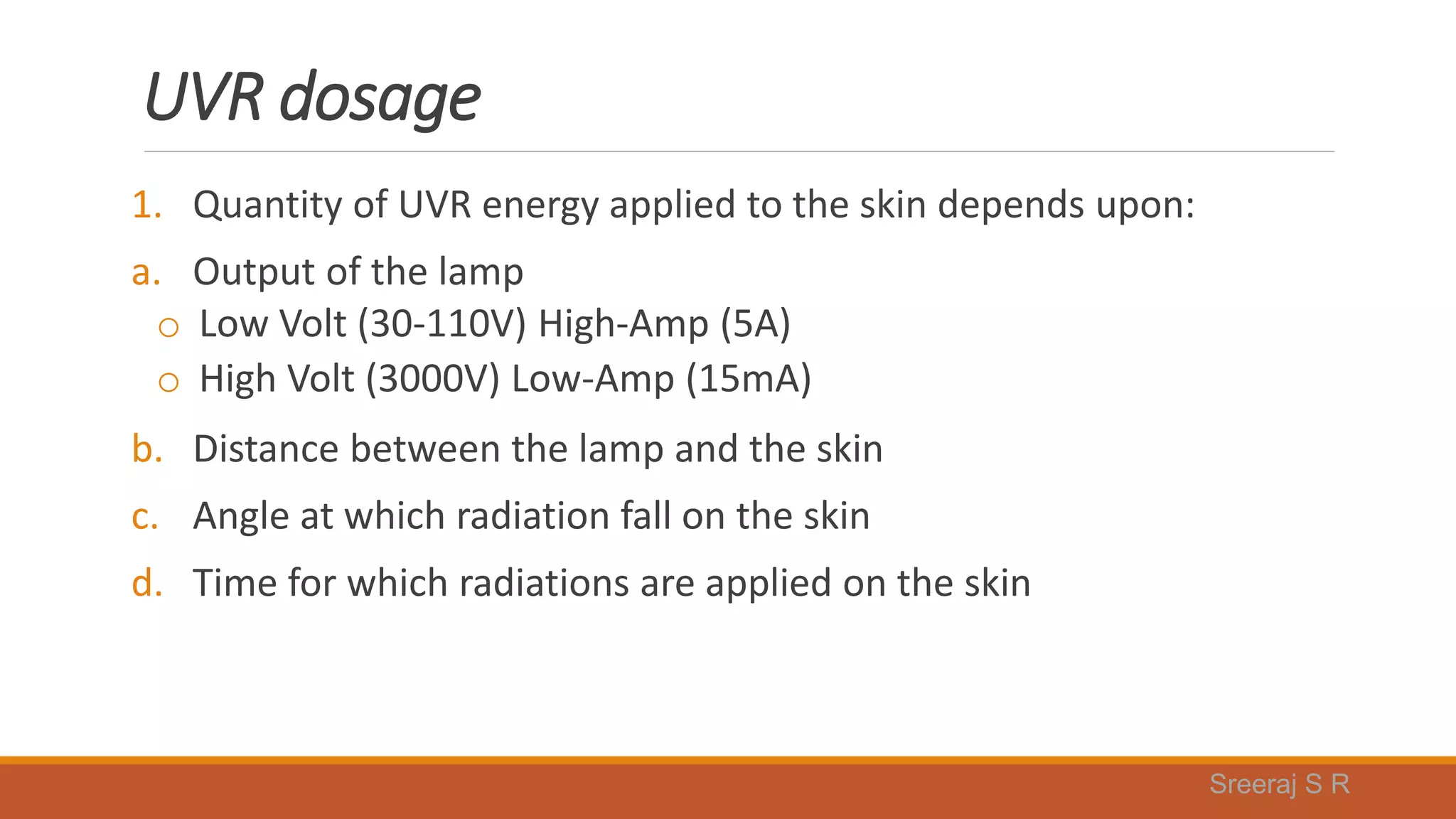
1. Quantity of UVR energy applied to the skin depends upon:
a. Output of the lamp
o Low Volt (30-110V) High-Amp (5A)
o High Volt (3000V) Low-Amp (15mA)
b. Distance between the lamp and the skin
c. Angle at which radiation fall on the skin
d. Time for which radiations are applied on the skin
Sreeraj S R
UVR dosage
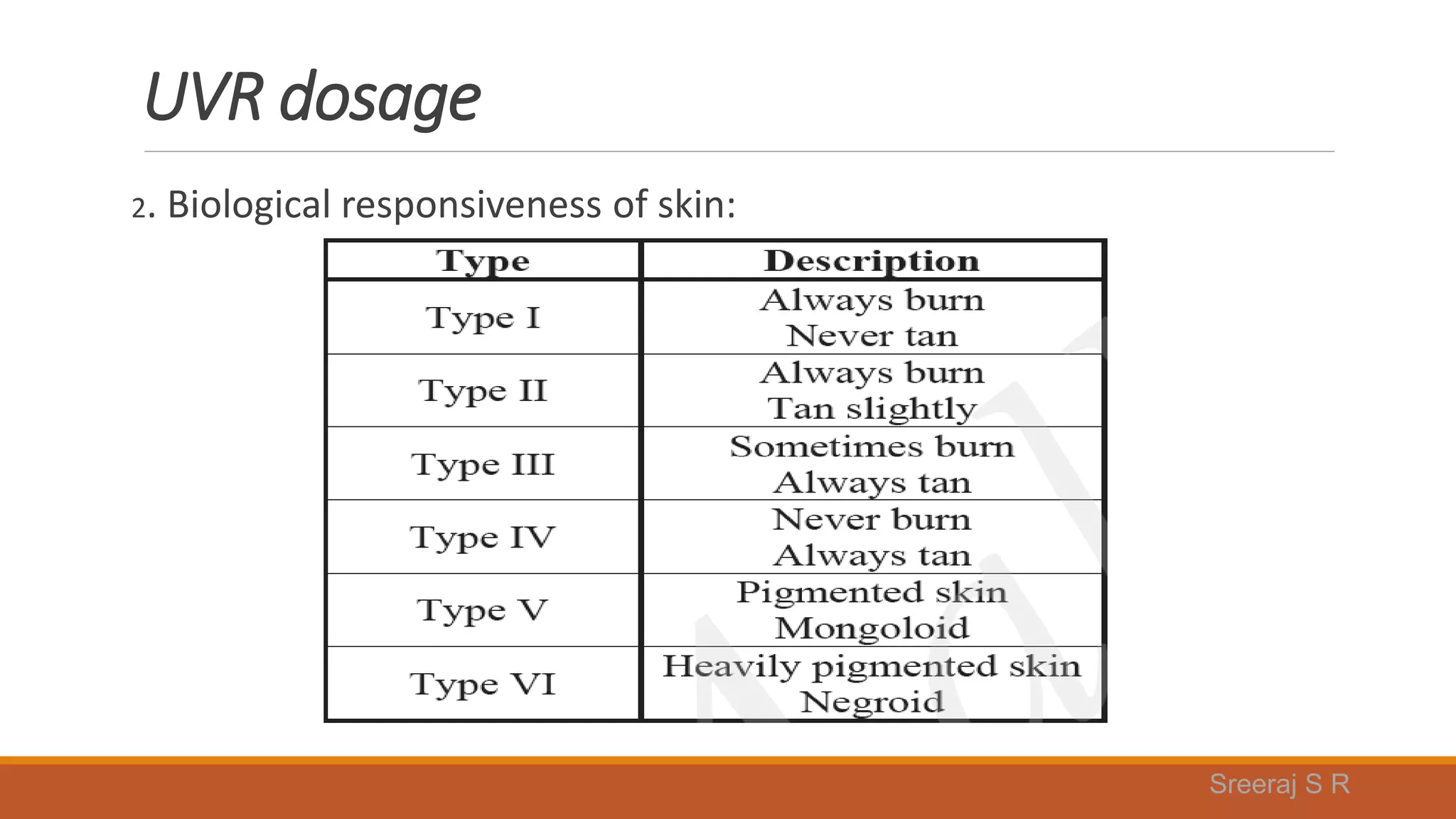
2. Biological responsiveness of skin:
Sreeraj S R
Erythemal response
Sreeraj S R
Test Dose
30 sec. 60 sec. 90 sec.
A minimal dose (MED) is the length of
the ultraviolet exposure required to
produce a mild erythema, which
appears within 6 to 8 hours and still just
visible after 24 hours.
Sreeraj S R
Test Dose
Test
applied
9.00 AM
Monday
Monday Tuesday
9 AM 12 PM 3 PM 6 PM 9 PM 12 AM 3 AM 6 AM 9 AM
Look at the areas at the times shown and place a tick in the box if any redness is seen.
If no redness is seen put a cross
Sreeraj S R
Calculation of dosage
E1 is determined from the skin test and the other erythemal dosages
can be calculated as follows:
o Sub-erythemal 75% of E1.
o E2 = 2.5 x E1.
o E3 = 5 x E1.
o E4 = 10 x E1.
o Double E4 = 20 x E1.
o E4 & Double E4 are used on open wounds.
Sreeraj S R
Progression of UV dosage
Doses can be progressed as follows:
o Sub-erythemal – previous dose plus 12.5%.
o E1: previous dose plus 25%.
o E2: previous dose plus 50%.
o E3: previous dose plus 75%.
o E4: previous dose plus 75%.
Dosages used on open wounds are not progressed because there is no
epidermis to thicken.
Sreeraj S R
Alteration of the intensity with distance
To irradiate a smaller area the source is moved nearer to the patient,
but the time of exposure must be altered to maintain the same
intensity in accordance with the law of inverse squares.
New time = Old time x (new distance)2
(Old distance)2
Sreeraj S R
Frequency of Treatment
SED : Daily
MED : Alternating Days
E2 : Twice a Week
E3 : 2 Weeks Apart
E4 : Only Very Local Areas. Not Frequently Given
Sreeraj S R
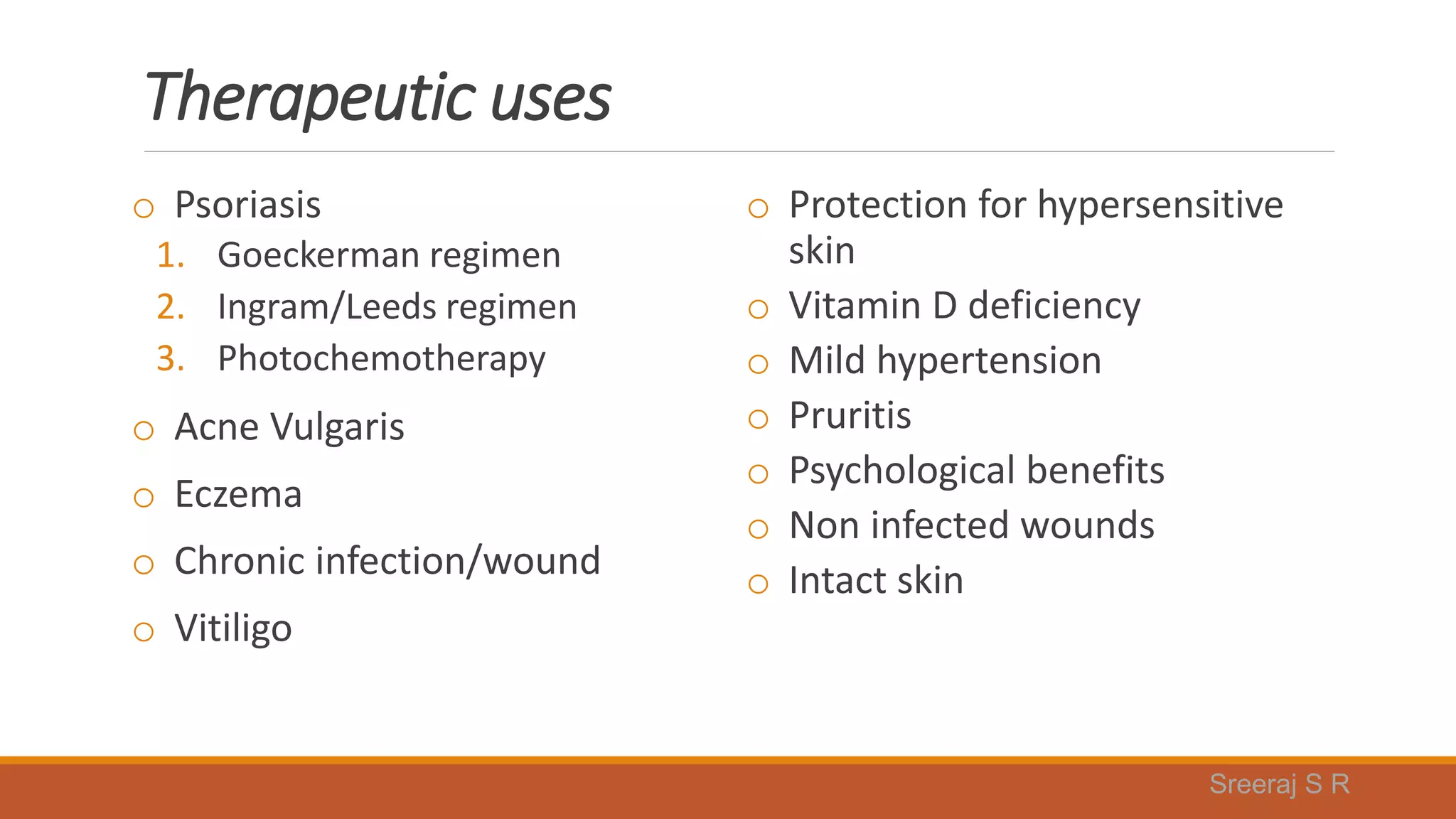
Therapeutic uses
o Psoriasis
1. Goeckerman regimen
2. Ingram/Leeds regimen
3. Photochemotherapy
o Acne Vulgaris
o Eczema
o Chronic infection/wound
o Vitiligo
o Protection for hypersensitive
skin
o Vitamin D deficiency
o Mild hypertension
o Pruritis
o Psychological benefits
o Non infected wounds
o Intact skin
Sreeraj S R
Psoriasis
o A skin condition, which presents
localized plaques in which the
rate of cell turnover from the
basal layer through to the
superficial layer is too rapid.
o The aim of ultraviolet irradiation
is to decrease the rate of DNA
synthesis in the cells of the skin
and thus slow down their
proliferation
o i.e. immunosuppressive effect of
UVR.
Sreeraj S R
Psoriasis
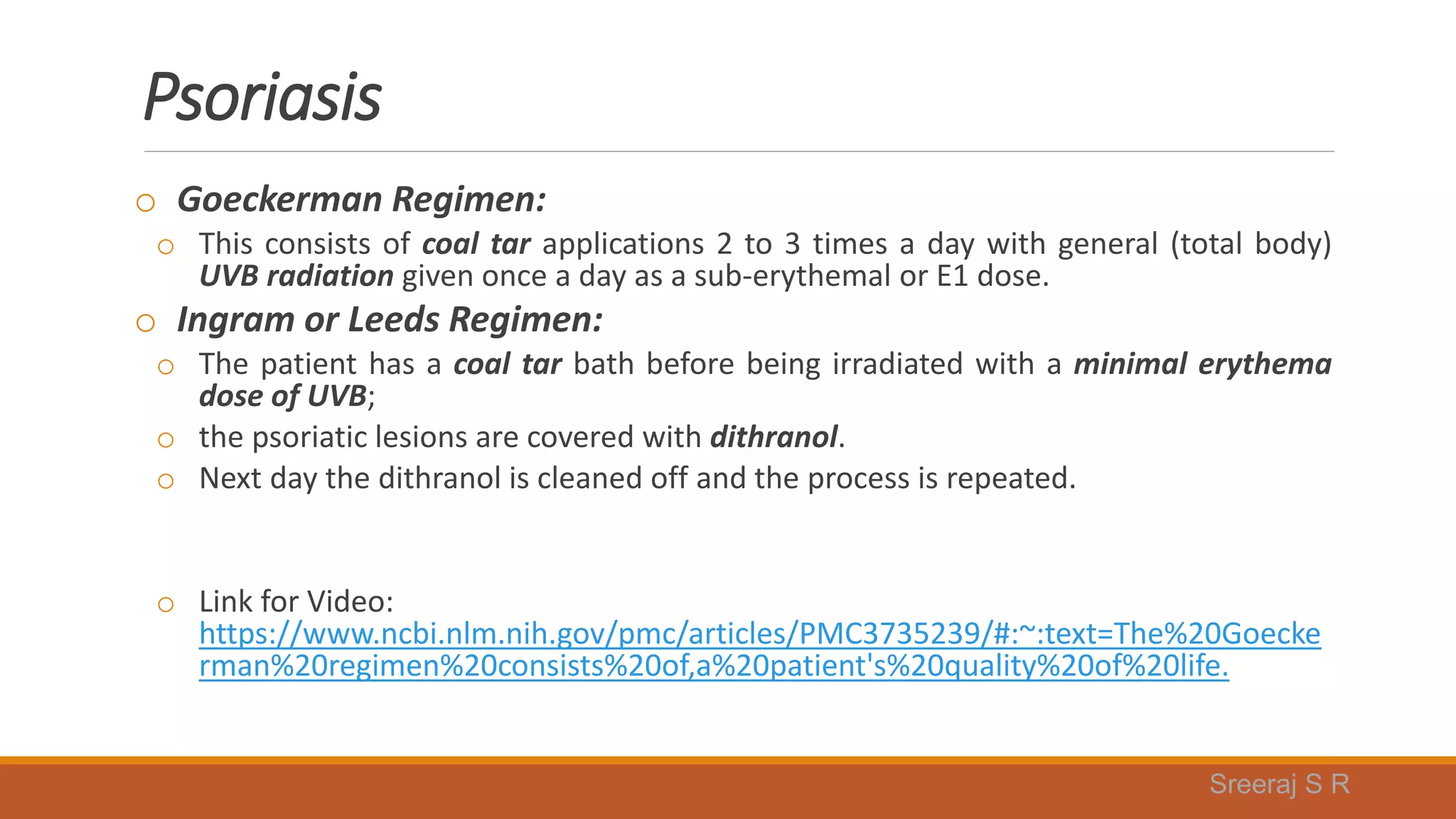
o Goeckerman Regimen:
o This consists of coal tar applications 2 to 3 times a day with general (total body)
UVB radiation given once a day as a sub-erythemal or E1 dose.
o Ingram or Leeds Regimen:
o The patient has a coal tar bath before being irradiated with a minimal erythema
dose of UVB;
o the psoriatic lesions are covered with dithranol.
o Next day the dithranol is cleaned off and the process is repeated.
o Link for Video:
https://www.ncbi.nlm.nih.gov/pmc/articles/PMC3735239/#:~:text=The%20Goecke
rman%20regimen%20consists%20of,a%20patient's%20quality%20of%20life.
Sreeraj S R
Psoriasis
Photo chemotherapy :
Psoralen-type drug is given to the patient some 2 hours previously, to make
him/her sensitive to UVA radiations,
This will produce an erythema at lower intensities than normal.
The drug 8-methoxy-psoralen is used making the patient highly reactive to UVA
once it has been absorbed, for some 6 – 8 hours.
As the peak of PUVA erythema occurs at 48 – 72 hours, treatment should be
given twice a week until clearance.
This should be approximately 12 –18 exposures.
Sreeraj S R
Acne Vulgaris:
o This is a chronic inflammatory
condition of the pilosebaceous
unit especially affecting the
face, chest, and back.
o Using UVR is aiming to produce
desquamation to open the
blocked pores and hair follicles.
o usually E2 are used
Sreeraj S R
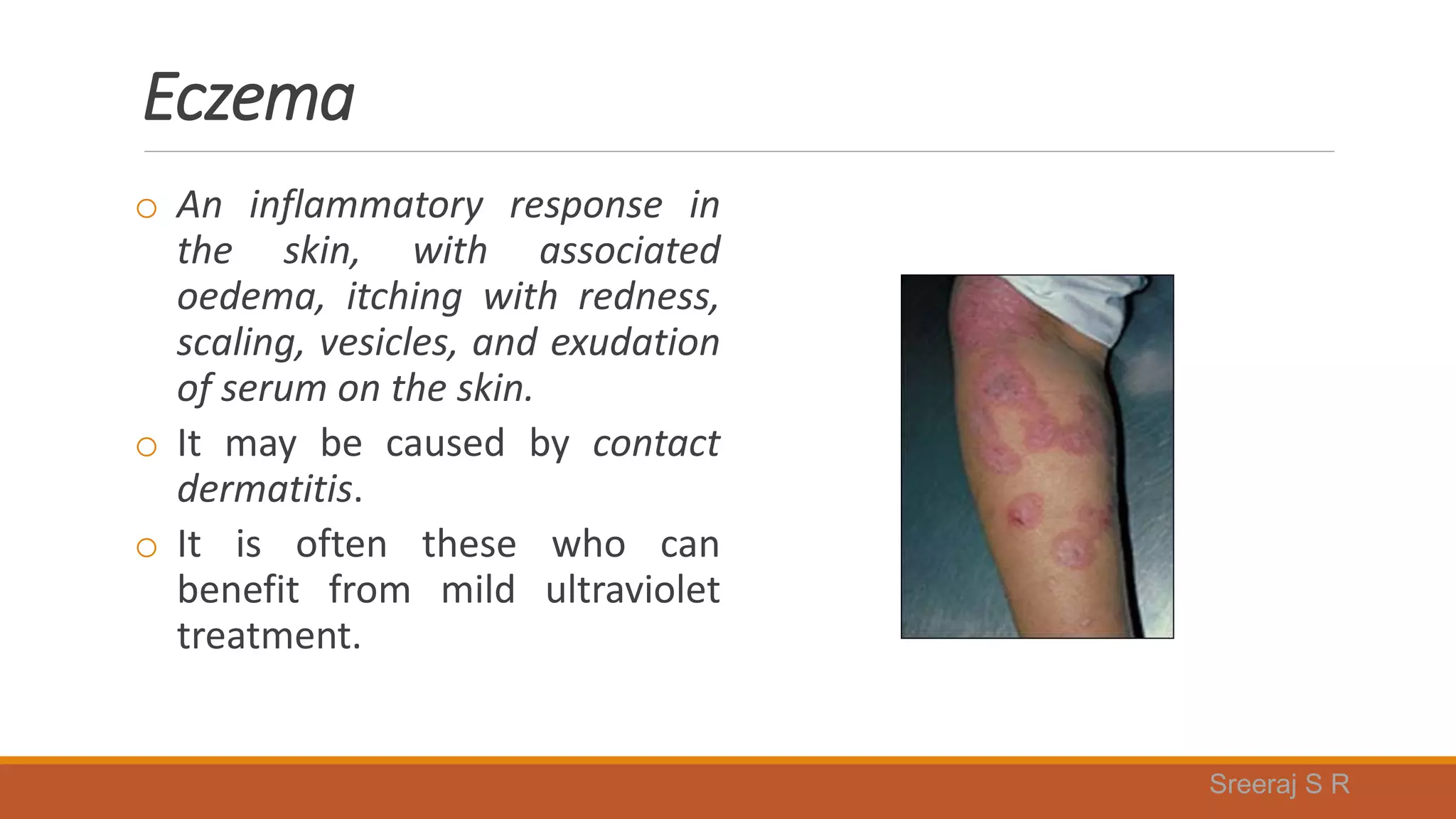
Eczema
o An inflammatory response in
the skin, with associated
oedema, itching with redness,
scaling, vesicles, and exudation
of serum on the skin.
o It may be caused by contact
dermatitis.
o It is often these who can
benefit from mild ultraviolet
treatment.
Sreeraj S R
Infected Wound
o Treated with high doses of ultraviolet radiation.
o A Kromayer lamp is successful in inhibiting bacterial colony growth.
o The doses given must be an E4.
Sreeraj S R
Non-Infected Wounds
o The aim of ultraviolet radiation is to stimulate the growth of
granulation tissue and thus speed up repair.
o Can be used in surgical incisions, pressure areas, venous and
arterial ulcers.
o UVA, E3 dose is sufficient.
Sreeraj S R
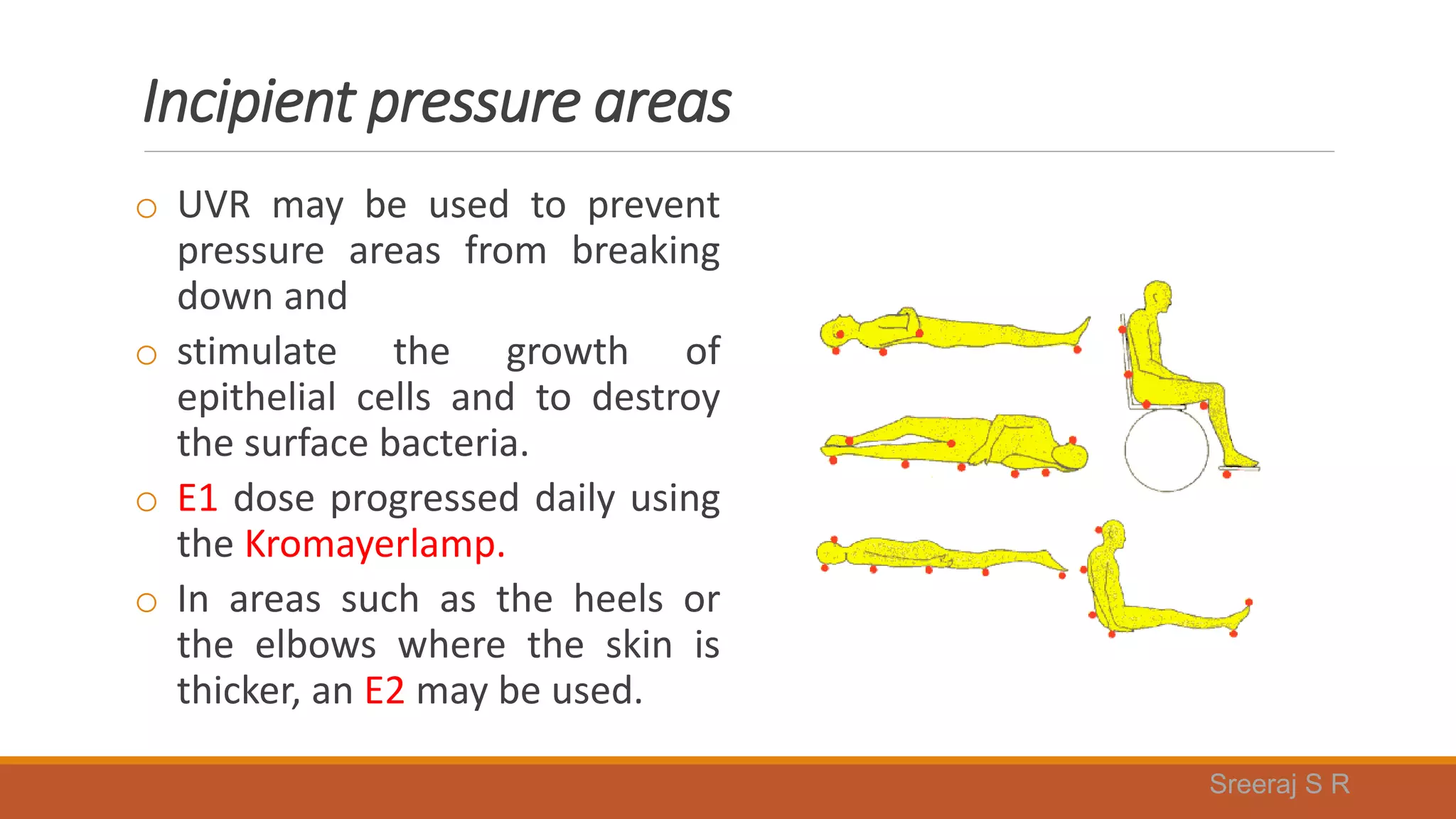
Incipient pressure areas
o UVR may be used to prevent
pressure areas from breaking
down and
o stimulate the growth of
epithelial cells and to destroy
the surface bacteria.
o E1 dose progressed daily using
the Kromayerlamp.
o In areas such as the heels or
the elbows where the skin is
thicker, an E2 may be used.
Sreeraj S R
Vitiligo
o An autoimmune disease in which
destruction of melanocytes in
local areas causes white patches
to appear on the skin.
o Both UVA and B stimulate
melanocyte activity
o UVA seems to provoke a darker
and long-lasting tan although the
protective effects do not seem to
be so marked
o UVB provokes more thickening
Sreeraj S R
Protection for Hypersensitive Skin
o Polymorphic light eruption is the commonest of photodermatoses
o increased tolerance to sunlight can be achieved by a course of
UVB
o start with a very low dose and gradually progressing.
Sreeraj S R
Vitamin D Deficiency
o Vitamin D3 is formed in skin by the action of UVB and C on 7-
dehydrocholesterol.
o natural sunlight can also be curative for vitamin D deficiency
diseases
Sreeraj S R
Mild Hypertension
o The general (whole body) suberythemal doses of UVB can
significantly lower blood pressure
o it is believed to be due to calcium regulating hormones associated
with increased vitamin D production.
Sreeraj S R
Pruritus
o The intractable and serious itching that can occur due to raised bile
acid level in biliary cirrhosis or uraemia.
o can successfully treated by suberythemal whole-body UVB either
alone or in combination with the drug cholestyramine.
Sreeraj S R
Psychological Benefit
o Patients expect to feel better and the consequent tanning makes
them look better.
Sreeraj S R
Contraindications to UVR
o Acute skin conditions – acute eczema, dermatitis, lupus
erthematosis (auto-immune disease) and herpes simplex
o an existing ultraviolet Erythema.
o Skin damage due to ionizing radiations – deep X-ray therapy.
o Photo allergy – allergic reaction to ultraviolet radiation.
o Acute febrile illness – whole-body treatment should be avoided.
o Recent skin grafts.
Sreeraj S R
Dangers
o Shock: the machine should be earthed and the main power cord insulation
intact.
o Eyes: it is important to protect the eyes of both patient and therapist from
scattered and reflected radiations. The patient should wear goggles even
when not facing the source of radiations. The physiotherapist should be aware
of the cumulative effect of UVR through the day.
o Over dosage: to avoid long exposure to UVR, use an accurate timing device
especially for periods over about 1 minute. Overlap of doses may lead to
burn.
o In case of an accidental overdose infrared radiation may be given to the area
to increase local circulation and thereby disperse the histamine-like substance
that produces the erythema.
o Sensitization: several drugs and some foods in few patients can alter the
effect of UVR and cause sensitivity.
Sreeraj S R
References
1. Electrotherapy Explained by Low and Reed
2. Textbook of Electrotherapy by Singh Jagmohan
3. http://faculty.ksu.edu.sa/68417/RHS%20321/ULTRAVIOLET%20%20RADIATIONS%20(2).pdf
4. http://www.aarogya.com/conditions-and-diseases/specialties/physiotherapy/4823-
electrotherapy.html?start=2
5. Ultraviolet Radiation by Sagar Naik. physio4all
6. Ultraviolet germicidal irradiation: current best practices by Stephen B. Martin, Jr. et al.
ASHRAE Journal, August, 2008

Ultraviolet radiation in Physiotherapy

  • 1.
  • 2.
  • 3.
  • 4.
    Ultraviolet radiation (UVR)covers a small part of electromagnetic spectrum lying between the visible light and X-ray region. Wave Length: 400 nm -100 nm Frequency : 1015 - 1017 http://www.ccohs.ca/oshanswers/phys_agents/ultravioletradiation.html, http://en.wikipedia.org/wiki/Ultraviolet http://bouman.chem.georgetown.edu/S02/lect10/lect10.htm
  • 5.
    Sreeraj S R Typesof UVR UVA 400 – 315 nm, near UV Effects: Erythema without pigmentation UVB 315 – 280 nm, middle UV Effects: Erythema without pigmentation, formation of vitamin D, skin tanning (blister/burn) UVC 280 – 100 nm, far UV Kills bacteria, formation of vitamin D, skin tanning
  • 6.
    Sreeraj S R Production oTherapeutic UV usually produced by the passage of a current through an ionized vapour – often mercury vapour at low pressure or high temperatures. o Devices commonly used are either; o air cooled (using air circulation with fan), OR o water cooled (using a water jacket surrounding the burner with continually circulating water).
  • 7.
    Sreeraj S R Production Thetherapeutic UVR are produced by mercury vapor lamps, which consists of a quartz burner tube evacuated from air and containing traces of argon gas and mercury under reduced pressure. An electrode is inserted at each end of the burner tube. The current is applied to the electrodes, the mercury vaporizes and the passage of electrons through the vapor establishes the ultraviolet arc. All ultraviolet lamps also produce visible light and infrared rays which heat the burner tube from 60°C to several hundred degrees. It is necessary to incorporate a cooling device into the lamp, particularly if the lamp is to be used close to or in contact with the patient. Devices commonly used include air cooling (using air circulating fan), and water cooling (using a water jacket surrounding the burner with continually circulating water).
  • 8.
  • 9.
    Sreeraj S R TridymiteFormation The heat produced inside the Burner or Quartz tube causes some of it to change to another form of silica called Tridymite. Tridymite is Opaque to UVR. So output of the rays tends to FALL. A variable resistance is included in the burner circuit to increase the potential difference across the burner & intensity of the current.
  • 10.
    Sreeraj S R OzoneFormation Shorter UVR of < 250nm turns atmospheric oxygen into Ozone. Levels of ozone can be detected by smell. Ozone is a toxic gas for inhalation. The harmful effects can be reduced by providing good ventilation.
  • 11.
    Sreeraj S R Fluorescentlamps These are low-pressure mercury discharge tubes with a phosphor coating on inside. The wavelengths and the amount of each emitted will depend on the composition of the phosphor used. (mixtures of phosphates, borates, and silicates.) This gives a considerable UVA and UVB output but no UVC.
  • 12.
    Sreeraj S R Kromayerlamp mercury vapour lamps designed to be used in contact with the tissues, both on the skin surface and in body cavities. Water-cooled lamps, wavelength at 366nm give both UVA and UVB, used for treating localised lesions as pressure areas, ulcers and sinuses in open areas.
  • 13.
  • 14.
    Sreeraj S R AlpineLamp o Medium/Low Pressure Mercury Arc Lamp / high-altitude lamps o wavelength 253nm (short wavelength) used in treatment of generalized skin conditions as acne and psoriasis. o Short UVR react with oxygen in the air to produce a small quantity of ozone (O3), o Ozone is toxic at high concentrations so ventilation should be adequate around these lamps.
  • 15.
    Sreeraj S R Depthof Penetration
  • 16.
    Sreeraj S R Physiologicaleffects Immediate/acute effects 1. Erythema 2. Pigmentation 3. Increased skin growth 4. Vitamin D production 5. Esophylactic effect 6. Immunosuppressive effects 7. Effects on eye
  • 17.
    Sreeraj S R Erythema Erythemais reddening of the skin as a result of an inflammatory reaction following UVR exposure. dilatation of the capillaries and arterioles under the skin.
  • 18.
  • 19.
    Sreeraj S R Pigmentation oPigmentation or tanning of the skin follows the erythema, o its amount varies with the intensity of the erythema. o It is due to the increased activity of melanoblasts leading to deposition of the pigment melanin to the superficial layers of the epidermis. o The pigmentation Reduces the penetration of UV.
  • 20.
    Sreeraj S R Thickeningof Epidermis o UVR provokes an increased reproduction of Keratinocytes. o This leads to thickening of epidermis o This acts as a protection against the UV rays. o So longer doses are required to repeat an Erythemal reaction.
  • 21.
    Sreeraj S R Desquamation oIt is shedding of the cells which have been destroyed by the UVR o Desquamation or peeling is proportional to the intensity of the erythema
  • 22.
    Sreeraj S R VitaminD production o UVB can convert sterols in the skin, such as 7-dehydro- cholesterol to vitamin D o Vitamin D is required to assist in the absorption of calcium and phosphorous from the intestine to blood stream. o Sub erythemal doses of UVB are adequate to promote vitamin D synthesis
  • 23.
    Sreeraj S R TheEsophylactic effect o General UVA Irradiation leads to o Stimulation of macrophage or mononuclear phagocyte system o Ingest bacteria & produce Antibodies against Bacteria & toxins. o So the resistance of the body to infection is increased.
  • 24.
    Sreeraj S R ImmunosuppressiveEffects o UV destroys Langerhan’s cells and stimulates the proliferation of suppressor T cells. o (T cells are regulatory in that they inhibit antibody production) o This immunosuppressive effects may contribute to the development of skin cancer. o In short, UV radiation induces a state of relative immuno suppression that prevents tumor rejection.
  • 25.
    Sreeraj S R Effectson eye o Strong doses of UVB and C radiation to the eyes can lead to conjunctivitis and photokeratitis results in irritation of the eye, a feeling of grit in the eye, watering of the eye and aversion to light (photophobia) o In severe cases intense pain and spasm of the eyelid may be present. This is also known as ‘snow blindness’ o While UVB and C are absorbed in the cornea, UVA can pass through to be absorbed mainly in the lens of the eye. o The strong doses of UVA may lead to formation of cataracts.
  • 26.
    Sreeraj S R Physiologicaleffects Long term/chronic effects 1. Solar elastosis or aging 2. Cancer
  • 27.
    Sreeraj S R SolarElastosis & Ageing o Prolonged exposure of UVR lead to; o premature ageing of the skin; this is especially so in the fair- skinned. o decreased function of sebaceous and sweat glands o loss of elastic tissue o The skin becomes wrinkled, dry, and leathery.
  • 28.
    Sreeraj S R Cancer oUV rays may have influence on DNA and thus on cell replication. o Leading to Carcinogenesis. o Skin cancers, basal cell and squamous cell carcinomas. o Shorter ultraviolet waves should be avoided, and o courses of treatment should not exceed four weeks.
  • 29.
    Sreeraj S R UVRdosage Skin response to UVR depends upon: 1. Quantity of UVR energy applied to the skin 2. Biological responsiveness of skin
  • 30.
    Sreeraj S R UVRdosage 1. Quantity of UVR energy applied to the skin depends upon: a. Output of the lamp o Low Volt (30-110V) High-Amp (5A) o High Volt (3000V) Low-Amp (15mA) b. Distance between the lamp and the skin c. Angle at which radiation fall on the skin d. Time for which radiations are applied on the skin
  • 31.
    Sreeraj S R UVRdosage 2. Biological responsiveness of skin:
  • 32.
  • 33.
    Sreeraj S R TestDose 30 sec. 60 sec. 90 sec. A minimal dose (MED) is the length of the ultraviolet exposure required to produce a mild erythema, which appears within 6 to 8 hours and still just visible after 24 hours.
  • 34.
    Sreeraj S R TestDose Test applied 9.00 AM Monday Monday Tuesday 9 AM 12 PM 3 PM 6 PM 9 PM 12 AM 3 AM 6 AM 9 AM Look at the areas at the times shown and place a tick in the box if any redness is seen. If no redness is seen put a cross
  • 35.
    Sreeraj S R Calculationof dosage E1 is determined from the skin test and the other erythemal dosages can be calculated as follows: o Sub-erythemal 75% of E1. o E2 = 2.5 x E1. o E3 = 5 x E1. o E4 = 10 x E1. o Double E4 = 20 x E1. o E4 & Double E4 are used on open wounds.
  • 36.
    Sreeraj S R Progressionof UV dosage Doses can be progressed as follows: o Sub-erythemal – previous dose plus 12.5%. o E1: previous dose plus 25%. o E2: previous dose plus 50%. o E3: previous dose plus 75%. o E4: previous dose plus 75%. Dosages used on open wounds are not progressed because there is no epidermis to thicken.
  • 37.
    Sreeraj S R Alterationof the intensity with distance To irradiate a smaller area the source is moved nearer to the patient, but the time of exposure must be altered to maintain the same intensity in accordance with the law of inverse squares. New time = Old time x (new distance)2 (Old distance)2
  • 38.
    Sreeraj S R Frequencyof Treatment SED : Daily MED : Alternating Days E2 : Twice a Week E3 : 2 Weeks Apart E4 : Only Very Local Areas. Not Frequently Given
  • 39.
    Sreeraj S R Therapeuticuses o Psoriasis 1. Goeckerman regimen 2. Ingram/Leeds regimen 3. Photochemotherapy o Acne Vulgaris o Eczema o Chronic infection/wound o Vitiligo o Protection for hypersensitive skin o Vitamin D deficiency o Mild hypertension o Pruritis o Psychological benefits o Non infected wounds o Intact skin
  • 40.
    Sreeraj S R Psoriasis oA skin condition, which presents localized plaques in which the rate of cell turnover from the basal layer through to the superficial layer is too rapid. o The aim of ultraviolet irradiation is to decrease the rate of DNA synthesis in the cells of the skin and thus slow down their proliferation o i.e. immunosuppressive effect of UVR.
  • 41.
    Sreeraj S R Psoriasis oGoeckerman Regimen: o This consists of coal tar applications 2 to 3 times a day with general (total body) UVB radiation given once a day as a sub-erythemal or E1 dose. o Ingram or Leeds Regimen: o The patient has a coal tar bath before being irradiated with a minimal erythema dose of UVB; o the psoriatic lesions are covered with dithranol. o Next day the dithranol is cleaned off and the process is repeated. o Link for Video: https://www.ncbi.nlm.nih.gov/pmc/articles/PMC3735239/#:~:text=The%20Goecke rman%20regimen%20consists%20of,a%20patient's%20quality%20of%20life.
  • 42.
    Sreeraj S R Psoriasis Photochemotherapy : Psoralen-type drug is given to the patient some 2 hours previously, to make him/her sensitive to UVA radiations, This will produce an erythema at lower intensities than normal. The drug 8-methoxy-psoralen is used making the patient highly reactive to UVA once it has been absorbed, for some 6 – 8 hours. As the peak of PUVA erythema occurs at 48 – 72 hours, treatment should be given twice a week until clearance. This should be approximately 12 –18 exposures.
  • 43.
    Sreeraj S R AcneVulgaris: o This is a chronic inflammatory condition of the pilosebaceous unit especially affecting the face, chest, and back. o Using UVR is aiming to produce desquamation to open the blocked pores and hair follicles. o usually E2 are used
  • 44.
    Sreeraj S R Eczema oAn inflammatory response in the skin, with associated oedema, itching with redness, scaling, vesicles, and exudation of serum on the skin. o It may be caused by contact dermatitis. o It is often these who can benefit from mild ultraviolet treatment.
  • 45.
    Sreeraj S R InfectedWound o Treated with high doses of ultraviolet radiation. o A Kromayer lamp is successful in inhibiting bacterial colony growth. o The doses given must be an E4.
  • 46.
    Sreeraj S R Non-InfectedWounds o The aim of ultraviolet radiation is to stimulate the growth of granulation tissue and thus speed up repair. o Can be used in surgical incisions, pressure areas, venous and arterial ulcers. o UVA, E3 dose is sufficient.
  • 47.
    Sreeraj S R Incipientpressure areas o UVR may be used to prevent pressure areas from breaking down and o stimulate the growth of epithelial cells and to destroy the surface bacteria. o E1 dose progressed daily using the Kromayerlamp. o In areas such as the heels or the elbows where the skin is thicker, an E2 may be used.
  • 48.
    Sreeraj S R Vitiligo oAn autoimmune disease in which destruction of melanocytes in local areas causes white patches to appear on the skin. o Both UVA and B stimulate melanocyte activity o UVA seems to provoke a darker and long-lasting tan although the protective effects do not seem to be so marked o UVB provokes more thickening
  • 49.
    Sreeraj S R Protectionfor Hypersensitive Skin o Polymorphic light eruption is the commonest of photodermatoses o increased tolerance to sunlight can be achieved by a course of UVB o start with a very low dose and gradually progressing.
  • 50.
    Sreeraj S R VitaminD Deficiency o Vitamin D3 is formed in skin by the action of UVB and C on 7- dehydrocholesterol. o natural sunlight can also be curative for vitamin D deficiency diseases
  • 51.
    Sreeraj S R MildHypertension o The general (whole body) suberythemal doses of UVB can significantly lower blood pressure o it is believed to be due to calcium regulating hormones associated with increased vitamin D production.
  • 52.
    Sreeraj S R Pruritus oThe intractable and serious itching that can occur due to raised bile acid level in biliary cirrhosis or uraemia. o can successfully treated by suberythemal whole-body UVB either alone or in combination with the drug cholestyramine.
  • 53.
    Sreeraj S R PsychologicalBenefit o Patients expect to feel better and the consequent tanning makes them look better.
  • 54.
    Sreeraj S R Contraindicationsto UVR o Acute skin conditions – acute eczema, dermatitis, lupus erthematosis (auto-immune disease) and herpes simplex o an existing ultraviolet Erythema. o Skin damage due to ionizing radiations – deep X-ray therapy. o Photo allergy – allergic reaction to ultraviolet radiation. o Acute febrile illness – whole-body treatment should be avoided. o Recent skin grafts.
  • 55.
    Sreeraj S R Dangers oShock: the machine should be earthed and the main power cord insulation intact. o Eyes: it is important to protect the eyes of both patient and therapist from scattered and reflected radiations. The patient should wear goggles even when not facing the source of radiations. The physiotherapist should be aware of the cumulative effect of UVR through the day. o Over dosage: to avoid long exposure to UVR, use an accurate timing device especially for periods over about 1 minute. Overlap of doses may lead to burn. o In case of an accidental overdose infrared radiation may be given to the area to increase local circulation and thereby disperse the histamine-like substance that produces the erythema. o Sensitization: several drugs and some foods in few patients can alter the effect of UVR and cause sensitivity.
  • 56.
    Sreeraj S R References 1.Electrotherapy Explained by Low and Reed 2. Textbook of Electrotherapy by Singh Jagmohan 3. http://faculty.ksu.edu.sa/68417/RHS%20321/ULTRAVIOLET%20%20RADIATIONS%20(2).pdf 4. http://www.aarogya.com/conditions-and-diseases/specialties/physiotherapy/4823- electrotherapy.html?start=2 5. Ultraviolet Radiation by Sagar Naik. physio4all 6. Ultraviolet germicidal irradiation: current best practices by Stephen B. Martin, Jr. et al. ASHRAE Journal, August, 2008