PARATHYROID GLAND
PRESENTED BY:
NITESH KUMAR VERMA
MPT (SPORTS INJURIES)
Parathyroid Gland
• The Parathyroid gland was first recognized in 1850 by Richard Owen
during a dissection of an Indian rhinoceros at the London zoo
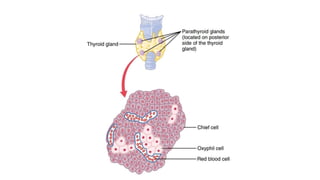
• There are 4 parathyroid glands in humans
• 2 superior and 2 inferior on posteromedial aspect of thyroid lobes
• Each parathyroid gland is about 6mm long, 3mm wide and 2 mm thick
and has a macroscopic appearance of dark brown fat
• Weight: 30-50 mg
CONTINUE….
• Lower larger than upper ones
• Superior- Embedded in fat on posterior surface of each lobe near the
insertion of RLN into larynx
• Inferior- more ventral or infero-posterior aspect of the thyroid lobules
lie close to parenchyma of cervical extension of thymus
• The parathyroid gland of human beings contains mainly chief cells
and a small to moderate number of oxyphil cells
• Chief cells releases PTH and are more numerous, smaller with slightly
eosinophilic cytoplasm
CONTINUE….
• Oxyphil cells are absent in many human beings function of these cells
are believed to be modified or depleted chief cells that no longer
secrete hormone
• Arterial supply: usually from inferior thyroid artery, rarely by arteria
thyroid ima artery
• Venous drainage: through inferior, middle and superior veins and
then into internal jugular vein
ROLE OF GLAND
• Major function of parathyroid glands is to maintain the body’s
calcium and phosphate level within a range so nervous and muscular
system can function properly
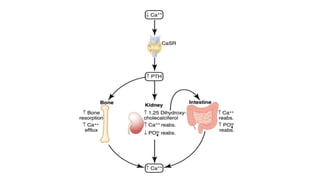
• Secretion mainly controlled by ionized calcium levels via calcium
sensing receptors (CaSR)
• CaSR are G protein coupled receptors present in the chief cells and it
is expressed on the surface of the parathyroid cell and senses
fluctuations in the concentrations of extracellular calcium
• Target organs for PTH are: bone, kidney and intestine
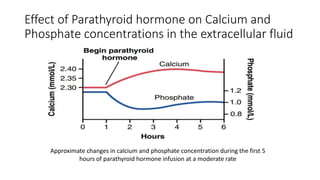
Effect of Parathyroid hormone on Calcium and
Phosphate concentrations in the extracellular fluid
Approximate changes in calcium and phosphate concentration during the first 5
hours of parathyroid hormone infusion at a moderate rate
Continue…..
• At the onset of infusion the calcium ion concentration begins to rise
and reaches a plateau in about 4 hours
• The phosphate concentration falls more rapidly than the calcium rises
within 1 to 2 hours
• The rise in calcium concentration is caused mainly by 2 effects-
1. An effect of PTH to increase calcium and phosphate absorption
from the bone
2. A rapid effect of PTH to decrease the excretion of calcium by the
kidneys
Continue….
• The decline in phosphate concentration is caused by a strong effect of
PTH to increase renal phosphate excretion
Parathyroid hormone mobilizes calcium and phosphate from the
bone
Parathyroid Hormone decrease calcium excretion and increase
phosphate excretion by the kidneys
Parathyroid hormone increase intestinal absorption of calcium and
phosphate
CONTINUE….
• Bone: increase osteoblastic number, increase collagen synthesis,
increase alkaline phosphatase activity, increase local growth factor-
IGF and transforming factors
• Kidneys: increases calcium and magnesium re-absorption ascending
loop and distal tubule, increase chloride reabsorption from proximal
tubule, decrease phosphate, sodium and bicarbonate reabsorption
from the proximal tubule, increase proximal 1- alpha- hydroxylase
activity
• Intestine: indirect effect through calcitriol
Calcium Metabolism
• Plays critical role in all biologic systems
• Participates in enzymatic reactions, mediator in hormone
metabolism, neurotransmission, muscle contraction and blood
coagulation
• Major cation in bone and teeth
• Normal range 8-10 mg/dL
Pathophysiology of Parathyroid Hormone
• Hypoparathyroidism: when the parathyroid gland do not secrete
sufficient PTH, the osteocytic resorption of exchangeable calcium
decreases and osteoclasts become almost totally inactive
• Calcium reabsorption from the bones is so depressed that the level of
calcium in the body fluid decreases. Yet because calcium and
phosphates are not being absorbed from the bone, the bone usually
remain strong
• Primary hyperparathyroidism: an abnormality of the parathyroid
gland causes inappropriate, excess PTH secretion
• the cause may be tumour of one of the parathyroid glands
CONTINUE….
• Hyperparathyroidism causes extreme osteoclastic activity in the
bones. This elevates the calcium ion concentration in extracellular
fluid and depress the concentration ions because of increased renal
excretion of phosphate
• Secondary Hyperparathyroidism: high level of PTH occur as a
compensation for hypocalcemia rather than as a primary abnormality
of the parathyroid glands
• It can be caused by vit D deficiency or chronic renal disease in which
damaged kidneys are unable to produce sufficient amounts of active
form of vitamin D

Parathyroid gland

  • 1.
    PARATHYROID GLAND PRESENTED BY: NITESHKUMAR VERMA MPT (SPORTS INJURIES)
  • 2.
    Parathyroid Gland • TheParathyroid gland was first recognized in 1850 by Richard Owen during a dissection of an Indian rhinoceros at the London zoo • There are 4 parathyroid glands in humans • 2 superior and 2 inferior on posteromedial aspect of thyroid lobes • Each parathyroid gland is about 6mm long, 3mm wide and 2 mm thick and has a macroscopic appearance of dark brown fat • Weight: 30-50 mg
  • 3.
    CONTINUE…. • Lower largerthan upper ones • Superior- Embedded in fat on posterior surface of each lobe near the insertion of RLN into larynx • Inferior- more ventral or infero-posterior aspect of the thyroid lobules lie close to parenchyma of cervical extension of thymus • The parathyroid gland of human beings contains mainly chief cells and a small to moderate number of oxyphil cells • Chief cells releases PTH and are more numerous, smaller with slightly eosinophilic cytoplasm
  • 4.
    CONTINUE…. • Oxyphil cellsare absent in many human beings function of these cells are believed to be modified or depleted chief cells that no longer secrete hormone • Arterial supply: usually from inferior thyroid artery, rarely by arteria thyroid ima artery • Venous drainage: through inferior, middle and superior veins and then into internal jugular vein
  • 6.
    ROLE OF GLAND •Major function of parathyroid glands is to maintain the body’s calcium and phosphate level within a range so nervous and muscular system can function properly • Secretion mainly controlled by ionized calcium levels via calcium sensing receptors (CaSR) • CaSR are G protein coupled receptors present in the chief cells and it is expressed on the surface of the parathyroid cell and senses fluctuations in the concentrations of extracellular calcium • Target organs for PTH are: bone, kidney and intestine
  • 7.
    Effect of Parathyroidhormone on Calcium and Phosphate concentrations in the extracellular fluid Approximate changes in calcium and phosphate concentration during the first 5 hours of parathyroid hormone infusion at a moderate rate
  • 8.
    Continue….. • At theonset of infusion the calcium ion concentration begins to rise and reaches a plateau in about 4 hours • The phosphate concentration falls more rapidly than the calcium rises within 1 to 2 hours • The rise in calcium concentration is caused mainly by 2 effects- 1. An effect of PTH to increase calcium and phosphate absorption from the bone 2. A rapid effect of PTH to decrease the excretion of calcium by the kidneys
  • 9.
    Continue…. • The declinein phosphate concentration is caused by a strong effect of PTH to increase renal phosphate excretion Parathyroid hormone mobilizes calcium and phosphate from the bone Parathyroid Hormone decrease calcium excretion and increase phosphate excretion by the kidneys Parathyroid hormone increase intestinal absorption of calcium and phosphate
  • 10.
    CONTINUE…. • Bone: increaseosteoblastic number, increase collagen synthesis, increase alkaline phosphatase activity, increase local growth factor- IGF and transforming factors • Kidneys: increases calcium and magnesium re-absorption ascending loop and distal tubule, increase chloride reabsorption from proximal tubule, decrease phosphate, sodium and bicarbonate reabsorption from the proximal tubule, increase proximal 1- alpha- hydroxylase activity • Intestine: indirect effect through calcitriol
  • 12.
    Calcium Metabolism • Playscritical role in all biologic systems • Participates in enzymatic reactions, mediator in hormone metabolism, neurotransmission, muscle contraction and blood coagulation • Major cation in bone and teeth • Normal range 8-10 mg/dL
  • 13.
    Pathophysiology of ParathyroidHormone • Hypoparathyroidism: when the parathyroid gland do not secrete sufficient PTH, the osteocytic resorption of exchangeable calcium decreases and osteoclasts become almost totally inactive • Calcium reabsorption from the bones is so depressed that the level of calcium in the body fluid decreases. Yet because calcium and phosphates are not being absorbed from the bone, the bone usually remain strong • Primary hyperparathyroidism: an abnormality of the parathyroid gland causes inappropriate, excess PTH secretion • the cause may be tumour of one of the parathyroid glands
  • 14.
    CONTINUE…. • Hyperparathyroidism causesextreme osteoclastic activity in the bones. This elevates the calcium ion concentration in extracellular fluid and depress the concentration ions because of increased renal excretion of phosphate • Secondary Hyperparathyroidism: high level of PTH occur as a compensation for hypocalcemia rather than as a primary abnormality of the parathyroid glands • It can be caused by vit D deficiency or chronic renal disease in which damaged kidneys are unable to produce sufficient amounts of active form of vitamin D