Nature of Reading
- Reading, similar to listening, speaking
and writing, is a communication skill.
- Reading, is a process because it has
series of acts proceeding from one step to
the next.
Steps Involve in Reading
Perception is the step involve in reading by
which the reader perceived the written
symbols on the text through the use of his
external senses.
Comprehension is the step involve in
reading by which the reader understands the
text.
Reaction is the step involve in reading
wherein the reader evaluates the text which
is being read.
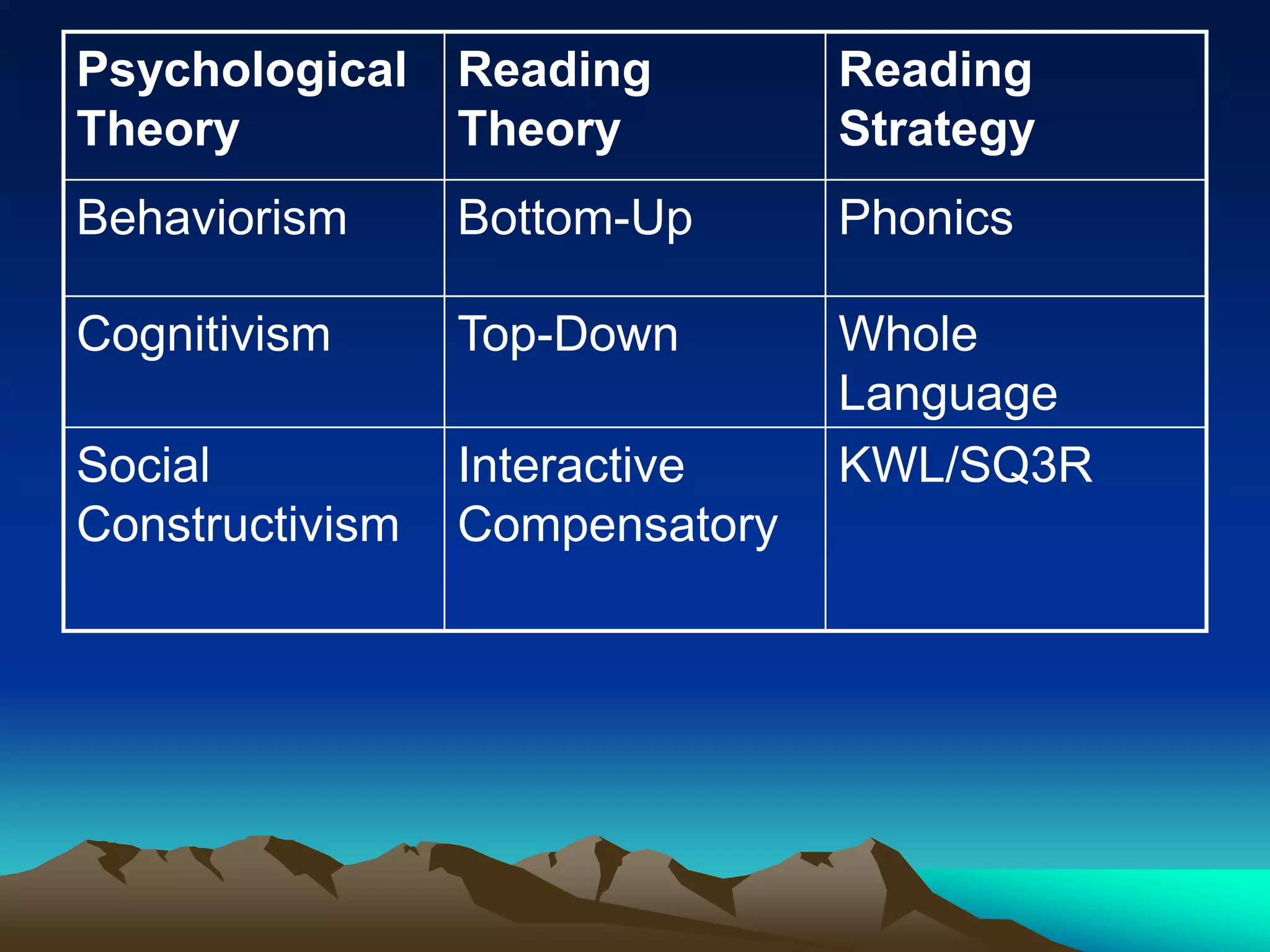
Psychological
Theory
Reading
Theory
Reading
Strategy
Behaviorism Bottom-Up Phonics
Cognitivism Top-Down Whole
Language
Social
Constructivism
Interactive
Compensatory
KWL/SQ3R
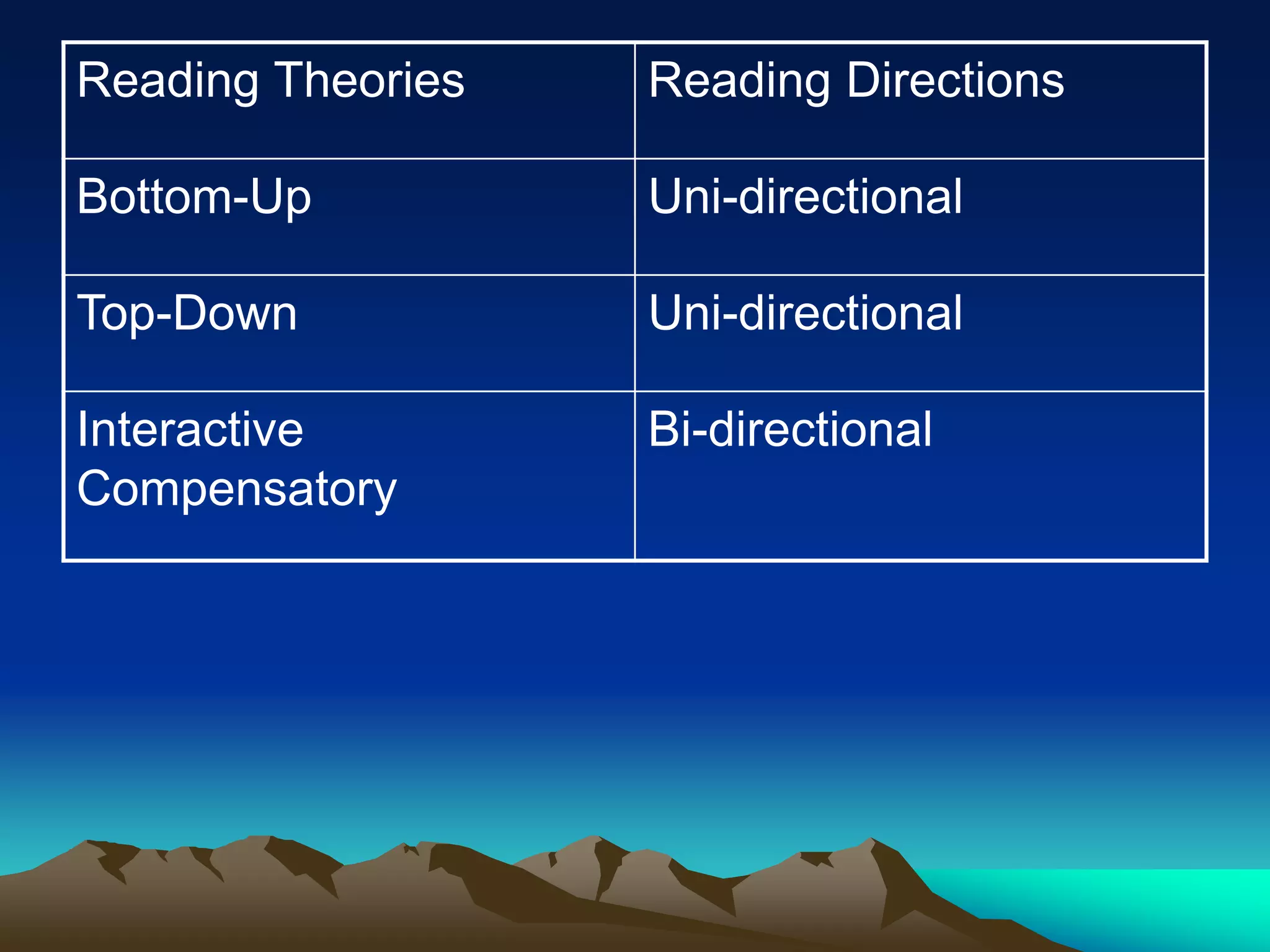
Reading Theories Reading Directions
Bottom-Up Uni-directional
Top-Down Uni-directional
Interactive
Compensatory
Bi-directional
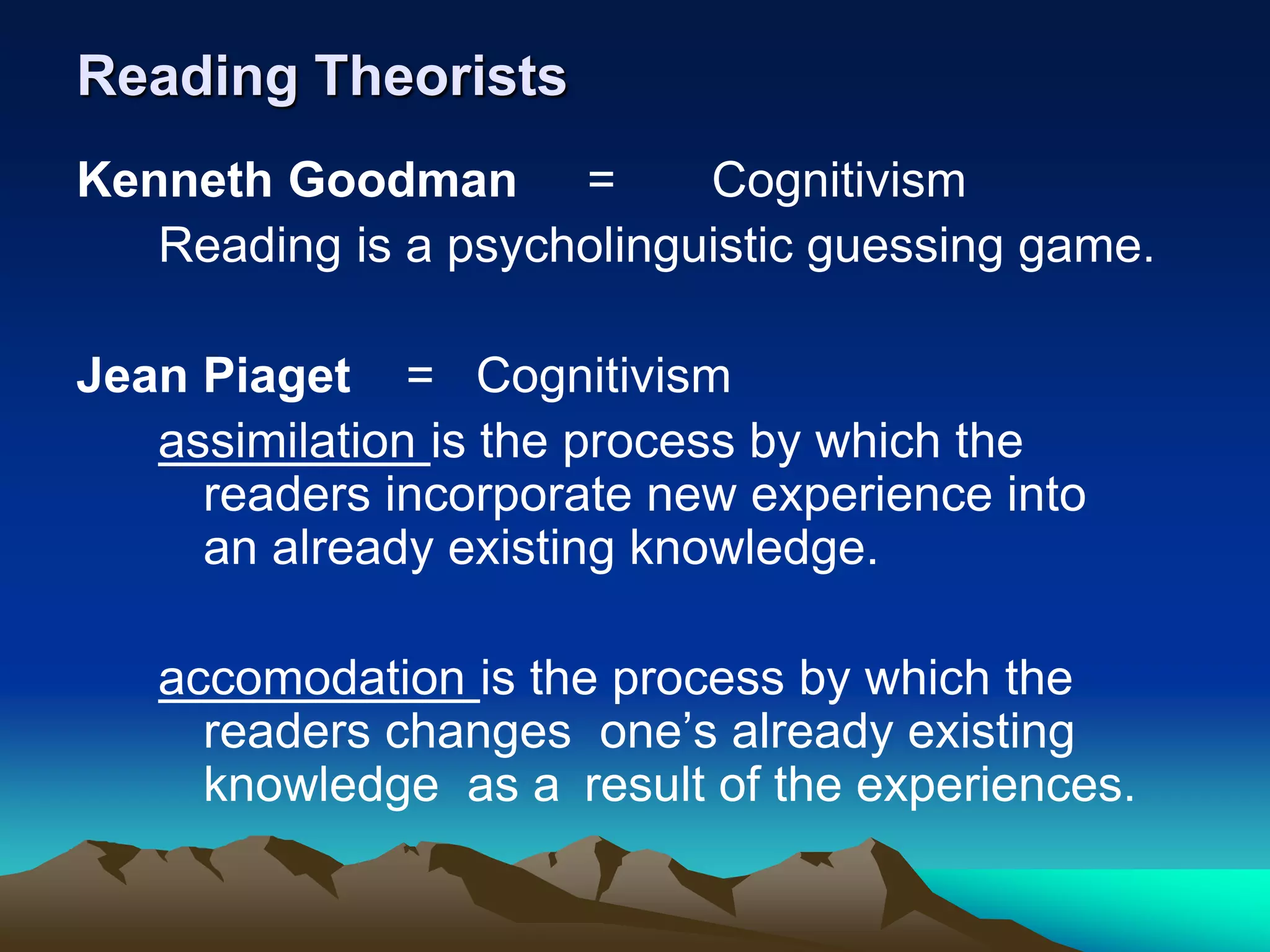
Reading Theorists
Kenneth Goodman = Cognitivism
Reading is a psycholinguistic guessing game.
Jean Piaget = Cognitivism
assimilation is the process by which the
readers incorporate new experience into
an already existing knowledge.
accomodation is the process by which the
readers changes one’s already existing
knowledge as a result of the experiences.
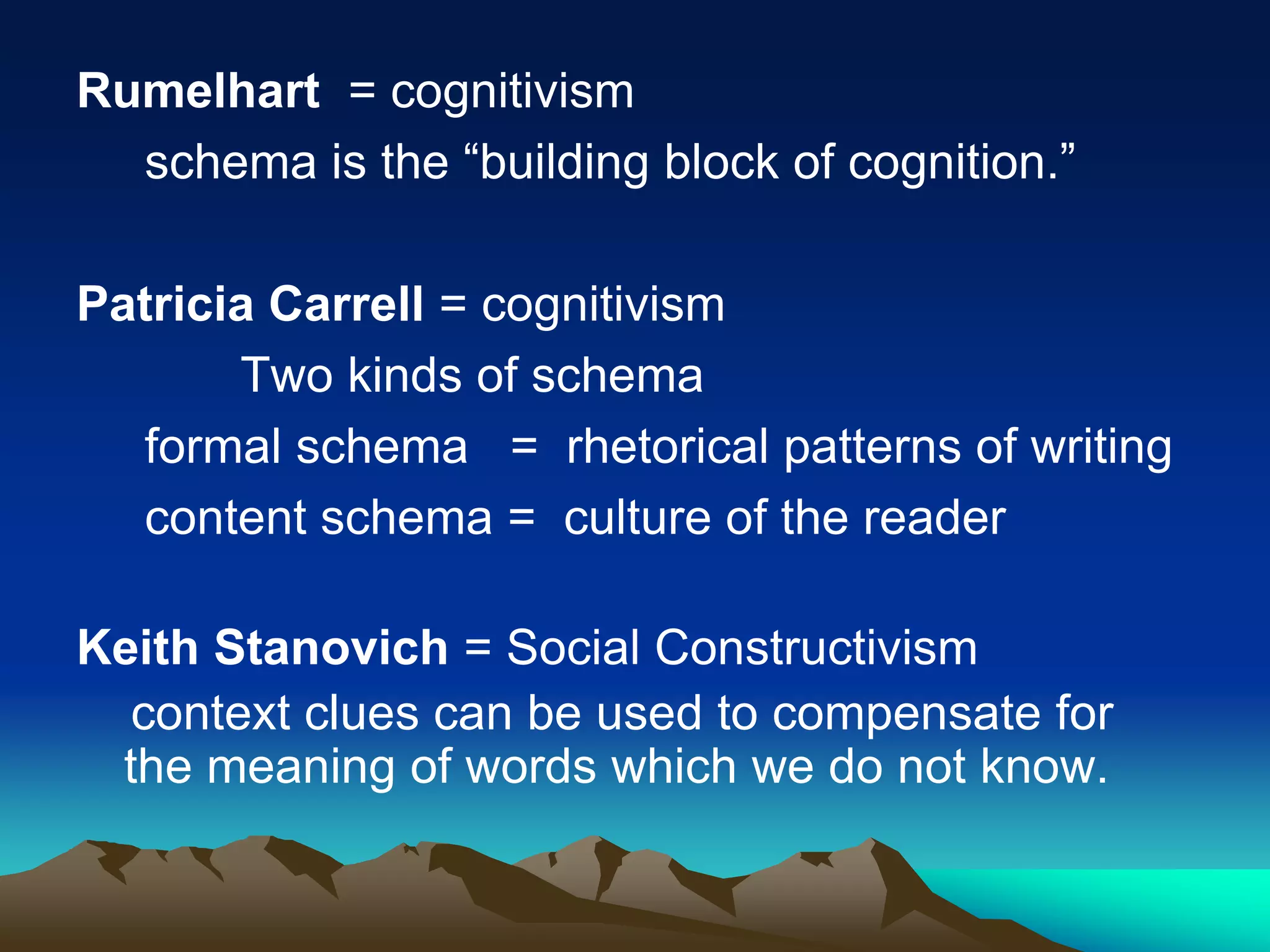
Rumelhart = cognitivism
schema is the “building block of cognition.”
Patricia Carrell = cognitivism
Two kinds of schema
formal schema = rhetorical patterns of writing
content schema = culture of the reader
Keith Stanovich = Social Constructivism
context clues can be used to compensate for
the meaning of words which we do not know.
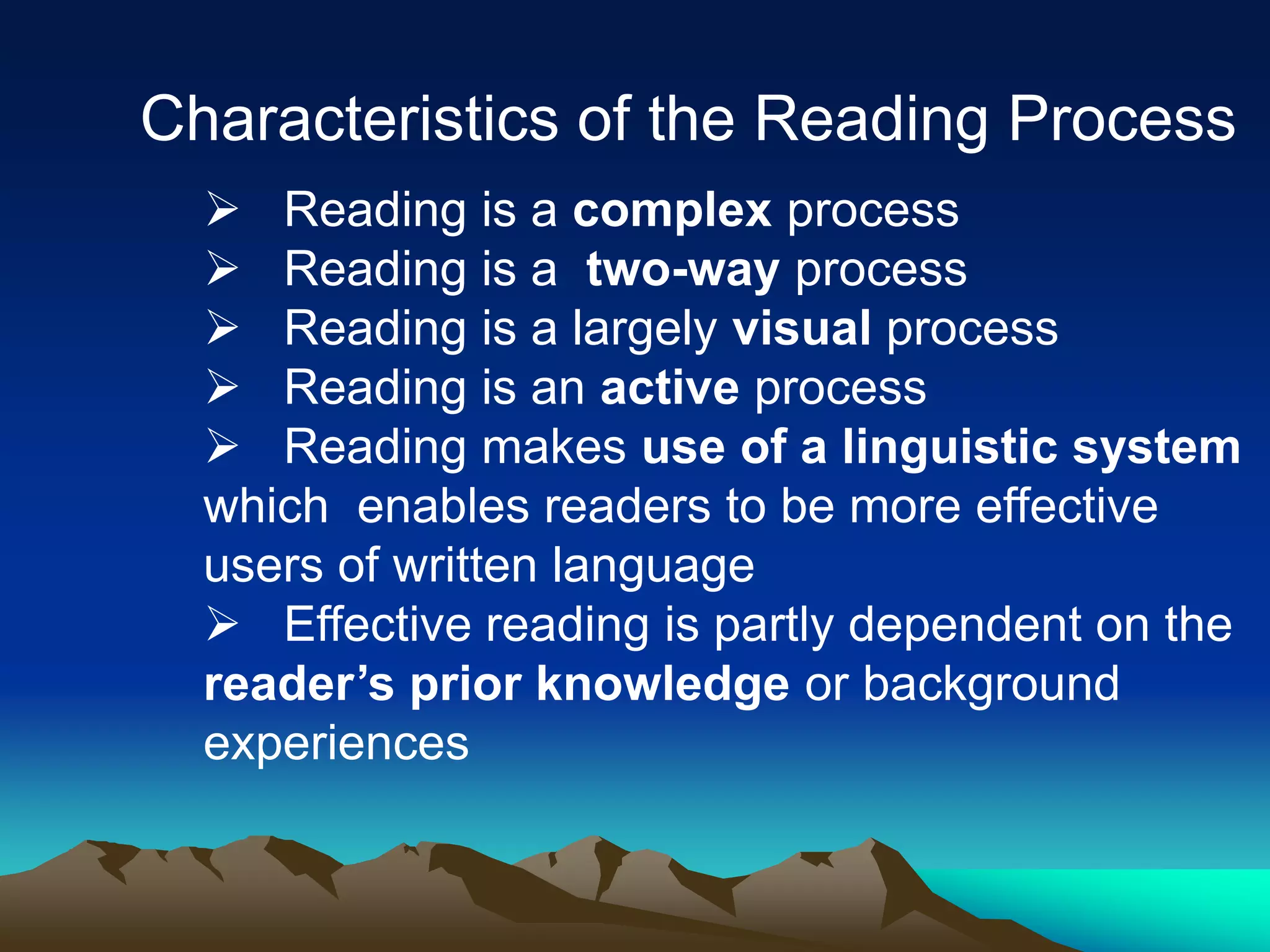
Characteristics of the Reading Process
 Reading is a complex process
 Reading is a two-way process
 Reading is a largely visual process
 Reading is an active process
 Reading makes use of a linguistic system
which enables readers to be more effective
users of written language
 Effective reading is partly dependent on the
reader’s prior knowledge or background
experiences
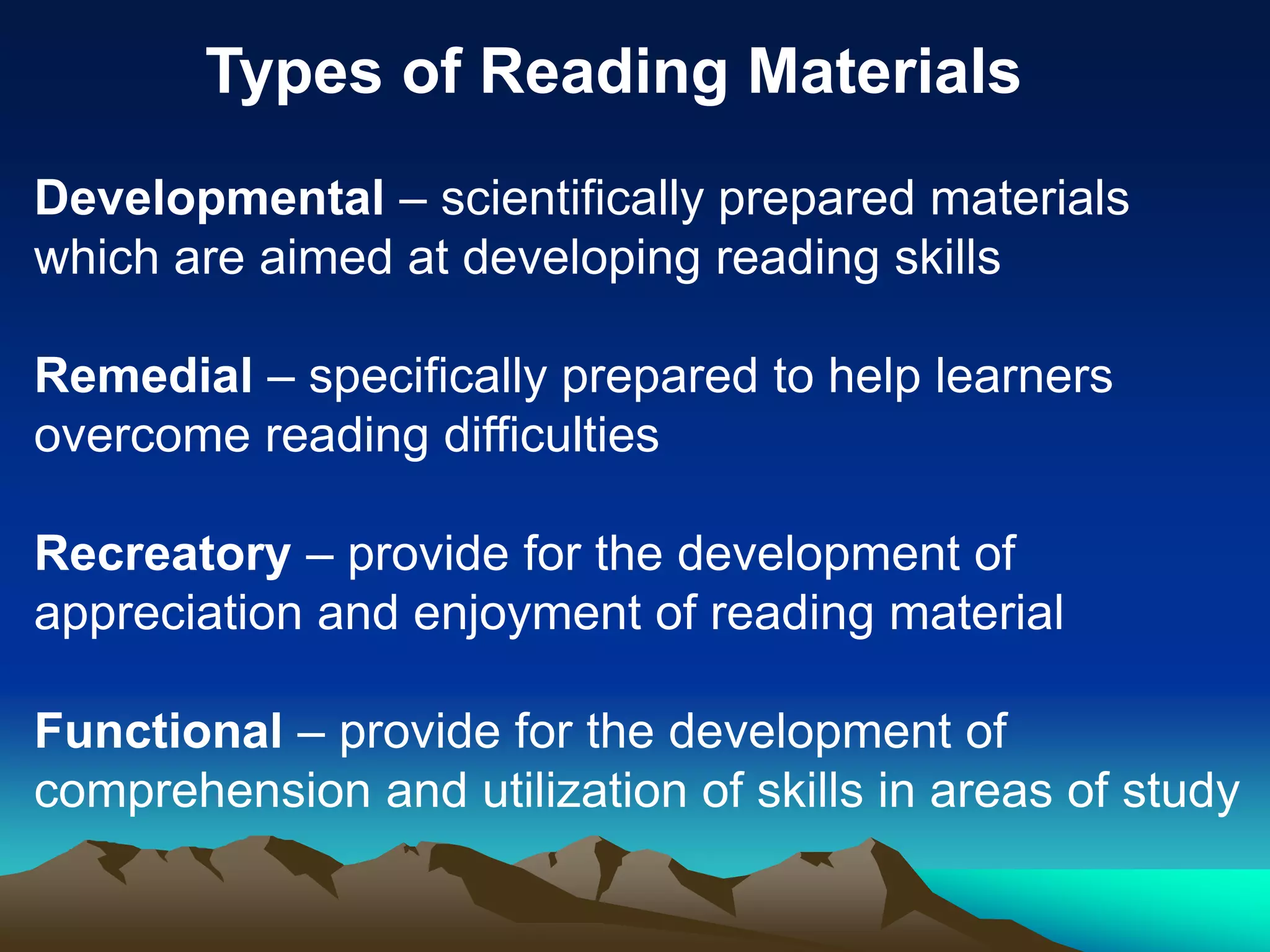
Types of Reading Materials
Developmental – scientifically prepared materials
which are aimed at developing reading skills
Remedial – specifically prepared to help learners
overcome reading difficulties
Recreatory – provide for the development of
appreciation and enjoyment of reading material
Functional – provide for the development of
comprehension and utilization of skills in areas of study

1 nature of reading

  • 1.
    Nature of Reading -Reading, similar to listening, speaking and writing, is a communication skill. - Reading, is a process because it has series of acts proceeding from one step to the next.
  • 2.
    Steps Involve inReading Perception is the step involve in reading by which the reader perceived the written symbols on the text through the use of his external senses. Comprehension is the step involve in reading by which the reader understands the text. Reaction is the step involve in reading wherein the reader evaluates the text which is being read.
  • 3.
    Psychological Theory Reading Theory Reading Strategy Behaviorism Bottom-Up Phonics CognitivismTop-Down Whole Language Social Constructivism Interactive Compensatory KWL/SQ3R
  • 4.
    Reading Theories ReadingDirections Bottom-Up Uni-directional Top-Down Uni-directional Interactive Compensatory Bi-directional
  • 5.
    Reading Theorists Kenneth Goodman= Cognitivism Reading is a psycholinguistic guessing game. Jean Piaget = Cognitivism assimilation is the process by which the readers incorporate new experience into an already existing knowledge. accomodation is the process by which the readers changes one’s already existing knowledge as a result of the experiences.
  • 6.
    Rumelhart = cognitivism schemais the “building block of cognition.” Patricia Carrell = cognitivism Two kinds of schema formal schema = rhetorical patterns of writing content schema = culture of the reader Keith Stanovich = Social Constructivism context clues can be used to compensate for the meaning of words which we do not know.
  • 7.
    Characteristics of theReading Process  Reading is a complex process  Reading is a two-way process  Reading is a largely visual process  Reading is an active process  Reading makes use of a linguistic system which enables readers to be more effective users of written language  Effective reading is partly dependent on the reader’s prior knowledge or background experiences
  • 8.
    Types of ReadingMaterials Developmental – scientifically prepared materials which are aimed at developing reading skills Remedial – specifically prepared to help learners overcome reading difficulties Recreatory – provide for the development of appreciation and enjoyment of reading material Functional – provide for the development of comprehension and utilization of skills in areas of study