Stories, Plots, Narrative
 You have an idea for a film that you want to
write.
 Remember that films are ‘Show Don’t Tell’
 Remember to concentrate on the visuals
which will tell your story
 Importantly as well, is that ‘Dialogue’ has to
be character specific, that is the character
speaking is convincing in what they are
saying.
Screenwriting: The Basics
 You must layout your script in the correct
industry standard format layout and Courier
12pt typeface
 Use screenwriting software to format your
scripts that way you can concentrate on the
story you wish to tell.
 www.celtx.com free screenwriting software
 Others are Final Draft and Screenwriter
Screenwriting: The Basics
In correct screenplay layout one page is one
minute on the screen, this is a good rule to
work by.
Your first draft will generally be 30% too long
Revise your script constantly and cut, cut, cut
as you refine and improve and sharpen
Movies are good at telling stories but not
good at telling very complicated stories
Screenwriting: The Basics
 Remember:
 What if? A good way to start generating
stories.
 Use a variety of sources from pictures to
books to articles to things you see and hear as
a starting point.
 Kiss: ‘Keep it Simple Stupid’
Screenwriting
 The majority of movies and particularly those
coming out of the USA follow that is called:
 The Classic Hollywood Narrative …or…
 the Three Act Structure
 The Discontinuous Narrative: is another way
of telling your script and can be defined as….
 ….every story has a Beginning a Middle and
an End….….but not necessarily in that order.
The Three Act Structure
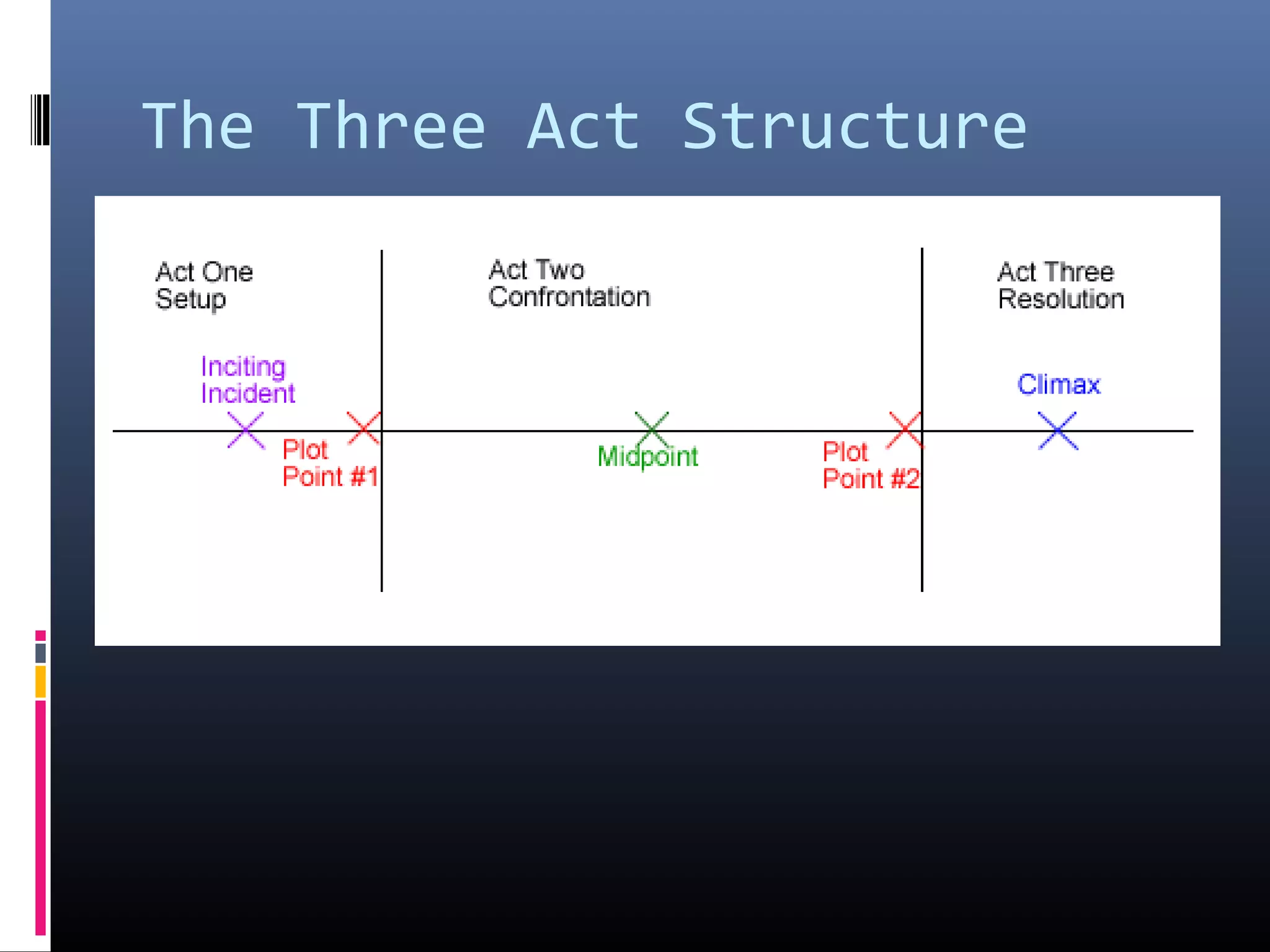
 The Screenplay is divided into three parts :
 Act 1 : The Set-up (of location and
characters) (the first 1/4)
 Act 2 : The Confrontation (with obstacles)
(the middle 1/2)
 Act 3: The Climax and Resolution
(the last 1/4)
We can be Heroes
 Protagonist: The good guys or girls
 Antagonist: The bad guys or girls
 Note: Antagonists do not have to be people……
 who can they be? Examples?
 Scripts are about ‘Confrontations’ and
overcoming them
The Three Act Structure
 We will use as our example a 2 hr film which
equates to 120 pages of correctly laid out
screenplay.
 1 page of Screenplay = 1 minute of screen time
 Total running time 120 minutes/120 pages of
script
 Screenplays are constructed/hinged around two
Act Breaks or commonly referred to as ‘Turning
Points’.
Turning Points
 Movies following the Classic Hollywood
Narrative method of construction are written
around/constructed around these two Turning
Points:
 ‘Turning Point One’ at the end of Act 1 or
approximately 30 minutes into your screenplay
 ‘Turning Point Two’ at the end of act Two or
approximately 90 minutes into your screenplay
 (approximately = within a page or two)
The Three Act Structure
Turning Point 1
 The Turning Points are Plot Devices, incidents
that allow/propel your story forward….cause and
effect.
 Act 1: The set-Up: introduces our characters and
story plots, (and with its own 3 acts structure) it
takes us to…..
 Turning Point One: a point where we have had a
mini-story that ends, but then leads us into a
new story, this will be the main direction the rest
of the story follows.
 Essentially the moment the hero takes on the
main quest/problem/confrontations.
Turning Point 2
 Turning Point 2: The most important
part/event of a three act structure narrative.
 Turning Point Two: is generally at the point
where your main Character/Protagonist is
furthest from achieving their goal, then they
see a way out/way forward to the
climax/conclusion of your story.
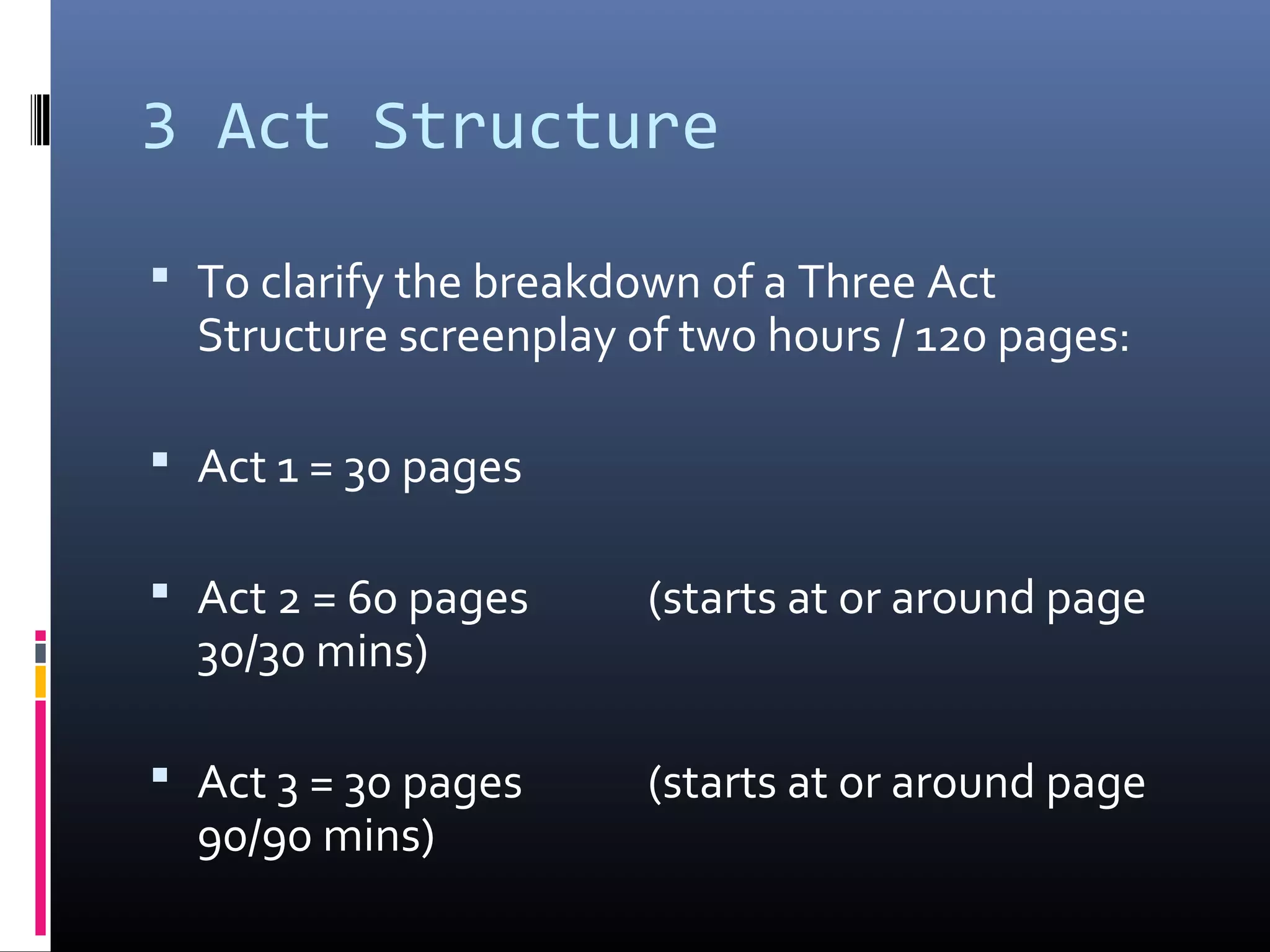
3 Act Structure
 To clarify the breakdown of a Three Act
Structure screenplay of two hours / 120 pages:
 Act 1 = 30 pages
 Act 2 = 60 pages (starts at or around page
30/30 mins)
 Act 3 = 30 pages (starts at or around page
90/90 mins)
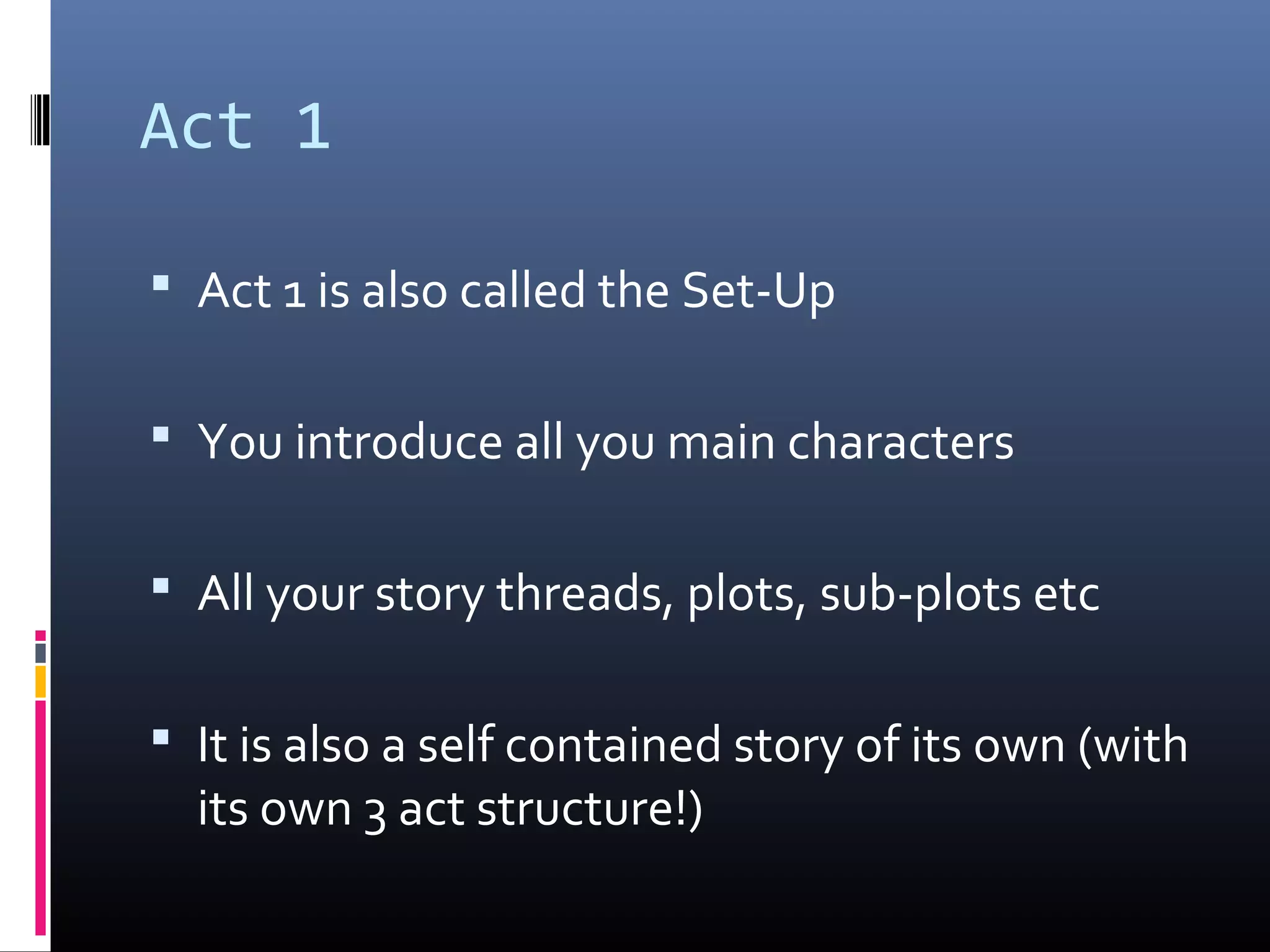
Act 1
 Act 1 is also called the Set-Up
 You introduce all you main characters
 All your story threads, plots, sub-plots etc
 It is also a self contained story of its own (with
its own 3 act structure!)
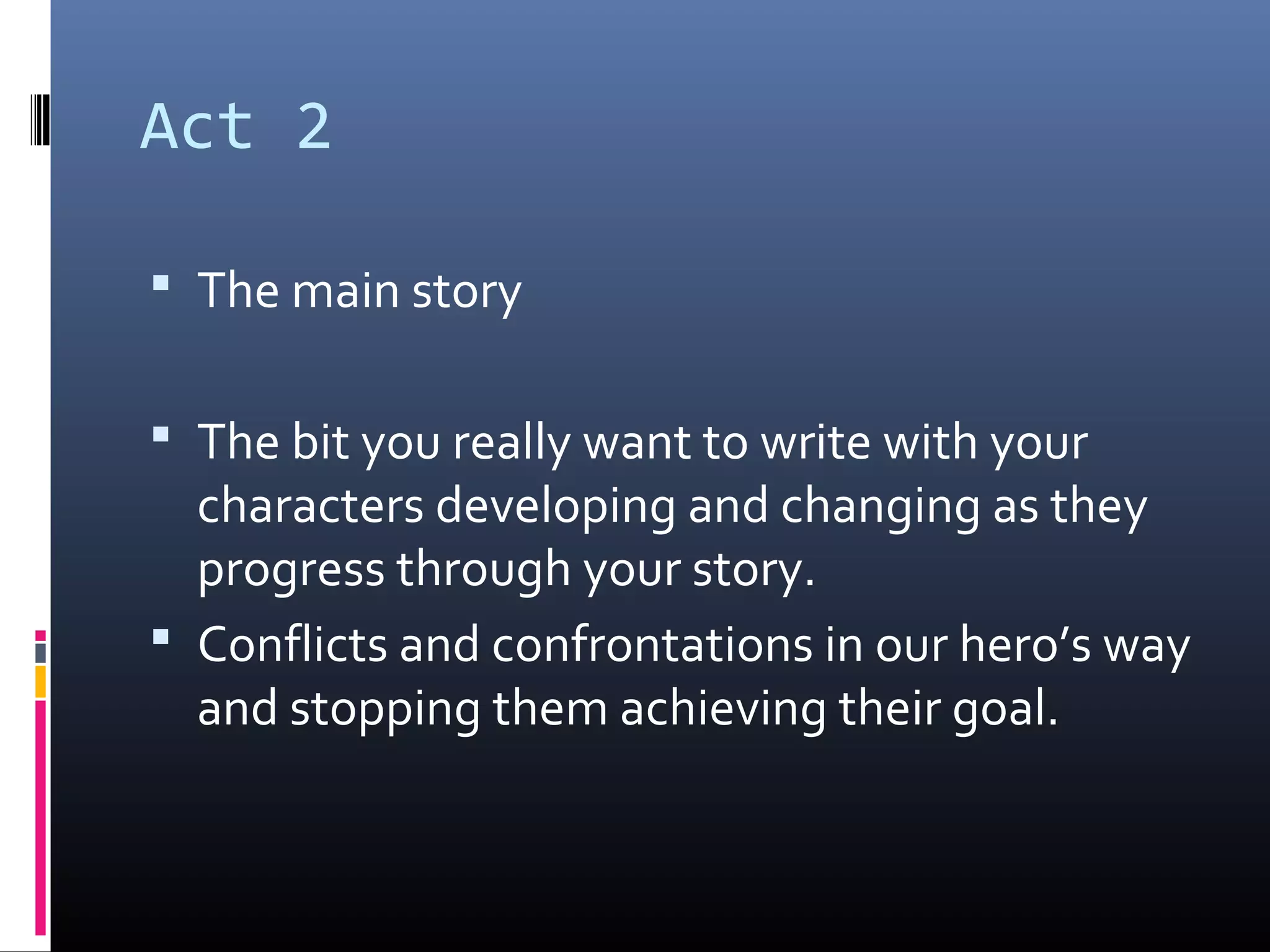
Act 2
 The main story
 The bit you really want to write with your
characters developing and changing as they
progress through your story.
 Conflicts and confrontations in our hero’s way
and stopping them achieving their goal.
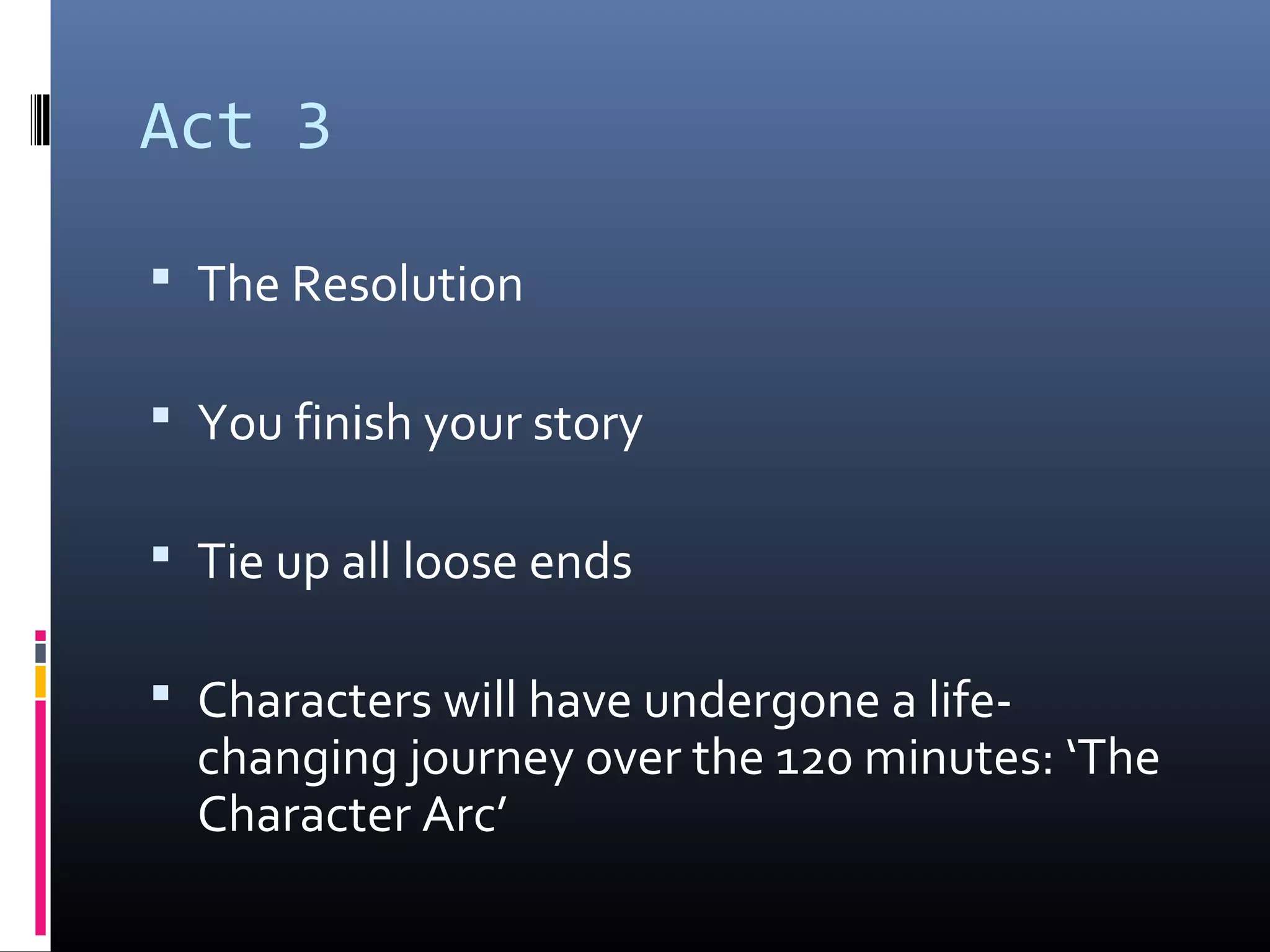
Act 3
 The Resolution
 You finish your story
 Tie up all loose ends
 Characters will have undergone a life-
changing journey over the 120 minutes: ‘The
Character Arc’
What makes a great Movie?
 Conflict
 Characters
 Situations
 Locations
 Convincing Protagonist
 Convincing Antagonist
 Great Dialogue!
How Long?
 It doesn’t matter if your script is 3 or 120 pages
 The Three Act Structure can be
adapted/modified to any length
 But it is not the only way of telling your story
 Movies that do not follow this structure……?
 Write the script/movie the way you want to and
you feel is best, the rules are there to help not
dictate…

Three Act Structure

  • 1.
    Stories, Plots, Narrative You have an idea for a film that you want to write.  Remember that films are ‘Show Don’t Tell’  Remember to concentrate on the visuals which will tell your story  Importantly as well, is that ‘Dialogue’ has to be character specific, that is the character speaking is convincing in what they are saying.
  • 2.
    Screenwriting: The Basics You must layout your script in the correct industry standard format layout and Courier 12pt typeface  Use screenwriting software to format your scripts that way you can concentrate on the story you wish to tell.  www.celtx.com free screenwriting software  Others are Final Draft and Screenwriter
  • 3.
    Screenwriting: The Basics Incorrect screenplay layout one page is one minute on the screen, this is a good rule to work by. Your first draft will generally be 30% too long Revise your script constantly and cut, cut, cut as you refine and improve and sharpen Movies are good at telling stories but not good at telling very complicated stories
  • 4.
    Screenwriting: The Basics Remember:  What if? A good way to start generating stories.  Use a variety of sources from pictures to books to articles to things you see and hear as a starting point.  Kiss: ‘Keep it Simple Stupid’
  • 5.
    Screenwriting  The majorityof movies and particularly those coming out of the USA follow that is called:  The Classic Hollywood Narrative …or…  the Three Act Structure  The Discontinuous Narrative: is another way of telling your script and can be defined as….  ….every story has a Beginning a Middle and an End….….but not necessarily in that order.
  • 6.
    The Three ActStructure  The Screenplay is divided into three parts :  Act 1 : The Set-up (of location and characters) (the first 1/4)  Act 2 : The Confrontation (with obstacles) (the middle 1/2)  Act 3: The Climax and Resolution (the last 1/4)
  • 7.
    We can beHeroes  Protagonist: The good guys or girls  Antagonist: The bad guys or girls  Note: Antagonists do not have to be people……  who can they be? Examples?  Scripts are about ‘Confrontations’ and overcoming them
  • 8.
    The Three ActStructure  We will use as our example a 2 hr film which equates to 120 pages of correctly laid out screenplay.  1 page of Screenplay = 1 minute of screen time  Total running time 120 minutes/120 pages of script  Screenplays are constructed/hinged around two Act Breaks or commonly referred to as ‘Turning Points’.
  • 9.
    Turning Points  Moviesfollowing the Classic Hollywood Narrative method of construction are written around/constructed around these two Turning Points:  ‘Turning Point One’ at the end of Act 1 or approximately 30 minutes into your screenplay  ‘Turning Point Two’ at the end of act Two or approximately 90 minutes into your screenplay  (approximately = within a page or two)
  • 10.
    The Three ActStructure
  • 11.
    Turning Point 1 The Turning Points are Plot Devices, incidents that allow/propel your story forward….cause and effect.  Act 1: The set-Up: introduces our characters and story plots, (and with its own 3 acts structure) it takes us to…..  Turning Point One: a point where we have had a mini-story that ends, but then leads us into a new story, this will be the main direction the rest of the story follows.  Essentially the moment the hero takes on the main quest/problem/confrontations.
  • 12.
    Turning Point 2 Turning Point 2: The most important part/event of a three act structure narrative.  Turning Point Two: is generally at the point where your main Character/Protagonist is furthest from achieving their goal, then they see a way out/way forward to the climax/conclusion of your story.
  • 13.
    3 Act Structure To clarify the breakdown of a Three Act Structure screenplay of two hours / 120 pages:  Act 1 = 30 pages  Act 2 = 60 pages (starts at or around page 30/30 mins)  Act 3 = 30 pages (starts at or around page 90/90 mins)
  • 14.
    Act 1  Act1 is also called the Set-Up  You introduce all you main characters  All your story threads, plots, sub-plots etc  It is also a self contained story of its own (with its own 3 act structure!)
  • 15.
    Act 2  Themain story  The bit you really want to write with your characters developing and changing as they progress through your story.  Conflicts and confrontations in our hero’s way and stopping them achieving their goal.
  • 16.
    Act 3  TheResolution  You finish your story  Tie up all loose ends  Characters will have undergone a life- changing journey over the 120 minutes: ‘The Character Arc’
  • 17.
    What makes agreat Movie?  Conflict  Characters  Situations  Locations  Convincing Protagonist  Convincing Antagonist  Great Dialogue!
  • 18.
    How Long?  Itdoesn’t matter if your script is 3 or 120 pages  The Three Act Structure can be adapted/modified to any length  But it is not the only way of telling your story  Movies that do not follow this structure……?  Write the script/movie the way you want to and you feel is best, the rules are there to help not dictate…