Three Act Structure
 Most narrative films –
both comedy and drama –
share several common
characteristics.
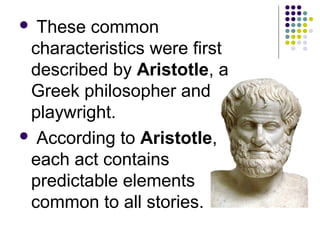
 These common
characteristics were first
described by Aristotle, a
Greek philosopher and
playwright.
 According to Aristotle,
each act contains
predictable elements
common to all stories.
 They both usually take place in
Three Acts.
 They both have a Protagonist
(the person we are rooting for)
and an Antagonist (whoever or
whatever is in conflict with the
protagonist)
 Act One contains Exposition
or a summary of who the main
characters are (players), where
they are from (setting) and
what they want (motivation).
 It also contains a Call to
Action (inciting incident) that
leads the protagonist to leave
the security of home.
 Act Two contains the Rising
Action or a series of
challenges and obstacles that
prevent the protagonist from
easily achieving his goal.
 It also leads to some sort of a
final conflict or Climax. Which
pits the protagonist and
antagonist against one-another.
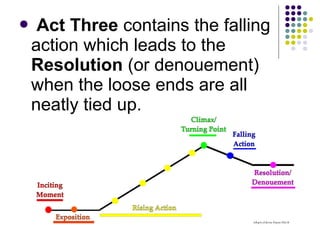
 Act Three contains the falling
action which leads to the
Resolution (or denouement)
when the loose ends are all
neatly tied up.
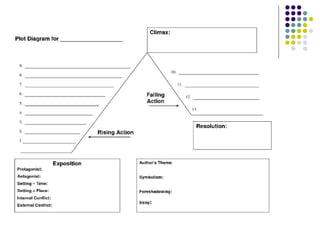
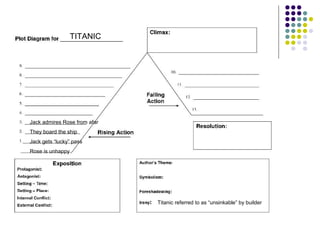
TITANIC
Jack admires Rose from afar
They board the ship
Jack gets “lucky” pass
Rose is unhappy
Titanic referred to as “unsinkable” by builder
The Hero’s Journey
 The Hero’s Journey is a
series of common
characteristics in drama
first observed by Joseph
Campbell.
 The Hero takes a journey
(physical, emotional, etc.) in
search of identity and
wholeness or to correct an
injustice.
 The Hero is commonly an
average person who is driven
to extreme acts of bravery to
reach this goal.
All heroes, regardless of their
personalities, will demonstrate
some or all of these
characteristics:
1. Has human flaws
2. Learns and grows
3. Takes risks
4. Overcomes obstacles
5. Makes sacrifices
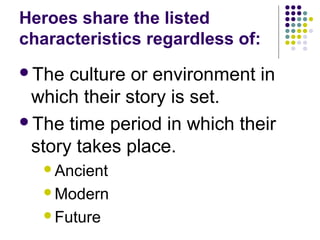
Heroes share the listed
characteristics regardless of:
The culture or environment in
which their story is set.
The time period in which their
story takes place.
Ancient
Modern
Future
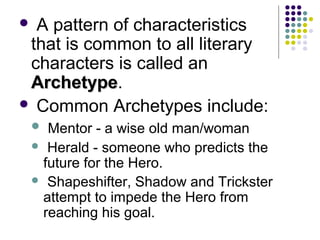
 A pattern of characteristics
that is common to all literary
characters is called an
ArchetypeArchetype.
 Common Archetypes include:
 Mentor - a wise old man/woman
 Herald - someone who predicts the
future for the Hero.
 Shapeshifter, Shadow and Trickster
attempt to impede the Hero from
reaching his goal.
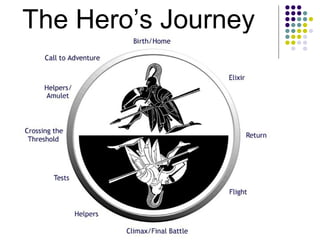
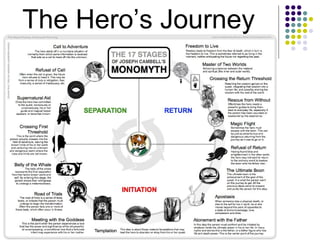
The Hero’s Journey
Birth/Home
Tests
Helpers
Climax/Final Battle
The Hero’s Journey

3-Act Structure and the Hero's Journey

  • 1.
    Three Act Structure Most narrative films – both comedy and drama – share several common characteristics.
  • 2.
     These common characteristicswere first described by Aristotle, a Greek philosopher and playwright.  According to Aristotle, each act contains predictable elements common to all stories.
  • 3.
     They bothusually take place in Three Acts.  They both have a Protagonist (the person we are rooting for) and an Antagonist (whoever or whatever is in conflict with the protagonist)
  • 4.
     Act Onecontains Exposition or a summary of who the main characters are (players), where they are from (setting) and what they want (motivation).  It also contains a Call to Action (inciting incident) that leads the protagonist to leave the security of home.
  • 5.
     Act Twocontains the Rising Action or a series of challenges and obstacles that prevent the protagonist from easily achieving his goal.  It also leads to some sort of a final conflict or Climax. Which pits the protagonist and antagonist against one-another.
  • 6.
     Act Threecontains the falling action which leads to the Resolution (or denouement) when the loose ends are all neatly tied up.
  • 8.
    TITANIC Jack admires Rosefrom afar They board the ship Jack gets “lucky” pass Rose is unhappy Titanic referred to as “unsinkable” by builder
  • 9.
    The Hero’s Journey The Hero’s Journey is a series of common characteristics in drama first observed by Joseph Campbell.
  • 10.
     The Herotakes a journey (physical, emotional, etc.) in search of identity and wholeness or to correct an injustice.  The Hero is commonly an average person who is driven to extreme acts of bravery to reach this goal.
  • 11.
    All heroes, regardlessof their personalities, will demonstrate some or all of these characteristics: 1. Has human flaws 2. Learns and grows 3. Takes risks 4. Overcomes obstacles 5. Makes sacrifices
  • 12.
    Heroes share thelisted characteristics regardless of: The culture or environment in which their story is set. The time period in which their story takes place. Ancient Modern Future
  • 13.
     A patternof characteristics that is common to all literary characters is called an ArchetypeArchetype.  Common Archetypes include:  Mentor - a wise old man/woman  Herald - someone who predicts the future for the Hero.  Shapeshifter, Shadow and Trickster attempt to impede the Hero from reaching his goal.
  • 14.
  • 15.