THE NARRATIVE
STRUCTURE
The Narrator
► in every movie, the camera is the primary narrator
– First-person narrator
■ voice-over narration (example / ex or)
■ direct-address narration (example /ex)
– Third-person narrator someone removed from the story
provides info not accessible by characters in the movie
■ omniscient (unrestricted access to all aspects of the story)
(example)
■ restricted (limits the info given, usually from only one
character)
Characters
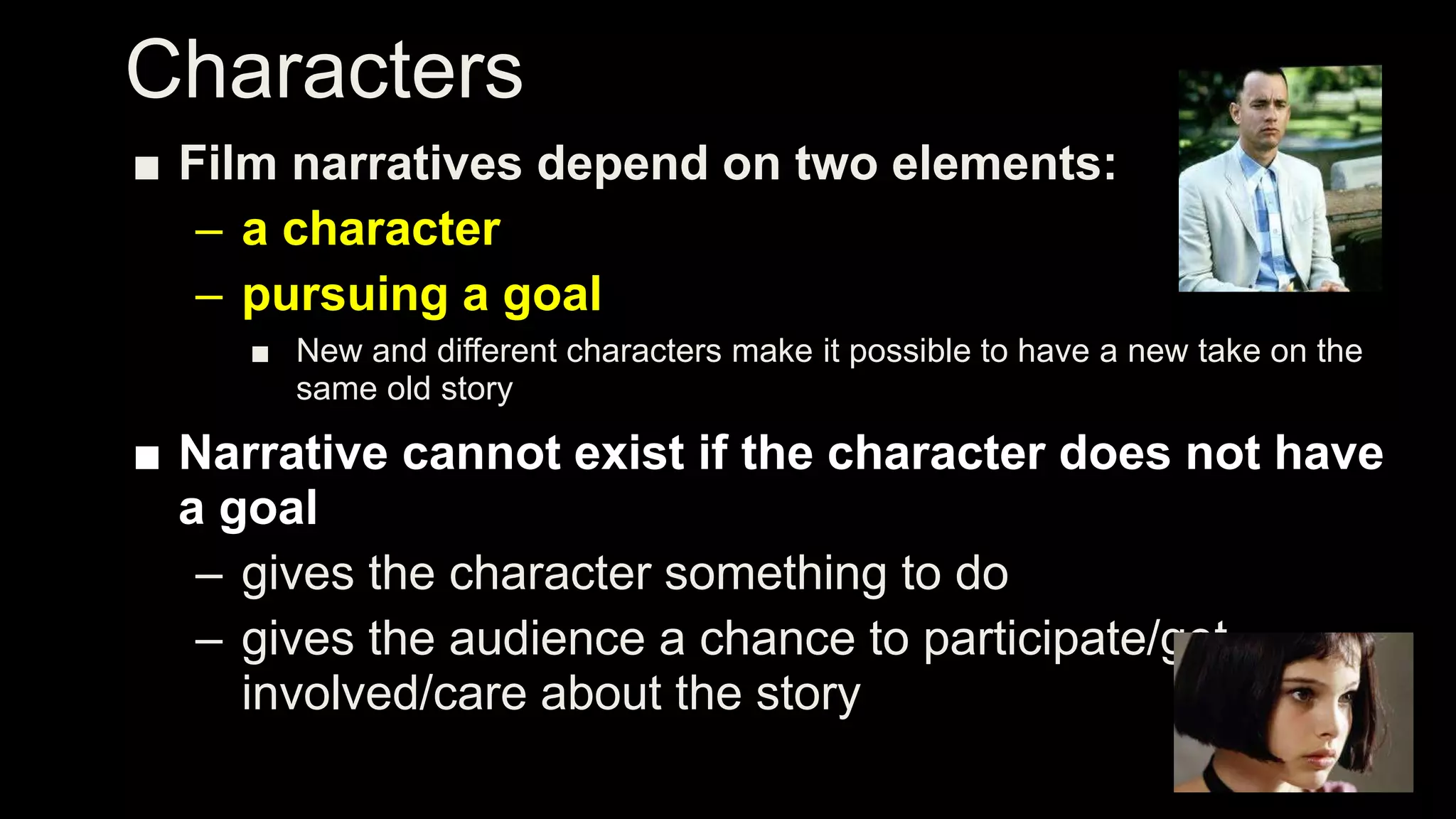
■ Film narratives depend on two elements:
– a character
– pursuing a goal
■ New and different characters make it possible to have a new take on the
same old story
■ Narrative cannot exist if the character does not have
a goal
– gives the character something to do
– gives the audience a chance to participate/get
involved/care about the story
Characters…
■ Protagonist – the primary character who pursues
the goal
– usually referred to as the hero
■ sample lists 1 2 3
– as long as protagonist actively pursues goal in an
interesting way → viewer will be invested in the
pursuit
– does not always necessarily have worthy goals: the
anti-hero
■ unsympathetic protagonists chasing less than noble
goals (1)
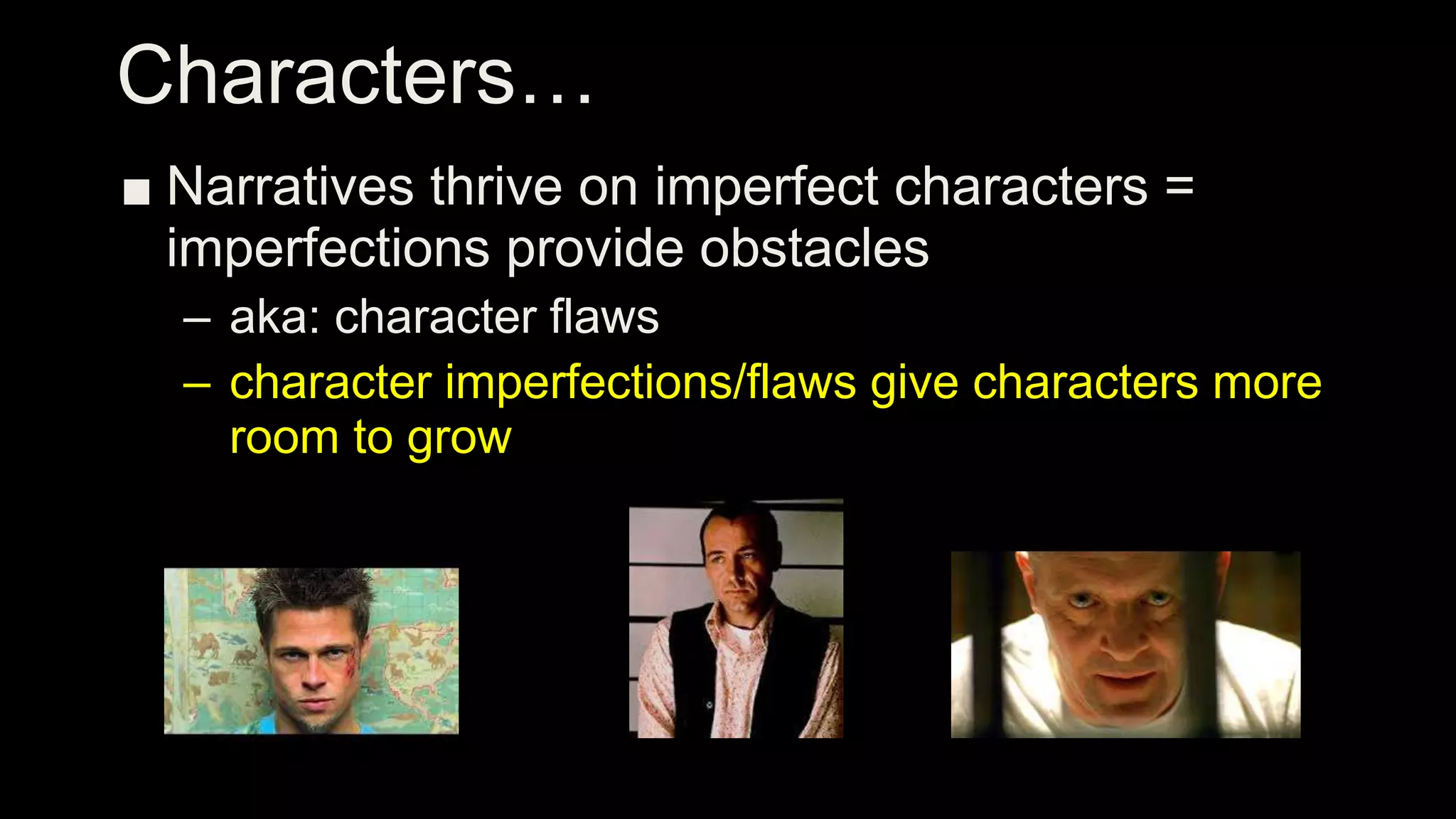
■ Narratives thrive on imperfect characters =
imperfections provide obstacles
– aka: character flaws
– character imperfections/flaws give characters more
room to grow
Characters…
The Basic Narrative Structure:
→ a clearly motivated protagonist
→ pursues a goal
→ encounters obstacles
→ a clear resolution
Narrative Structure:
The Organization in Three Acts
■ Most narratives can be broken into three basic
parts:
– first act sets up the story
– second (and longest) act develops the story
– third act resolves it
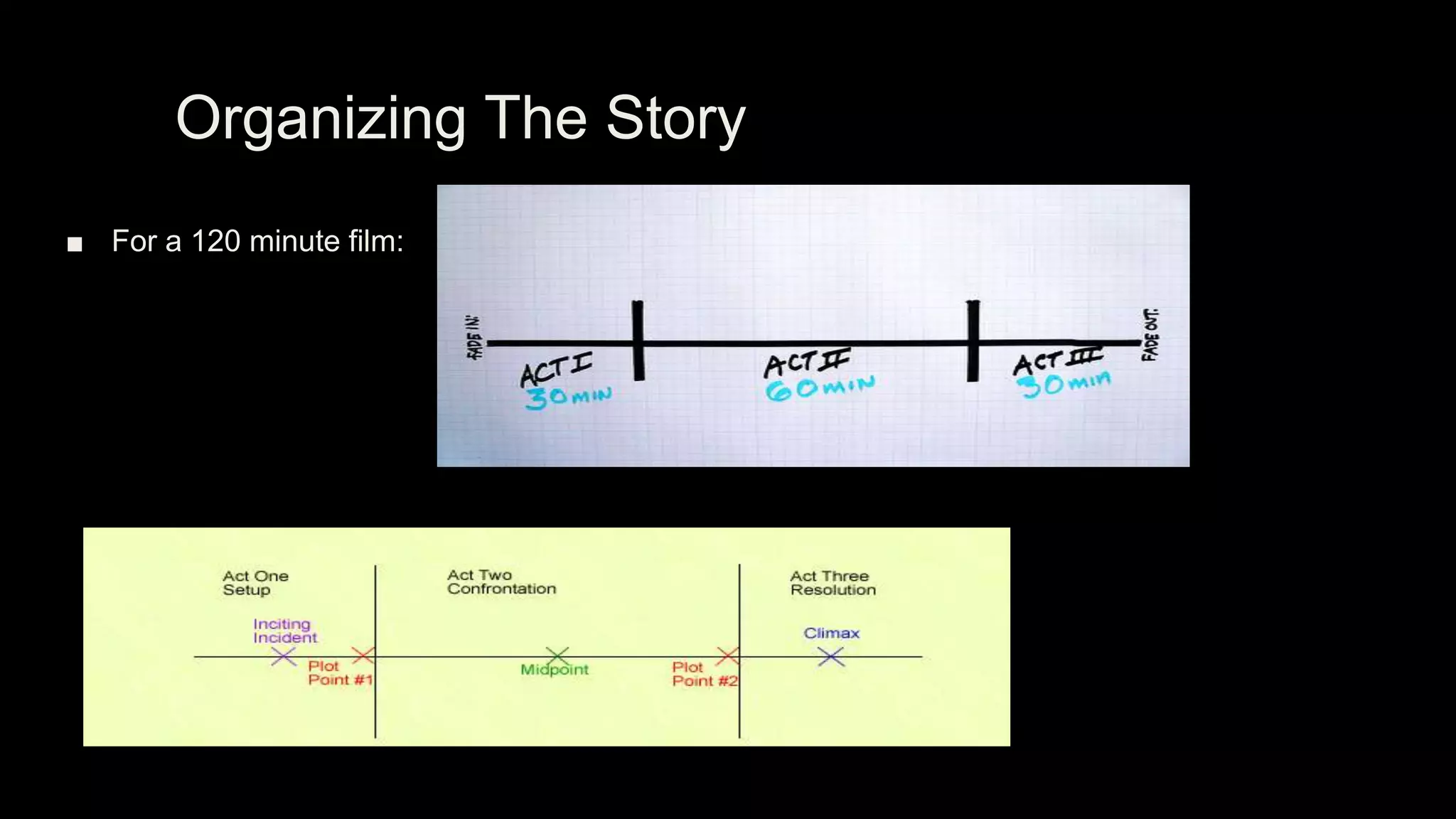
Organizing The Story
■ For a 120 minute film:
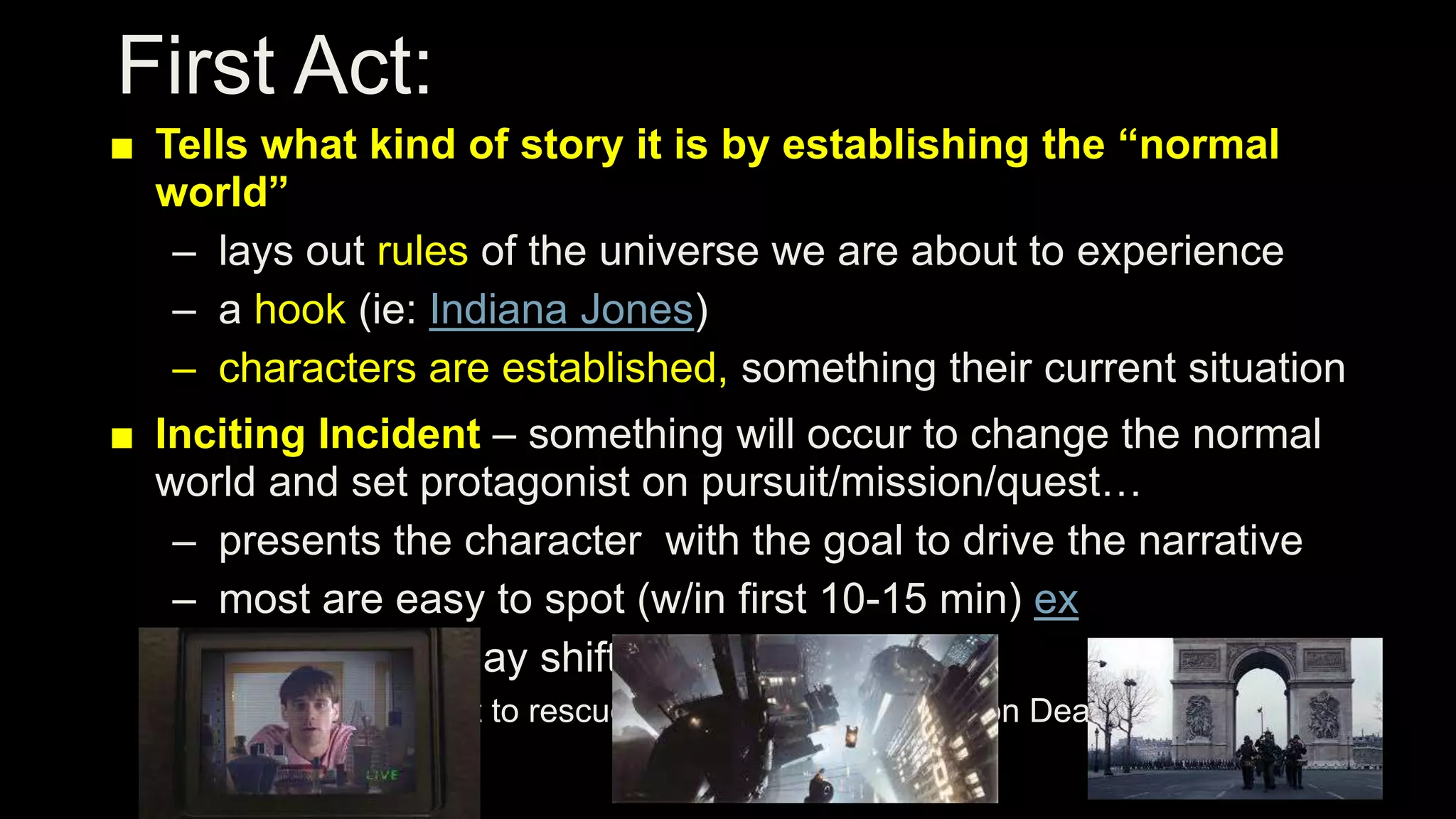
First Act:
■ Tells what kind of story it is by establishing the “normal
world”
– lays out rules of the universe we are about to experience
– a hook (ie: Indiana Jones)
– characters are established, something their current situation
■ Inciting Incident – something will occur to change the normal
world and set protagonist on pursuit/mission/quest…
– presents the character with the goal to drive the narrative
– most are easy to spot (w/in first 10-15 min) ex
– some goals may shift later in the story
■ Star Wars: fist to rescue princess, then the take on Death Star
Second Act:
■ Second act is the story, or the pursuit of the goal (ie: Will
Dorothy ever get back to Kansas?)
– the want to learn ‘what and how’ keeps the viewer engaged
– we want the answer to be yes – but ironically, if goal is quick/easily
attained, the story is over: need conflict
– the story depends on obstacles
■ Antagonist; nature of is varied, not always a villain, sometimes not human (the rock
in 127 Hours)
– the stakes need to rise – deeper we get in the story, the greater the
risk to the protagonist
■ building toward a peak (rising action) building toward a turning point
■ at the peak, the goal is in its greatest jeopardy
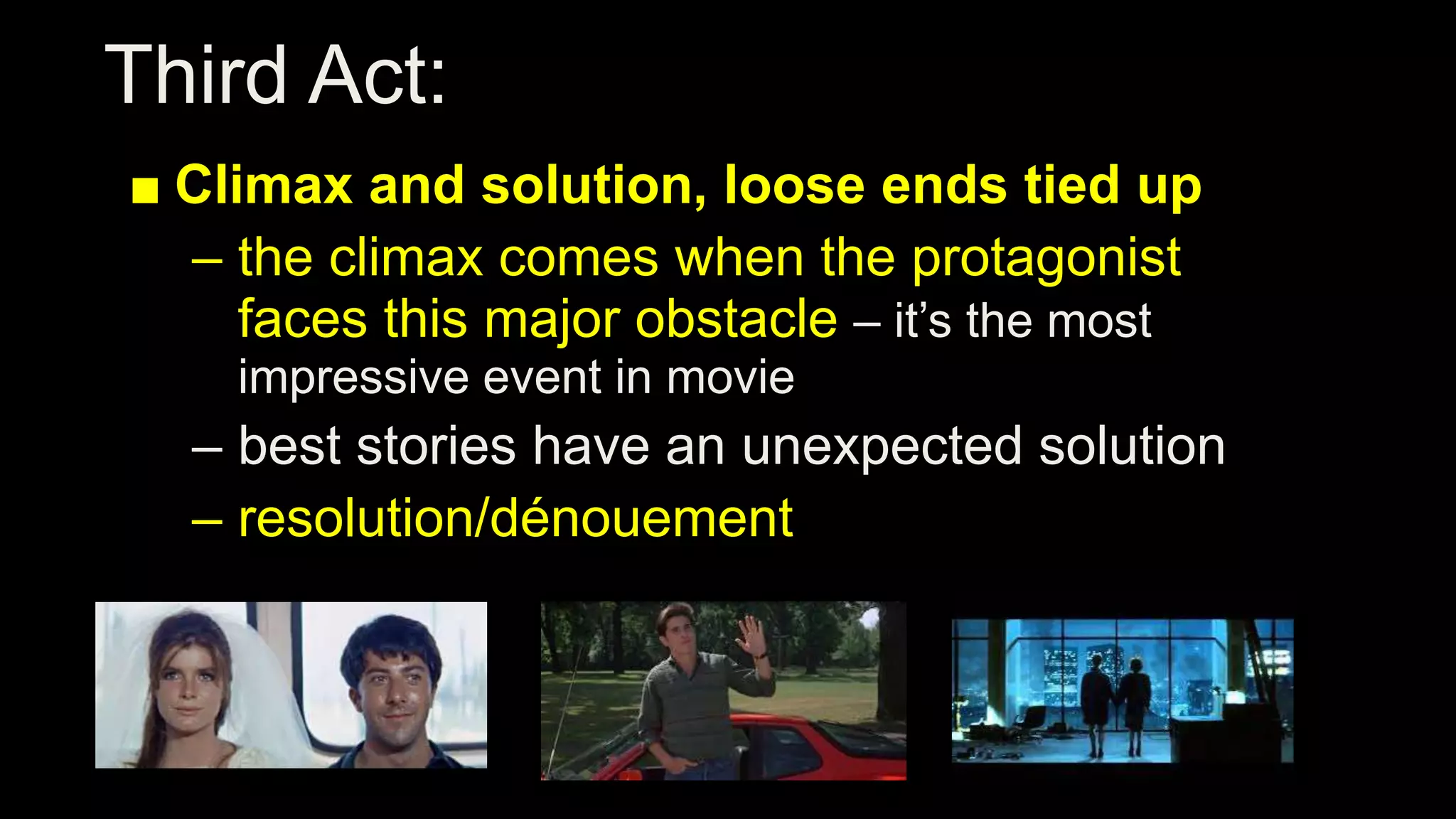
Third Act:
■ Climax and solution, loose ends tied up
– the climax comes when the protagonist
faces this major obstacle – it’s the most
impressive event in movie
– best stories have an unexpected solution
– resolution/dénouement
Structure Analysis
■ The King's Speech
■ The Matrix
■ E.T.: The Extra-Terrestrial
■ Avengers
■ Plot Points
But it’s not that easy:
What’s wrong with the three act
structure
But a good, brief explanation
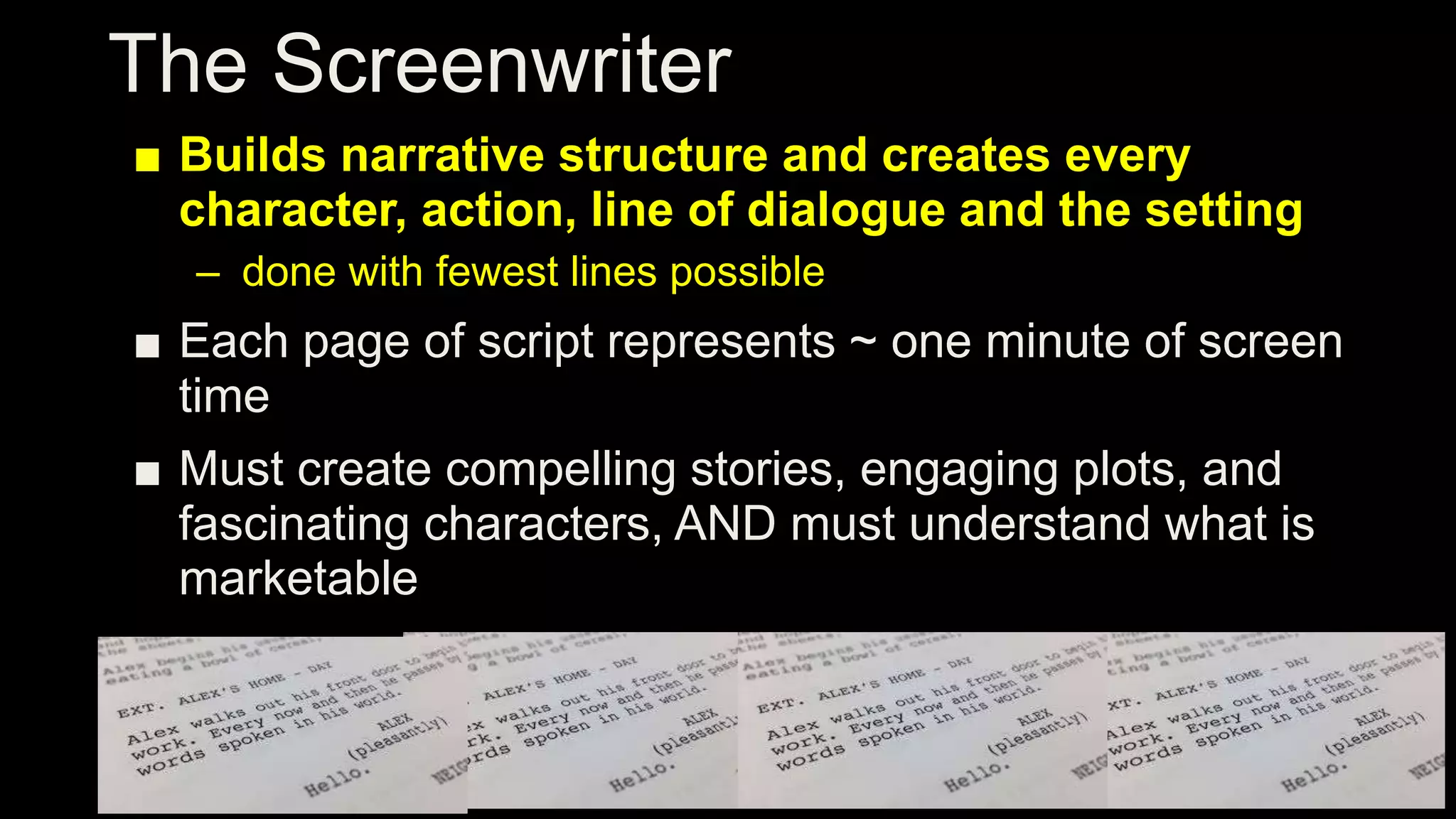
The Screenwriter
■ Builds narrative structure and creates every
character, action, line of dialogue and the setting
– done with fewest lines possible
■ Each page of script represents ~ one minute of screen
time
■ Must create compelling stories, engaging plots, and
fascinating characters, AND must understand what is
marketable
Elements of Narrative
■ Story v. Plot
– stories may be common (Cinderella) but plots can
change (Into the Woods, Ela Enchanted, Pretty Women)
■ Order
– bringing order to the events is one of the most
fundamental decisions filmmakers make
■ with so little time, must decide what to include/not include
– plot can be manipulated so events are presented in non-chronological
order (eg: Citizen Kane, Memento), yet…
– most narrative films follow traditional chronological
order
Duration
■ Story duration
– amount of time the implied story takes to occur
– the period covered by all the events that you see or know about
■ Plot duration
– elapsed time of the events within the story (the time of the plot)
■ Screen duration
– movie’s running time
■ Balancing the three is complex (remember, screenwriters do this with as fewest lines as
possible)
– Citizen Kane:
■ story duration: 70+ years
■ plot duration: ~ 1 week
■ screen duration: 1hr, 59 min.
Surprise v. Suspense
■ surprise: being taken unawares, can be shocking
and emotional response to it is generally short-lived
■ there are no repeat surprises; can be surprised the
same way only once
■ suspense: more drawn-out experience, involves the
audience

Narrative Structure

  • 1.
  • 2.
    The Narrator ► inevery movie, the camera is the primary narrator – First-person narrator ■ voice-over narration (example / ex or) ■ direct-address narration (example /ex) – Third-person narrator someone removed from the story provides info not accessible by characters in the movie ■ omniscient (unrestricted access to all aspects of the story) (example) ■ restricted (limits the info given, usually from only one character)
  • 3.
    Characters ■ Film narrativesdepend on two elements: – a character – pursuing a goal ■ New and different characters make it possible to have a new take on the same old story ■ Narrative cannot exist if the character does not have a goal – gives the character something to do – gives the audience a chance to participate/get involved/care about the story
  • 4.
    Characters… ■ Protagonist –the primary character who pursues the goal – usually referred to as the hero ■ sample lists 1 2 3 – as long as protagonist actively pursues goal in an interesting way → viewer will be invested in the pursuit – does not always necessarily have worthy goals: the anti-hero ■ unsympathetic protagonists chasing less than noble goals (1)
  • 5.
    ■ Narratives thriveon imperfect characters = imperfections provide obstacles – aka: character flaws – character imperfections/flaws give characters more room to grow Characters…
  • 6.
    The Basic NarrativeStructure: → a clearly motivated protagonist → pursues a goal → encounters obstacles → a clear resolution
  • 7.
    Narrative Structure: The Organizationin Three Acts ■ Most narratives can be broken into three basic parts: – first act sets up the story – second (and longest) act develops the story – third act resolves it
  • 8.
    Organizing The Story ■For a 120 minute film:
  • 9.
    First Act: ■ Tellswhat kind of story it is by establishing the “normal world” – lays out rules of the universe we are about to experience – a hook (ie: Indiana Jones) – characters are established, something their current situation ■ Inciting Incident – something will occur to change the normal world and set protagonist on pursuit/mission/quest… – presents the character with the goal to drive the narrative – most are easy to spot (w/in first 10-15 min) ex – some goals may shift later in the story ■ Star Wars: fist to rescue princess, then the take on Death Star
  • 10.
    Second Act: ■ Secondact is the story, or the pursuit of the goal (ie: Will Dorothy ever get back to Kansas?) – the want to learn ‘what and how’ keeps the viewer engaged – we want the answer to be yes – but ironically, if goal is quick/easily attained, the story is over: need conflict – the story depends on obstacles ■ Antagonist; nature of is varied, not always a villain, sometimes not human (the rock in 127 Hours) – the stakes need to rise – deeper we get in the story, the greater the risk to the protagonist ■ building toward a peak (rising action) building toward a turning point ■ at the peak, the goal is in its greatest jeopardy
  • 11.
    Third Act: ■ Climaxand solution, loose ends tied up – the climax comes when the protagonist faces this major obstacle – it’s the most impressive event in movie – best stories have an unexpected solution – resolution/dénouement
  • 12.
    Structure Analysis ■ TheKing's Speech ■ The Matrix ■ E.T.: The Extra-Terrestrial ■ Avengers ■ Plot Points But it’s not that easy: What’s wrong with the three act structure But a good, brief explanation
  • 13.
    The Screenwriter ■ Buildsnarrative structure and creates every character, action, line of dialogue and the setting – done with fewest lines possible ■ Each page of script represents ~ one minute of screen time ■ Must create compelling stories, engaging plots, and fascinating characters, AND must understand what is marketable
  • 14.
    Elements of Narrative ■Story v. Plot – stories may be common (Cinderella) but plots can change (Into the Woods, Ela Enchanted, Pretty Women) ■ Order – bringing order to the events is one of the most fundamental decisions filmmakers make ■ with so little time, must decide what to include/not include – plot can be manipulated so events are presented in non-chronological order (eg: Citizen Kane, Memento), yet… – most narrative films follow traditional chronological order
  • 15.
    Duration ■ Story duration –amount of time the implied story takes to occur – the period covered by all the events that you see or know about ■ Plot duration – elapsed time of the events within the story (the time of the plot) ■ Screen duration – movie’s running time ■ Balancing the three is complex (remember, screenwriters do this with as fewest lines as possible) – Citizen Kane: ■ story duration: 70+ years ■ plot duration: ~ 1 week ■ screen duration: 1hr, 59 min.
  • 16.
    Surprise v. Suspense ■surprise: being taken unawares, can be shocking and emotional response to it is generally short-lived ■ there are no repeat surprises; can be surprised the same way only once ■ suspense: more drawn-out experience, involves the audience