Elements of Mise-
en-scene
a French term meaning
‘what is put into the scene or frame’
How it works
●What is put in or left out
can make a big difference
●Signals how we, the
audience, are supposed
to feel
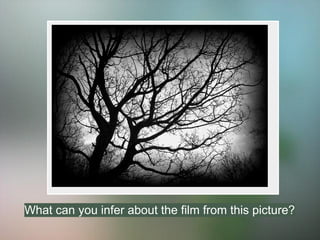
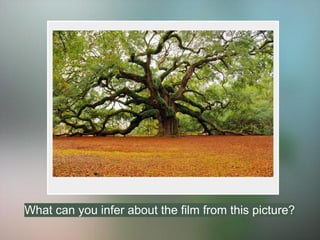
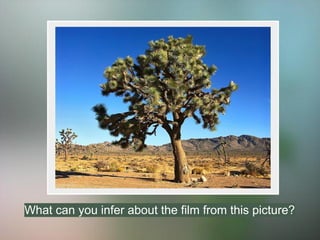
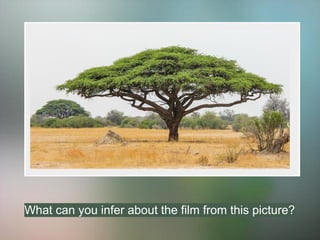
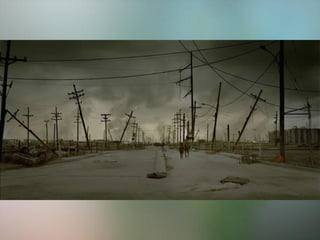
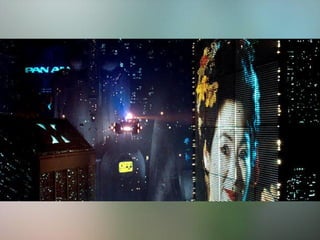
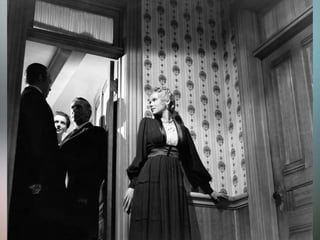
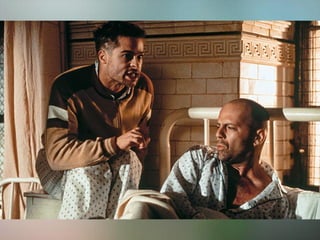
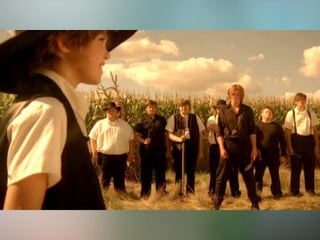
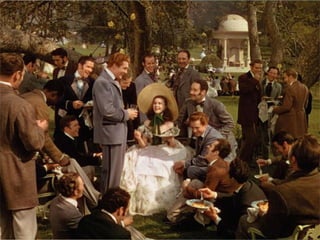
What can you infer about the film from this picture?
●Setting
○ very rarely just backgrounds
○ used to influence and audience by building certain
characteristics
○ studio set
■ highly controlled
○ on location
■ highly authentic, realistic
1st Element:
Setting and Props
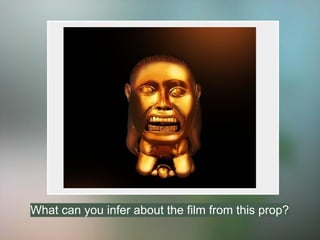
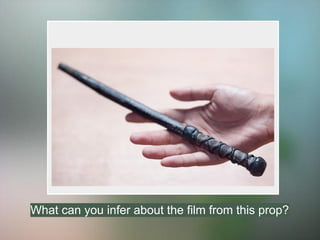
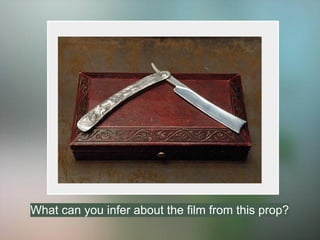
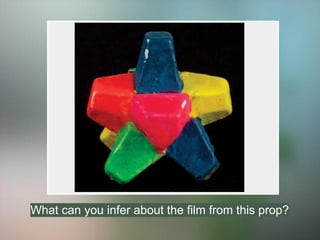
●Props
○ objects in the setting which play a part in the
action rather than just being in the background
1st Element:
Setting and Props
What can you infer about the film from this prop?
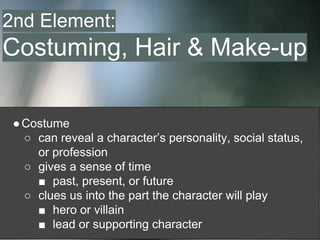
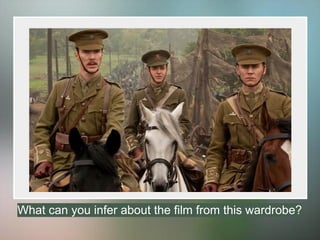
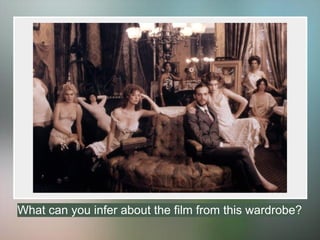
●Costume
○ can reveal a character’s personality, social status,
or profession
○ gives a sense of time
■ past, present, or future
○ clues us into the part the character will play
■ hero or villain
■ lead or supporting character
2nd Element:
Costuming, Hair & Make-up
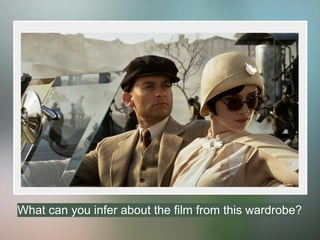
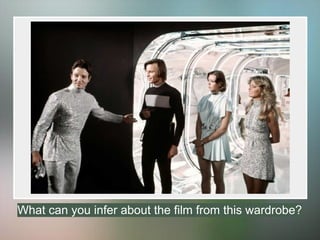
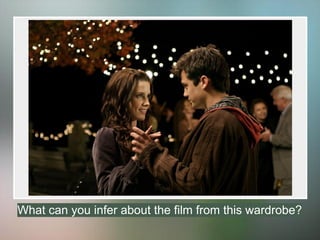
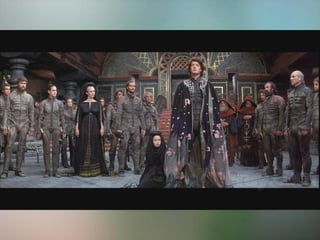
What can you infer about the film from this wardrobe?
●What costume features would be expected in
○ a western genre
○ a sci-fi genre
○ romantic comedy
○ teen issues genre
○ post apocalyptic film
○ villains vs heroes
●What genre relies heavily on makeup
Preconceptions of the audience
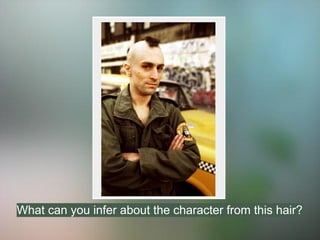
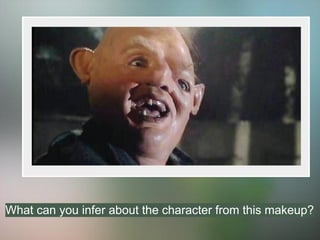
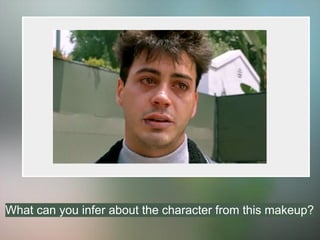
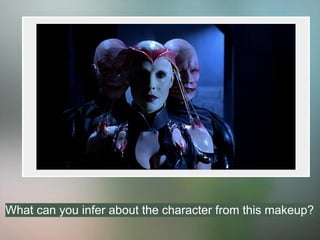
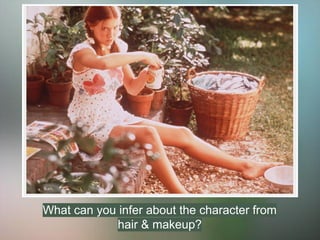
●Hair and Make Up
○ can reveal a character’s personality, social status,
or profession
○ improves, enhances, or alters the appearance of
the actor for the purpose of the scene
■ bruises, wrinkles, wounds
■ prosthetics, latex, animatronics
○ helps the actor commit to the role
2nd Element:
Costuming, Hair & Make-up
What can you infer about the character from this hair?
What can you infer about the character from this makeup?
What can you infer about the character from
hair & makeup?
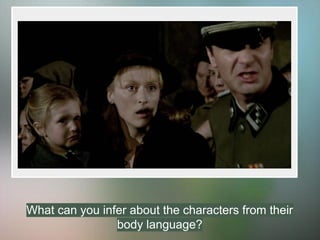
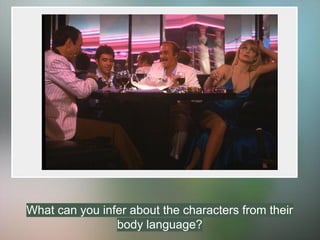
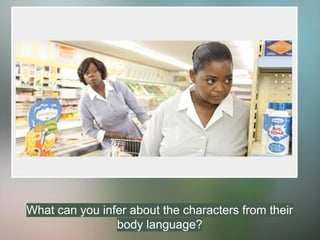
●a clear indication of how someone is thinking or
feeling
●small changes can send out totally different signals
●eyes give particularly important signals
○ it is common for the audience to follow the
direction of the character’s gaze
3rd Element:
Facial expression &
Body language
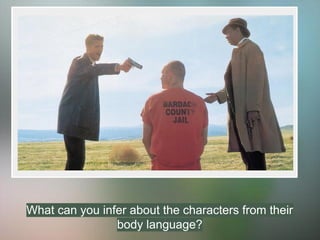
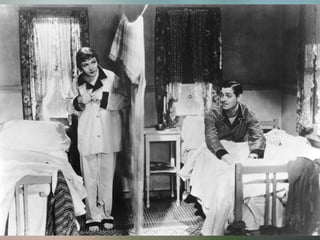
What can you infer about the characters from their
body language?
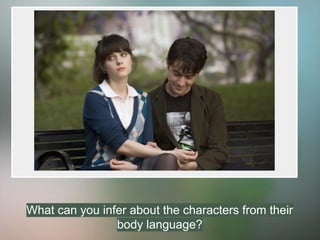
What can you infer about the characters from their
body language?
What can you infer about the characters from their
body language?
What can you infer about the characters from their
body language?
What can you infer about the characters from their
body language?
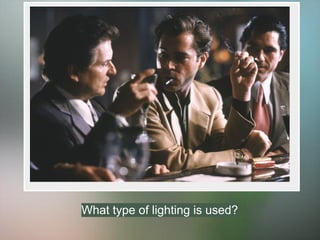
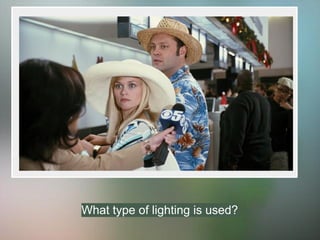
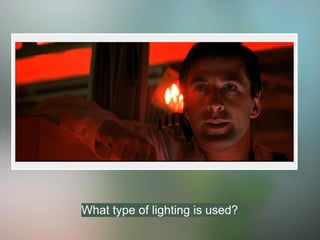
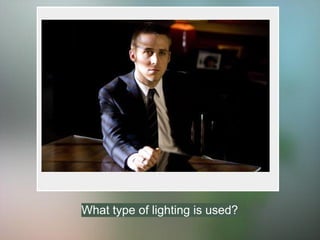
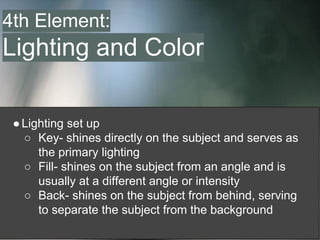
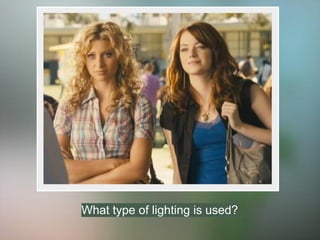
●Lighting
○ low key creates a sharp contrast of light and dark
areas, dramatic shadows
■ often used in horror and thriller films
○ high key appears normal/realistic
■ often used in romantic comedies and musicals
■ has little dramatic effect itself
4th Element:
Lighting and Color
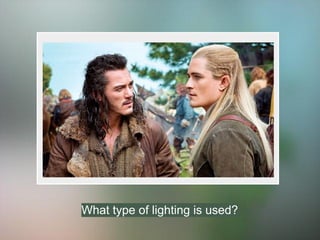
What type of lighting is used?
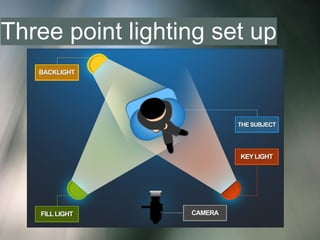
●Lighting set up
○ Key- shines directly on the subject and serves as
the primary lighting
○ Fill- shines on the subject from an angle and is
usually at a different angle or intensity
○ Back- shines on the subject from behind, serving
to separate the subject from the background
4th Element:
Lighting and Color
Three point lighting set up
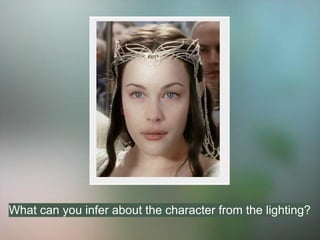
What can you infer about the character from the lighting?
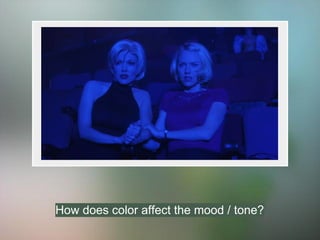
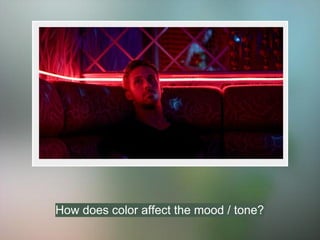
How does color affect the mood / tone?
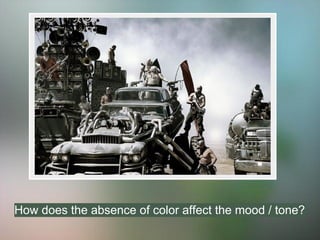
How does the absence of color affect the mood / tone?
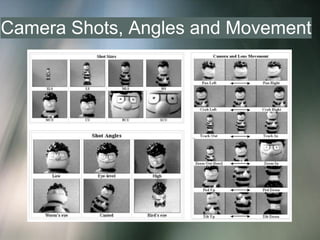
●How elements are arranged in the frame
○ space between elements
○ proximity to camera or other elements
○ composition within the frame
○ angle of camera to elements
■ high, low, flat, tilt
○ framing or shot distances
■ long, medium, close up
5th Element: Cinematography
Camera Shots & Angles
Camera Shots, Angles and Movement
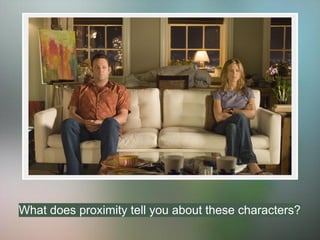
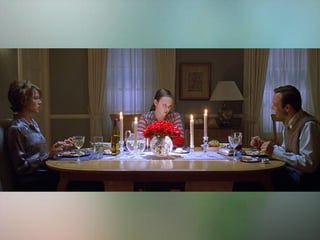
What does proximity tell you about these characters?
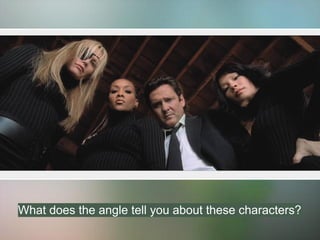
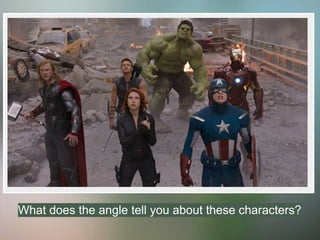
What does the angle tell you about these characters?
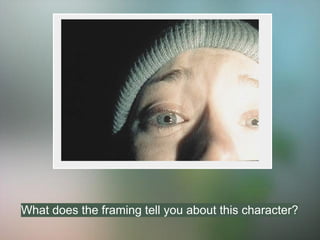
What does the framing tell you about this character?
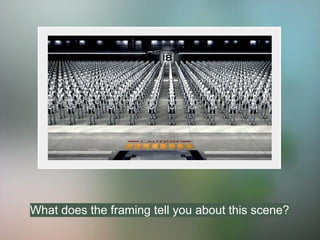
What does the framing tell you about this scene?
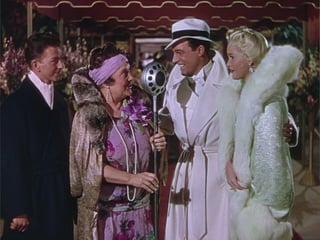
Analyze the mise en scene
Mise en-scene presentation

Mise en-scene presentation

  • 1.
    Elements of Mise- en-scene aFrench term meaning ‘what is put into the scene or frame’
  • 2.
    How it works ●Whatis put in or left out can make a big difference ●Signals how we, the audience, are supposed to feel
  • 3.
    What can youinfer about the film from this picture?
  • 4.
    What can youinfer about the film from this picture?
  • 5.
    What can youinfer about the film from this picture?
  • 6.
    What can youinfer about the film from this picture?
  • 7.
    ●Setting ○ very rarelyjust backgrounds ○ used to influence and audience by building certain characteristics ○ studio set ■ highly controlled ○ on location ■ highly authentic, realistic 1st Element: Setting and Props
  • 8.
    ●Props ○ objects inthe setting which play a part in the action rather than just being in the background 1st Element: Setting and Props
  • 9.
    What can youinfer about the film from this prop?
  • 10.
    What can youinfer about the film from this prop?
  • 11.
    What can youinfer about the film from this prop?
  • 12.
    What can youinfer about the film from this prop?
  • 13.
    ●Costume ○ can reveala character’s personality, social status, or profession ○ gives a sense of time ■ past, present, or future ○ clues us into the part the character will play ■ hero or villain ■ lead or supporting character 2nd Element: Costuming, Hair & Make-up
  • 14.
    What can youinfer about the film from this wardrobe?
  • 15.
    What can youinfer about the film from this wardrobe?
  • 16.
    What can youinfer about the film from this wardrobe?
  • 17.
    What can youinfer about the film from this wardrobe?
  • 18.
    What can youinfer about the film from this wardrobe?
  • 19.
    ●What costume featureswould be expected in ○ a western genre ○ a sci-fi genre ○ romantic comedy ○ teen issues genre ○ post apocalyptic film ○ villains vs heroes ●What genre relies heavily on makeup Preconceptions of the audience
  • 20.
    ●Hair and MakeUp ○ can reveal a character’s personality, social status, or profession ○ improves, enhances, or alters the appearance of the actor for the purpose of the scene ■ bruises, wrinkles, wounds ■ prosthetics, latex, animatronics ○ helps the actor commit to the role 2nd Element: Costuming, Hair & Make-up
  • 21.
    What can youinfer about the character from this hair?
  • 22.
    What can youinfer about the character from this makeup?
  • 23.
    What can youinfer about the character from this makeup?
  • 24.
    What can youinfer about the character from this makeup?
  • 25.
    What can youinfer about the character from hair & makeup?
  • 26.
    ●a clear indicationof how someone is thinking or feeling ●small changes can send out totally different signals ●eyes give particularly important signals ○ it is common for the audience to follow the direction of the character’s gaze 3rd Element: Facial expression & Body language
  • 27.
    What can youinfer about the characters from their body language?
  • 28.
    What can youinfer about the characters from their body language?
  • 29.
    What can youinfer about the characters from their body language?
  • 30.
    What can youinfer about the characters from their body language?
  • 31.
    What can youinfer about the characters from their body language?
  • 32.
    ●Lighting ○ low keycreates a sharp contrast of light and dark areas, dramatic shadows ■ often used in horror and thriller films ○ high key appears normal/realistic ■ often used in romantic comedies and musicals ■ has little dramatic effect itself 4th Element: Lighting and Color
  • 33.
    What type oflighting is used?
  • 34.
    What type oflighting is used?
  • 35.
    What type oflighting is used?
  • 36.
    What type oflighting is used?
  • 37.
    What type oflighting is used?
  • 38.
    What type oflighting is used?
  • 39.
    ●Lighting set up ○Key- shines directly on the subject and serves as the primary lighting ○ Fill- shines on the subject from an angle and is usually at a different angle or intensity ○ Back- shines on the subject from behind, serving to separate the subject from the background 4th Element: Lighting and Color
  • 40.
  • 41.
    What can youinfer about the character from the lighting?
  • 42.
    How does coloraffect the mood / tone?
  • 43.
    How does coloraffect the mood / tone?
  • 44.
    How does theabsence of color affect the mood / tone?
  • 45.
    ●How elements arearranged in the frame ○ space between elements ○ proximity to camera or other elements ○ composition within the frame ○ angle of camera to elements ■ high, low, flat, tilt ○ framing or shot distances ■ long, medium, close up 5th Element: Cinematography Camera Shots & Angles
  • 46.
  • 47.
    What does proximitytell you about these characters?
  • 48.
    What does theangle tell you about these characters?
  • 49.
    What does theangle tell you about these characters?
  • 50.
    What does theframing tell you about this character?
  • 51.
    What does theframing tell you about this scene?
  • 52.