1
DEFINITION
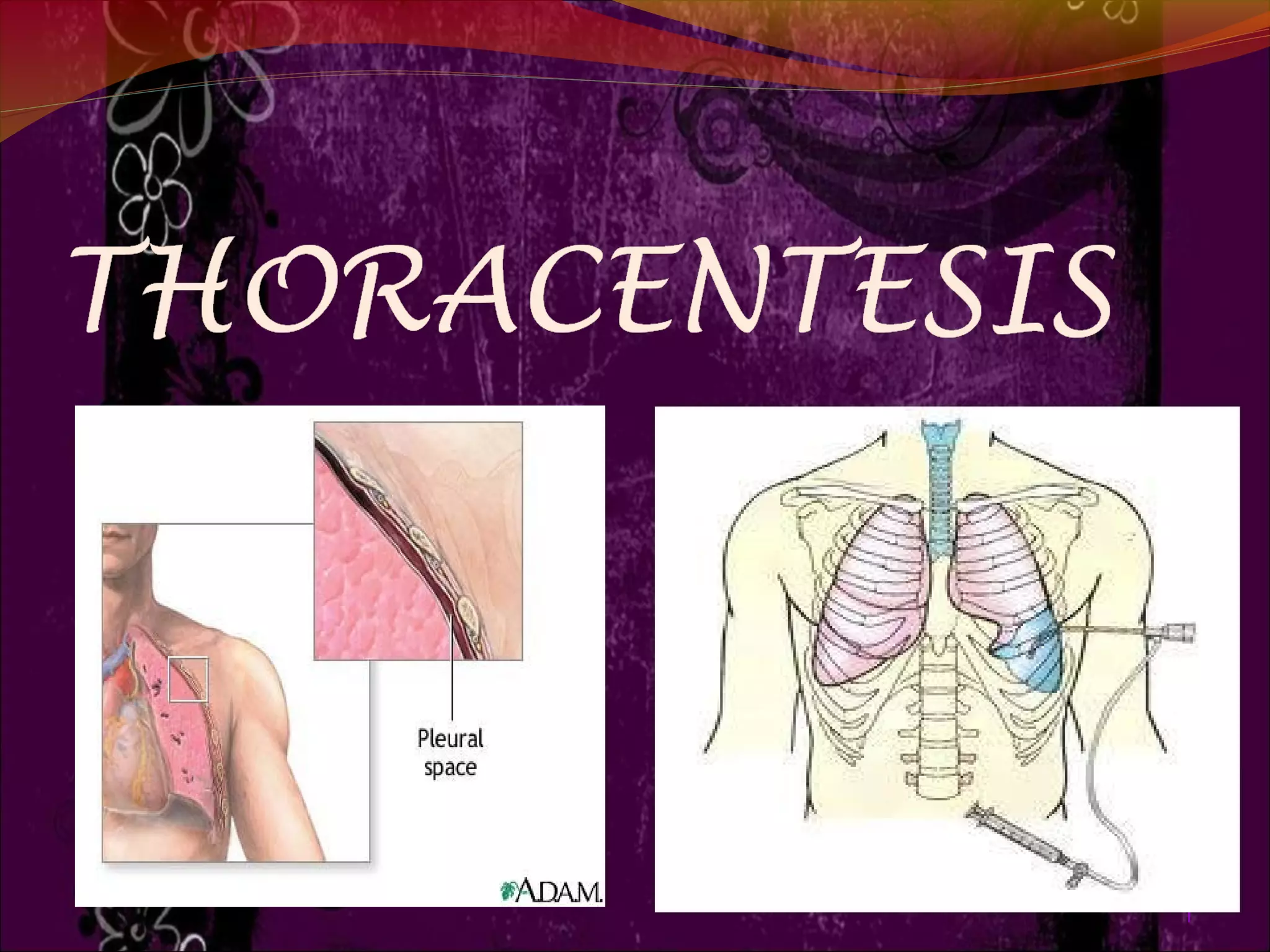
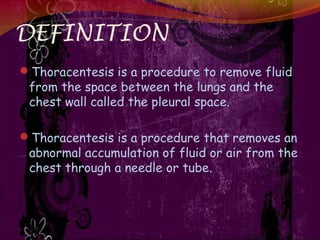
Thoracentesis is a procedure to remove fluid
from the space between the lungs and the
chest wall called the pleural space.
Thoracentesis is a procedure that removes an
abnormal accumulation of fluid or air from the
chest through a needle or tube.
PURPOSE
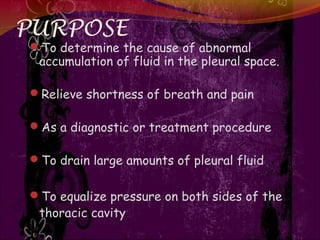
To determine the cause of abnormal
accumulation of fluid in the pleural space.
Relieve shortness of breath and pain
As a diagnostic or treatment procedure
To drain large amounts of pleural fluid
To equalize pressure on both sides of the
thoracic cavity
INDICATION
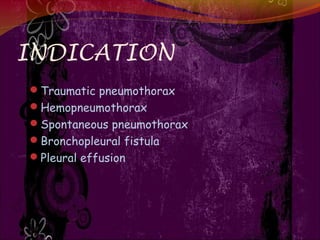
Traumatic pneumothorax
Hemopneumothorax
Spontaneous pneumothorax
Bronchopleural fistula
Pleural effusion
CONTRAINDICATION
An uncooperative patient
Coagulation disorder
Atelectasis
Only one functioning lung
Emphysema(pulmonary enlargement)
Severe cough or hiccups
COMPLICATION
 Pulmonary edema
 Respiratory distress
 Air embolism
 Cardiac tamponade(fluid
build up in the space
between myocardium and
pericardium)
 Bleeding
 Infection
 Dyspnea and
cough
 Atelectasis(lung
collapes)
7
BEFORE THE PROCEDURE
Explain the purpose, risks/benefits, and
steps of the procedure and obtain
consent from the patient or appropriate
legal design.
R: An explanation helps orient the
patient to the procedure assist in coping
and provide an opportunity to ask
question and verbalise anxiety
CON’T…
Take Medical History such as
Trouble in breathing, coughing, and hiccups
Had heart disease
Smoked
Travelled to places where may have been exposed to
tuberculosis
R: to detect any abnormalities regarding the
procedure
9
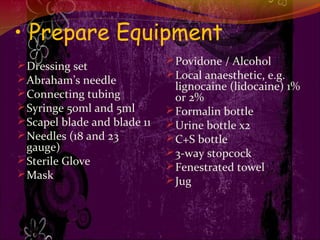
• Prepare Equipment
Dressing set
Abraham’s needle
Connecting tubing
Syringe 50ml and 5ml
Scapel blade and blade 11
Needles (18 and 23
gauge)
Sterile Glove
Mask
Povidone / Alcohol
Local anaesthetic, e.g.
lignocaine (lidocaine) 1%
or 2%
Formalin bottle
Urine bottle x2
C+S bottle
3-way stopcock
Fenestrated towel
Jug
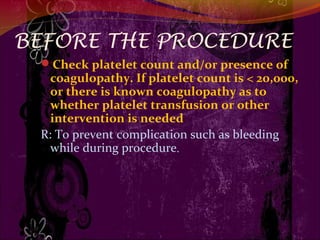
BEFORE THE PROCEDURE
Check platelet count and/or presence of
coagulopathy. If platelet count is < 20,000,
or there is known coagulopathy as to
whether platelet transfusion or other
intervention is needed
R: To prevent complication such as bleeding
while during procedure.
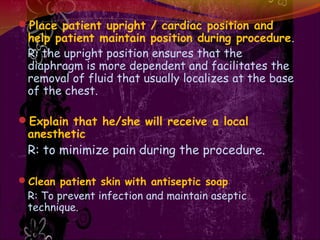
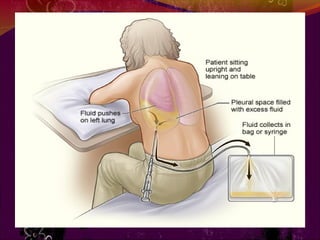
Place patient upright / cardiac position and
help patient maintain position during procedure.
R: the upright position ensures that the
diaphragm is more dependent and facilitates the
removal of fluid that usually localizes at the base
of the chest.
Explain that he/she will receive a local
anesthetic
R: to minimize pain during the procedure.
Clean patient skin with antiseptic soap
R: To prevent infection and maintain aseptic
technique.
DURING PROCEDURE
Observe patient respiration rate and breathing
pattern.
R: to provide base line data to estimate patient
tolerance of procedure
Assess patient vital sign such as B/P, pulse
R: To prevent any complication such as
hypovolemic shock during procedure.
Observe patient level of consciousness and give
emotional support
R: To reduce patient anxiety
DURING PROCEDURE
Monitor saturation
R: To prevent hypoxia
Inform doctor if any changes of the patient
R: To make sure whether need to continue the
procedure or stop immediately.
AFTER PROCEDURE
Obtain a chest x-ray to evaluate the fluid level.
R: To compare the conditions of the lungs before and after
the procedure.
For specimen handling, fill the tubes with the required
amount of pleural fluid
R : To prevent over intake of the fluid to the
specimen bottle.
Check that each bottle is correctly labelled by
checking patient identifiers- full name, date of birth
and/or medical record number then send to the lab
tests
R: To prevent from incorrect results to the patient.
AFTER PROCEDURE
Document the procedure, patient’s response,
characteristics of fluid and amount, and patient
response to follow-up.
R: To develop further treatment to the patient.
Provide post-procedural analgesics as needed.
R: To prevent patient from pain related to the incision
site.
AFTER PROCEDURE
Rest in bed for about 2 hours after the procedure
R: To minimize patient activity due to complication
such as dyspnea.
Blood pressure and breathing will be checked for up
to a few hours
R: to make sure don't have complications
AFTER PROCEDURE
May remove dressing/bandage another day,
or replace it if it becomes soiled or wet
R: To prevent from getting infection.
Resume patient regular diet.
R: To promote wound healing.
THANK YOU !!!

thoracentesis2-121023054532-phpapp02.pdf

  • 1.
  • 2.
    DEFINITION Thoracentesis is aprocedure to remove fluid from the space between the lungs and the chest wall called the pleural space. Thoracentesis is a procedure that removes an abnormal accumulation of fluid or air from the chest through a needle or tube.
  • 3.
    PURPOSE To determine thecause of abnormal accumulation of fluid in the pleural space. Relieve shortness of breath and pain As a diagnostic or treatment procedure To drain large amounts of pleural fluid To equalize pressure on both sides of the thoracic cavity
  • 4.
  • 5.
    CONTRAINDICATION An uncooperative patient Coagulationdisorder Atelectasis Only one functioning lung Emphysema(pulmonary enlargement) Severe cough or hiccups
  • 6.
    COMPLICATION  Pulmonary edema Respiratory distress  Air embolism  Cardiac tamponade(fluid build up in the space between myocardium and pericardium)  Bleeding  Infection  Dyspnea and cough  Atelectasis(lung collapes)
  • 7.
  • 8.
    BEFORE THE PROCEDURE Explainthe purpose, risks/benefits, and steps of the procedure and obtain consent from the patient or appropriate legal design. R: An explanation helps orient the patient to the procedure assist in coping and provide an opportunity to ask question and verbalise anxiety
  • 9.
    CON’T… Take Medical Historysuch as Trouble in breathing, coughing, and hiccups Had heart disease Smoked Travelled to places where may have been exposed to tuberculosis R: to detect any abnormalities regarding the procedure 9
  • 10.
    • Prepare Equipment Dressingset Abraham’s needle Connecting tubing Syringe 50ml and 5ml Scapel blade and blade 11 Needles (18 and 23 gauge) Sterile Glove Mask Povidone / Alcohol Local anaesthetic, e.g. lignocaine (lidocaine) 1% or 2% Formalin bottle Urine bottle x2 C+S bottle 3-way stopcock Fenestrated towel Jug
  • 11.
    BEFORE THE PROCEDURE Checkplatelet count and/or presence of coagulopathy. If platelet count is < 20,000, or there is known coagulopathy as to whether platelet transfusion or other intervention is needed R: To prevent complication such as bleeding while during procedure.
  • 12.
    Place patient upright/ cardiac position and help patient maintain position during procedure. R: the upright position ensures that the diaphragm is more dependent and facilitates the removal of fluid that usually localizes at the base of the chest. Explain that he/she will receive a local anesthetic R: to minimize pain during the procedure. Clean patient skin with antiseptic soap R: To prevent infection and maintain aseptic technique.
  • 14.
    DURING PROCEDURE Observe patientrespiration rate and breathing pattern. R: to provide base line data to estimate patient tolerance of procedure Assess patient vital sign such as B/P, pulse R: To prevent any complication such as hypovolemic shock during procedure. Observe patient level of consciousness and give emotional support R: To reduce patient anxiety
  • 15.
    DURING PROCEDURE Monitor saturation R:To prevent hypoxia Inform doctor if any changes of the patient R: To make sure whether need to continue the procedure or stop immediately.
  • 16.
    AFTER PROCEDURE Obtain achest x-ray to evaluate the fluid level. R: To compare the conditions of the lungs before and after the procedure. For specimen handling, fill the tubes with the required amount of pleural fluid R : To prevent over intake of the fluid to the specimen bottle. Check that each bottle is correctly labelled by checking patient identifiers- full name, date of birth and/or medical record number then send to the lab tests R: To prevent from incorrect results to the patient.
  • 17.
    AFTER PROCEDURE Document theprocedure, patient’s response, characteristics of fluid and amount, and patient response to follow-up. R: To develop further treatment to the patient. Provide post-procedural analgesics as needed. R: To prevent patient from pain related to the incision site.
  • 18.
    AFTER PROCEDURE Rest inbed for about 2 hours after the procedure R: To minimize patient activity due to complication such as dyspnea. Blood pressure and breathing will be checked for up to a few hours R: to make sure don't have complications
  • 19.
    AFTER PROCEDURE May removedressing/bandage another day, or replace it if it becomes soiled or wet R: To prevent from getting infection. Resume patient regular diet. R: To promote wound healing.
  • 20.