Thinking to Writing: How to Generate Ideas1
Step 1: Begin with significance (pickingouta theme)
A) Identifythe themes/conceptsthatyouaddressedinclassoraddressedinthe promptforyour
final assignmentof the year
B) Picka passage from the textthat comesto mind,anypassage thatstands out(rememberit
standsout fora reason).
C) Nowtry to finda theme/conceptfrom onthat may be relevanttothat passage
English:
9th
grade:you will likelyfocusona conceptyou’ve discussedinclassthatyou’re most
comfortable with
10th
grade: themesyouhave identifiedanddiscussedinclass
11th
grade: close readingelement
D) Write the theme at the top of the page
Step 2: Write a drivingquestion
A) Derive adrivingquestionfromthe promptoryour assignment.
B) If you have a specificprompt,re-writethatpromptasa question butfocusingonthe
theme/conceptyouidentified.
Step 3: Write possible answersto your question
A) Your possible answerscanturninto potential claims
B) Make sure your answersare inferences—thatisopinionsabout
detail/theme/character/structure,etc.
C) Make a longlist,mindmap,or do a focusedfree write.DONOTworryabout whatis goodor bad
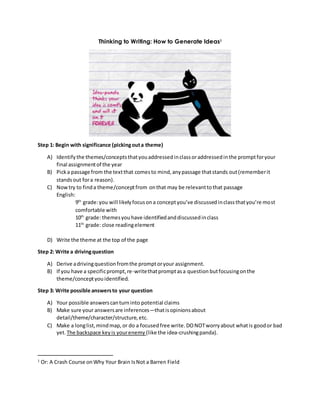
yet. The backspace keyis yourenemy (like the idea-crushingpanda).
1
Or: A Crash Course onWhy Your Brain IsNot a Barren Field
Step 4: Gatheringthe evidence
It’snot time to delete anyideasyet.Let’sfirstgathersome evidence fromthatpassage andsee what
youcome upwith.
A) For eachbulletpointorinference thatyoumade,findevidenceinthe passage
B) Anybulletpointsorinferencesforwhichyoucan’tfind evidence stayinthe brainstorming,
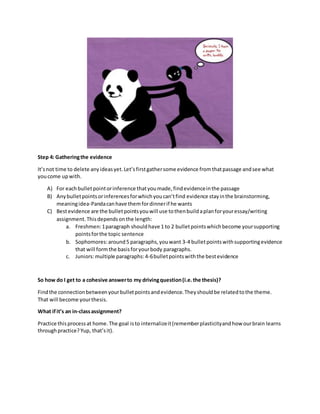
meaningidea-Pandacanhave themfordinnerif he wants
C) Bestevidence are the bulletpointsyouwill use tothenbuildaplanforyouressay/writing
assignment.Thisdependsonthe length:
a. Freshmen:1paragraph shouldhave 1 to 2 bulletpointswhichbecome yoursupporting
pointsforthe topic sentence
b. Sophomores:around5 paragraphs,youwant 3-4 bulletpointswithsupportingevidence
that will formthe basisforyourbody paragraphs.
c. Juniors:multiple paragraphs:4-6bulletpointswiththe bestevidence
So how do I get to a cohesive answerto my drivingquestion(i.e.the thesis)?
Findthe connectionbetweenyourbulletpointsandevidence.Theyshouldbe relatedtothe theme.
That will become yourthesis.
What ifit’s an in-classassignment?
Practice thisprocessat home.The goal isto internalizeit(rememberplasticityandhow ourbrain learns
throughpractice?Yup, that’sit).

Thinking to writing

  • 1.
    Thinking to Writing:How to Generate Ideas1 Step 1: Begin with significance (pickingouta theme) A) Identifythe themes/conceptsthatyouaddressedinclassoraddressedinthe promptforyour final assignmentof the year B) Picka passage from the textthat comesto mind,anypassage thatstands out(rememberit standsout fora reason). C) Nowtry to finda theme/conceptfrom onthat may be relevanttothat passage English: 9th grade:you will likelyfocusona conceptyou’ve discussedinclassthatyou’re most comfortable with 10th grade: themesyouhave identifiedanddiscussedinclass 11th grade: close readingelement D) Write the theme at the top of the page Step 2: Write a drivingquestion A) Derive adrivingquestionfromthe promptoryour assignment. B) If you have a specificprompt,re-writethatpromptasa question butfocusingonthe theme/conceptyouidentified. Step 3: Write possible answersto your question A) Your possible answerscanturninto potential claims B) Make sure your answersare inferences—thatisopinionsabout detail/theme/character/structure,etc. C) Make a longlist,mindmap,or do a focusedfree write.DONOTworryabout whatis goodor bad yet. The backspace keyis yourenemy (like the idea-crushingpanda). 1 Or: A Crash Course onWhy Your Brain IsNot a Barren Field
  • 2.
    Step 4: Gatheringtheevidence It’snot time to delete anyideasyet.Let’sfirstgathersome evidence fromthatpassage andsee what youcome upwith. A) For eachbulletpointorinference thatyoumade,findevidenceinthe passage B) Anybulletpointsorinferencesforwhichyoucan’tfind evidence stayinthe brainstorming, meaningidea-Pandacanhave themfordinnerif he wants C) Bestevidence are the bulletpointsyouwill use tothenbuildaplanforyouressay/writing assignment.Thisdependsonthe length: a. Freshmen:1paragraph shouldhave 1 to 2 bulletpointswhichbecome yoursupporting pointsforthe topic sentence b. Sophomores:around5 paragraphs,youwant 3-4 bulletpointswithsupportingevidence that will formthe basisforyourbody paragraphs. c. Juniors:multiple paragraphs:4-6bulletpointswiththe bestevidence So how do I get to a cohesive answerto my drivingquestion(i.e.the thesis)? Findthe connectionbetweenyourbulletpointsandevidence.Theyshouldbe relatedtothe theme. That will become yourthesis. What ifit’s an in-classassignment? Practice thisprocessat home.The goal isto internalizeit(rememberplasticityandhow ourbrain learns throughpractice?Yup, that’sit).