Stress
Management
LIBBY HUNT
Objectives
Understand Stress
Good vs. Bad
Analyze your Stress
Methods
What is Stress?
Emotional or physical tension
How we react to a challenge or demand
 Eustress
 Good stress
 Energizing
 Helps with focus
 Distress
 Bad stress
 Drains energy
 Causes panic
 Learning difficult (stress
hormones)
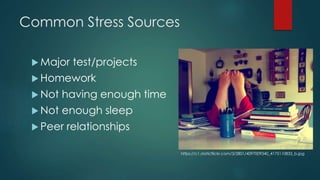
Common Stress Sources
 Major test/projects
 Homework
 Not having enough time
 Not enough sleep
 Peer relationships
https://c1.staticflickr.com/3/2801/4097009340_4175110833_b.jpg
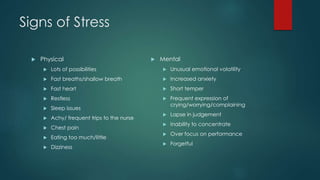
Signs of Stress
 Physical
 Lots of possibilities
 Fast breaths/shallow breath
 Fast heart
 Restless
 Sleep issues
 Achy/ frequent trips to the nurse
 Chest pain
 Eating too much/little
 Dizziness
 Mental
 Unusual emotional volatility
 Increased anxiety
 Short temper
 Frequent expression of
crying/worrying/complaining
 Lapse in judgement
 Inability to concentrate
 Over focus on performance
 Forgetful
How Stressed are You?
QUIZ TIME!!
Discussion!
How do I deal with it?
Strategies
Growth Mindset
Relaxation
Planning
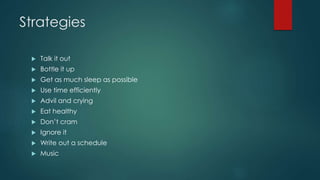
Strategies
 Talk it out
 Bottle it up
 Get as much sleep as possible
 Use time efficiently
 Advil and crying
 Eat healthy
 Don’t cram
 Ignore it
 Write out a schedule
 Music
Growth Mindset
Relaxation Methods
 Mind-Body-Spirit
Diet
Exercise
Sleep
 Deep Breathing
In the moment
 Muscle Relaxation/ Meditation
Emotion Competencies
Self Awareness
Self Management
Social Awareness
Relationship Skills
Responsible Decision Making
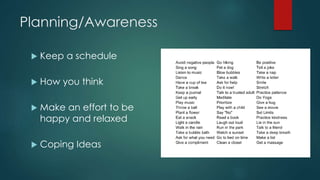
Planning/Awareness
 Keep a schedule
 How you think
 Make an effort to be
happy and relaxed
 Coping Ideas
What Works for You? Why?

Stress management

  • 1.
  • 2.
    Objectives Understand Stress Good vs.Bad Analyze your Stress Methods
  • 3.
    What is Stress? Emotionalor physical tension How we react to a challenge or demand  Eustress  Good stress  Energizing  Helps with focus  Distress  Bad stress  Drains energy  Causes panic  Learning difficult (stress hormones)
  • 4.
    Common Stress Sources Major test/projects  Homework  Not having enough time  Not enough sleep  Peer relationships https://c1.staticflickr.com/3/2801/4097009340_4175110833_b.jpg
  • 5.
    Signs of Stress Physical  Lots of possibilities  Fast breaths/shallow breath  Fast heart  Restless  Sleep issues  Achy/ frequent trips to the nurse  Chest pain  Eating too much/little  Dizziness  Mental  Unusual emotional volatility  Increased anxiety  Short temper  Frequent expression of crying/worrying/complaining  Lapse in judgement  Inability to concentrate  Over focus on performance  Forgetful
  • 6.
    How Stressed areYou? QUIZ TIME!! Discussion!
  • 7.
    How do Ideal with it? Strategies Growth Mindset Relaxation Planning
  • 8.
    Strategies  Talk itout  Bottle it up  Get as much sleep as possible  Use time efficiently  Advil and crying  Eat healthy  Don’t cram  Ignore it  Write out a schedule  Music
  • 9.
  • 10.
    Relaxation Methods  Mind-Body-Spirit Diet Exercise Sleep Deep Breathing In the moment  Muscle Relaxation/ Meditation
  • 11.
    Emotion Competencies Self Awareness SelfManagement Social Awareness Relationship Skills Responsible Decision Making
  • 12.
    Planning/Awareness  Keep aschedule  How you think  Make an effort to be happy and relaxed  Coping Ideas
  • 13.
    What Works forYou? Why?

Editor's Notes

  • #8 Thinking handout