






Glen Cathey
SVP Talent Acquisition and Innovation, Kforce
Author, BooleanBlackBelt.com
You've Found Them – Now What?
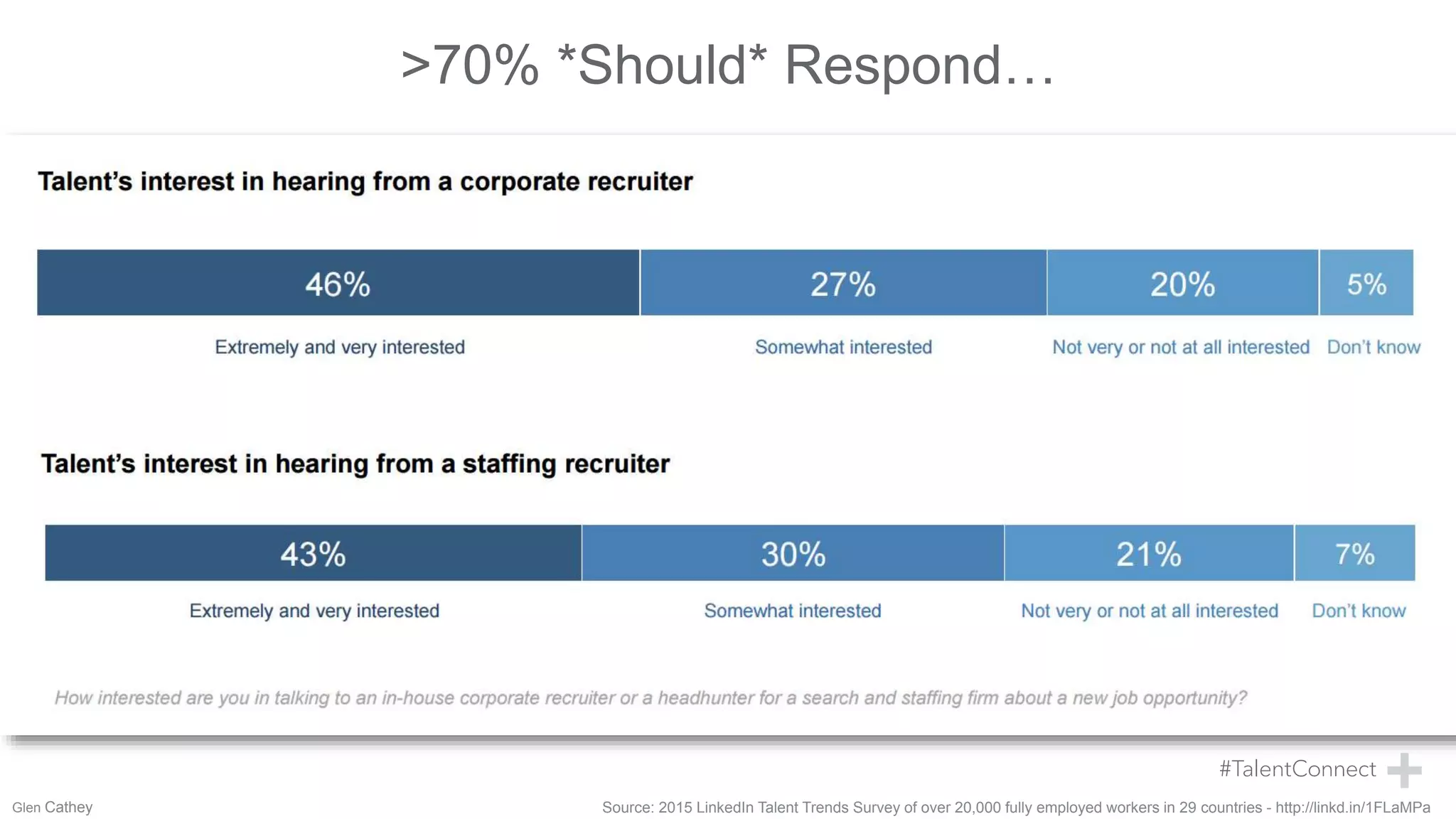
>70% *Should* Respond…
Source: 2015 LinkedIn Talent Trends Survey of over 20,000 fully employed workers in 29 countries - http://linkd.in/1FLaMPaGlen Cathey
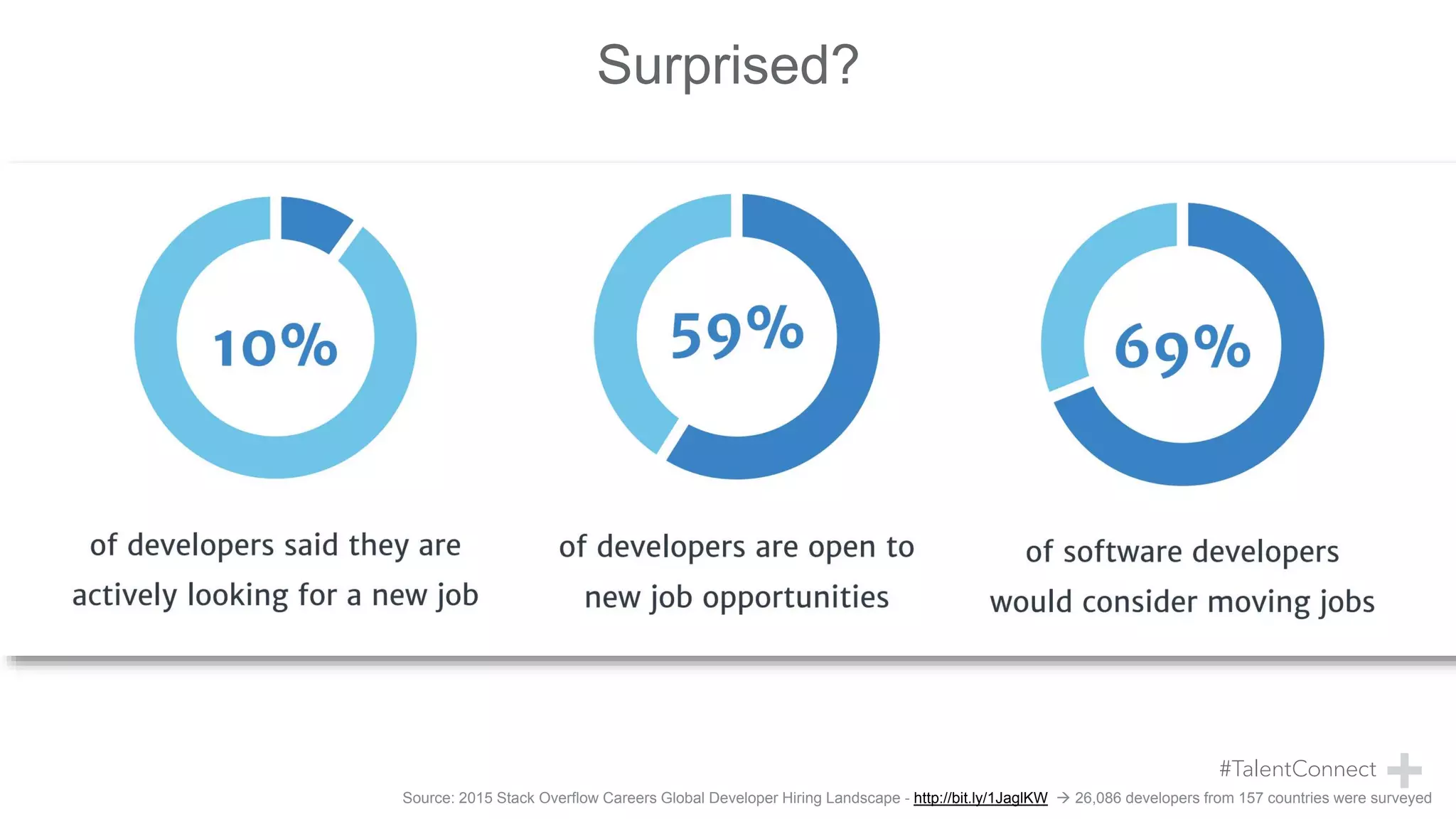
Surprised?
Source: 2015 Stack Overflow Careers Global Developer Hiring Landscape - http://bit.ly/1JaglKW  26,086 developers from 157 countries were surveyed
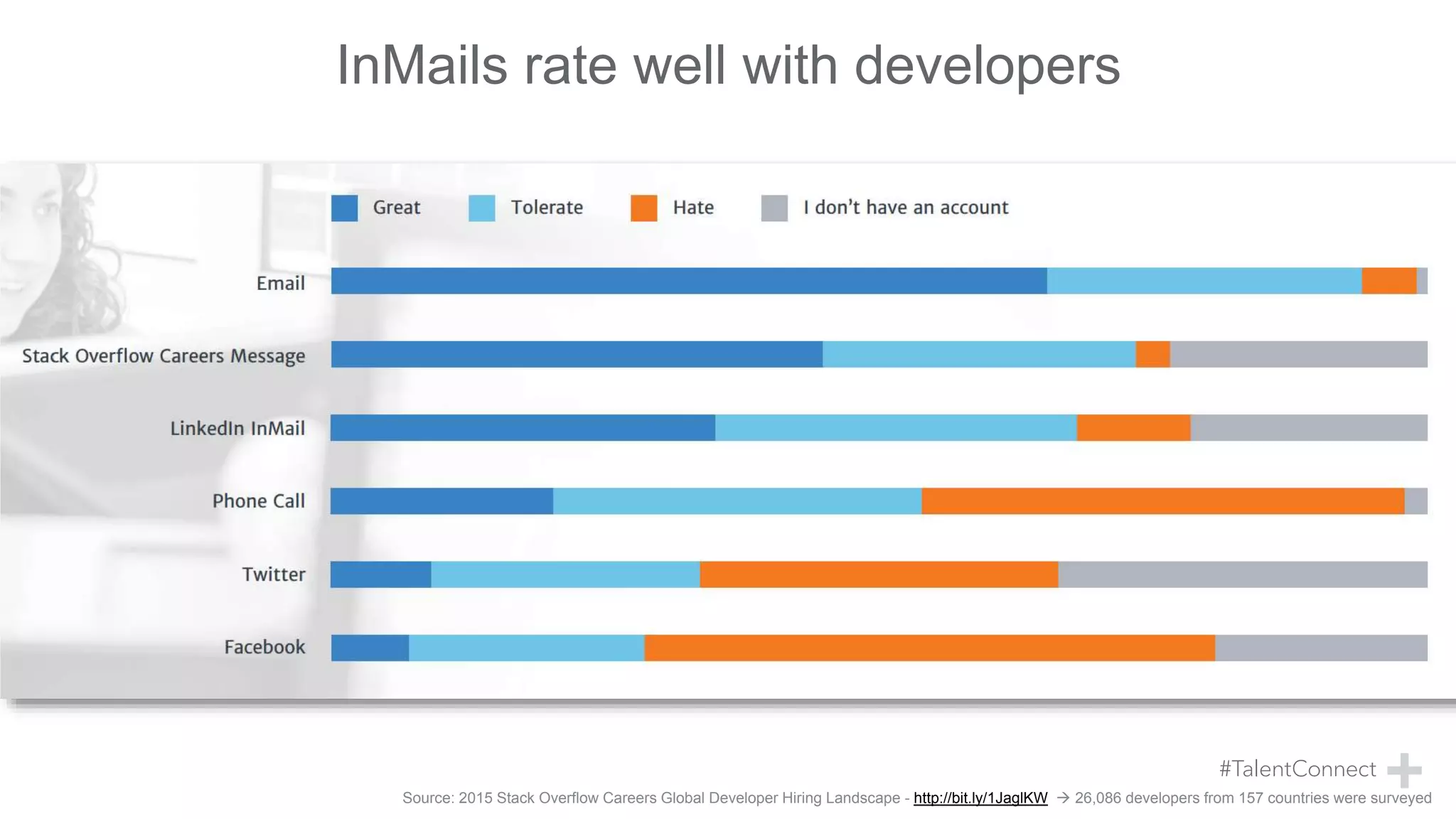
InMails rate well with developers
Source: 2015 Stack Overflow Careers Global Developer Hiring Landscape - http://bit.ly/1JaglKW  26,086 developers from 157 countries were surveyed
Glen Cathey
5 Whys Exercise
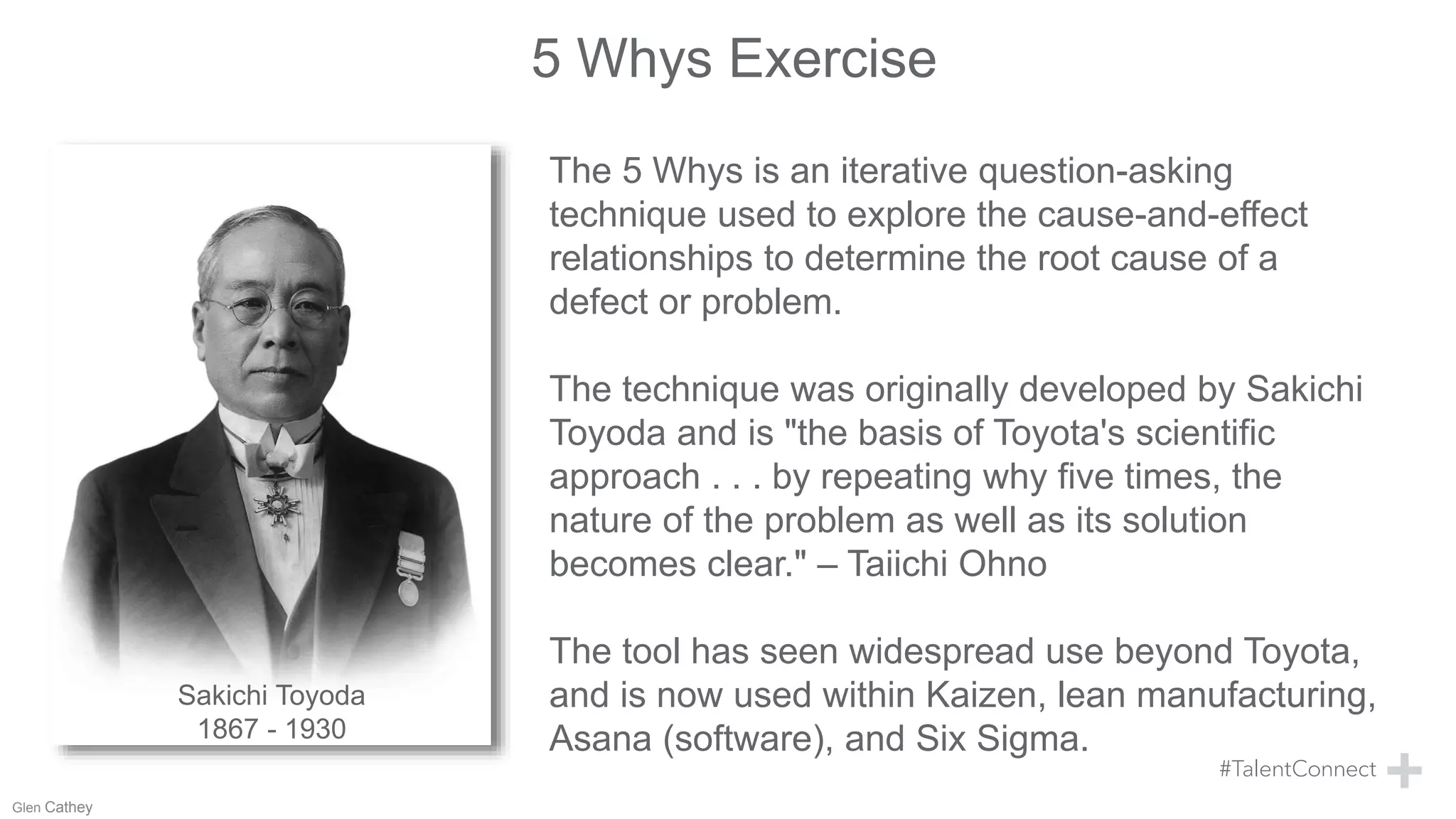
Sakichi Toyoda
1867 - 1930
The 5 Whys is an iterative question-asking
technique used to explore the cause-and-effect
relationships to determine the root cause of a
defect or problem.
The technique was originally developed by Sakichi
Toyoda and is "the basis of Toyota's scientific
approach . . . by repeating why five times, the
nature of the problem as well as its solution
becomes clear." – Taiichi Ohno
The tool has seen widespread use beyond Toyota,
and is now used within Kaizen, lean manufacturing,
Asana (software), and Six Sigma.
Glen Cathey
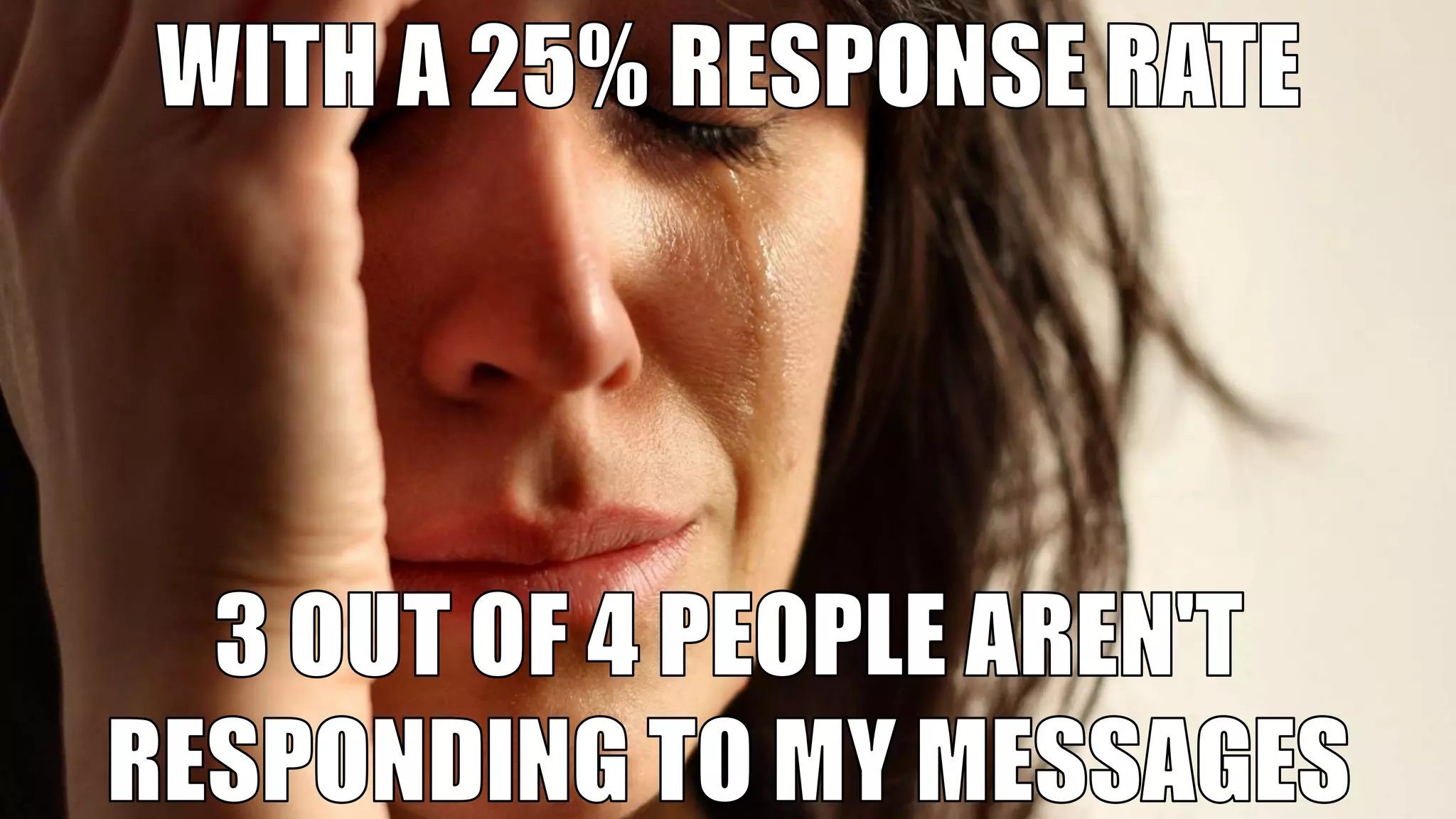
Problem: I don't get 100% response to my InMails
Be Human
Be Human
Cross reference on the
Internet and other social
networking sites
So, I would normally leave these first-contacts short and
sweet, but I am really intrigued by your statement "What you
look for in that dream opportunity..." It is the most interesting
statement I've come across [and it] makes me feel human. Out
of mere excitement about the question, here's my first shot at
answering it:
- candidate response
Glen Cathey
Glen Cathey
Ain't nobody got time for that
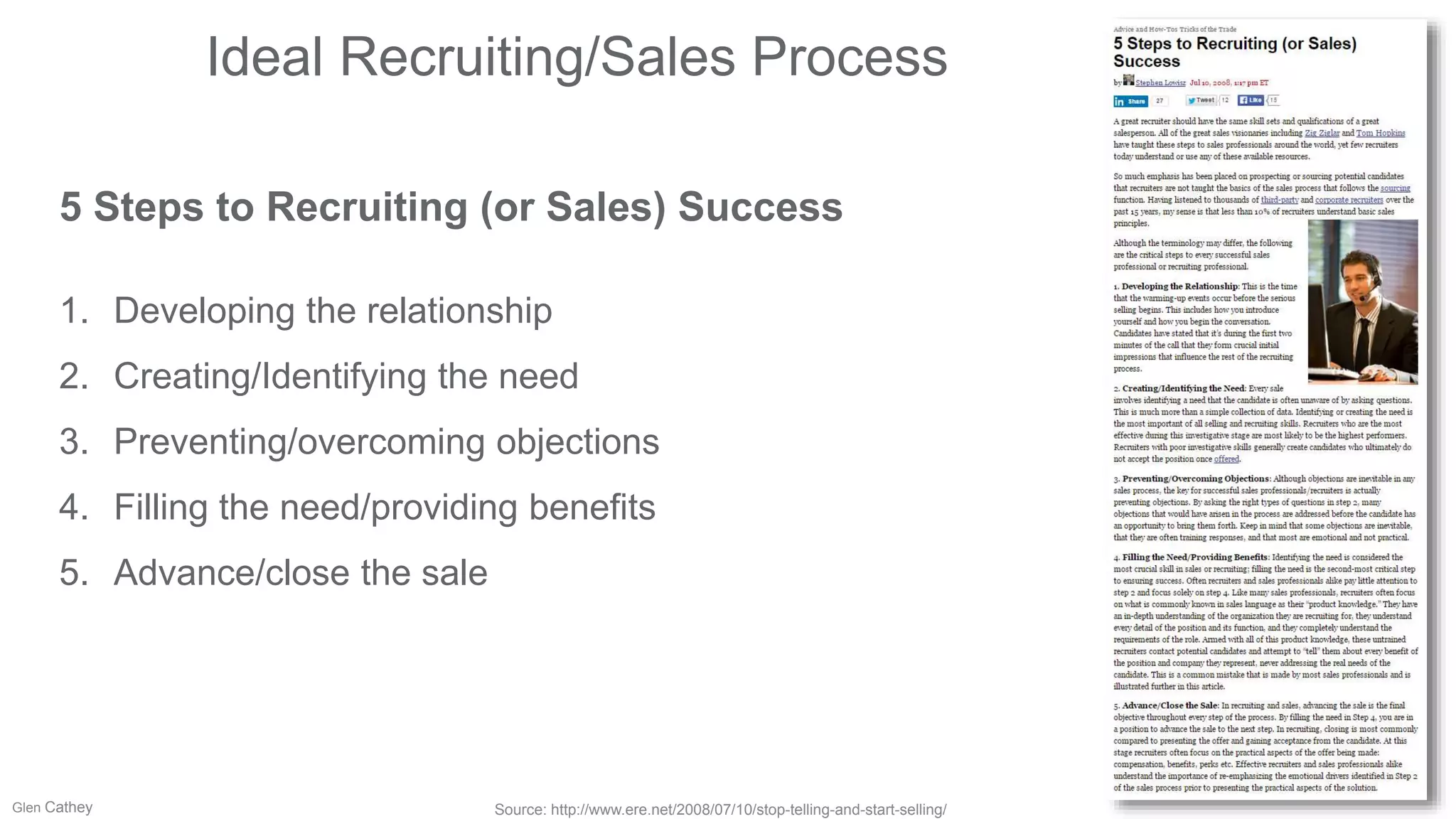
Ideal Recruiting/Sales Process
5 Steps to Recruiting (or Sales) Success
1. Developing the relationship
2. Creating/Identifying the need
3. Preventing/overcoming objections
4. Filling the need/providing benefits
5. Advance/close the sale
Source: http://www.ere.net/2008/07/10/stop-telling-and-start-selling/Glen Cathey
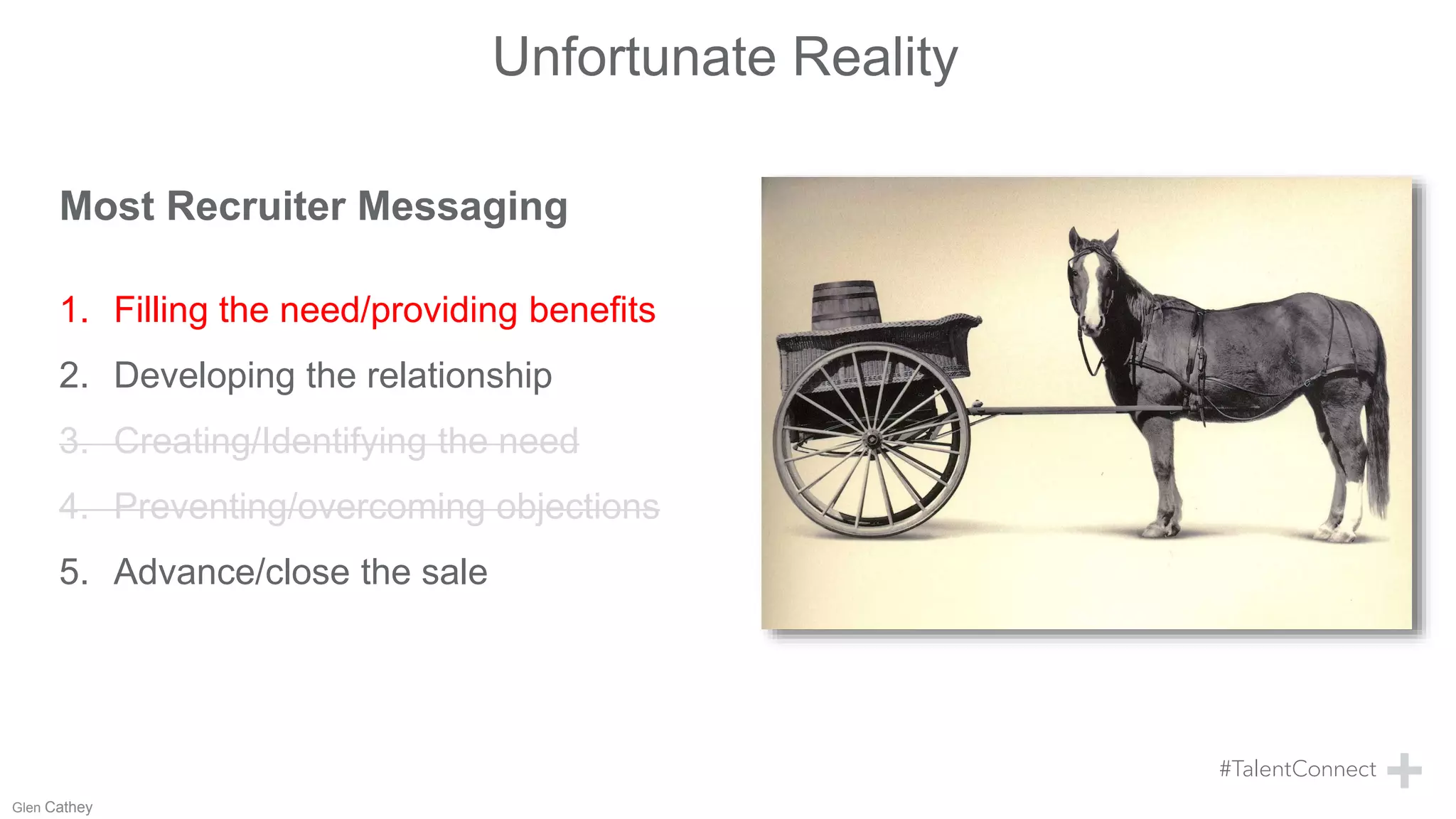
Most Recruiter Messaging
1. Filling the need/providing benefits
2. Developing the relationship
3. Creating/Identifying the need
4. Preventing/overcoming objections
5. Advance/close the sale
Unfortunate Reality
Glen Cathey
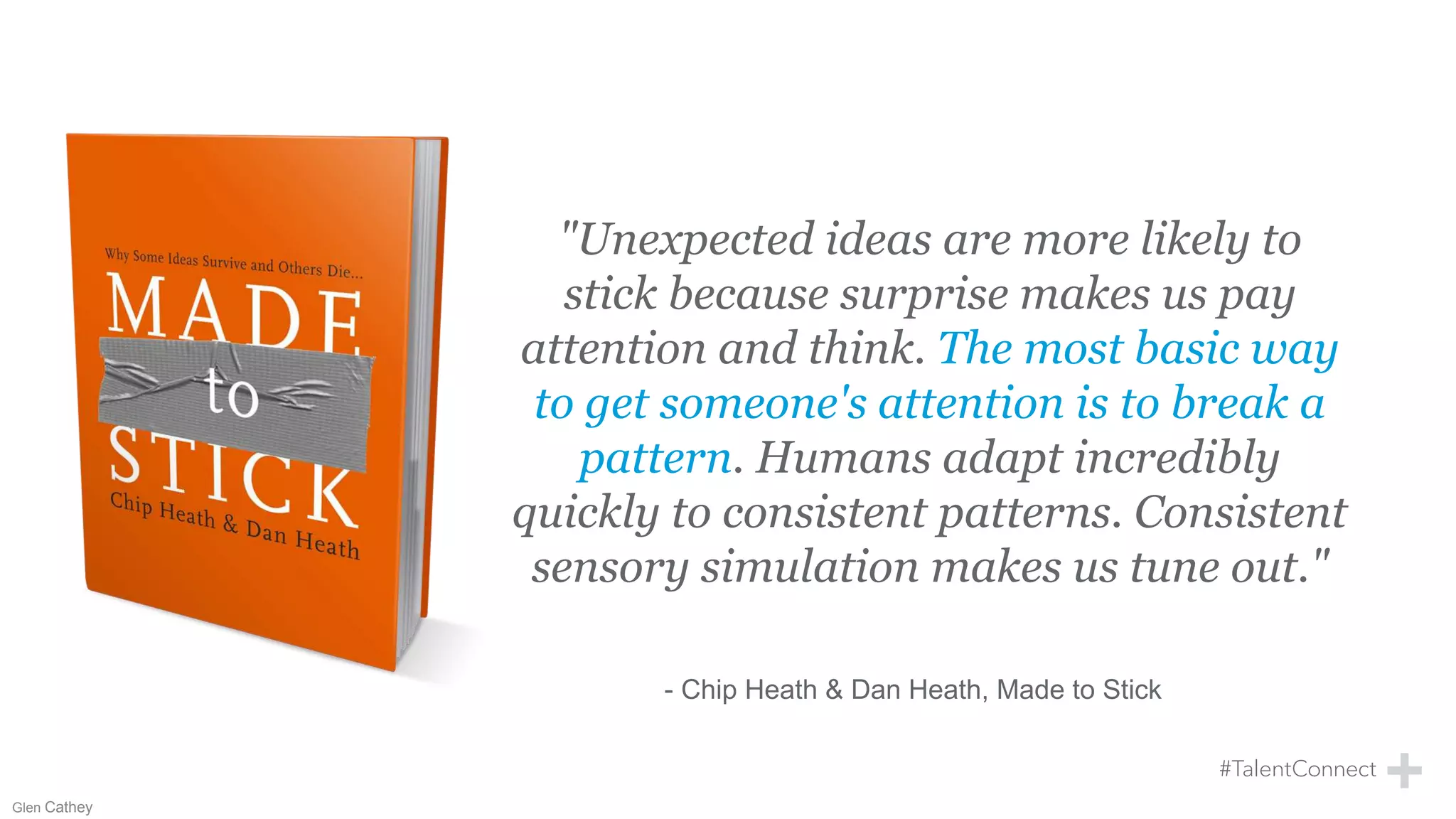
"Unexpected ideas are more likely to
stick because surprise makes us pay
attention and think. The most basic way
to get someone's attention is to break a
pattern. Humans adapt incredibly
quickly to consistent patterns. Consistent
sensory simulation makes us tune out."
- Chip Heath & Dan Heath, Made to Stick
Glen Cathey
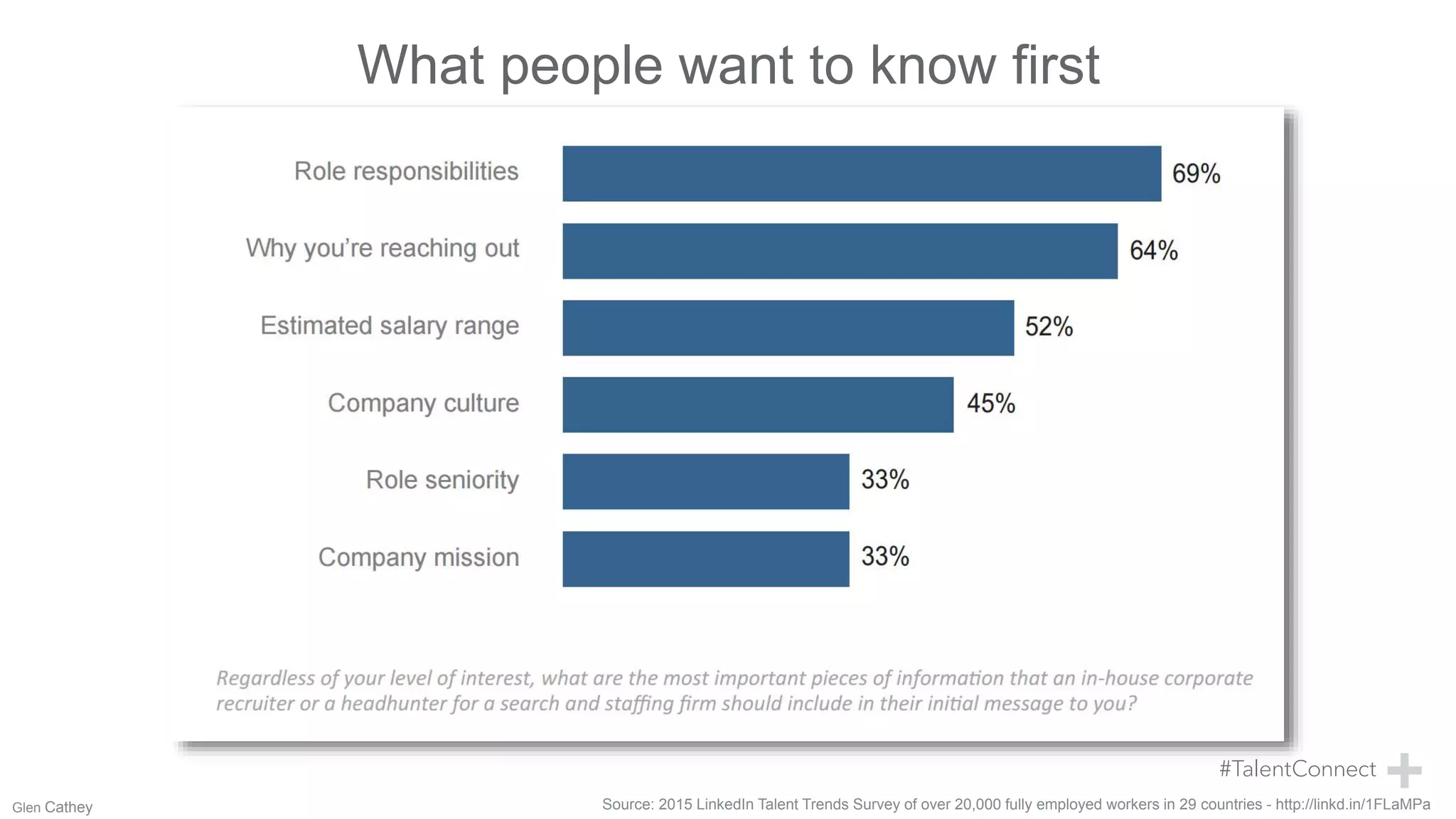
What people want to know first
Source: 2015 LinkedIn Talent Trends Survey of over 20,000 fully employed workers in 29 countries - http://linkd.in/1FLaMPaGlen Cathey
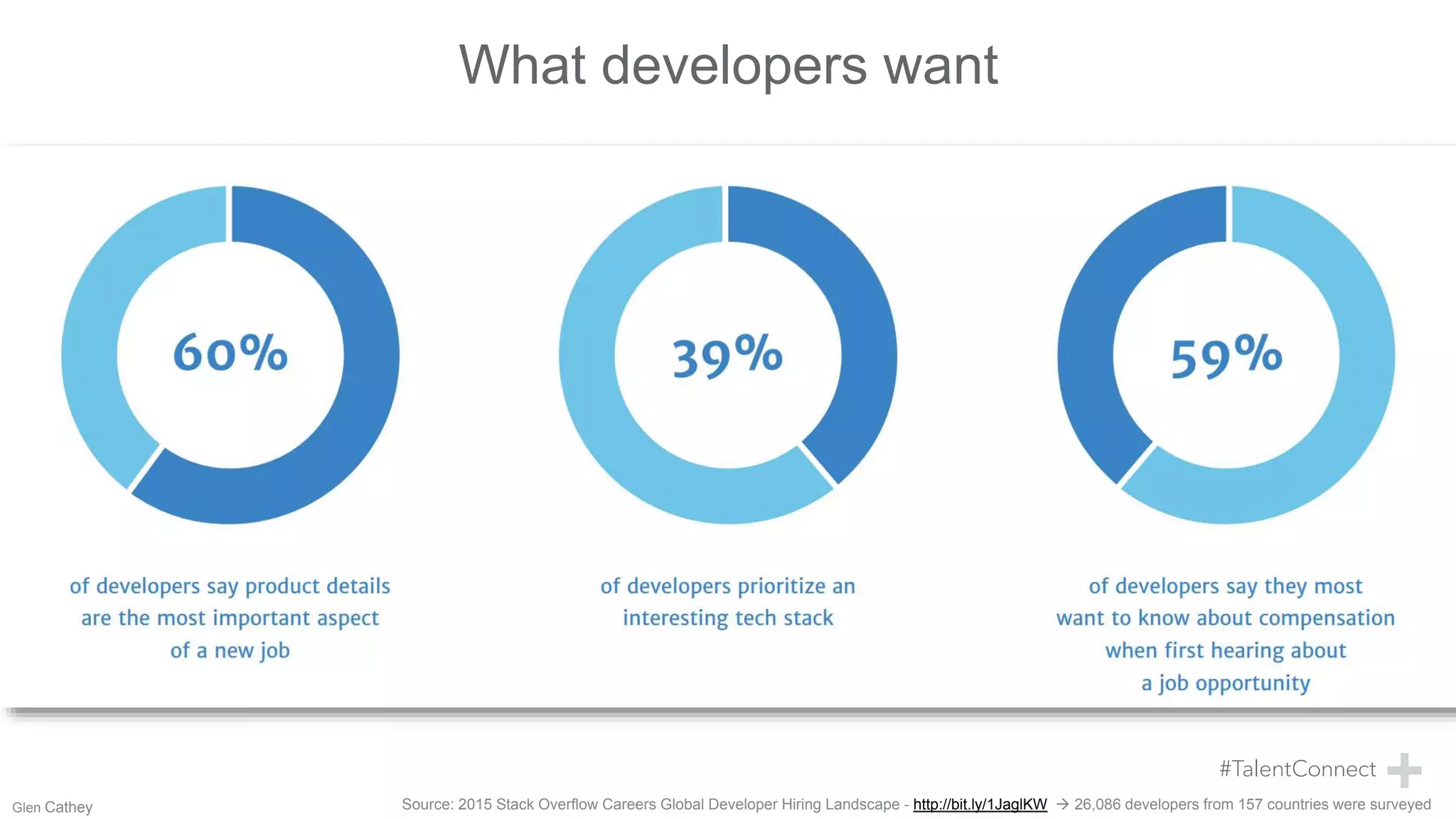
What developers want
Source: 2015 Stack Overflow Careers Global Developer Hiring Landscape - http://bit.ly/1JaglKW  26,086 developers from 157 countries were surveyedGlen Cathey
Glen Cathey
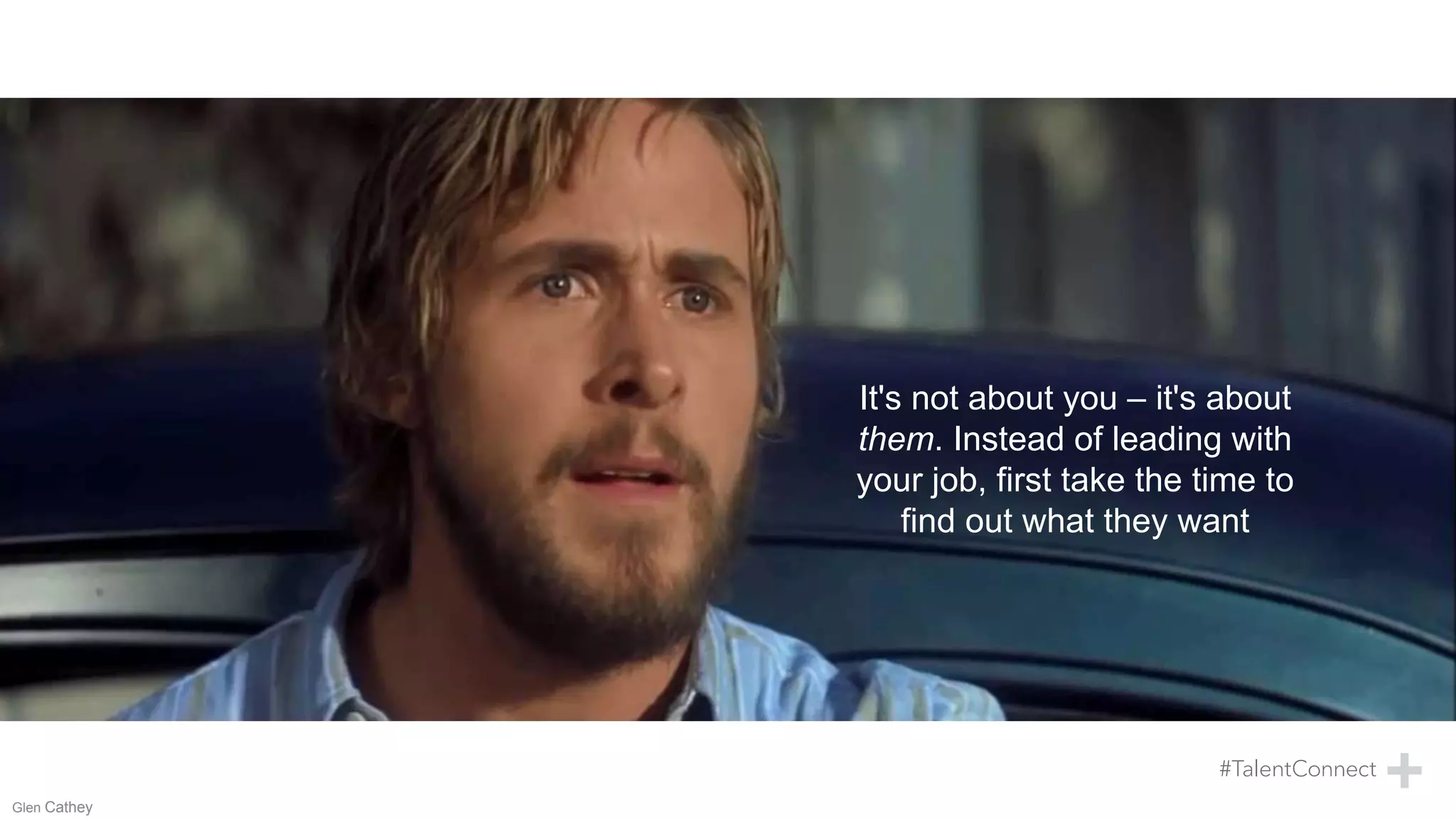
It's not about you – it's about
them. Instead of leading with
your job, first take the time to
find out what they want
In 1994, George Loewenstein, a behavioral economist at Carnegie
Mellon University, provided the most comprehensive account of
situational interest. It is surprisingly simple. Curiosity, he says,
happens when we feel a gap in our knowledge. Loewenstein argues
that gaps cause pain. When we want to know something but don’t, it’s
like having an itch that we need to scratch. To take away the pain, we
need to fill the knowledge gap.
One important implication of the gap theory is that we need to open
gaps before we close them. Our tendency is to tell people the facts.
- Chip Heath & Dan Heath, Made to Stick
Glen Cathey
The basic architecture of the brain ensures
that we feel first and think second.
- Neuroscientist Joseph LeDoux
Glen Cathey
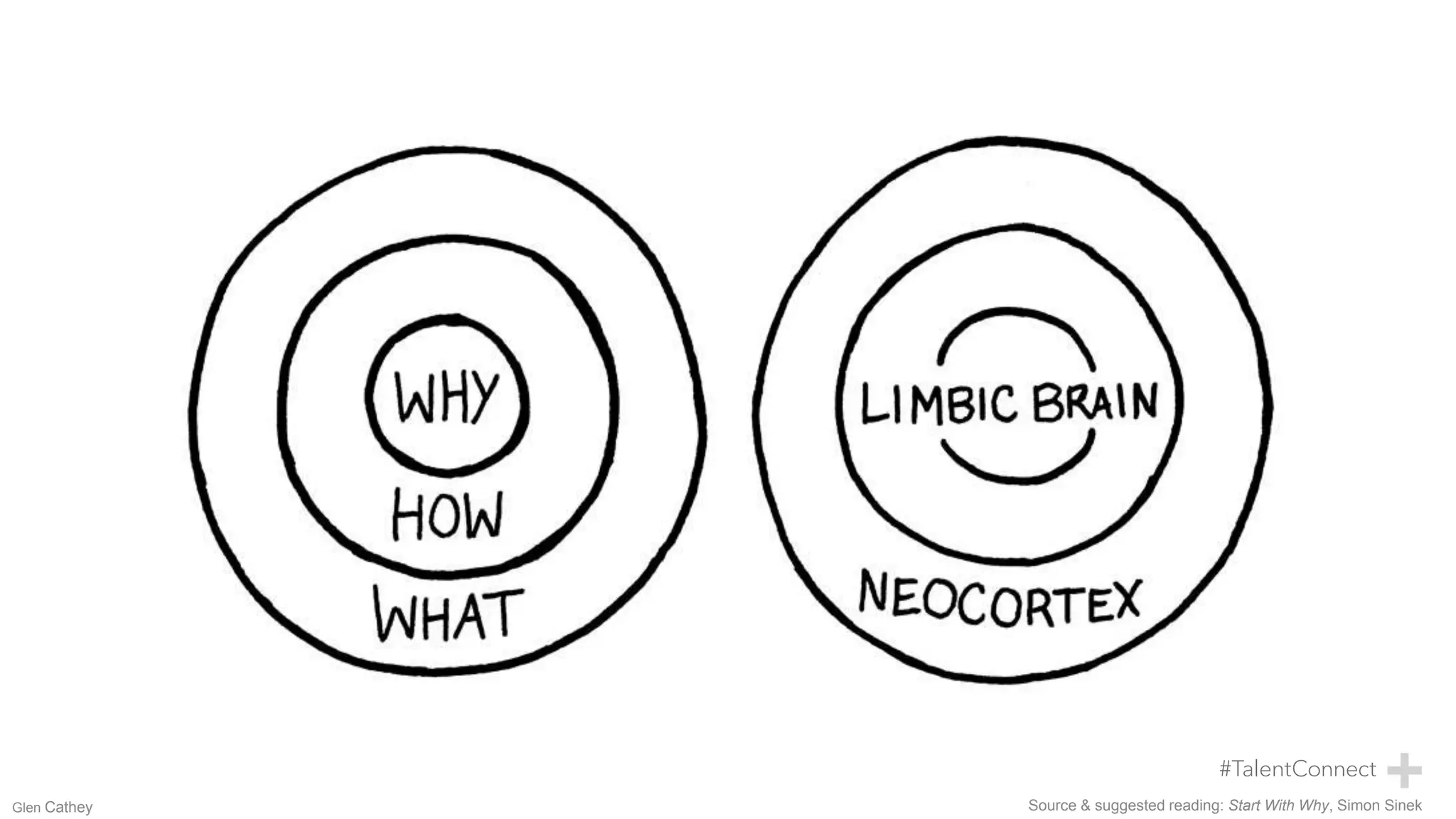
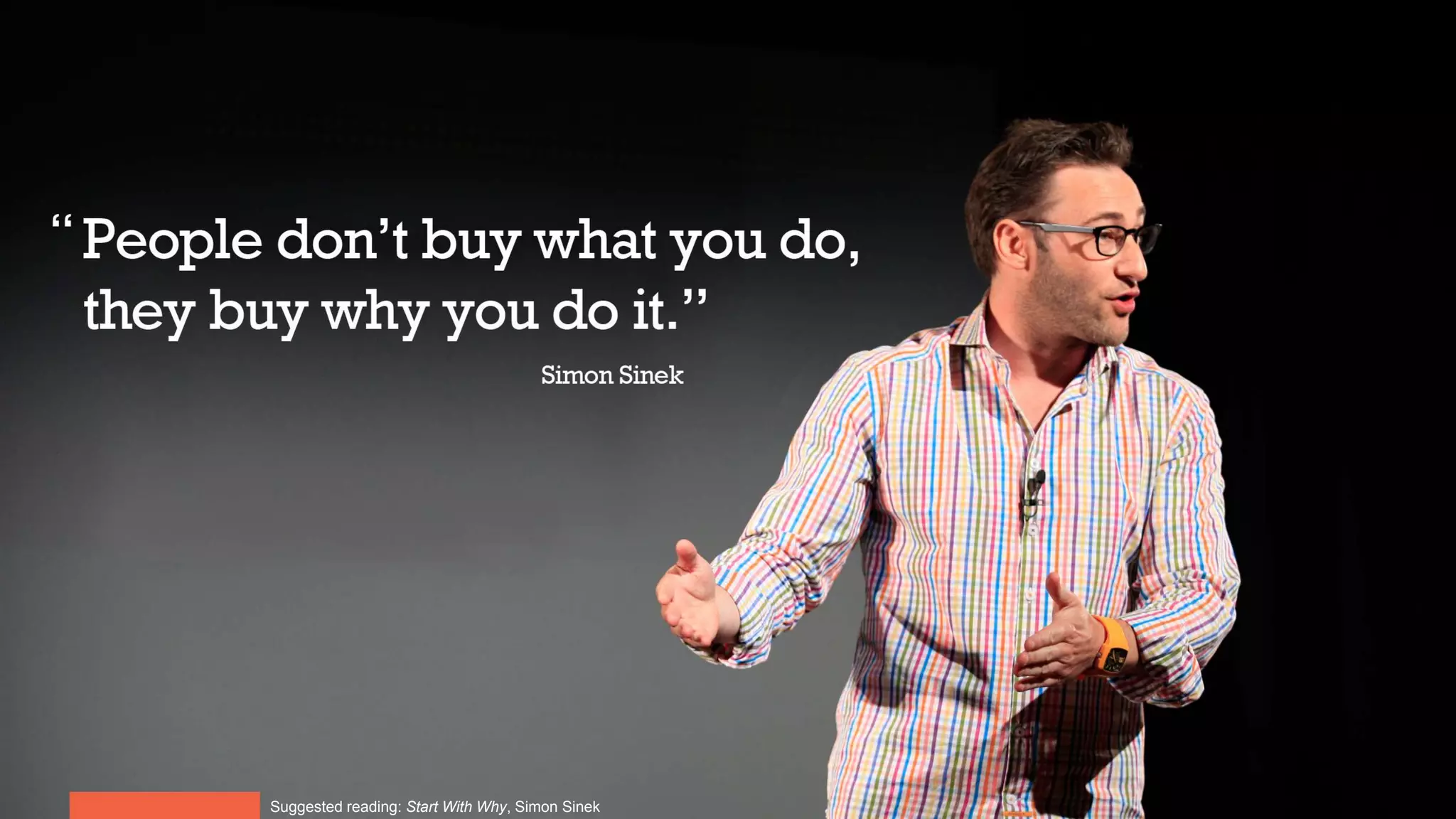
Source & suggested reading: Start With Why, Simon SinekGlen Cathey
Suggested reading: Start With Why, Simon Sinek
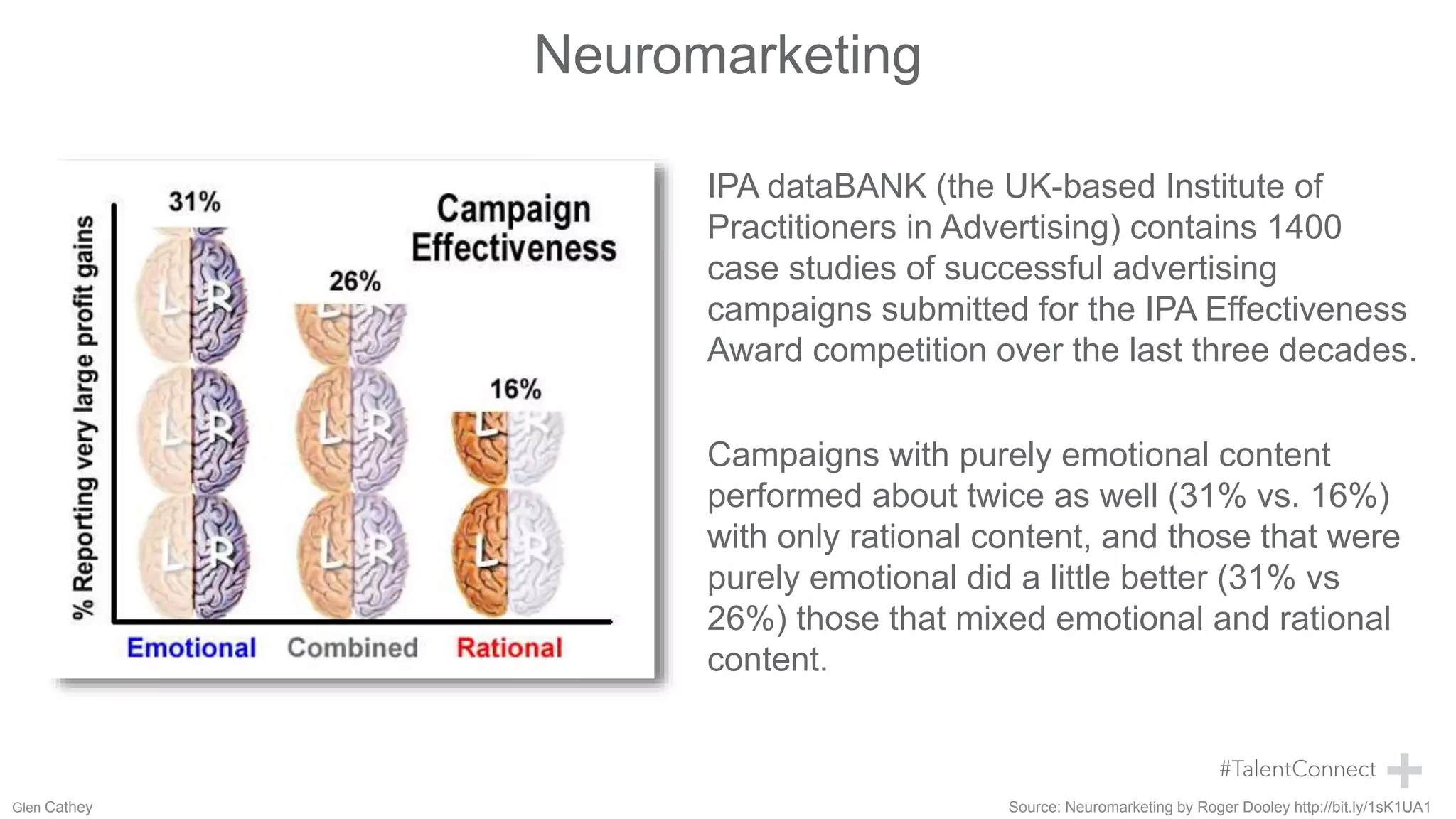
IPA dataBANK (the UK-based Institute of
Practitioners in Advertising) contains 1400

case studies of successful advertising
campaigns submitted for the IPA Effectiveness
Award competition over the last three decades.
Campaigns with purely emotional content
performed about twice as well (31% vs. 16%)
with only rational content, and those that were
purely emotional did a little better (31% vs
26%) those that mixed emotional and rational
content.
Source: Neuromarketing by Roger Dooley http://bit.ly/1sK1UA1
Neuromarketing
Glen Cathey
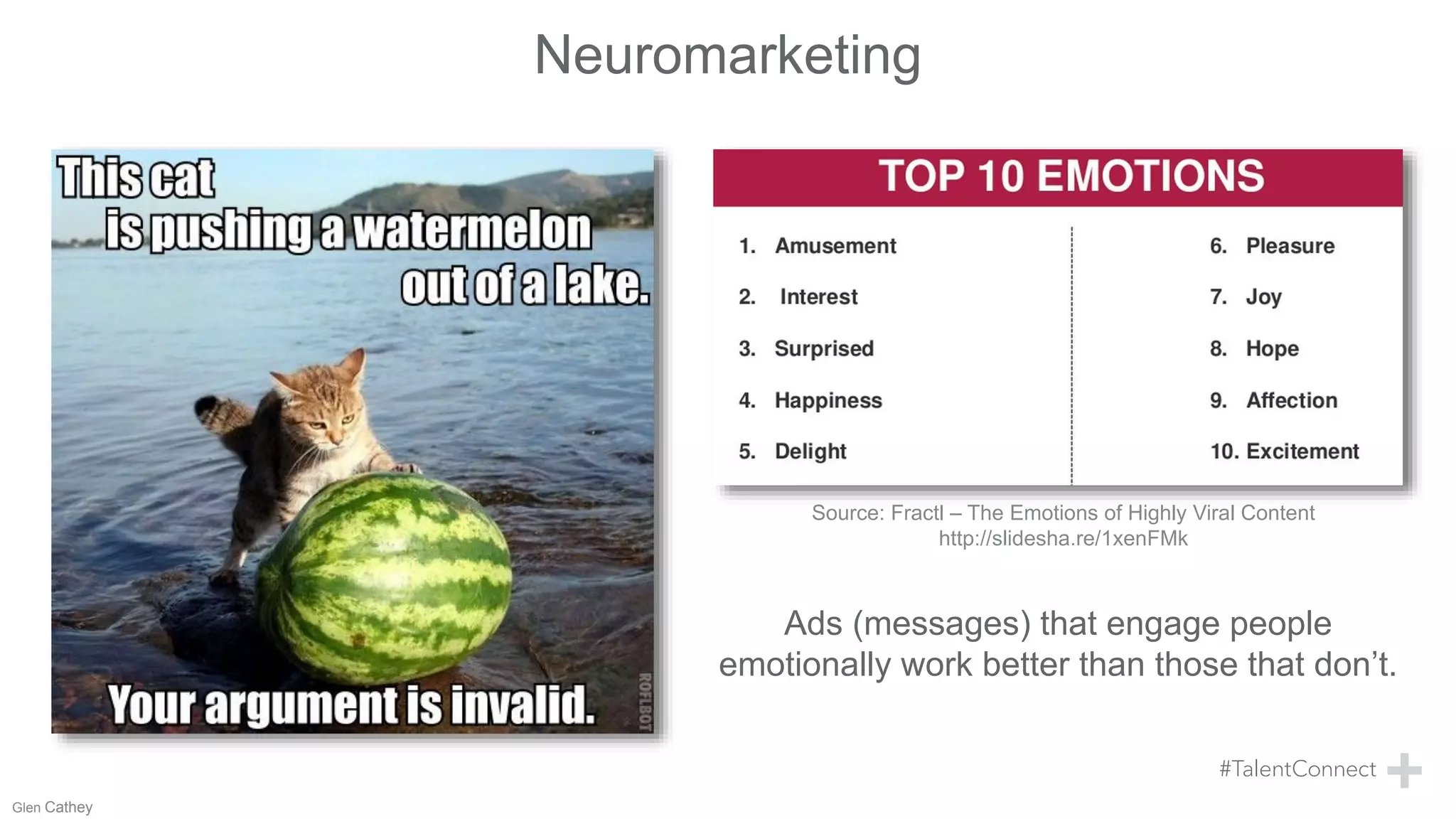
Ads (messages) that engage people
emotionally work better than those that don’t.
Source: Fractl – The Emotions of Highly Viral Content
http://slidesha.re/1xenFMk
Neuromarketing
Glen Cathey
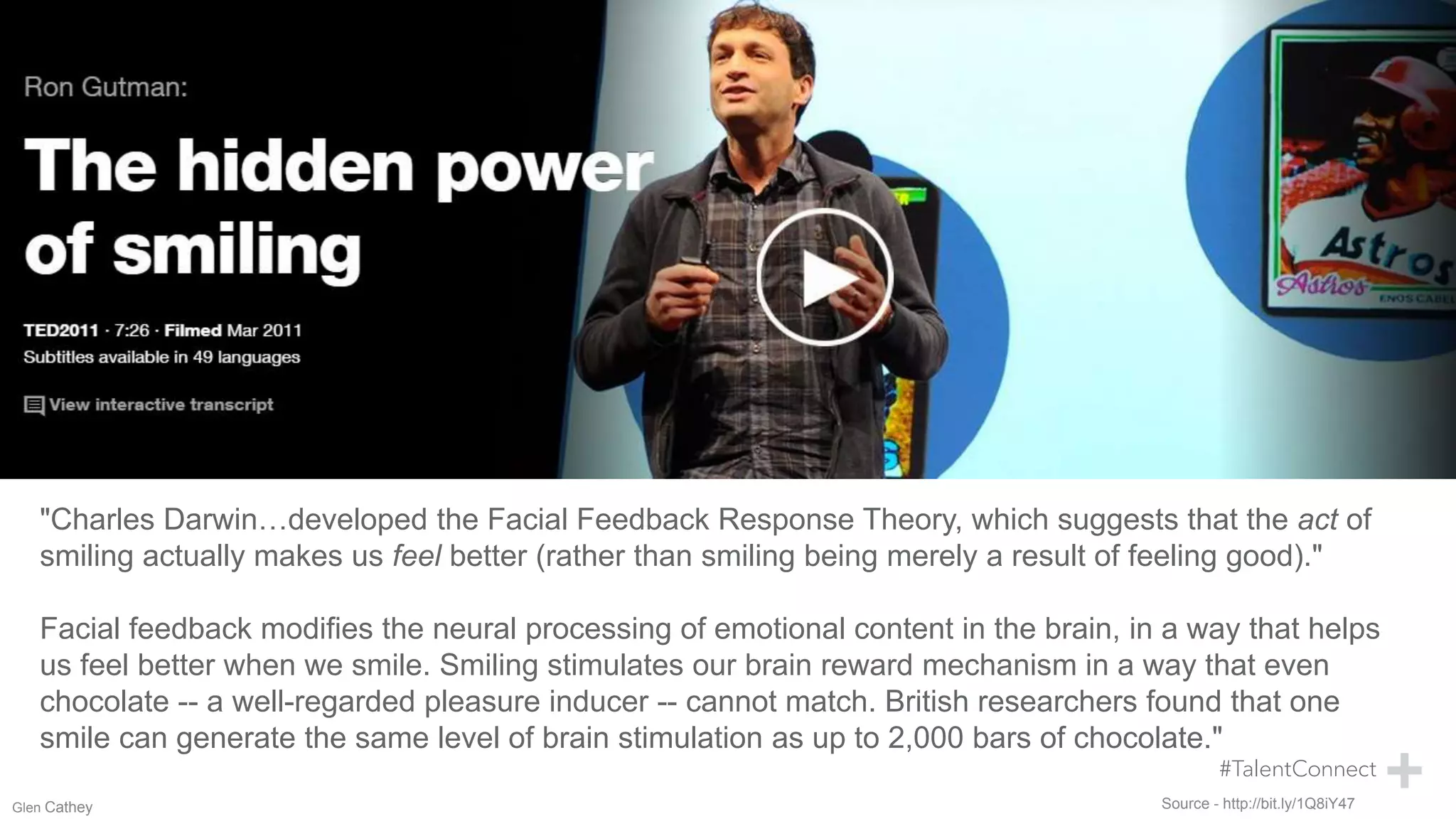
Source - http://bit.ly/1Q8iY47
"Charles Darwin…developed the Facial Feedback Response Theory, which suggests that the act of
smiling actually makes us feel better (rather than smiling being merely a result of feeling good)."
Facial feedback modifies the neural processing of emotional content in the brain, in a way that helps
us feel better when we smile. Smiling stimulates our brain reward mechanism in a way that even
chocolate -- a well-regarded pleasure inducer -- cannot match. British researchers found that one
smile can generate the same level of brain stimulation as up to 2,000 bars of chocolate."
Glen Cathey
Surprise gets our attention. Surprise makes
us want to find an answer – to resolve the
question of why we were surprised. If we
want to motivate people to pay attention,
we should seize the power of big surprises.
- Chip Heath & Dan Heath, Made to Stick
Glen Cathey
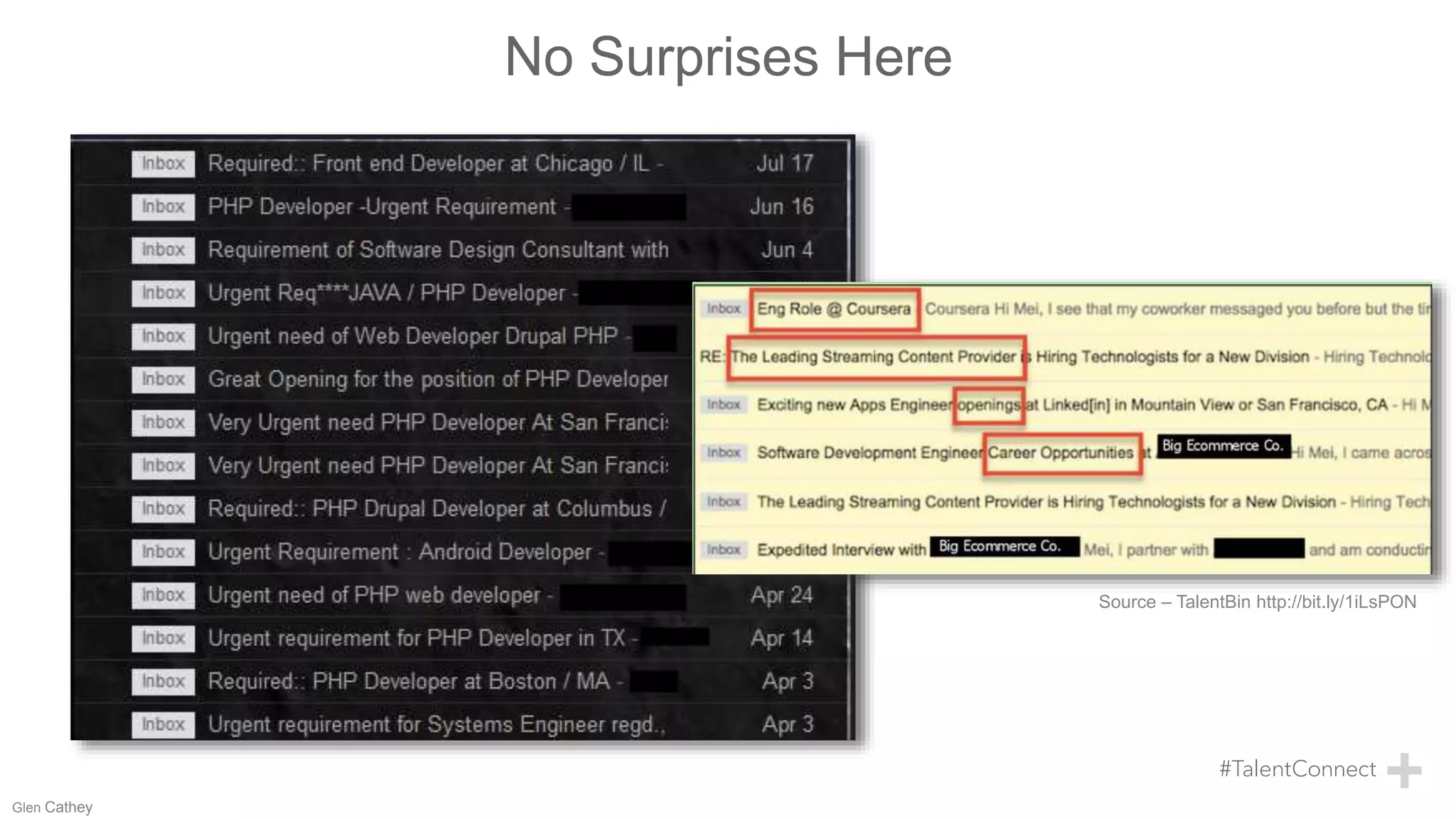
No Surprises Here
Source – TalentBin http://bit.ly/1iLsPON
Glen Cathey
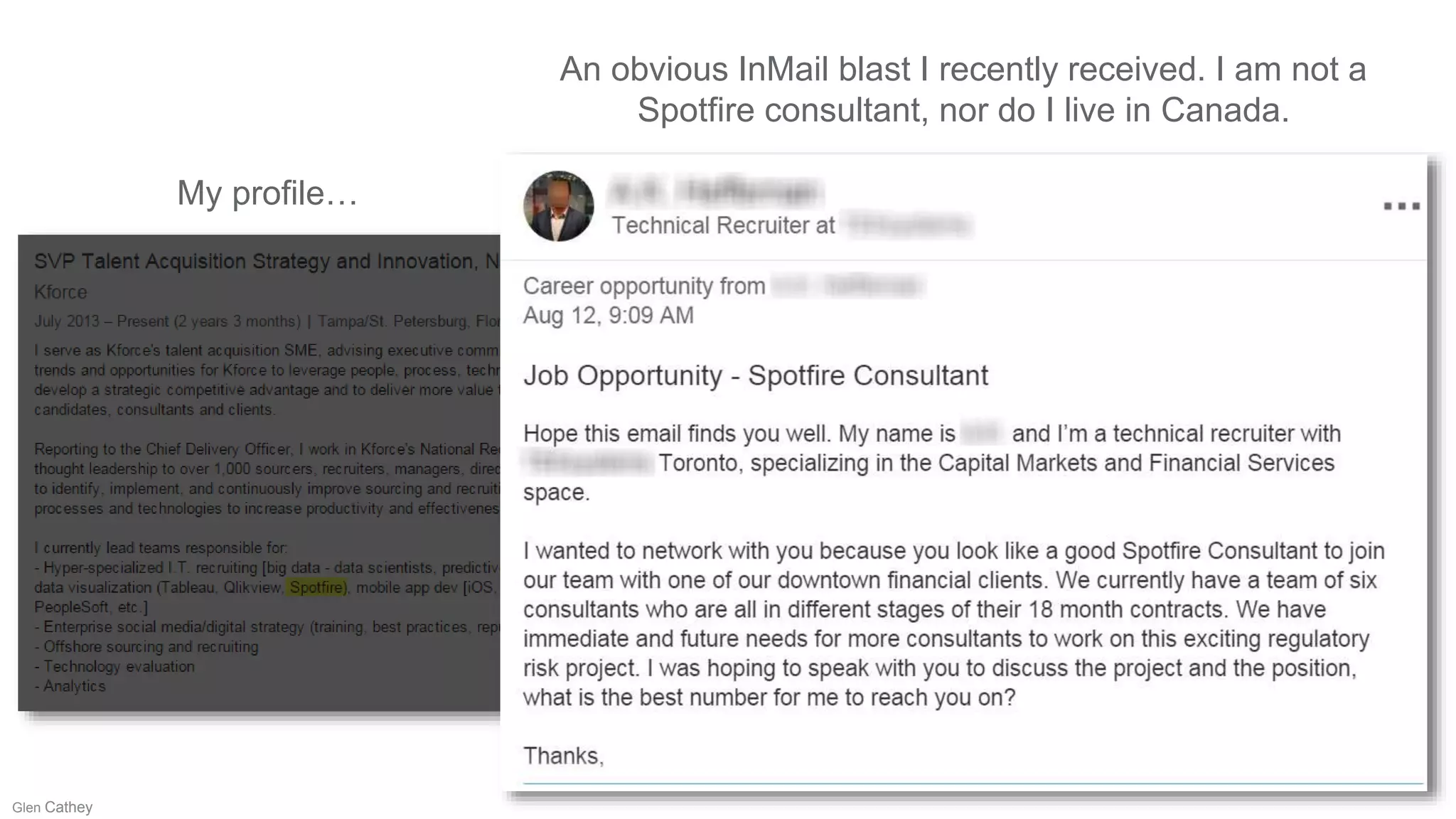
My profile…
An obvious InMail blast I recently received. I am not a
Spotfire consultant, nor do I live in Canada.
Glen Cathey
Energy and persistence
conquer all things.
- Benjamin Franklin
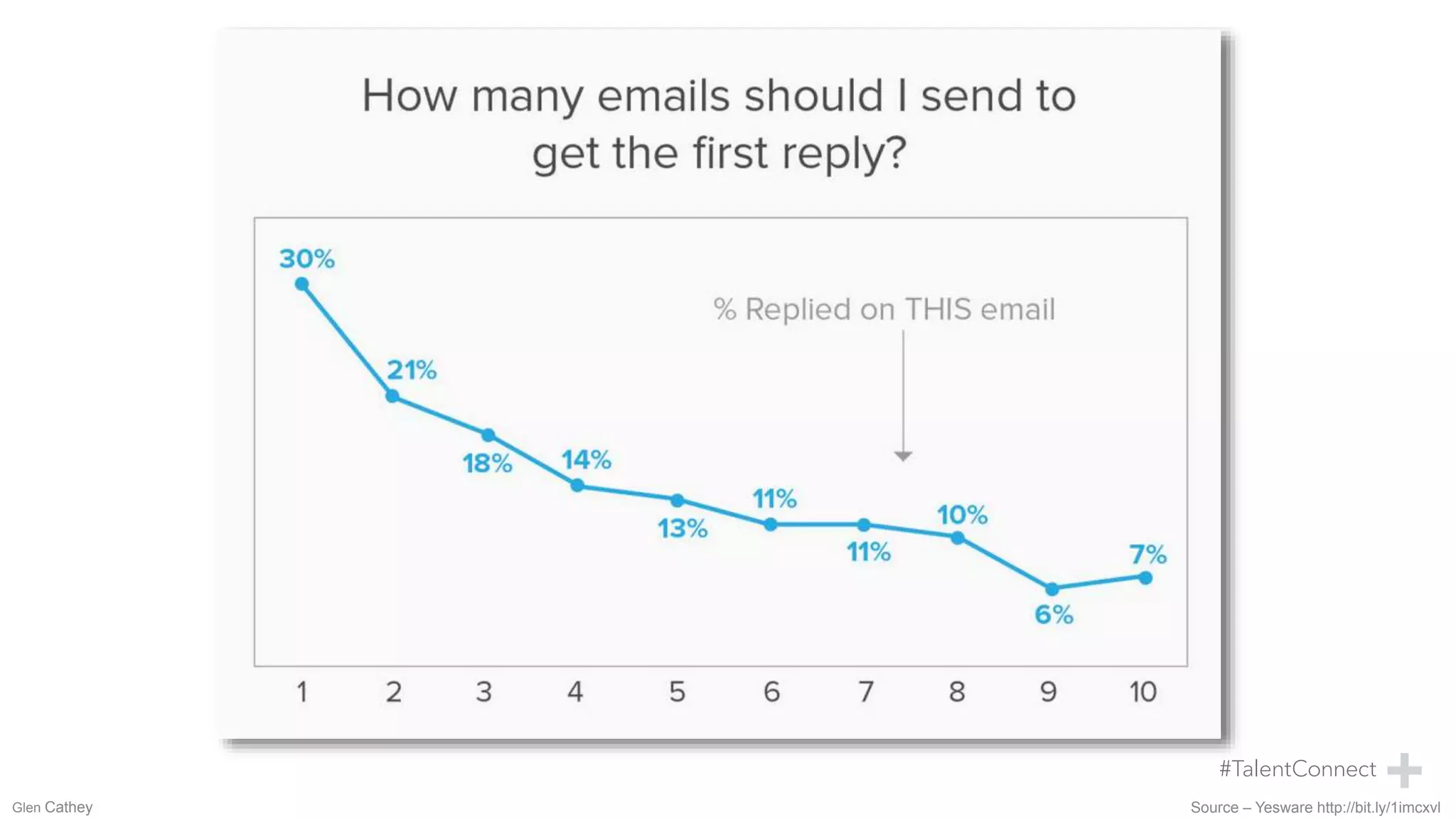
Source – Yesware http://bit.ly/1imcxvlGlen Cathey
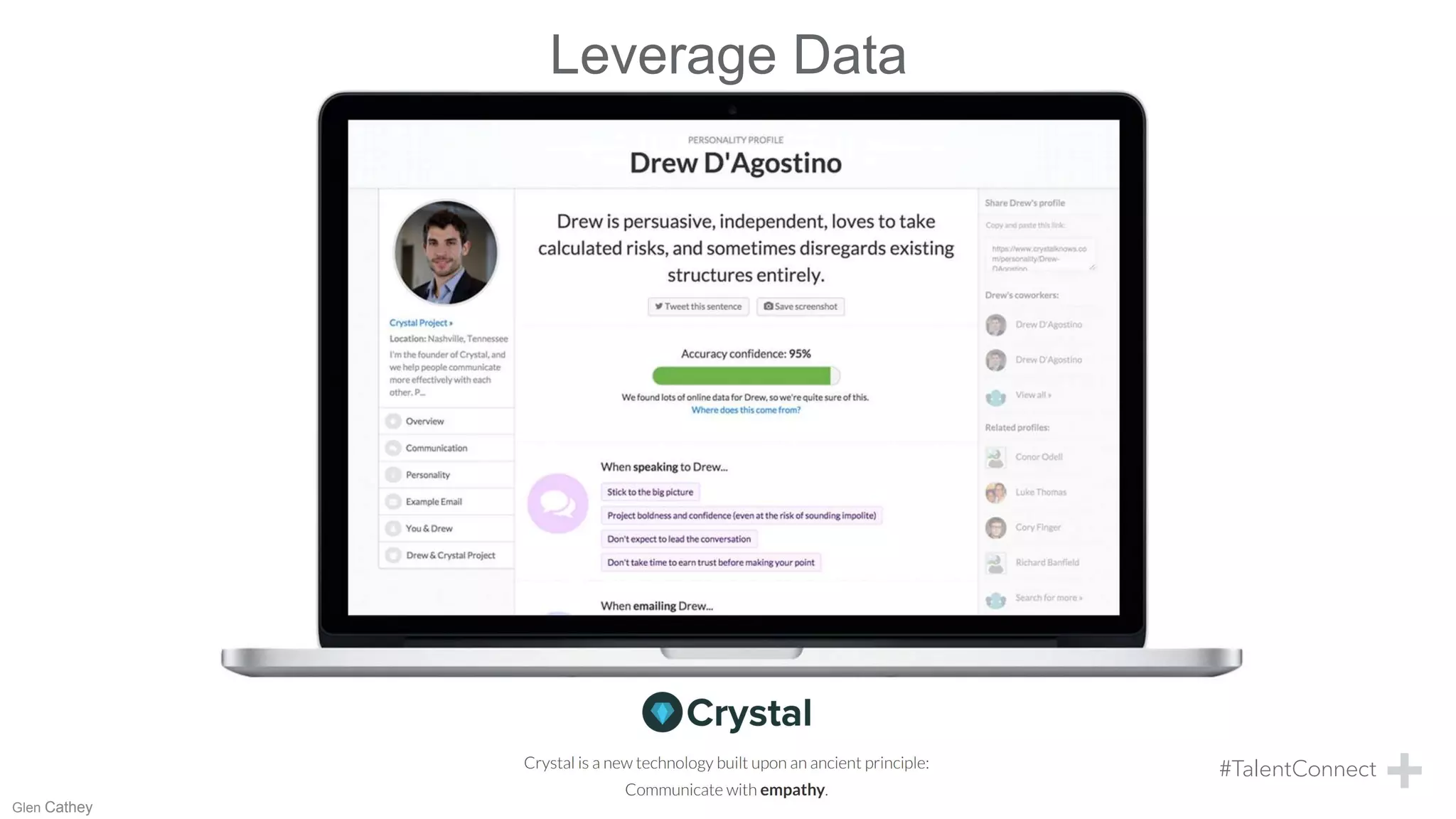
Leverage Data
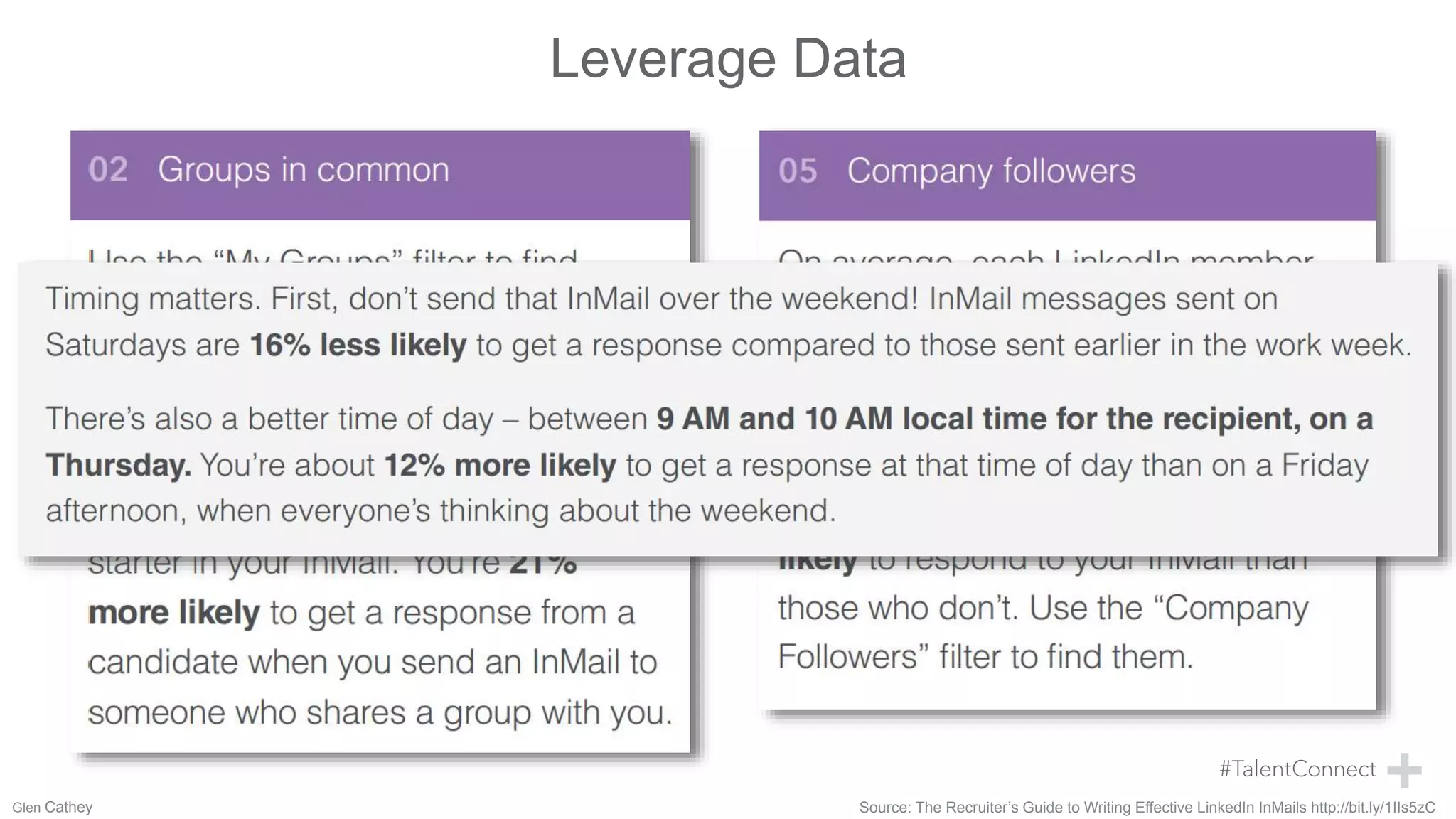
Source: The Recruiter’s Guide to Writing Effective LinkedIn InMails http://bit.ly/1IIs5zCGlen Cathey
Leverage Data
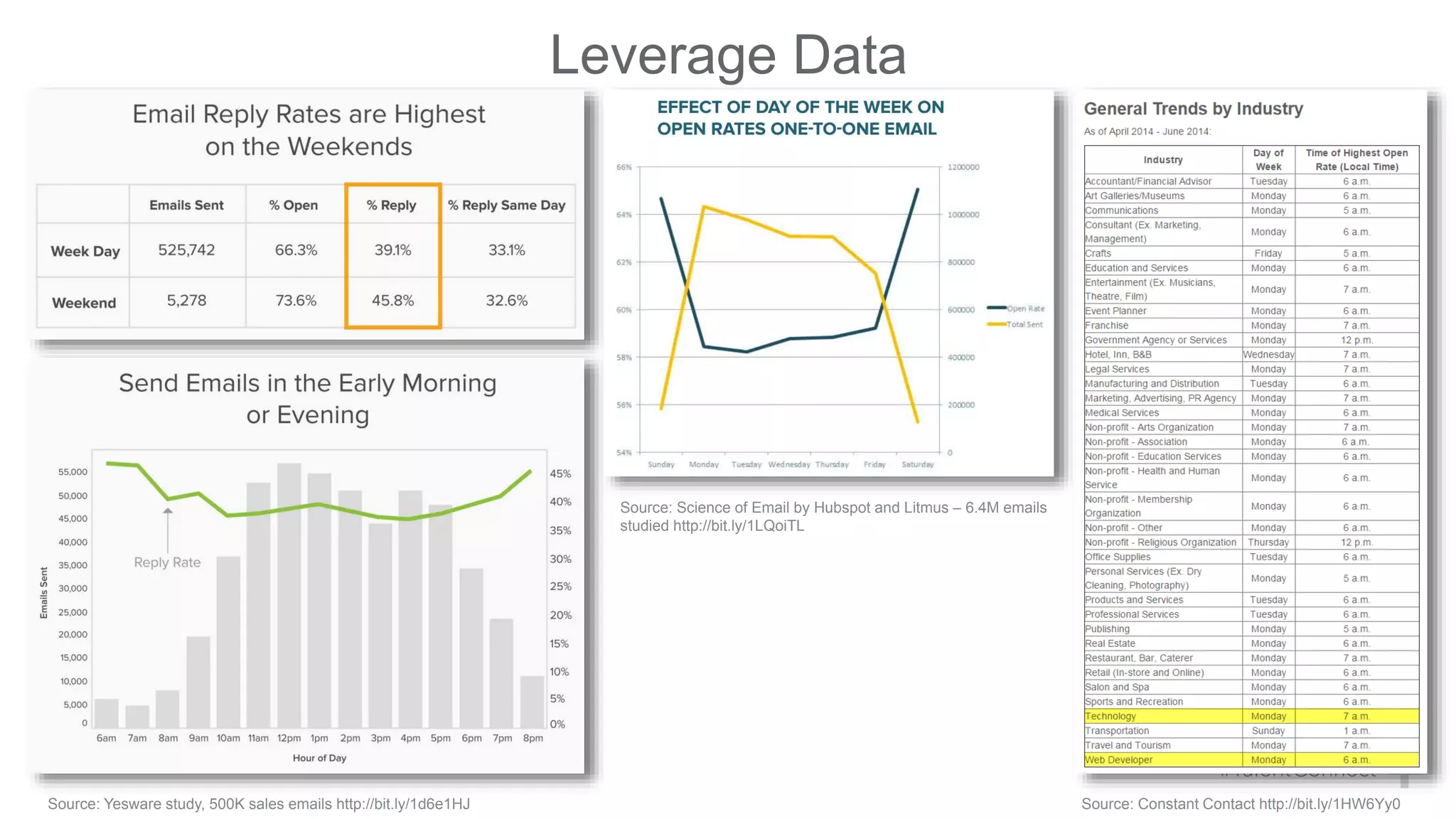
Source: Yesware study, 500K sales emails http://bit.ly/1d6e1HJ Source: Constant Contact http://bit.ly/1HW6Yy0
Source: Science of Email by Hubspot and Litmus – 6.4M emails
studied http://bit.ly/1LQoiTL
Leverage Data
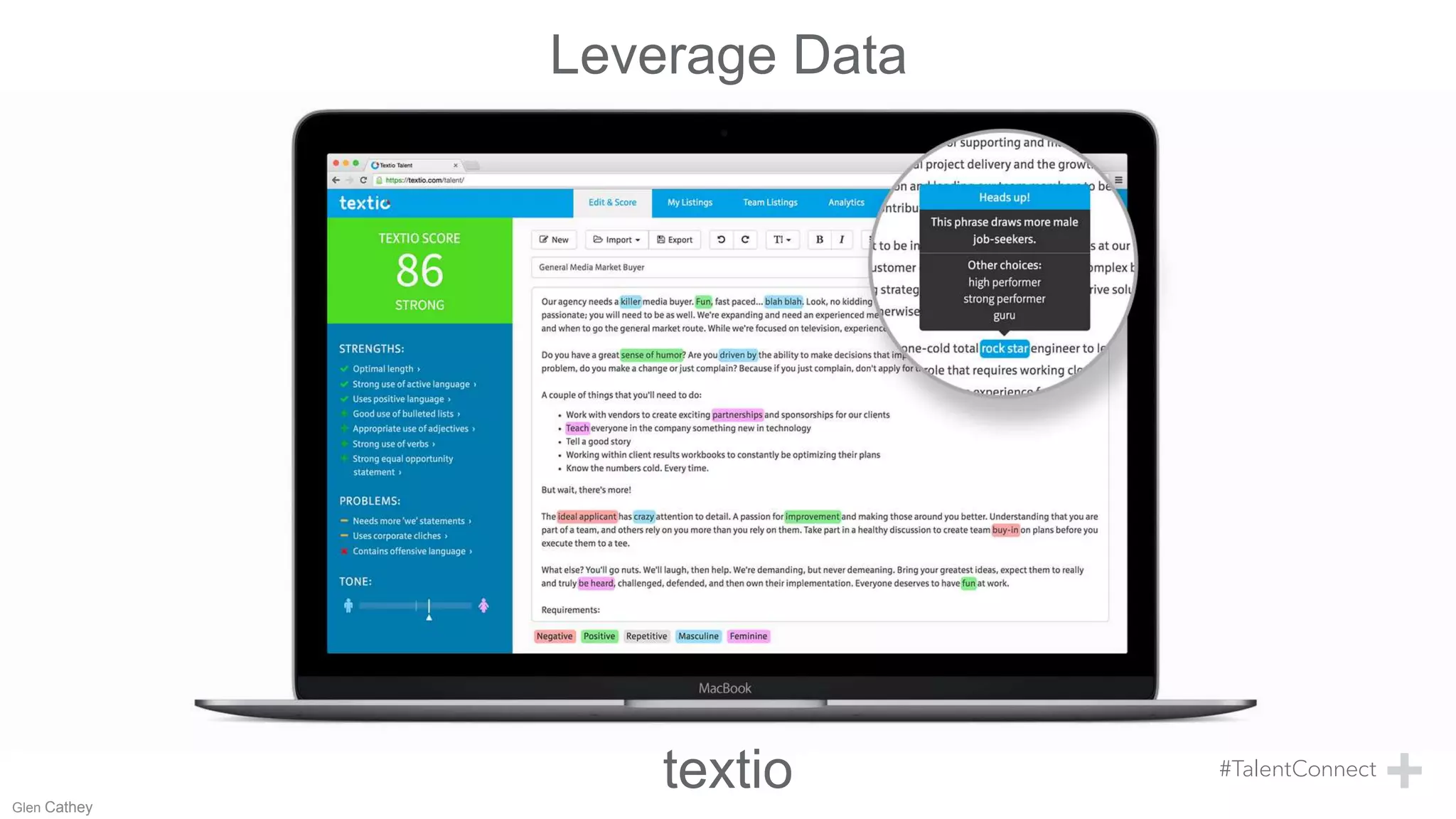
textioGlen Cathey
Leverage Data
Glen Cathey
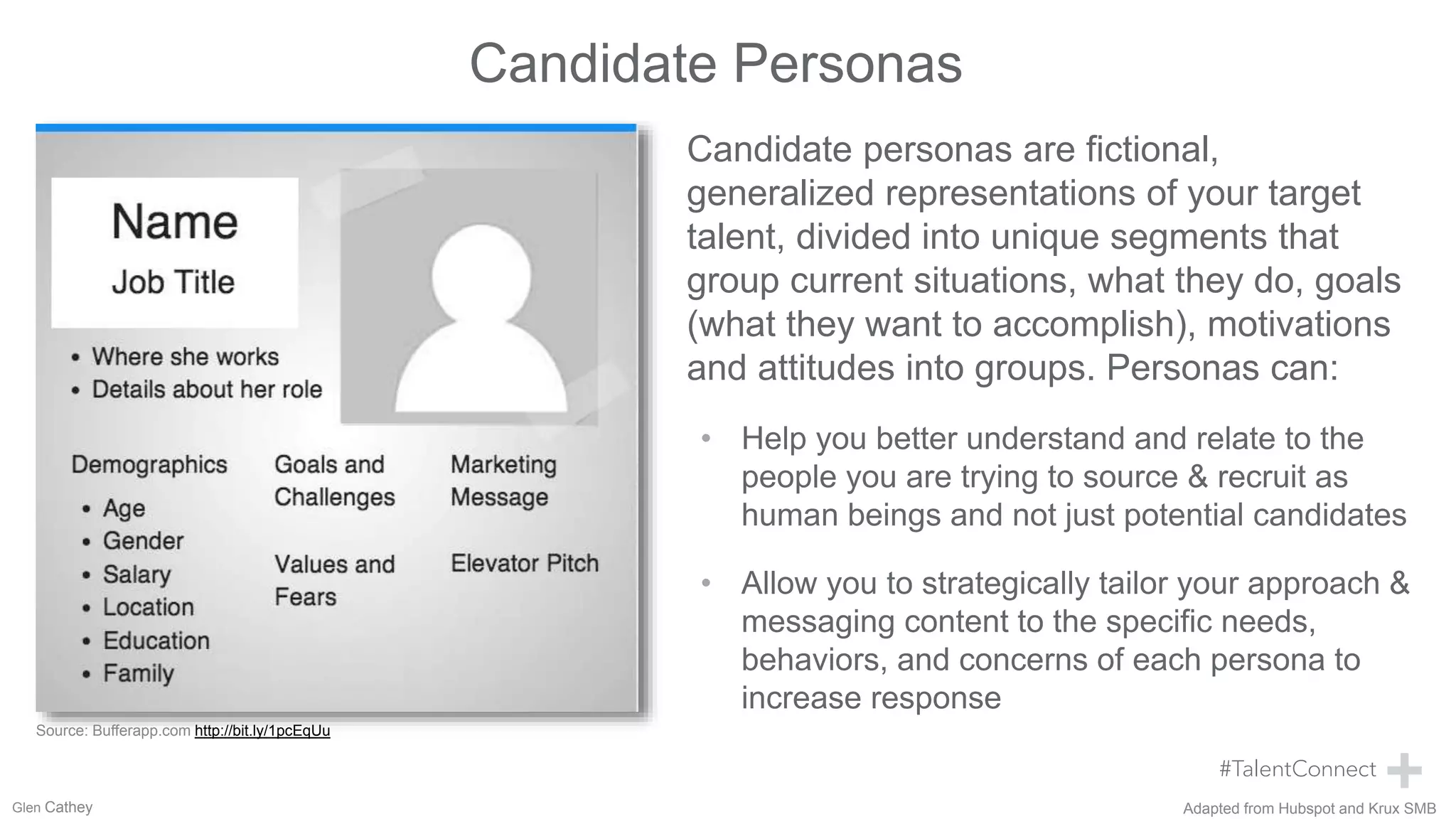
Candidate personas are fictional,
generalized representations of your target
talent, divided into unique segments that
group current situations, what they do, goals
(what they want to accomplish), motivations
and attitudes into groups. Personas can:
• Help you better understand and relate to the
people you are trying to source & recruit as
human beings and not just potential candidates
• Allow you to strategically tailor your approach &
messaging content to the specific needs,
behaviors, and concerns of each persona to
increase response
Candidate Personas
Adapted from Hubspot and Krux SMB
Source: Bufferapp.com http://bit.ly/1pcEqUu
Glen Cathey
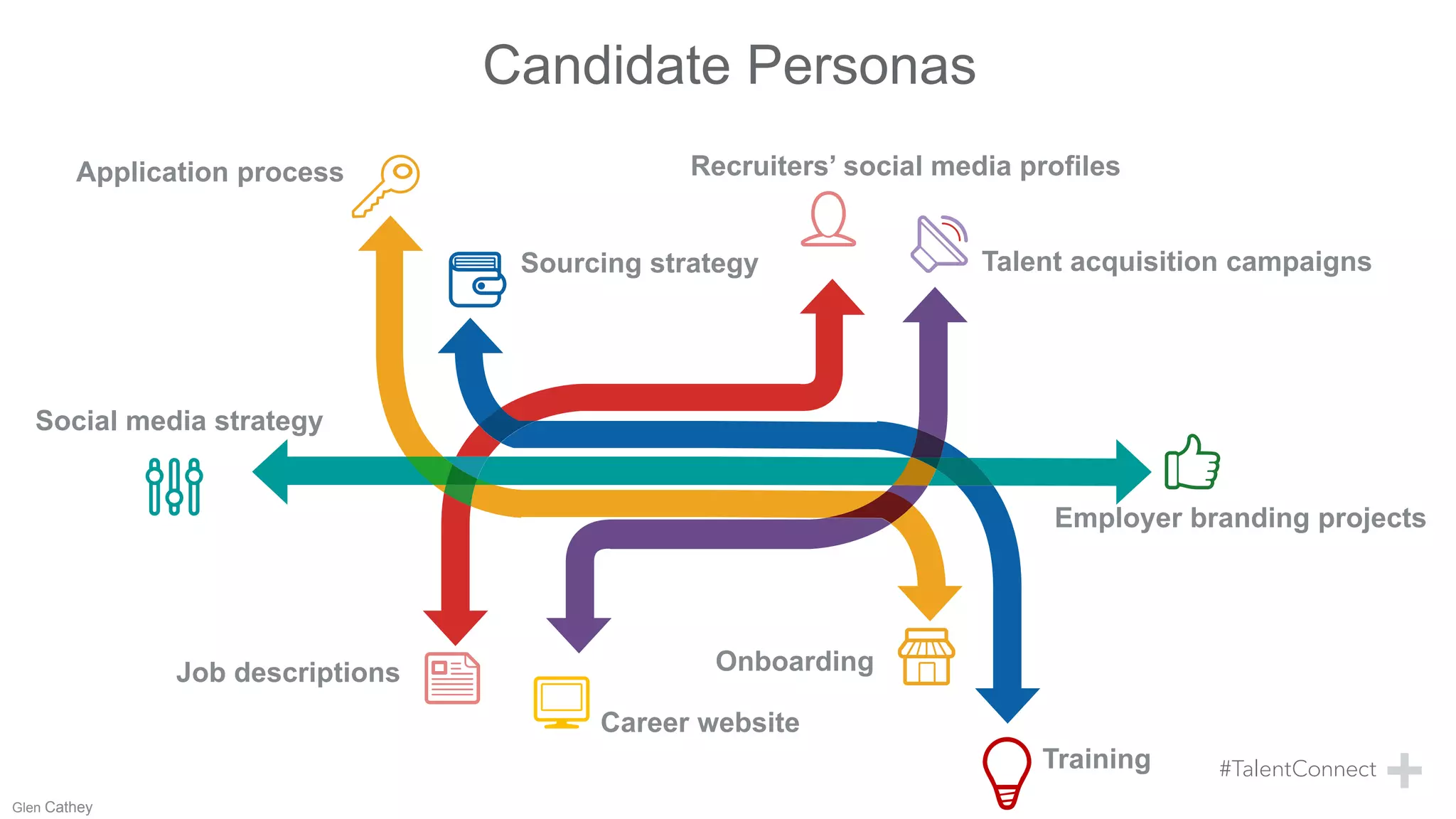
Talent acquisition campaigns
Recruiters’ social media profiles
Training
Career website
OnboardingJob descriptions
Employer branding projects
Sourcing strategy
Application process
Social media strategy
Candidate Personas
Glen Cathey
Glen Cathey
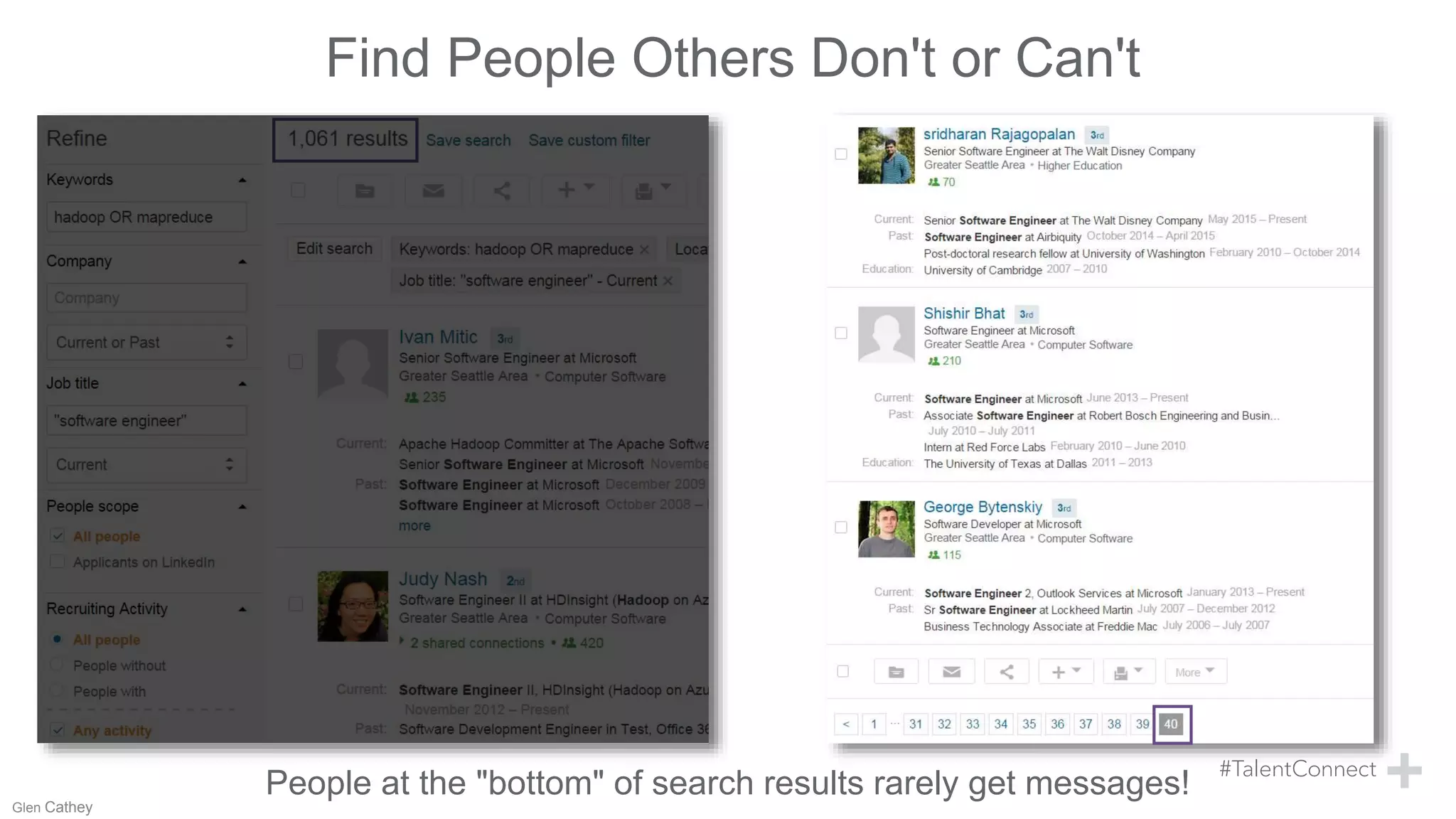
Find People Others Don't or Can't
People at the "bottom" of search results rarely get messages!
Glen Cathey
• Be human!
• Start with why
• Do not blast - personalize your messaging
• Gather additional info through other social sites
• Develop an arsenal of (anti)templates you can customize/personalize
• Leverage empathy & perspective!
Key Takeaways
Glen Cathey
Key Takeaways
• Get creative with your subject lines and content – experiment!
• Use humor and surprise and leverage knowledge gaps
• Develop personas for your target talent pool
• Capture and celebrate successes
• Perform your own 5 why exercise specific for your team/company
• Read Social Engineering: The Art of Human Hacking
Glen Cathey
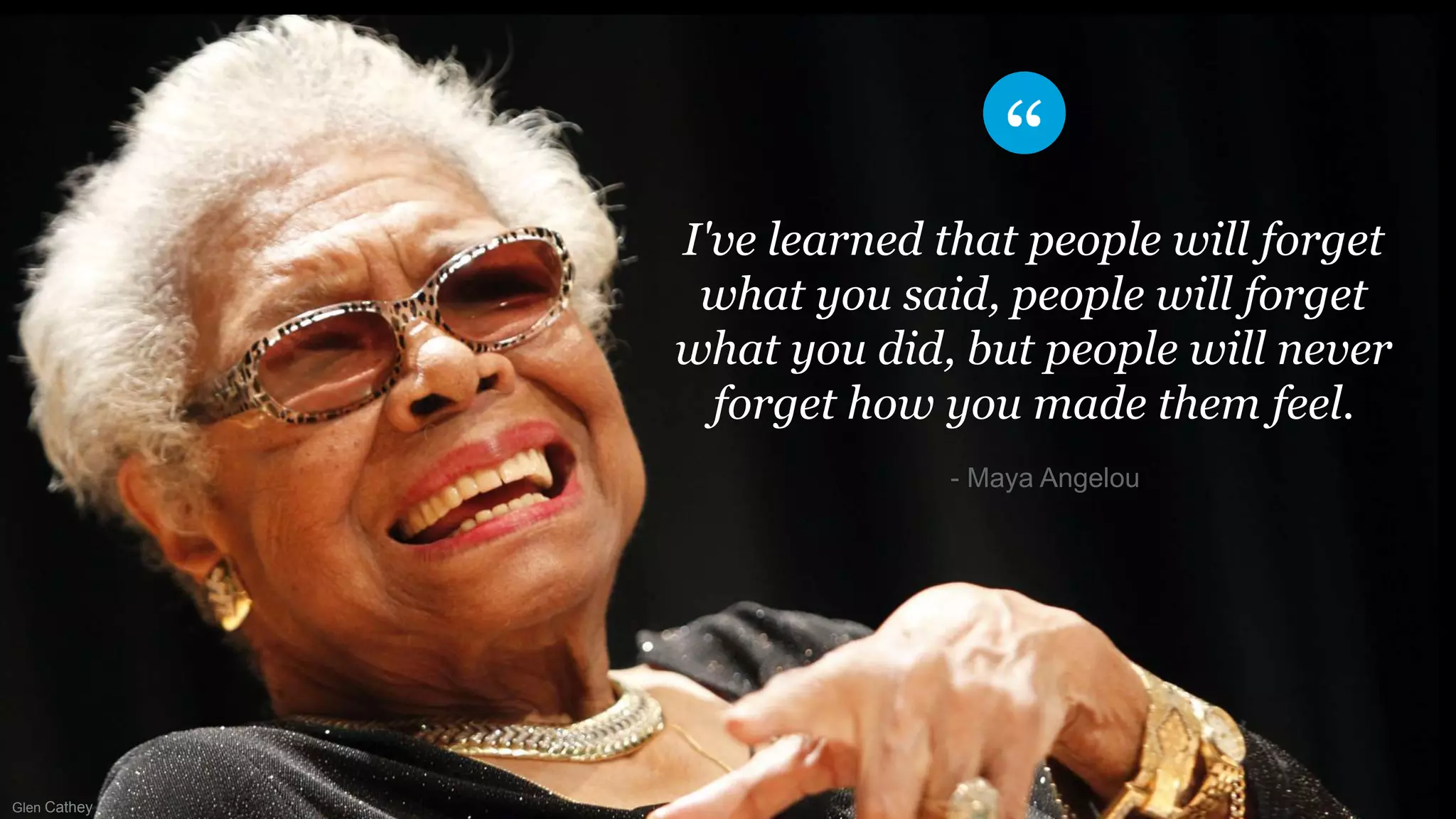
I've learned that people will forget
what you said, people will forget
what you did, but people will never
forget how you made them feel.
- Maya Angelou
Glen Cathey
Be Human
Glen Cathey

They’re Just Not that Into You: Why Candidates Don’t Respond to InMails | Talent Connect Anaheim

  • 1.
    Glen Cathey SVP TalentAcquisition and Innovation, Kforce Author, BooleanBlackBelt.com You've Found Them – Now What?
  • 4.
    >70% *Should* Respond… Source:2015 LinkedIn Talent Trends Survey of over 20,000 fully employed workers in 29 countries - http://linkd.in/1FLaMPaGlen Cathey
  • 5.
    Surprised? Source: 2015 StackOverflow Careers Global Developer Hiring Landscape - http://bit.ly/1JaglKW  26,086 developers from 157 countries were surveyed
  • 6.
    InMails rate wellwith developers Source: 2015 Stack Overflow Careers Global Developer Hiring Landscape - http://bit.ly/1JaglKW  26,086 developers from 157 countries were surveyed
  • 10.
  • 13.
    5 Whys Exercise SakichiToyoda 1867 - 1930 The 5 Whys is an iterative question-asking technique used to explore the cause-and-effect relationships to determine the root cause of a defect or problem. The technique was originally developed by Sakichi Toyoda and is "the basis of Toyota's scientific approach . . . by repeating why five times, the nature of the problem as well as its solution becomes clear." – Taiichi Ohno The tool has seen widespread use beyond Toyota, and is now used within Kaizen, lean manufacturing, Asana (software), and Six Sigma. Glen Cathey
  • 14.
    Problem: I don'tget 100% response to my InMails
  • 15.
  • 16.
    Cross reference onthe Internet and other social networking sites
  • 17.
    So, I wouldnormally leave these first-contacts short and sweet, but I am really intrigued by your statement "What you look for in that dream opportunity..." It is the most interesting statement I've come across [and it] makes me feel human. Out of mere excitement about the question, here's my first shot at answering it: - candidate response Glen Cathey
  • 21.
  • 22.
    Ain't nobody gottime for that
  • 23.
    Ideal Recruiting/Sales Process 5Steps to Recruiting (or Sales) Success 1. Developing the relationship 2. Creating/Identifying the need 3. Preventing/overcoming objections 4. Filling the need/providing benefits 5. Advance/close the sale Source: http://www.ere.net/2008/07/10/stop-telling-and-start-selling/Glen Cathey
  • 24.
    Most Recruiter Messaging 1.Filling the need/providing benefits 2. Developing the relationship 3. Creating/Identifying the need 4. Preventing/overcoming objections 5. Advance/close the sale Unfortunate Reality Glen Cathey
  • 26.
    "Unexpected ideas aremore likely to stick because surprise makes us pay attention and think. The most basic way to get someone's attention is to break a pattern. Humans adapt incredibly quickly to consistent patterns. Consistent sensory simulation makes us tune out." - Chip Heath & Dan Heath, Made to Stick Glen Cathey
  • 27.
    What people wantto know first Source: 2015 LinkedIn Talent Trends Survey of over 20,000 fully employed workers in 29 countries - http://linkd.in/1FLaMPaGlen Cathey
  • 28.
    What developers want Source:2015 Stack Overflow Careers Global Developer Hiring Landscape - http://bit.ly/1JaglKW  26,086 developers from 157 countries were surveyedGlen Cathey
  • 29.
    Glen Cathey It's notabout you – it's about them. Instead of leading with your job, first take the time to find out what they want
  • 31.
    In 1994, GeorgeLoewenstein, a behavioral economist at Carnegie Mellon University, provided the most comprehensive account of situational interest. It is surprisingly simple. Curiosity, he says, happens when we feel a gap in our knowledge. Loewenstein argues that gaps cause pain. When we want to know something but don’t, it’s like having an itch that we need to scratch. To take away the pain, we need to fill the knowledge gap. One important implication of the gap theory is that we need to open gaps before we close them. Our tendency is to tell people the facts. - Chip Heath & Dan Heath, Made to Stick Glen Cathey
  • 32.
    The basic architectureof the brain ensures that we feel first and think second. - Neuroscientist Joseph LeDoux Glen Cathey
  • 33.
    Source & suggestedreading: Start With Why, Simon SinekGlen Cathey
  • 34.
    Suggested reading: StartWith Why, Simon Sinek
  • 35.
    IPA dataBANK (theUK-based Institute of Practitioners in Advertising) contains 1400 case studies of successful advertising campaigns submitted for the IPA Effectiveness Award competition over the last three decades. Campaigns with purely emotional content performed about twice as well (31% vs. 16%) with only rational content, and those that were purely emotional did a little better (31% vs 26%) those that mixed emotional and rational content. Source: Neuromarketing by Roger Dooley http://bit.ly/1sK1UA1 Neuromarketing Glen Cathey
  • 36.
    Ads (messages) thatengage people emotionally work better than those that don’t. Source: Fractl – The Emotions of Highly Viral Content http://slidesha.re/1xenFMk Neuromarketing Glen Cathey
  • 37.
    Source - http://bit.ly/1Q8iY47 "CharlesDarwin…developed the Facial Feedback Response Theory, which suggests that the act of smiling actually makes us feel better (rather than smiling being merely a result of feeling good)." Facial feedback modifies the neural processing of emotional content in the brain, in a way that helps us feel better when we smile. Smiling stimulates our brain reward mechanism in a way that even chocolate -- a well-regarded pleasure inducer -- cannot match. British researchers found that one smile can generate the same level of brain stimulation as up to 2,000 bars of chocolate." Glen Cathey
  • 38.
    Surprise gets ourattention. Surprise makes us want to find an answer – to resolve the question of why we were surprised. If we want to motivate people to pay attention, we should seize the power of big surprises. - Chip Heath & Dan Heath, Made to Stick Glen Cathey
  • 39.
    No Surprises Here Source– TalentBin http://bit.ly/1iLsPON Glen Cathey
  • 40.
    My profile… An obviousInMail blast I recently received. I am not a Spotfire consultant, nor do I live in Canada. Glen Cathey
  • 42.
    Energy and persistence conquerall things. - Benjamin Franklin
  • 43.
    Source – Yeswarehttp://bit.ly/1imcxvlGlen Cathey
  • 44.
    Leverage Data Source: TheRecruiter’s Guide to Writing Effective LinkedIn InMails http://bit.ly/1IIs5zCGlen Cathey
  • 45.
    Leverage Data Source: Yeswarestudy, 500K sales emails http://bit.ly/1d6e1HJ Source: Constant Contact http://bit.ly/1HW6Yy0 Source: Science of Email by Hubspot and Litmus – 6.4M emails studied http://bit.ly/1LQoiTL
  • 46.
  • 47.
  • 48.
    Candidate personas arefictional, generalized representations of your target talent, divided into unique segments that group current situations, what they do, goals (what they want to accomplish), motivations and attitudes into groups. Personas can: • Help you better understand and relate to the people you are trying to source & recruit as human beings and not just potential candidates • Allow you to strategically tailor your approach & messaging content to the specific needs, behaviors, and concerns of each persona to increase response Candidate Personas Adapted from Hubspot and Krux SMB Source: Bufferapp.com http://bit.ly/1pcEqUu Glen Cathey
  • 49.
    Talent acquisition campaigns Recruiters’social media profiles Training Career website OnboardingJob descriptions Employer branding projects Sourcing strategy Application process Social media strategy Candidate Personas Glen Cathey
  • 50.
  • 51.
    Find People OthersDon't or Can't People at the "bottom" of search results rarely get messages! Glen Cathey
  • 52.
    • Be human! •Start with why • Do not blast - personalize your messaging • Gather additional info through other social sites • Develop an arsenal of (anti)templates you can customize/personalize • Leverage empathy & perspective! Key Takeaways Glen Cathey
  • 53.
    Key Takeaways • Getcreative with your subject lines and content – experiment! • Use humor and surprise and leverage knowledge gaps • Develop personas for your target talent pool • Capture and celebrate successes • Perform your own 5 why exercise specific for your team/company • Read Social Engineering: The Art of Human Hacking Glen Cathey
  • 54.
    I've learned thatpeople will forget what you said, people will forget what you did, but people will never forget how you made them feel. - Maya Angelou Glen Cathey
  • 55.

Editor's Notes

  • #2 Overly Attached Girlfriend
  • #3 What is your goal in messaging candidates? What does success look like to you?
  • #4 First World Problems I don't get 100% response rate on my InMails
  • #8 Understand what it's like to be on the receiving end
  • #9 Understand what it's like to be on the receiving end
  • #10 Understand what it's like to be on the receiving end
  • #11 Understand what it's like to be on the receiving end
  • #13 Best practices
  • #14 It is a critical component of problem-solving training, delivered as part of the induction into the Toyota Production System. The architect of the Toyota Production System, Taiichi Ohno, described the 5 Whys method as "the basis of Toyota's scientific approach . . . by repeating why five times, the nature of the problem as well as its solution becomes clear."[3]
  • #15 15, 25, 40, 60
  • #16 Messaging - be human. Relate as a person 1st, recruiter 2nd Sincere, honest, authentic
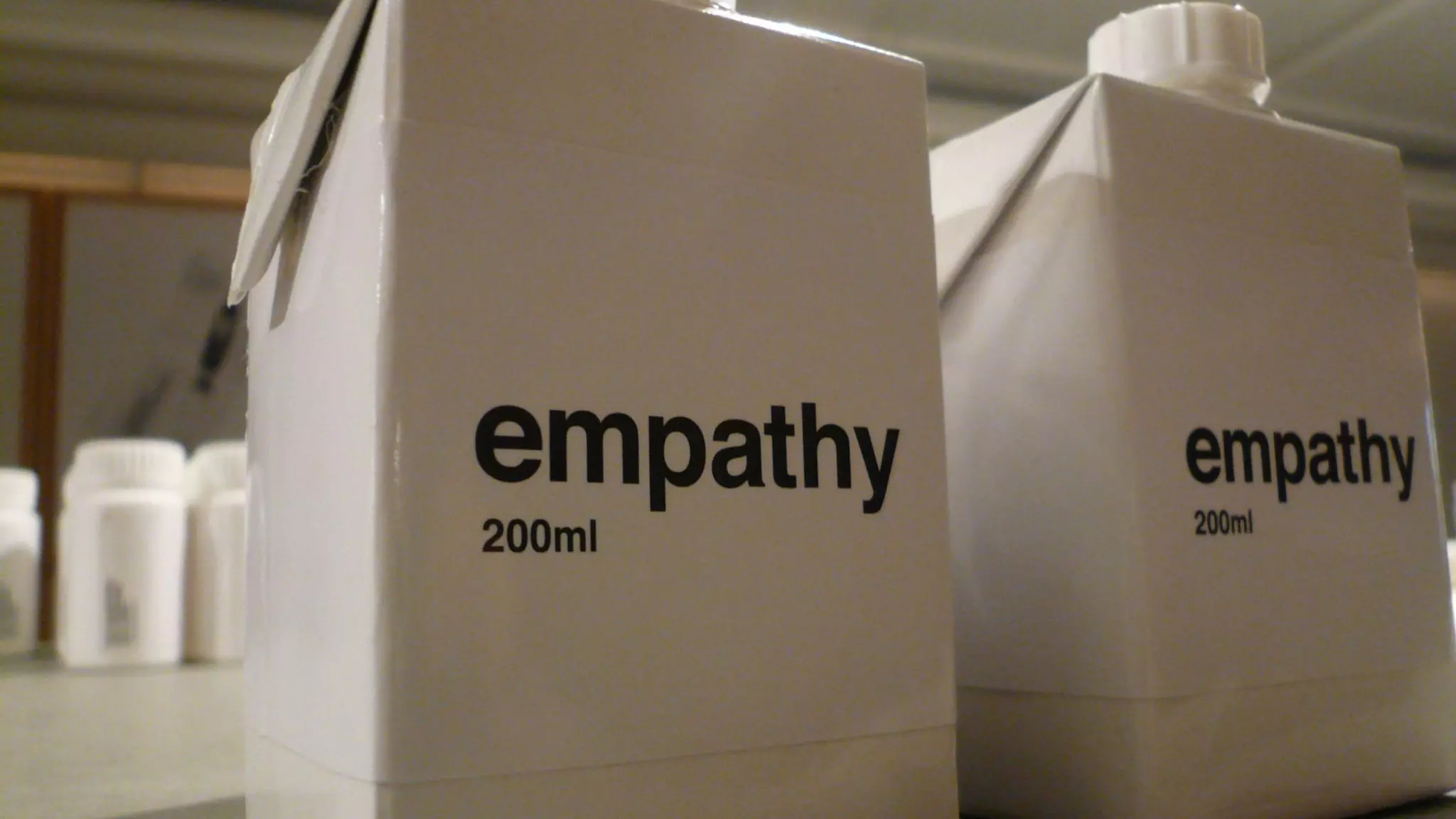
  • #19 the ability to understand and share the feelings of another.
  • #20 Point of View is a landmark public sculpture in bronze by James A. West; it sits in a parklet named for the work of art, Point of View Park, in Pittsburgh, Pennsylvania.   The piece depicts George Washington and the Seneca leader Guyasuta, with their weapons down, in a face-to-face meeting in October 1770, when the two men met while Washington was in the area examining land for future settlement along the Ohio River.
  • #21 Understand what it's like to be on the receiving end
  • #22 Understand what it's like to be on the receiving end
  • #23 It's about them, not you! Pulp fiction
  • #24 It's about them, not you! Pulp fiction
  • #25 It's about them, not you! Pulp fiction
  • #26 It's about them, not you! Pulp fiction
  • #30 It's about them, not you! Pulp fiction
  • #31 Mystery
  • #32 Highlight gaps
  • #34 Limbic brain – unconscious, guy, emotional, feeling, trust Neocortext – conscious and logical, facts
  • #37 Leverage emotions to engage people more effectively
  • #38 Smiling is correlated to living longer
  • #40 0101000001101100011001010110000101110011011001010010000001110010011001010111001101110000011011110110111001100100
  • #49 Persuasive facts and figures Develop a messaging strategy for each persona
  • #51 Tip of the iceberg
  • #56 Messaging - be human. Relate as a person 1st, recruiter 2nd